 Uncontrolled Cholesterol in Individuals with Severe Hypercholesterolemia in a Health Evaluation Program in Brazil
Abstract
Background Individuals with severe hypercholesterolemia (SH) are considered at high atherosclerosis risk and should be intensively treated with lipid-lowering drugs aiming for an LDL-C reduction of≥50% and a goal of <70 mg/dL.
Objectives This study aimed to evaluate cholesterol control in individuals with SH (LDL-C ≥ 190 mg/dL or 160-189 mg/dL using lipid-lowering drugs) followed in a health evaluation program.
Methods 55,000 individuals were evaluated, of which 2,214 (4%) had SH, and 1,016 (45.8%) had repeated assessments. Achievement of recommended LDL-C goals was the primary study endpoint. A p-value < 0.05 was considered significant.
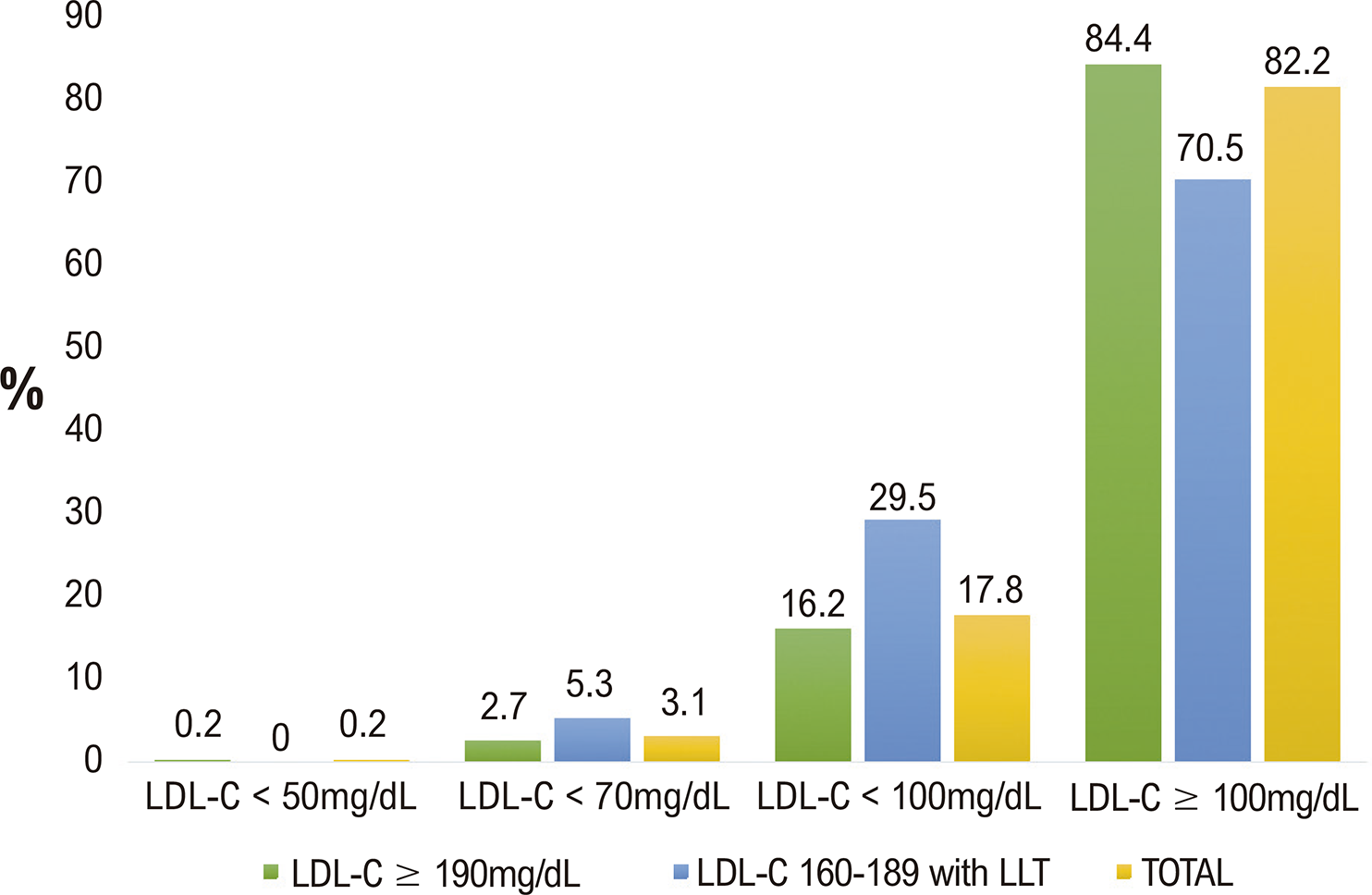
Results Mean age (± SD) was 44.9±8.8 years, 84.2% were men, and 0.5% reported previous myocardial infarction. Mean LDL-C was 203.0±22.0 mg/dL, and although 62.5% referred dyslipidemia, only 19% were using lipid-lowering drugs (5.9% in cases with LDL-C ≥ 190 mg/dL). During a 4.1±2.8-year follow-up, use of lipid-lowering drugs increased from 18.1% to 48.4% (p<0.00001), 5.9% to 45.4% in those with LDL-C ≥ 190 mg/dL (p< 0.00001) though 31% of cases with LDL-C 160-189 mg/dL stopped taking medications. Overall, there was a mean 26.7% reduction in LDL-C (p<0.0001), and LDL-C reductions ≥50% were attained in 19.2%, 19.1%, and 19.7 % of all individuals, and in those with LDL-C > 190 mg/dL and 160-189 mg/dL respectively. Only 3.1% reached LDL-C < 70 mg/dL (2.7% in those with LDL-C ≥ 190 and 5.3% in those with 160-189 mg/dL).
Conclusions A serious gap was found between treatment recommendations and reality in individuals at high atherosclerosis risk due to SH.
Cholesterol; Heart Disease Risk Factors; Hypercholesterolemia
Resumo
Fundamento Indivíduos com hipercolesterolemia grave (HG) são considerados sob alto risco de desenvolverem aterosclerose e devem ser intensivamente tratados com medicamentos hipolipemiantes, visando uma redução nos níveis de LDL-Colesterol ≥50% e uma meta <70 mg/dL.
Objetivos Este estudo teve como objetivo avaliar o controle dos níveis de colesterol em indivíduos com HG (LDL-C ≥ 190 mg/dL ou 160-189 mg/dL usando medicamentos hipolipemiantes) acompanhados em um programa de avaliação da saúde.
Métodos Foram avaliados 55 000 indivíduos, dos quais 2214 (4%) apresentavam HG, e 1016 (45,8%) foram submetidos a avaliações repetidas. O alcance das metas de LDL-C foi o desfecho primário do estudo. Um valor de p<0,05 foi considerado significativo.
Resultados A idade média (±DP) foi 44,9±8,8 anos; 84,2% dos participantes eram do sexo masculino, e 0,5% relataram infarto do miocárdio prévio. A concentração média de LDL-C foi 203,0±22,0 mg/dL, e apesar de 62,5% dos pacientes terem referido dislipidemia, somente 19% estavam usando drogas hipolipemiantes (5,9% nos casos de LDL-C ≥ 190 mg/dL). Durante um seguimento de 4,1±2,8 anos, o uso de medicamentos hipolipemiantes aumentou de 18,1% para 48,4% (p<0,00001); de 5,9% para 45,4% naqueles com LDL-C ≥ 190 mg/dL (p< 0,00001), embora 31% dos casos com LDL-C 160-189 mg/dL terem interrompido o uso desses fármacos. No geral, observou-se uma redução média de 26,7% nos níveis de LDL-C (p<0,0001). Reduções ≥50% no LDL-C foram alcançadas por 19,2%, 19,1%, e 19,7 % de todos os indivíduos, e naqueles com LDL-C > 190 mg/dL e 160-189 mg/dL, respectivamente. Somente 3,1% atingiram concentrações de LDL-C < 70 mg/dL (2,7% naqueles com LDL-C ≥ 190 e 5,3% naqueles com 160-189 mg/dL).
Conclusões Uma séria lacuna foi encontrada entre as recomendações de tratamento e a realidade em indivíduos com elevado risco aterosclerótico por HG.
Colesterol; Fatores de Risco de Doenças Cardíacas; Hipercolesterolemia
Introduction
Atherosclerotic cardiovascular disease (ASCVD) is the leading cause of death in Brazil.1 Plasma LDL-cholesterol (LDL-C) is a causal risk factor for ASCVD.2-4 The determination of LDL-C concentrations, therefore, is an essential tool for estimating ASCVD risk and implementing preventive therapies. Adults with severe hypercholesterolemia (SH) defined as LDL-C ≥ 190 mg/dL, are classified as at high ASCVD risk independently of other risk conditions or factors, and guidelines recommend pharmacological lipid-lowering therapy in addition to lifestyle changes to prevent the onset of ASCVD. For these individuals, US, Brazilian, and European guidelines recommend LDL-C reductions of at least 50% with LDL-C goals < 70 mg/dL in the latter two guidelines.2-4 In addition, persistent LDL-C concentrations between 160 and 189 mg/dL are associated with an elevated lifetime risk of ASCVD, are considered risk enhancers and favor the initiation of statin therapy.2,5
Health evaluation or checkup programs aim to identify risk factors for ASCVD and refer individuals to adequate medical care when necessary.6 Previously, we detected an important gap in ASCVD risk perception, cholesterol management, and familial hypercholesterolemia (FH) awareness in individuals with SH submitted to a routine health evaluation.7 These findings complemented another observation showing an inadequate overall ASCVD risk perception by individuals at risk that might have deleterious consequences for controlling risk factors and preventing ASCVD.8 The lack of adequate control of risk factors or disease states and absence of compliance with recommendations after checkup programs is a challenge to preventive medicine programs6 and needs to be addressed. The objective of this study was to generate real-world evidence (RWE) on the efficacy of LDL-C control according to recent guidelines in individuals with SH submitted to repeated evaluations in a routine health evaluation program. The primary study endpoint was attaining recommended LDL-C goals (reduction ≥50% and/or LDL-C <70 mg/dL) for these high-risk individuals during follow-up.
Methods
This is a retrospective evaluation of prospectively collected data from adults undergoing a routine health evaluation protocol at an outpatient clinic of a tertiary hospital in the city of Sao Paulo, Brazil. Most participants worked in companies that offered routine health evaluations to their employees. This study was approved by the ethics committee (CAAE number 25772619.0000.00.0071), and a waiver for informed consent was obtained. This study was funded by an unrestricted grant from Amgen Laboratories Brazil, and the funding source had no role in data collection, analysis, interpretation, study conclusions, and manuscript writing.
The inclusion criteria were a) individuals aged ≥ 18 years with SH defined as an LDL-C ≥190mg/dL or b) LDL-C between 160 and 189 mg/dL in those using pharmacological lipid-lowering therapy followed at the outpatient clinic between October 2004 and November 2019. The health evaluation protocol consisted of clinical examination (use of standard questionnaires for previous ASCVD and its risk factors, blood pressure, diabetes, dyslipidemia, and medications for their control), physical examination, and fasting laboratory tests as previously described.7,9 An evaluation report was sent to either participants or company occupational physicians when available, and participants were invited to a second interview with examining physicians to discuss test results. Participants were advised and referred to a specific disease specialist in case of abnormal test results. Usually, no medications were prescribed by the check-up physician. The following parameters were extracted from electronic medical records: age, sex, body mass index, presence of ASCVD risk factors such as arterial hypertension, diabetes, dyslipidemia, current smoking, family history of early coronary heart disease (CHD) (<55 and < 65 years old respectively in male and female first-degree relatives), metabolic syndrome defined according to the International Diabetes Federation,4 and previous CHD defined as myocardial infarction, angina or revascularization. Data on fasting lipid profiles (total and LDL-C, HDL-cholesterol, and triglycerides) were also collected.
In subjects evaluated on more than one occasion, information was collected regarding the use or not of lipid-lowering drugs and the achievement of LDL-C goals according to guideline recommendations, i.e., percentage of individuals with LDL-C <100 mg/dL, <70 mg/dL, and <50 mg/dL in the follow-up.3,4 The mean percentage changes in LDL-C from the first evaluation and the percentage of those attaining LDL-C lowering ≥ 50% from baseline as recommended by guidelines2-4 for high ASCVD risk subjects were also determined. Data from the last visit were analyzed for those with more than one follow-up evaluation.
Statistical analysis
Data normality was tested by the Kolmogorov-Smirnov test; continuous data with a Gaussian distribution are shown as mean standard deviation (SD), non-Gaussian data are shown as medians (interquartile ranges), and categorical variables are shown as absolute and relative frequencies.
For the analysis, study subjects were initially categorized and grouped according to LDL-C (mg/dL) values during follow-up as > 100, 100-70, <70-50, and <50. Descriptive statistics were performed, and groups were compared by Student’s paired t-test. Categorical data were compared using the chi-squared test or Fisher’s exact test. Univariate and multivariate stepwise logistic regression models were used to evaluate the association of clinical variables of interest with pharmacological lipid-lowering therapy at the last clinical evaluation during follow-up. A two-tailed p-value < 0.05 was considered significant. All analyses were performed using the R software version 4.1.1 (R Foundation).
Results
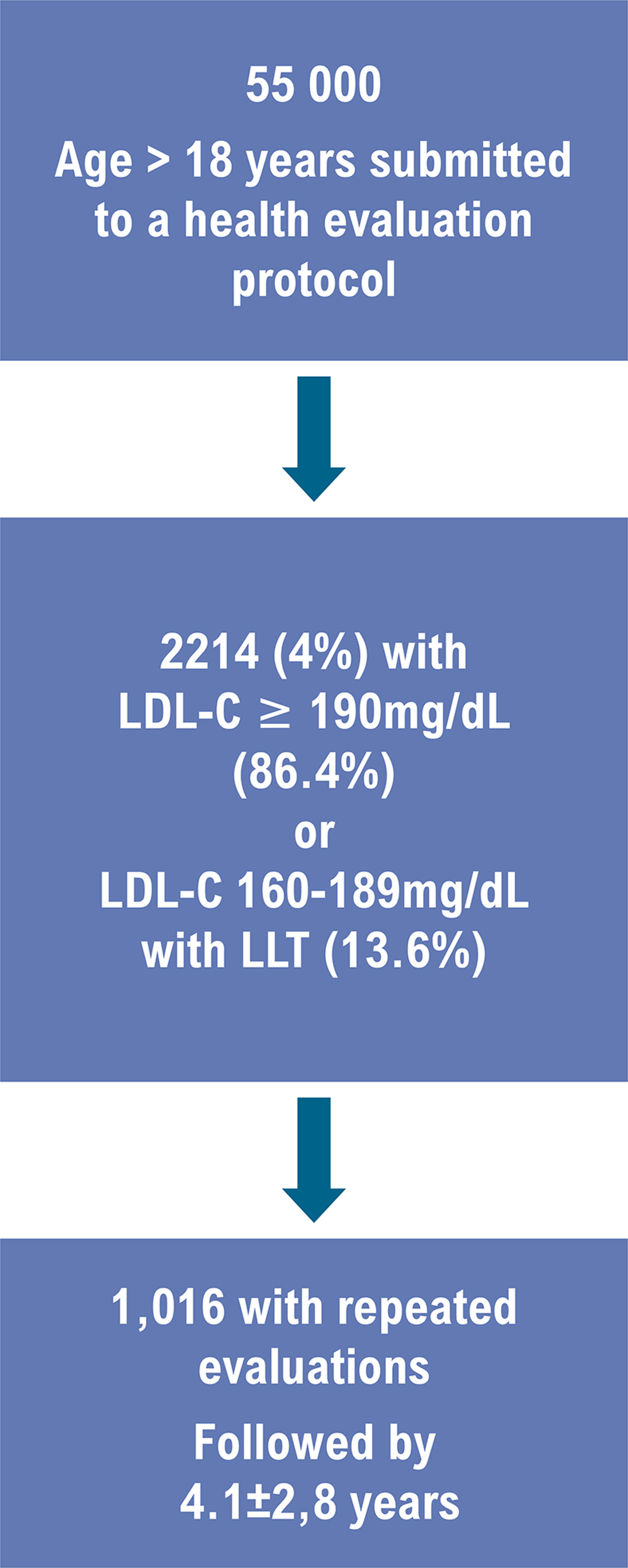
Figure 1 illustrates the flowchart of patient selection and categorization. A total of 55,000 individuals were evaluated, of which 2,214 (4%) had SH, and 1,016 (45.8%) were assessed more than once. Table 1 shows clinical and laboratory characteristics of individuals at baseline evaluation (n=2,214), with 86.4% of patients presenting LDL-C ≥ 190 mg/dL and 13.6% presenting 160-189 mg/dL with lipid-lowering drugs. This is a young, predominantly male population; roughly one in ten had metabolic syndrome or were smokers, and less than 1% referred previous CHD. Although 62.5% reported previous dyslipidemia diagnosis, only 19% were using lipid-lowering drugs, with 5.9% in cases with LDL-C ≥ 190 mg/dL.
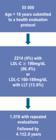
– Flowchart of patient selection and categorization; LLT: pharmacological lipid-lowering therapy.
Table 2 shows the clinical and laboratory characteristics of individuals with repeated evaluations (n=1,016). As expected, these individuals had characteristics similar to those of the whole group. During follow-up, only 5 (0.5%) individuals developed CHD events. Figure 2 shows the use of lipid-lowering therapy according to dyslipidemia criteria during the 4.1 ± 2.8-year follow-up. The use of lipid-lowering drugs increased 2.7-fold and 7.7-fold, respectively, in the whole population and those with LDL-C ≥ 190 mg/dL (Chi2 test, p< 0.00001 vs. baseline for both). On the other hand, 31% of cases with LDL-C 160-189 mg/dL and previous lipid-lowering therapy stopped taking medications at follow-up.
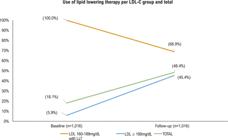
– Use of lipid-lowering therapy by LDL-cholesterol (LDL-C) level groups; chi-squared 2 test, p<0.00001 vs. baseline.
Table 3 shows changes in LDL-C during follow-up; overall, there was a mean 26.7% reduction in LDL-C (p<0.0001). LDL-C reductions ≥50% were attained in 19.2%, 19.1%, and 19.7 %, respectively, in all individuals, in those with LDL-C ≥ 190 mg/dL and those with 160-189 mg/dL with lipid-lowering medications at baseline.
Figure 3 shows the percentages of SH individuals achieving LDL-C goals (<100 mg/dL, <70 mg/dL, and < 50 mg/dL). Most individuals did not achieve recommended goals according to guidelines recommendations.3,4
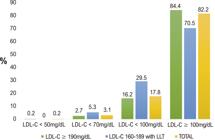
– Percentages of individuals with severe hypercholesterolemia at baseline achieving LDL-cholesterol goals (<100 mg/dL, <70 mg/dL, and < 50 mg/dL).
Tables 4 and 5 show univariate and multivariate associations of clinical variables with the use of pharmacological lipid-lowering therapy on the last visit. Older age, previous diagnosis of hypertension or dyslipidemia, a higher number of medical visits, and a longer follow-up duration were independently associated with the use of lipid-lowering therapy.
Discussion
A significant hiatus in LDL-C control was encountered in this group of individuals with SH and considered to be at high ASCVD risk who were submitted to at least one routine health evaluation (Central Illustration). This hiatus persisted during a mean 4.1-year follow-up where repetitive assessments were performed. Of importance, 8 in 10 individuals persisted with elevated LDL-C concentrations, and only 19.2% and 3.1% attained the recommended LDL-C reduction of at least 50% and an LDL-C goal of < 70 mg/dL, respectively. Of those with LDL-C ≥ 190 mg/dL, 55% persisted without lipid-lowering pharmacological therapies despite the clear recommendations of guidelines for their use.2-4 Furthermore, roughly 3 in 10 individuals with LDL-C 160-189 mg/dL at baseline stopped pharmacological therapy.
Reduction of LDL-C is among the most important preventive measures to mitigate the risk of ASCVD. Those with SH are considered to have a high lifetime risk even without other risk factors or previous clinical manifestations of atherosclerosis.2-4 Considering this risk, guidelines indicate robust LDL-C lowering, i.e., at least 50% from baseline levels, and Brazilian and European documents recommend attaining an LDL-C value < 70 mg/dL. For that, in addition to changes in lifestyle, pharmacological therapy with high-dose, high-potency statins is recommended. However, considering the very high LDL-C in these individuals seen in this study, association therapies like ezetimibe, bempedoic acid, or proprotein convertase subtilisin kexin type 9 (PCSK9) inhibitors, either monoclonal antibodies or small interfering RNA drugs, may be necessary to attain the LDL-C goals. Indeed, combination therapies have been recently suggested to reduce cholesterol and achieve the proposed LDL-C goals in individuals at high and very high risk for ASCVD.10 This recommendation derives from robust evidence that statins, ezetimibe, and monoclonal PCSK9 inhibitors reduce ASCVD and that this effect depends on LDL-C lowering.11,12
SH may indicate the presence of genetic forms of dyslipidemias like familial or polygenic hypercholesterolemia. Recent evidence indicates that a proven genetic background for dyslipidemias is associated with higher ASCVD risk compared to individuals where genetic variants are not encountered, yet they have similar high LDL-C concentrations. This probably occurs due to prolonged exposure to very high LDL-C, mainly in the case of FH.13,14
Previously, in a smaller group of individuals with SH derived from the same population where the participants of this study originated, Santos et al.7 found, in a cross-sectional evaluation, low awareness of either FH or its consequences, like early atherosclerosis onset, the need for pharmacological therapy to reduce LDL-C, and cascade screening of asymptomatic relatives.
Evidence from the DaVinci15 and Santorini16 studies in contemporary European populations indicate that most high and very high-risk individuals persist with inadequate cholesterol concentrations. Stricter LDL-C goals, with recent guidelines proposing even lower LDL-C than in the past,17 and the low use of combination therapies may justify these findings.15 The current RWE study shows that inadequate control of LDL-C in high-risk Brazilian individuals is not circumstantial since findings persist during repeated evaluations. Of importance, at baseline, although 59% of studied individuals with LDL-C ≥190mg/dL reported previous dyslipidemia diagnosis, 94% were not taking lipid-lowering drugs. During follow-up, the use of these medications rose to 45%, while all were supposed to be in use of medications according to guidelines. Indeed, this is one of the reasons why 81% of study participants did not attain the recommended goals of reducing LDL-C ≥ 50% and 97% did no attain LDL-C < 70 mg/dL. Another important finding that may justify the results in the whole group is that 31% of those with LDL-C 160-189 mg/dL who were using lipid-lowering therapies at baseline stopped taking medications.
To change the negative findings of this and other studies,17-19 it is essential to identify possible causes for the lack of use of lipid-lowering medications. Indeed, older age, longer follow-ups, a higher number of visits, and the previous presence of risk factors for atherosclerosis were independently associated with pharmacological lipid-lowering therapy use at the last follow-up visit. Thus, the relatively young age of the population, the low frequency of previous cardiovascular disease and incident CHD events during follow-up, the small number of visits, and the possible ASCVD risk misperception by the studied individuals may have contributed to this finding. Previously, Katz et al.8 have encountered a misperception of high ASCVD risk in 6,544 individuals who underwent same health evaluation protocol. When a lifetime instead of the usual 10-year estimation was used to evaluate ASCVD risk, 91.2% of high-risk subjects were considered hypo-perceivers. Conceição et al.6 have previously reported a worsening of risk factors for ASCVD except for smoking frequency in individuals who underwent repeated medical evaluations, clearly showing that detection of risk factors is not enough to reduce the risk of ASCVD. It is also important to clarify that physicians at the health evaluation protocol usually do not prescribe lipid-lowering medications and, in most situations, only give advice about results and refer them to proper medical care. It is uncertain if participants followed these recommendations. Indeed, shorter follow-ups and fewer medical visits at the health evaluation program were independent indicators of a lack of use of pharmacological lipid-lowering therapy.
This study has several limitations. First, the study participants do not fully represent the Brazilian population, considering the high socioeconomic level and male sex predominance. However, a cross-sectional evaluation of the ELSA-Brasil study, a broader epidemiological study performed with civil servants of six large Brazilian urban areas, also showed that in those considered as high-risk for CHD equivalent, only 38.6% had their LDL-C concentrations according to recommended goals.18 Moreover, recently, Machline-Carrion et al.20 and Santo et al.21 have found important gaps in the use of adequate lipid-lowering therapies in secondary20 and primary prevention21 individuals seen in primary care. Results of the current study show a worrisome situation considering the prospective follow-up. Second, not all individuals with SH attended more than one visit, but the baseline characteristics of those with one single evaluation and those who were followed are similar. Third, this report was about a single center in Sao Paulo, and it may not represent the reality of similar programs in Brazil. Finally, it was not possible to determine the occurrence of statin-related adverse events that could have led to non-compliance with therapy. The study’s strengths are the repetition of a standardized protocol during follow-up and the ascertainment of risk factors for ASCVD.
Conclusions
In this RWE study, a severe and persistent hiatus in controlling LDL-C in individuals with SH was found. The relatively young age of study participants, the low number of visits, the small occurrence of CHD events, and risk misperception may partly explain the study findings. More adequate interventions, consisting of more medical visits, telemedicine resources, and a multi-professional approach to increase awareness about the benefits of dyslipidemia control, may be necessary for high-risk primary prevention, as shown for people with previous ASCVD.17
Acknowledgments
RDS receives a scholarship from Conselho Nacional de Pesquisa e Desenvolvimento Tecnológico, Brazil, (CNPq) #303771/2023-2.
References
-
1 Ribeiro ALP, Duncan BB, Brant LC, Lotufo PA, Mill JG, Barreto SM. Cardiovascular Health in Brazil: Trends and Perspectives. Circulation. 2016;133(4):422-33. doi: 10.1161/CIRCULATIONAHA.114.008727.
» https://doi.org/10.1161/CIRCULATIONAHA.114.008727 -
2 Grundy SM, Stone NJ, Bailey AL, Beam C, Birtcher KK, Blumenthal RS, et al. 2018 AHA/ACC/AACVPR/AAPA/ABC/ACPM/ADA/AGS/APhA/ASPC/NLA/PCNA Guideline on the Management of Blood Cholesterol: Executive Summary: A Report of the American College of Cardiology/American Heart Association Task Force on Clinical Practice Guidelines. J Am Coll Cardiol. 2019;73(24):3168-209. doi: 10.1016/j.jacc.2018.11.002.
» https://doi.org/10.1016/j.jacc.2018.11.002 -
3 Mach F, Baigent C, Catapano AL, Koskinas KC, Casula M, Badimon L, et al. 2019 ESC/EAS Guidelines for the Management of Dyslipidaemias: Lipid Modification to Reduce Cardiovascular Risk. Eur Heart J. 2020;41(1):111-88. doi: 10.1093/eurheartj/ehz455.
» https://doi.org/10.1093/eurheartj/ehz455 -
4 Faludi AA, Izar MCO, Saraiva JFK, Chacra APM, Bianco HT, Afiune A Neto, et al. Atualização da Diretriz Brasileira de Dislipidemias e Prevenção da Aterosclerose - 2017. Arq Bras Cardiol. 2017;109(2 Supl 1):1-76. doi: 10.5935/abc.20170121.
» https://doi.org/10.5935/abc.20170121 -
5 Abdullah SM, Defina LF, Leonard D, Barlow CE, Radford NB, Willis BL, et al. Long-term Association of Low-density Lipoprotein Cholesterol with Cardiovascular Mortality in Individuals at Low 10-Year Risk of Atherosclerotic Cardiovascular Disease. Circulation. 2018;138(21):2315-25. doi: 10.1161/CIRCULATIONAHA.118.034273.
» https://doi.org/10.1161/CIRCULATIONAHA.118.034273 -
6 Conceição RD, Laurinavicius AG, Kashiwagi NM, Carvalho JA, Oliva CA, Santos RD Filho. Check-up and Cardiovascular Risk Progression: Is There a Room for Innovation? Einstein. 2015;13(2):196-201. doi: 10.1590/S1679-45082015AO3216.
» https://doi.org/10.1590/S1679-45082015AO3216 -
7 Santos RD, Pereira C, Cesena F, Laurinavicius AG, Tabone V, Bittencourt MS. Cardiovascular Risk Misperception and Low Awareness of Familial Hypercholesterolemia in Individuals with Severe Hypercholesterolemia. Arq Bras Cardiol. 2021;116(4):706-12. doi: 10.36660/abc.20190516.
» https://doi.org/10.36660/abc.20190516 -
8 Katz M, Laurinavicius AG, Franco FG, Conceicao RD, Carvalho JA, Pesaro AE, et al. Calculated and Perceived Cardiovascular Risk in Asymptomatic Subjects Submitted to a Routine Medical Evaluation: The Perception Gap. Eur J Prev Cardiol. 2015;22(8):1076-82. doi: 10.1177/2047487314543074.
» https://doi.org/10.1177/2047487314543074 -
9 Ndumele CE, Nasir K, Conceiçao RD, Carvalho JA, Blumenthal RS, Santos RD. Hepatic Steatosis, Obesity, and the Metabolic Syndrome are Independently and Additively Associated with Increased Systemic Inflammation. Arterioscler Thromb Vasc Biol. 2011;31(8):1927-32. doi: 10.1161/ATVBAHA.111.228262.
» https://doi.org/10.1161/ATVBAHA.111.228262 -
10 Masana L, Ibarretxe D, Plana N. Reasons Why Combination Therapy Should Be the New Standard of Care to Achieve the LDL-cholesterol Targets: Lipid-lowering Combination Therapy. Curr Cardiol Rep. 2020;22(8):66. doi: 10.1007/s11886-020-01326-w.
» https://doi.org/10.1007/s11886-020-01326-w -
11 Wang N, Fulcher J, Abeysuriya N, Park L, Kumar S, Di Tanna GL, et al. Intensive LDL Cholesterol-lowering Treatment Beyond Current Recommendations for the Prevention of Major Vascular Events: A Systematic Review and Meta-analysis of Randomised Trials Including 327 037 Participants. Lancet Diabetes Endocrinol. 2020;8(1):36-49. doi: 10.1016/S2213-8587(19)30388-2.
» https://doi.org/10.1016/S2213-8587(19)30388-2 -
12 Ray KK, Reeskamp LF, Laufs U, Banach M, Mach F, Tokgözoglu LS, et al. Combination Lipid-lowering Therapy as First-line Strategy in Very High-risk Patients. Eur Heart J. 2022;43(8):830-3. doi: 10.1093/eurheartj/ehab718.
» https://doi.org/10.1093/eurheartj/ehab718 -
13 Khera AV, Won HH, Peloso GM, Lawson KS, Bartz TM, Deng X, et al. Diagnostic Yield and Clinical Utility of Sequencing Familial Hypercholesterolemia Genes in Patients with Severe Hypercholesterolemia. J Am Coll Cardiol. 2016;67(22):2578-89. doi: 10.1016/j.jacc.2016.03.520.
» https://doi.org/10.1016/j.jacc.2016.03.520 -
14 Trinder M, Francis GA, Brunham LR. Association of Monogenic vs Polygenic Hypercholesterolemia with Risk of Atherosclerotic Cardiovascular Disease. JAMA Cardiol. 2020;5(4):390-9. doi: 10.1001/jamacardio.2019.5954.
» https://doi.org/10.1001/jamacardio.2019.5954 -
15 Ray KK, Molemans B, Schoonen WM, Giovas P, Bray S, Kiru G, et al. EU-wide Cross-sectional Observational Study of Lipid-modifying Therapy Use in Secondary and Primary Care: The Da Vinci Study. Eur J Prev Cardiol. 2021;28(11):1279-89. doi: 10.1093/eurjpc/zwaa047.
» https://doi.org/10.1093/eurjpc/zwaa047 -
16 Ray KK, Haq I, Bilitou A, Manu MC, Burden A, Aguiar C, et al. Treatment Gaps in the Implementation of LDL Cholesterol Control Among High- and Very High-risk Patients in Europe between 2020 and 2021: The Multinational Observational SANTORINI Study. Lancet Reg Health Eur. 2023;29:100624. doi: 10.1016/j.lanepe.2023.100624.
» https://doi.org/10.1016/j.lanepe.2023.100624 -
17 Machline-Carrion MJ, Soares RM, Damiani LP, Campos VB, Sampaio B, Fonseca FH, et al. Effect of a Multifaceted Quality Improvement Intervention on the Prescription of Evidence-based Treatment in Patients at High Cardiovascular Risk in Brazil: The BRIDGE Cardiovascular Prevention Cluster Randomized Clinical Trial. JAMA Cardiol. 2019;4(5):408-17. doi: 10.1001/jamacardio.2019.0649.
» https://doi.org/10.1001/jamacardio.2019.0649 -
18 Lotufo PA, Santos RD, Figueiredo RM, Pereira AC, Mill JG, Alvim SM, et al. Prevalence, Awareness, Treatment, and Control of High Low-density Lipoprotein Cholesterol in Brazil: Baseline of the Brazilian Longitudinal Study of Adult Health (ELSA-Brasil). J Clin Lipidol. 2016;10(3):568-76. doi: 10.1016/j.jacl.2015.12.029.
» https://doi.org/10.1016/j.jacl.2015.12.029 -
19 Santos RD. Inadequate Control of Atherosclerotic Cardiovascular Disease Risk Factors in Europe: EUROASPIRE Repeats Itself. Eur J Prev Cardiol. 2019;26(8):820-3. doi: 10.1177/2047487319831476.
» https://doi.org/10.1177/2047487319831476 -
20 Machline-Carrion MJ, Girotto AN, Nieri J, Pereira PM, Monfardini F, Forestiero F, et al. Assessing Statins Use in a Real-world Primary Care Digital Strategy: A Cross-sectional Analysis of a Population-wide Digital Health Approach. Lancet Reg Health Am. 2023;23:100534. doi: 10.1016/j.lana.2023.100534.
» https://doi.org/10.1016/j.lana.2023.100534 -
21 Santo K, Santos RD, Girotto AN, Nieri J, Monfardini F, Raupp P, et al. Statins Use for Primary Prevention of Cardiovascular Disease: A Population-based Digitally Enabled Real-world Evidence Cross-sectional Study in Primary Care in Brazil. J Clin Lipidol. 2024;18(3):384-93. doi: 10.1016/j.jacl.2024.02.005.
» https://doi.org/10.1016/j.jacl.2024.02.005
-
Study association
This study is not associated with any thesis or dissertation work.
-
Ethics approval and consent to participate
This study was approved by the Ethics Committee of the Hospital Israelita Albert Einstein under the protocol number CAAE # 25772619.0000.00.0071. All the procedures in this study were in accordance with the 1975 Helsinki Declaration, updated in 2013. Informed consent was obtained from all participants included in the study.
-
Sources of funding:
This study was funded by Amgen Brasil and partially funded by CNPq grant 303771/2023-2.
Edited by
-
Editor responsible for the review:
Gláucia Maria Moraes de Oliveira

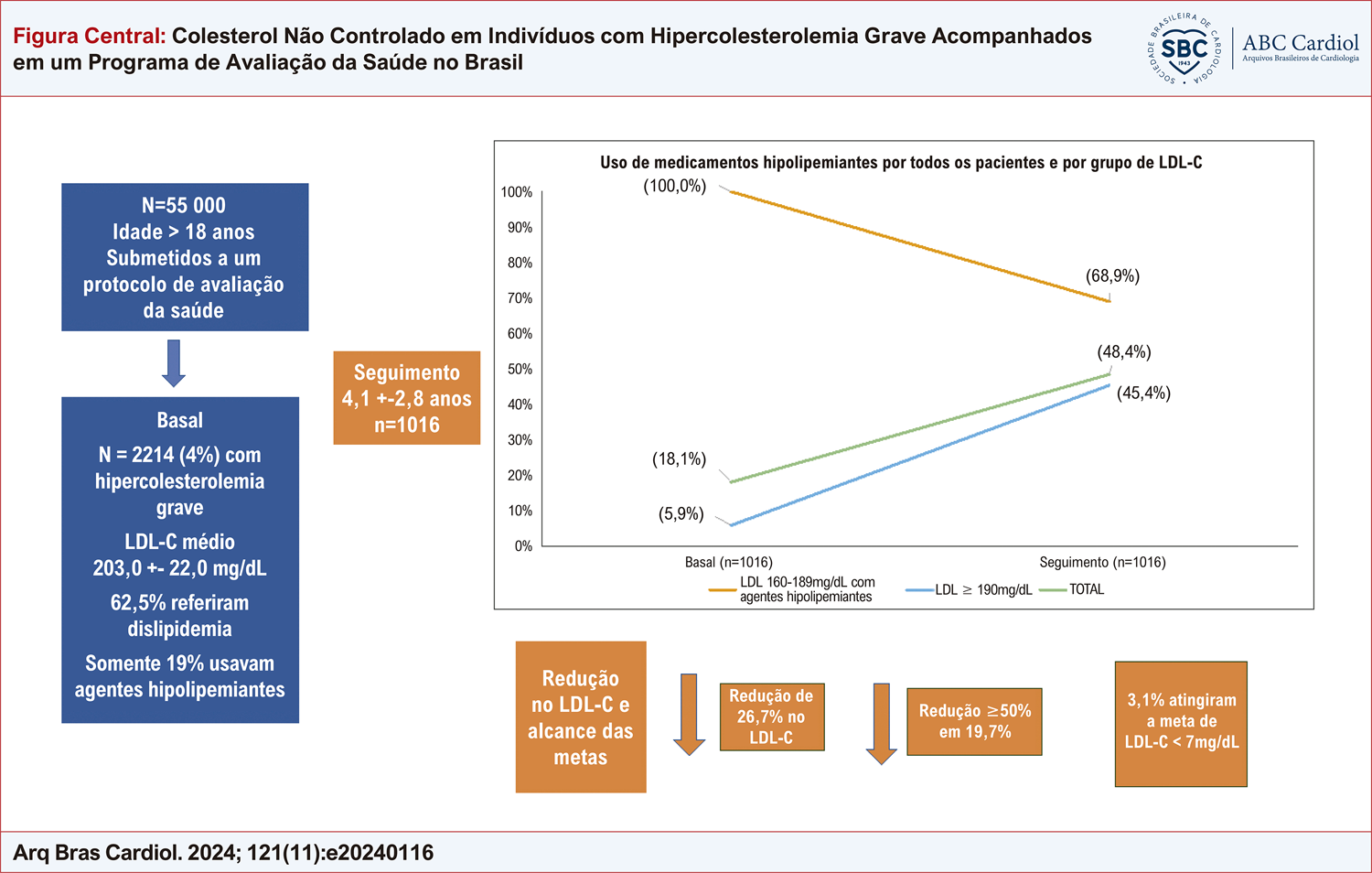 Ausência de controle dos níveis de colesterol na hipercolesterolemia grave.
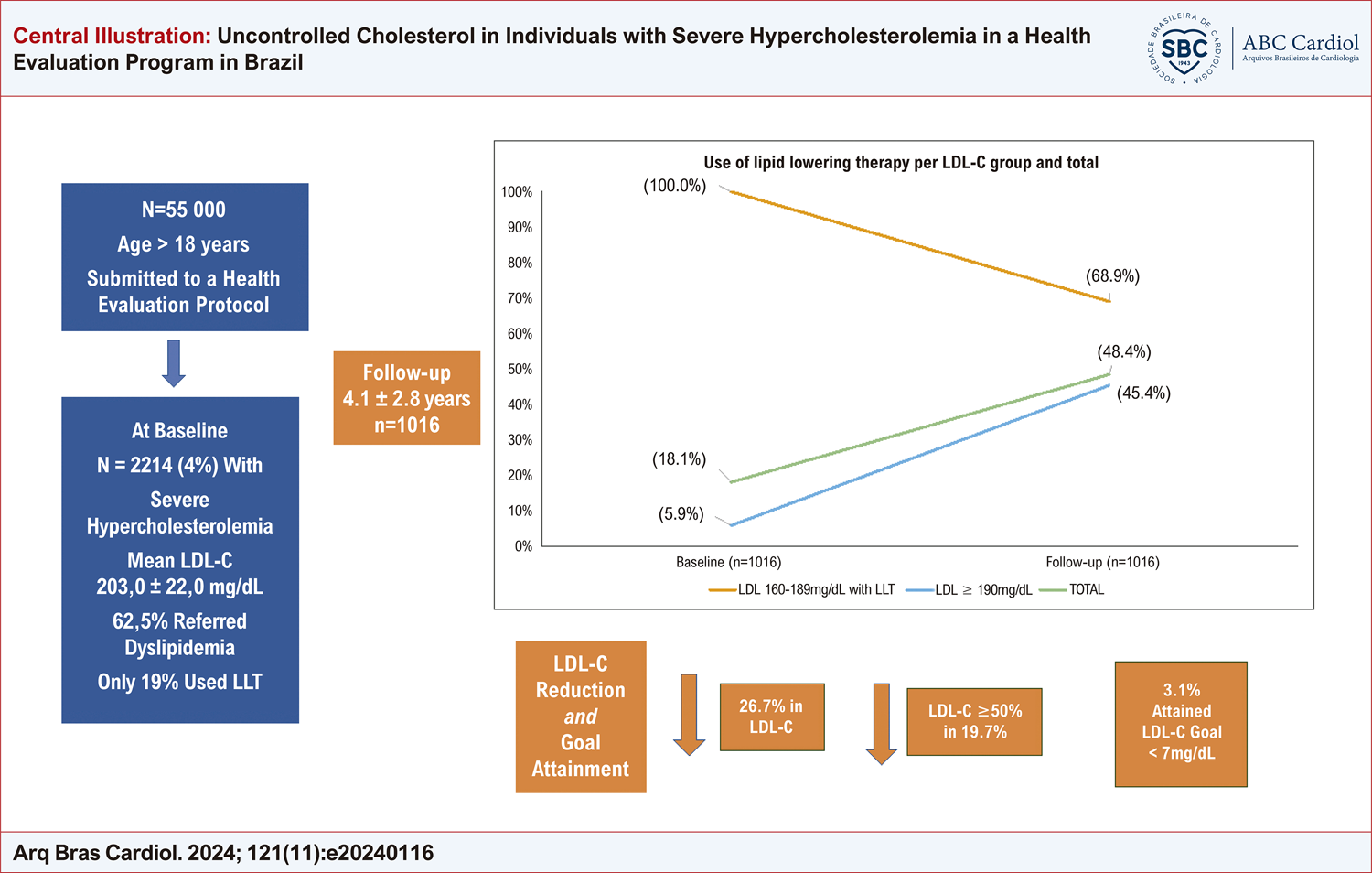 Lack of cholesterol control in severe hypercholesterolemia.