 The Cost of Medical Management in Advanced Heart Failure: A Latin American Perspective
Abstract
Background The financial burden faced by patients with advanced heart failure (HF) who are ineligible for heart transplantation or lack have access to advanced therapy with left ventricular assist devices (LVADs) has not been described in Latin American.
Objective To conduct a microcosting study in patients who were otherwise eligible for LVAD therapy who did not have access to it.
Methods We evaluated the direct costs of care in a cohort of advanced HF patients treated at a Brazilian public hospital who were candidates for LVAD therapy (and ineligible for transplantation) but lacked access to the procedure. A patient-level cost analysis was performed from the time LVAD need was identified until death or end of follow-up. The total cost per patient was calculated using the time-driven activity-based costing methodology and expressed in international dollars (Int$). Patients were stratified by disease severity and all-cause mortality to assess cost variability.
Results Figure 2
Conclusions This study highlights the financial burden associated with ongoing medical management of advanced HF in patients who would otherwise be eligible for LVAD therapy. These findings provide a basis for evaluating the cost-effectiveness of device-based, life-saving interventions in selected advanced HF populations.
Keywords
Costs and Cost Analysis; Heart Failure; Latin America

Resumo
Fundamento A carga financeira enfrentada por pacientes com insuficiência cardíaca (IC) avançada, que não são elegíveis para transplante cardíaco ou não têm acesso à terapia avançada com dispositivos de assistência ventricular esquerda (DAVEs) ainda não foi descrito na América Latina.
Objetivo Realizar um estudo de microcustos em pacientes que, embora elegíveis para terapia com DAVE, não tiveram acesso ao procedimento.
Métodos Avaliamos os custos diretos do cuidado em uma coorte de pacientes com IC avançada tratados em um hospital público brasileiro, que eram candidatos à terapia com DAVE (e inelegíveis para transplante), mas não tiveram acesso ao dispositivo. Foi realizada uma análise de custos em nível individual desde o momento em que a necessidade de DAVE foi identificada até o óbito ou o fim do acompanhamento. O custo total por paciente foi calculado utilizando a metodologia de custeio baseado em atividades com base no tempo (time-driven activity-based costing) e expresso em dólares internacionais (Int$). Os pacientes foram estratificados por gravidade da doença e mortalidade por todas as causas para avaliar a variabilidade dos custos.
Resultados Figura 2
Conclusões Este estudo evidencia o impacto financeiro associado ao manejo clínico contínuo da IC avançada em pacientes que, de outra forma, seriam elegíveis para terapia com DAVE. Esses achados fornecem subsídios para avaliar a relação custo-efetividade de intervenções com dispositivos de suporte à vida em populações selecionadas com IC avançada.
Palavras-chave
Custos e Análise de Custo; Insuficiência Cardíaca; América Latina
Introduction
Advanced heart failure (HF), a stage of disease marked by resistance to traditional pharmacological and non-pharmacological therapies, is associated with high morbidity and mortality, as well as increased healthcare resource utilization and costs for both individuals and society.1 As populations age and benefit from improved therapies for early onset cardiovascular disease, the prevalence of advanced HF continues to rise, leading to a substantial societal burden and loss of productivity.2
While heart transplantation is now an established therapy for advanced HF, a substantial number of individuals are ineligible due to comorbidity or other reasons.3 For these patients, a durable left ventricular assist device (LVAD) serves as a life-prolonging therapy; otherwise, they are often relegated to palliative care.4 In the United States, 27,298 long-term LVADs were implanted between 2010 and 2019; in 2019 alone, the number of LVAD implants nearly matched the number of heart transplants performed nationwide, with the majority of cases classified as destination therapy for patients deemed ineligible for transplantation.5,6 In Europe, approximately 500 individuals per year have received an LVAD over the last 10 years, and this number is steadily growing, due to the limited availability of donor organs.7
The outcomes for patients with long-term DAVE have improved substantially over time, largely due to better patient selection, enhanced clinical management, and the introduction of the fully magnetically levitated HeartMate 3 pump (Abbott, USA). Median survival now exceeds five years, particularly among patients who are otherwise ineligible for transplantation.8-10 However, LVADs are not available in most low- and middle-income countries due to concerns of cost-effectiveness. In Brazil, the HeartMate 3 LVAD is accessible only through private insurance or philanthropic research initiatives.11 The cost of care for patients with advanced HF who are unable to receive LVAD therapy remains largely unknown, despite its potential relevance for evaluating the cost-effectiveness of such interventions.
Healthcare resource utilization and the cost of care for patients with advanced HF who are treated without the possibility of salvage through LVAD or transplantation may represent a financial burden that is not readily recognized by individuals, healthcare systems, payors and governments. In selected cases, the judicious use of destination LVAD therapy may prove to be cost-effective.11,12 Therefore, the present study, conducted within the Brazilian public healthcare system, aims to evaluate the longitudinal costs of medical management of advanced HF in patients who might have been eligible for destination LVAD therapy but lacked access to the procedure.
Methods
We conducted a microcosting study (a financial estimation method that includes resource use and unit cost) to evaluate direct costs of a cohort of patients with advanced HF from the perspective of a public university hospital, in a regional reference center for advanced HF therapies. The sample consisted of patients with advanced HF who were ineligible to undergo a heart transplant but were eligible to receive an LVAD as an indication for destination therapy.13
Population
We defined a cohort of consecutive adult patients with advanced-stage HF who met eligibility criteria for LVAD implantation as destination therapy but were unable to receive such treatment at our institution between January 2015, and May 2023. Advanced HF was defined through clinical evaluation, incorporating symptom burden, objective prognostic parameters and therapeutic interventions (such as inotropic therapy), as outlined by European and North-American cardiology societies and summarized by Truby and Rogers.14 Exclusion criteria included those patients who underwent a heart transplant or a LVAD implantation, those with private insurance coverage, and those primarily followed at other institutions.
The clinical reasons for transplantation ineligibility were advanced age, severe pulmonary hypertension, obesity, active smoking, frailty and other comorbidities. Our program adheres to the guidelines of the International Society for Heart and Lung Transplantation regarding contraindications for transplantation.15,16 Severe pulmonary hypertension was defined as pulmonary vascular resistance greater than 3 Wood units, not responsive to vasodilatory challenge. The flowchart of patients eligible for long-term LVAD therapy and selected for inclusion in the cost analysis is in Figure 1.

– Flowchart of patients eligible for long-term left ventricular assistance device (LVAD) therapy at the reference center that were selected for cost analysis.
The data collection period for each patient began when the clinical team considered an indication for advanced therapy – either heart transplantation or LVAD – or at hospital admission for those already hospitalized on that date. The cost acquisition interval was censored at death, at the end of study follow-up on June 30, 2023 or at discharge for patients hospitalized on that date. Data sources included electronic discharge summaries, progress notes, outpatient clinic records, and heart transplant/DAVE assessment forms. Individual patient-level cost analysis included all hospital encounters, including clinic visits, diagnostic tests, procedures, and hospitalizations.
Cost data
Cost components for THE overall cost analysis were obtained using the time-driven activity-based costing (TDABC) methodology.17 In this approach, in which, resource consumption is measured based on the patient care cycle, considering both the unit cost of delivering care and the time required to perform each transaction or activity. Cost data related to personnel, infrastructure, procedures, and diagnostic tests (including imaging) were extracted from hospital administrative records, following the methodology used in previous studies focused on specific procedures and services provided to patients with advanced HF (Table 1).
Medication costs were derived from patient-level consumption data obtained through the institutional administrative system. Procedural costs included materials, professional fees, and infrastructure. Interviews were performed to estimate the average time healthcare professionals dedicated to each procedure, consultation, outpatient clinic visit, and day-hospital care. Costs for individual hospital units – such as inpatient wards, intensive care units (ICUs), and catheterization laboratory – covered depreciation, energy, administrative supplies, professional salaries, and other expenses. For professional salaries, the exact staffing allocation for each unit was calculated, including the ICU area specifically designated for cardiology patients, which has a different staffing structure. The average monthly direct fixed cost for each unit was computed and divided by the unit’s monthly service capacity. For example, for the ICU, the capacity was determined based on the number of available beds: 45 beds operating 24 hours a day, 30 days, totaling 32,400 hours. The average daily cost was calculated by dividing the total cost attributed to the unit by the number of beds and working days. Hospitalization costs were then determined by multiplying the time each patient spent in a given unit by the corresponding cost per unit of time.
Cost components were calculated and aggregated to determine the total cost per patient. Descriptive cost analyses included mean, standard deviation (SD), median, and interquartile range. Patients were stratified by clinical variables – specifically, disease severity as classified by INTERMACS (Interagency Registry for Mechanically Assisted Circulatory Support) profiles – and by mortality outcome of death was performed to estimate cost variability. Also, an estimated annual cost per patient was calculated to represent the expected annual economic burden of patients with this clinical condition to the providers. As the study cohort included patients with varying follow-up durations, the total cost per patient was divided by the number of months of follow-up and then multiplied by 12. This adjustment is important to consider when applying the data to future economic models. All values were adjusted to the year 2023 using the Brazilian Broad National Consumer Price Index accumulated from the time the data was originally obtained (for costs extracted from scientific articles). These values are presented in international dollars (Int$) to reflect purchasing power parity, based on the World Bank conversion factor available at https://data.worldbank.org/indicator/PA.NUS.PPP (accessed on March 29, 2024). For reference, Int$ 1,000 is equivalent to US$ 1,000 and R$ 2,580. Comparisons between INTERMACS > 3 and INTERMACS ≤ 3 profiles, as well as between outcomes (alive vs. deceased) were performed using Student’s t test. All analyses were performed using Microsoft® Excel for Mac.
Ethical Aspects
The research protocol was approved by the Institutional Research and Ethics Committee, and informed consent was waived due to the retrospective nature of the study. All researchers signed a confidentiality agreement to access individual data. The study was conducted independently and with full autonomy by the authors, without any interference from the sponsor.
Results
The inclusion and exclusion criteria were met in 20 consecutive patients with advanced HF. Their mean age was 51 years, and 90% were male. Table 2 shows demographic and clinical characteristics of the study cohort. Three-quarter of patients were hospitalized at the time of inclusion and nearly half of them were in INTERMACS status ≤ 3 [these represent grades of stability on inotropic therapy from the least (1) to most (3) stable] when a destination LVAD was considered but could not be implanted. At the time of study inclusion, the proportion of guideline directed medical therapy for HF was relatively low (largely due to tolerability). SGLT2 inhibitors were not readily accessible in Brazil for HF treatment before 2022, hence use rates were low, however, utility in advanced HF remains uncertain as such patients were generally not included in the pivotal trials.18
The main contraindication to ineligibility for heart transplantation was pulmonary hypertension, followed by comorbidities. Overall survival was 40% at the end of a median of 15 months (min 4, max 36) of follow-up; eleven patients died due to progressive pump failure, and one from sudden death. Individual patients’ clinical severity characteristics and resource utilization information are described in Table 3.
Cost analysis
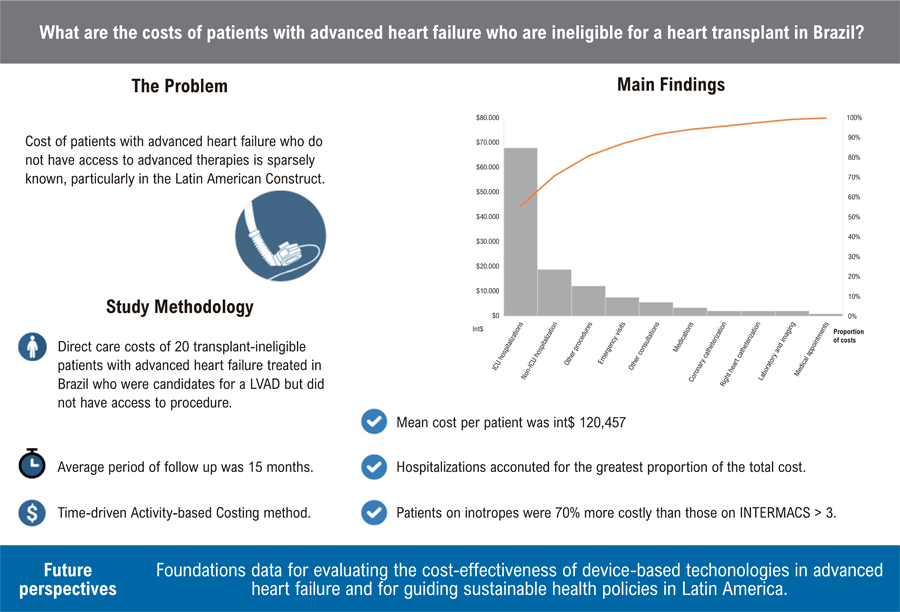
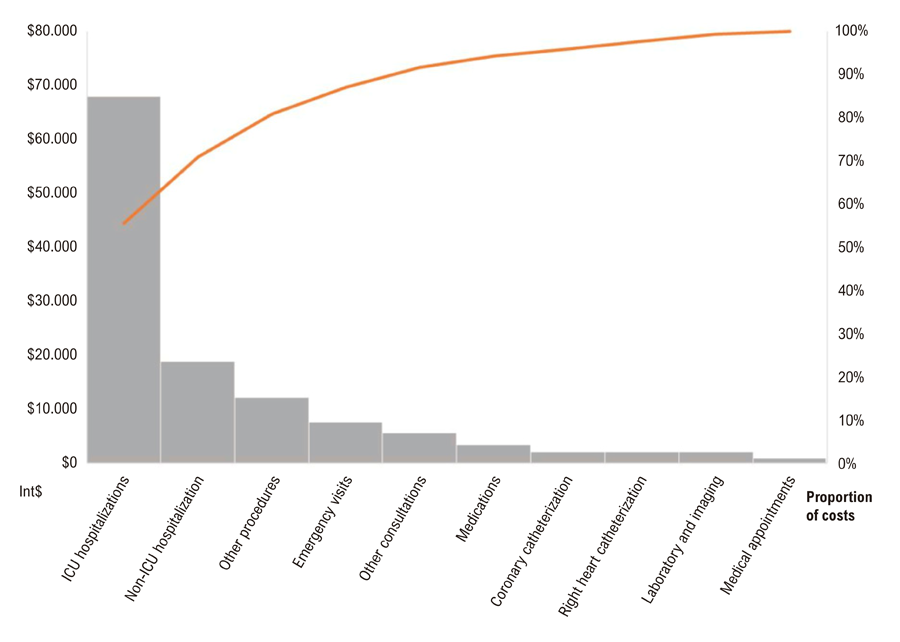
The average cost per patient was Int$ 120,457 (SD 78,029), which represents a mean monthly cost of Int$ 8,030. Table 4 describes the cost composition per patient included in the study, and Figure 2, the cost composition proportion. Patients spent 31 (SD 30) days in ICUs and 53 (SD 47) days in non-ICU units between the date of LVAD indication and the end of the study follow-up. Indeed, hospitalizations represented more than two-thirds of the total cost (56% in intensive care, and 16% in non-ICU care). Medications exclusively dispensed in-hospital accounted for 3% of the average overall cost.
The most frequent cardiac procedure among studied patients was right heart catheterization (RHC) (18 patients), with an average cost of Int$ 2,045 (SD 1,921). Other invasive and non-invasive cardiac procedures included hemodialysis, blood products, endomyocardial biopsies, implantable cardioverter defibrillator and/or cardiac resynchronization therapy insertion, transcatheter edge-to-edge mitral valve repair, peripherally inserted central catheter insertion, coronary angioplasty, external electrical cardioversion and intra-aortic balloon pump (IABP) implantation. None of the study patients received a temporary mechanical circulatory support device other than IABP since they were not transplant-eligible, and bridging to a LVAD was not possible.
Overall, patients with advanced HF demonstrated high health care resource utilization and cost variability, with more patients registering a total cost higher than the percentile 75 of the total sample, and less patients with cost values lower than the percentile 25. Figures 3A and 3B illustrate the individual variability of total costs and the individual total of days hospitalized in the ward or in an ICU. Patients spent around 30% of the study period hospitalized (range 0-100%). The small sample size did not allow statistical comparisons among patients with distinct resource consumption patterns.
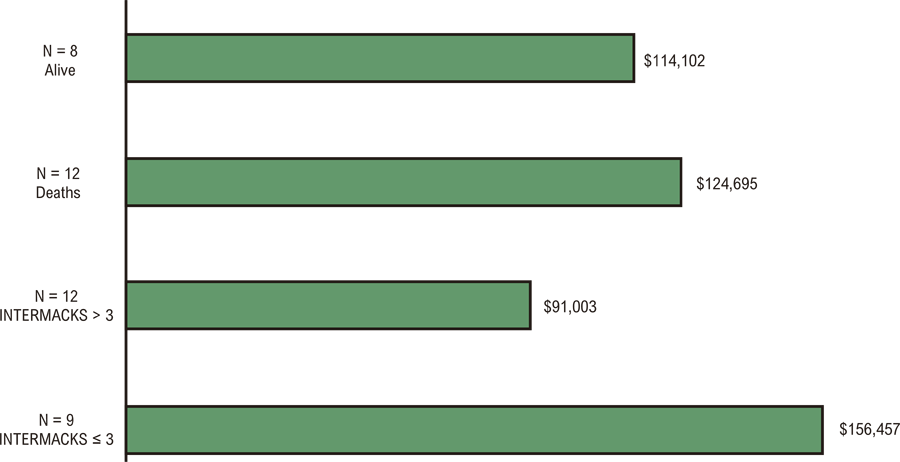
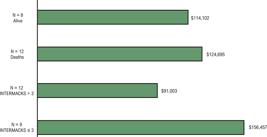
Average total costs per patient were further analyzed based on the INTERMACS profile (INTERMACS ≤ 3 vs. > 3) at the time of LVAD indication, continuing through to either death or study completion during the follow-up period (Figure 4). Overall, patients in poorer clinical condition (INTERMACS ≤ 3) incurred costs nearly 70% higher than those in better status (p = 0.036). Meanwhile, patients who died during follow-up had similar total costs compared to those who survived until the end of the study (p= 0.399). Higher expenses with hospitalizations, procedures, and tests largely drove the cost variability between groups of INTERMACS status. The mortality was equivalent, as six patients died in each of the two INTERMACS groups. Patients with INTERMACS ≤ 3 spent an average of 112 (SD 53) days in the hospital, while those with INTERMACS > 3 spent an average of 62 (SD 52) days.
Discussion
This study reports the direct medical costs encountered among patients with advanced HF who are unable to receive advanced therapies (heart transplantation or LVAD) within the Brazilian public health system context. Among severely ill patients with high mortality the average treatment cost was high, reaching Int$ 120,457 in a 15-month follow-up period. The Central Illustration summarizes the main findings.
Cost of care analyses in medically managed advanced HF patients who are not eligible for life-prolonging therapy remain limited. Russo et al.,19 in 2008, evaluated the medical management arm of the Randomized Evaluation of Mechanical Assistance for the Treatment of Congestive HF trial, and found that the average cost of care during the final two years of life was USD$156,169, with 50.5% (USD$78,880.39) incurred in the last six months.19 Our contemporary data confirms that medical management for this vulnerable patient population continues to be costly, particularly among those with greater clinical severity at the time LVAD therapy is considered. Healthcare costs and resource utilization escalate in patients who die, despite their shorter lifespan. This suggests that one potential strategy to reduce costs may involve earlier identification of patients with a markedly declining clinical trajectory. The lack of timely referral for advanced therapies remains a challenge, but as our cost analysis indicates, it may represent a critical opportunity for intervention.10,20
The observed costs associated with advanced HF differ substantially from those incurred by patients with chronic, stable HF. A previous study employing microcosting techniques to assess ambulatory expenses found that the annual cost for patients in New York Heart Association (NYHA) functional class I was Int$ 510, whereas those in NYHA class III/IV accounted for Int$ 1334 per year.21 As expected, patients with more severe disease were more resource-intensive, with up to 74% of their costs attributed to diagnostic tests and procedures. These findings further support the need for earlier identification of high-risk patients and suggest that greater attention to the cost-effectiveness of advanced therapies may be warranted. Such insights could inform more efficient healthcare resource allocation policies, particularly within publicly funded systems.
In addition to the direct costs related to the treatment of advanced HF, indirect costs are also relevant but remain poorly quantified in most scenarios. The literature suggests that indirect costs may account for up to 40% of the total cost of disease management.22,23 Since our study assessed only direct healthcare costs, including medications, we should be cautious when interpreting the present data. Nonetheless, it is likely that our estimates underestimate the actual societal burden. Comprehensive evaluations of the economic impact of HF on the healthcare system should consider factors such as loss of productivity for patients and/or family members, the need for caregivers, medication acquisition, and transportation for frequent visits to healthcare facilities for consultations and diagnostic tests. Unfortunately, indirect costs are inadequately captured by current Brazilian electronic health systems and administrative databases. Therefore, our findings likely underrepresent the total cost associated with the medical management of advanced HF.
Our findings highlight the importance of conducting cost-effectiveness studies for treatment options aimed at salvaging patients with advanced HF. Previous studies evaluating LVADs suggested unfavorable cost-effectiveness; however, these analyses are now outdated, as they were based on legacy systems.24 With advancements in LVAD technology and improvements in medical management, there has been a notable reduction in hospitalizations and overall healthcare resource utilization.25,26
A recent analysis conducted in the United Kingdom using the contemporary HeartMate 3 LVAD for destination therapy demonstrated cost-effectiveness thresholds that are meaningful for public payers. This study reported an incremental cost-effectiveness ratio (ICER) of £47,361 per quality-adjusted life year (QALY) gained compared to optimal medical therapy, with even more favorable ratios observed among sicker patients (INTERMACS < 3).16We hope that studies like ours can contribute valuable data to future cost-effectiveness or cost-utility analyses based on real-world evidence.
A major limitation of our study lies in its exclusive focus on direct healthcare costs, with limited attention to indirect costs (as previously discussed). Although hospitalizations were the primary financial driver for the patients included in this analysis, other direct costs—such as outpatient medication administration—were not accounted for. Additionally, the direct hospital costs were derived from a single publicly funded center in southern Brazil, and the financial structure of this specific institution influenced the unit cost estimates used in our analysis.
We were unable to address potential cost variations across different hospital systems, individual resource utilization, and cost allocations between private and public payer systems. This report provides a real-world reference for the costs associated with treating patients with advanced HF who are otherwise eligible for LVAD therapy. These patients often present with a heterogeneous and dynamic disease trajectory, with comorbidities significantly impacting prognosis and clinical outcomes.
To standardize the study period, we used the time of indication for advanced therapies as a reference point. However, many patients may have been referred late in their disease course, as they were not considered candidates for heart transplantation. Importantly, this is a hypothesis-generating study with a limited sample size, which should be considered when interpreting and applying the findings. Overall, we believe that the actual costs of care for advanced HF may have been underestimated.
Conclusion
This study presents a comprehensive evaluation of direct healthcare costs associated with patients with advanced HF who are candidates for destination LVAD therapy but are unable to receive this life-saving treatment. Our findings lay the groundwork for future economic analyses aimed at evaluating both existing and emerging healthcare technologies for advanced HF, with the ultimate goal of informing financially sustainable models of effective care.

– Proportions of cost components for the overall patient cohort. ICU: intensive care unit; Int$, international dollars. Other procedures include hemodialysis, blood products, endomyocardial biopsies, implantable cardioverter defibrillator and/or cardiac resynchronization therapy insertion, transcatheter edge-to-edge mitral valve repair, peripherally inserted central catheter insertion, coronary angioplasty, external electrical cardioversion and intra-aortic balloon pump implantation.

Acknowledgement
This study was funded by Abbott Laboratories through a research collaboration with Fundação Médica do Rio Grande do Sul. The sponsor had no involvement in data collection, analysis strategies, or decisions regarding publication.
References
-
1 Shahim B, Kapelios CJ, Savarese G, Lund LH. Global Public Health Burden of Heart Failure: An Updated Review. Card Fail Rev. 2023;9:e11. doi: 10.15420/cfr.2023.05.
» https://doi.org/10.15420/cfr.2023.05 -
2 Subramaniam AV, Weston SA, Killian JM, Schulte PJ, Roger VL, Redfield MM, et al. Development of Advanced Heart Failure: A Population-Based Study. Circ Heart Fail. 2022;15(5):e009218. doi: 10.1161/CIRCHEARTFAILURE.121.009218.
» https://doi.org/10.1161/CIRCHEARTFAILURE.121.009218 -
3 Mehra MR, Canter CE, Hannan MM, Semigran MJ, Uber PA, Baran DA, et al. The 2016 International Society for Heart Lung Transplantation Listing Criteria for Heart Transplantation: A 10-Year Update. J Heart Lung Transplant. 2016;35(1):1-23. doi: 10.1016/j.healun.2015.10.023.
» https://doi.org/10.1016/j.healun.2015.10.023 -
4 Mehra MR, Cleveland JC Jr, Uriel N, Cowger JA, Hall S, Horstmanshof D, et al. Primary Results of Long-Term Outcomes in the MOMENTUM 3 Pivotal Trial and Continued Access Protocol Study Phase: A Study of 2200 HeartMate 3 Left Ventricular Assist Device Implants. Eur J Heart Fail. 2021;23(8):1392-400. doi: 10.1002/ejhf.2211.
» https://doi.org/10.1002/ejhf.2211 -
5 Molina EJ, Shah P, Kiernan MS, Cornwell WK 3rd, Copeland H, Takeda K, et al. The Society of Thoracic Surgeons Intermacs 2020 Annual Report. Ann Thorac Surg. 2021;111(3):778-92. doi: 10.1016/j.athoracsur.2020.12.038.
» https://doi.org/10.1016/j.athoracsur.2020.12.038 -
6 Colvin M, Smith JM, Ahn Y, Skeans MA, Messick E, Goff R, et al. OPTN/SRTR 2019 Annual Data Report: Heart. Am J Transplant. 2021;21(Suppl 2):356-440. doi: 10.1111/ajt.16492.
» https://doi.org/10.1111/ajt.16492 -
7 de By TMMH, Schoenrath F, Veen KM, Mohacsi P, Stein J, Alkhamees KMM, et al. The European Registry for Patients with Mechanical Circulatory Support of the European Association for Cardio-Thoracic Surgery: Third Report. Eur J Cardiothorac Surg. 2022;62(1):ezac032. doi: 10.1093/ejcts/ezac032.
» https://doi.org/10.1093/ejcts/ezac032 -
8 Mehra MR, Goldstein DJ, Cleveland JC, Cowger JA, Hall S, Salerno CT, et al. Five-Year Outcomes in Patients with Fully Magnetically Levitated vs Axial-Flow Left Ventricular Assist Devices in the MOMENTUM 3 Randomized Trial. JAMA. 2022;328(12):1233-42. doi: 10.1001/jama.2022.16197.
» https://doi.org/10.1001/jama.2022.16197 -
9 Nayak A, Hall SA, Uriel N, Goldstein DJ, Cleveland JC Jr, Cowger JA, et al. Predictors of 5-Year Mortality in Patients Managed with a Magnetically Levitated Left Ventricular Assist Device. J Am Coll Cardiol. 2023;82(9):771-81. doi: 10.1016/j.jacc.2023.05.066.
» https://doi.org/10.1016/j.jacc.2023.05.066 -
10 Mehra MR, Nayak A, Desai AS. Life-Prolonging Benefits of LVAD Therapy in Advanced Heart Failure: A Clinician's Action and Communication Aid. JACC Heart Fail. 2023;11(8 Pt 1):1011-7. doi: 10.1016/j.jchf.2023.05.013.
» https://doi.org/10.1016/j.jchf.2023.05.013 -
11 Nayak A, Mehra MR. Global Challenges in Left Ventricular Assist Device Therapy: A Tale Across Two Continents. Eur J Heart Fail. 2022;24(7):1316-8. doi: 10.1002/ejhf.2570.
» https://doi.org/10.1002/ejhf.2570 -
12 Lim HS, Shaw S, Carter AW, Jayawardana S, Mossialos E, Mehra MR. A Clinical and Cost-Effectiveness Analysis of the HeartMate 3 Left Ventricular Assist Device for Transplant-Ineligible Patients: A United Kingdom Perspective. J Heart Lung Transplant. 2022;41(2):174-86. doi: 10.1016/j.healun.2021.11.014.
» https://doi.org/10.1016/j.healun.2021.11.014 -
13 Goldstein DJ, Naka Y, Horstmanshof D, Ravichandran AK, Schroder J, Ransom J, et al. Association of Clinical Outcomes with Left Ventricular Assist Device Use by Bridge to Transplant or Destination Therapy Intent: The Multicenter Study of MagLev Technology in Patients Undergoing Mechanical Circulatory Support Therapy with HeartMate 3 (MOMENTUM 3) Randomized Clinical Trial. JAMA Cardiol. 2020;5(4):411-9. doi: 10.1001/jamacardio.2019.5323.
» https://doi.org/10.1001/jamacardio.2019.5323 -
14 Truby LK, Rogers JG. Advanced Heart Failure: Epidemiology, Diagnosis, and Therapeutic Approaches. JACC Heart Fail. 2020;8(7):523-36. doi: 10.1016/j.jchf.2020.01.014.
» https://doi.org/10.1016/j.jchf.2020.01.014 -
15 Jorde UP, Saeed O, Koehl D, Morris AA, Wood KL, Meyer DM, et al. The Society of Thoracic Surgeons Intermacs 2023 Annual Report: Focus on Magnetically Levitated Devices. Ann Thorac Surg. 2024;117(1):33-44. doi: 10.1016/j.athoracsur.2023.11.004.
» https://doi.org/10.1016/j.athoracsur.2023.11.004 -
16 Dew MA, DiMartini AF, Dobbels F, Grady KL, Jowsey-Gregoire SG, Kaan A, et al. The 2018 ISHLT/APM/AST/ICCAC/STSW Recommendations for the Psychosocial Evaluation of Adult Cardiothoracic Transplant Candidates and Candidates for Long-Term Mechanical Circulatory Support. J Heart Lung Transplant. 2018;37(7):803-23. doi: 10.1016/j.healun.2018.03.005.
» https://doi.org/10.1016/j.healun.2018.03.005 -
17 Etges APBS, Cruz LN, Notti RK, Neyeloff JL, Schlatter RP, Astigarraga CC, et al. An 8-Step Framework for Implementing Time-Driven Activity-Based Costing in Healthcare Studies. Eur J Health Econ. 2019;20(8):1133-45. doi: 10.1007/s10198-019-01085-8.
» https://doi.org/10.1007/s10198-019-01085-8 -
18 Talha KM, Anker SD, Butler J. SGLT-2 Inhibitors in Heart Failure: A Review of Current Evidence. Int J Heart Fail. 2023;5(2):82-90. doi: 10.36628/ijhf.2022.0030.
» https://doi.org/10.36628/ijhf.2022.0030 -
19 Russo MJ, Gelijns AC, Stevenson LW, Sampat B, Aaronson KD, Renlund DG, et al. The Cost of Medical Management in Advanced Heart Failure during the Final Two Years of Life. J Card Fail. 2008;14(8):651-8. doi: 10.1016/j.cardfail.2008.06.005.
» https://doi.org/10.1016/j.cardfail.2008.06.005 -
20 Mehra MR, Gustafsson F. Left Ventricular Assist Devices at the Crossroad of Innovation in Advanced Heart Failure. J Card Fail. 2021;27(11):1291-4. doi: 10.1016/j.cardfail.2021.06.003.
» https://doi.org/10.1016/j.cardfail.2021.06.003 -
21 Etges APBS, Liu HH, Jones P, Polanczyk CA. Value-Based Reimbursement as a Mechanism to Achieve Social and Financial Impact in the Healthcare System. J Health Econ Outcomes Res. 2023;10(2):100-3. doi: 10.36469/001c.89151.
» https://doi.org/10.36469/001c.89151 -
22 Cook C, Cole G, Asaria P, Jabbour R, Francis DP. The Annual Global Economic Burden of Heart Failure. Int J Cardiol. 2014;171(3):368-76. doi: 10.1016/j.ijcard.2013.12.028.
» https://doi.org/10.1016/j.ijcard.2013.12.028 -
23 Lesyuk W, Kriza C, Kolominsky-Rabas P. Cost-of-Illness Studies in Heart Failure: A Systematic Review 2004-2016. BMC Cardiovasc Disord. 2018;18(1):74. doi: 10.1186/s12872-018-0815-3.
» https://doi.org/10.1186/s12872-018-0815-3 -
24 Rogers JG, Bostic RR, Tong KB, Adamson R, Russo M, Slaughter MS. Cost-Effectiveness Analysis of Continuous-Flow Left Ventricular Assist Devices as Destination Therapy. Circ Heart Fail. 2012;5(1):10-6. doi: 10.1161/CIRCHEARTFAILURE.111.962951.
» https://doi.org/10.1161/CIRCHEARTFAILURE.111.962951 -
25 Slaughter MS, Bostic R, Tong K, Russo M, Rogers JG. Temporal Changes in Hospital Costs for Left Ventricular Assist Device Implantation. J Card Surg. 2011;26(5):535-41. doi: 10.1111/j.1540-8191.2011.01292.x.
» https://doi.org/10.1111/j.1540-8191.2011.01292.x -
26 Mehra MR, Salerno C, Cleveland JC, Pinney S, Yuzefpolskaya M, Milano CA, et al. Healthcare Resource Use and Cost Implications in the MOMENTUM 3 Long-Term Outcome Study. Circulation. 2018;138(18):1923-34. doi: 10.1161/CIRCULATIONAHA.118.035722.
» https://doi.org/10.1161/CIRCULATIONAHA.118.035722
-
Study association:
This article is part of the thesis of master submitted by Livia Adams Goldraich, from Programa de pós-graduação em Cardiologia e ciências cardiovascular da UFRGS.
-
Ethics approval and consent to participate:
This study was approved by the Ethics Committee of the Hospital de Clínicas de Porto Alegre under the protocol number 2019-0500. All the procedures in this study were in accordance with the 1975 Helsinki Declaration, updated in 2013.
-
Use of Artificial Intelligence:
The authors did not use any artificial intelligence tools in the development of this work.
-
Data Availability Statement:
The underlying content of the research text is contained within the manuscript.
-
Sources of funding:
This study was funded by Abbott Laboratories through a research collaboration with Fundação Médica do Rio Grande do Sul. The sponsor did not have a role in data collection, analysis strategies or decisions for publication.
Edited by
-
Editor responsible for the review:
Natália Olivetti
The underlying content of the research text is contained within the manuscript.