Synergistic effects of carbon fibre and limestone powder on the mechanical performance and eco-efficiency of electrically conductive cementitious composites
Abstract
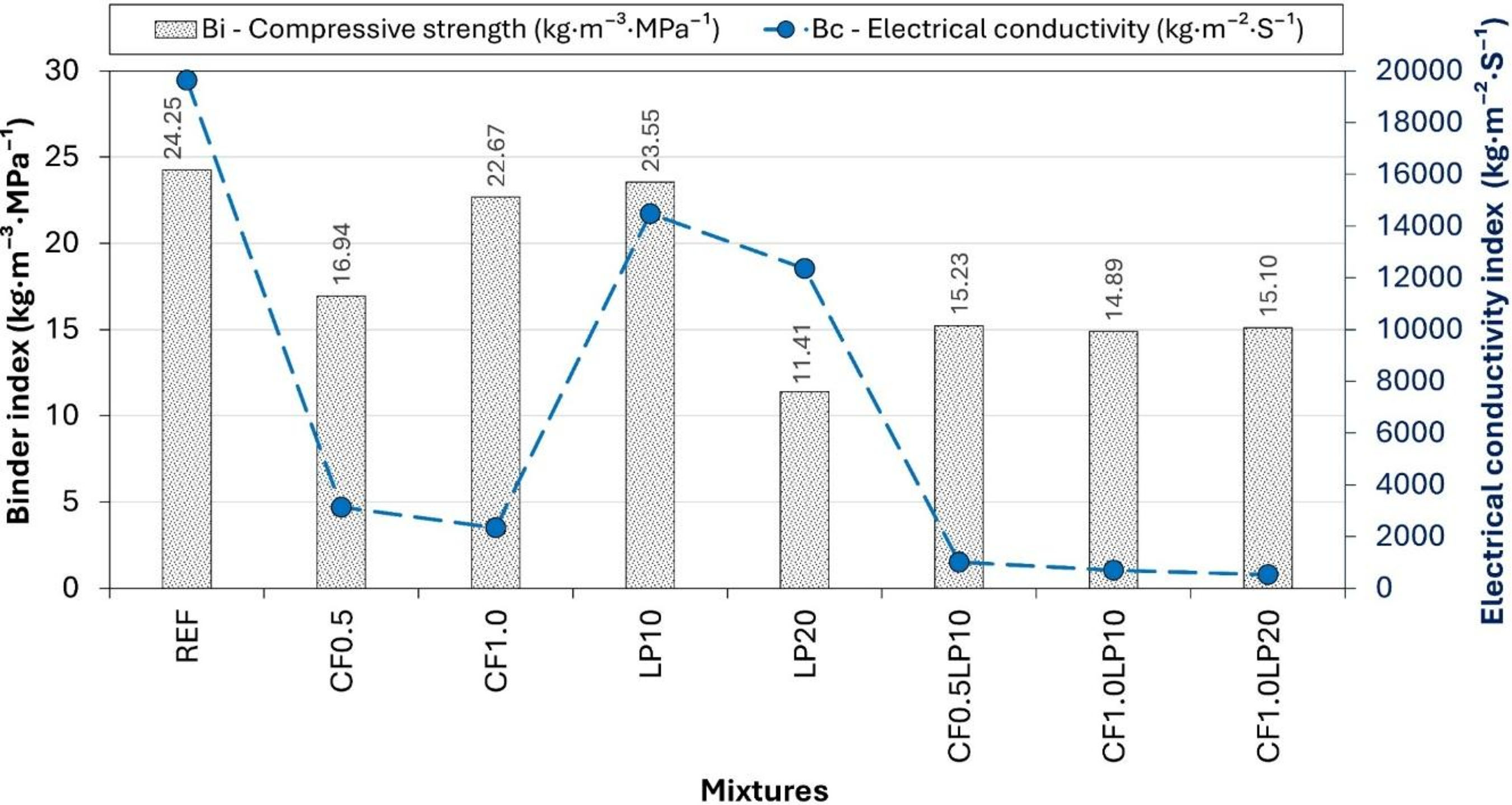
This study evaluates the synergistic effects of carbon fibre and limestone powder on electrically conductive cementitious composites (ECCC) properties, considering fresh and hardened states, electrical conductivity, eco-efficiency, and microstructure. An experimental design comprising eight mixtures was adopted, varying the carbon fibre content (0.00, 0.50, and 1.00 wt.%) and replacing cement with limestone powder (0.00, 10.00, and 20.00 wt.%). The investigated properties included consistency, compressive and flexural tensile strengths, elastic modulus, water absorption, electrical resistivity, and microstructural analysis by scanning electron microscopy. A polynomial regression model was used to evaluate the significance of the main effects and their interactions. The combination of 0.5% carbon fibre and 10–20% limestone powder yielded the best results, with compressive strength gains of up to 46% and reductions in electrical resistivity exceeding 97%. The eco-efficiency indices (Bi and Bs) confirm that hybrid optimisation strategies significantly reduce cement demand while enhancing the overall performance of ECCC. This strategy represents a viable alternative to produce high-performance and eco-efficient ECCC suitable for applications in smart infrastructure.
Keywords
Carbon fibre; Limestone powder; Electrical conductivity; Smart materials; Eco-efficiency
Resumo
Este estudo avalia os efeitos sinérgicos da fibra de carbono e do filer calcário nas propriedades de compósitos cimentícios condutivos (CCC), considerando o estado fresco, endurecido, condutividade elétrica, ecoeficiência e microestrutura. Um planejamento experimental com oito composições foi adotado variando o teor de fibra de carbono (0,00%; 0,50% e 1,00% em massa) e a substituição do cimento por filer calcário (0,00%; 10,00% e 20,00% em massa). As propriedades investigadas englobam consistência, resistências à compressão e à tração na flexão, módulo de elasticidade, absorção de água, resistividade elétrica e análise microestrutural por microscopia eletrônica de varredura. Um modelo por regressão polinomial foi utilizado para avaliar a significância dos efeitos principais e suas interações. A combinação de 0,5% de fibra de carbono e 10–20% de filer calcário obteve os melhores resultados, com ganhos de até 46% na resistência à compressão e redução superior a 97% na resistividade elétrica. Os índices de ecoeficiência (Bi e Bs) confirmam que estratégias híbridas de otimização reduzem significativamente a demanda por cimento, ao mesmo tempo em que aprimoram o desempenho dos CCC. Essa estratégia representa uma alternativa viável para a produção de CCC de alto desempenho e ecoeficientes, adequados para aplicações em infraestruturas inteligentes.
Palavras-chave
Fibra de carbono; Filer calcário; Condutividade elétrica; Materiais inteligentes; Ecoeficiência
1 Introduction
Cement-based materials are generally electrically insulating, particularly under dry conditions. Their electrical behaviour is primarily governed by porosity, tortuosity and pore connectivity. In the cementitious matrix, electrical conductivity occurs predominantly through electrolytic conduction, driven by ion mobility (e.g., Ca2+, Na+, K+, OH-, and SO42-) within the interconnected pore network in the presence of moisture (Reza et al., 2001; Chen et al., 2004; Han et al., 2020; Araújo; Macioski; Medeiros, 2022). Electrical resistivity (ER) is a bulk property that reflects the ease with which ions can move through the matrix. This property is influenced by multiple factors, including the water-to-binder ratio, aggregate-to-binder ratio, use of supplementary cementitious materials (SCM), particle packing, saturation condition, temperature and cement composition (Medeiros, 2001; Layssi et al., 2015; Azarsa; Gupta, 2017; Araújo et al., 2022; Araújo et al., 2024; Medeiros et al., 2024; Medeiros et al., 2025). Incorporating electrically conductive fillers (ECF) in cementitious composites can convert their insulating nature into a conductive one by forming conductive networks. This enables functional properties, leading to applications for self-sensing, self-heating, electromagnetic interference shielding and cathodic protection (Li et al., 2022a; Lu et al., 2023). Commonly used ECFs in electrically conductive cement composites (ECCC) include carbon fibres, graphite, graphene, carbon nanotubes, carbon nano fibres, steel fibres, and steel slag. The formation and efficiency of conductive networks depend on the dispersion, morphology, and content of these conductive phases (Lu et al., 2023).
Among the ECF, carbon fibres have attracted particular attention owing to their excellent mechanical properties, high axial elastic modulus, and superior electrical conductivity (Chen et al., 2004; Sassani et al., 2017; Han et al., 2020; Liu et al., 2020). While adding carbon fibres tends to reduce the workability of fresh mixtures (Safiuddin et al., 2018; Li et al., 2021), it enhances stress distribution and crack-bridging capabilities when adequately dispersed. Moreover, carbon fibres can improve bond strength between aggregates and the cement matrix, thereby mitigating crack propagation (Abreu et al., 2020; Akbar; Liew, 2020; Li et al., 2021). The mechanical contribution of carbon fibre is closely related to its length: shorter fibres may promote compressive strength, whereas longer fibres improve tensile performance and ductility (Akbar; Liew, 2020; Li et al., 2021).
Despite these advantages, the large-scale application of carbon fibres remains limited due to challenges in achieving homogeneous dispersion within the cement matrix. Consequently, optimising the mix design is essential to improve fibre efficiency while maintaining the mechanical and sensing performance of the composite. Various strategies have been proposed to address this issue, including using SCM and incorporating organic admixtures, such as methyl cellulose, which contribute to better adhesion of the fibres in the cement matrix. SCM not only enhances matrix performance but also improves fibre dispersion. Physically, increased particle collisions facilitate fibre separation and improve packing density through inert fillers. Chemically, pozzolanic reactions from reactive SCM refine the microstructure. Another significant advantage of carbon fibres is their high corrosion resistance compared to conventional steel fibres, which enhances durability, especially in aggressive environments. Within the context of ECCC, the micrometric dimensions of carbon fibres allow the formation of percolated conductive networks, substantially improving the electrical response of cement-based composites (Dehghanpour, 2023).
Although the electrical and mechanical effects of carbon-based ECF in ECCC have been extensively studied (Reza et al., 2001; Chen et al., 2004; Vipulanandan; Garas, 2008; Manchiryal; Neithlalath, 2009; Sassani et al., 2017; Bai et al., 2020; Liu et al., 2020; Li et al., 2022a, 2022b; Dehghanpour, 2023), limited attention has been given to their environmental impact or strategies to reduce cement content while maintaining their properties. In parallel with the development of multifunctional cementitious systems, the construction industry has increasingly focused on sustainable alternatives, given that Portland cement production remains a significant source of CO2-equivalent emissions (Miller et al., 2016; Medeiros et al., 2019).
In this context, industrial by-products such as limestone powder have attracted attention as viable alternatives offering environmental benefits. Limestone powder consists of finely ground particles derived from manufactured sand production, and its incorporation promotes eco-efficiency while providing a sustainable solution for locally available mineral residues. Limestone powder exerts both physical and chemical influences on the cementitious matrices.
Physically, it modifies the particle size distribution and improves particle packing (Soto et al., 2023). Chemically, it affects the hydration process through nucleation and dilution effects (Campos et al., 2019; Panesar; Zhang, 2020). Due to their wide availability and low cost, these fillers represent an attractive option for partial cement replacement, particularly given the high carbon footprint associated with cement production (Wang et al., 2018; Campos et al., 2019; Demirhan et al., 2019; Yu et al., 2023). In Brazil, the standard NBR 16697 (ABNT, 2018) allows limestone filler incorporation of up to 50 wt.% in cements for non-structural applications and up to 25 wt.% for structural purposes. Nonetheless, the literature presents conflicting findings regarding its influence on mechanical performance. Several studies report reductions in compressive strength, splitting tensile strength, ultrasonic pulse velocity (UPV), carbonation resistance, and increased water absorption, particularly at high replacement levels (Ryou et al., 2015; Demirhan et al., 2019; Souza et al., 2020; Martins et al., 2021). These adverse effects are typically attributed to the inert nature of limestone powder and the reduced availability of binder for hydration reactions, namely the dilution effect (Demirhan et al., 2019; Souza et al., 2020).
Conversely, another investigation has shown that mechanical properties can be improved when limestone fines are combined with reactive SCM (Medjigbodo et al., 2018). Such improvements are often associated with the physical filler effect, in which limestone particles act as nucleation sites for hydration products, accelerating early-age hydration and refining the matrix microstructure (Tan et al., 2013; Soto et al., 2024). Although limestone powder is a non-reactive material, its fineness and particle size distribution critically influence its behaviour in cement hydration.
Despite these limitations concerning limestone powder, its incorporation into ECCC remains unexplored, particularly regarding its interactions with carbon-based materials and overall influence on electrical behaviour. Integrating such a type of fine may offer a promising pathway to balance electrical functionality, environmental performance and mechanical properties. Therefore, this study aims to evaluate the synergistic effects of carbon fibre and limestone powder on ECCC properties, considering fresh and hardened states, electrical conductivity, eco-efficiency, and microstructure. The synergistic effect is expected because fibrous ECF combined with fine fillers can improve fibre dispersion through physical collisions during mixing, promote nucleation sites that enhance hydration and improve the effectiveness of fibres on the cement matrix (Wang; Aslani, 2019; Li et al., 2022a; Oumer et al., 2024). This work addresses a research gap concerning the feasibility of using limestone powder in the ECCC system. Accordingly, the guiding research question of this study is: Is limestone powder a viable addition to ECCC mixtures, considering its effects on electrical, mechanical, eco-efficiency, and microstructural properties? To this end, an incomplete full-factorial experimental design was adopted. The parameters investigated were:
-
carbon fibre content (0.00, 0.50 and 1.00 wt.%); and
-
cement replacement by limestone powder (0.00, 10.00 and 20.00 wt.%).
The evaluated properties included fresh-state workability and, in the hardened state at 28 days, compressive strength, flexural strength, static elastic modulus, water absorption, and surface and volumetric ER. A polynomial regression model was employed to assess the individual and synergistic effects of the variables on the measured responses. Finally, an eco-efficiency analysis was performed to evaluate the environmental and functional performance of the mixtures.
This work pioneers the integrated assessment of cementitious composites' mechanical, electrical, and eco-efficiency properties containing carbon fibre and limestone powder. The study clearly outlines a pathway towards sustainable, self-sensing construction materials by demonstrating that partial cement replacement can lower the carbon footprint without compromising structural or functional performance. These insights establish a foundation for developing next-generation high-performance, durable, and substantially greener materials for use in smarter infrastructure.
2 Experimental program
2.1 Design of experiments
The main objective of this study is to evaluate the synergistic effects of carbon fibre (three levels) and limestone powder (three levels) on ECCC properties, considering fresh and hardened states, electrical conductivity, eco-efficiency, and microstructure. A Design of Experiments (DOE) approach defined the number of combinations to achieve this purpose. Initially, a full-factorial design with nk combinations (n is the number of levels and k the number of factors) was considered, resulting in 32 = 9 mixtures. However, the experimental program was limited to 8 mixtures. Therefore, the experiment can be classified as an incomplete full-factorial design. Despite the missing combination of 0.5 wt.% of carbon fibre and 20 wt.% of limestone powder (CF0.5LP20), the dataset was sufficient to assess the main effects. Table 1 presents each factor level and its corresponding coded value. Coded values were adopted to normalise the variations in the units and ranges of the factors, thereby enabling a more balanced and interpretable statistical analysis (Manchiryal; Neithalath, 2009). Minitab software was used to fit the statistical model based on the second-order polynomial regression shown in Equation 1. An Analysis of Variance (ANOVA) and post hoc Tukey’s test (at a 95% confidence level) were employed to assess the factors' statistical significance and interactions.
Where:
𝑌 is the response variable, corresponding to the evaluated property (e.g., electrical resistivity, mechanical strength, or water absorption), expressed in the specific unit of the property under analysis;
𝛽0 is the intercept coefficient, representing the estimated mean value of Y at the central point of the experimental design;
βi are the linear coefficients, which describe the individual effect of each independent variable Xi on the response;
βii are the quadratic coefficients, accounting for the curvature effects of each factor;
βij are the interaction coefficients, which quantify the combined effects between two independent variables; and
Xi are the coded independent variables (dimensionless), obtained by normalising the real variables around the central point of the design.
Since the variables Xi are coded (dimensionless), all coefficients 𝛽 have the same unit as the response variable Y.
2.2 Materials characterisation
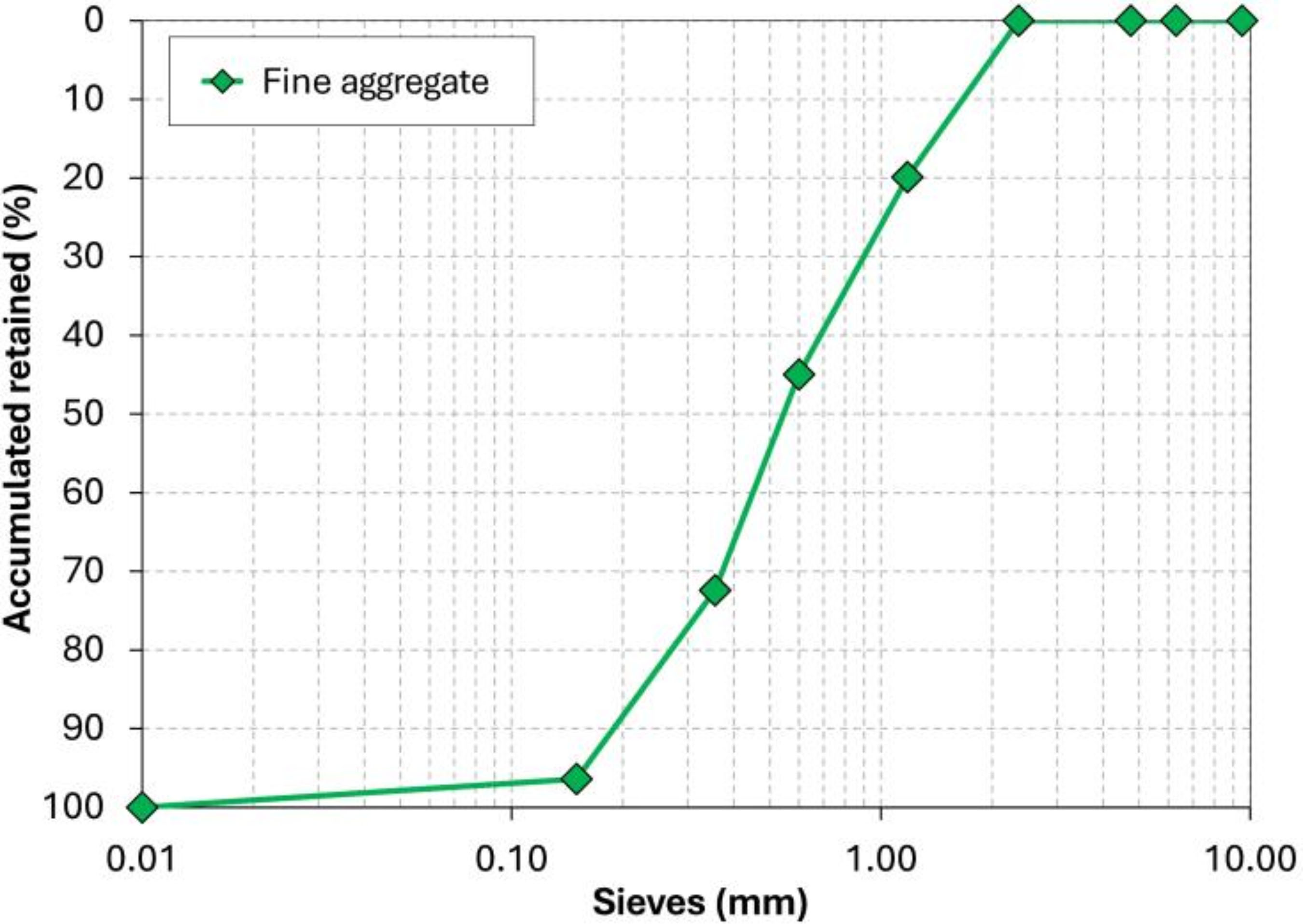
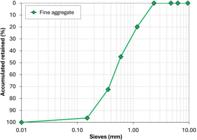
Brazilian high early strength cement, type CP V-ARI (equivalent to ASTM Type III), with a specific gravity of 3.06 g/cm³ (ABNT, 2017), was used as a binder. The fine aggregate is a natural sand with a maximum particle size of 2.36 mm (ABNT, 2022) and a density of 2.48 g/cm³ (ABNT, 2002). Limestone powder has a specific gravity of 2.78 g/cm³. Table 2 presents the chemical composition of the powders, namely CP V-ARI and limestone powder. Figure 1 shows the sand's particle size distribution (ABNT, 2022).
Carbon fibre has a length of 20 mm, a density of 1.82 g/cm³, tension strength of 4 GPa, an elastic modulus of 230 GPa and an elongation at break of 1.7%. To guarantee a proper dispersion of the carbon fibres, hydroxypropyl methylcellulose (HPMC) was incorporated with the dry materials (Sassani et al., 2017; Liu et al., 2020). Graphene powder, with a density of 2.38 g/cm³ (ABNT, 2000), was also used as a conductive 2D material to enhance the electrical conductivity of the cement composite (Bai et al., 2020). HPMC characteristics provided by the manufacturer are presented in Table 3.
A third-generation polycarboxylate-based superplasticiser (SP) with a density of 1.10 g/cm³ and a solids content of 44% (±2%) was used to improve the workability of ECCM.
2.3 Mix design
The mix proportion of the ECCM was 1:2 by mass (fines to aggregate), with a fixed water-to-fines ratio of 0.50. Table 4 presents the material proportions per cubic meter (m³). Carbon fibre contents of 0.00, 0.50, and 1.00 wt.% were used. Cement replacement by limestone powder was carried out at levels of 0.00, 10.00, and 20.00 wt.% of cement. All ratios were selected based on previous studies (Campos et al., 2019; Demirhan et al., 2019; Souza et al., 2020; Li et al., 2021). The mixtures are labelled as REF (reference), CF (carbon fibre), and LP (limestone powder), followed by their respective contents. For example, CF0.5LP10 is an ECCM containing 0.5% carbon fibre and 10% limestone powder. Graphene particles were incorporated at a fixed content of 0.125 wt.% by the mass of fines in all compositions. In addition to their conductive properties, graphene particles can influence the cement matrix due to their two-dimensional structure acting as nucleation sites. They can enhance the formation of hydration products, contributing to improved mechanical and microstructural properties (Araújo et al., 2022; Araújo et al., 2025). HPMC was added at 0.20 wt.%, while the SP content was fixed at 1.00 wt.%.
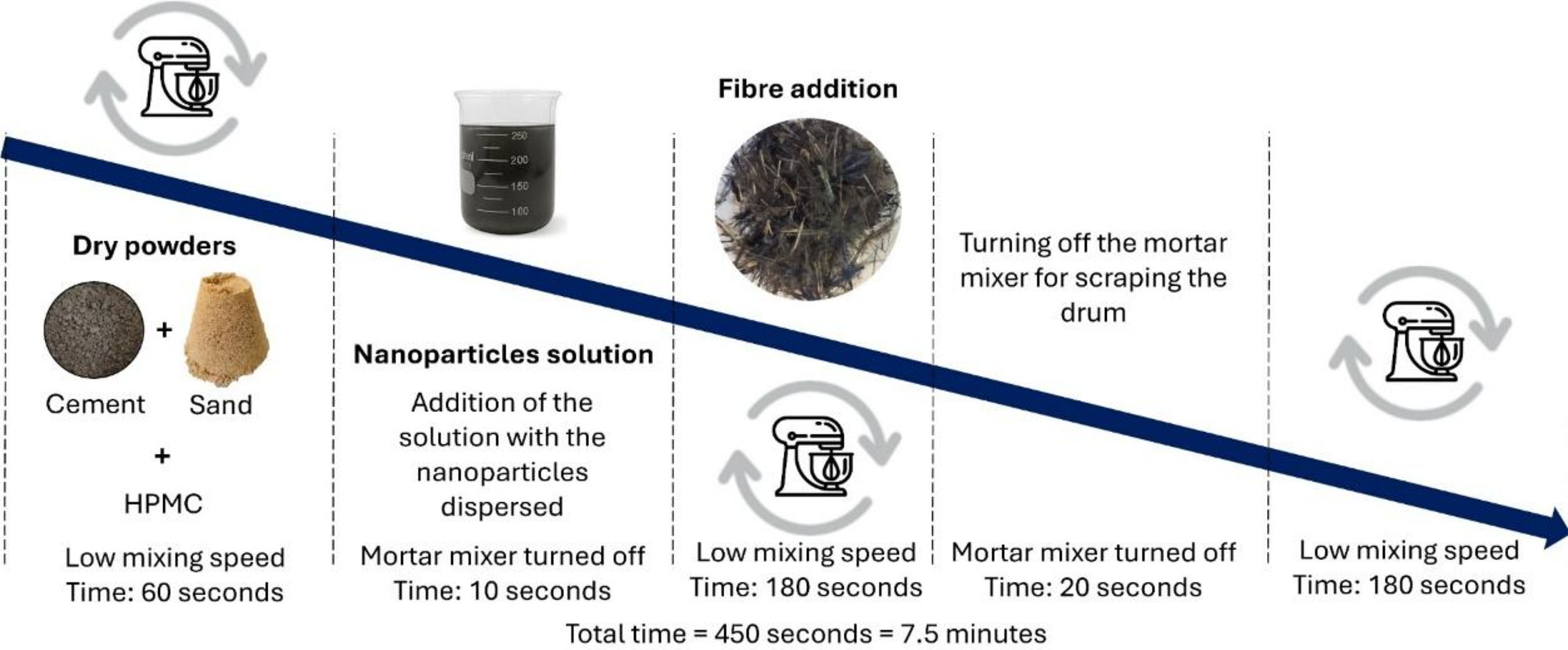
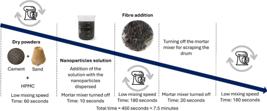
Due to their high specific surface area and hydrophobic nature, graphene nanoparticles tend to agglomerate through van der Waals forces (Araújo et al., 2025). Therefore, before mixing, graphene was dispersed via sonication in a solution of water and SP using an ultrasonic bath (Schester, Model L-100) for 40 minutes at 60 Hz and 160 W. Figure 2 illustrates the mixing procedure. First, all dry powders were blended for 60 seconds at low speed. Subsequently, the sonicated solution was added to the dry mix. In the third step, carbon fibres were manually incorporated into the mixing drum. A 20-second pause was made to scrape the material adhering to the drum walls. Finally, an additional 180 seconds of mixing was applied to ensure uniform consistency in the fresh state.
A thin layer of release oil was applied to the steel moulds before casting to facilitate demoulding. The moulds were filled in two layers; each compacted with 15 drops on a flow table to enhance compaction and minimise air voids. Immediately after casting, a plastic sheet was placed over the moulds to prevent moisture loss to the environment. After 24 hours under laboratory conditions, the specimens were demoulded and cured by immersion in a lime-saturated water tank until the testing age.
2.4 Mechanical and electrical behaviour, ecoefficiency and microstructure
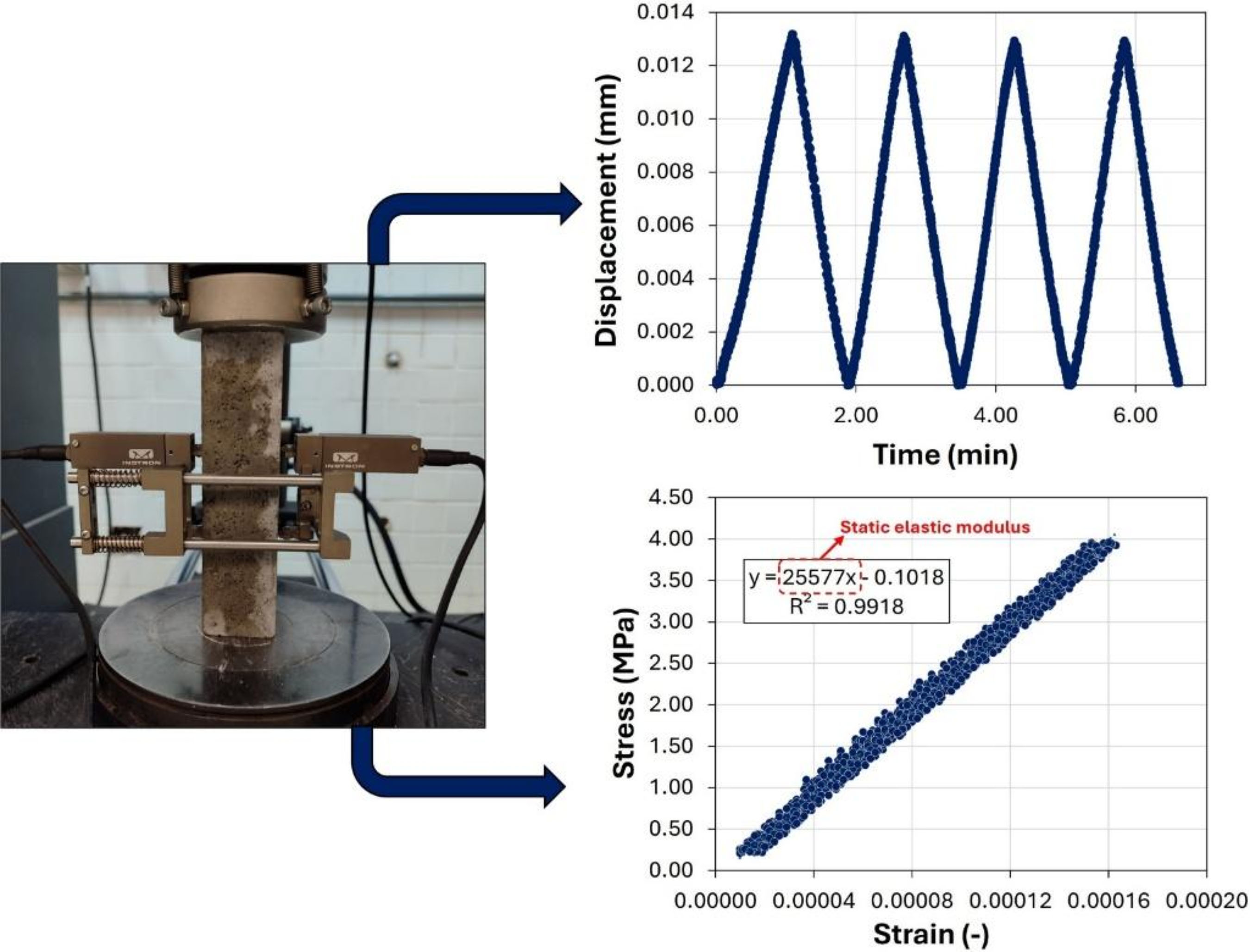
The workability of ECCM was evaluated by flow-table test following the procedures specified in NBR 13276 (ABNT, 2016). Compressive and flexural strength were determined according to the procedure described in NBR 13279 (ABNT, 2005a) in cubic (40x40x40 mm) and prismatic specimens (40x40x160 mm), respectively. The static elastic modulus was evaluated using the method proposed by Marques et al. (2020). This procedure involves applying cyclic loading and unloading (0.375 mm/min) to prismatic specimens (40x40x160 mm), performed using an Instron EMIC 23-300 testing machine. Longitudinal deformations were monitored with displacement transducers. The maximum load applied corresponded to 33% of the compressive strength (secant modulus) at 28 days. The samples used for this test should present parallel ends to prevent second-order effects. Figure 3 illustrates the test setup. A linear regression was applied to the stress-strain data, and the slope of the resulting curve was used as the static elastic modulus.

Water absorption by immersion was measured following the procedure of NBR 9778 (ABNT, 2005b). The dry temperature specified in the standard of 105 ± 5 °C could cause potential microstructural alterations and the formation of cracks due to thermal stresses (Medeiros et al., 2017). Therefore, a lower temperature of 65 ± 3 °C was adopted to minimise potential microstructural damage. At 28 days, before drying, the specimens were removed from the curing tank and wiped to achieve the saturated dry-surface (SSD) condition. The saturated mass (msat, in grams) was then recorded. Following 72 hours of oven drying, the dried mass (ms, in grams) was measured. Water absorption, in percentage, was calculated according to Equation 2.
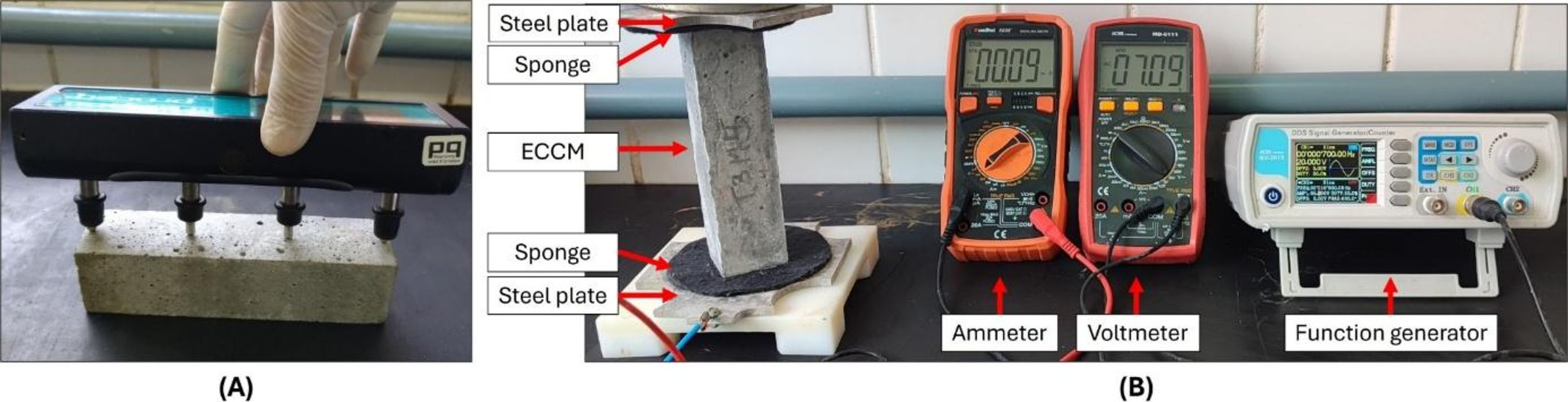
ER was assessed using surface and volumetric methods. The former used a four-point Wenner probe, a PROCEQ Resipod device with 50 mm electrode spacing, following BS EN 12390 (BS, 2023) as presented in Figure 4a.

This standard does not provide a geometric correction factor for the specimen geometry and electrode spacing, 40x40x160 mm and 50 mm, respectively. Therefore, the results are reported as raw values without geometric adjustment. Volumetric or bulk ER was measured using the two-electrode (direct method), employing a function generator operating at 700 Hz and 20V. The setup is illustrated in Figure 4b. The ER by the volumetric method was calculated based on Ohm’s law using Equations 3, 4 and 5:
Where:
R is resistance (Ω), k is the geometric factor (m);
A is the specimen cross-sectional area (m²);
L is its specimen length (m);
V is voltage (V); and
I is electrical current (A).
The voltage and electrical current were recorded using a multimeter and an ammeter. ER measurements for both tests were conducted with the specimens in an SSD condition (Araújo et al., 2022).
Scanning electron microscopy (SEM) analysis was performed at 210 days to investigate the long-term microstructure and the interactions between the additions and the cement matrix. At this age, hydration was halted in the samples. The procedure was conducted on fragments cured for 28 days in lime-saturated water and exposed to air under laboratory conditions for 210 days. To stop hydration and remove water from the pore structure, the samples were immersed in isopropyl alcohol for 24 hours. Subsequently, they were oven-dried at 40 °C until a constant mass was achieved. SEM analysis was carried out using a Zeiss EVO MA 15 microscope.
The eco-efficiency of the ECCM was assessed using the binder index (Bi) proposed by Damineli et al. (2010). Similarly, an electrical conductivity index (Bs) was also considered, since electrical performance is the primary property of ECCM. These indices represent the amount of cement per cubic meter of mixture required to achieve a given property (e.g., compressive strength), mechanical (Bi) or electrical (Bs) behaviour. Bi and Bs were calculated using Equations 6 and 7, respectively. Equation 8 defines the electrical conductivity (σ) in siemens per meter (S/m), which is the inverse of ER.
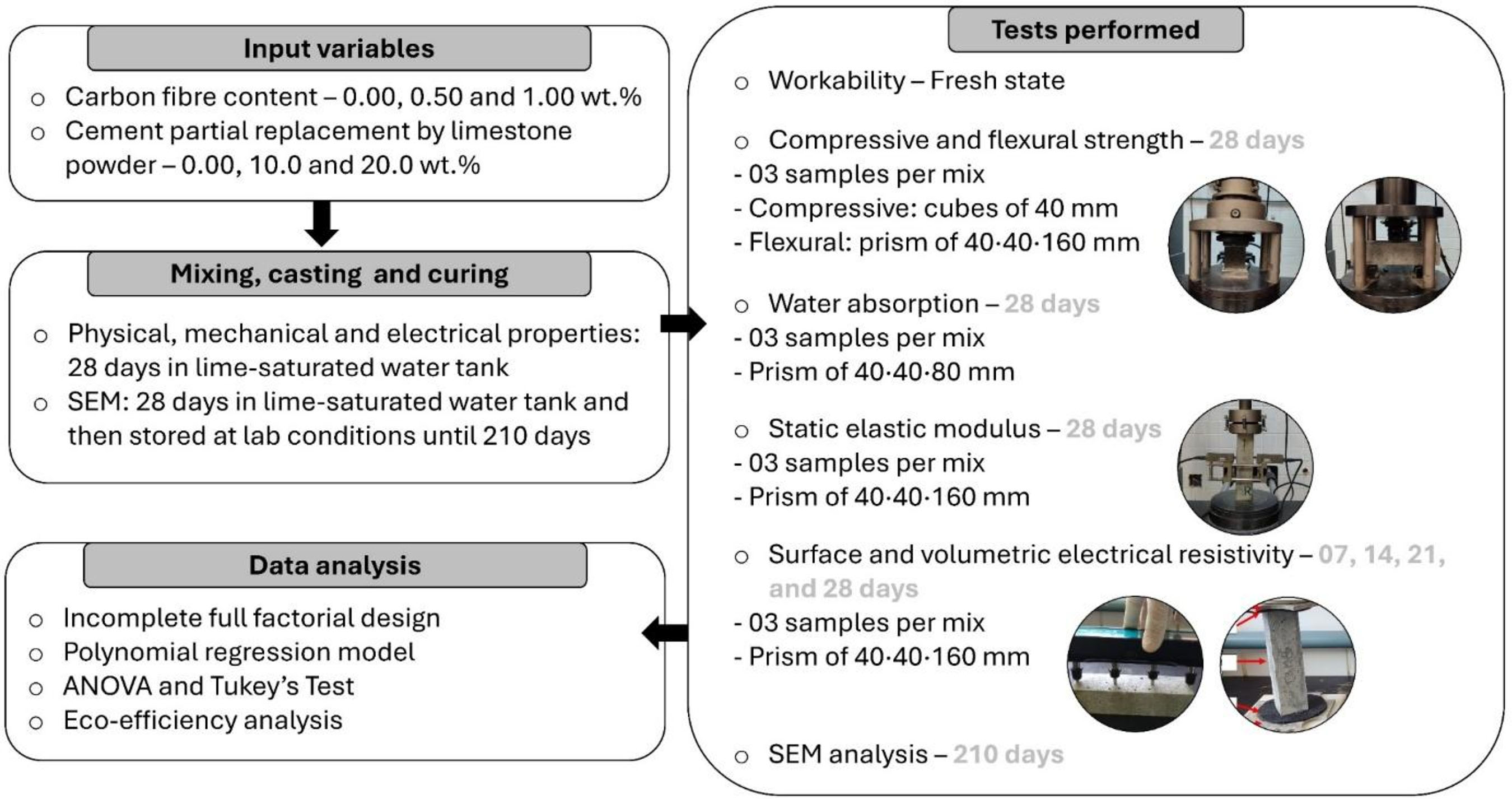
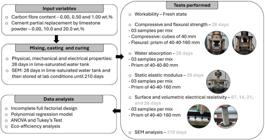
Figure 5 summarises the experimental program, including the input variables, testing procedures, and data analysis methods. In summary, at 28 days, the prismatic samples were first subjected to non-destructive tests, namely ER and static modulus of elasticity, followed by the flexural strength test. After flexural failure, one half of each specimen was separated and stored under laboratory conditions for microstructural analysis, while the other half was employed for the water absorption test. Meanwhile, the compressive strength tests were performed on cubic specimens.
3 Results and discussion
3.1 Fresh state
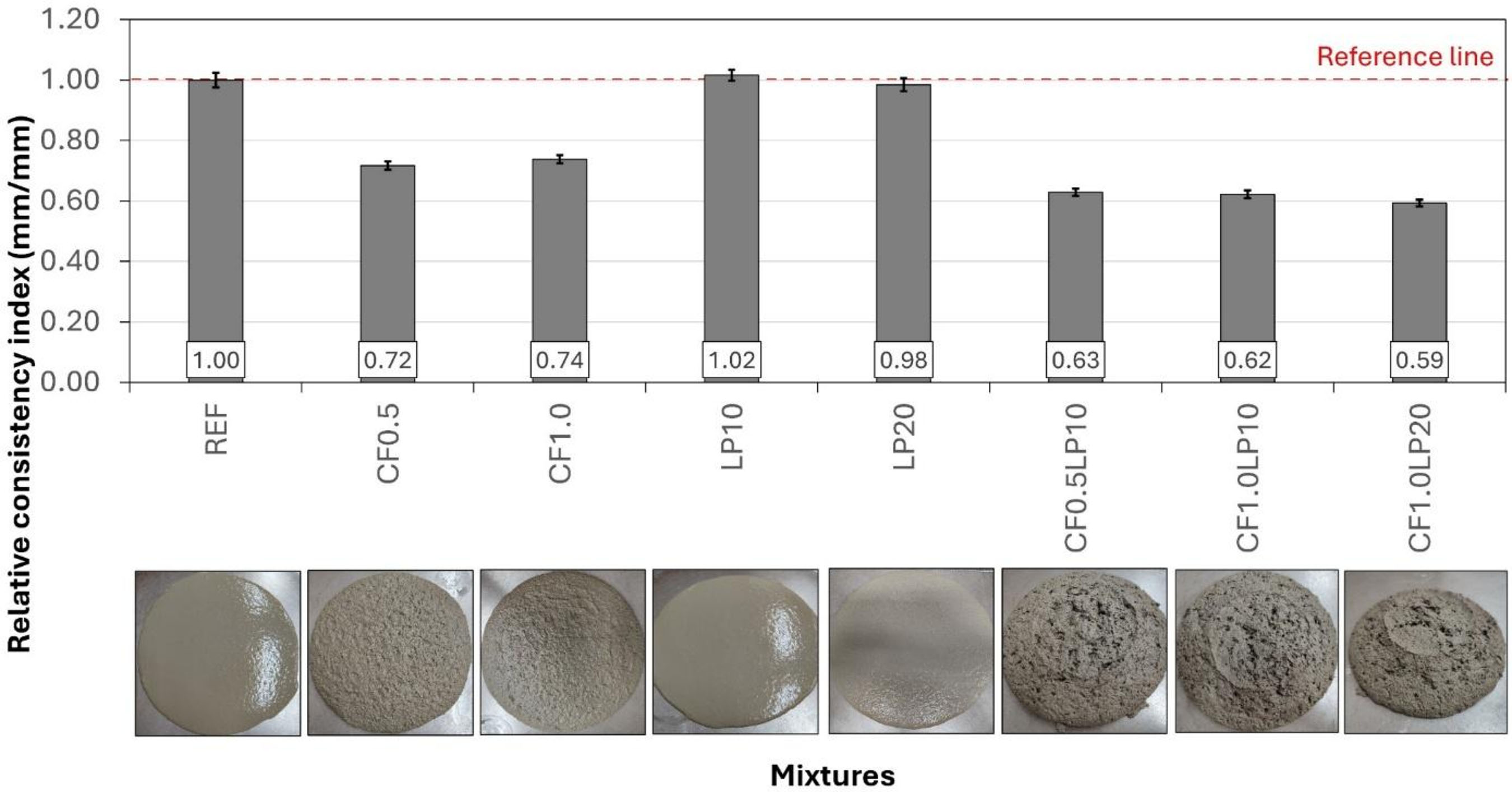
Figure 6 shows the normalised consistency index results and the visual appearance of the ECCM. The results are expressed as relative values, calculated by the ratio between Mix 'i' and the Mix 'reference'. Replacing cement by limestone powder did not impact workability, as no significant changes were observed. Conversely, incorporating carbon fibre caused a notable reduction in this property, around 26-28%, mainly due to the formation of fibrillar clusters that increase friction among particles in the fresh state, thus decreasing flowability (Safiuddin et al., 2018, 2021; Abreu et al., 2020; Safiuddin et al., 2021). The impact of carbon fibre on the fresh state was more pronounced when combined with limestone powder, resulting in reductions of 37-41%.
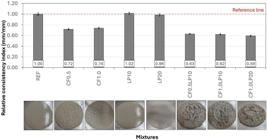
The visual appearance of the mixes also reflects these changes in workability. From a practical perspective, the fresh-state properties of ECCM play a critical role when applied over concrete substrates, as they directly affect the bond strength at the interface. In specific applications, such as when ECCC are used as a strain or stress sensor, adequate bonding is essential to ensure proper load transfer and accurate sensing performance. One strategy to mitigate issues related to reduced bond strength is the incorporation of SCM, such as silica fume or metakaolin, which can improve interfacial adhesion by increasing the number of bonding sites at the substrate surface (Medeiros et al., 2022). Furthermore, when used alongside conductive fillers, SCM may enhance the microstructure, improve the contact between conductive materials and the cement matrix, and thus promote better anchorage within the composite (Reza et al., 2001; Li et al., 2022b).
3.2 Mechanical properties
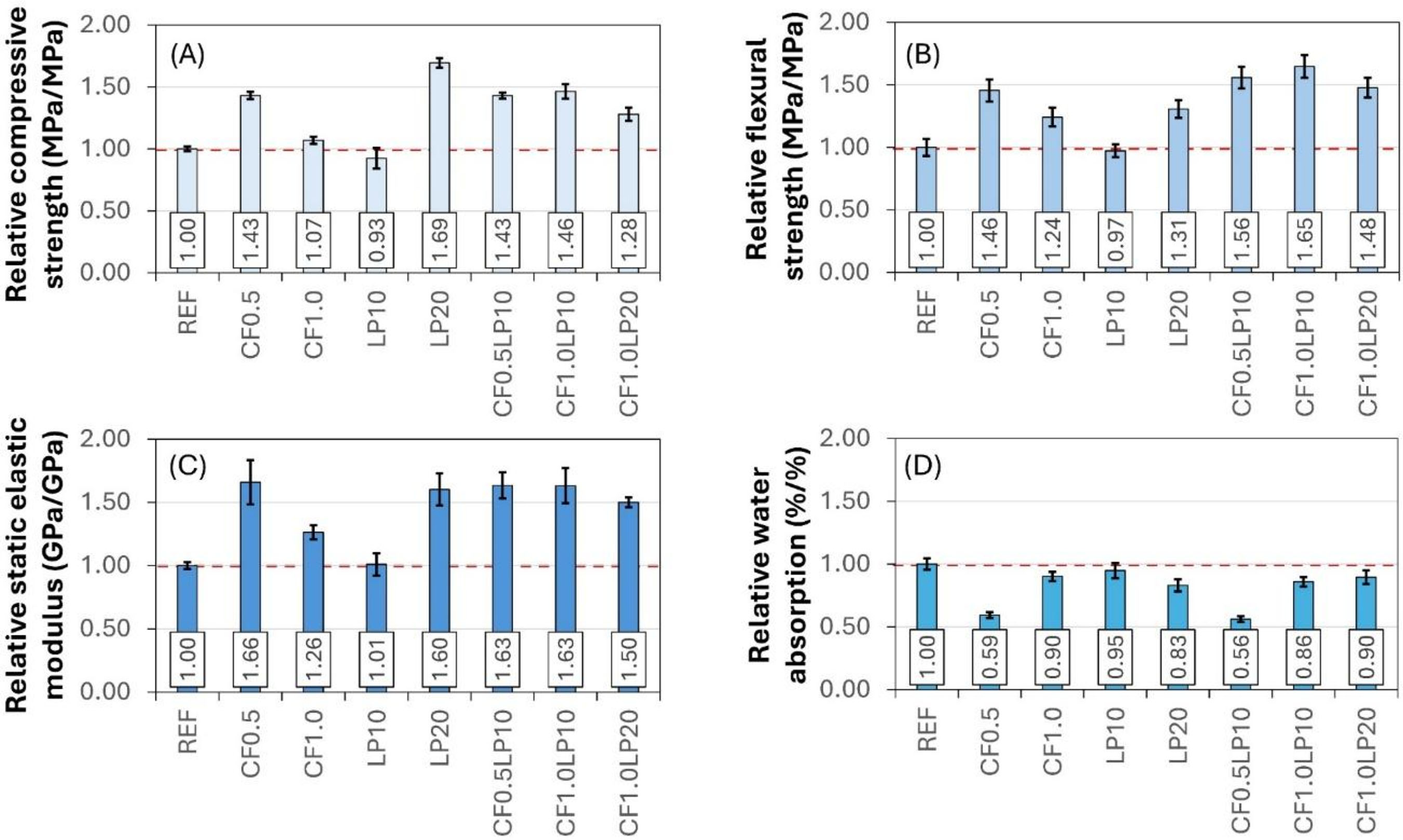
Figure 7 presents the relative results of the mechanical behaviour. Table 5 shows the ANOVA results for compressive strength. The data were evaluated using a polynomial regression model, and Equation 9 presents the regression equation expressed in coded values, where the independent variables CF and LP are dimensionless (-1, 0, +1), as defined in Table 1. In this formulation, only the response variable (compressive strength in this case) retains physical units (MPa). The model yielded an R² = 0.63. This analysis aimed to identify the individual and interaction effects of the parameters studied.
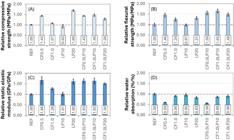
Relative results of (a) compressive strength, (b) flexural strength, (c) static elastic modulus, and (d) water absorption
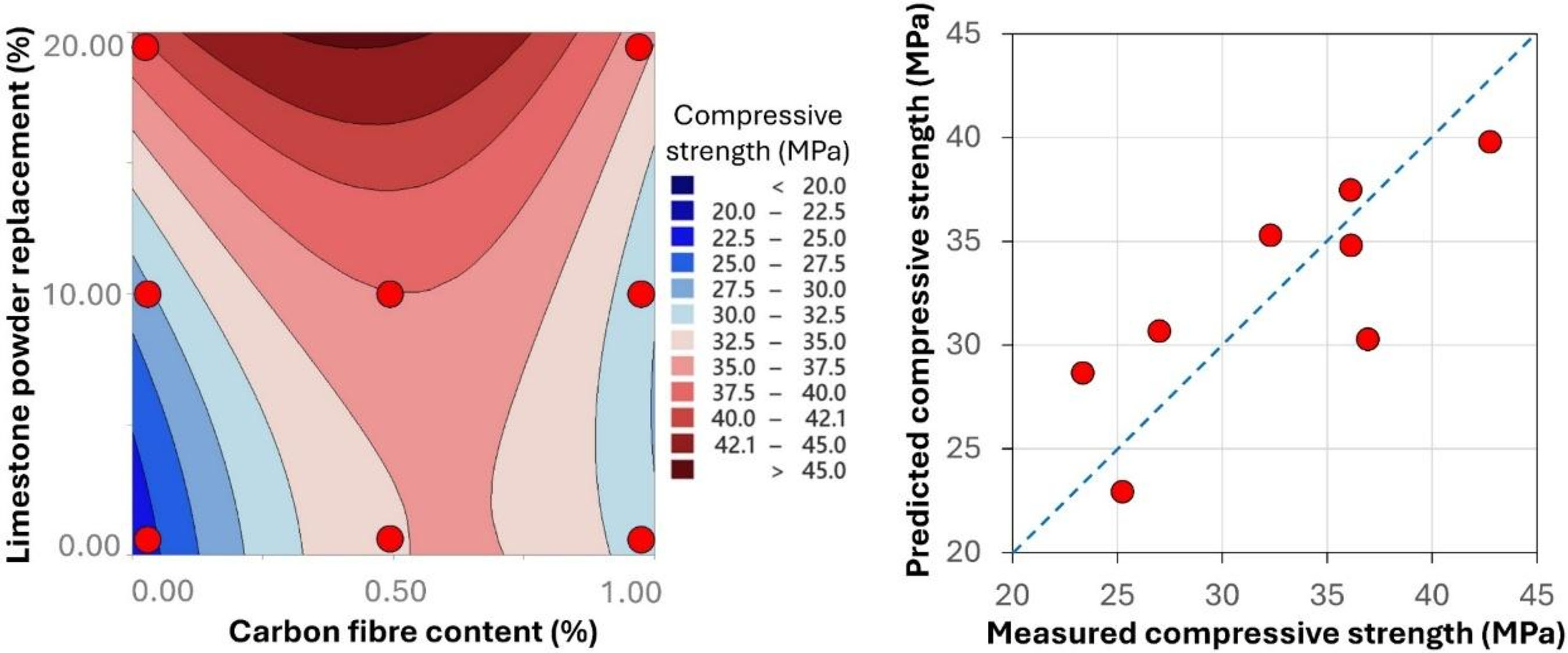
Incorporating carbon fibre at 0.5 wt.% increased compressive strength by 43%. However, increasing fibre content to 1.0 wt.% reduced this gain, bringing the values closer to the reference mixture. This behaviour reflects a non-linear response, confirmed by the significance of the CF·CF term in the ANOVA (p-value = 0.002), which indicates a curvature in the response. The standardised Pareto chart shown in Figure 8 further supports this, where the quadratic effect (CF·CF) exceeds the significance threshold. Regarding limestone powder, a 10% replacement has no significant impact, while a 20% replacement led to a considerable strength increase (69% relative to REF).
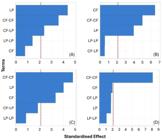
Pareto chart of standardised effects on (a) compressive strength, (b) flexural strength, (c) static elastic modulus, and (d) water absorption
Additionally, the interaction between fibres and powders (CF·LP) was statistically significant (p-value = 0.029), indicating a synergistic effect between the two components, also observed in the consistency index (Figure 6). All combinations of carbon fibre with limestone powder improved compressive strength, with increases ranging from 28% to 46%. The contour plot in Figure 9 supports this trend, showing a peak around 0.5% carbon fibre and 20% limestone powder. It is important to mention that this combination was not tested experimentally, and the maximum value is an extrapolation based on the quadratic model fit. These improvements can be attributed to:

Contour plot of compressive strength (left) and the correlation between the predicted compressive strength by the model vs measured values (right)
-
the filler and nucleation effect of limestone particles, which promote early hydration and matrix densification (Tan et al., 2013; Soto et al., 2024); and
-
the microcrack-bridging action of carbon fibres that reduces crack propagation, which becomes more effective in a refined matrix (Abreu et al., 2020; Akbar; Liew, 2020; Li et al., 2021).
Nevertheless, a higher fibre content (1.0 wt.%) may reduce the workability and compaction of the mixtures, potentially leading to voids or defects that weaken mechanical properties. Therefore, a carbon fibre content of 0.5 wt.% provides the best balance between practical dosage and mechanical performance. In the case of CCC for road applications (designed for light truck traffic), a compressive strength of 30 MPa is required to meet the design criteria (Liu et al., 2020). In this study, almost all ECCMs achieved this threshold, particularly those incorporating fibre and powder. This indicates that such mixtures suit conductive layers in pavement systems.
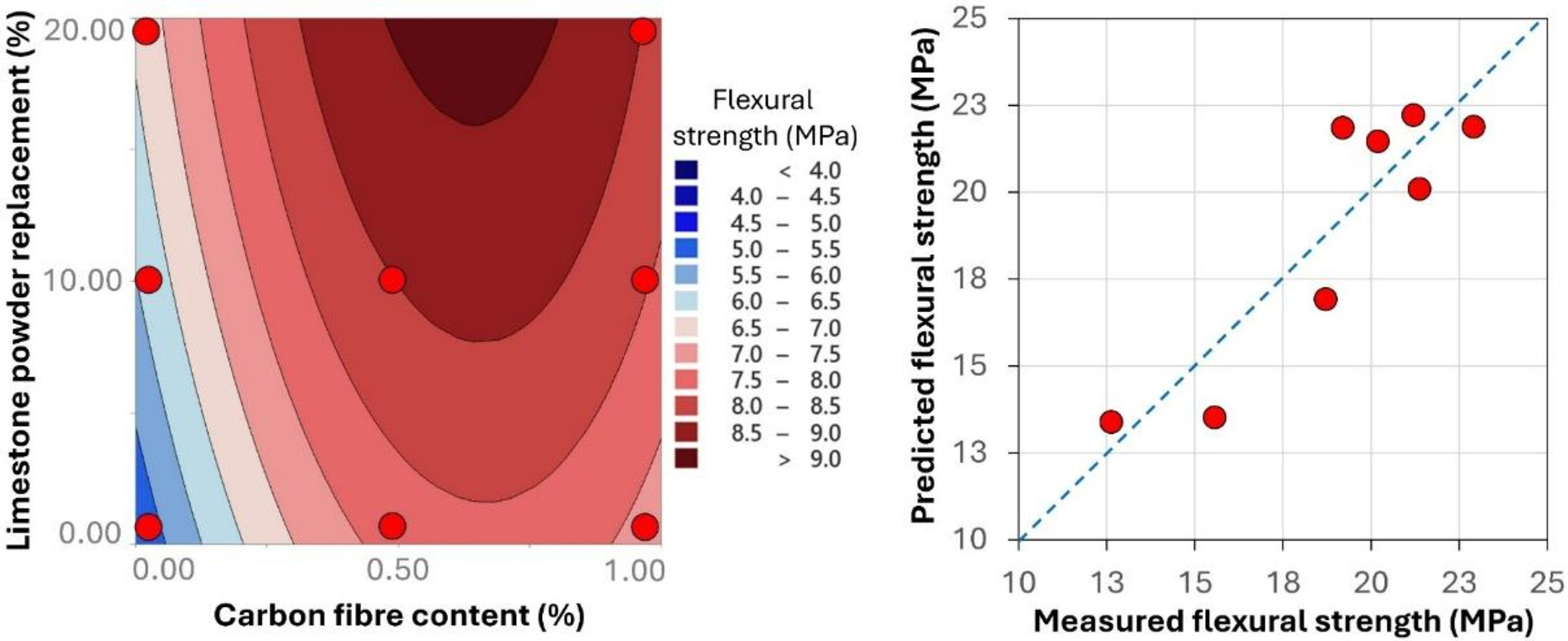
Figure 7b, Table 6, and Equation 10 present the relative flexural strength, ANOVA results, and the regression equation (R²=0.81) in coded values (Table 1), respectively. Both carbon fibre incorporation and limestone powder replacement significantly enhanced this property. Similar to the compressive strength results, the best-performing mixtures combined both materials. Regarding fibre incorporation, the improvement is attributed to the increased reinforcing and bridging effects of the fibres within the cementitious matrix, which help limit crack propagation (Akbar; Liew, 2020; Safiuddin et al., 2021). Further enhancements were observed when combined with limestone powder, possibly due to matrix densification and microstructural refinement.
The ANOVA results confirm the statistical significance of carbon fibre content (p-value < 0.001) and limestone powder replacement (p-value = 0.001) in enhancing flexural strength. The quadratic term CF·CF (p-value < 0.001) indicates a non-linear response in flexural strength with increasing fibre content. Conversely, the LP·LP and CF·LP terms were not statistically significant (p-value > 0.05), suggesting that the improvements arise from each material (fibres and fillers, individually) rather than synergistic effects. The standardised Pareto chart (Figure 8b) reinforces these findings, highlighting the carbon fibre linear and quadratic terms as the most influential effects, followed by limestone powder replacement. The contour plot in Figure 10 emphasises an optimal flexural strength region at intermediate fibre content (around 0.5 wt.%) and high powder replacement levels (20 wt.%). Incorporating 1.0 wt.% fibre reduced the flexural tensile strength, as seen in the compressive strength, probably due to increased voids during casting related to the mortar's workability (as shown in Figure 6).
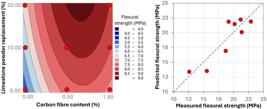
Contour plot of flexural strength (left) and the correlation between the predicted flexural strength by the model vs measured values (right)
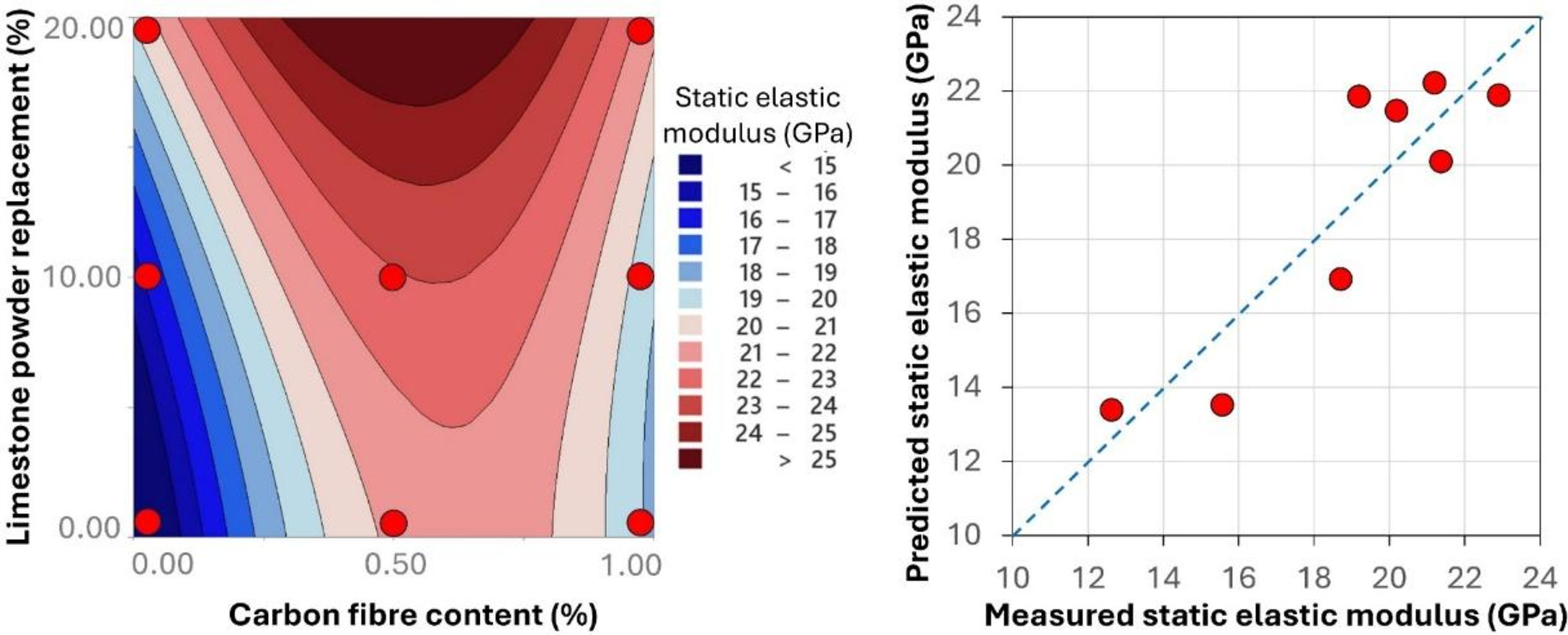
Figure 7c, Table 7 and Equation 11 present the relative static elastic modulus, ANOVA results and the regression equation (R²=0.71) in coded values (Table 1), respectively. From the statistical analysis, carbon fibre (p-value = 0.004) and limestone powder replacement (p-value = 0.001) significantly influenced this property. In addition, the quadratic term for carbon fibre (CF·CF) was also statistically significant (p-value < 0.05), denoting a non-linear response.
Following the same trend of compressive and flexural strength behaviour, incorporating carbon fibres (0.5 wt.%) enhanced the elastic modulus, with increases up to 66% relative to the reference (Figure 7c). However, higher contents (1.0 wt.%) reduced the gain to 26%, corroborating the significance of the quadratic term (CF·CF). These trends are visually emphasised in the standardised Pareto chart (Figure 8c), where the most significant effect is due to CF·CF, followed by limestone powder and carbon fibre, all exceeding the significance threshold.
Regarding limestone powder, a 10% replacement has a limited effect, while a 20% replacement led to substantial improvements (up to 60%), consistent with the trends observed for compressive strength related to better packing and nucleation sites provided by the filler particles. The contour plot in Figure 11 also highlights that the better combination for modulus enhancement is 0.50 wt.% carbon fibre and high limestone powder content. For the hybrid mixtures, enhancements ranged from 50% to 63%. The highest values were observed in CF0.5L10 and CF1.0L10, outperforming all other combinations. Although the interaction term was not statistically significant, the cumulative improvement suggests a favourable combination of mechanisms, such as crack-bridging by fibres and microstructural refinement induced by the filler effect of limestone. Overall, the limestone filler had a higher impact on the elastic property.
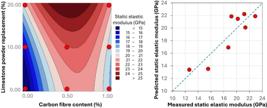
Contour plot of static elastic modulus (left) and the correlation between the predicted static elastic modulus by the model vs measured values (right)
Additionally, the presence of graphene particles may have improved the elastic modulus. By the SEM analysis, Araújo et al. (2025) reported that graphene particles can act as a nucleation site, accelerating hydration and refining the pore structure, as will be discussed in the microstructure analysis section. Previous studies have shown an increased static elastic modulus of cementitious materials containing graphene powder (Sun et al., 2017; Araújo et al., 2022). It is also essential to consider that excessive fibre content may impair fresh-state properties, potentially introducing defects or voids. For instance, Souza et al. (2020) observed a reduced dynamic elastic modulus associated with increased air incorporation due to fibre addition. This highlights the importance of optimising fibre content to maximise stiffness without compromising microstructural integrity.
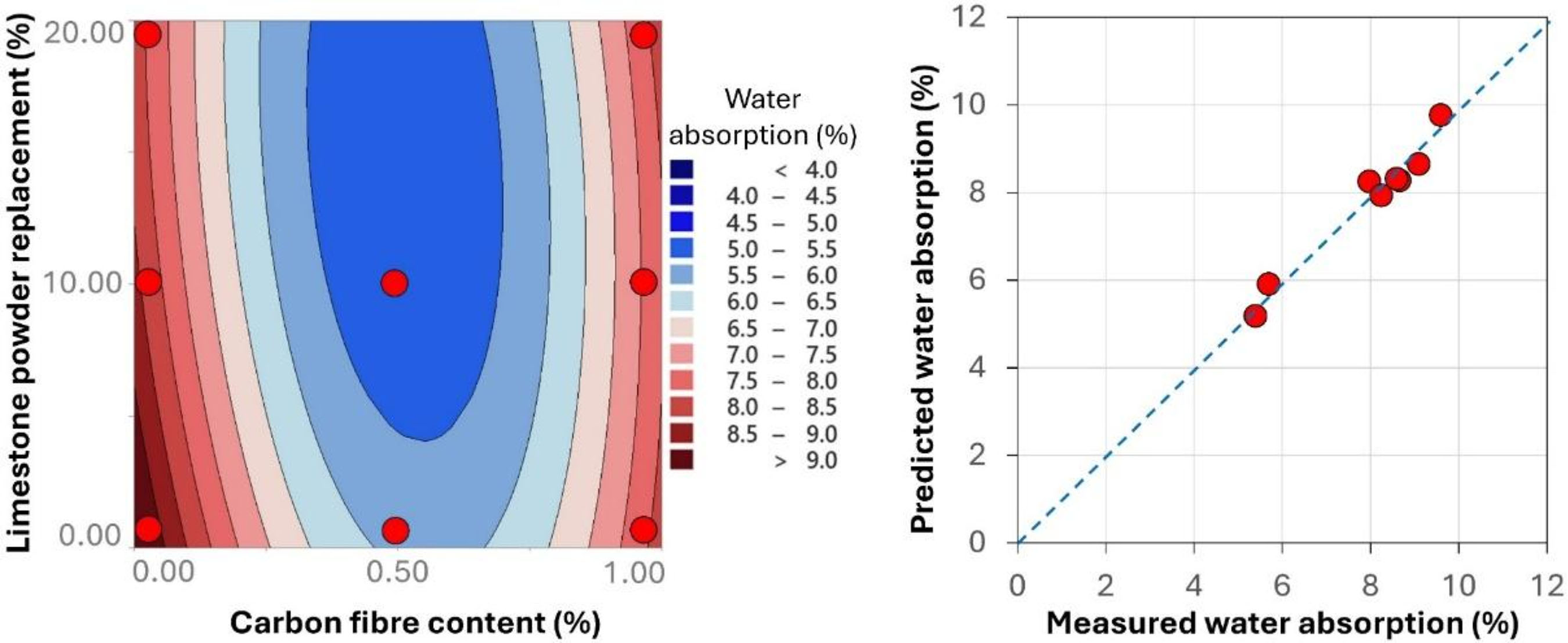
Figure 7, Table 8, and Equation 12 present the relative water absorption results, ANOVA results, and the polynomial regression model equation (R²=0.82). As shown in Figure 7d, carbon fibre mixtures exhibited reduced water absorption compared to the reference.
The incorporation of 0.5 wt.% carbon fibre resulted in a 41% reduction, while 1.0 wt.% led to a 10% decrease. This behaviour may be attributed to microstructural improvements caused by nucleation effects, which could form hydration crystals on the surface of carbon filaments, resulting in pore refinement. In contrast, higher contents (1.0 wt.%) may hinder proper compaction and fibre dispersion, leading to increased porosity and reduced effectiveness of this property. This trend supports the observed outcomes in mechanical performance, including compressive strength, flexural strength, and elastic modulus. According to Belli et al. (2020), decreased water absorption using carbon fibre is associated with a lower volumetric amount of capillary pores.
A 10% powder replacement caused no change in this property, whereas a 20% content reduced this property by 17%. When both materials were combined, 44%, 14% and 10% reductions were observed in mixtures CF0.5LP10, CF1.0LP10, and CF1.0LP20, respectively. Despite these improvements, the ANOVA results showed that among the terms, only the quadratic component of carbon fibre content (CF·CF) was statistically significant (p-value < 0.05). None of the linear terms (fibre or powder), nor their interaction (CF·LP), reached statistical significance, consistent with the standardised Pareto chart (Figure 8d).
The contour plot in Figure 12 shows a well-defined reduction zone in the response surface around intermediate carbon fibre content (approximately 0.5 wt.%) and limestone powder replacement of 10% and 20% replacements, which aligns with the significance of the CF·CF term. This finding highlights the importance of optimising fibre content, as excessive incorporation may attenuate or reverse the beneficial effects. Similar trends were reported by Safiuffin et al. (2021), who observed a reduction in water absorption up to an optimal carbon fibre content of 3 vol.% in mortars, followed by an increase at higher fibre levels. Other studies also reported increased water absorption at high fibre dosages, such as 2 wt.% cement-based materials (Abreu et al., 2020).
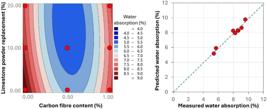
Contour plot of water absorption (left) and the correlation between the predicted water absorption by the model vs measured values (right)
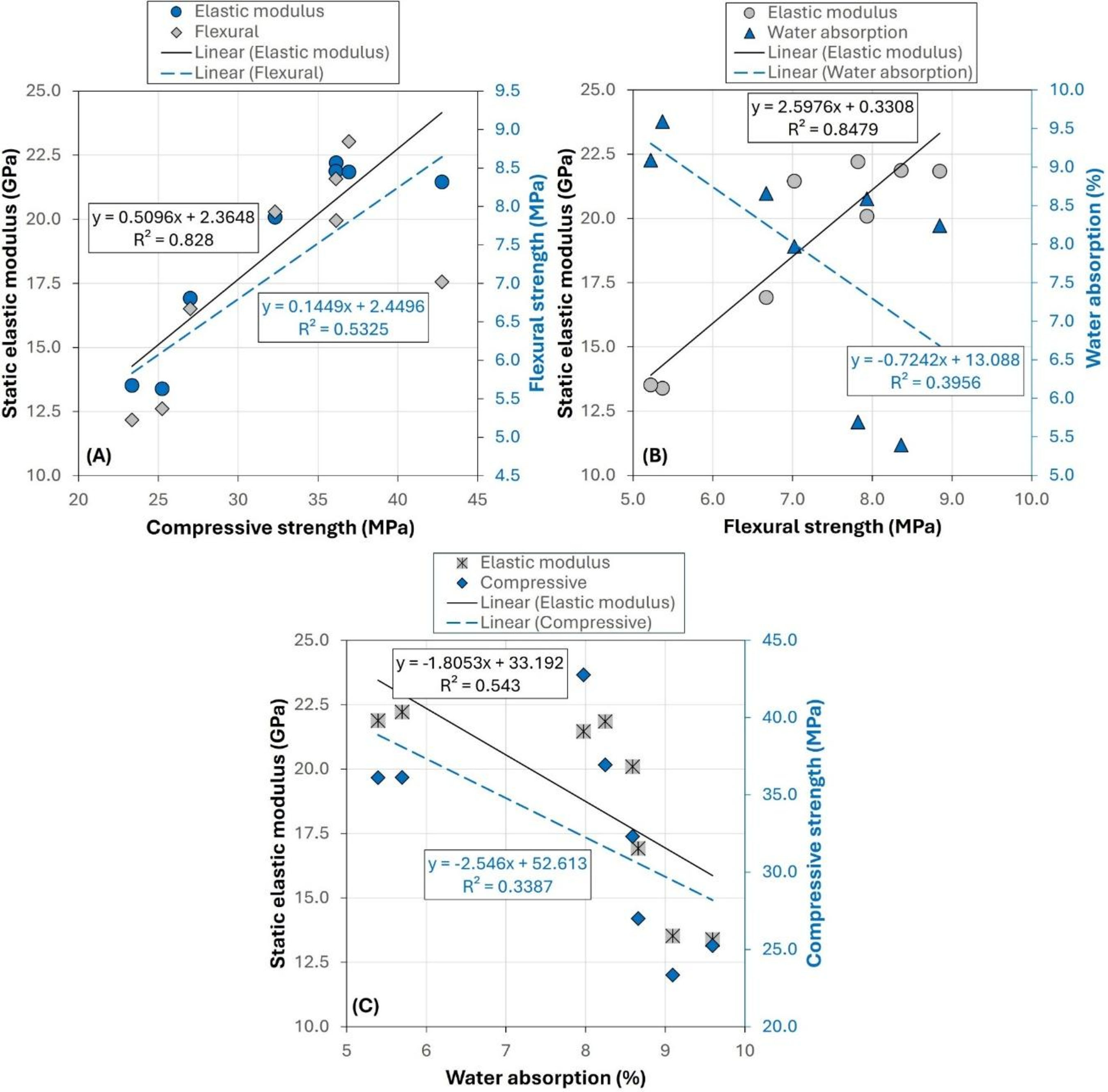
Figure 13 shows the linear relationships between the mechanical properties of the ECCM. Water absorption had the weakest correlation. In contrast, high correlations were observed between static elastic modulus and compressive strength (R²=0.83) and flexural strength (R²=0.88). A moderate correlation appeared between compressive and flexural strength (R²=0.53) (Hinkle et al., 1979).
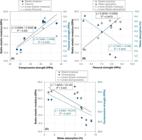
Correlations between the mechanical properties: (a) Static elastic and compressive strength - Flexural and compressive strength; (b) Static elastic modulus and flexural strength – Compressive strength and water absorption; (c) Static elastic modulus and water absorption – Compressive strength and water absorption
3.3 Electrical properties
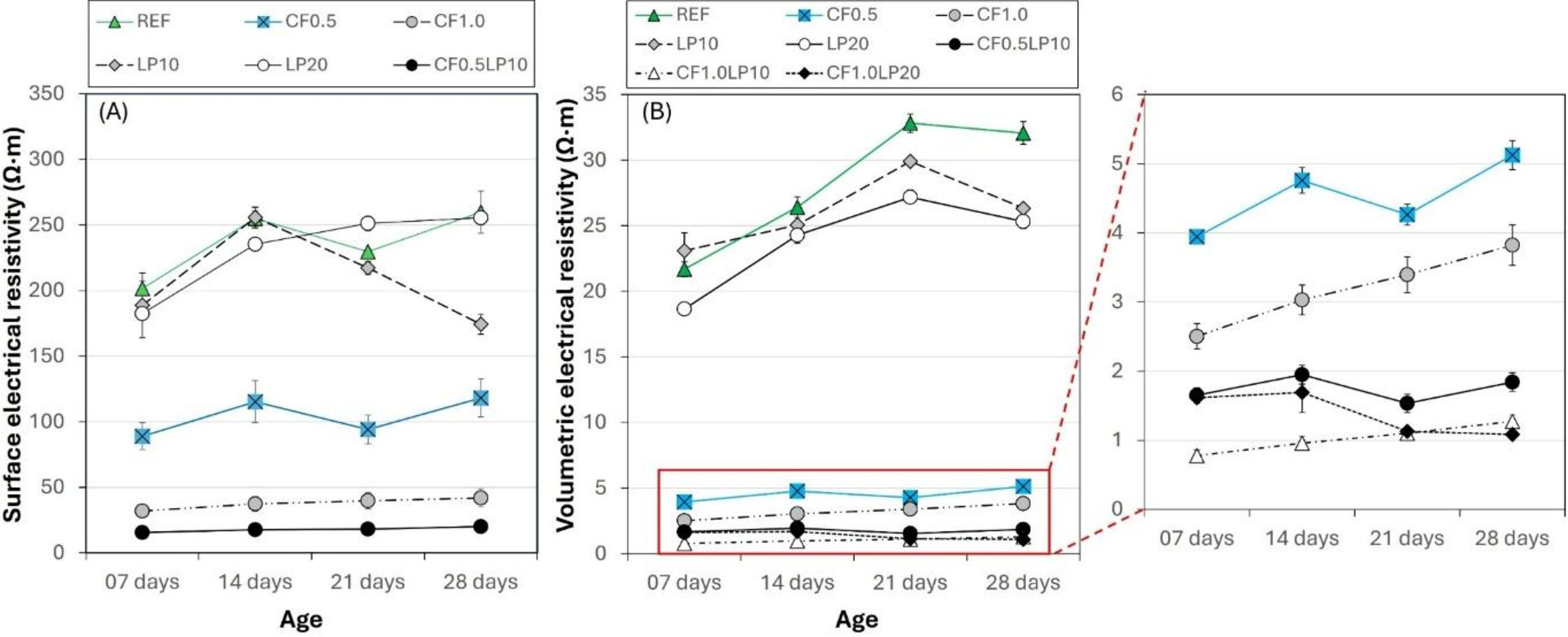
Figure 14a and 14b show the surface and volumetric ER, respectively. The Wenner probe measured the surface ER values. Unlike volumetric, these values are not calculated from electrical resistance using a geometric factor (Equation 3). Their interpretation still depends on the specific specimen geometry and electrode spacing (Araújo; Macioski; Medeiros, 2022). However, BS EN 12390 (BS, 2023) has no standardised geometric correction factor for the specified configuration (electrode spacing of 50 mm and specimen dimensions of 40x40x160 mm prisms). Therefore, the values plotted reflect the raw measurements provided by the device. In contrast, the volumetric ER was calculated using the measured resistance and applying the geometric correction factor (k) according to Equation 3, which accounts for the specimen geometry and ensures accurate resistivity values. This allows the volumetric method to be treated as a more reliable bulk property, especially when comparing different sample configurations.
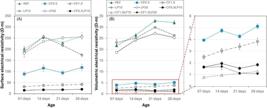
(a) Surface electrical resistivity and (b) volumetric electrical resistivity results at 07, 14, 21 and 28 days of age
The results for CF1.0LP10 and CF1.0LP20 were excluded from surface ER diagrams because their values fell below the equipment’s measurable limit (indicating high conductivity). For the other mixtures, cement replacement with limestone powder alone yielded surface ER values close to the reference mixture, regardless of the substitution level.
Conversely, the incorporation of carbon fibres substantially decreased the surface ER, with values of 118.11 (Ω·m) and 46.89 (Ω·m) for CF0.5 and CF1.0, respectively. The most pronounced reduction within the measurable range of the Wenner probe was observed for the CF0.5LP10 mix, which presented a resistivity of 19.89 (Ω·m). This finding suggests forming a more interconnected conductive network, possibly facilitated by improved fibre dispersion due to fine limestone particles, supported by the enhanced mechanical properties.
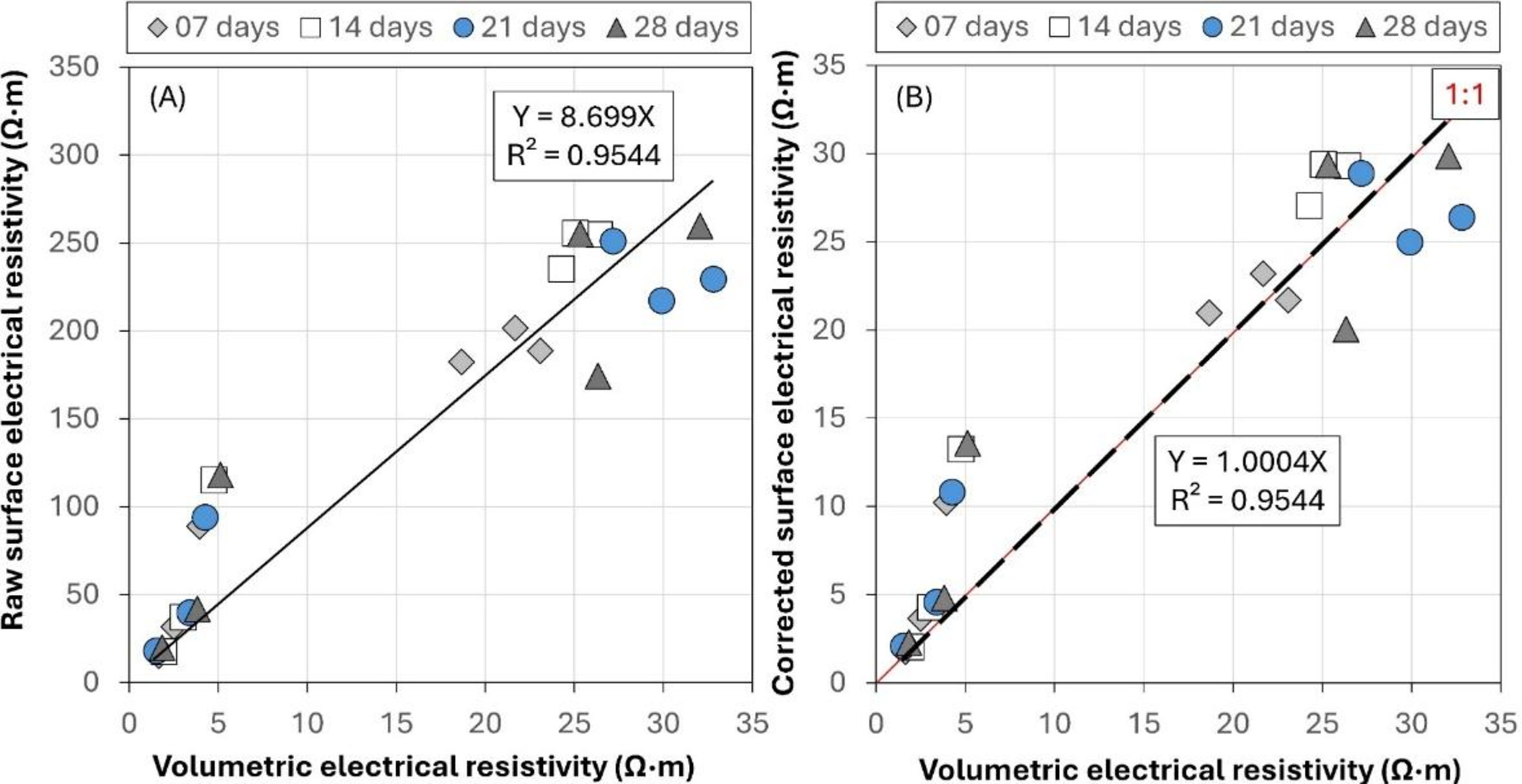
Figure 15(a) shows the relationship between raw surface and volumetric ER values. Despite the absence of adjustments to the surface ER measurements for geometry, a strong linear relationship is clear, with surface ER roughly 8.7 times higher than volumetric ER. This increase matches earlier studies (Azarsa; Gupta, 2017; Araújo et al., 2022) and is mainly due to current confinement effects typical of surface testing.
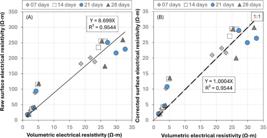
Correlation between surface and volumetric electrical resistivity (a) before and (b) after geometric factor correction
From this relationship, a correction coefficient of 0.115 was derived and applied to align the surface ER values with the volumetric ones in a 1:1 ratio, as shown in Figure 15b. The resulting adjusted values showed near 1:1 agreement (Y=1.0004X), validating the correction. This approach is justified because volumetric resistivity accounts for the entire material, while surface measurements only reflect the near-surface region. Therefore, this study suggests a correction factor specific to the 40x40x160 mm prism shape with 50 mm electrode spacing, a standard not currently outlined in existing guidelines.
Table 10 presents the geometric correction factors for 40x40x160 mm prismatic specimens under different configurations for the surface ER method. The proposed value differs from those reported in the literature. Araújo et al. (2024) investigated high-packed cement paste with silica fume that drastically alters the cement microstructure, increasing resistivity values. In contrast, the present study focuses on highly conductive cementitious mortars. Such differences in material composition and electrical behaviour may explain the variation in correction factors. These results highlight the need for further investigations to establish robust correlations for different mix designs and specimen geometries, especially for high-conductivity composite materials. This is particularly relevant given the widespread use of this type of prismatic specimen, especially in studies involving cement pastes and mortars.
Figure 14b, Equation 13 (in coded values according to Table 1), and Table 11 present volumetric ER results, the fitted polynomial regression model (R²=0.99), and the corresponding ANOVA analysis.
Analysis of variance results for volumetric electrical resistivity polynomial regression model
A similar trend was found for volumetric measurements. Incorporating limestone powder alone produced resistivity values close to the reference mixture (Figure 14b). However, increasing the replacement level was associated with progressive reductions in ER. For instance, LP10 and LP20 exhibited average values of 26.33 and 25.33 Ω·m, corresponding to 18% and 21% reductions compared to the reference. This behaviour can be attributed to the dilution effect, which reduces the formation of hydration products that typically block or interrupt ionic conduction paths within the cement matrix (Ramezanianpour et al., 2009). It should be noted that this effect is also influenced by particle packing (denser arrangements), which can reduce porosity and increase ER, even with lower binder content.
On the other hand, increasing the carbon fibre content led to a significant enhancement in electrical conductivity. The volumetric ER values for CF0.5, CF1.0, CF0.5LP10, CF1.0LP10, and CF1.0LP20 were 5.12, 3.82, 1.84, 1.27, and 1.08 Ω·m, respectively. These values represent reductions of 84%, 88%, 94%, 96%, and 97% relative to the reference. These results confirm that even at low fibre content (0.5 wt.%), a substantial decrease in bulk resistivity can be achieved, which suggests that the percolation threshold for carbon fibres in this matrix is reached at very low fibre content. This trend corroborates with Reza et al. (2001), who reported approximately a 97% reduction in bulk ER incorporating only 0.5 vol.% carbon fibre. Notably, additional fibre content beyond 1.0% does not appear to significantly reduce resistivity, implying a saturation in conductive network formation. This plateau may indicate the stabilisation of a percolated network, where further fibres primarily reinforce the existing conductive pathways rather than form new ones. The enhanced conductivity is widely attributed to the development of interconnected fibre-to-fibre contact networks, which facilitate electron transport and establish percolating paths within the matrix (Reza et al., 2001; Chen et al., 2004; Vipulanandan et al., 2008; Sassani et al., 2017; Liu et al., 2020; Li et al., 2022).
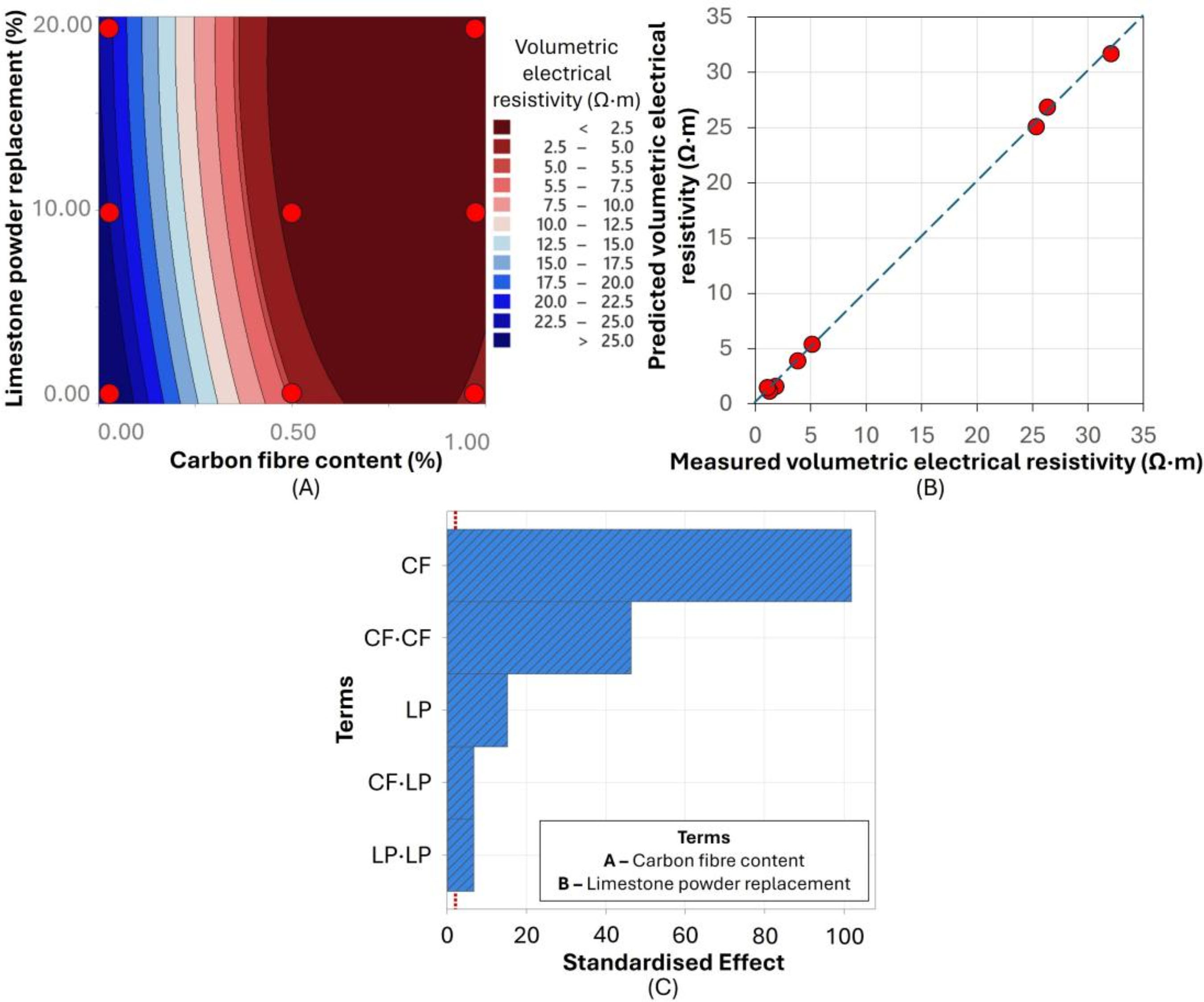
The second-order regression model (Equation 13) accurately describes the system, with all terms statistically significant, as shown by the ANOVA results (Table 10), the contour plot (Figure 16a) and the Pareto chart of standardised effects (Figure 16c). Carbon fibre content is the dominant factor, followed by the CF·CF quadratic term. The limestone powder replacement, as well as the LP·LP and CF·LP terms, were also statistically significant, although with comparatively minor effects. The contour plot highlights that the 0.5% carbon fibre content (CF0.5) represents an optimal point, where a significant reduction in resistivity is achieved without excessive fibre dosage. When combined with limestone powder replacement, this configuration not only sustains adequate electrical conductivity but also reduces cement consumption, enhancing the eco-efficiency of the mixture, without compromising mechanical performance, as demonstrated in the mechanical property analyses and further reinforced by the electrical results presented here.
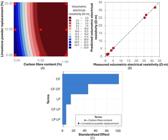
(a) Contour plot, (b) Correlation between predicted and measured values, and (c) Pareto chart of standardised effects on volumetric electrical resistivity
3.4 Microstructure
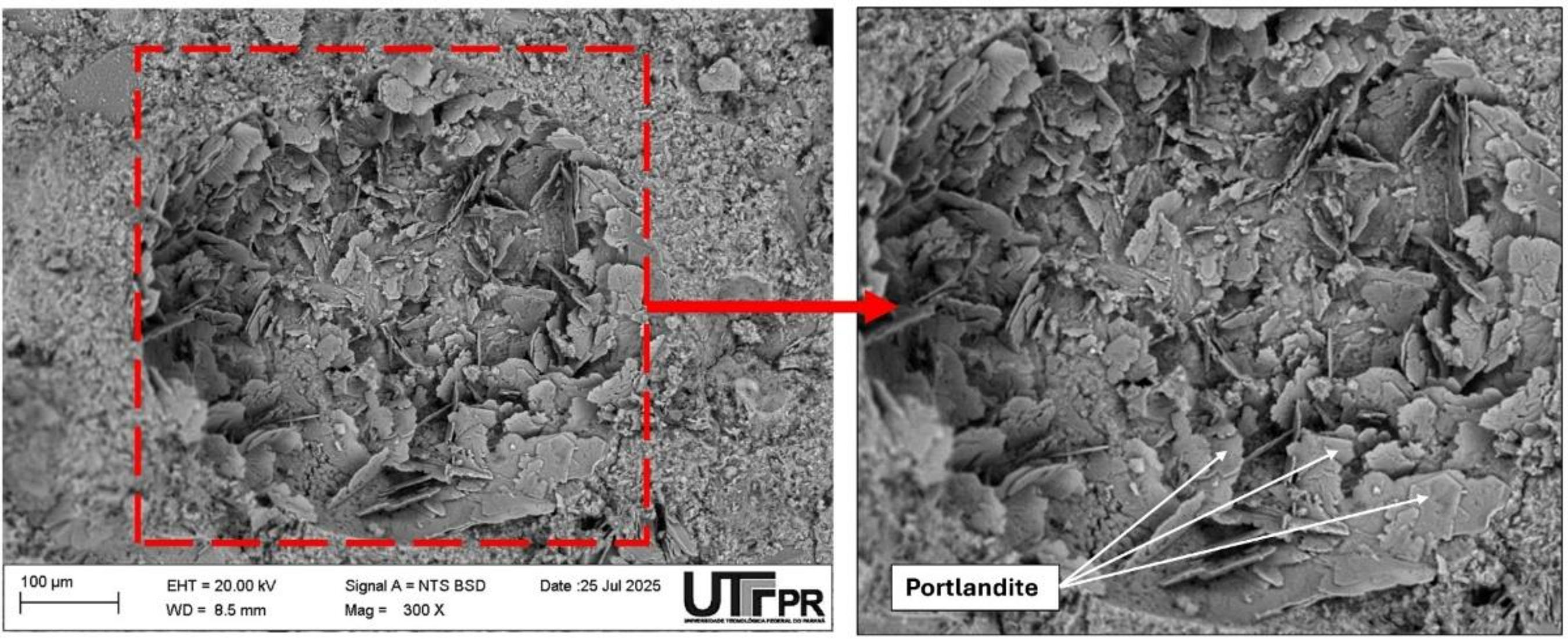
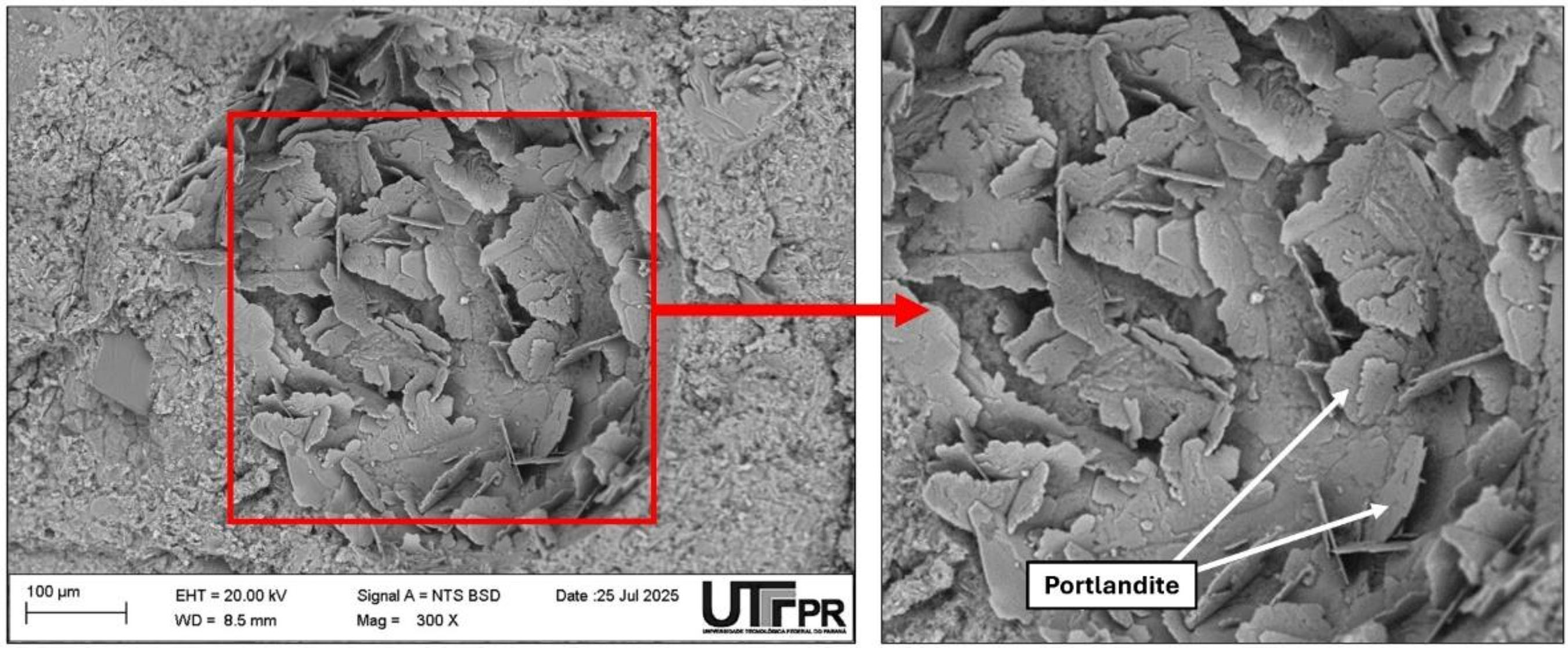
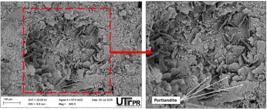
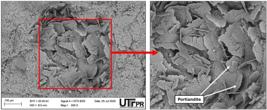
Figures 17-21 present the SEM micrographs of the REF, CF0.5, CF1.0, LP10, and CF0.5LP10 mixes, respectively. The reference mortar displayed a denser microstructure with a high concentration of crystalline phases. As observed in the magnified region of the image, well-defined Portlandite [Ca(OH)2] crystals, characterised by their hexagonal plate-like morphology, are identifiable.
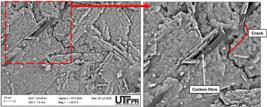
SEM photograph of cement mortar with 10 wt.% cement replacement by limestone powder and incorporation of 0.5 wt.% of carbon fibre
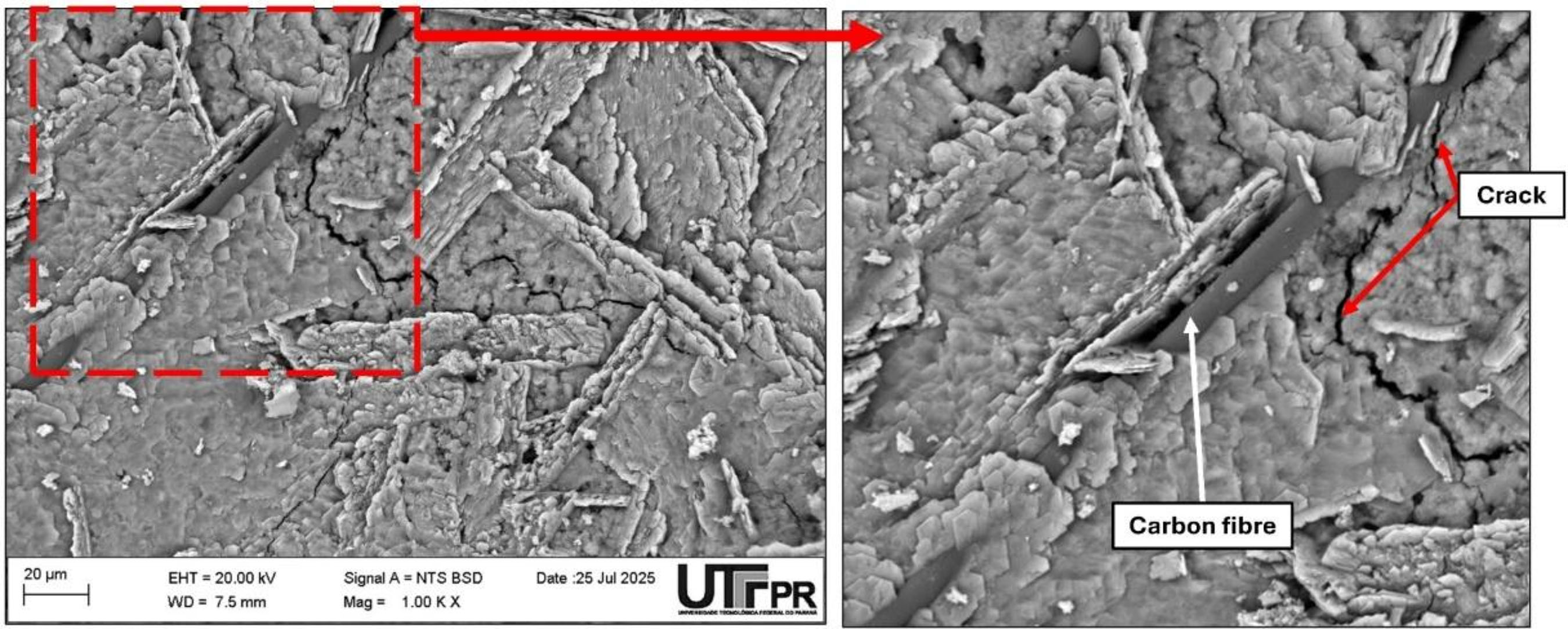
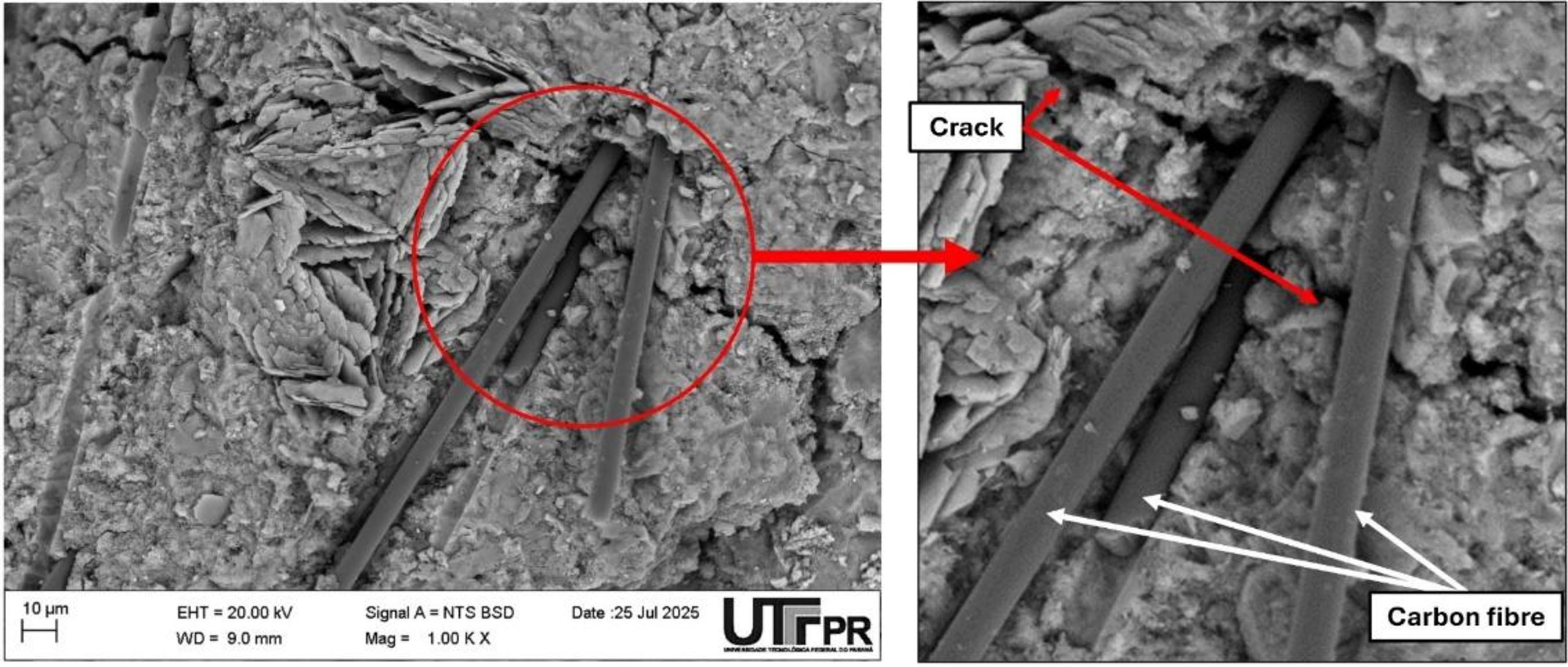
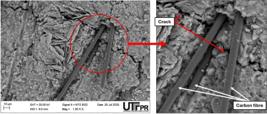
Concerning the cement mortar containing 0.5 wt.% carbon fibre (Figure 18), a bridging effect attributable to fibre reinforcement is evident. This phenomenon enhances the mechanical performance of the mixture by restricting the propagation of microcracks, thereby improving overall strength. Moreover, micrograph analysis reveals a fibre well embedded within the cement matrix, confirming its effective stress transfer and contribution to augmenting material toughness.
Similar to the CF0.5 mixture, the CF1.0 sample exhibited a bridging effect across microcracks (Figure 19). Nevertheless, a decrease in the effectiveness of this mechanism was observed, attributed to the higher fibre content, as evidenced by the mechanical performance. This decline may be attributed to fibre agglomeration or insufficient dispersion, which can impede stress transfer and fibre–matrix interaction.
The mixture containing 10% limestone powder had a microstructure similar to that of the reference mixture (Figure 20). This result indicates the inert nature of this SCM at this replacement level. Such microstructural similarity supports the mechanical and electrical results, which showed no significant differences compared to the reference mixture without limestone powder.
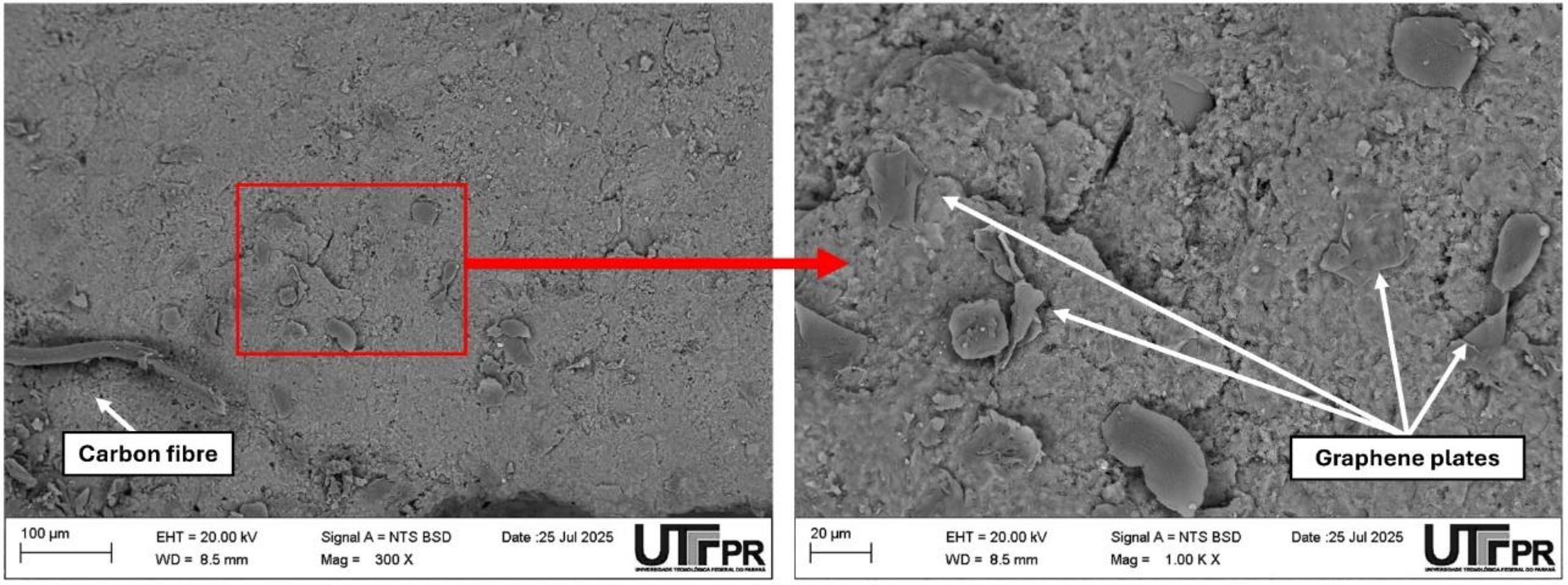
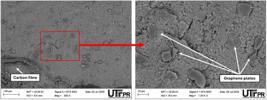
Graphene particles embedded in the cement matrix were observed in the mixture containing 0.5 wt.% carbon fibre and 10% limestone powder (Figure 21). This ECF can enhance the carbon fibre network's electrical conductivity and improve the mechanical behaviour through the nucleation effect (Araújo et al., 2022; Araújo et al., 2025). Additionally, the dilution effect caused by limestone powder may further contribute to a decrease in ER.
3.5 Eco-efficiency
Figure 22 presents the results of the eco-efficiency indexes associated with compressive strength and electrical conductivity. The conductivity index was calculated as the inverse of volumetric ER (Equation 8). Lower values of binder indexes (Bi and Bs) indicate a more efficient use of cement to achieve mechanical (Bi) and functional (Bs) performance. The reference mixture exhibited the highest values across all indices: 24.25 kg·m-3·MPa-1 (compressive) and 19633 kg·m-2·S-1 (electrical conductivity). Cement replacement with limestone powder resulted in lower index values, reflecting improved eco-efficiency. These reductions were particularly significant at the 20% replacement level. The incorporation of carbon fibre markedly improved eco-efficiency. Mixtures with 0.5 wt.% carbon fibre (CF0.5) yielded the lowest Bi and Bs values among the fibre-only systems, indicating that even a small fibre dosage can deliver considerable performance gains with reduced cement demand. The best eco-efficiency results were obtained from combining carbon fibres with limestone powder.
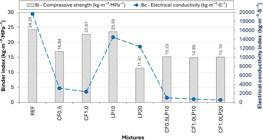
These findings demonstrate that hybrid optimisation, through moderate carbon fibre incorporation and partial cement replacement, is an effective strategy for designing multifunctional ECCM with enhanced environmental and functional performance. The Bi (compressive) value of mixture LP20, equal to 11.41 kg·m⁻³·MPa⁻¹, is comparable to the binder indexes reported in previous studies (Daminelli et al., 2010; Soto et al., 2024). Soto et al. (2024) found comparable values for high-strength cement mortars incorporating SCM such as fly ash, metakaolin, and silica fume. This suggests that the partial replacement of Portland cement by limestone powder can offer a similar eco-efficiency performance to that achieved with reactive SCM, even though limestone powder is a non-pozzolanic filler.
4 Conclusions
This study evaluated the synergistic effects of carbon fibre and limestone powder on ECCM's physical, mechanical, and electrical properties and eco-efficiency. The key findings can be summarised as follows:
-
workability was not significantly impacted by cement replacement with up to 20 wt.% limestone powder. In contrast, adding carbon fibre decreased the flow spread by approximately 26–28%, with even greater reductions (up to 37–41%) observed when fibres were combined with limestone powder;
-
the physical and mechanical performance improved by adding carbon fibre and limestone powder. Carbon fibre showed the best mechanical performance at 0.5 wt.%, while 20 wt.% limestone powder was the optimal filler level. When both materials were used together, compressive strength, flexural strength, and static elastic modulus increased by 28–46%, 48–65%, and 50–65%, respectively. Water absorption decreased by 10–44%. These findings indicate a synergistic interaction between carbon fibres and limestone powder. This behaviour can be linked to the effects of fine limestone particles on enhancing fibre dispersion within the matrix, increasing the efficiency of fibre reinforcement. Furthermore, a physical interlocking mechanism from the granular skeleton may have contributed to the improved ECCM performance;
-
ER decreased significantly with carbon fibre incorporation. A 0.5 wt.% dosage reduced up to 88% in volumetric ER. The effect was further enhanced when combined with limestone powder, achieving 94–97% reductions. The mixture containing 0.5 wt.% carbon fibre and 10 wt.% limestone powder achieved a compressive strength of 36.12 MPa, flexural strength of 8.36 MPa, static elastic modulus of 21.88 GPa, and volumetric electrical resistivity of 1.84 Ω·m, representing the best overall performance with low carbon fibre content;
-
SEM analyses confirmed the mechanical findings. Carbon fibres showed bridging effects, helping to improve the matrix's strength. Graphene particles were well dispersed and embedded within the cement matrix, which could enhance functional properties further. The inclusion of limestone powder resulted in a microstructure comparable to that of the reference composite, probably due to the material's inert characteristics; and
-
eco-efficiency was markedly improved by incorporating carbon fibre and limestone powder. Replacing cement with a by-product from manufactured sand production supports sustainability. At the same time, mechanical and electrical performance enhancements strengthen the ECCM potential for use in smart and multifunctional cementitious systems with self-sensing capabilities.
Therefore, the research question is positively answered: limestone powder is a viable and sustainable addition to ECCM mixtures. Its inclusion, particularly with carbon fibre, enhances mechanical and electrical performance and improves eco-efficiency without compromising the microstructural integrity. The results confirm the hypothesised synergistic behaviour between the fibrous and filler phases, demonstrating that limestone powder can effectively optimise fibre dispersion and the overall performance of conductive cementitious composites.
Acknowledgments
The authors like to thank the Laboratory of Materials and Structures (LaME), the Post-Graduate Program in Civil Engineering (PPGEC), the Civil Engineering Studies Centre (CESEC) at the Federal University of Paraná (UFPR), the Multiuser Materials Characterisation Centre (CMCM) at Federal University of Technology Paraná (UTFPR), School of Architecture, Building and Civil Engineering at Loughborough University, and the Brazilian Federal Agency for Support and Evaluation of Graduate Education (CAPES) for the physical and financial support provided for the development of this study.
-
ARAÚJO, E. C.; GOBBI, A.; MACIOSKI, G.; MEDEIROS, M. H. F. de; BLANCO, A. Synergistic effects of carbon fibre and limestone powder on the mechanical performance and eco-efficiency of electrically conductive cementitious composites. Ambiente Construído, Porto Alegre, v. 26, e149527, jan./dez. 2026. ISSN 1678-8621 Associação Nacional de Tecnologia do Ambiente Construído. http://dx.doi.org/10.1590/s1678-86212026000100946
-
Financial Support
This study was financed in part by the Coordenação de Aperfeiçoamento de Pessoal de Nível Superior - Brasil (CAPES) - Finance Code 001.
-
Declaration of Generative AI and AI-Assisted Technologies in the Writing ProcessDuring the preparation of this work, the author(s) used ChatGPT and Grammarly to check grammar and improve readability. After using this tool/service, the authors reviewed and edited the content as needed and took full responsibility for the publication's content.
Data Availability Statement
Research data is only available upon request.
References
- ABREU, F. S. et al Influence of adding discontinuous and dispersed carbon fiber waste on concrete performance. Journal of Cleaner Production, v. 273, 122920, 2020.
- AKBAR, A.; LIEW, K. M. Assessing recycling potential of carbon fibre reinforced plastic waste in production of eco-efficient cement-based materials. Journal of Cleaner Production, v. 274, 123001, 2020.
- ARAÚJO, E. C. et al Dimensional stability of repair mortars with carbon-based nanoparticles. Ambiente Construído, Porto Alegre, v. 25, e145204, jan./dez. 2025.
- ARAÚJO, E. C. et al. Influência da densidade de empacotamento de partículas na resistividade elétrica de pastas compostas por sílica ativa. In: CONGRESSO BRASILEIRO DE PATOLOGIA DAS CONSTRUÇÕES, 6., Fortaleza, 2024. Anais [...] Fortaleza: ALCONPAT, 2024.
- ARAÚJO, E. C. et al Influência da incorporação de grafeno e sílica ativa nas propriedades físicas e de durabilidade de argamassas cimentícias. In: SEMINÁRIO BAIANO DE DURABILIDADE E DESEMPENHO DAS CONSTRUÇÕES, 4., Ilhéus, 2022. Anais [...] Ilhéus: UESC, 2022.
- ARAÚJO, E. C.; MACIOSKI, G.; MEDEIROS, M. H. F. Concrete surface electrical resistivity: effects of sample size, geometry, probe spacing and SCMs. Construction and Building Materials, v. 324, 126659, 2022.
- ASSOCIAÇÃO BRASILEIRA DE NORMAS TÉCNICAS. NBR 13276: argamassa para assentamento e revestimento de paredes e tetos: determinação do índice de consistência. Rio de Janeiro, 2016.
- ASSOCIAÇÃO BRASILEIRA DE NORMAS TÉCNICAS. NBR 13279: argamassa para assentamento e revestimento de paredes e tetos: determinação da resistência à tração na flexão e à compressão. Rio de Janeiro, 2005a.
- ASSOCIAÇÃO BRASILEIRA DE NORMAS TÉCNICAS. NBR 16605: cimento Portland e outros materiais em pó: determinação da massa específica. Rio de Janeiro, 2017.
- ASSOCIAÇÃO BRASILEIRA DE NORMAS TÉCNICAS. NBR 16697: cimento Portland: requisitos. Rio de Janeiro, 2018.
- ASSOCIAÇÃO BRASILEIRA DE NORMAS TÉCNICAS. NBR 17054: agregados: determinação da composição granulométrica: método de ensaio. Rio de Janeiro, 2022.
- ASSOCIAÇÃO BRASILEIRA DE NORMAS TÉCNICAS. NBR 9778: argamassa e concreto endurecidos: determinação da absorção de água, índice de vazios e massa específica. Rio de Janeiro, 2005b.
- ASSOCIAÇÃO BRASILEIRA DE NORMAS TÉCNICAS. NM 23: Cimento Portland e outros materiais em pó – determinação da massa específica. Rio de Janeiro, 2000.
- ASSOCIAÇÃO BRASILEIRA DE NORMAS TÉCNICAS. NM 52: agregado miúdo – determinação de massa específica e massa específica aparente. Rio de Janeiro, 2002.
- AZARSA, P.; GUPTA, R. Electrical resistivity of concrete for durability evaluation: a review. Advances in Materials Science and Engineering, v. 2017, n. 1, p. 1-30, 2017.
- BAI, S. et al. Research on electrical conductivity of graphene/cement composites. Advances in Cement Research, v. 32, p. 45-52, 2020.
- BELLI, A. et al. Commercial and recycled carbon/steel fibers for fiber-reinforced cement mortars with high electrical conductivity. Cement and Concrete Composites, v. 109, 103569, 2020.
- BRITISH STANDARD. BS EN 12390: testing of hardened concrete: determination of electrical resistivity. 2023.
- CAMPOS, H. F. et al Determination of the optimal replacement content of Portland cement by stone powder using particle packing methods and analysis of the influence of the excess water on the consistency of pastes. IBRACON Structures and Materials Journal, v. 12, n. 2, p. 210-232, 2019.
- CHEN, B. et al Conductivity of carbon fiber reinforced cement-based composites. Cement and Concrete Composites, v. 26, p. 291-297, 2004.
- DAMINELI, B. L. et al Measuring the eco-efficiency of cement use. Cement and Concrete Composites, v. 32, n. 8, p. 555-562, 2010.
- DEHGHANPOUR, H. Electrical and microstructural characterization of carbon nanotube-carbon fiber added cementitious conductive surface coating. Construction and Building Materials, v. 406, 133499, 2023.
- DEMIRHAN, S. et al Fresh and hardened properties of self consolidating Portland limestone cement mortars: Effect of high volume limestone powder replaced by cement. Construction and Building Materials, v. 196, p. 115-125, 2019.
- HAN, J. et al A review on carbon-based self-sensing cementitious composites. Construction and Building Materials, v. 265, 120764, 2020.
- HINKLE, D. E. et al Applied statistics for the behavioral sciences Chicago: Rand McNally College Publishing Company, 1979.
- LAYSSI, H. et al Electrical resistivity of concrete: concepts, applications, and measurement techniques. Concrete International, v. 37, n. 5, p. 41-46, 2015.
- LI, J. et al. Mechanical and conductive performance of electrically conductive cementitious composite using grafite, steel slag, and GGBS. Structural Concrete, v. 23, n. 1, p. 533-547, 2022b.
- LI, W. et al Advances in multifunctional cementitious composites with conductive carbon nanomaterials for smart infrastructure. Cement and Concrete Composites, v. 128, 104454, 2022a.
- LI, Y. F. et al Static and dynamic performances of chopped carbon-fiber-reinforced mortar and concrete incorporated with disparate lengths. Materials, v. 14, n. 4, 972, 2021.
- LIU, S. et al Properties and road engineering application of carbon fiber modified-electrically conductive concrete. Structural Concrete, v. 22, n. 1, p. 410-421, 2020.
- LU, D. et al A critical review of carbon materials engineered electrically conductive cement concrete and its potential applications. International Journal of Smart and Nano Materials, v. 14, n. 2, 2023.
- MANCHIRYAL, R. K.; NEITHALATH, N. Analysis of the influence of material paraters on electrical conductivity of cement pastes and concretes. Magazine of Concrete Research, v. 61, p. 257-270, 2009.
- MARQUES, A. I. et al Modulus of elasticity of mortars: Static and dynamic analyses. Construction and Building Materials, v. 232, 117216, 2020.
- MARTINS, J. V. et al. Influence of replacing Portland cement with three different concrete sludge wastes. Construction and Building Materials, v. 303, 124519, 2021.
- MEDEIROS, M. H. et al Reparo localizado para estruturas de concreto armado: erros, acertos e reflexões. Concreto e Construções, v. 106, p. 28-33, 2022.
- MEDEIROS, M. H. F. Estudo de variáveis que influenciam nas medidas de resistividade de estruturas de concreto armado. Revista Engenharia Civil da Universidade do Minho, Minho, v. 12, p. 55-64, 2001.
- MEDEIROS, M. H. F. et al. Ecoeficiência do concreto considerando resistência à compressão, emissão de CO2, resistividade elétrica e migração de cloretos. In: SIMPÓSIO PARANAENSE DE PATOLOGIA DAS CONSTRUÇÕES, 4., Curitiba, 2019. Anais [...] Curitiba, 2019.
- MEDEIROS, M. H. F. et al Efeito do tipo de cimento e de materiais cimentícios suplementares na resistividade elétrica superficial do concreto. Ambiente Construído, Porto Alegre, v. 25, e140952, jan./dez. 2025.
- MEDEIROS, M. H. F. et al Efeito do uso de aditivo superplastificante na resistência à compressão e durabilidade do concreto. In: CONGRESSO BRASILEIRO DO CONCRETO, 65., Maceió, 2024. Anais [...] Maceió: IBRACON, 2024.
- MEDEIROS, M. H. F. et al Influência da silica ativa e do metacaulim na velocidade de carbonatação do concreto: relação com resistência, absorção e relação a/c. Ambiente Construído, Porto Alegre, v. 17, n. 4, p. 125-139, out./dez. 2017.
- MEDJIGBODO, G. et al. Hydration, shrinkage, and durability of ternary binders containing Portland cement, limestone filler and metakaolin. Construction and Building Materials, v. 183, p. 114-126, 2018.
- MILLER, S. A. et al Readily implementable techniques can cut annual CO2 emissions from the production of concrete by over 20%. Environmental Research Letters, v. 11, n. 7, 2016.
- OUMER, A. et al. Review on self-heating electrically conductive cementitious composites: focus on deicing and electrical curing. Construction and Building Materials, v. 439, 137232, 2024.
- PANESAR, D. K.; ZHANG, R. Performance comparison of cement replacing materials in concrete: Limestone fillers and supplementary cementing materials: a review. Construction and Building Materials, v. 251, 118866, 2020.
- RAMEZANIANPOUR, A. A. et al. Influence of various amounts of limestone powder on performance of Portland limestone cement concretes. Cement and Concrete Composites, v. 31, n. 10, p. 715-720, 2009.
- REZA, F. et al Volume electrical resistivity of carbon fiber cement composites. Materials Journal, v. 98, n. 1, p. 25-35, 2001.
- RYOU, J. et al. Durability of cement mortars incorporation limestone filler exposed to sodium sulfate solution. KSCE Journal of Civil Engineering, v. 19, n. 5, p. 1347-1358, 2015.
- SAFIUDDIN, M. et al. Absorption and strength properties of short carbon fiber reinforced mortar composite. Buildings, v. 11, n. 7, 300, 2021.
- SAFIUDDIN, M. et al Effects of pitch-based short carbon fibers on the workability, unit weight, and air content of mortar composite. Fibers, v. 6, n. 3, 2018.
- SASSANI, A. et al Factorial study on electrically conductive concrete mix design for heated pavement systems. In: TRANSPORTATION RESEARCH BOARD ANNUAL MEETING, 96., Washington, 2017. Proceedings […] Washington, 2017.
- SOTO, N. T. A. et al Measuring packing density and water demand of Portland cement and SCMs by the mixing energy method. IBRACON Structures and Materials Journal, v. 16, n. 5, e16507, 2023.
- SOTO, N. T. A. et al Mix design of eco-efficient high-strength mortars optimized by the compressible packing model. IBRACON Structures and Materials Journal, v. 17, n. 6, e17611, 2024.
- SOUZA, A. T. et al Effect of limestone powder substitution on mechanical properties and durability of slender precast components of structural mortar. Journal of Materials Research and Technology, v. 9, n. 1, p. 847-856, 2020.
- SUN, S. et al. Multi-layer graphene-enfineered cementitious composites with multifunctionality/intelligence. Composites Part B, v. 129, p. 221-232, 2017.
- TAN, Z. et al The effect of limestone powder addition on strength of slag blended cement. In: INTERNATIONAL CONFERENCE ON CONCRETE UNDER SEVERE CONDITIONS, 7., Nanjing, 2013. Proceedings [...] Nanjing, 2013.
- VIPULANANDAN, C.; GARAS, V. Electrical resistivity, pulse velocity, and compressive properties of carbon fiber-reinforced cement mortar. Journal of Materials in Civil Engineering, v. 20, n. 2, 2008.
- WANG, D. et al A review on effects of limestone powder on the properties of concrete. Construction and Building Materials, v. 192, pp. 153-166, 2018.
- WANG, L.; ASLANI, F. A review on material design, performance, and practical application of electrically conductive cementitious composites. Construction and Building Materials, v. 229, 116892, 2019.
- YU, K. et al Long-term stable and sustainable high-strength engineered cementitious composite incorporating limestone powder. Structures, v. 47, p. 530-543, 2023.
Edited by
-
Editor-in-chief:
Enedir Ghisi
-
Guest editor:
Juliana Machado Casali Peruch