
 Forecasting clearwater supply for non-potable uses in buildings: a literature review
Abstract
According to the Brazilian Association of Technical Standards, the term ‘clearwater’ refers to effluents generated from thermal systems (cooling and heating) or from laboratory water purification systems (such as distillation and reverse osmosis). Given its low turbidity and minimal concentrations of organic matter, clearwater might serve as a viable alternative water source for non-potable end-uses in buildings. The aim of this study was to identify potential sources of clearwater and systematize the existing methods for forecasting clearwater supply for non-potable uses in buildings through a narrative and cumulative literature review. Overall, clearwater can be classified into two main categories: i) clearwater discharge, from laboratory water treatment processes such as water stills or haemodialysis reverse osmosis systems; and ii) clearwater condensate, produced by air-conditioning or boiler systems. Findings indicate a lack of standardized and validated methods for forecasting clearwater supply from reverse osmosis, distillation, air-conditioning and boiler systems, which constrains their practical integration into non-potable water systems. Even though results suggest that clearwater presents promising opportunities for non-potable uses, their application is limited by insufficient empirical data and the lack of validated forecasting approaches. By systematizing existing knowledge and identifying critical research gaps, this review provides technical insights to support the improvement of building-scale water management systems and to promote more sustainable use of water resources.
Keywords
Clearwater; Water condensate; Water discharge; Water supply; Non-potable water
Resumo
De acordo com a Associação Brasileira de Normas Técnicas (ABNT), o termo ‘água clara’ refere-se a efluentes gerados por sistemas térmicos (resfriamento e aquecimento) ou por sistemas laboratoriais de purificação de água (destilação e osmose reversa). Devido à sua baixa turbidez e às concentrações mínimas de matéria orgânica, a água clara pode constituir uma fonte alternativa viável para usos não potáveis em edificações. O objetivo deste estudo foi identificar e sistematizar os métodos existentes para a previsão da oferta de água clara em edificações, por meio de uma revisão narrativa e cumulativa da literatura. De modo geral, a água clara pode ser classificada em duas categorias principais: i) água clara descartada, proveniente de destiladores de água ou de sistemas de osmose reversa para hemodiálise; e ii) água clara condensada, produzida por sistemas de ar-condicionado ou caldeiras. Os resultados indicam a ausência de métodos padronizados e validados para a previsão da geração tanto de água clara descartada quanto de condensado, o que limita sua implementação prática em sistemas prediais de água não potável. Embora os resultados indiquem que a água clara apresenta oportunidades promissoras para o seu aproveitamento em usos não potáveis, sua aplicação ainda é limitada pela insuficiência de dados empíricos e pela ausência de abordagens de previsão validadas. Ao sistematizar o conhecimento existente e identificar lacunas críticas de pesquisa, esta revisão oferece subsídios técnicos para o aprimoramento dos sistemas prediais de gestão da água e para a promoção de um uso mais sustentável dos recursos hídricos.
Palavras-chave
Água clara; Água condensada; Água descartada; Oferta de água; Água não potável
1 Introduction
Rapid urbanization, climate change and growing resource scarcity have intensified the challenges of sustainable urban water management, making integrated approaches essential to ensure long-term water security (Shaibu; Adigun; Ibuotenang, 2025). In this context, the implementation of non-potable water systems in buildings have been regarded as an option capable of delivering significant reductions in potable water demand (Arden et al., 2020; Cook, Sharma and Gurung, 2014; Sant’Ana; Medeiros; Alvares, 2017; Teston; Soares; Ghisi, 2018). The adoption of non-potable water systems helps reduce treated water consumption, relieve pressure on public supply networks and provide environmental and economic benefits, particularly in regions affected by water scarcity (Arden et al., 2020; Cáceres; Ramos; Sant’Ana, 2019; Teston; Soares; Ghisi, 2018). According to Brazilian Standards, treated rainwater, greywater, wastewater and clearwater are potential sources for non-potable uses in buildings (ABNT, 2019).
The Brazilian Association of Technical Standards defines clearwater as the “[…] effluent generated from cooling systems, steam and condensate systems, distillation systems and other equipment […]” (ABNT 2019, p. 2). Clearwater is generally characterized by low levels of turbidity and contains low concentrations of contaminants and suspended solids, making treatment simpler and increasing its potential for non-potable use in buildings, when compared with other alternative water sources (Silva et al., 2020; Tarazona et al., 2024).
Despite these favourable characteristics, the existing literature lacks an integrated approach to assessing and forecasting clearwater generation and availability in buildings. Most studies on clearwater focuses on their physicochemical characterization and in identifying potential water sources. However, consolidated methods to estimate supply under different operational conditions remain scarce, limiting the practical application of these solutions (Guo et al., 2020; Houhou et al., 2010; Tarazona et al., 2024). Research on condensate water has expanded in recent years due to the widespread use of air-conditioning systems. Nevertheless, most studies are very specific, limiting broader generalization (Carvalho; Sant’Ana, 2024; Jurga et al., 2022; Magrini et al., 2017; Nasution; Aubaidellah, 2024).
This fragmentation of evidence highlights a broader research gap. Although several predictive equations and estimation approaches (particularly for air-conditioning condensate) have been proposed, standardized and validated methods capable of consistently and reliably forecasting clearwater supply remain scarce. Moreover, practical challenges such as storage requirements, temporal variability of clearwater flows, system integration with existing plumbing infrastructure and operational reliability are often addressed only superficially or discussed retrospectively, rather than being incorporated into the initial design and planning stages of building water systems.
Given this scenario, the aim of this study was to identify potential sources of clearwater and systematize the existing methods for forecasting clearwater supply for non-potable uses in buildings through a narrative and cumulative literature review. By consolidating dispersed knowledge and critically examining methodological approaches, this study seeks to support the development of more robust forecasting tools and to inform future research and practice related to non-potable water use in the built environment.
2 Method
This study adopts a structured and cumulative literature review approach to identify and systematize methods used to estimate the availability of clearwater in buildings. Rather than a fully systematic review, the methodology combined an initial systematic search with iterative and exploratory strategies developed over successive research stages conducted between 2022 and 2025. During this period, the literature corpus was continuously refined and expanded as new relevant studies were identified through database updates, reference tracking and expert knowledge.
2.1 Initial structured search
The initial phase of the review was conducted in 2022 and followed a structured search strategy based on predefined search strings in English and Portuguese. These strings combined terms related to water reuse, clearwater generation and specific processes, using Boolean operators (AND, OR) and truncation symbols to enable broad retrieval.
The first group of searches targeted studies related to reverse osmosis processes. The subsequent searches focused on distillation processes, followed by studies addressing condensate from air conditioning systems, and finally, research on boiler condensate reuse. Searches were conducted in the reference databases Web of Science and the CAPES Journals Portal. Forward snowballing tracking techniques were also applied to expand the identification of relevant studies. The core search strings were summarized in Table 1.
2.2 Databases and time frame
Formal database searches were conducted primarily in the Web of Science and the CAPES Journals Portal. The initial searches were carried out in 2022 and subsequently updated in 2023 and 2024 to incorporate newly published studies. The final update of the literature corpus occurred in 2025.
2.3 Iterative literature expansion
Beyond database searches, the review was expanded using complementary strategies commonly adopted in exploratory and emerging research fields. These strategies included:
-
Forward and backward reference tracking of key articles;
-
Identification of relevant studies cited in review papers and technical reports;
-
Recommendations and suggestions from researchers active in the field;
-
Identification of recent publications disseminated through professional networks and academic communication platforms, such as LinkedIn.
These procedures were particularly important given the fragmented nature of the literature on clearwater reuse in buildings and the limited number of studies explicitly addressing forecasting methods.
2.4 Inclusion and exclusion criteria
Studies were included if they addressed clearwater generation in building-scale or institutional contexts and provided quantitative data, estimation approaches, or predictive models related to clearwater availability. Publications focusing exclusively on industrial-scale processes without applicability to buildings were excluded, as were studies dealing with wastewater streams involving direct contact with organic matter or air quality and thermal comfort. The review considered peer-reviewed journal articles, conference papers, academic theses and technical reports published in English or Portuguese.
2.5 Data extraction and synthesis
For each selected publication, information was extracted regarding the type of clearwater source, operational context, climatic variables, measurement or estimation method, reported flow rates or volumes and stated limitations. The synthesis followed a qualitative and comparative approach, organizing evidence by source type and emphasizing forecasting methods, key variables and reported ranges of clearwater generation.
3 Results and discussion
The literature reviewed indicates that clearwater generation in buildings originates from a limited number of well-defined processes, each governed by distinct physical mechanisms, operational conditions and levels of data availability. Results of the initial analysis suggest that clearwater can be classified into two main categories according to its generation process:
-
clearwater discharge: defined as reject effluent from laboratory water treatment processes, such as water distillation and haemodialysis reverse osmosis systems; and
-
clearwater condensate: defined as liquid water produced by the condensation of water vapor when moist air or flue gas is cooled below its dew point in thermal systems, including air-conditioning and condensing boiler installations.
Across the reviewed studies, significant differences were observed in terms of volumetric potential, temporal variability, water-quality characteristics and feasibility of water reuse. Clearwater discharge sources, such as reverse osmosis and distillation, tend to generate large volumes over relatively short operational periods, often resulting in storage and management challenges. In contrast, clearwater condensate from air-conditioning and boiler systems generally presents lower flow rates but greater temporal continuity, making forecasting accuracy particularly relevant for system design.
The following subsections synthesize and critically discuss the main findings reported in the literature for each clearwater source, with emphasis on forecasting methods, reported volumetric ranges and practical implications for non-potable reuse in buildings.
3.1 Clearwater discharge from reverse osmosis systems
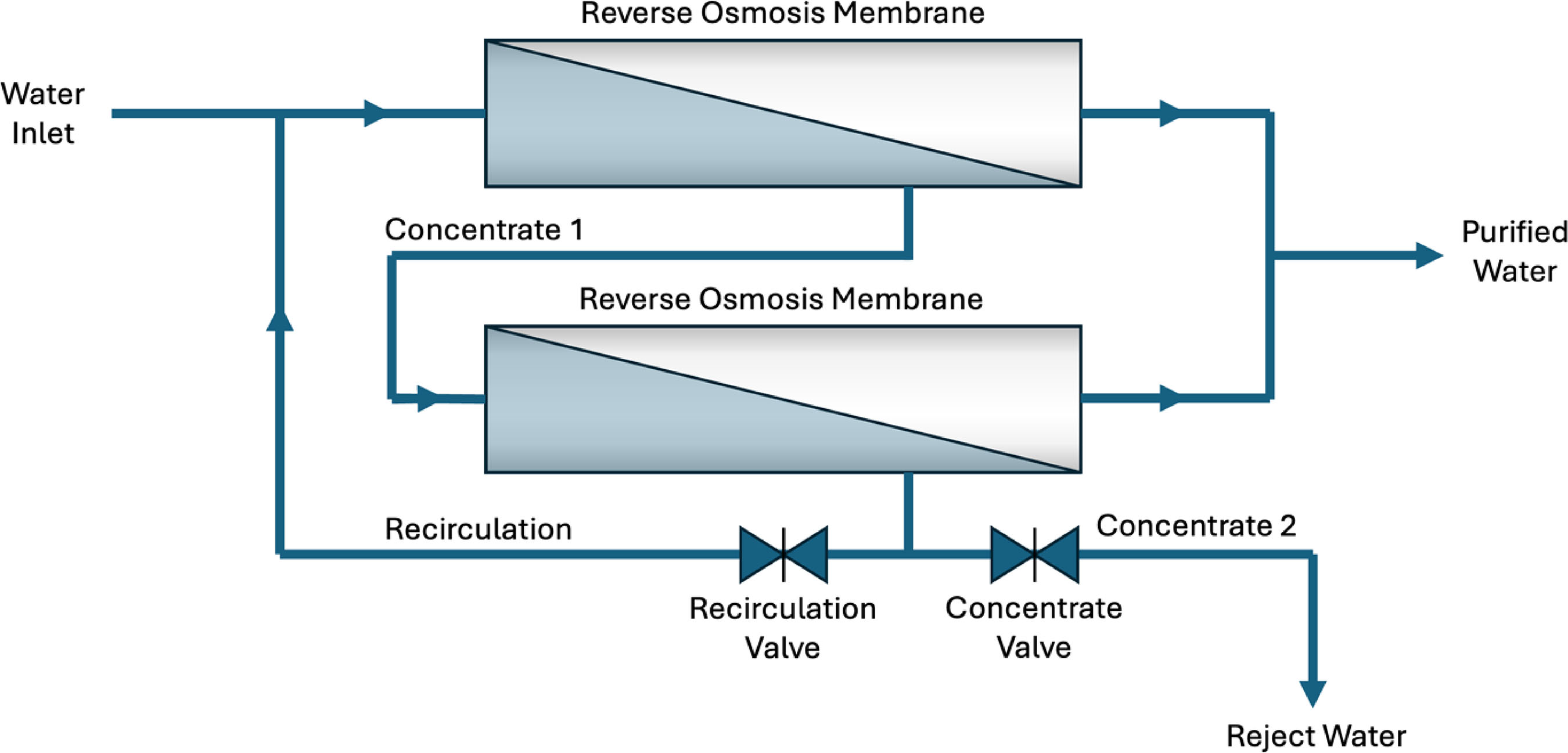
Reverse osmosis is performed by applying high pressure to water as it flows through a semipermeable membrane that retains dissolved chemical elements. For this reason, reverse osmosis is widely used for the purification of water employed in diluting haemodialysis concentrate, ensuring compliance with the minimum quality standards required by legislation for dialysis services (Brazil, 2014). It is important to clarify that this reject stream does not correspond to the water used in the dialysis procedure itself. In other words, it does not come into contact with patients or blood. Instead, the rejected water is potable water that undergoes a rigorous purification process, including reverse osmosis, before being used in dialysis machines. Figure 1 illustrates a simplified schematic of a generic reverse osmosis water treatment system. The semipermeable membrane separates the water into two output streams: one consisting of purified, demineralized water and another consisting of reject water with high salt concentration (Faria et al., 2016).
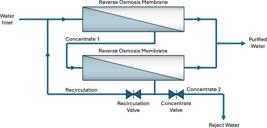
Even though the reject water generated by reverse osmosis systems, present high salt concentrations, it does not contain pathogenic agents and exhibits satisfactory microbiological quality. Faria et al. (2016) identified values below 1.1 MPN/100 mL for total and thermotolerant coliforms, dissolved oxygen at 7.41 mg/L and absence of heterotrophic bacteria, reinforcing the reuse potential of this effluent for non-potable purposes.
Faria et al. (2016) measured the volume of reject water generated by reverse osmosis systems over a 30-day period in a haemodialysis clinic located in Curitiba, Brazil. To determine this volume, two water meters were installed, one on the membrane reject discharge line and the other on the existing pipe at the outlet of the storage tank where the clearwater intended for non-potable uses was collected. To increase measurement accuracy, daily water-meter readings were compared with rotameters integrated into the equipment to monitor concentrate flow rates. The percentage of water recovery from the reject stream could be obtained using Equation 1 (Faria et al., 2016):
is the percentage of recovery;
is the permeate flow rate (L min⁻¹); and
is the feed water flow rate or total flow rate (L min⁻¹).
Factors influencing the percentage of clearwater recovery include temperature (directly proportional to permeate flow rate) and the salt concentration of the feed water (inversely proportional to permeate flow rate). Consequently, between 40% and 60% of the supplied water is discharged as clearwater, representing a significant volumetric potential for non-potable reuse (Faria et al., 2016; Teixeira; Silva, 2011).
Despite the substantial volumetric availability, forecasting clearwater generation from reverse osmosis remains limited to simple mass-balance relationships derived from system flow rates. No standardized predictive models were identified that explicitly account for temporal variability, operational schedules or building demand profiles. As a result, clearwater volumes are often estimated retrospectively, based on equipment specifications or post-installation measurements, which constrains their integration into early-stage building water system design.
From a practical standpoint, clearwater reclamation from reverse osmosis systems for non-potable end-uses in buildings faces challenges related to storage capacity, space availability and hydraulic integration. The relatively high and continuous flow rates may require large storage tanks or immediate end uses to avoid overflow and water losses. These constraints highlight the need for improved forecasting approaches that link reverse osmosis system operation to building-scale water demand, enabling a more effective incorporation of clearwater as an alternative water supply for non-potable water systems.
3.2 Clearwater discharge from distillation systems
Distillation systems are devices installed in laboratories to produce demineralized water and operate through electrical resistance. They function manually and the feed flow rate is controlled by laboratory technicians. A portion of the water admitted into the system is converted into distilled water, while a much larger portion is used to condense the generated steam and cool the equipment, being discharged at the end of the process. Therefore, the discharged water in the distillation processes is not the condensate itself, but rather the cooling water admitted into the system.
Of the total volume of water circulated in the distillation system, 95.5% serves solely as cooling water and is subsequently discharged, whereas only 4.5% is obtained as distilled product water (Pinto; Capri; Capri Neto, 2015). It is important to highlight that the proportion between discharged and recovered water depends directly on the feed flow rate, which is manually regulated by different professionals each time the distiller is operated. As a result, the production-to-discharge ratio may vary significantly (Pinto et al., 2015).
Unlike reverse osmosis systems, no standardized predictive equations or validated forecasting models were identified in the literature for estimating clearwater discharge volumes from distillation processes. The information available is predominantly derived from direct measurements in existing installations or from manufacturer specifications, which are often provided under idealized operating conditions. As a result, volumetric estimation is typically performed retrospectively and remains highly site-specific. Table 2 presents the identified relationships between clearwater discharge volume per litre of distilled water produced for Pilsen-type distillation systems.
The reviewed literature indicates that the volumetric efficiency of distillation systems is generally low. Reported ratios of clearwater discharge to distilled water production vary widely, ranging from approximately 26 to 440 litres of clearwater discharge per litre of distilled water produced. This extreme variability reflects differences in equipment design, operational regimes, feed-water flow control and user practices – particularly in manually operated laboratory units (Pinto et al., 2015; Simões et al., 2020; Menezes; Carneiro Filho, 2022). One of the primary factors contributing to this variability is the manual regulation of feed-water flow by laboratory staff. Unless the water supply is manually shut off, cooling water may continue to flow even when the distillation process is interrupted or completed, resulting in unnecessary discharge volumes. Additionally, older or less efficient distillation equipment tends to require higher cooling flows to maintain safe operating temperatures, further increasing water losses.
Overall, distillation systems produce on the order of tens of litres of clearwater discharge for every litre of distilled water produced (approximately 32 L/L). This value should be interpreted as an order-of-magnitude indicator rather than a fixed design parameter, given its strong dependence on equipment type, operational practices and manual flow regulation. According to Medeiros, Storck and Volpatto (2017), discharged water from distillation systems can be used directly for non-potable end-uses, such as floor and sidewalk cleaning or irrigation, without the need for a specific treatment system.
From a thermal perspective, clearwater discharged from distillation systems often exits the system at elevated temperatures, indicating potential opportunities for combined water and energy recovery. However, the reviewed studies rarely address thermal recovery explicitly, focusing predominantly on the volumetric potential for non-potable end-uses in buildings. This represents an additional research gap, particularly in facilities with continuous laboratory operation and high energy demand.
In practical terms, reclaimed clearwater form distillation systems for non-potable end-uses in buildings is constrained by both volumetric and logistical factors. The large and intermittent discharge volumes may require oversized storage infrastructure, which is often impractical in laboratory buildings with limited space.
While distillation processes can generate substantial quantities of clearwater discharge, the lack of predictive models, combined with high variability and operational inefficiencies, limits their integration into building-scale non-potable water systems. These findings highlight the need for empirical studies aimed at developing simple estimation approaches based on operational parameters, as well as for design strategies that reduce unnecessary water discharge at the source.
3.3 Clearwater condensate from air-conditioning systems
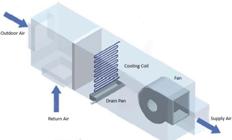
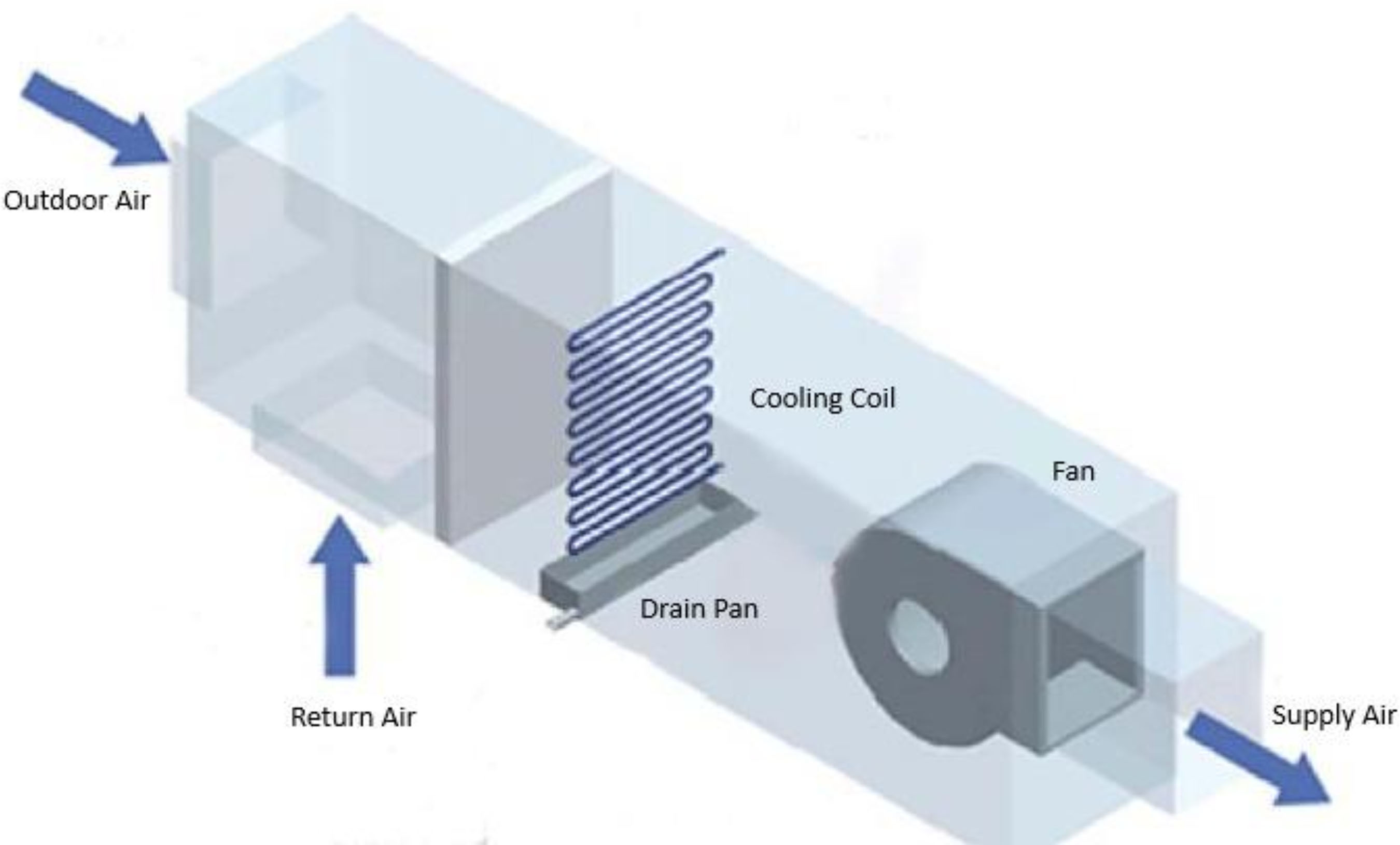
Air conditioning condensate is produced from the moisture present in the air. As the air passes through the cooling coil, it may reach temperatures below the dew point, leading to a phase change from vapor to liquid water (Creder, 2014). The resulting condensate drips into a condensate drain pan (Figure 2) and can then be reclaimed for non-potable end-uses (Glawe; Wooten; Lye, 2016).
In Brazil, condensate discharge from air conditioning units has been quantified through direct measurement (Fortes et al., 2015). However, this method depends on measurements taken from existing equipment and therefore cannot be applied to size reuse systems in buildings that have not yet been constructed.
Unlike clearwater from reverse osmosis and distillation, condensate from air-conditioning systems has been the subject of several predictive modelling efforts. Other previous studies have sought to predict the amount of condensate that could be recovered, using analytical, computational and experimental forecasting models. In a previous study, Carvalho and Sant’Ana (2024) identified, through a systematic review, the available forecasting models for condensate generation from air conditioning systems (Table 3).
Table 3 shows a significant prevalence of the variable’s temperature, relative humidity, absolute humidity, dew point temperature and air velocity for predicting condensate generation. Condensate production may be estimated based on the difference between outdoor and indoor relative humidity and on the amount of outdoor air introduced into the building (Arden et al., 2021).
Reported condensate generation rates for air-conditioning units typically range from approximately 2.07 to 7 L/h per unit. These values represent indicative orders of magnitude derived from specific climatic and operational conditions, rather than universal parameters for system design and may vary substantially with equipment capacity, indoor setpoints, ventilation rates and local climate.
The reviewed literature indicates that these models can be broadly grouped into three main categories:
-
psychrometric or humidity-balance models;
-
empirical or regression-based models; and
-
climate-based or long-term estimation models.
Psychrometric models are based on mass balances of water vapor in moist air, estimating condensate production as a function of the difference between inlet and outlet humidity ratios and the air mass flow rate through the cooling coil. These models rely on variables such as dry-bulb temperature, relative humidity, absolute humidity, air velocity and air density and are commonly applied at equipment or system scale (Guz, 2005; Painter, 2009; Lawrence et al., 2010). Their main advantage lies in their physical consistency; however, their application requires detailed operational data that are not always available during early design stages.
Empirical models, in contrast, are derived from experimental measurements and regression analyses conducted under specific climatic and operational conditions (Habeebullah, 2009). These models often present simplified formulations and may include performance indicators such as coefficients of determination (R²) or root mean square error (RMSE), which allow assessment of predictive accuracy (Al-Farayedhi et al., 2014; Eades, 2018). While empirical models are generally easier to apply, their transferability is limited, as they tend to be valid only within the climatic ranges and system configurations for which they were developed.
Climate-based models attempt to estimate condensate generation over seasonal or annual periods by correlating condensate yield with aggregated climatic indicators, such as average dew-point temperature, cooling degree days, or precipitation (Lawrence et al. 2012; Zolfagharkhani et al. 2018; Poredos et al. 2021). These approaches are particularly useful for preliminary assessments at the building scale, yet they introduce additional uncertainty due to the averaging of climatic variables and assumptions regarding system operation and occupancy patterns.
Studies conducted in hot and humid climates, such as those in the southern United States, the Middle East and Southeast Asia, tend to report higher yields, reflecting elevated ambient moisture levels. This highlights a key limitation: models developed under hot–arid or tropical conditions may not be directly applicable to humid subtropical or temperate climates without local validation.
From a practical perspective, the reuse of air-conditioning condensate requires attention to maintenance and sanitary safety. Condensate trays and drainage lines may accumulate biofilms, dust and metallic residues, necessitating regular cleaning, filtration and, in some cases, disinfection prior to reuse. Furthermore, reuse systems must be hydraulically integrated with potable-water backup supplies to ensure continuity during periods of low condensate generation, while preventing cross-connections and ensuring compliance with building and health standards.
Overall, the literature indicates that air-conditioning condensate represents the most mature and quantitatively explored clearwater source in buildings. Nevertheless, the absence of standardized forecasting methodologies, limited validation across climatic regions and insufficient integration with building design parameters continue to constrain broader adoption. Addressing these gaps requires the development of harmonized modelling frameworks that explicitly incorporate climatic variability, system operation and building demand profiles.
3.4 Clearwater condensate from boiler systems
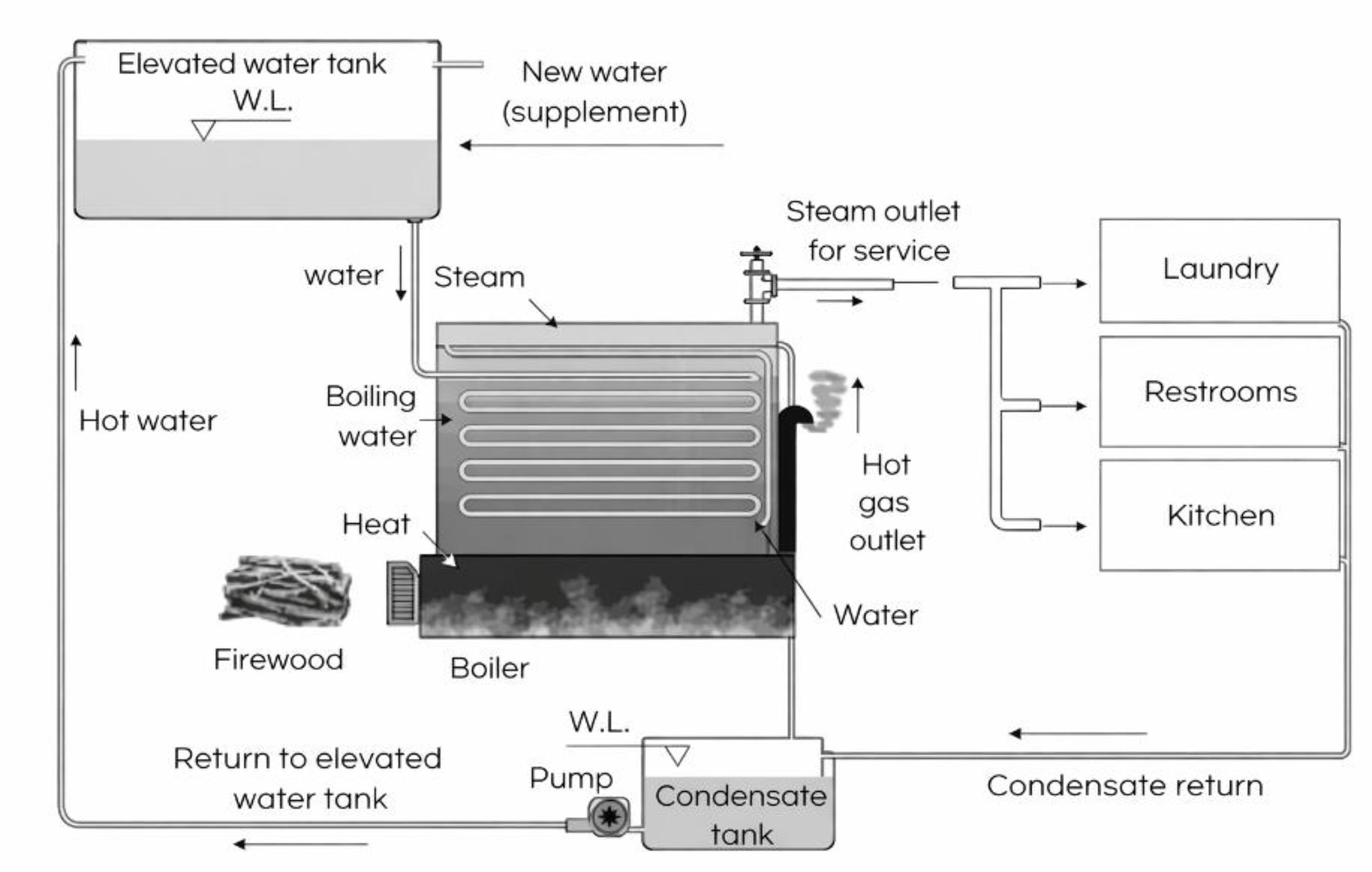
In buildings, steam can be used in kitchens (dishwashers and kettles), laundry (washing and drying), central sterile supply units (autoclaves) and even for water heating in sinks, washbasins, showers and similar applications. Boilers use fuel combustion (gas, wood, or other sources) to heat the water inside the equipment, converting it into steam that is delivered to the points where heat is required (Botelho; Bifano, 2015).
In contrast to air-conditioning systems, where condensate generation is driven by ambient climatic conditions, boiler condensate production is primarily governed by system design, thermal loads, steam distribution characteristics and insulation quality. As a result, condensate generation tends to be more stable over time but strongly dependent on operational conditions.
After being used, the generated steam becomes condensate. Once it passes through the condensate tank, it returns to the boiler because the water quality does not allow immediate disposal (Figure 3) (Botelho; Bifano, 2015). Boiler condensate tends to be recovered to take advantage of its residual thermal energy, helping to heat the boiler feedwater system (Chielle; Fontenelle, 2019). In the proposed condensate recovery system (ABRAMAN, 2008), blowdown water and safety-valve discharge are stored in a water tank at approximately 80 °C and then pumped back into the boiler.
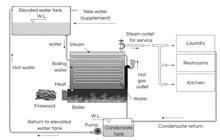
The saturated steam generated in the boiler is distributed throughout the system via the main steam lines, which use steam as the medium for transferring thermal energy to points of use. As thermal energy is transported through indirect contact with steam, condensation occurs (steam transitions to the liquid phase) and is drained through devices known as steam traps, automatic drainage valves designed to separate a specific fluid from a liquid or gas (ABRAMAN, 2008).
For steam traps designed to drain steam lines, the volume of the condensate generated can be calculated using Equation 2 (ABRAMAN, 2008). However, their applicability is generally limited to exposed steel piping under specific insulation conditions, and they may not adequately represent complex or compact piping networks commonly found in buildings.
is the total condensate quantity (lb/h);
is the safety coefficient;
is the amount of condensate formed due to heat loss from steam during system start-up to heat the piping (lb/h); and
is the amount of condensate formed due to heat loss by radiation during normal operation of the piping (lb/h).
The values of Qₐ and Qₛ depend on numerous factors, some of which are difficult to express quantitatively. The literature provides tables and charts with these values, considering installation types, pipe diameters and thermal insulation classes. In the absence of more detailed information, these quantities may be calculated using Equations 3 and 4 (ABRAMAN, 2008) (values expressed in lb/ft).
is the pipe length (ft);
is the unit weight of the empty pipe (lb/ft);
is the temperature difference between steam and ambient air (°F);
is the latent heat of steam at the final temperature (Btu);
is the warm-up duration of the piping (min), generally N = 5;
is the unit lateral surface area of the pipe (ft²/ft); and
is the unit heat loss through the thermal insulation for standard calcium silicate insulation (U = 0.286 Btu/(h·ft²·ºF)).
Illustrative calculations reported in technical manuals suggest that condensate flow rates in building-scale boiler systems are typically modest when compared to reverse osmosis reject or distillation discharge volumes. Consequently, while boiler condensate presents favourable water quality and thermal characteristics, its volumetric contribution to non-potable water supply is often limited.
From an energy perspective, boiler condensate retains significant thermal content, which is frequently recovered to preheat boiler feedwater, improving overall system efficiency. Boiler clearwater recovery for non-potable water end-uses in buildings must therefore be evaluated in conjunction with energy recovery strategies, as diverting condensate away from the boiler may reduce thermal efficiency unless compensatory measures are implemented.
Accurate assessment of boiler condensate availability requires appropriate instrumentation, including flow meters, temperature sensors and properly maintained steam traps. In practice, such monitoring infrastructure is more common in industrial facilities than in commercial or institutional buildings, limiting the availability of reliable data for forecasting condensate generation at the building scale.
Overall, the literature suggests that constraints on boiler clearwater recovery are driven not by water quality limitations, but primarily by restricted volumetric availability, monitoring complexity, and integration with existing thermal infrastructure. These constraints help explain the scarcity of predictive models and empirical data for boiler condensate generation in non-industrial buildings, highlighting the need for simplified estimation approaches and improved monitoring practices tailored to the built environment.
4 Conclusions
This review identified potential clearwater sources and organized them into two main categories based on their generation mechanisms. Clearwater discharge refers to reject effluents from water treatment processes, whereas clearwater condensate is produced by the condensation of water vapor in cooling or heating systems. In addition, the review analysed existing approaches for forecasting clearwater supply in buildings, focusing on four key sources: haemodialysis reverse osmosis systems, distillation systems, air-conditioning systems and boiler systems. Findings highlight substantial differences among these sources in terms of clearwater supply, data availability and maturity of forecasting approaches.
Moderate evidence exists for air-conditioning condensate, which represents the most extensively studied clearwater source in the reviewed literature. Multiple predictive approaches have been proposed, including psychrometric, empirical and climate-based models. Although these models demonstrate the feasibility of estimating condensate generation, their applicability is often limited by climatic dependence, lack of validation across different regions and assumptions regarding system operation and occupancy patterns.
Most studies carried out regarding condensate production from air conditioning systems have been developed in hot and humid climates, particularly in the southern United States and the Middle East, where condensate generation is naturally elevated due to high ambient relative humidity. Most of the identified forecasting models are based on air humidity mass balances. Lawrence et al. (2012), however, employ more complex empirical models that consider not only air properties, but also annual climatic variables such as average dew point, cooling degree days and precipitation, attempting to generate seasonal or annual predictive models.
In contrast, evidence related to clearwater discharge from reverse osmosis and distillation processes remains limited. In the case of reverse osmosis, a substantial portion of the treated water is discharged as concentrate, which may be reclaimed for non-potable water end-uses in buildings. Distillation systems demonstrated significant water inefficiency, with large clearwater discharge rates relative to the production of distilled water. This imposes logistical challenges for storage and use. Given the high volumes of water discharged by distillation systems, an initial technical constraint relates to the size of storage tanks required to retain this source of clearwater. Large volumes demand suitable infrastructure and considerable space, which may be prohibitive in many buildings.
Boiler condensate presents favourable water quality and thermal characteristics. However, its volumetric contribution at the building scale is generally modest. Estimating condensate production from boiler systems presents challenges that hinder routine assessment of potential use. Measuring and monitoring condensate generation from heating systems requires precise instrumentation and rigorous maintenance practices, which are often absent in non-industrial environments. The lack of reliable data limits accurate evaluation of its potential to supply non-potable water end-uses in buildings.
Results indicate that clearwater supply for non-potable end-uses is most viable when forecasting approaches are aligned with the dominant generation mechanisms and local climatic conditions. For practical applications, the adoption of standardized measurement protocols, improved monitoring practices and early integration of clearwater sources into building design are essential to enhance system reliability and feasibility.
From a research perspective, several priority areas emerge. These include the development of generalized predictive models for air-conditioning condensate that incorporate climatic variability and operational parameters; empirical studies aimed at establishing simplified estimation approaches for clearwater discharge from reverse osmosis and distillation systems; and assessments of cost–benefit and spatial feasibility at the building scale.
The interpretation of the findings presented herein should consider the methodological and scope-related limitations inherent to this review. The synthesis was conducted primarily through qualitative comparison and narrative analysis, as the heterogeneity of contexts, metrics, and reporting standards across studies limited the feasibility of quantitative meta-analysis. Furthermore, the review draws on secondary data reported in the literature, which may reflect site-specific conditions and methodological variability.
Nevertheless, this approach enabled a comprehensive conceptual synthesis and the identification of recurring patterns across diverse applications and building contexts. The review advances practical knowledge to support the planning and implementation of non-potable water systems in buildings. Future research should also address water-quality and sanitary barriers associated with clearwater reuse, particularly in relation to maintenance practices and health protection measures for non-potable applications. Additionally, greater attention should be given to the coupling of water and energy recovery strategies, especially for boiler condensate systems, to ensure that water reuse does not compromise thermal efficiency.
Finally, advancing the use of clearwater as an alternative water source in buildings requires closer alignment between forecasting methods and regulatory frameworks, including building standards and technical guidelines. Strengthening this integration can support more consistent adoption of clearwater reuse systems and contribute to sustainable urban water management.
-
Declaration of Generative AI and AI-Assisted Technologies in the Writing Process
DeepL Translator tool was used in the process of translating the original draft in Portuguese to English. The authors reviewed and edited the text as needed and assume full responsibility for the content of the published article.
-
Financial Support
Funding was obtained by the Postgraduate Programme in Architecture and Urbanism- University of Brasília (UnB); Scientific Initiation Program - University of Brasília (UnB); Federal District Research Support Foundation (FAPDF) grant nº 00193-00001675/2024-03.
-
VIEIRA, M. S.; SANT’ANA, D.; CARVALHO, D. V. de; SANTANA, L. F. Forecasting clearwater supply for non-potable uses in buildings: a literature review. Ambiente Construído, Porto Alegre, v. 26, e152291, jan./dez. 2026. ISSN 1678-8621 Associação Nacional de Tecnologia do Ambiente Construído. http://dx.doi.org/10.1590/s1678-86212026000100974
Data Availability Statement
All data supporting the findings of this study are included in the published review article.
References
- ABREU, L. L. C. et al. Reutilização da água usada no processo de destilação. META, v. 1, n. 1, p. 323–329, 2016.
- AL-FARAYEDHI, A. A.; IBRAHIM, N. I.; GANDHIDASAN, P. Condensate as a water source from vapor compression systems in hot and humid regions. Desalination, v. 349, p. 60-67, 2014.
- ARDEN, S. et al. Human health, economic and environmental assessment of onsite non-potable water reuse systems for a large, mixed-use urban building. Sustainability, v. 12, p. 5459–5459, 2020.
- ARDEN, S. et al. Onsite non-potable reuse for large buildings: environmental and economic suitability as a function of building characteristics and location. Water Research, v. 191, e.116635, 2021.
- ASSOCIAÇÃO BRASILEIRA DE MANUTENÇÃO E GESTÃO DE ATIVOS. PCO - Programa de certificação operacional CST: tubulação industrial e estrutura metálica. Rio de Janeiro, 2008.
- ASSOCIAÇÃO BRASILEIRA DE NORMAS TÉCNICAS. NBR 16783: uso de fontes alternativas de água não potável em edificações. Rio de Janeiro, 2019.
- BOTELHO, M.; BIFANO, H. Operação de caldeiras: gerenciamento, controle e manutenção. 2. ed. São Paulo: Editora Blucher, 2015.
- BRAZIL. Ministério da Saúde. Agência Nacional de Vigilância Sanitária. Resolução RDC n.º 11, de 13 de março de 2014. Dispõe sobre requisitos de boas práticas de funcionamento para os serviços de diálise e dá outras providências. Diário Oficial da União, Seção 1, p. 41, Brasília, DF, 17 mar. 2014.
- CÁCERES, P. S.; RAMOS, S. R.; SANT’ANA, D. Potencial de redução da exploração dos recursos hídricos locais pelo aproveitamento de água pluvial em residências no Distrito Federal. Paranoá, v. 12, n. 23, p. 11–19, 2019.
- CARVALHO, D. V.; SANT’ANA, D. A comprehensive review of air-conditioning condensed water supply models. Observatório de la Economía Latinoamericana, v. 22, n. 2, e.3269, 2024.
- CHIELLE, L. P.; FONTENELLE, M. T. Reutilização do condensado utilizado para aquecimento dos tanques de gordura. In: ENCONTRO NACIONAL DE ENGENHARIA MECÂNICA, 4., 2019, Chapecó. Anais [...]. Chapecó: UCEFF, 2019.
- COOK, S.; SHARMA, A.; GURUNG, T. Evaluation of alternative water sources for commercial buildings: a case study in Brisbane, Australia. Resources Conservation and Recycling, v. 89, p. 86–93, 2014.
- CREDER, H. Instalações de ar condicionado 6. ed. Rio de Janeiro: LTC, 2014.
- EADES, W. Energy and water recovery using air-handling unit condensate from laboratory HVAC systems. Sustainable Cities and Society, v. 42, p. 162-175, oct. 2018.
- FARIA, S. G. P. et al. Reaproveitamento do concentrado gerado por sistema de tratamento de água por osmose reversa em uma clínica de hemodiálise. Engenharia Sanitária e Ambiental, v. 21, n. 2, p. 329-336, 2016.
- FORTES, P. D. et al. Aproveitamento de água proveniente de aparelhos de ar condicionado. In: SIMPÓSIO DE EXCELÊNCIA EM GESTÃO E TECNOLOGIA, 12., Resende, 2015. Anais [...] Resende: AEDB, 2015.
- GLAWE, D.; WOOTEN, M.; LYE, D. Quality of condensate from air-handling. ASHRAE Journal, v. 58, p. 14-23, 2016.
- GUO, D. et al A data-based predictive model for spatiotemporal variability in stream water quality. Hydrology and Earth System Sciences, v. 24, n. 3, p. 827-847, 2020.
- GUZ, K. Condensate water recovery. ASHRAE Journal, v. 47, n. 6, p. 54-56, 2005.
- HABEEBULLAH, B. A. Potential use of evaporator coils for water extraction in hot and humid areas. Desalination, v. 237, n. 1/3, p. 330-345, 2009.
- HOUHOU, J. et al. Isotopic tracing of clear water sources in an urban sewer: a combined water and dissolved sulfate stable isotope approach. Water Research, v. 44, n. 1, p. 256–266, 2010.
- JURGA, A. et al. Condensate as a water source in terrestrial and extra-terrestrial conditions. Water Resources and Industry, v. 29, p. 100196, 2023.
- LAWRENCE, T.; PERRY, J. Capturing condensate. High Performing Buildings, v. 3, n. 4, p. 56-61, 2010.
- LAWRENCE, T.; PERRY, J.; ALSEN, T. AHU Condensate Collection Economics. ASHRAE Journal, v. 54, n. 5, 2012.
- MAGRINI, A. et al. Water production from air conditioning systems: some evaluations about a sustainable use of resources. Sustainability, v. 9, 1309, 2017.
- MEDEIROS, R. C.; STORCK, W. R.; VOLPATTO, F. Gestão da água de descarte de destiladores de água em laboratórios de uma IES. In: CONGRESSO BRASILEIRO DE GESTÃO AMBIENTAl, 8., Campo Grande, 2017. Anais [...] Campo Grande: IBEAS, 2017.
- MENEZES, C. C. B.; CARNEIRO FILHO, R. B. S. Estudo de recuperação da água dos laboratórios para o reabastecimento da EQ/UFRJ (Projeto de Final de Curso) – Escola de Química, Universidade Federal do Rio de Janeiro, Rio de Janeiro, 2022.
- NASUTION, H.; AUBAIDELLAH, N. Condensate water processing of split-unit air conditioning system on commercial building. International Journal of Innovation in Mechanical Engineering and Advanced Materials, 2024.
- PAINTER, F. L. Condensate harvesting from large dedicated outside air-handling units with heat recovery. ASHRAE Transactions, v. 115, n. 2, 2009.
- PINTO, A. C.; CAPRI, M. R.; CAPRI NETO, A. Gestão de água no laboratório: recuperação da água descartada dos destiladores. In: CONGRESSO INTERNACIONAL RESAG – GESTÃO DE ÁGUA E MONITORAMENTO AMBIENTAL, 2., Aracaju, 2015. Anais [...]. Aracaju: Rede de Saneamento e Abastecimento de Águas, 2015.
- POREDOS, P. et al Performance of the condensation process for water vapour in the presence of a non-condensable gas on vertical plates and horizontal tubes. Energies, v. 14, n. 8, e.2291, 2021.
- SANT’ANA, D.; MEDEIROS, L. B. P.; ALVARES, C. F. K. Reúso-DF: princípios de políticas tarifárias baseados em uma análise de viabilidade ambiental e econômica para o aproveitamento de águas pluviais e o reúso de águas cinzas em edificações residenciais do Distrito Federal. Relatório Técnico 3/2017. Brasília: Universidade de Brasília, 2017.
- SHAIBU, S.; ADIGUN, P.; IBUOTENANG, N. Sustainable urban water management: reuse, recycling and climate-resilient strategies. International Journal of Scientific Research in Science, Engineering and Technology, v. 12, n. 1, p. 122-135, 2025.
- SILVA, M. et al. Improving the energetic efficiency of direct-contact membrane distillation in mining effluent by using the waste-heat-and-water process as the cooling fluid. Journal of Cleaner Production, v. 260, 121035, 2020.
- SIMÕES, F. A. F. et al Potencial de reúso das águas de resfriamento de destiladores laboratoriais. Revista Eletrônica de Gestão e Tecnologias Ambientais, v. 8, n. 1, p. 180–194, 2020.
- TARAZONA, Y. et al. Treatment of produced water from the Permian Basin: chemical and toxicological characterization of the effluent from a pilot-scale low-temperature distillation system. Journal of Water Process Engineering, v. 67, p. 106146, 2024.
- TEIXEIRA, E. P.; SILVA, P. B. da. Reúso da água do rejeito de um tratamento de osmose reversa de uma unidade de hemodiálise hospitalar: estudo de caso. Revista Brasileira de Inovação Tecnológica em Saúde, v. 4, n. 4, p. 42-51, 2011.
- TESTON, A.; SOARES M. S.; B. M.; GHISI, E. Rainwater harvesting in buildings in Brazil: a literature review. Water, v. 10, n. 4, e.471, 2018.
- ZOLFAGHARKHANI, S; ZAMEN, M.; SHAHMARDAN, M. Thermodynamic analysis and evaluation of a gas compression refrigeration cycle for fresh water production from atmospheric air. Energy Conversion Management, v. 170, p. 97-107, 2018.
Edited by
-
Editor in-chief:
Enedir Ghisi

 Source: adapted from
  Source: adapted from Glawe, Wooten and Lye (2016).
 Source: adapted from