 Induction of neoplastic cells in rat skin
Abstract
PURPOSE: To investigate the induction of neoplastic lesions under the action of ultraviolet B radiation (UVR-B) and dimethyl benzanthracene (DMBA).
METHODS: Forty Wistar rats were assigned to four groups (ten animals each), according to the procedure: group A received UVR-B irradiation, group B received topic DMBA, group C, UVR-B+DMBA and group D as control, observed for ten weeks. In the tenth week they went through a skin biopsy and histopathological study. The average thickness of the epidermis was calculated and evaluated statistically.
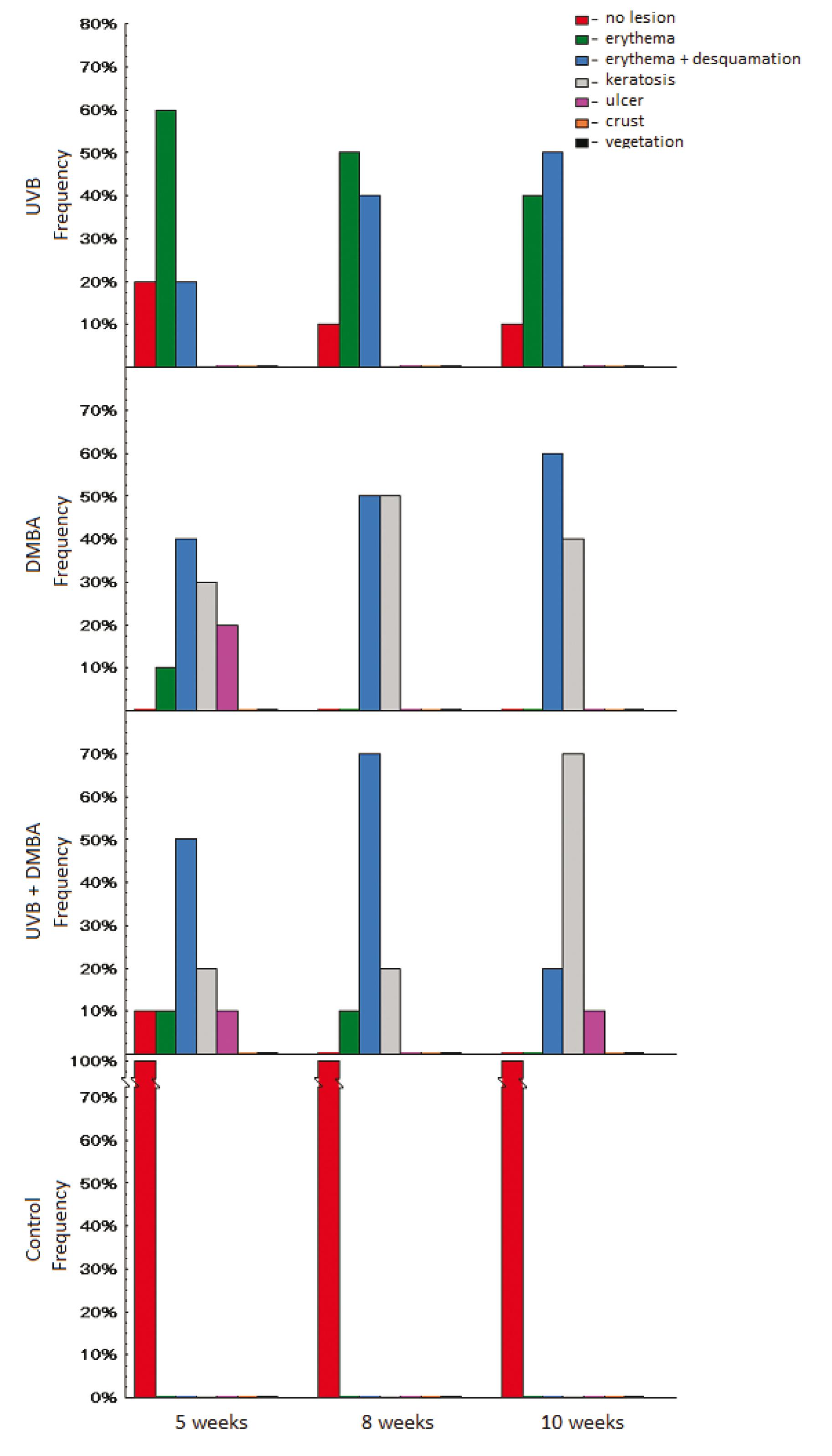
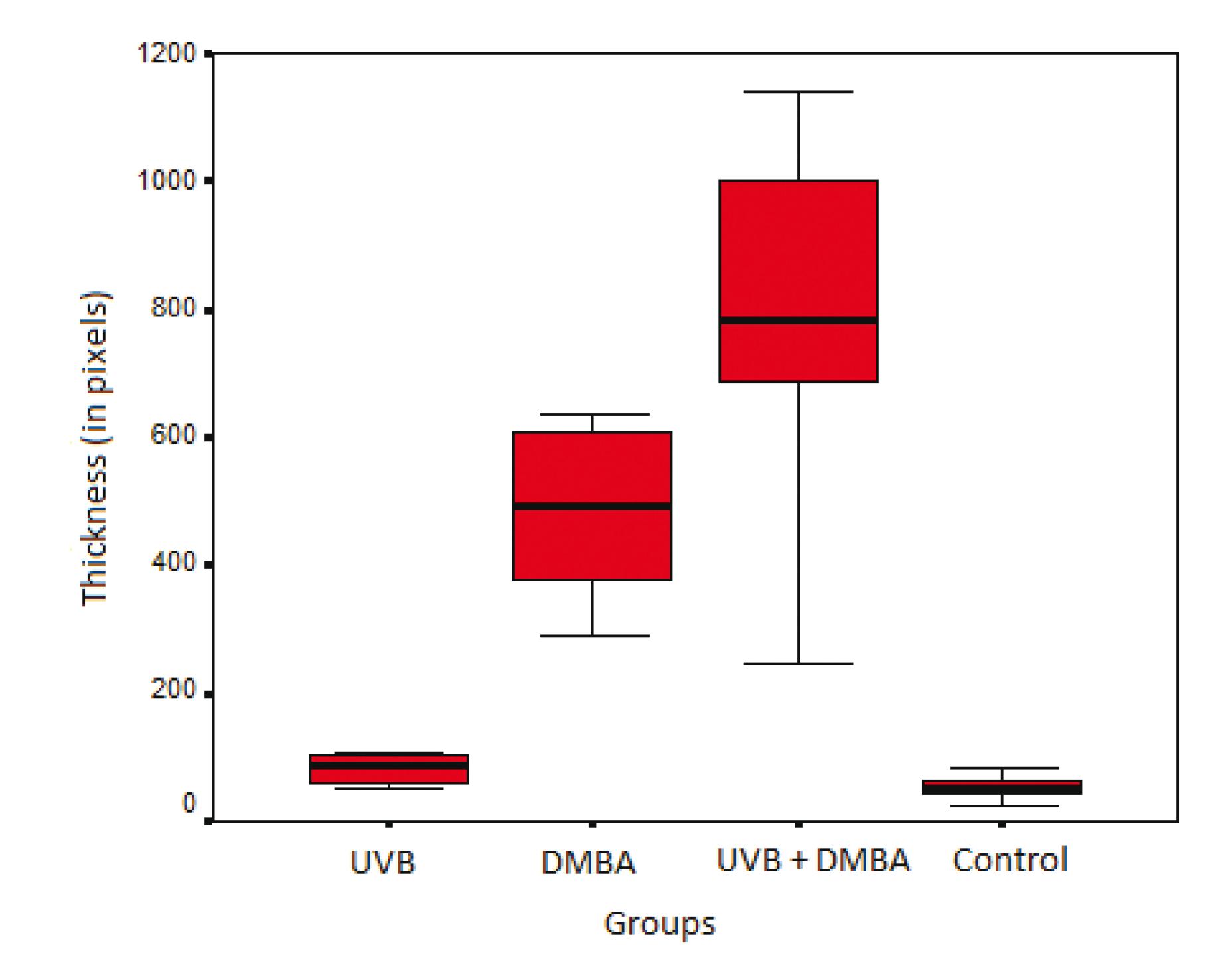
RESULTS: Macroscopic lesions in group B were more of inflammatory kind compared to group A. Group C presented more injuries with neoplastic features than the others (p<0.01). Histologically there was a significant increase in thickness of the epidermis of all groups compared to control, however the greatest thickness measures occurred in Group C (p<0.01).
CONCLUSIONS: The population exposed to ultraviolet B radiation is subject to suffer skin lesions that can develop into cancer. The association with hydrocarbons as the dimethyl benzanthracene increases the possibility of malignancy. May not be clinically evident determine when a solar keratosis ends and when a CEC begins. For this reason, histological study associated with health education prompting the early and irreversible injury prevention is necessary.
9,10-Dimethyl-1,2-benzanthracene; Epidermis; Solar Radiation; Skin Neoplasms; Rats