 Spatial and temporal patterns of Lecane decipiens (
Abstract:
Aim Lecane decipiens (Murray, 1913) was originally described from samples collected at a small lake in downtown Rio de Janeiro, Brazil. It is widely recorded in Central and South America, although the species has been found on other continents. L. decipiens is easily misidentified with other species of the same genus, differentiated only by small details on the lorica, a historical problem in the species occurrence records. This study aims to provide an update on the occurrence of L. decipiens worldwide, investigating its distribution and its potential to be considered cosmopolitan in the tropics and subtropics and invasive in temperate regions, as well as identifying gaps in current knowledge about the species.
Methods This study was conducted through a bibliographic survey in scientific databases (Web of Science, Scopus, Scielo, ScienceDirect and Google Scholar).
Results After screening and removing duplicates, 84 articles published between 1931 and 2025 were analyzed. The results indicate that L. decipiens can be considered as a cosmopolitan species, accumulating records in seven of the biogeographic regions, with a particular predominance in the countries India and Brazil, where the largest concentration of articles was found. Most studies were conducted in lakes and rivers, and only one article addressed the species' potential ecological impact, considering its negative influence negligible. Additionally, most studies focused on occurrence records rather than ecological interactions or population dynamics.
Conclusions Despite the widespread distribution of L. decipiens, the lack of articles on population densities, environmental interactions, and ecological effects hinders the determination of whether the species’ presence outside its original range is due to natural expansion or a silent invasion.
Keywords:
Rotifera; Lecanidae; distribution; silent invasion
Resumo:
Objetivo Lecane decipiens (Murray, 1913) foi originalmente descrita a partir de amostras coletadas em um pequeno lago no centro da cidade do Rio de Janeiro, Brasil. É amplamente registrada na América Central e América do Sul, embora a espécie tenha sido encontrada em outros continentes. L. decipiens é facilmente confundida com outras espécies do mesmo gênero, diferenciadas apenas por pequenos detalhes na lórica, um problema histórico nos registros de ocorrência da espécie. Este estudo tem como objetivo fornecer uma atualização da ocorrência de L. decipiens em todo o mundo, investigando sua distribuição e seu potencial para ser considerada cosmopolita nos trópicos e subtrópicos e invasora em regiões temperadas, bem como identificar lacunas no conhecimento atual sobre a espécie.
Métodos Este estudo foi conduzido por meio de um levantamento bibliográfico em bases de dados científicas (Web of Science, Scopus, SciELO, ScienceDirect e Google Acadêmico).
Resultados Após a triagem e remoção de duplicatas, 84 artigos publicados entre 1931 e 2025 foram analisados. Os resultados indicam que L. decipiens pode ser considerada uma espécie cosmopolita, acumulando registros em sete das regiões biogeográficas, com predominância particular nos países Índia e Brasil, onde a maior concentração de artigos foi encontrada. A maioria dos estudos foi conduzida em lagos e rios, e apenas um artigo abordou o potencial impacto ecológico da espécie, considerando sua influência negativa negligenciável. Adicionalmente, a maioria dos estudos focou em registros de ocorrência em vez de interações ecológicas ou dinâmica populacional.
Conclusões Apesar da ampla distribuição de L. decipiens, a falta de artigos sobre densidades populacionais, interações ambientais e efeitos ecológicos dificulta a determinação de se a presença da espécie fora de sua área de distribuição original se deve à expansão natural ou a uma invasão silenciosa.
Palavras-chave:
Rotifera; Lecanidae; distribuição; invasão silenciosa
1. Introduction
Even with advances in monogonont rotifer surveys, species relationships with environmental conditions in aquatic ecosystems remain largely overlooked, with an even greater gap in biogeography. The Lecanidae is one of the most species-rich families of rotifers, with over 200 described species, mainly within the genus Lecane (Segers, 2007) predominantly distributed in tropical and subtropical regions (José de Paggi, 1996; Costa et al., 2022). These organisms occupy the niche of omnivorous microphages, feeding on small-sized algae, bacteria and detritus, and playing an important role in microbial food webs in various types of freshwater habitats (Segers, 2008). Despite this, little is known about the biogeography of the vast majority of its species.
Described for science from specimens collected in a pond located in a central square in the city of Rio de Janeiro, Brazil, Lecane decipiens (Murray, 1913) is cited in the literature as a species commonly found in Central and South America (Segers, 1995). There are some records of the species in Europe, where L. decipiens has been consistently misidentified (Segers, 1996). The species name comes from the Latin verb “dḗcipiṑ” that means to mislead, to deceive, suggesting that the author was mentioning a certain possible confusion in taxonomic identification due to similarity with other species. Murray (1913) had mentioned that L. decipiens might be confused with L. arcuata (Bryce, 1891). Furthermore, L. decipiens can be confused by non-experts in rotifer studies with two other species of the same genus: L. hamata (Stokes, 1896) and L. serrata (Hauer, 1933). L. decipiens seems to have a wide distribution, with records from all continents (Ovie et al., 2011; Collins, 2015; Pajdak-Stós et al., 2017; Kuczyńska-Kippen & Ejsmont-Karabin, 2020; González-Gutiérrez et al., 2023; Pardo et al., 2023; Yusuf & Sash, 2025).
Most organisms of the zooplankton community are highly dispersive due to their small size, high reproductive rate, production of resistant stages, and can be easily transported by various biotic and abiotic vectors, with anthropogenic activities being one of the main factors enhancing this process (De Meester et al., 2002; Havel & Shurin, 2004; Dexter & Bollens, 2019). The biogeography of rotifers, a diversity group in the zooplankton community of the freshwater environments, results from a complex interplay of ecological, historical, and evolutionary factors, shaping distribution patterns that range from true cosmopolitanism to regionally restricted endemism (Segers, 2008; Fontaneto, 2019; Smolak et al., 2023). Classical studies, such as Green (1972), highlighted latitudinal variations in the composition of planktonic communities, indicating that the abundance and dominance of certain rotifer genera, such as Brachionus, tend to decline toward temperate zones, whereas Notholca becomes predominant in these regions. Conversely, the existence of a defined biogeography in rotifers has been questioned, largely due to uneven sampling efforts, their remarkable dispersal capabilities (Dumont, 1983; Fontaneto et al., 2012), dubious identification and the existence of complex of species (e.g., Lecane bulla, L curvicornis) (Walsh et al., 2009; García-Morales & Elías-Gutiérrez, 2013). Nevertheless, compelling evidence indicates that the group possesses its own biogeographic structure, similar to that observed in cladocerans (De Ridder, 1982; Dumont, 1983; Tausz et al., 2019). The broad biogeographic patterns observed in most rotifers can be attributed to the same dispersal mechanisms that enhance zooplankton mobility. According to Segers (2008), most freshwater rotifer species exhibit cosmopolitan distribution and are present on nearly all continents, with the exception of Antarctica.
Although some rotifer species exhibit a broad geographic distribution and are considered as cosmopolitan, this does not necessarily mean they could not be invasive in some areas. Cosmopolitan rotifer species occur naturally across multiple regions of the world as a result of their high dispersal ability, production of resistant stages, and ecological adaptations, without necessarily exerting harmful effects on local ecosystems (Gilbert & Reynolds, 2005; Wallace et al., 2006; Segers, 2008). According to Blackburn et al. (2011), the process of biological invasion involves a sequence of stages: introduction, establishment, spread, and impact, with not all species that cross geographical barriers becoming invasive. In many cases, these events represent merely a natural expansion of geographic distribution, without concrete evidence of ecological impact or persistence in the new habitat (Pardo et al., 2013; Daly et al., 2023; Pfadenhauer et al., 2024). In contrast, invasive species are those that occur outside their native range — typically most as a result of human activities — and whose presence produces significant negative impacts on biodiversity, community structure, and ecosystem functioning (Ricciardi, 2007; Lockwood et al., 2013; Simberloff et al., 2013). Regarding zooplankters, there is also the possibility of a silent invasion, in which introduction and establishment occur gradually and subtly, causing no apparent impacts but with the potential for subtle changes in local zooplankton communities (Miglietta & Lessios, 2009; Ricciardi & MacIsaac, 2011; Branco et al., 2023; Parry et al., 2024).
The family Lecanidae is comprised mostly by cosmopolitan species, but a considerable number of species have restricted range (Segers, 1995). In the context, some questions can be raised: first, does the distribution of L. decipiens indicate a natural expansion of its native range, or is it an example of global bioinvasion possibly facilitated by human activities? Second, eighteen years ago, the taxonomy of rotifers was considered “all but adequate” (Segers, 2008). Given the existing taxonomic gaps, including the scarcity of taxonomy experts, can we focus on differentiating between natural and introduced distributions of L. decipiens?
The present study primarily aims to explore the worldwide distribution of L. decipiens, as well as to assess its potential as an invasive species. Based on this objective, we discuss the possibility that anthropogenic factors may influence the observed distribution of the species in temperate regions.
2. Material and Methods
2.1. Data collection
Searches were performed using full-text searches in major scientific databases, including Web of Science (Clarivate), Scielo, Scopus, ScienceDirect (Elsevier), and Google Scholar, to collect studies on the species Lecane decipiens. All searches were conducted on October 10, 2025; therefore, articles published after this date were not included in the study. For consistency and comprehensiveness, the search terms “Lecane decipiens”, “Lecane (Monostyla) decipiens”, and “Monostyla decipiens” were exclusively used to retrieve all records of the species regardless of changes in its taxonomic classification. All retrieved records were screened for relevance, and duplicates were removed before the bibliographic survey.
2.2. Data processing
Articles were classified according to “Country of study”, “Year of collection”, and “Type of sampling site”, and, when possible, the following information was extracted: data on the species density, relationships of the species with environmental conditions, cited as exotic or invasive, and, if considered as exotic or causes sufficient impact to be considered invasive, if the article investigates the impacts caused by the species. In addition to these categories, information obtained directly from the database exports, such as authors and year of publication, was also included. In the present paper, we use the term “study(ies)” to refer to all results identified in our bibliographic survey, including both peer-reviewed papers and gray literature.
About the type of sampling site, we categorized the studies in the present review as: lakes, rivers, reservoirs, wetlands, phytotelma, small freshwater habitats, and multiple environments. The category “multiple environments” includes studies conducted in two or more of the habitat types listed above. Wetlands include permanently or seasonally inundated areas, natural or artificial, such as floodplains, swamps, and rice fields. Small freshwater habitats comprise smaller water bodies, such as ephemeral ponds, tanks, wells, shallow depressions, and artificial fountains. Phytotelma correspond to water-filled plant structures (Bromeliaceae), and lakes, rivers, and reservoirs refer to common freshwater systems. The classification provides a comprehensive framework to show the full diversity of habitats where Lecane decipiens occurs.
Following Azémar et al. (2007), all records of Lecane decipiens in Europe prior to 2007 should be regarded with caution, as they were likely misidentifications of L. hamata or L. serrata. Their article represents the first confirmed occurrence of L. decipiens on the continent, highlighting the importance of careful taxonomic verification in historical and contemporary records. These authors explained that the differences between the species can be easily visualized since L. decipiens differs from L. hamata by the lateral margin of the dorsal plate which does not reach the head aperture, and from L. serrata by its lorica without any ornamentation. Accordingly, two articles before Azémar et al. (2007) were identified in Europe: one from Hungary in 1962 (Nogrady, 1962) and another from Spain in 2000 (Ortega-Mayagoitia et al., 2000). These records were therefore disregarded.
In total, the searches produced approximately 280 results. After removing duplicates across databases and studies outside the study’s scope, the final dataset for analysis included 84 studies (Table 1).
3. Results
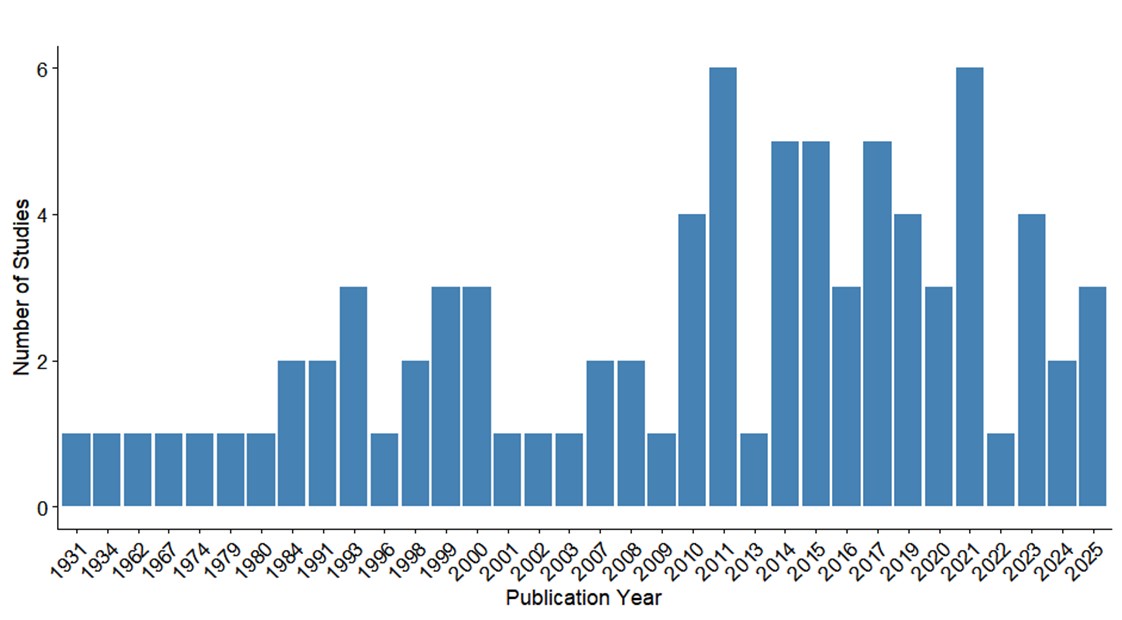
After the original species description (Murray, 1913), the oldest study found dates to 1931 and, the most recent studies were published in 2025 (Figure 1). The highest number of publications occurred in 2011 and 2021, with six studies reported in each year.
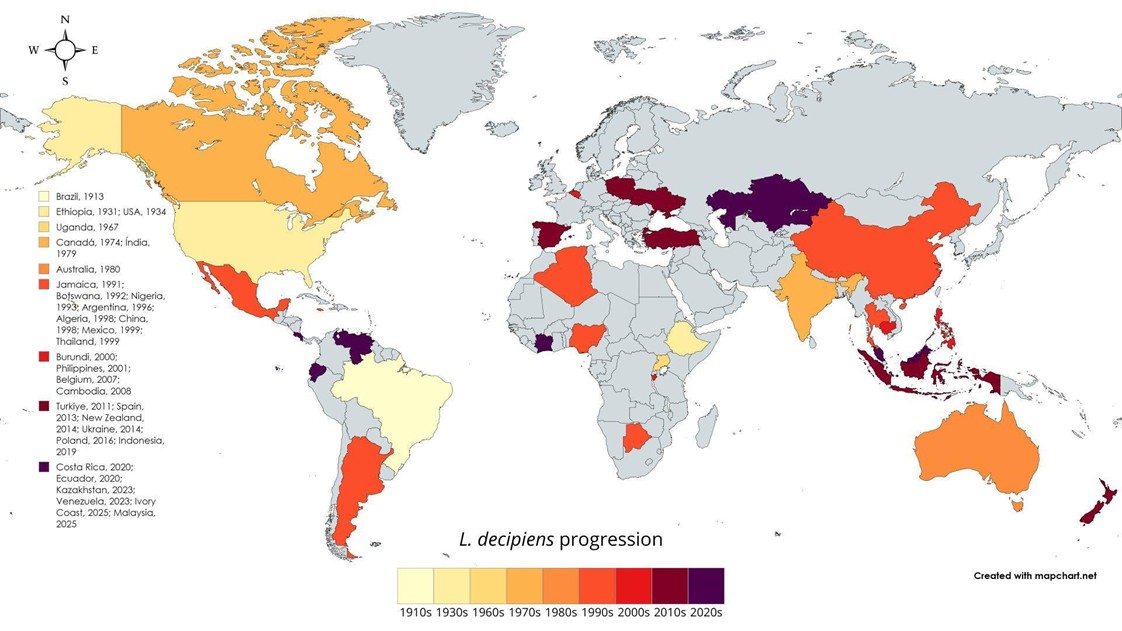
The geographic distribution of studies indicates that Lecane decipiens occur on all continents (Table 2). India (21) and Brazil (15) account for the highest number of records, followed by Nigeria (5), Thailand, and Mexico (4). Overall, the 84 articles analyzed reported occurrences in 31 countries (Figure 2).
All studies included in this bibliographic survey from 1913 to 2025, classified by country, continent, first record (in the country) and type of sampling site. “Multiple environments” was used when a study sampled two or more types of habitat.
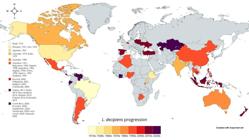
Records per decade of the global distribution of Lecane decipiens (all countries with at least one study). The year refers to the first record. Map created with MapChart (2025).
Segers, H. was the most recurrent author found by the present analysis, participating in six of the retrieved studies, either as the main author or co-author. Koste, W. and Sharma, B.K. have four and Bhandarkar, S.V., Green, J. and Sanoamuang, L.O. each have three studies, making them the authors with the next highest number of studies on the species.
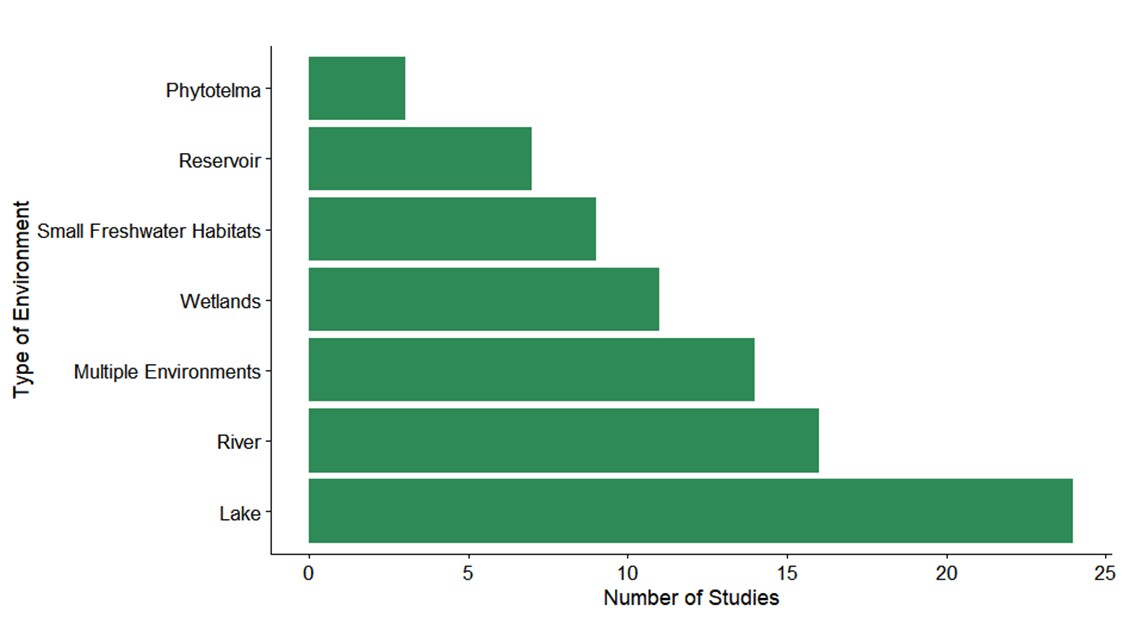
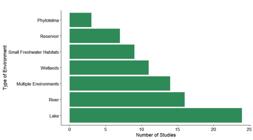
Regarding the type of sampling site, Lecane decipiens have been recorded in a wide variety of freshwater habitats (Table 2). The majority of studies were conducted in lakes (24), followed by rivers (16), while 14 studies were categorized as “multiple environments” (Figure 3). Additional records were reported for wetlands (11), small freshwater habitats (9), reservoirs (7), and phytotelma (3).
Regarding density analyses, very few articles (only seven) provided quantitative counts of the species in their samples. Among those that reported density data, maximum values ranged from 0.006 ind·L−1 to 18 ind·L−1. Due to the limited availability of density data, a robust quantitative analysis was not possible. Only one article (González-Gutiérrez et al., 2023) presented information correlating species density with environmental factors, reporting a positive correlation between L. decipiens density and water temperature. Only three studies (Segers et al., 1993; Azémar et al., 2007, 2010) mentioned the species as potentially introduced or exotic; however, none explicitly classified it as invasive.
4. Discussion
Since its description in 1913, there were scarce records of Lecane decipiens occurrence until the beginning of this century when a tendency towards more frequent records was shown. This panorama was associated with the expansion of studies with rotifers and probably with the effect of the presence of rotiferologists, as reported by Fontaneto et al. (2012). However, it must be highlighted that the increase in articles over time reflects an increasing scientific interest in aquatic biodiversity. The use of the term ‘biodiversity’ in the aquatic bibliography has expanded after the beginning of this century, formed mainly from research carried out in countries of the Northern Hemisphere (Moustakas & Karakassis, 2005). In the history of L. decipiens occurrences, one can note studies carried out by European and American scientists in countries in Africa, Asia and South America (e.g., Bryce, 1931; Green, 1967; Koste, 2000) in parallel with the growth of studies conducted by scientists from various countries within their own geographic region (e.g., José de Paggi, 1996; Iloba & Egborge, 2002; Bhandarkar, 2015; Portinho & Nogueira, 2017). This new situation was probably also helped by the expanding research networks among rotiferologists (Špoljar et al., 2024), the use of rotifers in environmental monitoring (Ejsmont-Karabin, 2012; Liang et al., 2020; Kolarova & Napiórkowski, 2023) and online tools for taxonomic analysis such as the Rotifer World Catalog (Jersabek et al., 2026) that have a cumulative effect fostering new research on rotifer biodiversity and expanding scientific output.
Among the authors who have documented the occurrence of L. decipiens, Segers H. stands out, with his extensive effort and studies on the taxonomy and distribution of rotifers, being the most recurrent author in this review. This author has conducted rotifer surveys in several continents, developed important guides for rotifer taxonomic studies (Segers, 1995), and provided technical support for the Rotifer World Catalog site (Jersabek et al., 2026).
Notwithstanding, the data on the biogeography of L. decipiens demonstrate the species' extensive dispersal records as a result from limited research efforts on rotifer surveys worldwide. Tropical and subtropical countries that have shown more rotifer surveys, as Brazil and India, have produced a comparatively high number of occurrences of L. decipiens. In contrast, many other areas, especially in Africa, and regions of Asia, Oceania and South America that have not been thoroughly surveyed (José de Paggi et al., 2020; Smolak et al., 2023) led to significant gaps in our knowledge of the species' current range. This unequal records of L. decipiens based on articles may reveal more an imbalanced research intensity in some areas of interest than distributional patterns, and again they seemed more a reflection of the presence of rotiferologists as previously stressed by Fontaneto et al. (2012) than the real biogeographical distribution.
Nevertheless, our results show that L. decipiens has a vast geographic distribution, with records on all continents. According to the biogeographical framework proposed by Segers (2007, 2008), L. decipiens is considered a cosmopolitan species, with confirmed records from seven major regions: Afrotropical, Australian, Nearctic, Neotropical, Oriental, Pacific, and Palearctic. On the other hand, looking at the distribution map of occurrences, we observe a predominance of records in tropical and subtropical countries, where the rotiferologist effect is often not intense. However, a closer look at countries in the tropical region reveals that studies are concentrated in areas close to research institutions, where the rotiferologist effect is indeed more localized and intense.
Important questions remain regarding the dispersal capacity and biogeographical status of L. decipiens. Although the species was first recorded in tropical and subtropical regions (South and Central America), its presence in various parts of the world suggests that L. decipiens may have attained a global distribution through natural and human-mediated dispersal, or a combination of both. In reality, there is still a lack of studies to delineate a true distribution of the species, and comments in older articles may confuse the precise establishment of its occurrences. For example, it should be noted that Murray, in the article that first describes L decipiens, reported that this new species at that time was also known in Australia (Murray, 1913). The occurrence in Australia was further reported in the books of Voigt (1957) and Koste (1998), and by Koste & Shiel (1990). However, according to Shiel (pers. comm.), this species was not registered in Australia before 1980, and it was probably introduced by human activities.
The occurrence of L. decipiens in tropical and subtropical countries, particularly with higher records in India and Brazil as mentioned before, could reflect favorable environmental conditions for the species distribution as well as sampling bias. This latter is supported by the large number of studies conducted by Sharma, B.K. and Bhandarkar, S.V., the two of the most prolific authors on the species records, exclusively in India. In contrast, Segers H., the author with the highest number of studies reporting L. decipiens, is involved in many articles reporting first records of L. decipiens in specific countries (Nigeria, Thailand) (Segers et al., 1993; Chittapun et al., 1999). This author also authored research in which the species was recorded in only a single study in that country (Burundi, Algeria) (Samraoui et al., 1998; Baribwegure & Segers, 2000).
In Brazil, which is the type locality of the species, a substantial number of studies have also been conducted, as reflected by our bibliographic survey. However, these records are not evenly distributed across the country. As discussed by some authors (Garraffoni & Lourenço, 2012; Costa et al., 2022) 78% of the studies on rotifer fauna are concentrated in six out of 27 Brazilian States. Although historical records of L. decipiens in Brazil were documented by Garraffoni & Lourenço (2012), the reexamination of the same journals used in the survey these authors — now indexed in the Clarivate database — retrieved few of the records recorded by them. This underscores significant limitations in studies of species distribution and invasiveness: historical records may be underestimated if assessments rely solely on contemporary digital platforms, potentially leading to misinterpretations of occurrence patterns. Here we see the need for training taxonomists, implementing genomic analyses, and undertaking a broad effort to survey rotifer biodiversity.
Lecane decipiens was found in a variety of freshwater habitats, being most frequently recorded in lakes. This pattern may partly reflect sampling bias, as some studies indicate that lakes are among the most intensively studied environments for freshwater zooplankton (Castilho-Noll et al., 2023). Ecological factors may also contribute, as low-flow systems typically present lower water velocity and longer residence time, conditions that favor rotifer establishment and persistence (Czerniawski & Sługocki, 2017). The great diversity of habitats indicates that the species exhibits high adaptability or can live in a wide range of ecological conditions, persisting in lentic systems or being limited to small or transient habitats. High reproductive capacity, resistance to environmental changes, and effective dispersal mechanisms that enable colonization of a variety of habitats are among the general characteristics of rotifers that are consistent with this adaptability (Segers, 2007; Franch-Gras et al., 2017). However, we must highlight members of the Lecanidae family are substratum-dwellers, living mainly in littoral habitats, and in considered exotic water bodies such as phytotelmata (Segers, 1995). These last features facilitate the presence and persistence of species of Lecane in different types of aquatic environments.
Few articles found by the present study address the presence of L. decipiens as exotic or artificially introduced. Examples include Segers et al. (1993), who suggest that the species presence in Nigeria may result from human-mediated introduction. Azémar et al. (2007, 2010) examined the species’ environmental effects, referring to it as exotic (Azémar et al., 2010). These last authors were the unique found by us to provide a clear definition of the species potential invasiveness, categorizing it as established but numerically rare, stating that its potential impacts are “negligible”. Therefore, although we have gaps regarding the natural distribution of L. decipiens, some records differentiated between natural and introduced distribution of L. decipiens indicating examples of bioinvasion possibly facilitated by human activities. With this, our hypothesis about anthropogenic factors influencing the distribution of species in temperate regions could be corroborated. But not only in temperate regions, as suggested by the study of Segers et al. (1993).
Nevertheless, the limited number of studies on population densities, ecological interactions, and environmental factors relationships shows that little is known about ecology of L. decipiens. Considering that rotifers exhibit a great richness of species in freshwater environments (Rodríguez & Matsumura-Tundisi, 2000; José de Paggi et al., 2020; Elmoor-Loureiro et al., 2022), it is noted that little is known about most of the species present. Only taxa with wide occurrence and densities or explored in aquaculture and in toxicological essays (e.g., Brachionus spp.), or recognized as exotic species in expansion (e.g., Kellicottia bostoniensis) have their ecology more thoroughly investigated. The lack of data on L. decipiens makes it difficult to distinguish between a possible silent invasion and natural range of occurrence, especially in areas with sparse or inconsistent records. Furthermore, the evaluation of both natural distribution and invasive status is impaired by historical and misidentified records, as well as inconsistent sampling efforts across continents. Because of this, it is still challenging to distinguish whether observed occurrences outside of the tropical and subtropical are low-density establishments, transient introductions, or having subtle ecological impacts that might go undetected without focused research.
5. Conclusion
In summary, Lecane decipiens, with its type locality in southeast Brazil, is widely distributed and confirmed as a cosmopolitan species. Despite the temporal increase in the number of articles seen in the present study, a comprehensive view of the species' geographic distribution is obscured by a lack of articles on occurrence data across most continents. In a few locations, it was already considered an exotic species, but outlining the extent of its invasion would be speculative. Unfortunately, there is a lack of studies on population densities, environmental relationships, and possible ecological impacts as possible invader. This study highlights that the presence of rotifer specialists makes a difference in recording L. decipiens occurrences, showing critical regional gaps of knowledge in most parts of the world. Finally, we hope to have provided a basis for further investigations into the species’ dispersal, biogeography, and potential invasiveness.
Acknowledgements
We would like to thank Dr Russell Shiel for the help in clarifying occurrences of the species in Australia. We also thank CAPES for the master's scholarship awarded to Santos-Cabral, L.C. and Moreira, M.S., respectively under process numbers 88887.153986/2025-00 and 88887.212391/2025-00.
Data availability
The entire dataset supporting the results of this study has been published in the article itself.
-
Cite as:
Santos-Cabral, L.C., Moreira, M.S. and Branco, C.W.C. Spatial and temporal patterns of Lecane decipiens (Murray, 1913) records: a global overview based on literature. Acta Limnologica Brasiliensia, 2026, vol. 38, e13. https://doi.org/10.1590/S2179-975X7625
References
- Abra, J., 2012. Atributos populacionais e produtividade secundária de rotíferos em ambientes lacustres naturais e artificiais [Tese de Doutorado em Ciências Biológicas]. Botucatu: Universidade Estadual Paulista.
-
Ahlstrom, E.H., 1934. Rotatoria of Florida. Trans. Am. Microsc. Soc. 53(3), 251-266. https://doi.org/10.2307/3222102
» https://doi.org/10.2307/3222102 - Alves, R.C.P., 2011. Inter-relações entre zooplâncton e fitoplâncton mediante herbivoria na Lagoa do Camargo (zona de desembocadura do Rio Paranapanema na Represa de Jurumirim) [Tese de Doutorado em Biociências]. Botucatu: Universidade Estadual Paulista.
- Andrade, V.S., 2021. Efectos de la contaminación directa y difusa por plaguicidas sobre el zooplancton a distintas escalas de análisis. Santa Fe: Universidad Nacional del Litoral.
-
Arimoro, F.O., & Oganah, A.O., 2010. Zooplankton community responses in a perturbed tropical stream in the Niger Delta, Nigeria. The Open Environ. Biol. Monit. J. 3, 1-11. https://doi.org/10.2174/1875040001003010001
» https://doi.org/10.2174/1875040001003010001 -
Azémar, F., Maris, T., Mialet, B., Segers, H., Van Damme, S., Meire, P., & Tackx, M., 2010. Rotifers in the Schelde estuary (Belgium): a test of taxonomic relevance. J. Plankton Res. 32(7), 981-997. https://doi.org/10.1093/plankt/fbq030
» https://doi.org/10.1093/plankt/fbq030 - Azémar, F., Van Damme, S., Meire, P., & Tackx, M., 2007. New occurrence of Lecane decipiens (Murray, 1913) and some other alien rotifers in the Schelde estuary (Belgium). Belg. J. Zool. 137(1), 75-83.
-
Baribwegure, D., & Segers, H., 2000. Rotifera from Burundi: the Lecanidae (Rotifera: Monogononta). Ann. Limnol.-. Ann. Limnol. 36(4), 241-248. https://doi.org/10.1051/limn/2000022
» https://doi.org/10.1051/limn/2000022 -
Bekleyen, A., Gökot, B., & Varol, M., 2011. Thirty-four new records and the diversity of the Rotifera in the Turkish part of the Tigris River watershed, with remarks on biogeographically interesting taxa. Sci. Res. Essays 6(30), 6270-6284. https://doi.org/10.5897/SRE11.355
» https://doi.org/10.5897/SRE11.355 - Bhandarkar, S.V., & Paliwal, G.T., 2017. Trophic status in freshwater lentic ecosystem of Dhukeshwari Temple Pond Deori with reference to zooplanktonic assemblage. ESSENCE Int. J. Environ. Rehab. Conserv. 8(1), 145-159.
- Bhandarkar, S.V., & Paliwal, G.T., 2019. Rotifer diversity of a manure enriched eutrophic tropical pond. Eco Chron. 14(1), 39-42.
- Bhandarkar, S.V., 2015. Species diversity of rotifers in lentic ecosystem of Dhukeshwari Temple Pond Deori with reference to cultural eutrophication. Int. J. Curr. Microbiol. Appl. Sci. 4(9), 736-743.
-
Bhatnagar, A., & Devi, P., 2014. Rotifer communities of religious water bodies of Haryana (India): biodiversity, distribution and ecology. J. Appl. Nat. Sci. 6(2), 729-737. https://doi.org/10.31018/jans.v6i2.527
» https://doi.org/10.31018/jans.v6i2.527 -
Bini, L.M., Vieira, L.C.G., Machado, J., & Machado Velho, L.F., 2007. Concordance of species composition patterns among microcrustaceans, rotifers and testate amoebae in a shallow pond. Int. Rev. Hydrobiol. 92(1), 1-10. https://doi.org/10.1002/iroh.200610865
» https://doi.org/10.1002/iroh.200610865 -
Blackburn, T.M., Pyšek, P., Bacher, S., Carlton, J.T., Duncan, R.P., Jarošík, V., Wilson, J.R.U., & Richardson, D.M., 2011. A proposed unified framework for biological invasions. Trends Ecol. Evol. 26(7), 333-339. PMid:21601306. https://doi.org/10.1016/j.tree.2011.03.023
» https://doi.org/10.1016/j.tree.2011.03.023 - Braghin, L.S.M., 2019. Estruturação funcional do zooplâncton no espaço e no tempo em uma planície de inundação neotropical. Maringá: Universidade Estadual de Maringá.
-
Branco, C.W.C., Santos-Cabral, L.C., Kozlowsky-Suzuki, B., Lopes, V.G., Puga, A.L., & Macêdo, R.L., 2023. Persistence of the non-native Kellicottia bostoniensis (Rousselet, 1908) in a large tropical reservoir. Hydrobiologia 850(11), 2477-2490. https://doi.org/10.1007/s10750-023-05295-3
» https://doi.org/10.1007/s10750-023-05295-3 -
Bryce, D.L., 1931. Report on the Rotifera: Mr. Omer-Cooper’s Investigation of the Abyssinian Fresh Waters (Dr. Hugh Scott Expedition). Proc. Zool. Soc. Lond. 101(3), 865-878. https://doi.org/10.1111/j.1096-3642.1931.tb01048.x
» https://doi.org/10.1111/j.1096-3642.1931.tb01048.x -
Camacho, M.V.D.C., & Villaruel, M.J.S., 2024. Zooplankton community as indicator of trophic status of Lake Tadlac in Los Baños, Laguna, Philippines. Curr. Appl. Sci. Technol. 24(3), e0258364. https://doi.org/10.55003/cast.2023.258364
» https://doi.org/10.55003/cast.2023.258364 -
Casanova, S.M., Panarelli, E.A., & Henry, R., 2009. Rotifer abundance, biomass, and secondary production after the recovery of hydrologic connectivity between a river and two marginal lakes (São Paulo, Brazil). Limnologica 39(4), 292-301. https://doi.org/10.1016/j.limno.2009.06.008
» https://doi.org/10.1016/j.limno.2009.06.008 -
Castilho-Noll, M.S.M., Perbiche-Neves, G., Santos, N.G., Schwind, L.T.F., Lansac-Tôha, F.M., Silva, A.C.S., Meira, B.R., Joko, C.Y., Morais-Júnior, C.S., & Silva, E.E.C., 2023. A review of 121 years of studies on the freshwater zooplankton of Brazil. Limnologica 101, 126057. https://doi.org/10.1016/j.limno.2023.126057
» https://doi.org/10.1016/j.limno.2023.126057 - Chavan, A.W., & Murkute, V.B., 2020. Diversity of zooplankton with reference to physicochemical parameters of River Wainganga, near Bramhapuri. Dist Chandrapur. Int. Res. J. Sci. Eng. 8(1), 519-529.
-
Chengalath, R., & Mulamoottil, G., 1974. Littoral Rotifera of Ontario: genus Lecane, with descriptions of two new species. Can. J. Zool. 52(8), 947-957. https://doi.org/10.1139/z74-127
» https://doi.org/10.1139/z74-127 -
Chittapun, S., Pholpunthin, P., & Segers, H., 1999. Rotifera from peat-swamps in Phuket Province, Thailand, with the description of a new Colurella Bory de St. Vincent. Int. Rev. Hydrobiol. 84(6), 587-593. https://doi.org/10.1002/iroh.199900052
» https://doi.org/10.1002/iroh.199900052 -
Chopra, G., Tyor, A.K., & Kumari, S., 2014. Diversity of rotifers in shallow lake of Sultanpur National Park, Gurgaon (Haryana). Proc. Zool. Soc. 68(1), 58-63. https://doi.org/10.1007/s12595-013-0094-z
» https://doi.org/10.1007/s12595-013-0094-z - Collins, G.E., 2015. Genetic diversity and potential responses of New Zealand Rotifera and Antarctic Collembola to environmental changes. Hamilton: University of Waikato.
-
Costa, B.N.S., Pinheiro, S.C., Amado, L.L., & Lima, M.O., 2016. Microzooplâncton como bioindicador de degradação ambiental na Amazônia. Ecol. Indic. 61, 526-545. https://doi.org/10.1016/j.ecolind.2015.10.005
» https://doi.org/10.1016/j.ecolind.2015.10.005 -
Costa, K., Macêdo, R.L., Lacerot, G., & Branco, C.W.C., 2022. Composition and distribution of rotifers in Rio de Janeiro State: a first assessment through freshwater ecoregions. Stud. Neotrop. Fauna Environ. 57(3), 1-14. https://doi.org/10.1080/01650521.2022.2111991
» https://doi.org/10.1080/01650521.2022.2111991 -
Czerniawski, R., & Sługocki, Ł., 2017. Analysis of zooplankton assemblages from man-made ditches in relation to current velocity. Oceanol. Hydrobiol. Stud. 46(2), 199-211. https://doi.org/10.1515/ohs-2017-0020
» https://doi.org/10.1515/ohs-2017-0020 -
Daly, E.Z., Chabrerie, O., Massol, F., Facon, B., Hess, M.C.M., Tasiemski, A., Grandjean, F., Chauvat, M., Viard, F., Forey, E., Folcher, L., Buisson, E., Boivin, T., Baltora-Rosset, S., Ulmer, R., Gibert, P., Thiébaut, G., Pantel, J.H., Heger, T., Richardson, D.M., & Renault, D., 2023. A synthesis of biological invasion hypotheses associated with the introduction–naturalisation–invasion continuum. Oikos 2023(5), e09645. https://doi.org/10.1111/oik.09645
» https://doi.org/10.1111/oik.09645 -
De Meester, L., Gómez, A., Okamura, B., & Schwenk, K., 2002. The Monopolization Hypothesis and the dispersal–gene flow paradox in aquatic organisms. Acta Oecol. 23(3), 121-135. https://doi.org/10.1016/S1146-609X(02)01145-1
» https://doi.org/10.1016/S1146-609X(02)01145-1 -
De Ridder, M., 1982. Some considerations on the geographical distribution of rotifers. Hydrobiologia 85(3), 209-225. https://doi.org/10.1007/BF00017611
» https://doi.org/10.1007/BF00017611 - Devi, P., & Bhatnagar, A., 2021. Zooplankton diversity in eight lentic water bodies of Haryana, India: a multilocation study. Environ. Ecol. 39(4), 828-836.
-
Dexter, E., & Bollens, S.M., 2019. Zooplankton invasions in the early 21st century: a global survey of recent studies and recommendations for future research. Hydrobiologia 847(1), 309-319. https://doi.org/10.1007/s10750-019-04096-x
» https://doi.org/10.1007/s10750-019-04096-x - Diniz, L.P., 2021. Patterns of β diversity in aquatic ecosystems at different spatial and temporal scales. Maringá: Universidade Estadual de Maringá.
-
Dumont, H.J., 1983. Biogeography of rotifers. Hydrobiologia 104(1), 19-30. https://doi.org/10.1007/BF00045948
» https://doi.org/10.1007/BF00045948 - Ejsmont-Karabin, J., 2012. The usefulness of zooplankton as lake ecosystem indicators: rotifer trophic state index. Pol. J. Ecol. 60(2), 339-350.
-
Elmoor-Loureiro, L.M.A., Sousa, F.D.R., Oliveira, F.R., Joko, C.Y., Perbiche-Neves, G., Silva, A.C.S., Silva, A.J., Ghidini, A.R., Meira, B.R., Aggio, C.E.G., & Morais-Júnior, C.S., 2022. Towards a synthesis of the biodiversity of freshwater Protozoa, Rotifera, Cladocera, and Copepoda in Brazil. Limnologica 100, 126008. https://doi.org/10.1016/j.limno.2022.126008
» https://doi.org/10.1016/j.limno.2022.126008 -
Fontaneto, D., 2019. Long-distance passive dispersal in microscopic aquatic animals. Mov. Ecol. 7(1), 1-10. https://doi.org/10.1186/s40462-019-0155-7
» https://doi.org/10.1186/s40462-019-0155-7 -
Fontaneto, D., Barbosa, A.M., Segers, H., & Pautasso, M., 2012. The ‘rotiferologist’ effect and other global correlates of species richness in monogonont rotifers. Ecography 35(2), 174-182. https://doi.org/10.1111/j.1600-0587.2011.06850.x
» https://doi.org/10.1111/j.1600-0587.2011.06850.x -
Franch-Gras, L., García‑Roger, E.M., Serra, M., & Carmona, M.J., 2017. Adaptation in response to environmental unpredictability. Proc. R. Soc. 284(1868), 20170427. https://doi.org/10.1098/rspb.2017.0427
» https://doi.org/10.1098/rspb.2017.0427 - Gadwe, A.S., & Tijare, R.V., 2021. Study of rotifer biodiversity during monsoon season in Mandodevi Temple Lake, Gondia (Maharashtra), India. Uttar Pradesh J. Zool. 42(24), 35-42.
-
García-Morales, A.E., & Elías-Gutiérrez, M., 2013. DNA barcoding of freshwater rotifera in Mexico: evidence of cryptic speciation in common rotifers. Mol. Ecol. Resour. 13(6), 1097-1107. https://doi.org/10.1111/1755-0998.12080
» https://doi.org/10.1111/1755-0998.12080 -
Garraffoni, A.R.S., & Lourenço, A.P., 2012. Synthesis of Brazilian Rotifera: an updated list of species. Check List 8(3), 375-407. https://doi.org/10.15560/8.3.375
» https://doi.org/10.15560/8.3.375 - Gilbert, J.J., & Reynolds, C.S., 2005. Diversity and endemism in Rotifera: a review, and Keratella Bory de St Vincent. Biodivers. Conserv. 17(2), 303-316.
-
González-Gutiérrez, S., Sarma, S.S.S., & Nandini, S., 2023. Seasonal diversity and morphometric variations of rotifers in relation to selected environmental variables from a tropical high-altitude lake in Mexico. Diversity (Basel) 15(8), 942. https://doi.org/10.3390/d15080942
» https://doi.org/10.3390/d15080942 -
Green, J., & Mengestou, S., 1991. Specific diversity and community structure of Rotifera in a salinity series of Ethiopian inland waters. Hydrobiologia 209(2), 95-106. https://doi.org/10.1007/BF00006921
» https://doi.org/10.1007/BF00006921 -
Green, J., 1967. Associations of Rotifera in the zooplankton of the lake sources of the White Nile. J. Zool. (Lond.) 151(3), 343-378. https://doi.org/10.1111/j.1469-7998.1967.tb02120.x
» https://doi.org/10.1111/j.1469-7998.1967.tb02120.x -
Green, J., 1972. Freshwater ecology in the Mato Grosso, Central Brazil III. Associations of Rotifera in meander lakes of the Rio Suiá Missú. J. Nat. Hist. 6(2), 229-241. https://doi.org/10.1080/00222937200770221
» https://doi.org/10.1080/00222937200770221 -
Green, J., 2003. Associations of planktonic and periphytic rotifers in a tropical swamp, the Okavango Delta, Southern Africa. Hydrobiologia 490(1-3), 197-209. https://doi.org/10.1023/A:1023475217987
» https://doi.org/10.1023/A:1023475217987 -
Havel, J.E., & Shurin, J.B., 2004. Mechanisms, effects, and scales of dispersal in freshwater zooplankton. Limnol. Oceanogr. 49(4, part 2), 1229-1238. https://doi.org/10.4319/lo.2004.49.4_part_2.1229
» https://doi.org/10.4319/lo.2004.49.4_part_2.1229 -
Iloba, K.I., & Egborge, A.B.M., 2002. Changes in the rotifers of Ikpoba River Dam, Benin City, Southern Nigeria. Trop. Freshwat. Biol. 11(1), 37-46. https://doi.org/10.4314/tfb.v11i1.20867
» https://doi.org/10.4314/tfb.v11i1.20867 -
Jaturapruek, R., & Maiphae, S., 2025. An updated checklist of freshwater rotifers in Thailand: Taxonomy, diversity and distribution. Biodivers. Data J. 13, e155363. https://doi.org/10.3897/BDJ.13.e155363
» https://doi.org/10.3897/BDJ.13.e155363 -
Jersabek, C.D., Segers, H., & Leitner, M., 2026. Rotifer World Catalog (RWC). Retrieved in 2025, October 24, from https://rotifera.aphia.org
» https://rotifera.aphia.org - Jiménez Nigo, A., 2019. Diversidad y densidad espacio-temporal de rotíferos (Rotifera: Monogononta) en la laguna Zapotengo, San Pedro Pochutla. Oaxaca, México: Universidad del Mar.
-
John, B., & Kumar, R.S., 2021. Periphytic rotifers: A comprehensive study on species composition, substrate specificity and habitat preference down a tropical riverine system. Maced. J. Ecol. Environ. 23(1), 5-16. https://doi.org/10.59194/MJEE2123105b
» https://doi.org/10.59194/MJEE2123105b -
José de Paggi, S., 1996. Rotifera (Monogononta) diversity in subtropical waters of Argentina. Ann. Limnol. 32(4), 209-220. https://doi.org/10.1051/limn/1996019
» https://doi.org/10.1051/limn/1996019 -
José de Paggi, S., Wallace, R., Fontaneto, D., & Marinone, M.C., 2020. Phylum Rotifera. In: Thorp, J.H., & Rogers, D.C., eds. Thorp and Covich’s freshwater invertebrates: volume 5 - keys to neotropical and Antarctic fauna. Amsterdam: Elsevier, 1-41, 4 ed. https://doi.org/10.1016/B978-0-12-804225-0.00008-3
» https://doi.org/10.1016/B978-0-12-804225-0.00008-3 -
Jyoti, M.K., & Sehgal, H., 1979. Ecology of rotifers of Surinsar, a subtropical, fresh water lake in Jammu (J & K), India. Hydrobiologia 65(1), 23-32. https://doi.org/10.1007/BF00032715
» https://doi.org/10.1007/BF00032715 -
Khan, M.A., 2010. Seasonal dynamics of plankton populations and phytoplankton photosynthetic activity in a highland fish pond in tropical West Africa. Lakes Reserv. 15(4), 307-318. https://doi.org/10.1111/j.1440-1770.2010.00443.x
» https://doi.org/10.1111/j.1440-1770.2010.00443.x -
Kolarova, N., & Napiórkowski, P., 2023. Are rotifer indices suitable for assessing the trophic status in slow-flowing waters of canals? Hydrobiologia 851(12-13), 3013-3023. https://doi.org/10.1007/s10750-023-05275-7
» https://doi.org/10.1007/s10750-023-05275-7 -
Kolicka, M., Gwiazdowicz, D.J., Hupało, K., Jabłońska, A., Kotwicki, L., Kornobis, F., Lamentowicz, M., Magowski, W., Marcisz, K., Pronin, M., & Zawierucha, K., 2016. Hidden invertebrate diversity – phytotelmata in Bromeliaceae from palm houses and florist wholesalers (Poland). Biologia (Bratisl.) 71(2), 194-203. https://doi.org/10.1515/biolog-2016-0026
» https://doi.org/10.1515/biolog-2016-0026 - Koste, W., 1998. Rotifera: Die Rädertiere Mitteleuropas. Monogononta I. Berlin: Gebrüder Borntraeger, 673 p.
-
Koste, W., 2000. Study of the Rotatoria-fauna of the littoral of the Rio Branco, south of Boa Vista, northern Brazil. Int. Rev. Hydrobiol. 85(4), 433-469. https://doi.org/10.1002/1522-2632(200008)85:4<433::AID-IROH433>3.0.CO;2-W
» https://doi.org/10.1002/1522-2632(200008)85:4<433::AID-IROH433>3.0.CO;2-W - Koste, W., & Shiel, R.J., 1990. Rotifera from Australian inland waters. V. Lecanidae (Rotifera: monogononta). Trans. R. Soc. S. Aust. 114(1), 1-36.
- Koste, W., Janetzky, W., & Vareschi, E., 1991. Über die Rotatorienfauna in Bromelien-Phytotelmata in Jamaika (Aschelminthes: Rotatoria). Osnabrück. Naturwiss. Mitt. 17, 143-170.
-
Krupa, Ye.G., Aubakirova, M.O., Argynbayeva, Y.M., & Romanova, S.M., 2023. Zooplankton structure and hydrochemical characteristics of mountain reservoirs of the northern Tien-Shan. Bull. L.N. Gumilyov Eurasian Natl. Univ. Biosci. Ser. 145(4), 97-108. https://doi.org/10.32523/2616-7034-2023-145-4-97-108
» https://doi.org/10.32523/2616-7034-2023-145-4-97-108 -
Kuczyńska-Kippen, N., & Ejsmont-Karabin, J., 2020. Rotifera of various aquatic environments of Costa Rica in reference to Central American rotifer fauna. Turk. J. Zool. 44(3), 238-247. https://doi.org/10.3906/zoo-2002-29
» https://doi.org/10.3906/zoo-2002-29 -
Liang, D., Wang, Q., Wei, N., Tang, C., Sun, X., & Yang, Y., 2020. Biological indicators of ecological quality in typical urban river-lake ecosystems: the planktonic rotifer community and its response to environmental factors. Ecol. Indic. 112, 106127. https://doi.org/10.1016/j.ecolind.2020.106127
» https://doi.org/10.1016/j.ecolind.2020.106127 - Lockwood, J.L., Hoopes, M.F., & Marchetti, M.P., 2013. Invasion ecology. Malden: Wiley-Blackwell.
-
López, C., Soto, L.M., Lafuente, W., Stamou, G., Michaloudi, E., Papakostas, S., & Fontaneto, D., 2020. Rotifers from inland water bodies of continental Ecuador and Galápagos Islands: an updated checklist. Zootaxa 4768(4), 551-564. https://doi.org/10.11646/zootaxa.4768.4.6
» https://doi.org/10.11646/zootaxa.4768.4.6 - Mallick, N., Chakraborty, S., & Saha, S., 2014. Seasonal variation in zooplankton density and diversity of rotifers, copepods and cladocerans in a tropical wetland of West Bengal, India. J. Environ. Biol. 35(5), 939-945.
- Mamaril, A.C., 2001. Zooplankton diversity in Philippine lakes. In: Santiago, C.B., Cuvin-Aralar, M.L., & Basiao, Z.U., eds. Conservation and ecological management of Philippine lakes in relation to fisheries and aquaculture. Iloilo, Philippines: Southeast Asian Fisheries Development Center, 81-93.
-
MapChart, 2025. MapChart: create custom maps online. Retrieved in 2025, October 24, from https://www.mapchart.net/
» https://www.mapchart.net/ -
Mawarni, A., Hadisusanto, H., & Suwarno, S., 2019. Distribution and abundance of plankton in wet dune slacks of Gumuk Pasir Parangtritis, Bantul, DIY. Biospecies 12(1), 76-89. https://doi.org/10.22437/biospecies.v12i1.6430
» https://doi.org/10.22437/biospecies.v12i1.6430 -
Miglietta, M.P., & Lessios, H.A., 2009. A silent invasion. Biol. Invasions 11(4), 825-834. https://doi.org/10.1007/s10530-008-9296-0
» https://doi.org/10.1007/s10530-008-9296-0 -
Moustakas, A., & Karakassis, I., 2005. How diverse is aquatic biodiversity research? Aquat. Ecol. 39(3), 367-375. https://doi.org/10.1007/s10452-005-6041-y
» https://doi.org/10.1007/s10452-005-6041-y - Murray, J., 1913. South American Rotifera. J. R. Microsc. Soc. I, 229-245; II, 341-362; III, 449-454.
-
Nogrady, T.F., 1962. On the Rotifera and limnology of a Hungarian bog pond. Can. J. Zool. 40(5), 677-684. https://doi.org/10.1139/z62-063
» https://doi.org/10.1139/z62-063 - Orikassa, T.N.F., 2015. Taxonomia e distribuição de Rotifera na bacia do Rio Miranda, Mato Grosso do Sul, Brasil. Campo Grande: Universidade Federal de Mato Grosso do Sul.
-
Ortega-Mayagoitia, E., Armengol, X., & Rojo, C., 2000. Estrutura e dinâmica do zooplâncton em um pântano semiárido, o Parque Nacional Las Tablas de Daimiel (Espanha). Wetlands 20(4), 629-638. https://doi.org/10.1672/0277-5212(2000)020[0629:SADOZI]2.0.CO;2
» https://doi.org/10.1672/0277-5212(2000)020[0629:SADOZI]2.0.CO;2 - Ovie, S.I., Bwala, R.L., & Ajayi, O., 2011. A preliminary study on limnological stock assessment, productivity and potential fish yield of Omi Dam, Nigeria. Afr. J. Environ. Sci. Technol. 5(11), 956-963.
-
Pacharapol, U., & Srifa, A., 2024. Temporal changes in zooplankton community composition and abundance in chemical and organic rice fields in Buri Ram Province, Thailand. J. Fish. Environ. 48(1), 175-188. https://doi.org/10.34044/j.jfe.2024.48.1.15
» https://doi.org/10.34044/j.jfe.2024.48.1.15 -
Pajdak-Stós, A., Kocerba-Soroka, W., Fyda, J., Sobczyk, M., & Fiałkowska, E., 2017. Foam-forming bacteria in activated sludge effectively reduced by rotifers in laboratory- and real-scale wastewater treatment plant experiments. Environ. Sci. Pollut. Res. Int. 24(14), 13004-13011. https://doi.org/10.1007/s11356-017-8890-z
» https://doi.org/10.1007/s11356-017-8890-z -
Pardo, M.J., Olmo, C., Soria, J.M., & Armengol, X., 2013. Effect of restoration on zooplankton community in a permanent interdunal pond. Ann. Limnol. 49(2), 97-106. https://doi.org/10.1051/limn/2013042
» https://doi.org/10.1051/limn/2013042 -
Pardo, M.J., Scott-Frías, J., Soto, L.M., Stamou, G., Michaloudi, E., Torres, R., González, E., & López, C., 2023. Rotifers (Rotifera: Monogononta) associated with littoral macrophyte habitats in flooded neotropical ponds: a qualitative study. Diversity 15(5), 590. https://doi.org/10.3390/d15050590
» https://doi.org/10.3390/d15050590 -
Parry, V., Kiemel, K., Pawlak, J., Eccard, J., Tiedemann, R., & Weithoff, G., 2024. Drivers of zooplankton dispersal in a pond metacommunity. Hydrobiologia 851(12-13), 2875-2893. https://doi.org/10.1007/s10750-023-05232-4
» https://doi.org/10.1007/s10750-023-05232-4 -
Pfadenhauer, W.G., DiRenzo, G.V., & Bradley, B.A., 2024. Human activity drives establishment, but not invasion, of non-native plants on islands. Ecography 47(11), e07379. https://doi.org/10.1111/ecog.07379
» https://doi.org/10.1111/ecog.07379 - Pinese, O.P., 2008. Ecologia de comunidades zooplanctônicas em lagoas associadas a veredas no município de Uberlândia, MG. Uberlândia: Universidade Federal de Uberlândia.
-
Pinese, O.P., Pinese, J.F., & Del Claro, K., 2015. Structure and biodiversity of zooplankton communities in freshwater habitats of a Vereda Wetland Region, Minas Gerais, Brazil. Acta Limnol. Bras. 27(3), 275-288. https://doi.org/10.1590/S2179-975X0415
» https://doi.org/10.1590/S2179-975X0415 - Portinho, J.L., 2011. Assembléias zooplanctônicas (Cladocera, Copepoda e Rotifera) e condições limnológicas no gradiente longitudinal barragem-jusante do reservatório de Itaipu, rio Paraná (Brasil, Paraguai e Argentina). Botucatu: Universidade Estadual Paulista.
-
Portinho, J.L., & Nogueira, M.G., 2017. Does artificial drawdown affect zooplankton structure in shallow lakes? A short-term study in a tropical reservoir. Hydrobiologia 797(1), 303-318. https://doi.org/10.1007/s10750-017-3193-4
» https://doi.org/10.1007/s10750-017-3193-4 -
Raina, H.S., & Vass, K.K., 1993. Distribution and species composition of zooplankton in Himalayan ecosystems. Int. Rev. Gesamten Hydrobiol. 78(2), 295-307. https://doi.org/10.1002/iroh.19930780214
» https://doi.org/10.1002/iroh.19930780214 - Ricciardi, A., & MacIsaac, H.J., 2011. Impacts of biological invasions on freshwater ecosystems. In: Richardson, D.M., ed. Fifty years of invasion ecology: the legacy of Charles Elton. Hoboken: Wiley-Blackwell, 211-224.
-
Ricciardi, A., 2007. Are modern biological invasions an unprecedented form of global change? Conserv. Biol. 21(2), 329-336. https://doi.org/10.1111/j.1523-1739.2006.00615.x
» https://doi.org/10.1111/j.1523-1739.2006.00615.x -
Rodríguez, M.P., & Matsumura-Tundisi, T., 2000. Variation of density, species composition and dominance of rotifers at a shallow tropical reservoir (Broa Reservoir, SP, Brazil) in a short scale time. Rev. Bras. Biol. 60(1), 1-9. https://doi.org/10.1590/S0034-71082000000100002
» https://doi.org/10.1590/S0034-71082000000100002 -
Samraoui, B., Segers, H., Maas, S., Baribwegure, D., & Dumont, H.J., 1998. Rotifera, Cladocera, Copepoda, and Ostracoda from coastal wetlands in northeast Algeria. Hydrobiologia 386(1-3), 183-193. https://doi.org/10.1023/A:1003538730152
» https://doi.org/10.1023/A:1003538730152 -
Sanoamuang, L.O., & Savatenalinton, S., 1999. New records of rotifers from Nakhon Ratchasima province, northeast Thailand, with a description of Lecane baimaii n. sp. Hydrobiologia 412(1), 95-101. https://doi.org/10.1023/A:1003856401106
» https://doi.org/10.1023/A:1003856401106 -
Sarma, S.S.S., & Elías-Gutiérrez, M., 1999. Rotifers (Rotifera) from four natural water bodies of central Mexico. Limnologica 29(4), 475-483. https://doi.org/10.1016/S0075-9511(99)80054-1
» https://doi.org/10.1016/S0075-9511(99)80054-1 - Seanghun, M., & Sanoamuang, L., 2008. Rotifer communities in the Cambodian Mekong River basins. KKU Res. J. 8(2), 18-30.
- Seanghun, M., & Sanoamuang, L., 2010. New records of rotifer fauna in the Cambodian Mekong River Basin. Cambodian J. Nat. Hist. 1, 48-62.
- Segers, H., 1995. Rotifera: volume 2 - The Lecanidae (Monogononta). In: Dumont, H.J., ed. Guides to the identification of the microinvertebrates of the continental waters of the world. The Hague: SPB Academic Publishing, 226 p.
-
Segers, H., 1996. The biogeography of littoral Lecane Rotifera. Hydrobiologia 323(3), 169-197. https://doi.org/10.1007/BF00007845
» https://doi.org/10.1007/BF00007845 -
Segers, H., 2007. Annotated checklist of the rotifers (Phylum Rotifera), with notes on nomenclature, taxonomy and distribution. Zootaxa 1564(1), 1-104. https://doi.org/10.11646/zootaxa.1564.1.1
» https://doi.org/10.11646/zootaxa.1564.1.1 -
Segers, H., 2008. Global diversity of rotifers (Phylum Rotifera) in freshwater. Hydrobiologia 595(1), 49-59. https://doi.org/10.1007/s10750-007-9003-7
» https://doi.org/10.1007/s10750-007-9003-7 -
Segers, H., Nwadiaro, C.S., & Dumont, H.J., 1993. Rotifera of some lakes in the floodplain of the River Niger (Imo State, Nigeria). II. Faunal composition and diversity. Hydrobiologia 250(1), 63-71. https://doi.org/10.1007/BF00007495
» https://doi.org/10.1007/BF00007495 -
Sharma, B.K., & Hatimuria, M.K., 2017. Zooplankton diversity of three floodplain lakes (Beels) of the Majuli River Island, Brahmaputra River Basin of Assam, Northeast India. J. Aquac. Mar. Biol. 6(1), 211-222. https://doi.org/10.15406/jamb.2017.06.00144
» https://doi.org/10.15406/jamb.2017.06.00144 -
Sharma, B.K., & Sharma, S., 2021. The composition and heterogeneity of the rich and diverse rotifers (Rotifera: Eurotatoria) of the floodplain lakes (beels) of the Majuli River Island, Assam State (Northeast India). Opusc. Zool. Inst. Zoosyst. Oecol. Univ. Bp. 52(2), 165-181. https://doi.org/10.18348/opzool.2021.2.165
» https://doi.org/10.18348/opzool.2021.2.165 -
Sharma, B.K., 1980. Contributions to the rotifer fauna of Orissa, India. Hydrobiologia 70(3), 225-233. https://doi.org/10.1007/BF00016764
» https://doi.org/10.1007/BF00016764 - Sharma, B.K., 1993. Freshwater rotifers (Rotifera: Eurotatoria) from some domestic wells in West Bengal, India. J. Indian Inst. Sci. 73(5), 463-468.
- Shir, M.M., Vyas, M.A., & Raval, J.V., 2023. Zooplankton diversity of Gujarat: a review. Int. J. Entomol. Res. 8(5), 1-9.
- Silva, E.S., Keppeler, E.C., & Silvério, J.F., 2014. Composition of zooplankton at the small rivers Pedernal and Anil, Serra do Divisor National Park, Acre, Brazil. Sapiens 5(2), 1-12.
-
Simberloff, D., Martin, J.L., Genovesi, P., Maris, V., Wardle, D.A., Aronson, J., Courchamp, F., Galil, B., García-Berthou, E., Pascal, M., Pyšek, P., Sousa, R., Tabacchi, E., & Vila, M., 2013. Impacts of biological invasions: what’s what and the way forward. Trends Ecol. Evol. 28(1), 58-66. https://doi.org/10.1016/j.tree.2012.07.013
» https://doi.org/10.1016/j.tree.2012.07.013 -
Smolak, R., Fresno López, Z., Cancellario, T., Fontaneto, D., Kamburska, L., Karimullah, K., Wallace, R.L., Walsh, E.J., & de Ridder, M., 2023. A georeferenced dataset for occurrence records of the phylum Rotifera in Africa. J. Limnol. 82(s1), 2116. https://doi.org/10.4081/jlimnol.2023.2116
» https://doi.org/10.4081/jlimnol.2023.2116 -
Špoljar, M., Fontaneto, D., Walsh, E.J., & Kucyńska-Kippen, N., 2024. Preface: diverse rotifers in diverse ecosystems. Hydrobiologia 851(12-13), 2787-2793. https://doi.org/10.1007/s10750-024-05563-w
» https://doi.org/10.1007/s10750-024-05563-w - Stokes, A.C., 1896. Some new forms of American Rotifera. Ann. Mag. Nat. Hist. 18, 17-27.
- Tait, R.D., Shiel, R.J., & Koste, W., 1984. Morphology, systematics and ecology of new monogonont Rotifera (Rotatoria) from the Alligator Rivers region, Northern Territory. Trans. R. Soc. S. Aust. 107(2), 109-121.
-
Tausz, C.E., Beaver, J.R., Renicker, T.R., Klepach, J.A., Pollard, A.I., & Mitchell, R.M., 2019. Biogeography and co-occurrence of 16 planktonic species of Keratella Bory de St. Vincent, 1822 (Rotifera, Ploima, Brachionidae) in lakes and reservoirs of the United States. Zootaxa 4624(3), 337-350. https://doi.org/10.11646/zootaxa.4624.3.3
» https://doi.org/10.11646/zootaxa.4624.3.3 - Tayade, S.N., & Dabhade, D.S., 2011. Checklist of rotifers in Washim district of Maharashtra, India. Int. J. Biol. Innov. 1(1), 27-31.
- Tayade, S.N., & Dabhade, D.S., 2013. Population dynamics of rotifers in ephemeral ponds. J. Glob. Biosci. 2(4), 71-78.
- Traoré, A., Groga, N., Kouadio, A.D., Gnéba, L.R.O., & Kouamé, K.M. 2025. Évaluation de l’effet de l’apport des aliments exogènes sur la prolifération du zooplancton d’une ferme rizipiscicole de Bonoufla, Côte d’Ivoire. Afr. Sci. 26(4), 28-45.
-
Trejo-Albarrán, R., Gómez-Márquez, J.L., Granados-Ramírez, J.G., & Granjeno Colín, A.E., 2022. Rotíferos braquionídeos e lecânídeos de ecossistemas lênticos relacionados a aspectos de aquicultura extensiva. Braz. J. Anim. Environ. Res. 5(2), 2290-2307. https://doi.org/10.34188/bjaerv5n2-071
» https://doi.org/10.34188/bjaerv5n2-071 -
Trokhymets, V.N., 2014. Littoral zooplankton of the downstream area of Kaniv Reservoir. Inland Water Biol. 7(2), 154-160. https://doi.org/10.1134/S1995082914020138
» https://doi.org/10.1134/S1995082914020138 -
Trokhymets, V.N., 2016. Dynamics of littoral zooplankton communities of the Kiev Reservoir: qualitative indices. Hydrobiol. J. 52(2), 32-41. https://doi.org/10.1615/HydrobJ.v52.i4.40
» https://doi.org/10.1615/HydrobJ.v52.i4.40 - Vanjare, A.I., Vanjare, C.A., & Padhye, S.M., 2017. Species richness estimate of freshwater rotifers (Animalia: Rotifera) of western Maharashtra, India with comments on their distribution. Curr. Sci. 112(4), 695-701.
- Voigt, M., 1957. Rotatoria. Die Rädertiere Mitteleuropas. Ein Bestimmungswerk. Berlin-Nikolassee: Gebrüder Borntraeger, 2 vol.
- Wallace, R.L., Snell, T.W., Ricci, C., & Nogrady, T., 2006. Rotifera vol. 1 - biology, ecology and systematics. Guides to the identification of the microinvertebrates of the continental waters of the world. Leiden: Kenobi, Ghent/Backhuys, vol. 23.
-
Walsh, E.J., Schröder, T., Wallace, R.L., & Rico-Martínez, R., 2009. Cryptic speciation in Lecane bulla (Monogononta: Rotifera) in Chihuahuan Desert waters. SIL Proc. 30(7), 1046-1050. https://doi.org/10.1080/03680770.2009.11902298.
» https://doi.org/10.1080/03680770.2009.11902298 - Watson, N.T.N., Duggan, I.C., Collins, G.E., Beet, C.R., Woods, S.M., Banks, J.C., & Hogg, I.D., 2014. A molecular-based assessment tool for characterising New Zealand freshwater zooplankton communities. Hamilton: University of Waikato.
- Wilde, G.R., 1984. Seasonal and spatial heterogeneity in the limnetic zooplankton community of Lake Mead. Las Vegas: University of Nevada.
- Yamini, V., & Kumar, R.N., 2011. Spatial analysis of composition and species interactions with temporal variation of zooplankton community of shallow tropical lake: Thol Bird Sanctuary, India. Univers. J. Environ. Res. Technol. 1(2), 151-159.
-
Yusuf, Z., & Sash, A.S., 2025. Environmental assessment of Sungai Perai, Penang, by using zooplankton as a bio-indicator. J. Biol. Stud. 8(1), 48-66. https://doi.org/10.62400/jbs.v8i1.13545
» https://doi.org/10.62400/jbs.v8i1.13545 -
Zhuge, Y., Huang, X., & Koste, W., 1998. Rotifera recorded from China, 1893-1997, with remarks on their composition and distribution. Int. Rev. Hydrobiol. 83(3), 217-232. https://doi.org/10.1002/iroh.19980830305
» https://doi.org/10.1002/iroh.19980830305
Edited by
-
Associate Editor:
Danielle Katharine Petsch.