 Evaluation of the status of ecological quality of tropical estuaries using meiofauna as biological indicators on the Northeast coast of Brazil (7°S)
Abstract:
Aim The status of ecological quality (EcoQ) has been used as a tool of ecological evaluation of water bodies based on benthic communities. It has been extensively used in temperate estuaries, but its usage for tropical environments has not been tested yet. To evaluate if EcoQ can be used as a reliable anthropic disturbance indicator in tropical estuaries, we sampled meiofaunal assemblages on two Brazilian tropical estuaries with extensive mangrove areas submitted to different levels of anthropic impact.
Methods This study was conducted in the Mamanguape River estuary, a Protected Landscape (IUCN, category V), and Paraíba River estuary, adjacent to an urban center with 1,380,923 citizens, both at tropical Northeastern Brazilian coast (~7°S). Sampling campaigns were performed on 17 and 24, April 2016, in the Mamanguape and Paraíba estuaries, respectively. During the low tide eight sites on each estuary were sampled on triplicates, totaling 48 samples. Samples were taken using a corer with 11 cm2 introduced 10 cm deep in the sediment. Additionally, sediment samples were taken at each site to analyze the amount of organic matter and granulometric characteristics.
Results Sites were grouped as sandy and sandy mud regions. As expected, the Global Human Influence Index was considerably higher in the more impacted estuary, in both granulometric regions. However, the EcoQ values were roughly similar comparing both estuaries and were significantly different (ANOVA, p<0.05) comparing the granulometric profiles.
Conclusions These results suggest that meiofaunal-based EcoQ was more sensitive to the granulometric gradient than to the anthropogenic impact. This is likely to be associated with environmental particularities of tropical estuaries and consequent biological adaptations of meiofaunal assemblages, which may result in distortions in the EcoQ as currently used. Thus, it is important to calibrate the index to tropical estuaries with fine sediments and, therefore, a more robust baseline data is necessary, including a higher spatial and temporal coverage, and lower taxonomic resolution.
Keywords:
Benthic meiofauna; mangrove; sediments; soft bottom; human footprint
Resumo:
Objetivo O estado de qualidade ecológica (EcoQ) tem sido usado como uma ferramenta de avaliação ecológica de corpos d'água com base na comunidade bentônica. Ele tem sido amplamente usado em estuários temperados, mas seu uso em ambientes tropicais ainda não foi testado. Para avaliar se o EcoQ pode ser usado como um indicador confiável de distúrbios antrópicos em estuários tropicais, amostramos comunidades meiofaunais em dois estuários tropicais brasileiros com extensas áreas de manguezal submetidas a diferentes níveis de impacto antrópico.
Métodos Este estudo foi conduzido no estuário do Rio Mamanguape, uma Paisagem Protegida (IUCN, categoria V), e no estuário do Rio Paraíba, adjacente a um centro urbano com 1.380.923 cidadãos, ambos na costa tropical do Nordeste brasileiro (~7°S). As campanhas de amostragem foram realizadas em 17 e 24 de abril de 2016 nos estuários de Mamanguape e Paraíba, respectivamente. Durante a maré baixa, oito estações em cada estuário foram amostradas em triplicatas, totalizando 48 amostras. Cada amostra foi coletada usando um corer com 11 cm2 introduzido a 10 cm de profundidade no sedimento. Além disso, amostras de sedimento foram coletadas em cada local, para analisar a quantidade de matéria orgânica e as características granulométricas.
Resultados As estações foram agrupadas em regiões de areia e de lama-arenosa. Conforme o esperado, o índice global de influência humana foi consideravelmente maior no estuário mais impactado. Entretanto, os valores de EcoQ foram semelhantes comparando ambos os estuários, mas foram significativamente diferentes (ANOVA; p<0,05) comparando os perfis granulométricos.
Conclusões Esses resultados sugerem que o EcoQ baseado na meiofauna foi mais sensível ao gradiente granulométrico do que aos impactos antrópicos. Isso possivelmente está associado a particularidades ambientais de estuários tropicais e consequentes adaptações biológicas da meiofauna, que podem levar a distorções no índice. Assim, é importante uma calibragem do EcoQ para estuários tropicais com sedimentos finos e, para tanto, faz-se necessário uma base de dados mais robusta incluindo uma maior cobertura espacial e temporal e melhor resolução taxonômica.
Palavras-chave:
Meiofauna bentônica; manguezal; sedimentos; fundos moles; pegada humana
1. Introduction
Estuaries have great ecological, economic and social importance, providing favorable conditions to the development and maintenance of abundant aquatic and terrestrial life (Miranda et al., 2002; Elliott & Quintino, 2007; Semprucci et al., 2019). Due to the economic importance and consequently intensive human occupation, these environments have been deeply modified to supply human needs and commonly are under high anthropic pressure (Elliott & Quintino, 2007). In these ecosystems, urbanization and socioeconomic development along coastlines and river basins have increased significantly over the past century (Santos et al., 2015, Dantas et al., 2020). This has resulted in major impacts on soil quality with the development of infrastructure and agriculture, which has increased the runoff of sediments, nutrients, pollutants, domestic and industrial sewage, pharmaceuticals, and toxins downstream of estuarine systems (Freeman et al., 2019). Therefore, data acquisition and research on methods of ecological indicators and environmental monitoring are paramount in order to track and understand such impacts in estuarine systems (Gusmão et al., 2016; Silva et al., 2022). Thus, the increase in anthropogenic impacts has caused an overload in the important function of estuaries as a natural filter between land and sea, reducing water quality and causing hypoxia due to prolonged eutrophication, affecting all biota (Freeman et al., 2019).
The status of ecological quality (EcoQ) is a concept stablished by the European Water Framework Directive (WFD, 2000/60/EC) and Marine Strategy Framework Directive (MSFD, 2008/56/EC). It constitutes an important tool for environmental diagnostic and applied ecology in European water bodies (Moreno et al., 2011). In the past decades, ecological indicators based on benthic invertebrates have been internationally recognized as a powerful tool (Rubal et al., 2009; Moreno et al., 2011; Bianchelli et al., 2016; Chen et al., 2018; Sroczyńska et al., 2021). A variety of indexes and approaches have been proposed and still discussed to evaluate the EcoQ more objectively, using both macro (Borja et al., 2000; Bremner et al., 2003) and meiofaunal assemblages (Pusceddu et al., 2007; Moreno et al., 2011; Semprucci et al., 2016; Silva et al., 2022).
Meiofauna are microscopic organisms (retained in meshes between 45 and 500 µm), with high phyletic diversity (~24 phyla), abundance (105-106 ind. m-2) and biomass (1-2 g dw m-2), and therefore they have high ecological importance (e.g., Giere, 2009; Balsamo et al., 2010). These organisms are essential to the functioning of marine and estuarine ecosystems, contributing to nutrient cycling and energy supply to higher trophic levels (Giere, 2019; Kim et al., 2020). There are many characteristics of the meiofaunal biology supporting their use as environmental indicators (Moreno et al., 2011; Zeppilli et al., 2015; Chen et al., 2018; Kim et al., 2020; Sroczyńska et al., 2021), including: i) high abundance and diversity; ii) different sensibility levels to pollutants and environmental disturbances; iii) direct development; iv) short life-cycles. Moreover, pollutants and organic matter are deposited and accumulate within the sediments, reflecting in benthic communities (Levin et al., 2009; Fonseca et al., 2014). Particularly, meiobenthic assemblages are so strictly associated with the sediment they are frequently called the living part of the sediment (Giere, 2009, 2019), and will quickly respond to natural and/or anthropic environmental disturbances (Pusceddu et al., 2007; Chen et al., 2018; Kim et al., 2020; Silva et al., 2022). Thus, evaluation of meiofaunal assemblages is an approach that has been widely used as ecological indicator and to estimate EcoQ (Ferreira et al., 2015; Semprucci et al., 2016; Rubal et al., 2009).
The evaluation of the EcoQ using benthic meiofauna is commonly made using a compound of meiofaunal ecological indicator parameters such as: i) presence of rare taxa (<1% of total abundance), ii) higher taxa richness and, iii) Nematoda/Copepoda ratio (Ne:Co) which typically are the most abundant and diversified marine meiofaunal taxa (Raffaelli & Mason, 1981; Danovaro et al., 2004; Rubal et al., 2009; Giere, 2009; Bianchelli et al., 2016). Higher taxa richness and the presence of rare taxa are interpreted as indicative of a better EcoQ (Danovaro et al., 2004; Semprucci et al., 2016). The dominance relation between nematodes and copepods considers the typically higher tolerance of the formers to pollutants in the sediments. Thus, the ratio is based on the hypothesis that more disturbed sites tend to have a higher Nematoda/Copepoda ratio due to the general lower resistance of copepods (Raffaelli & Mason, 1981; Semprucci et al., 2016; Rubal et al., 2009). These parameters, in conjunction with classical ecological indexes (e.g., Shannon, Pielou and Margallef’s indexes), and environmental variables can provide important insights for environmental diagnostic in estuarine ecosystems (Semprucci et al., 2018; Silva et al., 2022).
However, boundaries to objectively and unarbitrary separate the EcoQ categories are still unclear in many parameters (Moreno et al., 2011). Moreover, although good proxies, many of these parameters can naturally fluctuate under different environmental characteristics, many of which sparsely studied, and thus reference values are missing or debated (Rubal et al., 2009). For instance, the Nematoda/Copepoda ratio >100 is considered as indicator of low environmental status for some authors (Raffaelli & Mason, 1981; Semprucci et al., 2016), while others consider values >10-20 and >40-70 for sandy and finer sediments, respectively (Warwick, 1981; Rubal et al., 2009). These discrepancies suggest that there is no consistency in defining the class boundaries and perhaps the granulometric profile may play a particularly important role in influencing meiofaunal-based EcoQ (Silva et al., 2022).
Moreover, the majority of studies investigating the use of EcoQ in estuaries have been conducted in temperate latitudes, highlighting the lack of knowledge regarding tropical estuaries. Beyond the climatological-related aspects, tropical estuaries also differ from temperate systems due to a higher proportion of fine particles such as silt and clay, particularly in inner mangrove areas (Somerfield et al., 2003; Venekey & Melo, 2016; Tilbert et al., 2019; Silva et al., 2022). Therefore, the variation of the meiofaunal parameters and the validity of their usage to estimate environmental quality in such environments has not been tested yet, hampering a broad usage of meiofaunal-based EcoQ.
In this study we estimate the EcoQ based on meiofaunal parameters of two important tropical estuaries from Northeastern Brazil with extensive mangroves and well-known different degrees of anthropic pressure. Both estuaries have a similar granulometric gradient profile, with dominance of sandy sediment in the outer region and muddy sediment in the inner mangrove regions. The main goal is to test if meiofaunal-based EcoQ respond to anthropogenic impacts, and thus functions as a reliable disturbance indicator in tropical estuaries.
2. Material and Methods
2.1. Study site
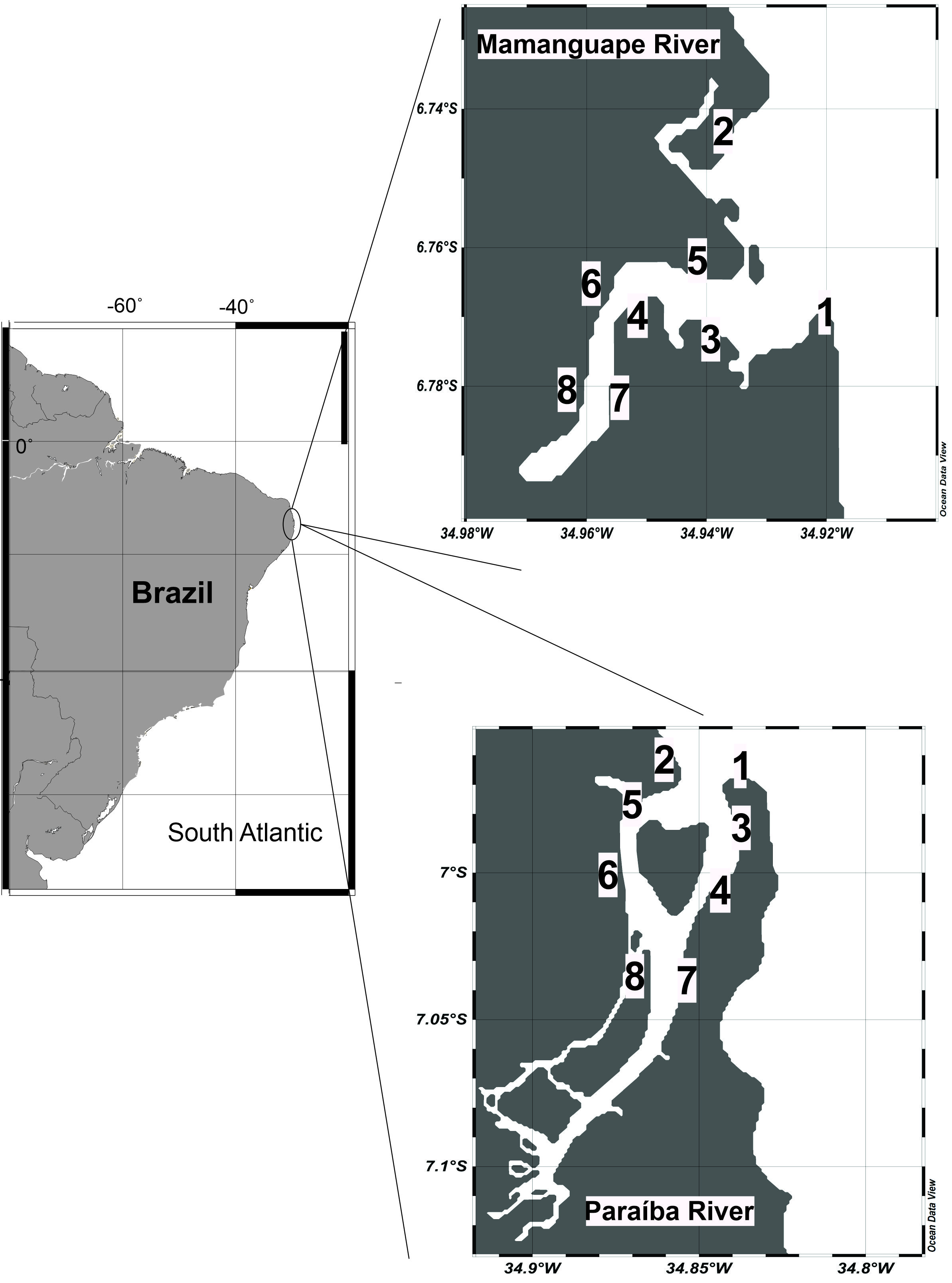
This study was conducted in the Mamanguape River estuary (less impacted) and Paraíba River estuary (more impacted) at tropical Northeastern Brazilian coast (~7°S; Figure 1). These estuaries have distinct levels of anthropic pressure as supported by data of the ecological footprint based on the Global Human Influence Index (GHII; 1 km2 of resolution; Sanderson et al., 2002) and regional literature (Marcelino et al., 2005; Alves et al., 2016, 2025).
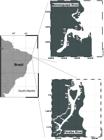
Map of the study sites showing the stations sampled (1-8) on Mamanguape and Paraíba River estuaries, Brazil. Generated using Ocean Data View (Schlitzer, 2022).
The Mamanguape River estuary is located in a Federal Protected Area (Brasil, 2014) and declared a Protected Landscape (IUCN, category V) with the main goal to protect a small population of the marine manatee Trichechus manatus (Dolbeth et al., 2016). The area around the estuary has remnants of the Atlantic Rain Forest and extensive mangroves with 690 hectares. The mouth of the estuary is trespassed by an arenitic reef cord that extends ~8.5 km in the N-S orientation. The estuary is relatively isolated from urban centers, and thus, aquatic traffic is restricted to a reduced number of small boats, domestic sewage is reduced, and industrial sewage absent. Yet, the Mamanguape River basin is impacted by human activities, as it encompasses 30 municipalities (~500,000 inhabitants) and occupies an area of 3,522.69 km2 that includes the Zona da Mata and Agreste Paraibano mesoregions (Santos et al., 2015). These anthropogenic impacts are mostly related to the production of coconut and sugarcane plantations and shrimp aquaculture, activities that cause the drainage of agrochemical pollutants into the estuary (Dolbeth et al., 2016).
The Paraíba River basin is the second largest in the State and is highly impacted by urbanization, with an area of 20,071.83 km2, home to 1,828,178 inhabitants (Dantas et al., 2020). The Paraíba River estuary (3012 ha) is adjacent to an urban region nearby João Pessoa metropolitan area with 1.380.923 inhabitants (IBGE, 2022). Thus, this ecosystem has been impacted through the urbanization process as the city grows. It has a port handling large amounts of oil and derivatives and suffers many other anthropic activities such as domestic and industrial sewage, discard of urban and industrial waste, aquiculture, real state expansion, wood trade, and many types of debris (Dolbeth et al., 2016; Lima et al., 2017; Ramos & Pessoa, 2019; Amorim et al., 2020).
2.2. Samplings
Sampling campaigns were performed on 17 and 24, April 2016, in the Mamanguape and Paraíba estuaries, respectively. During the low tide eight sites on each estuary were sampled (Figure 1). Samples were taken using a corer with 11 cm2 introduced 10 cm deep in the sediment. At each site three replicate samples were taken ~1 m from each other, totaling 48 samples. Each sample was immediately fixed using formalin (4%). Additionally, sediment samples were taken at each site and frozen to analyze the amount of organic matter and granulometric characteristics. Abiotic variables as salinity (in practical salinity scale), temperature (°C) and dissolved oxygen (mg. L-1) were measured at each site using a field manual refractometer (salinity), and a multiparameter probe (Alfakit, AT-160, Florianópolis, Brazil; temperature and oxygen).
2.3. Sampling processing
In laboratory, the meiofauna was counted after manual centrifugation and humid sieving with a 45 µm mesh (Elmgren, 1966). Total samples were analyzed using Dollfus plates and stereomicroscope (Type SZ61, Olympus) and meiofaunal higher taxa was counted (following Giere, 2009).
The organic-matter content (OM) was quantified by standard protocols and expressed as a percentage of the mass (Walkley & Black, 1934). The granulometric analyses were performed through mechanic separation in a vibratory sieve (model lab1000, ADAMO Produtos para Laboratórios, LojaLab, Piracicaba, São Paulo, Brasil). Grain size was also expressed as a percentage of the total sample mass and classified according to standard granulometric fractions: gravel (>2000 µm), very coarse sand (1000-2000 µm), coarse sand (500-1000 µm), medium sand (250-500 µm), fine sand (125-250 µm), very fine sand (62-125 µm) and silt and clay (<62 µm) (Bale & Kenny, 2005; Wentworth, 1922). Based on local granulometric heterogeneity and mud concentration, sampling sites were classified as sandy (<15% of very fine sand and silt and clay) and sandy mud (>15% of very fine sand and silt and clay).
2.4. Data analyses
Classical ecological indices such as number of taxa, Margalef richness, Shannon diversity and Pielou evenness were calculated (all transformed by log x+1 and based on higher taxa), using PRIMER software v.6.0. A two-way ANOVA (p<0.05) was performed to test the hypothesis that meiofaunal abundances and ecological indices differ between estuaries and regions (sandy and sandy mud) and possible interactions between these factors (STATISTICA software v. 10).
The Global Human Influence Index (GHII) is a well-known and widely used quantitative measure of human impact (Sanderson et al., 2002). The GHII is a high resolution (1 km2) map of cumulative human pressure based on four satellite data type: populational density, landscape transformation, human access and infrastructure (Sanderson et al., 2002, Venter et al., 2016). GHII values of our study sites were assessed to corroborate the assumption that anthropic impact differs in both estuaries. To gather these data, we used the function extract of the package raster (Hijmans, 2022) on R environment (Hijmans, 2022).
The meiofaunal parameters adopted to evaluate the EcoQ (Table 1) were richness of higher taxa, Nematoda/Copepoda ratio, presence of rare taxa (those representing <1% of total abundance of each estuary), abundance, and nematode dominance (Raffaelli & Mason, 1981; Pusceddu et al., 2007; Rubal et al., 2009; Bianchelli et al., 2016; Semprucci et al., 2016). The Nematoda/Copepoda ratio was analyzed following Rubal et al. (2009) considering values >20 for sand and >70 for mud-dominated sediments as indicator of pollution. The EcoQ classification followed limit values proposed in the literature (Moreno et al., 2011; Semprucci et al., 2016; Chen et al., 2018; Silva et al., 2022). Values of EcoQ between 1 (low) and 5 (high) were attributed to each one of the meiofaunal parameters considered (Table 1) for each site and then averaged (± standard deviation).
Parameters adopted for the ecological classification (EcoQ) using meiofaunal descriptors (following Raffaelli & Mason, 1981; Pusceddu et al., 2007; Rubal et al., 2009; Bianchelli et al., 2016; Semprucci et al., 2016; Chen et al., 2018). In parentheses, together with the EcoQ categories, are their respective values (1-5).
Graphical outputs were produced using Microsoft Excel 2019 MSO (Version 2309 Build 16.0.16827.20166) 64-bit.
3. Results
3.1. Environmental variables
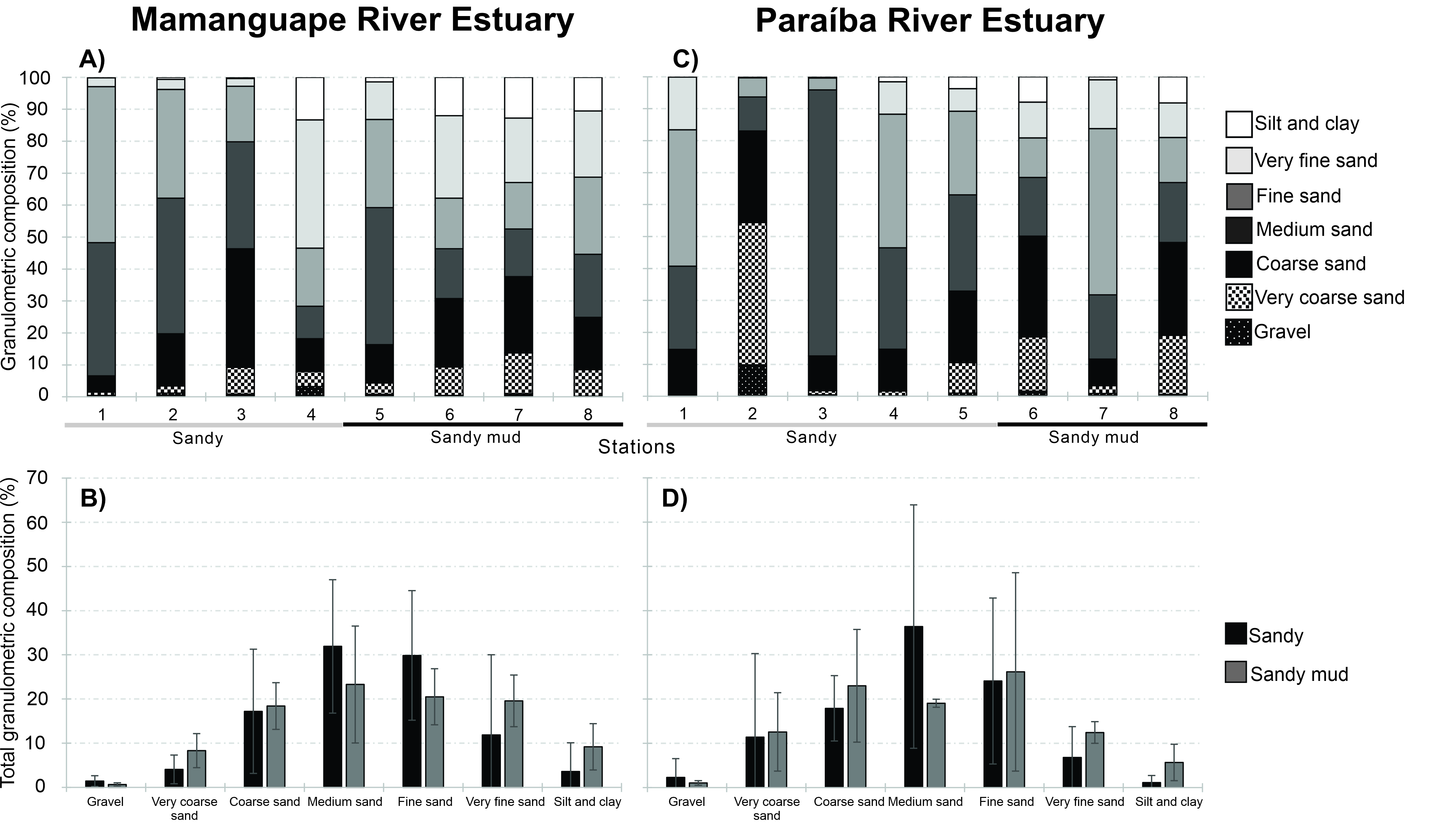
According to the combined granulometric fractions (very fine sand and silt and clay; >15%), the Mamanguape sampling sites classified as sandy were 1, 2, 3 and 4, and the sandy mud sites were 5, 6, 7 and 8. In Paraíba, sites 1, 2, 3, 4 and 5 were defined as sandy, and sites 6, 7 and 8, as sandy mud (Figure 1). Overall, the granulometric profile was coarser in the sandy region of Paraíba, with a greater representation of gravel, very coarse and coarse sand, totaling more than 31.6% of the total. The highest concentrations of silt and clay and very fine sand were found in the sandy mud region of Mamanguape, totaling 28.8% (Figure 2A, B). In the sandy region of both estuaries, medium sand predominated (>30%), followed by fine sand (>24%), but the highest concentrations of coarse (28.6%) and very coarse (44.5%) sand occurred at site 2 of the Paraíba River Estuary (Figure 2C).
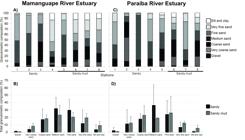
Spatial variation and its total granulometric composition in the sandy and sandy mud regions of the Mamanguape (A, B) and Paraíba (C, D) River estuaries, Brazil.
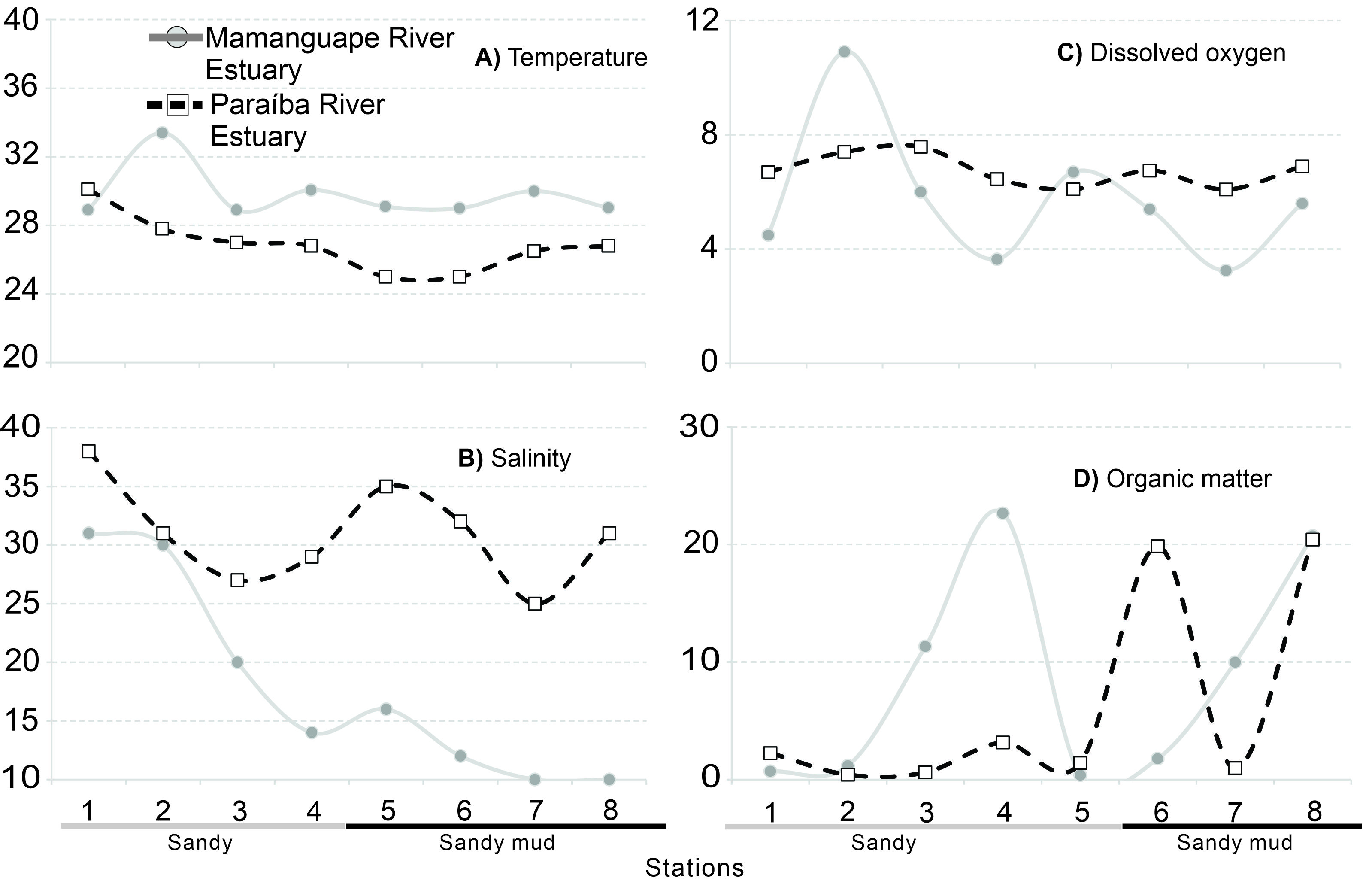
Temperature ranged between 26.9 and 33.4°C, without pronounced spatial variations within the estuaries and slightly higher values in the site 2, in the sandy region of the Mamanguape (Figure 3A). The saline gradient was pronounced in the Mamanguape, ranging from 32 near the mouth to 10 in the sites 7 and 8 (sandy mud region). Salinity variation was less expressive in the Paraíba, ranging from 39 to 25 (Figure 3B). Dissolved oxygen was higher in the sandy region of the Mamanguape where high spatial oscillations were observed and remained more constant between 6.1 and 7.4 mg l- in the Paraíba (Figure 3C). Organic matter varied a lot in both estuaries, with typically low values in the sandy regions and tending to considerably increase in the sandy mud parts (Figure 3D).
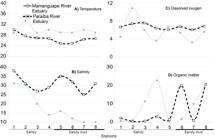
Spatial variation of temperature (A; °C), salinity (B; practical salinity unity), dissolved oxygen (C; mg. L-1) and organic matter (D; %) in the Mamanguape and Paraíba River estuaries, Brazil.
3.2. Meiofauna
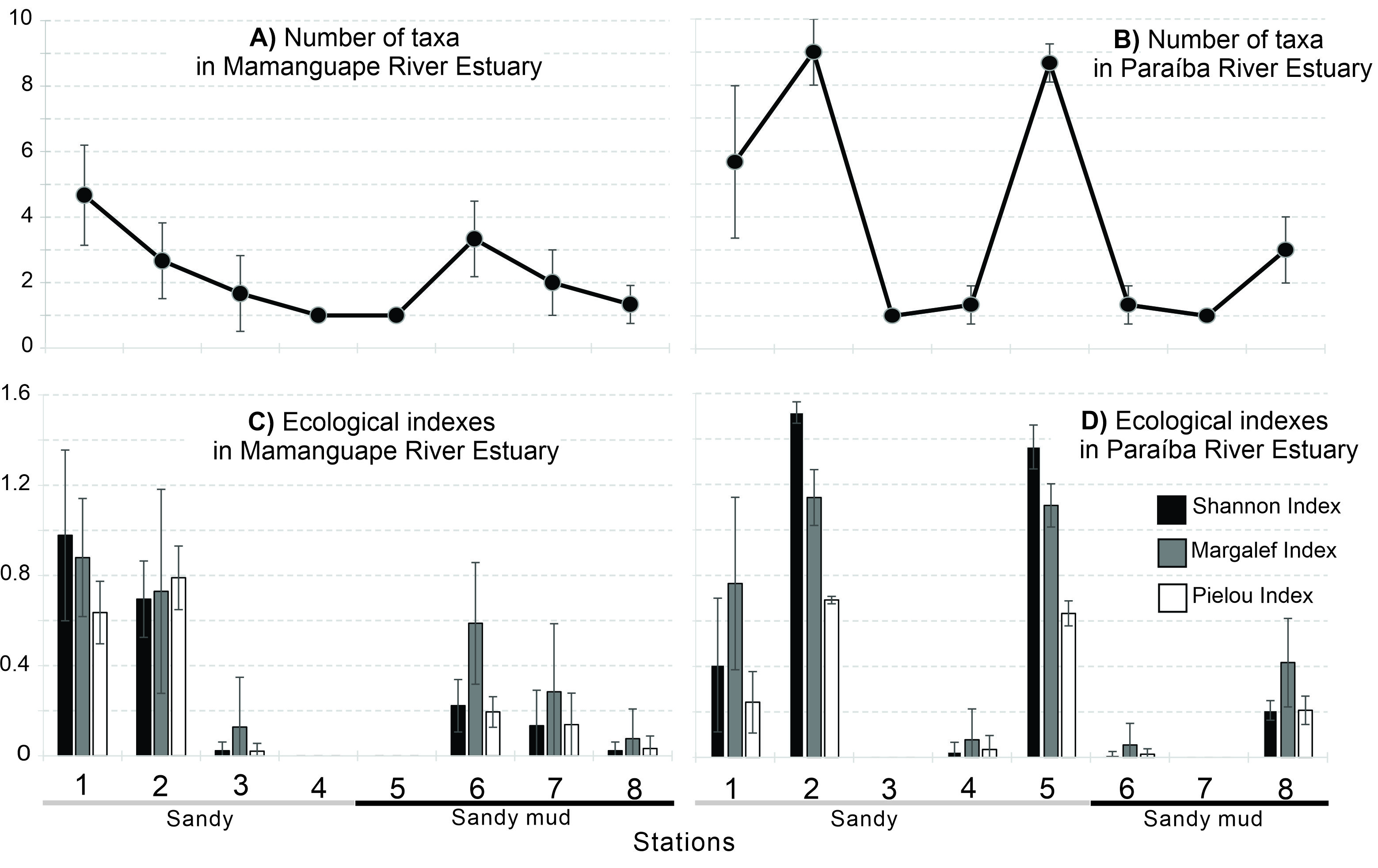
A total of 11 taxa were found, all of them in the Paraíba and only seven in the Mamanguape. The number of taxa did no differ between estuaries, but significant differences were detected (ANOVA, p<0.05; Table 2) comparing the sandy and sandy mud regions, higher in the former for both estuaries (Figure 4A, B). The number of taxa of most sites of the sandy region from the Paraíba estuary were higher than those from the Mamanguape, but differences were not significant (p>0.05; Table 2) due to the high variation between sites. The ecological indexes of Shannon, Margalef and Pielou had similar patterns, differing significantly between regions of the estuary but not between the estuaries, tending to be higher always in the sandy region (Table 2; Figure 4C, D).
Summary of the bi-factorial ANOVA testing for differences in number of taxa and ecological indexes, considering regions and estuaries as factors.
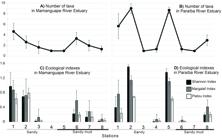
Spatial variation of the number of taxa and classical ecological indexes (mean ± standard deviation) in the Mamanguape (A, C) and Paraíba (B, D) River estuaries, Brazil.
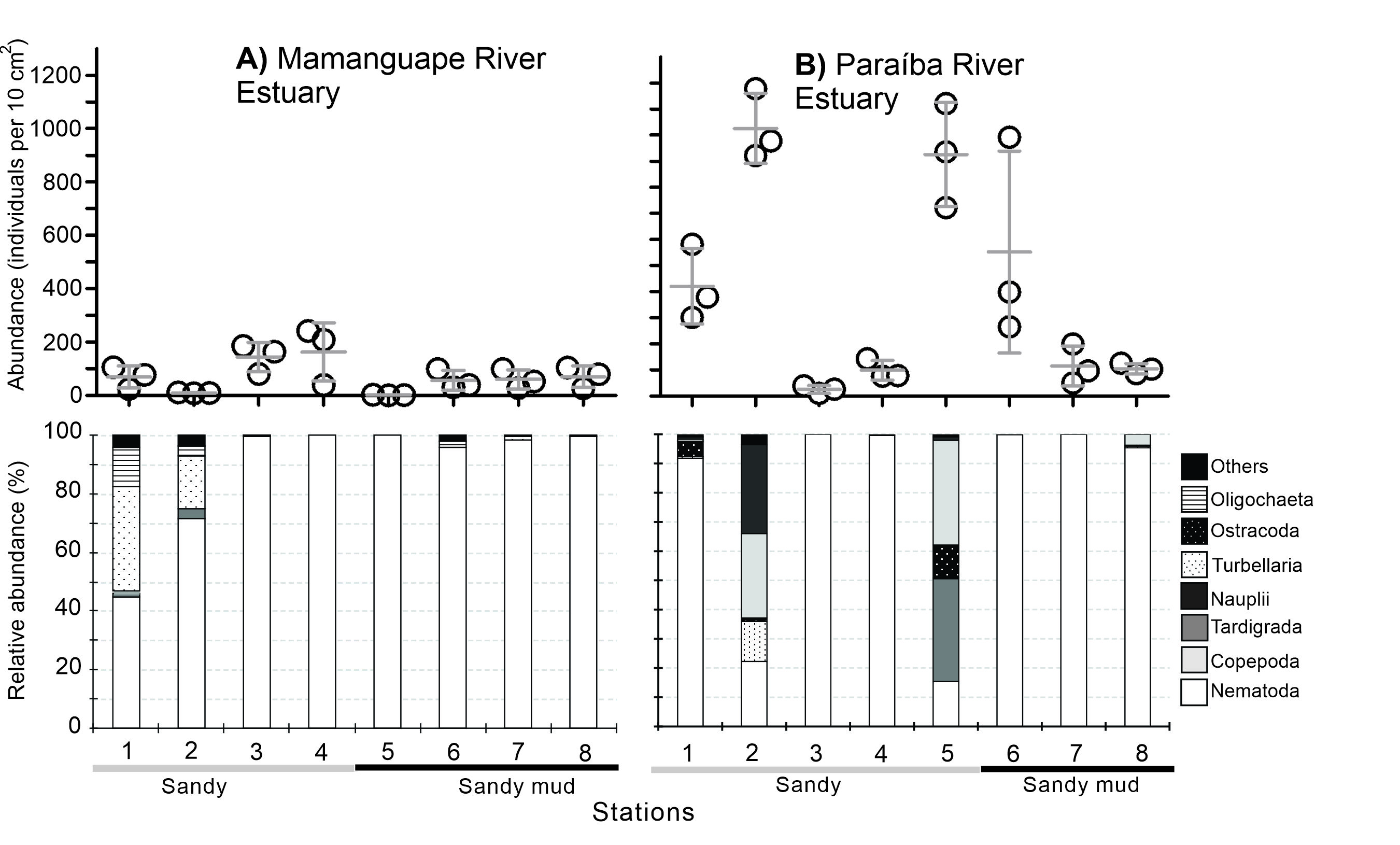
Total meiofaunal density was significantly higher in the Paraíba estuary, but no differences were detected between the regions neither in the interaction between these factors (Table 3). Meiofaunal density was smaller in the Mamanguape, averaging 71.7±69.1 ind. 10 cm-2 and highly dominated by nematodes (92.5%) that reached their peak of 242 ind. 10 cm-2 in the sandy region (site 4; Figure 5A). In the Paraíba estuary, meiofaunal densities averaged 409.5±403.8 ind. 10 cm-2, with maximum of 1261.0 ind. 10 cm-2 in the sandy region (site 2; Figure 5B). In the Paraíba, nematodes were less dominant, representing 50.3% of total meiofaunal abundance, although density values were high, reaching up to 993.6 ind. 10 cm-2 in the site 6 (Figure 5B). Densities of the most representative taxa such as Nematoda and Copepoda differed significantly between the estuaries, but only for Copepoda and Turbellaria significant differences between the regions were detected (p<0.05; Table 3; Figure 5).
Summary of the bi-factorial ANOVA testing for density differences in total meiofauna and the most abundant taxa (>5% of total abundance), considering estuaries and regions as factors.
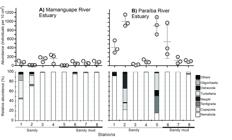
Spatial variation of density (individuals per 10 cm2) of total meiofauna and relative abundance of main taxa in the Mamanguape (A) and Paraíba (B) River estuaries, Brazil. In the upper panels each circle represents a replica and the lines show the mean and standard deviation.
In the Mamanguape estuary, other meiofaunal taxa such as turbellarians (4.8%) and oligochaetes (2.0%) had relatively high abundances in the sandy region (sites 1 and 2; Figure 5A). At these sites, the turbellarians were the second most abundant taxa, representing between 17 and 35%. Ostracoda, Copepoda, Tardigrada and Polychaeta were considered rare taxa (<1%) in the Mamanguape, but had higher densities in the Paraíba estuary (Figure 5A, B). Apart from the dominant nematodes, other taxa were representative in the sandy region of the Paraíba estuary such as nauplii (up to 30.3%), copepods (up to 35.8%), tardigrades (up to 35.2%) turbellarians (up to 13.6%), and ostracods (up to 11%), particularly in the sites 2 and 5 (Figure 5B). Rare taxa in the Paraíba, such as Acari, Oligochaeta, Polychaeta, Nemertea and Gastropoda had densities always <23 ind. 10 cm-2 (Figure 5B).
3.3. Indexes of Ecological quality
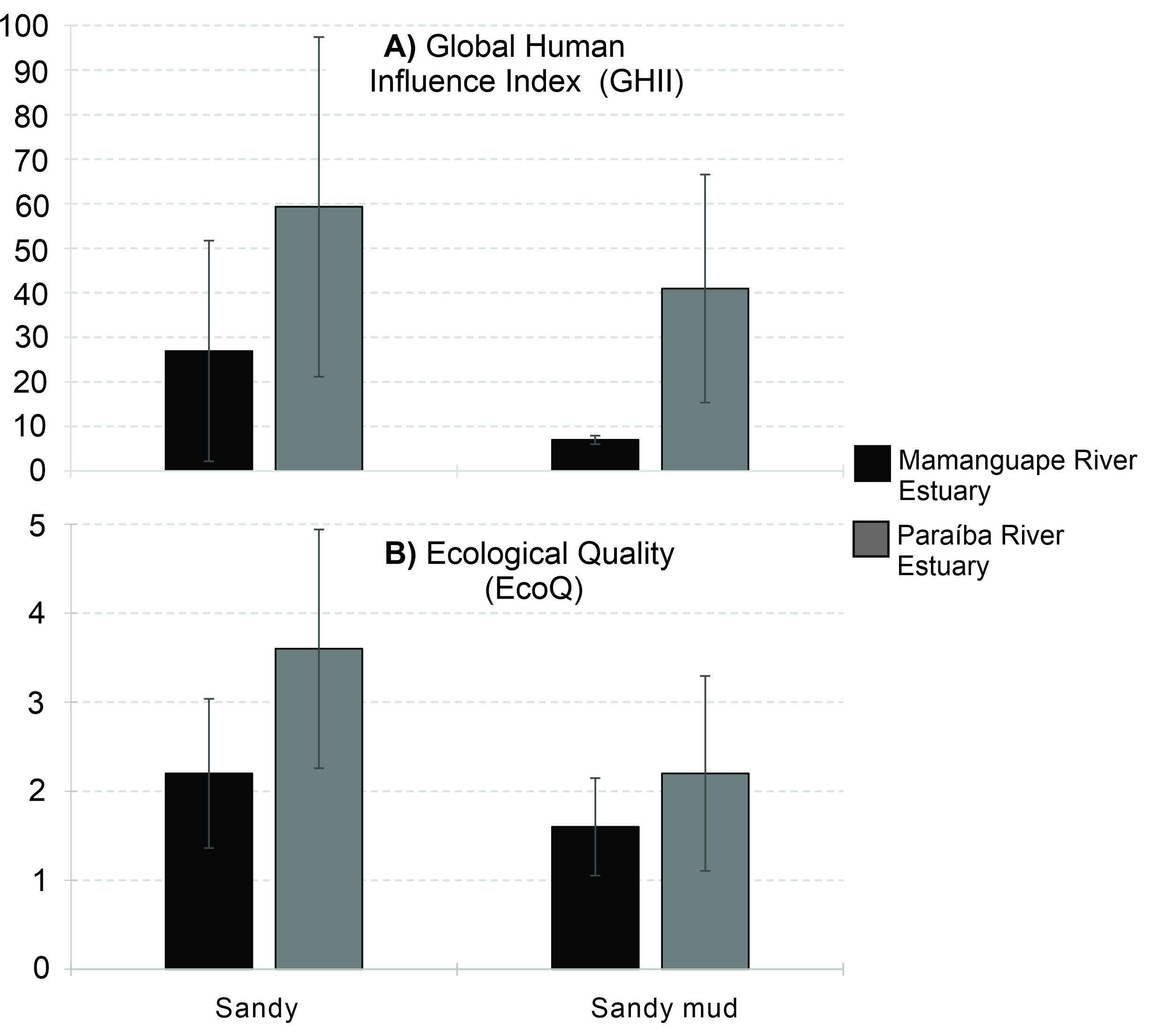
As expected, the GHII indicated that Paraíba estuary is more impacted than the Mamanguape in both sandy and sandy mud regions, with a clear tendency of the former region having higher values of GHII in both estuaries (Figure 6A). Contrastingly, the EcoQ values tended to be higher in the Paraíba estuary, although high variations were observed. In addition, a clear spatial trend was observed within each estuary, with EcoQ being higher in the sandy regions of both estuaries, difference more pronounced in the Paraíba estuary (Figure 6B).

Spatial variation of the global Human Influence Index (A) and Ecological Quality Status (B) of sandy and sandy mud areas of Mamanguape and Paraíba river estuaries, Brazil. Bars are averaged values and lines show the standard deviation.
The Nematoda/Copepoda ratio ranged from 103 to 555 in the Mamanguape and 1 to 169 in the Paraíba, with lower values in the sandy region of both estuaries (Table 4). This ratio suggested high ecological quality only in the sandy region of the Paraíba estuary, with values considerably lower than 20. Overall, the meiofaunal parameters indicated a poor EcoQ on both regions of the Mamanguape and moderate to poor in the sandy and sandy mud regions of the Paraíba, respectively (Table 4).
Classification of the Ecological Quality Status (EcoQ) in the Mamanguape and Paraíba River estuaries according to the meiofaunal parameters.
4. Discussion
The human footprint on both studied estuaries can be considered as moderate to high (c.f., Sanderson et al., 2002), with higher impact in the Paraíba estuary, as expected, and tending to reduce within each estuary towards the sandy mud region (Figure 6A). Although the index used may have some limitations (e.g., Halpern et al., 2008), it supports our assumption that both ecosystems have different degrees of human impact, and is in conformity with the regional literature suggesting higher impacts on the Paraíba estuary (e.g. Lima et al., 2017; Ramos & Pessoa, 2019). Contrastingly, our estimates using meiofaunal parameters suggest both estuaries have a roughly similar EcoQ, with somewhat higher values in the Paraíba estuary, particularly in the sandy, more impacted, region (Figure 6B). Thus, the EcoQ based on meiofauna had responses more associated with the granulometric gradient, reflecting more the characteristics of the sediment than anthropogenic impacts. This is likely to be associated to some constraints in the parameters used. Although the parameters used in the EcoQ are quantitative, boundaries to distinct between different EcoQ categories are not clear-cut, and frequently some of these parameters are weighted differently among different authors (Rubal et al., 2009; Moreno et al., 2011). This problem may be particularly true for tropical estuaries with lack of studies using this approach, and thus of reference values. In addition, the characteristic meiofaunal assemblages from fine sediments, common on tropical estuaries, may lead to distortions on some of the parameters used to estimate the EcoQ such as number of taxa, presence of rare taxa and Ne/Co (Rubal et al., 2009; Sciberras et al., 2022).
Indeed, in the sandy mud region of both estuaries studied the discrepancies of both indexes were higher, with GHII indicating less anthropic impact but lower EcoQ values (Figure 6). The Nematoda/Copepoda, for instance, was erratic but with comparable values in both estuaries. Total abundance, presence of rare taxa and the classical ecological indexes were in general higher in the Paraíba estuary, particularly in the sandy region that was classified here with a moderate EcoQ (Table 4). At first, this could be indicative that environmental quality in the Paraíba estuary was higher. This is contrary to the expected, considering pollution and human impact are higher in the Paraíba estuary, particularly in the sandy region, although Mamanguape river basin also is impacted (Santos et al., 2015; Dolbeth et al., 2016; Table 4; Figure 6A). Thus, a calibration of the meiofaunal parameters to tropical estuaries with fine sediments seems necessary since the wide habitat heterogeneity of these ecosystems and the anthropic impact may disguise the biological indicators (Townsend & Hildrew, 1994; Gusmão et al., 2016).
Physical particularities of tropical estuaries and consequent biological adaptations of the meiofauna may result in an inaccurate EcoQ. Tropical estuaries frequently harbor extensive mangroves and have considerable proportions of small (<125 µm) sedimentary particles, with granulometric profile commonly ranging from sandy to muddy in the mouth and inner areas, respectively (Bale & Kenny, 2005; Levin et al., 2009; Pinto et al., 2012; Fonseca & Netto, 2014). The smallest the size of the sediment particles, the greater is the organic matter retention accumulation in the sediment and subsequent increase of microbial activity and associated hypoxia (Levin et al., 2009; Fonseca et al., 2014). Thus, in these areas organic matter concentration and oxygen levels are commonly high and low, respectively (Bale & Kenny, 2005; Levin et al., 2009; Pinto et al., 2012). Moreover, in sediment with small particles (median <100-180 µm), meiofaunal organisms may either adopt an infaunal burrowing mode of life or keep restrict to the epibenthos (Raffaelli, 1987; Tita et al., 1999), depending on its ecological plasticity (Pinto et al., 2012). So, these environmental characteristics may lead to particular meiofaunal assemblages that may generate distortions in the Nematoda/Copepoda ratio, presence of rare taxa, as well as higher taxa richness (Warwick, 1981; Hodda & Nicholas, 1985; Moreno et al., 2008), what apparently was the case in the current study.
Usually, nematodes are the dominant meiofaunal taxa in marine and estuarine sediments worldwide, followed by copepods that also may dominate on some situations (Semprucci et al., 2019; Tilbert et al., 2019; Cai et al., 2020). In sediments with fine particles, nematode dominance tends to be even higher and the presence of copepods and other taxa is rarer since they usually are less tolerant to the reduced oxygen condition on these habitats (Hodda & Nicholas, 1985). The nematodes, particularly the epifaunal ones, are well-adapted to these peculiar conditions due to their high morpho-functional diversity and tolerance to the oxygen depletion (Soetaert et al., 2002; Vanaverbeke et al., 2004; Pinto et al., 2012). Differently, the strictly infaunal meiobenthos such as most copepods, tardigrades, nemerteans, ostracods and polychaetes tend to be more common, abundant, and diversified in sandy sediments (Somerfield et al., 1998; Bale & Kenny, 2005; Balsamo et al., 2010; Tilbert et al., 2019). Thus, the absence and/or the low abundance of copepod and rare taxa and, consequently, the low numbers of higher taxa and smaller values of the classical ecological indexes would be expected to these meiofaunal communities from finer sediments (Balsamo et al., 2010; Sharma et al., 2021), and not necessarily suggestive of an impacted environment as assumed by the EcoQ (Semprucci et al., 2016). Indeed, this pattern was found in the inner sites of the present study, with granulometric profile of sandy mud and lower EcoQ values for both estuaries, in spite of the lower GHII. This was particularly pronounced in the Mamanguape estuary, where higher proportions of silt and clay (Figure 2) were observed in the inner region along with the lowest values of EcoQ and of GHII found here (Figure 6). These results suggest that EcoQ was more sensitive to particle size gradient than to anthropogenic impact, at least within the spatial resolution of the present study.
The Nematoda/Copepoda ratio has been debated (Raffaelli & Mason 1981; Kim et al., 2000; Ansari & Ingole, 2002; Moreno et al., 2008) and frequently considered an oversimplification with a need of higher standardization (Sciberras et al., 2022). Currently, there is little consensus regarding a threshold limit due to the great variability on different granulometric profiles (e.g., Platt et al., 1984; Rubal et al., 2009; this study). Some modifications have been proposed, such as: i) consider only epistrate feeders (2A type) nematodes in the ratio (Warwick, 1981; Moreno et al., 2008); and ii) to include nauplii, the larval copepod stage typically accounted separated, that are more sensitive to disturbances and also considering that for nematodes there is no stratification regarding developmental stages (Verriopoulos & Moraitou-Apostolopoulou, 1982; Green et al., 1996; Rubal et al., 2009). In any case, the Nematoda/Copepoda values may be distorted on ecosystems with low copepod density and became incalculable on their absence. In this study, for instance, copepods were not found at all in 29 (60.4%) out of 48 samples taken, and in 6 out of 16 sites they were not found in any of the three-replicate taken, even when considering nauplii. These observations may suggest the Nematoda/Copepoda ratio may be better applied on environments with the granulometric profile strictly interstitial (sandy), where copepods are more common and diversified (Raffaelli & Mason, 1981; Raffaelli, 1987; Balsamo et al., 2010).
Another issue is the taxonomic resolution, low in this study following the idea to use indicators that are easily assessed with no need of a laborious and time-consuming laboratory work (Rubal et al., 2009; Fonseca & Netto, 2014). A greater taxonomic and/or morpho-functional depth on dominant taxa (Moreno et al., 2011; Semprucci et al., 2018; Sroczyńska et al., 2021) may enable more accurate analyses on ecosystems with fine particles of sediment. Yet, some studies suggest higher taxonomic resolution does not increase discriminatory power in the assessment of environmental quality in spite of consuming considerably more time in the preparation and identification of the material (Moreno et al., 2008).
This is a pioneering study in tropical estuarine ecosystems in an attempt to assess these meiofaunal parameters that have been widely used in temperate estuaries (Moreno et al., 2011; Bouchet et al., 2018; Chen et al., 2018; Semprucci et al., 2010, 2016, 2018), providing important baseline information. Our results demonstrate the effectiveness of the meiofaunal-based EcoQ to detect environmental gradients in tropical estuaries, particularly regarding granulometric profile, successfully capturing environmental heterogeneity. However, EcoQ needs calibration and refinement to improve the detection of axes of environmental variation caused by anthropogenic impacts in tropical environments. Despite these interesting results, is necessary to further deepen the analyses particularly considering some limitations of the current study, including higher spatial and temporal coverage, testing the effectiveness of lower taxonomic resolution and refining the class value limits applied to the EcoQ classification to reduce arbitrariness.
Acknowledgements
This study was part of the Phd thesis of the first author. The authors are very grateful to Dr. Francisco J. V. de Castro (Universidade Federal de Campina Grande, Brazil) that allowed the use of his laboratory facilities to sort the meiofauna. Dr. Pablo Riul (Universidade Federal da Paraíba, Brazil) helped with the extraction of the GHII data-set and provided useful insights in early versions of the text. ST received a master and Phd research scholarship from Conselho de Aperfeiçoamento de Pessoal de Nível Superior (CAPES, ns°: 88887.462221/2019-00) during the development of this research.
-
Cite as:
Tilbert, S. and Nogueira Júnior, M. Evaluation of the status of ecological quality of tropical estuaries using meiofauna as biological indicators on the Northeast coast of Brazil (7°S). Acta Limnologica Brasiliensia, 2026, vol. 38, e9. https://doi.org/10.1590/S2179-975X1025
Data Availability
The entire dataset supporting the findings of this study has been published in the article itself.
References
-
Alves, B.M., Eichler-Barker, P.B., & Nogueira Júnior, M., 2025. Composition and Spatial Distribution of Benthic Foraminifera from Two Tropical Estuaries (7° S, Brazil). Diversity (Basel) 17(3), 142. https://doi.org/10.3390/d17030142
» https://doi.org/10.3390/d17030142 -
Alves, V.E.N., Patrício, J., Dolbeth, M., Pessanha, A., Palma, A.R.T., Dantas, E.W., & Vendel, A.L., 2016. Do different degrees of human activity affect the diet of Brazilian silverside Atherinella brasiliensis? J. Fish Biol. 89(2), 1239-1257. PMid:27328827. https://doi.org/10.1111/jfb.13023
» https://doi.org/10.1111/jfb.13023 -
Amorim, A.L.A., Ramos, J.A.A., & Nogueira Júnior, M., 2020. Ingestion of microplastic by ontogenetic phases of Stellifer brasiliensis (Perciformes, Sciaenidae) from the surf zone of tropical beaches. Mar. Pollut. Bull. 158, 111214. PMid:32568074. https://doi.org/10.1016/j.marpolbul.2020.111214
» https://doi.org/10.1016/j.marpolbul.2020.111214 -
Ansari, Z.A., & Ingole, B., 2002. Effect of an oil spill from M V Sea Transporter on intertidal meiofauna at Goa, India. Mar. Pollut. Bull. 44(5), 396-402. PMid:12146822. https://doi.org/10.1016/S0025-326X(01)00248-X
» https://doi.org/10.1016/S0025-326X(01)00248-X - Bale, A.J., & Kenny, A.J., 2005. Sediment analysis and seabed characterization. In: McIntyre, A., eds. Eleftheriou A. Methods for the Study of Marine Benthos. Oxford: Blackwell, 1-44. https://doi.org/10.1002/9780470995129.ch2.
-
Balsamo, M., Albertelli, G., Ceccherelli, V.U., Coccioni, R., Colangelo, M.A., Curini-Galletti, M., Danovaro, R., D’Addabbo, R., De Leonardis, C., Fabiano, M., Frontalini, F., Gallo, M., Gambi, C., Guidi, L., Moreno, M., Pusceddu, A., Sandulli, R., Semprucci, F., Todaro, M.A., & Tongiorgi, P., 2010. Meiofauna of the Adriatic Sea: present knowledge and future perspectives. Chem. Ecol. 26(sup1), 45-63. https://doi.org/10.1080/02757541003705492
» https://doi.org/10.1080/02757541003705492 -
Bianchelli, S., Pusceddu, A., Buschi, E., & Danovaro, R., 2016. Trophic status and meiofauna biodiversity in the northern Adriatic Sea: insights for the assessment of good environmental status. Mar. Environ. Res. 113, 18-30. PMid:26562451. https://doi.org/10.1016/j.marenvres.2015.10.010
» https://doi.org/10.1016/j.marenvres.2015.10.010 -
Borja, A., Franco, J., & Perez, V., 2000. A marine biotic index to establish the ecological quality of soft-bottom benthos within European estuarine and coastal environments. Mar. Pollut. Bull. 40(12), 1100-1114. https://doi.org/10.1016/S0025-326X(00)00061-8
» https://doi.org/10.1016/S0025-326X(00)00061-8 -
Bouchet, V.M.P., Goberville, E., & Frontalini, F., 2018. Benthic foraminifera to assess Ecological Quality Statuses in Italian transitional waters. Ecol. Indic. 84, 130-139. https://doi.org/10.1016/j.ecolind.2017.07.055
» https://doi.org/10.1016/j.ecolind.2017.07.055 -
Brasil, 2014. Portaria n°57, de 22 de maio de 2014. Aprova o plano de manejo da área de proteção ambiental (APA) da barra do Rio Mamanguape e da área de relevante interesse ecológico (ARIE) dos Manguezais da Foz do Rio Mamanguape, no Estado da Paraíba. Diário Oficial da União [da] República Federativa do Brasil, Brasília, DF, Retrieved in 2015, July 12, from http://www.jusbrasil.com.br/
» http://www.jusbrasil.com.br/ -
Bremner, J., Rogers, S.I., & Frid, C.L.J., 2003. Assessing functional diversity in marine benthic ecosystems: a comparison of approaches. Mar. Ecol. Prog. Ser. 254, 11-25. https://doi.org/10.3354/meps254011
» https://doi.org/10.3354/meps254011 -
Cai, L., Fu, S., Zhou, X., Tseng, L.C., & Hwang, J.S., 2020. Benthic meiofauna with emphasis on nematode assemblage response to environmental variation in the intertidal zone of the Danshuei River estuary, northwest Taiwan. Ecol. Res. 35(5), 1-14. https://doi.org/10.1111/1440-1703.12159
» https://doi.org/10.1111/1440-1703.12159 -
Chen, C.A., Soo, C.L., Balsamo, M., & Semprucci, F., 2018. An approach based on nematode descriptors for the classification of ecological quality (EcoQ) of the Malaysian coasts. Mar. Biodivers. 48(1), 117-126. https://doi.org/10.1007/s12526-017-0813-1
» https://doi.org/10.1007/s12526-017-0813-1 - Danovaro, C. R., Gambi, S., Mirto, R., Sandulli, V. U. & Ceccherelli, V. M., 2004. Mediterranean marine benthos: a manual of methods for its sampling and study. Geneva: SIBM. Biol. Mar. Mediterr., 11(1), 55-97.
-
Dantas, J.C., Silva, R.M., & Santos, C.A.G., 2020. Drought impacts, social organization, and public policies in northeastern Brazil: a case study of the Upper Paraíba River basin. Environ. Monit. Assess. 192(5), 192-317. PMid:32347386. https://doi.org/10.1007/s10661-020-8219-0
» https://doi.org/10.1007/s10661-020-8219-0 -
Dolbeth, M., Vendel, A.L., Pessanha, A., & Patrício, J., 2016. Functional diversity of fish communities in two tropical estuaries subject to anthropogenic disturbance. Mar. Pollut. Bull. 112(1-2), 244-254. PMid:27546734. https://doi.org/10.1016/j.marpolbul.2016.08.011
» https://doi.org/10.1016/j.marpolbul.2016.08.011 -
Elliott, M., & Quintino, V., 2007. The estuarine quality paradox, environmental homeostasis and the difficulty of detecting anthropogenic stress in naturally stressed areas. Mar. Pollut. Bull. 54(6), 640-645. PMid:17418874. https://doi.org/10.1016/j.marpolbul.2007.02.003
» https://doi.org/10.1016/j.marpolbul.2007.02.003 - Elmgren, R., 1966. Methods of sampling sublittoral soft bottom meiofauna. Oikos 15, 112-120.
-
Ferreira, R.C., Nascimento-Junior, A.B., Santos, P.J.P., Botter-Carvalho, M.L., & Pinto, T.K., 2015. Responses of estuarine nematodes to an increase in nutrient supply: an in situ continuous addition experiment. Mar. Pollut. Bull. 90(1-2), 115-120. PMid:25499965. https://doi.org/10.1016/j.marpolbul.2014.11.012
» https://doi.org/10.1016/j.marpolbul.2014.11.012 -
Fonseca, G., & Netto, S.A., 2014. Macroecological patterns of estuarine nematodes. Estuaries Coasts 38(2), 612-619. https://doi.org/10.1007/s12237-014-9844-z
» https://doi.org/10.1007/s12237-014-9844-z -
Fonseca, G., Maria, T.F., Kandratavicius, N., Venekey, V., Gheller, P.F., & Gallucci, F., 2014. Testing for nematode-granulometry relationships. Mar. Biodivers. 44(3), 435-443. https://doi.org/10.1007/s12526-014-0241-4
» https://doi.org/10.1007/s12526-014-0241-4 -
Freeman, L.A., Corbett, D.R., Fitzgerald, A.M., Lemley, D.A., Quigg, A., & Steppe, C.N., 2019. Impacts of urbanization and development on estuarine ecosystems and water quality. Estuaries Coasts 42(7), 1821-1838. https://doi.org/10.1007/s12237-019-00597-z
» https://doi.org/10.1007/s12237-019-00597-z - Giere, O., 2009. Meiobenthology the microscopic motile fauna of aquatic sediments. 2nd ed. Heidelberg, Germany: Springer.
-
Giere, O., 2019. Perspectives in meiobenthology reviews, reflections and conclusions. USA: Springer. SpringerBriefs in Biology. https://doi.org/10.1007/978-3-030-13966-7
» https://doi.org/10.1007/978-3-030-13966-7 -
Green, A., Chandler, G.T., & Piegorsch, W.W., 1996. Life-stagespecific toxicity of sediment-associated chlorpyrifos to a marine infaunal copepod. Environ. Toxicol. Chem. 15(7), 1182-1188. https://doi.org/10.1002/etc.5620150725
» https://doi.org/10.1002/etc.5620150725 -
Gusmão, J.B., Brauko, K.M., Eriksson, B.K., & Lana, P.C., 2016. Functional diversity of microbenthic assemblages decreases in response to sewage discharges. Ecol. Indic. 66, 65-75. https://doi.org/10.1016/j.ecolind.2016.01.003
» https://doi.org/10.1016/j.ecolind.2016.01.003 -
Halpern, B., Walbridge, S., Selkoe, K.A., Kappel, C.V., Micheli, F., D’Agrosa, C., Bruno, J.F., Casey, K.S., Ebert, C., Fox, H.E., Fujita, R., Heinemann, D., Lenihan, H.S., Madin, E.M., Perry, M.T., Selig, E.R., Spalding, M., Steneck, R., & Watson, R., 2008. A Global Map of Human Impact on Marine Ecosystems. Science 319(5865), 948-952. PMid:18276889. https://doi.org/10.1126/science.1149345
» https://doi.org/10.1126/science.1149345 -
Hijmans, R.J., 2022. raster: Geographic Data Analysis and Modeling. R package version 3.5-15. Retrieved in 2015, July 12, from https://CRAN.R-project.org/package=raster
» https://CRAN.R-project.org/package=raster -
Hodda, M., & Nicholas, W.L., 1985. Meiofauna Associated with mangroves in the Hunter River Estuary and Fullerton Cove, South-eastern Australia. Aust. J. Mar. Freshwater Res. 36(1), 41-50. https://doi.org/10.1071/MF9850041
» https://doi.org/10.1071/MF9850041 -
Instituto Brasileiro de Geografia e Estatística – IBGE, 2022. Brazilian Census of 2022. Rio de Janeiro: IBGE. Retrieved in 2026, January 4, from https://cidades.ibge.gov.br/brasil/panorama
» https://cidades.ibge.gov.br/brasil/panorama - Kim, D., Je, J.G., & Lee, J.H., 2000. The community structure and spatial distribution of meiobenthos in the kanghwa tidal flat, West coast of Korea. Ocean Res. 22(1), 15-23.
-
Kim, H.G., Song, S.J., Bae, H., Noh, J., Lee, C., Kwon, B.O., Lee, J.H., Ryu, J., & Khim, J.S., 2020. Natural and anthropogenic impacts on long-term meiobenthic communities in two contrasting nearshore habitats. Environ. Int. 134, 1-12. PMid:31704568. https://doi.org/10.1016/j.envint.2019.105200
» https://doi.org/10.1016/j.envint.2019.105200 -
Levin, L.A., Ekau, W., Gooday, A., Jorissen, F., Middelburg, J.J., Naqvi, S.W.A., Neira, C., Rabalais, N.N., & Zhang, J., 2009. Effects of natural and human-induced hypoxia on coastal benthos. Biogeosciences 6(10), 2063-2098. https://doi.org/10.5194/bg-6-2063-2009
» https://doi.org/10.5194/bg-6-2063-2009 -
Lima, S.F.B., Lucena, R.A., Santos, G.M., Souza, J.W., Christoffersen, M.L., Guimarães, C.R., & Oliveira, G.S., 2017. Inventory of mollusks from the estuary of the Paraíba River in northeastern Brazil. Biota Neotrop. 17(1), 1-12. https://doi.org/10.1590/1676-0611-bn-2016-0239
» https://doi.org/10.1590/1676-0611-bn-2016-0239 -
Marcelino, R.L., Sassi, R., Cordeiro, T.A., & Costa, C.F., 2005. Uma abordagem sócio-econômica e sócio-ambiental dos pescadores artesanais e outros usuários ribeirinhos do Estuário do Rio Paraíba do Norte, estado da Paraíba. Trop. Oceanogr. 33(2), 183-197. https://doi.org/10.5914/tropocean.v33i2.5061
» https://doi.org/10.5914/tropocean.v33i2.5061 - Miranda, L.B., Castro, B.M., & Kjerfve, B., 2002. Princípios de oceanografia física de estuários. São Paulo: EDUSP, v. 414.
-
Moreno, M., Vezzulli, L., Marin, V., Laconi, P., Albertelli, G., & Fabiano, M., 2008. The use of meiofauna diversity as an indicator of pollution in harbours. ICES J. Mar. Sci. 65(8), 1428-1435. https://doi.org/10.1093/icesjms/fsn116
» https://doi.org/10.1093/icesjms/fsn116 -
Moreno, M., Semprucci, F., Vezzulli, L., Balsamo, M., Fabiano, M., & Albertelli, G., 2011. The use of nematodes in assessing ecological quality status in the Mediterranean coastal ecosystems. Ecol. Indic. 11(2), 328-336. https://doi.org/10.1016/j.ecolind.2010.05.011
» https://doi.org/10.1016/j.ecolind.2010.05.011 -
Pinto, T.K., Austen, M.C.V., Warwick, R.M., Somerfield, P.J., Esteves, A.M., Castro, F.J.V., Fonseca-Genevois, V.G., & Santos, P.J.P., 2012. Nematode diversity in diferente microhabitats in a mangrove region. Mar. Ecol. (Berl.) 34(3), 257-268. https://doi.org/10.1111/maec.12011
» https://doi.org/10.1111/maec.12011 -
Platt, H.M., Shaw, K.M., & Lambshead, P.J.D., 1984. Nematode species abundance patterns and their use in the detection of environmental perturbations. Hydrobiologia 118(1), 59-66. https://doi.org/10.1007/BF00031788
» https://doi.org/10.1007/BF00031788 -
Pusceddu, A., Gambi, C., Manini, E., & Danovaro, R., 2007. Trophic state, ecosystem efficiency and biodiversity of transitional aquatic ecosystems: analysis of environmental quality based on different benthic indicators. Chem. Ecol. 23(6), 505-515. https://doi.org/10.1080/02757540701760494
» https://doi.org/10.1080/02757540701760494 -
Raffaelli, D.G., 1987. The behavior of the Nematode/Copepod ratio in organic pollution studies. Mar. Environ. Res. 23(2), 135-152. https://doi.org/10.1016/0141-1136(87)90042-0
» https://doi.org/10.1016/0141-1136(87)90042-0 -
Raffaelli, D.G., & Mason, C.F., 1981. Pollution monitoring with meiofauna, using the ratio of nematodes to copepods. Mar. Pollut. Bull. 12(5), 158-163. https://doi.org/10.1016/0025-326X(81)90227-7
» https://doi.org/10.1016/0025-326X(81)90227-7 -
Ramos, J.A.A., & Pessoa, W.V.N., 2019. Fishing marine debris in a northeast Brazilian beach: Composition, abundance and tidal changes. Mar. Pollut. Bull. 142, 428-432. PMid:31232320. https://doi.org/10.1016/j.marpolbul.2019.04.002
» https://doi.org/10.1016/j.marpolbul.2019.04.002 - Rubal, M., Veiga, P., & Besteiro, C., 2009. Importance of sedimentar parameters, sampling methodology and baseline values. Thalassas. Int. J. Mar. Sci. 25(1), 9-18.
-
Sanderson, E.W., Jaiteh, M., Levy, M.A., Redford, K.H., Wannebo, A.V., & Woolmer, G., 2002. The human footprint and the last of the wild. Bioscience 52(10), 891-904. https://doi.org/10.1641/0006-3568(2002)052[0891:THFATL]2.0.CO;2
» https://doi.org/10.1641/0006-3568(2002)052[0891:THFATL]2.0.CO;2 -
Santos, E.C.A., Araújo, L.E., & Marcelino, A.S., 2015. Análise climática da Bacia Hidrográfica do Rio Mamanguape. Rev. Bras. Eng. Agric. Ambient. 19(1), 9-14. https://doi.org/10.1590/1807-1929/agriambi.v19n1p9-14
» https://doi.org/10.1590/1807-1929/agriambi.v19n1p9-14 -
Schlitzer, R., 2022. Ocean Data View. Retrieved in 2022, January 4, from http://odv.awi.de
» http://odv.awi.de -
Sciberras, M., Menechella, A.G., Rucci, K.A., Cazzaniga, N.J., & Marrero, H.J., 2022. Nematode/copepod ratio and nematode and copepod abundances as bioindicators of pollution: a meta-analysis. Ecol. Austral 32, 516-225. https://doi.org/10.25260/EA.22.32.2.0.1840
» https://doi.org/10.25260/EA.22.32.2.0.1840 -
Semprucci, F., Balsamo, M., & Sandulli, R., 2016. Assessment of the ecological quality (EcoQ) of the Venice lagoon using the structure and biodiversity of the meiofaunal assemblages. Ecol. Indic. 67, 451-457. https://doi.org/10.1016/j.ecolind.2016.03.014
» https://doi.org/10.1016/j.ecolind.2016.03.014 -
Semprucci, F., Balsamo, M., Appolloni, L., & Sandulli, R., 2018. Assessment of ecological quality status along the Apulian coasts (eastern Mediterranean Sea) based on meiobenthic and nematode assemblages. Mar. Biodivers. 48(1), 105-115. https://doi.org/10.1007/s12526-017-0745-9
» https://doi.org/10.1007/s12526-017-0745-9 -
Semprucci, F., Colantoni, P., Baldelli, G., Rocchi, M., & Balsamo, M., 2010. The distribution of meiofauna on back-reef sandy platforms in the Maldives (Indian Ocean). Mar. Ecol. (Berl.) 31(4), 592-607. https://doi.org/10.1111/j.1439-0485.2010.00383.x
» https://doi.org/10.1111/j.1439-0485.2010.00383.x -
Semprucci, F., Gravina, M.F., & Magni, P., 2019. Meiofaunal dynamics and heterogeneity along salinity and trophic gradients in a Mediterranean transitional system. Water 11(7), 1488. https://doi.org/10.3390/w11071488
» https://doi.org/10.3390/w11071488 -
Sharma, S. S., Alfaro, A. C. & Campbell, K. A., 2021. Influence of habitat on meiofaunal abundance and distribution in a New Zealand temperate estuary. N. Z. J. Mar. Freshwat. Res. 56(1), 107-134. https://doi.org/10.1080/00288330.2020.1865415
» https://doi.org/10.1080/00288330.2020.1865415 -
Silva, R.B., Santos, G.A.P., Farias, A.L.L., França, D.A.A., Cavalcante, R.A., Zanard-Lamardo, E., Souza, J.R.B., & Esteves, A.M., 2022. Effects of PAHs on meiofauna from three estuaries with different levels of urbanization in the South Atlantic. PeerJ 10, e1407. PMid:36518285. https://doi.org/10.7717/peerj.14407
» https://doi.org/10.7717/peerj.14407 -
Soetaert, K., Muthumbi, A., & Heip, C., 2002. Size and shape of ocean margin nematodes: morphological diversity and depth-related patterns. Mar. Ecol. Prog. Ser. 242, 179-193. https://doi.org/10.3354/meps242179
» https://doi.org/10.3354/meps242179 -
Somerfield, P.J., Fonseca-Genevois, V.G., Rodrigues, A.C.L., Castro, F.J.V., & Santos, G.A.P., 2003. Factors affecting meiofaunal community structure in the Pina Basin, an urbanized embayment on the coast of Pernambuco, Brazil. J. Mar. Biol. Assoc. U. K. 83(6), 1209-1213. https://doi.org/10.1017/S0025315403008506
» https://doi.org/10.1017/S0025315403008506 -
Somerfield, P.J., Gee, J.M., & Aryuthaka, C., 1998. Meiofaunal communities in a Malaysian mangrove forest. J. Mar. Biol. Assoc. U. K. 78(3), 717-732. https://doi.org/10.1017/S0025315400044738
» https://doi.org/10.1017/S0025315400044738 -
Sroczyńska, K., Conde, A., Chainho, P. & Adão, H., 2021. How nematode morphometric atributes integrate with taxonomy-based measures along an estuarine gradient. Ecol. Indic. 124, 107384. https://doi.org/10.1016/j.ecolind.2021.107384
» https://doi.org/10.1016/j.ecolind.2021.107384 -
Tilbert, S., Castro, F.J.V., Tavares, G., & Nogueira Junior, M., 2019. Spatial Variation of meiofaunal tardigrades in a small tropical estuary (~6°S; Brazil). Mar. Freshw. Res. 70(8), 1094-1104. https://doi.org/10.1071/MF18222
» https://doi.org/10.1071/MF18222 -
Tita, G., Vincx, M., & Desrosiers, G., 1999. Size spectra, body width and morphotypes of intertidal nematodes: an ecological interpretation. J. Mar. Biol. Assoc. U. K. 79(6), 1007-1015. https://doi.org/10.1017/S0025315499001241
» https://doi.org/10.1017/S0025315499001241 -
Townsend, C.R., & Hildrew, A.G., 1994. Species traits in relation to a habitat templet for river systems. Freshw. Biol. 31(3), 265-275. https://doi.org/10.1111/j.1365-2427.1994.tb01740.x
» https://doi.org/10.1111/j.1365-2427.1994.tb01740.x -
Vanaverbeke, J., Soetaert, K., & Vincx, M., 2004. Changes in morphometric characteristics of nematode communities during a spring phytoplankton bloom deposition. Mar. Ecol. Prog. Ser. 273, 139-146. https://doi.org/10.3354/meps273139
» https://doi.org/10.3354/meps273139 -
Venekey, V., & Melo, T.P.G., 2016. Nematodes as indicators of shrimp farm impact on an Amazonian estuary (Curuçá, Pará, Brazil). Braz. J. Oceanogr. 64(1), 75-87. https://doi.org/10.1590/S1679-87592016108206401
» https://doi.org/10.1590/S1679-87592016108206401 -
Venter, O., Sanderson, E.W., Magrach, A., Allan, J.R., Beher, J., Jones, K.R., Possingham, H.P., Laurance, W.F., Wood, P., Fekete, B.M., Levy, M.A., & Watson, J.E., 2016. Sixteen years of change in the global terrestrial human footprint and implications for biodiversity conservation. Nat. Commun. 7(1), 12558. PMid:27552116. https://doi.org/10.1038/ncomms12558
» https://doi.org/10.1038/ncomms12558 -
Verriopoulos, G., & Moraitou-Apostolopoulou, M., 1982. Differentiation of the sensitivity to copper and cadmium in different lie stages of a copepod. Mar. Pollut. Bull. 13(4), 123-125. https://doi.org/10.1016/0025-326X(82)90368-X
» https://doi.org/10.1016/0025-326X(82)90368-X -
Walkley, A., & Black, I.A., 1934. An examination of the Degtjareff method for determining soil organic matter, and a proposed modification of the chromic acid titration method. Soil Sci. 37(1), 29-38. https://doi.org/10.1097/00010694-193401000-00003
» https://doi.org/10.1097/00010694-193401000-00003 -
Warwick, R.M., 1981. The nematode/copepod ratio and its use in pollution ecology. Mar. Pollut. Bull. 12(10), 329-333. https://doi.org/10.1016/0025-326X(81)90105-3
» https://doi.org/10.1016/0025-326X(81)90105-3 -
Wentworth, C.K., 1922. A scale of grade and class terms for clastic sediments. J. Geol. 30(5), 377-392. https://doi.org/10.1086/622910
» https://doi.org/10.1086/622910 -
Zeppilli, D., Sarrazin, J., Leduc, D., Arbizu, M.P., Fontaneto, D., Fontanier, C., Gooday, A.J., Kristensen, M.V., Ivanenko, V.N., Sorensen, M.V., Vanreusel, A., Thebault, J., Mea, M., Allio, N., Andro, T., Arvigo, A., Castree, J., Danielo, M., Foulon, V., Fumeron, R., Hermabessiere, L., Hulot, V., James, T., Langonne-augen, R., Lebot, T., Longi, M., Mahabror, D., Morel, Q., Pantalos, M., Pouplard, E., Raimondeau, L., Rio-cabello, A., Seite, S., Traisnel, G., Urvoy, K., Stengen, T.V.D., Weyand, M., & Fernandes, D., 2015. Is the meiofauna a good indicator for climate change and athropogenic impacts? Mar. Biodivers. 45(3), 505-535. https://doi.org/10.1007/s12526-015-0359-z
» https://doi.org/10.1007/s12526-015-0359-z
Edited by
-
Associate Editor:
Gustavo Henrique Gonzaga da Silva.