Innsbruck REM Sleep Behavior Disorder Inventory may distinguish abnormal nocturnal movements related to obstructive sleep apnea
Abstract
Background Rapid eye movement (REM) sleep behavior disorder (RBD) is characterized by recurrent dream enactment behaviors like sleep-related vocalization and/or complex motor behaviors.
Objective To investigate the discriminative role of the validated Turkish version of the 9-Item Innsbruck REM Sleep Behavior Disorder Inventory (IRBD-9-Turkish) for idiopathic RBD (iRBD) in patients with obstructive sleep apnea (OSA).
Methods The current multicenter study was prospectively conducted in 13 accredited sleep centers in 10 different cities in Türkiye. Clinical data was obtained through a preformed questionnaire, and all participants were submitted to a full-night video-polysomnography (video-PSG) session in a sleep laboratory.
Results A total of 105 patients (mean age: 58.3 ± 11.6 years; 68.6% of male subjects) were prospectively and consecutively enrolled in the study; 51 patients (48.6%) presented iRBD, and 54 (51.4%), OSA, 19 (35.2%) of whom presented abnormal nocturnal behaviors (NBs) demonstrated by clinical and video-PSG findings associated with arousal reactions secondary to apneas and hypopneas. The cut-off value of the IRBD-9 was higher in patients with OSA-NBs than in those with OSA without NBs (p < 0.001), with a sensitivity of 0.765 and a specificity of 0.667, resulting in a correct diagnosis of NBs in 75% of patients with OSA. The receiver operating characteristic (ROC) curves for Factor I (items 1, 2, 3, 6, and 8) and Factor II (items 4, 5, 7, and 9) of the IRBD-9-Turkish showed that both factors were able to distinguish patients with iRBD from those with OSA, but only Factor I distinguishes patients with iRBD from those with OSA-NBs.
Conclusion The present study demonstrated a very high sensitivity and specificity of the IRBD-9-Turkish not only in patients with iRBD, but also in patients with OSA.
Keywords
REM Sleep Behavior Disorder; Sleep Apnea, Obstructive
INTRODUCTION
Parasomnias are defined as undesirable verbal events, and/or motor movements, and/or experiences that emerge during or around sleep, which are classified into three groups depending on the sleep stage they arise as: non-rapid eye movement (NREM)-related parasomnias, rapid eye movement (REM)-related parasomnias, and other parasomnias (emerging irrespective of the sleep stage).1
Rapid eye movement sleep behavior disorder (RBD) is one of the subtypes of REM-related parasomnias, which are characterized by recurrent dream enactment behaviors (DEBs) such as sleep-related vocalization and/or complex motor behaviors, which are documented or presumed to occur during REM sleep either through polysomnography (PSG) or clinical history. For a definitive RBD diagnosis, REM sleep without atonia (RSWA) should be demonstrated in PSG recordings. Lastly, the diagnosis of RBD can only be established if these disturbances are not better explained by another sleep disorder, mental disorder, or medication or substance use.1 Idiopathic RBD (iRBD) and/or isolated RSWA is now accepted as one of the earliest prodromal biomarker of alpha-synucleinopathies, which comprise a set of neurodegenerative disorders including Parkinson's disease (PD), multiple system atrophy (MSA), and dementia with Lewy bodies (DLB).2–4 Therefore, it is of crucial importance to differentiate iRBD/RSWA from secondary etiologies, associated conditions, and mimics.
The relationship between RBD and obstructive sleep apnea (OSA) is controversial, as some studies5 suggest that the presence of RSWA in RBD may play as a protective role against OSA, while others6 state that the presence of RBD may worsen OSA through anatomical interconnections in neural circuits of the lower brain stem and through alterations in neurotransmitters. On the other side, OSA contributes to the accumulation of abnormal misfolded proteins, alpha-synuclein, via sleep fragmentation and intermittent hypoxia, and results in acceleration of neurodegenerative diseases in the long term.7 Moreover, arousal reactions associated with apneas and hypopneas in OSA may induce vivid dreaming and postarousal DEBs during REM sleep, which mimic RBD due to locomotion and agitated and violent behaviors.8,9 These pseudo-RBD symptoms, termed OSA-induced, hypnopompic, REM sleep-related parasomnias, may represent a different type of confusional arousal that occurs in REM sleep following intense episodes of apneas and hypopneas associated with arousal reactions. The differential diagnosis of these attacks from isolated RBD requires a detailed evaluation and PSG investigation.
Parasomnias related to NREM sleep may also be easily misdiagnosed as iRBD. Especially in the pediatric age group, or in patients with narcolepsy, psychological distress and anxiety, DEBs may occur in NREM sleep rather than in REM sleep periods.10 Alternative behaviors may also be confused with DEBs, as many sleepwalkers, or certain patients with sleep terrors have reported11 vague contents of dreams with less elaborate content and less vivid experiences. Moreover, NREM and REM parasomnias may coexist, which is called parasomnia overlap disorder (POD). Overall, abnormal nocturnal behaviors (NBs) may result from different types of parasomnias, or they may originate from arousal reactions triggered by the apneas and hypopneas in OSA, or from periodic limb movements (PLMs), or present as part of other diseases such as nocturnal seizures or movement disorders. These similarities in clinical symptomatology and reciprocal interaction among sleep disorders, together with other mimicking conditions, emphasize the importance of a detailed and comprehensive clinical evaluation of these patients. There are questionnaires validated for screening for RBD, such as The Mayo Sleep Questionnaire, the RBD Screening Questionnaire (RBDSQ), the RBD Single Question Questionnaire (RBD-1Q), and the 9-Item Innsbruck REM Sleep Behavior Disorder Inventory (IRBD-9), but their usefulness is debatable.12,13 Nevertheless, video-PSG for the definitive diagnosis of RBD is a time-consuming intensive method, and machine-learning techniques such as actigraphy require assisting with other clinical data, as in questionnaires. In the present study, we investigated the discriminative role of the validated Turkish version of the IRBD-9 (IRBD-9-Turkish) for iRBD regarding patients with OSA and those with OSA-related abnormal NBs (OSA-NBs).
METHODS
Sample selection
The present multicenter study was prospectively conducted in 10 different cities in Türkiye by the contributions of 13 sleep centers accredited by the Turkish Sleep Medicine Society (TSMS). Upon obtaining approval for the validation study for the IRBD-9-Turkish (developed by Frauscher et al.13) and after the validation of the version,14 we applied the IRBD-9-Turkish to our study sample. The current study was approved by the institutional Ethics Committee (MULA Reference: Turkish Sleep Study Group_TR_431114_MULA_20220608_FE), and the guidelines of the Strengthening the Reporting of Observational Studies in Epidemiology (STROBE) statement were followed. All participants provided written informed consent, and the study complied with the principles of the Declaration of Helsinki. The sample size was calculated based on statistical guidelines,15 and the patients admitted to the outpatient sleep clinics of 13 different sleep centers in 10 different cities were prospectively and consecutively investigated to be enrolled into the study during the study protocol.
Clinical and video-PSG analysis
The demographic and clinical history of the participants was recorded through a preformed questionnaire, and the presence of abnormal verbal and/or motor activities during sleep were specifically recorded in detail in all patients. Moreover, NREM parasomnias were interrogated in all participants.
All participants underwent full-night video-PSG recordings in accredited sleep laboratories that were recorded and scored by the sleep experts based on the most recent version of the American Academy of Sleep Medicine (AASM) Manual for the Scoring of Sleep and Associated Events.16 A mandatory PSG characteristic of RBD, RSWA was accordingly scored in the electromyographic (EMG) recordings of chin and extremity electrodes (tibialis anterior muscle). The recording of EMG activity was performed in accordance with AASM criteria as follows: an amplification of 5 μV/mm, a low-frequency filter of 10 Hz, a high-frequency filter of 100 Hz, and a sampling frequency of 500 Hz. The presence of RSWA was defined as sustained (tonic) and phasic EMG activity scored from the chin and/or from the tibialis anterior muscle EMG channels. Tonic EMG activity was defined as an increase in the amplitude of the EMG electrode greater than the minimum amplitude demonstrated in NREM sleep and lasting for at least 50% of the duration of an epoch. Phasic EMG muscle activity was defined as bursts of transient muscle activity in at least 5 out of 10 (50%) 3-second mini-epochs, with each burst lasting for 0.1 to 5.0 seconds and at least 4 times as high in amplitude compared to the background EMG activity.16 In addition, the total duration of phasic and tonic activity in the chin EMG channel and phasic activity in the extremity EMG channels were semiautomatically calculated for all REM sleep periods per night. Patients with a clinical history of repetitive complex motor movements and/or vocalization related to dream content during sleep, as well as those with proven RSWA in video-PSG recordings, were diagnosed as having RBD, based on the third edition (the most current version at the time of the study) of the International Classification of Sleep Disorders (ICSD-3).17
Respiratory events were also recorded, scored, and analyzed in accordance with international guidelines,16 and the apnea-hypopnea index (AHI) was calculated. The diagnosis of OSA was made based on the ICSD-317 criteria as follows: at least 1 relevant clinical symptomatology and AHI ≥ 5 events/hour, or AHI ≥ 15 events/hour with or without clinical symptomatology. Patients with OSA were divided into two groups, those with and without abnormal nocturnal movements, to be analyzed separately. The abnormal behaviors related to OSA are different from normal sleep behaviors (such as shifting body position or limb stretching, often described as "comfort movements"), but more complex behaviors like exploring the environment, defense behaviors, manipulative motor patterns or food-carrying behaviors.18
The video-PSG parameters included the following: total recording time, total sleep time, sleep efficiency, sleep latency, REM sleep latency, wakefulness after sleep onset, the percentages of wakefulness and sleep stages (N1, N2, N3, and REM sleep), AHI, mean and minimum oxygen saturation, and the index of periodic limb movements in sleep (Supplementary Material available at https://www.arquivosdeneuropsiquiatria.org/wp-content/uploads/2025/04/ANP-2024.0257-Supplementary-Material.docx - Supplementary Material Table S1).
Patient selection
After the detailed collection of clinical and PSG data, patients were enrolled into the study based on the inclusion and exclusion criteria. The inclusion criteria were volunteer patients aged ≥ 18 years, submitted to 1 night of video-PSG in a sleep laboratory accredited by the TSMS, with definitive diagnoses of iRBD and RSWA as demonstrated by video-PSG, and a definitive diagnosis of OSA.
On the other hand, patients with RBD secondary to narcolepsy or use of drugs such as antidepressant medications, other psychiatric and/or neurological conditions such as epilepsy and neurodegenerative disorders, deteriorated clinical condition such as severe medical condition or presenting cancer and/or alcohol or substance abuse were excluded.
The IRBD-9-Turkish was then applied to all participants, and the calculation of the item scores was carried out as it in the validation study.14 The total RBD symptom score was calculated by dividing the total number of "yes" answers (that is, symptoms present) by the total number of questions. In the second section, the frequency scores of all items were added and divided by the total number of questions to obtain the RBD frequency score. The English and Turkish versions of the IRBD-9 are presented in Supplementary Material Table S2.
Statistical analysis
Statistical analyses were performed using the IBM SPSS Statistics for Windows (IBM Corp.) software, version 20.0. Data were expressed as mean ± standard deviation or median and interquartile range (IQR) values. The Kruskal-Wallis test was used to compare more than two groups when the data was not normally distributed, and Pearson's correlation analysis was used to assess correlations between two normally-distributed variables. The reliability of the IRBD-9-Turkish was evaluated using the internal consistency (calculated through the Cronbach's alpha coefficient). The sensitivity and specificity of various cut-off values were determined and shown using a receiver operating characteristic (ROC) curve. The Cronbach's alpha coefficient was determined to assess the questionnaire's reliability. An area under curve (AUC) greater than 0.70 was deemed sufficient, and a Cronbach's alpha coefficient greater than 0.7 was regarded as satisfactory.19 The scale's structural validity was evaluated using exploratory factor analysis (EFA). Construct validity of the IRBD-9-Turkish was investigated through EFA (as described in detail in the validation study14), which showed a 2-factor solution for the IRBD-9-Turkish with the rotated factor loadings ranging from 0.61 to 0.92. Therefore, the 2-factor model explained a significant portion of the scale variation: five items (questions 1, 2, 3, 6, and 8) were loaded on factor I, and the other items (questions 4, 5, 7, and 9) were loaded on factor II. Values of p ≤ 0.05 were considered statistically significant.
RESULTS
Study population
Current study involved 105 participants with a mean age of 58.3 ± 11.6 years and 68.6% of males subjects. The mean symptom score on the IRBD-9-Turkish of the total sample was of 0.36 ± 0.25 points. In total, 51 patients presented iRBD, and 54, OSA. The mean symptom score was significantly higher in iRBD patients compared with OSA patients (Table 1).
Validation of the IRBD-9-Turkish inventory
Construct validity analysis for the symptom score section showed a 2-factor model for the IRBD-9-Turkish, with questions 1, 2, 3, 6, and 8 loaded onto factor I, and questions 4, 5, 7, and 9 loaded onto factor II (as described in the validation study14). The mean scores on factors I and II showed that iRBD patients scored significantly higher on factor I than the OSA patients (Table 2). The mean scores on factor II were also higher in iRBD patients, which was not statistically significant.
Comparison of the mean scores on factors I and II of the exploratory factor analysis between iRBD and OSA patients
Criterion validity analysis showed that the optimal cut-off value of the IRBD-9-Turkish was of 0.28 for healthy individuals compared with the iRBD patients, with a sensitivity of 0.941 and a specificity of 0.947, resulting in correct diagnosis in 94.4% of the patients (as shown in the validation study14). Patients with OSA also displayed a significantly lower cut-off value, of 0.278, with a sensitivity of 0.941 and a specificity of 0.889, resulting in correct diagnosis in 91.2% of the patients (Table 3).
Diagnostic performance of the IRBD-9-Turkish symptom section in OSA patients compared to iRBD patients
IRBD-9-Turkish inventory in patients with OSA and OSA-NB
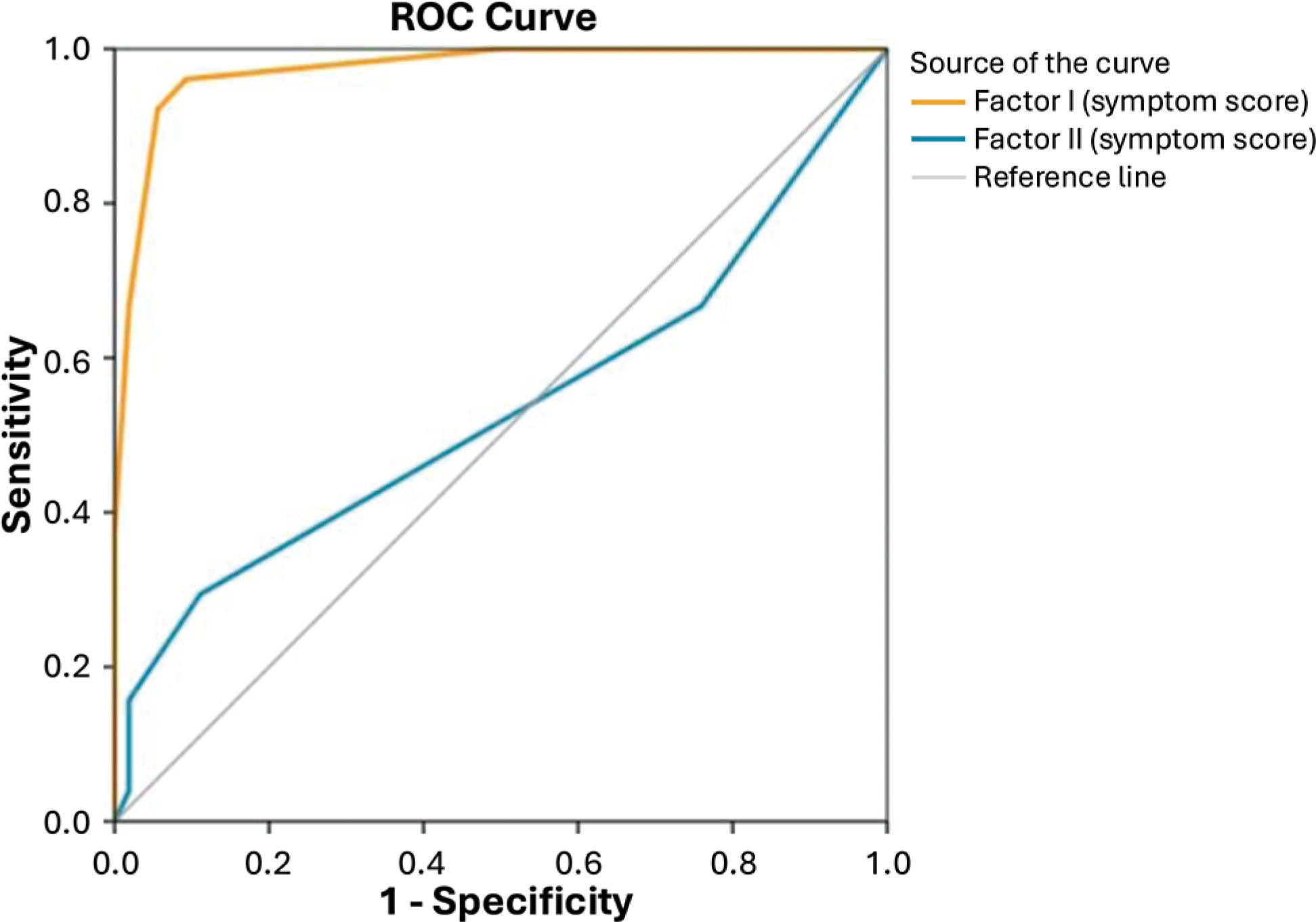
The diagnostic performance of the symptom section of the IRBD-9-Turkish was also observed to be significant for factor I, but not for factor II (Table 3). The ROC curves were able to separate patients with iRBD from patients with OSA through an analysis of factors I and II (Figure 1). Of the 54 OSA patients, 19 (35.2%) presented OSA-NB, demonstrated by both clinical and video-PSG findings, which were associated with the arousal reactions secondary to apneas and hypopneas; while 39 patients (64.8%) had no symptoms nor signs of NBs. Descriptive statistics of these two groups are shown in Table 4.
Graph illustrating the receiver operating characteristic (ROC) curves: area under the curve (AUC) for factor I = 0.973 (95%CI: 0.946–1.000; p < 0.001); and for factor II = 0.533 (95%CI: 0.419–0.647; p = 0.557).
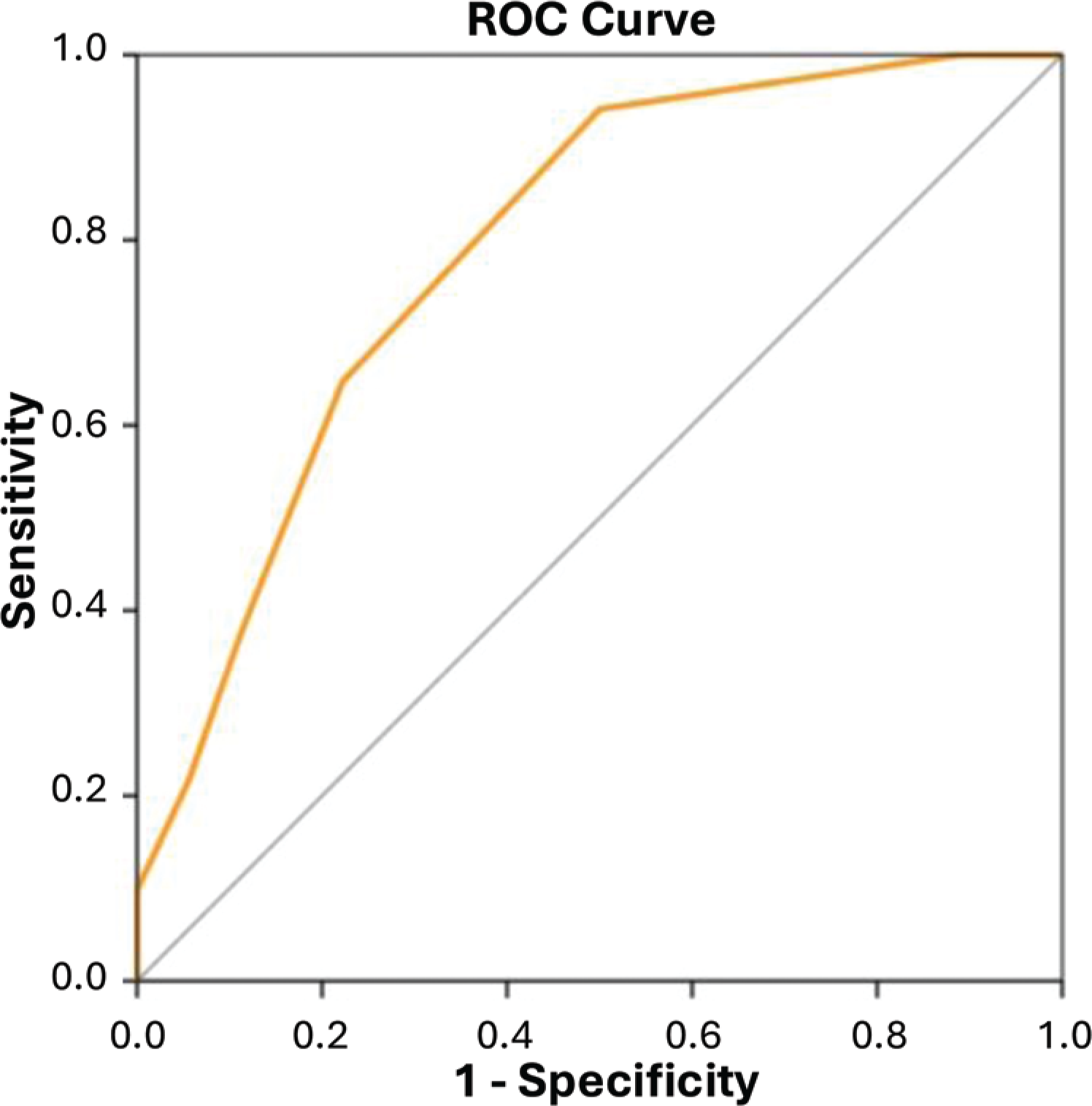
The analysis of the subgroups of patients with OSA and OSA-NBs through a stratified analysis of the symptom section of the IRBD-9-Turkish revealed that the cut-off value was significantly higher in patients with OSA-NBs (0.39 versus 0.278 for those with OSA; p < 0.001), with a sensitivity of 0.765 and a specificity of 0.667, resulting in a correct diagnosis of BNs in 75% of the patients with OSA (Table 5). The ROC curve using the IRBD-9-Turkish symptom score was able to distinguish patients with iRBD from patients with OSA-NBs (Figure 2).
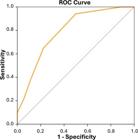
Graph showing the ROC curve using the symptom score of the Turkish version of the 9-Item Innsbruck REM Sleep Behavior Disorder Inventory (IRBD-9-Turkish) to distinguish patients with idiopathic rapid eye movement sleep behavior disorder (iRBD) from the those with obstructive sleep apnea-related abnormal nocturnal behaviors (OSA-NBs) (AUC = 0.791; 95%CI: 0.661–0.921; p < 0.001).
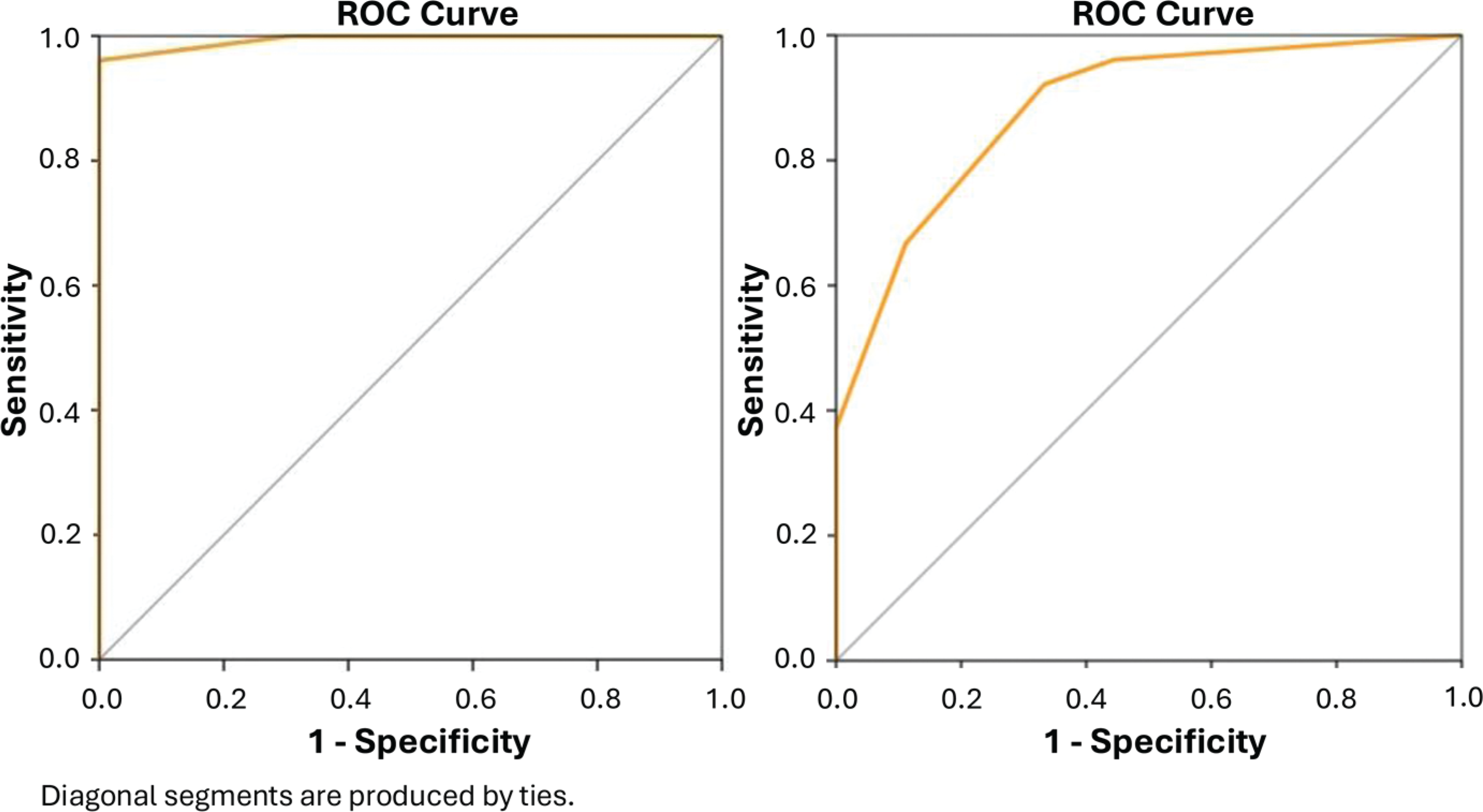
The analysis of ROC curves for factors I and II showed that the IRBD-9-Turkish symptom score was able to distinguish patients with iRBD from patients with OSA (Figure 3A), and OSA-NBs (Figure 3B) only regarding factor I, but not factor II.
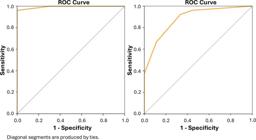
Graph showing the ROC curve using the IRBD-9-Turkish symptom score for factor I, which distinguishes iRBD from OSA patients (AUC = 0.994; 95%CI: 0.983–1.000; p < 0.001); sensitivity = 0.961; specificity = 1.000; cut-off = 0.30) (A) and iRBD patients from those with OSA-NBs (AUC= 0.883; 95%CI: 0.797–0.970; p < 0.001); sensitivity = 0.922; specificity = 0.667; cut-off = 0.50).
DISCUSSION
The current study demonstrated a very high sensitivity and specificity of the IRBD-9-Turkish in iRDB and OSA patients. The diagnostic performance, however, was observed to be significant for factor I, but not for factor II. More intriguingly, our findings showed that the IRBD-9-Turkish was also able to distinguish patients with iRBD from patients with OSA-NBs in the factor I model. The cut-off value for the IRBD-9-Turkish inventory was observed to be significantly higher for OSA-NBs patients (0.39) compared to those with OSA (0.278) or iRBD (0.28). With a high sensitivity and specificity, the IRBD-9-Turkish predicted the correct diagnosis of BNs in 75% of the OSA patients.
The IRBD-9 was developed and validated with a cutoff score of 0.25, showing an excellent sensitivity and specificity (of 0.914 and 0.857 respectively).13 Although it has been shown to differentiate patients with RBD from those without it regardless of underlying etiology, no difference in scores were observed between patients with idiopathic versus symptomatic RBD. On the other hand, BNs triggered by apneas and hypopneas in OSA are very common and challenging in the differential diagnosis of RBD in clinical practice. Considering that video-PSG is a time-consuming and intensive method, the use of questionnaires to choose and prioritize patients who will undergo later or and earlier investigations like such as and PSG would be very helpful.20 To the best of our knowledge, no questionnaire has been developed for the assessment of OSA-NBs. Our results, noticeably, showed that the The IRBD-9 can also be used to distinguish OSA-NBs from RBD-DEBS. While the definitive diagnosis of RBD requires a detailed evaluation and video-PSG recordings, the use of the IRBD-9 as a screening method in clinical practice, as well as in epidemiological population-based settings, must be considered.
Indeed, there are some other instruments validated for the assessment of nocturnal behaviors other than RBD. Spoormaker et al.21 developed the SLEEP-50 questionnaire, which was designed to assess many sleep complaints and/or disorders, such as apneas, insomnia, narcolepsy, sleep paralysis, restless legs syndrome, sleep-related cramps, circadian rhythm sleep disorders, nightmares, and sleepwalking, aiming to distinguish sleep complaints from sleep disorders. The Global Sleep Assessment Questionnaire (GSAQ), developed by Roth et al.22 to recognize many sleep disorders, including PLMs and parasomnias. Fulda et al.23 developed the Munich Parasomnia Screening (MUPS) to evaluate the occurrence and the frequency of different groups of patients with nocturnal behaviors, such as sleep-related movement disorders, isolated symptoms and normal variants, and parasomnias. There are also other questionnaires that screen for more than one sleep disorder at the same time,24 but, in all, the questionnaires are focused on a specific sleep disorder, and OSA-NBs has not been contemplated in any of them. The evaluation of iRBD through actigraphy or actigraphy and screening questionnaires was also analyzed in a study20 that showed that actigraphy recordings for 7 to 10 nights were able to detect iRBD, with a high sensitivity (95.2%) and specificity (90.5%), while the simultaneous use of actigraphy and questionnaires presented 100% of precision, with a sensitivity of 88.1%. Statistical models incorporating clinical features (loss of smell, autonomic dysfunction etc) and/or neurophysiological markers (such as a decrease in fast-frequency activities in spectral electroencephalography) may improve the clinical diagnostic procedure in iRBD patients.20,25
The current study has strengths and limitations. Our results demonstrated the use of the IRBD-9y in a new field of sleep medicine: OSA-NBs. The sensitivity and specificity of the IRBD-9-TR were very high to differentiate patients with OSA from those with iRBD, as well as those with OSA-NBs, a condition that can mimic isolated RBD. On the other hand, the study sample was small. In addition, NBs associated with apneas and hypopneas were not further grouped into those arising during NREM sleep and those arising during REM sleep.
Despite its limitations, the present study also has strengths. It is a prospective multicenter study representative of sleep centers in tertiary neurology clinics. The IRBD-9-TR was applied to subjects referred to the sleep laboratory for the first time. All participants were able to fill it out by themselves, without the help of the clinicians, which shows the user-friendly character of the questionnaire for screening purposes. Considering that, video-PSG investigations are time-consuming and expensive procedures, and the use of RBD screening questionnaires would be very useful for clinicians and researchers. While the IRBD-9 was designed for the differentiation of RBD from other sleep disorders, its discriminative role regarding patients with OSA and OSA-NBs was supported and strengthened by the results of the current study. This additional characteristic might further help the differential diagnosis of iRBD from its mimics, which can be very challenging in the daily clinical practice. Nevertheless, the results of the present study warrant the conduction of larger studies with a more detailed analysis of OSA-NBs. On the other hand, the important ethical implications of the diagnosis of iRBD as a prodromal feature of alpha-synucleinopathy3,4 should emphasize the role of screening tests as an intermediate step in choosing and prioritizing patients for further evaluations, including video-PSG.
Data Availability Statement
The authors declare that the data supporting the findings of this study are available within the paper, and further data will be supplied by the corresponding author upon reasonable request.
References
- 1 American Academy of Sleep Medicine. International classification of sleep disorders. 3rd ed. Darien, IL: American Academy of Sleep Medicine; 2023
-
2 Joza S, Hu MT, Jung KY, Kunz D, Stefani A, Dušek P, et al; International REM Sleep Behavior Disorder Study Group. Progression of clinical markers in prodromal Parkinson's disease and dementia with Lewy bodies: a multicentre study. Brain 2023;146 (08):3258–3272. Doi: 10.1093/brain/awad072
» https://doi.org/10.1093/brain/awad072 -
3 Bramich S, Noyce AJ, King AE, Naismith SL, Kuruvilla MV, Lewis SJG, et al. Isolated rapid eye movement sleep behaviour disorder (iRBD) in the Island Study Linking Ageing and Neurodegenerative Disease (ISLAND) Sleep Study: protocol and baseline characteristics. J Sleep Res 2024;33(03):e14109. Doi: 10.1111/jsr.14109
» https://doi.org/10.1111/jsr.14109 -
4 Dede HÖ, Benbir Senel G, Karadeniz D. Rapid eye movement sleep without atonia constitutes increased risk for neurodegenerative disorders. Acta Neurol Scand 2019;140(06):399–404. Doi: 10.1111/ane.13156
» https://doi.org/10.1111/ane.13156 -
5 Giardino DL, Fasano P, Garay A. The "respiratory REM sleep without atonia benefit" on coexisting REM sleep behavior disorder - obstructive sleep apnea. Sleep Sci 2021;14(02):181–185. Doi: 10.5935/1984-0063.20200054
» https://doi.org/10.5935/1984-0063.20200054 -
6 Zhang LY, Liu WY, Kang WY, Yang Q, Wang X-Y, J Ding J-Q, et al. Association of rapid eye movement sleep behavior disorder with sleep-disordered breathing in Parkinson's disease. Sleep Med 2016;20:110–115. Doi: 10.1016/j.sleep.2015.12.018
» https://doi.org/10.1016/j.sleep.2015.12.018 -
7 Jung YJ, Oh E. Is REM sleep behavior disorder a friend or foe of obstructive sleep apnea? Clinical and etiological implications for neurodegeneration. J Clin Sleep Med 2021;17(06):1305–1312. Doi: 10.5664/jcsm.9144
» https://doi.org/10.5664/jcsm.9144 -
8 Oh EH, Kim DJ, Kim KT, Kim SJ, Noh KH, Cho JW. A patient with obstructive sleep apnea syndrome presenting with REM sleep behavior disorder mimicking symptoms. J Korean Sleep Res Soc 2014;11(02):72–75. Doi: 10.13078/jksrs.14014
» https://doi.org/10.13078/jksrs.14014 -
9 Iranzo A, Santamaría J. Severe obstructive sleep apnea/hypopnea mimicking REM sleep behavior disorder. Sleep 2005;28(02):203–206. Doi: 10.1093/sleep/28.2.203
» https://doi.org/10.1093/sleep/28.2.203 -
10 Baltzan M, Yao C, Rizzo D, Postuma R. Dream enactment behavior: review for the clinician. J Clin Sleep Med 2020;16(11):1949–1969. Doi: 10.5664/jcsm.8734
» https://doi.org/10.5664/jcsm.8734 -
11 Oudiette D, Leu S, Pottier M, Buzare M-A, Brion A, Arnulf I. Dreamlike mentations during sleepwalking and sleep terrors in adults. Sleep 2009;32(12):1621–1627. Doi: 10.1093/sleep/32.12.1621
» https://doi.org/10.1093/sleep/32.12.1621 -
12 Stefani A, Serradell M, Holzknecht E, Gaig C, Ibrahim A, Marrero P, et al; Sleep Innsbruck Barcelona (SINBAR) group. Low Specificity of Rapid Eye Movement Sleep Behavior Disorder Questionnaires: Need for Better Screening Methods. Mov Disord 2023;38(06):1000–1007. Doi: 10.1002/mds.29407
» https://doi.org/10.1002/mds.29407 -
13 Frauscher B,Ehrmann L, Zamarian L, Auer F, Mitterling T, Gabelia D, et al. Validation of the Innsbruck REMsleep behavior disorder inventory. Mov Disord 2012;27(13):1673–1678. Doi: 10.1002/mds.25223
» https://doi.org/10.1002/mds.25223 -
14 Aslan-Kara K, Ak AK, Sarıtaş AŞ, Yılmaz H, Metin KM, Çokal BG, et al. Validity and reliability of the Turkish version of the Innsbruck RBD-9 diagnostic inventory (IRBD-9-TR). Arq Neuropsiquiatr 2025;83(01):1–7. Doi: 10.1055/s-0044-1800816
» https://doi.org/10.1055/s-0044-1800816 -
15 Bonett DG. Sample Size Requirements for Testing and Estimating Coefficient Alpha. J Educ Behav Stat 2002;27(04):335–340. Doi: 10.3102/10769986027004335
» https://doi.org/10.3102/10769986027004335 - 16 Berry RB, Quan SF, Abreu AR, et al; for the American Academy of Sleep Medicine. The AASM Manual for the Scoring of Sleep and Associated Events: Rules, Terminology and Technical Specifications. Version 2.6 Darien, IL: American Academy of Sleep Medicine; 2020
- 17 American Academy of SleepMedicine. International classification of sleep disorders. 3rd ed. Darien, IL: American Academy of Sleep Medicine; 2014
-
18 Montini A, Loddo G, Zenesini C, Mainieri G, Baldelli L, Mignani F, et al. Physiological movements during sleep in healthy adults across all ages: a video-polysomnographic analysis of non-codified movements reveals sex differences and distinct motor patterns. Sleep 2024;47(09):zsae138. Doi: 10.1093/sleep/zsae138
» https://doi.org/10.1093/sleep/zsae138 -
19 Scholtes VA, Terwee CB, Poolman RW. What makes a measurement instrument valid and reliable? Injury 2011;42(03):236–240. Doi: 10.1016/j.injury.2010.11.042
» https://doi.org/10.1016/j.injury.2010.11.042 -
20 Brink-Kjaer A, Gupta N, Marin E, Zitser J, Sum-Ping O, Hekmat A, et al. Ambulatory Detection of Isolated Rapid-Eye-Movement Sleep Behavior Disorder Combining Actigraphy and Questionnaire. Mov Disord 2023;38(01):82–91. Doi: 10.1002/mds.29249
» https://doi.org/10.1002/mds.29249 -
21 Spoormaker VI, Verbeek I, Van den Bout J, Klip EC. Initial validation of the SLEEP-50 questionnaire. Behav Sleep Med 2005;3(04): 227–246. Doi: 10.1207/s15402010bsm0304_4
» https://doi.org/10.1207/s15402010bsm0304_4 -
22 Roth T, Zammit G, Kushida C, Doghramji K, Mathias SD, Wong JM, Buysse DJ. A new questionnaire to detect sleep disorders. Sleep Med 2002;3(02):99–108. Doi: 10.1016/s1389-9457(01)00131-9
» https://doi.org/10.1016/s1389-9457(01)00131-9 -
23 Fulda S, Hornyak M, Müller K, Cerny L, Beitinger PA, Wetter TC. Development and validation of the Munich Parasomnia Screening (MUPS): A questionnaire for parasomnias and nocturnal behaviors. Somnologie (Berl) 2008;12:56–65. Doi: 10.1007/s11818-008-0336-x
» https://doi.org/10.1007/s11818-008-0336-x -
24 Klingman KJ, Jungquist CR, Perlis ML. Questionnaires that screen for multiple sleep disorders. Sleep Med Rev 2017;32:37–44. Doi: 10.1016/j.smrv.2016.02.004
» https://doi.org/10.1016/j.smrv.2016.02.004 -
25 Benbir-Senel G, Albayrak N, Yanik I, Gokcen-Polat E, Schenck CH, Karadeniz D. Risk stratification for phenoconversion in patients with isolated REM sleep behavior disorder. A follow-up study from Turkey. Rev Neurol 2024;78(03):73–81. Doi: 10.33588/rn.7803.2023181
» https://doi.org/10.33588/rn.7803.2023181
Edited by
-
Editor-in-Chief:
Hélio A. G. Teive https://orcid.org/0000-0003-2305-1073.
-
Associate Editor:
Rosana Cardoso Alves https://orcid.org/0000-0003-4258-2320.