Influence of age range of dairy Gir cows on the composition of colostrum and milk, and on calves’ passive immunity transfer
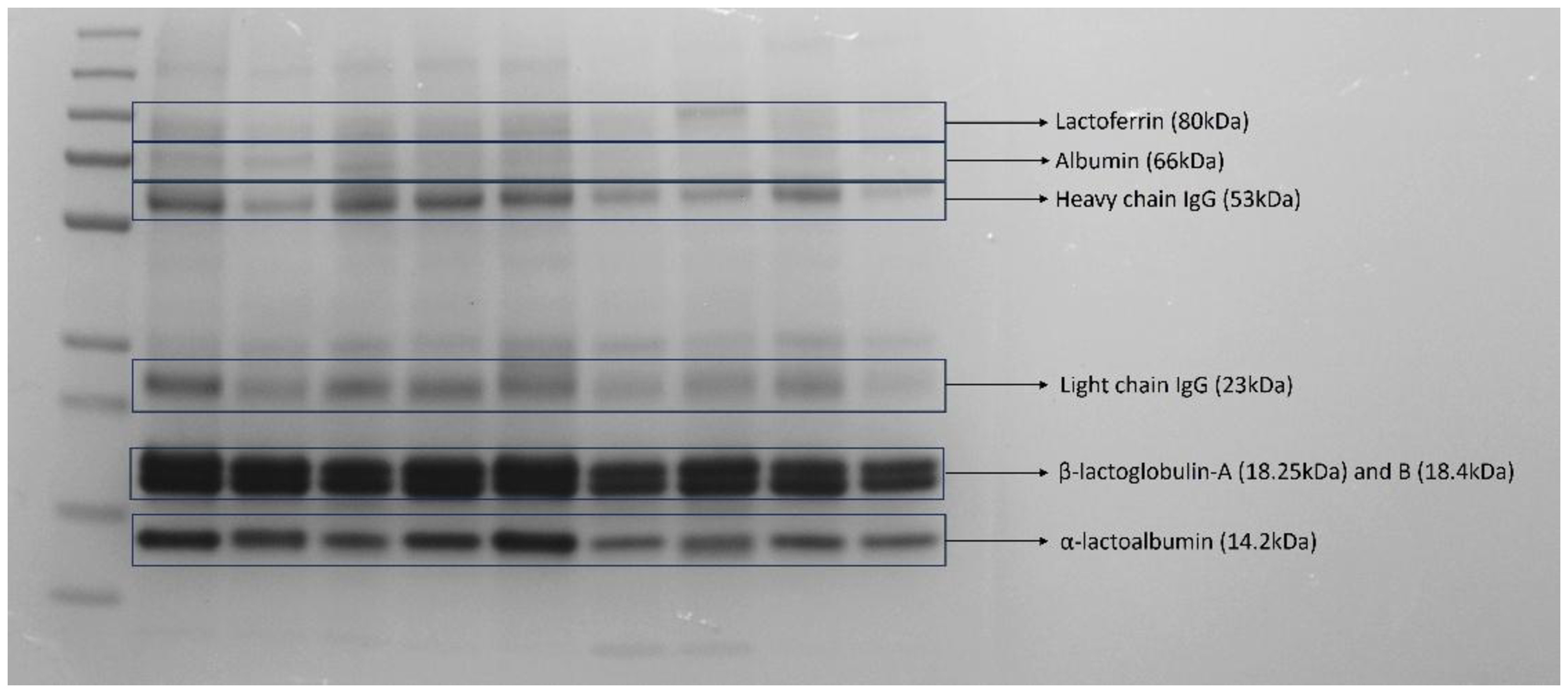
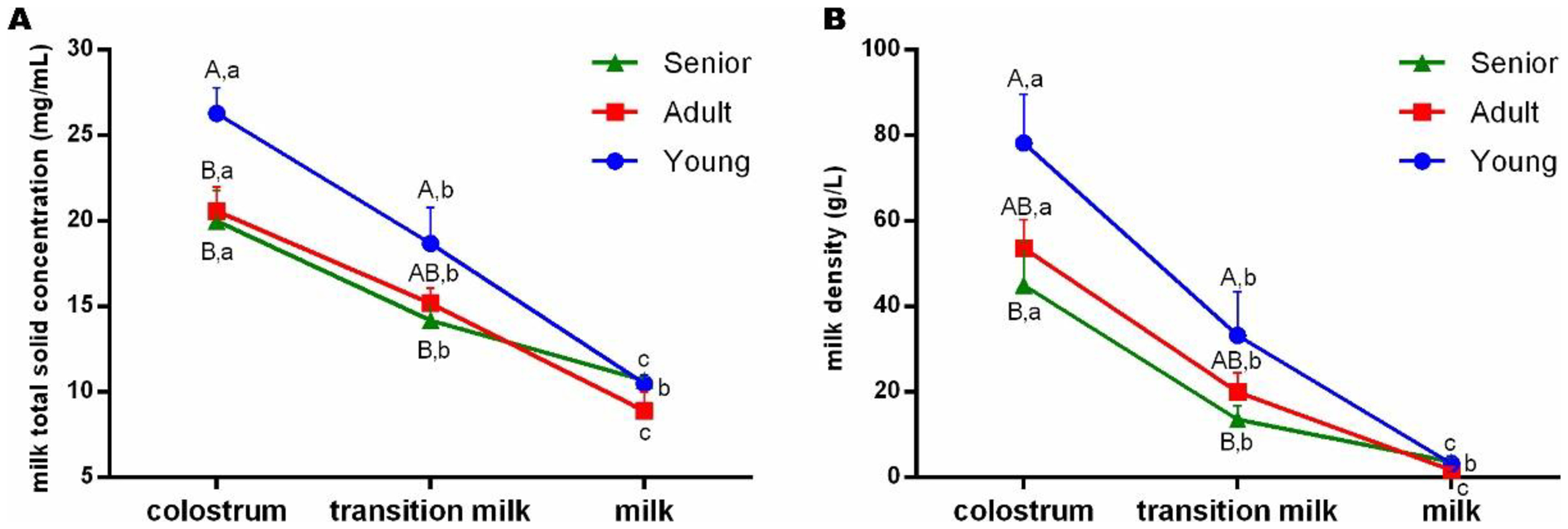
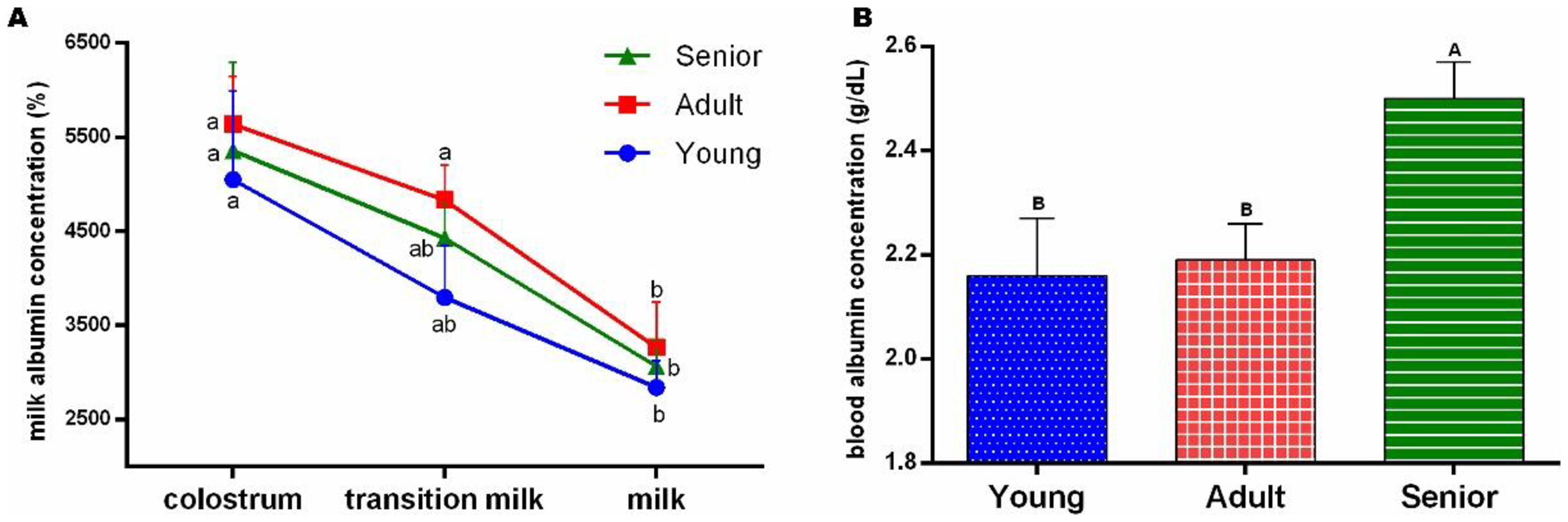
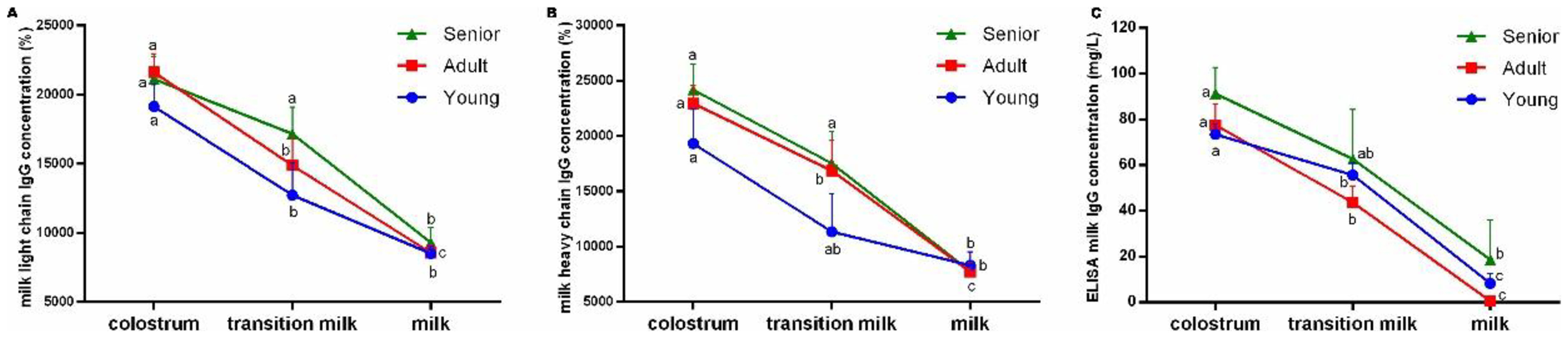
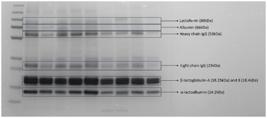
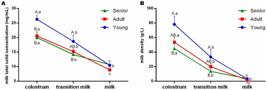
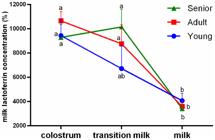
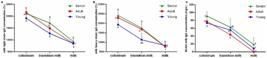
Colostrogenesis and lactogenesis influenced by age require further understanding in Zebu herds, due to the longevity of breeding cows. Thus, we aimed to compare colostrum and milk physicochemical and proteinogram of Dairy Gir cows and calves’ passive immunity transfer by grouping 28 cows and their calves by maternal age: Young (n=6; aged 24-36 months), Adult (n=15; 37-91 months) and Senior (n=7; 96-137 months) groups. Colostrum and milk were collected at first milking (immediately after calving), transition milk (3rd milking, after 24h of calving) and full milk (10th milking, after 5 days of calving) for analysis of density, total solids, pH, immunoglobulin (IgG) and proteinogram (lactoferrin, albumin, heavy and light chain IgG, β-lactoglobulin and α-lactalbumin). Calves’ blood was collected after 3 days of birth to evaluate serum total solids, total protein, liver profile, light and heavy chain IgG. Data were statistically analyzed by LSD Test at P<0.05. Young Group had higher (P<0.05) colostrum total solid and density compared to Senior Group. Transition milk of young cows had lower (P<0.05) pH than seniors. Calves of senior cows presented higher (P<0.05) serum albumin than young and adult. Young cows had IgG decrease from colostrum to transition milk, whereas adult cows presented fall (P<0.05) of IgG throughout milking. In conclusion, age of Dairy Gir cows does not affect colostrum and milk immunological quality, nor calves’ immunity transfer. However, it determines protein composition and dynamic changes, especially in young and senior cows.
Keywords:
zebu; protein; immunoglobulin; albumin
 Thumbnail
 Thumbnail
 Thumbnail
 Thumbnail
 Thumbnail