 Inflammatory cytokines, molecular stress factors and oxidative DNA damage markers of female Clarias gariepinus from different fishing sites of Ureje river of Ado Ekiti, Nigeria
ABSTRACT.
Fish are highly susceptible to water pollution due to their direct exposure to contaminants. Chemical pollutants of rivers, such as toxic chemicals, heavy metals, pesticides, oil spills, excessive nutrients and industrial effluents, can have pathophysiological effects on fish populations and their habitats. The present study evaluated inflammatory cytokines, molecular stress factors and oxidative DNA damage markers of female catfish captured from different fishing sites of Ureje river in Ado Ekiti. Sixty matured female African catfish, Clarias gariepinus were caught with nets by fishermen from an Earthen Pond, and different fishing points of Ureje river as it flows through the metropolis (waterworks, Ajebamidele, Emirin, Erinfun and Aduloju fishing locations) Blood samples were collected and serum obtained for analysis. The result showed that 8-hydroxy-2'-deoxyguanosine (8OHdG) of female catfish from the Waterworks, Ajebamidele, Emirin, Erinfun and Aduloju fishing points were significantly higher (p<0.05) than those from the Earthen Pond. Nuclear Factor kappa B (NF-kB) of female catfish were significantly (p<0.05) higher in fishing points than those at the Ureje reservoir (waterworks) and earthen pond. The Transforming growth factor beta 1 and Interleukin 6 of catfish from Water Works and Earthen Pond were significantly higher (p<0.05) than those from Emirin, Erinfun, Ajebamidele, and Aduloju fishing points. The Heat shock protein 70, Tumor necrosis factor α, Interferon γ, Interleukin 10 and Immunoglobulin M were higher in catfish from the Earthen Pond. In conclusion, this study revealed that fishes captured from fishing points far away from Ureje reservoir within Ado Metropolis are prone to oxidative DNA damage and abberations occasioned by higher 8-OHdG and NF-kB, while higher stocking density of earthen ponds perturb the inflammatory cytokines of female African catfish.
Keywords:
deoxyribose nuclei acid; oxidative status; fishing sites; fishermen
Introduction
Fish in polluted water face a multitude of challenges and health risks (Fatima et al., 2020). As industrialization and urbanization continue to expand, the once pristine lakes, rivers, and oceans are becoming increasingly contaminated. One of the primary concerns for fish in polluted water is the presence of toxic substances (Yadav et al., 2020). Pollution in water bodies can come from various sources, including industrial waste, agricultural runoff, sewage, and chemical spills.
Industrial activities and improper waste disposal result in the release of various chemicals into water bodies (Malik et al., 2020). These toxic substances can disrupt the normal structure and function of fish vital organs and systems, leading to impaired growth and development, reproductive issues, and even death. Moreover, these chemicals can bioaccumulate in fish, meaning that the concentration of toxins increases as they move up the food chain. This poses a serious risk to predators, including humans, who consume contaminated fish (Goutam Mukherjee et al., 2022).
Heavy metals, such as mercury, lead, and cadmium, are particularly harmful to fish (Paul & Small, 2021). Contamination by trace elements has been studied in different organisms, and several investigations have been performed with fish (Filice et al., 2023). These metals can enter water bodies through industrial discharges and leaching from contaminated soil. Some pollutants, such as fertilizers and sewage, can cause excessive growth of algae, leading to an overabundance of organic matter (Gomes et al., 2021).
Inflammatory cytokines are small proteins released by immune cells in response to infection or tissue damage or in regulating the immune response. Several critical cytokines have been recognized in teleost fish, including tumor necrosis factor-α (TNF-α), interleukin-1β, transforming growth factor-β (TGF-β), interferon, and many chemokines (El-Houseiny et al., 2023). These cytokines play a crucial role in inflammation and can have detrimental effects on fish health if chronically elevated (Xiao et al., 2019). Studies have shown that fish exposed to pollutants in water exhibit increased levels of pro-inflammatory cytokines (Shi et al., 2021). Immunoglobulins are proteins produced by immune cells to recognize and neutralize foreign substances like bacteria, viruses and toxins, to protect the organism from infections (Peng et al., 2017). Studies have shown that fish exposed to pollutants in water exhibit changes in the production and function of immunoglobulins (Yu et al., 2020). Heat Shock Protein 70 is important for the recovery from stress, repairing damaged cells, monitoring repair of defective proteins inhibiting oxidation and apoptosis (Naiel et al., 2020). Exposure to pollutants in water can trigger the upregulation of HSPs in fish (Onyskovets et al., 2022). Increased levels of HSPs are indicative of cellular stress and can serve as biomarkers of pollution-induced damage in fish (Guo et al., 2021).
DNA damage can occur due to exposure to genotoxic substances present in contaminated water. Cells have intricate DNA repair mechanisms to maintain genomic integrity and prevent mutations. Contaminated water can influence the expression and activity of DNA damage proteins in fish, leading to impaired DNA repair and increased susceptibility to mutagenesis (Ratn et al., 2018).
Contaminated water bodies pose a significant threat to fish health, affecting their immune system, oxidative stress response, and DNA integrity due to the accumulation of toxic contaminants. Efforts are being made to reduce pollution in water bodies and protect fish populations. Government regulations, such as the Clean Water Act in the United States, aim to control and reduce pollutants discharged into rivers, lakes, and oceans. Additionally, wastewater treatment plants and industrial facilities are implementing advanced treatment technologies to remove contaminants before releasing the water back into the environment. It is important to continue efforts to reduce pollution and protect water bodies to ensure the health and well-being of fish and the ecosystems they inhabit. Monitoring these biomarkers can help assess the health status of fish populations and aid in the development of effective strategies for water pollution control and conservation efforts. The presence of inflammatory cytokines, altered immunoglobulin levels, upregulated molecular stress factors, and oxidative DNA damage proteins in contaminated fish provides evidence of the impact of pollution on their immune system and overall fish well-being. Understanding the mechanisms of damage caused by pollutants can aid in developing effective strategies for water quality management and the protection of aquatic organisms.
Ado Ekiti and its environs have only one surface water body known as the Ureje. It is received in a Dam at waterworks (Ureje reservoir), and flows through numerous tributaries, as source of livelihood for fishermen, motor and industrial laundry services, irrigation for crop fields, while receiving domestic waste, industrial waste and run-off from agricultural fields. As a result of human activities, vast amount of toxic industrial and domestic waste as well as chemicals (herbicides, pesticides) run-off from various crop fields are disposed in the river as it flows through. These could be well sufficient for disparaging change in water quality by changing the physiochemical properties of the river. This habitat degradation can result in retarded growth of aquatic organisms and affect their quality of life. Fishing points along the river and the Dam holding the river before it enters the communities was also identified.
Pollutants such as heavy metals, agro-chemicals and organic waste do not only trigger oxidative and immune disturbances in fish, but can also compromise reproductive performance, particularly in female Clarias gariepinus, whose ovarian physiology is highly sensitive to stress. Elevated oxidative DNA lesions such as 8-OHdG may impair oocyte quality, fertilization potential and embryonic development, while dysregulated inflammatory cytokines (IL-6, TNF-α, IFN-γ, IL-10) and molecular stress markers (HSP70, TGF-β1, NF-κB) can interfere with vitellogenesis, gonadal steroidogenesis, gamete maturation and fecundity. These mechanistic pathways justify sex-specific assessment, as females often manifest more pronounced reproductive consequences under pollutant exposure. In addition, all experimental procedures followed established ethical guidelines for animal use and biosafety; fish handling, transportation, venipuncture and processing were conducted under IACUC-approved protocols with contamination-control and welfare-protection measures in place. Understanding how pollution induces oxidative injury, immune alteration and potential reproductive impairment in female catfish is therefore essential for evaluating ecological risks and safeguarding fisheries resources in Ureje River.
Therefore, the present study was designed to evaluate the Inflammatory cytokines, molecular stress factors and oxidative DNA damage markers of fish captured from different fishing points of Ureje river in Ado Ekiti.
Material and methods
Approval of the animal protocol
This study adhered strictly to animal-welfare regulations under IACUC approval (FPA/EC/23/0175), following ARRIVE and NRC guidelines, with appropriate anesthesia, sterile handling, contamination control, and biosecure waste disposal applied throughout sampling and laboratory procedures.
Study area
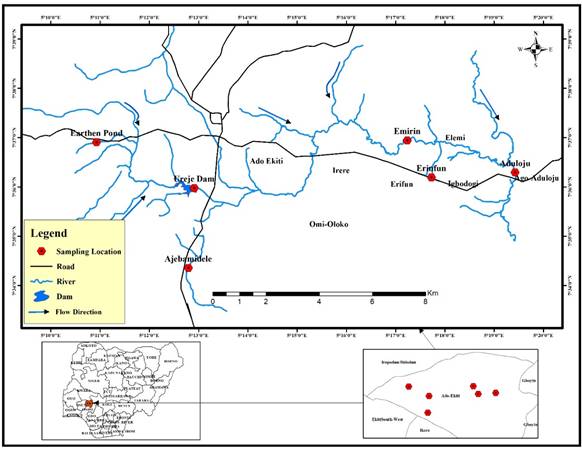
Ureje River is the main river that flows through Ado Ekiti and its environs. Fishing points along the river; Dam holding the river before it enters the communities, where human activities interphase (as shown in Figure 1). An earthen pond was selected inland whose source of water is a borehole which has no direct or indirect connection to the river as a control.
Sample collection
A total of 480 adult female African Catfish (80 per fishing point) were collected using gill nets and drag nets by fishermen from each fishing point and the earthen pond before 8h over 3 months (February to April 2023). The fish were sorted and identified as females at the species level by a fish taxonomist. They were transport in plastic tanks to the Animal Production Laboratory, Department of Agricultural Technology, Federal Polytechnic Ado Ekiti and allowed to rest for 2 hours.
Sample analysis
Blood samples were collected from the caudal vein near the ventral fin of each specimen into plain bottles and were centrifuged immediately to obtain serum using standard procedures. Serum samples were assayed for Interferon Gamma (IFN-γ), Tumor Necrosis Factor Alpha (TNF-α), Interleukin 6 (IL-6), Interleukin 10 (IL-10) and Imunnoglobulin M (IgM) all using ELISA diagnostic kits, Elabscience Biotechnology Inc USA. Heat Shock Protein 70 (Bioassay Technology Laboratory, Shanghai, China), Transforming growth factor beta 1 (TGFβ1) (Elabscience Biotechnology Inc USA), Nuclear Factor Kappa B (NF-kB) (Elabscience Biotechnology Inc USA), 8-hydroxy-2'-deoxyguanosine (8-OHdG) (Elabscience Biotechnology Inc USA) using enzyme linked immunosorbent assay, with commercial ELISA kits and its protocol as follows:
IFN-γ (Interferon Gamma) ELISA Kit, Catalog No: E-EL-R0009 (Elabscience Biotechnology Inc. USA)
TNF-α (Tumour Necrosis Factor Alpha) ELISA Kit, Catalog No: E-EL-R0019 (Elabscience Biotechnology Inc. USA)
IL-6 (Interleukin 6) ELISA Kit, Catalog No: E-EL-R0016 (Elabscience Biotechnology Inc. USA)
Interleukin 10 (IL-10) ELISA Kit, Catalog No: E-EL-R0015 (Elabscience Biotechnology Inc USA)
Imunnoglobulin M (IgM) Fortress diagnostics BXC0731. Fortress Diagnostics Limited, Unit 2C Antrim Technology Park, Antrim, BT41 1QS (United Kingdom)
Heat Shock Protein 70 ELISA Kit, Cat. No E0522Ra (Bioassay Technology Laboratory, www.bt-laboratory.com, 1008 Junjiang Inter. Bldg.
228 Ningguo Rd. Yangpu Dist. Shanghai. China)
Transforming growth factor beta 1 (TGF-β1) Elabscience E-AB-22214. Elabscience Biotechnology Inc.
Nuclear Factor Kappa B (NF-kB) Elabscience E-EL-R0674. Elabscience Biotechnology Inc.
8-Hydroxydeoxyguanosine (8-OHdG) Elabscience E-EL-0028. Elabscience Biotechnology Inc.
Statistical analysis
The statistical model applied is as follows: Yijl = µ + Bi + eijl, Where Yijl represents the value of inflammatory cytokines, molecular stress factors and oxidative DNA damage markers measured in the lth fishes; μ is the overall mean for each variable; Bi is the fixed effect of i th fishing points, and eijl is the random residual effect. Data were subjected to one-way analysis of variance and significant means were separated using Duncan multiple range test using statistical software IBM SPSS 20 package.
Results
Oxidative damage markers of female catfish from different fishing point of Ureje river in Ado Ekiti is presented in Table 1. The 8-hydroxy-2’-deoxyguanosine of female catfish from Emirin fishing point was significantly (p<0.05) higher than those in Erinfun and Water Works fishing points of Ureje river in Ado Ekiti, while those at Earthen Pond, Ajebamidele and Aduloju were statistically (p>0.05) similar with those in other fishing points. However, Nuclear Factor kappa B of female catfish at Ajebamidele. Emirin and Erinfun were significantly (p<0.05) higher than other fishing points of Ureje river in Ado Ekiti. NF-kB of fish at Aduloju and Earthen pond were statistically (p>0.05) similar and significantly (p<0.05) higher than those at water works.
The molecular stress factors of female catfish from different fishing point of Ureje river in Ado Ekiti is presented in Table 2. The TGF-β1 levels of female catfish from the Water Works and Earthen Pond were found to be significantly higher (p<0.05) compared to the Emirin, Aduloju, and Erinfun fishing points of the Ureje river in Ado Ekiti. The HSP70 levels of female catfish from the Earthen Pond was significantly higher (p<0.05) than those from the fishing points of the Ureje river in Ado Ekiti.
The inflammatory cytokines of female catfish from different fishing point of Ureje river in Ado Ekiti is presented in Table 3. The Interleukin 6 of female catfish from the Earthen Pond and Water Works were significantly higher (p<0.05) compared to the Emirin, and Ajebamidele fishing points in the Ureje river in Ado Ekiti. Tumor necrosis factor α, Interleukin 10 and Immunoglobulin M of female catfish from the Earthen Pond was significantly higher (p<0.05) than those from the fishing points in the Ureje river in Ado Ekiti, which had statistically (p>0.05) similar values. Interferon γ of female catfish from the Earthen Pond was not significantly (p>0.05) to those from Emirin, but was significantly (p<0.05) different from those of other fishing site.
Discussion
Concentrations of 8-oxo-dG within a cell are a measurement of oxidative stress (Olarotimi et al., 2023a. 2023b; Jimoh et al., 2024a, 2024b; Oloruntola et al., 2025), that occurs when there is an imbalance between the production of reactive oxygen species (Jimoh, 2022). The 8-hydroxy-2’-deoxyguanosineof female catfish from Emirin fishing point of Ureje river in Ado Ekiti were higher than Erinfun and Water Works. Similarly, Nuclear Factor kappa B of female catfish from Erinfun, Emirin and Ajebamidele were higher than others fishing points of Ureje river in Ado Ekiti. When 8-oxo-dG is induced by a DNA damaging agent, it is rapidly repaired. However, if the damage is not repaired, it can lead to mutations and contribute to carcinogenesis (Qing et al., 2019). The formation of 8-OHdG on DNA can cause G:C-T:A mispairing mutations, which are considered to have a close relationship with the development and progression of tumors, cell aging, and some degenerative diseases (Zhao et al., 2022). In this study, the significantly higher levels of 8-hydroxy-2’-deoxyguanosinein the female catfish from the Emirin river fishing points indicate that these catfish are exposed to higher levels of oxidative stress compared to those from the Earthen Pond. Also, this suggests that these catfish are more susceptible to DNA damage due to the elevated oxidative stress in their environment. The Emirin fishing point is a farming community, largely consisting of crop fields and dumpsites for household and agro-industrial waste (Agbabiaka et al., 2024). These could account for the pollution in the fishing site, which has detrimental effects on the fish leading to DNA oxidative damage.
On the other hand, NF-kB is a transcription factor that plays a crucial role in regulating the immune response, inflammation, and cell survival (Albensi, 2019). It is activated in response to various stimuli, including oxidative stress, and regulates the expression of genes involved in immune and inflammatory responses (Bąska & Norbury, 2022). NF-kB of female catfish captured from Ajebamidele, Emirin and Erinfun fishing points were higher significantly than other fishing points of Ureje river in Ado Ekiti. Elevated NF-kB levels in catfish from Ajebamidele, Emirin, and Erinfun fishing points indicate increased cellular stress and inflammation in these areas. The differences in NF-kB levels among fishing points may reflect variations in the intensity of anthropogenic activities and pollutant exposure. This suggests that the NF-kB pathway may be directly affected by the oxidative stress levels in the environment. The increased levels of NF-kB observed in certain fishing points suggest an ongoing inflammatory and stress response in fish, likely triggered by exposure to contaminants.
The study conducted on female catfish from different fishing points in the Ureje river in Ado Ekiti revealed interesting findings regarding valuable insights into the molecular stress factors, which measured two specific factors: TGF-β1 and HSP70. The TGF-β1 levels of female catfish from the Water Works and Earthen Pond were found to be significantly higher compared to the Emirin, Aduloju, and Erinfun fishing points in the Ureje river. This suggests that the catfish from the earthen pond and the Ureje reservoir (water works) suggest potential immunomodulatory effects in these areas. TGF-β1 is involved in immune regulation and tissue repair, and its elevated levels may indicate responses to environmental stressors or inflammatory conditions. TGF-β1 is a cytokine that plays a crucial role in regulating cell growth, differentiation, and apoptosis (Wang et al., 2018). It is involved in various physiological and pathological processes, including inflammation, fibrosis, and cancer (Mohammadi et al., 2022). The higher levels of TGF-β1 in female catfish from Water Works and Earthen Pond may suggest that these fish may be experiencing increased cellular responses to higher levels of stress or exposure to environmental factors present in those fishing points that induce TGF-β1 expression (Wei et al., 2023). Earthen pond is fed by borehole, although water quality may deteriorate due to waste products, hydro-ecosystem proliferation and water stagnation leading to accumulation overtime. The reservoir has high fish diversity, higher water current and lower pollution levels compared with fishing points in the metropolis. It is possible that the female catfish from Water Works and Earthen Pond have different physiological characteristics that result in higher TGF-β1 levels. The catfish from these locations may be older or have different reproductive stages, which can influence the expression of TGF-β1 (Zheng et al., 2018; Mamta, 2022).
HSPs play an important role in biological metabolism and cell activity, and many studies have utilized these genes as molecular markers for external stress (Hu et al., 2022; Jimoh et al., 2024, 2023a; Oloruntola et al., 2023). Similarly, the HSP70 levels in female catfish from the Earthen Pond were significantly higher than those from the Water Works, Emirin, Ajebamidele, Aduloju, and Erinfun fishing points in the Ureje river. HSP70 is a heat shock protein that is produced in response to various stressors, including pollution, temperature changes, toxins, and diseases (Jimoh et al., 2024a). The elevated levels of HSP70 in female catfish from the Earthen Pond indicate that these particular catfish might have been exposed to higher stress levels of pollutants compared to other fishing points. These findings highlight the impact of water pollution on fish health and suggest that draining water in earthen pond will enhance the physiology of the fish. This is corroborated by claims that HSP70 has used as a biomarker to assess the response of fish to environmental stressors and to monitor water quality (Kim et al., 2022). Similarly, Biswal et al. (2021) and Rangaswamy et al. (2023) claimed that the stress-relieving effect of HSP70 expressed in fish is associated with physicochemical factors in the water, indicating that water quality can influence the expression of HSP70. The significantly higher levels of HSP70 in catfish from Earthen Pond may indicate increased cellular stress and the activation of cellular defense mechanisms. HSP70 is a molecular chaperone involved in cellular stress response, and elevated levels may suggest exposure to stressful conditions. The expression of HSP70 in catfish can be influenced by various types of water pollutants, including physicochemical factors, heavy metals, organic pollutants, pesticides, and stress hormones. Expression of HSP70 in African catfish embryos was enhanced in response to lead-induced stress (Osman et al., 2019). Similar effects of polycyclic aromatic hydrocarbons induced expression of HSP70 in catfish in liver and gill tissues (Thinh et al., 2016). The elevated levels of TGF-β1 and HSP70 in catfish from Water Works and Earthen Pond indicate a heightened stress response due to environmental pollutants.
The study showed that IL-6 of female catfish from Water Works and Earthen Pond were significantly higher than the Emirin, and Ajebamidele fishing points in the Ureje river in Ado Ekiti. Also, it was found that the TNF-α, IFN-γ, IL-10 and IgM of female catfish from Earthen Pond were significantly higher than those from the fishing sites. The higher levels of these inflammatory cytokines in female catfish from Earthen Pond suggest that these catfish may be experiencing immune responses due to stressors. IL-6, TNF-α, IFN-γ, IL-10 and IgM are all important components of the immune system in female catfish. They can activate immune cells, stimulate the production of antibodies, and control the inflammatory response. These immune factors play a crucial role in defending the catfish against pathogens and maintaining overall health. However, when the levels of inflammatory cytokines in female catfish from Eathen Pond is significantly higher than those found in the water at the Emirin, Ajebamidele, Aduloju, Erinfun and Water Works fishing points of Ureje river in Ado Ekiti, it could indicate an immune response due to exposure to certain stressors or pathogens. Factors affecting female catfish health can include various stressors, such as poor water quality, inadequate nutrition, overcrowding, temperature fluctuations, exposure to pathogens and pollutants (Sobjak et al., 2017).
IL-10 is a key immunomodulatory cytokine during infection and is also required for optimal pathogen clearance and ameliorates immunopathological status (McKelvey et al., 2024). The higher levels of IL-10 in the catfish from the Earthen Pond suggest anti-inflammatory signals to maintain homeostasis. IL-10 is typically associated with immune regulation, elevated levels may indicate an attempt by the catfish's immune system to downregulate an ongoing inflammatory response (Huo et al., 2019). This result confirmed the association of IL-10 with the immune system of fish species (Peng et al., 2017).
Furthermore, the concentration of IgM, an antibody involved in immune defense, was significantly higher in the female catfish from the Earthen Pond compared to the other locations. IgM is the primary antibody produced during the early stages of an immune response and is involved in neutralizing pathogens and activating the complement system (Peng et al., 2017). IgM can also stimulate the production of other antibodies, including IgG and IgA (Yang et al., 2016). The increased levels of IgM suggest an ongoing immune response or exposure to antigens in the catfish from the earthen pond.
The results indicate that female catfish from the earthen pond Ado Ekiti, exhibit higher levels of inflammatory cytokines (IL-6, TNF-α, IFN-γ) and IgM compared to the Water work, Emirin, and Eminfun fishing points. These findings suggest a potential inflammatory state and dysregulated immune response in the catfish from the earthen pond.
Conclusion
The study examined oxidative stress and immune responses in female catfish from different fishing points in the Ureje River in Ado Ekiti, Nigeria. The key findings indicate that catfish from the Emirin fishing point exhibited higher levels of 8-oxo-dG, indicating elevated oxidative stress and potential DNA damage due to environmental pollutants. Additionally, NF-kB levels were significantly higher in catfish from Ajebamidele, Emirin, and Erinfun, suggesting increased cellular stress and inflammation. The differences likely stem from the diverse human activities, including industrial and agricultural practices, contributing to the degradation of water quality in specific areas. Fishes from Emirin, Ajebamidele and Erinfun show susceptibility to oxidative DNA damage due to the exposure to pollutants.
Recommendation
Implementation regular monitoring of water quality in the Ureje River to identify and control pollution sources, especially near the Emirin fishing point is necessary.
There is need for pollution mitigation to initiate cleanup and remediation projects targeting areas with high levels of pollutants, particularly the Emirin, Ajebamidele and Erinfun to reduce the environmental burden on local aquatic life.
Further research should investigate the specific pollutants contributing to the elevated stress markers and immune responses in catfish, focusing on heavy metals, pesticides, and other organic pollutants. As well as to Educate local communities about the impact of pollution on aquatic ecosystems and the importance of maintaining clean water bodies.
Regular education of local communities about the impact of pollution on aquatic ecosystems and the importance of maintaining clean water bodies.
Data availability
The datasets used and/or analysed during the current study are available from the corresponding author on reasonable request.
References
-
Agbabiaka, L. A., Jimoh, O. A., Daramola, O. T. & Oluyemi, A. A.. (2024). Multiple biomarker response (Organ Histology, Serum Biochemistry and Oxidative Status) in Catfish Capture from Ureje River, Nigeria. Archiva Zootechnica, 27(2), 155-182. https://doi.org/10.2478/azibna-2024-0020
» https://doi.org/https://doi.org/10.2478/azibna-2024-0020 -
Albensi, B. C.. (2019). What is nuclear factor kappa B (NF-κB) doing in and to the mitochondrion?. Frontiers in Cell and Development Biology, 7(1), 154. https://doi.org/10.3389/fcell.2019.00154
» https://doi.org/https://doi.org/10.3389/fcell.2019.00154 -
Bąska, P. & Norbury, L. J.. (2022). The role of nuclear factor kappa B (NF-κB) in the immune response against parasites. Pathogens, 11(3), 310. https://doi.org/10.3390/pathogens11030310
» https://doi.org/https://doi.org/10.3390/pathogens11030310 - Biswal, A., Srivastava, P. P., Krishna, G., Paul, T., Pal, P., Gupta, S., Varghese, T. & Jayant, M.. (2021). An integrated biomarker approach for explaining the potency of exogenous glucose on transportation induced stress in Labeo rohita fingerlings. Scientific Reports, 11(1), 5713.
-
El-Houseiny, W., Anter, R. G., Arisha, A. H., Mansour, A. T., Safhi, F. A., Alwutayd, K. M., Elshopakey, G. E., Abd El-Hakim, Y. M. A. & Mohamed, E. M.. (2023). Growth retardation, oxidative stress, immunosuppression, and inflammatory disturbances induced by herbicide exposure of catfish, Clarias gariepinus, and the alleviation effect of dietary wormwood, Artemisia cina. Fishes, 8(6), 297. https://doi.org/10.3390/fishes8060297
» https://doi.org/https://doi.org/10.3390/fishes8060297 - Fatima, S., Muzammal, M., Rehman, A., Rustam, S. A., Shehzadi, Z., Mehmood, A. & Waqar, M.. (2020). Water pollution on heavy metals and its effects on fishes. International Journal of Fisheries and Aquatic Studies, 8(3), 6-14.
-
Filice, M., Reinero, F. R., Cerra, M. C., Faggio, C., Leonetti, F. L., Micarelli, P., Giglio, G., Sperone, E., Barca, D. & Imbrogno, S.. (2023). Contamination by trace elements and oxidative stress in the skeletal muscle of Scyliorhinus canicula from the central tyrrhenian sea. Antioxidants, 12(2), 524. https://doi.org/10.3390/antiox12020524
» https://doi.org/https://doi.org/10.3390/antiox12020524 -
Gomes, M. F., De Paula, V. D. C. S., Martins, L. R. R., Garcia, J. R. E., Yamamoto, F. Y. & De Freitas, A. M.. (2021). Sublethal effects of triclosan and triclocarban at environmental concentrations in silver catfish (Rhamdia quelen) embryos. Chemosphere, 263(1), 127985. https://doi.org/10.1016/j.chemosphere.2020.127985
» https://doi.org/https://doi.org/10.1016/j.chemosphere.2020.127985 -
Goutam Mukherjee, A., Ramesh Wanjari, U., Eladl, M. A., El-Sherbiny, M., Elsherbini, D. M. A., Sukumar, A., Kannampuzha, S., Ravichandran, M., Renu, K., Vellingiri, B., Kandasamy, S. & Gopalakrishnan, A. V.. (2022). Mixed contaminants: occurrence, interactions, toxicity, detection, and remediation. Molecules, 27(8), 2577. https://doi.org/10.3390/molecules27082577
» https://doi.org/https://doi.org/10.3390/molecules27082577 -
Guo, J., Pu, Y., Zhong, L., Wang, K., Duan, X. & Chen, D.. (2021). Lead impaired immune function and tissue integrity in yellow catfish (Peltobargus fulvidraco) by mediating oxidative stress, inflammatory response and apoptosis. Ecotoxicology and Environmental Safety, 226(1), 112857. https://doi.org/10.1016/j.ecoenv.2021.112857
» https://doi.org/https://doi.org/10.1016/j.ecoenv.2021.112857 -
Hu, C., Yang, J., Qi, Z., Wu, H., Wang, B., Zou, F., Mei, H., Liu, J., Wang, W. & Liu, Q.. (2022). Heat shock proteins: Biological functions, pathological roles, and therapeutic opportunities. MedComm, 3(3), e161. https://doi.org/10.1002/mco2.161
» https://doi.org/https://doi.org/10.1002/mco2.161 -
Huo, H. J., Chen, S. N., Li, L. & Nie, P.. (2019). Functional characterization of IL-10 and its receptor subunits in a perciform fish, the mandarin fish, Siniperca chuatsi. Developmental and Comparative Immunology, 97(1), 64-75. https://doi.org/10.1016/j.dci.2019.03.017
» https://doi.org/https://doi.org/10.1016/j.dci.2019.03.017 -
Jimoh, O. A.. (2022). Oxidative stress in animals: the gentle saver and the silent killer. Nigerian Journal of Animal Production, 49(1), 67-76. https://doi.org/10.51791/njap.v49i1.3402
» https://doi.org/https://doi.org/10.51791/njap.v49i1.3402 -
Jimoh, O. A., Ayodele, A. D., Ojo, O. A., Okin-Aminu, H. O. & Olarotimi, J. O.. (2024a). Effects of turmeric, ginger, cinnamon and garlic essential oils on HSP 70, NF-ƙB, oxidative DNA damage, inflammatory cytokines and oxidative markers in broilers chickens. Translational Animal Science, 8(1), txae127. https://doi.org/10.1093/tas/txae127
» https://doi.org/https://doi.org/10.1093/tas/txae127 -
Jimoh, O. A., Daramola, O. T., Okin-Aminu, H. O., Okin-Aminu, H. O. & Ojo, O. A.. (2023a). HSP70, adiponectin, leptin, pro-inflammatory cytokines and metabolic hormones of heat-stressed broilers fed herbal supplements. Journal of Thermal Biology, 117(1), 103681. https://doi.org/10.1016/j.jtherbio.2023.103681
» https://doi.org/https://doi.org/10.1016/j.jtherbio.2023.103681 -
Jimoh, O. A., Oyeyemi, B. F., Oyeyemi, W. A., Ayodele, S. O., Aminu, H. O., Ayodele, A. D., Faniyi, T. O. & Nwachukwu, C. U.. (2024b). Herbal inclusions ameliorate effect of heat stress on haematology, proinflammatory cytokines, adipokines and oxidative stress of weaned rabbit does in humid tropics. Journal of Animal Physiology and Animal Nutrition, 108(1), 55-63. https://doi.org/10.1111/jpn.13864
» https://doi.org/https://doi.org/10.1111/jpn.13864 -
Kim, W. S., Park, K., Park, J. W., Lee, S. H., Kim, J. H., Kim, Y. J., Oh, G., Ko, B., Park, J., Hong, C., Yu, T. & Kwak, I.. (2022). Transcriptional responses of stress-related genes in pale chub (Zacco platypus) inhabiting different aquatic environments: application for biomonitoring aquatic ecosystems. International Journal of Environmental Research and Public Health, 19(18), 11471. https://doi.org/10.3390/ijerph191811471
» https://doi.org/https://doi.org/10.3390/ijerph191811471 -
Malik, D., Sharma, A. K., Sharma, A. K., Thakur, R. & Sharma, M. (2020). A review on impact of water pollution on freshwater fish species and their aquatic environment. In V. Kumar, N. Kamboj & T. Payum (Eds.), Advances in environmental pollution management: wastewater impacts and treatment technologies (Vol. 1, pp. 10-28). AEM-AESA. https://doi.org/10.26832/aesa-2020-aepm-02
» https://doi.org/https://doi.org/10.26832/aesa-2020-aepm-02 -
Mamta, S. K.. (2022). Implicating transforming growth factor-β and sex steroids in the regulation of brain-gonadal functions. Journal of Reproductive Healthcare and Medicine, 3(9), 1-6. https://doi.org/10.25259/JRHM_12_2022
» https://doi.org/https://doi.org/10.25259/JRHM_12_2022 -
McKelvey, M. E., Uddin, M. B., Palani, S., Shao, S. & Keer, S.. (2024). IL-10 counteracts IFN-γ to alleviate acute lung injury in a viral-bacterial superinfection model. American Journal of Respiratory Cell and Molecular Biology, 71(1), 110-120. https://doi.org/10.1165/rcmb.2023-0437oc
» https://doi.org/https://doi.org/10.1165/rcmb.2023-0437oc -
Mohammadi, A., Sorensen, G. L. & Pilecki, B.. (2022). MFAP4-mediated effects in elastic fiber homeostasis, integrin signaling and cancer, and its role in teleost fish. Cells, 11(13), 2115. https://doi.org/10.3390/cells11132115
» https://doi.org/https://doi.org/10.3390/cells11132115 -
Naiel, M. A., Shehata, A. M., Negm, S. S., Hack, M. E., Amer, M. S., Khafaga, A. F., Bin-Jumah, A. & Allam, A. A.. (2020). The new aspects of using some safe feed additives on alleviated imidacloprid toxicity in farmed fish: a review. Reviews in Aquaculture, 12(4), 2250-2267. https://doi.org/10.1111/raq.12432
» https://doi.org/https://doi.org/10.1111/raq.12432 -
Olarotimi, O. J., Gbore, F. A., Oloruntola, O. D. & Jimoh, O. A.. (2023a). Serum inflammation and oxidative DNA damage amelioration in cocks fed supplemental Vernonia amygdalina and zinc in aflatoxin B1 contaminated diets. Translational Animal Science, 7(1), txad113. https://doi.org/10.1093/tas/txad113
» https://doi.org/https://doi.org/10.1093/tas/txad113 -
Olarotimi, J. O., Gbore, F. A., Adu, O. A., Oloruntola, O. D. & Jimoh, O. A.. (2023b). Ameliorative effects of Sida acuta and vitamin C on serum DNA damage, pro-inflammatory and anti-inflammatory cytokines in roosters fed aflatoxin B1 contaminated diets. Toxicon, 1(236), 107330. https://doi.org/10.1016/j.toxicon.2023.107330
» https://doi.org/https://doi.org/10.1016/j.toxicon.2023.107330 -
Oloruntola, D. O., Oluwaniyi, F. S., Adeyeye, S. A., Falowo, A. B., Jimoh, O. A., Olarotimi, O. J., Oloruntola, D. A., Osowe, C. O. & Gbore, F. A.. (2025). Aqueous Vernonia amygdalina leaf extract in drinking water mitigates aflatoxin B1 toxicity in broilers: effects on performance, biomarker analysis and liver histology. Mycotoxin Research, 41(1), 323-337. https://doi.org/10.1007/s12550-025-00583-4
» https://doi.org/https://doi.org/10.1007/s12550-025-00583-4 -
Oloruntola, O. D., Ayodele, S. O., Jimoh, O. A., Oloruntola, D. A. & Osowe, C. O.. (2023). Nutraceutical effects of Justicia carnea leaf powder supplementations on performance, blood indices, heat shock protein 70, oxidative deoxyribonucleic acid damage biomarkers and intestinal microbes of broiler chickens, under tropical condition. Archives of Razi Institute, 78(4), 1217-1223. https://doi.org/10.22092/ARI.2022.360664.2594
» https://doi.org/https://doi.org/10.22092/ARI.2022.360664.2594 -
Onyskovets, М., Panas, N. E., Lopotych, N. J., Ivankiv, M. & Salamakha, I.. (2022). Heat shock proteins as biomarkers of fish pollution. Agronomy, 1(26), 45-50. https://doi.org/10.31734/agronomy2022.26.045
» https://doi.org/https://doi.org/10.31734/agronomy2022.26.045 -
Osman, A. G., Wuertz, S. & Mohammed-Geba, K.. (2019). Lead-induced heat shock protein (HSP70) and metallothionein (MT) gene expression in the embryos of African catfish Clarias gariepinus (Burchell, 1822). Scientific African, 3(1), e00056. https://doi.org/10.1016/j.sciaf.2019.e00056
» https://doi.org/https://doi.org/10.1016/j.sciaf.2019.e00056 -
Paul, J. S. & Small, B. C.. (2021). Chronic exposure to environmental cadmium affects growth and survival, cellular stress, and glucose metabolism in juvenile channel catfish (Ictalurus punctatus). Aquatic Toxicology, 230(1), 105705. https://doi.org/10.1016/j.aquatox.2020.105705
» https://doi.org/https://doi.org/10.1016/j.aquatox.2020.105705 -
Peng, Y., Cai, X., Zhang, G., Wang, J., Li, Y., Wang, Z., Wang, B., Xiong, X., Wu, Z. & Jian, J.. (2017). Molecular characterization and expression of interleukin-10 and interleukin-22 in golden pompano (Trachinotus ovatus) in response to Streptococcus agalactiae stimulus. Fish and Shellfish Immunology, 65(1), 244-255. https://doi.org/10.1016/j.fsi.2017.04.019
» https://doi.org/https://doi.org/10.1016/j.fsi.2017.04.019 -
Qing, X., Shi, D., Lv, X., Wang, B., Chen, S. & Shao, Z.. (2019). Prognostic significance of 8-hydroxy-2′-deoxyguanosine in solid tumors: a meta-analysis. BMC Cancer, 19(1), 997. https://doi.org/10.1186/s12885-019-6189-9
» https://doi.org/https://doi.org/10.1186/s12885-019-6189-9 -
Rangaswamy, B., Kim, W. S. & Kwak, I. S.. (2023). Heat shock protein 70 reflected the state of inhabited fish response to water quality within lake ecosystem. International Journal of Environmental Science and Technology, 21(1), 643-654. https://doi.org/10.1007/s13762-023-04971-0
» https://doi.org/https://doi.org/10.1007/s13762-023-04971-0 -
Ratn, A., Prasad, R., Awasthi, Y., Kumar, M., Misra, A. & Trivedi, S. P.. (2018). Zn2+ induced molecular responses associated with oxidative stress, DNA damage and histopathological lesions in liver and kidney of the fish, Channa punctatus (Bloch, 1793). Ecotoxicology and Environmental Safety, 151(1), 10-20. https://doi.org/10.1016/j.ecoenv.2017.12.058
» https://doi.org/https://doi.org/10.1016/j.ecoenv.2017.12.058 -
Shi, Y., Hu, Y., Wang, Z., Zhou, J., Zhang, J., Zhong, H., Fu, G. & Zhong, L.. (2021). The protective effect of taurine on oxidized fish-oil-induced liver oxidative stress and intestinal barrier-function impairment in juvenile Ictalurus punctatus. Antioxidants, 10(11), 1690. https://doi.org/10.3390/antiox10111690
» https://doi.org/https://doi.org/10.3390/antiox10111690 -
Sobjak, T. M., Romão, S., Do Nascimento, C. Z., Dos Santos, A. F. P., Vogel, L. & Guimarães, A. T. B.. (2017). Assessment of the oxidative and neurotoxic effects of glyphosate pesticide on the larvae of Rhamdia quelen fish. Chemosphere, 182(1), 267-275. https://doi.org/10.1016/j.chemosphere.2017.05.031
» https://doi.org/https://doi.org/10.1016/j.chemosphere.2017.05.031 -
Thinh, D. D., Rasid, M. H., Deris, Z. M., Shazili, N. A., De Boeck, G. & Wong, L. L.. (2016). Putative roles for metallothionein and HSP70 genes in relation with heavy metal accumulation and parasitic cymothoid in the fish Nemipterus furcosus. Archives of Environmental Contamination and Toxicology, 71(4), 530-540. https://doi.org/10.1007/s00244-016-0310-8
» https://doi.org/https://doi.org/10.1007/s00244-016-0310-8 -
Wang, Y., Wang, S., Luo, H. & Lv, Y.. (2018). Transforming growth factor β1 gene play a novel role in innate immune response in Pelteobagrus fulvidraco. Turkish Journal of Fisheries and Aquatic Sciences, 18(4), 539-546. https://doi.org/10.4194/1303-2712-v18_4_05
» https://doi.org/https://doi.org/10.4194/1303-2712-v18_4_05 -
Wei, W. Y., Gong, Y., Guo, X., Liu, M., Zhou, Y. L., Li, Z., Wang, Z. & Gui, J. F.. (2023). Gonadal transcriptomes reveal sex-biased expression genes associated with sex determination and differentiation in red-tail catfish (Hemibagrus wyckioides). BMC Genomics, 24(1), 183. https://doi.org/10.1186/s12864-023-09264-x
» https://doi.org/https://doi.org/10.1186/s12864-023-09264-x -
Xiao, Y., Yu, L., Gui, G., Gong, Y., Wen, X., Xia, W., Yang, H. & Zhang, L.. (2019). Molecular cloning and expression analysis of interleukin-8 and-10 in yellow catfish and in response to bacterial pathogen infection. BioMed Research International, 2019, 9617659. https://doi.org/10.1155/2019/9617659
» https://doi.org/https://doi.org/10.1155/2019/9617659 -
Yadav, A. K., Sinha, A. K., Egnew, N., Romano, N. & Kumar, V.. (2020). Potential amelioration of waterborne iron toxicity in channel catfish (Ictalurus punctatus) through dietary supplementation of vitamin C. Ecotoxicology and Environmental Safety, 205(1), 111337. https://doi.org/10.1016/j.ecoenv.2020.111337
» https://doi.org/https://doi.org/10.1016/j.ecoenv.2020.111337 -
Yang, Z., Zhao, Q., Gao, Y. & Zhang, W.. (2016). Combined oral and intravenous immunization stimulates strong iga responses in both systemic and mucosal compartments. PloS One, 11(12), e0168037. https://doi.org/10.1371/journal.pone.0168037
» https://doi.org/https://doi.org/10.1371/journal.pone.0168037 -
Yu, Y., Wang, Q., Huang, Z., Ding, L. & Xu, Z.. (2020). Immunoglobulins, mucosal immunity and vaccination in teleost fish. Frontiers in Immunology, 11(1), 567941. https://doi.org/10.3389/fimmu.2020.567941
» https://doi.org/https://doi.org/10.3389/fimmu.2020.567941 -
Zhao, Y., Wang, C., Yang, T. M., Li, C., Zhang, L. H., Du, D. N., Wang, R. X., Wang, J., Wei, M. & Ba, X.. (2022). Linking oxidative DNA lesion 8-OxoG to tumor development and progression. Yi Chuan, 44(6), 466-477. https://doi.org/10.16288/j.yczz.22-067
» https://doi.org/https://doi.org/10.16288/j.yczz.22-067 -
Zheng, S., Long, J., Liu, Z., Tao, W. & Wang, D.. (2018). Identification and evolution of TGF-β signaling pathway members in twenty-four animal species and expression in tilapia. International Journal of Molecular Sciences, 19(4), 1154. https://doi.org/10.3390/IJMS19041154
» https://doi.org/https://doi.org/10.3390/IJMS19041154
Edited by
-
Associate Editor in charge:
Leandro Dalcin Castilha