 Supplementation with inorganic iron has no impact on the morphology of the hypopharyngeal glands in honey bees (Apis mellifera L.)
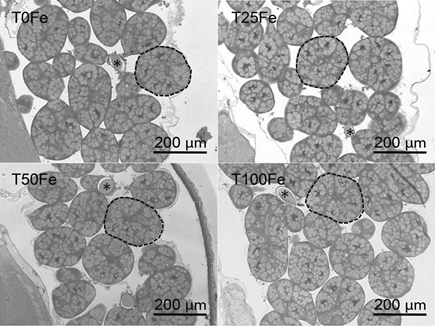
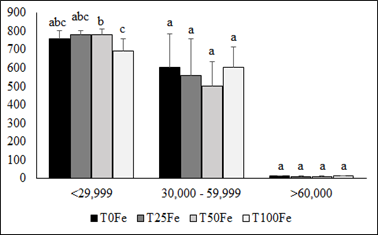
Nutrition plays a major role in honey bees health, development and performance. Industrial agriculture, deforestation and climate change, however, are known to have negative impacts in natural habitats, compromising access to abundant and diversified sources of pollen and nectar, essential for honey bees. Beekeepers commonly use alternative supplementation feed, particularly during the fall and winter when resources are scarce to avoid or reduce colony loss as a consequence of starvation. The goal of the present study was to evaluate the effects of diets containing an inorganic iron source on the morphology of hypopharyngeal glands (HG) in 6-day-old honey bees during the off-season. Twelve colonies were distributed into four groups and supplemented, or not, with inorganic iron at concentrations of 0, 25, 50, and 100 ppm, diluted in sugar syrup. Six-day-old bees were then collected from each treatment, and their heads were prepared for the evaluation of the area and acini number of the HG. No significant differences were observed in the analyzed parameters of HG, regardless of the iron concentrations used (p < 0.05). In conclusion, providing an inorganic iron source during the off-season for colony nutrition does not modulate the development of the hypopharyngeal glands in 6-day-old nurse bees.
Keywords:
beekeeping; hypopharyngeal glands; morphology; nutrition
 Thumbnail
 Thumbnail
 Thumbnail