
 Indicators for solid waste management in small municipalities from a circular economy perspective
Abstract
The circular economy emerges as a strategic alternative for managing municipal solid waste (MSW) in municipalities with populations under 20,000, incorporating waste reduction, reuse, and recycling practices. This study proposes an evaluation model for MSW public policies, composed of 53 indicators developed and validated using the Delphi method, adapted to the specific needs of small Brazilian municipalities. The indicators are organized into analytical dimensions that cover aspects from waste generation and disposal to the integration of circular practices in municipal planning. Applying the model allowed an assessment of local practices’ alignment with circular economy principles, identifying both ongoing initiatives and gaps requiring improvement. The resulting indicator model serves as a tool to support public managers in formulating and enhancing MSW policies, tailored to the contexts and limitations of small communities.
Keywords:
Circular Economy; Waste Management; Indicators; Public Policies; Small Municipalities
Resumo
A economia circular emerge como uma alternativa estratégica para a gestão de resíduos sólidos urbanos (RSU) em municípios com população inferior a 20 mil habitantes, incorporando práticas de redução, reutilização e reciclagem de resíduos. Este estudo propõe um modelo de avaliação de políticas públicas de RSU, composto por 53 indicadores desenvolvidos e validados pelo método Delphi, adaptados às especificidades de pequenos municípios brasileiros. Os indicadores foram organizados em dimensões analíticas que cobrem desde a geração e destinação dos resíduos até a integração de práticas circulares no planejamento municipal. A aplicação do modelo permitiu avaliar a aderência das práticas locais aos princípios da economia circular, identificando iniciativas em execução e lacunas que requerem aprimoramento. O modelo de indicadores resultante constitui uma ferramenta para subsidiar gestores públicos na formulação e aprimoramento de políticas de RSU, ajustadas aos contextos e limitações das pequenas localidades.
Palavras-chave:
Economia Circular; Gestão de Resíduos; Indicadores; Políticas Públicas; Municípios Pequenos
Resumen
La economía circular surge como una alternativa estratégica para la gestión de residuos sólidos urbanos (RSU) en municipios con menos de 20,000 habitantes, incorporando prácticas de reducción, reutilización y reciclaje de residuos. Este estudio propone un modelo de evaluación de políticas públicas de RSU, compuesto por 53 indicadores desarrollados y validados mediante el método Delphi, adaptados a las especificidades de pequeños municipios brasileños. Los indicadores están organizados en dimensiones analíticas que abarcan desde la generación y disposición de residuos hasta la integración de prácticas circulares en la planificación municipal. La aplicación del modelo permitió evaluar la adherencia de las prácticas locales a los principios de la economía circular, identificando tanto iniciativas en ejecución como lagunas que requieren mejoras. El modelo de indicadores resultante constituye una herramienta para apoyar a los gestores públicos en la formulación y mejora de políticas de RSU, ajustadas a los contextos y limitaciones de las pequeñas localidades.
Palabras-clave:
Economía Circular; Gestión de Residuos; Indicadores; Políticas Públicas; Pequeños Municipios
Introduction
The circular economy has emerged as a strategic response to the limitations of the prevailing linear model of production and consumption, characterized by the continuous flow of “take-make-dispose.” This linear logic neglects the cumulative impacts of waste generation and the increasing pressure on natural resources, driving unsustainable consumption and significant environmental degradation (Geissdoerfer et al., 2017; Elia; Gnoni, & Tornese, 2016). In contrast, the circular economy provides a systemic framework in which materials and products remain in circulation through reuse, recycling, and recovery, thereby reducing the demand for virgin resources and minimizing landfill disposal.
In small municipalities - particularly those with fewer than 20,000 inhabitants, which represent approximately 70.6% of Brazilian municipalities - the challenges of municipal solid waste (MSW) management are amplified by limited technical, financial, and human resources (IBGE, 2022). The lack of adequate infrastructure and specialized personnel frequently results in systems that fail to meet expected environmental and public health standards (Eigenheer, 2009).
Growing evidence suggests that performance indicators can play a central role in strengthening MSW management. At the metropolitan scale, Barros and Silveira (2019) applied 16 indicators across 34 municipalities in Minas Gerais, identifying logistical and financial bottlenecks. In the ABC Paulista region, Fratta et al. (2019) confirmed the relevance of the “landfill diversion index” as a proxy for circularity, while Zon et al. (2020) demonstrated that combining recovery and rejection rates accurately reflects the efficiency of selective collection systems. From a life-cycle perspective, Paes et al. (2020) showed that scenarios with 70% of waste recycling can reduce environmental impacts by up to 50% and cut costs by one-third. At the scale of small municipalities, Novaes et al. (2023) systematized 28 indicators aligned with the Sustainable Development Goals (SDGs), while Guabiroba et al. (2023, 2024) proposed metrics to strengthen selective collection and waste picker organizations. Besen et al. (2017) emphasized the need to integrate social inclusion into selective collection systems to ensure both environmental and socioeconomic benefits.
Despite these advances, existing evaluation models are rarely tailored to the particularities of small municipalities, leaving a gap in both research and practice. This shortcoming undermines the effectiveness of waste policies and hinders the transition to circularity (Ghisellini, Cialani, & Ulgiati, 2016). Addressing this gap requires analytical frameworks that capture the distinct challenges of small-scale contexts.
Accordingly, this study aims to develop and validate, through the Delphi method, a set of indicators designed to evaluate MSW policies in small municipalities. By relying on expert consensus, the proposed model offers a practical tool for guiding municipal policies across the waste cycle-from generation and final disposal to the integration of circularity principles in local planning and implementation.
Literature review
The circular economy is widely recognized as a paradigm shift from the linear production and consumption model-“take-make-dispose”-towards a regenerative system that maximizes material use and minimizes waste. It rests on three core principles: reduction, reuse, and recycling, which promote the conservation of natural resources and mitigate adverse environmental impacts (Geissdoerfer et al., 2017; Kirchherr, Reike, & Hekkert, 2017).
This approach has particular relevance for small municipalities, where financial and structural limitations often constrain effective MSW management. In towns with fewer than 20,000 inhabitants, circular strategies not only reduce waste sent to landfills but also create socio-economic benefits by generating local jobs and fostering community engagement in sustainable practices (Eigenheer, 2009; Geissdoerfer et al., 2017).
In Brazil, the National Solid Waste Policy (Política Nacional de Resíduos Sólidos - PNRS), enacted by Law No. 12,305/2010, sets guidelines for waste management and introduces the principle of shared responsibility across the product life cycle. Although it does not explicitly reference the circular economy, the PNRS advances its principles by encouraging material recovery, reverse logistics, and shared accountability among producers and consumers (Brasil, 2010). Implementation, however, is hindered in small municipalities by financial constraints, technical deficiencies, and the absence of integrated management systems (Brasil, 2010; Ghisellini, Cialani, & Ulgiati, 2016).
Successful implementation of circular practices requires collaboration among local governments, the private sector, and civil society. Empirical evidence supports this: Vieira and Fiore (2022) and Marques et al. (2020) show that community participation and partnerships enhance waste management outcomes in small towns. Similarly, the productive inclusion of waste pickers in selective collection programs has been identified as a critical success factor, simultaneously raising recovery rates and improving socio-economic conditions (Zon et al., 2020; Guabiroba et al., 2023).
Ecological economics provides a complementary framework, emphasizing the interdependence between economic systems and natural ecosystems. Georgescu-Roegen (1971), Daly and Farley (2004) and Daly (2015) argue that economic activity must respect biophysical limits to avoid disrupting natural cycles. Integrating ecological economics with circular economy principles can foster more resilient and sustainable waste management, particularly in small municipalities that face ecological vulnerabilities alongside financial constraints (Cavalcanti, 2010; Gouveia, 2012).
The transition to circularity, however, remains fraught with barriers. Reported obstacles include insufficient infrastructure, high costs of appropriate technologies, limited technical expertise, and low levels of public awareness. Ghisellini, Cialani, and Ulgiati (2016) stress that overcoming these challenges requires a combination of effective public policies, economic incentives, and active community engagement.
Within this context, performance indicators have become increasingly relevant tools for monitoring, evaluating, and improving waste management. Barros and Silveira (2019) applied 16 indicators in the Metropolitan Region of Belo Horizonte, identifying structural and operational shortcomings. Fratta et al. (2019) examined selective collection systems in São Paulo municipalities and reported operational improvements associated with sustainable practices. Paes et al. (2020) applied a combined Life Cycle Assessment (LCA) and Life Cycle Costing (LCC) approach, demonstrating gains in eco-efficiency when recycling and composting rates were increased.
In terms of social inclusion, Zon et al. (2020) and Guabiroba et al. (2024) applied sustainability indicators to evaluate waste picker organizations and selective collection systems. Their findings revealed operational bottlenecks-such as low recovery rates, precarious working conditions, and high costs-but also validated participatory strategies designed to strengthen efficiency and promote inclusion within local waste policies.
Materials and Methods
This study employed a descriptive and exploratory design to develop a set of indicators for evaluating public policies on MSW management in small municipalities, within the framework of the circular economy. The Delphi method was applied to reach expert consensus on indicators specifically adapted to small-scale realities.
The research followed the ethical principles established by The Brazilian National Health Council Resolution No. 510/2016, including respect for participants, beneficence, non-maleficence, justice, privacy, and confidentiality. Approval was granted by the Research Ethics Committee (REC) of the Universidade Comunitária da Região de Chapecó (Unochapecó) under Certificate of Presentation for Ethical Consideration (CAAE) No. 74048923.1.0000.0116.
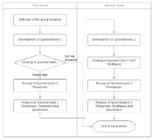
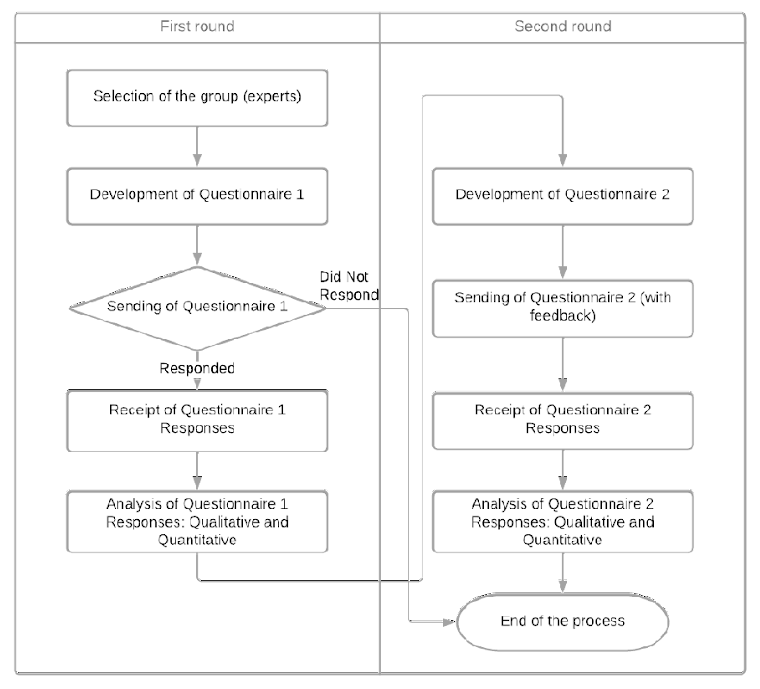
Indicator development followed the Delphi method, an iterative process for refining expert judgments (Linstone & Turoff, 1976). The procedure was conducted in two rounds (Figure 1).
First round
In the first round, a panel of qualified experts was assembled, combining both theoretical and practical expertise in circular economy, public policy, and sustainability. Experts were identified through the Brazilian Lattes academic platform, with the selection criteria including the possession of a doctoral degree, evidence of recent academic activity, and alignment with the study’s scope
A structured questionnaire, distributed via personalized invitations and administered through Microsoft Forms, contained demographic and open-ended questions aimed at capturing expert perceptions of the main challenges of MSW management under circular economy principles. All participants signed an informed consent form, ensuring confidentiality and compliance with ethical standards.
Responses were qualitatively analyzed to identify patterns of convergence and divergence, allowing for preliminary refinement of the indicator set for the next round.
Second round
In the second round, participants re-assessed the proposed indicators using a five-point Likert scale to express their level of agreement. Consensus was defined as at least two-thirds of responses at levels 4 (“agree”) or 5 (“strongly agree”), consistent with Delphi best practices (Linstone; Turoff, 1976).
The consensus reached allowed for the consolidation of a robust set of indicators suitable for guiding MSW management in municipalities with fewer than 20,000 inhabitants, aligned with circular economy principles. Given the high level of agreement, the process was concluded after the second round to minimize participants fatigue and reduce the risk of attrition.
Results and Discussion
Challenges and Demands in MSW Management in Small Municipalities
The analysis conducted during the first round of the Delphi method made it possible to identify specific challenges faced by small municipalities in the management of municipal solid waste (MSW), considering the perspective of the circular economy. Out of 371 experts invited, 67 participated, representing a response rate of 18.06%.
The analysis of respondents’ demographic characteristics showed a predominance of professionals from the academic sector (70.1%), with lower representation from the public and private sectors. The average professional experience of respondents in MSW was 16.55 years, with significant variation (standard deviation of 9.55 years), indicating a diversity of expertise levels among participants, ranging from early-career professionals to experts with up to 42 years of experience.
The main challenges identified for MSW management in small municipalities were financial limitations, lack of technical training, inadequate public policies, and insufficient infrastructure. Financial limitation was considered critical, highlighted by the need to find alternatives to finance waste management. One respondent stressed that “small municipalities need to seek alternatives to cope with the high costs required to ensure good results in providing waste management services…”. In this regard, the Brazilian National Solid Waste Policy (PNRS), regulated by Decree No. 11.044/2022, recommends the formation of consortia as a viable strategy, promoting inter-municipal cooperation to share costs and resources (Brasil, 2022).
The lack of qualified professionals was also identified as an impediment to implementing sustainable and effective MSW practices, with one respondent mentioning the “lack of technical capacity within the team, caused by the lack of political interest from public managers in the waste sector.” Inadequate infrastructure was likewise highlighted as a barrier to efficient treatment and processing of waste, limiting the capacity of small municipalities to adopt sustainable practices.
Elements such as efficient selective collection, community training and awareness, technological availability, and structured public governance were considered essential for advancing the circular transition. Selective collection, in particular, was identified as a structuring axis, as it enables source separation and facilitates reuse. Environmental education and public involvement were also emphasized as decisive factors for system effectiveness.
Among the main barriers to the circular economy, experts cited the lack of resources, the prevalence of linear consumption culture, the absence of specific public policies, and weak coordination among stakeholders. One specialist pointed to “the absence of projects, public policies, and synergy between stakeholders” as central impediments to the advancement of sustainable practices.
The prioritization of performance indicators was regarded as essential for evaluating MSW management within a circular economy framework. The main indicators suggested included selective collection rate, volume of recycled waste, composting rate, financial sustainability, and community participation. The variety of proposed indicators reflects the complexity of effective waste management and the need for a multidimensional approach to capture the impacts of circular practices. The compilation of proposed indicators was aligned with the National Solid Waste Management Information System (SINIR) and the National Basic Sanitation Information System (SNIS), allowing for standardization and comparability with national data.
Public policies were considered fundamental to promoting the circular economy, especially through the PNRS and financial incentives conditional on compliance with sustainability guidelines. However, the implementation of these policies remains challenging and is often insufficient or discontinuous in small municipalities. Collaboration between the public sector, private companies, and academia was widely mentioned as a promising solution, as it facilitates the implementation of innovations and the sharing of resources to foster sustainable MSW practices. The role of the PNRS in promoting shared responsibility across the product life cycle and in minimizing waste was also emphasized by respondents as a central point for advancing circular economy practices.
Finally, respondents mentioned successful experiences in community composting, partnerships with cooperatives, and the use of tracking technologies-although many of these practices are still concentrated in larger municipalities. Their replication in smaller contexts depends mainly on technical support, education, and a minimum operational structure for continuous implementation.
Consequently, the implementation of circular economy principles in MSW management in small municipalities requires integrated and multi-sectoral approaches that combine effective public policies, infrastructure investments, environmental education, and economic incentives to encourage circular practices. The active participation of stakeholders and alignment with PNRS guidelines may facilitate the overcoming of existing challenges, creating a solid foundation for sustainable and regenerative practices. The data analysis suggests that, through the strategic combination of public policies, technical training, and community engagement, it is possible to move towards more efficient waste management systems aligned with circular economy principles, promoting a regenerative and inclusive economy in small municipalities.
Proposed evaluation model for MSW public policies
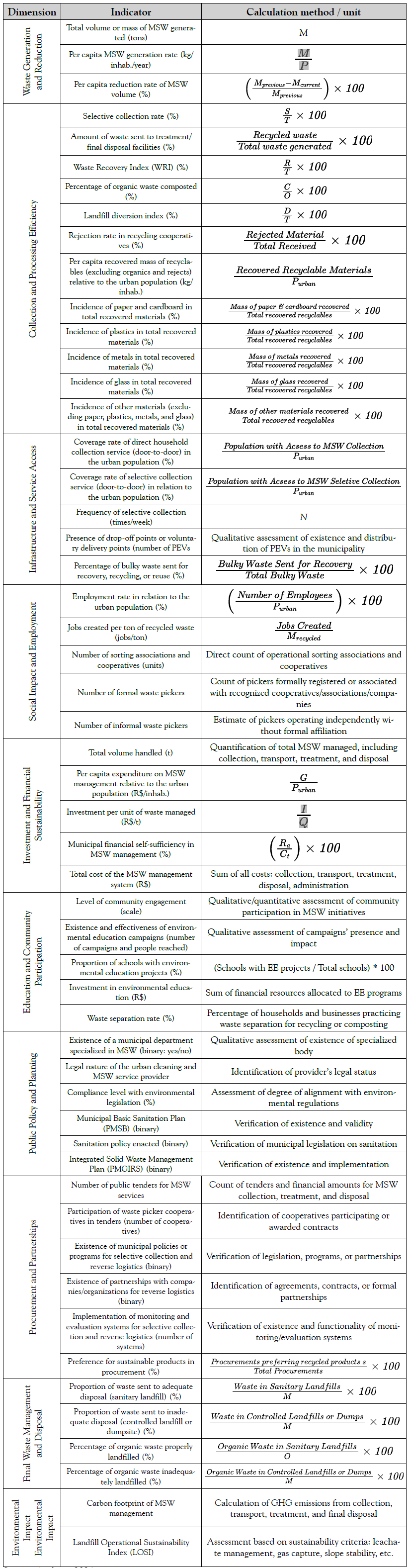
The consensus reached in the second Delphi round enabled the development of a comprehensive evaluation model structured across ten analytical dimensions. These dimensions cover the entire waste cycle - from generation to final disposal - while integrating social, financial, and environmental perspectives. Each dimension was broken down into specific indicators, accompanied by formulas and measurement units, as summarized in Table 1.
For the indicators, the following notations were adopted: M = total mass or volume of municipal solid waste (MSW); P = total population of the municipality; R = amount of recycled waste; T = total waste collected; S = selectively collected waste; L = legally/environmentally compliant waste; O = organic waste; C = composted organic waste; D = waste diverted to recycling or composting; E = total waste collected, treated, and disposed; V = total waste handled; G = total expenditure on MSW management; I = total investment in MSW management; Q = total amount of waste handled; Rₐ = revenue from the MSW management fee; Cₜ = total cost of MSW management services; N = average number of selective collection rounds.
The first dimension, Waste Generation and Reduction, includes indicators such as the total mass of MSW generated, the per capita generation rate, and the per capita reduction rate of waste volume. These indicators establish the baseline for continuous monitoring of waste production, allowing policymakers to evaluate the effectiveness of waste reduction strategies and identify temporal trends.
The second dimension, Collection and Processing Efficiency, is designed to assess the operational performance of collection and sorting systems. It encompasses indicators such as the selective collection rate, the proportion of waste sent for appropriate treatment or disposal, the waste recovery index (IRR), the percentage of organic waste composted, landfill diversion rates, and the rejection rate in recycling cooperatives. It also measures the per capita recovery of recyclable materials and the relative incidence of different materials (paper, plastics, metals, glass, and others) within the recovered stream. These indicators enable both a technical assessment of operational efficiency and an evaluation of adherence to circular economy principles.
The third dimension, Infrastructure and Service Access, evaluates whether the available infrastructure meets local waste management needs. Indicators include coverage of household collection services, coverage of door-to-door selective collection, frequency of selective collection, the presence of ecopoints or voluntary drop-off centers (PEVs), and the proportion of bulky waste directed to reuse or recycling. These indicators reflect the adequacy of local infrastructure for implementing integrated and circular waste management practices.
The fourth dimension, Social Impact and Employment, focuses on the social dimension of waste management by assessing job creation, inclusion of waste pickers, and the strengthening of local cooperatives. Indicators include the proportion of employees in the sector relative to the urban population, the number of jobs generated per ton of recycled waste, the number of sorting cooperatives, and the number of formal and informal waste pickers. This dimension highlights the role of MSW management not only as an environmental service but also as a driver of social development and income generation.
The fifth dimension, Investment and Financial Sustainability, addresses the economic viability of MSW systems. It includes indicators such as total volume managed, per capita expenditure, investment per ton of waste, municipal financial self-sufficiency in MSW management, and the total cost of the system. Together, these indicators allow policymakers to evaluate both the efficiency of resource allocation and the sustainability of financing mechanisms.
The sixth dimension, Education and Community Participation, reflects the extent of community involvement in waste management and circular practices. Indicators include the level of community engagement in waste initiatives, the existence and effectiveness of environmental education campaigns, the proportion of schools with environmental education projects, municipal investments in environmental education, and the rate of source separation among households and businesses. As noted by Jacobi and Besen (2011), public participation and educational processes are crucial to consolidating sustainable practices at the community level.
The seventh dimension, Public Policy and Planning, considers the institutional and legal framework supporting waste management. Indicators include the existence of a municipal department specialized in MSW, the legal nature of service providers, the degree of compliance with environmental legislation, and the presence of planning instruments such as the Municipal Basic Sanitation Plan (PMSB), the Integrated Solid Waste Management Plan (PMGIRS), and a municipal sanitation policy. These indicators provide insights into the level of institutionalization and governance capacity of municipalities.
The eighth dimension, Procurement and Partnerships, evaluates how municipalities interact with other stakeholders in waste management. Indicators include the volume of public tenders for waste management services, the participation of waste picker cooperatives in such tenders, the existence of reverse logistics programs, partnerships with companies and organizations, monitoring and evaluation systems for selective collection and reverse logistics, and sustainable procurement practices (e.g., preference for recycled products in tenders). This dimension reflects the degree of innovation, decentralization, and inter-sectoral collaboration.
The ninth dimension, Final Waste Management and Disposal, focuses on the adequacy of final treatment and disposal practices. Indicators include the proportion of waste sent to sanitary landfills, the proportion sent to inadequate solutions (controlled landfills or dumps), and the percentages of organic waste deposited in each type of facility. These indicators are essential for assessing alignment with PNRS guidelines and identifying urgent needs for restructuring disposal practices.
Finally, the tenth dimension, Environmental Impact, addresses the broader environmental consequences of waste management. Two key indicators were proposed: the carbon footprint of MSW management (considering collection, transport, treatment, and disposal processes) and the Landfill Operational Sustainability Index (ISOAS), which assesses leachate management, gas capture, slope stability, and other sustainability criteria.
Taken together, the ten dimensions and their respective indicators provide a systematic and technically grounded framework for evaluating public policies on MSW management in small municipalities. By enabling detailed monitoring across operational, institutional, social, financial, and environmental domains, the model helps policymakers identify priority areas for intervention and promotes the gradual alignment of local systems with circular economy principles. Its implementation across different urban contexts can facilitate the development of tailored strategies, foster convergence with national frameworks such as the PNRS, and strengthen the overall sustainability of municipal waste policies.
Conclusion
This study proposed and validated a comprehensive model of 53 indicators for assessing municipal solid waste (MSW) management in municipalities with fewer than 20,000 inhabitants, framed within the principles of the circular economy. Drawing on two rounds of the Delphi method, the model integrates expert consensus to ensure that the indicators reflect the operational, institutional, and social specificities of small municipalities.
Organized into ten analytical dimensions, the indicators cover the full waste cycle from generation, collection, and processing to governance, financial sustainability, social inclusion, and environmental impacts. The model therefore offers a robust tool for continuous monitoring, enabling municipalities to diagnose deficiencies, measure progress, and adapt policies to their specific realities.
The results highlight that advancing circularity in small municipalities requires overcoming persistent financial, technical, and cultural barriers. Strategic combinations of effective public policies, inter-municipal cooperation, investments in infrastructure, and community participation are key to establishing regenerative and inclusive waste management systems.
The practical application of this model can guide local governments in aligning waste management practices with national frameworks such as the PNRS, while also advancing global commitments to sustainable development. By providing a systematic and comparable framework, the model helps transform waste management from a cost-intensive challenge into a driver of circular economy practices and local development.
Future research could refine the model by incorporating weighting methodologies, multi-criteria decision analysis, or longitudinal applications across different municipalities. Such advances would enhance the precision of prioritization and further consolidate the role of circular economy as a structuring axis of public policies in small municipalities.
References
-
BARROS, A. M.; SILVEIRA, G. T. Indicadores de desempenho para avaliação da gestão de resíduos sólidos urbanos: estudo em municípios da Região Metropolitana de Belo Horizonte - MG. Revista Mineira de Engenharia, v. 25, n. 2, p. 52-61, jul./dez. 2019. Disponível em: https://revistamineiradeengenharia.org.br/2019/indicadores-rsu.pdf Acesso em: 1 jun. 2025.
» https://revistamineiradeengenharia.org.br/2019/indicadores-rsu.pdf -
BESEN, G. R.; GÜNTHER, W. M. R.; RIBEIRO, H.; JACOBI, P. R.; DIAS, S. M. Gestão da coleta seletiva e de organizações de catadores: indicadores e índices de sustentabilidade [livro eletrônico]. São Paulo: Faculdade de Saúde Pública da USP, 2017. DOI: 10.11606/9788588848245.
» https://doi.org/10.11606/9788588848245. -
BRASIL. Decreto nº 11.044, de 13 de abril de 2022. Institui o Certificado de Crédito de Reciclagem - Recicla+. Diário Oficial da União, Brasília, DF, 14 Abr. 2022. Disponível em: https://www.in.gov.br/en/web/dou/-/decreto-n-11.044-de-13-de-abril-de-2022-393553968 Acesso em: 18 jul. 2022.
» https://www.in.gov.br/en/web/dou/-/decreto-n-11.044-de-13-de-abril-de-2022-393553968 - BRASIL. Lei nº 12.305, de 2 de agosto de 2010. Institui a Política Nacional de Resíduos Sólidos; altera a Lei nº 9.605, de 12 de fevereiro de 1998; e dá outras providências. Diário Oficial da União, Brasília, DF, 3 ago. 2010.
- CAVALCANTI, C. Concepções da economia ecológica: suas relações com a economia dominante e a economia ambiental. Estudos Avançados, v. 24, nº 68, São Paulo, 2010.
- DALY, H. E., FARLEY, J. Ecological Economics: principles and applications. Washington: Island Press, 2004.
-
EIGENHEER, E. M. Lixo: a limpeza urbana através dos tempos. Porto Alegre: Gráfica Palotti, 2009. Disponível em: http://www.lixoeeducacao.uerj.br/imagens/pdf/ahistoriadolixo.pdf Acesso em: 5 jul. 2021.
» http://www.lixoeeducacao.uerj.br/imagens/pdf/ahistoriadolixo.pdf - ELIA, V.; GNONI, M. G.; TORNESE, F. Assessing the Efficiency of a PSS Solution for Waste Collection: A Simulation Based Approach. Procedia CIRP, v. 47, p. 252-257, 2016.
-
FRATTA, M. G.; MARTINS, E. A.; FREITAS, M. A. V. Avaliação de indicadores de sustentabilidade na gestão de resíduos sólidos urbanos em municípios paulistas. Waste Management, [S.L.], v. 85, p. 107-115, dez. 2019. https://doi.org/10.1016/j.wasman.2018.12.001 Acesso em: 1 jun. 2025.
» https://doi.org/10.1016/j.wasman.2018.12.001 - GEISSDOERFER, M.; SAVAGET, P.; BOCKEN, N. M.P.; HULTINK, E. J. The Circular Economy e A new sustainability paradigm? Journal of Cleaner Production, v. 143, p. 757-768, 2017.
- GEORGESCU-ROEGEN, N. The entropy law and the economic process. Cambridge: Harvard University Press, 1971.
- GHISELLINI, P; CIALANI, C; ULGIATI, S. A review on circular economy: the expected transition to a balanced interplay of environmental and economic systems. Journal of Cleaner Production, n. 114, p. 11-32, 2016.
- GOUVEIA, N. Resíduos sólidos urbanos: impactos socioambientais e perspectiva de manejo sustentável com inclusão social. Ciência & Saúde Coletiva, v. 17, n. 6, p. 1503-1512, jun. 2012.
-
GUABIROBA, R. C. et al. Proposta de indicadores para avaliação de cooperativas de catadores: uma abordagem participativa. Revista de Gestão Ambiental e Sustentabilidade, [S.L.], v. 13, n. 1, p. 203-223, 2024. https://doi.org/10.5585/geas.v13i1.22920 Acesso em: 1 jun. 2025.
» https://doi.org/10.5585/geas.v13i1.22920 -
GUABIROBA, R. C. et al. Sustentabilidade da coleta seletiva: aplicação de indicadores socioambientais em Volta Redonda - RJ. Revista Brasileira de Ciências Ambientais, [S.L.], n. 58, p. 1-13, 2023. http://dx.doi.org/10.5327/Z2176-947820230117 Acesso em: 1 jun. 2025.
» http://dx.doi.org/10.5327/Z2176-947820230117 -
IBGE - Instituto Brasileiro de Geografia e Estatística. Informações sobre os municípios brasileiros. 2022. Disponível em: https://censo2022.ibge.gov.br/panorama/index.html Acesso em: 28 jun. 2024.
» https://censo2022.ibge.gov.br/panorama/index.html - JACOBI, P. R.; BESEN, G. R. Gestão de resíduos sólidos em São Paulo: desafios da sustentabilidade. Estudos Avançados, São Paulo, v. 25, n. 71, 2011.
-
KIRCHHERR, J.; REIKE, D.; HEKKERT, M. Conceptualizing the circular economy: an analysis of 114 definitions. Resources, Conservation and Recycling, [S.L.], v. 127, p. 221-232, dez. 2017. Elsevier BV. https://doi.org/10.1016/j.resconrec.2017.09.005
» https://doi.org/10.1016/j.resconrec.2017.09.005 - LINSTONE, Harold A.; TUROFF, Murray (ed.). The Delphi Method: Techniques and Applications. Reading, MA: Addison-Wesley, 1975.
-
MARQUES, J. G. C. et al. Gestão ambiental para sustentabilidade em municípios: um estudo comparativo da aplicação da gestão de resíduos sólidos na Zona da Mata Sul de Pernambuco, Brasil. Revista GEAMA, 2020. Disponível em: https://www.journals.ufrpe.br/index.php/geama/article/download/3166/482483746/482492475 Acesso em: 16 jul. 2023.
» https://www.journals.ufrpe.br/index.php/geama/article/download/3166/482483746/482492475 -
NOVAES, L. C. A. et al. Proposição de indicadores para avaliação da gestão de resíduos sólidos urbanos em municípios de pequeno porte. Revista de Desenvolvimento Sustentável, [S.L.], v. 9, n. 2, p. 45-59, 2023. Disponível em: https://revistadesustentabilidade.org.br/novaes2023 Acesso em: 1 jun. 2025.
» https://revistadesustentabilidade.org.br/novaes2023 -
PAES, R. M. et al. Avaliação de impactos ambientais e custos na gestão de resíduos sólidos urbanos com base em indicadores de ciclo de vida. Revista Brasileira de Gestão Ambiental, [S.L.], v. 13, n. 1, p. 89-102, jan./mar. 2020. http://dx.doi.org/10.6008/CBPC2179-6858.2020.001.0008 Acesso em: 1 jun. 2025.
» http://dx.doi.org/10.6008/CBPC2179-6858.2020.001.0008 -
VIEIRA, D. C. R; FIORE, F. A. Caracterização de resíduos sólidos urbanos em municípios de pequeno porte - estudo de caso no município de Monteiro Lobato/SP. Revista Dae, [S.L.], v. 70, n. 236, p. 52-66, 6 abr. 2022. Revista DAE. http://dx.doi.org/10.36659/dae.2022.035
» http://dx.doi.org/10.36659/dae.2022.035 -
ZON, M. C. A. et al. Indicadores de desempenho para a coleta seletiva no contexto da economia circular. Revista Interdisciplinar de Gestão Ambiental, v. 10, n. 3, p. 77-92, 2020. Disponível em: https://revistagestaoambiental.org/zon2020 Acesso em: 1 jun. 2025.
» https://revistagestaoambiental.org/zon2020
-
Data Availability Statement:
The authors declare that the dataset used in this study is not publicly available, as it involves information collected from expert participants through the Delphi method, under approval from a Research Ethics Committee (CAAE No. 74048923.1.0000.0116).The disclosure of the original data would violate the principles of confidentiality and anonymity established by Resolution No. 510/2016 of the Brazilian National Health Council, which governs research involving human subjects in Brazil. The database contains information obtained under conditions of restricted consent, without authorization for subsequent disclosure or sharing. Therefore, the decision not to make the data publicly available complies with the legal and ethical requirements applicable to scientific research involving human participants.
The authors declare that the dataset used in this study is not publicly available, as it involves information collected from expert participants through the Delphi method, under approval from a Research Ethics Committee (CAAE No. 74048923.1.0000.0116).
The disclosure of the original data would violate the principles of confidentiality and anonymity established by Resolution No. 510/2016 of the Brazilian National Health Council, which governs research involving human subjects in Brazil. The database contains information obtained under conditions of restricted consent, without authorization for subsequent disclosure or sharing. Therefore, the decision not to make the data publicly available complies with the legal and ethical requirements applicable to scientific research involving human participants.

 Source: Authors, 2024.
 Source: Authors, 2024.