Differential Expression of Metabolic Genes Associated with Multiple Resistance to Propanil and Quinclorac in Echinochloa colona
Background: Multiple-herbicide-resistant (R) Echinochloa spp. are increasingly challenging global rice production. The adaptive mechanisms for herbicide resistance in Echinochloa populations remain poorly understood.
Objective: This study aimed to characterize the resistance profile of five Echinochloa accessions to propanil and quinclorac and investigate the expression patterns of candidate genes potentially associated with resistance.
Methods: Whole-plant dose-response assays were conducted to quantify resistance levels, while the expression of four cytochrome P450s and one glycosyl transferase was measured 12 h after herbicide treatment using quantitative PCR.
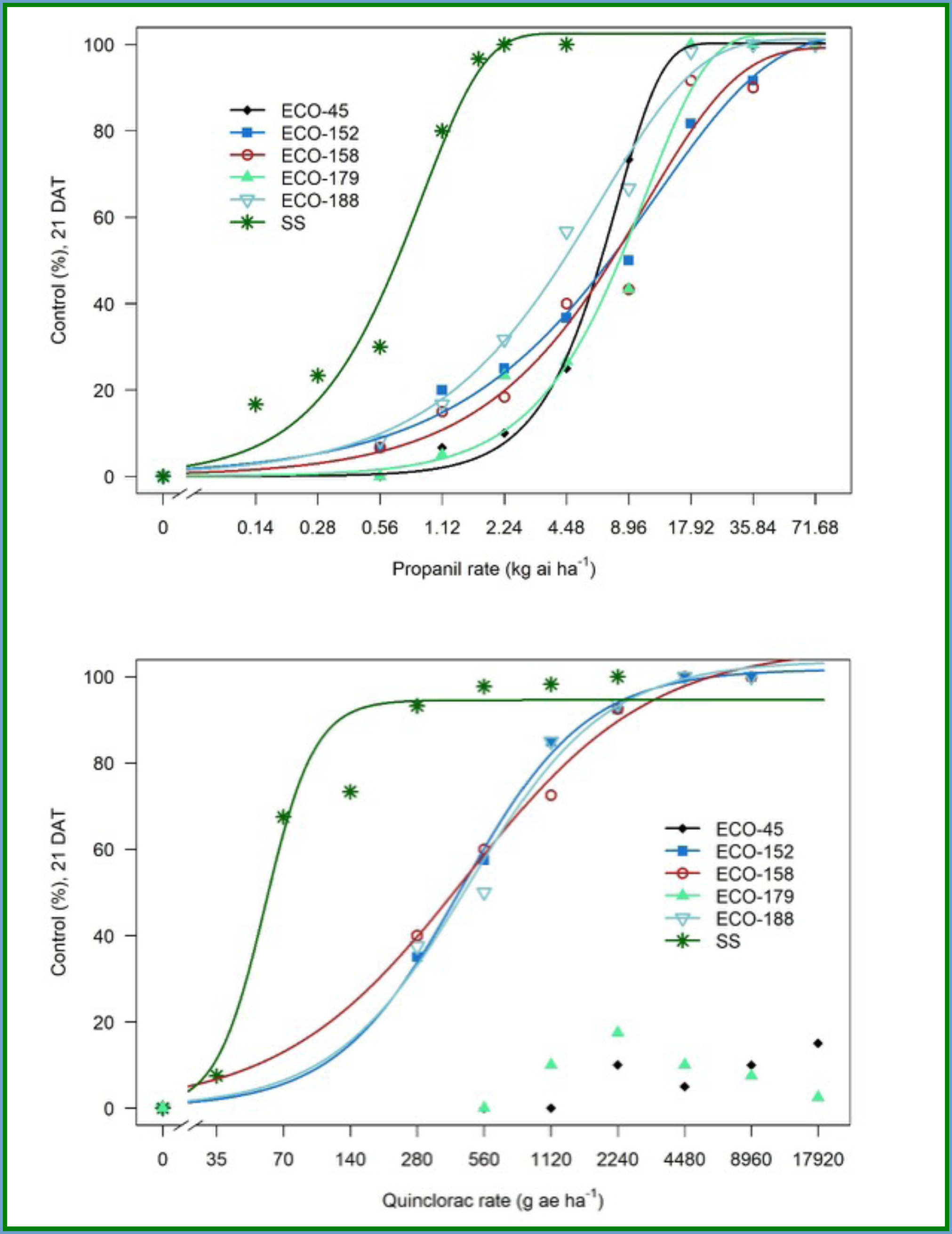
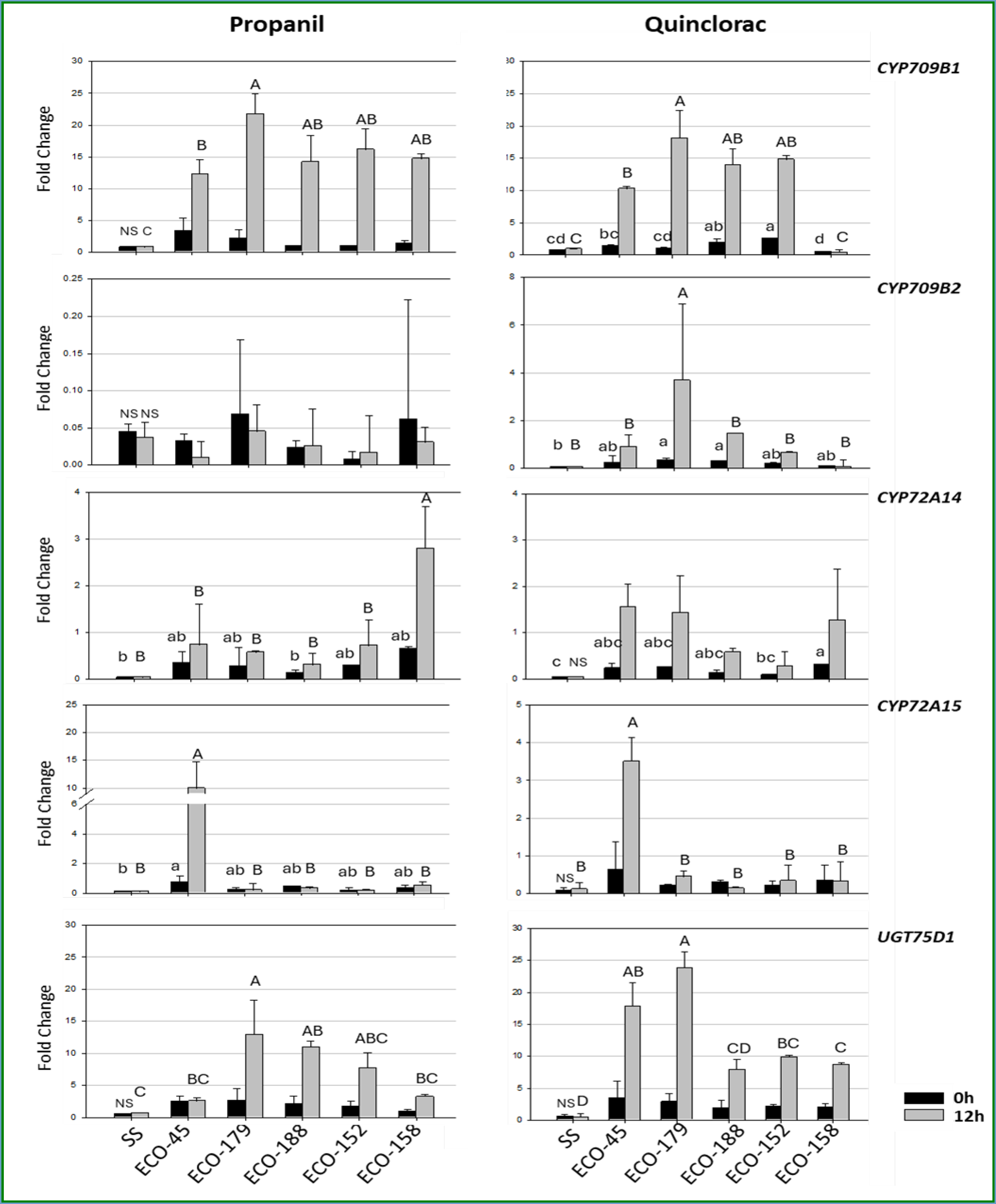
Results: Resistance profiles varied among accessions with resistance factors ranging from 6.4 to 12.0-fold for propanil and 8.0- to >309-fold for quinclorac. Differential induction of candidate genes was observed across resistant accessions. CYP709B1 was significantly upregulated by both herbicides in most R accessions indicating its involvement in multiple resistance. UGT75D1 was consistently induced by quinclorac in all resistant accessions and by propanil in all, except ECO-45. CYP709B2 and CYP72A14 were induced by quinclorac in four and five resistant accessions, respectively. CYP72A15 was notably induced only in ECO-45 by both herbicides suggesting a different metabolic process in this accession.
Conclusions: Phase 1 metabolism genes CYP709B1 and CYP709B2 and the conjugation gene UGT75D1 are associated with multiple resistance to propanil and quinclorac in E. colona. The coordinated and differential induction of Phase I and Phase II metabolic genes contributes to varying levels of multiple herbicide resistance across E. colona populations.
Keywords:
Cytochrome P450; Glycosyltransferase; Junglerice; Gene Expression; Metabolic Resistance; NTSR; Propanil; Quinclorac
 Thumbnail
 Thumbnail