Analysis of Mexican Cuscuta (Convolvulaceae) herbarium data to address their hosts, and the potential distribution of the most common species
Background: Cuscuta species are generalist parasites of agricultural, ornamental, and wild species. For Mexico, there is a lack of comprehensive information about the host diversity of Cuscuta, models predicting the distribution of the species, and the use of molecular methods for detecting cryptic species.
Objective: This study aimed to test if Cuscuta species have a high host diversity and broad potential distribution areas and show the utility of molecular methods for species identification.
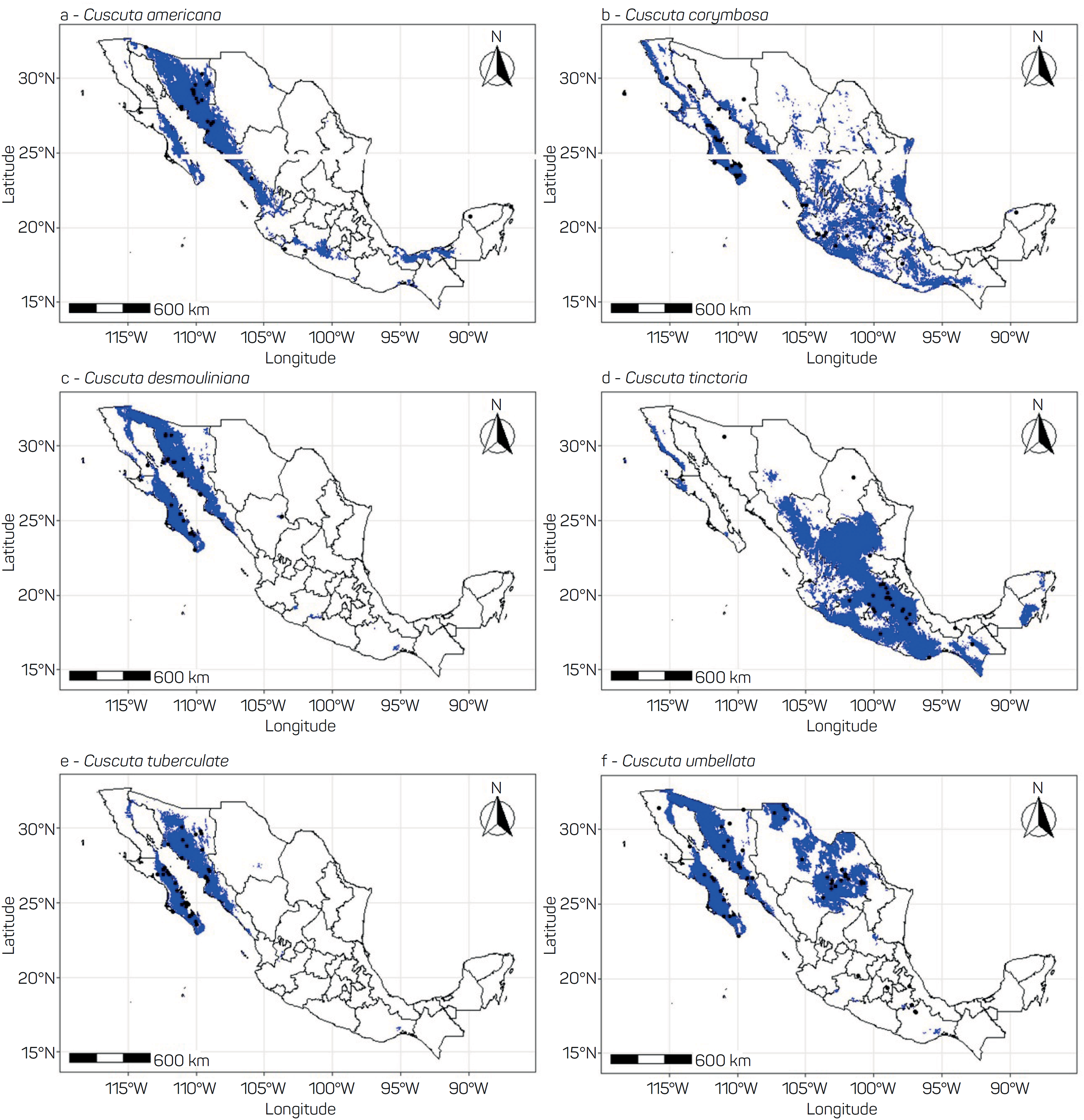
Methods: We reviewed herbarium specimens (recording species name, the Mexican state, coordinates, altitude, hosts, and vegetation). We estimated the distribution area for six Cuscuta species with > 30 independent georeferenced reports. Finally, we collected three Cuscuta aff. corymbosa specimens and identified them molecularly.
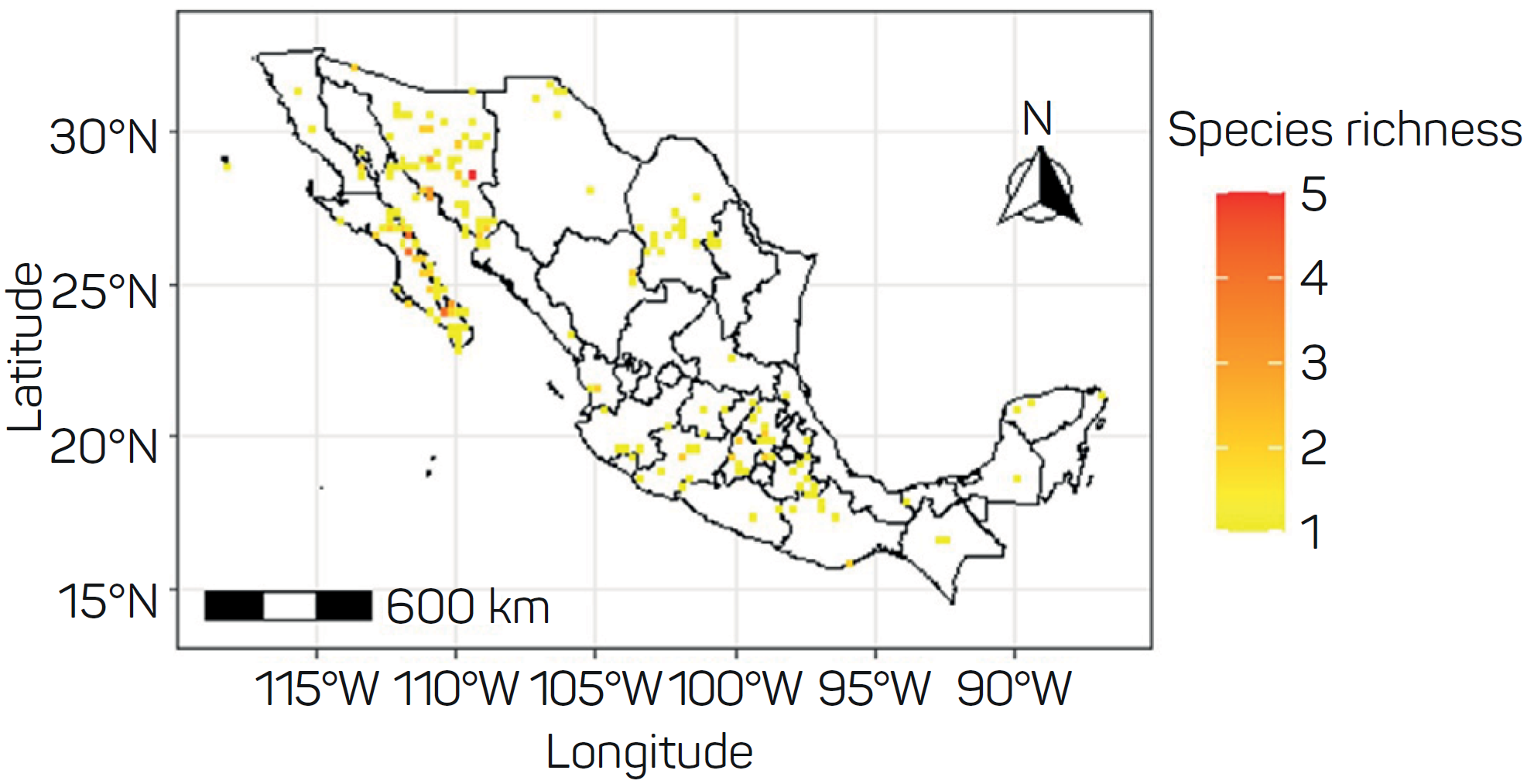
Results: We found 2,533 records (56 species) of which Cuscuta corymbosa, C. tinctoria, and C. umbellata were the most frequent. Most of the 204 host species belong to Asteraceae, Euphorbiaceae, and Fabaceae. Of the six species modeled, those with the largest potential distribution areas were C. tinctoria and C. corymbosa. Molecular identification revealed that the specimens belong to three species, one unknown to the collection site (C. tolteca).
Conclusions: Cuscuta species appeared in all Mexican states, but it is necessary to increase the collection because several neotropical states have an unexpectedly low diversity. Their potential distributions are broad, showing well-defined biogeographical affinities. Molecular methods reveal underestimation in Cuscuta diversity.
Keywords:
Host plants; MaxEnt; Parasitic plants; Plant diversity; Plant-plant interactions
 Thumbnail
 Thumbnail