Performance of integrated herbicide programs for weed control and yield in sugar beet (Beta vulgaris L.)
Abstract
Background: Weeds are among the most limiting factors in sugar beet (Beta vulgaris L.) production, as they compete for resources, reduce crop growth and yield and increase production costs. Therefore, effective and sustainable weed management strategies are essential to ensure stable and profitable sugar beet production.
Objective: This study aimed to evaluate the effectiveness of different herbicide active ingredients, their mixtures, and mechanical control practices on weed suppression, crop growth, and yield in sugar beet.
Methods: Field experiments were conducted during the 2023 and 2024 growing seasons using a randomized complete block design. Pre-emergence applications included 1575 g a.i. ha–¹ metamitron + 120 g a.i. ha–¹ quinmerac (MQ), while post-emergence treatments consisted of 1200 g a.i. ha–¹ metamitron + 165 g a.i. ha–¹ ethofumesate + 105 g a.i. ha–¹ phenmedipham (MEP) and 37.5–50 g a.i. ha–¹ quizalofop-p-ethyl (Q). Herbicides were applied alone and in combination with mechanical hoeing. Weed dry weight, herbicide efficacy, yield components, and root yield were measured, and treatment effects were assessed at regular intervals.
Results: Single herbicide applications provided limited weed suppression, whereas combined treatments resulted in significantly higher and more persistent control. Weed suppression peaked at 40 days after application and remained high until 150 days. The MQ + weed-free treatment achieved 100% control, followed by MQ + MEP + Q with 94.38%. Yield increased by 136% and 135% in MQ + weed-free and weed-free controls compared to weedy controls. A 1% increase in weed control corresponded to a 0.0035 t ha–¹ increase in yield. Weed density was identified as the most influential factor affecting yield.
Conclusions: Integrating herbicides with mechanical control provided superior and long-lasting weed management compared with single treatments and significantly enhanced sugar beet yield. Effective weed management should therefore prioritize maintaining low weed density to ensure sustainable production.
Keywords:
Herbicide Mixtures; Integrated Weed Management; Mechanical Weed Control; Crop–weed Competition; Weed Biomass Reduction
1. Introduction
Weeds are a major factor significantly reducing yield and quality in sugar beet (Beta vulgaris L.) production, as in many other crops. They cause production losses by competing with the crop for light, water, and nutrients (Chhokar et al., 2012; Merino et al., 2019). Yield losses under adverse conditions can exceed 40%, and in severe cases, complete crop loss has been reported (Jursík et al., 2008; Kulan, Kaya, 2023). Due to its slow early development and limited crown formation, sugar beet is highly susceptible to weed competition, especially in the early stages (Jursík et al., 2008). Sugar beet production is greatly affected by weeds (Kotlánová et al., 2024) and causes significant yield losses (Ortatas et al., 2024; Fishkis et al., 2024). In addition, weeds increase production costs (Soltani et al., 2018). Weeds not only reduce yields but also negatively affect the quality of the product. The presence of dense weeds and the intensity of competition between the crop and weeds can significantly reduce root and sugar yields (Salehi et al., 2007). As in other crop plants, weed control is necessary for the continuity of quality and yield in sugar beet. Therefore, weed control is very important for an economically healthy sugar beet production worldwide (Fishkis, Koch, 2023). Weed control in sugar beet is usually carried out with herbicides applied to the entire field during the early growth stage of sugar beet. However, the use of different weed control methods together with herbicides can provide significant increases in sugar beet yield (Bhadra et al., 2020).
The study aimed to evaluate the effectiveness of pre- and post-emergence herbicide mixtures, applied alone or in combination with mechanical control, on weed suppression and yield in sugar beet. Although numerous studies have evaluated herbicide-based weed control in sugar beet, few have quantitatively compared integrated herbicide–mechanical programs under local production conditions in Eastern Anatolia. In addition, quantitative relationships between weed biomass reduction and yield response remain insufficiently documented. Therefore, this study was conducted to evaluate integrated weed management programs and to quantify their effects on weed suppression and sugar beet yield.
2. Material and Methods
2.1 Experimental Site
Field trials were conducted during the 2023 and 2024 growing seasons in Sadaklı village, Eleşkirt district, Ağrı province, Türkiye (39°47’19” N, 42°45’48” E; 1,736 m above sea level). The experimental area is located in a continental climate zone characterized by cold winters and mild summers. Data on monthly average, minimum and maximum temperatures and total precipitation during the experiment are presented in Table 1.
Monthly Climatic Data for the 2023 and 2024 Study Periods and Long-Term Averages (1941-2022) in Ağrı Province
Prior to the establishment of the experiment, soil samples were collected from a soil depth of 0–30 cm in 2023, and the determined soil properties were considered representative for both growing seasons (2023 and 2024). The soil texture was clay-loam, containing 71.5% clay, 18.3% silt, and 10.2% sand. The soil pH was determined to be 7.63 (slightly alkaline), electrical conductivity 0.03% (non-saline), lime content 6.83% (moderately calcareous), and organic matter content 2.32%. Available phosphorus and potassium contents were determined to be 34.9 and 195 kg ha–1, respectively. All physicochemical properties of the soil are presented in Table 2.
The experimental site was previously used for cereal cultivation, where 2,4-D and tribenuron-methyl had been applied as part of the crop rotation. No herbicides with known long soil persistence were used in the season immediately preceding sugar beet cultivation. The dominant weed flora in the experimental site consists of Chenopodium album, Amaranthus retroflexus, Alopecurus myosuroides, and Sinapis arvensis species, which are commonly encountered in sugar beet production systems and pose significant competition.
2.2 Experimental design and Management
The sugar beet ‘hybrid KWS’ Terranova (KWS SAAT SE & Co. KGaA, Einbeck, Germany), which is also highly tolerant to powdery mildew, was used in the study. This study evaluated herbicide programs, including single active ingredients, herbicide mixtures, and their integration with mechanical weed control field conditions.
In this study, three herbicides with different mechanisms of action were evaluated. Metamitron + quinmerac was used as a pre-emergence application, while metamitron + etofumesat + fenmedifam and quizalofop-p-ethyl were applied post-emergence. The herbicides were applied alone or in herbicide mixtures to determine their effects on weed suppression and sugar beet yield (Table 3). It should be noted that the herbicides used in this study reflect the regional licensing conditions in Türkiye. Therefore, generalizations and interpretations of the findings to other regions, including the European Union, should be made taking into account the relevant legislation and regulatory frameworks. Application rates reported as grams of active ingredient per hectare (g a.i. ha–1) and commercial product rates (L ha–1) (Table 3).
Two herbicide programmes were evaluated within the same experimental design. In Scheme 1, only post-emergence herbicide treatments were applied. In Scheme 2, a pre-emergence application of metamitron and quinmerac was applied prior to the post-emergence treatments. The same RCBD layout and replication structure were used for both schemes, enabling comparison under identical field conditions.
Prior to sowing, the experimental area was prepared according to conventional tillage practices, including shallow tillage with a cultivator followed by leveling, to create a homogeneous seedbed. Sugar beet was sown on May 1, 2023, and May 3, 2024, with planting distances of 45 cm between rows and 12 cm within rows in both growing seasons. At sowing, 300 kg ha–1 of compound NPK fertilizer was applied as base fertilization. To meet the plant’s nutrient requirements, an additional top dressing of 200 kg ha–1 was applied throughout the growing season. The plant’s water needs were met by a sprinkler irrigation system. Each irrigation applied approximately 56 mm of water, calculated 14 sprinklers per decare with a discharge of 2 m³ h–1 operated for 2 h. A total of five irrigation were applied per season, resulting in a seasonal amount of about 280 mm.
The experiment was arranged in a randomized complete block design (RCBD) with four replications. The experiment was repeated over two independent growing seasons to ensure temporal replication. A total of 10 treatments were evaluated (including weedy and weed-free controls), resulting in 40 plots per year. Each plot measured 12.5 m² (2.5 m x 5 m). A buffer zone of 1 m was maintained between plots and between the blocks to prevent spray drift and treatment interference. New plots were established in each growing season to ensure independent replication across growing seasons (Figure 1). The 10 treatments were: (1) MEP, (2) Q, (3) MEP+Q, (4) MQ+MEP, (5) MQ+Q, (6) MQ+MEP+Q, (7) MQ + mechanical weed control, (8) MQ (PRE only, no post-emergence or mechanical control), (9) weedy control (no herbicide and no mechanical weed control), and (10) weed-free control (maintained by manual hoeing without herbicide application). Two true control treatments were included: (i) a weedy control (no herbicide and no mechanical weed control) and (ii) a weed-free control maintained by regular manual hoeing without herbicide application.
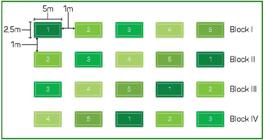
Experimental layout of the randomized complete block design (RCBD) used to evaluate herbicide program schemes
Pre-emergence herbicide applications were carried out two days after sowing, on 3 May 2023 and 5 May 2024. Post-emergence herbicides were applied on 25 May 2023 and 26 May 2024. Herbicides were applied using a backpack sprayer (Hyundai T768, South Korea) equipped with a flat-fan nozzle (110° spray angle) and calibrated to deliver 300 L ha–1 spray volume at a constant pressure of 3 bar. Applications were performed under calm weather conditions to ensure uniform coverage. In weed-free plots, weed control was achieved through manual hoeing, which was carried out starting with the onset of weed emergence and repeated as needed throughout the vegetation period to maintain weed-free conditions.
2.3 Data Collection: Weed Flora and Density
Weed species present in the experimental area were identified and quantified during both growing seasons. Prior to herbicide applications, weed surveys were conducted to determine the initial weed flora. Species that could not be identified in the field were sampled, transported to the herbology laboratory, and identified using standard taxonomic keys.
Weed density was determined using a 1 m² frame (quadrat) placed at two randomly selected points in each plot. All weed species within each quadrat were counted, and density was calculated as the number of plants per square meter (plant m–²). Average weed densities for each species were determined by taking the arithmetic mean of the quadrat counts (Odum, 1971). Weed density was calculated using the following formula:
Weed density (plants m-2) = total number of plants counted / sampled area (m²).
Based on the calculated densities, weed species were classified according to the density scale proposed by Üstüner and Güncan (2002) (Table 4).
2.4 Assessment of herbicides effects on weed populations
To evaluate herbicide effcacy on weed populations, four assessments were conducted during each growing season following herbicide application, in accordance with standard weed evaluation procedures (Republic of Türkiye Ministry of Agriculture Forestry, 2020). Assessment timing are presented in detail in Table 5.
In each assessments period, changes in weed populations were assessed visually and quantitatively by comparing herbicide-treated plots with untreated (weed-containing) control plots. Herbicide effects were expressed as percentage weed suppression rates (%) calculated using the following Abbott (1925) formula:
2.5 Weed dry weight determination
At the end of the growing season, weeds in each plot were harvested at soil surface level. All above-ground weed biomass from each plot was collected separately and transported to the laboratory. Samples were dried in an oven at 70°C for 72 h until constant weight was achieved. The dry weights of weeds were recorded and expressed as g m-2. The percentage reduction in weed dry weight for each treatment was calculated based on weedy controls.
2.6 Sugar beet yield and yield components
Sugar beet was harvested on 1 November 2023 and 1 November 2024. Prior to harvest, yield components were measured on 10 randomly selected plants from the central rows of each plot to avoid border effects. These included root length (cm) and root diameter (cm). At harvest time, all the plants in the net plot area were collected, and the fresh weight of the roots was recorded. The yield per plot was converted to t ha–1 based on the harvested area.
2.7 Statistical analysis
All data were statistically analyzed to evaluate the effects of herbicide applications on weed density, weed dry weight, herbicide efficacy, and sugar beet yield. Since the experiment was conducted in the same experimental area during two consecutive growing seasons (2023 and 2024), data for each year were analyzed separately to eliminate temporal dependence between the years. Data were analyzed using analysis of variance (ANOVA) appropriate for a randomized complete block design (RCBD), with treatments considered as fixed effects and blocks as random effects. Analysis of variance (ANOVA) was performed to test for significant differences among treatments. Where statistically significant effects of the treatments were found, means were compared using Duncan’s multiple comparison test at a significance level of p < 0.05. All statistical analyses were performed using IBM SPSS Statistics software (Version 20; IBM Corp., Armonk, NY, USA). To better interpret the effects of the treatments on plant performance, simple linear regression analyses were conducted to examine the relationship between weed dry weight and sugar beet yield, and the relationship between herbicide efficacy and yield. The strength of these relationships was defined using regression equations and coefficients of determination (R²).
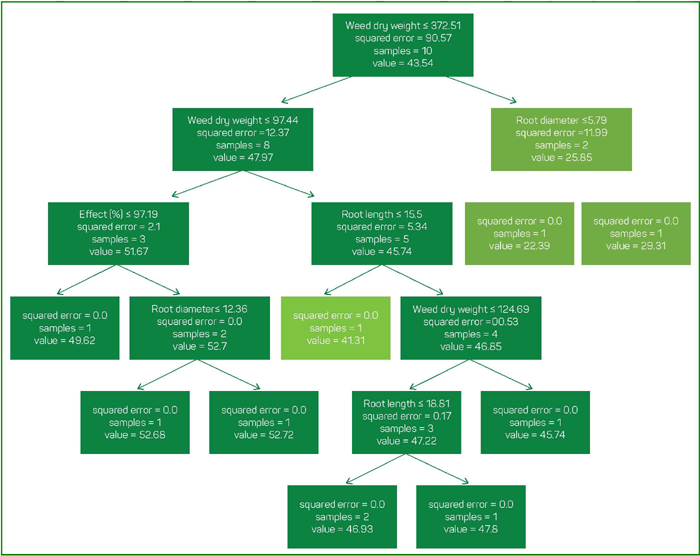
In addition, a regression tree analysis (CART) was applied to determine the parameters affecting the yield. In this analysis, yield (t ha–1) was used as the dependent variable, and weed dry weight, herbicide effect, root length and root diameter were used as independent variables. The analysis was used only to identify key yield-determining factors and to support the interpretation of treatment effects.
3. Results and Discussion
3.1 Weed Flora and Initial Density
A total of eight weed species belonging to six families were detected in the experimental area (Table 6). Broadleaf weeds were predominant, with one grass weed species detected. Chenopodium album and Amaranthus retroflexus showed the highest mean densities (22.25 and 14.87 plants m-² respectively) and were classified as high-density species (Class A). In contrast, Bromus tectorum, Lactuca serriola and Convolvulus arvensis showed low densities (Class C). The dominance of C. album and A. retroflexus species is consistent with findings reported from sugar beet fields in Türkiye; these annual broadleaf weeds are common in these production systems and need to be controlled early to prevent yield losses (Buzluk, Acar, 2002; Özkan, Kaya, 2008). The low density of C. arvensis indicates that perennial weeds were not dominant in the study area during the trial period. However, it is known that perennial species can become a problem under suitable ecological conditions and therefore need to be addressed within the scope of integrated pest management strategies (Akça, Işık, 2016).
3.2 Effect of Herbicides on Weed Population over time
Herbicide applications showed a statistically significant effect on weed suppression at all evaluation dates (20, 40, 75, and 150 DAT) (p < 0.01) (Table 7). In both years, the weed-free control and MQ + mechanical control applications achieved 100% weed control at all evaluation dates and exhibited the most stable performance. The effects of the herbicide treatments on weed dry weight and overall control efficacy at the end of the growing season are presented in Table 8.
Among chemical-only control strategies, the MQ + MEP + Q herbicide mixture maintained its high efficacy throughout the season, reaching a control level of 94.38% at 150 DAT. This was followed by MQ + MEP (92.50%) and MEP + Q (89.38%) applications, respectively. In contrast, the Q-only application showed low efficacy, achieving only 30% control at 150 DAT and proving insufficient under the weed spectrum covered in the study.
Overall, it was determined that in effective applications, weed suppression increased rapidly in the early stages and remained highly stable from 40 DAT onwards. This situation demonstrates that herbicide mixtures and integrated pest management approaches provide more sustained control compared to applications alone. The findings are consistent with previous studies reporting that the combined use of herbicides with complementary mechanisms of action and their integration with mechanical control enhances season-long weed control in sugar beet (Buzluk, Acar, 2002; Abdollahi, Ghadiri, 2004; Kulan, 2019).
Species-level assessments revealed that herbicide mixtures provided strong and sustained suppression of annual weeds (Figure 2), while the responses of additional weed species are presented in Figure 3; however, their effectiveness was more limited in controlling perennial weeds. The reduced effectiveness against perennial species supports the need for integrated pest management strategies in areas with difficult-to-control weeds, which is also consistent with previous studies (Balgheim et al., 2016; Kosir, 2020).
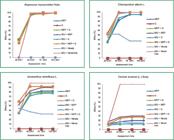
Effects of applications on weed species Alopecurus myosuroides, Chenopodium album, Amaranthus retroflexus and Cirsium arvense
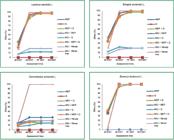
Effects of herbicide applications on weed species Lactuca serriola, Sinapis arvensis, Convolvulus arvensis and Bromus tectorum
3.3 Effects of applications on sugar beet yield and yield components
The effects of the treatments on sugar beet yield and yield components were found to be statistically significant in both growing seasons (p < 0.01) (Table 9). Considering the combined averages for 2023 and 2024, while the yield in the weedy control plots remained at 22.38 t ha–1, all weed management treatments resulted in statistically higher yields compared to this value (p < 0.01). The highest yields were obtained in the MQ + mechanical control (52.72 t ha–1) and weed-free control (52.67 t ha–1) treatments, corresponding to yield increases of 136% and 135%, respectively, compared to the weedy control.
These findings confirm that maintaining low weed pressure throughout the vegetation period is critical for maximizing sugar beet productivity. Previous studies have shown that significant losses in root yield occur under conditions of uncontrolled weed competition (Majidi et al., 2011) and that significant increases in yield are achieved with effective weed control practices (Kulan, 2019; Jursík et al., 2020). Overall, the results of this study demonstrate that strategies providing near-complete weed suppression through integrated mechanical control or effective herbicide mixtures minimize yield losses and significantly increase sugar beet production.
3.4 Relationship between weed pressure, herbicide efficacy and yield
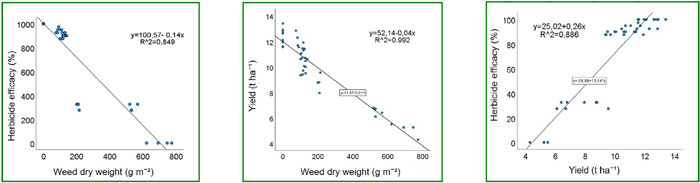
Correlation and regression analyses revealed strong relationships between weed suppression and plant performance (Table 10). Yield showed a significant positive correlation with herbicide efficacy (r = 0.984) and a significant negative correlation with weed dry weight (r = –0.996). These results clearly confirm that sugar beet yield increases with increased weed suppression. Linear regression analyses also showed that improvements in weed control translated into measurable yield increases (Figure 4); a 1% increase in herbicide efficacy corresponded to an increase of approximately 0.0035 t ha–1 in sugar beet yield.
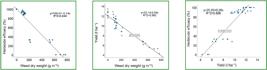
Linear regression relationships among weed dry weight, herbicide efficacy (%), and sugar beet yield (t ha-1).
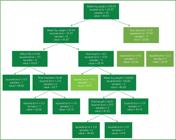
Regression tree analysis (CART) also supported these findings, revealing that the most important variable determining yield was weed dry weight, followed by herbicide efficacy and root diameter, respectively (Figure 5). It was determined that yield remained at its highest level under conditions where the dry weight of the weeds was low (≤97.44 g m–²), while high weed biomass (>372.51 g m–²) was associated with significant yield losses. At the request of the reviewers, the performance measures (R², RMSE, and MAE) of the regression analyses and all regression parameters are presented in detail in Table 10.
4. Conclusions
This study demonstrated that weed management strategy is one of the key factors determining herbicide efficacy and sugar beet yield. While herbicide applications alone provided limited and short-term control, herbicide mixtures—especially when integrated with mechanical control—provided higher and more sustained weed suppression. Complete weed control was achieved in integrated applications, with the most effective chemical mixture achieving a control level of over 94%. Weed suppression increased significantly 40 days after application and remained highly stable until day 150; however, control of perennial species was limited with chemical control alone. Yield increased by over 135% in weed-free and integrated applications compared to the weed control. Regression analyses confirmed a strong positive relationship between weed control and yield; regression tree analysis revealed that weed density was the primary factor determining sugar beet productivity. Overall, the integration of herbicides with mechanical control offers a more effective and sustainable weed management approach in sugar beet cultivation. It is recommended that future studies focus on developing strategies for controlling perennial weeds and evaluating the long-term performance of herbicide mixtures under different environmental conditions.
-
In this section the authors must inform the contribution of each author to the manuscript. Use initials to refer for each author name. The content must state the contribution of each author according to the model:
Data Availability Statement
The data that support the findings of this study are available from the corresponding author upon reasonable request.
References
-
Abbott WS. A method of computing the effectiveness of an insecticide. J Econ Entomol. 1925;18(2):265-7. Available from: https://doi.org/10.1093/jee/18.2.265a
» https://doi.org/10.1093/jee/18.2.265a -
Abdollahi F, Ghadiri H. Effect of separate and combined applications of herbicides on weed control and yield of sugar beet. Weed Technol. 2004;18(4):968-76. Available from: https://doi.org/10.1614/wt-03-142r2
» https://doi.org/10.1614/wt-03-142r2 - Akça A, Işık D. [Determination of weeds in sugar beet (Beta vulgaris L.) cultivation areas in Kayseri province]. Bitki Koruma Bul. 2016;56(1):115-24. Turkish.
-
Balgheim N, Wegener M, Mumme H, Stibbe C, Holtschulte B. Conviso® Smart: a new solution to control monocotyledonous and dicotyledonous weeds in ALS-tolerant sugar beets. EPPO Bull. 2016;46(2):327-34. Available from: https://doi.org/10.1111/epp.12301
» https://doi.org/10.1111/epp.12301 -
Bhadra T, Mahapatra CK, Paul SK. Weed management in sugar beet: a review. Fundam Appl Agric. 2020;5(2):147-56. Available from: https://doi.org/10.5455/faa.83758
» https://doi.org/10.5455/faa.83758 -
Buzluk Ş, Acar Aİ. [Effects of different weed control methods on yield and quality in sugar beet]. Tarim Bilim Derg. 2002;8(2):171-9. Turkish. Available from: https://doi.org/10.1501/tarimbil_0000000732.
» https://doi.org/10.1501/tarimbil_0000000732. -
Chhokar RS, Sharma RK, Sharma I. Weed management strategies in wheat: a review. J Cereal Res. 2012;4(2):1-21. Available from: https://doi.org/10.25174/aygjjq37
» https://doi.org/10.25174/aygjjq37 -
Darwish N, El-Kader A, AbdEl-Aal A, Azzam K. Weed interference and control in sugar beet (Beta vulgaris L.). Fayoum J Agric Res Dev. 2021;35(1):13–22. Available from: https://doi.org/10.21608/fjard.2021.188079
» https://doi.org/10.21608/fjard.2021.188079 - Fishkis O, Koch HJ. Economic and environmental importance of effective weed control in sugar beet. Conference paper. 2023.
-
Fishkis O, Strassemeyer J, Pöllinger F, Roß CA, Koch HJ. Toxicolog-ical risk assessment of mechanical-chemical vs. chemical weed control techniques in sugar beet in Germany using Synops-GIS. Front Agron. 2024;5:1-14. Available from: https://doi.org/10.3389/fagro.2023.1274703
» https://doi.org/10.3389/fagro.2023.1274703 -
Food and Agriculture Organization – FAO. Food and agriculture data. Rome: Food and Agriculture Organization; 2025[access June 20, 2025]. Available from: https://www.fao.org/faostat/en/#data/QCL/visualize
» https://www.fao.org/faostat/en/#data/QCL/visualize -
Gehring K, Thyssen S, Festner T. Weed control in sugar beets (Beta vulgaris) with foramsulfuron und thiencarbazone-methyl. Julius-Kühn-Archiv. 2020;(464):149-53. Available from: https://doi.org/10.5073/jka.2020.464.021
» https://doi.org/10.5073/jka.2020.464.021 -
Turkish State Meteorological Service. Cities & Holiday Resorts: Ankara: Ankara: General Directorate of Meteorology; 2025[access June 28, 2025]. Available from: https://www.mgm.gov.tr/
» https://www.mgm.gov.tr/ -
Jursík M, Holec J, Soukup J, Venclová V. Competitive relationships between sugar beet and weeds in dependence on time of weed control. Plant Soil Environ. 2008;54(3):108-16. Available from: https://doi.org/10.17221/2687-PSE
» https://doi.org/10.17221/2687-PSE -
Jursík M, Soukup J, Kolářová M. Sugar beet varieties tolerant to ALS-inhibiting herbicides: a novel tool in weed management. Crop Prot. 2020;137. Available from: https://doi.org/10.1016/j.cropro.2020.105294
» https://doi.org/10.1016/j.cropro.2020.105294 - Kosir A. [Testing the production of sugar beet using the “Conviso” system resistant to the herbicides foramsulfuron and thiencarbazone-methyl] [dissertation]. Maribor: Univerza v Mariboru; 2020. Slovenian.
-
Kotlánová B, Hledík P, Hudec S, Martínez Barroso P, Vaverková MD, Jirouek M et al. The influence of sugar beet cultivation technologies on the intensity and species biodiversity of weeds. Agronomy. 2024;14(2):1-17. Available from: https://doi.org/10.3390/agronomy14020390
» https://doi.org/10.3390/agronomy14020390 - Kulan EG. [Effects of weed control methods and plant density on yield and yield components in sugar beet] [dissertation]. Eskişehir: Eskişehir Osmangazi University; 2019. 87 p. Turkish.
- Kulan EG, Kaya MD. [Herbicide-resistant sugar beet varieties and their importance]. In: Proceedings of II International Food Agriculture and Veterinary Congress; 2023; Erzurum, Türkiye. p. 20511. Turkish.
- Majidi M, Heidari G, Mohammadi K. Management of broad-leaved weeds by combination of herbicides in sugar beet production. Adv Environ Biol. 2011;5(10):3302-6.
-
Merino J, Pedreros A, Fischer S, López MD. Critical period of weed interference on total polyphenol content in quinoa. Chil J Agric Res. 2019;79(3):405-14. Available from: https://doi.org/10.4067/S0718-58392019000300405
» https://doi.org/10.4067/S0718-58392019000300405 - Odum EP. Fundamentals of ecology. 3rd ed. Philadelphia: W. B. Saunders; 1971.
-
Ortatas FN, Ozkaya U, Sahin ME, Ulutas H. Sugar beet farming goes high-tech: a method for automated weed detection using machine learning and deep learning in precision agriculture. Neural Comput Appl. 2024;36(9):4603-22. Available from: https://doi.org/10.1007/s00521-023-09320-3
» https://doi.org/10.1007/s00521-023-09320-3 - Özkan OU, Kaya İ. [Determination of problematic weeds in the Van Lake Basin sugar beet fields]. Turk Herboloji Derg. 2008;11(1):8-15. Turkish.
-
Republic of Türkiye Ministry of Agriculture Forestry - TAGEM. [Weed standard drug testing methods]. Ankara: General Directorate of Agriculture; 2020[access June 28, 2025]. Turkish. Available from: https://www.tarimorman.gov.tr/tagem
» https://www.tarimorman.gov.tr/tagem - Salehi F, Esfandiari H, Rahimian Mashadi H. Critical period of weed control in sugar beet in Shahrekord region. Iran J Weed Sci. 2007;2(2):1-12.
-
Soltani N, Dille JA, Robinson DE, Sprague CL, Morishita DW, Lawrence NC et al. Potential yield loss in sugar beet due to weed interference in the United States and Canada. Weed Technol. 2018;32(6):749–53. Available from: https://doi.org/10.1017/wet.2018.88
» https://doi.org/10.1017/wet.2018.88 - Üstüner T, Güncan A. [Research on weed species which are problem, density and importance with association in potato fields of Niğde province]. Turk Herboloji Derg. 2002;5(2):30–42. Turkish.
Edited by
-
Editor in Chief:
Carol Ann Mallory-Smith
-
Associate Editor:
Michaela Kolářová

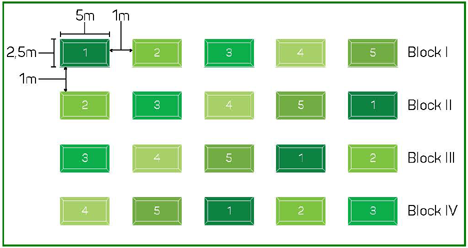 Treatment codes are as follows: 1 = MEP (metamitron + ethofumesate + phenmedipham); 2 = Q (quizalofop-p-ethyl); 3 = MEP + Q; 4 = weedy control; 5 = weed-free control. Detailed herbicide information and application rates are provided in
 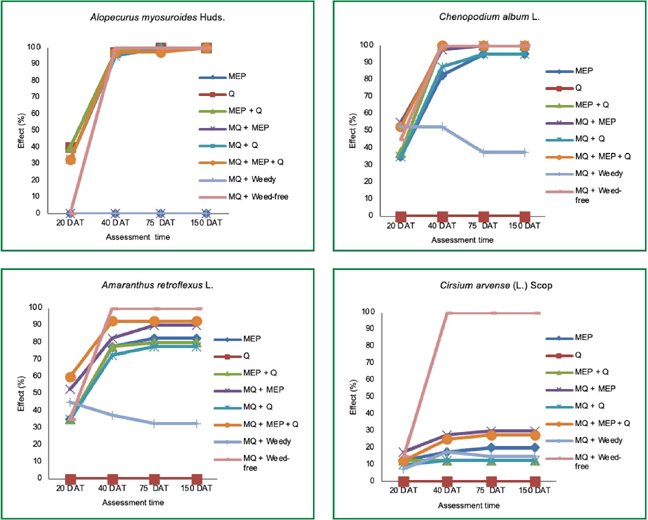 DAT; Day After Treatment. MQ; Metamitron + Quinmerac. MEP; Metamitron + Ethofumesate + Phenmedipham. Q; Quizalofop-p- ethyl.
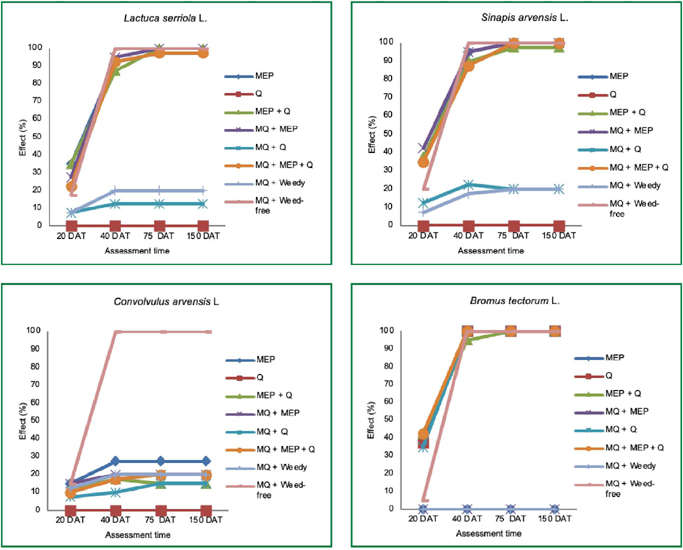 DAT; Day After Treatment. MQ; Metamitron + Quinmerac. MEP; Metamitron + Ethofumesate + Phenmedipham. Q; Quizalofop-p- ethyl.