Weed seed bank composition and species distribution in apricot orchards of Elazığ Province, Türkiye: insights from different orchard management practices
Abstract
Background: Turkiye accounts for a large share of global apricot production, and weed infestations negatively affect yield and quality. Understanding seed bank composition and distribution of weed species are essential for effective weed management.
Objective: This study evaluated weed flora and soil seed bank dynamics in apricot orchards and investigated the impact of different orchard management practices, particularly tillage, on weed species composition and distribution.
Methods: Soil samples were collected from 25 orchards at two soil depths (0–7.5 and 7.5–15 cm) to determine seed bank composition. Field surveys were conducted in spring and summer of 2024 to record weed species density and frequency of occurrence. The relationship between weed distribution and orchard management practices was analyzed using principal component analysis (PCA).
Results: The soil seed bank contained 43 weed species across 20 families, with annual species accounting for 75% of the total. Field surveys identified 85 weed species in spring and 30 in summer (57 and 2 species unique in each season, respectively), with Poaceae and Asteraceae as the dominant families. PCA indicated that weed species distribution varied among orchards according to the management practices employed, with shallower tillage associated with higher weed species diversity.
Conclusions: Weed species composition and seed bank were significantly influenced by orchard management practices. The results are preliminary, and long–term studies, along with extensive sampling, are needed to further substantiate the claims.
Keywords:
Weed Management; Soil Seed Bank; Weed Species Composition; Soil Tillage
1. Introduction
The unique climate, geographical location, and ecological conditions of Turkiye contribute to its extensive richness of plant and fruit species (Eken et al., 2016). Turkiye is a major global producer of fruits like hazelnuts (Black Sea area), cherries (temperate climates), figs (Aydın), and apricots (Malatya) (Kacar, Dursun, 2022). Apricot (Prunus armeniaca L.) is a member of the Rosaceae family within the Rosales order and occupies a prominent position among stone fruit species in Turkiye (Turkiye İstatistik Kurumu, 2022). Globally, apricot was produced on 554,359 ha during 2024, and Turkiye ranked 1st in terms of cultivated area (144,941 ha) (Food and Agriculture Organization, 2024). Iran produces apricots on 56,137 ha, followed by Uzbekistan with 42,936 ha (FAO, 2023). Turkiye leads global apricot production (750,000 tons) followed by Uzbekistan (500,545 tons) and Iran (318,475 tons) (Food and Agriculture Organization, 2023). Apricot is produced in 26 provinces of Turkiye, and Elazığ, Malatya, Tunceli, and Bingol are the major apricot–producing provinces. Of these provinces, Malatya produces 328,767 tons of apricots from 89,202 hectares. Elazığ province, in the same region, ranks second to Malatya province in apricot yield, with 27,160 tons. The Baskil county of Elazığ produces 18,864 tons apricot from 8,373.6 hectares (Turkiye İstatistik Kurumu, 2023).
Apricot production is directly or indirectly affected by the infestation of diseases (Han et al., 2024), pests, and weeds (Tursun et al., 2018). Weed infestation reduces fruit yield and quality by competing for light, space, nutrients, and water (Tursun et al., 2018). Weeds facilitate the spread of diseases and pests by serving as their hosts (Macharia et al., 2016). Consequently, weed management is necessary in apricot orchards to prevent yield and quality losses and to control disease and pest infestations. Accurate identification of weed species and determining their densities and frequencies are crucial for efficient weed management. The composition and density of weed species is altered by several factors, including climate, soil type, irrigation techniques, tillage and other orchard management practices (Tursun et al., 2018). The most widespread weed species in apricot orchards are Amaranthus retroflexus, Convolvulus arvensis, and Sorghum halepense etc.
Tillage practices exert significant impacts on the composition of weed species and their management (Travlos et al., 2018). Different tillage methods influence seed germination and seedling establishment by modifying the distribution of weed seeds within the soil profile (Santin–Montanya et al., 2016). Reduced tillage intensity has been shown to exert both positive and negative impacts on the composition and diversity of weed species. Conservation tillage practices often result in an increase in population sizes of weeds. Intensive tillage practices favor the proliferation of annual weeds, whereas perennial weeds are increased under reduced or no–tillage practices (Minhas et al., 2023). Therefore, determining the impact of different tillage practices on the weed infestation, species composition and density is important to aid management practices.
The persistence and viability of weed seeds in the soil seed bank undermine long–term weed management strategies despite intensive control efforts. The longevity of weed seeds varies by species and environmental conditions. Seeds of some weed species generate transient seed banks lasting barely a year, while the seeds of other species may last for decades, complicating weed management efforts (Hossain, Begum, 2016). The emergence of weeds and their competition with crops are significantly influenced by the quantity and longevity of the soil seed bank, which directly affects crop yields (Kumar et al., 2019).
Tillage practices strongly influence the quantity, vertical distribution, and diversity of weed seeds in the soil seed bank (Vasileiadis et al., 2007). Conventional tillage buries seeds deeper in the soil profile (10–20 cm), often reducing germination due to limited exposure to light and temperature, whereas reduced and no–tillage systems concentrate seeds near the surface (0–5 cm), promoting germination but increasing susceptibility to microbial decomposition, predation, and environmental stress (Theisen, Bastiaans, 2015; Minhas et al., 2023). Therefore, understanding the effects of tillage on the soil seed bank is essential for effective weed management.
In Turkiye, apricot growers apply both conventional (plowing and harrowing) and conservation tillage practices, which influence soil conditions, weed dynamics, and orchard productivity (Kaska, 2005; Salman et al., 2011; Altikat et al., 2017). Although previous studies have documented weed flora in apricot orchards across different regions (Polat, 2010; Salman et al., 2011; Uremiş et al., 2013), the impact of contrasting tillage practices on weed composition, density, and soil seed banks has not yet been comprehensively evaluated.
The current study determined the frequencies and densities of weed species prevailing in apricot orchards in the Elazığ province, Turkiye. Furthermore, the soil seed bank of two soil depths (0–7.5 cm and 7.5–15 cm) was determined from the surveyed orchards. Tillage practices used for weed control in the orchards were recorded, and the weed composition and soil seed bank were determined based on the opted tillage methods.
2. Material and Methods
2.1 Study area
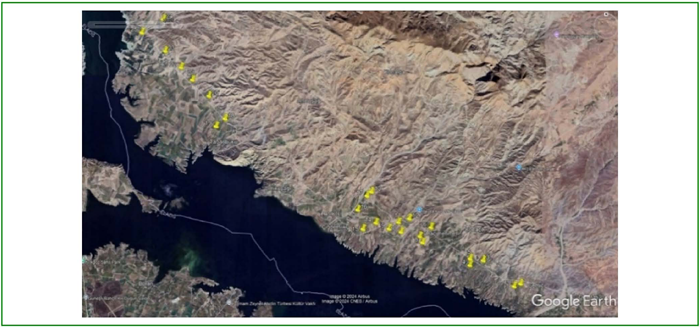
Two–stage field surveys were conducted in 25 apricot orchards situated in Bilaluşağı, Ciğdemlik, Gemici, Hacımehmetli, Konacık, and Şeyhasan villages in the Baskil district of Elazığ province, Turkiye, during 2023 and 2024 (Figure 1).
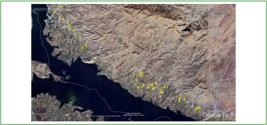
The geographic locations of the surveyed orchards were recorded using a global positioning system (GPS) device. Tillage practices used in the orchards were recorded by contacting the orchard owners. The background information of the surveyed orchards is given in Table 1.
Geographic locations, area and tillage methods used in the surveyed orchards during 2023 and 2024
2.2 Meteorological data
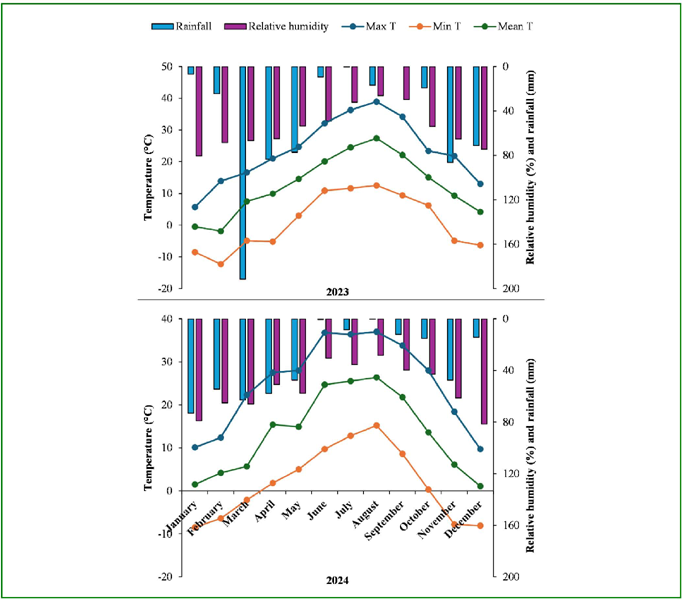
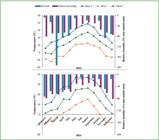
Meteorological data for the Baskil district are presented in Figure 2. Soil samples for seed bank analysis were collected during November 2023. The average temperature was 9.3°C in November 2023, whereas total precipitation was 86.4 mm. Spring surveys were conducted in May 2024, with an average temperature of 14.9°C and total precipitation of 47.6 mm. The summer surveys were conducted in August 2024, when the average temperature was 26.4°C and total precipitation was markedly reduced to 0.2 mm.
2.3 Seedbank analysis
Soil samples were collected from apricot orchards during November 2023 after tillage to determine soil seed bank. Six soil samples were collected from each orchard with a pointed shovel from two depths, i.e., 0–7.5 cm and 7.5–15 cm. The collected soil samples were placed in polyethylene bags (labeled with collection date, field/ orchard, coordinates, and sampling depth) and brought to the laboratory. Soil samples had a high moisture content at the time of collection; therefore, these were dried for 14 days at room temperature. The dried soil samples were cleaned of large stones, soil clumps, and plant residues, then sieved through four sieves (2.24 mm, 1 mm, 45 μm, and 63 μm). Soil samples retained on the 2.24 mm and 1 mm sieves were examined under light using a hand magnifier (Busatia 30x Magnifier with 18 LED lights). Soil samples collected in the other two sieves were rinsed under running water until they were free of soil particles. Once the water had cleared, the samples were spread onto drying paper and left to dry for seven days (Konstantinović et al., 2011). The dried samples were then examined under light using a hand magnifier. Each sample was placed in containers filled with water, and seeds floating on the surface were collected to record the number of seeds not visible to the naked eye.
Seeds collected from different weed species in the survey orchards were utilized to identify the seeds recorded in the soil seed bank. A total of 150 seed samples previously identified and preserved at the Weed Science Laboratory, Dicle University, Turkiye, were compared with weed seeds recorded during seed bank analysis. Seeds were examined under a microscope for identification and counting. Unidentified seeds (25 for each species) were germinated in plastic trays until identifiable seedlings emerged, and the seedlings were identified according to Flora of Turkey (Davis, 1986).
The densities and occurrence frequencies of identified seeds were calculated separately for each depth (Odum, 1971). Frequency of occurrence and density were computed according to equations 1 and 2, respectively
Where n = the number of quadrates with species’ occurrence, N = total number of quadrates.
Where n = number of plants of a species in a quadrate, N = total number of quadrates.
2.4 Establishment Rate
The density of weed seeds recorded at each depth (0–7.5 cm and 7.5–15 cm) was calculated, and the establishment rate was computed by the number of emerged weeds observed during the surveys. Weed density recorded during the surveys was used to compute establishment rate by employing equation 3.
2.5 Field Surveys
Field surveys were conducted in 2024 by revisiting the coordinates of the 25 apricot orchards that had been previously visited for soil seed bank analysis. Surveys were carried out during the spring (May) and summer (August) seasons of 2024. In the surveys, a 1m × 1m square quadrate was used, and weed species within each quadrate were counted. The sampling size was determined according to orchard size, with 4 quadrates used for areas up to 0.1–0.5 ha, 6 for 0.5–1.0 ha, and 8 for areas >1.0 ha (Onen et al., 2018). Surveys were conducted 10 m inside from the orchard edge to eliminate edge effects and in a diagonal method in different directions (Onen et al., 2018). The frequencies of occurrence and densities of the recorded weed species were computed according to equations 1 and 2, respectively, as described above. The observed weed species were identified by the second author, using the Flora of Turkey (Davis, 1986). The accepted names and the synonyms of the recorded weed species were checked at the WFO Plant List (https://wfoplantlist.org/), and any duplicates were removed.
2.6 Statistical analysis
The seed bank and survey data are presented in table form to provide full information on the recorded flora. These data were summarized according to families, life forms, and the most frequently observed species. The floristic data were analyzed using principal component analysis (PCA) to visualize weed species associated with specific tillage systems used for weed management. Varimax rotation with Kaiser normalization was used in the PCA and the principal components with eigenvalues >1 were considered for interpretation. The data were analyzed and visualized on XLSTAT.
3. Results and Discussion
3.1 Soil Seed Bank
A total of 43 weed seed species belonging to 38 genera and 20 families (1 parasitic, 2 monocotyledonous, and 17 dicotyledonous species) were recorded in the soil seed bank. The seeds that were not identified are listed as ‘others’ in Table 2. Weed species exhibiting the greatest seed density at soil depth of 0–7.5 cm were Silene vulgaris (Moench) Garcke. (309 seeds/m2), Amaranthus albus L. (194 seeds/m2), and Amaranthus retroflexus L. (136 seeds/m2). Seeds of six weed seed species recorded at 7.5–15 cm soil depth were absent in 0–7.5 cm depth and did not exhibit high density. These species included Buglossoides arvensis (L.) I.M. Johnst., Cardaria draba (L.) Desv., Cynodon dactylon (L.) Pers., Echinochloa crus–galli (L.) P.B., Malva sylvestris L., and Turgenia latifolia (L.) Hoffm. Conversely, seeds of Agrostemma githago L., Medicago sativa L., and Urtica urens L. were only recorded in 7.5–15 cm soil layer and were absent in the weed surveys and in the seed bank of 0–7.5 cm soil depth (Table 2).
Weed species recorded in the soil seed bank of apricot orchards of Elazığ province, their densities, frequencies of occurrence, and establishment ratio
The weed species with the greatest seed density at 7.5–15 cm soil depth were A. retroflexus L. (142 seeds/m2), Chenopodium album L. (105 seeds/m2), and Stellaria apetala Ucria (96 seeds/m2). Seeds of two species (i.e., Lathyrus sylvestris L. and Vicia sativa L.) were recorded in 0–7.5 cm soil depth but were absent from 7.5–15 cm depth. Furthermore, seeds of Veronica hederifolia L. were recorded from 0–7.5 cm depth, but were absent in the weed surveys and at a depth of 7.5–15 cm (Table 2).
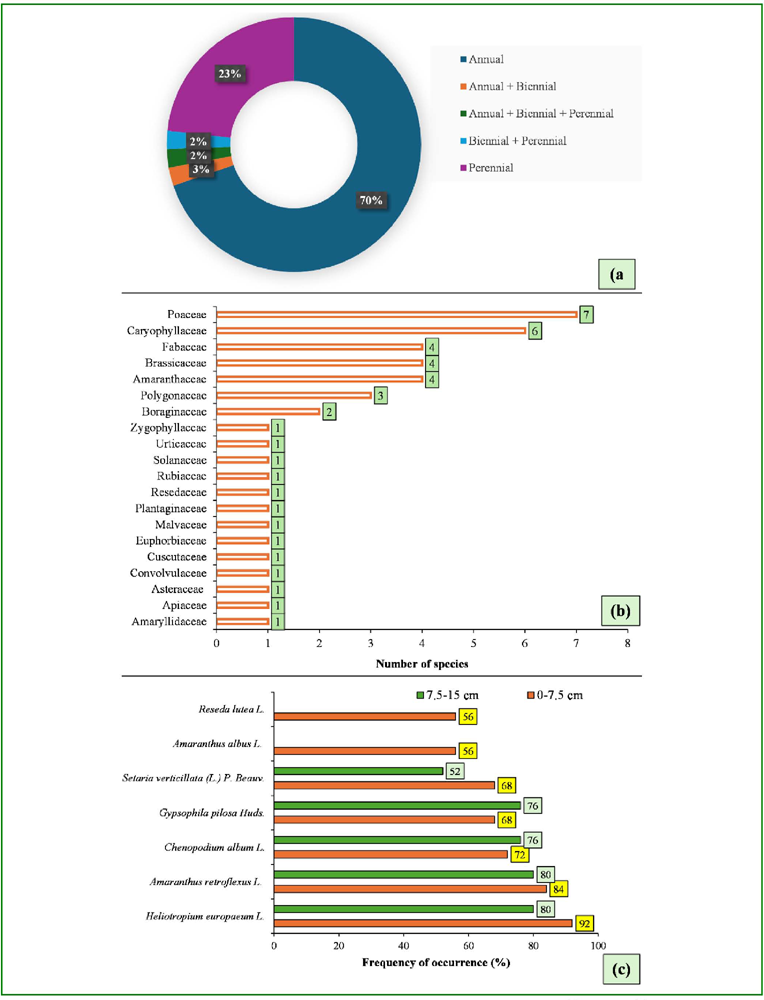
Seventy–five percent of the species in the soil seed bank were annuals. This is characteristic of agricultural systems in which annual weeds dominate due to their high reproductive capacity and rapid germination. Biennial species accounted for 15% of the total species in the seed bank. Although less common than annuals, these species may still exert significant competitive pressure and should be managed carefully. Perennial species constitute 10% of the overall species. These species often exhibit extended lifespans and are more difficult to control once established (Figure 3a). The predominant family in the seed bank was Amaranthaceae (20% of the recorded species). Species such as A. retroflexus and A. albus are significant members of this family, highlighting their role as problematic weeds in apricot orchards. Other families included Asteraceae (12%) and Fabaceae (10%). The presence of Asteraceae species such as Xanthium strumarium L. and Centaurea depressa M. Bieb. necessitates managing these families within the orchard ecosystem (Figure 3b).
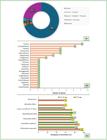
Distribution of the observed weed species in the soil seed bank according to life cycle (a), families (b), and frequencies of occurrences of the most frequently observed species (c)
The most frequently observed seeds in 0–7.5 cm soil depth were Heliotropium europaeum L. (92%), A. retroflexus (84%), C. album (72%), Gypsophila pilosa Huds. (68%), Setaria verticillata (L.) P. Beauv. (68%), A. albus (56%) and Reseda lutea L. (56%) (Figure 3c).
Plant establishment ratios of the identified weed seeds in the soil seed bank are given in Table 2. Among these species, Cardaria draba (L.) Desv. had the greatest plant establishment ratio (145%) followed by Vicia sativa L. (67%), Convolvulus arvensis L. (62%), Echinochloa crus–galli (L.) P.B. (62%), and Rumex acetosella L. (60%). Conversely, the species with the lowest plant establishment rate were Cerastium dichotomum L. (2%), followed by Silene vulgaris (Moench) Garcke. (2%), C. album (3%), Stellaria apetala Ucria. (3%), and A. albus (3%). Agrostemma githago L., Medicago sativa L., Urtica urens L., and Veronica hederifolia L. failed to establish the plants (Table 3).
Weed species observed in the apricot orchards during spring surveys, their life forms, densities and frequencies of occurrence
Weed management is a challenging task in agricultural production systems, particularly in perennial crops such as orchards. Understanding the functioning of the soil seed bank and the repository of viable seeds is essential for effective weed control (Waryszak et al., 2021). Soil seed banks include newly dispersed and older seeds from previous seasons, preserving weed potential. Agricultural soils may contain thousands of weed seeds, retaining the outcomes of previous weed management efforts. The historical context, diversity, and dynamics of soil plant communities significantly affect the composition of the seed bank (Gioria, Pyšek, 2015). This study determined the soil seed bank of apricot orchards, their weed flora, and the influence of different tillage practices used to manage weeds on the distribution of recorded weed species during surveys. Seeds of 43 weed species were recorded in the seed bank of apricot orchards. A higher number of seeds (1,563 m–2) was recorded at the shallow depth than at the deeper depth (1,281 m–2). Overall, the seeds are uniformly distributed across the soil profile. Tillage practices significantly influence the vertical distribution of weed seeds within the soil profile. Conventional tillage redistributes weed seeds across the soil profile, often burying them 10–15 inches deep, but in no–tillage systems, most weed seeds remain concentrated on the soil surface (Zamljen et al., 2024). Most of the surveyed orchards use conventional tillage practices for weed management, which can be responsible for the uniform distribution of seed bank across the soil profile in the current study.
A significant percentage of these species were annual (75%), while biennials constituted 15%, and perennials represented 10%. Annual species predominate in orchard seed banks because of their enormous seed production, which may last in the soil for varying durations. These annual weeds thrive in varying environments owing to rapid germination and abundant reproduction (Akomolafe et al., 2024). The soil seed bank comprises perennial weed tubers, bulbs, and rhizomes, but annuals predominate in seed numbers. Therefore, the dominant distribution of annual species in the current study is owed to large quantities of seeds produced by these species and rapid completion of their life cycle.
3.2 Field Surveys
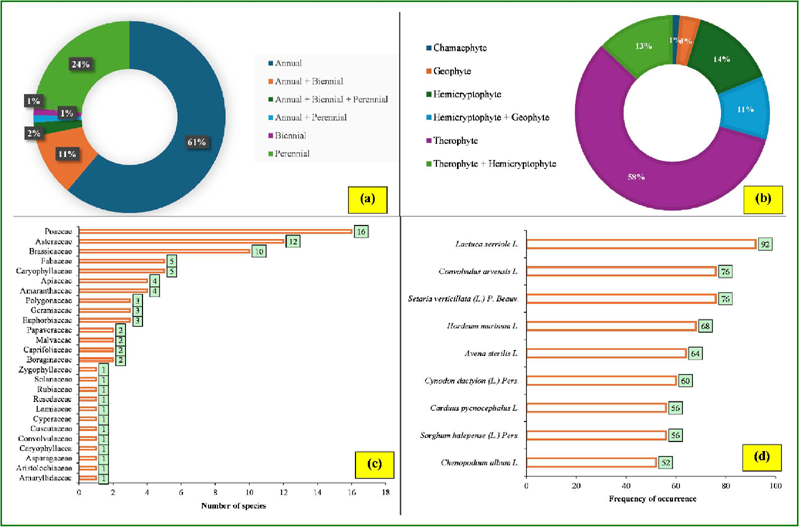
A total of 85 weed species distributed across 72 genera from 25 families (1 parasitic, 4 monocotyledonous, and 20 dicotyledonous) were recorded from apricot orchards during spring surveys (Table 3). The densities and occurrence frequencies of weeds were computed. The weed species with the highest densities were Echinaria capitata (L.) Desf. (10.67 plants/m2), S. verticillata (10.29 plants/m2), and Setaria viridis (L.) P. Beauv. (8.67 plants/m2). Similarly, weed species with the lowest densities were Achillea millefolium L. subsp. millefolium, Aristolochia maurorum L., Crupina crupinastrum (Moris) Vis., Lathyrus sylvestris L., Polygonum convolvulus L., and Sonchus asper (L.) Hill. (Table 3). The species with the highest frequency of occurrence were Lactuca serriola L. (92%), S. verticillata (76%), C. arvensis (76%), Hordeum murinum L. (68%), Avena sterilis L. (64%), C. dactylon (60%), Sorghum halepense (L.) Pers. (56%), Carduus pycnocephalus L. (56%), and C. album (52%) (Figure 4d).
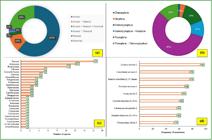
Distribution of weed species recorded in the apricot orchards during spring surveys according to life cycle (a), Raunkiær Life Form (b), families (c) and frequencies of occurrences of the most frequently observed species (d)
The analysis of weed species by lifecycle types indicated that annual species were the most dominant (52 species), representing 61% of the identified species (Figure 4a). Nine species were annual or biennial, constituting 11% of the identified flora. Furthermore, annual + biennial + perennial species accounted for 2% of the recorded species. Perennial species were 20, representing 24% of the overall flora (Figure 4a).
The analysis of weed species based on Raunkiaer’s Life Forms indicated that therophytes were the predominant category (49 species), comprising of 58% of the recorded species. Therophytes were followed by hemicryptophytes (14%), and therophyte + hemicryptophyte species (13%). Hemicryptophyte + geophyte species were 10.59%, followed by geophytes (4%). Chamaephytes were the least abundant represented by a single species constituting 1.18% of the total (Figure 4b).
The distribution of weed flora by family showed that Poaceae was the most prevalent family, with 16 species, followed by Asteraceae (12 species), Brassicaceae (10 species), and Fabaceae and Caryophyllaceae (5 species each). Amaranthaceae and Apiaceae each had 4 species followed by Euphorbiaceae, Geraniaceae, and Polygonaceae families each represented by 3 species (Figure 4c).
A total of 30 weed species across 26 genera from 15 families (1 parasitic, 1 monocotyledonous, and 13 dicotyledonous) were recorded from apricot orchards during the surveys conducted in summer (Table 4). Weed species with the highest densities were S. verticillata (8 plants/m2), S. viridis (8 plants/m2), and C. dactylon (7 plants/m2). Species with the lowest density (1 plant/m2) were C. campestris and P. convolvulus.
Weed species observed in the apricot orchards during summer surveys, their life forms, densities and frequencies of occurrence
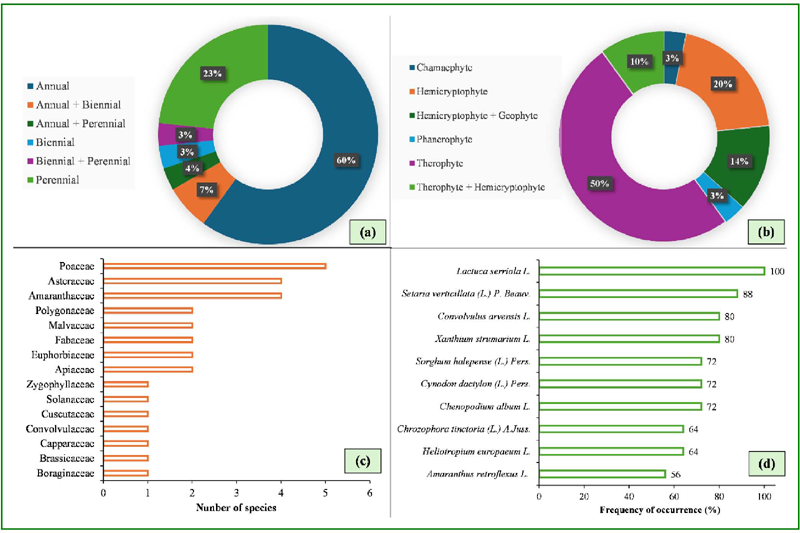
Annual species were the most prevalent, representing 60% of the total flora. Two species had annual + biennial characteristics, while one species had annual + perennial life cycle. Biennial and biennial + perennial species were represented by 1 species each. Finally, perennial species constituted 23.33% of the total flora (Figure 5a).
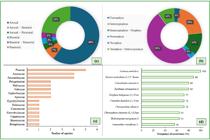
Distribution of weed species recorded in apricot orchards during summer surveys according to life cycle (a), Raunkiær Life Form (b), families (c) and frequencies of occurrences of the most frequently observed species (d)
Therophytes were the predominant category among the identified weed species representing 50% of the total flora. Hemicryptophytes included six species, representing 20% of the total species. Therophyte and hemicryptophyte species constituted 10% of the total observed species. Chamaephytes and phanerophytes were the least prevalent each represented by one species (Figure 5b).
The distribution of recorded weed flora according to plant families indicated that Poaceae was the most represented family, 5 species, followed by Amaranthaceae and Asteraceae, each with 4 species. Apiaceae, Euphorbiaceae, Fabaceae, Malvaceae, and Polygonaceae were represented by 2 species each, whereas Boraginaceae, Brassicaceae, Capparaceae, Convolvulaceae, Cuscutaceae, Solanaceae, and Zygophyllaceae each had 1 species (Figure 5c).
The species with the highest frequencies of occurrences were Lactuca serriola L. (100%), S. verticillata (88%), X. strumarium (80%), C. arvensis (80%), C. album (72%), C. dactylon (72%), S. halepense (72%), Heliotropium europaeum L. (64%), Chrozophora tinctoria (L.) A.Juss. (64%), and A. retroflexus (56%) (Figure 5d).
Weed flora of apricot orchards is shaped by agronomic, environmental, and regional factors. Globally, the most prevalent weed species in apricot orchards are Amaranthus retroflexus, Convolvulus arvensis, Tribulus terrestris, and Chenopodium album. Similar weed species are prevalent throughout apricot orchards of Turkiye (Polat, 2010); however, their specific composition and geographic distribution are significantly influenced by regional climate, soil characteristics, and orchard management practices. A total of 85 and 30 weed species were observed during the spring and summer surveys, respectively, in the present study. The distribution of weed flora by family indicated that Poaceae was the most dominant, with 16 species, followed by Asteraceae during summer surveys. Likewise, Poaceae was the most prevalent family, including 5 species, followed by Amaranthaceae and Asteraceae, each containing 4 species throughout the summer season. Globally, weed populations in agricultural systems are often dominated by certain plant families. The most common families in agricultural systems are Fabaceae (legumes), Asteraceae (composites), and Poaceae (grasses) (Chen et al., 2024). The Convolvulaceae, Poaceae, and Amaranthaceae families are well–represented in Turkish apricot orchards (Tursun et al., 2018), but Asteraceae species are more prevalent in Italian orchards (Mia et al., 2020). The weed flora of apricot orchards in Malatya Province is dominated by perennial species, including Sorghum halepense (johnsongrass) and Convolvulus arvensis (field bindweed). Nevertheless, common annual species in these orchards are Sisymbrium officinale (hedge mustard), Tribulus terrestris (puncturevine), and Amaranthus retroflexus (redroot pigweed) (Tursun et al., 2018). The weed species identified in the current study are similar to those prevalent in Malatya Province. Nevertheless, there are differences in the densities and frequency of occurrences, which can be attributed to the differences among climate, ecological conditions, and used weed management practices in both provinces (Meteoroloji Genel Mudruluğu, 2025).
3.3 Influence of orchard management practices on weed distribution
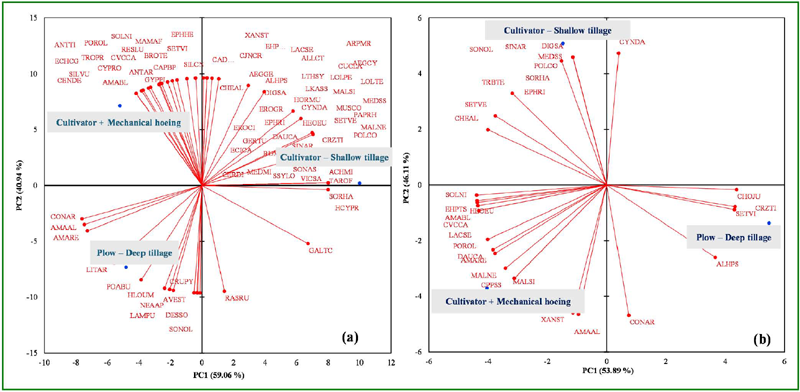
Three distinct tillage practices, i.e., shallow tillage with cultivator, shallow tillage followed by mechanical hoeing, and deep tillage with plow, are used for weed management in the apricot orchards included in the current study. The PCA of spring data indicated that 37 distinct weed species were recorded in the orchards, opting for shallow tillage using a cultivator for weed management, whereas these were not recorded in the other tillage systems. Similarly, 6 weed species were related to shallow tillage followed by mechanical hoeing, which were not observed in the other tillage systems. Nevertheless, only one species (Poa bulbosa) was recorded in deep tillage with a plow. The summer survey data revealed that 2, 6, and 0 species were recorded only under shallow tillage with a cultivator, shallow tillage followed by mechanical hoeing, and deep tillage with plow systems, respectively (Figure 6). Furthermore, a higher number of weed species were associated with shallow tillage with a cultivator and shallow tillage followed by mechanical hoeing, compared with deep tillage with a plow, during both surveys.
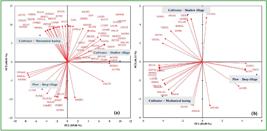
Biplot of the principal component analysis indicating the distribution of weed species observed during spring (a) and summer (b) surveys across different tillage methods opted in the apricot orchards for weed control
A greater number of weed species were associated with shallow tillage using a cultivator and with shallow tillage followed by mechanical hoeing, compared with deep tillage in the current study. Deep tillage often inverts and mixes the soil to greater depths, burying weed seeds below their optimal germination zone, thereby inhibiting weed emergence and frequently reducing total species diversity. Shallow tillage, by contrast, disrupts only the topsoil layer, allowing several weed seeds to remain at the surface, where they might germinate. This little perturbation often enhances species richness in the field, promoting the proliferation of a greater diversity of weed species (Travlos et al., 2018). The regeneration ability of perennial weeds and soil seed banks is directly influenced by tillage methods. Reduced tillage may encourage perennial plants with broad root systems, while frequent tillage favors annual species that rapidly complete their life cycles (Mia et al., 2020). Tillage practices are known to favor the occurrence and dominance of annual weed species by redistributing seeds within the upper soil layers and creating disturbance conditions that promote rapid germination and establishment. In the studied apricot orchards, frequent soil disturbance associated with conventional tillage enhanced the recruitment of annual weeds by exposing buried seeds to favorable light, temperature, and moisture conditions. Conversely, orchards with reduced disturbance may limit seed burial but maintain a persistent surface seed bank, allowing repeated emergence of opportunistic annual species. These patterns highlight the importance of integrating tillage regimes with complementary weed management strategies—such as mulching, cover cropping, or targeted mechanical and chemical control—to suppress annual weed proliferation and improve long–term orchard sustainability. Furthermore, some weed species exhibit high ecological adaptability and persist across a wide range of management systems, regardless of tillage intensity or control strategy. Such species can maintain stable populations through flexible germination behavior, broad environmental tolerance, and continuous replenishment of the soil seed bank, underscoring the need for integrated, long–term weed management approaches rather than reliance on a single control method.
The results of the current study suggest that deep tillage reduces weed emergence by burying seeds at higher depths, whereas shallow tillage tends to promote a wider diversity of weed species in apricot orchards. This indicates that deep tillage may be a more effective technique for controlling weeds, particularly annual species, by disrupting their germination. Nonetheless, the field’s species diversity may increase with shallow tillage, thereby facilitating the proliferation of both annual and perennial weeds. However, effective weed management following shallow tillage may reduce the weed seed bank over the long term. Therefore, long–term studies are needed to reach sound conclusions.
The analysis of soil seed bank patterns and tillage impacts should be considered preliminary, since comprehensive seed bank dynamics generally require multi–year observations and higher sampling intensity. The present study provides an overview of a single sampling period and a limited number of seed bank samples, which may limit the generalizability of the identified trends. Moreover, comprehensive long–term data regarding the duration and historical consistency of tillage and weed control strategies were not consistently accessible for all examined orchards. The observed correlations between tillage practices and seed bank attributes must be interpreted with caution. Subsequent research employing multi–year monitoring, extensive sampling strategies, and well–documented management histories will be crucial for validating and extending these results.
4. Conclusions
The results indicated that apricot orchards in Elazığ province host a varied weed flora, with 85 species identified in spring and 30 in summer. The soil seed bank had 43 species, mostly dominated by annuals (75%). Orchard management practices, i.e., tillage, affected weed composition, with shallow tillage linked to increased weed diversity. Therefore, relying solely on tillage is insufficient for long–term control, as viable seeds persist in the soil. A combination of tillage, mulching, and crop rotation can more effectively manage weed populations. Future research should focus on long–term weed dynamics and sustainable management practices to improve orchard productivity while minimizing weed infestations. The results must be interpreted with caution. Subsequent research employing multi–year monitoring, extensive sampling strategies, and well–documented management histories will be crucial for validating and extending these results.
Acknowledgements
This manuscript has been prepared from the PhD thesis of Bilal Eşitmez. The authors are indebted to e Diyarbakır Plant Protection Research Institute, Directorate of Provincial Agriculture and Forestry Elazığ, and Elazığ Fisheries Research Institute for using the available facilities at the laboratories of all institutions.
-
Funding
This research received no external funding.
Data Availability
The data will be available from corresponding author on request.
References
-
Akomolafe GF, Rosazlina R, Omomoh B. Soil seed bank dynamics of two invasive alien plants in Nigeria: implications for ecosystem restoration. AoB Plants 2024;16(2):1–9. Available from: https://doi.org/10.1093/aobpla/plae003
» https://doi.org/10.1093/aobpla/plae003 - Altikat S, Kus E, Kucukerdem HK, Gozubuyuk Z. The applications of no– tillage in Turkey. In: 3rd International Conference on Science, Ecology and Technology; Rome; 2017. p. 14–6.
-
Chen G, Huang Z, An K, Chen Y, Xue J. Diversity and life history traits of native weed communities in agricultural areas: a case study in Eastern China. Biology. 2024;13(9):1–17. Available from: https://doi.org/10.3390/biology13090704
» https://doi.org/10.3390/biology13090704 - Davis PH, editor. Flora of Turkey and the East Aegean islands Volume 9. Edinburgh: Edinburgh University; 1986.
-
Eken G, Isfendiyaroğlu S, Yeniyurt C, Erkol IL, Karataş A, Ataol M. Identifying key biodiversity areas in Turkey: a multi–taxon approach. Int J Biodivers Sci Ecosyst Serv Manag 2016;12(3):181–90. Available from: https://doi.org/10.1080/21513732.2016.1182949
» https://doi.org/10.1080/21513732.2016.1182949 -
Food and Agriculture Organization – FAO. FAOSTAT crops and livestock products 2024. Rome: Food and Agriculture Organization; 2023[access Jan 27, 2023]. Available from: https://www.fao.org/faostat/en/#data/QCL(a)
» https://www.fao.org/faostat/en/#data/QCL(a) -
Gioria M, Pyšek P. The legacy of plant invasions: changes in the soil seed bank of invaded plant communities. Bioscience. 2015;66(1):40–53. Available from: https://doi.org/10.1093/biosci/biv165
» https://doi.org/10.1093/biosci/biv165 -
Han B, Duan P, Zhou C, Su X, Yang Z, Zhou S et al. Implementation and evaluation of spatial attention mechanism in apricot disease detection using adaptive sampling latent variable network. Plants. 2024;13(12):1–28. Available from: https://doi.org/10.3390/plants13121681
» https://doi.org/10.3390/plants13121681 -
Hossain M, Begum M. Soil weed seed bank: importance and management for sustainable crop production: a review. J Bangl Agric Univ. 2016;13(2): 221–8. Available from: https://doi.org/10.3329/jbau.v13i2.28783
» https://doi.org/10.3329/jbau.v13i2.28783 -
Kaçar G, Dursun A. Comparative diversity of Heteroptera (Hemiptera) in fruit orchards. Turk J Zool. 2022;46(3):289–97. Available from: https://doi.org/10.55730/1300–0179.3057
» https://doi.org/10.55730/1300–0179.3057 -
Kaska N. Orchard management in apricots. In: 13rd International Symposium on Apricot Breeding and Culture. Corbeekhoeve: International Society for Horticultural Science; 2005, p. 287–94. Available from: https://doi.org/10.17660/ActaHortic.2006.717.58
» https://doi.org/10.17660/ActaHortic.2006.717.58 -
Konstantinović B, Meseldžija M, Korać M, Konstantinović B. Study of weed seedbank in soybean crop. Afr J Agric Res 2011;6(10):2316–20. Available from: https://doi.org/10.5897/AJAR11.168
» https://doi.org/10.5897/AJAR11.168 - Kumar A, Choudhary T, Das S, Meena SK. Weed seed bank: impacts and management for future crop production. In: Hasanuzzaman M. Agronomic crops volume 2: management practices. Berlin: Springer; 2019. p. 207–23.
-
Macharia I, Backhouse D, Wu SB, Ateka EM. Weed species in tomato production and their role as alternate hosts of Tomato spotted wilt virus and its vector Frankliniella occidentalis. Ann Appl Biol. 2016;169(2):224–35. Available from: https://doi.org/10.1111/aab.12297
» https://doi.org/10.1111/aab.12297 - Meteoroloji Genel Müdrülüğü – MGM. [General statistics data for our provinces]. Ankara: Meteoroloji Genel Müdrülüğü; 2025. Turkish.
-
Mia MJ, Massetani F, Murri G, Facchi J, Monaci E, Amadio L et al. Integrated weed management in high density fruit orchards. Agronomy 2020;10:1–13. Available from: https://doi.org/10.3390/agronomy10101492
» https://doi.org/10.3390/agronomy10101492 -
Minhas WA, Mumtaz N, Ur–Rehman H, Farooq S, Farooq M, Ali HM et al. Weed infestation and productivity of wheat crop sown in various cropping systems under conventional and conservation tillage. Front Plant Sci. 2023;14:1–14. Available from: https://doi.org/10.3389/fpls.2023.1176738
» https://doi.org/10.3389/fpls.2023.1176738 - Odum EP. Fundamental of ecology. J Anim Ecol. 1971;3.
-
Onen H, Akdeniz M, Farooq S, Hussain M, Ozaslan C. Weed flora of citrus orchards and factors affecting its distribution in western mediterranean region of Turkey. Planta Daninha. 2018;36:1–14. Available from: https://doi.org/10.1590/S0100–83582018360100036
» https://doi.org/10.1590/S0100–83582018360100036 -
Polat AA. Apricot production in the eastern Mediterranean region, Hatay, Turkey. Acta Hort. 2010;862:343–50. Available from: https://doi.org/10.17660/ActaHortic.2010.862.53
» https://doi.org/10.17660/ActaHortic.2010.862.53 - Salman MM, Önen H, Özcan S, Sayılı M, Gözener B. [Grower’s knowledge on weeds and weed management strategies in apricot Cultivation]. Turk J Weed Sci. 2011;14(1–2):1–8. Turkish.
-
Santín–Montanyá MI, Martín–Lammerding D, Zambrana E, Tenorio JL. Management of weed emergence and weed seed bank in response to different tillage, cropping systems and selected soil properties. Soil Tillage Res. 2016;161:38–46. Available from: https://doi.org/10.1016/j.still.2016.03.007
» https://doi.org/10.1016/j.still.2016.03.007 -
Theisen G, Bastiaans L. Low disturbance seeding suppresses weeds in no–tillage soyabean. Weed Res. 2015;55(6):598–608. Available from: https://doi.org/10.1111/wre.12176.
» https://doi.org/10.1111/wre.12176. -
Travlos IS, Cheimona N, Roussis I, Bilalis DJ. Weed–species abundance and diversity indices in relation to tillage systems and fertilization. Front Environ Sci. 2018;6:1–10. Available from: https://doi.org/10.3389/fenvs.2018.00011
» https://doi.org/10.3389/fenvs.2018.00011 - Türkiye İstatistik Kurumu – TÜİK. [Turkish Statistical Institute]. Akara: Türkiye İstatistik Kurumu; 2022.
-
Tursun N, Işık D gan, Demir Z, Jabran K. Use of living, mowed, and soil–incorporated cover crops for weed control in apricot orchards. Agronomy. 2018;8:1–10. Available from: https://doi.org/10.3390/agronomy8080150
» https://doi.org/10.3390/agronomy8080150 - Üremİș İ, Sertkaya E, Sertkaya G, Yıldırım AE. Determination of weed species and their frequency and density in apricot orchards in Hatay Province. 2013.
-
Vasileiadis VP, Froud–Williams RJ, Eleftherohorinos IG. Vertical distribution, size and composition of the weed seedbank under various tillage and herbicide treatments in a sequence of industrial crops. Weed Res. 2007;47(3):222–30. Available from: https://doi.org/10.1111/j.1365–3180.2007.00564.x
» https://doi.org/10.1111/j.1365–3180.2007.00564.x -
Waryszak P, Standish RJ, Ladd PG, Enright NJ, Brundrett M, Fontaine JB. Best served deep: the seedbank from salvaged topsoil underscores the role of the dispersal filter in restoration practice. Appl Veg Sci 2021;24(1). Available from: https://doi.org/10.1111/avsc.12539
» https://doi.org/10.1111/avsc.12539 -
Zamljen SA, Rovanšek A, Leskovšek R. Weed seed bank response during the early conversion period to less intensive tillage systems. Soil Tillage Res 2024;242:1–12. Available from: https://doi.org/10.1016/j.still.2024.106164
» https://doi.org/10.1016/j.still.2024.106164
Edited by
-
Editor in Chief:
Carol Ann Mallory-Smith
-
Associate Editor:
Edinalvo Camargo