Linking environmental variability with germination timing in Phalaris minor through population-based threshold models
Abstract:
Background: Phalaris minor Retz. is a major weed of rice-wheat cropping systems in South Asia, where its variable dormancy and germination behavior hinder effective control and often lead to heavy reliance on herbicides. Population-based threshold models offer a useful approach for predicting weed emergence, allowing for better management interventions and potentially reducing dependence on chemical control.
Objective: The study aims to predict the germination and emergence behavior of Phalaris minor seeds in rice-wheat cropping systems by predicting key ecological drivers, particularly temperature and soil moisture regimes.
Methods: Seeds were tested across a wide range of environmental factors, including temperature, soil moisture levels, light availability, and different sowing depths.
Results: P. minor germination is highly temperature-dependent, with a base temperature of approximately 3.5°C and a ceiling temperature of 35.3°C, and a base water potential of −0.6 MPa. The highest germination occurred at temperatures between 20–25°C and at water potentials ranging from 0 to −0.3 MPa. Seeds kept in continuous darkness showed reduced germination compared to those exposed to a 12-hour light cycle. Seedling emergence was highest when seeds were sown on the soil surface, gradually decreased as sowing depth increased, and was completely inhibited at a depth of 6 cm.
Conclusion: Understanding these patterns can help optimize weed management strategies by aligning control measures with key germination windows, reducing weed pressure in wheat fields. Further research should focus on validating the model in diverse agro-ecological conditions to improve its applicability in sustainable weed control.
Keywords:
Seed bank dynamics; Hydrothermal time model; Water potential; Weed management; Temperature
Introduction
Wheat (Triticum aestivum L.) is a vital cereal crop globally, cultivated on 220.7 million hectares, yielding 770.8 million tons at a productivity of approximately 3491.9 kg/ha (Dadrasi et al., 2023). Weeds such as Phalaris minor, Avena fatua, Lolium spp., and Chenopodium album are a major constraint in agricultural production, reducing crop yield and quality by competing for water, nutrients, and light, hosting pests and diseases, and interfering with farm management practices. Their rapid growth, early maturity, and high seed production, often with over 90% of seeds shed before harvest, contribute to the rapid expansion of the soil seed bank, making control challenging (Abbas et al., 2018).
Among the weeds affecting cereal crops, Phalaris minor, an annual grassy weed, is particularly problematic in the rice–wheat cropping system, reducing productivity by 15–40% or more, and compromising quality. Likely originating in the Mediterranean and introduced to India through Mexican wheat imports (Soni et al., 2023), P. minor closely resembles wheat morphologically, allowing it to escape manual control and necessitating a reliance on herbicides. In this species, repeated herbicide use has led to the evolution of resistance, which poses a significant threat to wheat production and increases cultivation costs (Vázquez-García et al., 2021). It has been reported in more than 60 countries and is considered one of the most problematic weeds in the rice-wheat cropping system, particularly affecting wheat (Xu et al., 2019). The seeds of P. minor show persistence in soil due to their dormancy, resulting in extended emergence duration influenced by low temperature and restrained in darkness (Ohadi et al., 2010).
Temperature and soil moisture are key drivers of weed seed germination and seedling establishment, as they regulate seed dormancy and ultimately determine the timing of seedling emergence (Bradford and Pedro, 2022). To describe these processes, weed emergence is commonly predicted using modeling approaches based on thermal time or growing degree-day concepts. More advanced frameworks, such as the Hydrothermal Time (HTT) model, improve prediction accuracy by integrating daily temperature and soil water potential under variable environmental conditions (Bradford and Pedro, 2022). Within this context, Phalaris minor exhibits pronounced seasonal dormancy patterns, with seeds remaining deeply dormant during winter and early spring and progressively losing dormancy in early autumn. Germination and emergence of P. minor are therefore strongly governed by the dormancy status of seeds at the time of exhumation, which is strongly influenced by soil temperature and moisture conditions experienced during burial (Karimmojeni et al., 2014). Understanding weed seed characteristics and lifespan is crucial for effective control. Insight into weed biology aids in predicting emergence times and infestation levels, optimizing management strategies (Ali et al., 2024). Integrating knowledge on emergence, infestation, and seed dormancy enhances control methods. Focusing on reducing seed banks by disrupting dormancy presents great potential for enhancing weed management in agriculture (Dyer, 2017).
Managing P. minor sustainably remains a global challenge, requiring a better understanding of its population dynamics across different cropping systems. Since its seed and seedling traits play a key role in establishment, changes in cropping practices could influence its dormancy, germination, and reproduction. While previous studies have examined the germination response of P. minor, the use of population-based threshold models to predict its emergence patterns remains limited, leaving gaps in understanding how environmental factors interact to influence germination. This study addresses these gaps by evaluating germination under controlled conditions and applying these models to provide a predictive framework for P. minor emergence in the rice–wheat cropping system of Pakistan.
Materials and Methods
Experimental location and material
The study was carried out in the Seed Physiology Laboratory, Department of Agronomy, University of Agriculture, Faisalabad, Pakistan. Seeds of Phalaris minor were collected in April 2021 during their natural dispersal period from a wheat field in Faisalabad. Seeds were collected from ∼80 randomly selected plants within a single field to capture natural population variability while maintaining uniformity in growth stage, health, and morphology. Seed viability was confirmed through standard germination tests, and only viable seeds were used for the experiments. After harvest, seeds were cleaned, pooled into a composite lot, and stored in airtight vials at 25 ± 1°C with a 12.5% moisture content. Dormancy assessment was performed 25 days after collection using three replicates of 25 seeds. Germination was identified by radicle emergence following ISTA (2010) protocols, as described in Section 2.2. Seeds that failed to germinate under these conditions were considered dormant, while non-germinated seeds determined to be non-viable based on a tetrazolium staining test were classified as dead. Seed lots exhibiting greater than 30% germination were classified as non-dormant and subsequently used for further experiments.
Germination test protocols
Phalaris minor seeds were germinated under a completely randomized design (CRD) with three replications. For each replicate, 25 seeds were placed in 9 cm Petri dishes lined with a single sheet of Whatman No. 1 filter paper. Five milliliters of distilled water or test solutions of defined water potentials were added, and dishes were sealed with parafilm to minimize evaporative loss. Germination was defined as radicle protrusion of ≥1 mm within the first six days. Germinated seeds were counted and removed daily during this period, and subsequently at 2–to 3–day intervals, until day 14. Germination parameters were calculated according to standard protocols and procedures (Rezvani et al., 2021).
Temperature
Seed germination was tested at five constant temperatures (15, 20, 25, 30, and 35 °C) under a 12 h light regime using a locally constructed thermogradient table. These temperatures were selected to represent sub-optimal, optimal, and supra-optimal conditions for germination based on previous studies. Environmental conditions across the table were carefully monitored, with regular checks to maintain uniform moisture and stable temperature and light/dark regimes throughout the experiment. The experiment was repeated twice to ensure reproducibility, and similar results were obtained in both rounds.
Water potential and temperature
A primary experiment was conducted to assess the effects of water potential and temperature on the germination of Phalaris minor. Six water potential levels (ranging from 0 to -1.0 MPa) and four temperature regimes (20, 25, 30, and 35°C) were tested under a 12 h light and 12 hr dark photoperiod. Based on preliminary results, four water potential treatments (0 MPa with distilled water, −0.3, −0.6, and −0.9 MPa) were selected for the main experiments conducted at 20 and 25 °C. The required water potentials were generated by mixing polyethylene glycol (PEG 400) with distilled water following the formulations of Michael (1983). Specifically, 23.58, 39.53, and 52.12 ml of PEG were added to 476.41, 460.46, and 447.87 ml of water, respectively. The prepared solutions were verified using a Wescor Vapro osmometer (Wescor Inc., Logan, Utah, USA). Germination was monitored to record several parameters, including time to 50% germination (T50), mean germination time, final germination percentage, base temperature (°C), thermal time (°C h), base water potential (Ψb), hydrotime (h), and hydrothermal time (°Ch). These physiological parameters were calculated using established equations as described by Liu et al. (2020) and Huang et al. (2016).
Light and temperature
The influence of light on seed germination was examined by incubating Phalaris minor seeds in growth chambers maintained at five constant temperatures: 15, 20, 25, 30, and 35°C. Two light regimes were applied: continuous darkness and a 12-hour light/12-hour dark photoperiod. The light treatment was supplied by standard germinator illumination at approximately 150 µmol m−2 s−1 (∼800 lux). For the dark treatment, Petri dishes were carefully covered in two layers of aluminum foil to avert light exposure. Germination assessments for these treatments were carried out in a dark room under a dim green safe light to avoid triggering germination responses. The experiment was independently repeated twice.
Soil Depth
A soil-based emergence experiment was conducted using plastic pots (15 cm diameter ×20 cm height), with each treatment replicated three times. Silty loam soil was acquired from an agricultural field in Faisalabad and oven-dried at 105°C for 24 hours before use to eliminate any pre-existing Phalaris minor seeds or other potential contaminants. Each pot received 10 seeds placed on the soil surface, followed by additional soil to achieve burial depths of 0, 2, 4, and 6 cm, depending on the treatment. Irrigation was applied uniformly using a fine mist sprayer. Pots were kept in a controlled growth chamber (SANYO, Japan; MIR-254) maintained at 20°C, approximately 60% RH, with a 12 h light regime. Seedling emergence was monitored every 24 hours for 20 days. A seedling was considered emerged when the cotyledon visibly broke through the soil surface. The experiment was repeated twice to ensure consistency and reproducibility.
Statistical analysis
To investigate seed germination dynamics, temperature and water potential data were analyzed using population-based threshold models. Thermal time, measured in degree days or hours, was applied to quantify the relationship between temperature and the time required for germination. According to the model described by Bradford (1995), germination responses to temperature can be divided into two distinct regions: the sub-optimal range, where temperatures lie between the base temperature (Tb) and the optimum temperature (To), and the supra-optimal range, where temperatures fall between the optimum temperature (To) and the ceiling temperature (Tc).
In the sub-optimal range, germination was modeled using the thermal time approach (Equations 1 and 2), which assumes that germination rate increases linearly with temperature above Tb until To is reached. In the supra-optimal range, where temperatures exceed To but remain below Tc, a different relationship is described (Equations 3 and 4), as the germination rate typically declines with increasing temperature. Seed germination under sub-optimal temperature conditions was quantified using the thermal time model, expressed as:
The base temperature (Tb) represents the minimum temperature required for germination, while tg refers to the time it takes for individual seeds to germinate, which can vary across a seed population. When germination rates (1/tg) are plotted against temperature, the resulting lines for different seed fractions typically have different slopes but converge at a common intercept Tb. The inverse of these slopes corresponds to θT (g), as expressed in the following equation.
GRg denotes the germination rate for the gth fraction of seeds within the temperature range extending from the base to the optimum. This equation effectively describes the relationship between germination rates of a seed population across different temperatures.
Equations 1 and 2 show that germination time shortens as the difference between the actual temperature (T) and the base temperature (Tb) increases, until the optimum temperature (To) is reached. However, in the supra-optimal range, where temperatures lie between To and the ceiling temperature (Tc), germination begins to slow down as temperatures approach Tc. To account for this decline in germination rate, the model was modified accordingly, and this behavior is described by the subsequent equations:
In the supra-optimal range, the ceiling temperature (Tc) can vary depending on the proportion of seeds that germinate, referred to as Tc (g). Despite this variation, the overall thermal time (θT) remains constant across the seed population, although it differs from the thermal time required by individual germination percentiles, denoted as θT(g).
Thermal time for different germination percentiles was estimated using repeated probit regression analysis, following the method described by Boddy et al. (2013). The corresponding mathematical expression is given in the following equation:
In this model, Probit (g) denotes the transformed germination percentage, θT(50) indicates the thermal time needed for 50% germination, and σθT represents the variation in germination timing within the seed population.
Germination response to water potential (Ψ) under sub-optimal temperatures was analyzed using the hydrothermal time model (°C hours) as described by Gummerson (1986) and Bradford (1995). The hydrothermal time constant (θHT) was calculated using the following equation:
The model assumes that the base water potential (Ψb) and base temperature (Tb) remain constant and independent of changes in temperature and water potential (Ψ). However, in practice, both parameters may vary under different environmental conditions (Bradford, 2002).
All trials were conducted using a CRD with a factorial arrangement and three replications. Each experiment was performed twice to confirm consistency, and since no significant differences were noticed between the two runs, the data were pooled for subsequent analysis. Statistical analyses were performed in R, and graphs were generated in Microsoft Excel (2013). Population-Based Threshold (PBT) models were fitted using the (pbtm) R package (version 1.0) in R version 4.3.1, available at https://pbtmodels.shinyapps.io/pbtm-app/. To evaluate the effects of temperature, light, and water potential on germination, a factorial ANOVA was performed, and mean differences among treatments were assessed using Tukey's HSD test.
Results and Discussion
Temperature
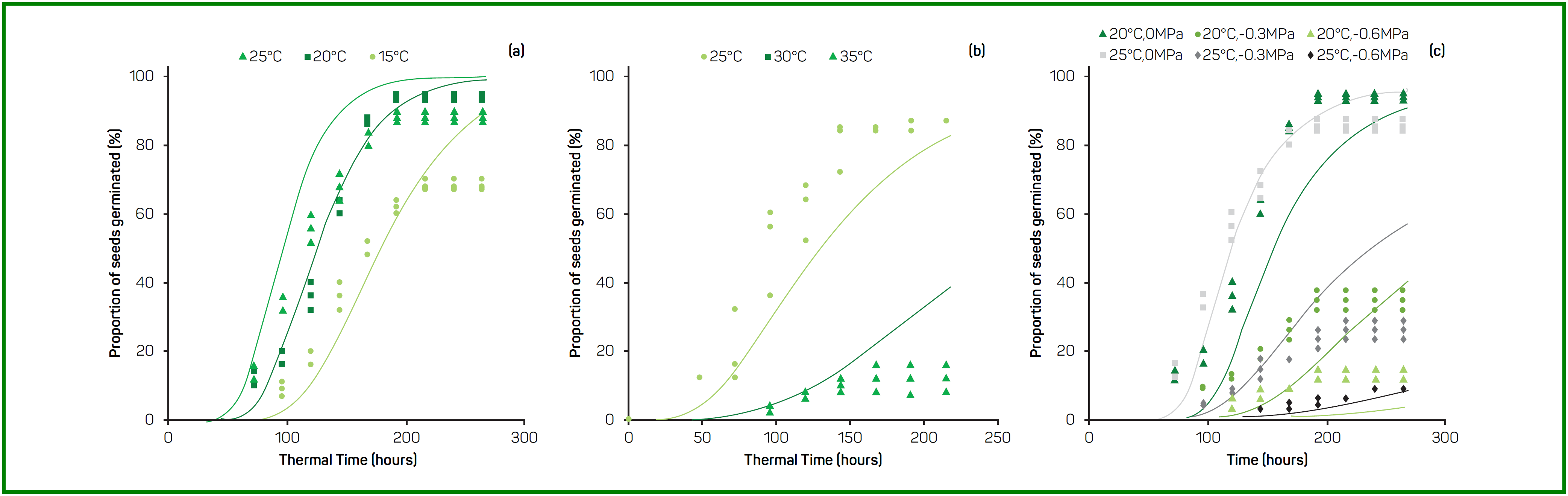
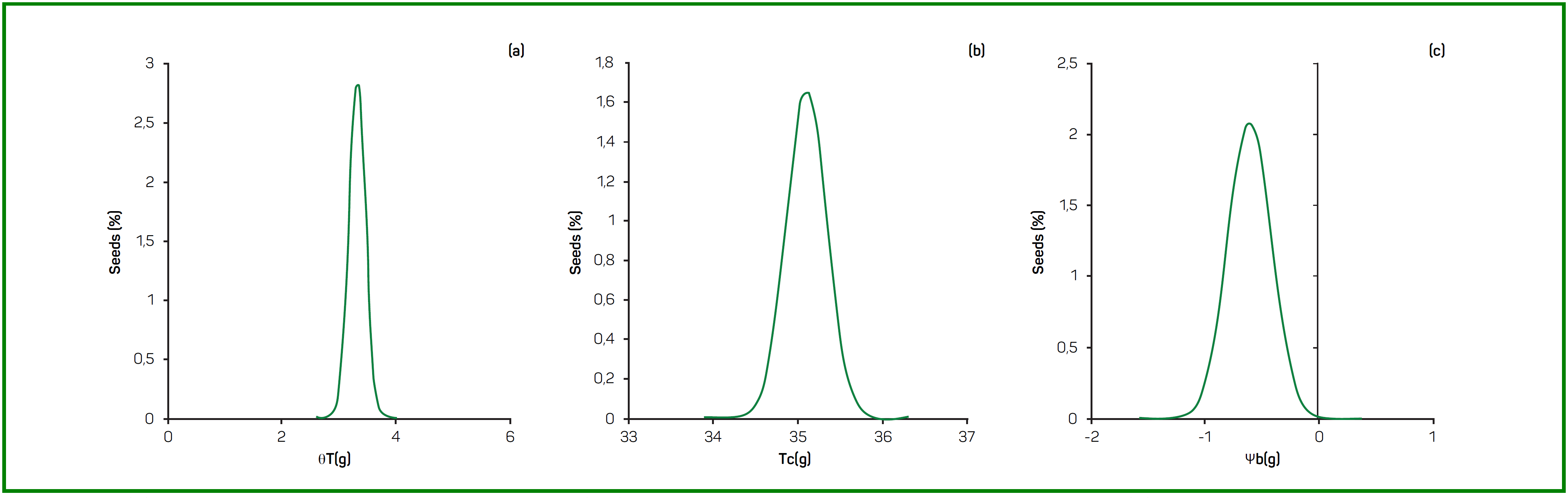
The germination pattern of P. minor seeds was evaluated using thermal time models. Seeds were subjected to both sub-optimal (15–25°C) and supra-optimal (25–35°C) temperature ranges. The germination response exhibited a temperature-dependent pattern. The thermal time required for seed germination followed a normal distribution, with the median thermal time representing the time needed for 50% of seeds to germinate. Germination was most rapid at 20°C and declined at both 15°C and 35°C, resulting in increased T (50) values at the temperature extremes (Figure 1a-b). The spread of the distribution reflected variation in thermal time requirements among individual seeds (Figure 2a-b). The model parameters presented in Table 1 highlight the strong impact of temperature on seed germination. This is evident from the high coefficient of determination values (R² = 0.92–0.94) and the estimated thermal limits, with a base temperature of 3.5 °C and a ceiling temperature of 35.3°C (Figure 1a-b).
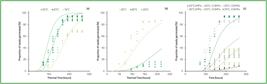
Germination dynamics of Phalaris minor seeds (a) Germination response under sub-optimal temperature conditions with T50 values of 172, 132, and 114 h at 15, 20, and 25°C, respectively (b) Germination response under supra-optimal temperature conditions (c) Germination patterns simulated using the Hydrothermal Time (HTT) model.
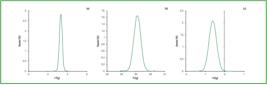
(a) Normal distribution of thermal time (θT) requirements within the seed population, (b) distribution of ceiling temperature (Tc) modeled using a normal probability function, and (c) normal distribution of base water potential (Ψb), showing variability in water potential thresholds for germination in Phalaris minor
Estimated values of thermal time (θT), base temperature (Tb), ceiling temperature (Tc), hydro time (θH), hydrothermal time (θHT), and base water potential (Ψb) for Phalaris minor seeds. R² indicates the coefficient of determination, while σ refers to the standard deviation
Phalaris minor, a winter annual, germinates and grows during the cool season. Its seeds remain dormant at high summer temperatures, emerging in autumn when cooler conditions provide the favorable environmental cue (Ohadi et al., 2010). Its optimal germination occurs within a specific range, flourishing between 15 and 25°C, but struggling below 10°C and exceeding 35°C (Gharde et al., 2023). Population-based threshold models provide a framework for environmentally friendly weed control by confirming the significance of minimum temperature and seasonality. They offer the potential to design targeted herbicide programs specifically for wheat-fallow rotations, aiming to control a high proportion of P. minor seedlings with fewer applications than the current standard (three or four), promoting eco-friendly practices, and cutting production costs. Future research can further refine the models and their application (Afzal et al., 2022). Interestingly, research conducted by Gharde et al. (2023) found that P. minor infestation is less severe in taller wheat varieties compared to later-sown, semi-dwarf counterparts. This suggests P. minor's competitiveness increases in crops sown later in the season, when conditions better suit its germination and growth (Gharde et al., 2023).
Temperature and water potential
In the second experiment, the Hydrotime (HT) model accurately predicted P. minor seed germination under varying water potentials at two temperatures (20°C and 25°C). This accuracy is reflected in the high coefficient of determination values (R2 = 0.89 to 0.92, Table 1). Building on these findings, the Hydrothermal Time (HTT) model successfully integrated the effects of temperature and water potential, resulting in the convergence of germination responses into unified curves following normalization (Figure 2c). Notably, the HTT model showed that temperature and water potential have additive, interchangeable effects on germination, with different combinations producing similar outcomes when their combined influence is equivalent (Figure 1c).
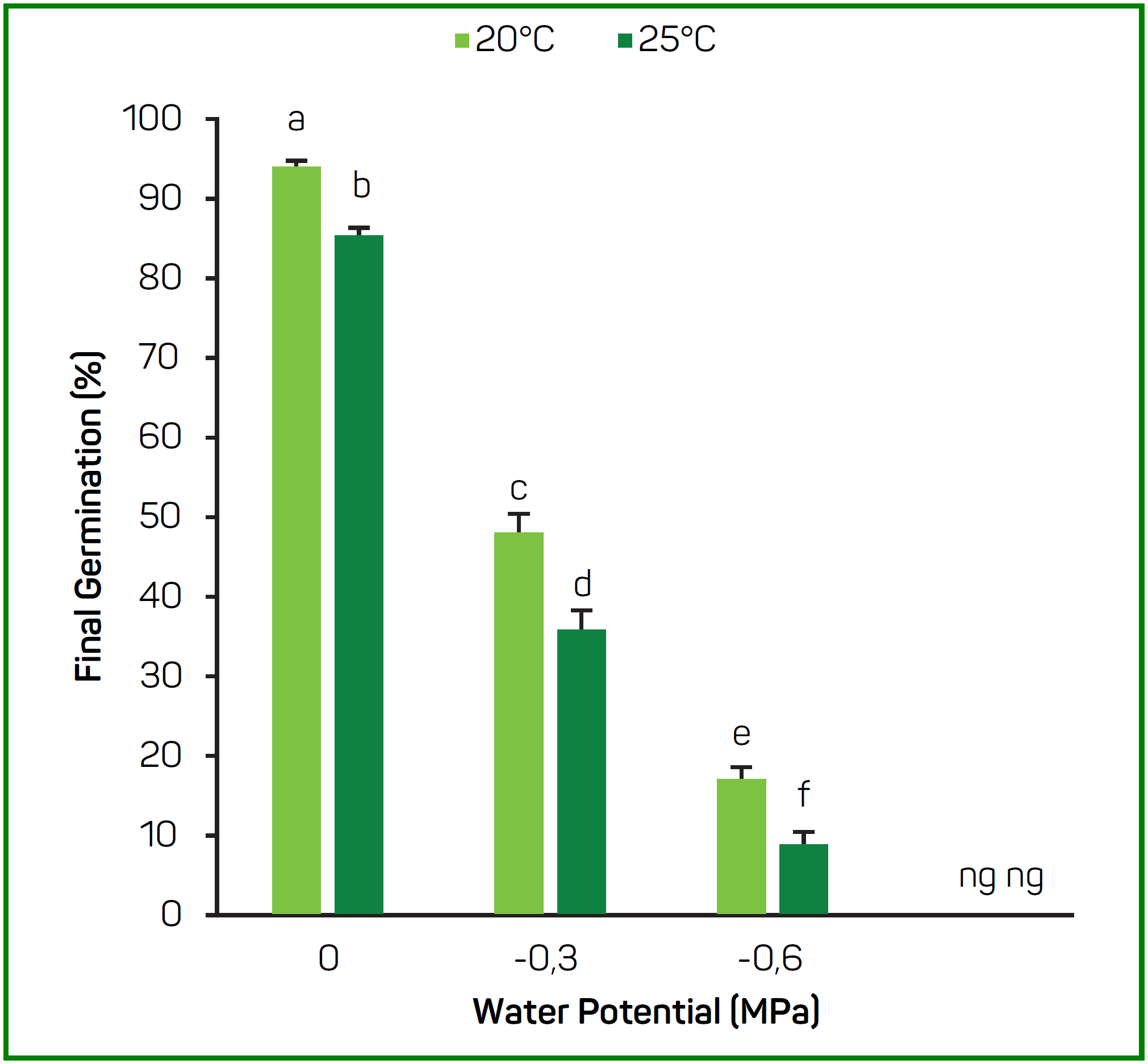
A clear temperature-dependent response was observed, as the hydrotime constant (θH) increased with decreasing temperature, indicating slower germination under cooler conditions. Likewise, the base water potential for 50% germination (ψb50) shifted slightly toward less negative values as temperature decreased, changing from −0.68 MPa at 25 °C to −0.71 MPa at 20 °C (Table 1; Figure 1c). Furthermore, a clear linear trend was found between germination rates (GR50) and temperature, with the regression lines intersecting at a base temperature (Tb) of 3.5°C (Figure 1c). ANOVA indicated that temperature and water potential had significant effects on germination, and their interaction was also significant (p ≤ 0.05). Tukey's HSD test was used for mean comparisons, and homogeneous grouping letters indicate significant differences among the combined temperature and water potential treatments (Figure 3).
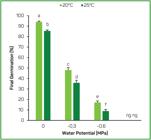
Germination response of P. minor at different temperatures and water potentials. Bars show mean germination ± SE, and letters above the bars indicate groups that are not significantly different (Tukey's HSD test, P ≤ 0.05). Non-germinated seeds are labeled as "ng"
Seed germination of P. minor also declined progressively under osmotic stress. The osmotic potentials required to cause a 50% reduction in germination were calculated as 0.08, 0.25, and 0.32 MPa (Rezvani et al., 2021). Even under severe osmotic stress (-2 MPa), approximately 5% of the seeds were able to germinate, indicating a considerable level of tolerance to water deficit. Among abiotic factors, drought is considered one of the most significant constraints to seed germination and seedling establishment (Rezvani et al., 2021). The interaction of temperature and water potential affects Phalaris minor germination, with cooler temperatures and moderate moisture favoring emergence, while high temperatures combined with water deficit restrict germination, as reported in previous studies (Ohadi et al., 2010; Derakhshan et al., 2014).
During sowing of autumn crops like wheat and canola, temporary soil moisture deficits may limit Phalaris species emergence, with implications for P. minor under future climate scenarios. Although elevated CO2 concentrations may enhance growth in C3 weeds such as P. minor, increasing temperatures can offset this advantage by limiting germination and early seedling establishment (Gharde et al., 2023). Temperature-driven changes may also influence herbicide performance, as warmer conditions can alter weed physiology and reduce herbicide efficacy (Peters et al., 2014). These responses are consistent with earlier reports showing that temperature interacts strongly with agronomic practices, including crop rotation and tillage, to influence weed emergence patterns (Xu et al., 2019). For example, rotations such as rice–rapeseed have been shown to suppress P. minor germination and reduce the soil seed bank under specific temperature regimes (Xu et al., 2013).
Temperature and light
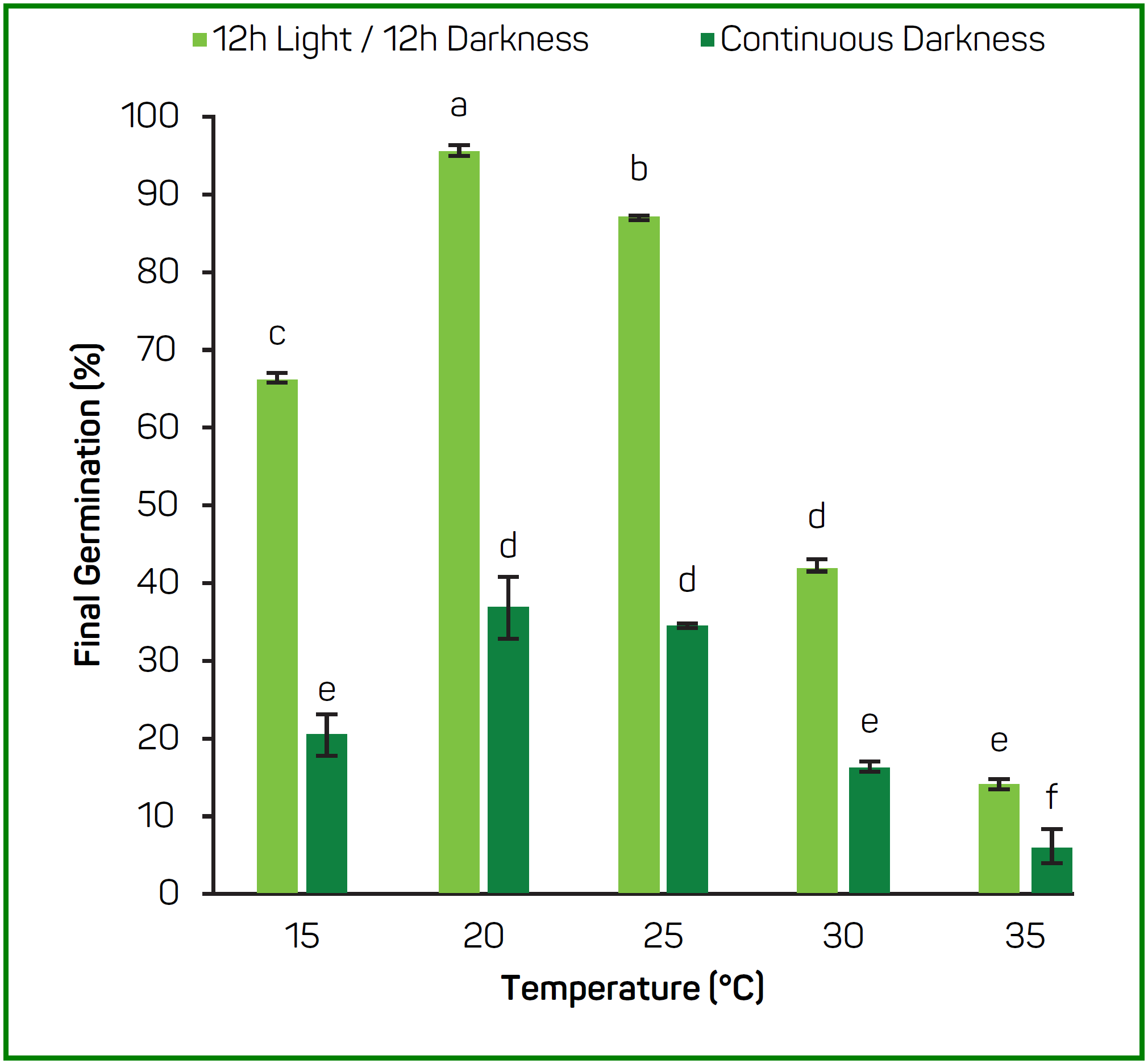
Statistical analysis revealed significant effects of light, temperature, and their interaction on germination (p ≤ 0.05). Seeds exposed to light showed markedly higher germination rates than those kept in complete darkness. Germination of P. minor declined as the temperature rose above 25 °C, with the highest germination (95%) observed at 20°C under continuous light. In contrast, the lowest germination (7%) was recorded at 35°C under dark conditions (Figure 4). Seeds germinated more under light/dark conditions than in darkness, indicating that soil disturbance in fields may enhance germination. Light plays a critical role in the germination of Phalaris species, with significantly lower germination observed under complete darkness than in light/dark conditions (Alshallash, 2018). Germination of Phalaris minor was strongly promoted by light and suppressed in darkness, suggesting that some seeds exhibit light-sensitive dormancy. This response is consistent with previous findings and reflects Phytochrome-mediated dormancy regulation (Finch-Savage and LeubnerMetzger, 2006). Temperature is another key factor, as constant regimes between 10–25°C favour germination in P. minor (Derakhshan et al., 2014). In this study, it was also observed that fluctuating temperatures promoted higher germination than constant temperatures. Consistent with previous studies, even brief light exposure during tillage stimulated Phalaris germination, highlighting the combined effect of light and temperature on emergence.
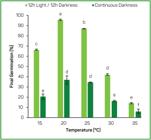
Germination response of P. minor to different temperatures and light/dark period. Bars show mean germination ± SE, and letters above the bars indicate groups that are not significantly different (Tukey's HSD test, P ≤ 0.05).
Soil depth
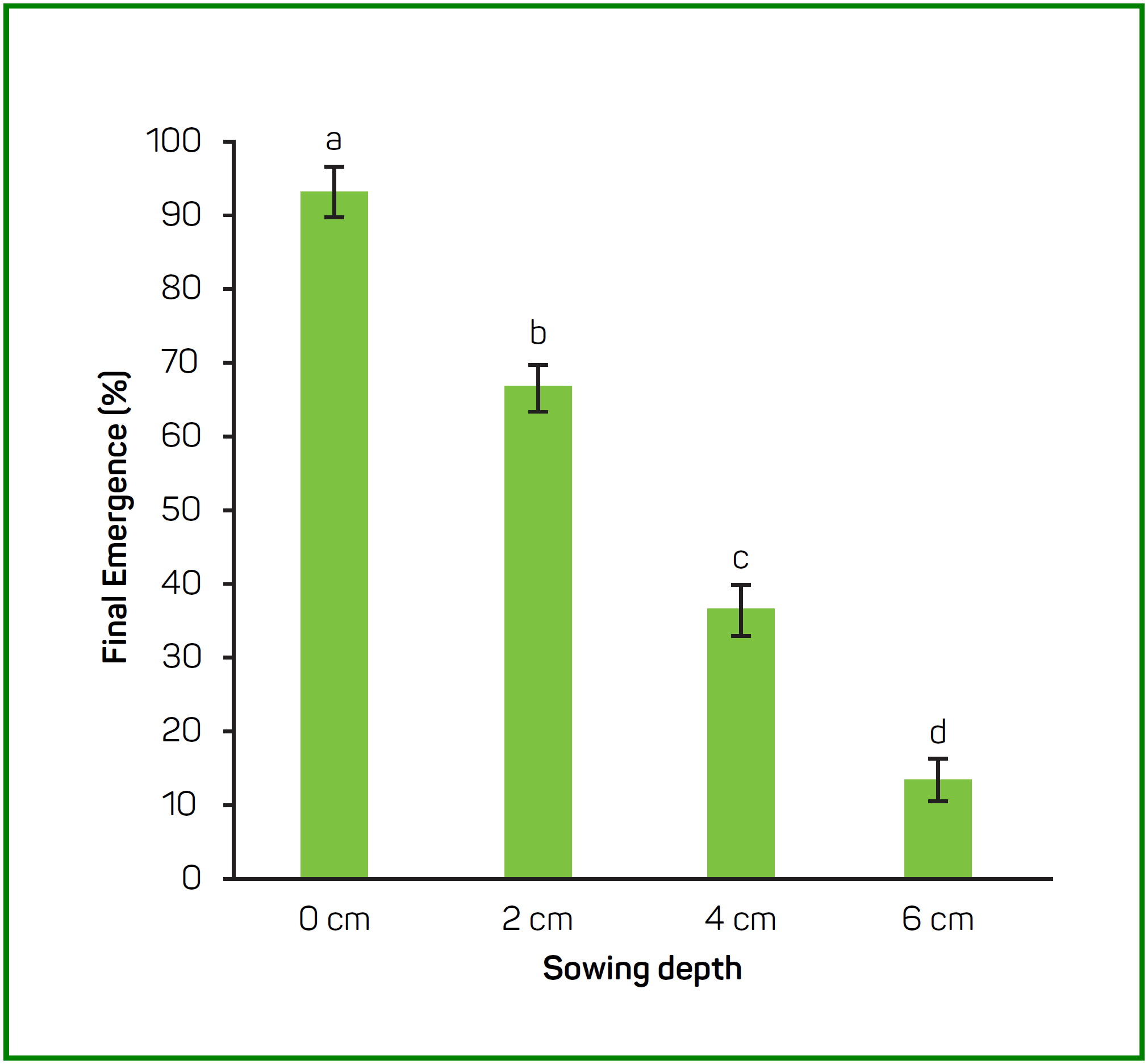
To assess the effect of light and darkness on seedling emergence under field conditions, P. minor seeds were buried at different soil depths. Emergence patterns varied significantly with depth, showing the highest emergence at 0 and 2 cm, followed by a steady decline as burial depth increased to 6 cm (Figure 5). Deeply buried seeds, particularly smaller seeds, struggle to emerge due to limited energy reserves. Fluctuating temperatures signal seeds near the soil surface to emerge successfully (Humphries et al., 2018). At greater depths, emergence declines due to reserve depletion, oxygen limitation, and restricted gas diffusion, with carbohydrate stores playing a crucial role in supporting seedlings (Jørgensen et al., 2019). Light can also influence emergence below the soil surface, while poor aeration in deeper layers further restricts seedling establishment (Pedersen et al., 2021). These results indicate that the shallow seed bank contributes most to weed establishment, suggesting that management strategies such as deeper sowing, residue mulching, or maintaining dense ground cover could help suppress emergence and reduce crop competition (Lamego et al., 2024). Wider validation under diverse weather and soil management scenarios, such as conventional tillage with deeper seed burial, is necessary to fine-tune the timing of control measures for P. minor (Oreja et al., 2024).
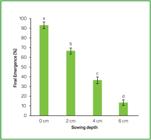
Effect of seed burial depth on the emergence of P. minor. Bars show mean emergence ± SE, and letters above the bars indicate groups that are not significantly different (Tukey's HSD test, P ≤ 0.05)
Conclusions
This study demonstrates that the Hydrothermal Time (HTT) model reliably described the germination behavior of P. minor across diverse temperature, soil moisture, and light conditions. Germination was highest at 20 and 25 °C under moderate moisture and light, while extreme temperatures, low water availability, or darkness strongly limited emergence. These results emphasize how environmental factors interact to shape seedling emergence and influence seedbank dynamics. These insights enhance understanding of P. minor seedbank dynamics and can support accurate prediction of weed emergence under varying field conditions. Such knowledge is directly applicable to optimizing agronomic practices, including sowing timing, irrigation management, and integrated weed control, thereby contributing to more effective and sustainable weed management in the context of changing climatic conditions.
Data availability
All data supporting the findings of this study are available in main text of this article.
Acknowledgements
We thank Dr. Kent J. Bradford and Pedro Bello from the University of California, Davis, USA, for providing access to the models used for data analysis and the opportunity for scientific collaboration of scientific exchange.
References’
-
Abbas T, Nadeem MA, Tanveer A, Ali HH, Farooq N. Role of allelopathic crop mulches and reduced doses of tank-mixed herbicides in managing herbicide-resistant Phalaris minor in wheat. Crop Prot. 2018;110:245-50. Available from: https://doi.org/10.1016/j.cropro.2017.06.012
» https://doi.org/10.1016/j.cropro.2017.06.012 -
Afzal I, Akram M, Javed T, Ali F, Kalaji HM, Wrobe J et al. Quantifying the germination response of Parthenium hysterophorus at various temperatures and water potentials by using population-based threshold model. Front Plant Sci. 2022;13:961-1378. Available from: https://doi.org/10.3389/fpls.2022.961378
» https://doi.org/10.3389/fpls.2022.961378 -
Ali F, Afzal I, Khaliq A, Naveed M. Predicting germination and emergence patterns of Leptochloa chinensis using population-based threshold models. Adv Weed Sci. 2024;42:1-8. Available from: https://doi.org/10.51694/AdvWeedSci/2024;42:00036
» https://doi.org/10.51694/AdvWeedSci/2024;42:00036 -
Alshallash KS. Germination of weed species (Avena fatua, Bromus catharticus, Chenopodium album and Phalaris minor) with implications for their dispersal and control. Ann Agric Sci. 2018;63:91–97. Available from: https://doi.org/10.1016/j.aoas.2018.05.003
» https://doi.org/10.1016/j.aoas.2018.05.003 -
Boddy LG, Bradford KJ, Fischer AJ. Population-based threshold models describe weed germination and emergence patterns across varying temperature, moisture, and oxygen conditions. J Applied Ecol. 2012;49:1225-36. Available from: https://doi.org/10.1111/j.1365-2664.2012.02206.x
» https://doi.org/10.1111/j.1365-2664.2012.02206.x - Bradford KJ, Pedro B. Applying population-based threshold models to quantify and improve seed quality attributes. Cambridge: Burleigh Dodds; 2022.
-
Bradford KJ. Applications of hydrothermal time to quantifying and modelling seed germination and dormancy. Weed Sci. 2002;50(2):248-60. Available from: https://doi.org/10.1614/0043-1745(2002)050[0248:AOHTTQ]2.0.CO;2
» https://doi.org/10.1614/0043-1745(2002)050[0248:AOHTTQ]2.0.CO;2 - Bradford KJ. Seed development and germination. New York: Marcel Dekker; 1995.
-
Dadrasi A, Chaichi M, Nehbandani A, Soltani E, Nemati A, Salmani F et al. Global insight into understanding wheat yield and production through agro-ecological zoning. Scientific Reports. 2023;13(1):1-17. Available from: https://doi.org/10.1038/s41598-023-43191-x
» https://doi.org/10.1038/s41598-023-43191-x -
Derakhshan A, Gherekhloo J, Vidal RA, DePrado R. Quantitative description of the germination of littleseed canarygrass (Phalaris minor) in response to temperature. Weed Sci. 2014;62:250–7. Available from: https://doi.org/10.1614/WS-D-13-00055.1
» https://doi.org/10.1614/WS-D-13-00055.1 -
Dyer WE. Exploiting weed seed dormancy and germination requirements through agronomic practices. Weed Sci. 2017;43:498-503. Available from: https://doi.org/10.1017/S0043174500081534
» https://doi.org/10.1017/S0043174500081534 -
Finch-Savage WE. Leubner-Metzger G. Seed dormancy and the control of germination. New Phytol. 2006;171(3):501-23. Available from: https://doi.org/10.1111/j.1469-8137.2006.01787.x
» https://doi.org/10.1111/j.1469-8137.2006.01787.x -
Gharde Y, Dubey RP, Singh PK, Mishra JS. Littleseed canarygrass (Phalaris minor Retz.), a major weed of rice-wheat system in India is predicted to experience range contraction under future climate. Int J Pest Manag. 2023;71(3):295-306. Available from: https://doi.org/10.1080/09670874.2023.2199258
» https://doi.org/10.1080/09670874.2023.2199258 -
Gummerson RJ. The effect of constant temperatures and osmotic potential on the germination of sugar beet. J Exp Bot. 1986;37(6):729-41. Available from: https://doi.org/10.1093/jxb/37.6.729
» https://doi.org/10.1093/jxb/37.6.729 -
Huang Z, Liu S, Bradford KJ, Huxman TE, Venable DL. The contribution of germination functional traits to population dynamics of a desert plant community. Ecology. 2016;97(1):250–61. Available from: https://doi.org/10.1890/15-0744.1
» https://doi.org/10.1890/15-0744.1 -
Humphries T, Chauhan BS, Florentine SK. Environmental factors effecting the germination and seedling emergence of two populations of an aggressive agricultural weed; Nassella trichotoma. PloS One. 2018;13(7):491-500. Available from: https://doi.org/10.1371/journal.pone.0199491
» https://doi.org/10.1371/journal.pone.0199491 -
Jørgensen MS, Labouriau R, Olesen B. Seed size and burial depth influence Zostera marina L. (eelgrass) seed survival, seedling emergence and initial seedling biomass development. PloS One. 2019;14(4);1-16. Available from: https://doi.org/10.1371/journal.pone.0215157
» https://doi.org/10.1371/journal.pone.0215157 -
Karimmojeni H, Taab A, Rashidi B, Bazrafsha AH. Dormancy breaking and seed germination of the annual weeds Thlaspi arvense, Descurainia sophia and Malcolmia Africana (Brassicaceae). J Plant Prot Res. 2014;54(2):179-87. Available from: https://doi.org/10.2478/jppr-2014-0028
» https://doi.org/10.2478/jppr-2014-0028 -
Lamego FP, Caratti FC, Roma-Burgos N, Scherner A, Zabala-Pardo D, Avila LA, Bastiani MO. Factors affecting seed germination of Eragrostis plana populations. Adv Weed Sci. 2024;41:1-10. Available from: https://doi.org/10.51694/AdvWeedSci/2023;41:00020
» https://doi.org/10.51694/AdvWeedSci/2023;41:00020 -
Liu S, Bradford KJ, Huang Z, Venable DL. Hydrothermal sensitivities of seed populations underlie fluctuations of dormancy states in an annual plant community. Ecology. 2020;101(3):29-58. Available from: https://doi.org/10.1002/ecy.2958
» https://doi.org/10.1002/ecy.2958 -
Ohadi S, Mashhadi HR, Afshari RT, Mesgaran MB. Modelling the effect of light intensity and duration of exposure on seed germination of Phalaris minor and Poa Annua: modelling seed germination in response to light. Weed Res. 2010;50(3):209-17. Available from: https://doi.org/10.1111/j.1365-3180.2010.00769.x
» https://doi.org/10.1111/j.1365-3180.2010.00769.x -
Oreja FH, Genna NG, Gonzalez-Andujar JL, Wuest SB, Barroso J. A hydrothermal model to predict Russian thistle (Salsola tragus) seedling emergence in the dryland of the Pacific Northwest (USA). Weed Sci. 2024;72(1):108-12. Available from: https://doi.org/10.1017/wsc.2023.67
» https://doi.org/10.1017/wsc.2023.67 -
Pedersen O, Sauter M, Colmer TD, Nakazono M. Regulation of root adaptive anatomical and morphological traits during low soil oxygen. New Phytol. 2021;229(1);42-9. Available from: https://doi.org/10.1111/nph.16375
» https://doi.org/10.1111/nph.16375 -
Peters K, Breitsameter L, Gerowitt B. Impact of climate change on weeds in agriculture: a review. Agron Sust Develop. 2014;34:707–21. Available from: https://doi.org/10.1007/s13593-014-0245-2
» https://doi.org/10.1007/s13593-014-0245-2 -
Rezvani M, Nadimi S, Zaefarian F, Chauhan, BS. Environmental factors affecting seed germination and seedling emergence of three Phalaris species. Crop Prot. 2021;148:105743. Available from: https://doi.org/10.1016/j.cropro.2021.105743
» https://doi.org/10.1016/j.cropro.2021.105743 -
Soni JK, Nibhoria A, Punia SS, Yadav DB, Choudhary VK, Lalramhlimi B et al. Herbicide-resistant Phalaris minor in India: history of evolution, present status, and its management. Phytoparasitica. 2023;51:353-78. Available from: https://doi.org/10.1007/s12600-022-01039-6
» https://doi.org/10.1007/s12600-022-01039-6 -
Vázquez-García JG, Torra J, Palma-Bautista C, Alcántara-de la Cruz R, Prado RD. Point mutations and cytochrome P450 can contribute to resistance to ACCase-inhibiting herbicides in three Phalaris species. Plants. 2021;10(8):1703-13. Available from: https://doi.org/10.3390/plants10081703
» https://doi.org/10.3390/plants10081703 -
Xu G, Shen S, Zhang Y, Clements DR, Yang S, Jun L et al. Designing cropping systems to improve the management of the invasive Weed Phalaris Minor retz. Agronomy. 2019;9(12):809-14. Available from: https://doi.org/10.3390/agronomy9120809
» https://doi.org/10.3390/agronomy9120809 -
Xu G, Zhang Y, Shen S, Zhang F, Li T, Jin G. Effect of crop species and mixed ratios on morphological plasticity and competitiveness of Phalaris minor Retz." Chinese J Eco-Agric. 2013;21:1507-14. Available from: https://doi.org/10.3724/SP.J.1011.2013.30385
» https://doi.org/10.3724/SP.J.1011.2013.30385
Edited by
-
Editor in Chief:
Carol Ann Mallory-Smith
-
Associate Editor:
Silvia Fogliatto