 Evaluation of Attract-and-Kill Devices to Control Gyropsylla spegazziniana (Hemiptera: Aphalaridae) with Beauveria bassiana: an Inoculative Strategy
Abstract
Gyropsylla spegazziniana is an important pest of yerba mate Ilex paraguariensis, due to its feeding and reproductive habits. It substantially impacts the development of the plant by forming galls in the young leaves and affecting the production and quality of the leaves, resulting in economic loss to the growers. Since yerba mate is consumed in natura, non-chemical ways to control this insect are needed. Previous laboratory studies showed the potential of attract-and-kill devices covered with conidiospores of the entomopathogen Beauveria bassiana to control G. spegazziniana. In this study, we conducted laboratory and field tests to evaluate the potential of two designs of devices (rectangular and roof-shaped) to manage G. spegazziniana populations and their capacity to protect conidiospores from direct sunlight (specially UV-B). We also conducted laboratory tests to evaluate horizontal transmission from living infected individuals and mycosed cadavers to healthy adult insects. Field tests were conducted in February and March, when the insect populations were at their highest annual densities. Attraction and infection levels were similar for both types of dispensers in both the laboratory and field tests. However, conidiospore viability last longer in the roof-shaped dispensers, which shaded the spores from direct sunlight. We also observed in laboratory high levels of horizontal transmission from both infected alive individuals and mycosed cadavers, with mortality rates reaching 87% and 72%, respectively. The results demonstrate the potential of attract-and-kill devices covered with B. bassiana conidiospores to control G. spegazziniana in yerba mate plantations.
Keywords:
autoinoculation; entomopathogenic fungi; biological control;
Ilex paraguariensis
HIGHLIGHTS
Exploring new shapes of attraction-and-infection devices can enhance fungal viability.
High hates of horizontal transmission can be found even with small sources of inoculum.
Methodology to bring adhesive traps from the field.
INTRODUCTION
Yerba mate Ilex paraguariensis St. Hil. (Aquifoliaceae) is a plant native from South America and it is socially, economically, environmentally, and culturally significant in many Latin American countries. The leaves are used to make beverages and has great potential for herbal medicine industry [1 – 3].
Gyropsylla spegazziniana (Lizer & Trelles) (Hemiptera: Aphalaridae) is an important pest of yerba mate, attacking not only trees but seedlings in greenhouses as well. Prior to oviposition, female inject a toxic saliva into the tissue of the young shoots which then induces globous gall formation [4]. The galls provide to the nymphs a protected environment to grow. Heavy gall formation reduces growth in plants and causes early leaf fall, affecting the production and quality of harvestable leaves resulting in economic loss [4 - 6].
Since it is consumed in natura, in Brazilian yerba mate plantations chemical insecticides are not allowed to be applied [7]. Our previous in vitro studies demonstrated a high susceptibility of nymphs and adults of G. spegazziniana to conidiospores of Beauveria bassiana (Bals.-Criv.) Vuill. (Hypocreales: Cordycipitaceae) strain Unioeste 44 [8 – 10]. Despite B. bassiana Unioeste 44 showed high virulence in laboratory tests, dried pulverized conidiospores were only effective when applied in high concentrations and with certain adjuvants [10]. The amount of product required to protect the crop would be too expensive and could also negatively impact non-target organisms. Several studies have demonstrated the potential for so-called ‘Attract-and-Kill’ devices (AKDs) that are placed in strategical spots, have an attractant to insects (color, pheromones…), and have entomopathogens (mostly entomopathogenic fungi) associated on it, so the insect contaminate itself when they land on it. These AKDs could be an economical and effective strategy to manage G. spegazziniana as it was observed with Diaphorina citri [11 – 15].
G. spegazziniana is visually attracted to yellow color [16] and previous laboratory tests showed that yellow-colored AKDs coated with B. bassiana Unioeste 44 conidiospores could cause high mortality [17, 18]. However, while the Unioeste 44 strain showed high virulence in laboratory tests, environmental factors, such as temperature, humidity, and solar radiation can affect its viability and pathogenicity under field conditions [19]. In this study, we conducted laboratory and field trials to evaluate the efficacy of two designs of AKDs: one with rectangular shape and the other with a roof shape (aiming the protection of the conidia from sunlight). We also evaluated horizontal transmission of the fungus through the insect population with different sources of inoculum in laboratory.
MATERIAL AND METHODS
Study sites
Laboratory bioassays were conducted in the Laboratory of Agricultural Biotechnology at West Paraná State University, Cascavel, Paraná, Brazil. Field tests were conducted in a commercial yerba mate plantation (approx. 600 m2, unknown varieties of yerba mate, 15 years old plants, without any phytosanitary treatment) in Cascavel (24° 56’ 18,90” S; 53° 29’ 19,93” W) and the trees ordered in rows (2 m between plants, and 3 m between rows). All tests were repeated twice.
Fungus mixture
Beauveria bassiana Unioeste 44 strain (B. bassiana sensu lato - GenBank sequence OK004060) were from collection of entomopathogenic fungi (Laboratório de Biotecnologia Agrícola/Unioeste). This fungus was previously selected as the most virulent for G. spegazziniana [9]. The mixture used to coat the cards had 50% conidiospores of B. bassiana strain Unioeste 44 and 50% (in weight) micronized diatomaceous earth (particles size 500μm, 86,2% of silica, https://vetscience.com.br/produto/fisicontrol/) (3 × 10¹⁰ conidiospores g-1 of mixture). The fungus was grown on conidia production medium [20] in Petri dishes at 26 ± 1 °C; 12-h photophase cycle for 7–10 days. Conidia were harvested with a spatula and kept in a desiccator with silica gel for seven days (humidity ~ 18%). The conidiospores were stored at -20 °C in hermetic containers (6 × 10¹¹ conidia g-1; 88% viability).
To evaluate the germination rate of the conidiospores (viability), samples of the dry fungus were applied in sterilized glass tubes containing 10 mL of distilled water + Tween 80 (0.05%) and vortexed for two minutes. The conidia concentration was determined using a Neubauer hemocytometer, and 200 μl of 1 × 10⁶ conidia mL-1 suspension (concentration adjusted) was inoculated on RODAC® (Replicate Organism Detection and Counting) plates containing PDA medium. After approximately 20 h of incubation period in growth chamber (26 ± 1 °C; 12-h photophase), germinated and non-germinated conidia were counted. A conidiospore was considered germinated if the germ tube was longer than the conidial length or width.
Yerba mate seedlings and insects
Yerba mate seedlings (20 cm high) were cultivated in 700 mL plastic cups filled with potting soil (mineral soil, earthworm humus, charcoal, and ground pine bark), irrigated every two days, and kept outdoors with a covering to protect from the rain. To obtain the insects used in laboratory tests, infested shoots with developed galls were manually collected in a commercial yerba mate plantation where no fungus of chemical insecticides have been applied. The galls were taken to the laboratory and transferred to plastic boxes with a screened lid and a bottom filled with filter paper, as described by Leite & Zanol [4]. The insects were kept under controlled conditions (26 ± 1°C; 60?±?5 % RH and a 12-h daylight cycle) to complete their development to adults. Unsexed adults at 24-36 h postemergence were used in the tests [17].
Construction of the Attract-and-Kill devices
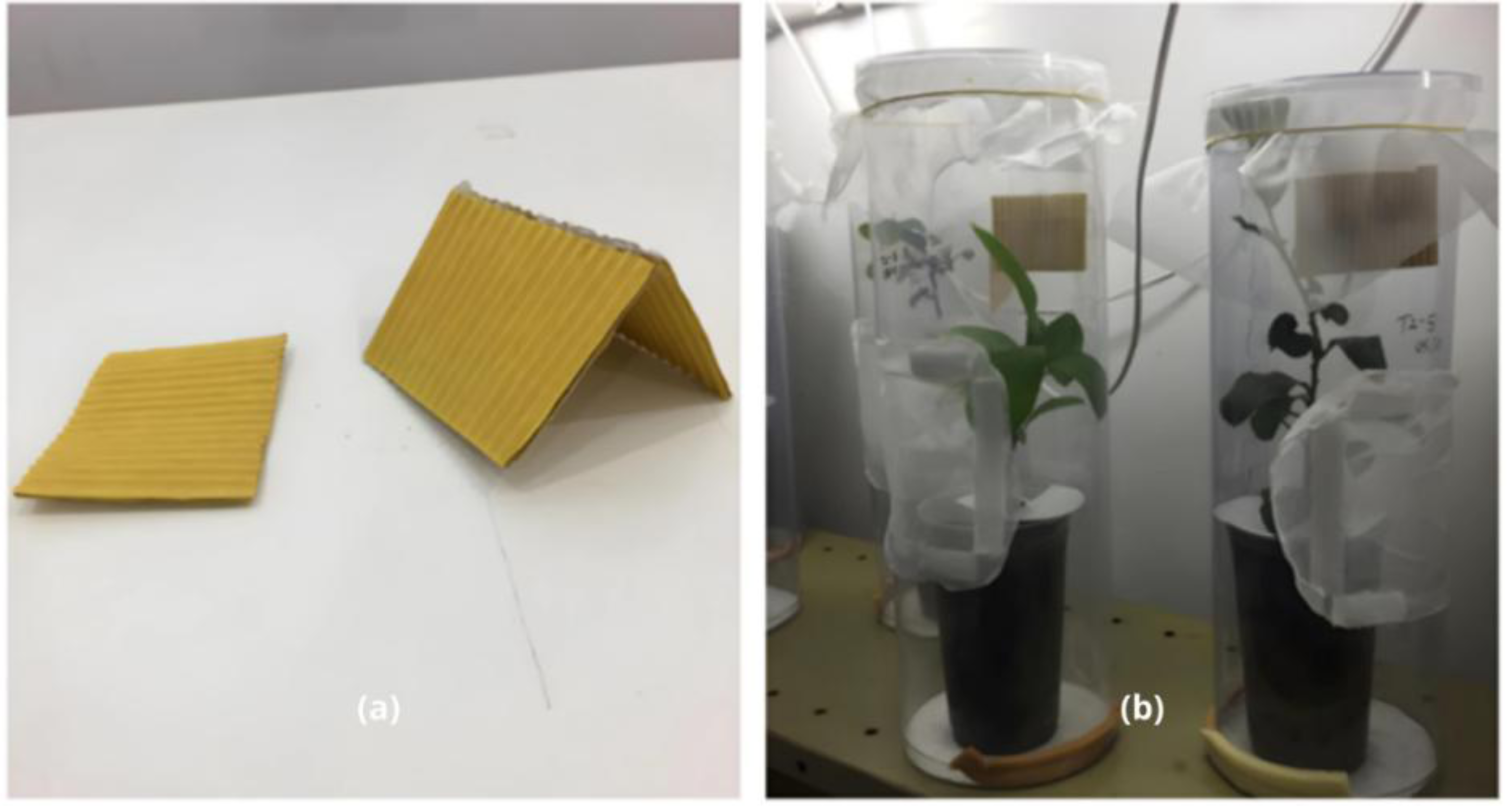
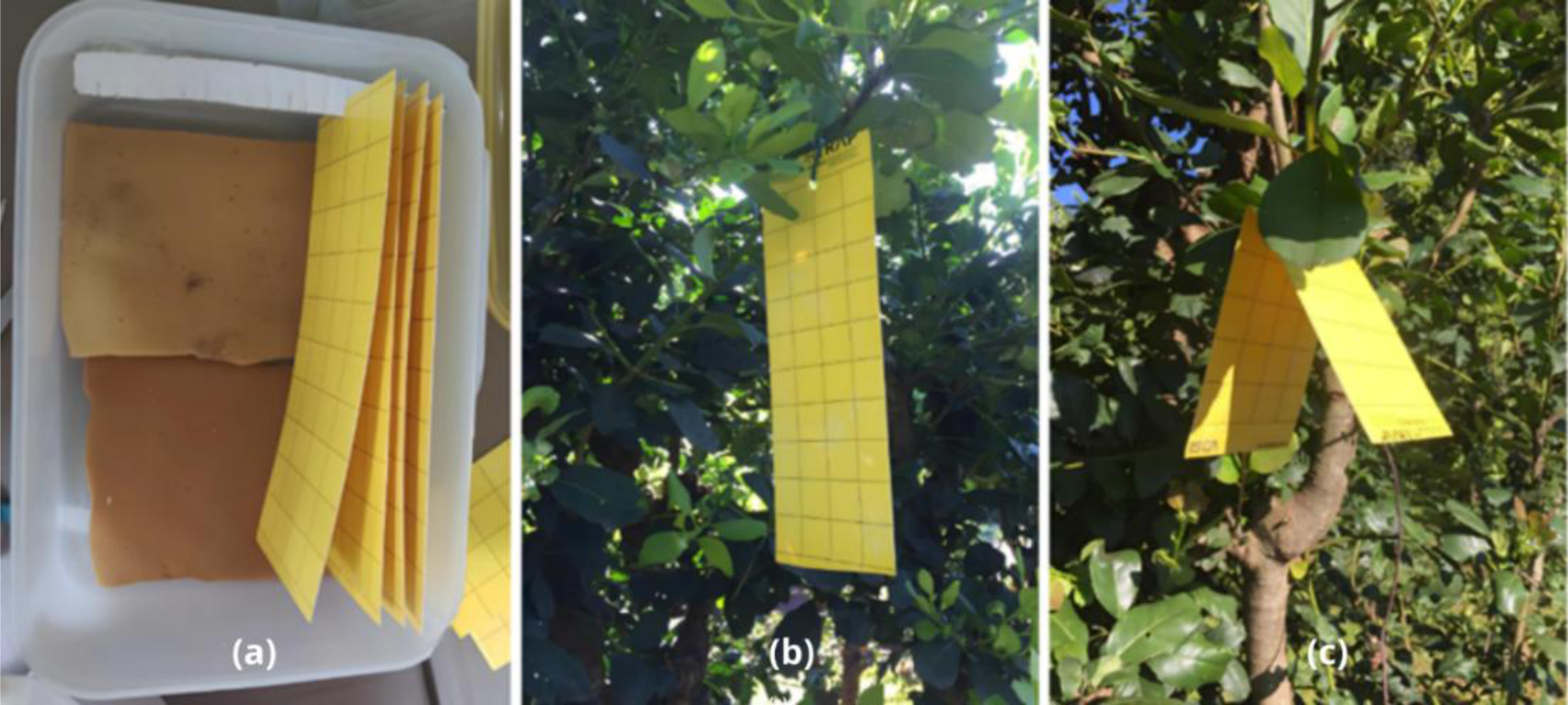
We tested two designs of AKDs: one with a rectangular shape, previously tested by Loeblein [17] in laboratory, and the other shaped like the roof of a house, based on a design used by Chow and coauthors [14] (Figure 1). The roof-shaped dispenser aimed to protect the conidiospore mixture from direct sunlight and rain. The rectangular device was made from a yellow cardboard cut to size (5 × 7 cm) and folded into shape. The roof-shaped device was constructed with the same material and two units of 5 × 7 cm yellow card were glued together, shaping a roof (Figure 1). Both sides of the rectangular and the underside of the roof-shaped device were coated with an emulsified colorless waxy coating SPLAT® (ISCA Technologies Ltd. - www.isca.com), which provided more adherence of the conidiospore mixture to the devices. The AKDs used in the field tests were made with larger pieces of yellow cardboard (ISCA Technologies Ltd.) (10 x 30 cm) but otherwise constructed the same as those used in the laboratory tests (Figure 2). SPLAT was applied with a paintbrush and after it dried, the conidiospore mixture was homogeneously applied with a sieve (35 mesh) and the excess removed with gentle agitation (approx. 1 × 10⁸ conidia/device) [9].
Attraction-and-infection devices handmade for bioassays in laboratory cages (a); PVC cages containing the device and a yerba mate plant inside, constructed to conduct bioassays in the laboratory (b).
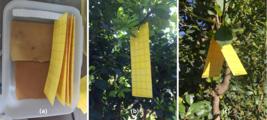
Humid chamber used to store adhesive traps removed from the field (a); Cardboard device installed on a yerba mate tree in the field (b); Roof-shaped device installed on a yerba mate tree in the field (c).
Efficacy of AKDs in laboratory tests
Cylindrical handmade cages made with transparent polyvinyl chloride (30 cm high × 12 cm wide) with voile fabric covered side openings (6 cm height × 5 cm length) and top were used for the bioassays as described by Loeblein and coauthors [17]. The devices were hung inside the cages (one per cage) with a nylon cord and a yerba mate seedling was positioned immediately below it (Figure 1). Five cages with 20 insects were used for each treatment (n = 100 insects) and the bioassay was repeated twice. In the control, insects were maintained in cages with a yerba mate seedling, without devices.
The cages were kept in controlled conditions (26 ± 1° C; 60 ± 10% RH; 12-h photophase) and were inspected on day 5, 10, and 15 to collect G. spegazziniana cadavers. The collected dead insects were surface sterilized by immersing for 20 seconds sequentially in sodium hypochlorite, 70% ethanol and distilled water, placed on moistened sterile filter paper disks in individual Petri dishes (9 cm diameter), and kept for five to seven days in a humid chamber (26 ± 1° C and 12-h photophase) to confirm the death by the fungus, allowing the development of the external mycelium and conidiogenesis. At the end of the incubation period, all mycosed and non-mycosed were assessed.
Efficacy of AKDs in yerba mate plantation
Field trials were conducted in February and March, the season when G. spegazziniana populations are at their peak level [21]. The yerba mate trees were planted approximately 5 meters equidistant from each other and the dispensers were distributed among multiple rows. A single device was hung approximately 1.5 – 2 m high in an individual yerba mate tree. A total of six devices of each shape was deployed for a 7 days period to access the viability of conidia and to detect insects contaminated by B. bassiana.
To record the temperature and relative humidity, a data logger (HOBO® model UX100-003) was installed in the middle of the test area. Data from daily solar radiation were obtained from Paraná Environmental Technology and Monitoring System (Simepar - http://www.simepar.br).
To determine if the infection of insects that visited the devices actually happened, two yellow sticky card traps (ISCA Tecnologies Ltd.) were placed approximately 1 meter on either side of each AKD containing the fungi, parallel to each other and to the device. The sticky card traps were replaced daily in the field over 10 days, returned to the laboratory and incubated in humid growth chambers with controlled conditions as described above for seven days to allow the development of the external mycelium and conidiogenesis in the captured insects, as described by Loeblein and coauthors [22]. A box was handmade to prevent one trap from sticking to another (Figure 2, a). Inside the box, cardboard structures were fixed on both extremities, where the traps could be placed, keeping a distance of approximately 2 cm from each other (Figure 2, a). The traps inside the humid chamber were examined daily and cadavers that showed evidence of mycosis were removed by cutting it off the trap and placed on selective medium (Oatmeal – Dodine – Agar) for Hypocreales-type [23].
To evaluate conidia viability collected from the field, on days 0, 1, 3, 5 and 7, a rectangular piece (2,5 × 2,5 cm) was cut from each device, stored in Falcon tubes (50 mL) and taken to the laboratory. The samples were transferred to sterilized glass tubes containing 10 mL of distilled water + Tween 80 (0.05%) and vortexed for two minutes. The conidia concentration was determined using a Neubauer hemocytometer, and 150 μl of 1 × 10⁶ conidia mL-1 suspension (concentration adjusted) was inoculated on PDA medium in RODAC® (Replicate Organism Detection and Counting) plates. After 16 - 20 h incubation period in the same growth chamber as above, germinated and non-germinated conidia were counted. A conidiospore was considered germinated if the germ tube was longer than the conidial length or width.
Horizontal transmission tests in laboratory
Horizontal transmission was evaluated using two different sources of inoculum: by mycosed cadavers and contaminated living insects. To obtain mycosed cadavers, 200 μL of a suspension with the fungus B. bassiana Unioeste 44 (1 × 10⁹ conidia mL-1 in 0.05% aqueous Tween 80®) was sprayed onto 50 adults of G. spegazziniana inside plastic containers. Spraying was performed with a micro-sprayer Sagyma® SW130 K, coupled to an air compressor (0.5 kgf cm-2), inserted into the opening of the container's lid. After spraying, the insects were transferred to a transparent PVC cage (as described above) with a yerba mate seedling maintained in climate-controlled room (26° ± 2°C; 60 ± 10% RH; 12 h photophase). Assessments were performed daily and dead insects were collected, surface sterilized as described above and maintained for 6 - 8 days in a humid chamber to trigger conidiogenesis [17]. Cadavers with B. bassiana conidia were transferred to Petri dishes sealed with Parafilm® and stored at - 20 °C until their use in the bioassays.
To obtain contaminated living insects, approximately 50 adults were placed in plastic containers with the inner surface and the lid (5 cm height x 5 cm diameter) covered by the adherent emulsified wax SPLAT® and 0.1g conidia of B. bassiana Unioeste 44, ensuring the contact of the insect with the fungus. After 30 minutes of exposure, the insects were collected and used in the bioassays.
A yerba mate seedling was positioned inside the PVC cages as described previously. The base of the seedling was covered with a filter paper disc (9 cm diameter) to provide visual contrast and facilitate viewing any cadavers that had fallen off the plant. To evaluate the level of horizontal transmission from sporulating cadavers, 1, 3, 5, and 10 cadavers (each cadaver density considered a different treatment) were attached to a piece of filter paper which was affixed to the yerba mate seedling with an entomological pin. After the cadavers were pinned to the seedling (stem and leaves), 20 healthy adults of G. spegazziniana were released inside the cages containing different densities of sporulating cadavers.
To evaluate transmission from living adults, we used the same methodology described above, but now with living contaminated adults as a source of inoculum. In the control treatment, 20 uninfected insects were released in cages without adding the contaminated insects. A positive control group, which contained 20 infected adults was also included in the experimental design. Every two days, dead insects were removed, immersed in hypochlorite, ethanol and distilled water and incubated in the humid chamber as described above. The cadavers were observed under a stereomicroscope to confirm mycosis and sporogenesis. The bioassays were conducted twice on different dates.
Statistical analysis
All data were analyzed for normality and homogeneity (Shapiro-Wilk test and Bartlett test, respectively) and all analysis were performed using the Statistica® software version 7.0 (Statsoft 2004) and R (R Core Team 2020). Laboratory mortality was analyzed by repeated measures analysis of variance (ANOVA) and the means were compared by Tukey-HSD test (p < 0.05). The total mortality in the laboratory bioassays was analyzed by one-way ANOVA followed by Tukey-HSD test (p < 0.05) and the number of mycosed cadavers was analyzed by independent t-Test. Spore viability data collected from the field devices were normalized by “log x” on 10-base transformation and analyzed by Scott-Knott test (p < 0.05). The data of infected insects collected daily in the field was transformed to Square-root and analyzed by Repeated Measures ANOVA followed by Tukey-HSD test (p < 0,05).
To analyze horizontal transmission in laboratory, when required, data were transformed into arcsen . Mean values were analyzed by one-way ANOVA and compared to each other by Tukey HSD test (p<0.05). Horizontal transmission assay with contaminated living adults, the mortality obtained in the positive control was used to estimate the horizontal transmission rate (TR) according to the formula: TR = total treatment mortality (%) – donor mortality (%).
RESULTS
Efficacy of AKDs in laboratory tests
During the initial 5 days, total mortality (F4,42 = 0.80; p = 0.533) and confirmed (mycosed) mortality (F2,28 = 0.5954; p = 0.558) in the different devices were similar compared to the control (Table 1). However, at the end of the observation time (15 days), the rectangular-shaped device had significantly higher total and confirmed mortalities compared to the roof-shaped device (F2,21 = 45.43; p < 0,000; t = 2.144; p = 0.05, respectively) in laboratory (Table 1).
Total and confirmed (mycosed) mortality of G. spegazziniana in laboratory tests with rectangular and roof-shaped devices coated with conidiospores of the entomopathogenic fungus B. bassiana.
Efficacy of AKDs in yerba mate plantation
Based on the number of insects caught on the yellow sticky card traps, we observed that similar numbers were attracted to both types of AKDs (F9,90 = 1,1589; p = 0,331). Mycosed insects (confirmed mortality) were observed in all sticky card traps placed next to the devices (Table 2). Also, after the AKDs containing conidiospores were removed from the orchard on day 7, infected G. spegazziniana continued to be caught on the traps until the end of the test on day 10 (Table 2).
Mean number (± SEM) of G. spegazziniana collected in yellow sticky card traps placed near devices coated with conidiospores of B. bassiana in the field, and percentage of those that were mycosed.
A large reduction in conidiospores viability occurred on the first day in both types of dispensers (Table 3). However, on days 3, 5 and 7, spores collected from the roof-shaped dispenser germinated significantly more compared to those from the rectangular shape (f = 18.1706 p = 0.0001; f = 88.3966 p = 0.00; f = 98.448 p = 0,00 respectively). In the last day of evaluation (day 7), spore viability was reduced by 98.9% on the rectangular dispenser and 85.5 % on the roof-shaped device (Table 3).
Percent viability of B. bassiana conidiospores (Unioeste 44) collected from rectangular and roof-shaped devices on yerba mate trees over 7 days and total viability percentage reduction after a 7 days observation period.
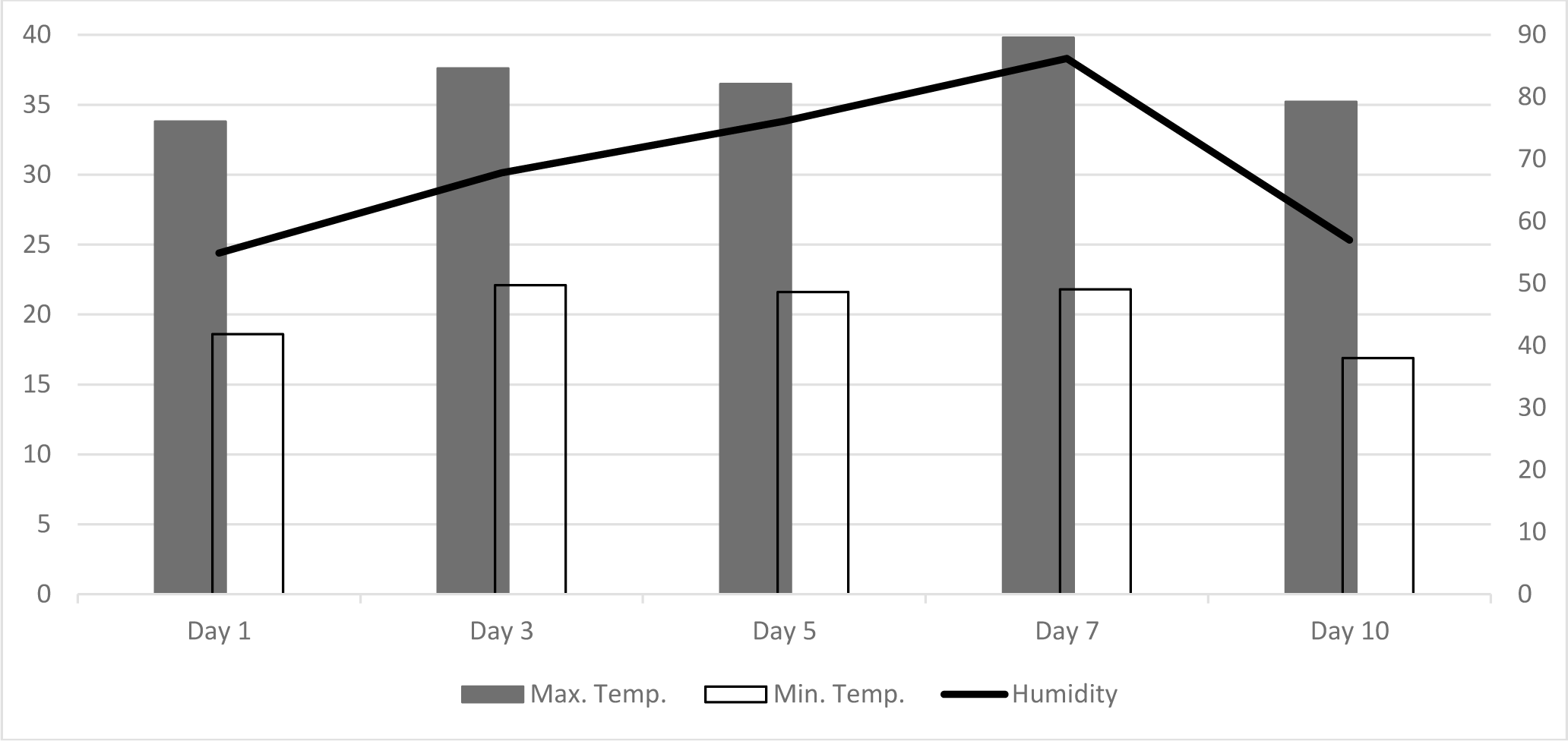
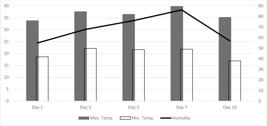
During the evaluation of conidiospore viability in the yerba mate plantation, the maximum solar radiation rate observed each day was 1048 W/m2 (day 1), 852 W/m2 (day 2), 837 W/m2 (day 3), 853 W/m2 (day 4), 925 W/m2 (day 5), 743 W/m2 (day 6) and 883 W/m2 (day 7). No rainfall was recorded during that period (Figure 3).
Horizontal transmission bioassays
Horizontal transmission was observed in cages containing both sporulating cadavers and live insects contaminated with condiospores. Infection levels were similar, regardless whether the spores originated from a cadaver or from contaminated living adults (Table 4). The different numbers of mycosed cadavers positioned in the cages have no effect on the infection levels observed (F4.40= 0.9809; p = 0.4288; F4.40= 0.3135; p = 0.8672 total and confirmed mortality, respectively). In the negative control treatment, only 15 % of insects died and their cadavers did not become mycosed, while in the positive control with infected insects, all of the individuals died and 65 % of them mycosed.
Mean total mortality of G. spegazziniana adults after being exposed to contaminated adults or sporulated cadavers
DISCUSSION
Laboratory studies have shown the potential of rectangular devices to attract-and-kill G. spegazziniana [17, 18]. Our study was the first field evaluation of AKDs containing entomopathogenic fungi to attract-and-kill this insect. The rectangular and roof-shaped devices were effective in attracting and infecting this insect under both laboratory and field conditions. The results showed that attraction and infection occurred independently of the device shape. This result corroborates with previous studies that showed high efficacy with both cylindrical dispensers [13] and roof-shaped dispensers [14] to control Asian citrus psyllid, Diaphorina citri Kuwayama 1908. The results also showed that the Unioeste 44 strain of B. bassiana had high levels of pathogenicity towards G. spegazziniana in both laboratory and field tests, corroborating with earlier laboratory studies [9, 17].
Relatively low numbers of insects were collected in the adhesive traps during the field tests. However, the purpose of the devices was to inoculate the insects and induce an epizootic in their population, not to provide immediate control [24], which is called inoculative biological control. Many studies using AKDs shown that relatively low numbers of individuals were required to spread the fungal entomopathogen in the pest population. Mota and coauthors [25] needed only 7.6% of infected insects to manage the coffee berry borer Hypothenemus hampei (Ferrari) (Coleoptera: Scolytidae) with the fungus B. bassiana.. Devices coated with fluorescent powder in greenhouse trials showed that approximately one-third of the released psyllids D. citri acquired the powder during the 24 hours period following their release [13].
We assume that part of the insects that visited the devices containing B. bassiana subsequently flew away and did not become caught on the yellow sticky card traps. If so, the insects that contacted the fungi would have a high chance of dying, sporulate and become an inoculum source to other conspecific adults. Horizontal transmission of the entomopathogen amplifies the primary infection rate, and it is considered critical to the success of an inoculation strategy with attraction-and-infection devices [26].
Entomopathogenic fungi conidiospores usually are very sensitive to the UV radiation [19, 13, 27]. Ottati-de-Lima and coauthors [28] have shown that after only 25 seconds of exposure to UV radiation, a high reduction in B. bassiana conidiospore germination was observed. 73% reduction in B. bassiana conidiospore viability was observed after 120 minutes of exposure to light with a radiation incidence of 520 W/m2. During our field tests, a maximum radiation incidence of 1048 W m-2 was recorded, which explains the fast reduction in conidia viability observed. Comparing the two different devices, conidiospore viability was significantly higher in the roof shaped device. Chow and coauthors (2018) [14] showed that the roof shaped shades fungal blastospores and protects them from the direct incidence of UV radiation. The positive effect of shading on the viability of B. bassiana conidiospores was also demonstrated by Jaronski (2010) [19], who observed that spore viability was higher in conidiospores applied to the lower vs. upper surface of the leaves of Cucumis melo L.
Temperature and humidity also affected conidiospore viability. During the field tests, periods of high temperature and humidity were recorded (39.8 °C and 86.2 %). The mean of these parameters was 26.5 °C and 66.5%, respectively, and these values match with the ideal range for fungal development [29,19]. However, the incidences of high temperatures observed may have negatively affected conidiospore viability in the devices [19, 30]. Fernandéz-Bravo and coauthors (2024) [31] showed that despite the reduction in viability of the conidiospores, UV-B incidence takes a lot more time to reduce virulence. Thus, viability may already be low, but the fungus remains virulent. More studies need to be carried out to investigate this phenomenon in B. bassiana Unioeste 44 in the field.
The results in our work suggest that the inoculative strategy using the AKDs could potentially be a viable strategy to manage G. spegazziniana in yerba mate orchards, because the devices require a small amount of condiospores mixture as compared to the amount required for broadcast spraying. Also, the roof-shaped dispenser seems to protect the conidiospores from direct sunlight and extends their viability as a primary inoculation source. However, because of the short life of the conidiospores in the field, it would be necessary to replace the devices at regular intervals during the growing season. This approach could promote the spread of the entomopathogen in G. spegazziniana population, which could decrease next generations of the insect, but more field studies need to be carried out. These AKDs could also be a practical strategy for use in small plantations and greenhouses.
An important point from the laboratory observations was the high level of horizontal transmission of B. bassiana achieved within G. spegazziniana populations. The transmission of conidia from cadavers was also observed in D. citri, showing transmission to over 90% of insects that were in contact with the conspecific donors [13]. Similarly, the horizontal transmission of B. bassiana between adults of D. citri under laboratory and semi-field conditions was observed, with mortality higher than 80.4% and 56.7% [32]. We achieved 70% mortality level with inoculum of a single living contaminated insect and that rate did not increase with higher densities of infected insects, showing the high susceptibility of G. spegazziniana to the Unioeste 44 strain of the fungus [8, 9]. Therefore, the viability of conidia in the environment did not affect transmission rate, as was observed in the horizontal transmission of the fungus Isaria fumosorosea among sporulating cadavers of D. citri nymphs [13]. This emphasizes the contribution and importance of horizontal transmission of the fungus in the environment, and consequently, the increased number of infected insects.
For AKDs to be effective, they must infect enough insects to induce epizootics in the local population. The spread of the epizootic would occur via horizontal transmission of conidiospores from individuals that were infected by the devices. In the present study, we used both sporulating cadavers and living contaminated adults with conidiospores as inoculum sources in the horizontal transmission studies. Similar levels of horizontal transmission were achieved from the two inoculum sources, and both were effective in transferring conidiospores to uninfected insects.
The aggregation in adult G. spegazziniana is mediated by wavelengths that correspond to yellow in the human visual spectrum [33] and by pheromone compounds released by females to attract males [34], further modifications to the visual and olfactory cues emitted by the devices might improve the level of primary infection achieved by them [26, 13, 32, 15].
We have demonstrated that yellow AKDs can effectively infect G. spegazziniana with conidiospores both in the laboratory and in the field, and that the geometric shape of the device can enhance spore survivorship. Further work is still needed to find ways to extend the viability of the conidiospores under different environmental conditions by adding formulation, determine the number of devices and distribution patterns required to provide effective control of G. spegazziniana in the field.
-
Funding:
This research was funded by Coordination for the Improvement of Higher Education Personnel (CAPES).
Acknowledgments:
We acknowledge the infrastructure and technical support of the Laboratory of Agriculture Biotechnology and the State University of Western Paraná. We also acknowledge the owner of the yerba mate plantation that let us conduct the field experiments.
-
Institutional Review Board Statement:
Not applicable.
-
Informed Consent Statement:
Not applicable.
-
Use of Generative Artificial Intelligence
The authors declare that large language models and other generative artificial intelligence (AI) or AI-assisted technologies cannot be credited as authors and have not been listed as authors of this paper.The author declare that did not use the artificial intelligence.
Data Availability Statement:
Research data are only available upon request for corresponding author.
REFERENCES
- 1 Burris KP, Harte FM, Davidson PM, Stewart CNJ, Zivanovic S. Composition and bioactive properties of yerba mate (Ilex paraguariensis A. St-Hil.): A review. Chil. J. Agric. Res. 2012; 72: 268-74.
- 2 Croge CP, Cuquel FL, Pintro PTM. Yerba mate: cultivation systems, processing and chemical composition. A review. Sci. Agric. 2021, 78(5): e20190259
- 3 Kant S, Chauhan HS, Sajwan D. Yerba Mate – a study on the tea from Latin America. J. Postharvest Technol. 2022; 10: 60-65.
- 4 Leite MSP, Zanol KMR. [Biology and morphology of Gyropsylla spegazziniana (Lizer y Trelles) (Hemiptera, Psyllidae)]. Acta Biol. Paran, 2001; 30(1,2,3,4), 19–34. Portuguese.
- 5 Iede ET, Machado DC. [Yerba mate plagues (Ilex paraguariensis St. Hil.) and the control of them]. Boletim de Pesquisa Florestal, 1989; 18/19: 51-60. Portuguese
- 6 Queiroz DLS, Burckhardt D, Alves, LFA. [Psilids from Brazil: yerba mate ampoule Gyropsylla spegazziniana (Lizer, 1919) (Hemiptera: Aphalaridae)]. Commun. Tech, 2021; 472: 2-11. Portuguese
-
7 AGROFIT – Ministério da Agricultura, Pecuária e Abastecimento: Consulta Aberta [Internet]. Available from: http://agrofit.agricultura.gov.br/agrofit_cons/principal_agrofit_cons Access in: 24 nov 2024.
» http://agrofit.agricultura.gov.br/agrofit_cons/principal_agrofit_cons - 8 Alves LFA, Formentini MA, Fanti ALP, Schapovaloff ME, Barzotto ILM. Susceptibility of Gyropsylla spegazziniana (Lizer & Trelles) (Hemiptera: Psyllidae) to Beauveria bassiana (Bals.) Vuill. Arq. Inst. Biol. 2013; 80: 363-6.
- 9 Formentini MA, Alves LFA, Schapovaloff ME, Mamprim AP, Bonini AK, Pinto FGS. Characterization and activity of entomopathogenic fungi isolates against “Paraguay tea ampul” (Gyropsylla spegazziniana) (Lizer & Trelles) (Hemiptera: Psyllidae). Rev. Bras. Cienc. Agrar. 2015; 36(6): 3553–66.
- 10 Loeblein JS, Alves LFA, Nascimento CB, Rode PA, Almeida JEMS. Association of adjuvants and Beauveria bassiana fungus to control of Paraguay tea ampul. Cienc. Rural. 2022; 52: e20210455.
-
11 Toledo C, Campos SE, Flores S, Liedo P, Barrera JF, Villaseñor A, Montoya P. Horizontal transmission of Beauveria bassiana in Anastrepha ludens (Diptera: Tephritidae) under laboratory and field cage conditions. J. Econ. Entomol. 2007; 100(2) ,291–7. Doi: 10.1603/0022-0493(2007)100[291:htobbi]2.0.co;2
» https://doi.org/10.1603/0022-0493(2007)100[291:htobbi]2.0.co;2 - 12 Vega FE, Dowd PF, Lacey LA, Pell JK, Jackson DM, Klein MG. Dissemination of beneficial microbial agents by insects. In: Lacey, L. A., Kaya, H. K. (Ed.) Field manual of techniques in invertebrate pathology: application and evaluation of pathogens for control of insects and other invertebrate pests. Springer; 2007. p.127-146.
- 13 Patt JM, Chow A, Meikle WG, Gracia C, Jackson MA, Flores D, et al. Efficacy of an autodisseminator of an entomopathogenic fungus, Isaria fumosorosea, to suppress Asian citrus psyllid, Diaphorina citri, under greenhouse conditions. Biol. Control. 2015; 88: 37 – 45.
- 14 Chow A, Dunlap CA, Jackson MA, Avery PB, Patt JM, Sétamou M. Field efficacy of autodissemination and foliar sprays of an entomopathogenic fungus, Isaria fumosorosea (Hypocreales: Cordycipitaceae), for control of Asian Citrus Psyllid, Diaphorina citri (Hemiptera: Liviidae), on residential citrus. J. Econ. Entomol. 2018; 111(5):2089–100.
- 15 George J, Lapointe SL, Markle LT, Patt JM, Allan SA, Setamou M, et al. A multimodal Attract-and-Kill device for the Asian citrus psyllid Diaphorina citri (Hemiptera: Liviidae). Insects. 2020;11(12):870.
- 16 Chiaradia LA, Milanez JÁ. [Gyropsylla spegazziniana (Lizer, 1917) (Homoptera, Psyllidae) attraction to different colors of traps]. Pesq. Agrop. Gaúcha. 1997; 3:183-5. Portuguese.
- 17 Loeblein JS. [Strategies for using Beauveria bassiana (Hypocreales: Cordycipitaceae) to control Gyropsylla spegazziniana (Lizer & Trelles, 1919) (Hemiptera: Aphalaridae)]. [Master’s Thesis]. Cascavel (PR): Universidade Estadual do Oeste do Paraná; 2019.
-
18 Fetter I, Alves LFA, Loeblein JS, Guimarães ATB, Patt JM. Biphasic production of the fungus Beauveria bassiana (Bals.-Criv.) Vuill. In an attract-and-infect device for control of the yerba mate ampoule Gyropsylla spegazziniana (Lizer & Trelles, 1919) (Hemiptera: Aphalaridae). Bioassay. 2024; doi: 10.37486/1809-8460.ba18005
» https://doi.org/10.37486/1809-8460.ba18005 - 19 Jaronski ST. Ecological factors in the inundative use of fungal entomopathogens. BioControl. 2010; 55:159 – 85.
- 20 Alves SB, Almeida JEM, Moino JA, Alves LFA. [Laboratory techniques]. In: Alves, SB, editors. [Microbial Insect Control]. Piracicaba: FEALQ; 1998; p. 637-710.
- 21 Leite SP, Zanol KM, Iede ET, Penteado SRC. [Population dynamics of the Gyropsylla spegazziniana (Lizer y Trelles) (Hemiptera, Psyllidae) and your natural enemies in planted "ervais", in the municipal district of São Mateus do Sul, PR, Brazil]. Rev. Bras. Entomol. 2007; 51(4): 520 – 3. Portuguese.
- 22 Alves LFA, Loeblein JS, Fetter I, Patt JM. Using sticky card traps to evaluate entomopathogen fungi occurrence in insect populations: a cautionary tale. Fla. Entomol. 2021; v 104, p. 56.
- 23 Chase, AR, Osborne LS, Ferguson VM. Selective isolation of the entomopathogenic fungi Beauveria bassiana and Metarhizium anisopliae from an artificial potting medium. Fla. Entomol.,1986; 69:285 – 92.
- 24 Fontes EMG, Pires CSS, Sujii ER. [Usage strategies and history]. In: Fontes, EMG;Valadares-Inglis, MC, editors. [Biological control of agricultural pests]. Embrapa, 2020; p. 21 – 44. Portuguese
-
25 Mota LHC, Silva WD, Sermarini RA, Demétrio CGB, Bento JMS, Delalibera I Jr. Autoinoculation trap for management of Hypothenemus hampei (Ferrari) with Beauveria bassiana (Bals.) in coffee crops. Biol. Control. 2017; 111, 32 – 9. https://doi.org/10.1016/j.biocontrol.2017.05.007
» https://doi.org/10.1016/j.biocontrol.2017.05.007 - 26 Lopes RB, Michereff-Filho M, Tigano MS, Neves PMOJ, López EL, Fancelii M, et al. Virulence and horizontal transmission of selected Brazilian strains of Beauveria bassiana against Cosmopolites sordidus under laboratory conditions. Bull. Insectology. 2011; 64:201-8.
-
27 Dias LP, Araújo CAS, Pupin B, Ferreira PC, Braga GUL, Rangel DEN. The Xenon Test Chamber Q-SUN® for testing realistic tolerances of fungi exposed to simulated full spectrum solar radiation. Fungal Biol. 2018; https://doi.org/10.1016/j.funbio.2018.01.003
» https://doi.org/10.1016/j.funbio.2018.01.003 - 28 Ottati-de-Lima EL, Batista Filho A, Almeida JEM, Gassen MH, Wenzel IM, Almeida AMB de, et al. [Semi-solid production of Metarhizium anisopliae (Metsch.) Sorok and Beauveria bassiana (Bals.) Vuill on different media and the effects of ultraviolet radiation and temperature on the infective propagules of these fungi]. Arq. Inst. Biol. 2010; 77(4):651–9. Portuguese
- 29 Alexandre TM, Alves LFA, Neves PMOJ, Alves SB. [Effect of poultry house temperature and litter on the virulence of Beauveria bassiana (Bals.) Vuill. and Metarhizium anisopliae (Metsch.) for the control of mealworm (Alphitobius diaperinus) (Panzer) (Coleoptera: Tenebrionidae)]. Neotrop. Entomol. 2006; 35(1): 75 – 82. Portuguese.
- 30 Mishra S, Kumar P, Malik A. Effect of temperature and humidity on pathogenicity of native Beauveria bassiana isolate against Musca domestica L. J. Parasit. Dis. 2015; 39: 697 – 704.
- 31 Fernández-Bravo M, Bonnet J, Quesada-Moraga E, Garrido-Jurado I. Imperfect match between radiation exposure times required for conidial viability loss and infective capacity reduction attenuate UV-B impact on Beauveria bassiana Pest Manag Sci 2024; 80: 1557–1565.
- 32 Conceschi MR, D’Alessandro CP, Moral RA, Demétrio CGB, Delalibera Jr I. Transmission potential of the entompathogenic fungi Isaria fumosorosea and Beauveria bassiana from sporulated cadavers of Diaphorina citri and Toxoptera citricida to uninfected D. citri adults. BioControl. 2016; 61: 567–77.
-
33 Loeblein JS, Coracini MDA, Alves LFA, Araujo GS. Response of Gyropsylla spegazziniana (Lizer & trelles) (Hemiptera: Psyllidae) to different colors of traps. XXVII Brazilian Congress and X Latin-American Congress of Entomology; 2018, Gramado, Rio Grande do Sul, Brasil. (2018). https://www.seb.org.br/admin/files/book/book_nfiYsVG2XrzO.pdf
» https://www.seb.org.br/admin/files/book/book_nfiYsVG2XrzO.pdf - 34 Walerius AH. [Mating behavior and sexual pheromone attractiveness of Gyropsylla spegazziniana (Lizer & Trelles) (Hemiptera: Psyllidae)]. [Master’s thesis]. Cascavel (PR): Universidade Estadual do Oeste do Paraná; 2017.
Edited by
-
Editor-in-Chief: Paulo Vitor FaragoAssociate Editor: Jane Manfron