 Orodispersible Tablets: from Concept to Data Analysis of Valid Records in Brazil
Abstract
Orodispersible tablets (ODT) are fast-disintegrating dosage forms for oral administration that do not require swallowing or the intake of water. Despite their convenience, ODT are rarely prescribed in Brazil. This study surveys data on valid ODT in the country, focusing on pharmacological classes and target populations. Additionally, it examines the composition and use instructions in package inserts to clarify their peculiarities. Registrations were obtained from online research on the Brazilian Health Regulatory Agency (ANVISA) website, with further information provided in the package insert available on the Bulário Eletrônico of ANVISA. A total of 50 valid ODT registrations were found in Brazil. The antiemetic and antidepressant classes, represented by ondansetron hydrochloride and mirtazapine, are the main drugs available as ODT. Descriptive and illustrative instructions on correct drug administration on the tongue were found. In excipient analysis, microcrystalline cellulose, croscarmellose, crospovidone, or sodium starch glycolate were frequently used as superdisintegrants. Mannitol is also present as a diluent and sweetener, which helps mask the unpleasant flavor of the ODT. In general, ODT registered in Brazil combine a simple composition with practical use, making them an excellent option for patients with special needs and with potential for growth in the Brazilian pharmaceutical market.
Keywords:
Orodispersible tablets; Solid dosage forms; Superdisintegrants; Oral route; Elderly.
HIGHLIGHTS
ODT are fast-disintegrating and don't require swallowing or water intake.
In Brazil, ODT are rarely prescribed despite their convenience.
50 valid ODT registrations were found in Brazil, mainly antiemetics and antidepressants.
Common excipients include microcrystalline cellulose and mannitol for masking flavor.
INTRODUCTION
The oral route is widely used for drug administration. Approximately 90,0% of pharmaceutical formulations available on the market consist of oral formulations [1]. Among them, tablets are the most popular due to numerous advantages, such as ease of administration, compact nature, dose accuracy, cost-effectiveness, ease of handling, and large-scale production [2]. However, many patients report discomfort when swallowing solid dosage forms [3]. In this context, the pharmaceutical industry has invested billions of dollars not only in the search for new compounds but also in the development of new technologies and innovations that improve patient adherence to treatment [4].
Orodispersible tablets (ODTs) were initially developed in 1980 [5]. ODTs are solid dosage forms that disintegrate rapidly in the oral cavity and can be swallowed without the need for concomitant water administration, as saliva itself penetrates the tablet's pores, causing the tablet to disintegrate. Figure 1 illustrates the rapid loss of the tablet structure and the consequent formation of granules and powder particles, which, together with saliva, form a suspension that is swallowed. The main advantage of the ODTs is their easy administration in pediatric and geriatric patients, patients with dysphagia, and psychiatric disorders [6]. Additionally, some drugs can be absorbed in the mouth, pharynx, or esophagus during the swallowing process, which can increase their bioavailability and shorten the onset of action [5].

ODTs may have different names, such as “orally disintegrating tablets”, “orally disintegrating/dissolving tablets”, “rapidly melting tablets”, “porous tablets”, among others [7]. When comparing regulatory approaches to orally disintegrating tablets (ODTs), important distinctions emerge among the European Medicines Agency (EMA), ANVISA in Brazil, and the U.S. Food and Drug Administration (FDA). Each agency offers varying degrees of formal recognition, guidance, and strategic emphasis on ODTs as a dosage form, particularly in relation to pediatric, geriatric, and vulnerable populations.
The EMA uses the term orodispersible tablets and defines them as “tablets that disperse rapidly in the mouth before swallowing, with a disintegration time of less than 3 minutes.” This definition reflects a flexible, patient-centered approach. EMA places strong emphasis on the suitability of ODTs for pediatric use, promoting their inclusion as a preferred dosage form in EU pediatric guidelines [8]. This regulatory support, harmonized across member states, fosters innovation and improves accessibility for populations with swallowing difficulties or special care needs.
In contrast, Brazil’s ANVISA does not yet formally classify ODTs as a distinct dosage form in its regulatory guidelines [9, 10]. While Brazil has taken meaningful steps toward modernizing its pharmaceutical system, the absence of clear recognition for ODTs can result in ambiguous registration pathways, minimal incentives for manufacturers to invest in such technologies, and barriers to harmonization with global standards. These regulatory gaps make it more challenging to address the needs of pediatric, geriatric, psychiatric, or motor-impaired populations.
On the other end of the spectrum, the FDA provides comprehensive and precise guidance on ODTs. It defines them as “solid dosage forms containing medicinal substances which disintegrate rapidly, usually within a matter of seconds, when placed upon the tongue.” FDA standards specify a disintegration time of ≤30 seconds (in vitro) and recommend a tablet weight of ≤ 500 mg. ODTs must not require chewing or water, which ensures practical utility for populations with swallowing difficulties [11]. The FDA’s structured criteria help streamline generic and new drug applications, contributing to consistency in formulation, regulatory compliance, and patient expectations. Table 1 summarizes the differences among the regulatory agencies.
Furthermore, despite their numerous advantages and the fact that they were introduced a long time ago, the share of ODT in the global pharmaceutical market, especially in Brazil, is small. The most recent literature review, from 2018, indicates that approximately 180 ODTs were marketed in the European, North American, and Brazilian markets. Among them, Brazil had the lowest number, with only 13 drugs registered up to that year [4]. Likewise, many patients and prescribers are still unaware of ODT. Therefore, it is interesting to conduct a current survey of ODT with active registrations in Brazil, as a way of presenting their characteristics and, consequently, encouraging adherence to this dosage form.
MATERIAL AND METHODS
Information regarding the registration of orodispersible tablets in Brazil was obtained from ANVISA's virtual consultation environment. The search was conducted in October 2024 (electronic address: https://consultas.anvisa.gov.br/#/) [10]. In detail, in the “products” section of ANVISA's virtual consultation environment, the “medicines” option was selected. The search was performed using the dosage form (orodispersible tablets), and we downloaded an Excel spreadsheet where the exclusion criterion for medicines with the “inactive” regulatory status was applied.
Subsequently, a query was made in ANVISA's electronic drug list (electronic address: https://consultas.anvisa.gov.br/#/bulario/) [10] using the registration numbers of the drugs identified in the previous step. The package inserts for patients and professionals were considered for reading and comparative analysis, using the topics of “composition”, “what is this drug indicated for?”, “pharmacological characteristics (only professional package insert)”, “physical and organoleptic characteristics”, and “how should I use this drug”.
Additional information for the discussion of the results was sought in scientific articles available in the Scopus and Google Scholar databases, using the following English descriptors: “orodispersible tablets”, “orally disintegrating tablets”, “mouth dissolving/disintegrating tablets”, “fast disintegration tablets”, and “porous tablets”.
RESULTS
In general, despite the numerous advantages presented by ODT, they remain relatively unknown to prescribers and patients, and consequently, they are not highly valued by the pharmaceutical industry. This observation is crucial, as research conducted on the ANVISA website identified a total of 59 drugs. These nine were excluded because they had an inactive regularization status, leaving a total of 50 drugs and 16 active ingredients with an active regularization status. Table 2 gathers the data from this research.
Although the number of registrations remains relatively low, it has increased in recent years, as shown in Figure 2. Until 2010, there were only three drugs in the form of ODT registered in Brazil. The first of these was Lamictal® (in 2004), followed by Zyprexa Zydis® and Vonau Flash® (2005) and Razapina ODT® (2009). In the following years (2011 and 2015), only two registrations were made. As of 2017, 88% of the currently valid registrations were accepted, with 2023 being the year with the highest number of registrations made.

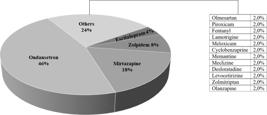
In this context, it is interesting to analyze which active ingredients have been formulated in the form of orodispersible tablets. Ondansetron hydrochloride has the highest percentage of registrations (46%) (Figure 3). Next come mirtazapine (18%), zolpidem (8%), and escitalopram (4%). The other active ingredients (piroxicam, fentanyl, desloratadine, meloxicam, memantine, meclozine, levocetirizine, zolmitriptan, olanzapine, olmesartan, and cyclobenzaprine) appear with only one registration each (totaling 24%). Therefore, the therapeutic classes of antiemetics (represented by ondansetron hydrochloride) and antidepressants (represented by mirtazapine) account for the majority of ODTs registered in Brazil (64%) (Table 3).
Pharmacological characteristics of the active ingredients used in ODT with valid registration in Brazil.
When evaluating the composition of ODT in the available leaflets, it was noted that the most commonly used superdisintegrants were crospovidone (in 30 compositions), microcrystalline cellulose (in 29 compositions), croscarmellose sodium (in 6 compositions), and sodium starch glycolate (in 3 compositions). Furthermore, among the leaflets analyzed, the drugs that present the largest number of components are those that have ondansetron hydrochloride as the active ingredient, with flavoring agents such as mint and cherry aroma, and the sweetener mannitol (36 compositions) being the most frequently used.
Thus, the package inserts for patients and professionals of ODT registered in Brazil were analyzed and compared. The basic instructions for correct use are provided in both types of package inserts and may appear in different formats for each medication; however, two forms are most frequently used. The first (54.5%) consists of descriptive instructions that emphasize the need to handle the ODT with dry hands and recommends that it be placed on the tip of the tongue, where it will dissolve spontaneously in contact with saliva, without the need to ingest liquids. The second form of instruction provides an illustrated, step-by-step guide, which is less frequently found in package inserts (18.2%) (Figure 4). The sequence begins by recommending that the blister not be pressed (Figure 4A) to avoid breaking the ODT. In this case, the perforated blister, which individually contains the ODT, should be detached, and the laminated sheet removed diagonally (Figure 4B, C, and D). As before, it is recommended that the blister be removed with dry hands and that the ODT be placed on the tongue, where it will disintegrate quickly without the need for water (Figure 4E). The visual nature of the illustration makes the information's language more accessible to patients with varying levels of education. However, the illustration does not appear in the package inserts for professionals. This is the only difference in the instructions contained in the different types of package inserts.

Illustrative guidance on the use of ODT is provided in the leaflets of medicines registered in Brazil
The instructions for using Fentora® are different from those for other medications. The leaflet indicates that the tablet should be administered between the cheek and gum or under the tongue, allowing 14 to 25 minutes for it to disintegrate.
DISCUSSION
In our research, we found that only 50 medicines in the form of ODT have an active regulatory status in Brazil. This data reflects the limited participation of ODT among the more than 4,000 registrations of solid dosage forms for oral use, which mainly include other types of tablets (conventional, coated, and modified-release) and capsules (hard and soft) (ANVISA, 2023) [12].
The primary objective of using ODT as a dosage form is to facilitate drug administration in patients who have difficulty adhering to pharmacological treatment, primarily due to swallowing problems. Since ODT disintegrate spontaneously in contact with saliva, they assume the characteristics of a liquid dosage form, which is ready to be absorbed and can be easily swallowed without the need for water during administration. Thus, they represent a safer alternative to conventional tablets and capsules, reducing the risk of choking and asphyxiation, and consequently improving patient acceptability [3,13,14].
In this sense, Chauhan and coauthors [15] also address the reasons for using ODT, highlighting the importance of this dosage form for drugs that require rapid action and for those administered to patients who are uncooperative. Given this, clinical conditions associated with pain, migraine, anxiety, and insomnia [16-18], as well as Parkinson's and Alzheimer's diseases, schizophrenia, and epilepsy [19-22], can benefit from the use of ODT. This is in line with the observations in Table 3, which gathers information on the therapeutic indications, pharmacological properties, and target populations of the active ingredients used in ODT registered in Brazil.
Among the drugs found, antihistamines are among the most prescribed in pediatric care and generally require a rapid onset of action [23]. Desloratadine is a second-generation antihistamine widely used in children due to its safety profile. In this context, ODTs provide fast relief, enabling quicker interventions. However, other reasons justify the relevance of ODTs and their designation as a patient-friendly dosage form in pediatric populations. Issues such as tablet size, unpleasant taste, and fear of swallowing often act as barriers to treatment adherence. ODTs address these problems through easy administration, dissolving quickly in the mouth without the need for water, a handy feature for children who have trouble swallowing [3]. Furthermore, the use of flavoring agents significantly improves acceptance among young patients, while pre-measured solid doses help minimize dosing errors commonly made by caregivers, especially when compared to liquid formulations, such as desloratadine syrups [24,25].
In terms of treatment adherence, ODTs have shown great potential by facilitating medication intake and fostering greater cooperation from children, which increases the likelihood of correct and consistent use of prescribed therapies. Beyond reducing psychological resistance to treatment, a crucial factor in chronic therapies, they also allow caregivers to monitor drug intake more effectively, ensuring the full dose is administered and reducing the risk of underdosing [24].
ODTs also offer significant health benefits for vulnerable adult populations, particularly those facing physical, cognitive, or psychiatric challenges. Among geriatric patients, conditions such as dysphagia (difficulty swallowing), cognitive decline, and complex medication regimens make traditional tablet forms impractical. Their easy-to-use design also reduces errors in polypharmacy contexts, promoting safer medication management. Furthermore, the straightforward method of ingestion can enhance adherence in older adults with mild cognitive impairments, improving therapeutic consistency [26,27]. Rheumatic diseases such as rheumatoid arthritis and osteoarthritis are also recurrent in the elderly population, where non-steroidal anti-inflammatory drugs such as piroxicam and meloxicam are frequently used to alleviate pain and inflammation [28]. Alzheimer's disease is the most common form of senile dementia, whose therapeutic management is quite challenging due to the behavioral instability of patients. Therefore, it is essential to explore alternatives that reduce the cost of drug administration for them. Thus, memantine in ODT is an interesting alternative [29].
In turn, depression is currently a global health problem that affects all age groups, especially the elderly. In this case, the class of selective serotonin reuptake inhibitors is usually the first choice for treatment. Among the drugs in this class, escitalopram is generally preferred because it causes fewer drug interactions and weight loss, which demonstrates the relevance of its ODT formulation for elderly patients [30]. In addition, it is important to mention that the treatment of psychiatric illnesses, including schizophrenia, usually requires prolonged pharmacotherapy, to which psychiatric patients (elderly or not) usually do not have good adherence. This is mainly related to the physical characteristics of the dosage forms used (such as size and shape), as well as the high number of medications used concomitantly in several daily administrations and social stigma. In this sense, studies show that ODT can positively influence the adherence of psychiatric patients to treatment. ODTs offer a discreet and convenient way to administer medication without attracting unwanted attention-an important consideration for patients experiencing paranoia or discomfort in public settings. Their rapid disintegration facilitates direct monitoring by caregivers or clinical staff, which is particularly useful in supervised environments. Moreover, ODTs help mitigate common problems such as “cheeking” or spitting out pills, ensuring proper medication intake and improving reliability [31,32].
The dispensable use of water in the administration of ODT is an advantageous feature for patients in situations where water intake is limited and dehydration is a concern (such as those with urinary incontinence, on dialysis, or travelers, for example) [33]. This can also provide practicality and comfort in administering certain medications. This is the case of zolpidem, a hypnotic drug used to induce sleep, whose indication for use directs administration with the patient already lying down, due to its rapid onset of action [34,35]. In turn, in nauseated patients, this characteristic assumes a fundamental role, considering that they may be unable to ingest liquids. Ondansetron hydrochloride, for example, is an antiemetic widely used to prevent nausea and emesis associated with chemotherapy and radiotherapy [36]. Therefore, beyond individual benefits, ODTs contribute to broader public health outcomes by supporting health equity and improving system efficiency. They foster patient autonomy in groups with functional limitations, reduce preventable hospitalizations stemming from medication errors or non-adherence, and enhance clinical outcomes across chronic and psychiatric conditions, justifying their high number of registrations as ODT in Brazil.
ODT are visually similar to conventional tablets. As noted in the package inserts, they are described as circular, biplane, smooth tablets with varying colors. However, the formulation of ODT has some characteristics that differentiate it from conventional tablets. The main excipients used in the composition of ODT registered in Brazil include superdisintegrants, diluents, lubricating agents, emulsifiers, sweeteners, and flavorings. These excipients play a fundamental role in the formulation of ODT and must be water-soluble, have a pleasant flavor and sweetness, and exhibit rapid dispersibility [5].
Tablet production methods include solid dispersion, freeze-drying, molding, and direct compression. The latter is a cheap, well-established method, preferred for large-scale production, and does not require major adaptations for the production of ODT. Superdisintegrants are the most characteristic components of ODT and are especially important when they are produced by direct compression [3]. The superdisintegrant serves to break down the compacted mass into small fragments when placed in a fluid-containing environment, thereby facilitating the formation of a suspension [37]. Depending on the superdisintegrant used, this process can occur through different mechanisms such as swelling, porosity, and deformation. In this context, the porosity of the ODT needs to be combined with sufficient mechanical strength to enable packaging, transportation, and handling processes. Thus, hardness and friability assessments are decisive in their quality control [15,33].
Superdisintegrants are usually cross-linked polymers and starches [15]. Based on this, microcrystalline cellulose, crospovidone, croscarmellose, and sodium starch glycolate are the superdisintegrants frequently used in the composition of ODT registered in Brazil, whose mechanisms of action mainly involve swelling and porosity/absorption [37]. Sodium bicarbonate is also used as an effervescent superdisintegrant [5].
Organoleptic properties such as color, taste, smell, and shape directly influence the acceptability and patient adherence to ODT. They can be improved with the addition of coloring, flavoring, and sweetening agents. The latter are essential in masking the bitter taste presented by most drugs, making ODT more palatable [7]. This step is challenging and sometimes requires combining several components to achieve the desired effect [5,15]. This drug has an intensely bitter taste, which justifies the need for combinations of flavoring agents (such as mint and cherry flavors) and sweeteners (sucralose, mannitol, sorbitol, maltitol, neohesperidin dihydrochalcone, and ammonium glycyrrhizinate) in its composition to achieve sufficient masking of the bitter taste [38].
Sugars and sugar derivatives, in addition to sweetening agents, are also used as diluents in the composition of ODT. This is advantageous due to their solubility and good sensory perception. Mannitol, for example, is present in most ODTs registered in Brazil, as it facilitates their disintegration, provides stability, and improves their texture. Furthermore, it gives a pleasant sensation of freshness in the mouth [5,39].
Regarding the instructions for use of the medications, we found two forms: written and visual. Both guidelines recommend placing the ODT on the tongue, where it can quickly disintegrate with saliva due to its sensitivity to moisture. Therefore, very small amounts of water from wet hands can initiate early disintegration, impacting the dose that will be administered and, consequently, the therapeutic effect [40]. This justifies the importance of handling the ODT with dry hands, as well as the need for immediate administration after careful removal from the blister. Due to their porous, friable, and fragile characteristics, ODTs are preferably packaged in detachable blister packs to facilitate removal and prevent breakage [7].
It was found that the Fentora® medication has a different indication for use than the others. Fentanyl is a lipophilic drug that can be more quickly and effectively absorbed through the oral mucosa than through the gastrointestinal tract, providing earlier relief of cancer pain [40]. Although there is a justifiable reason for Fentora®, ODTs are usually administered over the tongue [8]. In addition, the European Pharmacopoeia establishes a disintegration time of less than three minutes for ODT, while the FDA guidelines establish 30 seconds as the acceptance limit. Therefore, the disintegration time of Fentora® would be above that recommended by international agencies [11]. However, the Brazilian Pharmacopoeia and ANVISA do not yet present guidelines that regulate this type of dosage form, which justifies the classification of Fentora® as an ODT.
The Fentora® package insert also instructs patients with xerostomia to drink water to moisten the oral cavity before administration. It reinforces that, if this recommendation does not result in adequate effervescence, a replacement of the medication may be necessary [40]. Xerostomia is a complaint that affects approximately 10% of the adult population and may be secondary to the use of other drugs or diseases such as Sjögren's syndrome, depression, anxiety, dehydration, cystic fibrosis, among others. Saliva-stimulating agents such as citric and ascorbic acid may be added to the formulation, but, in fact, this is a limitation that may restrict the use of ODT by impairing their disintegration, dissolution, and, consequently, the absorption of the drug [41].
CONCLUSION
ODTs are especially interesting for patients with physical and mental limitations, since they can improve adherence to pharmacological treatment in these populations by providing practicality in administration. In Brazil, ondansetron hydrochloride, an antiemetic, and mirtazapine, an antidepressant, are currently the leaders in the number of active registrations. In general, their package inserts recommend only careful handling to maintain the physical integrity of the dosage form until it is inserted into the oral cavity, where it promptly disintegrates without requiring patient input.
The combination of characteristics, such as porosity and hygroscopicity, is crucial for ODT to perform optimally. However, this makes the dosage form fragile, so that improper handling by the patient can compromise its physical integrity. This becomes relevant when considering that ODTs are not yet widely known dosage forms. In this sense, the leaflets must provide clear and detailed instructions for use both for professionals (responsible for providing the initial instructions to the patient during the prescription and dispensing of the medication) and for patients (so that they can clarify any doubts that may arise at the time of administration and perform it correctly).
Although interest in ODTs has grown in recent years, their popularity is still low in Brazil, which is confirmed by the small number of drugs registered in the country. In this sense, it is suggested that the lack of knowledge of prescribers and patients about the potential of ODTs is the main cause of their low demand. Therefore, pharmaceutical laboratories need to develop a campaign to promote such a dosage form among medical professionals, such as those who are primarily responsible for prescribing medications. Another action that could contribute to strengthening this dosage form is the clear definition of the concept of ODT by ANVISA and the Brazilian Pharmacopoeia. These initiatives can help to boost the popularization of ODT in Brazil, contributing to greater patient adherence to pharmacological treatment and, consequently, to greater effectiveness of the therapies used.
Although ODTs require the incorporation of a few additional excipients, their overall formulation remains simple. Given their similarity to conventional tablets, only minimal adjustments to the manufacturing process are necessary. As a result, ODTs represent a cost-effective technology that can enhance the value of pharmaceutical products without requiring substantial investments. While they offer clear advantages for patients in terms of accessibility and adherence, ODTs also present a strategic opportunity for the pharmaceutical industry. They offer a strategic pathway for expanding product portfolios and prolonging patent exclusivity. Their versatility makes them an appealing platform for next-generation innovations, especially within biotechnological formulations that support the principles of One Health or target underserved conditions, such as neglected tropical diseases. By integrating clinical utility with commercial potential, ODTs create opportunities for public health advancement while also facilitating market differentiation. Moreover, due to their straightforward composition and flexible production requirements, ODTs can make a meaningful contribution to public health systems, such as Brazil’s Unified Health System (SUS), offering accessible and affordable solutions without compromising therapeutic efficacy.
-
Funding:
This study is part of the National Institute of Science and Technology in 3D printing and Advanced Materials Applied to Human and Veterinary Health (INCT_3D-Saúde), funded by CNPq, Brazil (Grant #406436/2022-3).
-
Institutional Review Board Statement:
Not applicable.
-
Informed Consent Statement:
Not applicable.
Acknowledgments:
The authors are grateful for the support of the Federal University of Santa Maria. L.C. thanks CNPq for the PQ fellowship (process number: 314099/2023-9).
Use of Generative Artificial Intelligence
The authors declare that no generative artificial intelligence (AI) or AI-assisted technologies were used to generate or modify the scientific content of this manuscript, including the conception of the study, data collection, data analysis, interpretation of results, or the creation of original text, figures, tables, or graphical abstracts. AI-assisted tools were used solely for routine language editing, such as spelling and grammar checking (e.g., Grammarly), without generating original scholarly content.
Data Availability Statement:
Research data are available in the body of the manuscript.
REFERENCES
- 1 Alqahtani MS, Kazi M, Alsenaidy MA, Ahmad MZ. Advances in Oral Drug Delivery. Front Pharmacol. 2021;12:1-21.
- 2 Sanchez-Ballester NM, Bataille B, Soulairol I. Sodium alginate and alginic acid as pharmaceutical excipients for tablet formulation: Structure-function relationship. Carbohydr Polym. 2021;270:1-11.
- 3 Slavkova M, Breitkreutz J. Orodispersible drug formulations for children and elderly. Eur J Pharm Sci. 2015;75:2-9.
- 4 Pinho LA, Temer AC, Ribeiro C, Sá-Barreto LL, Cunha-Filho MSS. The Popularization of Orodispersible Tablets in the Pharmaceutical Market. Infarma - Ciências Farm. 2018;30:77-84.
- 5 Ghourichay MP, Kiaie SH, Nokhodchi A, Javadzadeh Y. Formulation and Quality Control of Orally Disintegrating Tablets (ODTs): Recent Advances and Perspectives. Biomed Res Int. 2021;2021:1-12.
- 6 Leg ODT. [Patient information leaflet]. Pallini Attiki: Genepharm S.A.; 2020.
- 7 Kean EA, Adeleke OA. Orally disintegrating drug carriers for paediatric pharmacotherapy. Eur J Pharm Sci. 2023;182:1-15.
-
8 European Commission. EudraLex Volume 3: scientific guidelines for medicinal products for human use [Internet]. [date unknown] [cited 2026 Jan 23]. Available from: https://health.ec.europa.eu/medicinal-products/eudralex/eudralex-volume-3_en
» https://health.ec.europa.eu/medicinal-products/eudralex/eudralex-volume-3_en - 9[Brazilian Pharmacopoeia]. National Health Surveillance Agency, 6ª edition. Brasília: 2019.
-
10 Agência Nacional de Vigilância Sanitária. Consultations. [Internet]. Brasília: Anvisa; 2023. Available in: https://consultas.anvisa.gov.br/#/
» https://consultas.anvisa.gov.br/ - 11 FDA (U.S. Food and Drug Administration). (2008). Guidance for industry: Orally disintegrating tablets.
-
12 Agência Nacional de Vigilância Sanitária. Electronic Drug Information. [Internet]. Brasília: Anvisa; 2023. Available in: https://consultas.anvisa.gov.br/#/bulario/
» https://consultas.anvisa.gov.br/#/bulario/ - 13 Cilurzo F, Musazzi UM, Franzé S, Selmin F, Minghetti P. Orodispersible dosage forms: biopharmaceutical improvements and regulatory requirements. Drug Discov Today. 2018;23:251-9.
- 14 Kavitha K, Subramaniam K, Hui BJ, Santhi K, Dhanaraj SA, Rupesh Kumar M. Potential drug candidates for fast dissolving drug delivery - a review. Res J Pharm Biol Chem Sci. 2013;4:1510-26.
- 15 Chauhan K, Solanki R, Sharma S. A review on fast dissolving tablet. Int J Appl Pharm. 2018;10:1-7.
- 16 Blair HA. Rimegepant: A Review in the Acute Treatment and Preventive Treatment of Migraine. CNS Drugs. 2023;1-11
- 17 Bhatia V, Dhingra AK, Dass R, Chopra B, Guarve K. Formulation, Development, and in-vitro Evaluation of Escitalopram Fast Dissolving Tablets. Cent Nerv Syst Agents Med Chem. 2022;22:198-213.
- 18 Sheikhy S, Safekordi AA, Ghorbani M, Adibkia K, Hamishehkar H. Synthesis of novel superdisintegrants for pharmaceutical tableting based on functionalized nanocellulose hydrogels. Int J Biol Macromol. 2021;167:667-75.
- 19 Zhang Y, Li Z, Tang H, Ren W, Gao X, Sun Y, et al. Development and optimization of levodopa and benzylhydrazine orally disintegrating tablets by direct compression and response surface methodology. Drug Dev Ind Pharm. 2020;46:42-9.
- 20 Sutthapitaksakul L, Thanawuth K, Dass CR, Sriamornsak P. Optimized taste-masked microparticles for orally disintegrating tablets as a promising dosage form for alzheimer’s disease patients. Pharmaceutics. 2021;13:1-22.
- 21 Lin Z, Xuan J. Cost-effectiveness of aripiprazole orally disintegrating tablets in the treatment of schizophrenia in China. Expert Rev Pharmacoecon Outcomes Res. 2020;20:549-57.
- 22 Varshney AP, Akhtar MS. Fast dissolving tablet: An opportunity for treatment of epilepsy. Int J Pharm Res. 2020;12:502-13.
- 23 Kohli S, Tayal R, Goyal T. Antihistamines in children: A dermatological perspective. Indian J Paediatr Dermatology. 2022;23:8.
- 24 Golhen K, Buettcher M, Kost J, Huwyler J, Pfister M. Meeting Challenges of Pediatric Drug Delivery: The Potential of Orally Fast Disintegrating Tablets for Infants and Children. Pharmaceutics 2023; 15(4):1033.
- 25 Cornilă A, Iurian S, Tomuţă I, Porfire A. Orally Dispersible Dosage Forms for Paediatric Use: Current Knowledge and Development of Nanostructure-Based Formulations. Pharm. 2022;14:1-28.
- 26 Ferreira-Neto CJB, de Andrade RA, Tonin FS, Wiens A. Solid Oral Dosage Forms Use in Adults with Neurological Disorders and Swallowing Difficulties: A Scoping Review. Dysphagia. 2022;37:909-22.
- 27 Shariff ZB, Dahmash DT, Kirby DJ, Missaghi S, Rajabi-Siahboomi A, Maidment ID. Does the Formulation of Oral Solid Dosage Forms Affect Acceptance and Adherence in Older Patients? A Mixed Methods Systematic Review. J Am Med Dir Assoc. 2020; 21:1015-23.
- 28 Paglia MDG, Silva MT, Lopes LC, Barberato-Filho S, Mazzei LG, Abe FC, et al. Use of corticoids and non-steroidal anti-inflammatories in the treatment of rheumatoid arthritis: Systematic review and network meta-analysis. PLoS One. 2021;16:1-23.
- 29 Moorthy J, Pandey VP. Formulation and development of orodispersible tablet of memantine HCl by sublimation approach. Der Pharm Lett. 2016;8:52-8.
- 30 Norman TR. Antidepressant Treatment of Depression in the Elderly: Efficacy and Safety Considerations. OBM Neurobiol. 2021;5:1-20.
- 31 Novick D, Montgomery W, Treuer T, Koyanagi A, Aguado J, Kraemer S, et al. Comparison of clinical outcomes with orodispersible versus standard oral olanzapine tablets in nonadherent patients with schizophrenia or bipolar disorder. Patient Prefer Adherence. 2017;11:1019-25.
- 32 Gandhi H. Physician Preferences for Olanzapine Standard Oral Tablets and Orally Disintegrating Tablets: A Cross-Sectional Survey. J Pharmacol Pharmacother. 2022;13:97-8.
- 33 Hannan PA, Khan JA, Khan A, Safiullah S. Oral Dispersible System: A New Approach in Drug Delivery System. Indian J Pharm Sci. 2016;78:2.
- 34 Nuit flash. [Patient information leaflet]. Jandira: Biolab Sanus Farmacêutica Ltda; 2021.
- 35 Hemitartarato de zolpidem. [Patient information leaflet]. Jandira: Biolab Sanus Farmacêutica Ltda; 2022.
- 36 Mulugada S, Baratam SR. Design and Evaluation of Ondansetron Fast Disintegrating Tablets Using Natural Polymers and Modified Starches as Super Disintegrants for the Enhancement of Dissolution. J Young Pharm. 2017; 519-24.
- 37 Garg A, Gupta MM. Mouth dissolving tablets: a review. J Drug Deliv Ther. 2013;207-14.
- 38 Kharb V, Saharan VA, Kharb V, Jadhav H, Purohit S. Formulation and evaluation of lipid based taste masked granules of ondansetron HCl. Eur J Pharm Sci. 2014; 62:180-8.
- 39 Aulton ME, Taylor KMG. [Aulton Pharmaceutical Dosage Design ]. 4ª ed. Rio de Janeiro: Elsevier; 2016.
- 40 Fentora. [Patient information leaflet]. Utah: Anesta LLC; 2022.
- 41 Pabari RM, Ramtoola Z. Effect of a disintegration mechanism on wetting, water absorption, and disintegration time of orodispersible tablets. Journal of Young Pharmacists, 2012; 4(3):157-63.
-
Editor-in-Chief:
Paulo Vitor Farago
-
Associate Editor:
Paulo Vitor Farago


