 Characterization of Hevea brasiliensis Seed Flour and its Application as an Alternative Ingredient in the Food Industry
Abstract
The valorization of unconventional food ingredients is a promising strategy for innovation and sustainability. However, Hevea brasiliensis (HB) seeds, a byproduct of the rubber industry, remain unexplored for human nutrition. This study aimed to standardize and characterize the flour obtained from HB seeds, evaluating its physicochemical composition, microbiological and toxicological safety, and technological applicability in baked formulations. Microbiological analyses (coliforms at 45 °C, Salmonella spp., Bacillus cereus, molds, yeasts, and mycotoxin-producing fungi) and physicochemical analyses (moisture, ash, proteins, lipids, dietary fiber, carbohydrates by difference, and minerals such as calcium, iron, manganese, and zinc) were performed. The flour was used in partial substitutions of wheat flour in the preparation of bread and cookies, followed by sensory analysis. Regarding the characterization, the flour showed a significant nutritional profile, with lipid (38.4%) and protein (17.5%) contents superior to wheat flour, in addition to relevant quantities of minerals and fibers. All samples met the current microbiological and mycotoxicological safety standards. Furthermore, principal component analysis and preference mapping showed negative effects of HB flour substitution. In breads, acceptance dropped from 7.28 (100% wheat) to 7.16 (18.2% HB) and 5.86 (27.3% HB), with the sensory decline more pronounced. In cookies, acceptance decreased slightly from 7.84 (100% wheat) to 7.24 (50% HB), indicating a milder overall impact. Ultimately, HB seed flour proved to be a safe and viable functional ingredient, particularly for cookies. Its incorporation represents an innovative strategy to transform agro-industrial waste into nutritionally rich products, aligned with current demands for sustainability.
Keywords:
rubber tree; unconventional flour; nutritional value; food safety; sustainability.
HIGHLIGHTS
Sustainable alternative for diversification in baking.
Hevea brasiliensis flour is rich in proteins, lipids and fibers.
Product meets microbiological and mycotoxin standards.
Cookies with alternative flour achieve good sensory acceptance.
INTRODUCTION
The food industry is undergoing significant transformations, driven primarily by the growing consumer demand for healthier, more sustainable, and innovative products. In this scenario, differentiation and competitiveness in this sector largely depend on companies' ability to innovate, especially through the development of new ingredients and food products [1].
Alternative flours have gained prominence in this context, particularly in the baking and pasta sectors, due to their ability to enhance the nutritional, sensory, and technological profile of foods products. Their application can result in increased moisture retention, improved texture, and extended shelf life [2, 3]. However, these benefits vary depending on the raw material, processing methods, and substitution levels [4].
The partial replacement of wheat flour with unconventional flours also promotes sustainability [5] by enabling the utilization of plant by-products and the valorization of underexplored natural resources, such as Unconventional Food Plants (UFP) [6]. UFPs expand dietary diversity and offer promising alternatives for formulating functional and nutritionally enriched products [6].
Among these alternatives, flour produced from rubber tree (Hevea brasiliensis (Willd. ex A.Juss.) Müll.Arg.) seeds stands out. Hevea brasiliensis (HB) is widely exploited for latex extraction, with Southeast Asia accounting for more than 90% of the world’s natural rubber production, led by Indonesia and Thailand with seed productions estimated at 5.3 million and 3.1 million tons, respectively [7-9]. In Brazil, the state of São Paulo is the largest producer, with approximately 200,000 hectares of commercial forests [10]. Regarding raw material availability, realistic global estimates for seed collection range from 150 - 2050 kg/ha/year [7,9]. Considering that plantation areas are predicted to quadruple by 2050 [8] and that these seeds are currently considered forest waste, which can decrease soil pH if left uncollected, they represent a massive, sustainable, and non-competitive feedstock for the food industry.
In addition to this availability, the seeds have a high content of proteins (21.5%), lipids, and fibers, comparable to other oilseeds such as peanuts and melon seeds [11,12], making them an ingredient of interest for the development of products with higher nutritional value. However, the utilization of HB seeds requires attention due to the presence of cyanogenic glucosides, specifically linamarin and its diglucoside linustatin, which release toxic hydrogen cyanide (HCN) upon tissue damage. Fresh seed kernels can contain toxic levels of HCN (approx. 164 mg/100 g dry weight), posing risks to humans and livestock [13]. Nevertheless, these compounds are volatile and unstable. Literature indicates that most of the cyanide is eliminated through processing methods such as prolonged storage and cooking [14,15]. Thus, proper post-harvest management and thermal processing are effective strategies to reduce HCN content to safe levels, enabling the use of rubber seeds as a food ingredient.
To enable their application in foods intended for human consumption, it is essential to ensure microbiological safety and the absence of toxic compounds, as recommended by current legislation [16,17], in addition to analyzing the acceptance of these products. Thus, the present study aimed to obtain, characterize, and apply HB seed flour in food formulations, investigating its impact on the composition, technological properties, and sensory acceptance of bread and cookies, with a view to improving nutritional composition, reducing waste, and promoting more sustainable alternatives for the food industry.
MATERIAL AND METHODS
Sample Preparation
The seeds were obtained from a company based in the state of São Paulo and stored for a minimum period of two months at room temperature, in order to reduce cyanide levels to a safer threshold [14,15]. The seeds were manually shelled, and the kernels were ground using a semi-industrial blender for approximately 3 minutes. The resulting flour was vacuum-packed and stored under refrigeration, at temperatures between 2 °C and 8 °C, for up to 60 days, until the time of analysis.
Physicochemical Characterization
Granulometric analysis was performed according to AACC method 66-20.01 [18]. The HB flour was subjected to mechanical shaking for 10 min using Tyler sieves (14, 16, 35, 48, and 100 mesh). The fractions were weighed to calculate the mean particle diameter.
Moisture, ash, lipid, and protein analyses were performed based on the methodologies described by the Adolfo Lutz Institute [19]. Caloric value determination followed the Atwater and Woods [20] empirical method; while mineral quantification was conducted through optimized acid digestion, adapted from the methodology proposed by Kelte Filho and coauthors [21].
The following chemical composition determinations were performed: i) protein, by the Kjeldahl method (this method determines the amount of nitrogen and converts it into protein by multiplying by the factor 6.25); ii) lipids, by Soxhlet extraction, using petroleum ether as solvent, for 6 hours; iii) moisture, in an oven with air circulation at 105 °C, until constant weight was obtained; iv) ash, in a muffle furnace at 600 °C until complete carbonization of organic matter; v) carbohydrates, by difference, calculated as 100% minus the determined amounts of moisture, proteins, lipids, and ash; vi) dietary fiber, performed in a third-party laboratory (State University of Ponta Grossa), based on the sample provided; vii) minerals (calcium, iron, magnesium, manganese, and zinc); viii) total caloric value, calculated using the conversion factors: proteins (4 kcal/g), carbohydrates (4 kcal/g), and lipids (9 kcal/g).
Microbiological Analysis
The microbiological analyses were carried out in accordance with current Brazilian legislation, which regulates microbiological standards for flours, pasta, industrialized bakery products, and similar [16]. Bacillus cereus, coliforms at 45 °C, Salmonella sp., molds, and yeasts were evaluated, following the methods described by Da Silva and coauthors [22].
Toxicity Assessment
Toxicity analyses included the determination of the following mycotoxins: i) total aflatoxins, ii) zearalenone, iii) fumonisins, iv) ochratoxin A, and v) deoxynivalenol (DON). Tests were conducted using the immunoassay (ELISA) technique, according to standardized procedures [23]. Quantifications followed the criteria established by current national regulations [17].
Development of Unconventional Food Products
Formulation tests involved the preparation of bread and cookies with partial replacement of wheat flour by HB seed flour in proportions of 0 to 50%. For sensory analysis, one cookie formulation and two bread formulations were selected, considering appearance, texture, flavor, and aroma.
Bread with Unconventional Flour
Three bread formulations were defined: F1 (control, with 100% wheat flour), F2 (with 18.2% HB flour), and F3 (with 27.3% HB flour). Flours and flour improver were mixed and set aside; the other ingredients were combined separately. The flour mixture was gradually incorporated into the dough until the ideal point was reached, followed by kneading for 10 minutes. After fermentation until doubled in volume, the breads were shaped, fermented again, and baked in a preheated oven at 180 °C until golden brown. Table 1 presents the bread formulations used in the experiment, detailing the ingredients and their respective quantities.
Composition of bread formulations prepared with partial replacement of wheat flour by Hevea brasiliensis (HB) seed flour.
Cookie with Unconventional Flour
For cookie preparation, two formulations were defined: F1 (control, with 100% wheat flour) and F2 (with 50% wheat flour and 50% HB flour). Butter was beaten until a pomade consistency was reached, followed by the addition of sugars, forming a homogeneous cream. Egg and vanilla were incorporated, and subsequently, flours sieved with salt and baking powder, as well as chopped chocolate. The dough was shaped into spheres, refrigerated for 1 hour, and baked at 180 °C for 30 minutes. Table 2 presents the cookie formulations used in the experiment.
Composition of cookie formulations prepared with partial replacement of wheat flour by Hevea brasiliensis (HB) seed flour.
Sensory Analysis
The developed products were subjected to sensory analysis by a group of 50 untrained volunteers. The tests followed methodologies recommended by the Adolfo Lutz Institute [19], including i) global acceptance analysis ii) ranking test by specific attributes such as texture, aroma, and flavor, and iii) preference tests. The sensory attributes of bread and cookies were evaluated on a structured hedonic scale. Samples were identified with random three-digit codes, known only to the researchers. The analyses began after approval by the UNICENTRO Research Ethics Committee for Human Beings (CAAE: 71099223.8.0000.0106). Participants, aged between 18 and 35 years, were duly informed about the study objectives and signed the Free and Informed Consent Form.
The quantitative sensory data for the attributes 'aroma', 'flavor', and 'texture' were subjected to Principal Component Analysis (PCA) with the objective of reducing data dimensionality and identifying correlation patterns among the attributes. The analysis was conducted using the statistical software SPSS (version 20). For component extraction, the correlation matrix was used, and the Principal Components extraction method was employed. The Kaiser criterion (eigenvalues greater than 1) was adopted for component retention, and the Scree Plot was used as a confirmatory tool. Component rotation was not applied. The scores of each sample on the principal components were saved as new variables for subsequent analysis and product positioning in the reduced space. This approach allowed for the evaluation of differentiation among the samples on a single dimension of perceived quality.
Preference Mapping analysis was used to relate the sensory scores to consumer acceptance. PC1 was interpreted as a measure of "Global Sensory Quality". Preference Mapping was performed by plotting the first principal component (PC1) score, as a measure of "Global Sensory Quality," against the "Mean Global Acceptance" score for each sample. This approach allowed for a clear visualization of the relationship between sensory characteristics and consumer preference for bread and cookies.
RESULTS AND DISCUSSION
The results obtained from the physicochemical, microbiological and sensory characterization of the flour made from rubber tree seeds (Hevea brasiliensis), with emphasis on its granulometry, centesimal composition, food safety and performance in bakery formulations are detailed as follows.
Granulometry
About 62.4% of the material showed a particle diameter in the range of 1.08 to 1.76 mm, considered a large size compared to the granulometry of wheat flour, which generally has particles around 0.18 mm. The grinding of the kernels was limited by the high fat concentration present in the seeds, which, with continuous milling, resulted in the formation of a paste in the blender, similar to peanut butter. Therefore, it was decided to interrupt the grinding process at this stage, even with the relatively high granulometry.
Proximate Composition of Flour
The composition of HB flour is still little explored in scientific literature. Among the few existing studies, those by Noroul-Asyikeen and coauthors [11], Mary and coauthors [12], and Suprayudi and coauthors [24], which investigated the main nutritional characteristics, stand out. The results obtained for the proximate composition of the flour analyzed in this study are presented in Table 3.
Moisture
Moisture content is an important indicator of product durability during subsequent storage; lower moisture contributes to greater storage stability [25]. Some factors that can influence the flour's moisture content are climate, soil, seed collection method, and storage time [25-27].
The moisture content of the flour obtained in our study was 8.1 ± 0.4%, within the established parameters for flours of up to 15% [28]. This value differs from those reported by Noroul-Asyikeen and coauthors [11], who described moisture values of 4,05% for raw rubber seed flour. Noroul-Asyikeen and coauthors [11] so compared the moisture contents of rubber seed flour with wheat flour (control) and observed that the latter has a higher moisture content (12.11%).
Ash
The ash content of the analyzed flour was 2.5%, a value considered low when compared to the results of other studies. Mary and coauthors [12] reported a content of 3.47% in flours obtained from raw seeds, while other authors observed variations between 3.08% and 5.0% [11,29,30]. In comparison with other oilseeds, such as melon (3.30%) and peanut (3.08%), rubber seed flour has a lower ash content [31]. On the other hand, when compared to national wheat flour, whose levels vary between 1.69% and 2.0% [26], HB flour shows higher values, which may indicate a higher mineral content and, consequently, a potentially higher nutritional value [30,32].
Lipids
The lipid content was identified as the predominant component in the seeds (38.4%), although lower than values reported by other studies involving seeds of the same species (HB). Previous research indicated variations between 43.52% and 54.17%, as observed by Mary and coauthors [12] (43,52%), Noroul-Asyikeen and coauthors [11] (50,91%) and Suprayudi and coauthors [24] (49,30%). Eka and coauthors [29] reported an even higher value of 68.53%. These discrepancies can be attributed to a series of factors, including differences in lipid extraction methods, such as the type of solvent, time and temperature of the process, in addition to the seed grinding steps, which affect extraction efficiency [12].
Despite the lower absolute value compared to other works, the found lipid content is higher than that of wheat flours, which have contents ranging between 1.0% and 2.0% [26]. This difference highlights the potential of HB flour as a significant source of lipids, which can be explored in formulations with higher energy density or in contexts that demand a greater intake of fats in the diet [11].
The seed yields a high oil recovery (up to 95%) [33], and the oil has semi-drying properties, making it suitable for industrial production of soaps, cosmetics, and paints. Additionally, its fatty acid composition reinforces its potential for use as biodiesel, highlighting it as a promising biofuel [34].
Proteins
The protein content determined in this study (17.5%) is similar to that reported in other research, where the crude protein quantity varies approximately from 17.41% to 22.51%. Eka and coauthors [29] observed values close to those found in the present study (17.41%), while Mary and coauthors [12] reported a content of 19.95%, and Noroul-Asyikeen and coauthors [11] 22,51%.
When compared to the protein contents of other traditionally used plant sources to improve protein intake, the values for HB flour are lower. Peanuts, for example, have contents between 22% and 30% [35], soybeans vary from 37% to 40% [36], and castor beans have about 20% [37]. Even so, the high protein content of HB seeds, especially when compared to wheat flour, which varies between 10.82% and 12.75% [38], highlights its potential as an ingredient in the food industry.
The flour obtained from this seed has significant techno-functional properties, such as water retention, oil absorption, and a favorable bulk density. These characteristics make it suitable for use as a thickener in soups, sauces, and baked goods [12]. From a nutritional standpoint, the seed’s amino acid profile makes the flour an excellent supplement, for example, to corn in animal feed formulations [16].
Carbohydrates
The carbohydrate values found are higher than those reported by other studies. Mary and coauthors [12] observed contents of 25.19%, while Hossain and coauthors [39] and Suprayudi and coauthors [24] reported 13.80% and 21%, respectively. When compared to traditional flours such as wheat flour, which has substantially higher carbohydrate contents, between 75.24% and 77.40% [40], it is observed that HB flour has a more balanced profile, with lower values. This aspect can be especially beneficial for formulations intended for populations requiring glycemic control, such as individuals with diabetes, or for the development of products with higher levels of good fats and proteins, promoting greater satiety [41]. It is also worth noting that dietary fibers are included in this total carbohydrate content, contributing to the observed final value.
Dietary Fiber
The dietary fiber content of the obtained flour was, on average, 10.6+0.2 g/100 g. This value is considered high and is above the minimum limit established by Brazilian legislation for a food to be classified as a "source of fiber" (≥10 g/100 g) [42]. This suggests its suitability for consumption by individuals who wish to achieve the recommended daily intake of dietary fiber, which is 14 g/1000 kcal for children and adults, as indicated by Anderson and coauthors [43].
Furthermore, the observed dietary fiber content was higher than that of white wheat flour (2.3 g/100 g) and similar to that of whole wheat flour (11.5 g/100 g) [44], reinforcing the potential of HB flour as a functional ingredient [45]. Its incorporation can benefit satiety, intestinal transit, and metabolism, as discussed by Slavin [46] and Lattimer & Haub [47].
Minerals
Rubber tree seeds showed significant concentrations of minerals, reinforcing their potential as a nutritive source. Comparing with the limited literature, the found levels were higher than those reported by Ravindran and Ravindran [48], who observed lower concentrations of calcium (0.17 mg/100 g), iron (18.0 mg/100 g), magnesium (0.24 mg/100 g), manganese (9.0 mg/100 g), zinc (15.0 mg/100 g), and copper (5.0 mg/100 g). Similarly, Udo and coauthors [49] also reported expressive levels of these minerals in HB seeds, suggesting that the species can be comparable to oilseeds like soybeans and peanuts in terms of contribution to nutritionally balanced diets.
Additionally, when compared to wheat flour, traditionally used in food formulations, HB flour demonstrates higher levels of several essential minerals. According to the Brazilian Table of Food Composition [40], white wheat flour presents, per 100 g: 15 mg of calcium, 1.18 mg of iron, 22 mg of magnesium, 0.14 mg of manganese, 0.63 mg of zinc, and 0.08 mg of copper. The superiority of HB flour in terms of mineral density highlights its value as a functional ingredient, especially for populations at higher risk of micronutrient deficiency, such as children, the elderly, and people with restrictive diets [50, 51]. Furthermore, its incorporation into formulations can significantly contribute to improving the nutritional quality of industrialized or artisanal food products [52].
It is important to acknowledge that the content of cyanogenic compounds in the final flour was not directly quantified in this study, which represents a limitation. However, the safety of the ingredient was ensured through a rigorous protocol based on established mitigation strategies described in the literature. Narahari and Kothandaraman [14] demonstrated that simple storage of HB seeds at room temperature for a minimum of two months is sufficient to reduce hydrogen cyanide (HCN) levels by approximately 90%, bringing them to safe consumption thresholds. Furthermore, mechanical processing and thermal treatment act as effective secondary barriers. According to Bolarinwa and coauthors [53], the disruption of cell structures during grinding facilitates the contact between cyanogenic glycosides and endogenous enzymes, while subsequent thermal processing promotes the volatilization of the released HCN (boiling point 26 °C). Consistently, Agbai and coauthors [44] reported that processing methods involving heat significantly reduce anti-nutrients in HB meals to levels below toxic limits. Recent studies also highlight the successful use of detoxified rubber seeds in culinary applications, such as crackers, further validating their economic potential and safety when properly processed [15]. Thus, the combination of prolonged post-harvest storage, mechanical grinding, and baking at 180 °C employed in this study provides a robust strategy for detoxification.
Microbiological Analysis
The results of the microbiological analyses performed on the HB seed flour formulations are presented in Table 4. None of the tested samples showed contamination by Salmonella spp., meeting the requirements established by current regulations [16], which determines the absence of the pathogen in 25 g of sample.
Microbiological analysis of Hevea brasiliensis seed flour, expressed in colony-forming units (CFU).
Fecal coliforms were negative in all samples, indicating absence of fecal contamination and compliance with the microbiological standards established for unconventional flours [16]. However, the presence of BC was detected in one of the samples, with a count of 1 x 10³ CFU/g. Although this value is within the upper limit established for flours [16], it raises specific concerns regarding food safety. BC is a spore-forming bacterium capable of surviving thermal processing, and its potential proliferation in starch-rich matrices post-baking poses a risk, as certain strains produce heat-stable toxins [54]. Previous studies indicate that its presence may be associated with cross-contamination or inadequate storage [52]. BC contamination can pose a risk, as ingestion of high loads can cause gastrointestinal diseases, reinforcing the need for strict control measures.
Futhermore, mold and yeast counts ranged between 4 x 10³ and 3 x 10⁴ CFU/g, exceeding the regulatory limit (104 CFU/g) [9]. Similar findings were reported by Dósea and coauthors [55] in cassava flour. This microbiological profile presents a significant challenge for industrial scalability. High fungal loads not only compromise the shelf-life of the flour through organoleptic deterioration and lipolytic rancidity but also increase the risk of mycotoxin accumulation during storage [56]. Such contamination is often related to high moisture content and prolonged storage time [57]. Consequently, to guarantee the commercial viability of HB flour, the implementation of decontamination technologies, such as gamma irradiation or ozone treatment, is recommended. These methods have proven effective in reducing microbial loads without altering nutritional properties [58, 59]. Additionally, adopting moisture-resistant packaging [60] and enforcing strict Good Manufacturing Practices (GMP) during seed collection are mandatory to ensure compliance with safety standards.
Mycotoxins
The concentrations of mycotoxins detected in rubber tree seeds are presented in Table 5. The obtained values were compared with the maximum limits established by national regulations [10]. The results revealed the presence of total aflatoxins, zearalenone, ochratoxin, and deoxynivalenol (DON) at quantifiable levels, while fumonisin concentrations were below the detection limit.
Mycotoxin levels detected in Hevea brasiliensis seed flour and maximum limits established by current national regulation [17].
Currently, there are no specific regulations for flours obtained from seeds such as rubber trees. In Brazil, ANVISA Normative Instruction No. 160/2022 defines maximum limits for mycotoxins in flours and other plant products, including aflatoxins (10 µg/kg), zearalenone (100 µg/kg), ochratoxin A (10 µg/kg), deoxynivalenol (1 mg/kg) and fumonisins (4 mg/kg) [17]. These limits are largely in line with the recommendations of the Codex Alimentarius [61], used as a reference in several countries. Internationally, agencies such as the Food & Drug Administration (FDA, USA) [62] and the European Union have adopted similar criteria, requiring proof of the toxicological safety of new ingredients.
The presence of total aflatoxins (3.01 µg/kg) is below the maximum limit allowed for cereals established by ANVISA (10 µg/kg) [10]. However, considering that aflatoxins are classified as carcinogenic by the International Agency for Research on Cancer [63], their presence, even at low concentrations, requires rigorous monitoring, especially in products intended for human consumption. Studies indicate that aflatoxins can be produced by Aspergillus fungi under inadequate storage conditions, emphasizing the importance of controlling moisture, temperature, and heat resistance [64].
Zearalenone was quantified at 60.0 µg/kg, below the Brazilian regulatory limit of 100 µg/kg for flours [10]. Although this value is considered safe, zearalenone can have estrogenic effects at high levels, and therefore, its presence should be monitored [61]. This mycotoxin is produced by Fusarium fungi and can present estrogenic effects at high levels, being associated with reproductive dysfunctions in humans and animals [65]. Thus, even if within regulatory limits, monitoring is necessary to avoid cumulative risks.
Fumonisin was not detected at a quantifiable concentration (<0.20 mg/kg), which indicates that levels are very low or absent in the analyzed samples. As fumonisins are associated with adverse effects in humans and animals, their absence is a positive factor [66]. Since these toxins are produced by Fusarium verticillioides and Fusarium proliferatum, their presence is generally associated with corn crops and other cereals stored under inadequate conditions [66]. The absence of these toxins represents a positive factor for product safety.
Ochratoxin was quantified at 7.90 µg/kg, a value that is within the parameters established by current national regulation (10 µg/kg for cereals intended for human consumption) [17]. Due to its nephrotoxic and carcinogenic potential, if the presence of this mycotoxin were in concentrations higher than regulatory standards, it would represent a risk to human health. This mycotoxin is produced by Aspergillus and Penicillium fungi, and is associated with nephrotoxic and carcinogenic effects [63]. Studies indicate that ochratoxin can be found in improperly stored foods, especially cereals [67].
Deoxynivalenol (DON) was detected at 0.22 mg/kg, which is below the 1 mg/kg safety limit established by ANVISA. Although high levels of DON can cause gastrointestinal symptoms such as nausea and vomiting when ingested in elevated concentrations [68], the values found in this study indicate exposure within safe limits [17].
Although the concentrations of mycotoxins observed in this study were below the maximum permitted values, the presence of these substances should not be overlooked. Aflatoxins and ochratoxin A, for example, are classified as potential carcinogens and have high thermal stability and can resist conventional processing processes [63,64]. Zearalenone and deoxynivalenol, in turn, can cause cumulative effects, with reproductive and gastrointestinal impacts in humans and animals when ingested at high and continuous levels [65,68]. Thus, even when below regulatory limits, chronic exposure should be considered a risk factor. Continuous monitoring of these substances is essential to ensure food safety and prevent potential health impacts.
Bread and Cookie Formulations
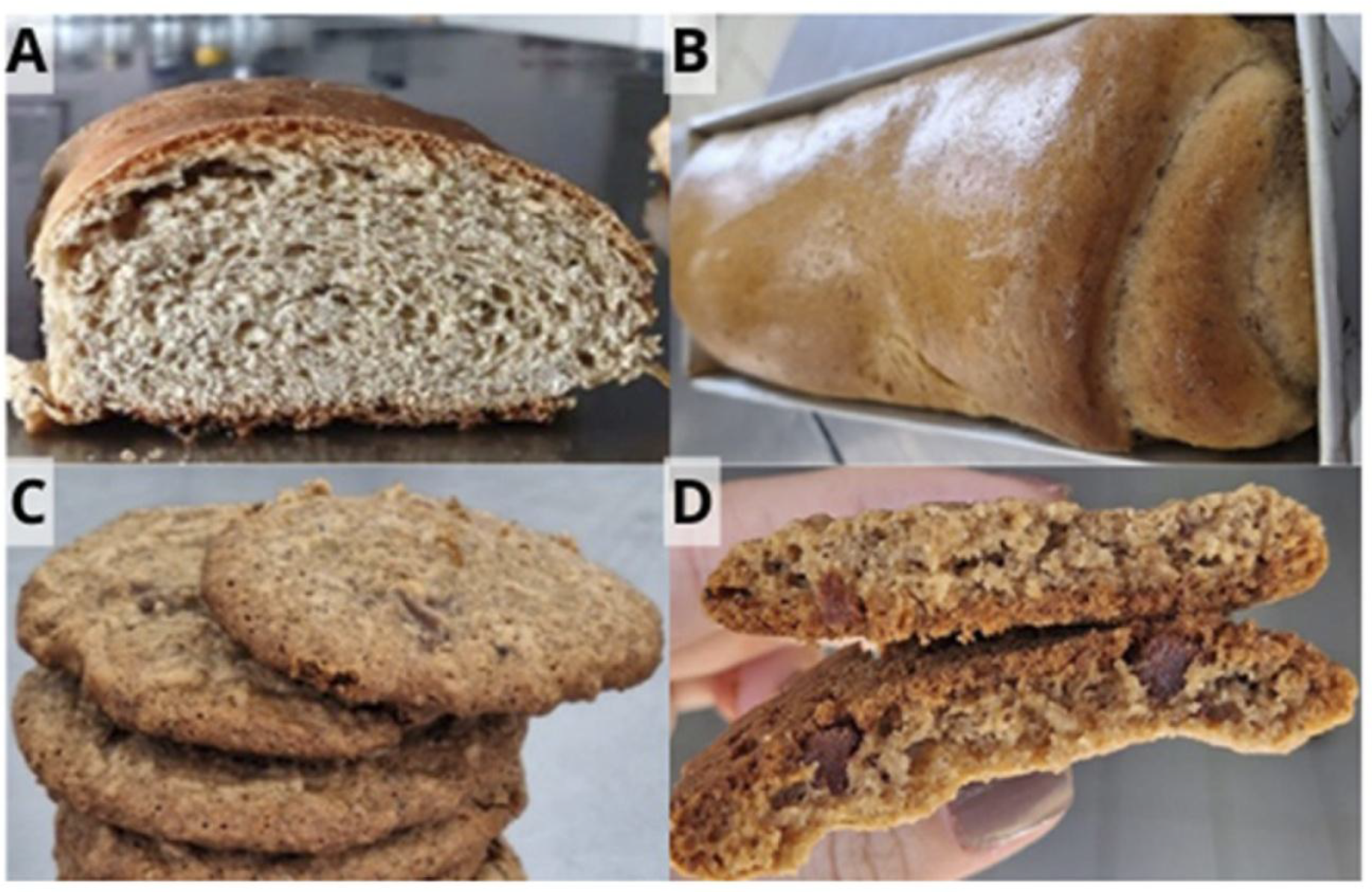
The formulated breads and cookies exhibited variations in texture, color, and structure depending on the partial substitution of wheat flour with HB flour. The final appearance of products with higher unconventional flour content can be observed in Figure 1.
Bread with 27.3% unconventional flour. (A) internal appearance of the bread, (B) baked HB seed flour bread, (C) baked HB seed flour cookie, (D) internal appearance of the cookie.
The breads showed a more compact texture and reduced volume, especially in formulations with greater substitution. This effect can be explained by the diminished formation of the gluten network, which is responsible for retaining fermentation gases and promoting dough rise. Similar findings also observed a significant reduction in the specific volume of bread as the proportion of rubber seed flour increased [11]. Additionally, they presented a progressive darkening of the crumb and crust as the wheat flour substitution increased.
In the cookies, the incorporation of HB seed flour resulted in a firmer structure and a crispier, oilier texture compared to the traditional formulation with 100% wheat flour. Visual analysis of the products revealed that the cookies with HB seed flour showed a darker coloration, a factor that may be associated with the Maillard reaction, as pointed out by Noroul-Asyikeen and coauthors [11].
In the food industry, rubber seed flour can be contextualized alongside other alternative flours, such as green banana and grape flours, which have been explored for nutritional enrichment and the development of functional products [69,70]. Comparatively, rubber seed flour has significant levels of protein and lipids, which are characteristics not commonly found in plant-based flours, which are traditionally richer in starch or fiber. These attributes differentiate it as a promising alternative raw material for functional and nutraceutical formulations.
The growing interest in its use in Brazil is evidenced by patent registrations and applied research initiatives, such as the development of enriched products and dietary supplements [71,72]. These advances reinforce the viability of rubber seed flour as a sustainable alternative, aligning with current demands of the bioeconomy and the valorization of agro-industrial waste.
Sensory Analysis
Principal Component Analysis and Preference Mapping
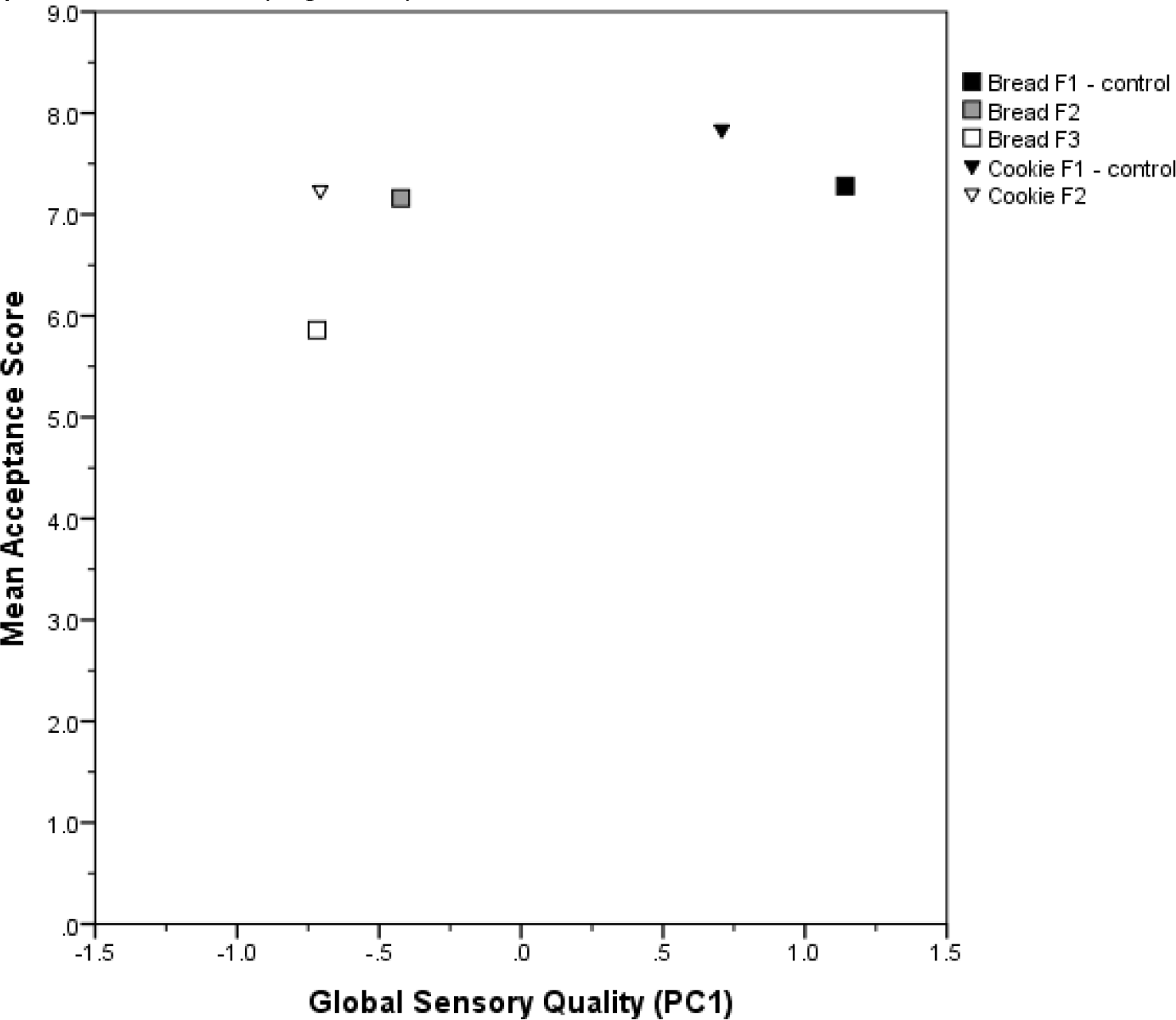
Principal Component Analysis (PCA) and Preference Mapping were used to evaluate the sensory characteristics and acceptance of breads and cookies, comparing products made with 100% wheat flour with those that incorporate HB flour (Figure 2).
Principal Component Analysis (PCA) and Preference Mapping of bread and cookie samples evaluated by 50 judges (n = 50). Bread: F1-control (100% wheat flour); F2 (18.2% substitution with HB flour); F3 (27.3% substitution with HB flour). Cookie: F1-control (100% wheat flour) and F2 (50:50 wheat and HB seed flours).
The analysis of the breads demonstrated that the PC1 explained 99.96% of the total variance. PC1 correlated positively with texture, aroma, and flavor, with values of 1.0 for each. The Preference Mapping graph showed that the bread with 100% wheat flour (F1-Control) had the highest global sensory quality score (PC1 = 1.14) and the highest mean acceptance score (7.28). The F2 sample (18.2% HB flour) obtained a mean acceptance score of 7.16, with a PC1 of -0.42. The F3 sample (27.3% HB flour) showed the lowest mean acceptance (5.86) and the lowest PC1 score (-0.72). The results suggest that the substitution of wheat flour with HB flour negatively affects the global sensory characteristics, with a more pronounced impact on the sample with a higher HB flour content.
For the cookies, the PC1 explained 100% of the total variance. PC1 correlated positively with texture (1.0) and flavor (1.0), and negatively with aroma (-1.0). In the Preference Mapping, the cookie with 100% wheat flour (F1-Control) showed the highest mean acceptance (7.84) and a positive PC1 score (0.70). The cookie containing 50% HB flour (F2) had a slightly lower mean acceptance (7.24) and a negative PC1 score (-0.70). This result indicates that, although the substitution impacted the sensory properties, overall acceptance remained high, with a less pronounced difference compared to the breads.
The interpretation of the PCA and Preference Mapping, as shown in Figure 2, reveals that the substitution of wheat flour with HB flour impacts the sensory characteristics of both products, but with varied effects. In breads, acceptance decreased drastically with the increase in substitution, whereas in cookies, the difference in acceptance between the samples was less pronounced.
This disparity in sensory performance can be largely attributed to the interplay between the high lipid content (38.4%) and the coarse granulometry of the HB flour. Since this study employed a direct substitution method without adjusting other lipid-rich ingredients, such as butter, the total fat load of the formulations increased, resulting in distinct structural behaviors for each product type. In breads, the coarse granulometry acts as a point of mechanical discontinuity within the gluten network. As observed by Pang and coauthors [73], increased particle size compromises dough extensibility and protein network uniformity, facilitating the physical rupture of gas lamellae during expansion, which results in reduced specific volume and increased firmness. Additionally, the excess lipids exert a coating effect on wheat proteins, hindering their hydration and the structuring of a continuous viscoelastic matrix [74], factors that justify the observed compact texture. Conversely, such characteristics are technologically favorable in cookie matrices, where the high fat concentration purposely limits gluten development through the shortening effect. This mechanism confers the crumbly and unctuous structure described by Pareyt and coauthors [75], ensuring the maintenance of sensory acceptability (7.24) even at high substitution levels.
Our results are aligned with the findings of Noroul-Asyikeen and coauthors [11], who suggest that excessive addition of HB seed flour can negatively impact consumer acceptance. The need for formulation adjustments to improve sensory acceptability is evident. Modifications to dough hydration, fermentation time, and the addition of natural improvers can be viable alternatives to optimize texture and flavor, ensuring a more competitive final product [76]. Furthermore, the use of complementary ingredients, such as enzymes and emulsifiers, can be explored to minimize the impacts of partial wheat flour substitution [77].
CONCLUSIONS
The findings demonstrate that Hevea brasiliensis (HB) seed flour serves as a viable alternative ingredient for the food industry; however, its applicability is partial and depends heavily on the food matrix and substitution level. Sensory evidence revealed a clear dichotomy in performance: while cookies maintained satisfactory acceptance even at 50% substitution, bread formulations experienced a significant decline in sensory quality at higher levels (27.3%), primarily affecting specific volume and texture due to interference with the gluten network.
Therefore, the industrial use of HB flour should be targeted towards lipid-rich, energy-dense product categories, such as cookies, brownies, and snack bars, where the flour’s high lipid content (38.4%) acts as a functional advantage rather than a technological hindrance. For aerated bakery goods like bread, we recommend a maximum substitution limit of 20% to preserve dough structure, whereas compact products like cookies can tolerate substitutions up to 50%.
From a practical industrial perspective, the utilization of HB seed flour requires strict quality control protocols. Due to its high concentration of unsaturated fatty acids, specific attention must be paid to packaging and storage conditions to prevent oxidation and rancidity, which could compromise shelf life. Furthermore, the implementation of standardized pretreatment methods, specifically efficient drying and detoxification processes, is mandatory to ensure the elimination of cyanogenic compounds and the microbiological safety of the raw material. Future studies should focus on the economic scalability of these processing methods and the stability of the flour during long-term storage.
-
Funding:
This research was funded by Secretaria de Ciência, Tecnologia e Ensino Superior do Estado do Paraná (SETI), grant number 75/2025, and Conselho Nacional de Desenvolvimento Científico e Tecnológico, Brasil (CNPq), grant number 302357/2023-8.
-
Institutional Review Board Statement: Not applicable
-
Informed Consent Statement: Not applicable
-
Use of Generative Artificial Intelligence
The authors declare that large language models and other generative artificial intelligence (AI) or AI-assisted technologies cannot be credited as authors and have not been listed as authors of this paper.The authors declare that no generative artificial intelligence (AI) or AI-assisted technologies were used to generate or modify the scientific content of this manuscript, including the conception of the study, data collection, data analysis, interpretation of results, or creation of original text, figures, tables or graphical abstracts, apart from routine tools for spelling, grammar checking and reference management that do not create original scholarly content.
Acknowledgments:
This research received a donation of HB seeds from Kaiser Agro Florest.
Data Availability Statement:
Research data are available in the body of the manuscript.
REFERENCES
- 1 Rabadán A, Nieto R, Bernabéu R. Food innovation as a means of developing healthier and more sustainable foods. Foods. 2021;10(9):2069.
- 2 Saeed SMG, Ali SA, Faheem K, Ali R, Giuffrè AM. The impact of innovative plant sources (Cordia myxa L. fruit (Assyrian plum) and Phoenix dactylifera L. biowaste (date pit)) on the physicochemical, microstructural, nutritional, and sensorial properties of gluten-free biscuits. Foods. 2022;11(15):2346.
- 3 Cunha MC, Terra LH, Campos e Sousa P, Vilela DR, Oliveira AL, Silva JS, et al. Physical, chemical and sensory implications of pequi (Caryocar brasiliense Camb.) sweet bread made with flour, pulp and fruit by-product. An Acad Bras Cienc. 2023;95(2):e20201550.
- 4 Boff JM, Strasburg VJ, Ferrari GT, de Oliveira SH, Manfroi V, de Oliveira VR, et al. Chemical, technological, and sensory quality of pasta and bakery products made with the addition of grape pomace flour. Foods. 2022;11(23):3812.
- 5 Bhattacharjee A, Bhowmik M, Paul C, Chowdhury BD, Debnath B. Rubber tree seed utilization for green energy, revenue generation and sustainable development - A comprehensive review. Ind Crops Prod. 2021;174:114186.
- 6 Tuler AC, Peixoto AL, Silva NCB. [Unconventional food plants (PANC) in the rural community of São José da Figueira, Durandé, Minas Gerais, Brazil]. Rodriguésia. 2019;70:e01142018.
- 7 Pizzi A, Duca D, Rossini G, Fabrizi S, Toscano G. Biofuel, Bioenergy and Feed Valorization of By-Products and Residues from Hevea brasiliensis Cultivation to Enhance Sustainability. Resources. 2020;9(9):114.
- 8 Chima UD, Qi D, Wu Z, Chen B. An appraisal of studies on the impact of Hevea brasiliensis monocultures on biodiversity in top ten natural rubber producing countries. Nat Sci. 2021;19(11):8-20.
- 9 Oluodo LA, Huda N, Komilus CF. Potential utilization of rubber seed meal as feed and food. Int J Eng Technol. 2018;4(43):64-71.
- 10 Gonçalves RC, Cardoso SEP, Cabral Júnior IC. [Natural rubber production from rubber trees: history and the way forward]. In: Amaral EF do, Gonçalves RC, editors. [Pedoclimatic zoning for rubber trees in the State of Acre]. Rio Branco (AC): Embrapa Acre; 2021.
- 11 Noroul-Asyikeen Z, Suraya MZH, Ho LH. Nutritional value and physicochemical properties of white bread incorporated with Hevea brasiliensis (rubber seed) flour. J Agrobiotechnol. 2018;9(1S):102-13.
- 12 Mary AC, Madubuike FN, Alaka IC, Okonkwo EM, Ezeoke AN. Evaluation of proximate and functional properties of rubber (Hevea brasiliensis) seed meals. Afr J Food Sci. 2020;14(11):407-13.
- 13 Ravindran V, Ravindran G. Some nutritional and anti-nutritional characteristics of para-rubber (Hevea brasiliensis) seeds. Food Chem. 1988;30(2):93-102.
- 14 Narahari D, Kothandaraman P. The influence of processing and storage on hydrogen cyanide and tannin contents of para-rubber seed and its products. Anim Feed Sci Technol. 1983;9(4):319-23.
- 15 Fadli AG, Lubis J, Hanum F, Pristiyono P. Utilization of rubber seeds (Hevea brasiliensis) through cyanide detoxification for culinary applications: a sustainable approach to increasing economic value. In: E-PROCEEDINGS of International Tinker Innovation & Entrepreneurship Challenge (i-TIEC 2025). 2025. p. 798-806.
-
16 Brazil. National Health Surveillance Agency. [Normative Instruction No. 60, of December 23, 2019. Establishes the lists of microbiological standards for food]. Brasilia, DF: ANVISA; 2019. [cited 2025 Apr 25]. Available from: https://www.gov.br/anvisa/pt-br
» https://www.gov.br/anvisa/pt-br -
17 Brazil. Ministry of Health. National Health Surveillance Agency - ANVISA. [Normative Instruction No. 160, of July 1, 2022. Establishes the maximum tolerated limits (MTL) of contaminants in food]. Official Gazette of the Union. 2022 Jul 6; Sect. 126. Brasilia, DF: ANVISA; 2022 [cited 2025 Apr 25]. Available from: https://www.gov.br/anvisa/pt-br
» https://www.gov.br/anvisa/pt-br - 18 ACC International. Approved Methods of Analysis. 11th ed. Method 66-20.01 - Determination of Granularity of Semolina and Farina by Sieving Method. St. Paul (MN): AACC International; 2010.
- 19 Instituto Adolfo Lutz. [Sensory analysis. Physico-chemical methods for food analysis]. 2008;(1):42.
- 20 Atwater WO, Woods CD. The chemical composition of American food materials. U.S. Department of Agriculture, Office of Experiment Stations. Bull. 1896;(28).
- 21 Kelte Filho A, Arruda DC, Silva LGS, Santos JF, Figueiredo WMB, Ferreira MCM. Analysis of mineral content in corn flour by flame atomic absorption spectrometry (FAAS). J Agric Food Chem. 2018;66(13):3412-8.
- 22 Da Silva N, Junqueira VCA, Silveira NFA. [Manual of methods for microbiological analysis of food and water]. 5th ed. São Paulo: Blucher; 2017.
- 23 AOAC. [Official methods of analysis of the Association of Official Analytical Chemists]. 16th ed. Arlington, Washington: AOAC; 1995.
- 24 Suprayudi MA, Taufek NM, Muin H, Ng WK, Yusoff MFM. Preliminary nutritional evaluation of rubber seed and defatted rubber seed meals as plant protein sources for common carp (Cyprinus carpio L.) juvenile diet. Aquac Res. 2015;46(12):2972-81.
- 25 Soares LVF, De Souza CDR. [Analysis of moisture content as a quality parameter in the production of wheat flours]. Res Soc Dev. 2024;13(10):e135131047191.
- 26 Costa MG, Souza LLM, Carvalho RV, Dias LT, Silva LML. [Technological quality of national and imported wheat grains and flours]. Food Sci Technol. 2008;28:220-5.
- 27 Abduh MY, Manurung R, Heeres HJ. The influence of storage time on relevant product properties of rubber seeds, rubber seed oil and rubber seed oil ethyl esters. Sustain Chem Process 2016;4:12.
-
28 National Health Surveillance Agency (ANVISA). [Resolution RDC No. 711, of July 1, 2022. Provides for microbiological standards for food and their application]. Official Gazette of the Union. 2022;125:132-6. Available from: https://www.in.gov.br/en/web/dou/-/resolucao-rdc-n-711-de-1-de-julho-de-2022-412345584 [cited 2025 May 5].
» https://www.in.gov.br/en/web/dou/-/resolucao-rdc-n-711-de-1-de-julho-de-2022-412345584 - 29 Eka HD, Tajul Aris Y, Wan Nadiah WA. Potential use of Malaysian rubber (Hevea brasiliensis) seed as food, feed and biofuel. Int Food Res J. 2010;17:527-34.
- 30 Oyekunle JAO, Omode AA. Chemical composition and fatty acid profile of the lipid fractions of selected Nigerian indigenous oilseeds. Int J Food Prop. 2008;11(2):273-81.
- 31 Atasie VN, Akinhanmi TF, Ojiodu CC. Proximate analysis and physicochemical properties of groundnut (Arachis hypogaea L.). Pak J Nutr. 2009;8(2):194-7.
- 32 Bodor K, Lazăr AL, Popescu D, Rusu T, Muntean DM. Physical-chemical analysis of different types of flours available in the Romanian market. Sci Rep. 2024;14:881.
- 33 Yang M, Zhu W, Cao H. Biorefinery methods for extraction of oil and protein from rubber seed. Bioresour. and Bioprocess. 2021; 8(1); 45-55.
- 34 Lüneburger S, Gallina A, Letiére S, Benvegnú D. Biodiesel production from Hevea Brasiliensis seed oil. Fuel. 324. 124639.
- 35 McKevith B. Nutritional aspects of oilseeds. Nutr Bull. 2005;30(1):13-26.
- 36 Ogbemudia FO, Okoro DU, Enyia IA. Proximate and phytochemical composition of soybeans (Glycine max L.) flour. J Agric Food Sci. 2018;6(4):98-104.
- 37 Enujiugha VN, Ayodele-Oni A. Evaluation of nutrients and some anti-nutrients in lesser-known underutilized oilseeds. Int J Food Sci Technol. 2008;43(3):294-8.
- 38 Oyeyinka S, Bassey IAV. Composition, functionality, and baking quality of flour from four brands of wheat flour. J Culin Sci Technol. 2023;23(1):87-107.
- 39 Hossain ME, Karim MH, Alam S, Nath SK. Nutritive value of rubber seed (Hevea brasiliensis). Online J Anim Feed Res. 2015;5(1):18-21.
-
40 Brazil. Ministry of Health. [Brazilian Food Composition Table - TACO]. 4th ed. Campinas: NEPA-UNICAMP; 2011 [cited 2025 May 8]. Available from: https://www.cfn.org.br/wp-content/uploads/2017/03/taco_4_edicao_ampliada_e_revisada.pdf
» https://www.cfn.org.br/wp-content/uploads/2017/03/taco_4_edicao_ampliada_e_revisada.pdf - 41 Mirzaei S, Shishehbor F, Veissi, M, Malehi AS, Helli B, Shiri-Nasab M. The Effect of Soybean Flour on the Glycemic Index, Glycemic Load, and Satiety Index of White Bread in Healthy Individuals. Jundishapur J Nat Pharm Prod. 2025;20(2).
-
42 Brazil. National Health Surveillance Agency (ANVISA). [Resolution RDC No. 429, of October 8, 2020. Provides for the nutritional labeling of packaged foods]. Official Gazette of the Union. 2020 Oct 9. Available from: https://www.in.gov.br
» https://www.in.gov.br - 43 Anderson JW, Baird P, Davis RH Jr, Ferreri S, Knudtson M, Koraym A, et al. Health benefits of dietary fiber. Nutr Rev. 2009;67(4):188-205.
- 44 Agbai CM, Olawuni IA, Ofoedu CE, Ibeabuchi CJ, Okpala COR, Shorstkii I, et al. Changes in anti-nutrient, phytochemical, and micronutrient contents of different processed rubber (Hevea brasiliensis) seed meals. PeerJ. 2021;9:e11327.
- 45 Moreno-Rojo C, Paucar-Menacho LM, Chuqui-Diestra SR, Castro-Zavaleta V. Dietary fiber, polyphenols and sensory and technological acceptability in sliced bread made with mango peel flour. Braz J Food Technol. 2024;27:e2023073.
-
46 Slavin JL. Fiber and Prebiotics: Mechanisms and Health Benefits. Nutrients. 2013;5(4):1417-35. doi:10.3390/nu5041417
» https://doi.org/10.3390/nu5041417 -
47 Lattimer JM, Haub MD. Effects of dietary fiber and its components on metabolic health. Nutrients. 2010;2(12):1266-89. doi:10.3390/nu2121266
» https://doi.org/10.3390/nu2121266 -
48 Ravindran V, Ravindran G. Some nutritional and anti-nutritional characteristics of para-rubber (Hevea brasiliensis) seeds. Food Chem. 1988;30(2):93-102. doi:10.1016/0308-8146(88)90147-1
» https://doi.org/10.1016/0308-8146(88)90147-1 - 49 Udo MD, Ekpo U, Ahamefule FO. Effects of processing on the nutrient composition of rubber seed meal. J Saudi Soc Agric Sci. 2018;17(3):297-301.
-
50 World Health Organization. Wheat flour fortification. Geneva: WHO; [s.d.]. Available from: https://www.who.int/tools/elena/interventions/wheat-flour-fortification
» https://www.who.int/tools/elena/interventions/wheat-flour-fortification - 51 Olamiti G, Ramashia SE. Impact of Composite Flour on Nutritional, Bioactive and Sensory Characteristics of Pastry Foods: A Review. Curr Res Nutr Food Sci. 2024;12(3).
- 52 Kameník J, Dušková M, Zouharová A, Čutová M, Dorotíková K, Králová M, et al. The Germination and Growth of Two Strains of Bacillus cereus in Selected Hot Dishes After Cooking. Foods. 2025;14(2):194.
- 53 Bolarinwa IF, Oke MO, Olaniyan SA, Ajala AS. A review of cyanogenic glycosides in edible plants. In: Soloneski S, Larramendy ML, editors. Toxicology-New Aspects to This Scientific Conundrum. London: IntechOpen; 2016. p. 179-91.
- 54 Jovanovic J, Ornelis VFM, Madder A, Rajkovic A. Bacillus cereus food intoxication and toxicoinfection. Compr Rev Food Sci Food Saf. 2021 Jul;20(4):3719-61.
- 55 Dosea RR, Marcellini PS, Santos AA, Ramos ALD, Lima AS. [Microbiological quality in obtaining cassava flour and starch in traditional and model units]. Cienc Rural. 2013;43(4):748-54.
- 56 Sperber WH. Introduction to the microbiological spoilage of foods and beverages. In: Sperber WH, Doyle MP, editors. Compendium of the Microbiological Spoilage of Foods and Beverages. Berlim: Springer; 2009. p. 1-40.
- 57 Oliveira MGC, Costa NMB, Borges JT, et al. Stability and microbiological quality of rice bran subjected to different heat treatments. Food Sci Technol. 2012;32(4):725-33.
- 58 Silva RCD, Pino LM, Spoto MHF, D'Arce MABR. [Oxidative and sensory stability of irradiated wheat and corn flours]. Food Sci Technol. 2010;30(2):406-13.
- 59 Lung HM, Cheng KC, Chang YH, Huang HW, Yang BB, Wang CY. Microbial decontamination of food by electron beam irradiation. Trends Food Sci Technol. 2015;44(1):66-78.
- 60 Alamri MS, Qasem AA, Mohamed AA, Hussain S, Ibraheem MA, Shamlan G, et al. Food packaging’s materials: A food safety perspective. Saudi J Biol Sci. 2021;28(8):4490-9.
- 61 Codex Alimentarius. General standard for contaminants and toxins in food and feed. FAO/WHO. 2021.
- 62 U.S. Food and Drug Administration. Guidance for industry: regulatory framework for substances intended for use in human food or animal food on the basis of the generally recognized as safe (GRAS) provision of the FD&C Act [Internet]. Silver Spring: FDA; 2017
-
63 Ostry V, Malir F, Toman J, Grosse Y. Mycotoxins as human carcinogens-the IARC Monographs classification. Mycotoxin Res. 2017 Feb;33(1):65-73. doi: 10.1007/s12550-016-0265-7. Epub 2016 Nov 25. PMID: 27888487.
» https://doi.org/10.1007/s12550-016-0265-7. - 64 Kabak B, Dobson ADW, Var I. Strategies to prevent mycotoxin contamination of food and animal feed: A review. Crit Rev Food Sci Nutr. 2016;56(8):1311-22.
- 65 Zinedine A, Soriano JM, Moltó JC, Mañes J. Review on the toxicity, occurrence, metabolism, detoxification, regulations and intake of zearalenone: An oestrogenic mycotoxin. Food Chem Toxicol. 2007;45(1):1-18.
- 66 European Food Safety Authority (EFSA). Risk assessment of mycotoxins in food and feed. EFSA J. 2020;18(3):6177.
- 67 Pitt JI, Miller JD. A Concise History of Mycotoxin Research. J Agric Food Chem. 2017;65(33):7021-33.
- 68 Sobrova P, Adam V, Vasatkova A, Beklova M, Zeman L, Kizek R. Deoxynivalenol and its toxicity. Toxins. 2010;2(7):2000-17.
- 69 Sardá FAH, Lima FNR, Lopes NTT, Santos AO, Tobaruela EC, Kato ETM, et al. Identification of carbohydrate parameters in commercial unripe banana flour. Food Res Int. 2016; 81:203-9.
- 70 Antoniolli A, Becerra L, Piccoli P, Fontana A. Phenolic, Nutritional and Sensory Characteristics of Bakery Foods Formulated with Grape Pomace. Plants (Basel). 2024;13(5):590.
- 71 Santos ALM. [Transforming the Endosperm Almond Main Part of the Rubber Tree Seed Hevea Brasiliensis into Food Products Dietary Supplement, Cereal Bar, Breads, Cookies, Biscuits, Porridges, Soups, Snacks and Animal Feed Using the Integument]. BR 10 2016 000783 6. Instituto Nacional da Propriedade Industrial (INPI). 2016.
- 72 Oleinik G, Dario PP, de Morais Gasperin K, Benvegnú DM, Lima FO, Soares LC, et al. In vitro antioxidant extracts evaluation from the residue of the Hevea brasiliensis seed. Sci Rep. 2022 Jan 10;12(1):480.
- 73 Pang J, Guan E, Yang Y, Li M, Bian K. Effects of wheat flour particle size on flour physicochemical properties and steamed bread quality. Food Sci Nutr. 2021;9(8):4691-701.
- 74 Wilderjans E, Luyts A, Brijs K, Delcour JA. Ingredient functionality in batter type cake making as understood from a physicochemical perspective. Trends Food Sci Technol. 2013;30(1):6-15.
- 75 Pareyt B, Delcour JA, Brijs K, Kelebek H. The role of sugar and fat in sugar-snap cookies: Structural and sensory properties. J Food Eng. 2009;90(3):400-8.
- 76 Berwig KP, Marques DR, Monteiro ARG. [Influence of flour type, temperature and fermentation time on the quality of pan bread]. Rev Bras Pesq Alimentos. 2018;9(4):27-46.
- 77 Gandra KM, Moreira RC, Sgarbieri VC. Application of lipase and monoglyceride in fiber enriched pan bread. Food Sci Technol. 2008;28(1):182-92.
-
Editor-in-Chief:
Bill Jorge Costa
-
Associate Editor:
Jane Manfron