 The Diverse Shared Meanings: Academic Journey for Bakhtinina’s 15th Anniversary
Contextual meaning is potentially infinite, but it can only be actualized when accompanied by another (other’s) meaning, if only by a question in the inner speech of the one who understands.
Mikhail Bakhtin 1
We have produced this Editorial shortly after the “Jornada 15 Anos de Bakhtiniana. Atualidade e Transparência” [Academic Journey for Bakhtinina’s 15th Anniversary. Actuality and Transparency] which took place on August 9th at PUC-SP. The many positive aspects of the event still resonate with us. We are truly grateful to the academic community in general, and especially to all those who participated - whether in person or virtually - as this represented a concrete recognition both of our work and of the importance of the journal in its mission to “promote and disseminate research produced in the field of discourse studies, with an emphasis on dialogical studies.” It is through contact and in the presence of others - including you, our readers - that we have the opportunity to continuously update the multiple meanings of publication, with the numerous scientific articles that it has published; that is, it is due to you contribution that Bakhtiniana can disseminate high-quality science here and abroad.
Such importance, as well as its actuality and transparency, could certainly be confirmed in the various presentations during the Academic Journey, with emphasis on the Google Scholar H5 impact factor in which Bakhtiniana obtained 10, while the journals in the field indexed by SciELO Brazil maintained an average of 9. These numbers were presented by Abel Packer, head of SciELO, in the opening conference of the event. In subsequent presentations, authors from the first issue of the journal shared their research at that time when Bakhtiniana was born and discussed its continuity today. Several contributors - authors, reviewers, ad hoc editors from different issues - also shared their experiences with the journal. The journal’s own team presented different aspects that compose our work.
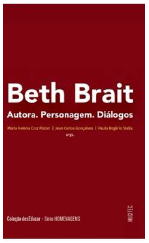
Culminating the event, we had a surprise for our Editor-in-Chief: a book in her honor - Beth Brait. Autora. Personagem. Diálogos [Beth Brait. Author. Character. Dialogues], edited by Maria Helena Cruz Pistori, Jean Carlos Gonçalves, and Paulo Rogério Stella, and published by Hucitec. Moments of emotion that are also part of academic work.
In conclusion, as we have expressed before, the anniversary of the journal is a reason for great satisfaction - and even pride! - for us who work with it day by day; and it was gratifying to share these feelings at the Academic Journey for Bakhtinina’s 15th Anniversary. We repeat: without a doubt, in a country like ours where one cannot be certain about institutional sponsorships to be received each year - these years have been an achievement! And it is with this feeling that we present the articles that compose this new issue, 19.4: 12 articles and one review. As the ones who understand, we join our authors and readers in seeking meaning in science, art, and life in our everyday lives. Let us now turn to the articles.
Diversity, a term and concept that has been constantly referred to in contemporary times, can be the common element that brings together the first six texts. The first one, “The Term Diversidade [en. Diversity] and Its Displacement on News Portals: from Didactic to Polemical Discourse,” authored by João Kogawa, Débora Kogawa, and Indaiá de Santana Bassani, the three of them from UNIFESP - SP, serves as the umbrella that encompasses the others on this list. The authors study the circulation of the term in news portals from 2006 to 2022, guided theoretically by French Discourse Analysis and methodologically by the AntConc software. The authors examine how the meaning of diversity has changed over this period, shifting from participating in a completive structure (diversity of...) to becoming an intransitive word. Based on the collected data, the article invites us to reflect on how this vocabulary has been appropriated by market economy as well.
Next, it is the diversity regarding historically marginalized populations - Black people - that the next two articles address. Jacson Baldoino Silva, Silvana Silva de Farias Araújo, and Huda da Silva Santiago, all from Feira de Santana, Bahia (UEFS), are responsible for “Literature and the Formation of Brazilian Portuguese: A Historiographic Metafiction of Linguistic Contacts.” In this article, the authors point out the possibilities of literary texts, such as the novel Um defeito de cor [A Defect of Color] by Brazilian author Ana Maria Gonçalves, contributing to an understanding of the forms of interaction that have shaped Brazilian society and given rise to “Brazil” and especially “Brazilian Portuguese” advancing beyond studies in Linguistics, Sociolinguistics of Contact, and History.
Irene Machado (USP), in the article “Black Visual Intonation in Arthur Jafa’s Audiovisual Experiment,” explores the singularity of Black cinema in the filmic composition of the video-essay Love is the Message, The Message is Death (2016). Leading the reader to want to know more about Arthur Jafa’s important work, the text shows how the video critically exposes the externalization of interactive inner energies of Black people through singing and dancing, which both express themselves and convey desires, dreams, and afflictions. The author demonstrates how the artist artistically summons scattered traditional cultural forms from the African diaspora.
The next three articles address gender diversity, and we can assert that in this issue, it is seen through the lens of Bakhtin’s great time, resurrecting meanings from the present in texts from other times. The article “Isocrates’ Encomium of Helen: Argumentation in Many Layers” by Bárbara Amaral da Silva (UFMG), proposes an examination of the argumentative strategies used by the rhetorician, analyzing the argumentative construction of the mythical character Helen from Homer’s Iliad and Odyssey. Through her analysis, the researcher shows how Isocrates, in 390 BC, reproduces imaginaries of femininity and masculinity in his Helen’s Praise, even though this was not his explicit intention.
In the sequence, we move on to 1387, the year in which Geoffrey Chaucer wrote The Canterbury Tales, the first great classic of English literature. Vanessa Rodrigues Barcelos and João Batista Costa Gonçalves (UECE), drawing on Bakhtin’s theoretical and methodological framework, especially the concept of carnivalization, present “The Canterbury Tales, by Geofrey Chaucer, from the Perspective of Bakhtinian Carnival: the Wife of Bath and the Subversion of Female Gender through the Profanation of Biblical Discourse.” The analysis shows how the Wife of Bath in Chaucer’s work subverts the prevailing concept of femininity in medieval times by profaning and subverting biblical guidelines for behavior in a tense and/or comedic manner.
We move now to contemporaneity as regards the treatment of gender diversity with the article “‘O Feminismo Finalmente Venceu’ [Feminism Finally Won]: Misogynistic and Antifeminist Metapragmatics Disguised as Freedom of Expression” by Rodrigo Albuquerque and Suzy de Castro Alves (UNB). Through an analysis of an interaction on X (formerly Twitter), drawing on Interpersonal Sociolinguistics and Pragmatics, the authors identify strategies of impoliteness that construct the scenarios of online linguistic-discursive violence, resulting in positions that are sexist, misogynistic, patriarchal, and antifeminist.
Following, three articles propose significant theoretical dialogues with the work of Mikhail Bakhtin. The first one, “On Human Sciences: Dialogues Between Ernst Cassirer and Mikhail Bakhtin,” is written by Ludmila Kemiac (UFCG - Campina Grande, PB). In a deep study, Kemiac takes the “cultural sciences” as the focus of comparison between the authors and, based on the ideas of “personification” and “thingification” (Bakhtin) and knowledge of the “other” and knowledge of the “thing” (Cassirer), points out differences and similarities between the authors, indicating possible previous readings of both.
Suelio Geraldo Pereira (PUC-Minas) writes “Author-Creator and Author-Model: Possible (Dis)Connections between Mikhail Bakhtin and Umberto Eco.” Pereira departs from Roland Barthes’ well-known essay, The Author’s Death (1967), to question, approach and debate the question of the author in Bakhtin and Eco, examining differences and similarities between the Bakhtinian concept of “author-creator,” and the concept of the Italian philosopher “author-model,” and showing how these concepts exert creative and strategic forces in the text.
The next dialogue is proposed by Pedro Henrique Oliveira Simões (UFPE), in the article entitled “Ought to Be, Science and Being in Moral Philosophy and Legal Theory: between Mikhail Bakhtin and Hans Kelsen.” With the aim of presenting ethical considerations especially for Law and Linguistics, the author focuses on the works Toward a Philosophy of the Act (Bakhtin, 1993)2 and General Theory of Law and State (Kelsen, 1949)3 with the aim of illuminate Bakhtin’s legal foundation from the perspective of moral philosophy as a primary philosophy, encompassing philosophy of religion and philosophy of Law.
In the following article, “The Sociolinguistic Interview Genre and Its Chronotopic Dimensions,” Érica Marciano de Oliveira (UFSC) articulates Bakhtinian concepts, such as chronotope and discursive field, with others from the anthropological and sociolinguistic field, to broaden the perspective of analysis of the “sociolinguistic interview” in an interdisciplinary approach. The author shows the possible contributions with this conceptual articulation and methodological strategy in the analysis of interviews with artisanal fishermen from Barra da Lagoa, members of the Associação Saragaço [Saragaço Association], in Florianópolis, SC.
The last two texts come to us from authors from Kazakhstan and Turkey. In the article “Poetic Model of Sacred Places,” Marzhan Mirazova and Zhanat Aimukhambet from Eurasian National University, Astana; Zhibek Bultanova from the Republican State Institution of the Ministry of Culture and Information, Astana; Yelena Sabiyeva and Tatyana Ahmetova, from the University of North Kazakhstan, Petropavlovsk, deal with the poetic interpretation of the symbolism of sacred places, verifying how Kazakh writers give new meaning to such cultural heritage in their works. In “The Role and Place of Zhyrau Poetry in the World Literature,” Yerik T. Sarzhigitov and Muratbek M. Imangazinov from Zhetysu University named after I. Zhansugurov in Taldykorgan; Bereke D. Zhumakyeva, from Suleyman Demirel University, in Kaskelen, all from Kazakhstan, and Kenan Koch, from Cosima University in the city of Mugla, Turkey, study the zhyrau phenomenon, its characteristics and presence in Kazakh literature, as each fragment of the zhyrau constitutes the puzzle of the culture of that people.
A review of the work Perspectiva dialógica nos estudos de tradução e interpretação da língua de sinais [Dialogic Perspective in Sign Language Translation and Interpretation Studies] (Hucitec, 2023), organized by Vinicius Nascimento, an important Bakhtinian researcher in Brazilian sign language, closes the issue. In her review, Lúcia Masini (PUC-SP) offers us an overview of the studies contained in the book, in addition to highlighting that “reading this work is, in itself, an ethical and aesthetic experience of enormous importance not only for the academic sphere of language studies, but also for life in society.”
Finally, we can state that the meanings shared in this issue of Bakhtiniana attest to the quality and relevance of the research that has been carried out in our area. Therefore, we invite everyone - readers, authors and collaborators - to actively respond to these texts, savoring and including in their research this set, which brings together 26 authors from 11 Brazilian institutions (UNIFESP, UEFS, USP, UFMG, UECE, UNB, UFCG , PUC - Minas, UFPE, UFSC, PUC-SP), and 6 foreigners, 5 from Kazakhstan (Eurasian National University, Astana; Republican State Institution of the Ministry of Culture and Information, Astana; University of North Kazakhstan, Petropavlovsk; Zhetysu University named after I. Zhansugurov, in Taldykorgan; Suleyman Demirel University, in Kaskelen) and one from Turkey (Cosima University in the city of Mugla).
We thank, once again, the invaluable and constant support, assistance and recognition from PUC-SP, through the Plano de Incentivo à Pesquisa (PIPEq)/ publicação de periódicos em 2024 (PubPer-PUC-SP) - 2º semestre de 2023 EDITAL PIPEq 11956/2023, Solicitação 29157 [Incentive Research Plan (PIPEq)/ Academic Journal Publication (PubPer-PUCSP) - 2nd Semester of 2023 NOTICE PIPEq 11956/2023, Request 29157] and CNPq/CAPES, call CNPq/CAPES No. 30/2023 Programa Editorial (Versão Republicada) [Editorial Programa (Reprint Version)].
References
- BAKHTIN, M. Fragmentos dos anos 1970-1971. In: BAKHTIN, M. Notas sobre literatura, cultura e ciências humanas. Organização, tradução, posfácio e notas Paulo Bezerra. Notas da edição russa Serguei Botcharov. São Paulo: Editora 34, 2017. p. 21-56; p. 41.
- BAKHTIN, Mikhail. Para uma filosofia do ato responsável. Tradução aos cuidados de Valdemir Miotello & Carlos Alberto Faraco. São Carlos, SP: Pedro & João Editores, 2010.
- BARTHES, Roland. A morte do autor. In: BARTHES, Roland. O rumor da língua. Tradução Mario Laranjeira. São Paulo: Martins Fontes, 2004. p. 57-64.
- GONÇALVES, Ana Maria. Um defeito de cor. 26. ed. Rio de Janeiro: Record, 2021.
- KELSEN, Hans. Teoria geral do Direito e do Estado. Trad. Luís Carlos Borges. São Paulo: Martins Fontes, 1990.
- PISTORI, Maria Helena Cruz; GONÇALVES, Jean Carlos; STELLA, Paulo Rogério (orgs.). Beth Brait. Autora. Personagem. Diálogos. São Paulo: Hucitec, 2024.
-
1
BAKHTIN, M. From Notes Made in 1970. In: Speech Genres & Other Late Essays. Translated by Vern W. McGee and Edited by Caryl Emerson and Michael Holquist. Austin: University of Texas Press, 1986, p. 145.
-
2
BAKHTIN, M. M. Toward a Philosophy to the Act. Translation & notes by Vadim Liapunov. Edited by Vadim Liapunov & Michael Holquist. Austin: University of Texas Press, 1993.
-
3
KELSEN, Hans. General Theory of Law and State. Translation Andres Wedberg. 3. ed. Cambridge: Harvard University, 1949.