
 What is there to drink? Analysis and perspectives of dairy products’ private labels in Brazil
ABSTRACT
Considering Brazil´s importance as both a producer of food products and large consumer market for them, as well as the growing adhesion of Brazilian consumers to the purchase of private labels, this article analyses a chain of private labels of dairy products in Brazil, identifying advantages and disadvantages perceived by manufacturers and distributors related to the private labels. We developed a case study using a dairy cooperative as a focal company, interviewing 18 managers: two from the focal company, five distributors’ strategic private label managers, and 11 store managers. Our findings show there is a consensus that private labels have strengthened the relationship between manufacturers and distributors due to the increase in shared decisions and the identification of the manufacturer on the product packaging, generating joint engagement. It was highlighted that the trust generated by a well-rated private label also affects products from the same supplier. We present a matrix summarizing the analysis of similarities and differences between the perceptions of the manufacturer and the distributors.
KEYWORDS:
Private labels; cooperative; distributor; agribusiness; dairy
RESUMO
Considerando a importância do Brasil como mercado produtor e consumidor de produtos alimentícios, e a crescente adesão dos consumidores brasileiros à compra de marcas próprias, este artigo analisa uma cadeia de marcas próprias de produtos lácteos no país. Ele identifica vantagens e desvantagens percebidas por fabricantes e distribuidores em relação às marcas próprias. Foi desenvolvido um estudo de caso tendo uma cooperativa de laticínios como empresa focal. Foram entrevistados 18 gestores: dois da empresa focal, cinco gerentes estratégicos de marcas próprias de distribuidores e 11 gestores de lojas. Os resultados mostram que há um consenso de que as marcas próprias fortaleceram o relacionamento entre fabricante e distribuidores devido ao aumento de decisões compartilhadas e à identificação do fabricante na embalagem do produto, gerando engajamento conjunto. Foi destacado que a confiança gerada por uma marca própria bem avaliada também afeta os produtos do mesmo fornecedor. Por fim, apresenta-se uma matriz que resume a análise das semelhanças e diferenças entre as percepções do fabricante e dos distribuidores.
PALAVRAS-CHAVE:
Marcas Próprias; cooperativa; distribuidor; agronegócio; laticínios
1. INTRODUCTION
Private labels are one of the leading brand strategies, reaching an outstanding position in the current scenario. Besides disruptions and crises, such as the pandemic and the global rise in inflation, it is also important to highlight the changes in the management of private labels as well as customers’ perception of these products (Cuneo et al., 2019; IRI, 2022; Li et al., 2022; Milberg et al., 2019; Sansone et al., 2021; Sgroi & Salamone, 2022). Exclusively controlled and distributed by a retailer, wholesaler, or distributor, they are a concrete form of gaining competitive advantage (Kumar & Steenkamp, 2008).
According to Kumar and Steenkamp (2008), private labels emerged in the late sixties in England and France, solely conceived as low-cost and low-quality items. With the consumer's change of perspective, which began to demand high levels of service, such items started to deliver the same benefits as renowned brands, not being restricted only to the price as the sole competitive factor (Laaksonen & Reynolds, 1994). Therefore, distributors started to invest in the development of products with added value, aiming to change the image from low-cost options to items offering similar or even higher quality features than manufacturer brands (Paula et al., 2013; Milberg et al., 2019; Li et al., 2022).
From this change of concept, delivering products that generate an appropriate level of service becomes a key element, because a negative experience with private labels may transfer the consumer's unwillingness towards the image of the establishment in general, considering the intrinsic relationship between the brand and its distributor, which, most of the times, bears its name in the label (Cuneo et al., 2019; Li et al., 2022; Milberg et al., 2019; Olbrich & Jansen, 2014; Vahie & Paswan, 2006). In this context, a renowned manufacturer may play an important role in the image of the private label as, if it is recognized for providing reliable items, an increase in the perceived quality will consequently occur (Aaker & Keller, 1990; Chen, & Xu, 2021; Sgroi, & Salamone, 2022).
The private labels market in Brazil still presents few significant numbers when compared to Europe, the United States, and even other countries in Latin America (Sebria & Zaccourb, 2017; Cuneo et al., 2019). According to ACNielsen (2017) and Berlato (2022), even though it has expanded in recent years, the development of the Brazilian private labels market is lower than the global average, with a 5 % market share, behind the South American average of 7.9 %. Even with indicators below the international reality, private labels in Brazil maintain a performance that deserves to be highlighted: according to ACNielsen (2017), they show greater growth than that of manufacturers' brands, 13.4 % and 9.6 % respectively. Between June 2019 and June 2020, the number of private labels sold grew by 22 % and their penetration in the Brazilian market rose from 29 % to 33 %, representing 2.2 million new buyers in the first half of 2020.
It was estimated that the revenue of private labels in Brazil in 2020 would grow by more than 9 % compared to the revenue in 2019. According to this data, one in three Brazilian households buys private labels (Abmapro, 2020). The growth trend for private labels in Brazil was steady in 2022: 34 % of Brazilian households buy private labels, and one in four items in the regular shopping cart are private labels. According to Berlato (2022), consumers seeking economic alternatives found and chose private labels. Regarding milk, for example, in February 2022 private label options were 15 % cheaper on average than national brands; in June 2022 they were still 10 % cheaper, despite inflation and other setbacks in the market (Berlato, 2022).
Among the 10 best-selling private label categories in Brazil, nine are food products, representing 76 % of sales, wit long-life milk and dairy products accounting for 10.3 % of private label sales in the country (Chiara, 2015). According to the Ministry of Agriculture, Cattle and Supplying (Ministério da Agricultura e Pecuária - MAPA, 2023), Brazil produces over 34 billion liters of milk every year, being the third largest producer in the world. Dairy products represent one of the main sectors of the country’s economy, and 98 % of Brazilian municipalities have milk production. With over one million properties producing milk, small and medium-sized properties are predominant, employing nearly four million people. In 2022, the country achieved over one trillion Brazilian reais as the gross value of farming production, the second highest in a series of 34 years. And milk was one of the five products that stood out the most in 2022, reaching the highest value of its whole historical period (Ministério da Agricultura e Pecuária - MAPA, 2023).
Minas Gerais is the main producer of milk in Brazil: in 2021, the state accounted for over 27 % of the country’s milk production, with over nine million liters produced (Instituto Brasileiro de Geografia e Estatística, 2022). The focal company is a cooperative, located in the state of Minas Gerais, and it produces and sells both national brand and private labels. The choice of the focal company is also justified by its prominence in the production of long-life dairy products in Brazil (Kantar WorldPanel, 2016), in addition to being a supplier of private labels for chains in evidence in the national retail scenario - also included in this study.
Despite its increasing importance for companies and consumers, private labels are still not as studied as other topics, especially concerning the supply chain and an emerging country’s reality. By focusing on the relationship between a manufacturer and retailers in the private label supply chain of dairy products, this article seeks to help fill this gap. According to Milberg et al. (2019), most research on private labels has focused on the demand side. Pasirayi and Richards (2023) focus on the South African market and suggest studies on other emerging economies, such as Brazil. Considering the importance of integrating the views of manufacturers and distributors in the private labels market, this article aims to analyze a chain of private labels of dairy products in Brazil, identifying advantages and disadvantages perceived by a manufacturer and distributors related to the private labels strategy.
In order to do so, we developed a qualitative case study, collecting data through interviews with 18 managers (two from Cooperative A, the focal company; five distributors’ strategic private label managers, and 11 store managers); and field observations.
2. LITERATURE REVIEW
2.1. The context of private labels
Brands act as property identifiers, risk reducers for the consumer, position identifiers, and value providers, among other aspects (De Chernatony, 2006). Such purposes are included in the private labels’ strategy, brands controlled by a retailer, wholesaler, or distributor, being distributed in their sales channels, whether manufacturing is outsourced or not (Kumar & Steenkamp, 2008). They express the bond between the product and the holder with higher intensity since most of the time it bears the name of its owner (Calvo-Porral & Lang, 2015; Calvo-Porral et al., 2016).
In its origin, private labels were conceived as inferior to manufacturers' brands. However, such perspective has changed throughout the decades (Cuneo et al., 2015; Cuneo et al., 2019; Ter Braak et al., 2013a; Li et al., 2022; Milberg et al., 2019), divided into four generations, based on strategies of price, discount, and added value through innovation and quality (Laaksonen & Reynolds, 1994). According to Oliveira (2008), the evolution has also occurred in Brazil with international retailer chains. This scenario, together with the impact caused by technological innovations and the change in the dynamics of the consumer market, have influenced the increase in the demand for performance standards and value proposals (Huang & Huddleston, 2009; Pasirayi & Richards, 2023).
Despite price still being a major factor in the decision to purchase private labels, other variables are being considered: product quality, range of products, communication, the credibility of manufacturers, perception of products, post-consumption satisfaction, and trust built over time (Abril & Rodriguez-Cánovas, 2016; Huang & Huddleston, 2009; Sansone et al., 2021). For Chaniotakis et al. (2010), this change in the consumer's concept has boosted the demand for changing the positioning of private labels, mainly due to the perceived quality. In addition, periods of crisis or recession generate consumer engagement with private labels, increasing consumption-consumers can stay loyal if their expectations are fulfilled (Miquel-Romero et al., 2014).
With the repositioning of private labels, some of the main strategic decisions of retail are focused on the endorsement of such brands. Depending on the strategy chosen, whether using the distributor's name or that of an exclusive brand, the associations that consumers make are transferred in different levels of intensity for their private labels, creating synergy between marketing strategies as a whole (Paula et al., 2013). The image of the distributor also impacts the credibility indicators of private labels, with many retail chains investing in the development of corporate branding, and private label strategy contributing to this process (Burt & Sparks, 2002). Offering private labels can promote benefits that involve both the distributor and manufacturers, through the integration of both parties in the distribution channel (Dunne & Narasimhan 1999; Zippel et al., 2013), which in its turn generates advantages such as greater access to information of the consumer market and in the protection against the competition (Gomez-Arias & Bello-Acebron, 2008). It can also be a challenge for manufacturers and retailers (Cuneo et al., 2019; Milberg et al., 2019).
2.2. Advantages and disadvantages of private labels strategy
Private labels provide several advantages and disadvantages for distributors and manufacturers that may act as markers for the decision-making of adopting or not this strategy. The main advantages highlighted in the literature for distributors and manufacturers are presented in Charts 1 and 2, respectively.
The main advantages identified by distributors were: differentiation in relation to other private labels and to manufacturer brands; reinforcement of the relationship with the consumer; strengthening the distributor's image when offering quality items; profitability (private labels offer higher margins); and strengthening and tightening the relationship with the manufacturer. Sgroi and Salamone (2022) discuss economic advantages for distributors, such as owning the brand, its story, visibility, and customer loyalty; higher profit margins, and competitive prices. Sharma et al. (2020) also discuss how to increase the retailers’ profitability when organizing its layout (shelves and portfolio) combining private labels and national brands.
For the manufacturer, the main advantages identified were: increase in sales volume with the outflow of manufacturing surplus; strengthening of the relationship with distributors due to greater sharing of decisions; higher profitability than manufacturers' items; increase in POS participation in relation to competitors; increase in sales of its brands due to acquired trust; and exchange of technological knowledge with the distributor. Chen and Xu (2021) discuss the possibility of higher earnings and profit for manufacturers when the retailer starts offering private labels. For Milberg et al. (2019), however, the benefits for private label manufacturers depend on conditions like excess capacity, profit from supplying private labels, and the risk of cannibalization.
However, the strategy of private labels also has some disadvantages that must be taken into consideration by distributors and manufacturers, as listed in Charts 3 and 4.
Among the disadvantages of private labels related to distributors, we cite a higher incidence of distributor's responsibility in the supply chain; negative situations involving private labels may affect the distributor's corporate image. The impacts of the relationship between manufacturers and retailers, and the retailing structure in different countries (emerging versus developed economies) are also considered by Pasirayi and Richards (2023).
Regarding the manufacturer, the following disadvantages are highlighted: risk of negative experience reaching the supplier corporate brand; risk of “cannibalization” if private labels are positioned by the distributor as a direct competitor; or if the distributor holds higher power in the distribution channel. From the studies of Cuneo et al. (2019), Milberg et al. (2019), and Li et al. (2022), we can note that premium private labels and top-tier manufacturers producing private labels are topics to be explored, as competition between these products tends to increase in competitive markets. The next section lists the methodological procedures used in the development of the study.
3. METHODOLOGICAL ASPECTS
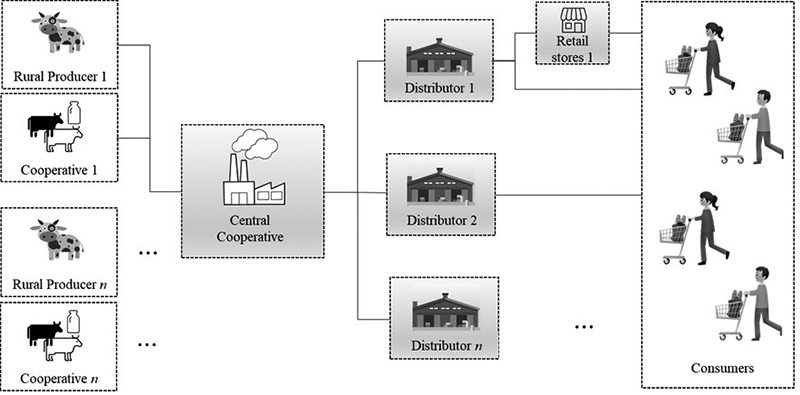
This case study has considered, as the unit of analysis, a dairy cooperative located in the countryside of the Brazilian state of Minas Gerais, referred to herein as Cooperative A (the focal company). The organization under study was initially chosen due to the relevance of the agricultural and livestock sector in the Brazilian economy, which represented about 6.8 % of the Gross Domestic Product (GDP) in 2020 (Ministério da Agricultura e Pecuária - MAPA, 2022). Analyzing agribusiness in general, including, in addition to primary activities, transformation, and distribution activities, the participation in the Brazilian GDP is over 27 % (Centro de Estudos Avançados em Economia Aplicada [CEPEA], 2022). In addition, according to Kantar WorldPanel (2016) data, Cooperative A is one of the greatest suppliers in the long-life dairy product market in Minas Gerais, which is the State with the highest dairy basin in Brazil, according to Instituto Brasileiro de Geografia e Estatística [IBGE] (2017, 2022). Figure 1 shows a cutout of a production chain, highlighting Cooperative A and the links researched and addressed in this study.

Cooperative A employs 700 people and comprises three smaller single cooperatives, totaling two thousand milk rural producers (independent and members of the three other cooperatives) supplying milk to the focal company. It currently produces 50 Stock Keeping Units (SKUs). Cooperative A supplies private labels for eight companies, herein called Distributors, that operate in Brazil and South America.
We collected the qualitative data initially through interviews in Portuguese. The interviews were conducted in person and followed predefined scripts. They were all recorded and then transcribed before coding and analysis (Gubrium et al., 2012; Flick, 2018).
The interviewee of Cooperative A, entitled “Manufacturer Strategic Manager”, holds the position of executive director, comprising the management of marketing, commercial, and logistics departments. He was chosen because of his role in the strategic decisions in the management of private labels, which comprises decisions from the manufacturing until the negotiation and relationship with distributors. Through the snowball technique (Biernacki & Waldorf, 1981), we asked him to suggest distributors that outsource their private label manufacturing with the company. The manager then appointed their eight private label customers, and from this appointment, managers who were involved with the supplier were mapped and contacted.
Among the eight distributors appointed by Cooperative A, five agreed to participate in this study, amounting to 62 % of the Cooperative private label customers. The studied distributors were named “Distributor Strategic Manager A, B, C, D, E”, as shown in Chart 5. It must be stressed that the distributors included in the interviews are renowned chains in the Brazilian market.
Considering operational aspects and the importance of the relationship with the final consumer, opinions from members of the operational level were also included in this study. Thus, within the manufacturer’s scope, Cooperative A’s technical manager of private labels was also interviewed (entitled “Manufacturer Tactical Manager”). He works directly with the strategic manager and is responsible for aspects related to manufacturing, commercial, and logistics operation. On the part of the distributors, managers of eleven stores that comprise four out of five of the analyzed distributors were also included in this study (entitled Store Tactical Managers 01 to 11). Therefore, we interviewed 18 managers in total: two work at Cooperative A (one Strategic and one Tactical manager); five are strategic private label managers for Distributors A, B, C, D, and E (who buy their private labels from Cooperative A); and 11 are store managers, herein identified as Store Tactical Managers 01 to 11.
The questions asked to the strategic managers involved aspects related to their personal characterization, the company's characterization, self-perception of the distributors’ products and positioning, market evolution and situation, position in the production chain, and the consumer's perception regarding their private label. The script to interview the tactical managers was based on the one used for the strategic managers but focused on aspects related to store operations and consumer perception of private labels, as this group of interviewees has greater involvement with these aspects and, through their opinion, we could identify possible trade-offs between strategic and tactical/operational levels.
Observational analyses were made in addition to the interviews, complying with the data triangulation criteria (Yin, 2001; Flick, 2018). We adopted the non-participant model of observation (Marconi & Lakatos, 2003). Observations were made in the manufacturers' industrial and administrative complex and two distributors' stores, comprising a total of nine hours of observation in the manufacturer and seven hours and thirty minutes in the distributors.
We then classified and coded the corpus according to the principles of content analysis proposed by Bardin (2011), to clarify and systematize the collected content. The categories and corresponding codes were prepared by the authors with the support of spreadsheet software. Finally, the main results were included in a matrix to facilitate the analysis of similarities and differences between the perception of the studied manufacturer and distributors (Chart 6). The next section details the codes and categories identified, starting with the frequency of incidence in the collected data.
4. RESULTS AND DISCUSSION
Fifty-two codes organized in seven categories were obtained in the content analysis, stratified by position in the distribution channel (manufacturer and distributor) and by hierarchical level (strategic and tactical). Table 1 provides a summary of the frequency of incidence of each code for the Manufacturer (Man. Freq) and the Distributors (Dist. Freq), in addition to the totals. It is important to highlight that the frequencies include data obtained from interviews with strategic and tactical managers, totaling two interviews in Cooperative A (executive director and technical manager of private labels) and 16 in five distributors (five strategic managers and 11 tactical store managers).
In the category “Required attributes”, “Quality” was the code with the greatest incidence - as well as in the general analysis, being unanimously mentioned and addressed as an essential attribute for private labels. Interviewed distributors and manufacturers stress the relevance of delivering a product with quality at the same level and even superior to leading brands, as consumers do not distinguish private labels only by price anymore (Chaniotakis et al., 2010; Beneke & Carter, 2015; Vale, Matos, & Caiado, 2016; Cuneo et al., 2019; Sansone et al., 2021; Li et al., 2022):
From the distributor’s point of view, it is a matter of quality (...) many times in our heads we think about price, and that is not the case! Actually, both the distributor and the final consumer want a product that delivers real value (…) when a middle/low-class housewife wants to buy a jar of olives, she wants that product to have quality since she spent her money and if it is not satisfactory, she will get very frustrated (Distributor Strategic Manager E).
(...) having a great product with very good quality, because then it manages to be rated well, as in our case, where we were rated by a respected international audit, getting 98 % in terms of performance, quality, process, and standards, and with that the brand owner values and pays more (Manufacturer Strategic Manager).
The code “Differentiation/innovation” was mentioned only by distributors and deals with the relevance of delivering products with features that differentiate it from market leaders and mainly from the private labels in its historical context, which was a product characterized by the standardization and low added value (Miquel-Romero et al., 2014; Kireyev et al., 2017; Cuneo et al., 2019):
Differentiation mainly, (...), when leaving the commonality, characteristic of the private labels market in Brazil, which is still deficient and moves towards me too, which is the “copy and paste” of the present in the market (Strategic Manager Distributor D).
Today, I really believe in the product’s appearance. Housewives like an attractive product, which is why we invest so much in this. (…) I need a package that really attracts (…). If we can do this, it is almost certain that she will buy again, but there is a clear competition, depending on the difference in the price with the leader. Sometimes she buys products from the market leader (Distributor Strategic Manager E).
The third most mentioned code in the category was “Manufacturer Image”, and, as the previous one, it was exclusively mentioned by distributors. It refers to the relevance of the manufacturer in transmitting credibility and reputation to the market, not only of its manufacturing processes but within the entire context, also taking into consideration the history of its manufacturer product, financial and even social aspects. The manufacturer’s image, according to the interviewees, works actively as the first factor to attract distributors for a potential supply (Parente, 2000; Oliveira, 2008; Chen & Xu, 2021).
Strategic managers from the manufacturer and the distributors have also mentioned “Distribution” as a key point, related to the relevance of the manufacturer to hold the distribution extent, efficient delivery, and respect to private labels exclusivity (Parente, 2000; Cuneo et al., 2015). On the part of the manufacturer, the “Distributor image” was mentioned, stressing the impact that the distributor reputation represents on the success of the private label (Bao et al., 2011; Rahman & Soesilo, 2018).
The category “National Context” comprises the opinion of interviewees about the evolution of private labels in Brazil and if the country’s current economic context impacts the investment in such strategy. In the code “Development”, interviewees believe almost unanimously in the evolution of the perception of private labels in Brazil which, even distant from the reality of more developed markets, has significantly evolved when considering other attributes beyond price (Paula et al., 2013; Sebria & Zaccourb, 2017; Pasirayi & Richards, 2023):
I realize that the evolution goes on the right track, that we should work the private label as it is dealt with abroad, (…) the more we invest, the more we realize the evolution. And I do not perceive this evolution only in the chain, but also in other market players (Distributor Strategic Manager C).
On the code “Influences”, the interviewees (except the Manufacturer Strategic Manager) expressed the belief that the current Brazilian economic context influences manufacturers, and distributors in the main, to invest in private labels, specifically because such products are still more accessible than leading brands. They also believe the recent economic crisis has resulted in a higher search for these products for a better cost-benefit trade-off (Beneke et al., 2015; Berlato, 2022):
(…) the private label may involve the fact that a supplier delivers a better cost-benefit relationship for the customer that is outsourcing, resulting in a much better price than the manufacturer product from the same supplier. Maybe this will occur naturally, and the consumer will be aware of the current economic issues that make the price more vulnerable (Manufacturer Tactical Manager).
In the category “Disadvantages”, the code “There is no disadvantage” was widely more mentioned than the others. Interviewees believe that private labels do not offer disadvantages to the chain links involved in the distribution channel, mainly the consumer. Authors such as Cuneo et al. (2019), Milberg et al., 2019 and Chen and Xu (2021) explore possibilities of benefits for both manufacturers and distributors in the context of offering private labels, especially considering the change to offer quality and premium private labels. However, some disadvantages were listed, such as “Difficulty in adding value”, related to the difficulty of creating specific communications to exhibit private labels in the portfolio, generally dealt with in a standard manner for lower cost (Parente, 2000); “Liability for damages”, assumed both by distributors and manufacturers (Hoch & Banerji, 1993); “Risk of Breakdowns”, which refers to manufacturing and/or logistic bottlenecks; and “Damage to the Store Image”, if a potential negative experience with private labels creates a negative image for the product and consequently, the establishment (Oubiña et al., 2006).
In the category “Marketing Strategies”, factors related to the sale of private labels and their representativeness in relation to the general market are included: criteria adopted to develop new categories; positioning of private labels; and potential conflicts between private labels and manufacturer brand. In the code “Growth”, interviewees mention the increase of private labels and their representativeness in the turnover, according to market trends (ACNielsen, 2017; Alves et al., 2016; Milberg et al., 2019; Li et al., 2022).
In the code “Opportunity”, the manufacturer mentions the opportunities provided by new customers, with the constant search for distributors willing to enter the private labels market, and also the possibility of increasing their products' space (manufacturer brand) in distributors they supply private labels to (Zippel et al., 2013; Milberg et al., 2019). In the case of distributors, they mention the possibility of seizing opportunities in a not yet matured market, with high expectations of growth, and establishing partnerships and easiness in the distribution channel (Paula et al., 2013; Ter Braak et al., 2013a; Sgroi & Salamone, 2022).
In Brazil, private labels are not as consolidated as in other countries, which obtain 30 % to 40 % of the portion in certain categories. Since working with private labels abroad is already in the company’s DNA, this has encouraged us to develop this market in Brazil, with the purpose of being the leader and main reference in the market of private labels (Distributor Strategic Manager C).
In “Positioning Defined by the Distributor”, manufacturers and distributors mention that the positioning of the private labels has no relationship with the manufacturer brand - the distributor is responsible for defining the target market of private labels (Paula et al., 2013).
Addressing the codes specifically related to the manufacturer, in “There is no conflict”, interviewees stressed that there is no conflict between private labels and manufacturer brands in the portfolio and general market, due to factors such as the exclusivity of distribution and the consolidation of their brand in the market. Therefore, the presence of “cannibalization”, when the private label negatively affects the performance of the manufacturer brand (Gomez-Arias & Bello-Acebron, 2008; Ter Braak et al., 2013b; Milberg et al., 2019), was not verified.
In the code “Part of customer”, managers mentioned the prospection of customers comes from outside to inside, that is, the distributor must present its demand to Cooperative A, with the manufacturing capacity being assessed according to the product requested. Managers agreed that “There may be conflict”, with the potential unwillingness against the manufacturing of the private labels by the commercial representatives who negotiate the manufacturer brand, as they understand it as one more competitor in the market (Oubiña et al., 2006; Milberg et al., 2019).
The category “Portfolio” is related to aspects of the product mix, the proportion between distributor and manufacturer brands, and which criteria influences the portfolio expansion. The code “There is no Proportion” was mentioned by the manufacturer and indicates that there is no predefined proportion between private labels and other items of the product mix. As for distributors, this code was mentioned, but not in an absolute way. Most of the interviewed strategic managers mention that there is no predefined proportion between private labels and manufacturer brands, while most of the tactical managers mention there is a proportion. Sharma et al. (2020) discuss how retailers can improve the space-positioning of private labels by combining them with national brands in the portfolio. Finally, in the code “Demand”, the expansion of the product mix depends on the customers’ demand (manufacturer perspective) as well as the consumer market's (distributor perspective).
The category “Relationship in the distribution channel” addresses the interaction between manufacturers and distributors involving: relationship, operations in POS, and perception of the involvement of the consumer with private label suppliers. The most mentioned code was “Strengthening of the Relationship”, with the interviewees indicating the proximity provided by private labels (Verhoef et al., 2002; Oubiña et al., 2006; Ter Braak et al., 2013b):
(…) it provided mutual understanding and solidification of partnerships. The supplier understood that private labels are something that also provides advantages for them, learning to appreciate the supply of this market and working together to deliver the best product possible (Distributor Strategic Manager C).
This code was also identified in the observational analysis three times: first, free access for direct contact between manufacturer and distributors, including the manufacturer's tactical level member freely contacting consumers’ strategic areas; secondly, the exemption of penalty to the manufacturer in case of delay in the delivery, being noted that this occurred because of the good relationship between the parties; and finally, a less formal tone (even informal sometimes), indicating proximity, during discussions between the manufacturer's and the distributors' strategic managers.
In “Exclusive relationship distributor/consumer”, interviewees mentioned that consumers exclusively seek the stores to intermediate issues related to private labels, with no connecting point with the manufacturer. As for the code “Manufacturers have no relationship with private labels in the POS”, it is clear that the relationship of the manufacturer in the store is only as a supplier, and the entire operation of the POS is managed by the distributor's internal team.
The entire operation and marketing strategy is defined by the chain. In the private label, the only connection with the supplier is the manufacturing, and we are responsible for the entire operation. As for manufacturer brands, it is charged by the product that corresponds to them. We take care of the management of the private labels and the supplier takes care of the product management, and it has promoters and a whole process (Store Tactical Manager 4).
The next code is “Increase purchase of manufacturer items”, in which managers mention that trust in a private label product may influence the perception of manufacturer's items from the same supplier (Zippel et al., 2013). In “Curiosity”, interviewees say the consumer is curious and values the origin of the private label:
(…) I am a consumer and I see that my family chooses a private label product, and my wife checks who the manufacturer is, exactly to see if there is a quality manufacturer or not and if it has a strong brand in the market. For a totally lay consumer, I also believe that he searches for a price opportunity and then he buys, sometimes but not always, but generally, the ones who like private labels check the origin, they have such sensitivity (Manufacturer Strategic Manager).
In his turn, the Manufacturer Tactical Manager thinks differently and does not believe in this curiosity of the consumer:
No, I do not believe in that, even because many people do not have this culture of checking the package to see who is manufacturing the product. Many still think that such product is manufactured by the retailer or the distributor and have no idea that it is another company that manufactures it for that distributor. Therefore, this is a barrier yet to overcome and also to make the consumer check for more information about the product origin (Manufacturer Tactical Manager).
There were also discrepancies in this code for distributors. At the strategic level, the opinion was equally proportional and one of the managers stated that he did not know how to answer (code “Do not have the information”). As for the tactical level, most of the interviewees believe that the consumer is more curious about the private labels' origin.
The distributors' tactical managers' opinions must be stressed, considering they are closer to the consumer. They agree with the literature, mentioning that consumers tend to keep a favorable perception of private labels when they realize the name of a reliable manufacturer is included in the packaging (Huang & Huddleston, 2009; Choi & Huddleston, 2014; Bao et al., 2011; Rahman & Soesilo, 2018; Milberg et al., 2019; Chen & Xu, 2021).
In the last category, “Advantages”, the most mentioned code was “Price”. It is still a major relevance factor for private labels in relation to leader brands, but not unanimously: “(…) the customer will buy a product with the same level of quality of the market leaders with an average price 15 to 20 % cheaper (Store Tactical Manager 1)”. The second most relevant code of the category was “Sales volume”. The manufacturer mentions higher sales volume than if it was producing exclusively manufacturer brands (Verhoef et al., 2002; Oubiña et al., 2006; Ter Braak et al., 2013a; Chen & Xu, 2021).
For the code “Store Promotion”, interviewees mention institutional image, as well-assessed and recognized private labels promote the distributor due to a strong bond between the brand and its holder (Bigné et al., 2013; Choi & Huddleston, 2014; Olbrich & Jansen, 2014). And for the code “Profitability”, they mentioned private labels generate good financial results (Milberg et al., 2019; Chen & Xu, 2021). These products have a price generally lower than leading brands but involve higher profit margins due to reduced costs, being attractive to distributors (Bao et al., 2011; Diallo, 2012) and manufacturers (Verhoef et al., 2002).
The code “Loyalty” was mentioned exclusively by distributors. According to them, private labels are found exclusively in the chain that holds their property. Therefore, if the consumer has a positive experience, the chances of loyalty to the store tend to increase (Paula et al., 2013; Bigné et al., 2013; Nenycz-Thiel & Romaniuk, 2014; Sgroi & Salamone, 2022).
The private label strongly retains loyal customers - its image sticks in their heads. (…), because the individual comes here to buy that product, for example: I bought beans from the private label of the chain, and these beans are really good, and I am going to buy to try it, because the name of the chain is very strong (…) (Store Tactical Manager 2).
Other advantages mentioned were: “Acquired Credibility”, due to quality private labels (Bigné et al., 2013); “It occupies a space of the competitor”, as the manufacturer also occupies the shelves with the private labels, limiting the space of competitors (Oubiña et al., 2006; Tarziján, 2007; Sharma et al., 2020); and “Improvements through audits of distributors”, in which the auditing requirements improve manufacturer's structure and reaching market standards for its whole portfolio (Altintas et al., 2010). Chart 6 presents a matrix synthesizing the similarities and differences between the perspectives of the studied manufacturer (Cooperative A) and distributors A to E. The matrix lists the similarities and differences in terms of managerial and operational (tactical) perspectives for manufacturers and distributors of private labels in the studied supply chain.
6. FINAL CONSIDERATIONS
We achieved the study’s proposed objective and analyzed a chain of private labels of dairy products in Brazil, identifying advantages and disadvantages perceived by the manufacturer and distributors related to the private labels strategy. In order to do so, we interviewed 18 managers, two from Cooperative A and 16 from five distributors that offer private labels produced by the studied cooperative (manufacturer). Literature supports our findings (Sebria & Zaccourb, 2017; Cuneo et al., 2019; Milberg et al., 2019; Sharma et al., 2020; Chen & Xu, 2021; Sansone et al., 2021; Li et al., 2022; Sgroi & Salamone, 2022; Pasirayi & Richards, 2023).
Generally, interviewees believe in the evolution of private labels, with the manufacturer investing in quality, so their items have the same level of excellence, regardless of being private label or manufacturer brand, as they are aware that the price is not the only decisive factor of purchase anymore. Private labels are still noticed as inferior in the country, but interviewees realized the evolution in Brazil and work to deliver the best for the consumer.
There is a consensus among the interviewees that private labels strengthen the relationship between distributors and manufacturers due to the higher amount of shared decisions and the identification of the manufacturer in the product packaging, generating joint engagement. In addition, it was stressed that the trust generated by well-assessed private labels also reaches manufacturer items from the same supplier but, in relation to operations of private labels, most interviewees mention that the distributor is exclusively responsible for organization, promotion, and relationship with the consumer. There was no consensus among the interviewees about the influence of the origin of private labels on consumers' purchase decisions.
Finally, among the main advantages perceived, price was the most mentioned, which shows the high influence it still has, but other attributes were emphasized, such as quality. Other advantages mentioned by interviewees were the increase in sales volume; the promotion generated for the proprietary chain; profitability; loyalty; and, exclusively for manufacturers, the credibility provided before distributors and the occupation of competitor space. Most of the interviewees believe that there are no disadvantages in the strategy of private labels, mainly for the consumer.
With the study of an emerging market's reality, analyzing an industry of major relevance to the country's Gross Domestic Product, it is possible to highlight implications such as understanding the position and perspectives of the links involved in the private labels chain of dairy products in Brazil. These results can allow comparisons with other markets (especially those with more tradition in the offer of private labels) and support the decision to offer these products and the adoption of actions that can be carried out by manufacturers and distributors in collaboration, creating and adding value to the offer.
Despite the growth, the Brazilian market still has low rates of private label consumption, even when compared with other Latin American markets, and it is possible to infer that there is a potential market to be developed, especially through joint work between manufacturers and distributors. Understanding these links' perspectives and the main aspects of their relationship can contribute to the advancement of private labels in the country, representing, among other aspects, new purchase options for customers, better use of the idle capacity of manufacturers, and expanding the distributors' portfolio assortment.
As theoretical contribution, the article helps reduce the gap in the literature on private labels from the supply chain perspective, including manufacturers, and in an emerging market where the participation and market penetration of private labels is still incipient. As managerial contribution, by presenting the advantages and disadvantages for manufacturers and retailers in offering private labels, the results of this study can help companies better understand the market before deciding whether or not to offer private labels.
The case is relevant and allowed us to broadly understand the decisions related to private labels from the supply chain perspective, considering a manufacturer and five distributors, both at strategic and tactical levels, presenting practical and theoretical contributions, however, it is important to comment on the limit of the research scope and its implications: we decided to focus on a specific supply chain, with a Brazilian cooperative of dairy products as the focal company, therefore, as usual in deep case studies, it is not possible to expand our findings to other product categories or other countries.
As suggestions for future research, we recommend using the categories and codes identified in this article to develop comparative studies with other industries and regions. Considering the importance of agribusiness and the food sector to Brazil, studying private labels for other supply chains might be beneficial. A theoretical model can be proposed and tested based on this paper's findings and a quantitative study might also help achieve more companies.
ACKNOWLEDGEMENT
This work was supported by Fundação de Amparo à Pesquisa do Estado de Minas Gerais (FAPEMIG).
References
- Aaker, D. A., & Keller, K. L. (1990). Consumer evaluations of brand extensions. The Journal of Marketing, 54(1), 27-41.
-
Abmapro. (2020, September 21). Marcas Próprias conquistaram 2,2 milhões de novos consumidores https://abmapro.org.br/noticias/marcas-proprias-conquistaram-22-milhoes-de-novos-consumidores/
» https://abmapro.org.br/noticias/marcas-proprias-conquistaram-22-milhoes-de-novos-consumidores/ - Abril, C., & Rodriguez-Cánovas, B. (2016). Marketing mix effects on private labels brand equity. European Journal of Management and Business Economics, 25(3), 168-175.
-
ACNielsen. (2017, May 23). Marca própria traz destaques em básicos e premium, mesmo em um cenário de recessão https://www.nielsen.com/br/pt/insights/news/2017/Marca-propria-traz-destaques-em-basicos-e-premium-mesmo-em-um-cenario-de-recessao.html
» https://www.nielsen.com/br/pt/insights/news/2017/Marca-propria-traz-destaques-em-basicos-e-premium-mesmo-em-um-cenario-de-recessao.html - Altintas, H., Kilic, S., Senol, G., & Isin, B. (2010). Strategic objectives and competitive advantages of private label products. International Journal of Retail & Distribution Management, 38(10), 773-788.
- Alves, A. C., Melo, K. R., Andrade, D. S., Macedo, C. V., & Souza, M. I. (2016). A percepção da satisfação pelos clientes de marcas próprias. Revista Pensamento Contemporâneo em Administração, 10(4), 114-129.
- Arenhardt, D. L., Battistella, L. F., & Grohmann, M. Z. (2015). As estratégias dos fornecedores de marcas próprias e o seu poder de negociação frente aos varejistas: um estudo com pequenos fabricantes. Revista de Empreendedorismo e Gestão de Pequenas Empresas, 4(2), 183-218.
- Bao, Y., Bao, Y., & Sheng, S. (2011). Motivating purchase of private brands: Effects of store image, product signatureness, and quality variation. Journal of Business Research, 64(2), 220-226.
- Bardin, L. (2011). Análise de conteúdo Edições 70.
- Beneke, J., Brito, A., & Garvey, K. (2015). Propensity to buy private label merchandise. International Journal of Retail & Distribution Management, 43(1), 43-62.
- Beneke, J., & Carter, S. (2015). The development of a consumer value proposition of private label brands and the application thereof in a South African retail context. Journal of Retailing and Consumer Services, 25, 22-35.
-
Berlato, G. (2022, September 21). Preço atrai consumidores para marcas próprias. https://www.trendsce.com.br/2022/09/12/preco-atrai-consumidores-para-marcas-proprias/
» https://www.trendsce.com.br/2022/09/12/preco-atrai-consumidores-para-marcas-proprias/ - Biernacki, P., & Waldorf, D. (1981). Snowball sampling: Problems and techniques of chain referral sampling. Sociological methods & research, 10(2), 141-163.
- Bigné, E., Borredá, A., & Miquel, M. J. (2013). El valor del establecimiento y su relación con la imagen de marca privada: efecto moderador del conocimiento de la marca privada como oferta propia del establecimiento. Revista Europea de Dirección y Economía de la Empresa, 22(1), 1-10.
- Burt, S. L., & Sparks, L. (2002). Corporate branding, retailing, and retail internationalization. Corporate Reputation Review, 5(2-3), 194-212.
- Calvo-Porral, C., & Lang, M. F. (2015). Private labels: The role of manufacturer identification, brand loyalty and image on purchase intention. British Food Journal, 117(2), 506-522.
- Calvo-Porral, C., Martinez-Fernandez, V. A., & Juanatey-Boga, O. (2016). Influence of Manufacturer Signature on Store Brands Loyalty and Purchase Intention. Revista de Administração de Empresas, 56(1), 29-42.
-
Centro de Estudos Avançados em Economia Aplicada (2022, March 19). PIB do agro cresce 8,36 % em 2021; participação no PIB brasileiro chega a 27,4 % https://www.cepea.esalq.usp.br/br/releases/pib-agro-cepea-pib-do-agro-cresce-8-36-em-2021-participacao-no-pib-brasileiro-chega-a-27-4.aspx
» https://www.cepea.esalq.usp.br/br/releases/pib-agro-cepea-pib-do-agro-cresce-8-36-em-2021-participacao-no-pib-brasileiro-chega-a-27-4.aspx - Chaniotakis, I. E., Lymperopoulos, C., & Soureli, M. (2010). Consumers' intentions of buying own-label premium food products. Journal of Product & Brand Management, 19(5), 327-334.
- Chen, Z., & Xu, H. (2021). Private labels and product quality under asymmetric information. Journal of Economics & Management Strategy, 30(4), 743-759.
- Chimhundu, R., Mcneill, L., & Hamlin, R. (2015). Manufacturer and retailer brands: Is strategic coexistence the norm? Australasian Marketing Journal, 23(1), 49-60.
- Choi, L., & Huddleston, P. (2014). The effect of retailer private brands on consumer-based retailer equity: Comparison of named private brands and generic private brands. The International Review of Retail, Distribution and Consumer Research, 24(1), 59-78.
- Cuneo, A., Milberg, S. J., Benavente, J. M., & Palacios-Fenech, J. (2015). The growth of private label brands: A worldwide phenomenon? Journal of International Marketing, 23(1), 72-90.
- Cuneo, A., Milberg, S. J., Alarcon-del-Amo, M. del C., & Lopez-Belbeze, P. (2019) Private label and manufacturer brand choice in a new competitive reality: Strategic directions and the future of brands, European Management Journal, 37(1), 117-128.
- De Chernatony, L. (2006). From brand vision to brand evaluation: The strategic process of growing and strengthening brands (2nd ed.). Butterworth-Heinemann.
-
Chiara, M. D. (2015, August 20). Consumidor resiste à marca própria, mesmo com o orçamento apertado https://economia.estadao.com.br/blogs/marcia-de-chiara/consumidor-resiste-a-marca-propria-mesmo-com-o-orcamento-apertado/
» https://economia.estadao.com.br/blogs/marcia-de-chiara/consumidor-resiste-a-marca-propria-mesmo-com-o-orcamento-apertado/ - Diallo, M. F. (2012). Effects of store image and store brand price-image on store brand purchase intention: Application to an emerging market. Journal of Retailing and Consumer Services, 19(3), 360-367.
- Dunne, D., & Narasimhan, C. (1999). The new appeal of private labels. Harvard Business Review, 77(3), 41-52.
- Flick, U. (2018). The SAGE Handbook of Qualitative Data Collection SAGE Publications.
- Gomez-Arias, J., & Bello-Acebron, L. (2008). Why do leading brand manufacturers supply private labels? Journal of Business & Industrial Marketing, 23(4), 273-278.
- Hoch, S. J., & Banerji, S. (1993). When do private labels succeed? MIT Sloan Management Review, 34(4), 57-67.
- Hoskins, J. D. (2016). Offering value and capturing surplus: A strategy for private label sales in a new customer loyalty building scenario. Journal of Retailing and Consumer Services, 28, 274-280.
- Huang, Y., & Huddleston, P. (2009). Retailer premium own-brands: Creating customer loyalty through own-brand products advantage. International Journal of Retail & Distribution Management, 37(11), 975-992.
-
Instituto Brasileiro de Geografia e Estatística (2017, March 23). Indicadores IBGE: Estatística da Produção Pecuária https://biblioteca.ibge.gov.br/index.php/biblioteca-catalogo?id=72380&view=detalhes
» https://biblioteca.ibge.gov.br/index.php/biblioteca-catalogo?id=72380&view=detalhes -
Instituto Brasileiro de Geografia e Estatística (2022, April 12). Indicadores IBGE: Produção de leite https://www.ibge.gov.br/explica/producao-agropecuaria/leite/br
» https://www.ibge.gov.br/explica/producao-agropecuaria/leite/br -
IRI (2022, November 03). New IRI Report Explores Private Brand Recovery Amid Inflation and Economic Uncertainty https://www.iriworldwide.com/en-us/news/press-releases/private-brand-recovery-amid-inflation
» https://www.iriworldwide.com/en-us/news/press-releases/private-brand-recovery-amid-inflation - Gubrium, J. F., Holstein, J. A., Marvasti, A. B., & McKinney, K. D. (2012). The SAGE Handbook of Interview Research: The Complexity of the Craft (2nd ed.). SAGE Publications.
-
Kantar WorldPanel. (2016, March, 23). Leite longa vida, cenário competitivo: fabricantes e marcas https://www.kantar.com/brazil?par=br
» https://www.kantar.com/brazil?par=br - Kireyev, P., Kumar, V., & Ofek, E. (2017). Match your own price? self-matching as a retailer’s multichannel pricing strategy. Marketing Science, 36(6), 908-930.
- Kumar, N., & Steenkamp, J. B. E. (2008). Estratégia de marcas próprias MBooks.
- Laaksonen, H., & Reynolds, J. (1994). Own brands in food retailing across Europe. Journal of Brand Management, 2(1), 37-46.
- Li, X., Cai, X., & Chen, J. (2022). Quality and Private Label Encroachment Strategy. Production and Operations Management, 31(1), 374-390.
- Marconi, M., & Lakatos, E. (2003). Fundamentos de metodologia científica (5th ed.). Atlas.
- Milberg, S. J., Cuneo, A., & Langlois, C. (2019). Should leading brand manufacturers supply private label brands to retailers: Calibrating the trade-offs, Industrial Marketing Management, 76, 192-202.
-
Ministério da Agricultura e Pecuária [MAPA]. (2022, November 13). PIB do setor agropecuário apresentou crescimento de 2 % em 2020 https://www.gov.br/agricultura/pt-br/assuntos/noticias/pib-do-setor-agropecuario-apresentou-crescimento-de-2-em-2020
» https://www.gov.br/agricultura/pt-br/assuntos/noticias/pib-do-setor-agropecuario-apresentou-crescimento-de-2-em-2020 -
Ministério da Agricultura e Pecuária [MAPA]. (2023, January 26). Valor da Produção Agropecuária fecha 2022 em R$ 1,189 trilhão https://www.gov.br/agricultura/pt-br/assuntos/noticias/valor-da-producao-agropecuaria-fecha-2022-em-r-1-189-trilhao
» https://www.gov.br/agricultura/pt-br/assuntos/noticias/valor-da-producao-agropecuaria-fecha-2022-em-r-1-189-trilhao - Miquel-Romero, M. J., Caplliure-Giner, E. M., & Adame-Sánchez, C. (2014). Relationship marketing management: Its importance in private label extension. Journal of Business Research, 67(5), 667-672.
- Nenycz‐Thiel, M., & Romaniuk, J. (2014). The real difference between consumers' perceptions of private labels and national brands. Journal of Consumer Behaviour, 13(4), 262-269.
- Olbrich, R., & Jansen, H. C. (2014). Price-quality relationship in pricing strategies for private labels. Journal of Product & Brand Management, 23(6), 429-438.
- Oliveira, R. N. A. (2008). Gestão estratégica de marcas próprias. Brasport.
- Oubiña, J., Rubio, N., & Yagüe, M. J. (2006). Strategic management of store brands: An analysis from the manufacturer's perspective. International Journal of Retail & Distribution Management, 34(10), 742-760.
- Parente, J. (2000). Varejo no Brasil: gestão e estratégia Atlas.
- Pasirayi, S., & Richards, T. J. (2023). Assessing the impact of manufacturer power on private label market share in an equilibrium framework. Journal of Business Research, 154, 113302.
- Paula, V. A. F., Silva, A. L., & Piato, E. L. (2013). Estratégia de marcas próprias no varejo supermercadista: um estudo comparativo entre Brasil e Inglaterra. Production, 23(1), 66-79.
- Piato, E. L., Silva, A. L., & Paula, V. A. F. (2014). Análise das vantagens e desvantagens das marcas próprias do atacado para os clientes varejistas. Produção, 24(2), 283-294.
- Rahman, F., & Soesilo, P. K. (2018). The effect of information exposure of contract manufacturing practice on consumers' perceived risk, perceived quality, and intention to purchase private label brand. Journal of Retailing and Consumer Services, 42, 37-46.
- Rubio, N., Villaseñor, N., & Yagüe, M. J. (2017). Creation of consumer loyalty and trust in the retailer through store brands: The moderating effect of choice of store brand name. Journal of Retailing and Consumer Services, 34, 358-368.
- Sansone, M., Musso, F., Colamatteo, A., & Pagnanelli, M.A. (2021), Factors affecting the purchase of private label food products, British Food Journal, 123(3), 1207-1222.
- Sebria, M., & Zaccourb, G. (2017). Cross-country differences in private-label success: An exploratory approach. Journal of Business Research, 80, 116-126.
- Sgroi, F., & Salamone, P. A. (2022). Private label food products: Consumer perception and distribution strategies. Journal of Agriculture and Food Research, 8, 100287.
- Sharma, V., Kedia, B., Yadav, V., & Mishra, S. (2020). Tapping the potential space-positioning of private labels, Journal of Indian Business Research, 12(1), 43-61.
- Tarziján, J. (2007). Should national brand manufacturers produce private labels? Journal of modelling in Management, 2(1), 56-70.
- Ter Braak, A., Dekimpe, M. G., & Geyskens, I. (2013a). Retailer private-label margins: The role of supplier and quality-tier differentiation. Journal of Marketing, 77(4), 86-103.
- Ter Braak, A., Deleersnyder, B., Geyskens, I., & Dekimpe, M. G. (2013b). Does private-label production by national-brand manufacturers create discounter goodwill? International Journal of Research in Marketing, 30(4), 343-357.
- Vahie, A., & Paswan, A. (2006). Private label brand image: Its relationship with store image and national brand. International Journal of Retail & Distribution Management, 34(1), 67-84.
- Vale, R. C., Matos, P. V., & Caiado, J. (2016). The impact of private labels on consumer store loyalty: An integrative perspective. Journal of Retailing and Consumer Services, 28, 179-188.
- Verhoef, P. C., Nijssen, E. J., & Sloot, L. M. (2002). Strategic reactions of national brand manufacturers towards private labels: An empirical study in The Netherlands. European Journal of Marketing, 36(11/12), 1309-1326.
- Yin, R. K. (2001). Estudo de caso: planejamento e métodos (2nd ed.). Bookman.
- Zippel, C., Wilkinson, J., & Vogler, T. (2013). The influence of private labels on retailer cooperation. Australasian Marketing Journal, 21(4), 271-277.
The data cannot be shared for ethical reasons, seeking to maintain the privacy of participants and the non-identification of participants and/or the organizations involved, guaranteeing the strategic and commercial security of these organizations.

 Source: Prepared by the authors