 Adverse reactions and complications caused by hyaluronic acid injections in the face: A scoping review
Abstract
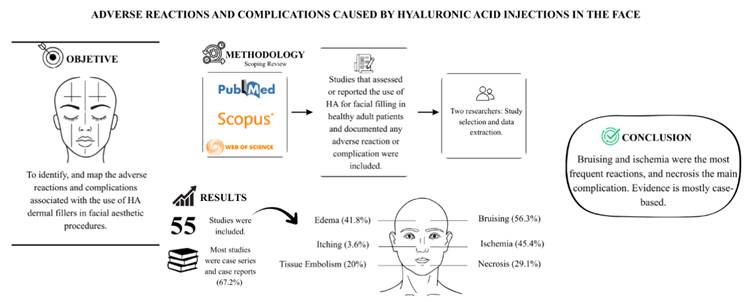
This scoping review identified and mapped the adverse reactions and complications associated with the use of hyaluronic acid (HA) dermal fillers in facial aesthetic procedures. This scoping review was reported according to the PRISMA-ScR. Searches were conducted in three electronic databases (PubMed, Scopus, and Web of Science). Randomized clinical trials, cross-sectional studies, retrospective or prospective cohort studies, case series, or case reports published until 2024 that assessed or reported the use of HA for facial filling in healthy adult patients and documented any adverse reaction or complication were included. Study selection was conducted independently by two researchers. Data extraction was performed on half of the included studies by each reviewer, with cross-checking by a third reviewer. A descriptive analysis of the data was performed, considering the different study designs and the complications and adverse reactions reported. Data were presented in tables and graphs. Fifty-five studies met the eligibility criteria and were included. Most studies were case series and case reports (67.3%). Sample sizes ranged from 1 to 5,000, and participant ages ranged from 18 to 78 years. The most reported adverse reactions among the included studies were bruising (56.4%), ischemia (45.4%), and edema (41.81%), with itching less frequent (3.6%). The most severe complications reported were tissue necrosis (29.1%) and tissue embolism (20%), with some cases leading to blindness or stroke. Bruising and ischemia were the most frequently reported adverse reactions, while tissue necrosis was the most common severe complication reported.
Key Words:
Hyaluronic acid; Dermal filler; Complications; Adverse reactions; Facial harmonization; Necrosis
Resumo
Esta revisão de escopo identificou e mapeou as reações adversas e complicações associadas ao uso de preenchedores dérmicos de ácido hialurônico (AH) na harmonização facial. Esta revisão de escopo foi relatada de acordo com a extensão para revisões de escopo das Diretrizes de Relato Preferenciais para Revisões Sistemáticas e Meta-análises (PRISMA-ScR). As buscas foram realizadas em três bases de dados eletrônicas (PubMed, Scopus e Web of Science). Foram incluídos ensaios clínicos randomizados, estudos transversais, coortes retrospectivas ou prospectivas, séries de casos e relatos de caso publicados até 2024, que avaliaram ou relataram o uso de AH para preenchimento facial em pacientes adultos saudáveis e documentaram qualquer reação adversa ou complicação. A seleção dos estudos foi conduzida de forma independente por dois pesquisadores, cada um extraindo os dados de metade dos estudos incluídos. Foi realizada uma análise descritiva dos dados, considerando os diferentes delineamentos de estudo e as reações adversas e complicações relatadas. Os dados foram apresentados em tabelas e gráficos. Cinquenta e cinco estudos atenderam aos critérios de elegibilidade e foram incluídos. A maioria consistia em séries e relatos de casos (67,3%). O tamanho das amostras variou de 1 a 5.000 participantes, com idades entre 18 e 78 anos. As reações adversas mais relatadas foram equimose (56,4%), isquemia (45,4%) e edema (41,8%), sendo o prurido menos frequente (3,6%). As complicações relatadas mais graves foram necrose tecidual (29,1%) e embolia tecidual (20%), com alguns casos evoluindo para cegueira ou AVC. Conclusão: Equimose e isquemia foram as reações adversas mais frequentemente relatadas, enquanto a necrose tecidual foi a complicação mais comum.
Introduction
The definition of beauty varies across different cultures. Regardless of age, customs, and gender, beauty is a concern for people1. This concern is directly linked to patients' well-being, as aesthetic dysfunction in the facial skin can lead to judgments that hinder self-acceptance2. In the human aging process, the face is one of the most visibly affected areas, with the consequences becoming more apparent day by day3. This combination drives the search for facial rejuvenation treatments4. According to the annual report by the American Society of Plastic Surgeons(2020)5, non-invasive facial aesthetic treatments have become increasingly popular in recent years due to their ability to provide natural results that last for a significant period, as their effects are not permanent. Within this context, dermal fillers have emerged as a widely used minimally invasive option due to their proven safety, ease of application, and satisfactory aesthetic outcomes6.
One of the most used substances for dermal fillers is hyaluronic acid (HA), a biodegradable and biocompatible product, eliminating the need for skin tests to check for hypersensitivity before the filling procedure7. The various HA products available on the market differ in their rheological characteristics (concentration, degree of cross-linking, and viscoelastic properties), allowing for the proper selection of the product for different treatment areas and achieving specific results8. Although rare, some adverse reactions associated with HA fillers may occur. However, most of these complications are not severe and tend to resolve as the product is broken down by the enzyme hyaluronidase6. In this context, it is crucial that the professionals performing the injections are fully aware of the signs and symptoms related to these complications and are prepared to manage them with confidence.
Although some studies in the literature have addressed adverse reactions and complications related to the use of HA dermal fillers in facial aesthetic procedures, the available evidence remains fragmented across different clinical fields, particularly dermatology and dental/aesthetic practice, with no consolidated interdisciplinary synthesis. There is still no comprehensive search that includes, for instance, case reports and case series, which may provide important and practical information for identifying such complications in clinical practice9,10. Given the heterogeneity of study designs and reported outcomes, as well as the lack of integrated data bridging these disciplines, a scoping review is considered the most suitable approach to map and synthesize the complications and adverse reactions associated with HA dermal fillers in facial aesthetic procedures11. This approach allows the inclusion and comparison of evidence from different study designs, which is essential in a field where rare but severe complications are reported inconsistently and within discipline-specific literature and across diverse methodological frameworks. Therefore, the aim of this study is to identify and map the adverse reactions and complications associated with the use of HA dermal fillers in facial aesthetic procedures through a scoping review.
Materials and methods
This study was developed following the recommendations of Peters et al., 202411. The study protocol is available through the link http://osf.io/8uve3. This scoping review was reported according to the Preferred Reporting Items for Systematic Reviews and Meta-Analyses extension for Scoping Reviews (PRISMA-ScR)12.
Eligibility criteria
Inclusion criteria
The Population, Concept, and Context (PCC) framework was used to define the scope of the review. The Population included healthy adult patients (over 18 years old) who received hyaluronic acid for facial filling. The Concept focused on patients who experienced any type of adverse reaction or complication, and the context was not restricted to any particular setting. Eligible studies included randomized clinical trials, cross-sectional studies, retrospective or prospective cohort studies, case series, and case reports that assessed or reported the use of hyaluronic acid for facial filling in healthy adults and documented any adverse reaction or complication. The adverse reactions considered included edema, erythema, bruising, pain, itching, ischemia, and local inflammatory responses. The complications considered included infections, tissue necrosis, tissue embolism (e.g., blindness or stroke), livedo reticularis, diplopia, and allergic reactions. Nodules were not included, as their etiology is not clearly defined in the literature; some authors associate them with technical errors, the presence of biofilm, or immune system activation. Additionally, the studies were included without language restrictions, and no time restrictions were applied.
Exclusion Criteria
Studies were excluded if they involved facial fillers other than hyaluronic acid and/or combinations with other substances, pilot studies, cases in which plastic surgery had been performed prior to the filler procedure, or if they focused primarily on injection techniques or device comparisons.
Information Sources and Search Strategy
The following databases were searched for the selection of studies: PubMed, Scopus, and Web of Science. The search strategy was developed based on PubMed's MeSH terms and adapted for the other databases, and the last search was performed in November 2024. Table 1 presents the detailed search strategy that was used.
Selection of sources of evidence
Initially, the search results were transferred to the Rayyan software (Rayyan, Cambridge, MA, USA), where duplicates were removed, and study selection was conducted. A pilot test was performed to assess the agreement between the two reviewers involved in this phase, with references randomly selected using Excel. The two researchers then independently reviewed the titles and abstracts of the articles to assess their relevance and the presence of eligibility criteria. Articles were classified as "include," "exclude," or "undecided." Subsequently, articles classified as "include" and "undecided" were independently selected for full-text reading and further eligibility screening by the same reviewers. In cases of disagreement during the selection of titles/abstracts and full-text studies, the issue was resolved through discussion, and if necessary, a third reviewer was consulted.
Data charting process and Data items
A standardized data extraction form was developed using Microsoft Excel (Microsoft Excel for Mac). Initially, ten included studies were selected to pilot the data extraction process and ensure consistency in the interpretation of items. The pilot test was followed by a discussion among the three reviewers involved in this phase to resolve discrepancies and refine the process. After evaluating the ten studies selected for the pilot test, inter-rater reliability was assessed using Cohen's kappa coefficient, which showed a value of 0.9. Subsequently, two reviewers (F.A.F. and W.V.O.S.) independently extracted data from half of the included studies each. Additionally, a third reviewer (R.S.O.) verified the consistency of the extracted data.
The following information was collected from each study: authors' names, year of publication, study design, objectives, population/sample, rheology of hyaluronic acid (low, medium, or high), location where the procedure was performed (medical office, dental office, hospital, non-medical sites, other, or not reported), anatomical application site (based on the author's report), amount of hyaluronic acid injected in the region (quantity in mL or not reported), classification regarding the timing of adverse reaction onset (immediate: up to 24h; early: 24h to 30 days; late: after 30 days; not reported), main findings related to complications and adverse reactions, proposed treatment by the author, and conclusions related to the research question. For the purposes of this study, adverse reactions included edema, erythema, bruising, pain, itching, ischemia, and local inflammatory reactions. The complications considered included infections, tissue necrosis, tissue embolism (blindness or stroke), livedo reticularis, diplopia, and allergic reactions.
Synthesis of results
A descriptive analysis of the data was initially conducted, considering the different study designs included and the complications reported. Categorical data were presented as percentages. To enhance the analysis of information related to anatomical areas, we used the Concept of facial thirds. The upper third extends from the hairline to the eyebrow line; the middle third spans from the eyebrow line to the subnasal line and includes the eyes, nose, cheeks, and ears; and the lower third comprises the region from the subnasal line to the chin. The results were displayed in tables. Additionally, a word cloud was generated to represent the frequency of adverse reactions and complications visually. The ChatGPT platform was used for this purpose. In the word cloud, the size of each term reflects how often it was mentioned across the included studies, highlighting the most frequently reported events.
Results
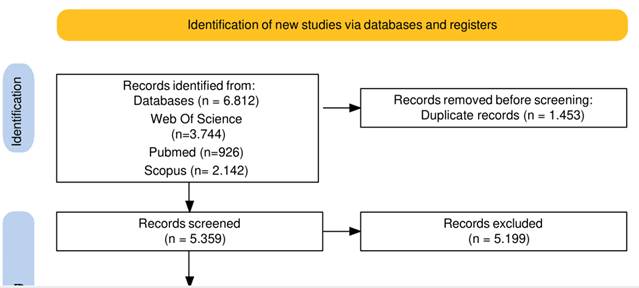
The search in the selected databases resulted in the identification of 6.812 studies. A total of 1.453 duplicates were removed, resulting in 5.359 articles. After analyzing the titles and abstracts, 5.199 were excluded, resulting in 160 remaining articles. Of these, the full text of 27 could not be retrieved. The 133 studies assessed for eligibility had their full texts analyzed, and 78 were excluded (see reasons in the Supplemental Material), resulting in 55 studies included in this scoping review13,14,15,16,17,18,19,20,21,22,23,24,25,26,27,28,29,30,31,32,33,34,35,36,37,38,39,40,41,42,43,44,45,46,47,48,49,50,51,52,53,54,55,56,57,58,59,60,61,62,63,64,65,66,67. Figure 1 presents the flow diagram of the study selection process.
The individual characteristics of each study are presented in the supplementary material and organized into three tables:1 the characteristics of the included studies related to study design, objectives, Population, and setting (Supplementary Material Table 2);2 the characteristics of the included studies related to rheological and procedural details (Supplementary Material Table 3); and3 the main findings related to complications and adverse reactions (Supplementary Material Table 4). Among the included studies, the most frequent study design was case series or case report, with 37 studies (67.3%)14,16,17,18,23,25,27,28,29,30,32,33,34,35,36,37,38,39,40,43,44,45,47,48,49,50,54,55,59,60,61,64,65,66. The majority aimed to describe adverse complications resulting from hyaluronic acid injection in the face. In relation to participant inclusion in the studies, some studies involved up to 5.000 patients63, while others reported cases of only one patient14,16,17,18,21,23,25,29,30,32,34,35,37,40,43,44,45,46,48,49,50,55,59,64,65,66 with ages ranging from 1863 to 78 years31.
PRISMA flow diagram representing the process of identification of records in databases, duplicate removal, screening, eligibility assessment, and inclusion of studies.
As for the rheology of the hyaluronic acid used, only 14 studies provided this information (25.4%)13,22,24,26,28,29,31,34,36,38,42,53,66, classifying it as high (n=5, 9.1%)13,26,29,53,66, medium (n=7, 12.7%)24,30,31,34,36,38,42, and low (n=2, 3.6%)22,28. Regarding the location where the procedures were performed, the majority of the studies did not report (34.5%)16,17,18,19,20,21,25,27,43,44,45,46,47,48,49,53,59,60,66, while 18 studies were conducted in medical offices (32.7%)15,24,26,28,30,31,32,33,35,38,40,41,50,52,57,58,63,65, and locations such as non-medical sites (facilities and services unrelated to medicine, doctors, or disease treatment) were reported in 4 studies (7.27%)14,23,54,61.
Regarding the classification based on the timing of the adverse reaction, only two studies did not report the reaction time (3.6%)13,46. Twenty-one studies were classified as immediate reaction (38.2%)14,21,23,25,29,30,32,37,40,41,42,43,45,50,51,54,59,61,64,65,67, eleven studies as late (20%)15,17,19,20,27,32,35,36,48,49,60, and twenty-one studies as early (38.2%). The amount of hyaluronic acid injected varied between 18 mL(51) and 0.49 mL(52), with an approximate mean of 1.51 mL.
Figure 2 illustrates the word cloud representing the adverse reactions and complications reported in the included studies. The frequency of anatomical filler sites in the included studies was as follows: Midface (65.4%)15,16,17,18,19,20,21,22,23,26,27,28,30,32,33,34,36,37,38,39,41,44,46,47,50,51,52,53,56,57,58,60,62,63,65,66, followed by the Lowerface (49.1%)13,15,18,19,20,22,24,26,28,29,31,33,36,39,41,42,43,45,47,48,51,56,57,58,61,62,67 and finally, the Upperface (27.3%)14,28,35,36,39,40,42,49,51,54,55,56,58,59,64.
Among the main adverse reactions identified were bruising13,17,19,20,22,24,26,27,28,31,32,33,36,38,39,42,46,47,49,50,51,52,53,54,57,58,60,61,62,63,67, (56.4%) followed by ischemia15,16,17,20,21,23,24,25,30,32,33,35,37,42,44,45,47,49,50,51,54,56,57,58,61, (45.45), edema16,19,20,24,26,28,33,36,42,43,44,45,46,47,48,49,52,54,55,60,62,64,67, (41.8%), and pain16,19,20,24,26,28,33,36,42,43,44,5,46,47,48,9,49,52,54,55,60,63,64,65,67, (43.6%). These percentages refer to the frequency with which each event was reported in the included studies. Itching22,37 was the least frequently reported adverse reaction, with a prevalence of 3.6%.

Word cloud illustrating the frequency of adverse reactions and complications reported in the included studies. The size of each term reflects how often it was mentioned, providing a visual summary of the most frequently reported outcomes.
Furthermore, the most common complications were: tissue necrosis16,18,23,29,33,35,41,43,44,45,51,52,56,57,63,66, (29.1%), tissue embolism14,23,25,40,42,49,50,54,56,58,63 (20%), infections20,39,47,58,60,63, (10.9%), livedo reticularis21,30,33,34,51, (9.1%), diplopia18,54,64, (5.4%), and allergic reaction58, (1.8%). In the complication classified as tissue embolism, one study reported stroke and blindness as a consequence14, (1.8%), while eight other studies reported blindness as a consequence23,25,40,50,54,56,59,65, (14.5%). Cases of alopecia or tenderness (9.1%) were also found21,28,31,36,37.
When filtering by study design, no significant differences were observed in the adverse reactions reported in randomized clinical trials. Among the seven included studies13,22,24,31,42,46,67, the main adverse reactions identified were swelling/edema, bruising, pain, erythema, itching, and hypersensitivity. These manifestations were mostly mild to moderate and resolved spontaneously. Regarding serious complications, only Barata et al.2013)(42 reported a case of vascular occlusion; the other studies did not report any serious adverse events or vascular compromise.
Among the treatments for complications, the use of the enzyme hyaluronidase was the most utilized by the authors14,15,16,17,20,21,22,29,30,32,33,34,35,36,37,38,41,42,43,47,49,50,51,53,54,56,57,58,62,64,65,66, as well as the use of corticosteroids16,17,18,18,20,21,23,25,27,29,30,36,37,38,39,40,42,44,48,49,50,51,54,55,56,58,60,63,64,66 and antibiotic treatment14,15,16,18,19,21,22,23,25,30,34,35,37,38,40,41,42,44,47,50,51,54,55,56,58,60,63,64,66. Some authors suggested the use of hyperbaric chamber therapy16,21,30,39,41,51,54 and vigorous massage16,22,23,25,30,36,38,42,54,63,65. The use of analgesic/anti-inflammatory/pain relief methods was also reported in some studies14,16,18,21,22,23,26,30,31,34,37,41,43,47,49,50,51,54,56,58,59,60,63,64,65. Less frequently, authors suggested the use of vasodilator medications21,25,45,51,54, antihistamines21,36,39,58,64. Some studies did not specify the treatment used13,24,28,46,52,67. Treatments such as topical eye drops25,65, filler removal with incisions/aspiration29,40,47, epidermal growth factor37,39,50,54,61, laser irradiation33,39,41,62, and the use of a medication known as Minoxidil to aid hair growth21 were also suggested. Necrosectomy18,45, the use of Platelet-rich plasma (PRP)16, and finally, recombinant bovine basic fibroblast growth factor gel35.
Most conclusions indicate that adverse effects were resolved within days or weeks, especially with the use of hyaluronidase, antibiotics, or corticosteroids. Some reports mention that vision loss due to embolism from hyaluronic acid fillers is often irreversible despite aggressive treatments. Cases of necrosis and ischemia are reported, highlighting the importance of early treatment with hyaluronidase to prevent permanent damage. Some studies report that adverse events were generally mild and transient, resolving spontaneously.
Of the 55 studies, one did not present an outcome13. Vision loss was reported in five studies14,23,56,59,65, with one study reporting blindness in 27 patients56. Some studies reported irreversible damage, such as scarring, skin discoloration, and necrosis16,25,29,35,39,49,54,56,61,64,65. The remaining studies reported complete resolution of adverse reactions and/or complications as the outcome.
Discussion
This study provides a comprehensive overview of adverse reactions and complications associated with HA dermal fillers in facial aesthetic procedures. Our findings revealed that the main adverse reactions are bruising and ischemia, and the most frequent complication is tissue necrosis. However, it is important to highlight that the evidence is primarily derived from case series and case reports, which, in these situations, serve their role of guiding clinicians in recognizing and managing adverse effects-especially those that are severe.
Although dermal fillers are widely considered safe procedures, our study confirms the occurrence of adverse reactions, in agreement with existing literature. Stefura et al.2021 reported predominantly mild and reversible reactions, such as swelling (34%), bruising (29%), pain (28%), and redness (26%)68, while Artzi et al.(2016) identified injection-site pain as the most common complaint following the use of monophasic and biphasic fillers15. In contrast, our study showed a higher prevalence of bruising (56.4%) and ischemia (45.4%), followed by edema (41.8%), pain (43.6%), erythema (16.4%), and pruritus (3.6%). Similar to recent findings, our results are consistent with the analyses by Kyriazidis et al.(2024)10 and Huang et al.(2020)69, who also highlighted these as the most frequently reported adverse reactions. These complications are generally short-lived and tend to resolve spontaneously, typically within 14 days.
Regarding the location of adverse reactions, Rayess et al.(2018) reported the cheek (43%) and lip (30%) as the most frequently affected regions70, which aligns with our data showing the highest incidence in the midface (65.4%) and lower face (49.1%). Specifically in the midface, more severe adverse reactions have been associated with the periorbital region. This area is commonly treated, as it is one of the first to exhibit signs of facial aging71; however, it is also linked to short-term complications, as demonstrated by Mustak et al.(2017)72. An analysis of the 13 studies that reported sequelae14,16,23,25,29,35,39,49,54,56,59,61,65 revealed that the upper face was the most frequently involved region (7 studies:14,35,39,49,54,56,59, followed by the midface (6 studies:16,23,25,39,56,65 and the lower face (3 studies:29,56,61, possibly due to the anatomical and vascular characteristics of these areas. In this context, Park et al.(2011)73 identified the glabellar region as a high-risk area for necrosis due to potential compression or intra-arterial injection into the supratrochlear artery and also noted the vulnerability of the nasal ala (midface), where limited collateral circulation may be insufficient to compensate for angular artery occlusion.
The rheology of hyaluronic acid (HA) involves parameters such as elasticity (G′), viscosity, and cohesivity74. While there is no single product capable of meeting all anatomical and functional demands, understanding the rheological properties of each filler is essential for selecting the most appropriate material for a specific aesthetic or functional goal75. Given that different areas of the face present variations in skin tension, muscle activity, and fat distribution, fillers may behave differently depending on the injection site and technique76. Our findings indicate that 74.5% of the included studies did not report information regarding the rheological properties of the HA fillers used. This lack of data limits the ability to explore potential correlations between adverse reactions, complications, anatomical regions affected, and the rheological characteristics of the products77. Recent studies by Guo et al.(2023)78 and Perera et al.(2024)79 emphasize that gels with high G′ are more difficult to inject, may cause greater tissue trauma, and are associated with adverse effects such as pain, edema, inflammation, and nodule formation-particularly when there is an imbalance between viscosity and elasticity. In our analysis, it was not possible to assess the incidence of such events, as most of the included studies did not report the specific type of filler used. Nevertheless, these findings reinforce the importance of rheological behavior in predicting outcomes and understanding potential adverse reactions and complications associated with HA-based facial fillers. Standardized reporting of rheological properties in future research would allow for more meaningful comparisons and could help optimize both safety and efficacy in clinical practice. Among the findings related to the locations where the procedures were performed, medical offices were the most frequently reported (32.7%). However, when analyzing the studies with unfavorable outcomes, non-medical sites (facilities and services not related to medicine, physicians, or disease treatment) predominated (30.7%), while 30.7% of the studies did not report information regarding the procedure location. We recognize the importance of biosafety measures and proper training for professionals performing procedures such as facial fillers. Given that our results highlighted the occurrence of adverse reactions and complications, professionals should be adequately prepared to manage these events.
Regarding the onset of adverse reactions and complications, 38.2% occurred immediately (within 24 hours), 38.2% were classified as early reactions (24 hours to 30 days), and 20% as late reactions (after 30 days), while 3.6% of the studies did not report this information. When analyzing the 13 studies that described unresolved complications resulting in permanent sequelae, 61.53% of the adverse reactions and complications occurred immediately, 15.4% were late, and 23.1% were early. These findings are consistent with the study by Almeida et al.(2017), which reports that immediate adverse reactions and complications include vascular changes such as embolization, arterial occlusion, and vision loss80. Additionally, our results align with those of Croco et al.(2012), who reported allergic reactions in only 0.1% of cases81, which is in line with our study, where only one article58 (1.96%) reported an allergic reaction.
This scoping review presents several limitations that warrant cautious interpretation of its findings. The search was conducted in only three databases. In addition, most of the included studies were case reports or case series, presenting methodological heterogeneity and a lack of long-term follow-up data. These aspects lower the overall level of evidence and limit the ability to draw generalizable conclusions. Another limitation is that data extraction was not performed in duplicate. To ensure consistency, however, we conducted a pilot test to standardize the extraction process, and a third reviewer subsequently assessed concordance and verified all extracted data. Finally, this review did not assess differences in adverse reactions related to specific HA fillers, injection techniques, needle size, filler volume, needle versus cannula use, or clinical experience-factors that may influence both the incidence and severity of complications. We recommend that future studies incorporate these variables into their analyses and highlight this gap as an important limitation in the current body of evidence.
Although case reports and case series have small sample sizes and lack control groups-limiting the generalizability of their findings-they can still provide valuable insights into specific adverse events and rare complications associated with HA injections that are often not captured in larger studies. Nonetheless, we strongly recommend conducting studies with greater methodological rigor. Long-term cohort studies may be particularly appropriate for accurately assessing the occurrence of complications and adverse reactions related to HA use. Additionally, in the context of randomized clinical trials, we suggest that extended follow-up periods be implemented to improve the identification and monitoring of these events.
Conclusion
Our findings indicate that bruising and ischemia were the most frequently reported adverse reactions, while tissue necrosis was the most commonly reported severe complication. Also, indicate that the evidence on adverse reactions and complications associated with hyaluronic acid injections in aesthetic and facial procedures is predominantly composed of case series and case reports, with considerable heterogeneity in methodologies and results. These findings support the need for long-term studies to better understand adverse reactions and complications associated with hyaluronic acid.
Acknowledgments and funding
F.A.F and W.V.O.S. are funded by the Coordenação de Aperfeiçoamento de Pessoal de Nível Superior - Brazil (CAPES). R.S.O. is funded in part by Meridional Foundation (Passo Fundo, Brazil). The funders had no role in the study design, data collection and analysis, or publication of the manuscript.
References
- 1 Souza KM, Vidal GP. Dermaroller action on dermal hyperchromia: literature review. Health Topics. (2017).
- 2 Rosas FMB, Mülinari-Brenner F, Helmer KA. Comparative evaluation of fractional CO2 laser and dermabrasion in the treatment of acne scars. Surg Cosmet Dermatol. (2012).
- 3 Filho S, Pereira E, Hernane EF. Human facial aging and its measurement—the initial step of prosoporrecognography. Rev Sodebras. (2016).
- 4 De Andrade RC, De Carvalho JMFR. Facial rejuvenation and new technologies. Health Dialogues. (2019).
-
5 The American Society of Plastic Surgeons. Plastic surgery statistics report (2022. 2023); Available from: https://www.plasticsurgery.org/documents/news/Statistics/2022/plastic-surgery-statistics-report-2022.pdf
» https://www.plasticsurgery.org/documents/news/Statistics/2022/plastic-surgery-statistics-report-2022.pdf -
6 Halepas S, Chen XJ, Ferneini EM. Thread-lift sutures: anatomy, technique, and review of current literature. J Oral Maxillofac Surg. (2020); https://doi.org/10.1016/j.joms.2019.11.011
» https://doi.org/10.1016/j.joms.2019.11.011 -
7 Lipko-Godlewska S, Bolanča Ž, Kalinová L, Kermen I, Onisak B, Papp I, et al. Whole-face approach with hyaluronic acid fillers. Clin Cosmet Investig Dermatol. (2021); https://doi.org/10.2147/CCID.S292501
» https://doi.org/10.2147/CCID.S292501 -
8 Kim DW, Yoon ES, Ji YH, Park SH, Lee BI, Dhong ES. Vascular complications of hyaluronic acid fillers and the role of hyaluronidase in management. J Plast Reconstr Aesthet Surg. (2011); https://doi.org/10.1016/j.bjps.2011.07.013
» https://doi.org/10.1016/j.bjps.2011.07.013 -
9 Trinh LN, McGuigan KC, Gupta A. Delayed granulomas as a complication secondary to lip augmentation with dermal fillers: a systematic review. Surg J (N Y). (2022); https://doi.org/10.1055/s-0042-1743524
» https://doi.org/10.1055/s-0042-1743524 -
10 Kyriazidis I, Spyropoulou GA, Zambacos G, Tagka A, Rakhorst HA, Gasteratos K, et al. Adverse events associated with hyaluronic acid filler injection for non-surgical facial aesthetics: a systematic review of high level of evidence studies. Aesthetic Plast Surg. (2024); https://doi.org/10.1007/s00266-023-03465-
» https://doi.org/10.1007/s00266-023-03465- - 11 Peters MDJ, Godfrey C, McInerney P, Munn Z, Tricco AC, Khalil H. Scoping reviews. JBI Manual for Evidence Synthesis. (2024).
-
12 Tricco AC, Lillie E, Zarin W, O’Brien KK, Colquhoun H, Levac D, et al. PRISMA extension for scoping reviews (PRISMA-ScR): checklist and explanation. Ann Intern Med. (2018); https://doi.org/10.7326/M18-0850
» https://doi.org/10.7326/M18-0850 -
13 Narins RS, Dayan SH, Brandt FS, Baldwin EK. Persistence and improvement of nasolabial fold correction with nonanimal-stabilized hyaluronic acid 100,000 gel particles/mL filler on two retreatment schedules: results up to 18 months. Dermatol Surg. (2008); https://doi.org/10.1111/j.1524-4725.2008.34236.x
» https://doi.org/10.1111/j.1524-4725.2008.34236.x -
14 Tang X, Yu Q, Guo M, Liu F, Pan Y, Zhou J, et al. Multi-modal fMRI and TMS follow-up study of motor cortical stroke caused by hyaluronic acid filler: a case report. Front Neurol. (2022); https://doi.org/10.3389/fneur.2022.903648
» https://doi.org/10.3389/fneur.2022.903648 -
15 Artzi O, Loizides C, Verner I, Landau M. Resistant and recurrent late reaction to hyaluronic acid-based gel. Dermatol Surg. (2016); https://doi.org/10.1097/DSS.0000000000000562
» https://doi.org/10.1097/DSS.0000000000000562 -
16 Denkova R, Georgieva I, Kantardjiev V. Vascular occlusion of the facial transverse artery after hyaluronic acid filler injection: a case report and 8-step protocol for treatment of acute vascular complications. Aesthetic Med. (2024); https://doi.org/10.36129/aestheticmedicine.2024.15567
» https://doi.org/10.36129/aestheticmedicine.2024.15567 -
17 Mendoza-Gálvez P, Del Rio-Martinez CJ, Holguín-Montaño V, Santos-Flores M. Delayed hypersensitivity reaction after hyaluronic acid filler (VCY-20). Dermatol Rep. (2024); https://doi.org/10.4081/dr.2023.9800
» https://doi.org/10.4081/dr.2023.9800 -
18 Livada R, Shiloah J. A rare case of gingival necrosis following an extraoral injection of dermal filler. Clin Adv Periodontics. (2024); https://doi.org/10.1002/cap.10243
» https://doi.org/10.1002/cap.10243 -
19 Imen MT. Delayed infectious reactions of dermal filler injections in the face: causes and management. J Stomatol Oral Maxillofac Surg. (2023); https://doi.org/10.1016/j.jormas.2022.11.010
» https://doi.org/10.1016/j.jormas.2022.11.010 -
20 Munhoz G, Cavallieri FA, de Almeida Balassiano LK, Tembra MF, Cunha JMT, Silveira ACO, et al. Sterile abscess due to hyaluronic acid: a new diagnosis and a proposal for treatment—a series of eight cases. J Cosmet Dermatol. (2022); https://doi.org/10.1111/jocd.15135
» https://doi.org/10.1111/jocd.15135 - 21 Darawsheh HM, Entel T, Omarova ZK. Vascular complication after lateral temporal lifting technique: a case report. Bull Stomatol Maxillofac Surg. (2023)
-
22 Fabi S, Zoumalan C, Fagien S, Yoelin S, Sartor M, Chawla S. A prospective, multicenter, single-blind, randomized, controlled study of VYC-15L, a hyaluronic acid filler, in adults for correction of infraorbital hollowing. Aesthet Surg J. (2021); https://doi.org/10.1093/asj/sjab308
» https://doi.org/10.1093/asj/sjab308 -
23 Eldweik L. Orbital infarction syndrome following hyaluronic acid filler rhinoplasty. Am J Ophthalmol Case Rep. 2021; https://doi.org/10.1016/j.ajoc. (2021).101063
» https://doi.org/10.1016/j.ajoc -
24 Cheon HI, Kim JH, Kim BJ, Lee YW. Efficacy and safety of a new hyaluronic acid filler for nasolabial folds: a 52-week, multicenter, randomized, evaluator/subject-blind, split-face study. J Cosmet Dermatol. (2021); https://doi.org/10.1111/jocd.13773
» https://doi.org/10.1111/jocd.13773 -
25 Chen W, Wu L, Jian XL, Zhang B, Li JY, Qin XL, et al. Retinal branch artery embolization following hyaluronic acid injection: a case report. Aesthet Surg J. (2016); https://doi.org/10.1093/asj/sjw054
» https://doi.org/10.1093/asj/sjw054 -
26 Bhojani-Lynch T, Deckers A, Ohanes O, Poupard K, Maffert P. A prospective, observational registry study to evaluate effectiveness and safety of hyaluronic acid-based dermal fillers in routine practice: interim analysis results with one year of subject follow-up. Clin Cosmet Investig Dermatol. (2021); https://doi.org/10.2147/CCID.S329415
» https://doi.org/10.2147/CCID.S329415 -
27 Hou TY, Kau E, Tsai CC. Delayed periorbital inflammation presenting as orbital pseudotumour after hyaluronic acid dermal filler injection. Clin Exp Optom. (2021); https://doi.org/10.1111/cxo.13073
» https://doi.org/10.1111/cxo.13073 -
28 Ogilvie P, Safa M, Chantrey J, Leys C, Cavallini M, Niforos F, et al. Improvements in satisfaction with skin after treatment of facial fine lines with VYC-12 injectable gel: patient-reported outcomes from a prospective study. J Cosmet Dermatol. (2020); https://doi.org/10.1111/jocd.13129
» https://doi.org/10.1111/jocd.13129 -
29 Hirsch P, Infanger M, Kraus A. A case of upper lip necrosis after cosmetic injection of hyaluronic acid soft-tissue filler—does capillary infarction play a role in the development of vascular compromise, and what are the implications? J Cosmet Dermatol. (2020); https://doi.org/10.1111/jocd.13391
» https://doi.org/10.1111/jocd.13391 -
30 Zambacos GJ, Hapsas DA, Mandrekas AD. Glabella impending skin necrosis: a case report. Eur J Plast Surg. (2019); https://doi.org/10.1007/s00238-018-1460-x
» https://doi.org/10.1007/s00238-018-1460-x -
31 Rivkin A, Weinkle SH, Hardas B, Weiss RA, Glaser DA, Biesman BS, et-al . Safety and effectiveness of repeat treatment with VYC-15L for lip and perioral enhancement: results from a prospective multicenter study. Aesthet Surg J. (2019); https://doi.org/10.1093/asj/sjy019
» https://doi.org/10.1093/asj/sjy019 - 32 Bolivar HE, Piccinini HE, Sucupira PS. Rhinomodelation or non-surgical rhinoplasty: a safe and reproducible approach. RMRhc. (2019).
-
33 Chauhan A, Singh S. Management of delayed skin necrosis following hyaluronic acid filler injection using pulsed hyaluronidase. J Cutan Aesthet Surg. (2019); https://doi.org/10.4103/JCAS.JCAS_129_18
» https://doi.org/10.4103/JCAS.JCAS_129_18 -
34 Loh KTD, Phoon YS, Phua V, Kapoor KM. Successfully managing impending skin necrosis following hyaluronic acid filler injection, using high-dose pulsed hyaluronidase. Plast Reconstr Surg Glob Open. (2018); https://doi.org/10.1097/GOX.0000000000001639
» https://doi.org/10.1097/GOX.0000000000001639 -
35 Han J, He Y, Liu K, Yang Q. Necrosis of the glabella after injection with hyaluronic acid into the forehead. J Craniofac Surg. (2018); https://doi.org/10.1097/SCS.0000000000004987
» https://doi.org/10.1097/SCS.0000000000004987 -
36 Bhojani-Lynch T. Late-onset inflammatory response to hyaluronic acid dermal fillers. Plast Reconstr Surg Glob Open. (2017); https://doi.org/10.1097/GOX.0000000000001532
» https://doi.org/10.1097/GOX.0000000000001532 -
37 Lee JI, Kang SJ, Sun H. Skin necrosis with oculomotor nerve palsy due to a hyaluronic acid filler injection. Arch Plast Surg. (2017); https://doi.org/10.5999/aps.2017.44.4.340
» https://doi.org/10.5999/aps.2017.44.4.340 -
38 Steinsapir KD, Steinsapir SMG. Deep-fill hyaluronic acid for the temporary treatment of the naso-jugal groove: a report of 303 consecutive treatments. Ophthal Plast Reconstr Surg. (2006); https://doi.org/10.1097/01.iop.0000235818.54973.27
» https://doi.org/10.1097/01.iop.0000235818.54973.27 -
39 Fan X, Dong M, Li T, Ma Q, Yin Y. Two cases of adverse reactions of hyaluronic acid-based filler injections. Plast Reconstr Surg Glob Open. (2016); https://doi.org/10.1097/GOX.0000000000001112
» https://doi.org/10.1097/GOX.0000000000001112 -
40 Kim DY, Eom JS, Kim JY. Temporary blindness after an anterior chamber cosmetic filler injection. Aesthetic Plast Surg. (2015); https://doi.org/10.1007/s00266-015-0477-9
» https://doi.org/10.1007/s00266-015-0477-9 -
41 Sun ZS, Zhu GZ, Wang HB, Xu X, Cai B, Zeng L, et-al. Clinical outcomes of impending nasal skin necrosis related to nose and nasolabial fold augmentation with hyaluronic acid fillers. Plast Reconstr Surg. 2015; https://doi.org/10.1097/PRS.0000000000001579
» https://doi.org/10.1097/PRS.0000000000001579 - 42 Rodrigues-Barata AR, Camacho-Martínez FM. Undesirable effects after treatment with dermal fillers. J Drugs Dermatol. (2013).
-
43 Park KY, Son IP, Li K, Seo SJ, Hong CK. Reticulated erythema after nasolabial fold injection with hyaluronic acid: the importance of immediate attention. Dermatol Surg. (2011); https://doi.org/10.1111/j.1524-4725.2011.02098.x
» https://doi.org/10.1111/j.1524-4725.2011.02098.x -
44 Kassir R, Kolluru A, Kassir M. Extensive necrosis after injection of hyaluronic acid filler: case report and review of the literature. J Cosmet Dermatol. (2011); https://doi.org/10.1111/j.1473-2165.2011.00562.x
» https://doi.org/10.1111/j.1473-2165.2011.00562.x -
45 Kang MS, Park ES, Shin HOS, Jung SG, Kim YB, Kim DW. Skin necrosis of the nasal ala after injection of dermal fillers. Dermatol Surg. (2011); https://doi.org/10.1111/j.1524-4725.2011.01891.x
» https://doi.org/10.1111/j.1524-4725.2011.01891.x -
46 Viana GAP, Osaki MH, Cariello AJ, Damasceno RW, Osaki TH. Treatment of the tear trough deformity with hyaluronic acid. Aesthet Surg J. (2011); https://doi.org/10.1177/1090820X10395505
» https://doi.org/10.1177/1090820X10395505 - 47 Van Dyke S, Hays GP, Caglia AE, Caglia M. Severe acute local reactions to a hyaluronic acid-derived dermal filler. J Clin Aesthet Dermatol. (2010).
- 48 Bisaccia E, Lugo A, Torres O, Johnson B, Scarborough D. Persistent inflammatory reaction to hyaluronic acid gel: a case report. Cutis. (2007).
-
49 Cassiano D, Miyuki Iida T, Lúcia Recio A, Yarak S. Delayed skin necrosis following hyaluronic acid filler injection: a case report. J Cosmet Dermatol. (2020); https://doi.org/10.1111/jocd.13287
» https://doi.org/10.1111/jocd.13287 -
50 Kwon SG, Hong JW, Roh TS, Kim YS, Rah DK, Kim SS. Ischemic oculomotor nerve palsy and skin necrosis caused by vascular embolization after hyaluronic acid filler injection: a case report. Ann Plast Surg. (2013); https://doi.org/10.1097/SAP.0b013e31824f21da
» https://doi.org/10.1097/SAP.0b013e31824f21da -
51 Yang Q, Shi Z, Pan S, Li H. Transcutaneous oxygen tension-guided hyperbaric oxygen therapy for preventing skin necrosis after hyaluronic acid filler injections. Ann Med Surg (Lond). (2024); https://doi.org/10.1097/MS9.0000000000002033
» https://doi.org/10.1097/MS9.0000000000002033 -
52 Harb A, Abdul-Razzak A. Nonsurgical correction of surgical rhinoplasty complications with hyaluronic acid fillers: a retrospective review of 2088 cases. Plast Reconstr Surg Glob Open. (2024); https://doi.org/10.1097/GOX.0000000000006126
» https://doi.org/10.1097/GOX.0000000000006126 -
53 Hilton S, Schrumpf H, Buhren BA, Bölke E, Gerber PA. Hyaluronidase injection for the treatment of eyelid edema: a retrospective analysis of 20 patients. Eur J Med Res. (2014); https://doi.org/10.1186/2047-783X-19-30
» https://doi.org/10.1186/2047-783X-19-30 -
54 Wang R, Li Y, Li Z, Yao H, Zhai Z. Hyaluronic acid filler-induced vascular occlusion: three case reports and overview of prevention and treatment. J Cosmet Dermatol. (2024); https://doi.org/10.1111/jocd.16147
» https://doi.org/10.1111/jocd.16147 -
55 Vidič M, Bartenjev I. An adverse reaction after hyaluronic acid filler application: a case report. Acta Dermatovenerol Alp Panonica Adriat. (2018); https://doi.org/10.15570/actaapa.2018.35
» https://doi.org/10.15570/actaapa.2018.35 -
56 Zhang YL, Chen Y, Sun ZS, Luo SK. Retrospective study of vascular complications caused by hyaluronic acid injection. Aesthetic Plast Surg. (2023); https://doi.org/10.1007/s00266-023-03522-9
» https://doi.org/10.1007/s00266-023-03522-9 -
57 Robati RM, Moeineddin F, Almasi-Nasrabadi M. The risk of skin necrosis following hyaluronic acid filler injection in patients with a history of cosmetic rhinoplasty. Aesthet Surg J. (2018); https://doi.org/10.1093/asj/sjy005
» https://doi.org/10.1093/asj/sjy005 -
58 Nishikawa A, Aikawa Y, Kono T. Current status of early complications caused by hyaluronic acid fillers: insights from a descriptive, observational study of 41,775 cases. Aesthet Surg J. (2023); https://doi.org/10.1093/asj/sjad039
» https://doi.org/10.1093/asj/sjad039 -
59 Shoughy SS. Visual loss following cosmetic facial filler injection. Arq Bras Oftalmol. (2019); https://doi.org/10.5935/0004-2749.20190092
» https://doi.org/10.5935/0004-2749.20190092 -
60 Guduk SS. An unusual delayed type reaction following periorbital filler injection with hyaluronic acid. Aesthet Surg J. (2018); https://doi.org/10.1093/asj/sjy035
» https://doi.org/10.1093/asj/sjy035 -
61 Wang Q, Zhao Y, Li H, Li P, Wang J. Vascular complications after chin augmentation using hyaluronic acid. Aesthetic Plast Surg. (2018); https://doi.org/10.1007/s00266-017-1036-3
» https://doi.org/10.1007/s00266-017-1036-3 -
62 Mastroluca E, Patalano M, Bertossi D. Minimally invasive aesthetic treatment of male patients: the importance of consultation and the lower third of the face. J Cosmet Dermatol. (2021); https://doi.org/10.1111/jocd.14231
» https://doi.org/10.1111/jocd.14231 -
63 Harb A, Brewster CT. The nonsurgical rhinoplasty: a retrospective review of 5000 treatments. Plast Reconstr Surg. (2020); https://doi.org/10.1097/PRS.0000000000006554
» https://doi.org/10.1097/PRS.0000000000006554 - 64 Thulesen J, Storm MC. Iatrogent synstab ved æstetisk fillerbehandling. Ugeskr Laeger. (2021).
- 65 Schelke LW, Fick M, van Rijn LJ, Decates T, Velthuis PJ, Niessen F, et al. Eenzijdige blindheid na een neuscorrectie met filler. Ned Tijdschr Geneeskd. (2017).
-
66 Honart JF, Duron JB, Mazouz Dorval S, Rausky J, Revol M. Nécrose de la pointe du nez secondaire à une injection d'acide hyaluronique. Ann Chir Plast Esthet. (2013); https://doi.org/10.1016/j.anplas.2013.08.005
» https://doi.org/10.1016/j.anplas.2013.08.005 -
67 Fischer T, Sattler G, Gauglitz G. Lidocainhaltiger Hyaluronfiller auf CPM®-Basis zur Lippenaugmentation: Erfahrungsberichte aus der Praxis. Hautarzt. (2016); https://doi.org/10.1007/s00105-016-3779-1
» https://doi.org/10.1007/s00105-016-3779-1 -
68 Stefura T, Kacprzyk A, Droś J, Krzysztofik M, Skomarovska O, Fijałkowska M, et al. Tissue fillers for the nasolabial fold area: a systematic review and meta-analysis of randomized clinical trials. Aesthetic Plast Surg. (2021); https://doi.org/10.1007/s00266-021-02439-5
» https://doi.org/10.1007/s00266-021-02439-5 -
69 Huang A, Nguyen JK, Austin E, Mamalis A, Cohen M, Semkhayev B, et al. Facial rejuvenation using photodynamic therapy with a novel preparation of ALA and hyaluronic acid in young adults. Arch Dermatol Res. (2020); https://doi.org/10.1007/s00403-020-02038-5
» https://doi.org/10.1007/s00403-020-02038-5 -
70 Rayess HM, Svider PF, Hanba C, Patel VS, DeJoseph LM, Carron M, et al. A cross-sectional analysis of adverse events and litigation for injectable fillers. JAMA Facial Plast Surg. (2018); https://doi.org/10.1001/jamafacial.2017.1888
» https://doi.org/10.1001/jamafacial.2017.1888 -
71 Kashkouli MB, Abdolalizadeh P, Abolfathzadeh N, Sianati H, Sharepour M, Hadi Y. Periorbital facial rejuvenation; applied anatomy and pre-operative assessment. J Curr Ophthalmol. (2017); https://doi.org/10.1016/j.joco.2017.04.001
» https://doi.org/10.1016/j.joco.2017.04.001 -
72 Mustak H, Fiaschetti D, Goldberg RA. Filling the periorbital hollows with hyaluronic acid gel: long-term review of outcomes and complications. J Cosmet Dermatol. (2018); https://doi.org/10.1111/jocd.12452
» https://doi.org/10.1111/jocd.12452 -
73 Park TH, Seo SW, Kim JK, Chang CH. Clinical experience with hyaluronic acid-filler complications. J Plast Reconstr Aesthet Surg. (2011); https://doi.org/10.1016/j.bjps.2011.01.008
» https://doi.org/10.1016/j.bjps.2011.01.008 -
74 Kablik J, Monheit GD, Yu L, Chang G, Gershkovich J. Comparative physical properties of hyaluronic acid dermal fillers. Dermatol Surg. (2009); https://doi.org/10.1111/j.1524-4725.2008.01046.x
» https://doi.org/10.1111/j.1524-4725.2008.01046.x -
75 Sundaram H, Rohrich RJ, Liew S, Sattler G, Talarico S, Trévidic P, et al. Cohesivity of hyaluronic acid fillers: development and clinical implications of a novel assay, pilot validation with a five-point grading scale, and evaluation of six U.S. Food and Drug Administration-approved fillers. Plast Reconstr Surg. (2015); https://doi.org/10.1097/PRS.0000000000001638
» https://doi.org/10.1097/PRS.0000000000001638 -
76 Fagien S, Bertucci V, von Grote E, Mashburn JH. Rheologic and physicochemical properties used to differentiate injectable hyaluronic acid filler products. Plast Reconstr Surg. (2019); https://doi.org/10.1097/PRS.0000000000005429
» https://doi.org/10.1097/PRS.0000000000005429 -
77 Andre P, Lowe NJ, Parc A, Clerici TH, Zimmermann U. Adverse reactions to dermal fillers: a review of European experiences. J Cosmet Laser Ther. (2005); https://doi.org/10.1080/14764170500344393
» https://doi.org/10.1080/14764170500344393 -
78 Guo J, Fang W, Wang F. Injectable fillers: current status, physicochemical properties, function mechanism, and perspectives. RSC Adv. (2023); https://doi.org/10.1039/d3ra04321e
» https://doi.org/10.1039/d3ra04321e -
79 Perera GGG, Argenta DF, Caon T. The rheology of injectable hyaluronic acid hydrogels used as facial fillers: a review. Int J Biol Macromol. (2024); https://doi.org/10.1016/j.ijbiomac.2024.131880
» https://doi.org/10.1016/j.ijbiomac.2024.131880 - 80 de Almeida AT, Banegas R, Boggio R, Bravo BSF, Braz AV, Casabona G et al. Diagnosis and treatment of adverse events of hyaluronic acid: consensus recommendations of the Latin American expert panel. Surg Cosmet Dermatol. (2017).
-
81 Crocco EI, de Oliveira Alves R, Alessi C. Adverse events of injectable hyaluronic acid. Surg Cosmet Dermatol. (2012); Available from: https://www.redalyc.org/articulo.oa?id=265524650007
» https://www.redalyc.org/articulo.oa?id=265524650007
The research data are available upon request.