 Do electronic smoking devices impact the risk of dental caries? A systematic review
ABSTRACT
Objective To evaluate the association between the use of electronic smoking devices (ESDs), such as electronic cigarettes, and the risk of developing dental caries.
Material and Methods This systematic review included observational studies identified in the electronic databases PubMed, Embase, Scopus, Web of Science, and LILACS/BVS. Cross-sectional and case-control studies that assessed the presence of caries in ESD users compared with non-smokers were included. The Joanna Briggs Institute (JBI) critical appraisal checklist was used for methodological quality assessment.
Results Eight studies published between 2018 and 2024 were included, involving populations from different geographic regions and age groups. Most studies demonstrated a higher prevalence of caries and/or higher DMFT indices among ESD users. In six studies, the differences were statistically significant. However, most studies presented methodological limitations, such as lack of data on duration and frequency of ESD use and heterogeneity in outcome measurement.
Conclusion The evidence suggests a possible association between the use of ESDs and an increased risk of dental caries. Despite methodological limitations, the findings highlight the need for greater attention from oral health professionals regarding the use of these devices.
KEYWORDS:
Dental caries; Electronic cigarettes; Electronic smoking devices; Oral health; Systematic review
RESUMO
Objetivo Avaliar a associação entre o uso de dispositivos eletrônicos para fumar (DEFs), como os cigarros eletrônicos, e o risco de desenvolvimento de cárie dentária.
Material e Métodos Esta revisão sistemática incluiu estudos observacionais identificados em bases de dados eletrônicas PubMed, Embase, Scopus, Web of Science e LILACS/BVS. Foram incluídos estudos transversais e caso-controle que avaliaram a presença de cárie em usuários de DEFs, comparando-os a não fumantes. A lista de verificação de avaliação crítica do Joanna Briggs Institute (JBI) foi utilizada para avaliação de qualidade metodológica.
Resultados Foram incluídos oito estudos, publicados entre 2018 e 2024, com populações de diferentes regiões geográficas e faixas etárias variadas. Os estudos demonstraram, majoritariamente, maior prevalência de cárie e/ou índices de CPO-D mais elevados entre usuários de DEFs. Em seis estudos, as diferenças foram estatisticamente significativas. A maioria dos estudos, no entanto, apresentou limitações metodológicas, como ausência de dados sobre tempo e frequência de uso dos DEFs, além de heterogeneidade na forma de mensuração dos desfechos.
Conclusão Os dados sugerem uma possível associação entre o uso de DEFs e o aumento do risco de cárie dentária. Apesar das limitações metodológicas, os achados indicam a necessidade de maior atenção dos profissionais de saúde bucal em relação ao uso desses dispositivos.
PALAVRAS-CHAVE:
Cárie dentária; Cigarros eletrônicos; Dispositivos eletrônicos para fumar; Saúde bucal; Revisão sistemática
INTRODUCTION
In recent decades, electronic smoking devices (ESDs), such as electronic cigarettes and vapes, have emerged as alternatives to conventional cigarettes and have become widely popular, particularly among adolescents and young adults. These devices function by vaporizing liquids that typically contain nicotine, organic solvents such as propylene glycol and vegetable glycerin, as well as flavorings and, often, artificial sweeteners. Although initially promoted as less harmful than combustible tobacco, recent studies have pointed to possible deleterious effects of ESDs on oral health, including increased risk of periodontal diseases, oral mucosa alterations, and, more recently, dental caries [1].
Dental caries is a multifactorial, biofilm-dependent disease associated with the fermentation of carbohydrates by the oral microbiota, resulting in the production of organic acids that promote the demineralization of enamel and dentin [2]. The frequent presence of fermentable substrates and the ecological imbalance of the microbiota are the main factors responsible for its pathogenesis. Several liquids used in ESDs contain sweeteners, such as sucralose and glycerol, which may serve as substrates for cariogenic bacteria such as Streptococcus mutans and Lactobacillus spp. [3,4]. Moreover, acidic and fruity flavorings commonly used in e-liquids have demonstrated in vitro erosive and cariogenic potential [5].
Evidence suggests that aerosols released by ESDs, upon contact with dental surfaces, can alter the pH of the oral environment and negatively affect the balance of the dental biofilm [6]. Laboratory studies indicate that the use of ESDs may increase the adhesion and metabolism of S. mutans, enhancing cariogenic biofilm formation and lactic acid production [7]. Furthermore, the reduction in salivary flow reported by some ESD users, associated with the presence of hygroscopic compounds such as propylene glycol, may impair the protective role of saliva in dental remineralization [8].
Despite the increasing use of ESDs and the growing body of literature on their systemic effects, important gaps remain in the scientific evidence regarding their direct impact on oral health, particularly on the development of carious lesions [9]. However, the accumulated data point to a potentially concerning association that warrants further investigation. In this context, the present study aims to conduct a systematic review of the literature to evaluate the impact of ESDs on the risk of developing dental caries, contributing with scientific evidence for clinical practice and the formulation of public health policies in dentistry.
METHODS
This review was conducted in accordance with the PRISMA 2020 guidelines (Preferred Reporting Items for Systematic Reviews and Meta-Analyses) [10]. The review protocol was registered in PROSPERO (CRD42024490669).
Eligibility criteria
The following guiding question was adopted: “Does the use of electronic cigarettes/vapes increase the risk of dental caries?” The PECO strategy was applied: Adolescents/adults (Population), exposed to electronic cigarettes/vapes (Exposure), compared with non-smokers (Comparison), present an increased risk of dental caries (Outcome).
Inclusion criteria: case-control, cross-sectional, or cohort studies that evaluated caries activity in patients who smoked electronic cigarettes/vapes. Articles published in any language were considered, with no restriction on publication year.
Exclusion criteria: case reports, reviews, dissertations, monographs, letters to the editor, and book chapters.
Information sources
The databases searched were: Medline/PubMed, Embase, Scopus, Web of Science, and LILACS/BVS. Searches were also conducted in the gray literature through Google Scholar and manually in the reference lists of included studies to identify additional potentially relevant articles.
Search strategy
The search strategy was developed using controlled descriptors combined with Boolean operators and applied as follows: ("Adolescent"[Mesh Terms] OR "Adult"[Mesh Terms] OR "Adolescents" OR "Adolescence" OR "Teens" OR "Teen" OR "Teenagers" OR "Teenager" OR "Youth" OR "Youths" OR "Middle Aged" OR "Young Adult") AND ("Vaping"[Mesh Terms] OR "Electronic Nicotine Delivery Systems"[Mesh Terms] OR "Electronic Cigarettes" OR "E-Cigs" OR "E Cigs" OR "E-Cigarettes" OR "E Cigarettes" OR "Cigarettes, Electronic" OR "THC Vaping" OR "Vapes") AND ("Dental Caries"[Mesh Terms] OR "Caries, Dental" OR "Carious Lesions" OR "Carious Lesion" OR "Lesion, Carious" OR "Lesions, Carious" OR "Caries").
No filters were applied for publication year or language. Each strategy was adapted according to the operators of the respective database (Supplementary Material 1).
Study selection
Study selection was carried out independently by two researchers (T.M.O.A. and W.S.L.) and reviewed by two independent reviewers (R.A.C.A and G.A.M.S.) in two stages: screening of titles and abstracts, and full-text reading of selected articles. The process was managed using Rayyan software, which facilitated screening and duplicate removal. Agreement between reviewers was assessed using the kappa coefficient (0.90). Discrepancies were resolved by consensus.
Data collection process
Data extraction from selected studies was also performed independently by the same reviewers using a specific form. Information collected included: year of publication, country, study design, sample size, age and sex of participants, method of exposure assessment (interview or questionnaire), exposure duration, control group, method of caries assessment, and caries outcomes in exposed and control groups.
Methodological quality assessment
Two reviewers (R.A.C.A and G.A.M.S.) independently assessed each study. Inter-observer reliability testing was conducted, yielding a score of 0.62, considered good agreement. Divergences were resolved by consensus.
For cross-sectional studies, the Joanna Briggs Institute (JBI) critical appraisal checklist was used, and a methodological quality graph was constructed using the Rob.vis tool. Studies were assessed based on: (a) inclusion criteria, (b) study subjects and setting, (c) validity and reliability of exposure measurement, (d) objectivity and standardization of outcome measurement criteria, (e) identification of confounding factors, (f) strategies to deal with confounders, (g) validity and reliability of outcome measurement, and (h) appropriateness of statistical analysis.
For case-control studies, the JBI critical appraisal checklist was also applied, and a methodological quality graph was constructed using Rob.vis [11]. Studies were assessed based on: (a) definition of groups, (b) representativeness of cases, (c) selection of controls, (d) validity and reliability of exposure measurement, (e) consistency of exposure measurement across groups, (f) identification of confounding factors, (g) strategies to deal with confounders, (h) validity and reliability of outcome measurement, and (i) appropriateness of statistical analysis.
Synthesis methods
Due to methodological heterogeneity, meta-analysis was not feasible. Results were presented in summary tables and descriptive narrative form.
RESULTS
Study selection
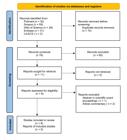
The search strategy retrieved 150 articles (32 from PubMed, 59 from Scopus, 28 from Web of Science, 31 from Embase, and 0 from LILACS). After removing 74 duplicates found across databases, 76 titles and abstracts were screened. Of these, 11 studies were selected for full-text review, and 8 met the inclusion criteria. No studies were included through manual searching. The Google Scholar search retrieved 6 studies, but none were included. Figure 1 illustrates the search and study selection process.
Methodological quality assessment
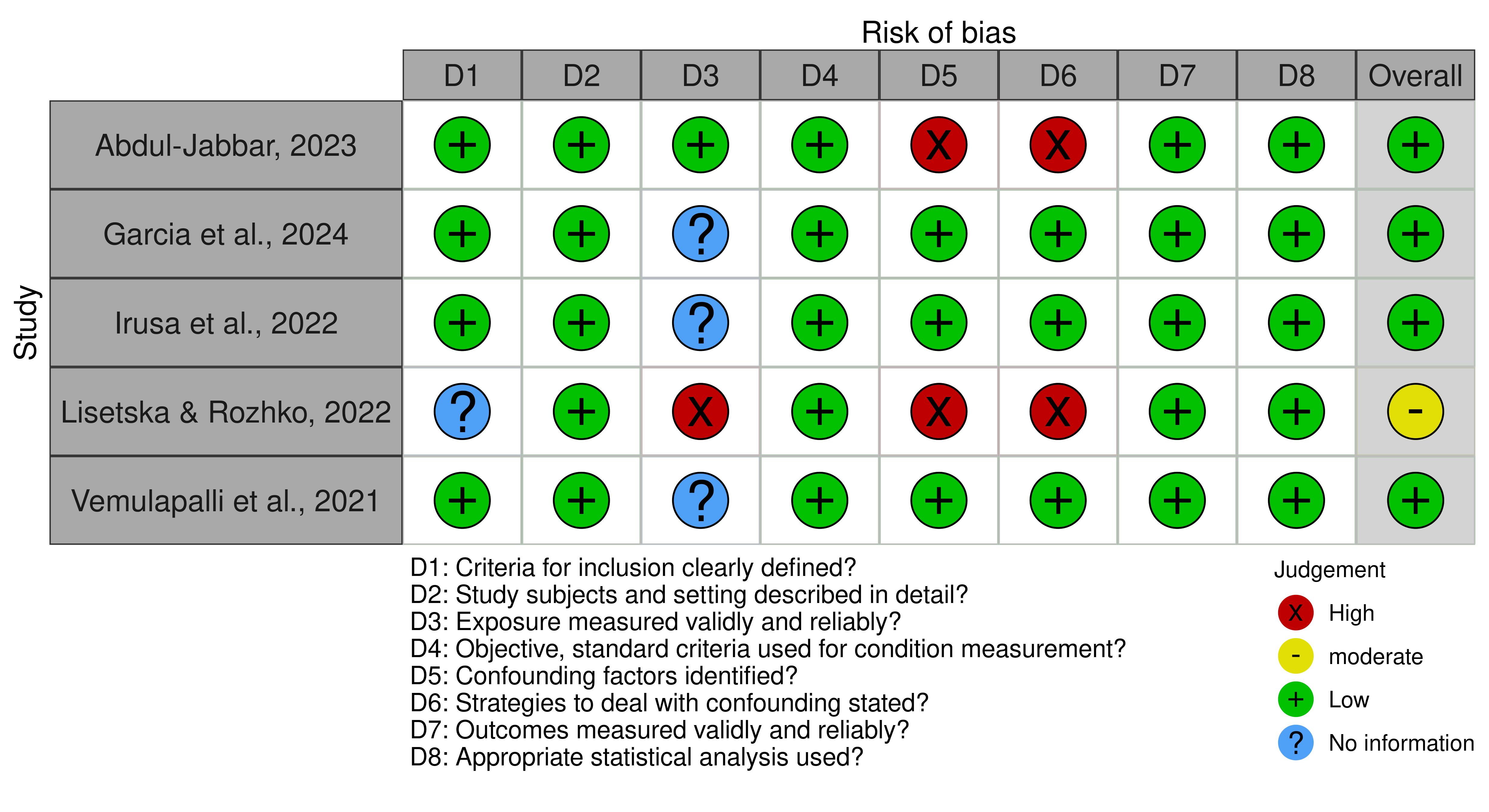
According to the JBI critical appraisal checklist for cross-sectional studies, the risk of bias across all studies was classified as low for the domains “description of participants and study setting,” “measurement criteria,” “reliability of outcome measurement,” and “appropriateness of statistical analysis”. For the domain “definition of inclusion criteria,” only the study by Lisetska and Rozhko [12] did not clearly report inclusion criteria. For the domain “exposure measurement,” only Abdul-Jabbar and Mohammed Hoobi [13] quantified e-cigarette use based on daily frequency and duration, and it was classified as low risk of bias. For the domains “identification of confounding factors” and “measures to address confounders,” only three studies were rated as low risk of bias [12,13] (Figure 2).
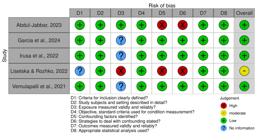
- Methodological quality and risk of bias assessment of cross-sectional studies according to the JBI critical appraisal checklist.
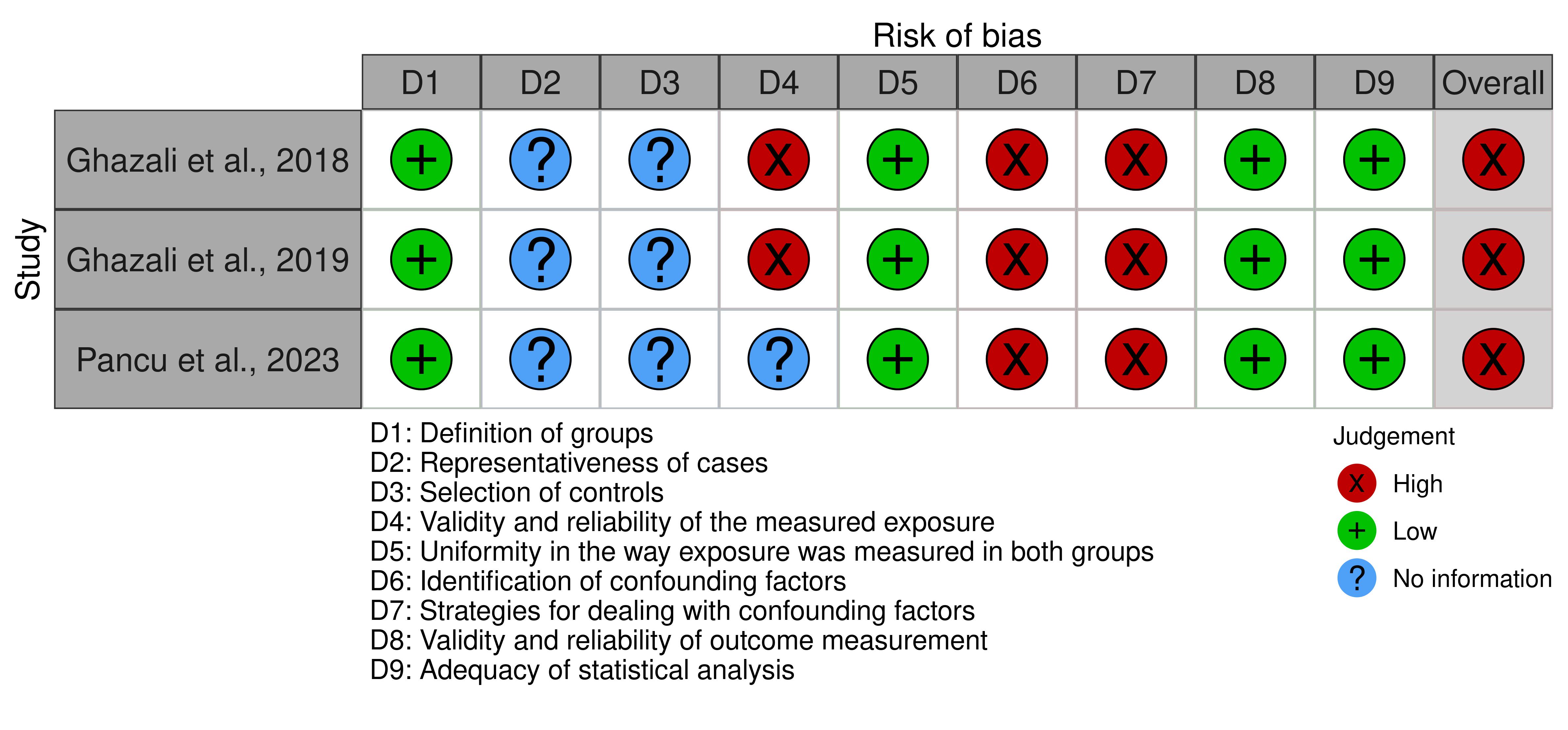
For case-control studies, the JBI checklist classified the risk of bias as low in the domains “definition of groups,” “consistency in exposure measurement across groups,” “validity and reliability of outcome measurement,” and “appropriateness of statistical analysis.” None of the three studies clearly reported on the domains “representativeness of cases” and “selection of controls.” Regarding “validity and reliability of exposure measurement,” all studies determined exposure (use of cigarettes or e-cigarettes) based on self-report, without standardized criteria such as frequency, duration, type, or intensity of use, and were therefore classified as high risk of bias for this domain. Finally, for “identification of confounding factors” and “strategies to address confounders,” all studies were classified as high risk of bias (Figure 3).
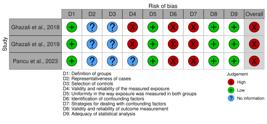
- Methodological quality and risk of bias assessment of case-control studies according to the JBI critical appraisal checklist.
Methodological characteristics of the studies
The included studies were published between 2018 and 2024. Four studies were conducted in Asian countries (Iraq, Malaysia, and Ukraine) [12-15], two in the United States [16,17], one in Brazil [18], and one in Romania [19]. Five were cross-sectional [12,13,16-18] and three were case-control studies [14,15,19] (Table I).
The age of participants varied, with minimum limits between 15 and 20 years and maximum limits ranging from 24 to over 65 years. Regarding sex distribution, in three studies most participants were female (51.89% to 68.33%) [16-18]; in two studies, most were male (74.2% and 76.3%) [14,15]; one study included only male participants [13], and two studies did not report participants’ sex [12,19] (Table I).
Exposure assessment (e-cigarette use) was collected via questionnaires in five studies [14-18], while the others used structured interviews [12,13,19]. Most studies did not collect data on total duration, intensity, or daily frequency of use (Table I).
Regarding control groups, six studies compared exposed groups (e-cigarette users) with both non-smokers and conventional cigarette smokers [12,14,15,17-19], while two compared only with non-smokers [13,16] (Table I). Total sample sizes ranged from 50 [19] to 13,098 [15] (Table II).
All studies used intraoral examination as the method for caries assessment; however, outcome presentation varied. Five articles reported continuous variables using DMFT indices [12-15,19]. In one of these, caries prevalence was also calculated [12]. The other studies used dichotomous outcomes: untreated caries [17,18] or caries risk assessment [16] (Table I).
For studies reporting DMFT, scores ranged from 3.05 [15] to 19.8 [19] in exposed groups, and from 3.51 [14] to 7.6 [13] in controls, with statistically significant differences in three studies [13,14,19]. For dichotomous outcomes: Irusa et al. [16] found a higher percentage of participants at moderate-to-high caries risk in exposed groups (93.4%) compared with controls (85.5%). Vemulapalli et al. [17] reported untreated caries in 26.8% of exposed versus 18.3% of controls, a significant association. Garcia et al. [18] found cavitated caries lesions in 7.41% of exposed versus 8.89% of controls, and active white spot lesions in 12.96% of exposed versus 3.7% of controls, with a significant difference only for active white spot lesions (Table II).
DISCUSSION
The findings of this systematic review suggest a possible association between the use of electronic smoking devices (ESDs), such as electronic cigarettes and vapes, and an increased risk of developing dental caries. This relationship was primarily demonstrated through higher DMFT indices and greater prevalence of active carious lesions among ESD users compared with non-smokers.
Studies that used the DMFT index as an outcome measure generally reported higher values in exposed groups, ranging from 3.05 to 19.8, compared with 3.51 to 7.6 in control groups. These findings align with growing evidence in the literature indicating the cariogenic potential of ESDs, owing to substances such as propylene glycol, vegetable glycerin, and flavorings, which can alter the oral microbiota and decrease salivary pH, thereby favoring enamel demineralization [17,20,21].
Recent studies suggest that e-cigarette use (vaping) may have significant cariogenic potential. E-liquids containing propylene glycol, glycerin, nicotine, and sweet flavors may alter the oral microbiota and increase the risk of dental caries [16,22]. Exposure to e-cigarette aerosols has been shown to increase microbial adhesion to enamel, enhance biofilm formation, and reduce enamel hardness. In addition, the viscosity of e-liquids facilitates the adherence of cariogenic bacteria such as S. mutans to pits and fissures, potentially accelerating demineralization [22,23]. Vaping can also induce dysbiosis of the oral microbiota, favoring the growth of cariogenic bacterial strains and creating an acidic environment conducive to enamel demineralization [24]. These findings suggest that vaping may have effects comparable to, or even more detrimental than, conventional cigarettes on oral health, underscoring the need for further clinical investigation and patient education.
The study by Irusa et al. [16] highlighted a significantly higher percentage of ESD users classified at moderate-to-high caries risk (93.4%) compared with the control group (85.5%). Similarly, Vemulapalli et al. [17] demonstrated that participants who used e-cigarettes were more likely to present untreated caries than those who had never smoked. These findings indicate that even in the absence of combustion tobacco, the chemical components of inhaled vapors may contribute to a more cariogenic oral environment, potentially through reduced salivary flow or adverse effects on saliva composition [5,6].
Another relevant finding was the greater prevalence of early carious lesions, such as active white spot lesions, among ESD users. Garcia et al. [18] identified a statistically significant difference in the presence of these lesions (12.96% among ESD users versus 3.7% among non-smokers), underscoring the importance of early detection and monitoring in this population.
Nonetheless, some methodological limitations must be acknowledged. Most studies collected exposure data via self-reported questionnaires or structured interviews, without precise measurement of duration, frequency, or intensity of device use. Moreover, lack of standardization in outcome reporting makes comparisons across studies challenging. These limitations increase the risk of information bias and may compromise internal validity. The diversity of study populations, both geographically and demographically, may also influence findings. Differences in diet, access to dental care, and oral hygiene practices could act as confounders, limiting the strength of observed associations [25].
Caries assessment was predominantly performed through intraoral examination, but the way results were reported varied considerably. Some studies used DMFT indices, while others reported dichotomous outcomes such as untreated caries or caries risk. This heterogeneity in outcome presentation hinders direct comparison and generalizability of results. Future research with longitudinal designs, representative samples, and rigorous control of confounding factors is essential to better elucidate the mechanisms involved and the actual magnitude of caries risk associated with ESDs.
Despite these limitations, the findings of this systematic review emphasize the need for increased attention to the oral health impacts of ESD use, particularly among adolescents and young adults, who represent the largest proportion of users [26]. Therefore, it is critical that dental professionals remain vigilant about this potential association and include ESD use as a relevant variable in medical history and preventive strategies. The need for training of these professionals is also emphasized, since dentists generally exhibit a positive attitude toward tobacco cessation counseling; however, a lack of formal training significantly impedes their ability to effectively implement such interventions [27].
CONCLUSIONS
This systematic review indicates a trend toward an association between the use of electronic smoking devices and an increased risk of dental caries. Although the current literature still presents methodological limitations and heterogeneity in data collection and analysis methods, the results highlight the need for caution regarding the use of these devices, particularly among young people and adults.
Supplementary Material
Supplementary material accompanies this paper.
Supplementary File 1
This material is available as part of the online article from https://doi.org/10.4322/bds.2026.e4980
-
How to cite:
Almeida TMO, Lima WS, Almeida RAC, Sampaio GAM. Do electronic smoking devices impact the risk of dental caries? A systematic review. Braz. Dent. Sci. 2026;29:e4980. https://doi.org/10.4322/bds.2026.e4980
-
Funding
The authors declare that no financial support was received.
-
Regulatory Statement
Ethical Oversight: The review protocol was registered in PROSPERO (CRD42024490669).
-
Compliance with Reporting Guidelines:
This review was conducted in accordance with the PRISMA 2020 guidelines (Preferred Reporting Items for Systematic Reviews and Meta-Analyses).
-
Data transparency:
The data extraction forms, analytical code, and datasets used in the review are available as supplementary material to this article.
-
Ethical Considerations for Included Studies:
Ethical approval and informed consent were obtained for all primary studies included in the review.
Data availability
Research data is only available upon request.
REFERENCES
- 1 Greenhalgh EM, Scollo MM. 18.6 The health effects of e-cigarette use. In: Greenhalgh EM, Scollo MM, Winstanley MH, editors. Tobacco in Australia: facts and issues. Melbourne: Cancer Council Victoria; 2023.
- 2 Fejerskov O, Kidd E. Dental caries: the disease and its clinical management. 3rd ed. Oxford: Wiley-Blackwell; 2015.
-
3 Kim SA, Smith S, Beauchamp C, Song Y, Chiang M, Giuseppetti A, et al. Cariogenic potential of sweet flavors in electronic-cigarette liquids. PLoS One. 2018;13(9):e0203717. https://doi.org/10.1371/journal.pone.0203717 PMid:30192874.
» https://doi.org/10.1371/journal.pone.0203717 - 4 Nguyen S, McCullough MJ, Huynh SC, Koong B. Sweetened vaping liquids increase Streptococcus mutans biofilm formation in vitro. Aust Dent J. 2020;65(4):345-52. PMid:32383221.
- 5 Hossain M, Ferracane J, Campbell J. E-cigarette liquids promote enamel demineralization. J Dent Res. 2022;101:122.
-
6 Alsenani M, Alothman L, Alsenaidi J, Alnowaiser A, Aldawsari M, Alharbi N. Correlation between e-cigarette use and salivary flow rate, pH, and buffering capacity: a cross-sectional pilot study. BMC Oral Health. 2025;25(1):1806. https://doi.org/10.1186/s12903-025-07255-w
» https://doi.org/10.1186/s12903-025-07255-w -
7 Pushalkar S, Paul B, Li Q, Yang J, Vasconcelos R, Makwana S, et al. Electronic cigarette aerosol modulates the oral microbiome and increases risk of infection. iScience. 2020;23(3):100884. https://doi.org/10.1016/j.isci.2020.100884 PMid:32105635.
» https://doi.org/10.1016/j.isci.2020.100884 -
8 Rubinstein ML, Delucchi K, Benowitz NL, Ramo DE. Adolescent exposure to toxic volatile organic chemicals from e-cigarettes. Pediatrics. 2018;141(4):e20173557. https://doi.org/10.1542/peds.2017-3557 PMid:29507165.
» https://doi.org/10.1542/peds.2017-3557 -
9 Tran J, Bendotti H, Vandeleur M. Associations between oral health related outcomes and electronic cigarette use in young people: A Scoping Review. Int J Paediatr Dent. 2026;ipd.70090. https://doi.org/10.1111/ipd.70090
» https://doi.org/10.1111/ipd.70090 -
10 Page MJ, McKenzie JE, Bossuyt PM, Boutron I, Hoffmann TC, Mulrow CD, et al. The PRISMA 2020 statement: an updated guideline for reporting systematic reviews. BMJ. 2021;372(71):n71. https://doi.org/10.1136/bmj.n71 PMid:33782057.
» https://doi.org/10.1136/bmj.n71 - 11 Moola S, Munn Z, Tufanaru C, Aromataris EC. Systematic reviews of etiology and risk. In: Aromataris E, Munn Z, editors. JBI manual for evidence synthesis. Adelaide: Joanna Briggs Institute; 2020.
-
12 Lisetska IS, Rozhko MM. Study of dental status in teenagers and young adults who smoke. Modern Pediatrics. Ukraine. 2022;2(122):44-9. https://doi.org/10.15574/SP.2022.122.44
» https://doi.org/10.15574/SP.2022.122.44 -
13 Abdul-Jabbar ZM, Mohammed Hoobi N. Dental caries experience and salivary total protein concentration in relation to electronic cigarette smoking. Bionatura. 2023;8(2):63. https://doi.org/10.21931/RB/CSS/2023.08.04.74
» https://doi.org/10.21931/RB/CSS/2023.08.04.74 - 14 Ghazali F, Ismail AF, Faisal GG, Halil MHM, Daud A. Oral health of smokers and e-cigarette users: a case-control study aini clinical article. J Int Dent Med Res. 2018;11(2):428-32.
- 15 Ghazali F, Ismail AF, Daud A. Caries experience among cigarette and e-cigarette users: a 6-month prospective study. J. Pharm. Sci. & Res. 2019;11(7):2566-9.
-
16 Irusa KF, Finkelman M, Magnuson B, Donovan T, Eisen SE. A comparison of the caries risk between patients who use vapes or electronic cigarettes and those who do not: A cross-sectional study. J Am Dent Assoc. 2022;153(12):1179-83. https://doi.org/10.1016/j.adaj.2022.09.013 PMid:36435529.
» https://doi.org/10.1016/j.adaj.2022.09.013 -
17 Vemulapalli A, Mandapati SR, Kotha A, Aryal S. Association between vaping and untreated caries: A cross-sectional study of National Health and Nutrition Examination Survey 2017-2018 data. J Am Dent Assoc. 2021;152(9):720-9. https://doi.org/10.1016/j.adaj.2021.04.014 PMid:34274068.
» https://doi.org/10.1016/j.adaj.2021.04.014 -
18 Garcia BFS, Nascimento BB, Marques EF, Jesus CBD, Santana IC No, Rocha LST, et al. The use of electronic cigarettes and other tobacco products among university students and their potential relationship with oral health: A cross-sectional study. J Am Dent Assoc. 2024;155(8):647-56. https://doi.org/10.1016/j.adaj.2024.04.012 PMid:38878025.
» https://doi.org/10.1016/j.adaj.2024.04.012 - 19 Pancu G, Andrian S, Iovan G, Stoleriu S, Ghiorghe AC, Tofan N, et al. Evaluation of smoking effects on salivary parameters in carious disease. Romanian Journal of Oral Rehabilitation. 2023;15(4):232-41.
-
20 Pushalkar S, Paul B, Li Q, Yang J, Vasconcelos R, Makwana S, et al. Electronic cigarette aerosol modulates the oral microbiome and increases risk of infection. iScience. 2020;23(3):100884. https://doi.org/10.1016/j.isci.2020.100884 PMid:32105635.
» https://doi.org/10.1016/j.isci.2020.100884 -
21 Qasim H, Karim ZA, Rivera JO, Khasawneh FT, Alshbool FZ. Impact of electronic cigarettes on the cardiovascular system. J Am Heart Assoc. 2017;6(9):e006353. https://doi.org/10.1161/JAHA.117.006353 PMid:28855171.
» https://doi.org/10.1161/JAHA.117.006353 -
22 Kim SA, Smith S, Beauchamp C, Song Y, Chiang M, Giuseppetti A, et al. Cariogenic potential of sweet flavors in electronic-cigarette liquids. PLoS One. 2018;13(9):e0203717. https://doi.org/10.1371/journal.pone.0203717 PMid:30192874.
» https://doi.org/10.1371/journal.pone.0203717 -
23 Abdelmonem M, Al-Shalchi N, August K. Effect of vaping on the oral cavity. Am J Clin Pathol. 2019;152(Suppl 1):S120. https://doi.org/10.1093/ajcp/aqz122.008
» https://doi.org/10.1093/ajcp/aqz122.008 -
24 Inchingolo AD, Malcangi G, Semjonova A, Inchingolo AM, Patano A, Coloccia G, et al. Oralbiotica/oralbiotics: the impact of oral microbiota on dental health and demineralization: a systematic review of the literature. Children. 2022;9(7):1014. https://doi.org/10.3390/children9071014 PMid:35883998.
» https://doi.org/10.3390/children9071014 -
25 Glantz SA, Bareham DW. E-Cigarettes: use, effects on smoking, risks, and policy implications. Annu Rev Public Health. 2018;39(1):215-35. https://doi.org/10.1146/annurev-publhealth-040617-013757 PMid:29323609.
» https://doi.org/10.1146/annurev-publhealth-040617-013757 -
26 Wang TW, Neff LJ, Park-Lee E, Ren C, Cullen KA, King BA. E-cigarette use among middle and high school students: united States. MMWR Morb Mortal Wkly Rep. 2020;69(37):1310-2. https://doi.org/10.15585/mmwr.mm6937e1 PMid:32941408.
» https://doi.org/10.15585/mmwr.mm6937e1 -
27 Dalipi ZS, Krasniqi MS, Shabani DB, Dula L. Assessing dentists’ knowledge and training needs in smoking cessation and electronic nicotine delivery systems: a cross-sectional study in Kosovo. Braz Dent Sci. 2025;28(1):e4530. https://doi.org/10.4322/bds.2025.e4530
» https://doi.org/10.4322/bds.2025.e4530
Edited by
-
Editor-in-chief:
Sergio Eduardo de Paiva Gonçalves
-
Editor:
Renata Falchete do Prado