 Analysis of endodontic treatment and demographic data in an urban Brazilian population: a 19-year single-center retrospective study
ABSTRACT
Objective This study investigated the distribution of endodontic procedures performed by an endodontic specialist in an urban Brazilian population.
Material and Methods A retrospective study was conducted on 8041 patients treated between 2000 and 2018 at a single center. The study evaluated data from clinical and radiographic examinations, endodontic procedures, dental groups, sex, and age.
Results Endodontic retreatment was more frequent in age groups over 30 than in younger groups (p <0.001). The lower first molar was the most affected tooth in the 20 to 49-year-old group. The endodontic treatment group had the highest frequencies of the upper first molar (15.34%) and lower first molar (13.20%). Retreatment was more frequent in the incisor group (p <0.001). No significant differences were observed between males and females regarding endodontic treatment and retreatment.
Conclusion The findings suggest that there was an oscillation in the distribution between endodontic treatment and retreatment over time. Furthermore, the prevalence of the affected dental group varied based on the age group and type of endodontic procedure.
KEYWORDS:
Clinical record; Demography; Dental procedures; Endodontics; Retrospective study
RESUMO
Objetivo Este estudo investigou a distribuição dos procedimentos endodônticos realizados por um especialista em endodontia em uma população urbana brasileira.
Material e Métodos Foi realizada uma análise retrospectiva de 8.041 pacientes tratados entre 2000 e 2018 em um único centro. O estudo avaliou dados de exames clínicos e radiográficos, procedimentos endodônticos, grupo dentário, sexo e idade.
Resultados O retratamento endodôntico foi mais frequente em pacientes com mais de 30 anos de idade, em comparação com indivíduos mais jovens (p <0,001). O primeiro molar inferior foi o dente mais afetado na faixa etária de 20 a 49 anos. As maiores frequências de tratamento endodôntico foram observadas no primeiro molar superior (15,34%) e no primeiro molar inferior (13,20%). O retratamento foi mais frequente no grupo de incisivos (p <0,001). Não foram observadas diferenças significativas entre indivíduos do sexo masculino e do feminino no que diz respeito ao tratamento endodôntico e ao retratamento.
Conclusão Os resultados sugerem uma oscilação na distribuição dos tratamentos endodônticos e retratamentos ao longo do tempo. Além disso, a prevalência dos grupos dentários afetados variou conforme a faixa etária e o tipo de procedimento endodôntico.
PALAVRAS-CHAVE:
Dados clínicos; Demografia; Procedimentos odontológicos; Endodontia; Estudo retrospectivo
INTRODUCTION
Improvements in therapeutic modalities and technology have significantly influenced the evolution of dental care [1]. Evidence points to a decline in the prevalence of dental caries, largely attributed to community water fluoridation and progress in preventative treatment strategies [2-4]. Despite these improvements, limited research has explored how routine procedures in endodontic practice have changed over time.
Existing studies on endodontic treatment patterns have typically drawn data from teaching institutions, surveys of endodontic practices, and general dental clinics [5-9]. A retrospective analysis conducted at the University of Western Australia highlighted the high demand for endodontic therapy among referred patients and identified key reasons for referral, such as pain management, complex canal morphology, retreatment, trauma, surgery, and perforations [10]. However, these findings date back to the 1990s, and there is a lack of contemporary research with robust data that evaluates shifts in endodontic care provision.
Root canal treatment [RCT] has emerged as one of the most frequently performed dental procedures, while tooth extraction appears to be declining in prevalence among practitioners [11,12]. Globally, oral diseases continue to affect billions, with untreated dental caries in permanent teeth being the most widespread condition [13]. These global patterns underscore the importance of examining the demand for endodontic treatment across various socio-economic and cultural settings. Such analysis is vital not only for enhancing the quality and efficiency of oral healthcare but also for informing endodontic education and training.
Therefore, according to demographic characteristics and dental group, this retrospective study investigated the distribution of endodontic procedures performed by an endodontic specialist in an urban Brazilian population from 2000 to 2018, comparing endodontic treatment and retreatment.
MATERIAL AND METHODS
Study design
A retrospective study was conducted at a single center using data from the electronic registry (ProDent Software® Blumenau, Santa Catarina, Brazil) of endodontic procedures performed by a specialist in a dental office in Belo Horizonte, the capital of Minas Gerais, which is the sixth most populous municipality in Brazil [14]. This study was approved by the Research Ethics Committee of the Federal University of Maranhão (CAAE: 86198924.6.0000.5087).
Study sample
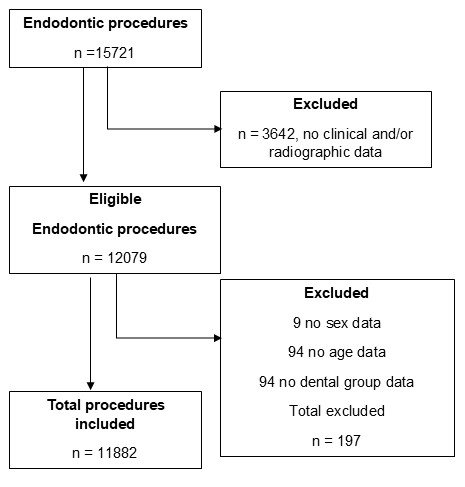
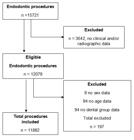
The study sample included analyzed teeth that underwent endodontic interventions between 2000 and 2018 by a specialist in Belo Horizonte, Minas Gerais, Brazil. The study included data from clinical and radiographic examinations, endodontic procedures, dental groups, sex, and age. Endodontic procedures without data on the patient's dental group, sex, and/or age were excluded. The total sample evaluated was 11,882 endodontic procedures performed on 8,041 patients (Figure 1).
Data collection
The teeth that underwent endodontic intervention were categorized based on demographic and dental variables, including year of procedure, sex (male/female), age group (≤19, 20 to 29, 30 to 39, 40 to 49, 50 to 59, and ≥60 years), dental arch (upper/lower), and dental group (central incisor, lateral incisor, canine, first premolar, second premolar, first molar, second molar, and third molar), type of endodontic procedure (endodontic treatment, endodontic retreatment, management of pain, separated instrument removal, post removal, root canal preparation for post-space, root perforation treatment, and antimicrobial photodynamic therapy). The data were grouped by year for time series analysis.
Statistical analysis
The data analysis was performed using SPSS software version 29.0 (IBM, Chicago, IL, USA) and GraphPad Prism software version 10 (GraphPad Software, San Diego, CA, USA). Descriptive statistics were performed to calculate the frequency and percentage of the variables. Chi-square tests were used to assess the association between categorical variables. Results were presented in tables and bar charts. The level of significance adopted for all analyses was 5%.
RESULTS
Data from 8041 patients that underwent endodontic interventions were evaluated in the present study. Table I shows the sex distribution of the patients: female (53.45%) and male (46.55%). The most frequent age group in the sample was 40 to 49 years (25.27%), followed by 30 to 39 years (22.73%). The three highest-frequency endodontic procedures in the sample were root canal preparation for post-space (32.37%), endodontic treatment (30.79%), and endodontic retreatment (17.01%). The study found that lower molars (21.92%), upper molars (19.65%), and upper premolars (18.78%) were the most affected teeth in the overall sample.
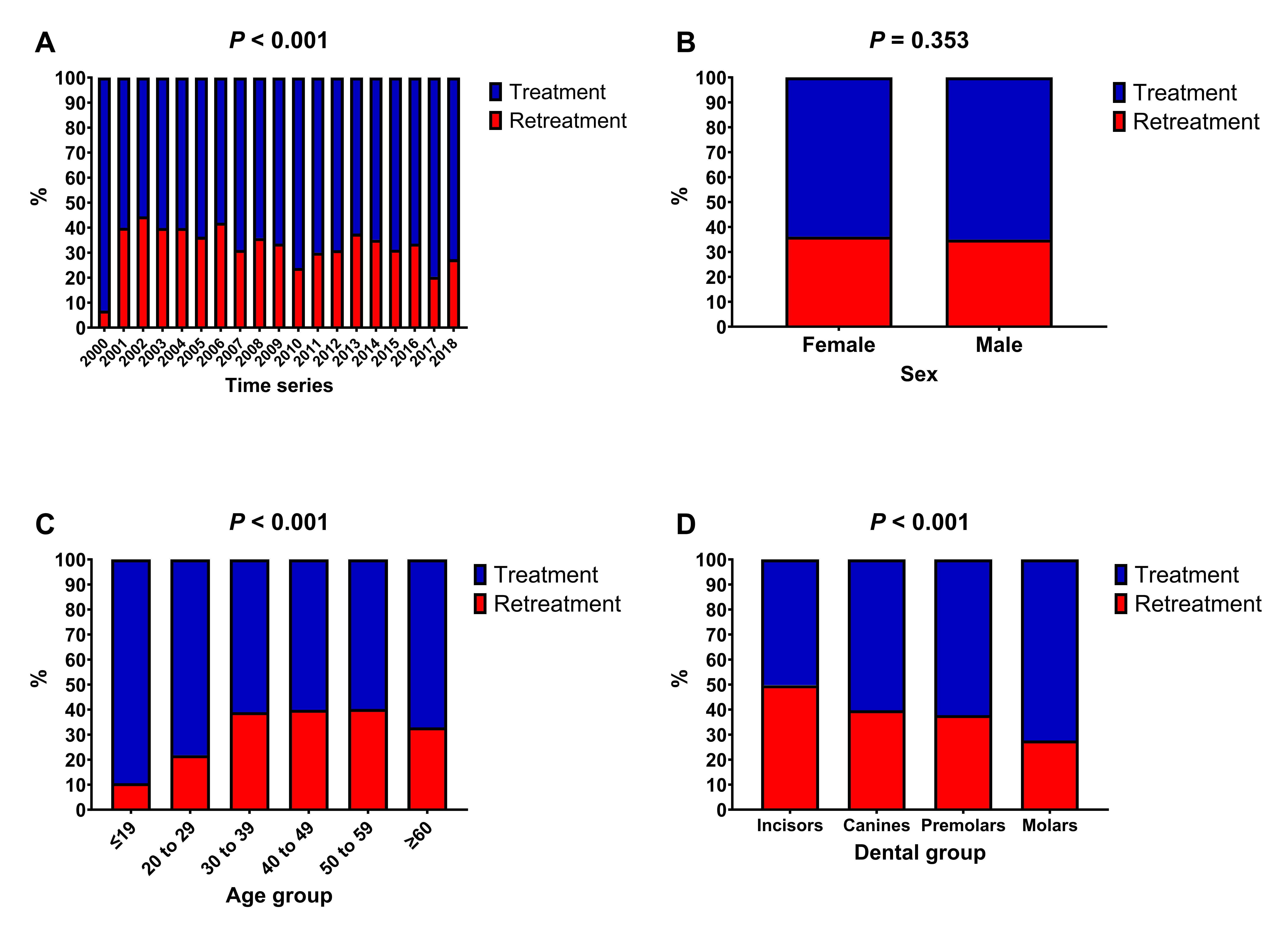
The study found significant differences between treatment and retreatment by year of procedure (Figure 2A, p < 0.001). However, the time trend showed a wavering pattern. No significant differences were observed between males and females regarding endodontic treatment and retreatment (Figure 2B, p =0.353). Endodontic retreatment was more frequent in age groups over 30 than in younger groups (Figure 2C, p <0.001). Furthermore, there were significant differences in the distribution of endodontic treatment and retreatment across dental groups (Figure 2D, p < 0.001). The incisor group had a higher retreatment rate.
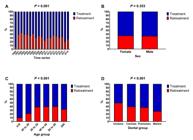
Comparative analysis of endodontic treatment and retreatment across time series (A), sex category (B), age group (C), and dental group (D).
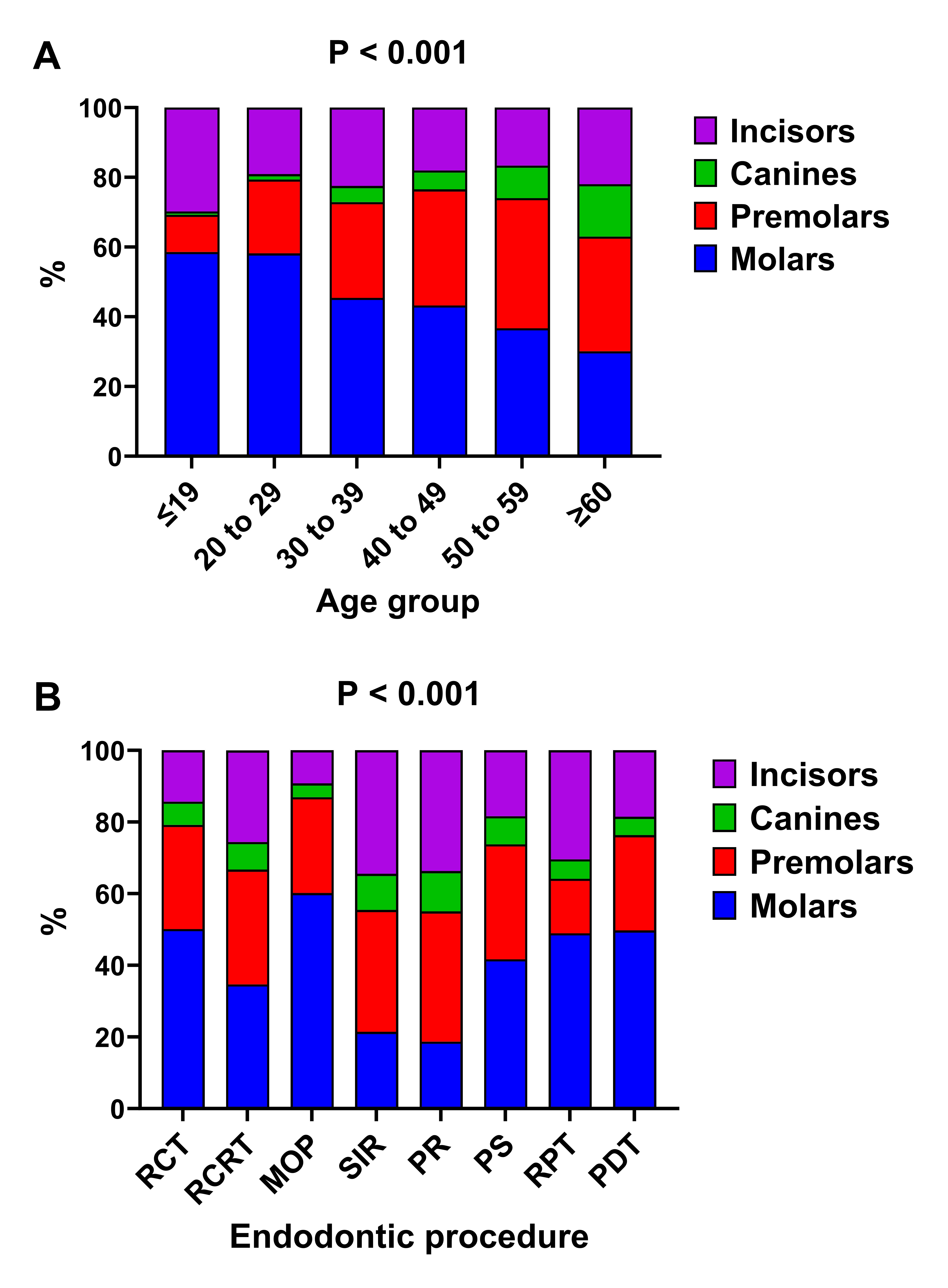
Regarding the distribution of dental groups by age, molars accounted for over 50% of teeth that underwent endodontic interventions in the ≤19 years (58.60%) and 20–29 years (58.15%) age groups. The frequency of affected canines increased with age, representing 15.03% in the ≥60 age group. Endodontic interventions in premolars were also higher in older age groups (Figure 3A). The distribution of dental groups varied significantly by endodontic procedure type (Figure 3B, p < 0.001). Endodontic urgency procedures were performed on 60.19% of molars and 50.10% of non–molar teeth. Premolar and incisor teeth had a higher frequency of separated instrument removal (34.03% and 34.45%, respectively). Similarly, post–removal procedures were most frequent in incisor and premolar teeth (36.38% and 33.68%, respectively). Root perforation treatment was performed on 48.91% of molar teeth.
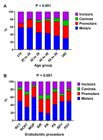
Distribution of dental groups by age group (A) and endodontic procedure (B). RCT = Root canal treatment; RCRT = Root canal retreatment; MOP = Management of pain; SIR = Separated instrument removal; PR = Post removal; PS = Root canal preparation for post-space; RPT = Root perforation treatment; PDT = Antimicrobial photodynamic therapy.
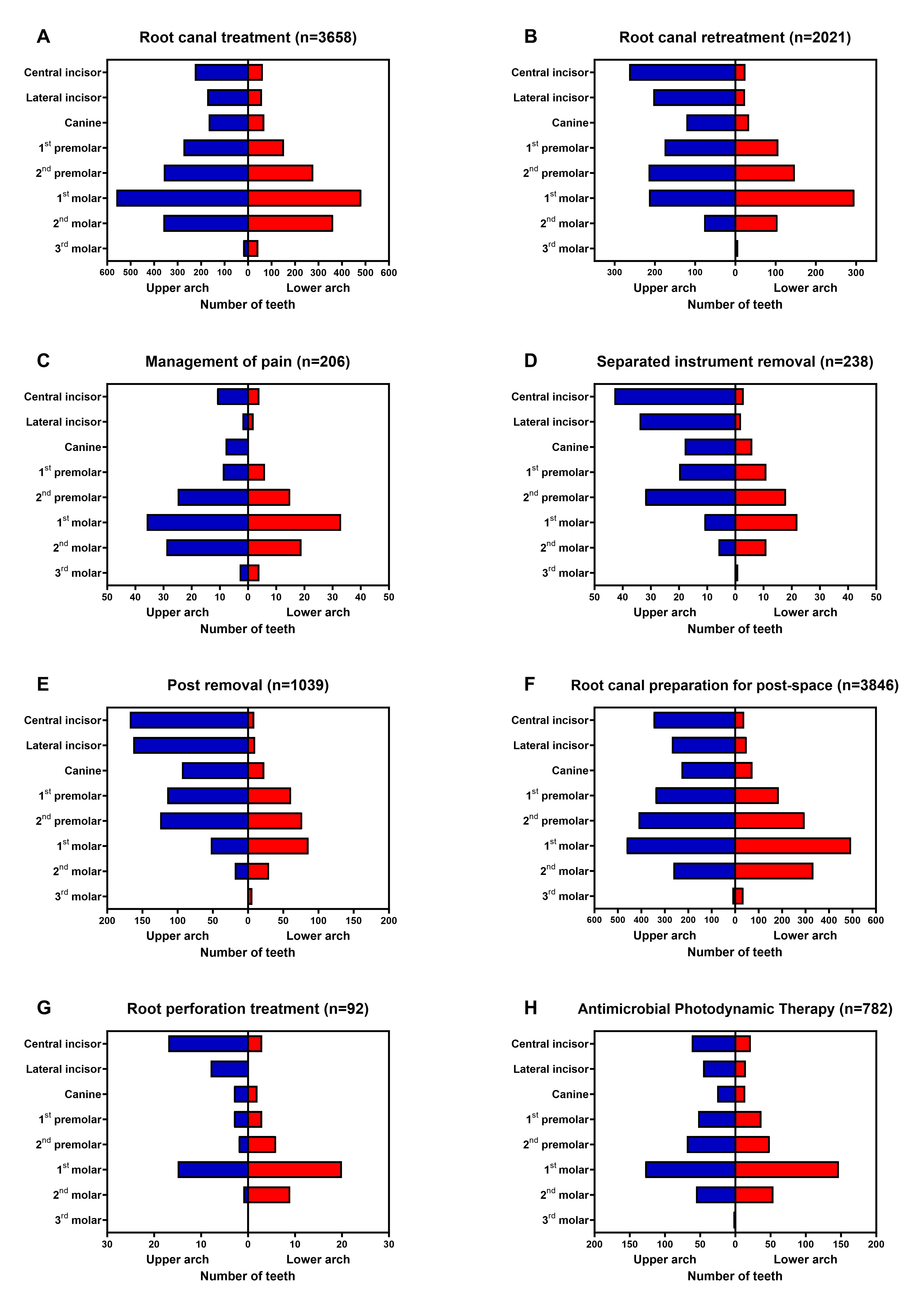
Figure 4 shows the distribution of teeth groups based on the endodontic procedure. The upper 1st molar (15.34%) and lower 1st molar (13.20%) had the highest frequencies in the endodontic treatment group (Figure 4A). In the endodontic retreatment category, the most frequent tooth groups were the lower 1st molar (14.65%) and central incisor (13.06%) (Figure 4B). The first molar teeth were the most affected in the endodontic urgency group (Figure 4C). The separated instrument removal procedure affected the upper central incisor the most (18.07%), followed by the upper lateral incisor (14.29%) and upper 2nd premolar (13.45%) (Figure 4D). In the post–removal category, the upper central incisor (16.17%) and upper lateral incisor (15.69%) had the highest frequencies (Figure 4E). For the post-space category, the lower and upper 1st molars had the highest frequencies in root canal preparation (12.84% and 12.04%, respectively) (Figure 4F). In the root perforation treatment, the lower first molar accounted for 21.74% (Figure 4G). The low–level laser therapy category showed that the lower and upper first molars were the most frequently treated tooth groups, accounting for 18.80% and 16.37%, respectively (Figure 4H).
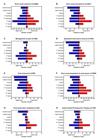
Distribution of dental groups by endodontic procedure: endodontic treatment (A), endodontic retreatment (B), management of pain (C), separated instrument removal (D), post removal (E), root canal preparation for post-space (F), root perforation treatment (G), and antimicrobial photodynamic therapy (H).
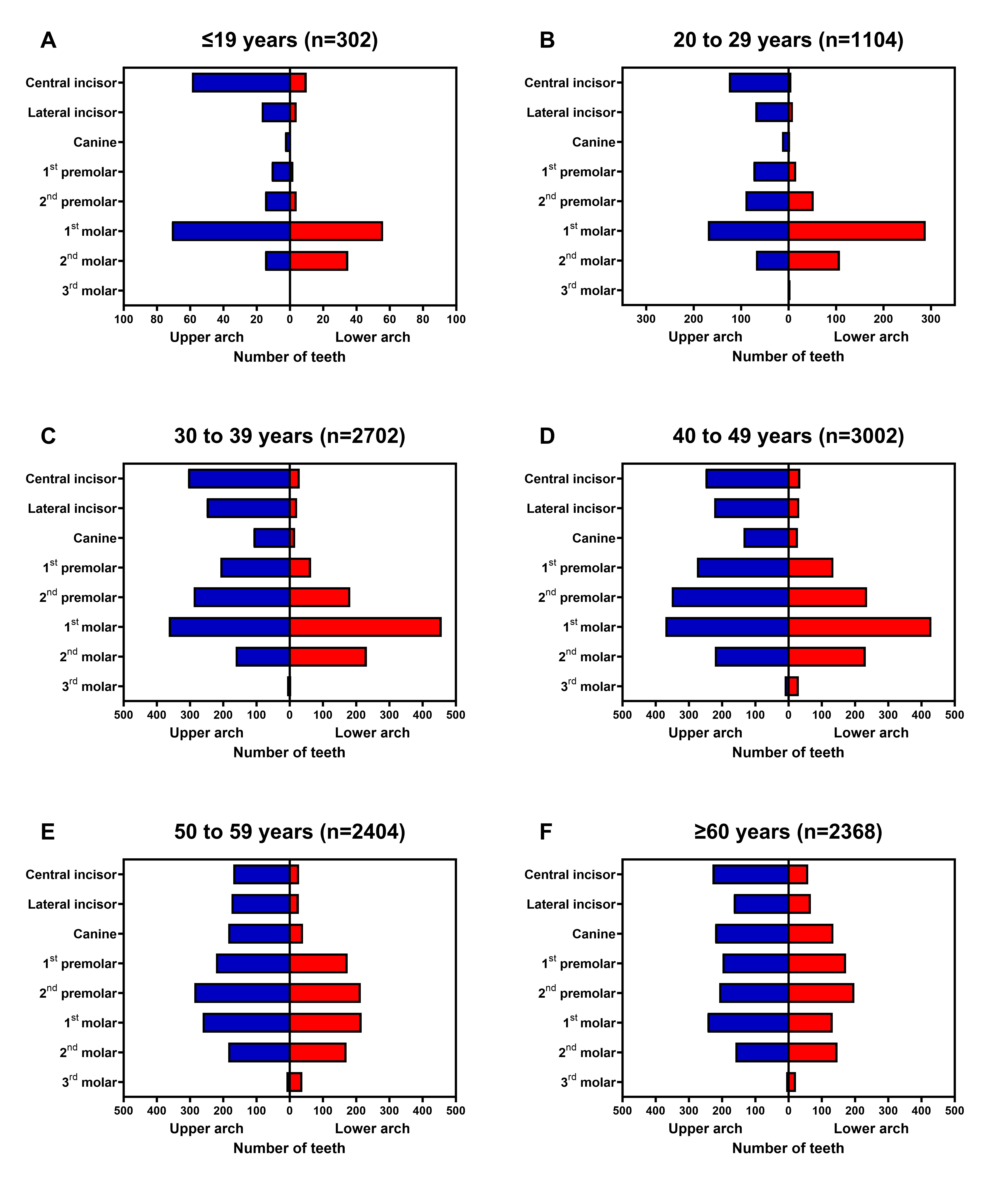
Figure 5 shows the distribution of the dental group by age group. The results indicate that 19.54% of the teeth receiving treatment in the younger age group (≤19 years) were upper central incisors (Figure 5A). The lower 1st molar was the most affected tooth in the 20-49 age groups, with 26.18% (Figure 5B), 16.91% (Figure 5C), and 14.32% (Figure 5D), respectively. The upper 2nd premolar had the highest frequency in the 50 to 59 age group (Figure 5E). The upper 1st molar was the most frequent in the ≥60 age group (10.30%, Figure 5F).

Distribution of dental groups by age group: ≤19 years (A), 20 to 29 years (B), 30 to 39 years (C), 40 to 49 years (D), 50 to 59 years (E), and ≥60 years (F).
DISCUSSION
This study investigated the distribution of endodontic procedures performed by an endodontic specialist in an urban Brazilian population according to demographic characteristics and dental group. The municipality of Belo Horizonte is the sixth most populous municipality in Brazil, with a territorial area equal to 331,354 km2, an estimated population for 2020 of 2,521,564 inhabitants, a demographic density of 7,167 inhabitants/km2, and a municipal human development index (HDI) in 2010 equal to 0.810 [14].
The study findings indicate that lower molars were the most affected teeth, followed by upper molars and upper premolars. Endodontic retreatment was more frequent in age groups over 30 years than in younger age groups. In addition, the results indicate that the lower first molar was the most affected tooth in individuals aged 20 to 49. The endodontic treatment group had the highest frequencies of both upper and lower first molars, while incisor teeth had a high frequency in the endodontic retreatment category. Molar teeth accounted for almost half of the root perforation treatments.
The data analysis also revealed an increase in endodontic procedures among older age groups. Evidence has indicated that apical periodontitis and RCT become more prevalent with age [15,16]. This can be attributed to the correlation between aging and increased prevalence of oral diseases and systemic comorbidities [17]. These factors can result in an imbalanced host immune response to microorganisms in the root canal system [18]. In addition, a systematic review has shown that older individuals have a higher incidence of periapical radiolucency and are more likely to require non–surgical root canal treatment than the general adult population [19].
The present study showed that endodontic treatment was more frequently required for upper teeth than for lower teeth, with the first molars being the most commonly treated in both dental arches. Previous studies reported similar findings with different populations [9,19,20]. This result indicates that dental caries lesions affect dental groups with greater anatomical complexity, making dental hygiene more difficult and leading to the accumulation of cariogenic biofilm [19,21]. The frequency of upper anterior teeth requiring treatment is higher than that of other teeth, consistent with the findings of Scavo et al. [9]. The main reasons for treatment are trauma and caries [22,23].
The study sample had a low referral rate for pain management [2.56%]. The frequency of dental care for day–to–day pain maintenance varies depending on the patient database analyzed. Generally, reference places that routinely receive endodontic emergencies, such as university dental schools and hospitals, show higher indicators [24]. Dental pain can arise due to various reasons, including the progression of dental caries, dental trauma, acute inflammation in the periradicular tissues, or during endodontic treatment. It is often caused by mechanical, chemical, or microbial injury to the root canal system [25].
Additionally, the study found that 17.01% of procedures were referrals for endodontic retreatment, consistent with a previous survey on failed root canal treatments [9]. It is important to note that the distribution of procedure types may vary depending on the dentist's clinical performance profile. Endodontists typically receive more teeth requiring retreatment than general practitioners [26].
Differences in practitioners' education can also lead to variations in endodontic diagnosis and treatment decisions [27-31]. The call for education in uniform evidence–based treatment selection was highlighted in a previous study [32]. In this study, general practitioners are three times more likely to retain teeth for primary root canal treatment than to retreat teeth with unsuccessful treatment. Similar pessimism regarding root canal retreatment was typical amongst general dentists in the early 2000s [33]. Our study's lower referral rate for endodontic retreatment may reflect an unchanged attitude toward performing endodontic retreatment or extracting after unsuccessful root canal therapy. The higher frequency of root canal retreatment reported in a specialist clinic in Australia may suggest a variation in education and attitude amongst general practitioners [10]. This finding is likewise supported by a review that found that dentists with over 25 years of clinical experience are twice as likely to extract as those with less than 5 years of experience [28].
Our study found a significant increase in the elderly population [≥60 years of age] that received endodontic treatment over 18 years. This increase can be attributed to the rise in life expectancy [34] and a decrease in global tooth loss [35]. According to a systematic review, the prevalence and incidence rate of total tooth loss decreased by 45% over the two decades from 1990 to 2010 [36]. The reduction in tooth loss thus pushes the need for endodontic treatment, especially in the higher age group. Tooth retention is significantly higher in this group than in the previous two decades. Trend studies on the prevalence and incidence rates of caries reveal a significant reduction in severity over the last 30–40 years in young children, adolescents, and adults [35]. The same study found the lowest caries prevalence in the 35–44 age group. This trend is reflected well in our research, where the 30-39 age group saw a significant decrease in numbers over the 18–year study period.
Some of the study's strengths and limitations should be addressed. The main strengths were the large sample size and the retrospective design that provided a long time series [19 years] to investigate possible temporal changes in the distribution pattern. The limitation of the present study is its single–center nature, which should be considered when generalizing the results for the target population. Therefore, future studies should be conducted with representative samples across different sociodemographic groups to compare these findings across populations.
In conclusion, the findings indicate that endodontic retreatment was more frequent in age groups over 30 than in younger groups. The lower first molar was the most commonly affected tooth in individuals aged 20 to 49. The distribution of endodontic treatment and retreatment varied over time. Additionally, the frequency of affected dental groups and the treatment provided varied by age group in an urban Brazilian population.
Data availability
The data that support the findings of this study are available from the corresponding author upon reasonable request.
-
How to cite:
Amaral RR, Côrtes MIS, Rodrigues VP. Analysis of endodontic treatment and demographic data in an urban Brazilian population: a 19-year single-center retrospective study. Braz. Dent. Sci. 2026; 29:e4823. https://doi.org/10.4322/bds.2026.e4823
-
Funding
This study was supported in part by the Brazilian Coordination for Improvement in Higher Education (CAPES).
-
Regulatory Statement
This study was conducted in accordance with all the provisions of the local human subjects oversight committee guidelines and policies of the Research Ethics Committee of the Federal University of Maranhão (CEP-UFMA), approval number (CAAE: 86198924.6.0000.5087).
REFERENCES
-
1 DaSilva AF, Robinson MA, Shi W, McCauley LK. The forefront of dentistry: promising tech-innovations and new treatments. JDR Clin Trans Res. 2022;7(1, Suppl):16S-24S. https://doi.org/10.1177/23800844221116850 PMid:36121134.
» https://doi.org/10.1177/23800844221116850 -
2 Bomfim RA, Frazão P. Impact of water fluoridation on dental caries decline across racial and income subgroups of Brazilian adolescents. Epidemiol Health. 2022;44:e2022007. https://doi.org/10.4178/epih.e2022007 PMid:34990530.
» https://doi.org/10.4178/epih.e2022007 -
3 Goodwin M, Walsh T, Whittaker W, Emsley R, Kelly MP, Sutton M, et al. The CATFISH study: an evaluation of a water fluoridation program in Cumbria, UK. Community Dent Oral Epidemiol. 2024;52(4):590-600. https://doi.org/10.1111/cdoe.12967 PMid:38757663.
» https://doi.org/10.1111/cdoe.12967 -
4 Pontigo-Loyola AP, Mendoza-Rodriguez M, de la Rosa-Santillana R, Rivera-Pacheco MG, Islas-Granillo H, Casanova-Rosado JF, et al. Control of dental caries in children and adolescents using fluoride: an overview of community-level fluoridation methods. Pediatr Rep. 2024;16(2):243-53. https://doi.org/10.3390/pediatric16020021 PMid:38651460.
» https://doi.org/10.3390/pediatric16020021 -
5 Lee SM, Yu YH, Karabucak B. Endodontic treatments on permanent teeth in pediatric patients aged 6-12 years old. J Dent Sci. 2023;18(3):1109-15. https://doi.org/10.1016/j.jds.2022.11.003 PMid:37404642.
» https://doi.org/10.1016/j.jds.2022.11.003 -
6 Awotile AO, Oyapero A, Adenuga-Taiwo OA, Enone LL, Menakaya IN, Loto AO. Patients’ management patterns for restorative treatment procedures: a 4-year overview at the restorative clinic of a tertiary Hospital in Nigeria. Pesqui Bras Odontopediatria Clin Integr. 2022;22:e210047. https://doi.org/10.1590/pboci.2022.017
» https://doi.org/10.1590/pboci.2022.017 -
7 Sebring D, Dimenäs H, Engstrand S, Kvist T. Characteristics of teeth referred to a public dental specialist clinic in endodontics. Int Endod J. 2017;50(7):629-35. https://doi.org/10.1111/iej.12671 PMid:27307389.
» https://doi.org/10.1111/iej.12671 - 8 Oginni AO, Adeleke AA, Chandler NP. Root canal treatment and prevalence of apical periodontitis in a nigerian adult subpopulation: a radiographic study. Oral Health Prev Dent. 2015;13(1):85-90. PMid:24624387.
-
9 Scavo R, Martinez Lalis R, Zmener O, DiPietro S, Grana D, Pameijer CH. Frequency and distribution of teeth requiring endodontic therapy in an Argentine population attending a specialty clinic in endodontics. Int Dent J. 2011;61(5):257-60. https://doi.org/10.1111/j.1875-595X.2011.00069.x PMid:21995373.
» https://doi.org/10.1111/j.1875-595X.2011.00069.x -
10 Abbott PV. Analysis of a referral-based endodontic practice: part 1. Demographic data and reasons for referral. J Endod. 1994;20(2):93-6. https://doi.org/10.1016/S0099-2399(06)81190-8 PMid:8006574.
» https://doi.org/10.1016/S0099-2399(06)81190-8 -
11 Cheng FC, Chiang CP. Dental use and medical expenses for endodontic diseases under the National Health Insurance System in Taiwan from 1998 to 2020. J Dent Sci. 2023;18(1):272-81. https://doi.org/10.1016/j.jds.2022.09.011 PMid:36643245.
» https://doi.org/10.1016/j.jds.2022.09.011 -
12 Fransson H, Dawson V. Tooth survival after endodontic treatment. Int Endod J. 2023;56(Suppl 2):140-53. https://doi.org/10.1111/iej.13835 PMid:36149887.
» https://doi.org/10.1111/iej.13835 -
13 Peres MA, Macpherson LM, Weyant RJ, Daly B, Venturelli R, Mathur MR, et al. Oral diseases: a global public health challenge. Lancet. 2019;394(10194):249-60. https://doi.org/10.1016/S0140-6736(19)31146-8 PMid:31327369.
» https://doi.org/10.1016/S0140-6736(19)31146-8 -
14 IBGE: Instituto Brasileiro de Geografia e Estatística. Cidades e Estados: Belo Horizonte [Internet]. 2025 [cited 2025 Feb 20]. Available from: https://www.ibge.gov.br/cidades-e-estados/mg/belo-horizonte.html
» https://www.ibge.gov.br/cidades-e-estados/mg/belo-horizonte.html -
15 Jakovljevic A, Nikolic N, Jacimovic J, Pavlovic O, Milicic B, Beljic-Ivanovic K, et al. Prevalence of apical periodontitis and conventional nonsurgical root canal treatment in general adult population: an updated systematic review and meta–analysis of cross–sectional studies published between 2012 and 2020. J Endod. 2020;46(10):1371-86.e8. https://doi.org/10.1016/j.joen.2020.07.007 PMid:32673634.
» https://doi.org/10.1016/j.joen.2020.07.007 -
16 Hamedy R, Shakiba B, Pak JG, Barbizam JV, Ogawa RS, White SN. Prevalence of root canal treatment and periapical radiolucency in elders: a systematic review. Gerodontology. 2016;33(1):116-27. https://doi.org/10.1111/ger.12137 PMid:25110204.
» https://doi.org/10.1111/ger.12137 -
17 Persoon IF, Özok AR. Definitions and epidemiology of endodontic infections. Curr Oral Health Rep. 2017;4(4):278-85. https://doi.org/10.1007/s40496-017-0161-z PMid:29201596.
» https://doi.org/10.1007/s40496-017-0161-z -
18 Teixeira QE, Ferreira DDC, da Silva AMP, Gonçalves LS, Pires FR, Carrouel F, et al. Aging as a risk factor on the immunoexpression of pro–inflammatory IL–1β, IL–6 and TNF–α cytokines in chronic apical periodontitis lesions. Biology (Basel). 2021;11(1):14. https://doi.org/10.3390/biology11010014 PMid:35053012.
» https://doi.org/10.3390/biology11010014 -
19 Bolado EC, Camacho-Aparicio LA. Prevalence of pulp and periapical diseases in the endodontic postgraduate program at the national autonomous University of Mexico 2014-2019. J Clin Exp Dent. 2023;15(6):e470-7. https://doi.org/10.4317/jced.60451 PMid:37388435.
» https://doi.org/10.4317/jced.60451 -
20 Muteq H, Al-Nazhan S, Al-Maflehi N. Outcomes of nonsurgical endodontic treatment among endodontic postgraduate students at Riyadh Elm University. Saudi Endod J. 2020;10(1):7-14. https://doi.org/10.4103/sej.sej_78_19
» https://doi.org/10.4103/sej.sej_78_19 -
21 Gudiño-Fernández S, Gómez-Fernández A, Molina-Chaves K, Barahona-Cubillo J, Fantin R, Barboza-Solís C. Prevalence of dental caries among Costa Rican male students aged 12-22 years using ICDAS–II. Odovtos. 2021;23:181-95. https://doi.org/10.15517/ijds.2021.45650
» https://doi.org/10.15517/ijds.2021.45650 -
22 Lam R. Epidemiology and outcomes of traumatic dental injuries: a review of the literature. Aust Dent J. 2016;61(Suppl 1):4-20. https://doi.org/10.1111/adj.12395 PMid:26923445.
» https://doi.org/10.1111/adj.12395 -
23 Enabulele JE, Oginni AO, Sede MA, Oginni FO. Pattern of traumatized anterior teeth among adult Nigerians and complications from late presentation. BMC Res Notes. 2016;9(1):70. https://doi.org/10.1186/s13104-016-1871-3 PMid:26852327.
» https://doi.org/10.1186/s13104-016-1871-3 -
24 Abbott PV. Present status and future directions: managing endodontic emergencies. Int Endod J. 2022;55(Suppl 3):778-803. https://doi.org/10.1111/iej.13678 PMid:34958512.
» https://doi.org/10.1111/iej.13678 -
25 Jassal S, Fatima A, Gupta AS, Khan F, Jamwal P. A literature review of causes and management of pain related to endodontic procedure. IP Indian J Conserv Endod. 2021;6(2):82-4. https://doi.org/10.18231/j.ijce.2021.018
» https://doi.org/10.18231/j.ijce.2021.018 -
26 Hull TE, Robertson PB, Steiner JC, del Aguila MA. Patterns of endodontic care for a Washington state population. J Endod. 2003;29(9):553-6. https://doi.org/10.1097/00004770-200309000-00002 PMid:14503824.
» https://doi.org/10.1097/00004770-200309000-00002 -
27 McCaul LK, McHugh S, Saunders WP. The influence of specialty training and experience on decision making in endodontic diagnosis and treatment planning. Int Endod J. 2001;34(8):594-606. https://doi.org/10.1046/j.1365-2591.2001.00433.x PMid:11762496.
» https://doi.org/10.1046/j.1365-2591.2001.00433.x -
28 Lee J, Kang S, Jung HI, Kim S, Karabucak B, Kim E. Dentists’ clinical decision-making about teeth with apical periodontitis using a variable–controlled survey model in South Korea. BMC Oral Health. 2020;20(1):23. https://doi.org/10.1186/s12903-020-1014-z PMid:31996198.
» https://doi.org/10.1186/s12903-020-1014-z -
29 Alharmoodi R, Al-Salehi S. Assessment of the quality of endodontic retreatment and changes in periapical status on a postgraduate endodontic clinic. J Dent. 2020;92:103261. https://doi.org/10.1016/j.jdent.2019.103261 PMid:31821854.
» https://doi.org/10.1016/j.jdent.2019.103261 -
30 Conrad J, Retelsdorf J, Attia S, Dörfer C, Mekhemar M. German dentists’ preferences for the treatment of apical periodontitis: a cross-sectional survey. Int J Environ Res Public Health. 2020;17(20):7447. https://doi.org/10.3390/ijerph17207447 PMid:33066223.
» https://doi.org/10.3390/ijerph17207447 -
31 Al-Waqdani NH, Alomari M, Al-Dhalaan RM, Alwaqdani R. Decision making process by senior residents of Saudi Board in restorative dentistry for nonsurgical endodontic retreatment: a retrospective study. Saudi Dent J. 2021;33(2):78-84. https://doi.org/10.1016/j.sdentj.2020.01.005 PMid:33551620.
» https://doi.org/10.1016/j.sdentj.2020.01.005 -
32 Azarpazhooh A, Dao T, Figueiredo R, Krahn M, Friedman S. A survey of patients’ preferences for the treatment of teeth with apical periodontitis. J Endod. 2013;39(12):1534-41. https://doi.org/10.1016/j.joen.2013.07.012 PMid:24238442.
» https://doi.org/10.1016/j.joen.2013.07.012 -
33 Balto HAG, Al‐Madi EM. A comparison of retreatment decisions among general dental practitioners and endodontists. J Dent Educ. 2004;68(8):872-9. https://doi.org/10.1002/j.0022-0337.2004.68.8.tb03837.x PMid:15286111.
» https://doi.org/10.1002/j.0022-0337.2004.68.8.tb03837.x -
34 Roser M, Ortiz–Ospina E, Ritchie H. Life expectancy: our world in data [Internet]. 2013 [cited 2025 Feb 15]. Available from: https://ourworldindata.org/life-expectancy
» https://ourworldindata.org/life-expectancy -
35 Frencken JE, Sharma P, Stenhouse L, Green D, Laverty D, Dietrich T. Global epidemiology of dental caries and severe periodontitis–a comprehensive review. J Clin Periodontol. 2017;44(Suppl 18):S94-105. https://doi.org/10.1111/jcpe.12677 PMid:28266116.
» https://doi.org/10.1111/jcpe.12677 -
36 Kassebaum NJ, Bernabé E, Dahiya M, Bhandari B, Murray CJL, Marcenes W. Global burden of severe tooth loss: a systematic review and meta-analysis. J Dent Res. 2014;93(7, Suppl):20S-8S. https://doi.org/10.1177/0022034514537828 PMid:24947899.
» https://doi.org/10.1177/0022034514537828
Edited by
-
Editor-in-chief:
Sergio Eduardo de Paiva Gonçalves
-
Section Editor:
Letícia Chaves de Souza