
 Distribution patterns and influence of environmental variables on the fish assemblages in a neotropical Amazonian river
ABSTRACT
Based on the river continuum and flood pulse concepts, this study investigated the seasonal, spatial, and limnological effects on fish assemblage distribution along the São Miguel River, Amazon basin, Brazil. Fish were sampled and environmental variables measured during the high- and low-water periods in upper, middle, and lower sections of the river. The results revealed significant spatial and seasonal effects, as well as interactions between spatial and temporal gradients, which bring about distinct differences in assemblage composition. These patterns were associated with variations in limnological parameters along a longitudinal gradient. Species distribution and turnover were shaped by both the flood pulse and the spatial gradient, which are processes that drive environmental changes and influence trophic resource dynamics—key factors for species occurrence. Overall, our findings indicated that the structure of the fish assemblages in the São Miguel River is shaped by hydrological variation, with the flood pulse being the primary regulating factor of the taxonomic composition of the ichthyofauna.
Keywords
Amazon basin; Flood pulse; Hydrological period; Longitudinal gradient; River continuum
RESUMO
Com base nos conceitos do rio contínuo e pulso de inundação, este estudo investigou os efeitos sazonais, espaciais e limnológicos na distribuição das assembleias de peixes ao longo do rio São Miguel, bacia amazônica, Brasil. Peixes foram amostrados e variáveis ambientais medidas durante os períodos de águas altas e baixas nos trechos alto, médio e baixo do rio. Os resultados revelaram efeitos espaciais e sazonais significativos, bem como interações entre gradientes espaciais e temporais, o que causa diferenças significativas na composição da assembleia. Esses padrões foram associados a variações nos parâmetros limnológicos ao longo de um gradiente longitudinal. A distribuição e a rotatividade das espécies foram moldadas tanto pelo pulso de inundação quanto pelo gradiente espacial, processos que impulsionam mudanças ambientais e influenciam a dinâmica dos recursos tróficos — fatores-chave para a ocorrência das espécies. No geral, nossos resultados indicaram que a estrutura das assembleias de peixes no rio São Miguel é moldada pela variação hidrológica, destacando o pulso de inundação como o principal fator regulador da composição taxonômica da ictiofauna.
Palavras-chave
Bacia amazônica; Gradiente longitudinal; Período hidrológico; Pulso de inundação; Rio contínuo
INTRODUCTION
River systems are fragmented and exhibit a high hierarchical level, reflecting heterogeneous dynamics within the basin, as well as in the spatial and temporal organization of habitats and biological communities (Poole, 2002; Thorp et al., 2006). One of the theoretical frameworks for understanding the organization of riverine assemblages is the river continuum concept (RCC; Vannote et al., 1980), which posits that river systems function as continuous ecosystems in which physical, chemical, and biological characteristics change predictably along the longitudinal gradient. This may lead to changes in prey availability across spatial gradients, thereby modifying predator assemblage structure (Curtis et al., 2018).
Additionally, the flood pulse concept (FPC) emphasizes that the predictable, annual flooding of floodplains, which creates an aquatic-terrestrial transition zone, drives nutrient flow between the river channel and the adjacent floodplains, and acts as the main influencing factor on biota within these systems (Junk et al., 1989; Tockner et al., 2000). For fish, the flood pulse creates nursery areas for many larvae and provides shelter and food for juveniles and adults (Cajado et al., 2025; Oliveira et al., 2020). In addition to its ecological effect, the annual flood pulse can support the maintenance of fish populations (Graaf, 2003; Isaac et al., 2016).
In the Amazon basin, the flood pulse is a key predictor of variations in fish assemblage structure and formation (Oliveira et al., 2020; Silva et al., 2021; Sousa et al., 2022). Hydrological fluctuations over time promote lateral connectivity and access to new habitats, promoting reproduction of migratory species and increasing environmental heterogeneity (Hurd et al., 2016; Siqueira-Souza et al., 2016; Zacardi et al., 2017). Moreover, the flood pulse alters limnological parameters, generating seasonal environmental gradients (Affonso et al., 2015; Silva et al., 2021; Tockner et al., 2000). These spatial and temporal variations establish a mosaic of ecological niches occupied by species adapted to different environmental conditions (Bogotá-Gregory et al., 2020; Sambora et al., 2023). Thus, organisms exploit environmental changes to colonize favorable areas, supporting population maintenance and the use of distinct habitats by species throughout the seasonal cycles.
Amazonian riparian landscapes undergo substantial modifications along longitudinal (spatial—RCC) and lateral (temporal—FPC) gradients (Junk et al., 1989; Reis et al., 2019; Vannote et al., 1980). Additionally, environmental variables are modulated by space and time and, in synergy with the habitat, play a crucial role in structuring fish communities (Bogotá-Gregory et al., 2020; Duarte et al., 2022; Röpke et al., 2022). Although the RCC provides stronger explanations for changes in physical habitat structure, integration with the FPC can aid in understanding how environmental variables shift along spatiotemporal gradients (Doretto et al., 2020; Liu et al., 2021). Thus, both concepts (RCC and FPC) acts on physical variables, which initially influence directly on the structuring of the fish community during periods of flooding and drought (Rodríguez & Lewis, 1997; Sousa et al., 2017).
For example, oxygen concentration levels may vary between high- and low-water periods and among different riverine biotopes (Affonso et al., 2015; Röpke et al., 2016). Despite this knowledge, many neotropical rivers still require investigation to understand how spatiotemporal variations and environmental filters affect fish assemblages. Thus, due to hydrological and spatial complexity, Amazonian river systems may be considered suitable models for investigating variations in fish assemblages across different scales.
In this context, we investigated limnological variations and their influence on spatial and temporal distribution patterns of the fish assemblages in the São Miguel River, Amazon basin, Brazil. Our hypothesis was that hydrological fluctuations associated with the flood pulse (FPC) and longitudinal spatial gradients (RCC) modulate the distribution of fish species:
-
Taxonomic composition of the fish assemblages varies along spatial scales due to longitudinal limnological variations;
-
Species richness is higher during high-water periods owing to increased hydrological connectivity and aquatic habitat expansion.
We expect the results contribute to a better understanding of the environmental effects on fish communities that are driven by RCC and FPC and support conservation strategies for São Miguel River ichthyofauna.
MATERIAL AND METHODS
Study area
The São Miguel River is located in the central-western region of Rondônia state, Brazil. It is an important tributary of the Guaporé River and part of the Madeira River sub-basin—the largest tributary of the Amazon River (Fig. 1). This fluvial system features complex dendritic connections in its upper section that promote the maintenance and diversity of biological communities (Altermatt and Fronhofer, 2018; Meyer et al., 2007; Penha et al., 2017). Moreover, it exhibits landscape variations driven by the hydrological cycle, which generate nutrient flow and increase the availability of food resources for aquatic fauna (Winemiller & Jepsen, 1998).
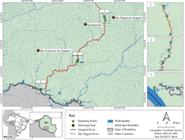
Sampling sites for fish and collection of limnological data along the São Miguel River, Rondônia state, Amazon basin, Brazil. (1) Upper (E1, E2, E3 and E4), (2) middle (E5, E6, E7 and E8), and (3) lower (E9, E10, E11, and E12) river sections.
The river is situated in a region with a hot, humid tropical climate, predominantly covered by open ombrophilous forest vegetation, with environmental variations temporally determined by the hydrological cycle. Seasonality in the region is pronounced, highlighting the peaks of high-water periods from January to June and low-water periods from July to December (Fig. 2). During high-water periods, average regional temperature and precipitation are 25.4°C and 237.8 mm, respectively, while during low-water periods these values are 26.6°C and 63 mm (Bezerra-Neto et al., 2024).

Variation in the water levels of the São Miguel River, Madeira River sub-basin, during 2021, Amazon basin, Brazil.
Sampling
Sampling was conducted during high-water and low-water periods, from August 2020 to July 2021 at 12 sampling stations, with four stations located in each river section (upper, middle, and mouth), totaling 24 samples. The upper section of the São Miguel River is formed by the confluence of the Jurupari and Xiputaia rivers and receives input from small tributaries. The average width of the upper section is 10.6 meters, with an elevation of 166 meters above sea level. The middle section has an intermediate width (53 meters) and an elevation of 155 meters, while the river mouth is the widest section along the longitudinal gradient, with an average width of 70 meters and an elevation of 139 meters. During low-water periods, extensive sandbanks form in the upper section. In the high-water period, water volume increases and the river overflows into marginal areas, flooding adjacent vegetation. In the middle section and in the river mouth, patches of floating and rooted herbaceous plants are present.
Fish were captured using a set of gill nets (2.5-m height and 20-m length) with mesh sizes of 40, 60, 80, 100, 120, and 180 mm between opposite knots, tied in series. The nets remained submerged for 48 hours at each sampling station, with inspections every 6 hours to remove individuals. After capture, the fish were euthanized, fixed in a 10% formalin solution, and transported to the Aquaculture and Fisheries Laboratory at Universidade Federal de Rondônia. Limnological variables—temperature (°C), dissolved oxygen (mg/L), pH, and electrical conductivity (µS/cm)—were measured at all the sampling stations during high- and low-water periods using a multiparameter probe. In the laboratory, the specimens were identified to the lowest possible taxonomic level and preserved in 70% ethanol. Taxonomic classification followed Fricke et al. (2025).
Data collection and euthanasia of the fish were authorized by the Biodiversity Authorization and Information System (SISBio number 75092-1) and approved by the Ethics Committee for Animal Use of Universidade Federal de Rondônia (number 006/2020). Fish were euthanized using a benzocaine solution (100 mg/L).
Statistical analyses
To evaluate the structure and composition of the ichthyofauna in the different stretches of the São Miguel River, the values of total abundance of the fish samples (N), the species richness (S), the Shannon diversity index (H) (Shannon & Weaver, 1949), and the Pielou Evennes (J) (Magurran, 1988) were calculated, considering the grouping of the data for the entire river, by stretches and seasonality.
To assess the variations in limnological data (electrical conductivity, dissolved oxygen, pH, and water temperature) along the spatial gradient, a principal component analysis (PCA) was performed. Since the variables were measured in different units, all except pH were standardized using Z-score transformation (Gotelli & Ellison, 2013). Limnological variables were subjected to Pearson correlation tests and variance inflation factor (VIF) analysis to assess multicollinearity. Correlation values (r2 < 0.4) and VIF (< 2) were considered low, indicating absence of collinearity among the variables.
The effects of spatial factors (river sections) and temporal factors (hydrological periods), their interaction, and limnological variables on the taxonomic composition of fish assemblages were evaluated using a model-based multivariate approach with the mvabund package (Wang et al., 2012; Warton et al., 2015). The mvabund package applies simultaneous generalized linear models via the manyglm function, which specifies the mean–variance relationship of the data. For fish abundance data, a Poisson distribution with log link function was used (confirmed through residual inspection during model validation). A multivariate model was fitted with the following structure: manyglm (response variable ~ hydrological period + river section + interaction between hydrological period and river section + electrical conductivity + pH + dissolved oxygen + temperature, family = Poisson).
Prior to applying multivariate models, scatterplots and simple Pearson correlation tests were used to evaluate possible linear relationships among limnological variables. All correlations were below 0.4, so all variables were retained for analysis. VIF values remained below 2 in all cases, indicating the absence of multicollinearity among the variables (Borcard et al., 2011).
A non-metric multidimensional scaling ordination based on a Bray-Curtis dissimilarity matrix was performed to visualize variations in the taxonomic composition of the fish assemblages among river sections and hydrological periods. To assess the effects of limnological variables on taxonomic composition, a redundancy analysis (RDA) was conducted. For the RDA, abundance values in the biological matrix were Hellinger-transformed. The same environmental matrix, standardized by Z-score, was used in the RDA. All the statistical analyses were performed using RStudio version 4.1.1 (R Core Team, 2023).
RESULTS
Together, the first two PCA axes explained 83.59% of the environmental variation, with axis 1 accounting for 49.14% and axis 2 for 34.45%. Axis 1 showed a strong positive correlation with dissolved oxygen (loading = 0.843) and a negative correlation with water temperature (loading = -0.910), while axis 2 exhibited a high negative correlation with electrical conductivity (loading = -0.966). Regarding pH, observed correlation values with the axes were relatively low (Fig. 3; Table 1). Some variables did not show a clear pattern across space and time in the São Miguel River, such as electrical conductivity, which presented mean values with little variation between upper and middle sections during the high-water period (Fig. 3; Table 2).
Summary of the principal component analysis (PCA) results based on limnological variables along the São Miguel River, Amazon basin, Brazil.
Mean values and standard deviations of environmental variables measured during high- and low-water periods in the upper and middle sections and in the river mouth of the São Miguel River, Amazon basin, Brazil.
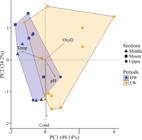
Biplot of the principal component analysis showing the relationship between limnological variables (electrical conductivity [Cond], dissolved oxygen [OxyD], temperature [Temp], and pH) and fish sampling sections (upper, middle, and river mouth) in the São Miguel River, Amazon basin, Brazil.
Mean dissolved oxygen concentrations were higher during the low-water period, especially in the upper section, whereas during the high-water period the values were lower, particularly in the middle section (Table 2). Water temperature during the low-water period showed greater variability in mean values among sections; however, during the high-water period these values were more similar, ranging between 27.50 ± 0.91°C and 28.33 ± 1.07°C (Table 2). pH showed moderate variation between periods and sections, with means ranging from 5.97 ± 0.84 to 7.03 ± 0.33 (Table 2).
A total of 1,136 fish were captured, representing eight orders, 27 families and 121 species (Table 3). Thus, when considering the cumulative number of species for both periods (low-water and high-water), the river has high species richness (S = 121), high diversity (H = 3.914), and good evenness (J = 0.816). However, when checking the distribution and abundance of species along the river, it was found that the upper section presented lower richness (S = 54 species) when compared to the middle stretch of the river, but the Shannon index was relatively high (H = 3.498) with high evenness (J = 0.876), while the middle section showed the highest richness among the stretches (S = 80 species), and the highest Shannon index (H = 3.737) with high evenness (J = 0.852). The river mouth had shown the lowest richness (S = 51 species), the lowest Shannon index (H = 2.993), and the lowest evenness (0.761) among the river stretches.
Taxonomic composition and abundance of fish species collected along different sections of the São Miguel River, Brazil, during the high-water (HW) and low-water (LW) periods.
When the distributions of fish species were analyzed by seasonal periods, it was found that the highest species richness was recorded during the low-water period in the middle section (S = 54) and at the river mouth (S = 38), though the upper section was richer during the high-water period (S = 40). Along the river gradient, the composition of the most abundant species varied according to river section and hydrological period. In the upper section, during the high-water period, Serrasalmus rhombeus (n = 25), Ageneiosus vittatus (n = 23) and Auchenipterichthys thoracatus (n = 17) were abundant. During the low-water period, Hemiodontichthys acipenserinus (n = 16), Hoplias malabaricus, Tetragonopterus argenteus, and Sturisoma lyra were more representative in this section, with seven individuals each. In the middle section, during high water, the most abundant species were Tympanopleura atronasus (n = 42), Psectrogaster amazonica (n = 37) and Ageneiosus inermis (n = 31). During low water, Pygocentrus nattereri (n = 47), S. rhombeus (n = 36), and Triportheus albus (n = 23) were the most recorded. In contrast, at the river mouth, during high water, A. thoracatus (n = 17), Serrasalmus spilopleura (n = 14) and A. inermis (n = 9) showed the highest abundances. During low water, S. rhombeus (n = 77) and P. nattereri (n = 34) were the most common species (Table 3).
The fish assemblages exhibited a clear seasonal pattern, with variations in species composition among different river sections and a significant effect of limnological variables (Table 4; Fig. 4). Both hydrological periods (LR = 867.20; p < 0.001) and river section (LR = 1,047.50; p < 0.01) were significant factors, as was their interaction (LR = 241.80; p = 0.01). The multivariate model explained 39% of the variability in fish abundance, with 18% attributed to spatial and seasonal factors (river section and hydrological periods) and 21% to limnological variables.
Summary of the multivariate model for taxonomic composition of fish assemblages in the São Miguel River, Amazon basin, Brazil. Values in bold indicate statistical significance (p < 0.05).
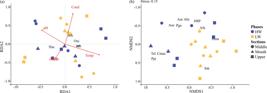
(a) Redundancy analysis (RDA) comparing fish species structure with explanatory limnological variables. (b) Nonmetric multidimensional scaling (NMDS) based on taxonomic structure of the fish assemblages in the São Miguel River.
Limnological variables influenced the occurrence of certain species. T. atronasus and A. ucayalensis were associated with higher pH values. H. acipenserinus and H. malabaricus correlated with dissolved oxygen gradients, while S. rhombeus, P. altipinnis, O. niger, and A. thoracatus were more abundant in areas with higher electrical conductivity and temperature (Fig. 4a). Regarding spatiotemporal distribution, T. auritus, C. macropterus, and P. pirinampu were associated with the river mouth and upper section during the high-water period. The catfish species A. ucayalensis, T. atronasus, A. inermis, and Parauchenipterus galeatus, and the hemiodontid Hemiodus sp. were abundant in the middle section during high water, while A. falcirostris and P. punctifer were associated with this section during low water. The piscivores S. rhombeus and H. malabaricus showed a broad distribution in all sections during the river’s low-water period (Fig. 4b).
DISCUSSION
The fish assemblages exhibited spatial and temporal variations associated with local environmental variables. Although explicit longitudinal limnological variations were not observed, our hypothesis was confirmed, revealing that changes induced by the flood pulse and local environmental variables affect fish occurrence and taxonomic composition. Seasonality is considered a key factor in environmental modulations, as it influences physical dimensions of the environment, affecting river depth, width, and limnological parameters, which are determinants for structuring fish assemblages in the neotropical region (Rodríguez & Lewis, 1997; Sousa et al., 2017).
Environmental variation along river systems provides a mosaic of heterogeneous habitats that allow colonization by different fish species and generate diversity gradients (Oberdorff et al., 2019; Trujillo-Jiménez et al., 2010). In the present study, the results showed that in the middle section of the river, the highest values of species richness, diversity, and evenness occurred, which suggests a more heterogeneous environment favorable to aquatic biodiversity (Teresa et al., 2021). Also, this occurs because, along the longitudinal gradient from the upper section to the mouth, there is an increase in environmental stability and trophic resources, which are essential for increasing the number of species (Vannote et al., 1980), which have a more balanced distribution of individuals among them, favoring ecological interactions and ecosystem stability (Miranda et al., 2022). In the upper and mouth regions, the values of the diversity indices were lower, indicating that these places are less diverse environments with the dominance of few species, which may be the result of more restrictive environmental conditions or greater ecological specialization (Benone & Montag, 2021).
As such, the middle regions of the São Miguel River act as “transition zones” that accumulate the diversity of habitats at both extremities of the river, providing the ideal conditions to sustain the greatest number of fish species (Pavanelli & Caramaschi, 2003). For example, species richness and fish community structure can be influenced by altitude, energy input into the system, geomorphology and limnological characteristics (Carvalho & Tejerina-Garro, 2015; Jackson et al., 2001; Siqueira-Souza et al., 2021). These patterns are consistent and affect assemblage dynamics in rivers of tropical and temperate regions (Thorp et al., 2006).
Although the limnological variables did not exhibit clear spatial and temporal variation, the discrete modulations observed may be associated with the position of the basin, as well as the flood pulse, which is modulated by hydrometric fluctuations. The presence of tributaries along the upper section may have favored higher dissolved oxygen values than in other sections, since factors such as greater depth and flow velocity increase dissolved oxygen concentrations (Affonso et al., 2015; Roberto et al., 2009). Moreover, the higher pH values in the upper section and increased electrical conductivity at the river mouth are related to carbon dioxide removal through photosynthetic processes, input of organic matter and nutrients, and geological formation. These factors are directly linked to the regulation of dissolved ions in the water, such as pH and electrical conductivity, since dissolved carbonates from geological formations increase pH and conductivity values (Fernandes et al., 2015; Leite et al., 2011).
Furthermore, reactions caused by changes in water temperature can also occur due to shading of the riverbanks, which influences the pH values. Although the main effect of shading is on temperature, it can interfere in other chemical processes in the environment as well, such as electrical conductivity (Broadmeadow et al., 2011). Additionally, higher electrical conductivity values at river mouth sections reflect greater input of organic matter and nutrients, along with the influence of geological characteristics and lowland drainage, which increase ionic load (Leite et al., 2011).
The fish assemblages of the São Miguel River were similar to those found in other regions of the Amazon basin, with a broad dominance of Characiformes and Siluriformes (Oberdorff et al., 2019; Siqueira-Souza et al., 2021; Sousa et al., 2017; Torrente‐Vilara et al., 2011). Species richness was high, with 121 species recorded, indicating that this river system harbors a rich diversity of species. This high richness is associated with the large size and hybrid nature of the Madeira River sub-basin, i.e., the complex combination of hydrogeochemical, biogeographical, and evolutionary factors, which is considered the most diverse in the Amazon. Furthermore, factors such as high spatial heterogeneity and areas of endemism associated with geographic and hydrological barriers along longitudinal gradients influence species diversity and richness in this sub-basin (Dagosta & Pinna, 2017, 2019). In particular, the occurrence of widely distributed species in the Amazon basin, such as generalist Characiformes and Siluriformes, may be related to the absence of hydrological or geological barriers in this river system. Thus, this reflects a high seasonal fluvial connectivity in the São Miguel River in contrast to other regions of the Madeira River sub-basin (Dagosta & Pinna, 2019).
The presence of a longitudinal gradient of environmental variables along the river, influenced by seasonal dynamics, provides conditions for the establishment of distinct assemblages from the upper section to the river mouth. However, some species, such as Ageneiosus spp., S. rhombeus and P. nattereri, exhibit opportunistic and carnivorous/piscivorous traits that allow them to coexist and exploit diverse habitats along the river system, employing specific strategies to avoid competition under different environmental conditions (Andrade et al., 2024; Zuanon & Ferreira, 2008).
The piscivores S. rhombeus and H. malabaricus showed a homogeneous distribution in the river sections during the low-water period, indicating no spatial segregation. The higher abundance and occurrence of these fish during low-water periods are associated with increased food resource availability, as reduced water levels result in greater prey concentration within the aquatic system, favoring successful capture by piscivores (Barbosa et al., 2018; Luz-Agostinho et al., 2008). In addition to hydrological variation, spatial factors also influence the structure and feeding habits of piscivorous fish. Bezerra-Neto et al. (2024) analyzed the distribution and feeding patterns of piranha species in the São Miguel River and observed that species of piranhas from the middle and river mouth sections exhibited greater dietary similarity than when compared to those from the upper section. The higher occurrence of H. acipenserinus and S. lyra in the upper section during the low-water period may be caused by their feeding habits. These species prefer sandy substrates with coarser detritus and feed on decomposing organic matter and microcrustaceans (Teixeira et al., 2005). These findings support the RCC, which predicts a trophic gradient of species along the upstream-downstream direction in river systems.
Hydrological fluctuations associated with the flood pulse affect fish species turnover. However, species distribution and resource availability vary due to diverse processes occurring at different scales (Humphries et al., 2014). The higher occurrence of catfishes of the family Auchenipteridae during the high-water period in the middle section may be related to food resource availability, as these fish primarily consume allochthonous items, although they exhibit dietary plasticity throughout the seasonal cycle (Freitas et al., 2017, 2022). Furthermore, during the high-water period, connectivity between river channels and their tributaries increases, resulting in the expansion of the aquatic habitat, which allows greater species dispersal and promotes foraging and migration processes (Duponchelle et al., 2021; Silva et al., 2021).
In other South American and African river systems, hydrological seasonality plays a similar role in structuring fish assemblages as observed in the São Miguel River. This indicates that factors that influence the spatial and temporal distribution patterns of São Miguel’s ichthyofauna are not exclusive to the Amazon basin but are part of recurring patterns in tropical rivers. Hydrological connectivity caused by the flood pulse maximizes ichthyofauna movements to different habitats (tributaries, floodplains, and the main river channel), creating an ecological mosaic that shapes species occurrence patterns (Winemiller & Jepsen, 1998).
Fish assemblages respond to changes in landscape components, which are directly related to different phases of the hydrological cycle (Freitas et al., 2018). Furthermore, the structure of these assemblages is influenced by local and regional limnological variables (Arantes et al., 2018; Röpke et al., 2016;
Silva et al., 2021). The flood pulse has a direct effect on limnological parameters, causing variations between high- and low-water periods (Melo et al., 2009; Röpke et al., 2016). In our study, pH, dissolved oxygen, electrical conductivity, and water temperature directly influenced species’ occurrence. Similar results were reported by Sousa et al. (2022), who investigated fish distribution in a lacustrine environment on the right bank of the Madeira River, observing that oxygen, milder temperatures, higher conductivity, and pH values were crucial for species occurrence during different hydrological periods.
Fish assemblage structure is related, at different levels, to physicochemical variables, such as turbidity, conductivity and pH, with different species adapted to specific environmental and landscape conditions (Bogotá-Gregory et al., 2020; Sambora et al., 2023). In the São Miguel River, greater pH gradients favored the occurrence of T. atronasus and A. ucayalensis. Conversely, H. acipenserinus and H. malabaricus were associated with dissolved oxygen concentrations, while higher values of electrical conductivity and temperature influenced S. rhombeus, P. altipinnis, O. niger, and A. thoracatus. The observed results demonstrated that the influence of environmental variables on fish assemblage structure is a consistent pattern in neotropical river systems (Arantes et al., 2018; Costa et al., 2021), highlighting the importance of local factors in the formation of communities.
CONCLUSION
We demonstrated that the RCC and FPC concepts are fundamental for understanding spatial and temporal variations in the fish assemblages of the São Miguel River, reflecting processes that occur in other tropical river systems. Although these two processes play essential ecological roles in the maintenance and structuring of fish communities, they may be negatively impacted by increasing anthropogenic pressures and climate change on local, regional, and global scales (Freitas et al., 2024; Melack & Coe, 2021; Sousa et al., 2022). High fish diversity is influenced by RCC and FPC, and different environmental factors affect species turnover and nestedness. Moreover, they indicate a remarkable and stable balance in the structure of fish assemblages in this fluvial ecosystem.
ACKNOWLEDGMENTS
The authors thank the support received from the Associação dos Pescadores Esportivos e de Preservação Ambiental do Rio São Miguel and Mr. Ailton R. de Castro from the Z-12 fishing colony for the logistical and personnel support during the field collections.
-
FUNDING
Fundação Rondônia de Amparo ao Desenvolvimento das Ações Científicas e Tecnológicas e Pesquisa do Estado de RondôniaGrant No.: 0012.000162/2025-75Conselho Nacional de Desenvolvimento Científico e TecnológicoGrant No.: #18/2020-CNPq
DATA STATEMENT AVAILABILITY
All data used in this study are included in this article. Additional information is available from the authors upon request.
REFERENCES
-
Affonso, A. G., Queiroz, H. L., & Novo, E. M. L. M. (2015). Abiotic variability among different aquatic systems of the central Amazon floodplain during drought and flood events. Brazilian Journal of Biology, 75(4 Suppl. 1), 60-69. https://doi.org/10.1590/1519-6984.04214
» https://doi.org/10.1590/1519-6984.04214 -
Altermatt, F., & Fronhofer, E. A. (2018). Dispersal in dendritic networks: Ecological consequences on the spatial distribution of population densities. Freshwater Biology, 63(1), 22-32. https://doi.org/10.1111/fwb.12951
» https://doi.org/10.1111/fwb.12951 -
Andrade, F. S., Possamai, B., Freitas, C. E. C., Batista, J. S., Hoeinghaus, D. J., Clements, L., & Siqueira-Souza, F. K. (2024). Niche partitioning and seasonality may mediate coexistence of piranha species in Amazonian floodplain lakes. Hydrobiologia, 851(18), 4325-4340. https://doi.org/10.1007/s10750-024-05536-z
» https://doi.org/10.1007/s10750-024-05536-z -
Arantes, C. C., Winemiller, K. O., Petrere, M., Castello, L., Hess, L. L., & Freitas, C. E. C. 2018. Relationships between forest cover and fish diversity in the Amazon River floodplain. Journal of Applied Ecology, 55(1), 386-395. https://doi.org/10.1111/1365-2664.12967
» https://doi.org/10.1111/1365-2664.12967 -
Barbosa, T. A. P., Rosa, D. C. O., Soares, B. E., Costa, C. H. A., Esposito, M. C., & Montag, L. F. A. (2018). Effect of flood pulses on the trophic ecology of four piscivorous fishes from the eastern Amazon. Journal of Fish Biology, 93(1), 30-39. https://doi.org/10.1111/jfb.13669
» https://doi.org/10.1111/jfb.13669 -
Benone, N. L., & Montag, L. F. A. (2021). Métodos quantitativos para mensurar a diversidade taxonômica em peixes de riacho. Oecologia Australis, 25(2), 398-414. https://doi.org/10.4257/oeco.2021.2502.11
» https://doi.org/10.4257/oeco.2021.2502.11 -
Bezerra-Neto, E. B., Sousa, R. G. C., Alves, J. A., & Faria-Junior, C. H. (2024). Diet and seasonal distribution of piranha populations in the São Miguel River, Rondônia, Brazil. Boletim do Instituto de Pesca, 50, e924. https://doi.org/10.20950/1678-2305/bip.2024.50.e926
» https://doi.org/10.20950/1678-2305/bip.2024.50.e926 -
Bogotá-Gregory, J. D., Lima, F. C. T., Correa, S. B., Silva-Oliveira, C., Jenkins, D. G., Ribeiro, F. R. V., & Crampton, W. G. R. (2020). Biogeochemical water type influences community composition, species richness, and biomass in megadiverse Amazonian fish assemblages. Scientific Reports, 10(1), 15349. https://doi.org/10.1038/s41598-020-72349-0
» https://doi.org/10.1038/s41598-020-72349-0 -
Borcard, D., Gillet, F., & Legendre, P. (2011). Numerical ecology with R Springer. https://doi.org/10.1007/978-1-4419-7976-6
» https://doi.org/10.1007/978-1-4419-7976-6 -
Broadmeadow, S. B., Jones, J. G., Langford, T. E. L., Shaw, P. J., & Nisbet, T. R. (2011). The influence of riparian shade on lowland stream water temperatures in Southern England and their viability for brown trout. River Research and Applications, 27(2), 226-237. https://doi.org/10.1002/rra.1354
» https://doi.org/10.1002/rra.1354 -
Cajado, R. A., Oliveira, L. S., Corrêa, J. M. S., Silva-Cajado, F. K. S., & Zacardi, D. M. (2025). Seasonal hydrology shapes the taxonomic and functional diversity of fish associated with aquatic macrophytes in a neotropical floodplain lake. Aquatic Sciences, 87(2), 52. https://doi.org/10.1007/s00027-025-01179-x
» https://doi.org/10.1007/s00027-025-01179-x -
Carvalho, R. A., & Tejerina‐Garro, F. L. (2015). Environmental and spatial processes: What controls the functional structure of fish assemblages in tropical rivers and headwater streams? Ecology of Freshwater Fish, 24(2), 317-328. https://doi.org/10.1111/eff.12152
» https://doi.org/10.1111/eff.12152 -
Costa, I. D., Nunes, N. N. S., & Freitas, C. E. C. (2021). Factors determining the structure of fish assemblages in Tarumã River, Jaru Biological Reserve, Machado River drainage, Northern Brazil. Neotropical Ichthyology, 19(4), e200111. https://doi.org/10.1590/1982-0224-2020-0111
» https://doi.org/10.1590/1982-0224-2020-0111 -
Curtis, W. J., Gebhard, A. E., & Perkin, J. S. (2018). The river continuum concept predicts prey assemblage structure for an insectivorous fish along a temperate riverscape. Freshwater Science, 37(3), 618-630. https://doi.org/10.1086/699013
» https://doi.org/10.1086/699013 -
Dagosta, F. C. P., & Pinna, M. D. (2017). Biogeography of Amazonian fishes: Deconstructing river basins as biogeographic units. Neotropical Ichthyology, 15(3), e170034. https://doi.org/10.1590/1982-0224-20170034
» https://doi.org/10.1590/1982-0224-20170034 -
Dagosta, F. C. P., & Pinna, M. D. (2019). The fishes of the amazon: Distribution and biogeographical patterns, with a comprehensive list of species. Bulletin of the American Museum of Natural History, 2019(431), 1-163. https://doi.org/10.1206/0003-0090.431.1.1
» https://doi.org/10.1206/0003-0090.431.1.1 -
Doretto, A., Piano, E., & Larson, C. E. (2020). The River Continuum Concept: lessons from the past and perspectives for the future. Canadian Journal of Fisheries and Aquatic Sciences, 77(11), 1853-1864. https://doi.org/10.1139/cjfas-2020-0039
» https://doi.org/10.1139/cjfas-2020-0039 -
Duarte, C., Antão, L. H., Magurran, A. E., & Deus, C. P. (2022). Shifts in fish community composition and structure linked to seasonality in a tropical river. Freshwater Biology, 67(10), 1789-1800. https://doi.org/10.1111/fwb.13975
» https://doi.org/10.1111/fwb.13975 -
Duponchelle, F., Isaac, V. J., Doria, C. R. D. C., Van Damme, P. A., Herrera-R, G. A., Anderson, E. P., Cruz, R. E. A., Hauser, M., Hermann, T. W., Agudelo, E., Bonilla-Castillo, C., Barthem, R., Freitas, C. E. C., García-Dávila, C., García-Vasquez, A., Renno, J.-F., & Castello, L. (2021). Conservation of migratory fishes in the Amazon basin. Aquatic Conservation: Marine and Freshwater Ecosystems, 31(5), 1087-1105. https://doi.org/10.1002/aqc.3550
» https://doi.org/10.1002/aqc.3550 -
Fernandes, I., Penha, J., & Zuanon, J. (2015). Size-dependent response of tropical wetland fish communities to changes in vegetation cover and habitat connectivity. Landscape Ecology, 30(8), 1421-1434. https://doi.org/10.1007/s10980-015-0196-2
» https://doi.org/10.1007/s10980-015-0196-2 -
Freitas, C. E. C., Hurd, L. E., Andrade, B. S., Mereles, M. A., & Siqueira-Souza, F. K. (2024). Anthropogenic climate change is a present and future stressor for fish communities in the Amazon Basin. In S. S. Souza, S. Braz-Mota & L. Val (eds.), The Future of Amazonian Aquatic Biota (pp. 3-24). Springer. https://doi.org/10.1007/978-3-031-66822-7_1
» https://doi.org/10.1007/978-3-031-66822-7_1 -
Freitas, C. E. C., Laurenson, L., Yamamoto, K. C., Forsberg, B. R., Petrere, M., Arantes, C. C., & Siqueira-Souza, F. K. (2018). Fish species richness is associated with the availability of landscape components across seasons in the Amazonian floodplain. PeerJ, 6, e5080. https://doi.org/10.7717/peerj.5080
» https://doi.org/10.7717/peerj.5080 -
Freitas, T. M. S., Montag, L. F. A., & Barthem, R. B. (2017). Distribution, feeding and ecomorphology of four species of Auchenipteridae (Teleostei: Siluriformes) in Eastern Amazonia, Brazil. Iheringia. Série Zoologia, 107, e2017008. https://doi.org/10.1590/1678-4766e2017008
» https://doi.org/10.1590/1678-4766e2017008 -
Freitas, T. M. S., Prudente, B. S., & Montag, L. F. A. (2022). Flood pulse influence on the feeding ecology of two Amazonian auchenipterid catfishes. Neotropical Ichthyology, 20(1), e210103. https://doi.org/10.1590/1982-0224-2021-0103
» https://doi.org/10.1590/1982-0224-2021-0103 -
Fricke, R., Eschmeyer, W. N., & Van der Laan, R. (2025). Eschmeyer’s catalog of fishes: genera, species, references. Retrieved from https://researcharchive.calacademy.org/research/ichthyology/catalog/fishcatmain.asp
» https://researcharchive.calacademy.org/research/ichthyology/catalog/fishcatmain.asp - Gotelli, N. J., & Ellison, A. M. (2013). A primer of ecological statistics (2nd ed.). Sinauer Associates.
-
Graaf, G. (2003). The flood pulse and growth of floodplain fish in Bangladesh. Fisheries Management and Ecology, 10(4), 241-247. https://doi.org/10.1046/j.1365-2400.2003.00341.x
» https://doi.org/10.1046/j.1365-2400.2003.00341.x -
Humphries, P., Keckeis, H., & Finlayson, B. (2014). The river wave concept: Integrating river ecosystem models. BioScience, 64(10), 870-882. https://doi.org/10.1093/biosci/biu130
» https://doi.org/10.1093/biosci/biu130 -
Hurd, L. E., Sousa, R. G. C., Siqueira-Souza, F. K., Cooper, G. J., Kahn, J. R., & Freitas, C. E. C. (2016). Amazon floodplain fish communities: Habitat connectivity and conservation in a rapidly deteriorating environment. Biological Conservation, 195, 118-127. https://doi.org/10.1016/j.biocon.2016.01.005
» https://doi.org/10.1016/j.biocon.2016.01.005 -
Isaac, V. J., Castello, L., Santos, P. R. B., & Ruffino, M. L. (2016). Seasonal and interannual dynamics of river-floodplain multispecies fisheries in relation to flood pulses in the Lower Amazon. Fisheries Research, 183, 352-359. https://doi.org/10.1016/j.fishres.2016.06.017
» https://doi.org/10.1016/j.fishres.2016.06.017 -
Jackson, D. A., Peres-Neto, P. R., & Olden, J. D. (2001). What controls who is where in freshwater fish communities – the roles of biotic, abiotic, and spatial factors. Canadian Journal of Fisheries and Aquatic Sciences, 58(1), 157-170. https://doi.org/10.1139/f00-239
» https://doi.org/10.1139/f00-239 - Junk, W. J., Bayley, P. B., & Sparks, R. E. (1989). The flood pulse concept in river-floodplain systems. Canadian Journal of Fisheries and Aquatic Sciences, 106(1), 110-127.
-
Leite, N. K., Krusche, A. V., Ballester, M. V. R., Victoria, R. L., Richey, J. E., & Gomes, B. M. (2011). Intra and interannual variability in the Madeira River water chemistry and sediment load. Biogeochemistry, 105(1-3), 37-51. https://doi.org/10.1007/s10533-010-9568-5
» https://doi.org/10.1007/s10533-010-9568-5 -
Liu, Y., Zhang, M., Peng, W., Wu, N., Qu, X., Yu, Y., Zhang, Y., & Yang, C. (2021). The effects of flood pulse on multiple aquatic organisms in a seasonal shallow lake. Aquatic Ecology, 55, 379-399. https://doi.org/10.1007/s10452-020-09829-y
» https://doi.org/10.1007/s10452-020-09829-y -
Luz-Agostinho, K. D. G., Agostinho, A. A., Gomes, L. C., & Júlio Jr., H. F. (2008). Influence of flood pulses on diet composition and trophic relationships among piscivorous fish in the upper Paraná River floodplain. Hydrobiologia, 607(1), 187-198. https://doi.org/10.1007/s10750-008-9390-4
» https://doi.org/10.1007/s10750-008-9390-4 -
Magurran, A. E. (1988). Ecological diversity and its measurements. Princeton University Press. https://doi.org/10.1007/978-94-015-7358-0
» https://doi.org/10.1007/978-94-015-7358-0 -
Melack, J. M., & Coe, M. T. (2021). Amazon floodplain hydrology and implications for aquatic conservation. Aquatic Conservation: Marine and Freshwater Ecosystems, 31(5), 1029-1040. https://doi.org/10.1002/aqc.3558
» https://doi.org/10.1002/aqc.3558 -
Melo, T. L., Tejerina-Garro, F. L., & Melo, C. E. (2009). Influence of environmental parameters on fish assemblage of a neotropical river with a flood pulse regime, Central Brazil. Neotropical Ichthyology, 7(3), 421-428. https://doi.org/10.1590/S1679-62252009000300009
» https://doi.org/10.1590/S1679-62252009000300009 -
Meyer, J. L., Strayer, D. L., Wallace, J. B., Eggert, S. L., Helfman, G. S., & Leonard, N. E. (2007). The contribution of headwater streams to biodiversity in river networks. Journal of the American Water Resources Association, 43(1), 86-103. https://doi.org/10.1111/j.1752-1688.2007.00008.x
» https://doi.org/10.1111/j.1752-1688.2007.00008.x -
Miranda, R., Rios-Touma, B., Falconí-López, A., Pino-del-Carpio, A., Gaspar, S., Ortega, H., Peláez-Rodríguez, M., Araujo-Flores, J. M., & Tobes, I. (2022). Evaluating the influence of environmental variables on fish assemblages along Tropical Andes: Considerations from ecology to conservation. Hydrobiologia, 849(20), 4569-4585. https://doi.org/10.1007/s10750-021-04726-3
» https://doi.org/10.1007/s10750-021-04726-3 -
Oberdorff, T., Dias, M. S., Jézéquel, C., Albert, J. S., Arantes, C. C., Bigorne, R., Carvajal-Valleros, F. M., De Wever, A., Frederico, R. G., Hidalgo, M., Hugueny, B., Leprieur, F., Maldonado, M., Maldonado-Ocampo, J., Martens, K., Ortega, H., Sarmiento, J., Tedesco, P. A., Torrente-Vilara, G., Winemiller, K. O., & Zuanon, J. (2019). Unexpected fish diversity gradients in the Amazon basin. Science Advances, 5(9), eaav8681. https://doi.org/10.1126/sciadv.aav8681
» https://doi.org/10.1126/sciadv.aav8681 -
Oliveira, L. S., Cajado, R. A., Santos, L. R. B., Suzuki, M. A. L., & Zacardi, D. M. (2020). Bancos de macrófitas aquáticas como locais de desenvolvimento das fases iniciais de peixes em várzea do baixo amazonas. Oecologia Australis, 24(3), 644-660. https://doi.org/10.4257/oeco.2020.2403.09
» https://doi.org/10.4257/oeco.2020.2403.09 -
Pavanelli, C. S., & Caramaschi, E. P. (2003). Temporal and spatial distribution of the ichthyofauna in two streams of the upper Rio Paraná Basin. Brazilian Archives of Biology and Technology, 46(2), 271-280. https://doi.org/10.1590/S1516-89132003000200019
» https://doi.org/10.1590/S1516-89132003000200019 -
Penha, J., Landeiro, V. L., Ortega, J. C. G., & Mateus, L. (2017). Interchange between flooding and drying, and spatial connectivity control the fish metacommunity structure in lakes of the Pantanal wetland. Hydrobiologia, 797(1), 115-126. https://doi.org/10.1007/s10750-017-3164-9
» https://doi.org/10.1007/s10750-017-3164-9 -
Poole, G. C. (2002). Fluvial landscape ecology: Addressing uniqueness within the river discontinuum. Freshwater Biology, 47(4), 641-660. https://doi.org/10.1046/j.1365-2427.2002.00922.x
» https://doi.org/10.1046/j.1365-2427.2002.00922.x -
R Core Team (2023). R: A Language and Environment for Statistical Computing (Version 4.2.1) [Computer Software]. R Foundation for Statistical Computing. Retrieved from https://www.R-project.org/
» https://www.R-project.org/ -
Reis, V., Hermoso, V., Hamilton, S. K., Bunn, S. E., & Linke, S. (2019). Conservation planning for river-wetland mosaics: A flexible spatial approach to integrate floodplain and upstream catchment connectivity. Biological Conservation, 236, 356-365. https://doi.org/10.1016/j.biocon.2019.05.042
» https://doi.org/10.1016/j.biocon.2019.05.042 -
Roberto, M. C., Santana, N. F., & Thomaz, S. M. (2009). Limnology in the Upper Paraná River floodplain: Large-scale spatial and temporal patterns, and the influence of reservoirs. Brazilian Journal of Biology, 69(2 Suppl.), 717-725. https://doi.org/10.1590/S1519-69842009000300025
» https://doi.org/10.1590/S1519-69842009000300025 -
Rodríguez, M. A., & Lewis, W. M. (1997). Structure of fish assemblages along environmental gradients in floodplain lakes of the orinoco river. Ecological Monographs, 67(1),109-128. https://doi.org/10.1890/0012-9615(1997)067[0109:SOFAAE]2.0.CO;2
» https://doi.org/10.1890/0012-9615(1997)067[0109:SOFAAE]2.0.CO;2 -
Röpke, C., Pires, T. H., Zuchi, N., Zuanon, J., & Amadio, S. (2022). Effects of climate-driven hydrological changes in the reproduction of Amazonian floodplain fishes. Journal of Applied Ecology, 59(4), 1134-1145. https://doi.org/10.1111/1365-2664.14126
» https://doi.org/10.1111/1365-2664.14126 -
Röpke, C. P., Amadio, S. A., Winemiller, K. O., & Zuanon, J. (2016). Seasonal dynamics of the fish assemblage in a floodplain lake at the confluence of the Negro and Amazon Rivers. Journal of Fish Biology, 89(1), 194-212. https://doi.org/10.1111/jfb.12791
» https://doi.org/10.1111/jfb.12791 -
Sambora, L. C. F., Aguiar-Santos, J., Siqueira-Souza, F. K., & Freitas, C. E. C. (2023). Influence of abiotic factors on the composition of fish assemblages in the Aracá-Demeni sub-basin of the middle Negro River. Brazilian Journal of Biology, 83, e274100. https://doi.org/10.1590/1519-6984.274100
» https://doi.org/10.1590/1519-6984.274100 - Shannon, C. E., & Weaver, W. (1949). The mathematical theory of communication University of Illinois Press.
-
Silva, P. B., Arantes, C. C., Freitas, C. E. C., Petrere, M., & Ribeiro, F. R. V. (2021). Seasonal hydrology and fish assemblage structure in the floodplain of the lower Amazon River. Ecology of Freshwater Fish, 30(2), 162-173.https://doi.org/10.1111/eff.12572
» https://doi.org/10.1111/eff.12572 -
Siqueira-Souza, F. K., Freitas, C. E. C., Hurd, L. E., & Petrere, M. (2016). Amazon floodplain fish diversity at different scales: Do time and place really matter? Hydrobiologia, 776(1), 99-110. https://doi.org/10.1007/s10750-016-2738-2
» https://doi.org/10.1007/s10750-016-2738-2 -
Siqueira-Souza, F. K., Hurd, L. E., Yamamoto, K. C., Soares, M. G. M., Cooper, G. J., Kahn, J. R., & Freitas, C. E. C. (2021). Patterns of pelagic fish diversity in floodplain lakes of whitewater and blackwater drainage systems within the central amazon river basin of Brazil. Frontiers in Ecology and Evolution, 9, 602895. https://doi.org/10.3389/fevo.2021.602895
» https://doi.org/10.3389/fevo.2021.602895 -
Sousa, R. G. C., Oliveira, N. S., & Rosa, F. R. D. (2022). The flood pulse regulates the longitudinal distribution of fish assemblages in the amazonian floodplain lakes. Boletim do Instituto de Pesca, 48, e688. https://doi.org/10.20950/1678-2305/bip.2022.48.e688
» https://doi.org/10.20950/1678-2305/bip.2022.48.e688 -
Sousa, R. G. C., Souza, L. A., Frutuoso, M. E., & Freitas, C. E. C. (2017). Seasonal dynamic of Amazonian small-scale fisheries is dictated by the hydrologic pulse. Boletim do Instituto de Pesca, 43(2), 207-221. https://doi.org/10.20950/1678-2305.2017v43n2p207
» https://doi.org/10.20950/1678-2305.2017v43n2p207 -
Teixeira, T. P., Pinto, B. C. T., Terra, B. D. F., Estiliano, E. O., Gracia, D., & Araújo, F. G. (2005). Diversidade das assembléias de peixes nas quatro unidades geográficas do rio Paraíba do Sul. Iheringia. Série Zoologia, 95(4), 347-357. https://doi.org/10.1590/S0073-47212005000400002
» https://doi.org/10.1590/S0073-47212005000400002 -
Teresa, F. B., Rodrigues-Filho, C. A. S., & Leitão, R. P. (2021). Diversidade funcional de comunidades de peixes de riacho. Oecologia Australis, 25(2), 415-432. https://doi.org/10.4257/oeco.2021.2502.12
» https://doi.org/10.4257/oeco.2021.2502.12 -
Thorp, J. H., Thoms, M. C., & Delong, M. D. (2006). The riverine ecosystem synthesis: Biocomplexity in river networks across space and time. River Research and Applications, 22(2), 123-147. https://doi.org/10.1002/rra.901
» https://doi.org/10.1002/rra.901 -
Tockner, K., Malard, F., & Ward, J. V. (2000). An extension of the flood pulse concept. Hydrological Processes, 14(16-17), 2861-2883. https://doi.org/10.1002/1099-1085(200011/12)14:16/17<2861::AID-HYP124>3.0.CO;2-F
» https://doi.org/10.1002/1099-1085(200011/12)14:16/17<2861::AID-HYP124>3.0.CO;2-F -
Torrente‐Vilara, G., Zuanon, J., Leprieur, F., Oberdorff, T., & Tedesco, P. A. (2011). Effects of natural rapids and waterfalls on fish assemblage structure in the Madeira River (Amazon basin). Ecology of Freshwater Fish, 20(4), 588-597. https://doi.org/10.1111/j.1600-0633.2011.00508.x
» https://doi.org/10.1111/j.1600-0633.2011.00508.x -
Trujillo-Jiménez, P., López-López, E., Díaz-Pardo, E., & Camargo, J. A. (2010). Patterns in the distribution of fish assemblages in Río Amacuzac, Mexico: Influence of abiotic factors and biotic factors. Reviews in Fish Biology and Fisheries, 20(4), 457-469. https://doi.org/10.1007/s11160-009-9153-y
» https://doi.org/10.1007/s11160-009-9153-y -
Vannote, R. L., Minshall, G. W., Cummins, K. W., Sedell, J. R., & Cushing, C. E. (1980). The river continuum concept. Canadian Journal of Fisheries and Aquatic Sciences, 37(1), 130-137. https://doi.org/10.1139/f80-017
» https://doi.org/10.1139/f80-017 -
Wang, Y., Naumann, U., Wright, S. T., & Warton, D. I. (2012). Mvabund– an r package for model‐based analysis of multivariate abundance data. Methods in Ecology and Evolution, 3(3), 471-474. https://doi.org/10.1111/j.2041-210X.2012.00190.x
» https://doi.org/10.1111/j.2041-210X.2012.00190.x -
Warton, D. I., Foster, S. D., De’ath, G., Stoklosa, J., & Dunstan, P. K. (2015). Model-based thinking for community ecology. Plant Ecology, 216(5), 669-682. https://doi.org/10.1007/s11258-014-0366-3
» https://doi.org/10.1007/s11258-014-0366-3 -
Winemiller, K. O., & Jepsen, D. B. (1998). Effects of seasonality and fish movement on tropical river food webs. Journal of Fish Biology, 53(sA), 267-296. https://doi.org/10.1111/j.1095-8649.1998.tb01032.x
» https://doi.org/10.1111/j.1095-8649.1998.tb01032.x -
Zacardi, D. M., Bittencourt, S. C. S., Nakayama, L., & Queiroz, H. L. (2017). Distribution of economically important fish larvae (Characiformes, Prochilodontidae) in the Central Amazonia, Brazil. Fisheries Management and Ecology, 24(4), 283-291. https://doi.org/10.1111/fme.12222
» https://doi.org/10.1111/fme.12222 - Zuanon, J., & Ferreira, E. (2008). Feeding ecology of fishes in the Brazilian Amazon – A naturalistic approach. In J. E. P. Cyprino, D. P. Bureau & B. G. Kapoor (eds.), Feeding and Digestive Functions of Fishes (pp. 1-34). CRC Press.
Edited by
-
Section editor:
Maria Letizia Petesse https://orcid.org/0000-0001-6094-671X


 HW: high water; LW: low water.
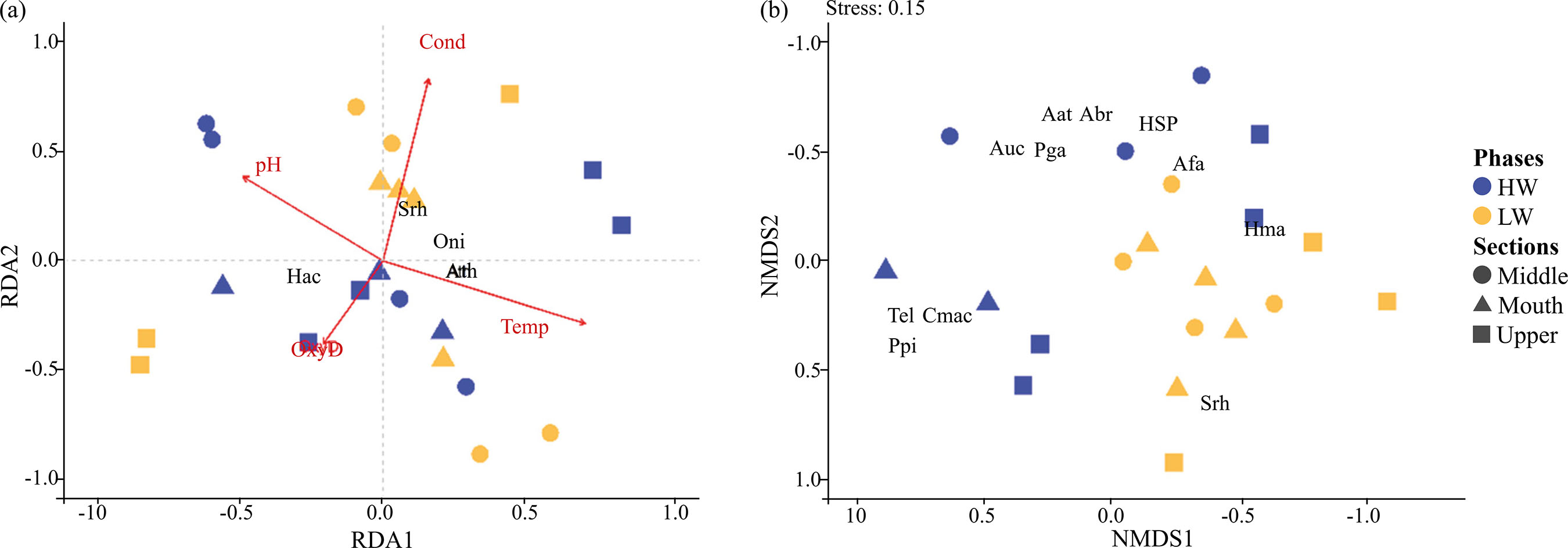 Temp.: temperature; Cond.: electrical conductivity; pH: hydrogen ion potential; OxyD; dissolved oxygen; HW: high water; LW: low water; Aat: Tympanopleura atronasus; Abr: Ageneiosus inermis; Afa: Acestrorhynchus falcirostris; Ath: Auchenipterichthys thoracatus; Auc: Ageneiosus ucayalensis; Cmac: Calophysus macropterus; Hac: Hemiodontichthys acipenserinus; Hma: Hoplias malabaricus; Hsp: Hemiodus sp.; Oni: Oxydoras niger; Pga: Parauchenipterus galeatus; Ppi: Pinirampus pirinampu; Ppu: Pseudoplatystoma punctifer; Srh: Serrasalmus rhombeus; Tel: Triportheus auritus.