
 Effects of dietary supplementation with astaxanthin from Haematococcus pluvialis on coloration, zootechnical performance, and antioxidant activity of the ornamental fish Cryptocentrus cinctus
 ABSTRACT
This study evaluated the effects of astaxanthin from Haematococcus pluvialis on coloration, antioxidant activity, and growth performance in Cryptocentrus cinctus. Three dietary treatments were formulated with increasing astaxanthin concentrations: A0 (0%—control), A10 (0.01% of the total dry diet), and A15 (0.015% of the total dry diet). Astaxanthin supplementation significantly enhanced skin pigmentation, with A15 fish exhibiting a distinct yellow coloration (R = 144.75; G = 122.9; B = 48.5). Catalase activity was also the highest in the A15 group (25 UCAT mg-1), suggesting improved antioxidant capacity. Zootechnical performance improved with astaxanthin inclusion, as A15 fish demonstrated greater weight gain (0.44 g), length gain (7.93 mm), and a lower feed conversion ratio (1.10). Overall, dietary supplementation with 0.015% astaxanthin from H. pluvialis enhanced pigmentation, antioxidant response, and growth efficiency in C. cinctus, representing the first report of carotenoid supplementation for this species.
Keywords
Aquaculture; Aquafeed; Gobies; Microalgae; Carotenoid
RESUMO
Este estudo avaliou os efeitos da astaxantina de Haematococcus pluvialis sobre a coloração, a atividade antioxidante e o desempenho de crescimento de Cryptocentrus cinctus. Foram formulados três tratamentos dietéticos com concentrações crescentes de astaxantina: A0 (0% — controle), A10 (0,01% da dieta seca total) e A15 (0,015% da dieta seca total). A suplementação com astaxantina aumentou significativamente a pigmentação da pele, com os peixes do grupo A15 apresentando uma coloração amarela distinta (R = 144,75; G = 122,9; B = 48,5). A atividade de catalase também foi maior no grupo A15 (25 UCAT mg⁻¹), sugerindo uma capacidade antioxidante aprimorada. O desempenho zootécnico melhorou com a inclusão de astaxantina, já que os peixes do grupo A15 apresentaram maior ganho de peso (0,44 ± 0,07 g), maior ganho de comprimento (7,93 mm) e menor taxa de conversão alimentar (1,10). De modo geral, a suplementação dietética com 0,015% de astaxantina de H. pluvialis aprimorou a pigmentação, a resposta antioxidante e a eficiência de crescimento em C. cinctus, representando o primeiro relato de suplementação de carotenoides para esta espécie.
Palavras-chave
Aquicultura; Ração para aquicultura; Gobídeos; Microalgas; Carotenoide
INTRODUCTION
Ornamental aquaculture has emerged as a promising commercial activity due to its rapid economic return, smaller space requirements compared to traditional finfish farming, and the high market value of its products. This sector has experienced global expansion, driving growth not only in ornamental fish farming but also in the production and trade of related goods (Ladisa et al., 2017; Ribeiro et al., 2010). In 2017, the global ornamental fish market was valued at approximately US$ 15 billion. Between 2000 and 2011, exports nearly doubled—from US$ 181 million to US$ 372 million—, highlighting the sector’s increasing global importance (Ladisa et al., 2017). Brazil has also seen significant progress, ranking eighth among the world’s leading exporters with sales surpassing US$ 18.5 million in 2014 (Dey, 2016). At the same time, the country has registered a notable increase in the import of high value-added ornamental species, reflecting a shift toward more specialized and valuable products (Cardoso et al., 2021).
A wide variety of ornamental fish species are currently cultivated commercially. The selection of suitable species for aquaculture depends on multiple factors, including production costs, technological feasibility, market demand, commercial value, and both zootechnical and aesthetic traits such as body shape and coloration. Among marine species, the genera Chrysiptera, Dascyllus, Chromis, Amphiprion, Premnas, and Cryptocentrus are widely farmed (Groover et al., 2020). Within this group, Cryptocentrus spp., a member of the Gobiidae family, the most diverse marine fish family, stands out as one of the four most traded groups globally, with several species already under cultivation, including Cryptocentrus cinctus (Dimaggio et al., 2020).
Cryptocentrus cinctus, commonly known as the yellow watchman goby, is native to sandy environments in the Western Pacific and forms mutualistic relationships with shrimp. It reaches reproductive maturity at around 75 mm in length and reproduces readily in captivity (Groover et al., 2020). Despite being a commercially attractive species and one of the most farmed, its retail price remains relatively low, particularly for individuals exhibiting a gray coloration, which limits its economic potential (Dimaggio et al., 2020). This limitation, in turn, has generated growing interest in pigmentation enhancement as a strategy to improve its market value.
Recognized as a key phenotypic trait, coloration in ornamental fish has been a longstanding focus of the industry, stimulating advances in diet formulation and technological approaches to enhance color expression (Das & Biswas, 2016; Ribeiro et al., 2010). In response, the market for species-specific feeds designed to improve pigmentation, animal welfare, and growth performance has expanded significantly in recent years (Sipaúba-Tavares et al., 2019). These feeds vary in composition—grain types and sizes, and nutritional content including proteins, lipids, carbohydrates, vitamins, and minerals—, with carotenoids playing a central role in pigmentation (Zuanon et al., 2011).
Species like C. cinctus rely on dietary intake of carotenoids, such as lutein, β-carotene, zeaxanthin, canthaxanthin, and astaxanthin, for pigmentation, as they cannot synthesize these compounds (Das & Biswas, 2016). Beyond their visual effect, carotenoids like astaxanthin have been shown to reduce stress, support immune function, and promote growth and reproductive performance (Ebeneezar et al., 2020).
Astaxanthin (3,3′‐dihydroxy‐β,β‐carotene‐4,4′‐dione) is a carotenoid with strong antioxidant, anti-inflammatory, antitumor, and immunomodulatory properties (Ding et al., 2018). It mitigates oxidative stress by scavenging free radicals and enhancing antioxidant enzyme activity, such as catalase, which plays a key role in immune function (Sandamalika et al., 2021; Zhao et al., 2023). In aquaculture, astaxanthin is widely used not only for its pigmentation effects but also for improving the health and zootechnical performance of fish and shrimp (Jiang et al., 2019; Xie et al., 2018; Zhao et al., 2023). Dietary astaxanthin has also been reported to enhance growth performance, feed utilization efficiency, stress resistance, and reproductive success in several aquatic species (Qiang et al., 2022; Xie et al., 2018; Zhao et al., 2022). It can stimulate immune-related gene expression, modulate inflammatory pathways, and improve mucosal and humoral defense responses, thereby reducing susceptibility to pathogens (Eldessouki et al., 2022; Zhao et al., 2023). Moreover, astaxanthin supplementation has been associated with improved flesh quality and lipid stability, contributing to better product shelf life and consumer appeal (Hart & Colombo, 2022). These multiple benefits make astaxanthin a valuable functional additive in aquafeeds beyond its role as a pigment.
Although synthetic astaxanthin is the carotenoid most widely used in aquafeeds, it presents significant limitations. Its antioxidant activity is estimated to be 20 to 50 times lower than that of natural astaxanthin, and it exhibits reduced bioavailability, along with potential adverse effects (Capelli et al., 2013; Ebeneezar et al., 2020). Consequently, there is growing interest in identifying natural sources of astaxanthin. Among these, the microalga Haematococcus pluvialis (Chlorophyta) stands out due to its high astaxanthin content, which can reach up to 5% of its dry biomass (Kim et al., 2018). Astaxanthin accumulation in H. pluvialis is closely associated with environmental stress conditions, which induce morphological, physiological, and biochemical changes, particularly high light intensity and variations in nutrient availability in the culture medium (Christian et al., 2018; Doria et al., 2018).
The objective of this study was to evaluate how diets supplemented with H. pluvialis biomass rich in astaxanthin influence coloration, antioxidant activity, and zootechnical performance in C. cinctus, to enhance its commercial value.
MATERIALS AND METHODS
Experimental design
The experiment was conducted at the Laboratório de Produção de Alimento Vivo of the Universidade Federal Rural de Pernambuco (UFRPE), following a completely randomized design. Inert diets supplemented with H. pluvialis biomass rich in astaxanthin were tested across three treatments: A0 (0%, control), A10 (0.01% of the total dry diet), and A15 (0.015% of the total dry diet), each with four replicates, totaling 12 experimental units. Fish were fed their respective diets, and water quality, growth, skin coloration, and catalase activity were evaluated. The study protocol was approved by the Ethics Committee on Animal Use of the UFRPE (protocol no. 2,044,191,021).
Specimen acquisition
Specimens of C. cinctus were obtained from a commercial ornamental fish facility and acclimated under laboratory conditions at 27°C. Prior to the trial, fish were fed the control diet twice daily (8 a.m. and 4 p.m.) for four days. Following acclimation, individuals with an initial weight of 1.43 ± 0.31 g and total length of 52.8 ± 1.07 mm were randomly assigned to individual 8-L aquaria (20 × 20 × 20 cm), with a working volume of 5 L. Aeration (0.8 L�min-1) was supplied by an air blower connected to silicone tubing and porous diffusers (air stones), ensuring continuous and uniform oxygenation of the water.
Growing, harvesting, and chemical analyses of Haematococcus pluvialis biomass
Haematococcus pluvialis was obtained from the laboratory’s culture collection and cultivated in 5-L plastic bottles at 22 ± 1°C under a 12 h light/12 h dark photoperiod and 40 µmol photons�m-2�s-1, provided by 36 W LED lamps, using modified Bold’s Basal Medium (Table 1) (Moraes et al., 2023). Astaxanthin accumulation (at the cystic phase) was induced by increasing light intensity to 100 µmol photons�m-2�s-1 and by supplementing the medium with 1.98 g�L-1 sodium acetate (Moraes et al., 2023).
At the end of cultivation, biomass was harvested by centrifugation (3,500 g, 10 min), frozen at -80°C for 24 h, and freeze-dried for 48 h (Alpha 1-4 LD Plus).
Dry weight was determined using an analytical balance (± 0.001 g). Dried biomass was analyzed for protein (AOAC, 2012), using the micro-Kjeldahl method (conversion factor 6.25), lipids (Bligh & Dyer, 1959), total carotenoids, and astaxanthin content (Cheng et al., 2016). The H. pluvialis biomass in the red (cyst) phase exhibited protein and lipid contents of 18.11 ± 3.2% and 7.46 ± 0.9% of dry weight, respectively. Astaxanthin concentration was 10 ± 0.4 mg�g-1, accounting for approximately 90% of the total carotenoids (11 ± 0.3 mg�g-1). Based on these values, two levels of dietary astaxanthin supplementation were established: A10 (10 mg�g-1) and A15 (15 mg�g-1).
Formulation of experimental diets
The experimental diets were formulated based on the protocol described by Jiang et al. (2019) for Pseudochromis fridmani, with H. pluvialis biomass replacing an equivalent amount of carboxymethyl cellulose in treatments A10 and A15. Biomass inclusion was adjusted to provide 10 (0.01%) and 15 mg (0.015%) of astaxanthin per 100 g of feed (Table 2). Ingredients were sequentially mixed until homogenized. Fish oil was added to the dry mix, followed by water (25% of total weight). The resulting mixture was extruded into 1-mm pellets, dried at 50°C for 24 h, and stored in light-proof containers at 4°C until use.
Proximate composition (moisture, ash, protein, and lipid) was determined following the Association of Official Agricultural Chemists’s (AOAC, 2012) recommendations. The carbohydrate content was estimated by difference, subtracting the measured protein, lipid, moisture, and ash from 100% of the dry biomass. The proximate composition of the experimental diets is presented in Table 2. The diets showed similar proximate composition (p > 0.05), averaging 48.5% protein, 15% lipid, 6% carbohydrate, 15% ash, and 15% moisture.
Feed stability
Feed stability was evaluated following Obaldo et al. (2002). In triplicate, 2 g of each feed was placed in 500 mL bottles containing 100 mL seawater (salinity 30) and maintained at 27°C with aeration for 4 h. Samples were then filtered (20 µm), dried at 105°C for 24 h, and weighed on a semi-analytical balance. Pellet stability was calculated as the percentage of dry matter retained post-leaching relative to the original dry matter. Feed stability, measured as dry matter retention, was 96 ± 2.6% (A0), 88 ± 0.5% (A10), and 87 ± 2.7% (A15).
Rearing conditions and monitoring
Each fish was maintained individually in an 8-L aquarium, with a working volume of 5 L (n = 4 per treatment). Feeding occurred twice daily (8 a.m. and 4 p.m.) at 2% body weight for 60 days. Aquaria were maintained with 5-L seawater (salinity 30) and constant aeration (0.8 L�min-1). Weekly, temperature, pH (Kkmoon pH/EC-983), dissolved oxygen and salinity (MultiProbe System 5565 YSI), ammonia, and nitrite (APHA, 2012) were monitored. Units were siphoned weekly to remove waste, with a 20% water exchange. Biometric data (weight, length, height) were recorded at the start and end of the trial using a precision scale (0.1 mg) and digital calipers (Mitutoyo 530-114BR).
Zootechnical performance
The zootechnical parameters evaluated were weight gain, length gain, feed conversion ratio, specific growth rate, length-specific growth rate, and survival rate, calculated according to Eqs. 1–6:
Coloration analysis
Coloration was assessed on day 0 and day 60. Images were taken using a Sony DSC-H400 camera under constant LED illumination inside a standardized photo box, with the camera positioned at 20 cm from the sample and a shooting angle of 90°. Fish were positioned on Petri dishes and anesthetized with 100 mg�L-1 eugenol to reduce handling stress. RGB color values were measured in Adobe Photoshop CC 2018 at three body points (head, dorsal region, caudal fin), with three replicates per point; mean values were used for analysis (Stevens et al., 2007). In addition, color parameters (L*, a*, b*) were calculated from the same digital images according to the procedure described by Yam and Papadakis (2004), allowing for standardized color evaluation in the CIELAB color space.
Catalase antioxidant activity
Catalase (CAT) activity was determined from crude liver extracts homogenized in 20 mM potassium phosphate buffer (pH 7.4) with 0.1% Triton X-100 and 150 mM NaCl (1:20 dilution). Samples were centrifuged at 10,000 g for 10 min at 4°C. The assay mixture consisted of 2-mL potassium phosphate buffer (50 mM, pH 7), 0.05-mL H2O2 (0.3 M), and 0.05-mL homogenate. The decomposition of H2O2 was monitored at 240 nm for 60 s. CAT activity was expressed as U�mg-1 protein (μmol H2O2 min-1) (Soares et al., 2021).
Statistical analysis
Data normality and homoscedasticity were verified using the Shapiro-Wilk and Bartlett’s tests, respectively. Analysis of variance (p < 0.05) was applied to normally distributed data, followed by Tukey’s post hoc test. For non-parametric data, the Kruskal-Wallis’ test was used. Pearson correlation analysis was performed between variables (p < 0.05). Analyses were conducted using R software (R Core Team, 2022).
RESULTS
Zootechnical performance, antioxidant activity, and water quality
Dietary astaxanthin supplementation significantly affected fish performance (Table 3). The A15 diet led to the highest weight gain and length gain, along with the lowest feed conversion ratio. No significant differences were observed for survival or specific growth rates.
Zootechnical performance of Cryptocentrus cinctus fed with inert diets with different concentrations of astaxanthin from Haematococcus pluvialis*
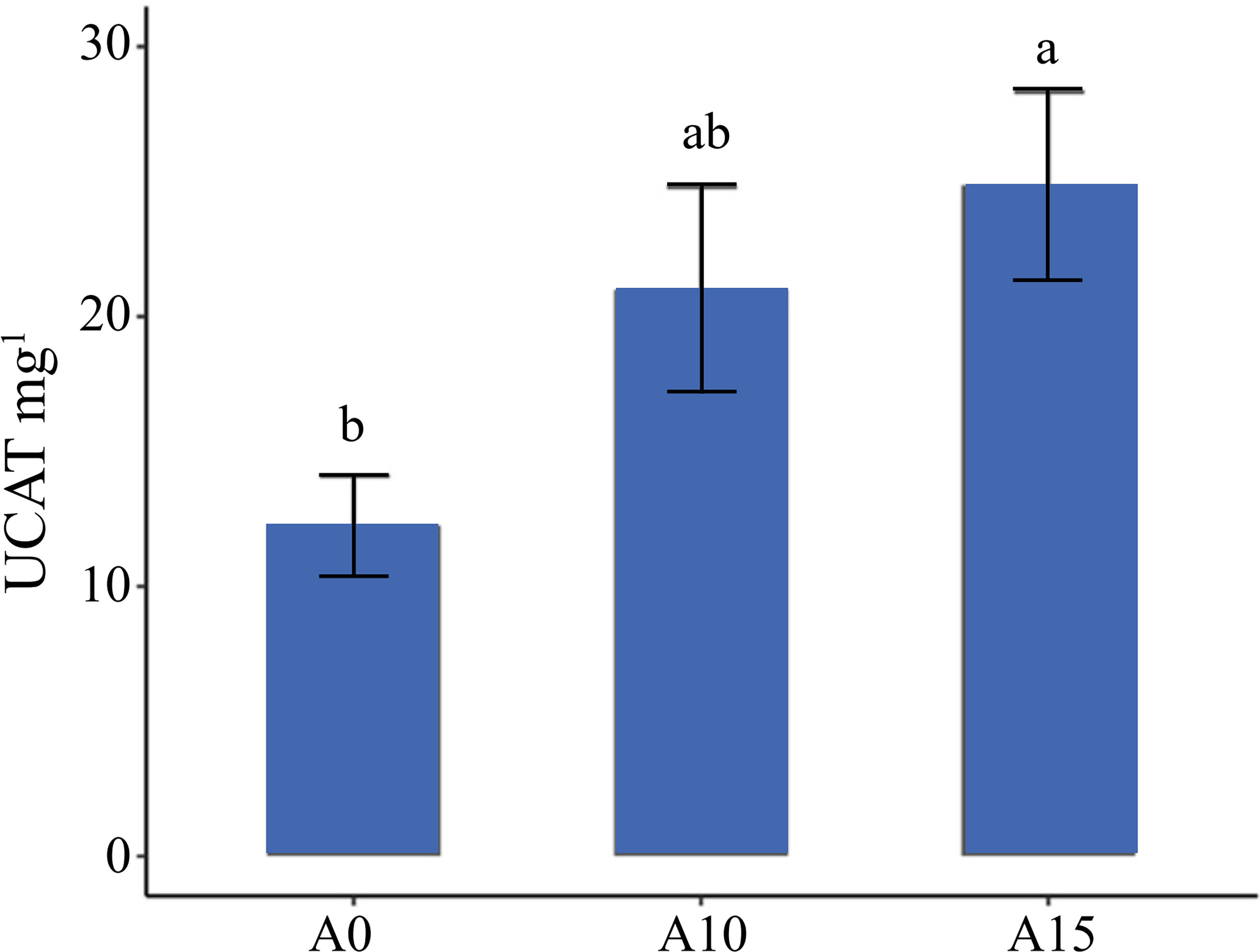
Catalase activity in liver tissue differed significantly among treatments (p < 0.05). The A15 group showed the highest activity (25 U CAT�mg-1), while A0 had the lowest (12 U CAT�mg-1) (Fig. 1). Water quality parameters remained within the recommended range for Gobiidae culture: dissolved oxygen 5.14 ± 0.02 mg�L-1, salinity 30.6 ± 1.01 g�L-1, pH 7.93–8.18, NH4+ < 0.50 mg�L-1, NO2- < 0.05 mg�L-1, and temperature 27.7–28.3°C.
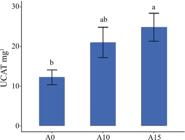
Catalase activity (UCAT�mg-1) in Cryptocentrus cinctus fed diets supplemented with astaxanthin from Haematococcus pluvialis (A0: 0%, A10: 0.01%, A15: 0.015%). Columns represent mean values, with vertical bars indicating standard deviations for four replicates.
Coloration of Cryptocentrus cinctus
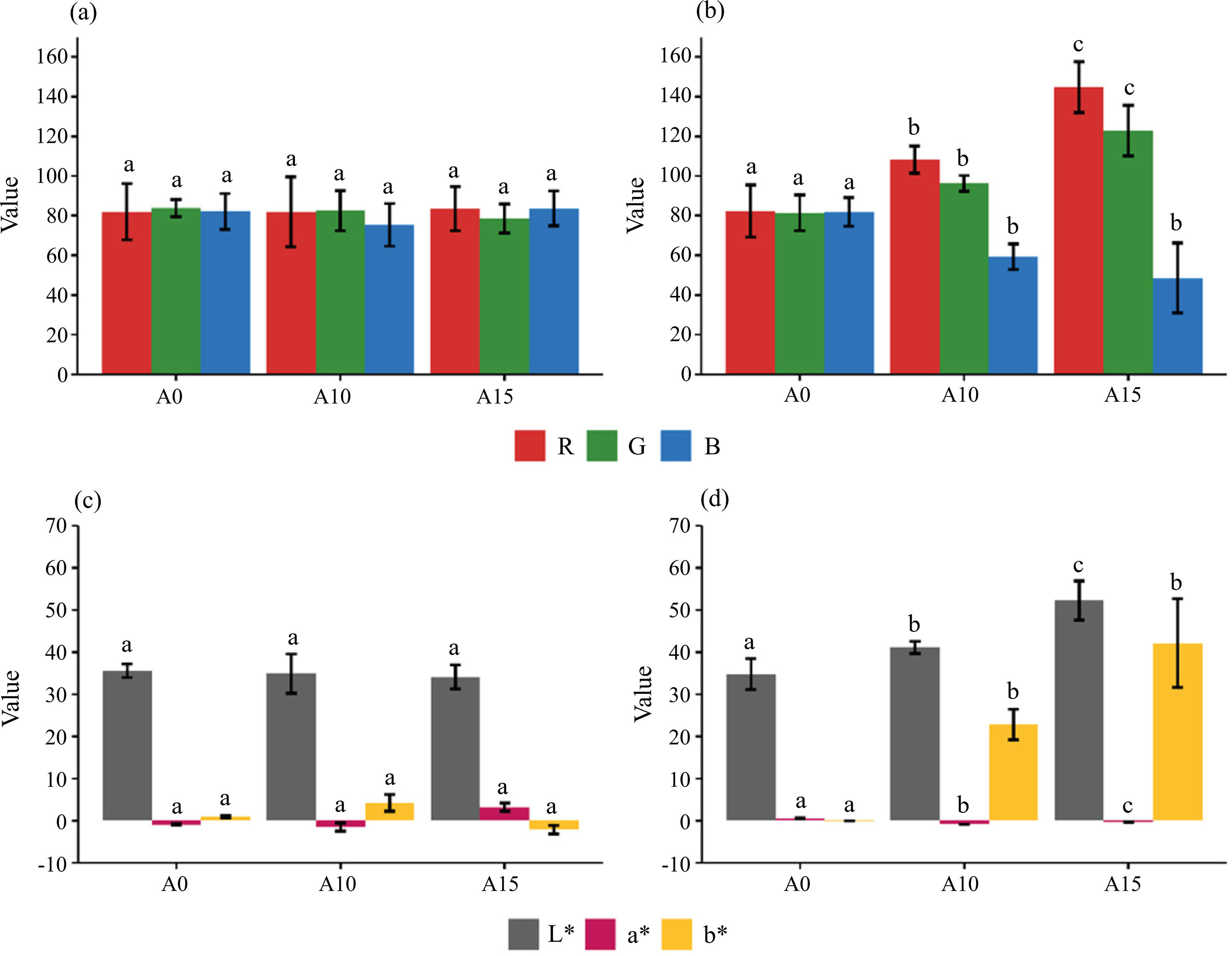
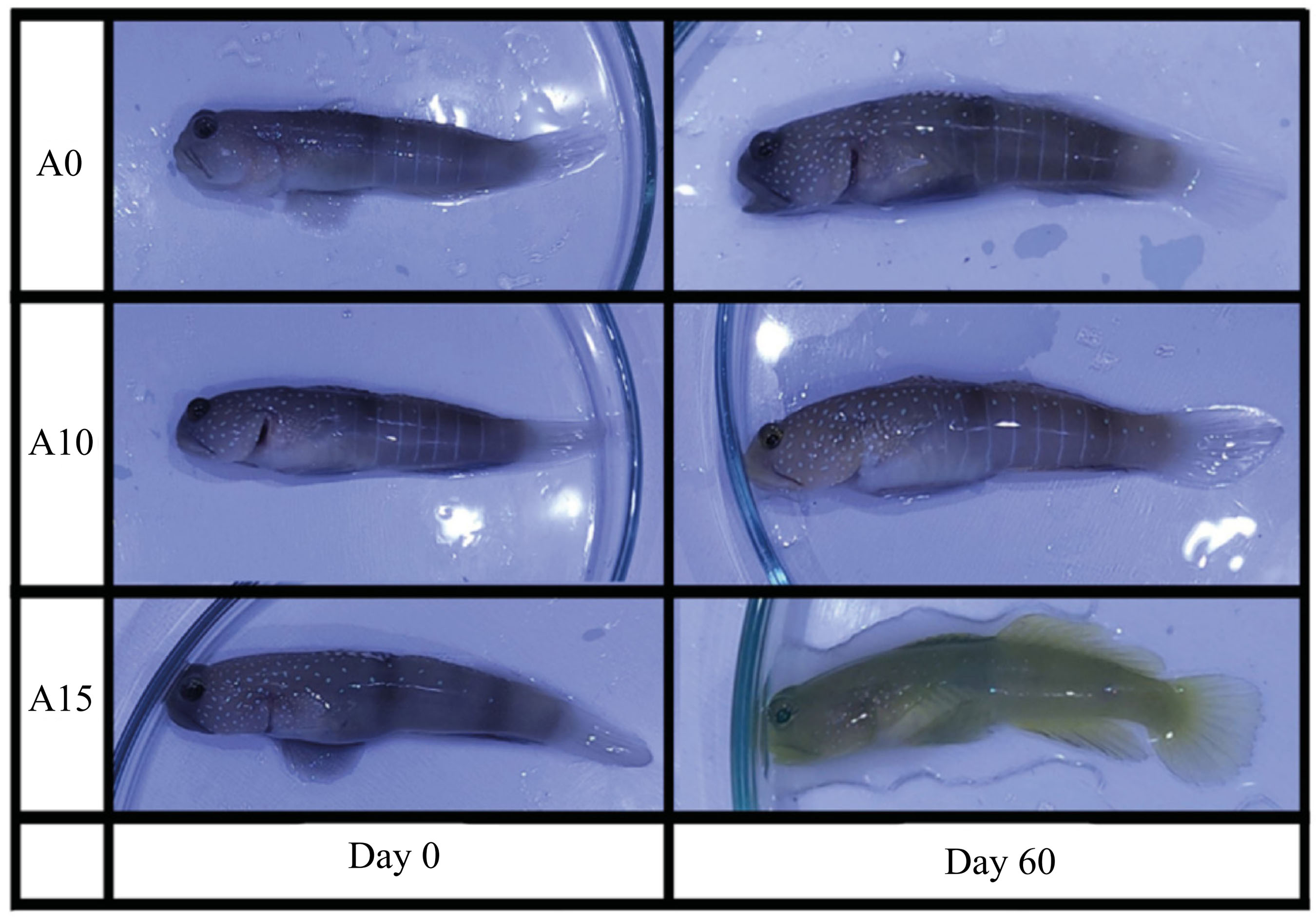
Fish pigmentation was significantly affected by astaxanthin supplementation. At the end of the trial, both A10 and A15 treatments showed increases in red and green values compared to the control (A0), with blue values decreasing only in A0 (p < 0.05). Differences between initial and final pigmentation values were significant for red, green, and blue in A10 and A15 (p < 0.05), while the measurement location (head, dorsal, or caudal fin) had no significant effect (p > 0.05). Representative images confirm the visual enhancement in pigmentation (Figs. 2 and 3).
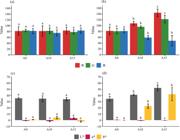
Mean coloration (RGB values) and (L*a*b* values) of Cryptocentrus cinctus fish fed inert diets containing different concentrations of astaxanthin from Haematococcus pluvialis (A0: 0%, A10: 0.01% of the total dry diet, A15: 0.015% of the total dry diet) at (a and c) the beginning and (b and d) the end of the experimental period. Different letters indicate significant differences between treatments by Tukey’s test (p < 0.05). Columns represent mean values, with vertical bars indicating standard deviations for four replicates.
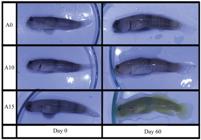
Effects of dietary concentration of astaxanthin-rich Haematococcus pluvialis (A0: 0%, A10: 0.01%, A15: 0.015%) and supplementation time (0 and 60 days) on the skin coloration of Cryptocentrus cinctus.
Correlation analysis
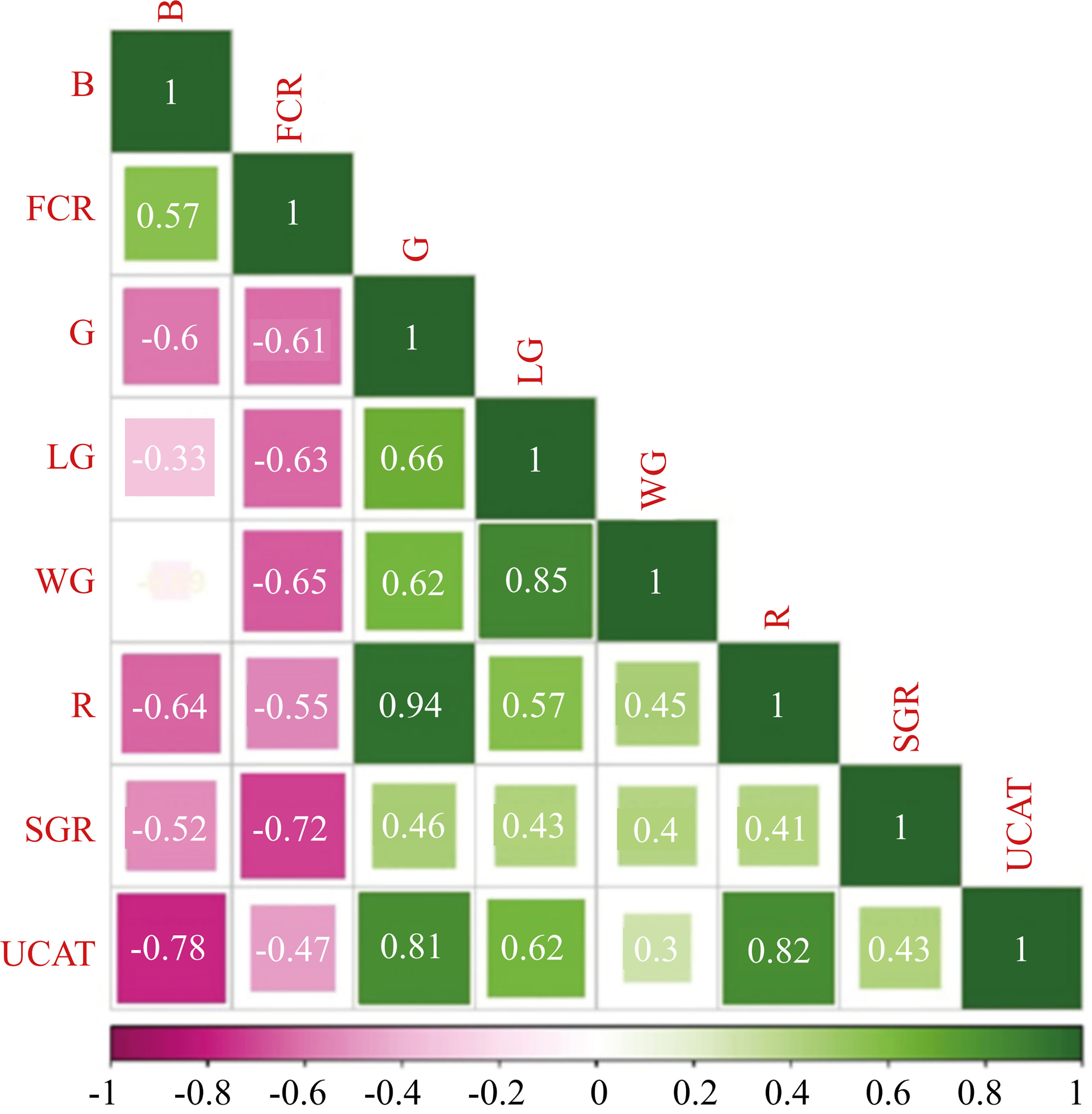
Pearson’s correlation analysis (p < 0.05) revealed significant relationships between pigmentation, performance, and antioxidant activity (Fig. 4). RGB color channels were interrelated: red and green were positively correlated (r = 0.94), while blue was negatively correlated with both red (r = -0.64) and green (r = -0.60). Green values were also positively correlated with length gain (r = 0.66), weight gain (r = 0.62), and CAT activity (r = 0.81), and negatively with feed conversion ratio (r = -0.61). Feed conversion ratio showed strong inverse correlations with length gain (r = -0.63), weight gain (r = -0.65), and length growth rate (r = -0.72). CAT activity was positively associated with red (r = 0.82), length gain (r = 0.62), and negatively with blue (r = -0.78).
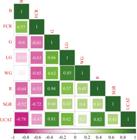
Pearson correlation matrix (p < 0.05) among color parameters (R, G, B), zootechnical indices (FCR, WG, LG, SGR), and catalase activity (U CAT mg-1). Positive correlations are shown in green, and negative correlations in pink.
Discussion
Characterization of Haematococcus pluvialis biomass and the formulated inert diets
The reduced protein and lipid levels observed in this study are consistent with the metabolic transition of H. pluvialis from the vegetative (green) phase to the cystic (red) phase, during which protein content typically declines (15–23%) and lipid accumulation increases (up to 37%) (Shah et al., 2016). This substantial lipid accumulation enhances the nutritional value of H. pluvialis for aquafeeds, particularly due to its favorable fatty acid profile, which includes high levels of palmitic (C16:0), oleic (C18:1n9c), linoleic (C18:2n6c and C18:2n6t), and α-linolenic (C18:3n3) acids (Moraes et al., 2022).
Growing demand for sustainable and natural alternatives to conventional ingredients in aquafeeds has led to increasing research on the application of microalgae, either as feed additives or direct nutritional sources. Prominent examples include Navicula sp. (Abreu et al., 2019), Nannochloropsis oculata, Schizochytrium sp. (Sarker et al., 2020), Scenedesmus obliquus (Silva et al., 2022), and H. pluvialis (Zhao et al., 2022). This trend aligns with the objective of reducing the environmental impacts of fishmeal and fish oil obtained from wild fisheries, while promoting animal health and product quality (Sarker et al., 2018). Microalgae serve as a valuable source of essential nutrients, including lipids, fatty acids, sterols, proteins, amino acids, phycobiliproteins, and carotenoids (Moreno-Garcia et al., 2017; Nagappan et al., 2021).
Among these, astaxanthin from H. pluvialis is considered the most commercially valuable compound due to its potent antioxidant, anti-inflammatory, and pigmenting properties, with applications across the nutraceutical, pharmaceutical, and animal feed sectors (Mota et al., 2022). In terms of pellet stability, diets supplemented with H. pluvialis showed lower dry matter retention compared to the control (A0), likely due to the reduced content of carboxymethylcellulose, a binding agent replaced by microalgal biomass. Nonetheless, feed consumption remained unaffected, as fish typically consumed the diet shortly after feeding. Comparable findings were reported by Obaldo et al. (2002), who observed high dry matter retention (≥ 88%) after 6 hours of immersion in water. Therefore, the physical stability of the formulated diets was considered suitable for aquaculture application.
Effects of dietary astaxanthin supplementation on coloration, antioxidant activity, and zootechnical performance of Cryptocentrus cinctus
Coloration represents a key attribute in the ornamental fish industry, reflecting not only aesthetic value but also physiological condition, including immune function and reproductive status (Eaton et al., 2016). Since fish are incapable of endogenously synthesizing carotenoids, pigmentation is predominantly influenced by dietary intake (Jiang et al., 2019). In aquaculture, astaxanthin is frequently utilized to intensify pigmentation and enhance immune responses (Lu et al., 2021).
In this study, dietary supplementation with natural astaxanthin significantly enhanced skin pigmentation in C. cinctus, with the highest color intensity observed in fish fed the A15 diet (15 mg�g-1 of astaxanthin). The rise in red and green channel values in the RGB model indicates enhanced carotenoid deposition in the skin, reflecting pigment accumulation within specific chromatophore types. This effect is mainly associated with increased activity and pigment deposition in xanthophores (orange and yellow color) and erythrophores (orange and red color) (Lau et al., 2023). These findings suggest that astaxanthin was efficiently absorbed, metabolized, and incorporated into pigment cells, resulting in a visible enhancement of coloration. Similar responses have been reported in Cichlasoma citrinellum (Pan & Chien, 2009) and Xiphophorus hellerii (Putra et al., 2020), in which dietary supplementation with 16–20 mg�g-1 astaxanthin from H. pluvialis resulted in increased pigment deposition and more vivid coloration.
From a commercial standpoint, such enhancement of coloration directly increases the aesthetic appeal and market value of C. cinctus, as color intensity and uniformity are key determinants of consumer preference and price in the ornamental fish trade. Therefore, dietary supplementation with natural astaxanthin represents a practical, sustainable, and biologically effective approach to improving both the visual quality and economic potential of this species, highlighting the close relationship between nutrition, cellular physiology, and phenotypic color expression (Lau et al., 2023).
Astaxanthin also influenced antioxidant defense, as evidenced by elevated CAT activity in the A15 treatment. This carotenoid has been shown to enhance CAT function, which is essential for neutralizing reactive oxygen species like hydrogen peroxide (H2O2), thereby reducing oxidative stress (Sandamalika et al., 2021; Zhao et al., 2023). In aquatic environments, fish are frequently exposed to stressors that promote reactive oxygen species formation, leading to cellular damage (Elvitigala et al., 2013). Enhancing endogenous antioxidant enzymes is thus critical for maintaining fish health and supporting growth performance. Dietary supplementation with astaxanthin from H. pluvialis not only impacted CAT activity but also affected the zootechnical aspects of C. cinctus.
In addition to physiological benefits, dietary astaxanthin improved growth metrics. Fish receiving the A15 diet exhibited significantly greater weight and length gains, alongside a reduced feed conversion ratio. These results are consistent with previous studies reporting improved growth following astaxanthin supplementation (Rahman et al., 2016; Zhao et al., 2022), though other reports present contrasting findings (Micah et al., 2022; Nogueira et al., 2021). Such variability likely stems from differences in species, developmental stage, environmental conditions, carotenoid source, and feeding duration (Lim et al., 2018). Notably, H. pluvialis-derived astaxanthin has been shown to outperform both synthetic and yeast-derived sources in promoting intestinal health and nutrient assimilation in Oncorhynchus mykiss (Zhao et al., 2022). Importantly, environmental parameters during the trial remained within optimal ranges for goby cultivation (Dimaggio et al., 2020), ensuring that water quality did not interfere with the observed effects.
Pearson correlation analysis revealed significant relationships among pigmentation, antioxidant activity, and zootechnical performance. RGB color components were interdependent, with blue values inversely correlated with red and green, while red and green exhibited a strong positive correlation. As yellow hues in C. cinctus are achieved through a combination of high red and green and low blue values (Sun et al., 2012), the enhanced pigmentation observed in A15 suggests effective deposition and utilization of astaxanthin.
Furthermore, the significant correlation between feed conversion ratio and the green component of the RGB color space indicates that improved feed efficiency (i.e., lower feed conversion ratio) may enhance astaxanthin assimilation, contributing to more intense yellow pigmentation in C. cinctus. The activity of the CAT enzyme may also influence this color expression, given its key role in oxidative stress mitigation and cellular detoxification (Zhao et al., 2023). Enhanced pigmentation is frequently associated with improved metabolic performance and nutrient utilization, serving as a visual indicator of overall physiological health (Ebeneezar et al., 2020).
Thus, this work helped to better assess the possible effects of adding the microalga H. pluvialis biomass in its red phase, in which there is a higher concentration of the carotenoid astaxanthin, on skin color, growth, and CAT activity from C. cinctus. To our knowledge, this is the first report evaluating carotenoid supplementation in the diet of C. cinctus, providing valuable baseline information for future studies aiming to optimize pigmentation, feed formulation, and production value in ornamental aquaculture.
Conclusions
This study demonstrated that supplementation of inert diets with 0.015% astaxanthin derived from H. pluvialis biomass enhanced skin pigmentation in C. cinctus, promoting more intense yellow coloration. Additionally, the A15 treatment improved antioxidant status, as indicated by increased CAT activity, and supported better growth performance and feed efficiency. These findings highlight the potential of H. pluvialis biomass as a functional ingredient in ornamental fish diets. Its incorporation can improve visual appeal and physiological condition, contributing to the commercial value and sustainability of ornamental aquaculture.
ACKNOWLEDGMENTS
The authors would like to thank the Laboratory of Aquatic Animal Health at the Department of Fisheries and Aquaculture, the Department of Animal Science of the Universidade Federal Rural de Pernambuco, and Bio Food Products Ltda., for providing the materials and instruments used for the production process.
-
DECLARATION OF USE OF ARTIFICIAL INTELLIGENCE TOOLS
We declare that no artificial intelligence tools were used in the preparation of this manuscript.
-
FUNDING
Coordenação de Aperfeiçoamento de Pessoal de Nível SuperiorGrant Nos.: 88887.608945/2021-00, 88882.436230/2019-01, 88887.695202/2022-00, 88882.436234/2019-01Conselho Nacional de Desenvolvimento Científico e TecnológicoGrant Nos.: PQ 310898/2023-4, PQ 307107/2019-1
DATA AVAILABILITY STATEMENT
The data will be available upon request.
REFERENCES
-
Abreu, J. L., Brito, L. O., Lima, P. C. M., Silva, S. M. B. C., Severi, W., & Gálvez, A. O. (2019). Effects of addition of Navicula sp. (diatom) in different densities to postlarvae of shrimp Litopenaeus vannamei reared in a BFT system: Growth, survival, productivity and fatty acid profile. Aquaculture Research, 50, 2231-2239. https://doi.org/10.1111/are.14104
» https://doi.org/10.1111/are.14104 - American Public Health Association (APHA) (2012). Standard methods for the examination of water and wastewater (22nd ed.). APHA.
- Association of Official Agricultural Chemists (AOAC) (2012). Official methods of analysis (19th ed.). AOAC.
-
Bligh, E. G., & Dyer, W. J. (1959). A rapid method of total lipid extraction and purification. Canadian Journal of Biochemistry and Physiology, 37(8), 911-917. https://doi.org/10.1139/o59-099
» https://doi.org/10.1139/o59-099 -
Capelli, B., Bagchi, D., & Cysewski, G. R. (2013). Synthetic astaxanthin is significantly inferior to algal-based astaxanthin as an antioxidant and may not be suitable as a human nutraceutical supplement. Nutrafoods, 12(4), 145-152. https://doi.org/10.1007/s13749-013-0051-5
» https://doi.org/10.1007/s13749-013-0051-5 - Cardoso, R. S., Santos, F. W. M., Rezende, F. P., & Ribeiro, F. A. S. (2021). O comércio de organismos aquáticos ornamentais. In F. P. Rezende & R. Y. Fujimoto (Eds.), Peixes ornamentais no Brasil: mercado, legislação, sistemas de produção e sanidade (pp. 15-82). Embrapa.
-
Cheng, J., Li, K., Yang, Z., Zhou, J., & Cen, K. (2016). Enhancing the growth rate and astaxanthin yield of Haematococcus pluvialis by nuclear irradiation and high concentration of carbon dioxide stress. Bioresource Technology, 204, 49-54. https://doi.org/10.1016/j.biortech.2015.12.076
» https://doi.org/10.1016/j.biortech.2015.12.076 -
Christian, D., Zhang, J., Sawdon, A. J., & Peng, C. A. (2018). Enhanced astaxanthin accumulation in Haematococcus pluvialis using high carbon dioxide concentration and light illumination. Bioresource Technology, 256, 548-551. https://doi.org/10.1016/j.biortech.2018.02.074
» https://doi.org/10.1016/j.biortech.2018.02.074 -
Das, A. P., & Biswas, S. P. (2016). Carotenoids and pigmentation in ornamental fish. Journal of Aquaculture & Marine Biology, 4(4), 00093. https://doi.org/10.15406/jamb.2016.04.00093
» https://doi.org/10.15406/jamb.2016.04.00093 - Dey, V. K. (2016). The global trade in ornamental fish. Infofish International, 4(16), 52-55.
-
DiMaggio, M., Von Linden, J., Patterson, J., & Ohs, C. (2020). Aquaculture applications of the family Gobiidae. EDIS, 2020(3), 7. https://doi.org/10.32473/edis-fa226-2020
» https://doi.org/10.32473/edis-fa226-2020 -
Ding, W., Zhao, Y., Xu, J.-W., Zhao, P., Li, T., Ma, H., Reiter, R. J., & Yu, X. (2018). Melatonin: a multifunctional molecule that triggers defense responses against high light and nitrogen starvation stress in Haematococcus pluvialis Journal of Agricultural and Food Chemistry, 66(29), 7701-7711. https://doi.org/10.1021/acs.jafc.8b02178
» https://doi.org/10.1021/acs.jafc.8b02178 - Doria, E., Temporiti, M. E. E., Damiani, M. C., Popovich, C. A., & Leonardi, P. I. (2018). Influence of light stress on the accumulation of xanthophylls and lipids in Haematococcus pluvialis ccala 1081 grown under autotrophic or mixotrophic conditions. Journal of Aquaculture & Marine Biology, 4, 30-35.
-
Eaton, L., Clezy, K., Snellgrove, D., & Sloman, K. (2016). The behavioural effects of supplementing diets with synthetic and naturally sourced astaxanthin in an ornamental fish (Puntius titteya). Applied Animal Behaviour Science, 182, 94-100. https://doi.org/10.1016/j.applanim.2016.06.007
» https://doi.org/10.1016/j.applanim.2016.06.007 -
Ebeneezar, S., Prabu, D. L., Chandrasekar, S., Tejpal, C. S., Madhu, K., Sayooj, P., & Vijayagopal, P. (2020). Evaluation of dietary oleoresins on the enhancement of skin coloration and growth in the marine ornamental clown fish, Amphiprion ocellaris (Cuvier, 1830). Aquaculture, 529, 735728. https://doi.org/10.1016/j.aquaculture.2020.735728
» https://doi.org/10.1016/j.aquaculture.2020.735728 -
Eldessouki, E. A., Diab, A. M., Selema, T. A. A., Sabry, N. M., Abotaleb, M. M., Khalil, R. H., El-Sabbagh, N., Younis, N. A., & Abdel-Tawwab, M. (2022). Dietary astaxanthin modulated the performance, gastrointestinal histology, and antioxidant and immune responses and enhanced the resistance of Litopenaeus vannamei against Vibrio harveyi infection. Aquaculture International, 30(4), 1869-1887. https://doi.org/10.1007/s10499-022-00876-w
» https://doi.org/10.1007/s10499-022-00876-w -
Elvitigala, D. A. S., Premachandra, H. K. A., Whang, I., Priyathilaka, T. T., Kim, E., Lim, B. S., Jung, H. B., Yeo, S. Y., Park, H. C., & Lee, J. (2013). Marine teleost ortholog of catalase from rock bream (Oplegnathus fasciatus): Molecular perspectives from genomic organization to enzymatic behavior with respect to its potent antioxidant properties. Fish and Shellfish Immunology, 35(4), 1086-1096. https://doi.org/10.1016/j.fsi.2013.07.013
» https://doi.org/10.1016/j.fsi.2013.07.013 -
Groover, E. M., DiMaggio, M., & Cassiano, E. J. (2020). Overview of commonly cultured marine ornamental fish. EDIS, 2020(3), 7. https://doi.org/10.32473/edis-fa224-2020
» https://doi.org/10.32473/edis-fa224-2020 -
Hart, B., & Colombo, S. M. (2022). Effects of a novel weakened whole‐cell form of Haematococcus pluvialis on flesh pigmentation of rainbow trout (Oncorhynchus mykiss) when compared to synthetic astaxanthin. Aquaculture Research, 53(6), 2408-2419. https://doi.org/10.1111/are.15758
» https://doi.org/10.1111/are.15758 -
Jiang, J., Nuez-Ortin, W., Angell, A., Zeng, C., de Nys, R., & Vucko, M. J. (2019). Enhancing the colouration of the marine ornamental fish Pseudochromis fridmani using natural and synthetic sources of astaxanthin. Algal Research, 42, 101596. https://doi.org/10.1016/j.algal.2019.101596
» https://doi.org/10.1016/j.algal.2019.101596 -
Kim, J. Y., Lee, C., Jeon, M. S., Park, J., & Choi, Y. E. (2018). Enhancement of microalga Haematococcus pluvialis growth and astaxanthin production by electrical treatment. Bioresource Technology, 268, 815-819. https://doi.org/10.1016/j.biortech.2018.08.014
» https://doi.org/10.1016/j.biortech.2018.08.014 - Ladisa, C., Bruni, M., & Lovatelli, A. (2017). Overview of ornamental species aquaculture FAO.
-
Lau, C. C., Mohd Nor, S. A., Tan, M. P., Yeong, Y. S., Wong, L. L., Van de Peer, Y., Sorgeloos, P., & Danish-Daniel, M. (2023). Pigmentation enhancement techniques during ornamental fish production. Reviews in Fish Biology and Fisheries, 33(4), 1027-1048. https://doi.org/10.1007/s11160-023-09777-4
» https://doi.org/10.1007/s11160-023-09777-4 -
Lim, K. C., Yusoff, F., Shariff, M., & Kamarudin, M. S. (2018). Astaxanthin as feed supplement in aquatic animals. Reviews in Aquaculture, 10(3), 738-773. https://doi.org/10.1111/raq.12200
» https://doi.org/10.1111/raq.12200 -
Lu, Q., Li, H., Zou, Y., Liu, H., & Yang, L. (2021). Astaxanthin as a microalgal metabolite for aquaculture: A review on the synthetic mechanisms, production techniques, and practical application. Algal Research, 54, 102178. https://doi.org/10.1016/j.algal.2020.102178
» https://doi.org/10.1016/j.algal.2020.102178 -
Micah, A. D., Wen, B., Wang, Q., Zhang, Y., Yusuf, A., Thierry, N. N. B., Tokpanou, O. S., Onimisi, M. M., Adeyemi, S. O., Gao, J. Z., & Chen, Z. Z. (2022). Effect of dietary astaxanthin on growth, body color, biochemical parameters and transcriptome profiling of juvenile blood parrotfish (Vieja melanurus ♀ × Amphilophus citrinellus ♂). Aquaculture Reports, 24, 101142. https://doi.org/10.1016/j.aqrep.2022.101142
» https://doi.org/10.1016/j.aqrep.2022.101142 -
Moraes, L. B. S., Malafaia, C. B., da Silva, T. D., Mota, G. C. P., Marinho, Y. F., de Albuquerque Melo, A. M. M., de Oliveira, A. F. M., de Macêdo Dantas, D. M., Gálvez, A. O., & de Souza Bezerra, R. (2022). Gamma radiation as a pretreatment for co-extraction of lipids and astaxanthin in Haematococcus pluvialis BioEnergy Research, 16(3), 1841-1850. https://doi.org/10.1007/s12155-022-10531-0
» https://doi.org/10.1007/s12155-022-10531-0 -
Moraes, L. B. S., Mota, G. C. P., dos Santos, E. P., Campos, C. V. F. da S., da Silva, B. A. B., Gálvez, A. O., & Bezerra, R. S. (2023). Haematococcus pluvialis cultivation and astaxanthin production using different nitrogen sources with pulse feeding strategy. Biomass Conversion and Biorefinery, 14(14), 16231-16243. https://doi.org/10.1007/s13399-023-03824-7
» https://doi.org/10.1007/s13399-023-03824-7 -
Moreno-Garcia, L., Adjallé, K., Barnabé, S., & Raghavan, G. (2017). Microalgae biomass production for a biorefinery system: Recent advances and the way towards sustainability. Renewable and Sustainable Energy Reviews, 76, 493-506. https://doi.org/10.1016/j.rser.2017.03.024
» https://doi.org/10.1016/j.rser.2017.03.024 -
Mota, G. C. P., Moraes, L. B. S. de, Oliveira, C. Y. B., Oliveira, D. W. S., Abreu, J. L. de, Dantas, D. M. M., & Gálvez, A. O. (2022). Astaxanthin from Haematococcus pluvialis: processes, applications, and market. Preparative Biochemistry & Biotechnology, 52(5), 598-609. https://doi.org/10.1080/10826068.2021.1966802
» https://doi.org/10.1080/10826068.2021.1966802 -
Nagappan, S., Das, P., AbdulQuadir, M., Thaher, M., Khan, S., Mahata, C., Al-Jabri, H., Vatland, A. K., & Kumar, G. (2021). Potential of microalgae as a sustainable feed ingredient for aquaculture. Journal of Biotechnology, 341, 1-20. https://doi.org/10.1016/j.jbiotec.2021.09.003
» https://doi.org/10.1016/j.jbiotec.2021.09.003 -
Nogueira, N., Canada, P., Caboz, J., Andrade, C., & Cordeiro, N. (2021). Effect of different levels of synthetic astaxanthin on growth, skin color and lipid metabolism of commercial sized red porgy (Pagrus pagrus). Animal Feed Science and Technology, 276, 114916. https://doi.org/10.1016/j.anifeedsci.2021.114916
» https://doi.org/10.1016/j.anifeedsci.2021.114916 -
Obaldo, L. G., Divakaran, S., & Tacon, A. G. (2002). Method for determining the physical stability of shrimp feeds in water. Aquaculture Research, 33(5), 369-377. https://doi.org/10.1046/j.1365-2109.2002.00681.x
» https://doi.org/10.1046/j.1365-2109.2002.00681.x -
Pan, C. H., & Chien, Y. H. (2009). Effects of dietary supplementation of alga Haematococcus pluvialis (Flotow), synthetic astaxanthin and β-carotene on survival, growth, and pigment distribution of red devil, Cichlasoma citrinellum (Günther). Aquaculture Research, 40(8), 871-879. https://doi.org/10.1111/j.1365-2109.2008.02153.x
» https://doi.org/10.1111/j.1365-2109.2008.02153.x -
Putra, D. F., Qadri, A., El-Rahimi, S. A., & Othman, N. (2020). Effects of astaxanthin on the skin color of green swordtail, Xyphophorus helleri E3S Web of Conferences, 151, 01065. https://doi.org/10.1051/e3sconf/202015101065
» https://doi.org/10.1051/e3sconf/202015101065 -
Qiang, J., Tao, Y. F., Lu, S. Q., Ma, J. L., He, J., & Xu, P. (2022). Role of astaxanthin as a stimulator of ovarian development in Nile tilapia (Oreochromis niloticus) and its potential regulatory mechanism: ameliorating oxidative stress and apoptosis. Aquaculture Nutrition, 2022(1), 1245151. https://doi.org/10.1155/2022/1245151
» https://doi.org/10.1155/2022/1245151 -
R Core Team (2022). R: a language and environment for statistical computing. R foundation for statistical computing. Retrieved from https://www.R-project.org
» https://www.R-project.org -
Rahman, M. M., Khosravi, S., Chang, K. H., & Lee, S. M. (2016). Effects of dietary inclusion of astaxanthin on growth, muscle pigmentation and antioxidant capacity of juvenile rainbow trout (Oncorhynchus mykiss). Preventive Nutrition and Food Science, 21(3), 281-288. https://doi.org/10.3746/pnf.2016.21.3.281
» https://doi.org/10.3746/pnf.2016.21.3.281 - Ribeiro, F., Lima, M., & Fernandes, C. (2010). Panorama do mercado de organismos aquáticos ornamentais. Boletim Sociedade Brasileira de Limnologia, 38(2), 1-15.
-
Sandamalika, W. M. G., Kwon, H., Lim, C., Yang, H., & Lee, J. (2021). The possible role of catalase in innate immunity and diminution of cellular oxidative stress: Insights into its molecular characteristics, antioxidant activity, DNA protection, and transcriptional regulation in response to immune stimuli in yellowtail clownfish (Amphiprion clarkii). Fish & Shellfish Immunology, 113, 106-117. https://doi.org/10.1016/j.fsi.2021.03.022
» https://doi.org/10.1016/j.fsi.2021.03.022 -
Sarker, P. K., Kapuscinski, A. R., Bae, A. Y., Donaldson, E., Sitek, A. J., Fitzgerald, D. S., & Edelson, O. F. (2018). Towards sustainable aquafeeds: Evaluating substitution of fishmeal with lipid-extracted microalgal co-product (Nannochloropsis oculata) in diets of juvenile Nile tilapia (Oreochromis niloticus). PLoS One, 13(7), e0201315. https://doi.org/10.1371/journal.pone.0201315
» https://doi.org/10.1371/journal.pone.0201315 -
Sarker, P. K., Kapuscinski, A. R., McKuin, B., Fitzgerald, D. S., Nash, H. M., & Greenwood, C. (2020). Microalgae-blend tilapia feed eliminates fishmeal and fish oil, improves growth, and is cost viable. Scientific Reports, 10(1), 19328. https://doi.org/10.1038/s41598-020-75289-x
» https://doi.org/10.1038/s41598-020-75289-x -
Shah, M. M., Liang, Y., Cheng, J. J., & Daroch, M. (2016). Astaxanthin-producing green microalga Haematococcus pluvialis: from single cell to high value commercial products. Frontiers in Plant Science, 7, 531. https://doi.org/10.3389/fpls.2016.00531
» https://doi.org/10.3389/fpls.2016.00531 -
Silva, V. F., Pereira, P. K. M., Martins, M. A., Lorenzo, M. A., Cella, H., Lopes, R. G., Derner, R. B., Magallón-Servín, P., & Vieira, F. N. (2022). Effects of microalgae addition and fish feed supplementation in the integrated rearing of Pacific white shrimp and nile tilapia using biofloc technology. Animals, 12(12), 1527. https://doi.org/10.3390/ani12121527
» https://doi.org/10.3390/ani12121527 -
Sipaúba-Tavares, L. H., Fernandes, J. B. K., Melo-Santos, G. L., & Scardoeli-Truzzi, B. (2019). Microalgae Ankistrodesmus gracilis as feed ingredient for ornamental fish Xiphophorus maculatus International Aquatic Research, 11(2), 125-134. https://doi.org/10.1007/s40071-019-0223-z
» https://doi.org/10.1007/s40071-019-0223-z -
Soares, E. C., Bispo, M. D., Vasconcelos, V. C., Soletti, J. I., Carvalho, S. H. V., de Oliveira, M. J., dos Santos, M. C., dos Santos Freire, E., Nogueira, A. S. P., da Silva Cunha, F. A., Sandes, R. D. D., dos Santos, R. A. R., Leite Neta, M. T. S., Narain, N., Garcia, C. A. B., da Costa, S. S. L., & Santos, J. C. C. (2021). Oil impact on the environment and aquatic organisms on the coasts of the states of Alagoas and Sergipe, Brazil - A preliminary evaluation. Marine Pollution Bulletin, 171, 112723. https://doi.org/10.1016/j.marpolbul.2021.112723
» https://doi.org/10.1016/j.marpolbul.2021.112723 -
Stevens, M., Párraga, C. A., Cuthill, I. C., Partridge, J. C., & Troscianko, T. S. (2007). Using digital photography to study animal coloration. Biological Journal of the Linnean Society, 90(2), 211-237. https://doi.org/10.1111/j.1095-8312.2007.00725.x
» https://doi.org/10.1111/j.1095-8312.2007.00725.x -
Sun, X., Chang, Y., Ye, Y., Ma, Z., Liang, Y., Li, T., Jiang, N., Xing, W., & Luo, L. (2012). The effect of dietary pigments on the coloration of Japanese ornamental carp (koi, Cyprinus carpio L). Aquaculture, 342-343, 62-68. https://doi.org/10.1016/j.aquaculture.2012.02.019
» https://doi.org/10.1016/j.aquaculture.2012.02.019 -
Xie, S., Fang, W., Wei, D., Liu, Y., Yin, P., Niu, J., & Tian, L. (2018). Dietary supplementation of Haematococcus pluvialis improved the immune capacity and low salinity tolerance ability of post-larval white shrimp, Litopenaeus vannamei Fish & Shellfish Immunology, 80, 452-457. https://doi.org/10.1016/j.fsi.2018.06.039
» https://doi.org/10.1016/j.fsi.2018.06.039 -
Yam, K. L., & Papadakis, S. E. (2004). A simple digital imaging method for measuring and analyzing color of food surfaces. Journal of Food Engineering, 61(1), 137-142. https://doi.org/10.1016/S0260-8774(03)00195-X
» https://doi.org/10.1016/S0260-8774(03)00195-X -
Zhao, W., Guo, Y.-C., Huai, M.-Y., Li, L., Man, C., Pelletier, W., Wei, H.-L., Yao, R., & Niu, J. (2022). Comparison of the retention rates of synthetic and natural astaxanthin in feeds and their effects on pigmentation, growth, and health in rainbow trout (Oncorhynchus mykiss). Antioxidants, 11(12), 2473. https://doi.org/10.3390/antiox11122473
» https://doi.org/10.3390/antiox11122473 -
Zhao, W., Wei, H. L., Chen, M. D., Yao, R., Wang, Z. Q., & Niu, J. (2023). Effects of synthetic astaxanthin and Haematococcus pluvialis on growth, antioxidant capacity, immune response, and hepato-morphology of Oncorhynchus mykiss under cage culture with flowing freshwater. Aquaculture, 562, 738860. https://doi.org/10.1016/j.aquaculture.2022.738860
» https://doi.org/10.1016/j.aquaculture.2022.738860 - Zuanon, J. S., Salaro, A. L., & Furuya, W. M. (2011). Produção e nutrição de peixes ornamentais. Revista Brasileira de Zootecnia, 40(1), 165-174.
Edited by
-
Section editor:
Fabiana Garcia 0000-0002-2475-745X

 R: red; G: green; B: blue; FCR: feed conversion ratio; LG: length gain; WG: weight gain; SGR: specific growth rate.