 Preoperative anemia as a marker of postoperative outcomes: a retrospective cohort study
Background Preoperative anemia is common and associated with adverse postoperative outcomes.
Objective To evaluate the association between preoperative anemia severity and clinical outcomes in patients undergoing elective noncardiac surgery.
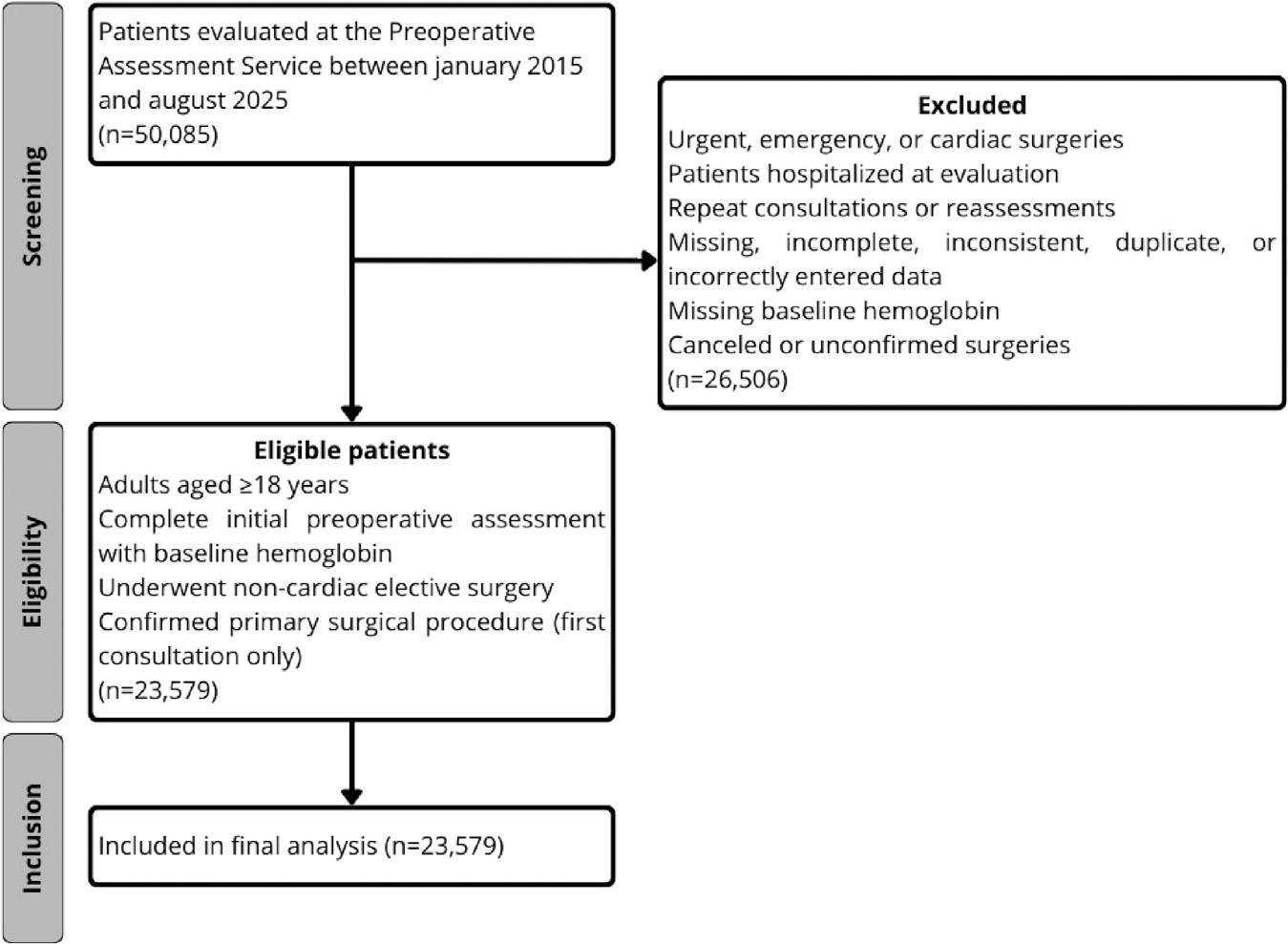
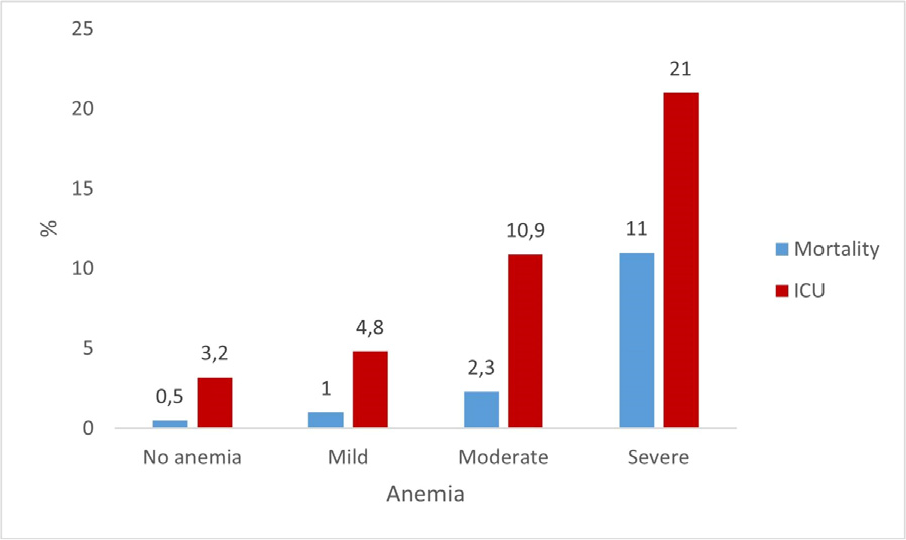
Methods This retrospective cohort included 23,579 adults assessed preoperatively between January 2015 and August 2025, all with documented hemoglobin (Hb) and hospitalized for noncardiac surgery. Patients were stratified as no anemia (≥ 13 g.dL−1), mild (11.1‒12.9 g.dL−1), moderate (8.1‒11.0 g.dL−1), or severe anemia (≤ 8.0 g.dL−1). Outcomes were in-hospital mortality, Intensive Care Unit (ICU) admission, and Length of Stay (LOS). Analyses used Poisson regression with robust variance adjusted for confounders.
Results Among the participants, 15,909 (67.5%) had no anemia, 6,396 (27.1%) mild, 1,174 (5.0%) moderate, and 100 (0.4%) severe anemia. Overall, 62.6% were female, and the mean age was 60.7 years (SD ±15.4). Compared with no anemia, all anemia categories were independently associated with higher in-hospital mortality, increased ICU admission, and longer LOS. Severe anemia was the strongest predictor of in-hospital mortality (adjusted RR = 24.7; 95% CI 13.3‒46.0; p < 0.001). Intermediate or major surgeries (RR = 4.7; 95% CI 3.4‒6.6), age > 54 years (RR = 4.4; 95% CI 2.6‒7.6), and male sex (RR = 2.1; 95% CI 1.6‒2.9) were also independent predictors of in-hospital mortality.
Conclusions Preoperative anemia, even when mild, was independently associated with higher in-hospital mortality, greater ICU admission, and prolonged hospitalization. These results support systematic screening and targeted management, including Patient Blood Management (PBM) strategies, to improve perioperative outcomes.
KEYWORDS
Anemia; Anesthesiology; Elective surgical procedures; Preoperative care; Postoperative complications
 Thumbnail
 Thumbnail