 Effects of Channa Lakta, a multi-component herbal–freshwater fish–seaweed formulation, on milk yield, pup growth, and serum prolactin levels in lactating Wistar rats
Abstract
This study evaluated the effects of a multi-component herbal–freshwater fish–seaweed formulation on lactation-related parameters in lactating Wistar rats. The formulation, commercially known as Channa Lakta, contains extracts ofChanna striata,Sauropus androgynus,Amaranthus tricolor, andUlva lactuca. Lactating rats were orally administered the formulation at doses of 198, 396, and 594 mg/kg body weight for 14 consecutive days, with a vehicle-treated group as the negative control and domperidone (3 mg/kg) as the positive control. Lactational performance was assessed based on pup body weight gain, estimated daily milk yield, and serum prolactin levels. Pup body weight and milk yield increased progressively during the lactation period in all groups. At the highest dose (594 mg/kg), the formulation increased daily milk yield to 0.799 ± 0.425 g/pup/day compared with 0.439 ± 0.107 g/pup/day in the negative control and was associated with higher pup body weight at day 14 (136.72 ± 16.26 g vs. 107.89 ± 10.74 g). Serum prolactin levels measured on day 15 were higher in the high-dose group (73.66 ± 4.43 ng/mL) than in the negative control (56.34 ± 8.54 ng/mL), showing a trend toward statistical significance. Lower and intermediate doses produced more modest effects, indicating that the strongest overall response was observed at 594 mg/kg rather than uniformly across all doses. These findings indicate that the tested multi-component formulation may modulate milk production, pup growth, and serum prolactin levels in a rat model of lactation under the experimental conditions applied. Further studies with larger sample sizes, direct mammary gland endpoints, and safety evaluation are needed before translation to postpartum use.
Keywords:
lactation; milk yield; prolactin; pup body weight; polyherbal formulation; Wistar rats
Resumo
Este estudo avaliou os efeitos de uma formulação multicomponente à base de plantas, peixe de água doce e alga marinha sobre parâmetros relacionados à lactação em ratas Wistar lactantes. A formulação, comercialmente conhecida como Channa Lakta, contém extratos deChanna striata,Sauropus androgynus,Amaranthus tricoloreUlva lactuca. As ratas lactantes receberam a formulação por via oral nas doses de 198, 396 e 594 mg/kg de peso corporal durante 14 dias consecutivos, sendo incluídos um controle negativo (veículo) e um controle positivo (domperidona, 3 mg/kg). O desempenho lactacional foi avaliado com base no ganho de peso dos filhotes, na estimativa da produção diária de leite e nos níveis séricos de prolactina. O peso dos filhotes e a produção de leite aumentaram progressivamente ao longo do período de lactação em todos os grupos. Na maior dose testada (594 mg/kg), a formulação elevou a produção diária de leite para 0,799 ± 0,425 g/filhote/dia, em comparação com 0,439 ± 0,107 g/filhote/dia no controle negativo, e esteve associada a maior peso dos filhotes no 14º dia (136,72 ± 16,26 g vs. 107,89 ± 10,74 g). Os níveis séricos de prolactina avaliados no 15º dia foram mais elevados no grupo de alta dose (73,66 ± 4,43 ng/mL) do que no controle negativo (56,34 ± 8,54 ng/mL), apresentando tendência à significância estatística. As doses mais baixas produziram efeitos mais modestos, indicando que a resposta global mais evidente ocorreu na dose de 594 mg/kg, e não de forma uniforme em todas as doses. Esses resultados indicam que a formulação multicomponente avaliada pode ter potencial para modular a produção de leite, o crescimento dos filhotes e os níveis séricos de prolactina em um modelo de lactação em ratas, dentro das condições experimentais adotadas. Estudos adicionais com amostras de maior tamanho, avaliação direta da glândula mamária e análise de segurança são necessários antes da translação para o uso no pós-parto.
Palavras-chave:
lactação; produção de leite; prolactina; peso dos filhotes; formulação poli-herbal; ratas Wistar
1. Introduction
Breastfeeding is universally recognized as the optimal method of providing infants with the nutrients necessary for healthy growth and development. It contributes significantly to neonatal immunity, cognitive development, and maternal postpartum recovery. The World Health Organization (WHO) recommends exclusive breastfeeding for the first six months of life, followed by continued breastfeeding alongside complementary foods for up to two years or beyond (Ahmed et al., 2023; PAHO, 2025). Despite these recommendations, breastfeeding practices remain suboptimal worldwide, with one of the common barriers being insufficient breast milk production. Studies have identified maternal nutrition, psychological stress, and hormonal imbalances as critical determinants of milk supply adequacy (Kortesniemi et al., 2021; Ten-Doménech et al., 2024; Viveros-Contreras et al., 2025). Recent investigations in natural product pharmacology have focused on botanical and animal-derived supplements that may act as galactagogues—agents that stimulate, maintain, or increase lactation. Several traditionally used plants, includingSauropus androgynus,Trigonella foenum-graecum, andFoeniculum vulgare, have been studied for their lactogenic properties in both clinical and preclinical models (Moosavi-Zadeh et al., 2023; Sen et al., 2024; Soka et al., 2010). Similarly, protein-rich extracts fromChanna striata(snakehead fish) have shown promise in accelerating tissue regeneration and enhancing nutrient profiles, which are potentially beneficial for postpartum women (Ab Wahab et al., 2015). In Indonesia, the use of traditional herbal preparations for maternal and family health is closely linked to jamu, which has been positioned not only as cultural heritage but also as a modern health innovation requiring scientific validation of its quality, safety, and efficacy (Nurcholis and Arianti, 2024).
The principal problem addressed in this study is the lack of effective, natural, and scientifically validated solutions to support lactation in postpartum women who experience low milk production. Existing interventions, such as pharmaceutical galactagogues like domperidone and metoclopramide, although effective, are associated with adverse effects including extrapyramidal symptoms, fatigue, and possible cardiac arrhythmias (Alkhowaiter et al., 2024). These safety concerns have driven researchers and healthcare practitioners toward safer, naturally-derived alternatives. Herbal-based galactagogues have emerged as a promising solution, given their historical use in traditional medicine and relatively favorable safety profiles. This relevance is particularly evident in Indonesia, where breastfeeding mothers have been reported to use herbal medicines, including jamu and jamu gendong, to support breast milk production, maternal recovery, and infant health (Sayuti and Atikah, 2023). However, many of these plant-, freshwater fish-, and seaweed-based solutions remain insufficiently investigated through rigorous pharmacodynamic and clinical assessments.
A promising candidate that has emerged from ethnomedicine and nutritional pharmacology is a multi-component supplement formulation combiningC. striata,S. androgynus,Amaranthus tricolor, andUlva lactuca. Each of these components has been individually associated with health benefits relevant to postpartum recovery and lactation.C. striata, for instance, is known for its high protein content and wound-healing properties, making it particularly beneficial for postpartum recovery (Ab Wahab et al., 2015).Sauropus androgynus, commonly referred to as katuk in Indonesia, has been traditionally used across Southeast Asia to stimulate lactation and is reported to contain lactagagogic compounds (Indrayani et al., 2020). The relevance of katuk in lactation-support practices is also supported by evidence from breastfeeding women in Mataram, whereS. androgynuswas reported as one of the commonly consumed herbal galactagogues (Triandini et al., 2023).Amaranthus tricoloris a leafy vegetable high in micronutrients, whileUlva lactuca, a green seaweed, offers significant dietary fiber and mineral content (Jahan et al., 2022; Mohan et al., 2023). Despite the known individual benefits of these components, there remains limited scientific literature validating their combined efficacy in enhancing lactation. The rationale for combining these ingredients lies in their complementary modes of action: whileC. striataaids tissue repair and nutritional support,S. androgynusandA. tricoloroffer hormonal and micronutrient support, andU. lactucacontributes to gastrointestinal health and mineral balance.
Previous studies that investigated single-ingredient galactagogues have yielded mixed outcomes. A study by Lompo-Ouedraogo et al. (2004) demonstrated that aqueous extract ofAcacia niloticasignificantly enhanced both milk production and prolactin levels in lactating rats, suggesting that herbal preparations may exert their effects through endocrine modulation (Lompo-Ouedraogo et al., 2004). Similarly, the role of prolactin in mammary gland development and milk secretion is well-established, positioning prolactin levels as a key biomarker in evaluating the effectiveness of galactagogue agents. The dynamic role of mammary gland adipocytes in lactation physiology has also been highlighted, particularly in how these cells respond to nutritional and hormonal cues that ultimately influence milk production outcomes (Colleluori et al., 2021). However, few studies have focused on multi-extract formulations that integrate both animal- and plant-based components to synergistically target nutritional, hormonal, and physiological aspects of lactation. Moreover, there remains a notable gap in research that translates traditional herbal knowledge into controlled experimental evidence using validated pharmacological endpoints such as prolactin levels and milk yield.
This study aims to evaluate the pharmacodynamic effects of a novel multi-component supplement, Channa Lakta, on lactation performance in a validated in vivo animal model. The formulation includes standardized extracts ofC. striata,S. androgynus,A. tricolor, andU. lactuca. The study investigates its impact on breast milk production, prolactin hormone levels, and pup weight gain in lactating Wistar rats over a 14-day treatment period. This research is justified by the need for safe, accessible, and effective galactagogue interventions, particularly in regions where postpartum nutritional deficits are prevalent. The novelty of this study lies in the integration of plant-, freshwater fish-, and seaweed-derived components in a single formulation and the comprehensive evaluation of its effect using both biochemical and physiological markers. The study further provides a critical link between traditional medicinal practices and modern pharmacological validation, offering insights into the potential development of natural product-based lactation supplements.
2. Materials and Methods
2.1. Experimental design
The study adopted an in vivo experimental design using Wistar rats as the animal model to evaluate the pharmacodynamic effect of Channa Lakta on breast milk production. The parameters assessed included offspring body weight, estimated daily milk yield, and serum prolactin levels. The lactating dam was considered the experimental unit, while pup body weight and milk-yield estimates were interpreted as litter-associated lactation outcomes. The experiment was conducted at the School of Pharmacy, Institut Teknologi Bandung, under controlled laboratory conditions using a five-group design consisting of one negative control, one positive control, and three dose levels of Channa Lakta.
2.2. Test material and dosage conversion
The test substance was Channa Lakta, a commercial polyherbal formulation from PT. Mega Medica Pharmaceuticals. The formulation was supplied as a finished capsule product, and no additional extraction was performed by the investigators. According to the product composition, each capsule contains 400 mgC. striataextract, 50 mgA. tricolorfolium extract, 50 mgS. androgynusfolium extract, and 50 mgU. lactucathallophyta extract, giving a total extract content of 550 mg per capsule. The extract type and preparation followed the manufacturer’s specification for the commercial product. Because the quality and reproducibility of herbal products depend partly on the consistency of their raw materials and formulation composition, the composition of the commercial product was described explicitly to support interpretation of the pharmacodynamic findings (Faiza et al., 2018). These ingredients were selected based on their known nutritional and lactogenic properties.C. striatais rich in essential amino acids and proteins, contributing to tissue repair and immune response in postpartum conditions (Lompo-Ouedraogo et al., 2004).A. tricolorprovides antioxidant and micronutrient support beneficial for maternal health (Jahan et al., 2022; Peter and Gandhi, 2017), while the pharmacological relevance of medicinal plants is commonly linked to secondary metabolites such as phenolic and flavonoid compounds, which contribute to antioxidant bioactivity and may vary across plant accessions, genotypes, and extraction conditions (Batubara et al., 2020; Nurcholis et al., 2021, 2022).S. androgynushas been widely recognized for its galactagogue effects due to the presence of papaverine and high iron content, and is traditionally used in Southeast Asia to enhance lactation (Colleluori et al., 2021; Indrayani et al., 2020; Soka et al., 2010).U. lactucaoffers dietary fiber and trace minerals that support gastrointestinal health and nutrient absorption (Mohan et al., 2023).
The test dosages used were 198 mg/kg, 396 mg/kg, and 594 mg/kg body weight, derived from human equivalent doses based on a conversion factor of 0.018. Dose conversion was performed using body-surface-area-based interspecies dose extrapolation, as commonly applied for converting human doses to animal doses in preclinical studies (Nair and Jacob, 2016; Reagan‐Shaw et al., 2008). These doses correspond to the administration of 4, 8, and 12 capsules per day in humans, respectively. Accordingly, all dose labels were standardized throughout the manuscript as CL-198, CL-396, and CL-594.
2.3. Animal subjects and housing conditions
The test subjects were male and female Wistar rats aged 8–10 weeks, weighing 200–250 g, confirmed to be healthy and non-pregnant. Male rats were used only for mating, whereas lactating female rats were used for treatment allocation and outcome assessment. Animals were housed under standardized environmental conditions (temperature 24–28 °C; humidity 60–70%) with a 12-hour light-dark cycle. Rats were acclimatized for seven days prior to treatment. Each experimental group consisted of five female rats, resulting in five groups: a negative control (CMC-Na 0.5%), a positive control (domperidone 3 mg/kg), and three treatment groups receiving Channa Lakta at the specified doses. Thus, the study included 25 lactating dams in total, with n = 5 dams per group.
2.4. Confirmation of mating and lactation period
Female rats were synchronized to the proestrus phase by examining vaginal smears under a microscope at 400x magnification to identify epithelial cells with prominent nuclei. Mating was confirmed by the presence of vaginal plugs or sperm in vaginal lavage samples stained with methylene blue. Pregnant females were isolated in individual cages until parturition and lactation commenced. The day of parturition was recorded as lactation day 0, and treatment was initiated during the lactation period according to the study schedule.
2.5. Administration of test substances
The test compounds and controls were administered orally once daily for 14 consecutive days using a gavage technique. The test compounds were suspended in 0.5% CMC-Na solution. Each treatment was standardized to a 2 mL volume per 200 g rat. Domperidone was used as the reference galactagogue for the positive control group at a dose of 3 mg/kg body weight. The negative control group received 0.5% CMC-Na vehicle only.
2.6. Measurement of daily milk yield
Milk production was estimated indirectly through pup weight gain measurements. On days 1, 3, 5, 7, and 14 of lactation, pups were weighed at 08:00 (W1), then separated from their mothers for four hours. At 12:00 (W2), they were weighed again, then returned to the dam and allowed to suckle for one hour. A final weighing at 13:00 (W3) was conducted. The immediate suckling-associated milk intake was estimated as W3 − W2. Weight change during the four-hour dam–pup separation period was used to account for pup metabolic weight loss, calculated as (W1 − W2)/4 per hour. Estimated daily milk yield was then derived by combining the one-hour suckling gain with the correction for separation-associated weight loss, following the indirect pup-weight method. This method was adapted from the protocol by Sampson and Jansen (Sampson and Jansen, 1984), which has been widely applied in lactation studies.
2.7. Determination of prolactin concentration
On day 15, all female rats were euthanized using gradual CO2 exposure. Blood samples were collected, centrifuged to isolate serum, and stored at -20 °C until analysis. Serum prolactin levels were measured using a commercial ELISA kit (Elabscience), following the manufacturer’s instructions. All samples were analyzed under the same assay conditions to minimize inter-assay variability.
2.8. Statistical analysis
Data from each parameter were analyzed using one-way Analysis of Variance (ANOVA) with Minitab software to determine statistical significance across groups. Data were expressed as mean ± standard deviation unless otherwise stated. The negative control group was used as the primary comparator for evaluating treatment effects. A p-value < 0.05 was considered statistically significant, and results with p-values < 0.1 were noted as showing a trend toward significance. Where available, exact p-values were reported in the Results or figure legends to improve statistical transparency.
2.9. Ethical considerations
All animal handling, housing, oral administration, blood collection, and euthanasia procedures were performed by trained personnel at the School of Pharmacy, Institut Teknologi Bandung, under controlled laboratory conditions and following institutional laboratory animal-care practices.
3. Results
3.1. Effect of Channa Lakta on pup body weight gain
Pup body weight increased steadily across the lactation period in all experimental groups, indicating normal postnatal growth under the study conditions (Figure 1). The negative control showed a gradual increase in body weight from day 1 to day 14, whereas the positive control (domperidone) exhibited a more pronounced increase and reached a significantly higher pup body weight at the endpoint (150.82 ± 17.25 g on day 14; P = 0.005 vs. negative control). Administration of Channa Lakta resulted in a treatment-related enhancement of pup body weight gain. The low (198 mg/kg bw) and middle (396 mg/kg bw) doses produced moderate increases compared with the negative control but did not reach statistical significance at day 14 (122.32 ± 26.95 g, P = 0.300; and 114.01 ± 28.37 g, P = 0.675, respectively). In contrast, the highest dose of Channa Lakta (594 mg/kg bw) yielded a higher pup body weight at the endpoint (136.72 ± 16.26 g on day 14) and showed a trend toward statistical significance compared with the negative control (P = 0.060). These findings indicate that Channa Lakta was associated with improved pup growth during lactation, with the strongest effect observed at the highest tested dose.
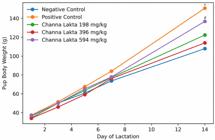
Pup body weight during the lactation period following Channa Lakta administration. Pup body weight (g) was measured on days 1, 3, 5, 7, and 14 of lactation in the negative control, positive control (domperidone), and Channa Lakta–treated groups. Data are presented as mean values. Statistical significance was determined by one-way ANOVA compared with the negative control. *P < 0.05 vs. negative control; #P < 0.1 vs. negative control. At day 14, the positive control differed significantly from the negative control (P = 0.005), while CL-594 showed a trend toward significance (P = 0.060). The middle-dose group was standardized as CL-396 throughout the manuscript.
3.2. Effect of Channa Lakta on estimated daily milk yield
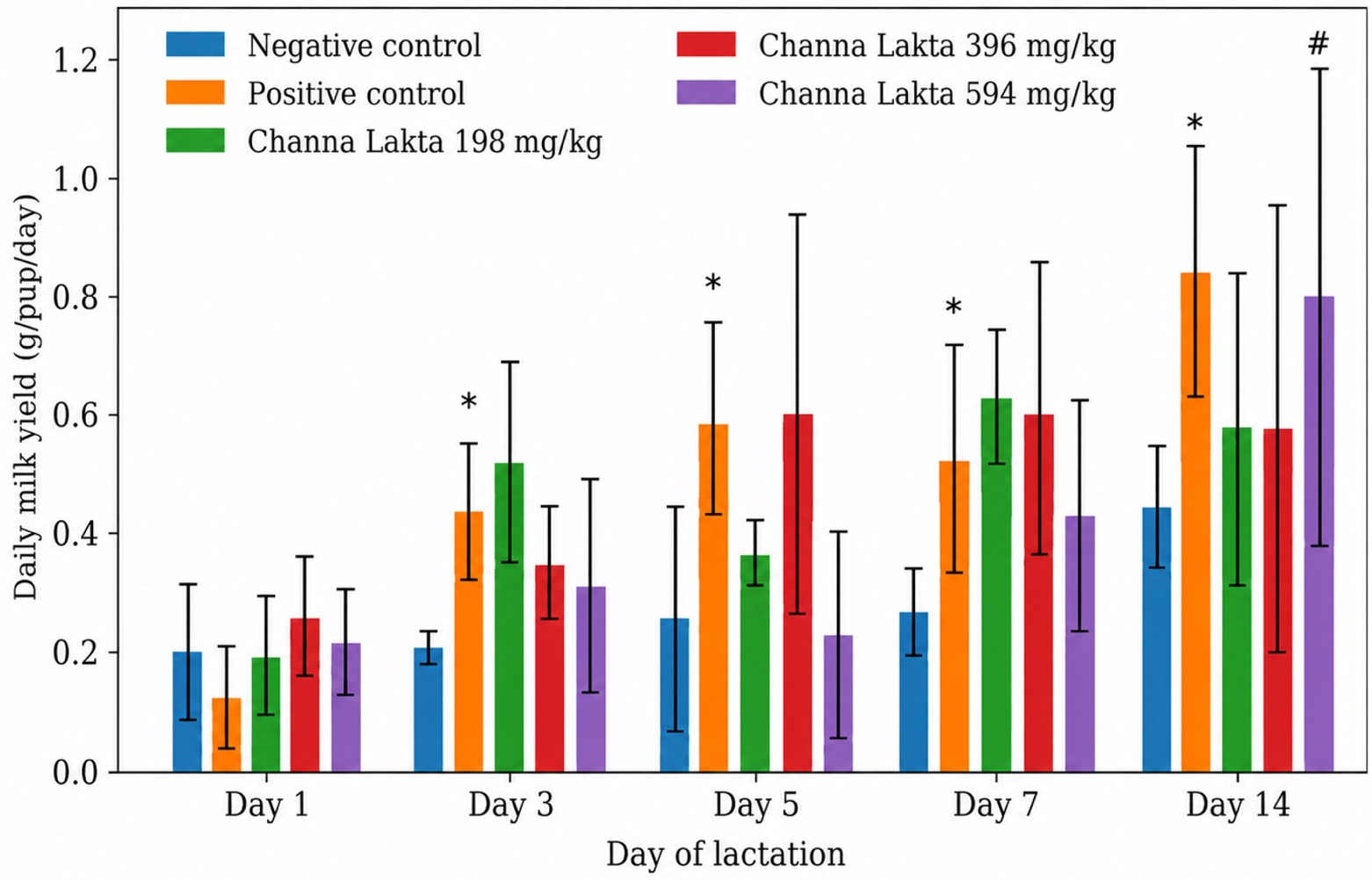
Daily milk yield increased progressively across the lactation period in all experimental groups, with treatment-related differences becoming more apparent toward the end of the observation period (Figure 2). The negative control exhibited a gradual increase in milk production over time, whereas the positive control (domperidone) showed a pronounced and sustained elevation beginning on day 3(P = 0.030)and reached the highest milk yield on day 14 (0.840 ± 0.217 g/pup/day), which was significantly higher than the negative control (P = 0.044). Administration of Channa Lakta enhanced daily milk yield in a time-dependent but not uniformly dose-dependent manner. Although lower and middle doses increased milk production at intermediate time points, with significant increases observed for CL-198 on days 3 and 7 (P = 0.003 and P = 0.006, respectively) and for CL-396 on days 5 and 7 (P = 0.025 and P = 0.008, respectively), the highest dose (594 mg/kg bw) produced the greatest effect at the endpoint, reaching 0.799 ± 0.425 g/pup/day on day 14 and demonstrating a trend toward statistical significance compared with the negative control (P = 0.068).

Daily milk yield during administration of the test formulation. Daily milk yield (g/pup/day) was measured on days 1, 3, 5, 7, and 14 of lactation. Data are presented as mean ± SD. Statistical analysis was performed using one-way ANOVA compared with the negative control. P < 0.05 vs. negative control; #P < 0.1 vs. negative control. At day 14, the positive control differed significantly from the negative control (P = 0.044), while CL-594 showed a trend toward significance (P = 0.068). The middle-dose group was standardized as CL-396 throughout the manuscript.
3.3. Effect of Channa Lakta on serum prolactin levels
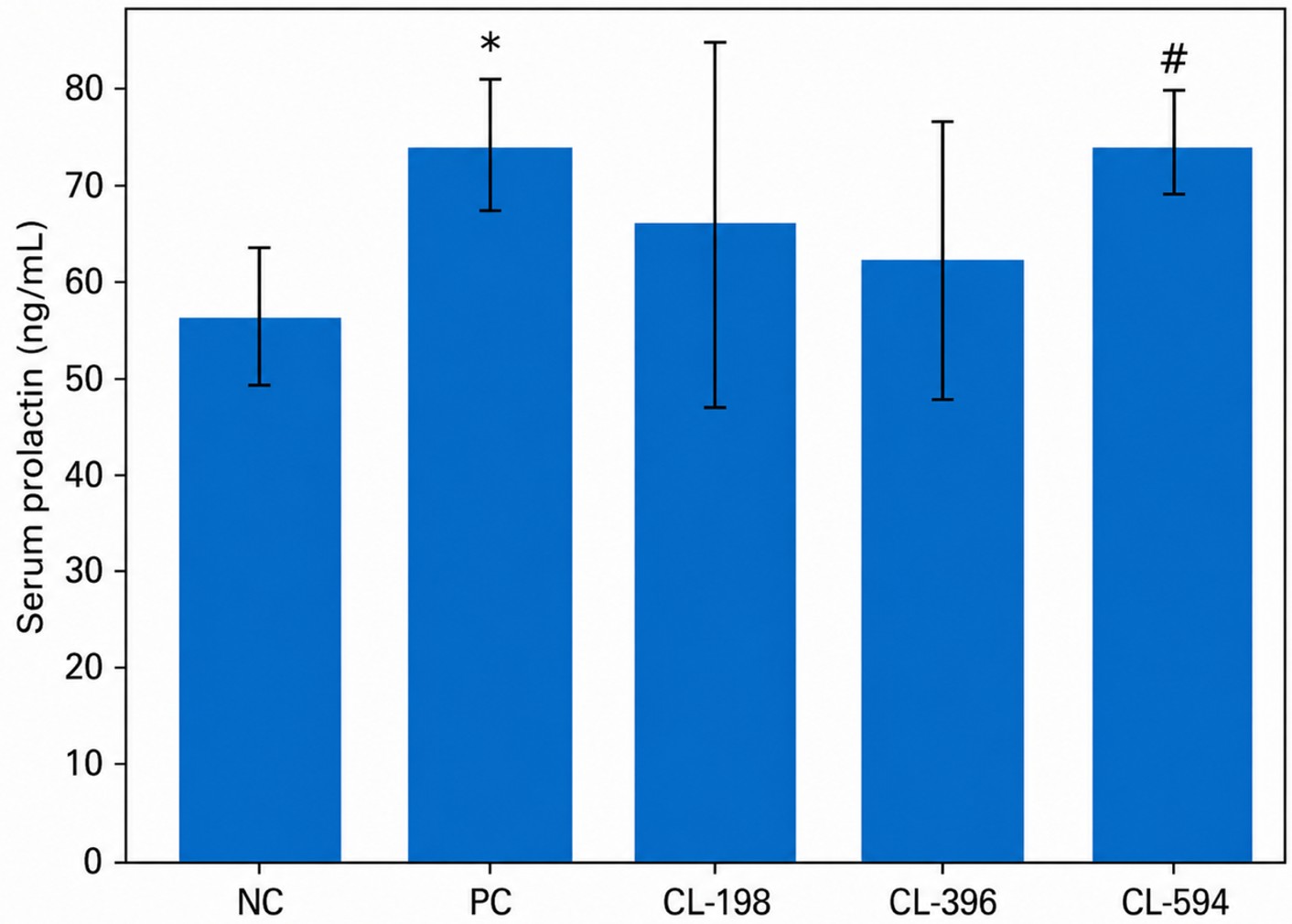
After 14 days of administration, measurable differences in serum prolactin levels were observed among the experimental groups (Figure 3). The negative control group exhibited a mean serum prolactin concentration of 56.34 ± 8.54 ng/mL, representing baseline endocrine conditions during lactation. In contrast, the positive control group treated with domperidone showed a significantly higher prolactin level, reaching 73.98 ± 7.07 ng/mL (P = 0.048 vs. negative control), consistent with its known dopaminergic antagonistic effect on prolactin secretion. Treatment with Channa Lakta resulted in treatment-related changes in serum prolactin concentrations. The low-dose (198 mg/kg bw) and middle-dose (396 mg/kg bw) groups showed mean prolactin levels of 65.71 ± 18.45 ng/mL and 61.56 ± 14.08 ng/mL, respectively, indicating modest increases relative to the negative control but without statistical significance (P = 0.274 and P = 0.658, respectively). Notably, the highest dose of Channa Lakta (594 mg/kg bw) increased serum prolactin levels to 73.66 ± 4.43 ng/mL, comparable to the positive control, and demonstrated a trend toward statistical significance compared with the negative control (P = 0.064). These results suggest that Channa Lakta, particularly at higher doses, may be associated with increased circulating prolactin levels, supporting its potential role in modulating hormonal mechanisms associated with lactation.

Effect of Channa Lakta on serum prolactin levels after 14 days of administration. Serum prolactin concentrations were measured on day 15 following 14 consecutive days of treatment. NC, negative control; PC, positive control (domperidone); CL-198, CL-396, and CL-594, Channa Lakta at doses of 198, 396, and 594 mg/kg, respectively. Data are presented as mean ± SD. Statistical significance was determined using one-way ANOVA compared with the negative control. *P< 0.05 vs. negative control; #P< 0.1 vs. negative control. Exact p-values versus the negative control were P = 0.048 for PC, P = 0.274 for CL-198, P = 0.658 for CL-396, and P = 0.064 for CL-594.
4. Discussion
The present findings demonstrate that supplementation with Channa Lakta enhances lactational performance through a complex interaction between endocrine modulation and nutritional support rather than through a single dominant mechanism. The concurrent increases in daily milk yield, pup body weight, and serum prolactin levels observed at the highest dose indicate that hormonal regulation, particularly prolactin secretion, plays an important role in mediating the lactation-enhancing effects of the formulation. Prolactin is widely recognized as a central regulator of mammary gland development and milk synthesis, and its elevation is frequently associated with improved milk output and offspring growth. In this study, the increase in milk yield accompanied by higher serum prolactin levels at the highest dose of Channa Lakta suggests that endocrine pathways contribute substantially to the observed effects, although the association observed here should not be interpreted as evidence that prolactin was the only causal mediator of the lactogenic response. Similar associations between dietary interventions, prolactin modulation, and lactational outcomes have been reported, particularly for supplements derived from marine algae and plant-based proteins, supporting the view that diet-induced hormonal changes can meaningfully influence lactation (Nguyen et al., 2023; Rivero et al., 2023; Sharma et al., 2022).
Nevertheless, the results also point toward a combined nutritional–hormonal mechanism. The protein-rich componentC. striatalikely contributes to improved maternal nutritional status, tissue recovery, and metabolic efficiency, all of which are essential during the energetically demanding lactation period. Adequate intake of high-quality protein and essential amino acids has been shown to support mammary tissue integrity and sustain milk synthesis, even in the absence of marked hormonal changes (Han et al., 2021; Hariyati et al., 2020). This nutritional contribution may explain why moderate improvements in milk yield and pup growth were observed at lower and intermediate doses of Channa Lakta, despite only modest changes in circulating prolactin levels. Thus, the lactogenic activity of Channa Lakta at these doses may be partly attributable to improved maternal nutrient availability and metabolic support rather than to strong endocrine stimulation alone.
The prolactin-enhancing effect detected at the highest dose may also be mechanistically linked to the presence ofS. androgynus, which has been reported to exert dopaminergic antagonistic activity. Because dopamine acts as an inhibitor of prolactin secretion, partial antagonism of dopaminergic signaling could relieve this inhibition and promote prolactin release, thereby supporting lactation (Gaspar-Pintiliescu et al., 2024; Sharma et al., 2022). This mechanism is consistent with observations from other plant-based galactagogues and reinforces the importance of phytochemical-driven endocrine modulation within the Channa Lakta formulation. However, dopaminergic activity was not directly assessed in this study; therefore, this explanation remains a biologically plausible mechanism that requires confirmation through targeted neuroendocrine measurements.
In addition to protein and hormonal effects, micronutrients and antioxidants provided byA. tricolormay further support lactational performance. Oxidative stress and metabolic strain increase during lactation, and dietary antioxidants have been associated with improved mammary gland function and metabolic health (Cotas et al., 2021; Li et al., 2022). By mitigating oxidative stress and supporting cellular metabolism,A. tricolorcould indirectly enhance milk synthesis and secretion. Similarly,U. lactuca, as a source of dietary fiber and trace minerals, may improve gastrointestinal function and nutrient absorption. Enhanced gut health and nutrient bioavailability are particularly relevant during lactation, when efficient nutrient utilization is critical for sustained milk production (Al-Soufi et al., 2022; Cotas et al., 2021). Because oxidative stress biomarkers, intestinal function, and nutrient absorption parameters were not measured, these pathways should be interpreted as proposed supportive mechanisms rather than confirmed effects of the formulation.
The dose-dependent pattern observed in this study suggests that the effects of Channa Lakta are not merely additive but may arise from synergistic interactions among its components. At optimal doses, the combined actions of endocrine modulation, improved nutritional status, antioxidant protection, and enhanced nutrient absorption may converge to produce a more pronounced lactational response. Such synergy distinguishes multi-component formulations like Channa Lakta from single-ingredient galactagogues, which often act predominantly through prolactin-mediated pathways alone (Gaspar-Pintiliescu et al., 2024; Hariyati et al., 2020). By simultaneously targeting multiple regulatory pathways, Channa Lakta may offer more sustained and physiologically balanced lactation support (Han et al., 2021; Li et al., 2022). Nevertheless, component-specific studies and formal interaction analyses are required before a definitive synergistic effect can be established.
It is also notable that increased milk yield was not always accompanied by proportional increases in prolactin at lower doses, underscoring the complexity of lactation regulation. Beyond systemic hormones, local factors within the mammary gland, including adipocyte function, growth factors, and nutrient partitioning, are increasingly recognized as important modulators of milk synthesis (Al-Soufi et al., 2022; Cotas et al., 2021). Emerging evidence suggests that mammary gland adipocytes and local metabolic signals can influence lactational capacity independently of circulating prolactin levels (Karo and Mufdlilah, 2023; Tănase et al., 2024). These mechanisms may contribute to the lactational improvements observed with Channa Lakta, particularly at doses that primarily enhance nutritional status rather than strongly altering endocrine profiles. This pattern further indicates that serum prolactin should be considered one relevant indicator, but not a complete surrogate marker, of lactational performance in studies of multi-component galactagogues.
Taken together, the findings support the concept that Channa Lakta enhances lactational performance through a multifaceted mechanism involving both endocrine stimulation and nutritional optimization. This integrated mode of action has important implications for the development of safer, natural galactagogues. Unlike pharmaceutical agents such as domperidone, which primarily act through dopaminergic inhibition and are associated with safety concerns (Gudipati, 2024; Weimer, 2023), multi-component natural formulations may provide broader physiological benefits while minimizing adverse effects (Mohini et al., 2022; Nurmiaty et al., 2024). However, comparative safety, toxicological assessment, and long-term dose–response evaluation are still needed before Channa Lakta can be recommended beyond the experimental context. The present study therefore contributes to a growing body of evidence supporting the rational design of natural, multi-target galactagogue formulations that address the complex biological demands of lactation.
5. Conclusion
In this in vivo study, administration of Channa Lakta—a multi-component formulation containingC. striataextract (400 mg/capsule),A. tricolorfolium extract (50 mg/capsule),S. androgynusfolium extract (50 mg/capsule), andU. lactuca thallophyta extract (50 mg/capsule)—was associated with treatment-related changes in lactation parameters in Wistar rats over a 14-day treatment period. At the highest dose tested (594 mg/kg bw), Channa Lakta increased daily milk yield to 0.799 ± 0.425 g/pup/day, compared with 0.439 ± 0.107 g/pup/day in the negative control, and was accompanied by a higher serum prolactin level(73.66 ± 4.43 ng/mL vs. 56.34 ± 8.54 ng/mL), showing a trend toward statistical significance for both milk yield and prolactin concentration. Pup body weight at day 14 was also higher at this dose (136.72 ± 16.26 g vs. 107.89 ± 10.74 g in the negative control).
Lower and intermediate doses produced more modest effects across these parameters, indicating that the strongest overall response was observed in the CL-594 group rather than uniformly across all treatment levels. These findings suggest that the combination of protein-rich C. striata with phytochemically and nutritionally active plant and seaweed components may influence lactational performance through both hormonal and nutritional pathways. However, the effects were not uniformly significant across all outcomes and should be interpreted within the limitations of the small preclinical sample size. Therefore, this study should be regarded as preliminary experimental evidence that Channa Lakta may modulate milk production, pup growth, and prolactin levels under the present animal-model conditions, rather than as direct evidence of clinical efficacy in postpartum women. Further studies with larger sample sizes, direct mammary gland endpoints, safety assessment, and clinical validation are required before translation to postpartum use in humans.
Data Availability Statement
The research data are available upon prior request via email to the corresponding author.
-
Declaration on the Use of Artificial Intelligence Tools
Artificial intelligence-assisted tools were used during manuscript preparation to assist with language editing, readability improvement, and refinement of the presentation. The authors carefully reviewed, verified, and approved all content, including the data, results, interpretation, conclusions, and references, and take full responsibility for the accuracy, integrity, and scientific validity of the manuscript.
References
-
AB WAHAB, S.Z., ABDUL KADIR, A., NIK HUSSAIN, N.H., OMAR, J., YUNUS, R., BAIE, S., MOHD NOOR, N., HASSAN, I.I., WAN MAHMOOD, W.H., ABD RAZAK, A. and WAN YUSOFF, W.Z., 2015. The effect of Channa striatus (Haruan) extract on pain and wound healing of post-lower segment caesarean section women. Evidence-Based Complementary and Alternative Medicine : eCAM, vol. 2015, pp. 849647. https://doi.org/10.1155/2015/849647 PMid:26101537.
» https://doi.org/10.1155/2015/849647 -
AHMED, S.O.M., HAMID, H.I.A., JOTHI SHANMUGAM, A., TIA, M.M.G. and ALNASSRY, S.M.A., 2023. Impact of exclusive breastfeeding on physical growth. Clinical Nutrition Open Science, vol. 49, pp. 101-106. https://doi.org/10.1016/j.nutos.2023.04.008
» https://doi.org/10.1016/j.nutos.2023.04.008 -
ALKHOWAITER, S., AL RASHEED, M.M., ALAMMAR, N., ALOTAIBI, A., ALTUWAIJRI, M., ALSHANKITI, S., OMAIR, M.A. and ALSAHAFI, M., 2024. Safety of prolonged use of metoclopramide and domperidone as treatment for chronic gastrointestinal dysmotility disorders in patients with systemic sclerosis. Saudi Pharmaceutical Journal : SPJ : The Official Publication of the Saudi Pharmaceutical Society, vol. 32, no. 5, pp. 102039. https://doi.org/10.1016/j.jsps.2024.102039 PMid:38558884.
» https://doi.org/10.1016/j.jsps.2024.102039 -
AL-SOUFI, S., GARCÍA, J., MUÍÑOS, A. and LÓPEZ-ALONSO, M., 2022. Marine macroalgae in rabbit nutrition: a valuable feed in sustainable farming. Animals, vol. 12, no. 18, pp. 2346. https://doi.org/10.3390/ani12182346 PMid:36139209.
» https://doi.org/10.3390/ani12182346 -
BATUBARA, I., KOMARIAH, K., SANDRAWATI, A. and NURCHOLIS, W., 2020. Genotype selection for phytochemical content and pharmacological activities in ethanol extracts of fifteen types of Orthosiphon aristatus (Blume) Miq. leaves using chemometric analysis. Scientific Reports, vol. 10, no. 1, pp. 20945. https://doi.org/10.1038/s41598-020-77991-2 PMid:33262368.
» https://doi.org/10.1038/s41598-020-77991-2 -
COLLELUORI, G., PERUGINI, J., BARBATELLI, G. and CINTI, S., 2021. Mammary gland adipocytes in lactation cycle, obesity and breast cancer. Reviews in Endocrine & Metabolic Disorders, vol. 22, no. 2, pp. 241-255. https://doi.org/10.1007/s11154-021-09633-5 PMid:33751362.
» https://doi.org/10.1007/s11154-021-09633-5 -
COTAS, J., PACHECO, D., GONÇALVES, A.M.M., SILVA, P., CARVALHO, L.G. and PEREIRA, L., 2021. Seaweeds’ nutraceutical and biomedical potential in cancer therapy: a concise review. Journal of Cancer Metastasis and Treatment, vol. 7, no. 13, pp. 1-24. https://doi.org/10.20517/2394-4722.2020.134
» https://doi.org/10.20517/2394-4722.2020.134 -
FAIZA, L.L., ARIFIN, P.F., NURCHOLIS, W., RIDWAN, T., DARUSMAN, L.K., SUSILOWIDODO, R.A. and WISASTRA, R., 2018. Effect of local microorganism utilization to increase productivity of Javanese turmeric (Curcuma xanthorriza Roxb.). Jurnal Jamu Indonesia, vol. 3, no. 2, pp. 62-67. https://doi.org/10.29244/jji.v3i2.55
» https://doi.org/10.29244/jji.v3i2.55 -
GASPAR-PINTILIESCU, A., STEFAN, L.M., MIHAI, E., SANDA, C., MANOIU, V.S., BERGER, D. and CRACIUNESCU, O., 2024. Antioxidant and antiproliferative effect of a glycosaminoglycan extract from Rapana venosa marine snail. PLoS One, vol. 19, no. 2, pp. e0297803. https://doi.org/10.1371/journal.pone.0297803 PMid:38359063.
» https://doi.org/10.1371/journal.pone.0297803 -
GUDIPATI, S., 2024. Review on efficacy of phytogenic galacto powder supplement as potential galactogague. International Research Journal on Advanced Engineering and Management, vol. 2, no. 10, pp. 3233-3237. https://doi.org/10.47392/IRJAEM.2024.0476
» https://doi.org/10.47392/IRJAEM.2024.0476 -
HAN, F., LIU, Y., PANG, X., WANG, Q., LIU, L., CHAI, Y., ZHANG, J., WANG, S., LU, J., SUN, L., ZHAN, S. and HUANG, Z., 2021. Low selenium intake is associated with postpartum weight retention in Chinese women and impaired physical development of their offspring. The British Journal of Nutrition, vol. 126, no. 10, pp. 1498-1509. https://doi.org/10.1017/S0007114521000015 PMid:33427139.
» https://doi.org/10.1017/S0007114521000015 -
HARIYATI, H., MAHENDRADATTA, M., TAWALI, A.B. and LANGKONG, J., 2020. Enzymatic hydrolysis of proteins from snakehead-fish (Channa striata). IOP Conference Series. Materials Science and Engineering, vol. 885, no. 1, pp. 012015. https://doi.org/10.1088/1757-899X/885/1/012015
» https://doi.org/10.1088/1757-899X/885/1/012015 -
INDRAYANI, D., SHAHIB, M.N. and HUSIN, F., 2020. The effect of katuk (Sauropus androgunus (L) Merr) leaf biscuit on increasing prolactine levels of breastfeeding mother. Jurnal Kesehatan Masyarakat, vol. 16, no. 1, pp. 1-7. https://doi.org/10.15294/kemas.v16i1.11324
» https://doi.org/10.15294/kemas.v16i1.11324 -
JAHAN, F., BHUIYAN, M.N.H., ISLAM, M.J., AHMED, S., HASAN, M.S., BASHERA, M.A., WALIULLAH, M., CHOWDHURY, A.N., ISLAM, M.B., SAHA, B.K. and MOULICK, S.P., 2022. Amaranthus tricolor (red amaranth), an indigenous source of nutrients, minerals, amino acids, phytochemicals, and assessment of its antibacterial activity. Journal of Agriculture and Food Research, vol. 10, pp. 100419. https://doi.org/10.1016/j.jafr.2022.100419
» https://doi.org/10.1016/j.jafr.2022.100419 -
KARO, D.B. and MUFDLILAH, M., 2023. The effectiveness of galactagogue content on breast milk production: a scoping review. Jurnal Aisyah : Jurnal Ilmu Kesehatan, vol. 8, no. 4, pp. 1846-1858. https://doi.org/10.30604/jika.v8i4.2381
» https://doi.org/10.30604/jika.v8i4.2381 -
KORTESNIEMI, M., SLUPSKY, C.M., AATSINKI, A.-K., SINKKONEN, J., KARLSSON, L., LINDERBORG, K.M., YANG, B., KARLSSON, H. and KAILANTO, H.-M., 2021. Human milk metabolome is associated with symptoms of maternal psychological distress and milk cortisol. Food Chemistry, vol. 356, pp. 129628. https://doi.org/10.1016/j.foodchem.2021.129628 PMid:33836356.
» https://doi.org/10.1016/j.foodchem.2021.129628 -
LI, J., GRAY, H.L., KIM, S., PARK, H., LEE, Y., LEE, H. and SONG, K., 2022. Postpartum diet and the lifestyle of Korean and Chinese women: a comparative study. Frontiers in Public Health, vol. 10, pp. 803503. https://doi.org/10.3389/fpubh.2022.803503 PMid:35462835.
» https://doi.org/10.3389/fpubh.2022.803503 -
LOMPO-OUEDRAOGO, Z., VAN DER HEIDE, D., VAN DER BEEK, E., SWARTS, H., MATTHEIJ, J. and SAWADOGO, L., 2004. Effect of aqueous extract of Acacia nilotica ssp adansonii on milk production and prolactin release in the rat. The Journal of Endocrinology, vol. 182, no. 2, pp. 257-266. https://doi.org/10.1677/joe.0.1820257 PMid:15283686.
» https://doi.org/10.1677/joe.0.1820257 -
MOHAN, H.E., MADHUSUDAN, S. and BASKARAN, R., 2023. The sea lettuce Ulva sensu lato: future food with health-promoting bioactives. Algal Research, vol. 71, pp. 103069. https://doi.org/10.1016/j.algal.2023.103069
» https://doi.org/10.1016/j.algal.2023.103069 -
MOHINI, K., MOHINI, U., AMRITA, K., AISHWARYA, Z., DISHA, S. and PADMAJA, K., 2022. Verbena officinalis (Verbenaceae): Pharmacology, Toxicology and role in female health. International Journal of Ayurvedic Medicine, vol. 13, no. 2, pp. 296-304. https://doi.org/10.47552/ijam.v13i2.2748
» https://doi.org/10.47552/ijam.v13i2.2748 -
MOOSAVI-ZADEH, E., RAHIMI, A., RAFIEE, H., SABERIPOUR, H. and BAHADORAN, R., 2023. Effects of fennel (Foeniculum vulgare) seed powder addition during early lactation on performance, milk fatty acid profile, and rumen fermentation parameters of Holstein cows. Frontiers in Animal Science (Online), vol. 4, pp. 1097071. https://doi.org/10.3389/fanim.2023.1097071
» https://doi.org/10.3389/fanim.2023.1097071 -
NAIR, A. and JACOB, S., 2016. A simple practice guide for dose conversion between animals and human. Journal of Basic and Clinical Pharmacy, vol. 7, no. 2, pp. 27-31. https://doi.org/10.4103/0976-0105.177703 PMid:27057123.
» https://doi.org/10.4103/0976-0105.177703 -
NGUYEN, H.T., NGUYEN, N.T.M., NGUYEN, C.V. and NGO, P.H., 2023. Effects of dietary seaweed supplementation on milk productivity, milk quality and health of dairy cows. The Journal of Agriculture and Development, vol. 21, no. 06, pp. 17-25. https://doi.org/10.52997/jad.3.06.2022
» https://doi.org/10.52997/jad.3.06.2022 -
NURCHOLIS, W., ALFADZRIN, R., IZZATI, N., ARIANTI, R., VINNAI, B.Á., SABRI, F., KRISTÓF, E. and ARTIKA, I.M., 2022. Effects of methods and durations of extraction on total flavonoid and phenolic contents and antioxidant activity of Java cardamom (Amomum compactum Soland Ex Maton) fruit. Plants, vol. 11, no. 17, pp. 2221. https://doi.org/10.3390/plants11172221 PMid:36079603.
» https://doi.org/10.3390/plants11172221 -
NURCHOLIS, W. and ARIANTI, R., 2024. Jamu as Indonesian cultural heritage and modern health innovation. Jurnal Jamu Indonesia, vol. 9, no. 1, pp. 1-2. https://doi.org/10.29244/jji.v9i1.317
» https://doi.org/10.29244/jji.v9i1.317 -
NURCHOLIS, W., SYA’BANI PUTRI, D.N., HUSNAWATI, H., AISYAH, S.I. and PRIOSOERYANTO, B.P., 2021. Total flavonoid content and antioxidant activity of ethanol and ethyl acetate extracts from accessions of Amomum compactum fruits. Annals of Agricultural Science, vol. 66, no. 1, pp. 58-62. https://doi.org/10.1016/j.aoas.2021.04.001
» https://doi.org/10.1016/j.aoas.2021.04.001 -
NURMIATY, N., AISA, S., ASWITA, A., DOLUFU, M., RAHMAN, N. and BATBUAL, B., 2024. The impact of oxytocin massage and banana flower consumption (Musa balbisiana colla) on the prolactin level in breastfeeding mothers. Jurnal Info Kesehatan, vol. 21, no. 4, pp. 721-729. https://doi.org/10.31965/infokes.Vol21.Iss4.1129
» https://doi.org/10.31965/infokes.Vol21.Iss4.1129 -
PAN AMERICAN HEALTH ORGANIZATION – PAHO, 2025 [viewed 4 December 2025]. Breastfeeding and complementary feeding - PAHO/WHO [online]. Available from: https://www.paho.org/en/topics/breastfeeding-and-complementary-feeding?utm_source=PANTHEON_STRIPPED&page=13
» https://www.paho.org/en/topics/breastfeeding-and-complementary-feeding?utm_source=PANTHEON_STRIPPED&page=13 -
PETER, K. and GANDHI, P., 2017. Rediscovering the therapeutic potential of Amaranthus species: a review. Egyptian Journal of Basic and Applied Sciences, vol. 4, no. 3, pp. 196-205. https://doi.org/10.1016/j.ejbas.2017.05.001
» https://doi.org/10.1016/j.ejbas.2017.05.001 -
REAGAN‐SHAW, S., NIHAL, M. and AHMAD, N., 2008. Dose translation from animal to human studies revisited. FASEB Journal : Official Publication of the Federation of American Societies for Experimental Biology, vol. 22, no. 3, pp. 659-661. https://doi.org/10.1096/fj.07-9574LSF PMid:17942826.
» https://doi.org/10.1096/fj.07-9574LSF -
RIVERO, J.M., MERINO, V.M., PLAZA, J.E. and PENA, J., 2023. Evaluation of two commercially available rumen buffers derived from calcified seaweed for grazing dairy cows: pilot trial in commercial farms. Agro Sur, vol. 50, no. 3, pp. 45-53. https://doi.org/10.4206/agrosur.2022.v50n3-04
» https://doi.org/10.4206/agrosur.2022.v50n3-04 -
SAMPSON, D.A. and JANSEN, G.R., 1984. Measurement of milk yield in the lactating rat from pup weight and weight gain. Journal of Pediatric Gastroenterology and Nutrition, vol. 3, no. 4, pp. 613-617. https://doi.org/10.1097/00005176-198409000-00023 PMid:6481568.
» https://doi.org/10.1097/00005176-198409000-00023 -
SAYUTI, N.A. and ATIKAH, N., 2023. The pattern of herbal medicines use for breastfeeding mother in Jogonalan, Klaten, Indonesia: a mini survey. BMC Complementary Medicine and Therapies, vol. 23, no. 1, pp. 399. https://doi.org/10.1186/s12906-023-04235-x PMid:37936188.
» https://doi.org/10.1186/s12906-023-04235-x -
SEN, S., MONDAL, S., NASKAR, A., RAI, M., DAS, T. and SANYAL, R. (2024). Fenugreek seed (Trigonella foenum-graecum). in medicinal spice and condiment Crops Boca Raton: CRC Press, pp. 277-287. https://doi.org/10.1201/9781003387046-17
» https://doi.org/10.1201/9781003387046-17 -
SHARMA, A., DATT, C., KUMAR, J., DUDI, K., SHAMBHVI, M., MANI, V. and LATHWAL, S., 2022. Supplementary effect of K. alvarezii baesd seaweed product on milk production,its composition and organoleptic appraisal in crossbred cows. Indian Journal of Dairy Science, vol. 75, no. 2, pp. 156-161. https://doi.org/10.33785/IJDS.2022.v75i02.009
» https://doi.org/10.33785/IJDS.2022.v75i02.009 -
SOKA, S., ALAM, H., BOENJAMIN, N., AGUSTINA, T.W. and SUHARTONO, M.T., 2010. Effect of Sauropus androgynus leaf extracts on the expression of prolactin and oxytocin genes in lactating BALB/C mice. Journal of Nutrigenetics and Nutrigenomics, vol. 3, no. 1, pp. 31-36. https://doi.org/10.1159/000319710 PMid:20798550.
» https://doi.org/10.1159/000319710 -
TĂNASE, L.-A., NISTOR, O.-V., MOCANU, G.-D., ANDRONOIU, D.-G., BOTEZ, E. and ȘTEFĂNESCU, B.I., 2024. Red beetroot and red capsicum pepper purees boosted with anise or fennel aqueous extracts. Applied Sciences, vol. 14, no. 13, pp. 5650. https://doi.org/10.3390/app14135650
» https://doi.org/10.3390/app14135650 -
TEN-DOMÉNECH, I., MORENO-GIMÉNEZ, A., CAMPOS-BERGA, L., ZAPATA DE MIGUEL, C., LÓPEZ-NOGUEROLES, M., PARRA-LLORCA, A., QUINTÁS, G., GARCÍA-BLANCO, A., GORMAZ, M. and KULIGOWSKI, J., 2024. Impact of maternal health and stress on steroid hormone profiles in human milk: implications for infant development. Journal of Lipid Research, vol. 65, no. 12, pp. 100688. https://doi.org/10.1016/j.jlr.2024.100688 PMid:39490927.
» https://doi.org/10.1016/j.jlr.2024.100688 -
TRIANDINI, I.G.A.A.H., GUMANGSARI, N.M.G. and WANGIYANA, I.G.A.S., 2023. Knowledge and behavior regarding consumption of herbal galactagogues among breastfeeding women in mataram city. Embrio, vol. 15, no. 1, pp. 1-10. https://doi.org/10.36456/embrio.v15i1.6199
» https://doi.org/10.36456/embrio.v15i1.6199 -
VIVEROS-CONTRERAS, R., HUERTA-CANSECO, C., CRUZ-HUERTA, E., CONTRERAS-DOMÍNGUEZ, A., NEME KURI, J.G., HUERTA MORALES, D., RIVAS-ESTILLA, A.M. and CABA-FLORES, M.D., 2025. Resilience of breastmilk composition to maternal nutritional stress in mothers with preterm infants. Breastfeeding Medicine : The Official Journal of the Academy of Breastfeeding Medicine, vol. 20, no. 11, pp. 837-843. https://doi.org/10.1177/15568253251379478 PMid:40956655.
» https://doi.org/10.1177/15568253251379478 -
WEIMER, A.K., 2023. Lactation induction in a transgender woman: macronutrient analysis and patient perspectives. Journal of Human Lactation : Official Journal of International Lactation Consultant Association, vol. 39, no. 3, pp. 488-494. https://doi.org/10.1177/08903344231170559 PMid:37138506.
» https://doi.org/10.1177/08903344231170559
Edited by
-
Editor:
Takako Matsumura Tundisi