 Diversity of mangrove endophytes and implications for ecosystem sustainability in biotechnology
Abstract
Mangrove ecosystems are among the most productive and ecologically significant coastal habitats, providing essential services such as carbon sequestration, shoreline stabilization, and biodiversity support under extreme saline and anoxic conditions. Increasing evidence highlights the pivotal role of endophytic microorganisms residing asymptomatically within mangrove plant tissues in enhancing host adaptation and ecosystem resilience. However, global patterns of their diversity, functional traits, and biotechnological potential remain fragmented across studies. This review provides a comprehensive synthesis of peer-reviewed literature published between 2000 and 2025, retrieved from Web of Science, Scopus, and PubMed, using a structured and reproducible search strategy. A total of 187 studies were analyzed, yielding 152 identified endophytic species. Fungi accounted for approximately 58% of reported taxa, followed by bacteria (39%) and archaea (3%), with Ascomycota and Proteobacteria emerging as dominant phyla across host species and geographic regions. Functionally, mangrove endophytes contribute to nutrient acquisition, stress tolerance, and the production of diverse bioactive compounds with antioxidant, antibacterial, and enzymatic activities. Despite these promising attributes, significant discrepancies between culture dependent and metagenomic approaches influence diversity estimates and functional interpretations, highlighting the need for standardized methodologies and integrative multi-omics frameworks. While endophytes demonstrate clear benefits at the plant level, their large-scale ecological contributions and industrial applicability remain insufficiently validated. This review bridges ecological and biotechnological perspectives by identifying key research gaps, methodological limitations, and priority directions for future studies, ultimately supporting the development of sustainable applications derived from mangrove-associated microbial resources.
Keywords:
mangrove endophytes; microbial diversity; metagenomics; bioactive compounds; ecosystem sustainability; biotechnology
Resumo
Os ecossistemas de manguezais estão entre os habitats costeiros mais produtivos e ecologicamente relevantes, fornecendo serviços essenciais como sequestro de carbono, estabilização da linha costeira e suporte à biodiversidade sob condições extremas de salinidade e anoxia. Evidências crescentes destacam o papel fundamental dos microrganismos endofíticos que habitam assintomaticamente os tecidos das plantas de mangue na promoção da adaptação do hospedeiro e da resiliência do ecossistema. No entanto, os padrões globais de diversidade, características funcionais e potencial biotecnológico desses microrganismos ainda permanecem fragmentados na literatura. Esta revisão apresenta uma síntese abrangente de estudos revisados por pares publicados entre 2000 e 2025, recuperados das bases de dados Web of Science, Scopus e PubMed, utilizando uma estratégia de busca estruturada e reprodutível. Um total de 187 estudos foi analisado, resultando na identificação de 152 espécies endofíticas. Os fungos representaram aproximadamente 58% dos táxons relatados, seguidos por bactérias (39%) e arqueias (3%), com Ascomycota e Proteobacteria como os filos dominantes entre diferentes espécies hospedeiras e regiões geográficas. Do ponto de vista funcional, os endófitos de manguezais contribuem para a aquisição de nutrientes, tolerância ao estresse e produção de compostos bioativos com atividades antioxidantes, antibacterianas e enzimáticas. Apesar desse potencial promissor, diferenças metodológicas entre abordagens dependentes de cultivo e metagenômicas influenciam significativamente as estimativas de diversidade e as interpretações funcionais, destacando a necessidade de padronização metodológica e integração de abordagens multiômicas. Embora os endófitos demonstrem benefícios claros em nível de planta, suas contribuições ecológicas em larga escala e sua aplicabilidade industrial ainda carecem de validação robusta. Esta revisão integra perspectivas ecológicas e biotecnológicas, identificando lacunas de conhecimento, limitações metodológicas e direções prioritárias para pesquisas futuras, contribuindo para o desenvolvimento de aplicações sustentáveis baseadas em recursos microbianos associados amanguezais.
Palavras-chave:
endófitos de manguezais; diversidade microbiana; metagenômica; compostos bioativos; sustentabilidade do ecossistema; biotecnologia
1. Introduction
Mangrove ecosystems occupy intertidal zones along tropical and subtropical coastlines and represent some of the most productive yet vulnerable coastal habitats worldwide (Alongi, 2018). These specialized woody plants tolerate extreme conditions, including high salinity, tidal fluctuations, and waterlogged, oxygen-deficient soils. Their persistence depends not only on physiological adaptations but also on complex ecological interactions, particularly with associated microbial communities (Nor Hasan et al., 2024).
Despite covering less than 1% of global tropical forests, mangroves provide critical ecological and socioeconomic benefits, including shoreline stabilization, carbon sequestration, water quality improvement, nutrient retention, and fisheries support (Srikanth et al., 2016; O’Leary et al., 2017; Amin and Almahasheer, 2022). They also function as natural barriers that mitigate storm surges and sea-level rise, thereby enhancing coastal resilience under climate change (Hernández-Delgado, 2024). In addition, mangroves serve as nursery habitats for diverse marine organisms, supporting biodiversity and coastal food webs (Ahmed and Tamim, 2025; Arceo-Carranza et al., 2021). Mangrove associated microbiota inhabit sediments, water columns, root surfaces, and internal plant tissues, where they mediate essential biogeochemical processes such as nitrogen fixation, sulfur cycling, organic matter decomposition, and pollutant degradation (Alongi, 2021). Among these, endophytic microorganisms including bacteria, fungi, archaea, and yeasts colonize internal plant tissues without causing disease and establish asymptomatic, often mutualistic associations that enhance plant growth, stress tolerance, and defense capacity.
Within mangrove plants, endophytic microorganisms further contribute to host adaptation under extreme environmental conditions through the production of phytohormones, enzymes, and diverse secondary metabolites. (Alanazi et al., 2026) .These compounds enhance tolerance to salinity, oxidative stress, and nutrient limitation while supporting metabolic flexibility under fluctuating intertidal conditions. Their metabolic and genetic diversity, shaped by co-evolution with host plants, positions them as a critical reservoir of functional traits with both ecological and biotechnological significance.
Endophytic microorganisms perform diverse ecological functions that support mangrove survival under saline and anoxic conditions. Bacterial endophytes produce phytohormones, solubilize phosphate, fix nitrogen, and generate siderophores, thereby improving nutrient acquisition (Pattnaik et al., 2021). Fungal endophytes synthesize a wide range of secondary metabolites, including terpenoids, polyketides, and alkaloids, which contribute to pathogen suppression and stress tolerance (Meng et al., 2021). Actinomycetes are notable producers of antibiotics and extracellular enzymes, while archaeal and yeast endophytes, though less studied, contribute to processes such as ammonia oxidation, methane metabolism, and osmotic regulation (Almahasheer, 2018).
Beyond their ecological roles, mangrove endophytes represent a promising source of bioactive compounds and stress adapted enzymes with applications in agriculture, environmental remediation, pharmaceuticals, and industrial biotechnology (Sadeer et al., 2023; Rajendran et al., 2025). However, most reported applications remain at the proof-of-concept stage, with limited large-scale validation.
Despite growing interest, current knowledge of mangrove endophytic diversity and function remains fragmented. Many studies focus on cultivable strains from a limited number of host species, particularly Avicennia and Rhizophora, and are geographically concentrated in Southeast Asia and India. Moreover, culture-dependent methods underestimate microbial diversity, while high-throughput sequencing approaches face challenges related to database limitations and functional annotation biases (Djemiel et al., 2022).
Therefore, a systematic synthesis of existing evidence is needed to clarify diversity patterns, identify methodological limitations, and evaluate the ecological and biotechnological significance of mangrove endophytes. Integrating ecological, molecular, and applied perspectives is essential to move from descriptive inventories toward predictive understanding.
Accordingly, this review consolidates current knowledge on bacterial, fungal, actinomycete, yeast, and archaeal endophytes associated with mangrove plants. It synthesizes their taxonomic diversity and functional traits, evaluates methodological approaches including metagenomics, and examines their roles in ecosystem sustainability and biotechnology. By identifying key patterns, biases, and research gaps, this review aims to provide a structured foundation for future multi-omics studies and sustainable exploitation of mangrove-associated microbial resources.
2. Materials and Methods
2.1. Study design and review framework
This study was conducted as a structured systematic review to synthesize published evidence on the taxonomic diversity, functional traits, and biotechnological potential of endophytic microorganisms isolated from mangrove plant tissues. The review protocol followed general principles of systematic evidence synthesis and reporting transparency, incorporating predefined search terms, inclusion criteria, and data extraction procedures to ensure reproducibility.
2.1.1. Literature search strategy
A comprehensive literature search was performed in July 2025 using three major scientific databases: Web of Science Core Collection, Scopus, and PubMed (MEDLINE). The search covered studies published between January 2000 and July 2025. The time was selected to capture modern molecular identification approaches while maintaining comparability across two decades of mangrove endophyte research. Search strings combined controlled vocabulary and free-text terms related to mangrove hosts, endophytes, diversity, and biotechnological attributes. A representative search string used in PubMed was: ("mangrove" OR "Rhizophora" OR "Avicennia" OR "Ceriops" OR "Sonneratia") and ("endophyte" OR "endophytic" OR "endosymbiont") and ("diversity" OR "isolation" OR "identification" OR "metabolite" OR "bioactive" OR "bioprospecting" OR "metagenomics"). Equivalent boolean adaptations were applied in Web of Science and Scopus. Reference lists of key articles and recent reviews were manually screened to identify additional eligible studies not captured through database searches.Studies were included if they met the following criteria: investigated microorganisms isolated from internal tissues of mangrove plants, explicitly reported surface sterilization of plant tissues prior to microbial isolation or DNA extraction, identified microorganisms at least to genus level using morphological, biochemical, or molecular methods (16S rRNA, ITS sequencing), reported taxonomic data, functional traits, or bioactive properties relevant to ecological or biotechnological interpretation. Studies were excluded if they: focused exclusively on rhizosphere, sediment, water column, or leaf litter microbiota without verification of internal tissue colonization, lacked sufficient taxonomic resolution, did not clearly describe sampling or sterilization methodology and were duplicate publications of the same dataset. For metagenomic studies, only those that explicitly distinguished endophytic communities from epiphytic or rhizosphere-associated microbes were included in quantitative synthesis.
Finally, 1,284 records were identified through database searching, 356 duplicates removed, 928 records screened by title and abstract, 471 records excluded as irrelevant, 457 full-text articles assessed for eligibility and 187 studies met inclusion criteria and were included in the final synthesis.
2.1.2. Data extraction
Data were extracted using a standardized spreadsheet to ensure consistency across studies. For each eligible article, the following variables were recorded: geographic location, Mangrove host species, plant tissue type (root, stem, leaf, pneumatophore, and propagule), isolation approach (culture-dependent, amplicon sequencing, shotgun metagenomics), microbial taxon (phylum, genus, species), reported functional traits (antibacterial activity, antioxidant activity, enzyme production, plant growth promotion) and type of validation (in vitro assay, in planta assay, genomic inference).
Despite this potential, knowledge of endophytic microbial diversity and function in mangroves remains fragmented. Most studies focus on cultivable strains or a narrow host range, leaving much of the uncultured microbial fraction unexplored (Mishra et al., 2020). Although plant growth-promoting, antifungal, and stress alleviating traits have been reported, their integration into ecosystem functioning and biotechnology remains limited (Ali et al. 2020; Paliga et al. 2024). Emerging high throughput sequencing and metagenomic approaches promise to uncover previously hidden diversity and functional capabilities, providing a more comprehensive understanding of mangrove microbial ecology (Britto Martins de Oliveira et al., 2025; Cleary et al., 2015; Nimsi et al., 2023). Systematic reviews are urgently needed to synthesize datasets, elucidate phylogenetic and functional diversity, and assess the application of endophytes in conservation, ecosystem restoration, and sustainable biotechnology (Liao et al., 2020; Mondal et al., 2024).
This review consolidates current understanding of endophytic fungi and bacteria from diverse mangrove species worldwide. Also, it critically evaluates methodologies for isolation and identification, explores determinants of microbial community structure, and highlights functional roles in stress mitigation, nutrient cycling, and ecosystem resilience. Moreover, it examines emerging developments and future prospects for harnessing the biotechnological potential of mangrove endophytes, linking microbial ecology to environmental sustainability, conservation, and human health. By providing a holistic synthesis of mangrove endophyte ecology and potential applications, this review aims to guide future research directions and foster translational strategies for ecosystem management and sustainable biotechnological exploitation.
2.1.3. Comparative insights and knowledge gaps in mangrove endophyte research
The composition and functional potential of endophytic communities vary significantly throughout mangrove environments, according to recent studies. For example, Ascomycota typically dominates fungal endophyte diversity in Rhizophora species from Southeast Asia, while studies from the Caribbean show a larger number of Basidiomycota taxa, perhaps due to both host-specific and biogeographic factors. In a similar vein, bacterial endophytes from arid zones in Avicennia marina show higher levels of stress-tolerance gene expression than those from wet areas, indicating that functional features are filtered by the environment. Inferred ecological roles and observed diversity patterns are also significantly impacted by methodological variations, such as culture-dependent versus high-throughput sequencing techniques (Wainwright et al., 2023).
There is a significant information vacuum about how endophyte-driven mechanisms contribute to mangrove resilience since few research have systematically connected taxonomic diversity with functional tests, despite mounting evidence of metabolic variability. Therefore, to show strong ecological and biotechnological linkages, comparative, multi omics studies spanning areas and host taxa are required.
2.1.4. Scope and objectives of the review
The diversity, ecological functions, and biotechnological potential of mangrove-associated endophytic microorganisms-both bacteria and fungi-as well as their contributions to the sustainability of mangrove ecosystems are the main topics of this review. To contextualize host-microbe interactions, broader aspects of mangrove ecology (such as carbon sequestration, nitrogen cycling, and erosion control) are briefly addressed; nevertheless, these subjects are only covered in relation to the functional or applied roles of endophytes. As a result, the manuscript summarizes what is currently known about: Mangrove endophytes' taxonomic and functional diversity among the main host species (Rhizophora, Avicennia, Ceriops, Sonneratia); mechanistic connections between host ecosystem activities that support sustainability and endophytic activity (such as phytohormone production, stress tolerance, and metabolite biosynthesis); and New biotechnological uses that are pertinent to coastal resilience include the identification of bioactive compounds, bioremediation, and plant growth promotion techniques (Amin and Almahasheer, 2022; Martin et al., 2019).
2.1.5. Importance of mangroves in ecological features
Mangroves are communities of halophytic plants that have evolved to environmental conditions that are seen in tropical and subtropical coastal habitats. They provide ecological services that are essential to the maintenance of ecosystems and preservation of biodiversity. Their primary function is to provide a habitat for terrestrial wildlife, while also acting as nurseries for marine animals such as fish, crustaceans, and mollusks. The enormous root systems of these trees help to protect shorelines by limiting storm surges and rising sea levels, preventing erosion, and retaining sediments.
Because they are among the most carbon-rich ecosystems, mangroves are critical for mitigating climate change. They may store up to 693 Mg C/ha, particularly in deep soils (Hatje et al., 2023) making an important component of climate change mitigation. On the other hand, when they decompose, they release a significant amount of carbon into the atmosphere (Almahasheer et al., 2017) According to (Nag et al., 2024) the roots of these plants perform the function of biofilters by removing sediments and pollutants from the water. Also, it helps to preserve the ecosystems that are located nearby, such as seagrass beds and coral reefs. Furthermore, they have the ability to stabilize sediments and reduce wave energy (Akram et al., 2023) which helps to maintain biodiversity in the face of growing human and climatic stressors (Martin et al., 2019). When mangroves are connected to coral reefs, they have the potential to increase the biomass of reef fish by a factor of two and provide benefits to young reef fish, thereby becoming hotspots for biodiversity (Soldan et al., 2019) Fishing, timber harvesting, honey production, and ecotourism are some of the ways that mangroves keep people afloat, as stated by (Ahmad et al., 2025) they are highly valued in the field of medicine due to the bioactive features that they possess, which include antioxidant and antibacterial capabilities.
2.1.6. Mangrove endophytic microorganisms
Endophytic microbes are responsible for the formation of communities in mangroves that are extremely diverse, dynamic, and functionally rich. These communities are essential for maintaining the health of plants and the stability of ecosystem in the face of extreme weather. The endophytic microbial communities that are found in mangrove ecosystems are extremely diverse in terms of both their taxonomy and their functions. These communities are particularly important for the health of plants, the resilience of environment, and the development of biotechnological applications (Akram et al., 2023; Yancho et al., 2020) These microbial communities are shaped by environmental conditions such as salinity and the availability of nutrients, which in turn determines their composition and the functional capabilities they possess.
2.1.7. Diversity of endophytic bacterial in mangrove plant
The diversity of bacterial communities associated with mangrove plants has been extensively characterized (Abdellatif et al., 2024; Gomes et al., 2024). revealing a rich assemblage of genera and species across different mangrove types, as summarized (Table 1). This microbial diversity is influenced by multiple factors, including host species, environmental conditions, and geographical location. Dominant endophytic taxa frequently identified in mangroves include Bacillus, Pseudomonas, Rhizobium, Sphingomonas, and Burkholderia (Dechavez et al., 2022). These endophytes perform multifaceted ecological functions, promoting host plant growth, enhancing tolerance to abiotic and biotic stressors, suppressing pathogens, and mediating the degradation of organic and inorganic compounds, thereby contributing to ecosystem stability and resilience(Kahlon, 2016; Sopalun et al., 2021; Wainwright et al., 2023).
Diversity of endophytic bacteria isolated from mangrove plant tissues and their ecological roles.
For instance, Pseudomonas spp., including P. aeruginosa, participate in the biodegradation of hydrocarbons and complex organic pollutants, highlighting their potential in environmental bioremediation (Alsharif et al., 2024; Grgas et al., 2023). Bacillus spp. produces a spectrum of bioactive metabolites, including antibiotics and hydrolytic enzymes such as chitinases and cellulases, which are pivotal for biocontrol, organic matter turnover, and industrial applications (Afridi et al., 2024; Dobrzyński et al., 2023). The spectrum of bioactive metabolites produced by mangrove endophytic bacteria, summarized in (Table 2) underscores their critical roles in host physiology and ecosystem functioning (Maulani et al., 2019). These compounds include phytohormones (indole-3-acetic acid), siderophores, and volatile organic compounds enhance nutrient acquisition, stimulate plant growth, and confer resilience to abiotic and biotic stressors, while simultaneously representing a rich resource for translational applications in pharmaceuticals, sustainable agriculture, environmental remediation, and industrial biotechnology (Chen et al., 2024, Islam et al., 2023) .
Certain mangrove species, such as Avicennia marina, harbor endophytes capable of phosphate solubilization and siderophore production, optimizing nutrient availability and conferring tolerance to salinity and heavy metal stress (Alghamdi et al., 2024). Additionally, endophytic bacteria facilitate nitrogen fixation and other biogeochemical cycling processes, reinforcing soil fertility and supporting adjacent terrestrial and aquatic food webs, thereby sustaining long-term ecosystem functionality and resilience (Castro et al., 2014; Wang et al., 2023a)
Collectively, these findings emphasize that mangrove endophytes are not merely plant symbionts but integral modulators of ecosystem processes (Rajivgandhi et al., 2024). Their enzymatic capabilities, pollutant degrading potential, and production of bioactive metabolites position them as a highly promising resource for both ecological conservation and diverse biotechnological applications (Ferreira et al., 2024; Friess et al. 2016; Ntabo et al., 2018).
2.1.8. Actinomycete diversity and functional roles in mangrove ecosystems
A significant number of actinomycete bacteria inhabit the internal tissues of mangrove plants, contributing critically to both plant health and ecosystem functioning. The diversity of these actinomycetes including genera such as Streptomyces, Micromonospora, Nocardia, and Actinomadura is summarized in (Table 3) (Das et al., 2023). These microorganisms perform essential ecological roles by decomposing complex organic substrates, including cellulose, chitin, and lignin, thereby facilitating carbon and nitrogen recycling and enhancing soil fertility (Alongi, 2021). This nutrient cycling is particularly important in mangrove systems, where waterlogged, anoxic, and nutrient-limited soils can constrain plant productivity. By sustaining nutrient availability, actinomycetes indirectly support mangrove growth, productivity, and resilience, which in turn stabilizes sediment, mitigates erosion, and maintains habitat quality for associated marine and terrestrial organisms.
Beyond their ecological functions, mangrove actinomycetes represent a rich reservoir of bioactive secondary metabolites with broad biotechnological potential. They synthesize enzymes, antibiotics, antifungals, and anticancer compounds that have applications in medicine, agriculture, and industry (Sadeer et al. 2023). For instance, species of Rhodococcus and Nocardia can degrade hydrocarbons, highlighting their potential in bioremediation of oil spills and other marine pollutants additionally, actinomycete-derived metabolites include flavonoids from Actinomadura, which can serve as natural insecticides, and alkaloids from Micromonospora with antiviral and anticancer activities (Rajivgandhi et al., 2024).
The extreme and variable conditions of mangrove habitats including high salinity, fluctuating oxygen levels, and tidal inundation have driven the evolution of unique metabolic pathways in actinomycetes, enabling them to produce enzymes and bioactive compounds under stress conditions (Michalak and Chojnacka, 2015). These adaptations not only enhance their ecological function but also make them highly valuable for biotechnological exploitation, offering prospects for the development of environmentally resilient enzymes, novel pharmaceuticals, sustainable agrochemicals, and bioremediation strategies (Mayanglambam et al., 2020).
Although mangrove ecosystems offer a wide range of ecological services, our synthesis highlights that endophytic microbial relationships mediate or improve several of these activities, including nutrient turnover, stress resistance, and cycling organic matter. A mechanistic basis for converting ecological knowledge into biotechnological applications like biofertilizers, stress-tolerant bioinoculants, and new bioactive chemicals is provided by comprehending these microbe–host relationships (Paliga et al., 2024). Moreover, actinomycetes interact synergistically with other endophytic and sediment microbial communities, collectively sustaining nutrient cycling, enhancing plant health, and supporting the broader mangrove food web, thereby reinforcing ecosystem stability and resilience under both natural and anthropogenic stressors.
2.1.9. Diversity and roles of internal fungi in mangrove trees
Mangrove plants harbor a high diversity of fungal endophytes, which colonize multiple tissues, including pneumatophores, roots, stems, and leaves, both intra- and intercellularly, establishing mutualistic associations that enhance host adaptability and ecosystem resilience (Madhavan et al., 2025). These symbionts confer tolerance to extreme coastal stressors, such as high salinity, hypoxia, tidal fluctuations, and desiccation, while aerial endophytes are further adapted to ultraviolet radiation and irregular water availability (Abrego et al., 2020; Huxham et al., 2019) (Table 4) The composition and functional potential of these fungal communities are shaped by host tissue type, local microenvironmental conditions, and edaphic factors, reflecting co-evolutionary adaptation and niche specialization.
Dominant endophytic genera including Aspergillus, Penicillium, Fusarium, Alternaria, Pestalotiopsis, and Cladosporium exhibit specialized metabolic and biochemical activities that influence host physiology and contribute to ecosystem functioning (Deshmukh et al., 2018; Yang et al., 2024). These fungi synthesize an extensive repertoire of secondary metabolites with ecological and translational significance. Terpenoids produced by Penicillium and Trichoderma exhibit antimicrobial and cytotoxic activities, contributing to pathogen suppression and host defense. Polyketides, including cytosporones and xyloketals from Phomopsis and Xylaria, provide anticancer and antibacterial functions. Nonribosomal peptides from Fusarium and Colletotrichum demonstrate antiviral and antitumor activities, while alkaloids from Aspergillus and Talaromyces exert neuroprotective and antifungal effects (Meng et al., 2021; Zhu et al., 2018). Phenolic compounds produced by Alternaria and Cladosporium exhibit antioxidant activity and enzyme inhibition, enhancing plant stress tolerance and metabolic homeostasis (Abo Nouh et al., 2021; Wang et al., 2023b) (Table 5).
Beyond these chemical defenses, fungal endophytes perform key ecological functions, including nutrient cycling, organic matter decomposition, and soil stabilization, thereby indirectly promoting plant growth, sediment integrity, and habitat quality for associated biota. While bacterial and fungal endophytes have received substantial study attention, new data suggests that archaea and yeasts are important but understudied components of mangrove endophytic microbiomes. Archaeal endophytes, primarily from Euryarchaeota and Thaumarchaeota, have been found in the roots and pneumatophores of Avicennia and Rhizophora species, where they contribute to nitrogen and methane cycle in anoxic and saline environments. Their presence, which is frequently revealed by metagenomic and amplicon-based investigations, indicates unique adaptations to mangrove microenvironments, including genes for osmotic stress control and methanotrophy (Abrego et al., 2020).
Yeasts, particularly those from the genera Candida, Pichia, and Debaryomyces, are highly halotolerant and produce bioactive metabolites with antibacterial and antioxidant capabilities. Quantitative investigations reveal that yeast endophytes may account for up to 15-20% of total fungal isolates in mangrove tissues, albeit their ecological functions are less well understood than filamentous fungi. The scarcity of comparative data across these categories emphasizes the importance of conducting more systematic multi-domain studies. Integrative omics-based techniques that include bacteria, fungi, yeasts, and archaea are required to provide a comprehensive understanding of mangrove endophyte community dynamics and their collective contributions to ecosystem sustainability (Wang et al., 2023b).
2.1.10. Endophytic yeasts in mangrove plant tissues
The endophytic yeasts that live asymptomatically in the internal tissues of mangrove trees are an essential component of mangrove microbiome, but they have received relatively little research attention throughout the years (Yao et al., 2019). By colonizing the vascular tissues and intercellular spaces of roots, stems, and leaves, these yeasts assist the host in adapting to salinity, hypoxia, and nutrient scarcity (Table 6) which can be found here. Species such as Debaryomyces hansenii and Candida tropicalis are able to stimulate root development by displaying halotolerance, solubilizing phosphate, and generating indole-3-acetic acid (IAA) when they are subjected to saline stress (Carvajal et al., 2024). Both Rhodotorula mucilaginosa and Metschnikowia pulcherrima are considered to be systemic endophytes in stems. They are responsible for the production of antimicrobial compounds and the activation of host defense systems. The leaf tissues are inhabited by pigmented yeasts such as Rhodotorula glutinis, Cryptococcus laurentii, and Sporobolomyces roseus. These yeasts reach the leaf tissues through stomata or vascular channels. In accordance with (Table 7) these yeasts offer photoprotection by means of pigments, they scavenge reactive oxygen species (ROS) in order to reduce oxidative damage, and they emit antifungal volatiles that inhibit infections (Yurkov et al., 2016).
Diversity of endophytic yeasts isolated from mangrove plant tissues, their metabolites, and ecological functions.
2.1.11. Archaeal communities and their biogeochemical roles in mangroves
Endophytic archaea residing within mangrove plant tissues constitute a largely unexplored and ecologically pivotal component of the plant microbiome (Purahong et al., 2019). Recent evidence indicates that these microorganisms play essential roles in regulating nutrient fluxes, enhancing host stress tolerance, and maintaining mangrove ecosystem resilience (Fernandes et al., 2012). The predominant archaeal phyla detected in mangrove tissues are Thaumarchaeota and Euryarchaeota, with colonization observed in roots, stems, and leaves of species such as Avicennia marina and Rhizophora mucronata. These endophytes mediate critical biogeochemical processes, including ammonia oxidation, methanogenesis, and carbon turnover, thereby sustaining nitrogen and carbon cycling in saline, hypoxic, and nutrient-limited mangrove soils (Xin et al., 2022).
The metabolic repertoire of endophytic archaea including ammonia, methane, organic acids, and volatile compounds modulates interkingdom signaling, osmotic homeostasis, and redox balance, thereby enhancing plant resilience to multiple abiotic stressors (Gutierrez‐Patricio et al., 2024). Specific strains are capable of synthesizing carotenoids with strong antioxidant activity, protecting plant cells from oxidative and photo-oxidative damage, while exopolysaccharide production facilitates biofilm formation and confers enhanced tolerance to high salinity and fluctuating moisture conditions (Shultana et al., 2022). Additionally, the production of polyamines and antimicrobial peptides indicates a functional role in augmenting plant defense responses against phytopathogens, further stabilizing ecosystem processes.
Collectively, these findings highlight endophytic archaea as integral components of mangrove microbial networks, linking nutrient cycling, host stress mitigation, and ecosystem functionality (Booth et al., 2023). Their distinctive metabolic capabilities and production of bioactive compounds including antioxidants, biofilm forming agents, and antimicrobial peptides render them a promising reservoir for translational applications in biotechnology (Rotter et al., 2021). The taxonomic diversity and functional potential of mangrove associated archaea are summarized emphasizing their ecological significance and biotechnological value (Table 8).
2.1.12. Conceptual framework linking mangrove endophyte diversity, ecosystem sustainability, and biotechnological potential
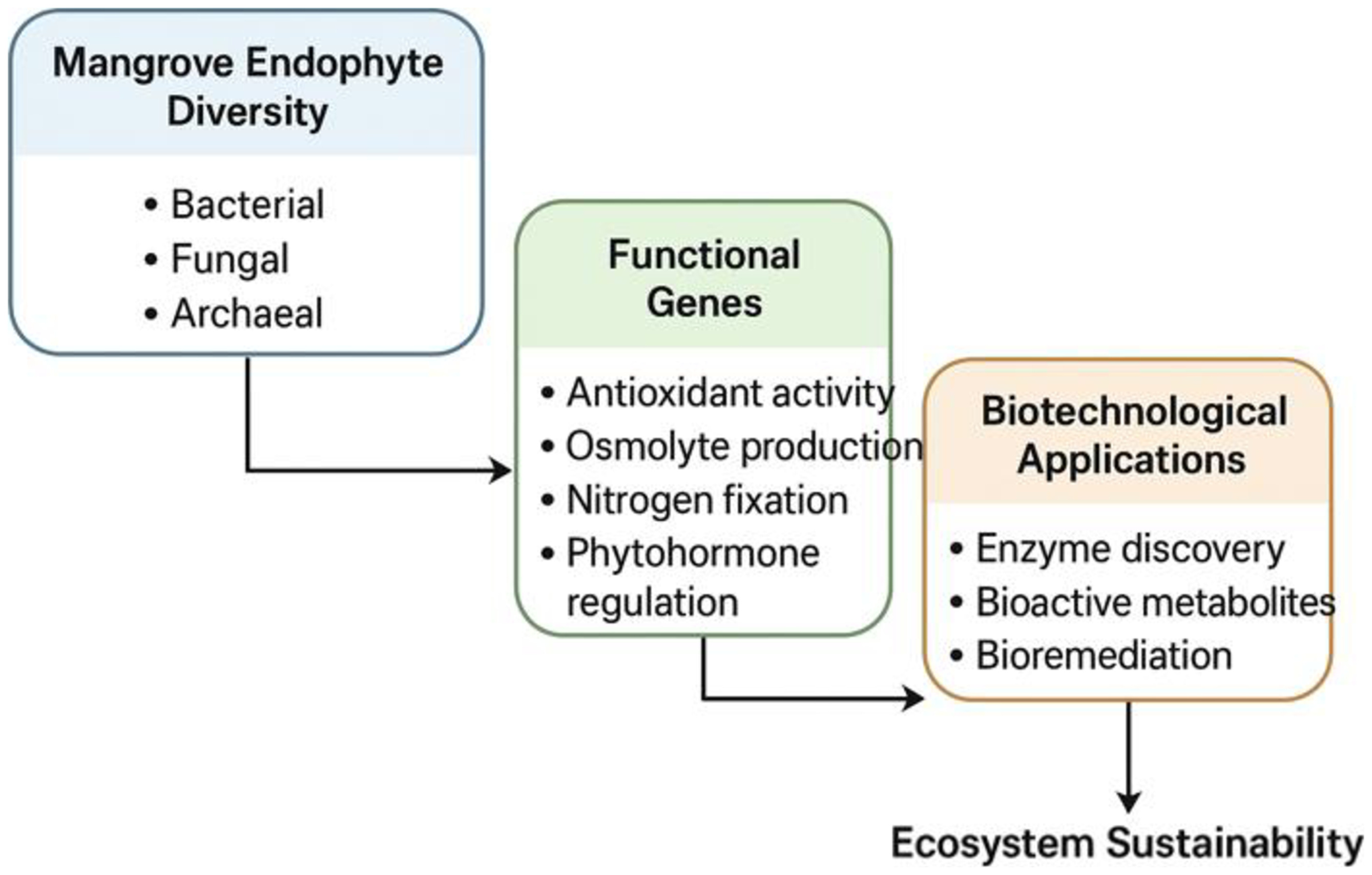
We created a conceptual framework (Figure 1) to demonstrate the integrative role of mangrove endophytes in ecosystem sustainability and biotechnology. The model associates the primary functional gene types of microbial diversity (bacterial, fungal, and archaeal endophytes) with the corresponding ecological and applied results. According to this theory, endophytic taxa with genes for phytohormone regulation, nitrogen fixation, osmolyte production, and antioxidant activity improve host stress tolerance and nutrient uptake processes that tangentially support mangrove productivity, carbon sequestration, and shoreline stabilization. In turn, biotechnological applications including bioremediation, bioactive metabolite extraction, and enzyme discovery are supported by these ecological processes. The concept emphasizes feedback loops between the physiological reactions of the host, the makeup of the microbial community, and environmental adaptability. Additionally, it pinpoints areas of research where functional genomics and molecular characterisation might connect ecological knowledge with technological advancement. The conceptual connection between microbial diversity and ecosystem level sustainability is made clearer by this visual synthesis (Fernandes et al., 2012).

2.1.13. Metagenomic approaches to unveil endophytic microbial diversity in mangrove tissues
The taxonomic and functional diversity of endophytic microbial communities in mangrove plants has been substantially advanced by metagenomic approaches, which overcome the limitations of traditional culture-dependent methods that capture only a fraction of microbial diversity. Metagenomics enables high-resolution, culture-independent characterization of complex microbial consortia, including bacteria, actinomycetes, fungi, yeast, and archaea, directly from plant tissues (Helmi, 2025; Yurkov et al., 2016). Following DNA extraction from roots, stems, leaves, and pneumatophores of diverse mangrove species, high-throughput sequencing platforms such as Illumina, PacBio, and Oxford Nanopore are used to generate comprehensive datasets, which are subsequently analyzed using bioinformatics pipelines for taxonomic profiling and functional annotation (Ranjan et al., 2016). Tools such as QIIME, and Kraken facilitate accurate microbial classification, while databases including KEGG and CAZy enable mapping of genes involved in essential metabolic pathways, such as nitrogen fixation, phosphate solubilization, production of phytohormones (indole-3-acetic acid), and secondary metabolites with ecological and biotechnological relevance (Caporaso et al., 2010).
Metagenomic studies reveal that mangrove endophytes mediate critical ecosystem functions, including nutrient cycling, organic matter decomposition, abiotic stress tolerance, and pathogen suppression. Functional gene analyses have identified genes associated with osmoregulation, oxidative stress mitigation, hydrocarbon degradation, and detoxification of pollutants, highlighting their potential in environmental remediation and ecosystem restoration (Djemiel et al., 2022; Naqvi et al., 2025). Comparative metagenomic investigations across mangrove species, tissues, and environmental gradients demonstrate dynamic shifts in community composition in response to salinity, tidal fluctuations, and anthropogenic (Palit et al., 2022; Siddique et al., 2024). providing microbial indicators of host and ecosystem health Network based co-occurrence analyses further elucidate symbiotic, mutualistic, and competitive interactions that structure the endophytic microbiome and underpin ecosystem resilience (Agler et al., 2016).
Even though metagenomic techniques like QIIME, Kraken, and KEGG have significantly improved our knowledge of mangrove endophytic diversity and function, there are unique difficulties when using them in marine and mangrove systems. Although QIIME offers reliable diversity measurements, it is quite susceptible to data normalization techniques and sequencing depth, which might distort diversity indices if rare species are underrepresented. Although Kraken provides quick taxonomic categorization using precise k-mer matches, it is highly dependent on the completeness of its reference databases, which is problematic in mangrove-associated microbiomes where many endophytic taxa are yet unknown. The resolution of metabolic pathway inference is generally limited by functional annotation using KEGG or comparable databases, which frequently underestimate novel or unclassified genes (Naqvi et al., 2025). The challenge of differentiating real endophytes from surface-associated epiphytes or rhizosphere microorganisms is another significant drawback, especially when sample sterilizing and DNA extraction procedures are not standardized. If these variables are not strictly controlled for, endophytic diversity may be overestimated, or contamination artifacts may result. By capturing active microbial fractions and offering more taxonomic precision, emerging techniques like meta transcriptomics and single-cell genomics may aid in overcoming these constraints.
In general, established processes for DNA extraction, read normalization, reference database extension, and distinct distinction of habitat-specific microbiota are critical to the dependability of metagenomic data in mangrove endophyte investigations. Many microbial taxa including rare bacteria, archaea, and yeast remain underrepresented in reference databases, limiting accurate taxonomic assignments and functional predictions. Moreover, metabolic and functional capacities of these underexplored taxa remain poorly characterized, and the integration of multi omics data for ecosystem-level interpretation is still in its infancy. Analytical challenges related to the scale and complexity of metagenomic data also necessitate advanced bioinformatics expertise and high-performance computational resources.
Future directions should focus on integrative approaches combining metagenomics, metabolomics, and single-cell genomics to uncover hidden microbial diversity and functional potential (Chen et al., 2025). Expanding reference databases and performing comparative analyses across diverse mangrove species, tissue types, and environmental contexts will facilitate a holistic understanding of endophytic microbial contributions to host fitness, nutrient cycling, and ecosystem sustainability (Yan et al., 2016). Such insights will enable rational biotechnological exploitation of mangrove endophytes for applications in sustainable agriculture, environmental remediation, pharmaceuticals, and industrial biotechnology, while informing strategies for mangrove conservation and ecosystem management.
2.2.14. Comparative evaluation of isolation and identification methods
The stated diversity outcomes are greatly impacted by the wide heterogeneity in isolation and identification techniques seen in a comparative analysis of methodological approaches utilized in mangrove endophyte research. Stronger sterilants reduce epiphytic contamination, but they may also reduce recovery of sensitive taxa. Surface sterilization techniques range from conventional ethanol sodium hypochlorite treatments to more sophisticated multi-step protocols containing Tween-20 or mercuric chloride. Community representation is also influenced by the composition of culture media; fast-growing species are favored by nutrient-rich media (like PDA and NA), while slow-growing or obligatory marine endophytes are better isolated by selective or low-nutrient formulations (like seawater-based or mangrove extract agar) (Chen et al., 2025). ITS (for fungus) and 16S rRNA (for bacteria) sequencing have historically been used for identification in culture-dependent investigations; however, more recent multi-locus techniques (such as TEF1-α, rpoB, and gyrB) and metagenomic sequencing have enhanced taxonomic resolution. Comparative analyses show that, although at the expense of losing functional and physiological insights, culture independent, high-throughput sequencing consistently detects increased microbial richness and a higher fraction of unculturable taxa (Naqvi et al., 2025). In order to enable more insightful cross-study comparisons of mangrove endophytic populations, these methodological disparities highlight the necessity of standardizing sterilizing procedures, medium compositions, and molecular markers.The existing dispersion of knowledge in mangrove endophyte research is due to several methodological and conceptual limitations. First, sampling bias has a significant impact on reported diversity, as most research focus on a few prominent mangrove genera (Avicennia, Rhizophora, and Bruguiera) and accessible places such as Southeast Asia and India, leaving substantial geographic and host gaps. Second, culture constraints impede the recovery of slow-growing or obligatory marine endophytes; conventional medium and incubation conditions frequently favor fast-growing species, resulting in an underrepresentation of genuine community composition (Yan et al., 2016).
Third, inconsistencies in identification methods, spanning from morphology to partial gene sequencing, decrease data comparability. Although high-throughput sequencing has increased taxonomic coverage, database incompleteness and bioinformatic biases continue to impede correct annotation of novel or uncultured lineages. Finally, there is a paucity of functional validation: whereas much research describes possible metabolites or enzyme activity, only a few confirm them using biochemical assays or in planta testing. To address these difficulties, we will need standardized sample techniques, multi-omics integration, and validation workflows that connect community composition to empirically proven functionality. Such harmonization would elevate the field from a descriptive inventory of endophytes to a predictive framework for ecological and biotechnological applications.
3. Discussion
This review provides an integrative synthesis of mangrove endophytic microorganisms by linking taxonomic diversity, functional traits, and biotechnological applications within a unified ecological framework. Unlike previous reviews that have primarily focused on descriptive inventories or specific microbial groups, the present study advances the field by combining comparative analysis across 187 studies with a conceptual model that connects microbial diversity to ecosystem sustainability and applied biotechnology. This integrative perspective contributes novel scientific value by moving beyond fragmented observations toward a more predictive understanding of host–microbe environment interactions. Furthermore, unlike previous reviews, this study explicitly integrates ecological, functional, and applied perspectives within a single analytical framework, thereby providing a more comprehensive and application-oriented understanding of mangrove endophytes.
The dominance of fungal endophytes, particularly members of Ascomycota, and bacterial taxa such as Proteobacteria reflects both ecological adaptation and methodological influences. Fungal prevalence (58%) may be attributed to their metabolic versatility and resilience under saline and anoxic mangrove conditions, as well as their higher recovery in culture-based studies (Deshmukh et al., 2018; Meng et al., 2021). In contrast, bacterial communities, especially Proteobacteria, exhibit functional plasticity that supports nutrient cycling, stress tolerance, and host adaptation (Afzal et al., 2019). Among these groups, fungal endophytes (particularly Ascomycota) and bacterial taxa such as Proteobacteria and Actinomycetes appear to be the most promising for future biotechnological applications due to their high metabolic diversity and capacity to produce bioactive compounds. These findings highlight that observed diversity patterns are shaped not only by environmental selection but also by the methodological approaches used to detect them.
Environmental drivers play a central role in structuring mangrove endophytic communities. Salinity, oxygen limitation, sediment composition, and tidal dynamics act as strong ecological filters influencing microbial composition and functional potential (Alongi, 2021; Ramond et al., 2022). For instance, high salinity environments favor microorganisms with osmoprotective mechanisms, while anoxic sediments select for taxa involved in anaerobic metabolism, including nitrogen fixation and sulfur cycling. These environmental gradients contribute to spatial and host-specific variation in microbial communities and must be considered when interpreting diversity patterns across regions.
A critical aspect highlighted in this review is the complementarity of culture-dependent and metagenomic approaches. Culture-based methods enable functional characterization and experimental validation of microbial traits but significantly underestimate total diversity. In contrast, metagenomic and high-throughput sequencing techniques reveal a broader spectrum of microbial taxa, including unculturable organisms, yet often lack direct functional validation (Ranjan et al., 2016; Djemiel et al., 2022). Integrating these approaches through multi-omics strategies offers a more comprehensive understanding of mangrove endophytes by combining taxonomic resolution with functional insight.
Despite significant advances, current knowledge remains fragmented due to geographical and taxonomic biases. Most studies are concentrated in Southeast Asia and India and focus predominantly on a limited number of host genera such as Avicennia and Rhizophora. In addition, in certain regions such as the Arabian Gulf, mangrove ecosystems are largely dominated by a single species, Avicennia marina, which further limits host diversity and may influence the structure and functional composition of associated endophytic communities (Alanazi et al., 2026). This uneven representation restricts the generalizability of current findings and highlights the need for targeted sampling in underexplored regions, including Africa, the Middle East, and South America, as well as the inclusion of less-studied mangrove species (Saenger et al., 2019). Addressing these biases is essential for developing a globally representative understanding of endophytic diversity.
Methodological disparities further contribute to inconsistencies across studies. Variations in surface sterilization protocols, culture media composition, sequencing platforms, and bioinformatics pipelines significantly influence the detection and characterization of endophytes. The lack of standardized methodologies reduces comparability and reproducibility (Naqvi et al., 2025). Establishing unified protocols for sampling, sterilization, molecular identification, and data analysis would greatly enhance the reliability of future research and facilitate cross-study comparisons.
Another major limitation involves incomplete reference databases and challenges in functional annotation. Many mangrove associated microorganisms, particularly rare and novel taxa, remain underrepresented in existing genomic databases, leading to uncertainties in taxonomic classification and metabolic prediction. Emerging approaches such as metatranscriptomics and single-cell genomics offer promising solutions by capturing active microbial functions and improving taxonomic resolution (Parks et al., 2022). Expanding curated databases and integrating multiple omics layers will be essential for overcoming these constraints.
Although numerous studies report bioactive compounds and functional traits, there is a clear lack of in vivo validation. Most findings are based on in vitro assays or genomic inference, which limits confidence in their ecological and applied significance. The most critical functional traits contributing to plant stress tolerance include phytohormone production, osmotic regulation, antioxidant activity, nutrient acquisition, and pathogen suppression. Standardized validation frameworks, including controlled plant experiments and biochemical assays, are therefore needed to confirm the functional roles of endophytes in enhancing host stress tolerance and ecosystem performance (Afzal et al., 2019).
From a biotechnological perspective, mangrove endophytes represent a valuable resource for pharmaceuticals, agriculture, and environmental applications. However, most reported applications remain at the proof of-concept stage. Key limitations include challenges in large-scale cultivation, low metabolite yields, regulatory constraints, and insufficient economic evaluation. Incorporating techno-economic analysis, process optimization, and life-cycle assessment into future studies will be crucial for translating laboratory findings into industrial applications (Rajendran et al., 2025). These challenges highlight the need for closer collaboration between academia and industry to facilitate the translation of laboratory findings into scalable biotechnological solutions. At the ecosystem level, the contribution of endophytes to large scale processes such as carbon sequestration, shoreline stabilization, and ecosystem resilience remains largely hypothetical. While micro-scale interactions, including enhanced plant growth and stress tolerance, are well documented, their cumulative impact on ecosystem services requires long-term, integrative studies (Alongi, 2021). Future research should adopt interdisciplinary frameworks that link microbial function to ecosystem processes through field experiments, modeling approaches, and longitudinal data.
A persistent methodological challenge is the differentiation between true endophytes and contaminants. Distinguishing internal colonizers from epiphytic or environmental microbes requires rigorous surface sterilization, molecular validation, and the use of specific biomarkers. Advanced sequencing techniques combined with optimized sampling protocols can improve the accuracy of endophyte identification and reduce contamination bias (Djemiel et al., 2022).
Finally, this review identifies several key research gaps and future directions. Priority areas include the exploration of underrepresented microbial groups such as archaea and yeasts, the integration of multi-omics approaches, the development of standardized methodologies, and the establishment of global data-sharing platforms. Advancing the field will require coordinated efforts to integrate ecological, molecular, and applied research, enabling the transition from descriptive studies to predictive and application-driven frameworks. This integrative perspective clearly demonstrates how ecological functions of mangrove endophytes can be translated into practical biotechnological applications, effectively bridging the gap between environmental microbiology and sustainable innovation.
4. Conclusions
Mangrove ecosystems host highly diverse and functionally versatile endophytic microbial communities including bacteria, actinomycetes, fungi, yeasts, and archaea that are pivotal for plant health, biogeochemical cycling, and overall ecosystem resilience. These endophytes engage in intricate symbiotic interactions with their host plants, facilitating nutrient acquisition, enhancing stress tolerance, suppressing pathogens, and producing a wide array of bioactive secondary metabolites. Through these activities, they sustain critical ecosystem functions, including carbon and nitrogen turnover, soil stabilization, pollutant detoxification, and the maintenance of coastal biodiversity, underscoring their ecological significance within the dynamic intertidal zones of mangrove habitats.
Advances in metagenomic and high-throughput sequencing technologies have substantially expanded our understanding of the taxonomic and functional diversity of mangrove endophytes. These approaches have uncovered genetic pathways underlying stress adaptation, metabolite biosynthesis, environmental detoxification, and antimicrobial production, highlighting the considerable biotechnological potential of these microorganisms. Their enzymatic repertoires, pollutant degrading capacities, and metabolite production offer promising applications in sustainable agriculture, pharmaceuticals, industrial biotechnology, and environmental remediation.
Despite these advances, significant knowledge gaps remain. Many microbial taxa, particularly uncultured or rare lineages, and their tissue-specific colonization patterns remain underexplored. Functional dynamics under fluctuating environmental conditions are poorly understood. Future research integrating multi-omics approaches including metagenomics and single cell genomics will be critical for elucidating host microbe interactions, adaptive mechanisms, and ecological roles. Comparative analyses across diverse mangrove species, habitats, and environmental stress gradients are essential for identifying microbial indicators of ecosystem health, resilience, and functional stability.
Harnessing the ecological and biotechnological potential of mangrove endophytes offers transformative opportunities for ecosystem conservation, restoration, and the development of resilient bio-based products. By linking fundamental microbial ecology with applied biotechnology, these symbiotic communities can provide a foundation for innovative strategies in the sustainable management and utilization of coastal ecosystems under the dual pressures of climate change and anthropogenic disturbances.
Although endophytes indirectly support the resilience and stability of mangrove ecosystems, their impact on large-scale ecological processes like carbon sequestration or shoreline stabilization is still mostly speculative. Micro-scale strategies that may collectively improve plant fitness under stress, such as improved host salt tolerance, antioxidant protection, or pathogen suppression, are identified. For instance, it has been demonstrated that Bacillus and Pseudomonas endophytes isolated from Avicennia marina enhance root biomass and seedling survival under salinity stress, which may improve sediment binding and lower the danger of erosion. However, rather than providing concrete evidence of ecosystem-level consequences, these findings are early stage indicators. To support such claims, more long-term, integrative research relating microbial function to geomorphological or carbon processes is required.
Moreover, mangrove endophytes show great promise for biotechnological innovation, achieving their "transformative potential" requires meticulous validation through empirical, economic, and technological assessments. Current uses, such as endophyte-derived enzymes for saline bioprocessing, plant growth-promoting inoculants for coastal restoration, and bioactive metabolite extraction, exhibit proof-of-concept capability rather than proven industrial scalability. Few studies have used cost-benefit analyses, production yield measures, or life cycle assessments to determine their economic viability. As a result, whereas endophytic research provides a conceptual underpinning for sustainable biotechnology, converting this potential into actual impact would require interdisciplinary frameworks that incorporate microbiology, engineering, and socioeconomic evaluation. Future research should focus on pilot-scale demonstrations, standardization of cultivation and metabolite recovery methodologies, and economic modeling to facilitate realistic, scalable applications.
Acknowledgements
We would like to thank the Department of Biology, College of Science, Imam Abdulrahman bin Faisal University, Kingdom of Saudi Arabia for their constant support in this work.
Data Availability Statement
Data sharing is not applicable to this article because no datasets were generated or analyzed during the current study.
References
-
ABDELLATIF, A.A.M., GEBILY, D.A.S., ELMAGHRABY, M.M.K., SAHU, P.K., THAKUR, B. and KAUR, S., 2024. Transforming roles of actinobacteria in sustainable agriculture: from soil health and plant productivity perspective. In: S. KAUR, V. DWIBEDI and P.K. SAHU (Eds.), Metabolomics, proteomics and gene editing approaches in biofertilizer industry Singapore: Springer, pp. 299-338. https://doi.org/10.1007/978-981-97-2910-4_16
» https://doi.org/10.1007/978-981-97-2910-4_16 -
ABDOU, A.H., ALKHATEEB, O.A., MANSOUR, H.E.H., GHAZZAWY, H.S., ALBADRANI, M.S., AL-HARBI, N.A., AL-SHAMMARI, W.B. and ABDELAAL, K., 2023. Application of plant growth-promoting bacteria as an eco-friendly strategy for mitigating the harmful effects of abiotic stress on plants. Phyton, vol. 92, no. 12, pp. 3305-3321. https://doi.org/10.32604/phyton.2023.044780
» https://doi.org/10.32604/phyton.2023.044780 -
ABO NOUH, F.A., GEZAF, S.A., ABO NAHAS, H.H., ABO NAHAS, Y.H., VARGAS-DE-LA-CRUZ, C., SOLORZANO ACOSTA, R.A., LANDA-ACUÑA, D., LUIS-ALAYA, B. and ABDEL-AZEEM, A.M., 2021. Bioprospecting for biomolecules from different fungal communities: an introduction. In: A.M. ABDEL-AZEEM, A.N. YADAV, N. YADAV and M. SHARMA (Eds.), Industrially important fungi for sustainable development Cham: Springer, pp. 1-71. https://doi.org/10.1007/978-3-030-85603-8_1
» https://doi.org/10.1007/978-3-030-85603-8_1 -
ABREGO, N., HUOTARI, T., TACK, A.J.M., LINDAHL, B.D., TIKHONOV, G., SOMERVUO, P., MARTIN SCHMIDT, N., OVASKAINEN, O. and ROSLIN, T., 2020. Higher host plant specialization of root‐associated endophytes than mycorrhizal fungi along an arctic elevational gradient. Ecology and Evolution, vol. 10, no. 16, pp. 8989-9002. https://doi.org/10.1002/ece3.6604 PMid:32884673.
» https://doi.org/10.1002/ece3.6604 -
AFRIDI, M., SADAIAPPAN, B., NASSAR, A.S., MAHMOUDI, H., KHAN, M.A. and MUNDRA, S., 2024. Mangrove sediments-associated bacterium (Bacillus sp. SW7) with multiple plant growth-promoting traits promotes the growth of tomato (Solanum Lycopersicum). Frontiers in Marine Science, vol. 11, pp. 1379439. https://doi.org/10.3389/fmars.2024.1379439
» https://doi.org/10.3389/fmars.2024.1379439 -
AFZAL, I., SHINWARI, Z.K., SIKANDAR, S. and SHAHZAD, S., 2019. Plant beneficial endophytic bacteria: Mechanisms, diversity, host range and genetic determinants. Microbiological Research, vol. 221, pp. 36-49. https://doi.org/10.1016/j.micres.2019.02.001 PMid:30825940.
» https://doi.org/10.1016/j.micres.2019.02.001 -
AGLER, M.T., RUHE, J., KROLL, S., MORHENN, C., KIM, S.-T., WEIGEL, D. and KEMEN, E.M., 2016. Microbial hub taxa link host and abiotic factors to plant microbiome variation. PLoS Biology, vol. 14, no. 1, pp. e1002352. https://doi.org/10.1371/journal.pbio.1002352 PMid:26788878.
» https://doi.org/10.1371/journal.pbio.1002352 -
AHMAD, M., TAHIR, M., HONG, Z., ZIA, M.A., RAFEEQ, H., AHMAD, M.S., REHMAN, S. and SUN, J., 2025. Plant and marine-derived natural products: sustainable pathways for future drug discovery and therapeutic development. Frontiers in Pharmacology, vol. 15, pp. 1497668. https://doi.org/10.3389/fphar.2024.1497668 PMid:39834812.
» https://doi.org/10.3389/fphar.2024.1497668 -
AHMED, R. and TAMIM, M., 2025. Marine and coastal environments: challenges, impacts, and strategies for a sustainable future. International Journal of Science Education and Science, vol. 2, no. 1, pp. 53-60. https://doi.org/10.56566/ijses.v2i1.325
» https://doi.org/10.56566/ijses.v2i1.325 -
AKINOLA, S.A., AYANGBENRO, A.S. and BABALOLA, O.O., 2023. Pedological factors as drivers of archaeal and fungal communities in maize rhizosphere: a shotgun metagenomic sequencing approach. SN Applied Sciences, vol. 5, no. 12, pp. 351. https://doi.org/10.1007/s42452-023-05603-5
» https://doi.org/10.1007/s42452-023-05603-5 -
AKRAM, H., HUSSAIN, S., MAZUMDAR, P., CHUA, K.O., BUTT, T.E. and HARIKRISHNA, J.A., 2023. Mangrove Health: A Review of Functions, Threats, and Challenges Associated with Mangrove Management Practices. Forests, vol. 14, no. 9, pp. 1698. https://doi.org/10.3390/f14091698
» https://doi.org/10.3390/f14091698 -
ALANAZI, A.A., HAMMAMI, I., ALSHAMMARI, A. and ALMAHASHEER, H., 2026. Phylogenetic diversity of culturable bacterial endophytes associated with Avicennia marina from coastal mangroves of the Eastern Province, Saudi Arabia. Biodiversitas (Surakarta), vol. 27, no. 2. https://doi.org/10.13057/biodiv/d270201
» https://doi.org/10.13057/biodiv/d270201 -
ALGHAMDI, A.K., PARWEEN, S., HIRT, H. and SAAD, M.M., 2024. Unveiling the bacterial diversity and potential of the Avicennia marina ecosystem for enhancing plant resilience to saline conditions. Environmental Microbiome, vol. 19, no. 1, pp. 101. https://doi.org/10.1186/s40793-024-00642-w PMid:39633419.
» https://doi.org/10.1186/s40793-024-00642-w -
ALI, S., HAMEED, S., SHAHID, M., IQBAL, M., LAZAROVITS, G. and IMRAN, A., 2020. Functional characterization of potential PGPR exhibiting broad-spectrum antifungal activity. Microbiological Research, vol. 232, pp. 126389. https://doi.org/10.1016/j.micres.2019.126389 PMid:31821969.
» https://doi.org/10.1016/j.micres.2019.126389 -
ALMAHASHEER, H., 2018. Spatial coverage of mangrove communities in the Arabian Gulf. Environmental Monitoring and Assessment, vol. 190, no. 2, pp. 85. https://doi.org/10.1007/s10661-018-6472-2
» https://doi.org/10.1007/s10661-018-6472-2 -
ALMAHASHEER, H., SERRANO, O., DUARTE, C.M., ARIAS-ORTIZ, A., MASQUE, P. and IRIGOIEN, X., 2017. Low Carbon sink capacity of Red Sea mangroves. Scientific Reports, vol. 7, no. 1, pp. 9700. https://doi.org/10.1038/s41598-017-10424-9 PMid:28852185.
» https://doi.org/10.1038/s41598-017-10424-9 -
ALONGI, D.M., 2018. Blue Carbon Cham: Springer. Mangrove Forests, pp. 23-36. https://doi.org/10.1007/978-3-319-91698-9_3
» https://doi.org/10.1007/978-3-319-91698-9_3 -
ALONGI, D.M., 2021. Macro- and Micronutrient Cycling and Crucial Linkages to Geochemical Processes in Mangrove Ecosystems. Journal of Marine Science and Engineering, vol. 9, no. 5, pp. 456. https://doi.org/10.3390/jmse9050456
» https://doi.org/10.3390/jmse9050456 -
ALSHARIF, S.M., ISMAEIL, M., SAEED, A.M. and EL-SAYED, W.S., 2024. Metagenomic 16S rRNA analysis and predictive functional profiling revealed intrinsic organohalides respiration and bioremediation potential in mangrove sediment. BMC Microbiology, vol. 24, no. 1, pp. 176. https://doi.org/10.1186/s12866-024-03291-8 PMid:38778276.
» https://doi.org/10.1186/s12866-024-03291-8 -
AMIN, S.A. and ALMAHASHEER, H., 2022. Pollution indices of heavy metals in the Western Arabian Gulf coastal area. Egyptian Journal of Aquatic Research, vol. 48, no. 1, pp. 21-27. https://doi.org/10.1016/j.ejar.2021.10.002
» https://doi.org/10.1016/j.ejar.2021.10.002 -
ARCEO-CARRANZA, D., CHIAPPA-CARRARA, X., CHÁVEZ LÓPEZ, R. and YÁÑEZ ARENAS, C., 2021. Mangroves as feeding and breeding grounds. In: R.P. RASTOGI, M. PHULWARIA, D.K. GUPTA (Eds.), Mangroves: ecology, biodiversity and management Singapore: Springer, pp. 63-95. https://doi.org/10.1007/978-981-16-2494-0_3
» https://doi.org/10.1007/978-981-16-2494-0_3 -
BANIK, S.K., BAISHYA, S., CHOUDHURY, M.D., SARKER, S., DAS TALUKDAR, D. and DAS TALUKDAR, A., 2020. Mangrove plant derived bioactive compounds to overcome diabetes and its associated complications. In: J.K. PATRA, R.R. MISHRA and H. THATOI (Eds.), Biotechnological utilization of mangrove resources London: Academic Press, pp. 315-330. https://doi.org/10.1016/B978-0-12-819532-1.00014-7
» https://doi.org/10.1016/B978-0-12-819532-1.00014-7 -
BOOTH, J.M., FUSI, M., MARASCO, R. and DAFFONCHIO, D., 2023. The microbial landscape in bioturbated mangrove sediment: A resource for promoting nature‐based solutions for mangroves. Microbial Biotechnology, vol. 16, no. 8, pp. 1584-1602. https://doi.org/10.1111/1751-7915.14273 PMid:37209285.
» https://doi.org/10.1111/1751-7915.14273 -
BRAGA, A.F., DO ROSÁRIO, M., GOMES, J.B., MONTEIRO, C., FARIAS, F., RODRIGUES FILHO, E. and CANTANHEDE FILHO, A.J., 2024. Antimicrobial potential of soil/sediment mangrove associated fungi: a review. Journal of the Brazilian Chemical Society https://doi.org/10.21577/0103-5053.20240032
» https://doi.org/10.21577/0103-5053.20240032 -
BRITTO MARTINS DE OLIVEIRA, J., BARBIERI, M., CORRÊA-JUNIOR, D., SCHMITT, M., SANTOS, L.L.R., BAHIA, A.C., PARENTE, C.E.T. and FRASES, S., 2025. Urban mangroves under threat: metagenomic analysis reveals a surge in human and plant pathogenic fungi. Pathogens (Basel, Switzerland), vol. 14, no. 8, pp. 759. https://doi.org/10.3390/pathogens14080759 PMid:40872269.
» https://doi.org/10.3390/pathogens14080759 -
CAPORASO, J.G., KUCZYNSKI, J., STOMBAUGH, J., BITTINGER, K., BUSHMAN, F.D., COSTELLO, E.K., FIERER, N., PEÑA, A.G., GOODRICH, J.K., GORDON, J.I., HUTTLEY, G.A., KELLEY, S.T., KNIGHTS, D., KOENIG, J.E., LEY, R.E., LOZUPONE, C.A., MCDONALD, D., MUEGGE, B.D., PIRRUNG, M., REEDER, J., SEVINSKY, J.R., TURNBAUGH, P.J., WALTERS, W.A., WIDMANN, J., YATSUNENKO, T., ZANEVELD, J. and KNIGHT, R., 2010. QIIME allows analysis of high-throughput community sequencing data. Nature Methods, vol. 7, no. 5, pp. 335-336. https://doi.org/10.1038/nmeth.f.303 PMid:20383131.
» https://doi.org/10.1038/nmeth.f.303 -
CARVAJAL, M., GODOY, L., GEBAUER, M., CATRILEO, D. and ALBORNOZ, F., 2024. Screening for indole-3-acetic acid synthesis and 1-aminocyclopropane-carboxylate deaminase activity in soil yeasts from Chile uncovers Solicoccozyma terrea as an effective plant growth promoter. Plant and Soil, vol. 496, no. 1–2, pp. 83-93. https://doi.org/10.1007/s11104-023-05906-x
» https://doi.org/10.1007/s11104-023-05906-x -
CASTRO, R.A., QUECINE, M.C., LACAVA, P.T., BATISTA, B.D., LUVIZOTTO, D.M., MARCON, J., FERREIRA, A., MELO, I.S. and AZEVEDO, J.L., 2014. Isolation and enzyme bioprospection of endophytic bacteria associated with plants of Brazilian mangrove ecosystem. SpringerPlus, vol. 3, no. 1, pp. 382. https://doi.org/10.1186/2193-1801-3-382 PMid:25110630.
» https://doi.org/10.1186/2193-1801-3-382 -
CHEN, W., YU, M., CHEN, S., GONG, T., XIE, L., LIU, J., BIAN, C., HUANG, G. and ZHENG, C., 2024. Structures and Biological Activities of Secondary Metabolites from Xylaria spp. Journal of Fungi (Basel, Switzerland), vol. 10, no. 3, pp. 190. https://doi.org/10.3390/jof10030190 PMid:38535199.
» https://doi.org/10.3390/jof10030190 -
CHEN, Y., PEI, P., ASLAM, M., SYAIFUDIN, M., BI, R., LI, P. and DU, H., 2025. Microorganisms in macroalgae cultivation ecosystems: a systematic review and future prospects based on bibliometric analysis. Microorganisms, vol. 13, no. 5, pp. 1110. https://doi.org/10.3390/microorganisms13051110 PMid:40431284.
» https://doi.org/10.3390/microorganisms13051110 -
CLEARY, D.F.R., BECKING, L.E., POLÓNIA, A.R.M., FREITAS, R.M. and GOMES, N.C.M., 2015. Composition and predicted functional ecology of mussel-associated bacteria in Indonesian marine lakes. Antonie van Leeuwenhoek, vol. 107, no. 3, pp. 821-834. https://doi.org/10.1007/s10482-014-0375-1 PMid:25563637.
» https://doi.org/10.1007/s10482-014-0375-1 -
DAS, S., SINHA, N., SEN, M. and GHOSH, D., 2023. Isolation and screening of dye degrading lignocellulolytic bacteria from sundarban mangrove ecosystem, West Bengal, India. Journal of Pure & Applied Microbiology, vol. 17, no. 1, pp. 609-626. https://doi.org/10.22207/JPAM.17.1.59
» https://doi.org/10.22207/JPAM.17.1.59 -
DE PAULA, N.M., DA SILVA, K., BRUGNARI, T., HAMINIUK, C.W.I. and MACIEL, G.M., 2022. Biotechnological potential of fungi from a mangrove ecosystem: Enzymes, salt tolerance and decolorization of a real textile effluent. Microbiological Research, vol. 254, pp. 126899. https://doi.org/10.1016/j.micres.2021.126899 PMid:34715448.
» https://doi.org/10.1016/j.micres.2021.126899 -
DECHAVEZ, R., CALUB, M.L., GENOBATA, D.R., BALACUIT, R., JOSE, R. and TABUGO, S.R., 2022. Identification of culture-dependent microbes from mangroves reveals dominance of Bacillus including medically important species based on DNA signature. Biodiversitas (Surakarta), vol. 23, no. 10. https://doi.org/10.13057/biodiv/d231044
» https://doi.org/10.13057/biodiv/d231044 -
DESHMUKH, S.K., GUPTA, M.K., PRAKASH, V. and SAXENA, S., 2018. Endophytic fungi: a source of potential antifungal compounds. Journal of Fungi (Basel, Switzerland), vol. 4, no. 3, pp. 77. https://doi.org/10.3390/jof4030077 PMid:29941838.
» https://doi.org/10.3390/jof4030077 -
DJEMIEL, C., MARON, P.-A., TERRAT, S., DEQUIEDT, S., COTTIN, A. and RANJARD, L., 2022. Inferring microbiota functions from taxonomic genes: a review. GigaScience, vol. 11, no. 1, pp. giab090. https://doi.org/10.1093/gigascience/giab090 PMid:35022702.
» https://doi.org/10.1093/gigascience/giab090 -
DOBRZYŃSKI, J., JAKUBOWSKA, Z., KULKOVA, I., KOWALCZYK, P. and KRAMKOWSKI, K., 2023. Biocontrol of fungal phytopathogens by Bacillus pumilus. Frontiers in Microbiology, vol. 14, pp. 1194606. https://doi.org/10.3389/fmicb.2023.1194606 PMid:37560520.
» https://doi.org/10.3389/fmicb.2023.1194606 -
ELABBASY, E., HUSSAIN, A.A., ASHOUR, S.M. and IBRAHIM, S.Y., 2021. Antifungal activity of Streptomyces canescens MH7 isolated from mangrove sediment against some dermatophytes. Journal of Scientific Research in Science, vol. 38, no. 2, pp. 36-59. https://doi.org/10.21608/jsrs.2021.210676
» https://doi.org/10.21608/jsrs.2021.210676 -
EL-TARABILY, K.A., RAMADAN, G.A., ELBADAWI, A.A., HASSAN, A.H., TARIQ, S., GHAZAL, E.W., ABO GAMAR, M.I. and ABUQAMAR, S.F., 2021. The Marine Endophytic Polyamine-Producing Streptomyces mutabilis UAE1 Isolated From Extreme Niches in the Arabian Gulf Promotes the Performance of Mangrove (Avicennia marina) Seedlings Under Greenhouse Conditions. Frontiers in Marine Science, vol. 8, pp. 710200. https://doi.org/10.3389/fmars.2021.710200
» https://doi.org/10.3389/fmars.2021.710200 -
FERNANDES, S.O., MICHOTEY, V.D., GUASCO, S., BONIN, P.C. and LOKA BHARATHI, P.A., 2012. Denitrification prevails over anammox in tropical mangrove sediments (Goa, India). Marine Environmental Research, vol. 74, pp. 9-19. https://doi.org/10.1016/j.marenvres.2011.11.008 PMid:22197479.
» https://doi.org/10.1016/j.marenvres.2011.11.008 -
FERREIRA, A.C., ASHTON, E.C., WARD, R.D., HENDY, I. and LACERDA, L.D., 2024. Mangrove biodiversity and conservation: setting key functional groups and risks of climate-induced functional disruption. Diversity, vol. 16, no. 7, pp. 423. https://doi.org/10.3390/d16070423
» https://doi.org/10.3390/d16070423 -
FRIESS, D.A., THOMPSON, B.S., BROWN, B., AMIR, A.A., CAMERON, C., KOLDEWEY, H.J., SASMITO, S.D. and SIDIK, F., 2016. Policy challenges and approaches for the conservation of mangrove forests in Southeast Asia. Conservation Biology : The Journal of the Society for Conservation Biology, vol. 30, no. 5, pp. 933-949. https://doi.org/10.1111/cobi.12784 PMid:27341487.
» https://doi.org/10.1111/cobi.12784 -
GOMES, A.F.R., ALMEIDA, M.C., SOUSA, E. and RESENDE, D.I.S.P., 2024. Siderophores and metallophores: metal complexation weapons to fight environmental pollution. The Science of the Total Environment, vol. 932, pp. 173044. https://doi.org/10.1016/j.scitotenv.2024.173044 PMid:38723971.
» https://doi.org/10.1016/j.scitotenv.2024.173044 -
GRANO-MALDONADO, M.I., RAMOS-PAYAN, R., RIVERA-CHAPARRO, F., AGUILAR-MEDINA, M., ROMERO-QUINTANA, J.G., RODRÍGUEZ-SANTIAGO, A. and NIEVES-SOTO, M., 2021. First molecular characterization of colletotrichum sp. and fusarium sp. isolated from mangrove in mexico and the antagonist effect of trichoderma harzianum as an effective biocontrol agent. The Plant Pathology Journal, vol. 37, no. 5, pp. 465-475. https://doi.org/10.5423/PPJ.OA.03.2021.0048 PMid:34847633.
» https://doi.org/10.5423/PPJ.OA.03.2021.0048 -
GRGAS, D., RUKAVINA, M., BEŠLO, D., ŠTEFANAC, T., CRNEK, V., ŠIKIĆ, T., HABUDA-STANIĆ, M. and LANDEKA DRAGIČEVIĆ, T., 2023. The Bacterial Degradation of Lignin: A Review. Water (Basel), vol. 15, no. 7, pp. 1272. https://doi.org/10.3390/w15071272
» https://doi.org/10.3390/w15071272 -
GUTIERREZ‐PATRICIO, S., OSMAN, J.R., GONZALEZ‐PIMENTEL, J.L., JURADO, V., LAIZ, L., CONCEPCIÓN, A.L., SAIZ‐JIMENEZ, C. and MILLER, A.Z., 2024. Microbiological exploration of the Cueva del Viento lava tube system in Tenerife, Canary Islands. Environmental Microbiology Reports, vol. 16, no. 2, pp. e13245. https://doi.org/10.1111/1758-2229.13245 PMid:38643985.
» https://doi.org/10.1111/1758-2229.13245 -
HATJE, V., COPERTINO, M., PATIRE, V.F., OVANDO, X., OGBUKA, J., JOHNSON, B.J., KENNEDY, H., MASQUE, P. and CREED, J.C., 2023. Vegetated coastal ecosystems in the Southwestern Atlantic Ocean are an unexploited opportunity for climate change mitigation. Communications Earth & Environment, vol. 4, no. 1, pp. 160. https://doi.org/10.1038/s43247-023-00828-z
» https://doi.org/10.1038/s43247-023-00828-z -
HAU, P.-T., SHIU, A., TAM, E.W.-T., CHAU, E.C.-T., MURILLO, M., HUMER, E., PO, W.-W., YU, R.C.-W., FUNG, J., SETO, S.-W., TSANG, C.-C. and CHOW, F.W.-N., 2024. Diversity and antifungal susceptibilities of yeasts from mangroves in hong kong, china: a one health aspect. Journal of Fungi (Basel, Switzerland), vol. 10, no. 10, pp. 728. https://doi.org/10.3390/jof10100728 PMid:39452680.
» https://doi.org/10.3390/jof10100728 -
HELMI, N.R., 2025. Exploring the diversity and antimicrobial potential of actinomycetes isolated from different environments in Saudi Arabia: a systematic review. Frontiers in Microbiology, vol. 16, pp. 1568899. https://doi.org/10.3389/fmicb.2025.1568899 PMid:40207161.
» https://doi.org/10.3389/fmicb.2025.1568899 -
HERNÁNDEZ-DELGADO, E.A., 2024. Coastal restoration challenges and strategies for small island developing states in the face of sea level rise and climate change. Coasts, vol. 4, no. 2, pp. 235-286. https://doi.org/10.3390/coasts4020014
» https://doi.org/10.3390/coasts4020014 -
HUXHAM, M., BERGER, U., SKOV, M.W. and SOUSA, W.P., 2019. Kropotkin’s Garden. In: S.J. HAWKINS, K. BOHN, L.B. FIRTH and G.A. WILLIAMS (Eds.), Interactions in the Marine Benthos Cambridge: Cambridge University Press, pp. 431-447. https://doi.org/10.1017/9781108235792.018
» https://doi.org/10.1017/9781108235792.018 -
ISLAM, M.A., BILLAH, M.M., IDRIS, M.H., BHUIYAN, M.K.A. and KAMAL, A.H.M., 2023. Mangroves of Malaysia: a comprehensive review on ecosystem functions, services, restorations, and potential threats of climate change. Hydrobiologia, vol. 851, no. 8, pp. 1841-1871. https://doi.org/10.1007/s10750-023-05431-z
» https://doi.org/10.1007/s10750-023-05431-z -
ISTI’ANAH, I., BUDIMAN, M.A., SUSENO, S.H., NUGRAHA, R., EFFENDI, I. and TARMAN, K., 2024. Action mechanism of marine endophytic fungi aspergillus terreus as antibacterial agent against vibrio harveyi. BIO Web of Conferences, vol. 92, pp. 02008. https://doi.org/10.1051/bioconf/20249202008
» https://doi.org/10.1051/bioconf/20249202008 -
JEYACHANDRAN, S., GIRI, J. and ALARIFI, A., 2025. Biogenic synthesis of Bacillus lentus -mediated silver nanoparticles and its multifaceted applications in antibacterial, anti-biofilm, anti-larvicidal and anticancer activities. Green Chemistry Letters and Reviews, vol. 18, no. 1, pp. 2503730. https://doi.org/10.1080/17518253.2025.2503730
» https://doi.org/10.1080/17518253.2025.2503730 -
JIA, S.-L., CHI, Z., LIU, G.-L., HU, Z. and CHI, Z.-M., 2020. Fungi in mangrove ecosystems and their potential applications. Critical Reviews in Biotechnology, vol. 40, no. 6, pp. 852-864. https://doi.org/10.1080/07388551.2020.1789063 PMid:32633147.
» https://doi.org/10.1080/07388551.2020.1789063 -
KAHLON, R.S., 2016. Pseudomonas: Molecular and Applied Biology Cham: Springer. Biodegradation and Bioremediation of Organic Chemical Pollutants by Pseudomonas, pp. 343-417. https://doi.org/10.1007/978-3-319-31198-2_9
» https://doi.org/10.1007/978-3-319-31198-2_9 -
KOT, A.M., KIELISZEK, M., PIWOWAREK, K., BŁAŻEJAK, S. and MUSSAGY, C.U., 2021. Sporobolomyces and Sporidiobolus – non-conventional yeasts for use in industries. Fungal Biology Reviews, vol. 37, pp. 41-58. https://doi.org/10.1016/j.fbr.2021.06.001
» https://doi.org/10.1016/j.fbr.2021.06.001 -
KRISHNAMURTHI, D., 2024. A review-enhancing plant resilience in saline environments with core microbial mangrove communities. Scholars Academic Journal of Biosciences, vol. 12, no. 06, pp. 158-169. https://doi.org/10.36347/sajb.2024.v12i06.005
» https://doi.org/10.36347/sajb.2024.v12i06.005 -
LIAO, S., WANG, Y., LIU, H., FAN, G., SAHU, S.K., JIN, T., CHEN, J., ZHANG, P., GRAM, L., STRUBE, M.L., SHI, Q., LEE, S.M.Y. and LIU, X., 2020. Deciphering the microbial taxonomy and functionality of two diverse mangrove ecosystems and their potential abilities to produce bioactive compounds. mSystems, vol. 5, no. 5, pp. e00851-19. https://doi.org/10.1128/mSystems.00851-19 PMid:33109752.
» https://doi.org/10.1128/mSystems.00851-19 -
MADHAVAN, C., MEERA, S.P. and KUMAR, A., 2025. Anatomical adaptations of mangroves to the intertidal environment and their dynamic responses to various stresses. Biological Reviews of the Cambridge Philosophical Society, vol. 100, no. 3, pp. 1019-1046. https://doi.org/10.1111/brv.13172 PMid:39654142.
» https://doi.org/10.1111/brv.13172 -
MARTIN, C., ALMAHASHEER, H. and DUARTE, C.M., 2019. Mangrove forests as traps for marine litter. Environmental Pollution, vol. 247, pp. 499-508. https://doi.org/10.1016/j.envpol.2019.01.067 PMid:30703683.
» https://doi.org/10.1016/j.envpol.2019.01.067 -
MAULANI, B.I.G., RASMI, D.A.C. and ZULKIFLI, L., 2019. Isolation and characterization of endophytic bacteria from mangrove Rhizophora mucronata Lam. and antibacterial activity test against some pathogenic bacteria. Journal of Physics: Conference Series, vol. 1402, no. 3, pp. 033038. https://doi.org/10.1088/1742-6596/1402/3/033038
» https://doi.org/10.1088/1742-6596/1402/3/033038 -
MAYANGLAMBAM, C.S., SINGH, A.K., SINGH, S., NGATHEM, T.C., LUKRAM, S., YENGKHOM, D.S., MOHANTY, J., ANGAMI, T. and ASHOK, C., 2020. Enzymes from mangrove endophytes and their biotechnological/industrial applications. In: J.K. PATRA, R.R. MISHRA and H. THATOI (Eds.), Biotechnological utilization of mangrove resources London: Academic Press, pp. 371-380.. https://doi.org/10.1016/B978-0-12-819532-1.00017-2
» https://doi.org/10.1016/B978-0-12-819532-1.00017-2 -
MENG, Z.-H., SUN, T.-T., ZHAO, G.-Z., YUE, Y.-F., CHANG, Q.-H., ZHU, H.-J. and CAO, F., 2021. Marine-derived fungi as a source of bioactive indole alkaloids with diversified structures. Marine Life Science & Technology, vol. 3, no. 1, pp. 44-61. https://doi.org/10.1007/s42995-020-00072-w PMid:37073395.
» https://doi.org/10.1007/s42995-020-00072-w -
MICHALAK, I. and CHOJNACKA, K., 2015. Algae as production systems of bioactive compounds. Engineering in Life Sciences, vol. 15, no. 2, pp. 160-176. https://doi.org/10.1002/elsc.201400191
» https://doi.org/10.1002/elsc.201400191 -
MIR, G.H., GUPTA, V., SHARMA, A., JAMWAL, G., GUPTA, S.K. and RAZDAN, V.K., 2025. Yeast as a source of metabolites for agricultural applications. In: J. POVEDA, O. SANTAMARÍA and J. MARTÍN-GARCÍA (Eds.),Fungal metabolites for agricultural applications: biostimulation and crop protection by fungal biotechnology Cham: Springer Nature Switzerland, pp. 21-38. https://doi.org/10.1007/978-3-031-76587-2_2
» https://doi.org/10.1007/978-3-031-76587-2_2 -
MISHRA, P., MISHRA, J., DWIVEDI, S.K. and ARORA, N.K., 2020. Microbial Enzymes in Biocontrol of Phytopathogens. In: N. ARORA, J. MISHRA and V. MISHRA (Eds.), Microbial Enzymes: Roles and Applications in Industries Singapore: Springer, pp. 259-285. https://doi.org/10.1007/978-981-15-1710-5_10
» https://doi.org/10.1007/978-981-15-1710-5_10 -
MONDAL, S., BISWAS, B., CHOWDHURY, R., SENGUPTA, R., MANDAL, A., KOTAL, H.N., GIRI, C.K., GHOSH, A., SAHA, S., BEGAM, M.M., MUKHERJEE, C., DAS, I., BASAK, S.K., MITRA GHOSH, M. and RAY, K., 2024. Estuarine mangrove niches select cultivable heterotrophic diazotrophs with diverse metabolic potentials: a prospective cross-dialog for functional diazotrophy. Frontiers in Microbiology, vol. 15, pp. 1324188. https://doi.org/10.3389/fmicb.2024.1324188 PMid:38873137.
» https://doi.org/10.3389/fmicb.2024.1324188 -
NAG, S., DUTTA, R., CHAKRABORTY, S., BAGCHI, A., MITRA, O., SAMANTA, S. and PANDEY, P., 2024. Halotolerant and halophilic bacteria present in the mangrove ecosystem: Emerging Bioengineering potentials. In: H. SARMA and S.J. JOSHI (Eds.), Biotechnology of Emerging Microbes London: Academic Press, pp. 143-162. https://doi.org/10.1016/B978-0-443-15397-6.00010-3
» https://doi.org/10.1016/B978-0-443-15397-6.00010-3 -
NAQVI, S.A.H., FARHAN, M., AHMAD, M., KIRAN, R., SHAHBAZ, M., ABBAS, A., HAKIM, F., SHABBIR, M., TAN, Y.S. and SATHIYA SEELAN, J.S., 2025. Fungicide resistance in Fusarium species: exploring environmental impacts and sustainable management strategies. Archives of Microbiology, vol. 207, no. 2, pp. 31. https://doi.org/10.1007/s00203-024-04219-6 PMid:39792175.
» https://doi.org/10.1007/s00203-024-04219-6 -
NICOLETTI, R., SALVATORE, M. and ANDOLFI, A., 2018. Secondary metabolites of mangrove-associated strains of talaromyces. Marine Drugs, vol. 16, no. 1, pp. 12. https://doi.org/10.3390/md16010012 PMid:29316607.
» https://doi.org/10.3390/md16010012 -
NIMSI, K.A., MANJUSHA, K., HATHA, A.A.M. and KATHIRESAN, K., 2023. Diversity, distribution, and bioprospecting potentials of manglicolous yeasts: a review. FEMS Microbiology Ecology, vol. 99, no. 5, pp. fiad044. https://doi.org/10.1093/femsec/fiad044 PMid:37142411.
» https://doi.org/10.1093/femsec/fiad044 -
NOR HASAN, N.H., ABDULLAH, M.D.D. and SAIDIN, J., 2024. Antimicrobial and enzymatic activities of mangrove-associated actinomycetes. Malaysian Applied Biology, vol. 53, no. 3, pp. 219-228. https://doi.org/10.55230/mabjournal.v53i3.2864
» https://doi.org/10.55230/mabjournal.v53i3.2864 -
NTABO, R.M., NYAMACHE, A.K., LWANDE, W., KABII, J. and NONOH, J., 2018. Enzymatic activity of endophytic bacterial isolates from selected mangrove plants in Kenya. The Open Microbiology Journal, vol. 12, no. 1, pp. 354-363. https://doi.org/10.2174/1874285801812010354
» https://doi.org/10.2174/1874285801812010354 -
O’LEARY, J.K., MICHELI, F., AIROLDI, L., BOCH, C., DE LEO, G., ELAHI, R., FERRETTI, F., GRAHAM, N.A.J., LITVIN, S.Y., LOW, N.H., LUMMIS, S., NICKOLS, K.J. and WONG, J., 2017. The Resilience of Marine Ecosystems to Climatic Disturbances. Bioscience, vol. 67, no. 3, pp. 208-220. https://doi.org/10.1093/biosci/biw161
» https://doi.org/10.1093/biosci/biw161 -
PALIGA, L.R., BONATTO, C., CAMARGO, A.F., CADAMURO, R.D., DA SILVEIRA BASTOS, I.M.A., DE FREITAS, A.C.O., DA SILVA ROSA, M., SILVA, I.T., ROBL, D., STOCO, P.H., SANDJO, L.P., STEINDEL, M., FONGARO, G. and TREICHEL, H., 2024. Extraction of enzymes produced by endophytic fungi isolated from mangroves. Journal of Chemical Technology and Biotechnology, vol. 99, no. 3, pp. 695-703. https://doi.org/10.1002/jctb.7574
» https://doi.org/10.1002/jctb.7574 -
PALIT, K., RATH, S., CHATTERJEE, S. and DAS, S., 2022. Microbial diversity and ecological interactions of microorganisms in the mangrove ecosystem: Threats, vulnerability, and adaptations. Environmental Science and Pollution Research International, vol. 29, no. 22, pp. 32467-32512. https://doi.org/10.1007/s11356-022-19048-7 PMid:35182344.
» https://doi.org/10.1007/s11356-022-19048-7 -
PARKS, D.H., CHUVOCHINA, M., RINKE, C., MUSSIG, A.J., CHAUMEIL, P.-A. and HUGENHOLTZ, P., 2022. GTDB: an ongoing census of bacterial and archaeal diversity through a phylogenetically consistent, rank normalized and complete genome-based taxonomy. Nucleic Acids Research, vol. 50, no. D1, pp. D785-D794. https://doi.org/10.1093/nar/gkab776 PMid:34520557.
» https://doi.org/10.1093/nar/gkab776 -
PATTNAIK, S., MOHAPATRA, B. and GUPTA, A., 2021. Plant growth-promoting microbe mediated uptake of essential nutrients (fe, p, k) for crop stress management: microbe–soil–plant continuum. Frontiers in Agronomy, vol. 3, pp. 689972. https://doi.org/10.3389/fagro.2021.689972
» https://doi.org/10.3389/fagro.2021.689972 -
PURAHONG, W., SADUBSARN, D., TANUNCHAI, B., WAHDAN, S.F.M., SANSUPA, C., NOLL, M., WU, Y.-T. and BUSCOT, F., 2019. First insights into the microbiome of a mangrove tree reveal significant differences in taxonomic and functional composition among plant and soil compartments. Microorganisms, vol. 7, no. 12, pp. 585. https://doi.org/10.3390/microorganisms7120585 PMid:31756976.
» https://doi.org/10.3390/microorganisms7120585 -
RAJENDRAN, S., KALAIRAJ, A. and SENTHILVELAN, T., 2025. A comprehensive review on enzymatic decolorization of various azo dyes using laccase for the abatement of industrial pollution. Biomass Conversion and Biorefinery, vol. 15, no. 9, pp. 13079-13101. https://doi.org/10.1007/s13399-024-06104-0
» https://doi.org/10.1007/s13399-024-06104-0 -
RAJIVGANDHI, G., CHACKARAVARTHI, G., RAMACHANDRAN, G., KANISHA, C.C., MARUTHUPANDY, M., QUERO, F. and LI, W.-J., 2024. Production of secondary metabolites from endophytic actinomycetes isolated from marine mangrove plants. In: D. EGAMBERDIEVA, J.A. PARRAY and K. DAVRANOV (Eds.), Plant Endophytes and Secondary Metabolites London: Academic Press, pp. 133-157.. https://doi.org/10.1016/B978-0-443-13365-7.00017-8
» https://doi.org/10.1016/B978-0-443-13365-7.00017-8 -
RAMOND, J.-B., JORDAAN, K., DÍEZ, B., HEINZELMANN, S.M. and COWAN, D.A., 2022. Microbial biogeochemical cycling of nitrogen in arid ecosystems. Microbiology and Molecular Biology Reviews : MMBR, vol. 86, no. 2, pp. e0010921. https://doi.org/10.1128/mmbr.00109-21 PMid:35389249.
» https://doi.org/10.1128/mmbr.00109-21 -
RANGANATHAN, N. and MAHALINGAM, G., 2019. Secondary metabolite as therapeutic agent from endophytic fungi Alternaria longipes strain VITN14G of mangrove plant Avicennia officinalis. Journal of Cellular Biochemistry, vol. 120, no. 3, pp. 4021-4031. https://doi.org/10.1002/jcb.27686 PMid:30321457.
» https://doi.org/10.1002/jcb.27686 -
RANI, A., SAINI, K.C., BAST, F., VARJANI, S., MEHARIYA, S., BHATIA, S.K., SHARMA, N. and FUNK, C. (2021). A review on microorganisms-derived products as potential antimicrobial agents. Preprints. https://doi.org/10.20944/preprints202107.0237.v1
» https://doi.org/10.20944/preprints202107.0237.v1 -
RANJAN, R., RANI, A., METWALLY, A., MCGEE, H.S. and PERKINS, D.L., 2016. Analysis of the microbiome: advantages of whole genome shotgun versus 16S amplicon sequencing. Biochemical and Biophysical Research Communications, vol. 469, no. 4, pp. 967-977. https://doi.org/10.1016/j.bbrc.2015.12.083 PMid:26718401.
» https://doi.org/10.1016/j.bbrc.2015.12.083 -
ROSA, C.A., LACHANCE, M., LIMTONG, S., SANTOS, A.R.O., LANDELL, M.F., GOMBERT, A.K., MORAIS, P.B., SAMPAIO, J.P., GONÇALVES, C., GONÇALVES, P., GÓES‐NETO, A., SANTA‐BRÍGIDA, R., MARTINS, M.B., JANZEN, D.H. and HALLWACHS, W., 2023. Yeasts from tropical forests: Biodiversity, ecological interactions, and as sources of bioinnovation. Yeast (Chichester, England), vol. 40, no. 11, pp. 511-539. https://doi.org/10.1002/yea.3903 PMid:37921426.
» https://doi.org/10.1002/yea.3903 -
ROTTER, A., BARBIER, M., BERTONI, F., BONES, A.M., CANCELA, M.L., CARLSSON, J., CARVALHO, M.F., CEGŁOWSKA, M., CHIRIVELLA-MARTORELL, J., CONK DALAY, M., CUETO, M., DAILIANIS, T., DENIZ, I., DÍAZ-MARRERO, A.R., DRAKULOVIC, D., DUBNIKA, A., EDWARDS, C., EINARSSON, H., ERDOǦAN, A., EROLDOǦAN, O.T., EZRA, D., FAZI, S., FITZGERALD, R.J., GARGAN, L.M., GAUDÊNCIO, S.P., GLIGORA UDOVIČ, M., IVOŠEVIĆ DENARDIS, N., JÓNSDÓTTIR, R., KATARŽYTĖ, M., KLUN, K., KOTTA, J., KTARI, L., LJUBEŠIĆ, Z., LUKIĆ BILELA, L., MANDALAKIS, M., MASSA-GALLUCCI, A., MATIJOŠYTĖ, I., MAZUR-MARZEC, H., MEHIRI, M., NIELSEN, S.L., NOVOVESKÁ, L., OVERLINGĖ, D., PERALE, G., RAMASAMY, P., REBOURS, C., REINSCH, T., REYES, F., RINKEVICH, B., ROBBENS, J., RÖTTINGER, E., RUDOVICA, V., SABOTIČ, J., SAFARIK, I., TALVE, S., TASDEMIR, D., THEODOTOU SCHNEIDER, X., THOMAS, O.P., TORUŃSKA-SITARZ, A., VARESE, G.C. and VASQUEZ, M.I., 2021. The Essentials of Marine Biotechnology. Frontiers in Marine Science, vol. 8, pp. 629629. https://doi.org/10.3389/fmars.2021.629629
» https://doi.org/10.3389/fmars.2021.629629 -
SADEER, N.B., ZENGIN, G. and MAHOMOODALLY, M.F., 2023. Biotechnological applications of mangrove plants and their isolated compounds in medicine-a mechanistic overview. Critical Reviews in Biotechnology, vol. 43, no. 3, pp. 393-414. https://doi.org/10.1080/07388551.2022.2033682 PMid:35285350.
» https://doi.org/10.1080/07388551.2022.2033682 -
SAENGER, P., RAGAVAN, P., SHEUE, C.-R., LÓPEZ-PORTILLO, J., YONG, J.W.H. and MAGESWARAN, T., 2019. Mangrove biogeography of the Indo-Pacific. In: B. GUL, B. BÖER, M. KHAN, M. CLÜSENER-GODT and A. HAMEED (Eds.), Sabkha Ecosystems Cham: Springer: 379-400. https://doi.org/10.1007/978-3-030-04417-6_23
» https://doi.org/10.1007/978-3-030-04417-6_23 -
SHULTANA, R., ZUAN, A.T.K., NAHER, U.A., ISLAM, A.K.M.M., RANA, M., RASHID, M.H., IRIN, I.J., ISLAM, S.S., RIM, A.A. and HASAN, A.K., 2022. The PGPR mechanisms of salt stress adaptation and plant growth promotion. Agronomy (Basel), vol. 12, no. 10, pp. 2266. https://doi.org/10.3390/agronomy12102266
» https://doi.org/10.3390/agronomy12102266 -
SIDDIQUE, A., AL DISI, Z., ALGHOUTI, M. and ZOUARI, N., 2024. Diversity of hydrocarbon-degrading bacteria in mangroves rhizosphere as an indicator of oil-pollution bioremediation in mangrove forests. Marine Pollution Bulletin, vol. 205, pp. 116620. https://doi.org/10.1016/j.marpolbul.2024.116620 PMid:38955089.
» https://doi.org/10.1016/j.marpolbul.2024.116620 -
SINGH, T., ISMAIL, S., RAJ, K.K., SINGH, A.K., CHOWDHURY, T. and SONI, R., 2024. Characterization of Multipurpose Isolate Pseudomonas aeruginosa AMBCD‐1 for Biocontrol and Biodegradation Efficiency. Environmental Quality Management, vol. 34, no. 2, pp. e70000. https://doi.org/10.1002/tqem.70000
» https://doi.org/10.1002/tqem.70000 -
SOLDAN, R., MAPELLI, F., CROTTI, E., SCHNELL, S., DAFFONCHIO, D., MARASCO, R., FUSI, M., BORIN, S. and CARDINALE, M., 2019. Bacterial endophytes of mangrove propagules elicit early establishment of the natural host and promote growth of cereal crops under salt stress. Microbiological Research, vol. 223–225, pp. 33-43. https://doi.org/10.1016/j.micres.2019.03.008 PMid:31178049.
» https://doi.org/10.1016/j.micres.2019.03.008 -
SOPALUN, K., LAOSRIPAIBOON, W., WACHIRACHAIKARN, A. and IAMTHAM, S., 2021. Biological potential and chemical composition of bioactive compounds from endophytic fungi associated with thai mangrove plants. South African Journal of Botany, vol. 141, pp. 66-76. https://doi.org/10.1016/j.sajb.2021.04.031
» https://doi.org/10.1016/j.sajb.2021.04.031 -
SRIKANTH, S., LUM, S.K.Y. and CHEN, Z., 2016. Mangrove root: adaptations and ecological importance. Trees (Berlin), vol. 30, no. 2, pp. 451-465. https://doi.org/10.1007/s00468-015-1233-0
» https://doi.org/10.1007/s00468-015-1233-0 -
WAINWRIGHT, B.J., MILLAR, T., BOWEN, L., SEMON, L., HICKMAN, K.J.E., LEE, J.N., YEO, Z.Y. and ZAHN, G., 2023. The core mangrove microbiome reveals shared taxa potentially involved in nutrient cycling and promoting host survival. Environmental Microbiome, vol. 18, no. 1, pp. 47. https://doi.org/10.1186/s40793-023-00499-5 PMid:37264467.
» https://doi.org/10.1186/s40793-023-00499-5 -
WANG, B., WANG, X., WANG, Z., ZHU, K. and WU, W., 2023a. Comparative metagenomic analysis reveals rhizosphere microbial community composition and functions help protect grapevines against salt stress. Frontiers in Microbiology, vol. 14, pp. 1102547. https://doi.org/10.3389/fmicb.2023.1102547 PMid:36891384.
» https://doi.org/10.3389/fmicb.2023.1102547 -
WANG, H., HALARY, S., DUVAL, C., BERNARD, C., TROUSSELLIER, M., BENIDDIR, M.A., BRUNEL, J.-M., CASTALDI, A., CAUDAL, F., GOLLÉTY, C., MARTIN, C., BOURGUET-KONDRACKI, M.-L. and DUPERRON, S., 2023b. Diversity, metabolome profiling and bioactivities of benthic filamentous cyanobacteria isolated from coastal mangroves of Mayotte. Frontiers in Marine Science, vol. 10, pp. 1201594. https://doi.org/10.3389/fmars.2023.1201594
» https://doi.org/10.3389/fmars.2023.1201594 -
WANG, L., XI, N., LANG, D., ZHOU, L., ZHANG, Y. and ZHANG, X., 2022a. Potential biocontrol and plant growth promotion of an endophytic bacteria isolated from Glycyrrhiza uralensis seeds. Egyptian Journal of Biological Pest Control, vol. 32, no. 1, pp. 55. https://doi.org/10.1186/s41938-022-00556-0
» https://doi.org/10.1186/s41938-022-00556-0 -
XIN, P., WILSON, A., SHEN, C., GE, Z., MOFFETT, K.B., SANTOS, I.R., CHEN, X., XU, X., YAU, Y.Y.Y., MOORE, W., LI, L. and BARRY, D.A., 2022. Surface water and groundwater interactions in salt marshes and their impact on plant ecology and coastal biogeochemistry. Reviews of Geophysics, vol. 60, no. 1, pp. e2021RG000740. https://doi.org/10.1029/2021RG000740
» https://doi.org/10.1029/2021RG000740 -
XIONG, K., LI, X., GUO, S., LI, L. and LIU, H., 2014. The antifungal mechanism of electrolyzed oxidizing water against Aspergillus flavus. Food Science and Biotechnology, vol. 23, no. 2, pp. 661-669. https://doi.org/10.1007/s10068-014-0090-8
» https://doi.org/10.1007/s10068-014-0090-8 -
YAN, Y.-B., DUKE, N.C. and SUN, M., 2016. Comparative analysis of the pattern of population genetic diversity in three indo-west pacific rhizophora mangrove species. Frontiers in Plant Science, vol. 7, pp. 1434. https://doi.org/10.3389/fpls.2016.01434 PMid:27746790.
» https://doi.org/10.3389/fpls.2016.01434 -
YANCHO, J., JONES, T., GANDHI, S., FERSTER, C., LIN, A. and GLASS, L., 2020. The Google Earth Engine Mangrove Mapping Methodology (GEEMMM). Remote Sensing (Basel), vol. 12, no. 22, pp. 3758. https://doi.org/10.3390/rs12223758
» https://doi.org/10.3390/rs12223758 -
YANG, X., YUAN, R., YANG, S., DAI, Z., DI, N., YANG, H., HE, Z. and WEI, M., 2024. A salt-tolerant growth-promoting phyllosphere microbial combination from mangrove plants and its mechanism for promoting salt tolerance in rice. Microbiome, vol. 12, no. 1, pp. 270. https://doi.org/10.1186/s40168-024-01969-9 PMid:39707568.
» https://doi.org/10.1186/s40168-024-01969-9 -
YAO, H., SUN, X., HE, C., MAITRA, P., LI, X.-C. and GUO, L.-D., 2019. Phyllosphere epiphytic and endophytic fungal community and network structures differ in a tropical mangrove ecosystem. Microbiome, vol. 7, no. 1, pp. 57. https://doi.org/10.1186/s40168-019-0671-0 PMid:30967154.
» https://doi.org/10.1186/s40168-019-0671-0 -
YURKOV, A.M., WEHDE, T., FEDERICI, J., SCHÄFER, A.M., EBINGHAUS, M., LOTZE-ENGELHARD, S., MITTELBACH, M., PRIOR, R., RICHTER, C., RÖHL, O. and BEGEROW, D., 2016. Yeast diversity and species recovery rates from beech forest soils. Mycological Progress, vol. 15, no. 8, pp. 845-859. https://doi.org/10.1007/s11557-016-1206-8
» https://doi.org/10.1007/s11557-016-1206-8 -
ZHANG, C.-J., CHEN, Y.-L., SUN, Y.-H., PAN, J., CAI, M.-W. and LI, M., 2021. Diversity, metabolism and cultivation of archaea in mangrove ecosystems. Marine Life Science & Technology, vol. 3, no. 2, pp. 252-262. https://doi.org/10.1007/s42995-020-00081-9 PMid:37073347.
» https://doi.org/10.1007/s42995-020-00081-9 -
ZHANG, Y., LI, H., YANG, R. and WANG, C., 2016. Study on antioxidant enzymatic activities of trichosporon asahii. Indian Journal of Microbiology, vol. 56, no. 4, pp. 445-450. https://doi.org/10.1007/s12088-016-0593-5 PMid:27784941.
» https://doi.org/10.1007/s12088-016-0593-5 -
ZHU, X., ZHONG, Y., XIE, Z., WU, M., HU, Z., DING, W. and LI, C., 2018. Fusarihexins A and B: novel cyclic hexadepsipeptides from the mangrove endophytic Fungus Fusarium sp. R5 with antifungal activities. Planta Medica, vol. 84, no. 18, pp. 1355-1362. https://doi.org/10.1055/a-0647-7048 PMid:29954027.
» https://doi.org/10.1055/a-0647-7048
Edited by
-
Editor:
Takako Matsumura Tundi