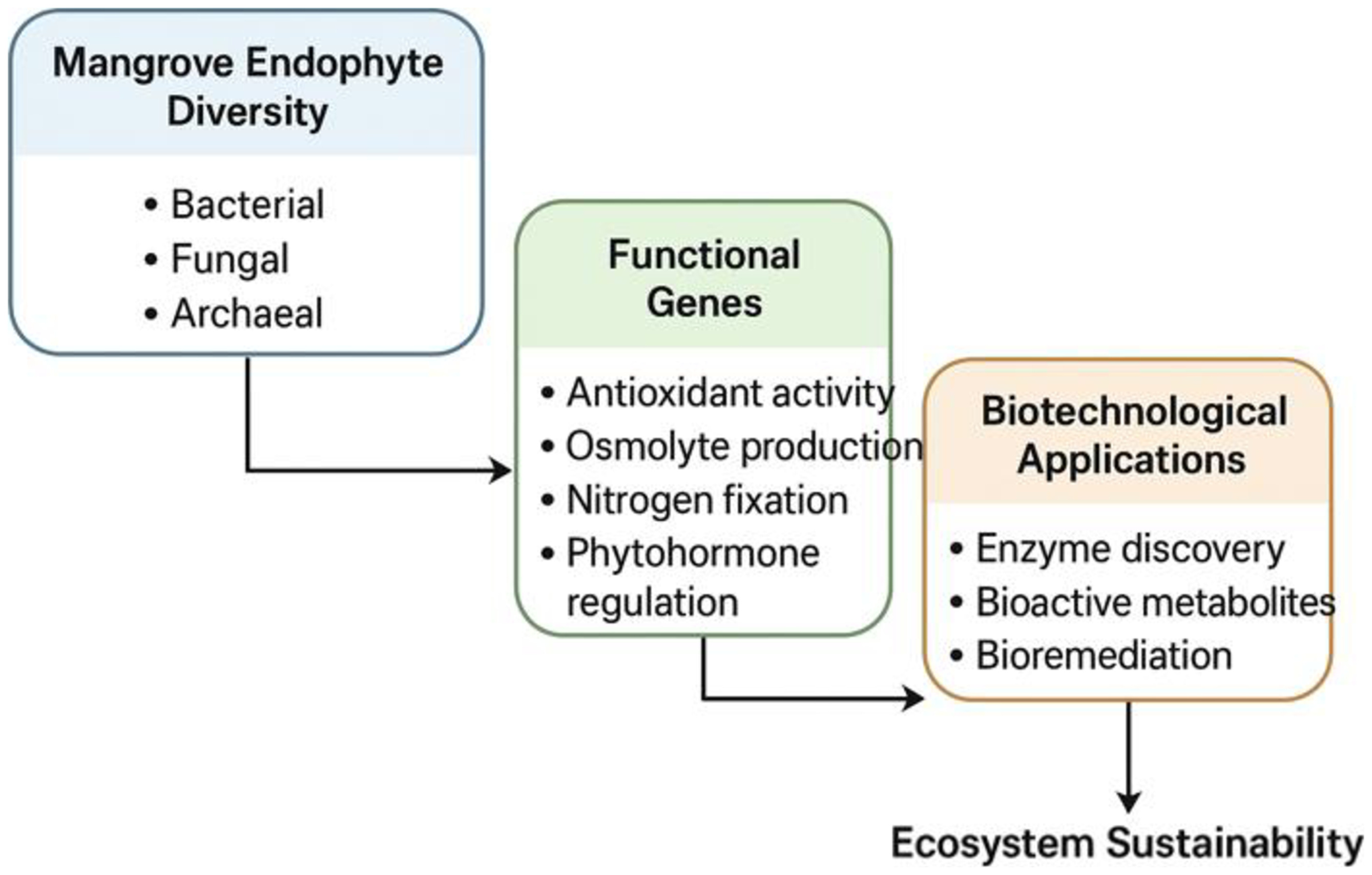
 Diversity of mangrove endophytes and implications for ecosystem sustainability in biotechnology
Mangrove ecosystems are among the most productive and ecologically significant coastal habitats, providing essential services such as carbon sequestration, shoreline stabilization, and biodiversity support under extreme saline and anoxic conditions. Increasing evidence highlights the pivotal role of endophytic microorganisms residing asymptomatically within mangrove plant tissues in enhancing host adaptation and ecosystem resilience. However, global patterns of their diversity, functional traits, and biotechnological potential remain fragmented across studies. This review provides a comprehensive synthesis of peer-reviewed literature published between 2000 and 2025, retrieved from Web of Science, Scopus, and PubMed, using a structured and reproducible search strategy. A total of 187 studies were analyzed, yielding 152 identified endophytic species. Fungi accounted for approximately 58% of reported taxa, followed by bacteria (39%) and archaea (3%), with Ascomycota and Proteobacteria emerging as dominant phyla across host species and geographic regions. Functionally, mangrove endophytes contribute to nutrient acquisition, stress tolerance, and the production of diverse bioactive compounds with antioxidant, antibacterial, and enzymatic activities. Despite these promising attributes, significant discrepancies between culture dependent and metagenomic approaches influence diversity estimates and functional interpretations, highlighting the need for standardized methodologies and integrative multi-omics frameworks. While endophytes demonstrate clear benefits at the plant level, their large-scale ecological contributions and industrial applicability remain insufficiently validated. This review bridges ecological and biotechnological perspectives by identifying key research gaps, methodological limitations, and priority directions for future studies, ultimately supporting the development of sustainable applications derived from mangrove-associated microbial resources.
Keywords:
mangrove endophytes; microbial diversity; metagenomics; bioactive compounds; ecosystem sustainability; biotechnology
 Thumbnail