 Biodiversity and conservation challenges in mangrove ecosystems: a comparative study of faunal assemblages and community perceptions in Aceh, Indonesia
Abstract
This research aims to assess biodiversity and the challenges of mangrove ecosystem conservation, and to compare fauna collections and public perceptions regarding diversity and species abundance in the Aceh mangrove forest. The methods used were surveys, statistical analysis, and field research across three mangrove locations. Research results show that species distributions are shaped by a combination of environmental and anthropogenic factors, including salinity, pH, temperature, and human disturbance. The highest diversity index with stable communities is in the Seuriget mangroves. In contrast, the Langsa and Lueng River kuala mangroves show dominance of species tolerant of anthropogenic pressures, such as changes in salinity and temperature. The species distribution identified 16 species from 491 individuals across five classes of animals: Pisces, Aves, Reptilia, Amphibia, and Mammalia. The highest conservation awareness is in the Kuala Langsa mangroves (82.5%), Seuriget (65%), and Sungai Lueng (47.5%). The research concludes that conservation strategies are needed to overcome the challenges of biodiversity conservation. The strength of the study lies in its holistic approach, which combines ecological data with environmental and social parameters, thereby providing a scientific basis for recommendations on the management, rehabilitation, and control of mangrove destruction.
Keywords:
Aceh; biodiversity; conservation; ecosystem; mangrove
Resumo
Esta pesquisa visa avaliar a biodiversidade e os desafios da conservação dos ecossistemas de manguezais, além de comparar as coleções de fauna e as percepções públicas sobre diversidade e abundância de espécies na floresta de manguezais de Aceh. Os métodos utilizados foram levantamentos, análise estatística e pesquisa de campo em três locais de manguezais. Resultados de pesquisas mostram que a distribuição das espécies é moldada por uma combinação de fatores ambientais e antropogênicos, incluindo salinidade, pH, temperatura e perturbação humana. O maior índice de diversidade com comunidades estáveis está nos manguezais de Seuriget. Em contraste, os manguezais kuala dos rios Langsa e Lueng apresentam predominância de espécies tolerantes a pressões antrópicas, como mudanças na salinidade e na temperatura. A distribuição de espécies identificou 16 espécies de 491 indivíduos distribuídos por cinco classes de animais: Peixes, Aves, Reptilia, Amphibia e Mamíferos. A maior conscientização sobre conservação está nos manguezais de Kuala Langsa (82,5%), Seuriget (65%) e Sungai Lueng (47,5%). A pesquisa conclui que estratégias de conservação são necessárias para superar os desafios da conservação da biodiversidade. A força do estudo está em sua abordagem holística, que combina dados ecológicos com parâmetros ambientais e sociais, fornecendo assim uma base científica para recomendações sobre o manejo, reabilitação e controle da destruição de manguezais.
Palavras-chave:
Aceh; biodiversidade; conservação; ecossistema; manguezais
1. Introduction
Mangrove becomes the most coastal ecosystem based on biology and has ecology point to be an important habitat as the breeding place, the seeds, and an eating place for many land and water species at the coast (Douglas et al., 2022). Instead of supporting productivity of the sea ecosystem and the surrounding, the mangrove forest also has important action to keep the climate change through the saving of carbon (Valle et al., 2024). Besides the ecology functions, mangrove also provides the essential ecosystem, such as the protection of the coast from erosion, storm, and jobs for million peoples (Das et al., 2022; Mhatre, 2024; Mitra, 2020).
Yet, the mangrove ecosystem faces a serious threat due to human activity including change of land function and climate distribution. This threat caused habitat degradation and loss of biodiversity on a big scale (Ashton, 2022; Ferreira et al., 2024). Extensively, the reduction of mangrove area was estimated to reach 35-50% in 2 recent decades. Asia becomes the area that faces extreme reduction because of the use of land for aquaculture, agriculture, and the city development (Contessa et al., 2023; Xu et al., 2024). Indonesia has 20% more mangrove forest in total than all of the world that face high deforestation pressure and cause habitat fragmentation, the reduction of fauna population, and the change of ecology community dynamic (Sasmito et al., 2023).
The impact of habitat degradation is significantly happen to the biodiversity including the loss of species, the change of social structure, and the domination of species that tolerate more to the disruption (Farquhar et al., 2024; Hanhimäki et al., 2024; Mendes et al., 2022). The impact of degradation, the main species tend to be replaced by general species that finally reduce the function of ecosystem resilience (Arnesi et al., 2024). Despite many studies exploring the impact of loss of mangrove forest to the fishery and carbon saving (Knowles et al., 2024), there is still limited research that specifically investigates the effect of many disruption steps to the wealth of species, abundance, and the role of society to the mangrove ecosystem sustainability.
Beside the ecology factor, the social aspect of culture and economy have an important role in mangrove conservation too. The coastal community is highly dependent on mangrove resources as the main livelihood that creates community involvement to keep the ecosystem sustainability that needs to be educated (Maulidah et al., 2023; Villarreal‐Rosas et al., 2024). The success strategy of conservation is highly influenced by public awareness of the environmental threat and participation of sustainability management and restoration (Mozelewski et al., 2022; Nguyen and Jones, 2022). Several research shows the area that was managed for ecotourism tend to have higher role of community inside the conservation compared to other area that has high degradation, where the economic dependence toward mangrove resources is more dominant (Saha et al., 2024; Suasa et al., 2024). However, the local community faces the threat and effort is essential to connect the gap and policy of conservation and local community (Gutama et al., 2024; Setiawan et al., 2023).
Even though much research of mangrove biodiversity and conservation was still limited, it integrated the ecology data and local community perspective about the challenge of conservation strategy. Langsa mangrove forest located in Aceh has conservation challenges that are needed for sustainability (Damora et al., 2019; Arif and Akmalia, 2024). Langsa mangrove forest is the widest mangrove in Indonesia that has potential as educational forest, conservation and ecotourism (Basyuni et al., 2021; Ulfa et al., 2018). The biodiversity conservation as the policy step to manage mangrove as an ecosystem that plays a role in maintaining environmental stability, the source of life of fauna and society (Dewiyanti et al., 2019). Aceh and North Sumatra as the massive mangrove contributor in Indonesia (Basyuni et al., 2022), but if mangrove is not conserved it will lose the function that has impact to the continuity of life.
Therefore, this research aims to fulfil that gap by examining the fauna biodiversity that connects to mangrove and evaluate the wealth of species, abundance, and composition of society in mangrove habitat with threat of anthropogenic. This research also analyses the society's perception about the threat conservation and involvement in conservation effort, in addition identifying the factors of social-economic that influence the participation in conservation activity. Mangrove in Langsa has low anthropogenic threat and it will show the higher wealth of species, and an index of bigger biodiversity, and ecology stability that better than the other locations that face high degradation. To examine this hypothesis, this research used a field survey and standard technique of species identification to measure the biodiversity index in three locations of study: Seuriget Mangrove Forest, Kuala Langsa, and Lueng River. By integrating the ecology perception and social culture of the local community, this research gives comprehensive understanding about the mangrove biodiversity to recommend the sustainability of mangrove practical management in Langsa Mangrove Forest of Indonesia.
2. Material and Methods
2.1. Study area
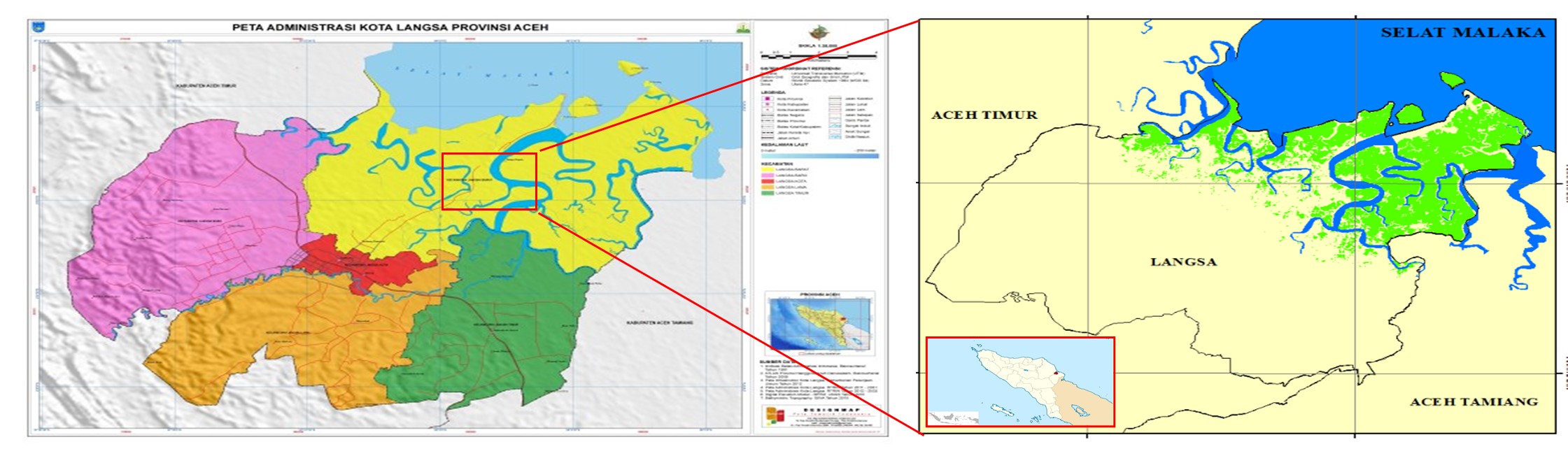
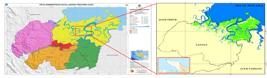
The chosen location of this research based on the first habitat examination that was done before researching, confirmed the difference of mangrove structure, the level of disturbance, and fauna biodiversity. This research has been done in Mangrove Forest of Langsa City that located in the position among 04°27’34”-04°33’39” North Latitude and 95°56’40”- 98°05’2” East Longitude with representative provision 10% from the total of mangrove width. The length of transect has been chosen based on purposive sampling by analyzing the starting point that would become the monitoring location randomly with line 1000 m with measurement of 10 m wide from right and 10 m. There are three distributions of mangrove location used, each location was:
-
Location 1 in Lueng River Village coordinates 98°1’34” E - 4°29’27” N
-
Location 2 in Kuala Langsa Village coordinates 98°0’10” E - 4°30’52” N
-
Location 3 in Seuriget Village coordinates 97°58’59” E - 4°31’18” N
note: E = East Longitude, N = North Latitude.
Classification of research location used is Seuringet Mangrove Forest that has been classified as primer mangrove forest that most of it still intact with minimum human threat and it has functioned as location to collect the group of natural fauna. Kuala Langsa Mangrove, classified as an area of ecotourism, faced selective habitat modification to accommodate the visitors that influence the pattern of biodiversity due to increase of human activity. Otherwise, Lueng River Mangrove represents mangrove forest degraded that has experienced habitat loss significantly due to deforestation, pollution, and resource extraction that is not sustainable (Figure 1). Geographical position of location is one way to the previous study that focus on the importance of spatial heterogeneity of mangrove biodiversity (Ochoa-Zavala et al., 2022).
2.2. Data collection
2.2.1. The species biodiversity
The fauna species biodiversity has done through the field study (survey) systematically and identified the species directly for 3 months from June, July, and August 2023. To make sure the samples were taken representatively in many kinds of habitat, the sample approach was nested randomly. Every location surveyed twice a month, including the condition of ebb and flow and low to catch the variation of species in different ecological niches. The effort of sample taking is standardized in all locations to make sure that the comparison of species was not biased by the difference in the survey. The detection and identification of species is done by using any field techniques that are customized with 2 groups of different species.
-
Visual Meeting Survey implemented to amphibian, reptile, and bird with observation assisted by binoculars with distance according to the predetermined transect length. The observation data would be identified to the piece of the field identification composite (Boback et al., 2020).
-
The mist net and camera trap was used to monitor the population of birds and small mammals. The mist was installed from the top activity period from 600 until 1000 h and 1600 until 1800 h.
-
The gil netting and the catching technique of fish used to detect the species of estuary fish, ensure the species that survive in the surface and based to be entered to the group of data. The trap and gil netting was placed strategically in the transition zone of mangrove to catch the small land of vertebrae, including amphibian and small mammals. The species identification followed the standard taxonomy reference (Sandepogu and Somineni, 2024), and the status conservation of species was verified using IUCN Red List and CITES Appendixes (Sadeli et al., 2024).
2.2.2. Community perception to the conservation and threat
To complete the ecology assessment, the community survey was done to evaluate the perception about mangrove conservation and threat to fauna. The questionnaire and interview structure was given to 120 responses by the same distribution from 40 participants in each location to ensure balanced representation. The participants were chosen using purposive sampling, which each individual has criteria of knowledge and experience about mangrove ecosystem such as sailors, ecotourism staff, and local people who interact frequently with mangrove habitat. The survey aimed to get community perspectives about conservation issues such as deforestation, pollution, overfishing, and the impact of ecotourism on biodiversity. The respondents have also asked about their involvement and initiative about conservation of mangrove fauna that they feel, and their preferred conservation strategy.
The questionnaire covered closed and open questions to enable qualitative and quantitative analysis. To ensure the validity and reliability of responses, the questionnaire was previously examined with the pilot group of 10 people before full implementation, and the adjustment was made to increase clarity and reduce ambiguity. The field staff did interview in person to minimize the bias response, and to ensure the consistency in collecting the data. The questionnaire was designed to be neutral and independent following the best practice in social science research (Hawes, 2024). The sampling used data of society and fauna that have been through agreement (Standards And Operational Guidance for Ethics Review of Health-Related Research with Human Participants and International Ethical Cioms) issued by The Health Research Ethnic Commitee of State University of Semarang through a Decree Ethical Clearance Number: 293/KEP/EC/2023 (WHO, 2011; CIOMS, 2016).
2.3. Statistical analyses
To determine was the biodiversity significantly different in three locations of study, so the statistical analysis was made using parametric and non-parametric approaches depending on data distribution. Normality was examined using Shapiro-Wilk, a variant of homogenitors that was assessed using the Levene test (Ririhena et al., 2024).
To assess the distribution pattern, Chi-Square Test (χ2) was made to determine whether species abundance varies significantly among locations. This examination was chosen because of its suitability for categorical data and its capabilities to utter weather species happen proportionally in different locations (Sofiana et al., 2023). Furthermore, the Pearson Correlation Analysis was made to examine whether the number of species is higher and showed that the biodiversity index was lower, the ecologic trend was examined in several disturbed habitat (Kishinevsky and Ives, 2022). Different from the previous study that only used qualitative tests, this approach gave insight statistically about the dynamic of the fauna community in the mangrove ecosystem (Anwari et al., 2022).
To the community perception, the response was analyzed using descriptive statistics to conclude the trend of awareness, the conservation involvement, and the perceived threat. The response of open questions coded and categorized to identify the general theme that connects to conservation challenge and the society involvement. The Chi-Square Test was made to assess the difference of conservation awareness among respondents from the different study locations, and gave insight about how the social-economic factors influenced the involvement in mangrove protection.
3. Results
3.1. The biodiversity species in mangrove ecosystem
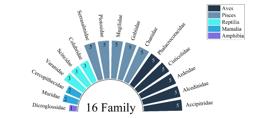
The mangrove ecosystem was acknowledged globally because it has a role to support biodiversity due to its function to develop habitat and fauna breeding in many kinds of species. This habitat provided the essential ecologic function for the land and water organism, protecting stability, and ecosystem production. The result of this research was in total there were 16 species of 491 families that covered 5 of main taxonomy classes (Pisces, Amphibia, Reptilia, Aves, and Mammals), it was noted in three locations of study in Langsa Mangrove Forest. The fauna data was found in River Lueng Mangrove, Seuriget, and Kuala Langsa was presented in the Table 1.
From Table 1, Pisces and Aves have the highest species with each group donated five species, mammals has two species, reptilia has three species, and amphibians has one species. Below is the land and water biodiversity visualized to the Figure 2.
The result of biodiversity analysis made in Mangrove Seuriget, Kuala Langsa, and Lueng River showed the striking difference if interpreted through three indexes of main ecology such as in Table 2.
The Shanon Wiener Index (H') measured the level of biodiversity species, where scoring >2.5 showed a complex community, Equality Index (E) was close to 1 signaling the individual distribution evenly distributed among species, and the Domination indexes (D) was high (>0. Seuriget as the primary representation of mangrove forest, wrote the best effort of ecology with indexes of Shannon-Wienner was the highest (H' = 2,59), and the highest evenness (E = 0.8333), by minimum dominated (D = 0.08663). These scores presented the stability of a species community evenly distributed, reflecting a full and balanced ecosystem. This condition is typically for nature habitat with complex vegetation structure that provides a varied ecological niche for fauna such as lobster mangrove (Scylla spp) and predator birds (Haliastur indus).
Otherwise, Kuala Langsa as the ecotourism area presented the worried pattern: even though it has relatively high of biodiversity (H' = 2,456), it has the highest dominance indexes (D = 0.1037) and has lower of evennes (E = 0.7287) presented that the distribution was uneven. This pattern typically for ecosystem that experienced pressure of anthropogenic, where it only tolerant species such as small egret (Egretta garzetta) and mudskipper fish (Periophthalmus spp) that is capable to adapt with human disruption. Lueng River, the degraded mangrove site, presented uniqueness with average biodiversity (H' = 2,529) although the habitat condition was bad. The domination index was highest (D = 0.09136) and the evenness was lower (E = 0.7836). It reflects the resilience of the mangrove ecosystem capable of supporting the general species such as Fiddler Lobster (Uca spp) and Rangkong Abu (Ardeola speciosa) adapted to the environmental change. The Shapiro-Wilk test (P > 0.05) confirmed that the biodiversity was distributed normally, while the Levene Test (P = 0.299) showed the homogeneity of variants among three sites.
3.2. The environmental factor influenced the species distribution
The distribution of mangrove species was formed by the combination of anthropogenic and environmental, it was salinity, pH, temperature, and human disruption. Variation of this parameter across mangrove sites was able significantly to influence the wealth of species, evenness, and community composition. The environmental measurement was made in this study such as the variable measurement of the environment in three locations of study presented there was different ecology gradient. The Table 3 was concluded the environmental measurement.
The salinity was the main decider of species composition in estuarine and mangrove environments because different taxa presented many levels of salt tolerance. The low salinity in Seuriget based on Shannon-Wienner indexes was higher (H' = 2,59), showing that the stable salty water supported bigger biodiversity and evenness species. Otherwise, the salinity enhancement in Lueng River was connected to the species shift and salty tolerant such as Periophthalmodon schlosseri (The giant Mudskipper) dan Plotosus canius (Catfish, eel), the pattern was examined in other degraded estuary. pH of water also influenced the biodiversity species, neutral pH in Seuriget consisted of balanced species composition. This condition was more sour in the Lueng River that contributed to species of physiology that were less tolerant. Moreover, the water temperature is varied in three locations with higher temperature in Lueng River, it potentially worsen by reducing the dissolved oxygen and changing the process of metabolism. These factors added the level of disruption that was measured such as environmental factors naturally or caused by humans who have an important role to design distribution species of the mangrove ecosystem.
The correlation of Pearson analysis expressed the negative expression significantly between salinity and species richness (r = −0.72, P < 0.05) also between the level of disturbance of species distribution (r = −0.63, P < 0.05). This result showed that the enhancement of salinity and human disturbance reduce the total of biodiversity. Totally, this finding showed that mangrove in Seuriget, with its condition was almost stable and the disturbance is low, supported the fauna community to be more balanced and varied rather than degraded condition of mangrove in Lueng River. It proves the importance of conservation effort was not only to solve degraded habitat but also to reduce the bad change in main environmental parameters to preserve the integrity of the mangrove ecosystem.
The water salinity influences the pressure of osmosis in organisms that have an impact on the distribution and sustainability of mangrove fauna life. In this research, mangrove in Seuriget has the lowest salinity (18 ppt), presenting the domination of freshwater. Mangrove in the Lueng river has the highest salinity (25 ppt), it showed that the sea water was stronger while the fresh water was lower. Mangrove in Kuala Langsa showed that both salinity was (22 ppt). Yet, if compared to the mangrove forest in other area, the salinity was about 15-34 ppt, depend to the distance of sea water and fresh water, where the highest salinity was found in the closest zone of the sea (34 ppt), while the middle zone of forest (34 ppt), it was influenced by fresh water that showed number of 15-20 ppt.
The pH quality of mangrove also affects the nutrition availability, activity of microorganisms, and decomposition of organic matter. The pH number of 7 was neutral, while below seven was sour, and above 7 was wet. The mangrove in Seuriget showed the most neutral pH (7.3), followed by mangrove in Langsa (7.1), and mangrove in Lueng River has the lowest pH (6.8). Although, all locations were still around the optimal range for mangrove ecosystem, it was (6.5-8.0) the lowest pH indicates the accumulation of organic material or indicate the accumulation of pollution of organic material, especially in the location like mangrove of Lueng River that has more disturbance.
3.3. The species distribution and community structure in all location of study
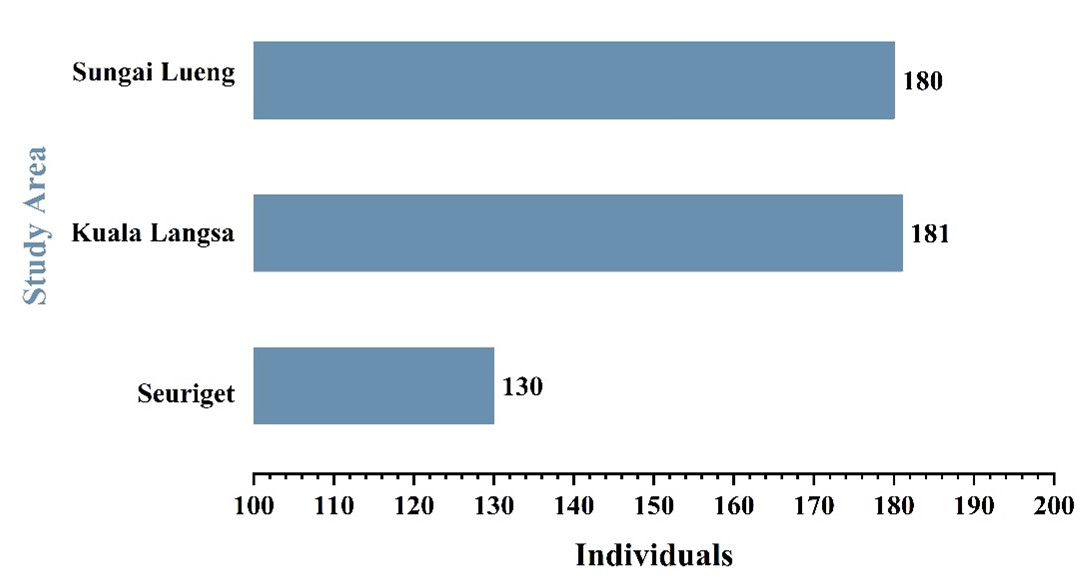
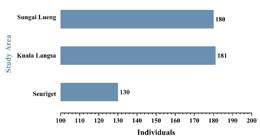
The findings from three locations of study found that each of the locations has 16 striking variations of species in the number of fauna individuals noted in (Figure 3). As many 491 individuals died that was examined including several classes of animal such as Pisces, Aves, Reptilia, Amphibia, and Mammals. Mangrove in Kuala Langsa showed the highest number of individual 181, especially the Engretta bird, and the domination of Periophthalmus chrysospilos fish. Mangrove in Lueng River has 180 individuals that are dominated by Plotosus canius fish and Periophthalmodon schossery, the species that generally more tolerant of extreme environmental conditions. The Seuriget mangroves, with their relatively natural mangrove environment, had the lowest number of individuals at 130, but comprised a more evenly distributed community across species. A chi-square test (χ2 = 10.39, P = 0.0055) showed significant differences in the distribution of individual numbers between sites, indicating that habitat variation and the level of anthropogenic disturbance influence the structure of the faunal community. The Seuriget mangrove showed the highest biodiversity despite a lower number of individuals, reflecting a balanced and ecologically stable community. In contrast, the dominance of certain species in the Kuala Langsa mangrove indicated ecological pressure due to habitat modification and intensive human intervention. Pearson correlation (r = −0.848, P = 0.355) showed a negative relationship between species diversity and total number of individuals, although statistically insignificant, indicating a trend that increasing number of individuals is often accompanied by the dominance of certain species and a decrease in the diversity of the mangrove ecosystem.
3.4. Community perceptions of conservation and threats
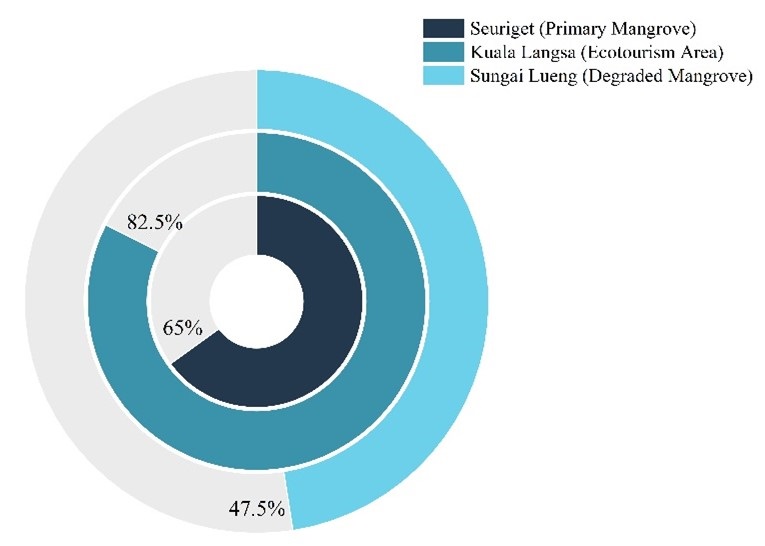
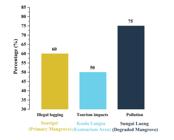
To understand community perceptions and involvement in mangrove conservation, this study conducted structured interviews with 120 respondents (40 at each location). Questions addressed their knowledge of the importance of mangrove ecosystems and their knowledge of mangrove conservation programs (Table 4). Interview results indicate that awareness of the importance of mangroves is highest in Kuala Langsa, where most respondents understand the ecological functions of mangroves, such as preventing abrasion and serving as a habitat for fauna. In contrast, awareness tends to be lower in Sungai Lueng, with many respondents only aware of the benefits of mangrove wood but less understanding of its ecological functions. Regarding perceived threats, the majority of respondents in Sungai Lueng cited pollution and illegal logging as the main threats, while in Seuriget, threats were considered relatively minor due to the area's natural state, as summarized in Figure 4.
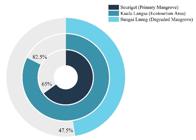
The survey results (Table 4) show that the Kuala Langsa mangroves had the highest level of conservation awareness, with 82.5% of respondents reporting familiarity with mangrove conservation programs, compared to 65.0% in the Seuriget mangroves and only 47.5% in the Sungai Lueng mangroves. The higher awareness in the Kuala Langsa mangroves is likely influenced by its status as a managed ecotourism site, where environmental education and community involvement in conservation efforts are actively promoted. In contrast, the Sungai Lueng mangroves showed the lowest level of awareness, suggesting that degradation and economic dependence on mangrove resources may reduce community focus on conservation efforts.
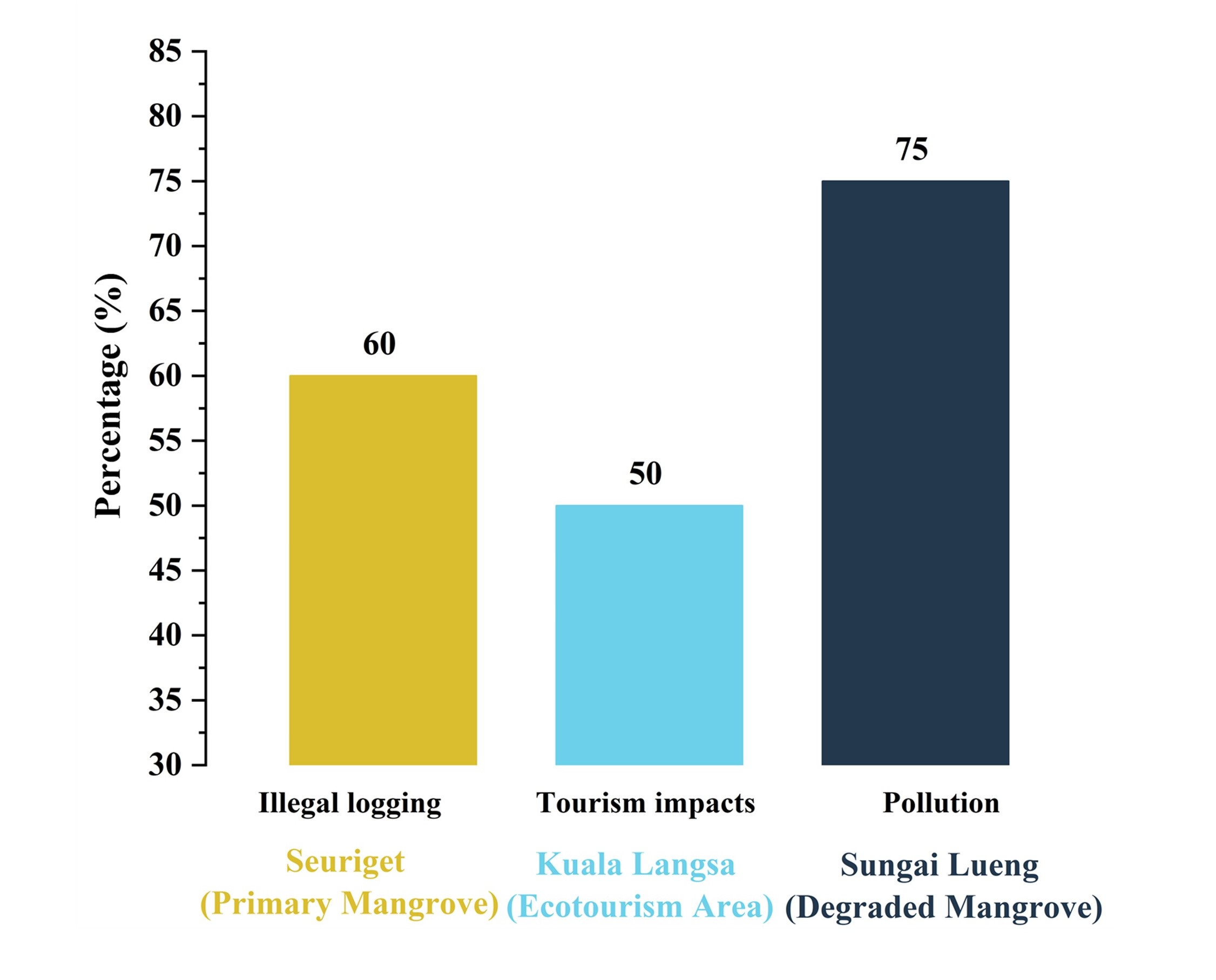
Perceived threats to mangrove ecosystems varied across study sites (Figure 5). Sixty percent of respondents in Seuriget identified illegal logging as the primary threat, highlighting concerns about unsustainable timber extraction affecting habitat integrity. In contrast, 50% of respondents in Kuala Langsa were most concerned about the impacts of tourism on wildlife behavior and habitat quality, reflecting the growing challenge of balancing ecotourism with conservation. In Sungai Lueng, pollution was overwhelmingly identified as the primary threat by 75%, primarily due to agricultural runoff and waste disposal. This suggests that degraded areas experience not only direct habitat loss but also secondary environmental damage such as water contamination, further exacerbating biodiversity decline.
Community participation in conservation efforts also varied significantly across locations. 57.5% of respondents in Kuala Langsa reported having participated in mangrove restoration programs, compared to 35.0% in Seuriget and only 22.5% in Sungai Lueng. The higher participation rate in Kuala Langsa may be attributed to structured ecotourism programs that encourage local community involvement in mangrove conservation, providing economic incentives for participation. Conversely, the low participation rate in Sungai Lueng may be attributed to a higher dependence on mangrove resources for subsistence, limiting community willingness to engage in conservation programs that can restrict access to natural resources. Further analysis revealed a significant relationship between conservation awareness and participation in restoration efforts (r = 0.68, P < 0.01), indicating that communities with higher awareness are more likely to be actively involved in conservation activities. This highlights the importance of integrating environmental education and community-based management strategies to encourage long-term engagement in mangrove protection.
The findings of this study underscore the need for tailored conservation strategies to address specific mangrove challenges. The Seuriget mangrove area requires stricter enforcement of logging regulations, and sustainable timber harvesting policies can help reduce illegal deforestation. The Kuala Langsa mangrove area needs to balance tourism development with stricter environmental regulations to ensure ecotourism remains a sustainable conservation tool. The Sungai Lueng mangrove area requires interventions focused on pollution control, and sustainable livelihood alternatives are needed to mitigate environmental degradation while securing local economic needs.
4. Discussion
4.1. Species diversity of mangrove ecosystems
The species composition recorded in mangrove areas includes generalist species that can adapt to a wide range of environmental conditions and specialist species that are more sensitive to habitat disturbance (Raunsay et al., 2025). Generalist species have been observed using a variety of microhabitats within mangrove ecosystems, such as water edges and forest floors, demonstrating their ecological flexibility. In contrast, sensitive species, such as certain migratory birds and small endemic mammals, are typically restricted to more stable, undisturbed habitat areas, indicating their dependence on intact environmental conditions. Differences in species diversity across study sites also reflect the influence of anthropogenic pressures, including land conversion, pollution, and human activities such as fishing and tourism (Arif and Akmalia, 2024). Sites with higher mangrove cover and minimal disturbance generally have a richer and more balanced species assemblage. Meanwhile, degraded sites are characterized by decreased species richness and a dominance of generalist organisms, indicating ecosystem imbalance and habitat disturbance.
Certain species exhibit strong site preferences, such as the long-tailed macaque (Macaca fascicularis), which is predominantly found in Kuala Langsa, demonstrating its ability to exploit anthropogenic food sources. This trend is also observed in other ecotourism sites (Lestari et al., 2024). Meanwhile, Colossoma macropomum (Tambaqui) and Plotosus canius (Catfish, Eel) are more abundant in the Lueng River, demonstrating their tolerance to degraded conditions, in line with findings of estuarine fish adaptation to habitat disturbance (Alviaqomah et al., 2024). These findings emphasize the important role of habitat quality in shaping species distribution. Previous studies have shown how habitat integrity directly influences species richness and local community structure (Rahardjanto and Husamah, 2022; Susanto et al., 2024).
4.2. Factor to increase of mangrove species
Water temperature is an important indicator in aquatic ecosystems because it affects organism metabolism, oxygen solubility in water, and chemical reaction rates. Temperature also has an impact on plant growth rates and aquatic animal activity. In this study, temperature measurements were taken in the morning, the highest temperature recorded at the highest temperature recorded at the Lueng River (29.2 °C), followed by Kuala Langsa (27.8 °C), and the lowest at Seuriget (26.8 °C). The location of the Lueng River experienced the highest disturbance characterized by the presence of domestic settlements and other human activities adjacent to the mangrove area. Kuala Langsa, although modified for ecotourism purposes, has a moderate level of disturbance. The ecotourism area has a moderate level of disturbance, while Seuriget is relatively natural and minimally disturbed and minimal disturbance. The correlation between the level of disturbance and environmental parameters is quite clear: the higher the level of disturbance, the more extreme the recorded environmental conditions, namely high salinity, low pH, and high temperature. When compared to other mangrove areas, such as Bintuni Bay, which has a bay with a salinity of 10-32 ppt, pH 6.8-7.9, and water temperature of 28-32 °C, and Kuala Bubon with a salinity of 15-28 ppt and pH 6.5-7.5 (Arif and Akmalia, 2024). the condition of the mangroves in Langsa City is still within the ecological tolerance range compared to other areas.
4.3. Public awareness of conservation and threats
The conservation status of mangrove-associated species is an important indicator of ecosystem sustainability and serves as a basis for designing effective management strategies. This study assessed the IUCN Red List and CITES Appendix classifications of recorded species to identify those at risk due to habitat degradation, human disturbance, and potential overexploitation. Of the 16 species recorded at the three study sites, the majority were classified as Least Concern (LC), indicating relatively stable populations. However, three species, Macaca fascicularis (Long-tailed Macaque), Colossoma macropomum (Tambaqui), and Prinia familiaris (Bar-winged Prinia), were categorized under a higher threat level, requiring focused conservation efforts.
Previous research has shown that prolonged human interaction with wildlife can lead to behavioral changes, dependence on anthropogenic food sources, and increased conflict with local communities (Figel et al., 2023; Sadeli et al., 2024). Similarly, Colossoma macropomum (Tambaqui) and Prinia familiaris (Bar-winged Prinia) are categorized as Near Threatened (NT), indicating that they face potential risks from habitat degradation and overexploitation, as observed in other coastal and estuarine ecosystems (Asmoro and Cahyadi, 2022; Nandiyanto et al., 2023). Furthermore, three species, Varanus salvator (Water Monitor Lizard), Haliaeetus leucogaster (White-bellied Sea Eagle), and Macaca fascicularis, are listed under CITES Appendix II (CITES, 2025), indicating that although not currently threatened with extinction, their populations require close monitoring to prevent illegal trade and continued exploitation. These findings emphasize the need for habitat protection and policy enforcement to protect vulnerable species.
Conservation requires strategies to address the specific ecological and socioeconomic conditions of each study site. Seuriget mangrove, as a primary mangrove forest, should be prioritized for strict conservation protection due to its high biodiversity value and relatively undisturbed condition. Implementing a mangrove protection policy zone and stricter law enforcement against illegal logging are crucial to maintaining the integrity of this area (Ariyanto et al., 2022). As a key ecotourism area, the Kuala Langsa mangrove is a key activity, a balanced approach is needed to mitigate environmental degradation while maintaining economic benefits. Ecotourism can be a valuable conservation tool, as tourism revenues can support mangrove management and restoration programs. However, unregulated tourism can negatively impact biodiversity by causing pollution, habitat degradation, and increased disturbance to wildlife (Raunsay et al., 2025). Establishing environmentally friendly tourism management policies and visitor management in conservation areas can help minimize the impact of damage (Anggraini and Gunawan, 2021; Ririhena et al., 2024). Integrating community-based conservation such as payments for ecosystem services (PES) or ecotourism-based jobs can encourage sustainable tourism development.
The Lueng River mangroves, one of the most degraded areas, require immediate restoration and rehabilitation efforts to reverse habitat loss and biodiversity decline. Urgent action includes mangrove replanting, pollution control, and alternative livelihood programs for local communities (Febriana and Utary, 2024; Utami et al., 2024). Research has shown that mangrove restoration projects are most effective when combined with local community engagement and conservation participation (Ariyanto et al., 2022). Providing alternative income sources such as sustainable aquaculture, eco-friendly handicrafts, and small-scale fisheries management can reduce dependence on unsustainable mangrove exploitation (Novita and Mukhtar, 2024).
Community awareness and engagement are crucial components of successful conservation initiatives. This study found a significant correlation between conservation awareness and participation in restoration programs (r = 0.68, P < 0.01), suggesting that community education and engagement can directly improve conservation outcomes. Establishing long-term environmental education programs, integrating mangrove conservation into school learning, and conducting awareness campaigns can foster a stronger conservation ethic among local residents (Husamah et al., 2022; Novita and Mukhtar, 2024). Furthermore, co-management approaches that empower local stakeholders in decision-making processes have been shown to increase conservation success and regulatory compliance (Pahleviannur, 2024). Policy recommendations should focus on strengthening the enforcement of existing environmental regulations to increase community support for conservation initiatives. Collaborative efforts between government agencies, NGOs, academic institutions, and local communities are crucial for implementing effective conservation programs in mangrove areas.
4.4. Implications
Overall, this study highlights the significant role of mangrove ecosystems in supporting biodiversity while demonstrating the impact of habitat conditions on species richness, abundance, and community structure. The findings revealed that Seuriget, a primary mangrove forest, had the most balanced biodiversity with the highest and most evenly distributed Shannon-Wiener Index, while Kuala Langsa, an ecotourism area, exhibited a dominance of species likely impacted by human activities. Meanwhile, Sungai Lueng, a degraded mangrove site, still supported resilient species despite environmental pressures. Statistical analysis confirmed significant differences in biodiversity indices across sites, reinforcing the influence of habitat quality on faunal assemblages. The conservation assessment indicated that although most recorded species were categorized as Least Concern (LC), species such as Macaca fascicularis (EN), Colossoma macropomum (NT), and Prinia familiaris (NT) faced potential threats due to habitat degradation and conflict.
The presence of CITES-listed species further underscores the urgency of monitoring and protection measures. Furthermore, community perception data emphasizes the importance of local community involvement in conservation. Conservation awareness and participation are higher in managed ecotourism areas but lower in degraded habitats where dependence on mangrove resources is more pronounced. This study highlights the need for integrated conservation strategies that combine scientific research, habitat restoration, community-driven conservation initiatives, and government policy support to ensure the long-term sustainability of mangrove ecosystems. Future research should focus on long-term biodiversity monitoring and policy development that balances ecological preservation with socioeconomic needs, thereby contributing to global efforts in mangrove conservation.
5. Conclusion
This research makes a new contribution to the study of the mangrove ecosystem by comprehensively analyzing biodiversity, environmental factors, and community perceptions across three locations (Mangrove Sungai Lueng, Kuala Langsa, Seuriget) in Langsa City, Aceh. Research results show that Seuriget, a natural mangrove, has the highest diversity index (H' = 2.59) and a stable community. In contrast, Kuala Langsa (ecotourism) and Lueng River (degraded) show species dominance that is tolerant of anthropogenic pressures, such as changes in salinity (18-25 ppt), pH (6.8-7.3), and temperature (26.5-29.2 °C). This study also reveals differences in public perception, with the highest conservation awareness in Kuala Langsa (82.5%) due to the influence of ecotourism, Sueriget (65%), and the Lueng River, which is only 47.5% degraded. Findings on the conservation status of key species such as Macaca fascicularis (EN) and Colossoma macropomum (NT) reinforce the urgency of location-based protection. The strength of this research lies in a holistic approach that combines ecological data, environmental and social parameters, thus providing a scientific basis for different management recommendations in each location, ranging from strict protection in the Seuriget mangroves, ecotourism regulations in the Kuala Langsa mangroves, to rehabilitation and pollution control in the Lueng River mangroves. Future research recommends long-term studies to monitor the population dynamics of major species and the impact of climate change, and to conduct ecological-economic analyses of mangrove ecosystems.
Acknowledgements
This research is the output of a Doctoral study, the researcher would like to express his deepest gratitude to Universitas Negeri Semarang for providing moral support and research funding. We would also like to thank the Promoter Team for providing support during the research journey.
Data Availability Statement
Research data is available in the body of the article.
References
-
ALVIAQOMAH, S., RAHMI, E.N., SAVITRI, S., FAHRINA, R. and HARYONO, A., 2024. Keanekaragaman Ikan Lais Di Sungai Tabuk Kabupaten Barito Selatan Kalimantan Tengah. Jurnal Penelitian Sains Dan Pendidikan, vol. 4, no. 2, pp. 174-188. https://doi.org/10.23971/jpsp.v4i2.8090
» https://doi.org/10.23971/jpsp.v4i2.8090 -
ANGGRAINI, R.I. and GUNAWAN, B., 2021. Ecotourism development in National Parks: a new paradigm of forest management in Indonesia. Jurnal Penelitian Sains Dan Pendidikan, vol. 249, pp. 03010. https://doi.org/10.1051/e3sconf/202124903010
» https://doi.org/10.1051/e3sconf/202124903010 -
ANWARI, M.S., JULIARTI, J., YANI, A. and RIYONO, J.N., 2022. Pengaruh Faktor Lingkungan Fisik Terhadap Kelimpahan Kerang Kepah (Polymesoda Erosa) Di Hutan Mangrove Desa Sungai Nilam Kecamatan Jawai Kabupaten Sambas. Jurnal Hutan Lestari, vol. 10, no. 4, pp. 925. https://doi.org/10.26418/jhl.v10i4.54229
» https://doi.org/10.26418/jhl.v10i4.54229 -
ARIF, S. and AKMALIA, N., 2024. Analysis of ecotourism and disaster mitigation data at the Kuala Langsa Mangrove forest by using the analytic hierarchy process. BAREKENG: Journal of Mathematics and Its Applications, vol. 18, no. 4, pp. 2125-2136. https://doi.org/10.30598/barekengvol18iss4pp2125-2136
» https://doi.org/10.30598/barekengvol18iss4pp2125-2136 -
ARIYANTO, A., ZULKIFLI, A. and WARDI, J., 2022. Can mangrove intensive policies in Indonesia benefit more coastal communities? environmental policy analysis. IOP Conference Series. Earth and Environmental Science, vol. 1041, no. 1, pp. 012059. https://doi.org/10.1088/1755-1315/1041/1/012059
» https://doi.org/10.1088/1755-1315/1041/1/012059 -
ARNESI, E.A., LÓPEZ, D.R. and BARBERIS, I.M., 2024. Relationship between degradation and the structural-functional complexity of subtropical xerophytic forests in the Argentine Wet Chaco. Forest Ecology and Management, vol. 562, pp. 121957. https://doi.org/10.1016/j.foreco.2024.121957
» https://doi.org/10.1016/j.foreco.2024.121957 -
ASHTON, E.C. (2022). Threats to mangroves and conservation strategies. In: S.C. DAS, PULLAIAH and E.C. ASHTON, eds. Mangroves: biodiversity, livelihoods and conservation. Singapore: Springer Nature, pp. 217-230. https://doi.org/10.1007/978-981-19-0519-3_10
» https://doi.org/10.1007/978-981-19-0519-3_10 -
ASMORO, A.Y. and CAHYADI, H.S., 2022. Sustainable tourism: analysis of methods and applications in the Indonesian tourism journals. International Journal of Applied Sciences in Tourism and Events, vol. 6, no. 2, pp. 194-218. https://doi.org/10.31940/ijaste.v6i2.194-218
» https://doi.org/10.31940/ijaste.v6i2.194-218 -
BASYUNI, M., BIMANTARA, Y., CUC, N.T.K., BALKE, T. and VOVIDES, A.G., 2022. Macrozoobenthic community assemblage as key indicator for mangrove restoration success in North Sumatra and Aceh, Indonesia _ Enhanced Reader.pdf. Restoration Ecology, vol. 30, no. 7, pp. 1-13. https://doi.org/10.1111/rec.13614
» https://doi.org/10.1111/rec.13614 -
BASYUNI, M., SULISTIYONO, N., MUNIR, E., VOVIDES, A.G. and BUNTING, P., 2021. Physicochemical characteristic, nutrient, and fish production in different types of mangrove forest in North Sumatra and Aceh Provinces of Indonesia. Kuwait Journal of Science, vol. 48, no. 3, pp. 1-14. https://doi.org/10.48129/kjs.v48i3.9160
» https://doi.org/10.48129/kjs.v48i3.9160 -
BOBACK, S.M., NAFUS, M.G., YACKEL ADAMS, A.A. and REED, R.N., 2020. Use of visual surveys and radiotelemetry reveals sources of detection bias for a cryptic snake at low densities. Ecosphere, vol. 11, no. 1, e03000. https://doi.org/10.1002/ecs2.3000
» https://doi.org/10.1002/ecs2.3000 -
CONTESSA, V., DYSON, K., VIVAR MULAS, P.P., KINDGARD, A., LIU, T., SAAH, D., TENNESON, K. and PEKKARINEN, A., 2023. Uncovering dynamics of global mangrove gains and losses. Remote Sensing, vol. 15, no. 15, pp. 3872. https://doi.org/10.3390/rs15153872
» https://doi.org/10.3390/rs15153872 - CONVENTION ON INTERNATIONAL TRADE IN ENDANGERED SPECIES OF WILD FAUNA AND FLORA – CITES, 2025. Appendices. Genève.
- COUNCIL FOR INTERNATIONAL ORGANIZATIONS OF MEDICAL SCIENCES – CIOMS. World Health Organization – WHO, 2016. International ethical guidelines for health-related research involving humans. Geneva: CIOMS.
-
DAMORA, A., IQBAL, T.H., FIRMANHADI, F., DEWIYANTI, I., UMAM, A.H. and PERSADA, A.Y., 2019. Distribution of three species of Penaeus in mangrove ecosystem area of Langsa, Aceh, Indonesia Distribution of three species of Penaeus in mangrove ecosystem area of Langsa, Aceh, Indonesia. IOP Conference Series. Earth and Environmental Science, vol. 348, no. 1, pp. 012112. https://doi.org/10.1088/1755-1315/348/1/012112
» https://doi.org/10.1088/1755-1315/348/1/012112 -
DAS, S.C., DAS, S. and TAH, J., 2022. Mangrove ecosystems and their services. In: S.C. DAS, PULLAIAH and E.C. ASHTON, eds. Mangroves: biodiversity, livelihoods and conservation. Singapore: Springer Nature, pp. 139-152. https://doi.org/10.1007/978-981-19-0519-3_6
» https://doi.org/10.1007/978-981-19-0519-3_6 -
DEWIYANTI, I., NURFADILLAH, N., SETIAWATI, T., YANTI, F. and ELRAHIMI, S.A., 2019. Litter production and decomposition of mangrove in the Northern Coast of Aceh Besar district, Aceh province. IOP Conference Series. Materials Science and Engineering, vol. 567, no. 1, pp. 012025. https://doi.org/10.1088/1757-899X/567/1/012025
» https://doi.org/10.1088/1757-899X/567/1/012025 -
DOUGLAS, E.J., BULMER, R.H., MACDONALD, I.T. and LOHRER, A.M., 2022. Estuaries as coastal reactors: importance of shallow seafloor habitats for primary productivity and nutrient transformation, and impacts of sea level rise. New Zealand Journal of Marine and Freshwater Research, vol. 56, no. 3, pp. 553-569. https://doi.org/10.1080/00288330.2022.2107027
» https://doi.org/10.1080/00288330.2022.2107027 -
FARQUHAR, J.E., WOTHERSPOON, L., PORTER, H. and CHAPPLE, D.G., 2024. Habitat loss and degradation reduce the abundance of the glossy grass skink, Pseudemoia rawlinsoni. Wildlife Research, vol. 51, no. 3, pp. WR23102. https://doi.org/10.1071/WR23102
» https://doi.org/10.1071/WR23102 -
FEBRIANA, A. and UTARY, B.I.W., 2024. The impact of mangrove forest land conversion on the sustainability of biological resources and the environment of Tanjung Luar Village. Justitia Jurnal Hukum, vol. 8, no. 1. https://doi.org/10.30651/justitia.v8i1.20447
» https://doi.org/10.30651/justitia.v8i1.20447 -
FERREIRA, A.C., ASHTON, E.C., WARD, R.D., HENDY, I. and LACERDA, L.D., 2024. Mangrove biodiversity and conservation: setting key functional groups and risks of climate-induced functional disruption. Diversity, vol. 16, no. 7, pp. 423. https://doi.org/10.3390/d16070423
» https://doi.org/10.3390/d16070423 -
FIGEL, J.J., SAFRIANSYAH, R., BAABUD, S.F. and HERMAN, Z., 2023. Clustered conflicts in disturbed lowlands characterize human-tiger interactions in Aceh, Indonesia. Wildlife Letters, vol. 1, no. 2, pp. 83-91. https://doi.org/10.1002/wll2.12016
» https://doi.org/10.1002/wll2.12016 -
GUTAMA, A.S., NURIYAH, E. and TARYANA, A., 2024. Social construction of coastal communities in mangrove conservation in Karangjaladri Village. International Journal of Social Science Humanity & Management Research, vol. 03, no. 12. https://doi.org/10.58806/ijsshmr.2024.v3i12n21
» https://doi.org/10.58806/ijsshmr.2024.v3i12n21 -
HANHIMÄKI, E., LINNA, S., BERALDO, C., ENGLUND, M., REZOLA, U., CARDOSO, P., THOROGOOD, R., SAASTAMOINEN, M. and DUPLOUY, A., 2024 [viewed 12 November 2025]. Species-associated bacterial diversity increases along a gradient of habitat degradation [online]. Available from: https://www.biorxiv.org/content/10.1101/2024.01.04.574207v1.full
» https://www.biorxiv.org/content/10.1101/2024.01.04.574207v1.full -
HAWES, M.L., 2024. Magic, mystery, myth, or meaningful: the 5-year rule for publications: editor’s message. Journal of the Association for Vascular Access, vol. 29, no. 2, pp. 6. https://doi.org/10.2309/JAVA-2024-29-02-Editorial
» https://doi.org/10.2309/JAVA-2024-29-02-Editorial -
HUSAMAH, H., SUWONO, H., NUR, H. and DHARMAWAN, A., 2022. Environmental education research in Indonesian Scopus indexed journal: a systematic literature review. Jurnal Pendidikan Biologi Indonesia, vol. 8, no. 2, pp. 105-120. https://doi.org/10.22219/jpbi.v8i2.21041
» https://doi.org/10.22219/jpbi.v8i2.21041 -
KISHINEVSKY, M. and IVES, A.R., 2022. The success of a habitat specialist biological control agent in the face of disturbance. Ecosphere, vol. 13, no. 4, e4050. https://doi.org/10.1002/ecs2.4050
» https://doi.org/10.1002/ecs2.4050 -
KNOWLES, M., GRABOWSKI, K.L., ALTIERI, A.H. and ARAÚJO, R.J., 2024. The ecological impacts of mangrove patch perimeter on fringe prop root-dependent communities. Bulletin - Society of Wetland Scientists (U.S.), vol. 42, no. 1, pp. 20-29. https://doi.org/10.1672/UCRT083-607
» https://doi.org/10.1672/UCRT083-607 -
LESTARI, A.D., AFIFAH, F., KINANTI, D., FITRIANINGTYAS, S.A., FIRDAUS, N.A., ISNA, N.N., DEVIA, D., HASANAH, F.N., BASYURI, A. and MUHAMMAD, Y., 2024. The natural food composition of long-tailed macaque (Macaca fascicularis Raffles, 1821) inhabiting the Muara Angke Wildlife Reserve in North Jakarta. Bioma, vol. 20, no. 1, pp. 41-50. https://doi.org/10.21009/Bioma20(1).5
» https://doi.org/10.21009/Bioma20(1).5 -
MAULIDAH, F.Z., ISKANDAR, J. and GUNAWAN, B., 2023. The tangible and intangible benefits of mangrove forests as a factor affecting community participation in mangrove management. Journal of Tropical Ethnobiology, vol. 6, no. 2, pp. 112-125. https://doi.org/10.46359/jte.v6i2.174
» https://doi.org/10.46359/jte.v6i2.174 -
MENDES, S.B., TIMÓTEO, S., LOUREIRO, J. and CASTRO, S., 2022. The impact of habitat loss on pollination services for a threatened dune endemic plant. Oecologia, vol. 198, no. 1, pp. 279-293. https://doi.org/10.1007/s00442-021-05070-y PMid:34775515.
» https://doi.org/10.1007/s00442-021-05070-y -
MHATRE, M.A., 2024. Role of mangroves as fishery resource: a systematic review. Uttar Pradesh Journal of Zoology, vol. 45, no. 16, pp. 35-41. https://doi.org/10.56557/upjoz/2024/v45i164285
» https://doi.org/10.56557/upjoz/2024/v45i164285 -
MITRA, A., 2020. Ecosystem services of mangroves: an overview. In: A. MITRA, ed. Mangrove forests in India: exploring ecosystem services. Cham: Springer, pp. 1-32. https://doi.org/10.1007/978-3-030-20595-9_1
» https://doi.org/10.1007/978-3-030-20595-9_1 -
MOZELEWSKI, T.G., ROBBINS, Z.J. and SCHELLER, R.M., 2022. Forecasting the influence of conservation strategies on landscape connectivity. Conservation Biology: The Journal of the Society for Conservation Biology, vol. 36, no. 5, e13904. https://doi.org/10.1111/cobi.13904 PMid:35212035.
» https://doi.org/10.1111/cobi.13904 -
NANDIYANTO, A.B.D., AL HUSAENI, D.F. and AL HUSAENI, D.N., 2023. Social impact and internationalization of “Indonesian Journal of Science and Technology” the Best Journal in Indonesia: a bibliometric analysis. Journal of Advanced Research in Applied Sciences and Engineering Technology, vol. 32, no. 2, pp. 42-59. https://doi.org/10.37934/araset.32.2.4259
» https://doi.org/10.37934/araset.32.2.4259 -
NGUYEN, M.-H. and JONES, T.E., 2022. Building eco-surplus culture among urban residents as a novel strategy to improve finance for conservation in protected areas. Humanities & Social Sciences Communications, vol. 9, no. 1, pp. 426. https://doi.org/10.1057/s41599-022-01441-9 PMid:36466704.
» https://doi.org/10.1057/s41599-022-01441-9 -
NOVITA, A. and MUKHTAR, E., 2024. Review article: mangrove ecotourism development potential. International Journal of Progressive Sciences and Technologies, vol. 46, no. 2, pp. 653. https://doi.org/10.52155/ijpsat.v46.2.6534
» https://doi.org/10.52155/ijpsat.v46.2.6534 -
OCHOA-ZAVALA, M., OSORIO-OLVERA, L., CERÓN-SOUZA, I., RIVERA-OCASIO, E., JIMÉNEZ-LOBATO, V. and NÚÑEZ-FARFÁN, J., 2022. Reduction of genetic variation when far from the niche centroid: prediction for mangrove species. Frontiers in Conservation Science, vol. 2, pp. 795365. https://doi.org/10.3389/fcosc.2021.795365
» https://doi.org/10.3389/fcosc.2021.795365 -
PAHLEVIANNUR, M.R., 2024. Pengelolaan Sumberdaya Alam dan Pelestarian Lingkungan Hidup melalui Hukum Adat SASI di Indonesia: a systematic literature review. Renewable Energy Issues, vol. 1, no. 1, pp. 10. https://doi.org/10.47134/rei.v1i1.1
» https://doi.org/10.47134/rei.v1i1.1 -
RAHARDJANTO, A. and HUSAMAH, H., 2022. Publication trend of environmental topics in the Journal of Biological Education in Indonesia (Sinta 2; 2017-2021): a systematic literature review. JURNAL Pembelajaran Dan Biologi NukleuS, vol. 8, no. 1, pp. 17-40. https://doi.org/10.36987/jpbn.v8i1.2453
» https://doi.org/10.36987/jpbn.v8i1.2453 -
RAUNSAY, E.K., REHIARA, R.E. and NURCHOLIS, W., 2025. Conservation challenges of Birds of Paradise in Papua, Indonesia: a systematic literature review. Brazilian Journal of Biology = Revista Brasileira de Biologia, vol. 85, e289477. https://doi.org/10.1590/1519-6984.289477 PMid:39969017.
» https://doi.org/10.1590/1519-6984.289477 -
RIRIHENA, S.W., TJILEN, A.P. and SAHETAPY, W., 2024. Challenges and implementation of the green economy in the Indonesian Tourism Industry. FMDB Transactions on Sustainable Social Sciences Letters, vol. 2, no. 1, pp. 45-55. https://doi.org/10.69888/FTSSSL.2024.000219
» https://doi.org/10.69888/FTSSSL.2024.000219 -
SADELI, A.H., QANTI, S.R. and SYAMSIYAH, N., 2024. Tinjauan Literatur Pangan lokal di Indonesia. Mimbar Agribisnis : Jurnal Pemikiran Masyarakat Ilmiah Berwawasan Agribisnis, vol. 10, no. 2, pp. 2020. https://doi.org/10.25157/ma.v10i2.13971
» https://doi.org/10.25157/ma.v10i2.13971 -
SAHA, D., KUMAR, D.S., KRISHNAN, P., MUKHERJEE, R., VIDHYAVATHI, A., MAHESWARI, M. and VIJAYABHAMA, M., 2024. Balancing nets and lives: a socio-ecological analysis of sustainable fisheries on the Indian Coast of the Gulf of Mannar. Sustainability, vol. 16, no. 20, pp. 8738. https://doi.org/10.3390/su16208738
» https://doi.org/10.3390/su16208738 -
SANDEPOGU, P. and SOMINENI, S., 2024. A review on plant taxonomy. International Research Journal on Advanced Engineering and Management, vol. 2, no. 4, pp. 1138-1143. https://doi.org/10.47392/IRJAEM.2024.0150
» https://doi.org/10.47392/IRJAEM.2024.0150 -
SASMITO, S.D., BASYUNI, M., KRIDALAKSANA, A., SARAGI-SASMITO, M.F., LOVELOCK, C.E. and MURDIYARSO, D., 2023. Challenges and opportunities for achieving Sustainable Development Goals through restoration of Indonesia’s mangroves. Nature Ecology & Evolution, vol. 7, no. 1, pp. 62-70. https://doi.org/10.1038/s41559-022-01926-5 PMid:36593293.
» https://doi.org/10.1038/s41559-022-01926-5 -
SETIAWAN, A., RAZAK, A., SYAH, N. and DILIAROSTA, S., 2023. Community activity in environmental management mangrove forest in Pariaman City. Science and Environmental Journal for Postgraduate, vol. 6, no. 1, pp. 290-295. https://doi.org/10.24036/senjop.v6i1.240
» https://doi.org/10.24036/senjop.v6i1.240 -
SOFIANA, L., NOFISULASTRI, N. and SAFNOWANDI, S., 2023. Pola Distribusi Siput Air (Gastropoda) sebagai Bioindikator Pencemaran Air di Sungai Unus Kota Mataram dalam Upaya Pengembangan Modul Ekologi. Biocaster: Jurnal Kajian Biologi, vol. 3, no. 3, pp. 130-154. https://doi.org/10.36312/biocaster.v3i3.191
» https://doi.org/10.36312/biocaster.v3i3.191 -
SUASA, S., RAPI, M., HAMID, N. and ALFIAN, M., 2024. The role of non-governmental organizations in filling the government gap in mangrove management: implications for increasing public value in Palu City. Journal Dimensie Management and Public Sector, vol. 5, no. 2, pp. 38-48. https://doi.org/10.48173/jdmps.v5i2.270
» https://doi.org/10.48173/jdmps.v5i2.270 -
SUSANTO, M.A.D., GAMA, Z.P. and LEKSONO, A.S., 2024. Habitat characteristics and threats of little-known endemic dragonfly, Neurothemis feralis (Burmeister, 1839) (Odonata: Libellulidae) in East Java, Indonesia. Biodiversitas, vol. 25, no. 7. https://doi.org/10.13057/biodiv/d250712
» https://doi.org/10.13057/biodiv/d250712 -
ULFA, M., IKEJIMA, K., POEDJIRAHAJOE, E., FAIDA, L.R.W. and HARAHAP, M.M., 2018. Effects of mangrove rehabilitation on density of Scylla spp. (mud crabs) in Kuala Langsa, Aceh, Indonesia. Regional Studies in Marine Science, vol. 24, pp. 296-302. https://doi.org/10.1016/j.rsma.2018.09.005
» https://doi.org/10.1016/j.rsma.2018.09.005 -
UTAMI, W., SUGIYANTO, C. and RAHARDJO, N., 2024. Mangrove area degradation and management strategies in Indonesia: a review. Journal of Degraded and Mining Lands Management, vol. 11, no. 3, pp. 6037-6047. https://doi.org/10.15243/jdmlm.2024.113.6037
» https://doi.org/10.15243/jdmlm.2024.113.6037 -
VALLE, M., GARMENDIA, J.M., FRANCO, J. and CHUST, G., 2024. Assessment of blue carbon sequestration potential in the Basque estuaries: insights for climate change mitigation. In: EGU General Assembly 2024, 2024, Vienna, Austria. Vienna: EGU. https://doi.org/10.5194/egusphere-egu24-20363
» https://doi.org/10.5194/egusphere-egu24-20363 -
VILLARREAL‐ROSAS, J., BROWN, C.J., ANDRADI‐BROWN, D.A., DOMÍNGUEZ, R., JACOBO, P., MARTÍNEZ, A., MASCOTE, C., NAJERA, E., PAIZ, Y., VÁZQUEZ MORAN, V.H., VILLARREAL, J. and ADAME, M.F., 2024. Integrating socioeconomic and ecological data into restoration practice. Conservation Biology: The Journal of the Society for Conservation Biology, vol. 38, no. 4, e14286. https://doi.org/10.1111/cobi.14286 PMid:38708866.
» https://doi.org/10.1111/cobi.14286 - WORLD HEALTH ORGANIZATION – WHO, 2011. Standards and operational guidance for ethics review of health-related research with human participants Geneva: WHO.
-
XU, X., FU, D., SU, F., LYNE, V., YU, H., TANG, J., HONG, X. and WANG, J., 2024. Global distribution and decline of mangrove coastal protection extends far beyond area loss. Nature Communications, vol. 15, no. 1, pp. 10267. https://doi.org/10.1038/s41467-024-54349-0 PMid:39592602.
» https://doi.org/10.1038/s41467-024-54349-0
Edited by
-
Editor:
Takako Matsumura Tundisi