 New perspectives on the allelopathic potential of Brazilian Atlantic Forest native trees
Abstract
Secondary metabolites released into the environment by plants species can mediate interplant interactions, either positively or negatively affecting the growth and development of neighboring plants. The present work aims to evaluate the potential of aqueous extracts obtained from vegetative organs of saplings of six native tree species (Anadenanthera colubrina, Dalbergia nigra, Mimosa bimucronata, Piptadenia gonoacantha, Guarea guidonia and Moquiniastrum polymorphum), commonly used in the restoration of Atlantic Forest ecosystems, in controlling the growth of target plants. Seeds of the target species (Sesamum indicum) were distributed in Petri dishes containing the extracts. After seven days, the target seedlings were frozen and photographed for later measurements of their roots and shoots. The results showed a concentration-dependent relationship. Moreover, each donor species caused different responses in terms of phytotoxicity. The extracts that caused the greatest inhibition to the growth of the target species were obtained from G. guidonia roots and A. colubrina leaves, suggesting the occurrence of important inhibitory compounds regarding plant-growth control. Extracts from other species were found to stimulate shoot growth. Our findings indicate that plants may release allelochemicals since early stages of growth, suggesting that chemical traits in saplings planted for ecosystem restoration may affect the desired community assembly.
Keywords:
chemical attributes; saplings; phytotoxicity; plant-plant interactions; ecosystem restoration
Resumo
Metabólitos secundários liberados no ambiente por espécies vegetais podem mediar interações entre plantas, afetando positiva ou negativamente o crescimento e desenvolvimento de plantas vizinhas. O presente trabalho tem como objetivo avaliar o potencial de extratos aquosos obtidos de órgãos vegetativos de mudas de seis espécies arbóreas nativas (Anadenanthera colubrina, Dalbergia nigra, Mimosa bimucronata, Piptadenia gonoacantha, Guarea guidonia and Moquiniastrum polymorphum), comumente utilizadas na restauração de ecossistemas da Mata Atlântica, em controlar o crescimento de plantas-alvo. Sementes da espécie-alvo (Sesamum indicum) foram dispostas em placas de Petri contendo os extratos. Após sete dias, as plântulas-alvo foram congeladas e fotografadas para medições posteriores das raízes e do hipocótilo. Os resultados mostraram uma relação concentração-dependente. Além disso, cada espécie doadora promoveu respostas distintas em termos de fitotoxidez. Os extratos que causaram maior inibição do crescimento das plantas-alvo foram obtidos das raízes de G. guidonia e das folhas de A. colubrina, sugerindo a ocorrência de importantes substâncias inibidoras no que diz respeito ao controle do crescimento das plantas. Extratos de outras espécies estimularam o crescimento do hipocótilo. Nossos resultados indicam que plantas podem liberar aleloquímicos desde os estágios iniciais de crescimento, sugerindo que atributos químicos em mudas plantadas para a restauração de ecossistemas podem interferir na formação da comunidade desejada.
Palavras-chave:
atributos químicos; mudas; fitotoxidez; interações planta-planta; restauração de ecossistemas
1. Introduction
The planting of tree species may be recognized as the most consolidated technique for addressing the restoration of Atlantic Forest ecosystems (Rodrigues et al., 2009) based on the understanding of the dynamics of the formation of natural communities. In accordance with the assembly rules governing the formation of communities, attention should be paid to the restrictions imposed by the interactions between species and their effects on the structure and function of plant communities (Temperton and Hobbs, 2004). The selection of the species to be planted assumes great importance for a restoration’s success (Meli et al., 2014).
Studies have already suggested that the selection of models and plant species for restoration should consider the functional traits of these species (Laughlin, 2014; Giannini et al., 2017; Lohbeck et al., 2018). These traits are divided into response traits, which contribute to the adaptation of planted species to environmental constraints, and effect traits, as they can conversely affect environmental conditions (Laughlin, 2014).
The relationships between the species’ functional traits and the environmental characteristics (filters) cover a wide range of possibilities between facilitation and competition (Kunstler et al., 2016). Some traits may even favor the establishment and development of populations of undesirable species (Abella and Chiquoine, 2019). Chemical compounds produced and released by plants can mediate interspecific interaction and interfere in the community assembly in restoration sites, e.g. by generating a dominance condition among some species and subsequently impairing the restoration of biodiversity and ecosystem functions (Wardle et al., 1998; Blanco, 2007; Peguero et al., 2012; Lopes et al., 2018; Alvim et al., 2023).
This mediation of plant-plant interaction through the release of chemical compounds is known as allelopathy, a process considered an ecologically functional trait (Suding et al., 2008). The secondary metabolites, so-called allelochemicals, are produced and released by specialized tissues in different plant organs, such as leaves, stem, and roots, and have stimulatory and/or inhibitory effects on the growth of target plants (Latif et al., 2017). Allelochemicals may be released and affect target (receiver) plants in different ways, depending on they are synthesized and accumulated, such as leaching from plant leaves and stem, exudation from the roots, and, in forest ecosystems, decomposition of plant material in litter (Kobayashi, 2004). The allelopathic potential has been seen as a sustainable tool to weeds control (Ain et al., 2023) but also raises concerns on the selection of species for ecosystem restoration (Lima et al., 2018; Lopes et al., 2018).
The chance to test the activity of compounds obtained from different parts of plants allows expanding the knowledge on the production dynamics of different chemical classes affecting plant-plant interactions. Endogenous or environmental signals may activate enzymatic systems responsible for the synthesis of secondary metabolites. In this context, plants growing in restoration sites may face stressful conditions related to environmental restrictions due to some extension of degradation still present at the beginning of the restoration process (Blanco, 2007).
The decision-making process of selecting species to be planted in the restoration of forest ecosystems is recommended to include those processes involving chemical traits, as allelopathy (Pilatti et al., 2019; Mahé et al., 2022). This study aimed to investigate the potential to mediate plant-plant interactions of six native tree species frequently used for the restoration of the Brazilian Atlantic Forest, using saplings.
The species selected for this investigation were: Anadenanthera colubrina (Vell.) Brenan (Ac) (Fabaceae), Dalbergia nigra (Vell.) Benth. (Dn) (Fabaceae), Mimosa bimucronata (Vell.) Brenan (Mb) (Fabaceae), Piptadenia gonoacantha (Mart.) J.F. Macbr (Pg) (Fabaceae), Guarea guidonia (L.) Sleumer (Gg) (Meliaceae), and Moquiniastrum polymorphum (Vell.) Brenan (Mp) (Asteraceae).
Fabaceae are among the most used species in forest-restoration projects in the Atlantic Forest, as their N2-fixing ability may foster a rapid establishment of the planted saplings (Souchie et al., 2005; Soares et al., 2012). All four Fabaceae species used in our study are considered N2-fixing species. Anadenanthera colubrina is widely distributed in Brazilian forests (Souchie et al., 2005; Medeiros et al., 2016; Freire et al., 2024), and its seeds show high germination rates, and both its bark and its leaves are sources of phenolic compounds with antioxidant, anti-inflammatory, and antimicrobial activities (Paes et al., 2010; Albuquerque et al., 2011; Ji et al., 2019). Dalbergia nigra is widely distributed across the Brazilian Atlantic forests, either as seasonal or evergreen species (Souza et al., 2021). Mimosa bimucronata and Piptadenia gonoacantha are early successional species widely distributed in several forest types and considered key species for the successfull regeneration of the Atlantic Forest (Brandes et al., 2016; Silva et al., 2011). Guarea guidonia is a fruit-bearing tree that attracts birds and mammals and is classified either as a late secondary or an early secondary species (Vallilo et al., 2002; Silva et al., 2019; Carvalho et al., 2021). By growing fast in full sun conditions and living long, G. guidonia is known as a long-lived pioneer species (Oliveira et al., 2013). Lastly, Moquiniastrum polymorphum is mostly found in disturbed areas of the Brazilian Atlantic Forest and the Cerrado, and its seeds also have high germination rates (Ribeiro and Kolb, 2016; Brandes et al., 2019).
Assuming the hypothesis that young plant individuals can produce and release secondary metabolites, this study assessed the inhibitory or stimulatory (allelopathic) potential of six native tree species used in the restoration of the Brazilian Atlantic Forest, evaluating the activity of aqueous extracts obtained from roots, stems, and leaves of saplings, and their effect on the initial growth of the target species (Sesamum indicum L.).
2. Material and Methods
2.1. Extraction procedures
Saplings of the six tree species (Anadenanthera colubrina, Dalbergia nigra, Mimosa bimucronata, Piptadenia gonoacantha, Guarea guidonia and Moquiniastrum polymorphum) comprised the donor plants of the active compounds (aqueous extracts) in this study. The saplings were acquired producers and were grown in nursery conditions from autochthonous seeds, collected in forest remnants at coordinates –22.502431o and –42.319133o, with an elevation ca. 140 m.
Roots, stems, and leaves from fifteen six-month-old saplings of each species were sampled, dried using a forced-air oven (40 °C, 24 h), and grounded with a cyclone-type mill (TECNAL TE-625). The powder was extracted with distilled water (1:10 m/v) in an ultrasonic bath over a 25-min duration (Wang et al., 2011). This extraction was repeated three times. The extracts were filtered, frozen, and lyophilized before the bioassays.
2.2. Bioassays
The lyophilized material was resuspended in 2.0, 1.0, 0.5, 0.25 and 0.125 mg.mL-1 of Milli-Q® water, creating a concentration-response experiment to measure the effects of plant extracts on the target plant species, sesame (Sesamum indicum L.). Measures obtained by a vapor pressure osmometer (Wescor Vapro 5520®) confirmed that the osmotic pressure of all extracts tested were between 0 MPa and the minimum reference value (-0.2 MPa), excluding the possibility of an inhibitory effect on seed germination due to the osmotic potential (Grisi et al., 2012).
Sesame has been widely used in laboratory bioassays for presenting rapid and uniform germination and for presenting sensitivity to phytotoxic compounds (Oliveira and Campos, 2006; Pina et al., 2009). Ten seeds of S. indicum were placed in Petri dishes (60 mm diameter) on a moist filter paper. Then, 1 mL of the extract to be tested was added, and four replicates per extract were performed. The Petri dishes were sealed using Parafilm®. MiliQ water was used as the control (blank) and Glyphosate® as the positive in the same concentrations of the plant extracts tested. The plates were kept in a BOD (Biochemical Oxygen Demand) Germination Chamber at 25ºC for a photoperiod of 12 hours for seven days. Subsequently, the seedlings were frozen, and the length of the root and shoot scan were measured using the software ImageJ®. Values were used to calculate the percentage inhibition for the blank control MilliQ water for each extract.
2.3. Statistical analysis
The root and shoot measurements were statistically analyzed with a Welch’s test, using 0.01 and 0.05 as significance levels (Macías et al., 2000). To compare the activities of the extracts, IC50 values (the concentration of the extracts where the inhibition effect was reduced by half) were calculated by constructing a sigmoidal concentration−response model, using the software GraphPad Prism, version 5.0. These results are presented here in bar charts as percentage differences from the control. Such data was later submitted to a cluster analysis using a Euclidean distance coefficient, and a dendrogram was built through the UPGMA (unweighted pair group method using arithmetic averages) method. The cluster analysis was performed in R 4.3.1 software (R Core Team, 2023).
3. Results
3.1. Root extracts
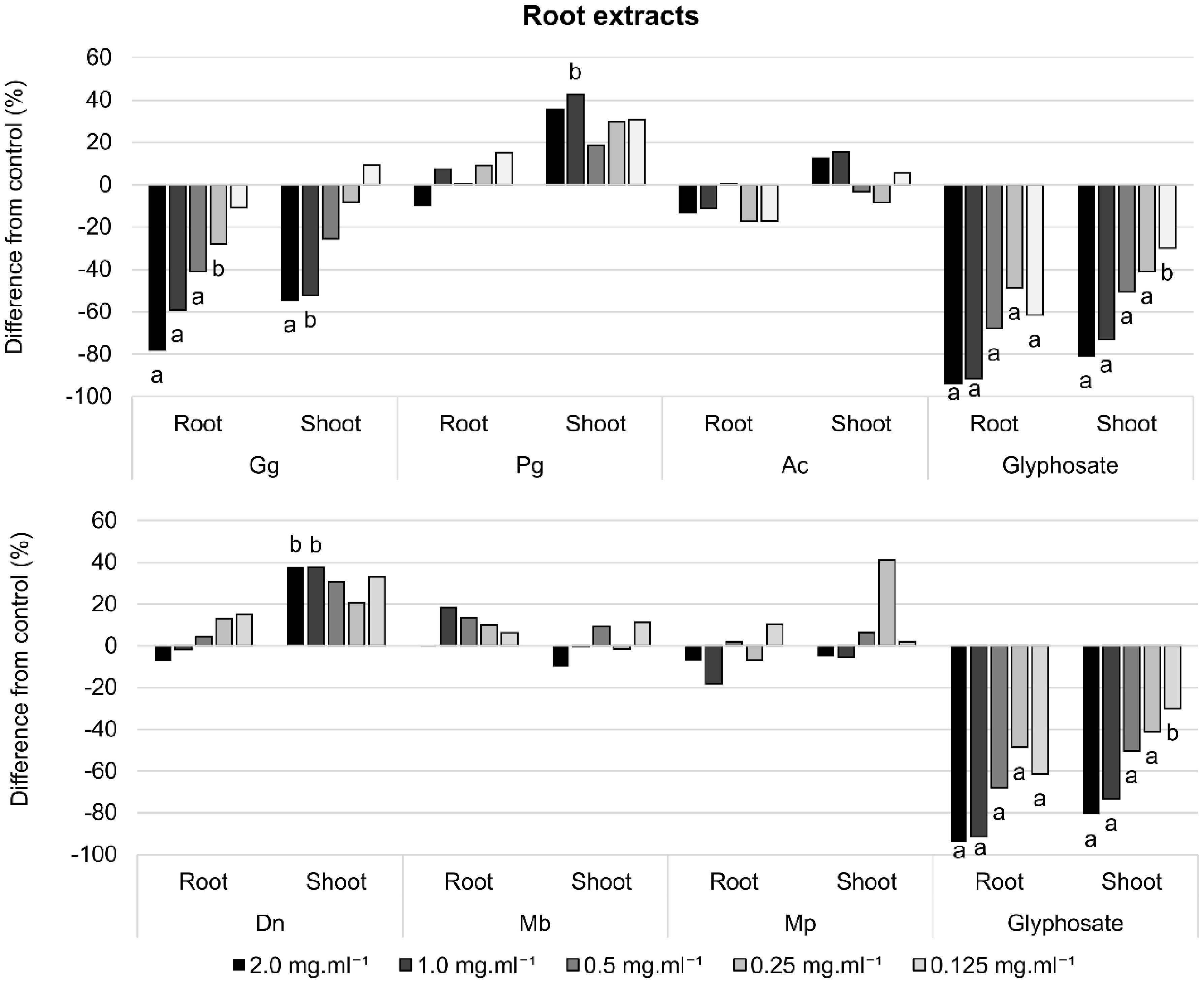
The growth percentage (shoot and root) of sesame submitted to different root extracts of the donor plants can be seen in Figure 1. The root extracts of Dalbergia nigra (Dn), at all concentrations, and Piptadenia gonoacantha (Pg), at 1.0 and 2.0 mg.mL-1, stimulated shoot growth.
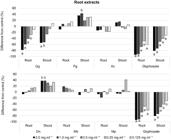
Effect of aqueous root extracts of native plant species from the Atlantic Forest on the growth of Sesamum indicum. Glyphosate herbicide was used as the positive control. Values are expressed as the percentage difference from the control. Significance levels indicated by p < 0.01 (a) or 0.01 < p < 0.05 (b). Positive values indicate stimulation of growth vs the control, and negative values indicate inhibition. Legend: Gg (Guarea guidonia); Pg (Piptadenia gonoacantha); Ac (Anadenanthera colubrina); Dn (Dalbergia nigra); Mb (Mimosa bimucronata); Mp (Moquiniastrum polymorphum).
On the other hand, root extracts of Guarea guidonia (Gg) equal to or higher than 0.25 mg.mL-1 caused significant inhibition mL in the root and shoot growth of the sesame. This inhibition showed a concentration-dependent and significant relationship in relation to the control, a glyphosate-like behavior.
3.2. Stem extracts
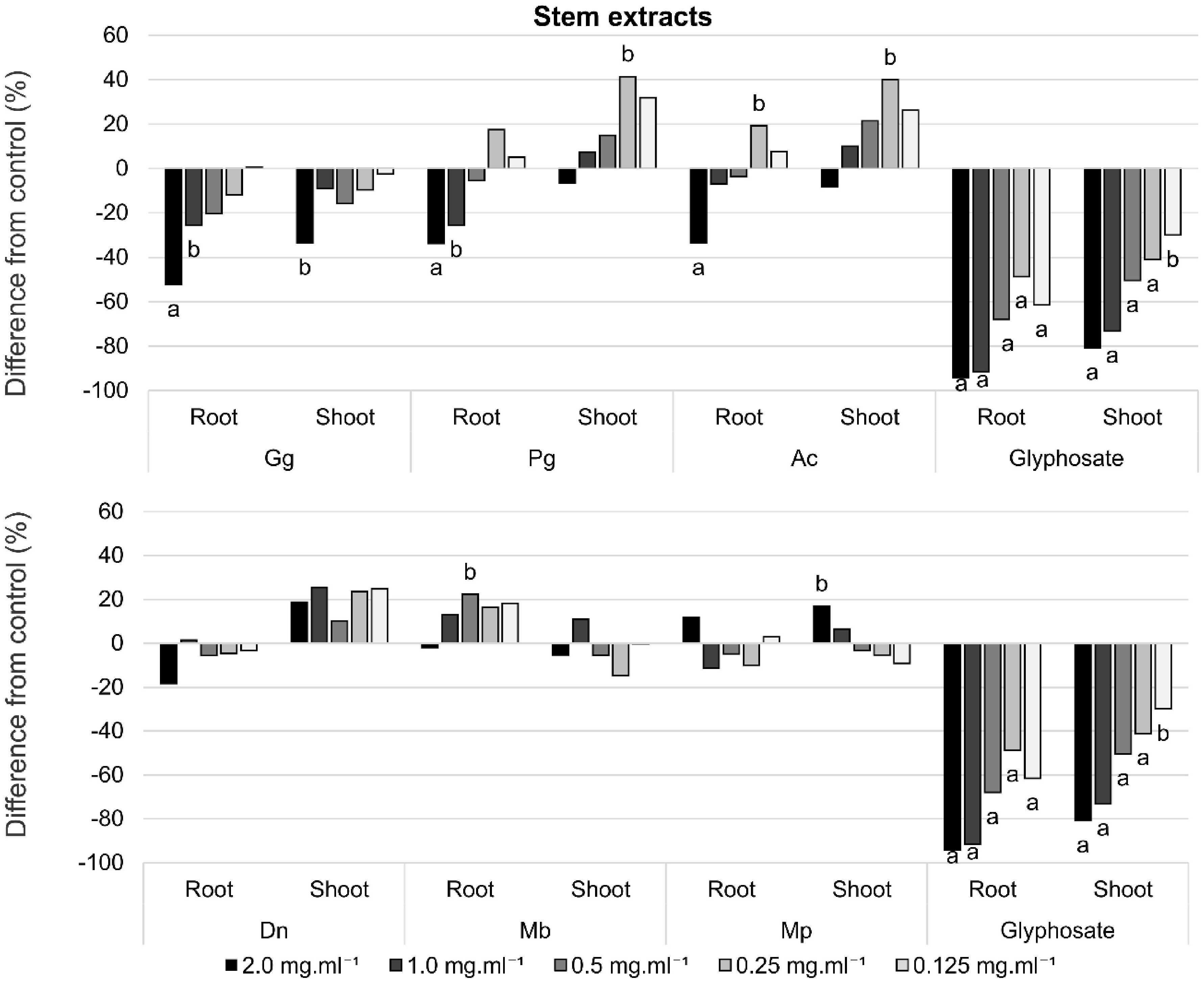
The stem extracts of the donor plants showed distinct effects on sesame growth (Figure 2). The donor species Gg, Pg, and Anadenanthera colubrina (Ac) caused significant inhibition in the growth of the sesame roots at concentrations of 2.0 (G. guidonia and P. gonoacantha) and 1.0 (Gg, Pg, and Ac) mg.mL-1. Shoot growth was stimulated by Pg and Ac extracts at the concentration of 0.25 mg.mL-1, and by the Moquiniastrum polymorphum (Mp) extract at the concentration of 2.0 mg.mL-1. The other donor species did not cause significant changes in sesame’s growth pattern.
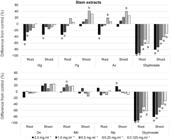
Effect of aqueous stem extracts of native plant species from the Atlantic Forest on the growth of Sesamum indicum. Glyphosate herbicide was used as the positive control. Values are expressed as the percentage difference from the control. Significance levels indicated by p < 0.01 (a) or 0.01 < p < 0.05 (b). Positive values indicate stimulation of growth vs the control, and negative values indicate inhibition. Legend: Gg (Guarea guidonia); Pg (Piptadenia gonoacantha); Ac (Anadenanthera colubrina); Dn (Dalbergia nigra); Mb (Mimosa bimucronata); Mp (Moquiniastrum polymorphum).
3.3. Leaf extracts
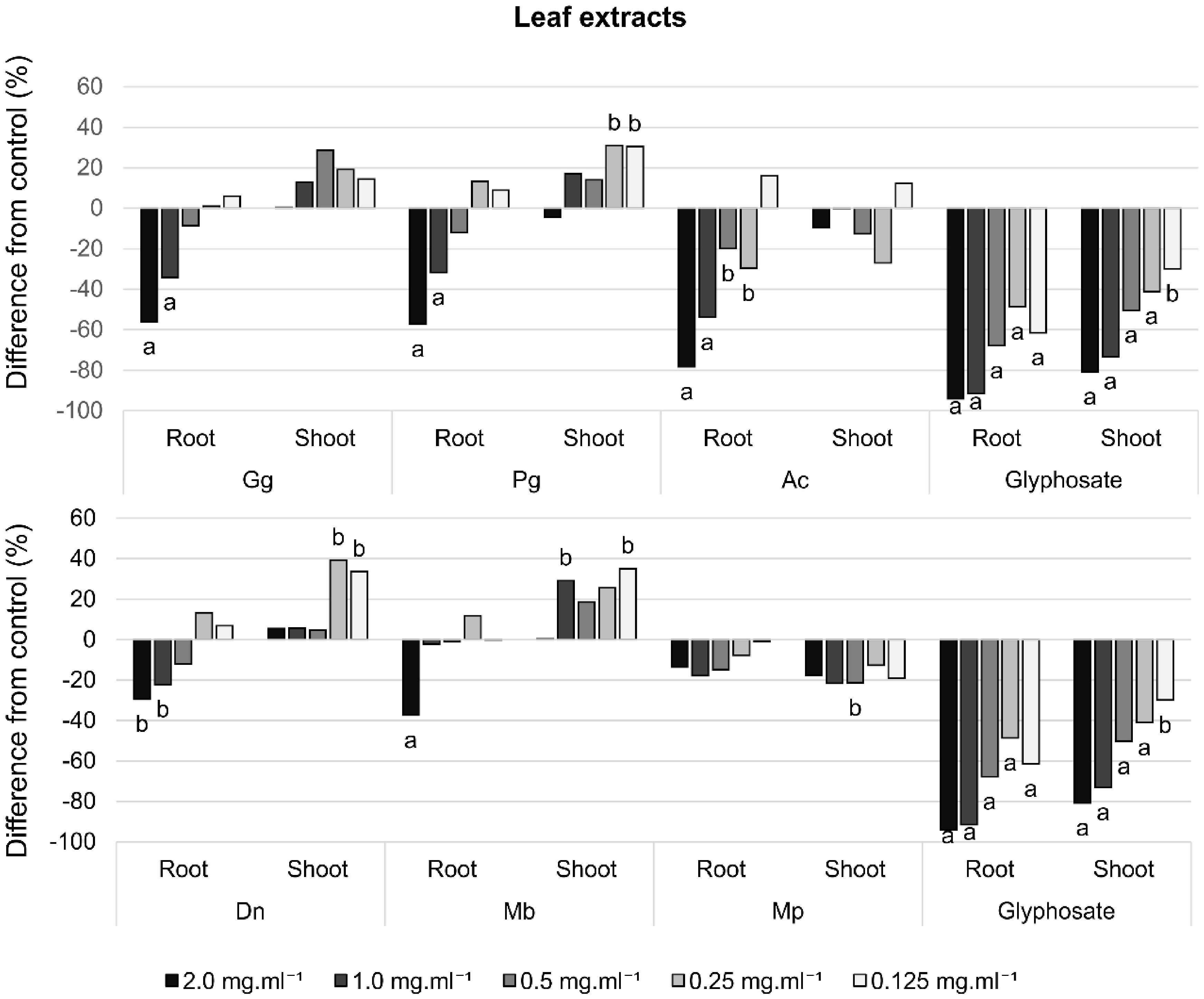
Leaf extracts from all the donor plants investigated showed either inhibiting or stimulating activity (Figure 3). The leaf extracts of G. guidonia, P. gonoacantha and D. nigra significantly inhibited sesame root growth, at 2.0 and 1.0 mg.mL-1 concentrations; leaf extracts of M. bimucronata inhibited root growth only at 2.0 mg.mL-1; and extracts of A. colubrina inhibited sesame root growth at 2.0, 1.0, 0.5 and 0.25 mg.mL-1 concentrations. On the other hand, the leaf extracts of Pg and Dn (at both 0.25 and 0.125 mg.mL-1) and Mimosa bimucronata (Mb) (at 1.0 and 0.125 mg.mL-1) stimulated sesame shoot elongation.
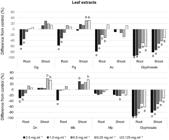
Effect of aqueous leaf extracts of native plant species from the Atlantic Forest on the growth of Sesamum indicum. Glyphosate herbicide was used as the positive control. Values are expressed as the percentage difference from the control. Significance levels indicated by p < 0.01 (a) or 0.01 < p < 0.05 (b). Positive values indicate stimulation of growth vs. the control, and negative values indicate inhibition. Legend: Dn (Dalbergia nigra); Mb (Mimosa bimucronata; Mp (Moquiniastrum polymorphum); Gg (Guarea uidonia); Pg (Piptadenia gonoacantha); Ac (Anadenanthera colubrina).
Table 1 shows the half maximal inhibitory concentration (IC50 – in this study representing the concentration of the extracts needed to inhibit either root or shot growth by 50%) of the different extracts analyzed. The most relevant IC50 values are those obtained from the root extracts of Gg and from the leaf extracts of Ac, both of which exhibited inhibition values quite like the commercial herbicide.
IC50 (mg.mL-1) values for the different aqueous extract of different plants from the Brazilian Atlantic Forest. This concentration is related to the inhibition of the target species (Sesasum indicum). Glyphosate herbicide was used as the positive control.
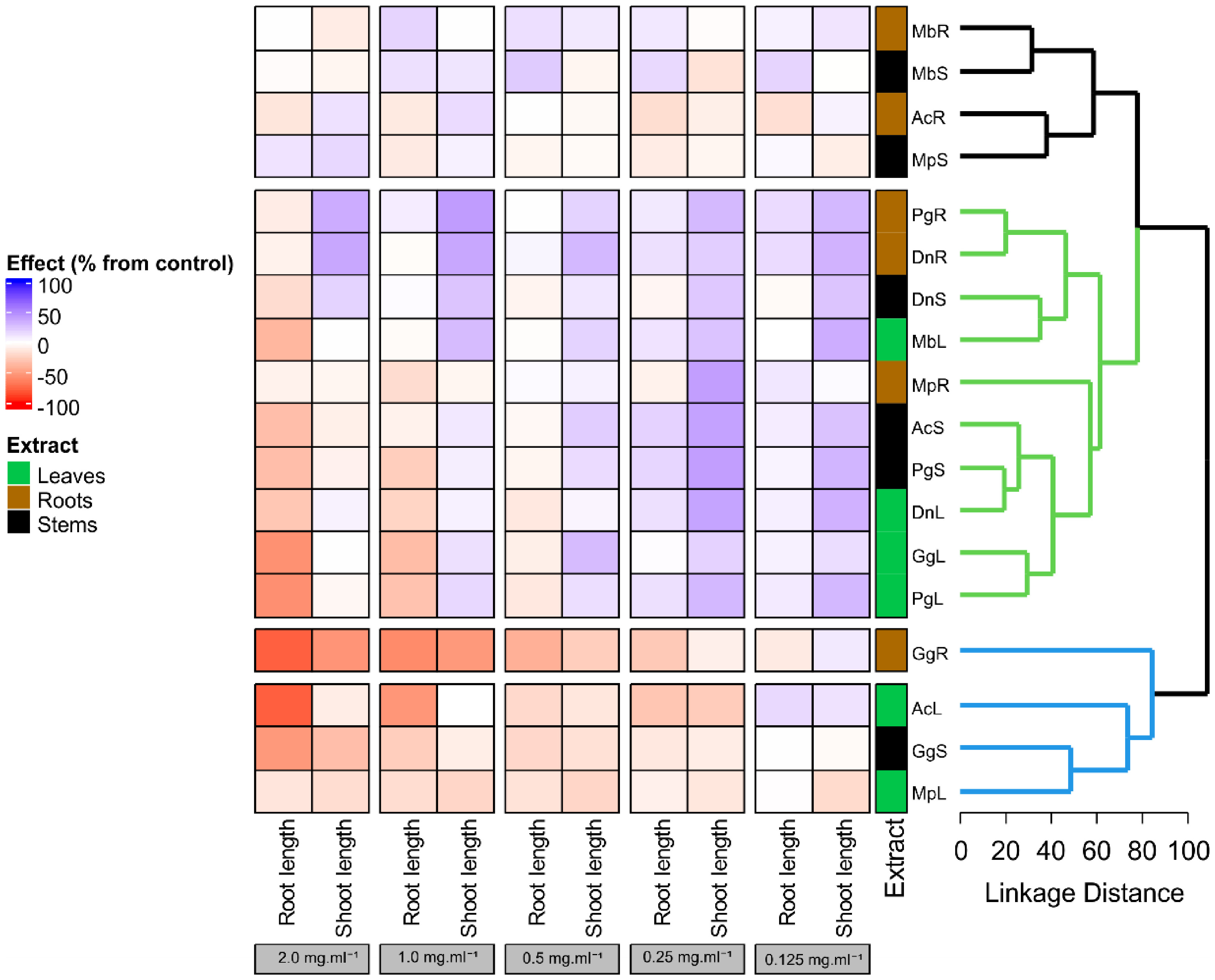
The hierarchical cluster analysis compared the similarities among all extracts based on their effects on the initial development of sesame at the distinct concentrations of the extracts tested (Figure 4). This cluster was divided into three distinct groups. In the first group, extracts from G. guidonia roots (GgR) and stems (GgS), and from M. polymorphum (MpL) and A. colubrina leaves (AcL) showed more relevant phytotoxic effects than the other extracts. The GgS, GgR, and AcL extracts caused marked inhibition of both sesame root and shoot elongation at the highest concentrations, 1.0 and 2.0 mg.mL-1 (inhibition >50%), and the MpL extract inhibited root and shoot elongation at all concentrations tested, but more moderately.
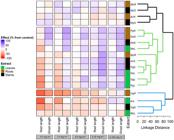
Hierarchical cluster analysis of Sesamum indicum root and shoot growth after treatment with root (R), stem (S), and leaf (L) extracts from Anadenanthera colubrina (Ac), Dalbergia nigra (Dn), Guarea guidonia (Gg), Mimosa bimucronata (Mb), Moquiniastrum polymorphum (Mp), and Piptadenia gonoacantha (Pg). The dendrogram was built using a Euclidean distance coefficient and the UPGMA (unweighted pair group method using arithmetic averages) method. Values used were percentage differences from the control and are displayed as a heatmap varying from 100% inhibition (-100, red) to 100% stimulation (100, blue).
The second group (Figure 4) was characterized by a general trend of mild stimulation of shoot growth mostly observed at 0.125 mg.mL-1 (ranging from 1.99 to 35.09.95%) and 0.25 mg.mL-1 (19.13–41.39%), contrasting with the extracts that formed the first group. This group was further subdivided into two subgroups. In the first subgroup, extracts from the roots of P. gonoacantha roots (PgR) and D. nigra (DnR), from the stem of D. nigra (DnS) and the leaves of M. bimucronata (MbL) were clustered together due to shoot-growth stimulation of Sesamum indicum also at the highest concentrations tested (2.0 mg.mL-1 and 1.0 mg.mL-1). The second subgroup was formed by six extracts (MpR, AcS, PgS, DnL, GgL, and PgL) due to causing moderate to high root-growth inhibition at 1.0 and 2.0 mg.mL-1. From this second subgroup we can highlight some extracts: the effects of the MpR extract are restricted to the stimulation of the shoot elongation of the target species at the 0.25 mg.mL-1; on the other side, the leaf extracts of G. guidonia and P. gonoacantha showed relevant phytotoxicity on the root growth of Sesamum indicum at the 2.0 mg.mL-1 and 1.0 mg.mL-1 concentrations.
The third group clustered four extracts (MbR and Mbs, AcR and MpS) with no relevant effects, for the five concentrations tested.
4. Discussion
The aqueous extracts from young individuals (saplings) of the six donor tree species analyzed showed concentration-dependent effects on the recipient species and were found to either inhibit or stimulate the growth of the target species. For most of doses, both shoot and roots of the target species were similarly inhibited, but only the growth of the roots were significantly inhibited by extracts found in the intermediate group, at the highest doses (See cluster analysis at Figure 4), suggesting that roots are more sensitive. Those effects are due to metabolites present in those plants that could be released into the environment by leaching and/or volatilization from the aboveground biomass, by root exudation, or by the decaying of plant residues (Ferreira and Áquila, 2000; Reigosa et al., 2013).
The identification of chemical classes to which allelochemicals belong may elucidate their effects on target species. Sesquiterpenes can inhibit the mitochondrial transport chain and affect the integrity of biological membranes via oxidative stress (Santiago et al., 2017; Araniti et al., 2018). Sesquiterpene lactone and diterpenes are well-known allelochemicals that may affect seed germination and the initial growth of target plants (Rial et al., 2016; Zhao et al., 2018). Triterpenoids, including saponins, can be released via exudation or decomposition of their parts and accumulate in the soil due to high molecular weight (Xu et al., 2004; Thakur et al., 2011), affecting radicle elongation and the functioning of photosystem II (PSII) (Wang et al., 2014; Feitoza et al., 2020).
The root extract of G. guidonia and the leaf extract of A. colubrina stood out for their high inhibition of the target species’ root growth. In fact, the extracts obtained from the roots of G. guidonia inhibited the development of both the root and the shoot of Sesamum indicum. On the other hand, the stem extract of G. guidonia was also found to inhibit the root growth and shoot elongation of the target species but only moderately when compared to the effects caused by the root extract of the same donor plant.
Despite phytochemical studies with roots of G. guidonia (Meliaceae) having been scarce, terpenoids are likely to be the major compounds in the root extracts obtained from G. guidonia, thus causing an inhibiting effect in the target species. Allelochemicals produced in the roots can be rapidly released into the soil environment in large quantities (Weston et al., 2012). Highly oxygenated triterpenoids are commonly found in Meliaceae species (Lins et al., 1992). In other phytochemical studies carried out with G. guidonia, limonoids have been found in the root bark (Lukacova et al., 1982); triterpenoids were found in its seeds (Lins et al., 1992); limonoids (mombasol), a coumarin (scopoletin), and sesquiterpenes were isolated from its wood bark (Garcez et al., 1998; Garcez et al., 2008; Bellone et al., 2021); volatile oil was extracted from its leaves (Brochini et al., 2009); and seven known terpenes were isolated and characterized from its aerial organs (Hernandez et al., 2018).
Leaf extracts from A. colubrina significantly inhibited sesame-root elongation in all concentrations but 0.125 mg.mL-1; root extracts stimulated both root growth and shot elongation of Sesame at 0.250 mg.mL-1. The high antioxidant potential of the ethanolic leaf extract from A. colubrina in in vitro and in vivo assays was likely due to the high content of phenolic compounds in that extract (Cardoso Junior et al., 2020). Moreover, triterpenoids, sterols, and flavonoids from A. colubrina aerial parts, including anadanthoflavone, presented lipoxygenase inhibition (Gutierrez-Lugo et al., 2004). The occurrence of flavonoids, tannins, and other phenolic compounds has been confirmed in other studies (Monteiro et al., 2006; Paes et al., 2010; Pedone-Bonfim et al., 2013; Costa et al., 2020; Cardoso Junior et al., 2020).
Phenolic compounds, such as phenolic and hydroxycinamic acids, and flavonoids are well-known antioxidant agents. They are also considered to be potent allelochemicals that may affect seeds’ germination by regulating their α-amylase enzime (Sunmonu and Van Staden, 2014). Such chemical classes affect the production and contents of phytohormones, such as auxins, cytokinins, and gibberellins (Mathesius, 2001; Cheynier et al., 2013), causing the inhibition of cell division and stretching, resulting in shorter, thicker roots with necrosis at their ends (Ribeiro et al., 2015; Feitoza et al., 2018, 2020).
In the cluster analysis performed, a subgroup formed by leaf extracts of G. guidonia, P. gonoacantha, as well as D. nigra and stem extracts of A. colubrina and P. gonoacantha inhibited the root growth in the target species at the concentrations of 1.0 and 2.0 mg.mL-1. The effects caused by the stem extracts suggest the presence of inhibitory compounds in two species (P. gonoacantha and A. colubrina) other than G. guidonia. Those effects were found to be restricted to the growth of the sesame root. Moreover, the effect of the stem extract from G. guidonia was less intense than that caused by its root extract. These results suggest a phytotoxic effect of the extracts from the aerial parts of those species, although only under high concentrations.
Fabaceae species stand out for their production of phenolic and hydroxycinamic acids, flavonoids (especially isoflavonoids), triterpene and steroidal saponins, and nitrogen compounds (Wink, 2003; Wink and Mohamed, 2003; Weston and Mathesius, 2013; Feitoza and Lima, 2021). This chemical composition may be responsible for inhibitory effect caused by the leaf extracts of the Fabaceae species in this study.
The phytochemical screening of distinct parts of P. gonocantha revealed the presence of steroidal compounds, flavonoids, esters, and terpenes (Catunda Junior et al., 2016; Carvalho et al., 2010). This species is rich in important special metabolites that are known to have a phytotoxic effect.
Leaf extracts of D. nigra caused inhibition of sesame-root elongation at the highest concentrations (1.0 and 2.0 mg.mL-1). The results obtained in prior studies with species of the same tribe (Dalbergiae) suggest a high phytotoxic potential of its leaf extracts (Bento et al., 2018) and essential oils (El Ayeb-Zakhama et al., 2016). In Machaerium eriocarpum, flavones were isolated from the polar extracts of their leaves. Both the flavone-rich leaf extracts and flavone isovitexin inhibited root growth at low concentrations (Bento et al., 2018).
Inhibition was not the only effect caused by plant extracts in the assays carried out in the present study. The leaf extracts from G. guidonia, P. gonoacantha, and A. colubrina inhibited only the development of the roots of the target plant, whereas the leaf extracts of P. gonoacantha, M. bimucronata, and D. nigra stimulated shoot elongation in the target plant. These results reflect the fact that the release pattern of allelochemicals varies from species to species.
The cluster analyses pinpointed a group of extracts that stimulated shoot elongation in the target species, mainly at concentrations of 0.125 and 0.250 mg.mL-1. Contrary to the leaf extracts of A. colubrina and D. nigra, the leaf extract of M. bimucronata stimulated sesame-shoot elongation. Aqueous leaf extracts of adult plants of M. bimucronata, containing a high concentration of tannins, were formerly found to inhibit the seed germination and initial growth of lettuce, rice, carrots, chicories, and tomatoes (Pilatti et al., 2019, Jacobi and Ferreira 1991). Since the aqueous extracts used in our study were obtained from young leaves of saplings of M. bimucronata, lower concentrations of tannins were expected.
Another relevant finding is about the extension of the phytotoxic effect (and the allelopathic potential) of some of the extracts evaluated. The water extract from obtained from the roots of G. guidonia and from the leaves of A. colubrina showed a half maximal inhibitory concentration (IC50) similar to that calculated by the glyphosate, the chemical compound widely used in weed management due to its broad spectrum effectiveness (Koning et al., 2019), and adopted as the positive control for the bioassays in this study.
5. Conclusions
The results obtained in our bioassays confirm the hypothesis that young plants can produce phytotoxic secondary metabolites that might be released into the environment and affect the mechanisms driving the assembly of natural plant communities, by mediating plant-plant interactions.
Specifically, the root and leaf extracts of G. guidonia showed the most inhibitory effects among the extracts tested. Conversely, the allelopathic potential of A. colubrina extracts is likely mostly due to compounds produced in its leaves. Both species warrant special concern when planted in forest-restoration projects.
Our results also suggest that no negative effects associated with phytotoxic activity are expected if M. bimucronata and M. polymorphum are planted during forest restoration. Some extracts from P. gonoacantha and M. bimucronata even stimulated the shoot growth of the target species. Leaf extracts from P. gonoacantha and D. nigra showed significant inhibitory effects only at the highest doses, so they should only cause problems in the restoring community assembly if planted at high densities.
A conclusion to be highlighted is the fact that plants produce associated compounds even early in their development, as the experiments carried out in the present study used saplings of native tree species to obtain the aqueous extracts to be tested. This finding represents a key piece of information to be considered in the selection of species to be planted in forest restoration projects.
Acknowledgements
This study was supported by FAPERJ and the Brazilian Agricultural Research Corporation (Embrapa).
Data Availability Statement
The entire dataset supporting the results of this study was published in the manuscript itself.
References
-
ABELLA, S.R. and CHIQUOINE, L.P., 2019. The good with the bad: when ecological restoration facilitates native and non-native species. Restoration Ecology, vol. 27, no. 2, pp. 343-351. https://doi.org/10.1111/rec.12874
» https://doi.org/10.1111/rec.12874 -
AIN, Q., MUSHTAQ, W., SHADAB, M. and SIDDIQUI, M.B., 2023. Allelopathy: an alternative tool for sustainable agriculture. Physiology and Molecular Biology of Plants : an International Journal of Functional Plant Biology, vol. 29, no. 4, pp. 495-511. https://doi.org/10.1007/s12298-023-01305-9 PMid:37187777.
» https://doi.org/10.1007/s12298-023-01305-9 -
ALBUQUERQUE, M.B., SANTOS, R.C., LIMA, L.M., MELO-FILHO, P.A., NOGUEIRA, R.J.M.C., CÂMARA, C.A.G. and RAMOS, A.R., 2011. Allelopathy, an alternative tool to improve cropping systems: a review. Agronomy for Sustainable Development, vol. 31, no. 2, pp. 379-395. https://doi.org/10.1051/agro/2010031
» https://doi.org/10.1051/agro/2010031 -
ALVIM, S., BÖHM, F.M.L. and PASTORINI, L.H., 2023. Allelopathic potential of Leucaena leucocephala (Lam.) de Wit leaf extracts on native species. Brazilian Journal of Biology = Revista Brasileira de Biologia, vol. 83, pp. e272274. https://doi.org/10.1590/1519-6984.272274 PMid:37851768.
» https://doi.org/10.1590/1519-6984.272274 -
ARANITI, F., COSTAS-GIL, A., CABEIRAS-FREIJANES, L., LUPINI, A., SUNSERI, F., REIGOSA, M.J., ABENAVOLI, M.R. and SÁNCHEZ-MOREIRAS, A.M., 2018. Rosmarinic acid induces programmed cell death in Arabidopsis seedlings through reactive oxygen species and mitochondrial dysfunction. PLoS One, vol. 13, no. 12, pp. e0208802. https://doi.org/10.1371/journal.pone.0208802 PMid:30586368.
» https://doi.org/10.1371/journal.pone.0208802 -
BELLONE, M.L., CAMERO, C.M., CHINI, M.G., PIAZ, F.D., HERNANDEZ, V., BIFULCO, G., DE TOMMASI, N. and BRACA, A., 2021. Limonoids from Guarea guidonia and Cedrela odorata: Heat Shock Protein 90 (Hsp90) modulator properties of Chisomicine D. Journal of Natural Products, vol. 84, no. 3, pp. 724-737. https://doi.org/10.1021/acs.jnatprod.0c01217 PMid:33661631.
» https://doi.org/10.1021/acs.jnatprod.0c01217 -
BENTO, C.C., TANGERINA, M.M.P., ZANATTA, A.C., SARTORI, A.L.B., FRANCO, D.M., HIRUMA-LIMA, C.A., VILEGAS, W., ALMEIDA, L.F.R. and SANNOMIYA, M., 2018. Chemical constituents and allelopathic activity of Machaerium eriocarpum Benth. Natural Product Research, vol. 34, no. 6, pp. 884-888. https://doi.org/10.1080/14786419.2018.1508136 PMid:30453777.
» https://doi.org/10.1080/14786419.2018.1508136 -
BLANCO, J.A., 2007. The representation of allelopathy in ecosystem-level forest models. Ecological Modelling, vol. 209, no. 2–4, pp. 65-77. https://doi.org/10.1016/j.ecolmodel.2007.06.014
» https://doi.org/10.1016/j.ecolmodel.2007.06.014 -
BRANDES, A.F.N., ALBUQUERQUE, R.P., MORAES, L.F.D. and BARROS, C.F., 2016. Annual tree rings in Piptadenia gonoacantha (Mart.) J.F.Macbr. in a restoration experiment in the Atlantic Forest: potential for dendroecological research. Acta Botanica Brasílica, vol. 30, no. 3, pp. 383-388. https://doi.org/10.1590/0102-33062016abb0101
» https://doi.org/10.1590/0102-33062016abb0101 -
BRANDES, A.F.N., SÁNCHEZ-TAPIA, A., SANSEVERO, J.B.B., ALBUQUERQUE, R.P. and BARROS, C.F., 2019. Fire records in tree rings of Moquiniastrum polymorphum: potential for reconstructing fire history in the Brazilian Atlantic Forest. Acta Botanica Brasílica, vol. 33, no. 1, pp. 61-66. https://doi.org/10.1590/0102-33062018abb0282
» https://doi.org/10.1590/0102-33062018abb0282 -
BROCHINI, C.B., ROQUE, N.F. and LAGO, J.H.G., 2009. Minor sesquiterpenes from the volatile oil from leaves of Guarea guidonia Sleumer (Meliaceae). Natural Product Research, vol. 23, no. 17, pp. 1615-1620. https://doi.org/10.1080/14786410902941063 PMid:19851928.
» https://doi.org/10.1080/14786410902941063 -
CARDOSO JUNIOR, O., LIMA, N.M., SILVA, M.G.A., AGUIAR, V.B., CARLI, G.P., SCHERRER, E.C., CASTRO, S.B.R., ALVES, C.C.S., OLIVEIRA, M.A.L. and CARLI, A.P., 2020. In vitro and in vivo evaluation of anti-inflammatory activity and free radical scavenging potential of leaves extract from Anadenanthera colubrina. Natural Product Research, vol. 35, no. 22, pp. 4819-4823. https://doi.org/10.1080/14786419.2020.1727472 PMid:32064928.
» https://doi.org/10.1080/14786419.2020.1727472 -
CARVALHO, M., PREVEDELLO, J.A., PARDINI, R., LINDENMAYER, D. and ALMEIDA-GOMES, M., 2021. Isolated trees support lower bird taxonomic richness than trees within habitat patches but similar functional diversity. Biotropica, vol. 53, no. 1, pp. 1-8. https://doi.org/10.1111/btp.12862
» https://doi.org/10.1111/btp.12862 -
CARVALHO, M.G., CARDOZO, M.A.R., CATUNDA JUNIOR, F.E.A. and DE-CARVALHO, A.G., 2010. Chemical constituents of Piptadenia gonoacantha (Mart.) J.F. Macbr. (pau-jacare). Anais da Academia Brasileira de Ciências, vol. 82, no. 3, pp. 561-567. https://doi.org/10.1590/S0001-37652010000300003 PMid:21562684.
» https://doi.org/10.1590/S0001-37652010000300003 -
CATUNDA JUNIOR, F.E.A., SIMAS, D.L.R., DE-CARVALHO, A.G. and DE-CARVALHO, M.G., 2016. Chemical constituents of the roots of Piptadenia gonoacantha. Chemistry of Natural Compounds, vol. 52, no. 3, pp. 480-481. https://doi.org/10.1007/s10600-016-1678-4
» https://doi.org/10.1007/s10600-016-1678-4 -
CHEYNIER, V., COMTE, G., DAVIES, K.M., LATTANZIO, V. and MARTENS, S., 2013. Plant phenolics: recent advances on their biosynthesis, genetics, and ecophysiology. Plant Physiology and Biochemistry : PPB, vol. 72, pp. 1-20. https://doi.org/10.1016/j.plaphy.2013.05.009 PMid:23774057.
» https://doi.org/10.1016/j.plaphy.2013.05.009 -
COSTA, O.J., BARBOSA, R.S., SOARES, I.M., SOUZA, E.E., GELLEN, L.F.A., LEMOS, J.P.P.P., AGUIAR, R.W.S., MONTEL, A.L.B. and ASCÊNCIO, S.D., 2020. Inhibitory effects of Anadenanthera colubrina (Vell.) Brenan stem bark extract on α-glucosidase activity and oxidative stress. Journal of Medicinal Plants Research, vol. 14, no. 11, pp. 583-592. https://doi.org/10.5897/JMPR2020.7025
» https://doi.org/10.5897/JMPR2020.7025 -
EL AYEB-ZAKHAMA, A., SAKKA-ROUIS, L., BERGAOUI, A., FLAMINI, G., BEN JANNET, H. and HARZALLAH-SKHIRI, F., 2016. Chemical composition and allelopathic potential of essential oils from Tipuana Tipu (Benth.) Kuntze cultivated in Tunisia. Chemistry & Biodiversity, vol. 13, no. 3, pp. 309-318. https://doi.org/10.1002/cbdv.201500083 PMid:26916976.
» https://doi.org/10.1002/cbdv.201500083 -
FEITOZA, R.B.B. and LIMA, H.R.P., 2021. Chemosystematic and evolutionary trends of the Genistoid Clade sensu stricto (Papilionoideae, Fabaceae). Phytochemistry, vol. 183, pp. 112616. https://doi.org/10.1016/j.phytochem.2020.112616 PMid:33341663.
» https://doi.org/10.1016/j.phytochem.2020.112616 -
FEITOZA, R.B.B., LIMA, H.R.P., OLIVEIRA, E.A.G., OLIVEIRA, D.R., MORAES, L.F.D., OLIVEIRA, A.E.A., CARVALHO, M.G. and DA CUNHA, M., 2018. Structural and ultrastructural variations in roots of Calopogonium mucunoides Desv. treated with phenolic compounds from Urochloa humidicola (Rendle) Morrone and Zuloaga and phenolic commercial standards. South African Journal of Botany, vol. 116, pp. 142-149. https://doi.org/10.1016/j.sajb.2018.03.005
» https://doi.org/10.1016/j.sajb.2018.03.005 -
FEITOZA, R.B.B., VARELA, R.M., TORRES, A., MOLINILLO, J.M.G., LIMA, H.R.P., MORAES, L.F.D., DA CUNHA, M. and MACÍAS, F.A., 2020. Evaluation of the phytotoxicity of Urochloa humidicola roots by bioassays and microscopic analysis. Characterization of new compounds. Journal of Agricultural and Food Chemistry, vol. 68, no. 17, pp. 4851-4864. https://doi.org/10.1021/acs.jafc.0c00307 PMid:32259440.
» https://doi.org/10.1021/acs.jafc.0c00307 - FERREIRA, A.G. and ÁQUILA, M.E.A., 2000. Alelopatia: uma área emergente da ecofisiologia. Revista Brasileira de Fisiologia Vegetal, vol. 12, pp. 175-204.
-
FREIRE, J.M., BREIER, T.B., MOREIRA, Z.M., MORAES, L.F.D. and ROUWS, J.C., 2024. Drying and storage of Piptadenia gonoacantha (Mart.) J.F.Macbr. seeds. Brazilian Journal of Biology = Revista Brasileira de Biologia, vol. 84, pp. e286382. https://doi.org/10.1590/1519-6984.286382 PMid:39879504.
» https://doi.org/10.1590/1519-6984.286382 -
GARCEZ, F.R., NUNEZ, C.V., GARCEZ, W.S., ALMEIDA, R.M. and ROQUE, N.F., 1998. Sesquiterpenes, limonoid, and coumarin from the wood bark of Guarea guidonia. Planta Medica, vol. 64, no. 1, pp. 79-80. https://doi.org/10.1055/s-2006-957375 PMid:17253225.
» https://doi.org/10.1055/s-2006-957375 -
GARCEZ, W.S., GARCEZ, F.R. and SOARES, L.R., 2008. 16,17-seco- and 2,3:16,17-di-seco-pregnanes from Guarea Guidonia. Journal of the Brazilian Chemical Society, vol. 19, no. 6, pp. 1073-1077. https://doi.org/10.1590/S0103-50532008000600004
» https://doi.org/10.1590/S0103-50532008000600004 -
GIANNINI, T.C., GIULIETTI, A.M., HARLEY, R.M., VIANA, P.L., JAFFE, R., ALVES, R., PINTO, C.E., MOTA, N.F.O., CALDEIRA JUNIOR, C.F., IMPERATRIZ-FONSECA, V.L., FURTINI, A.E. and SIQUEIRA, J.O., 2017. Selecting plant species for practical restoration of degraded lands using a multiple-trait approach. Austral Ecology, vol. 42, no. 5, pp. 510-521. https://doi.org/10.1111/aec.12470
» https://doi.org/10.1111/aec.12470 -
GRISI, P.U., RANAL, M.A., GUALTIERI, S.C.J. and SANTANA, D.G., 2012. Allelopathic potential of Sapindus saponaria L. leaves in the control of weeds. Acta Scientiarum. Agronomy, vol. 34, no. 1, pp. 1-9. https://doi.org/10.4025/actasciagron.v34i1.11598
» https://doi.org/10.4025/actasciagron.v34i1.11598 -
GUTIERREZ-LUGO, M.T., DESCHAMPS, J.D., HOLMAN, T.R., SUAREZ, E. and TIMMERMANN, B.N., 2004. Lipoxygenase inhibition by anadanthoflavone, a new flavonoid from the aerial parts of Anadenanthera colubrina. Planta Medica, vol. 70, no. 3, pp. 263-265. https://doi.org/10.1055/s-2004-818920 PMid:15114507.
» https://doi.org/10.1055/s-2004-818920 -
HERNANDEZ, V., DE LEO, M., COTUGNO, R., BRACA, A., DE TOMMASI, N. and SEVERINO, L., 2018. New Tirucallane-Type Triterpenoids from Guarea guidonia. Planta Medica, vol. 84, no. 9-10, pp. 716-720. https://doi.org/10.1055/s-0044-100524 PMid:29341030.
» https://doi.org/10.1055/s-0044-100524 -
JACOBI, U.S. and FERREIRA, A.G., 1991. Allelopathic effects of Mimosa bimucronata (DC) Kuntze on cultivated species. Pesquisa Agropecuária Brasileira, vol. 26, no. 7, pp. 935-943. http://doi.org/10.1590/S1678-3921.pab1991.v26.3425.
» https://doi.org/10.1590/S1678-3921.pab1991.v26.3425 -
JI, R., SUN, H., PENG, J., MA, X., BAO, L., FU, Y., ZHANG, X., LUO, C., GAO, C., JIN, Y. and SUN, S., 2019. Rosmarinic acid exerts an antagonistic effect on vascular calcification by regulating the Nrf2 signaling pathway. Free Radical Research, vol. 53, no. 2, pp. 187-197. https://doi.org/10.1080/10715762.2018.1558447 PMid:30864863.
» https://doi.org/10.1080/10715762.2018.1558447 -
KOBAYASHI, K., 2004. Factors affecting phytotoxic activity of allelochemicals in soil. Weed Biology and Management, vol. 4, no. 1, pp. 1-7. https://doi.org/10.1111/j.1445-6664.2003.00112.x
» https://doi.org/10.1111/j.1445-6664.2003.00112.x -
KONING, L.A., DE MOL, F. and GEROWITT, B., 2019. Effects of management by glyphosate or tillage on the weed vegetation in a field experiment. Soil & Tillage Research, vol. 1862, pp. 79-86. https://doi.org/10.1016/j.still.2018.10.012
» https://doi.org/10.1016/j.still.2018.10.012 -
KUNSTLER, G., FALSTER, D., COOMES, D.A., HUI, F., KOOYMAN, R.M., LAUGHLIN, D.C., POORTER, L., VANDERWEL, M., VIEILLEDENT, G., WRIGHT, S.J., AIBA, M., BARALOTO, C., CASPERSEN, J., CORNELISSEN, J.H., GOURLET-FLEURY, S., HANEWINKEL, M., HERAULT, B., KATTGE, J., KUROKAWA, H., ONODA, Y., PEÑUELAS, J., POORTER, H., URIARTE, M., RICHARDSON, S., RUIZ-BENITO, P., SUN, I.F., STÅHL, G., SWENSON, N.G., THOMPSON, J., WESTERLUND, B., WIRTH, C., ZAVALA, M.A., ZENG, H., ZIMMERMAN, J.K., ZIMMERMANN, N.E. and WESTOBY, M., 2016. Plant functional traits have globally consistent effects on competition. Nature, vol. 529, pp. 204-207. https://doi.org/10.1038/nature16476 PMid:26700807.
» https://doi.org/10.1038/nature16476 - LATIF, S., CHIAPUSIO, G. and WESTON, L.A., 2017. Allelopathy and the role of allelochemicals in plant defense. In: G. BECARD, ed. How plants communicate with their biotic environment. 1st ed. Cambridge, MA: Academic Press, pp. 19-54.
-
LAUGHLIN, D.C., 2014. Applying trait- based models to achieve functional targets for theory-driven ecological restoration. Ecology Letters, vol. 17, no. 7, pp. 771-784. https://doi.org/10.1111/ele.12288 PMid:24766299.
» https://doi.org/10.1111/ele.12288 - LIMA, H.R.P., OLIVEIRA, S.C.C., IKEDA, F.S. and MORAES, L.F.D., 2018. Alelopatia: potencialidades do seu uso no controle do mato. In: M.F. OLIVEIRA and A.M. BRIGHENTI, eds. Controle de plantas daninhas: métodos físico, mecânico, cultural, biológico e alelopatia. Brasília, DF: Embrapa, pp. 148-164.
- LINS, A.P., BRAGGIO, M.M., FELICIO, J.D., GIURIATTI, A.M. and FELICIO, J.C., 1992. Chemical and pharmacological aspects of Guarea guidonia. Revista Latinoamericana de Química, vol. 23, no. 1, pp. 30-33.
-
LOHBECK, M., WINOWIECKI, L., AYNEKULU, E., OKIA, C. and VÅGEN, T.G., 2018. Trait-based approaches for guiding the restoration of degraded agricultural landscapes in East Africa. Journal of Applied Ecology, vol. 55, no. 1, pp. 59-68. https://doi.org/10.1111/1365-2664.13017
» https://doi.org/10.1111/1365-2664.13017 -
LOPES, P.G., OLIVEIRA, S.C.C., SALLES, K.A., SAMPAIO, A.B. and SCHMIDT, I.B., 2018. Allelopathy of a native shrub can help control invasive grasses at sites under ecological restoration in a Neotropical savanna. Plant Ecology & Diversity, vol. 11, no. 4, pp. 527-538. https://doi.org/10.1080/17550874.2018.1539132
» https://doi.org/10.1080/17550874.2018.1539132 -
LUKACOVA, V., POLONSKY, J., MORETTI, C.P., PETTIT, G.R. and SCHMIDT, J.M., 1982. Isolation and structure of 14,15b-epoxyprieurianin from the South American tree Guarea guidonia. Journal of Natural Products, vol. 45, no. 3, pp. 288-294. https://doi.org/10.1021/np50021a010
» https://doi.org/10.1021/np50021a010 -
MACÍAS, F.A., CASTELLANO, D. and MOLINILLO, J.M.G., 2000. Search for a standard phytotoxic bioassay for allelochemicals. Selection of standard target species. Journal of Agricultural and Food Chemistry, vol. 48, no. 6, pp. 2512-2521. https://doi.org/10.1021/jf9903051 PMid:10888578.
» https://doi.org/10.1021/jf9903051 -
MAHÉ, I., CHAUVEL, B., COLBACH, N., CORDEAU, S., GFELLER, A., REISS, A. and MOREAU, D., 2022. Deciphering field-based evidences for crop allelopathy in weed regulation: a review. Agronomy for Sustainable Development, vol. 42, no. 50, pp. 50. https://doi.org/10.1007/s13593-021-00749-1
» https://doi.org/10.1007/s13593-021-00749-1 -
MATHESIUS, U., 2001. Flavonoids induced in cells undergoing nodule organogenesis in white clover are regulators of auxin breakdown by peroxidase. Journal of Experimental Botany, vol. 52, no. 1, suppl. 1, pp. 419-426. https://doi.org/10.1093/jexbot/52.suppl_1.419 PMid:11326048.
» https://doi.org/10.1093/jexbot/52.suppl_1.419 -
MEDEIROS, R.L.S., SOUZA, V.C., BARBOSA-NETO, M.A., ARAÚJO, L., BARBOSA, A.D.S. and MEDEIROS, R.L.S., 2016. Estrutura da regeneração natural de Anadenanthera colubrina em fragmento de brejo de altitude em Bananeiras, PB. Pesquisa Florestal Brasileira, vol. 36, no. 86, pp. 95. https://doi.org/10.4336/2016.pfb.36.86.887
» https://doi.org/10.4336/2016.pfb.36.86.887 -
MELI, P., MARTÍNEZ-RAMOS, M., REY-BENAYAS, J.M. and CARABIAS, J., 2014. Combining ecological, social, and technical criteria to select species for forest restoration. Applied Vegetation Science, vol. 17, no. 4, pp. 744-753. https://doi.org/10.1111/avsc.12096
» https://doi.org/10.1111/avsc.12096 -
MONTEIRO, J.M., ALMEIDA, C.F.C.B.R., ALBUQUERQUE, U.P., LUCENA, R.F.P., FLORENTINO, A.T.N. and OLIVEIRA, R.L.C., 2006. Use and traditional management of Anadenanthera colubrina (Vell.) Brenan in the semi-arid region of northeastern Brazil. Journal of Ethnobiology and Ethnomedicine, vol. 2, no. 1, pp. 6. https://doi.org/10.1186/1746-4269-2-6 PMid:16420708.
» https://doi.org/10.1186/1746-4269-2-6 - OLIVEIRA, R.R., SOLÓRZANO, A., SILVA, S.G.P., BEAUCLAIR, M. and SCHEEL-YBERT, R., 2013. Ecologia histórica de populações da carrapeta (Guarea guidonia (L.) Sleumer) em florestas de encosta do Rio de Janeiro. Pesquisas Botânica, vol. 64, pp. 323-339.
- OLIVEIRA, S.C.C. and CAMPOS, M.L., 2006. Alellopathic effects of Solanum palinacanthum leaves on germination and seedling growth of Sesamum indicum. Allelopathy Journal, vol. 18, pp. 331-338.
- PAES, J.B., SANTANA, G.M., AZEVEDO, T.K.B., MORAIS, R.M. and CALIXTO, J.T., 2010. Substâncias tânicas presentes em várias partes da árvore angico-vermelho (Anadenanthera colubrina (Veil.) Brenan. Var. Cebil (Gris.) Alts.). Scientia Forestalis, vol. 38, no. 87, pp. 441-447.
-
PEDONE-BONFIM, M.V.L., LINS, M.A., COELHO, I.R., SANTANA, A.S., SILVA, F.S.B. and MAIA, L.C., 2013. Mycorrhizal technology and phosphorus in the production of primary and secondary metabolites in cebil (Anadenanthera colubrina (Vell.) Brenan) Seedlings. Journal of the Science of Food and Agriculture, vol. 93, no. 6, pp. 1479-1484. https://doi.org/10.1002/jsfa.5919 PMid:23108717.
» https://doi.org/10.1002/jsfa.5919 -
PEGUERO, G., LANUZA, O.R., SAVE, R. and ESPELTA, J.M., 2012. Allelopathic potential of the neotropical dry-forest tree Acacia pennatula Benth: inhibition of seedling establishment exceeds facilitation under tree canopies. Plant Ecology, vol. 213, no. 12, pp. 1945-1953. https://doi.org/10.1007/s11258-011-0014-0
» https://doi.org/10.1007/s11258-011-0014-0 -
PILATTI, D.M., FORTES, A.M.T., JORGE, T.C.M. and BOIAGO, N.P., 2019. Comparison of the phytochemical profiles of five native plant species in two different forest formations. Brazilian Journal of Biology = Revista Brasileira de Biologia, vol. 79, no. 2, pp. 233-242. https://doi.org/10.1590/1519-6984.179526 PMid:29924133.
» https://doi.org/10.1590/1519-6984.179526 - PINA, G.O., BORGHETTI, F., SILVEIRA, C.E.S. and PEREIRA, L.A.R., 2009. Effects of Eugenia desynterica leaf extracts on the growth of sesame and radish. Allelopathy Journal, vol. 23, pp. 313-322.
-
R CORE TEAM, 2023 [acessed 20 October 2025]. R: A language and environment for statistical computing [software]. Vienna: R Foundation for Statistical Computing. Available from: https://www.R-project.org/
» https://www.R-project.org/ -
REIGOSA, M., GOMES, A.S., FERREIRA, A.G. and BORGHETTI, F., 2013. Allelopathic research in Brazil. Acta Botanica Brasílica, vol. 27, no. 4, pp. 629-646. https://doi.org/10.1590/S0102-33062013000400001
» https://doi.org/10.1590/S0102-33062013000400001 -
RIAL, C., VARELA, R.M., MOLINILLO, J.M.G., BAUTISTA, E., HERNÁNDEZ, A.O. and MACÍAS, F.A., 2016. Phytotoxicity evaluation of sesquiterpene lactones and diterpenes from species of the Decachaeta, Salvia and Podachaenium genera. Phytochemistry Letters, vol. 18, pp. 68-76. https://doi.org/10.1016/j.phytol.2016.09.002
» https://doi.org/10.1016/j.phytol.2016.09.002 -
RIBEIRO, R.C., FEITOZA, R.B.B., LIMA, H.R.P. and CARVALHO, M.G., 2015. Phytotoxic effects of phenolic compounds on Calopogonium mucunoides (Fabaceae) roots. Australian Journal of Botany, vol. 63, no. 8, pp. 679-686. https://doi.org/10.1071/BT15097
» https://doi.org/10.1071/BT15097 -
RIBEIRO, W.F.R. and KOLB, R.M., 2016. Distinct germination responses may contribute to the distribution pattern of two Moquiniastrum species in different phytophysiognomies from the Brazilian savanna. Flora, vol. 223, pp. 159-166. https://doi.org/10.1016/j.flora.2016.06.001
» https://doi.org/10.1016/j.flora.2016.06.001 -
RODRIGUES, R.R., LIMA, R.A.F., GANDOLFI, S. and NAVE, A.G., 2009. On the restoration of high diversity forests: 30 years of experience in the Brazilian Atlantic Forest. Biological Conservation, vol. 142, no. 6, pp. 1242-1251. https://doi.org/10.1016/j.biocon.2008.12.008
» https://doi.org/10.1016/j.biocon.2008.12.008 -
SANTIAGO, J.A., CARDOSO, M.G., CRUZ, F.A., PALMIERI, M.J., SOUZA, R.V., SOARES, L.I., CAMPOS, J.M.S. and ANDRADE-VIEIRA, L.F., 2017. Cytogenotoxic effect of essential oil from Backhousia citriodora L. (Myrtaceae) on meristematic cells of Lactuca sativa L. South African Journal of Botany, vol. 112, pp. 515-520. https://doi.org/10.1016/j.sajb.2017.05.011
» https://doi.org/10.1016/j.sajb.2017.05.011 -
SILVA, B.F., AZEVEDO, I.H.F., MAYHÉ-NUNES, A., BREIER, T. and FREITAS, A.F.N., 2019. Ants promote germination of the tree Guarea guidonia by cleaning its seeds. Floresta e Ambiente, vol. 26, no. 3, pp. e20180151. https://doi.org/10.1590/2179-8087.015118
» https://doi.org/10.1590/2179-8087.015118 -
SILVA, L.A., GUIMARÃES, E., ROSSI, M.N. and MAIMONI-RODELLA, R.C.S., 2011. Biologia da reprodução de Mimosa bimucronata: uma espécie ruderal. Planta Daninha, vol. 29, no. special, pp. 1011-1021. https://doi.org/10.1590/S0100-83582011000500007
» https://doi.org/10.1590/S0100-83582011000500007 - SOARES, G.L.G., SCALON, V.R., PEREIRA, T.O. and VIEIRA, D.A., 2012. Potencial alelopático do extrato aquoso de folhas de algumas leguminosas arbóreas brasileiras. Floresta e Ambiente, vol. 9, pp. 119-126.
- SOUCHIE, E.L., CAMPELLO, E.F.C., SILVA, E.M.R. and SAGGIN-JÚNIOR, O.J., 2005. Arborização de pastagem na região da Mata Atlântica. Floresta e Ambiente, vol. 12, no. 2, pp. 22-27.
-
SOUZA, M.L., GARCIA, L.E., LOVATO, M.B. and LEMOS-FILHO, J.P., 2021. Leaf trait variation during ontogeny in the endangered Brazilian rosewood tree. Plant Biology, vol. 23, no. 6, pp. 1109-1117. https://doi.org/10.1111/plb.13318 PMid:34532953.
» https://doi.org/10.1111/plb.13318 -
SUDING, K.N., LAVOREL, S., CHAPIN, F., CORNELISSEN, J.H.C., DÍAZ, S., GARNIER, E., GOLDBERG, D., HOOPER, D.U., JACKSON, S.T. and NAVAS, M.L., 2008. Scaling environmental change through the community-level: A trait-based response-and-effect framework for plants. Global Change Biology, vol. 14, no. 5, pp. 1125-1140. https://doi.org/10.1111/j.1365-2486.2008.01557.x
» https://doi.org/10.1111/j.1365-2486.2008.01557.x -
SUNMONU, T.O. and VAN STADEN, J., 2014. Phytotoxicity evaluation of six fast-growing tree species in South Africa. South African Journal of Botany, vol. 90, pp. 101-106. https://doi.org/10.1016/j.sajb.2013.10.010
» https://doi.org/10.1016/j.sajb.2013.10.010 -
THAKUR, M., MELZIG, M.F., FUCHS, H. and WENG, A., 2011. Chemistry and pharmacology of saponins: special focus on cytotoxic properties. Botanics : Targets and Therapy, vol. 1, pp. 19-29. https://doi.org/10.2147/BTAT.S17261
» https://doi.org/10.2147/BTAT.S17261 - TEMPERTON, V. and HOBBS, R.J., 2004. The search for ecological assembly rules and its relevance to restoration ecology. In: V.M. TEMPERTON, R.J. HOBBS, T. NUTTLE, and S. HALLE, eds. Assembly rules and restoration ecology—bridging the gap between theory and practice Washington, D.C.: Island Press, pp. 34-54.
-
VALLILO, M.I., PATORE, J.A., FLORSHEIM, S.M.B. and SAKITA, M.N., 2002. Descrição botânica, anatomia foliar e composição química do solo e das folhas de Guarea guidonia (L.) Sleumer. Revista Instituto Florestal, vol. 14, no. 2, pp. 85-94. https://doi.org/10.24278/2178-5031.2002142403
» https://doi.org/10.24278/2178-5031.2002142403 -
WANG, C.M., CHEN, H.T., LI, T.C., WENG, J.H., JHAN, Y.L., LIN, S.X. and CHOU, C.H., 2014. The role of pentacyclic triterpenoids in the allelopathic effects of Alstonia scholaris. Journal of Chemical Ecology, vol. 40, no. 1, pp. 90-98. https://doi.org/10.1007/s10886-013-0376-y PMid:24390624.
» https://doi.org/10.1007/s10886-013-0376-y -
WANG, Q., LIU, Y., CUI, J., DU, J., CHEN, G. and LIU, H., 2011. Optimization of ultrasonic-assisted extraction for herbicidal activity of chicory root extracts. Industrial Crops and Products, vol. 34, no. 3, pp. 1429-1438. https://doi.org/10.1016/j.indcrop.2011.04.023
» https://doi.org/10.1016/j.indcrop.2011.04.023 - WARDLE, D.A., NILSSON, M.-C., GALLET, C. and ZACKRISSONN, O., 1998. An ecosystem-level perspective of allelopathy. Biological Reviews of the Cambridge Philosophical Society, vol. 73, pp. 301-319.
-
WESTON, L.A. and MATHESIUS, U., 2013. Flavonoids: their structure, biosynthesis, and role in the rhizosphere, including allelopathy. Journal of Chemical Ecology, vol. 39, no. 2, pp. 283-297. https://doi.org/10.1007/s10886-013-0248-5 PMid:23397456.
» https://doi.org/10.1007/s10886-013-0248-5 -
WESTON, L.A., RYAN, P.R. and WATT, M., 2012. Mechanisms for cellular transport and release of allelochemicals from plant roots into the rhizosphere. Journal of Experimental Botany, vol. 63, no. 9, pp. 3445-3454. https://doi.org/10.1093/jxb/ers054 PMid:22378954.
» https://doi.org/10.1093/jxb/ers054 -
WINK, M. and MOHAMED, G.I.A., 2003. Evolution of chemical defense traits in the leguminosae: mapping of distribution patterns of secondary metabolites on a molecular phylogeny inferred from nucleotide sequences of the Rbc L gene. Biochemical Systematics and Ecology, vol. 31, no. 8, pp. 897-917. https://doi.org/10.1016/S0305-1978(03)00085-1
» https://doi.org/10.1016/S0305-1978(03)00085-1 -
WINK, M., 2003. Evolution of secondary metabolites from an ecological and molecular phylogenetic perspective. Phytochemistry, vol. 64, no. 1, pp. 3-19. https://doi.org/10.1016/S0031-9422(03)00300-5 PMid:12946402.
» https://doi.org/10.1016/S0031-9422(03)00300-5 -
XU, R., FAZIO, G.C. and MATSUDA, S.P.T., 2004. On the origins of triterpenoid skeletal diversity. Phytochemistry, vol. 65, no. 3, pp. 261-291. https://doi.org/10.1016/j.phytochem.2003.11.014 PMid:14751299.
» https://doi.org/10.1016/j.phytochem.2003.11.014 -
ZHAO, M., CHENG, J., GUO, B., DUAN, J. and CHE, C., 2018. Momilactone and related diterpenoids as potential agricultural chemicals. Journal of Agricultural and Food Chemistry, vol. 66, no. 30, pp. 7859-7872. https://doi.org/10.1021/acs.jafc.8b02602 PMid:29996047.
» https://doi.org/10.1021/acs.jafc.8b02602
Edited by
-
Editor:
Jairo Lizandro Schmitt