 Optimization of antifungal activity of essential oils and in-silico computational evaluation on AA7 oxidoreductase
Abstract
Several studies have demonstrated the potential of essential oils as natural antimicrobial agents. However, few publications focus on combinations of essential oils and optimizing the concentration to reduce the minimum inhibitory concentration. The present study aimed to investigate the combined antifungal activity of three essential oils extracted from Moroccan Origanum compactum, Thymus leptobotrys and Laurus nobilis and to predict the optimal combination using the mixture design approach coupled with the microdilution test against the phytopathogenic fungal species Alternaria alternata. The individual antifungal activity of essential oils demonstrated that Origanum compactum essential oil is the most effective (MIC=0.065% (v/v)). Through the optimization of essential oils formulations, a synergistic effect was identified, enabling the modeling and validation of the data and the establishment of a predictive profile. The optimal mixture was determined to be a blend of 40% Oregano, 46% Thyme, and 14% Laurel. To identify effective biofungicides, we performed in-silico molecular docking analysis targeting the vital enzyme, AA7 oxidoreductase, from the fungus Alternaria alternata, which regulates the metabolism of pectin degradation products, using some of the main natural compounds found in studied essential oils. Virtual screening revealed that the compounds exhibited favorable binding energy with the target protein. Analysis of the SwissADME server indicated that the metabolites possess fungicidal properties, making them effective and environmentally and biologically safe fungicides. These results are important for developing biological control methods to protect olive cultivation against Alternaria alternata leaf diseases.
Keywords:
desirability function; experimental design; molecular docking; Olea europaea; optimization; synergistic activity
Resumo
Vários estudos demonstraram o potencial dos óleos essenciais como agentes antimicrobianos naturais. No entanto, poucas publicações se concentram nas combinações de óleos essenciais e na otimização da concentração para reduzir a concentração inibitória mínima. O presente estudo teve como objetivo investigar a atividade antifúngica combinada de três óleos essenciais extraídos de plantas aromáticas e medicinais marroquinas, além de prever a combinação ideal usando a abordagem de projeto de mistura juntamente com o teste de microdiluição contra a espécie fúngica fitopatogênica Alternaria alternata. A atividade antifúngica individual dos óleos essenciais demonstrou que o óleo essencial de Origanum compactum é o mais eficaz [(MIC = 0,065% (v/v)]. Através da otimização das formulações de óleos essenciais, foi identificado um efeito sinérgico, permitindo a modelagem e a validação dos dados, e o estabelecimento de um perfil preditivo. A mistura ideal foi determinada como sendo uma mistura de 40% de orégano, 46% de tomilho e 14% de louro. Para identificar biofungicidas eficazes, realizamos uma análise de acoplamento molecular in silico visando a uma enzima vital, a AA7 oxidorredutase, do fungo Alternaria alternata, que regula o metabolismo dos produtos da degradação da pectina, utilizando alguns dos principais compostos naturais dos óleos essenciais estudados. A triagem virtual revelou que os compostos exibiram energia de ligação favorável com a proteína alvo. A análise do servidor SwissADME indicou que os metabólitos possuem propriedades fungicidas.
Palavras-chave:
função de desejabilidade; desenho experimental; acoplamento molecular; Olea europaea; otimização; atividade sinérgica
1. Introduction
Phytopathogenic fungi are the primary causal factor among plant pathogens responsible for devastating epidemics that cause significant and persistent yield losses, representing a substantial constraint for the agricultural sector worldwide (El-Baky and Amara, 2021). Fungal diseases include olive leaf spot, which weakens olive trees and affects their vigor by causing leaf damage and premature leaf drop, thus considerably reducing productivity (Ksibi et al., 2022). It has been reported that the Alternaria alternata species can cause this disease and symptoms appear as irregular white spots resembling mycelia on the edges of the upper leaf surface (Basim et al., 2017). Alternaria species attack plants by producing germination tubes and appressoria. Once they have crossed the initial plant barrier, the fungi encounter the cell walls, which are mainly composed of pectin (Doehlemann et al., 2017). The fungi use this pectin to fuel their growth. The oxidoreductase of the Alternaria alternata AA7 family (AaAA7A) plays a central role in the metabolism of pectin degradation products. This dehydrogenase-type enzyme is highly selective for the acidic monosaccharides released during colonization of plant tissues, enabling the fungus to recycle them as a carbon and energy source. To develop control strategies against A. alternata, it is essential to understand the functions of this key protein and its role in the infection process (Turella et al., 2025). Consequently, this study focused on evaluating biological candidates derived from natural substances such as EOs for controlling A. alternata. Previous studies have shown that most natural compounds act directly on fungal cellular components. Others act as specific inhibitors of fungal cellular or metabolic processes, resulting in growth inhibition (Basak and Guha, 2018). Currently, researchers are focusing on identifying proteins that play a crucial role in fungal cellular processes or that are linked to pathogenicity, to design specific inhibitors that block fungal growth and infection. Analyses of molecular docking and protein-ligand interactions can estimate the potential of inhibitors. In this regard, the objectives of the present study were first to evaluate the antifungal activity of EOs extracted from Moroccan aromatic and medicinal plants: Origanum compactum, Thymus leptobotrys, and Laurus nobilis. Origanum compactum Benth. (O. compactum) and Thymus leptobotrys Murb. (T. leptobotrys) are two of the most important endemic Moroccan species in the Lamiaceae family. EOs derived from these plants possess a wide range of biological and pharmacological activities, including antibacterial, antioxidant, antifungal and insecticidal properties (Bouyahya et al., 2017; Razzouk et al., 2022). Laurus nobilis L. (L. nobilis), belonging to Lauraceae family. Is a plant native to the southern Mediterranean region. This evergreen tree is cultivated in many warm regions of the world, particularly in Mediterranean countries such including Morocco. It has significant antifungal and antioxidant properties (Mssillou et al., 2020). The antifungal effect of these Eos was studied individually and simultaneously, to find a combination of EOs that would produce an optimal inhibitory effect and subsequently increase the susceptibility of A. alternata, using an augmented simplex-centroid mixture design (MD). MD provides a valuable tool for optimizing EO mixtures. In this experimental design, two or more EOs are combined in various proportions, and the results are mathematically and graphically modeled and predicted (Torres Neto et al., 2022). This approach gives a general view of each possible mixing result based on statistics designed to minimize the total error. This enables better formulations to be defined for optimum performance (Chraibi et al., 2021). Several studies have explored the potential for enhancing the antimicrobial effect of EOs through combinatorial interactions (Bassolé and Juliani, 2012; Ju et al., 2022). However, few studies on the synergistic effects of combining EOs against A. alternata have been reported without defining the optimal blend of EOs (Grati Affes et al., 2023). The study also aimed to identify new principal components of EOs and examine their detailed interactions with the fungus's key protein, which could help with research on designing fungicides and improve understanding of molecular interactions for effective control of olive leaf disease.
2. Materials and methods
2.1. Plant material
The leaves of Laurus nobilis and the aerial parts of Thymus leptobotrys were collected in their natural habitat in the Tafraout (29°42’47.8’’N 8°58’51.7W) and Beni Mellal (32°18’13.0’’N 6°15’27’’W) regions respectively, during the flowering season. At the same stage of development, aerial parts of the wild Origanum compactum were collected in Chaoun (Rif) (35°10’17’’N 5°16’11’’W). voucher specimens were deposited at the Laboratory of phytopathology and bioactifs substances, Regional Agricultural Research Centre, Marrakech, INRA Morocco and were assigned the reference codes OC-25 for O. compactum, TL-15 for T. leptobotrys and LN-35 for L. nobilis.
2.2. Chemical analysis of EOs
The chemical composition of the extracted essential oils (EOs) was determined using gas chromatography-mass spectrometry (GC-MS). The GC-MS was equipped with an Agilent DB-5 capillary column (stationary phase 5% phenyl/95% dimethyl siloxane, length 30 m, internal diameter 0.25 mm, and film thickness 0.1 μm) and analysis was performed using a temperature programme for the column that started at 50 °C and increased to 250 °C at a rate of 3 °C/min. Helium was used as the carrier gas at a flow rate of 1.0 ml/min. The injector and detector temperatures were maintained at 230 °C. A volume of 1 µL of the sample was injected for chromatography in fractionated mode (1:10) (Jeldi et al., 2023).
2.3. Fungal isolation
Alternaria alternata was isolated from symptomatic olive leaves. Sections of symptomatic leaves were treated using an immersion sequence starting with rinsing with sterile distilled water, disinfection with alcohol 70%, and then washing with sterile distilled water. After drying, they were transferred to Petri dishes containing Potato Dextrose Agar culture medium and incubated at 26ºC in the dark for one week. The identification of isolates was based on the examination of their morphological characteristics (mycelium, conidiophores, and conidia), as previously described by other researchers (Simmons, 1992).
2.4. Antifungal assays
2.4.1. Experimental design
The technical approach of a simplex-centroid augmented design was used to optimize the antifungal effect of combining EOs extracted from Origanum compactum, Thymus leptobotrys, and Laurus nobilis. In the mixture, the value of each EO is between zero and one, and the sum of the three components is equivalent to one (Benkhaira et al., 2023). The constituents of the EO system are shown in Table 1.
2.4.2. Experimental matrix and mathematical model
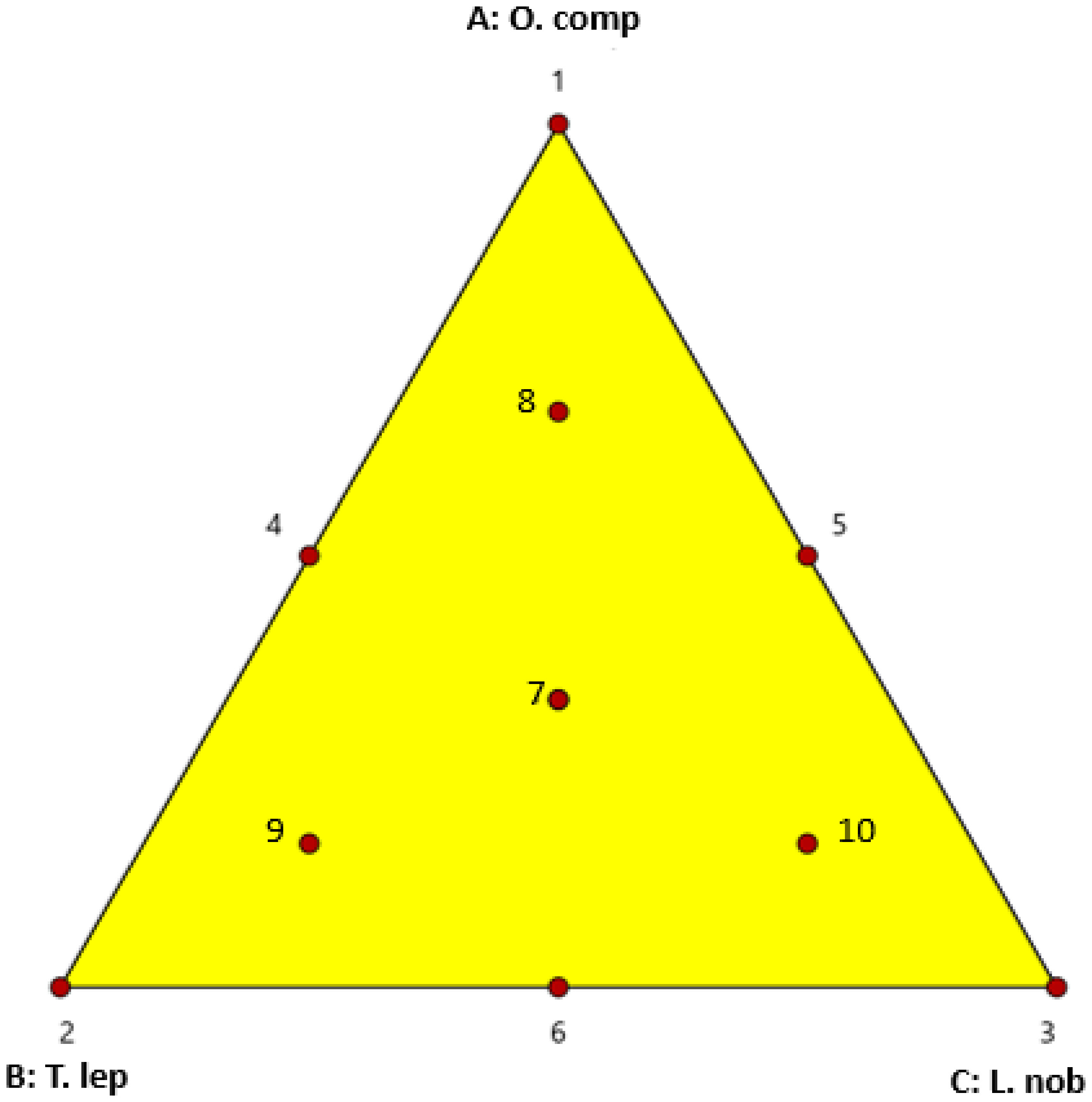
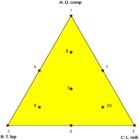
The twelve essays are illustrated by an equilateral triangle (Figure 1) containing three pure oils (100%) corresponding to the vertices of the triangle (X1, X2, X3), mixtures of two oils (50%/50%) corresponding to the midpoints of the three sides of the triangle (X4, X5, X6), equi-proportional mixtures of the three oils (33%/33%) represented by gravity center (X7). This experiment was carried out three times, and three increased points (X8, X9, X10) were awarded to ternary combinations (66%, 17%, 17%), (17%, 66%, 17%), and (17%, 17%, 66%). The special cubic design was employed to represent the results as a function of the independent variables, Equation 1:
Where Y is the response (MIC) expressed in % (v/v); ϒ1, ϒ2, ϒ3 are the coefficients of the linear terms; ϒ12, ϒ13, ϒ23 are the coefficients of the binary terms; ϒ123 Coefficient of the ternary term; And β is an error term.
2.5. Statistical analysis
The significance of adapted models was assessed using the ANOVA test. The statistical significance of the mathematical model at a 95% confidence level was determined based on the Fratio (MSR/MSr) between the mean square regression and mean square residual. The quality of the postulated models is confirmed by using the coefficient of determination. The significance of the estimated coefficients was established using Student's t-test (Assaggaf et al., 2024; Chraibi et al., 2021). This study utilized SAS JMP® software and Expert Design I-Stat Ease® software.
2.6. In-silico analysis
2.6.1. Protein and ligand preparation
The crystal structure of the carbohydrate-active oxidoreductase from A. alternata (PDB ID: 8S6G) was extracted from the Protein Data Bank. Discovery Studio 4.566 and PyMOL 2.3.367 were used to prepare the protein (Khan et al., 2022). The ligands were extracted from the PubChem database, and their 3D SDF structures were generated using the online SMILES translator (Moin et al., 2024).
2.6.2. Molecular docking simulation
The molecular docking simulation was conducted using PyRx 0.878 virtual screening software. To simulate the best interaction, docking was performed with the center set on the X-axis at 1.29164773863, the Y-axis at -5.15107218931, and the Z-axis at 14.0593224661, with dimensions of 26.9115597764 Å on the X-axis, 21.0785624099 Å on the Y-axis, and 25.0 Å on the Z-axis. Protein-ligand interactions were visualized by analyzing 2D graphs and protein-ligand interactions using Discovery Studio 4.566. The predictive ability of the method was assessed using a molecular redocking strategy applied to the crystallized ligand FAD of the target protein (Budiastuti et al., 2025).
2.6.3. Fungicides likeness
The SwissADME tool was used to predict the physicochemical parameters of the compounds. These parameters comply with Lipinski's Rule of 5, which is a fundamental rule of 'drug-likeness' (Daina et al., 2017).
2.6.4. Toxicity analysis
The general toxicity of the compounds was determined using the pkCSM web server, which employs graph-based signatures to develop predictive models (Pires et al., 2015).
3. Results and Discussion
3.1. Yield and chemical composition of EOs
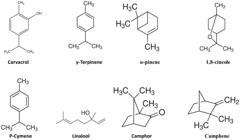
The main compounds of the EOs are presented in Figure 2. The respective yields of the EOs extracted from O. compactum, T. leptobotrys, and L. nobilis EOs were 3.50±0.06% 3.57±0.00%, 1.71±0.07% 1.79±0.00%, and 1.67±0.02%1.66±0.00%. Each EO consists of twelve, eleven, and sixteen major phytoconstituents accounting for 98.9, 99.23, and 98.66%, respectively. O. compactum EO showed a high concentration of carvacrol (59%), followed by other compounds such as P-cymene (18.4%) and γ-terpinene (8.4%). The yield and chemical profile of O. compactum EO are consistent with other previous studies. (Chroho et al., 2024) showed that the O. compactum collected from Khenifra yielded 3.88% and a chemical profile dominated by 75.70% of carvacrol. The yield of EOs extracted from the aerial part of the O. compactum from Chaoun was 3.5%, twelve compounds have been identified, and carvacrol was the main compound (Jeldi et al., 2022). These results are within the range of those obtained in the present study. However, A study carried out by Ouknin et al. (2024) showed that the highest yield of origanum EO collected in Zaouit Ahnsal, Morocco, was of the order of 4.50%, higher than that observed in this study, and a chemical profile composed predominantly of thymol, carvacrol, P-cymene, linalool, and caryophyllene oxide. This differs from the composition of Origanum compactum, which is currently under investigation. T. leptobotrys EO was rich in phenol carvacrol (75.05%) and monoterpenes, including γ-terpinene (5.79%) and P-cymene (5.71%). This result is in good agreement with previous studies on the yield and chemical composition of EO extracted from Indigenous Moroccan thyme, particularly those collected in the region of Beni Mellal and Sidi Mzal (Oubihi et al., 2023; Razzouk et al., 2022). Chemical analysis of EO obtained from leaves of L. nobilis revealed that EO is mainly composed of monoterpenes 1,8-cineole (31.48%) and camphene (12.49%), followed by linalool (12.13%), methyleugenol (9.16%), α-terpineol (7.85%), and eugenol (5.05%). Similar results were obtained in previous studies on EOs extracted from laurel leaves collected in the Tanger and Meknes regions. This study shows that the yield of the extracted EOs was around 0.84 and 0.55% respectively, lower than the yield observed in these study, and that the two EOs from the two regions are mostly composed of 1,8-cineole (El Baghazaoui et al., 2024), This confirms the results of this investigation. A study conducted by Aboukhalid et al., (2017) confirms the ability of plants to modify its characteristics in response to environmental changes. This variability highlights the importance of geographical origin and growing conditions, as these factors can have a significant impact on the yield and chemical composition of EO.
3.2. Antifungal effects of EOs against A. alternata
3.2.1. Single antifungal effect
Analysis revealed that all of the EOs tested could inhibit A. alternata (Table 2), although the percentage of inhibition varied for each EOs. Additionally, EOs demonstrating a high percentage of inhibition have shown a low MIC, as in the case of oregano and thyme EOs against A. alternata, for which the rate of inhibition is 100% after using 0.157µl/mL of the EO for a MIC of 0.065 and 0.13% (v/v), respectively. Nevertheless, A. alternata was less sensitive to laurel EO, at the same concentration, this oil allowed a percentage of inhibition in the order of 42.22% and a MIC of 0.52% (v/v). The antimicrobial properties of the investigated EOs have been proven previously. The vapor phase of thyme, oregano, and wild thyme EOs demonstrated significant antifungal effects against fungi by inhibiting mycelial growth. Moreover, thyme EO had an impact on spore germination (Mrvov et al., 2024). The broad antifungal spectrum of Thyme and Oregano, with a MIC ranging from 0.062 and 1 µl/mL against A. alternata, has been reported by Kosakowska et al. (2024). These results are better than those found in this study. A review presenting insights into the use of EOs as an eco-friendly alternative reports that EO from Thymus vulgaris has the potential to be used as a preventive agent against A. alternata (Almeida et al., 2024). Carvacrol, a compound found in O. compactum and T. leptobotrys, has been found to have a broad spectrum of antifungal action in vitro. It has been shown to deform hyphae and spores and to destroy mitochondrial morphology. This causes an order disruption in the fungal species' normal energy metabolism (Li et al., 2023). Moreover, it destroys the integrity of the plasma membrane, leading to cytoplasmic leakage and intracellular oxidative damage in A. alternata (Wang et al., 2024). Research was conducted into the in vitro activities of thirty EOs, and their effectiveness against three major fungal pathogens: A. alternata, B. cinerea, and P. italicum. Shows that some EOs, including L. nobilis, have antifungal activity against A. alternata (Allagui et al., 2023).
3.2.2. Optimizing antifungal activity by designing mixtures
The simplex-centroid design, including various mixtures of the three EOs tested and the antifungal effect recorded for each experiment, is summarized in Table 3. The experiments (consisting of 12 replicates) were randomized, and each reported response was the mean of three independent replicates. The results revealed that the antifungal activity tests ranged respectively from 0.016 to 0.52% (v/v).
Experimentally determined MIC for each combination generated by the Simplex centroid design matrix.
3.3. Statistical validation of the postulated model
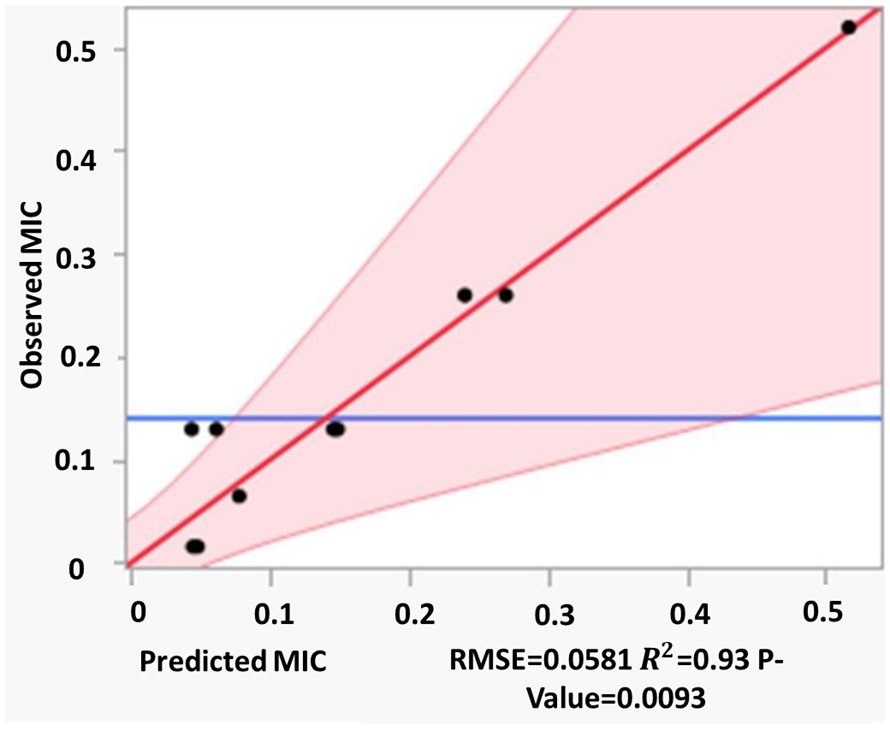
Analysis of variance (Table 4) revealed that the main regression effect was statistically significant since its P-value < 0.05 (0.0093). The coefficients of determination obtained were of the order of 0.93, demonstrating a good correlation between the experimental models and the predicted models. These results were confirmed by the graph in Figure 3, which shows a linear curve of the experimental values compared with the predicted values.
The Quadratic model quality by analysis of variance (ANOVA) for minimum inhibitory concentration (MIC).
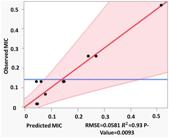
The red lines represent the curve of actual values of MIC as a function of predicted ones. The horizontal blue lines represent the average of the observed values.
3.4. Compound effects and fitted model
The effects of all the factors studied, as well as the statistical test-student values and the observed probability (P-value), are collected in Table 5. The statistically significant coefficients are those indicating the effects of individual components (ϒ2 and ϒ3), as well as the binary interaction term ϒ23. However, the coefficients of the binary interaction terms (ϒ12 and ϒ 13) and the ternary interaction term ϒ 123 are non-significant (p>0.05). These results affirm that the antifungal activity depends on all terms of the mathematical model fitted except ϒ12, ϒ13, and ϒ123. The mathematical model representing the MIC response is as follows: Y=0.1490X1+0.5168X3-0.7483X23.
3.5. Optimization of formulation and desirability study
The optimization operation, based on the experimental design approach, consists of selecting the optimal combinations of the three EOs that lead to improved responses compared to the pure EOs. The aim is therefore to achieve the lowest possible MIC value.
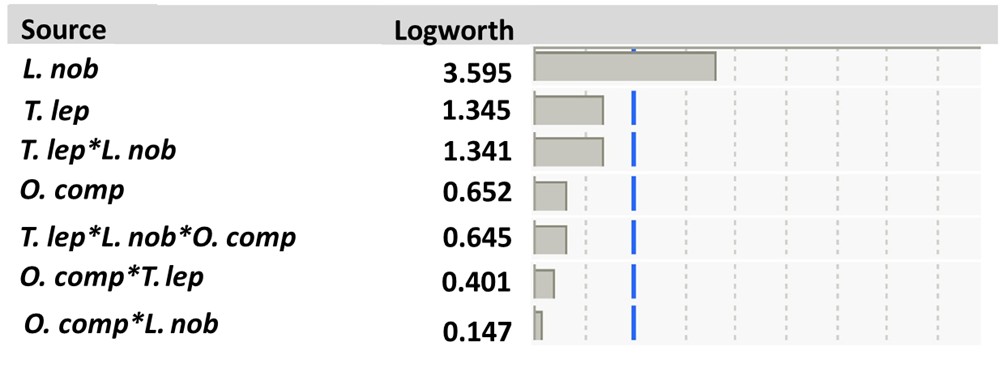
To determine which of the factors or interaction effects has a significant influence on the MIC value, a Pareto chart has been drawn up (Figure 4). A thorough examination of the chart reveals that it exerts a substantial influence on the MIC value. Based on the analysis of the experiments, it was found that the best-attested value had the lowest MIC value of the order of 0.016% (v/v). Consequently, the factors were adjusted and used as a target value to achieve a MIC less than or equal to this value.
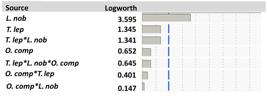
Optimization of antifungal activity using mixture design, presented as Pareto plots of the standardized effects.
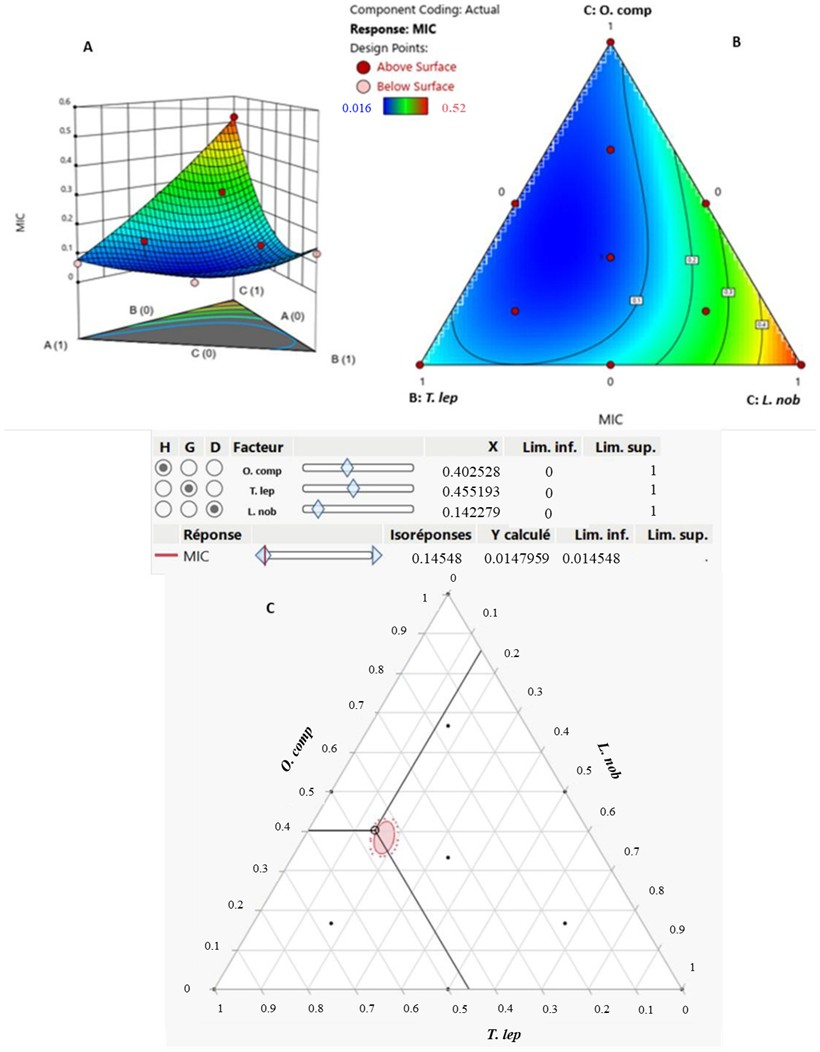
The optimization and choice of the different activities related to various proportions of the three oils used are shown in Figure 5. The MIC of the order of 0.014548% (v/v) was set as a compromise against A. alternata. 2D and 3D diagrams showed that this zone of compromise exists in the interaction between the three EOs, with a majority proportion of T. leptobotrys and O. compactum
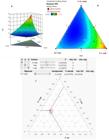
3D (A, B) and 2D (C) mixture plots of the desired compromise area, resulting in the best value of MIC.
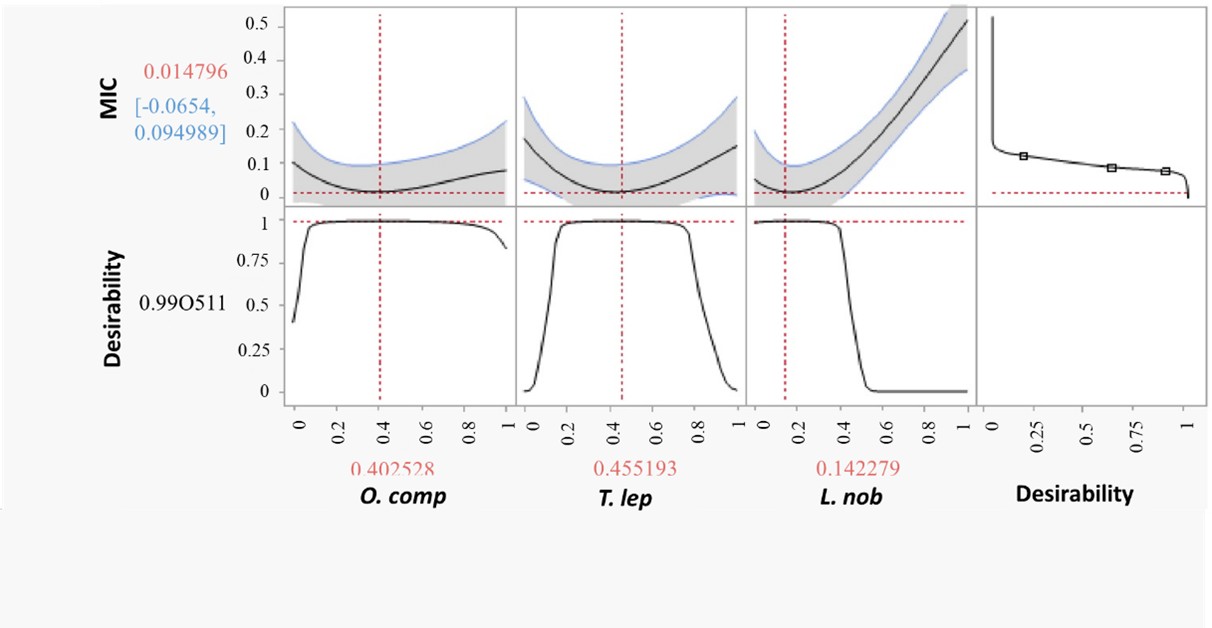
The white zone in Figure 5C comprises all the formulations with the required concentrations. In addition, the choice of the optimum MIC is based on the desirability study displayed in Figure 6. Desirability can be as high as 99% with a MIC of 0.014548% (V/V). The survey revealed the following optimal combination of the three EOs with high activity against and very low MIC: 40%, 46%, and 14% of Oregano, Thyme, and Laurel, respectively.
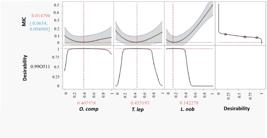
Desirability plot showing the precise proportions of three studied EOs leading to the optimal antifungal activity against A. alternata.
EOs are complex mixtures of volatile components, comprising terpenes and terpenoids, as well as aromatic and aliphatic constituents. The majority of the antimicrobial properties of EOs are mostly due to oxygenated terpenoids, while several hydrocarbons can have antagonistic, additive, indifferent, or synergistic effects (Bassolé and Juliani, 2012). Peppermint and laurel EOs are highly synergistic against two strains of A. alternata, the causal agent of citrus brown spot (Grati Affes et al., 2023). As demonstrated by (Nikkhah and Hashemi, 2020), the combination of Thyme/Rosemary and Thyme/Cinnamon, as well as the triple combination of Cinnamon/Rosemary/Thyme, exhibited a synergistic effect against A. alternata. However, the study by Stevic et al. (2014) demonstrated that the blends of Oregano and Lavender EOs have antagonistic effects. Carvacrol has been found to interact synergistically with certain monoterpene hydrocarbons, including α-pinene, P-cymene, myrcene, camphene, and α-terpinene, which generally have weak antimicrobial properties. (Ultee et al., 2000). The capacity of hydrocarbons to interact with cell membranes has been demonstrated to facilitate the penetration of carvacrol into cells (De Azeredo et al., 2011).
3.6. In-silico analysis
3.6.1. Structural validation of the docking model
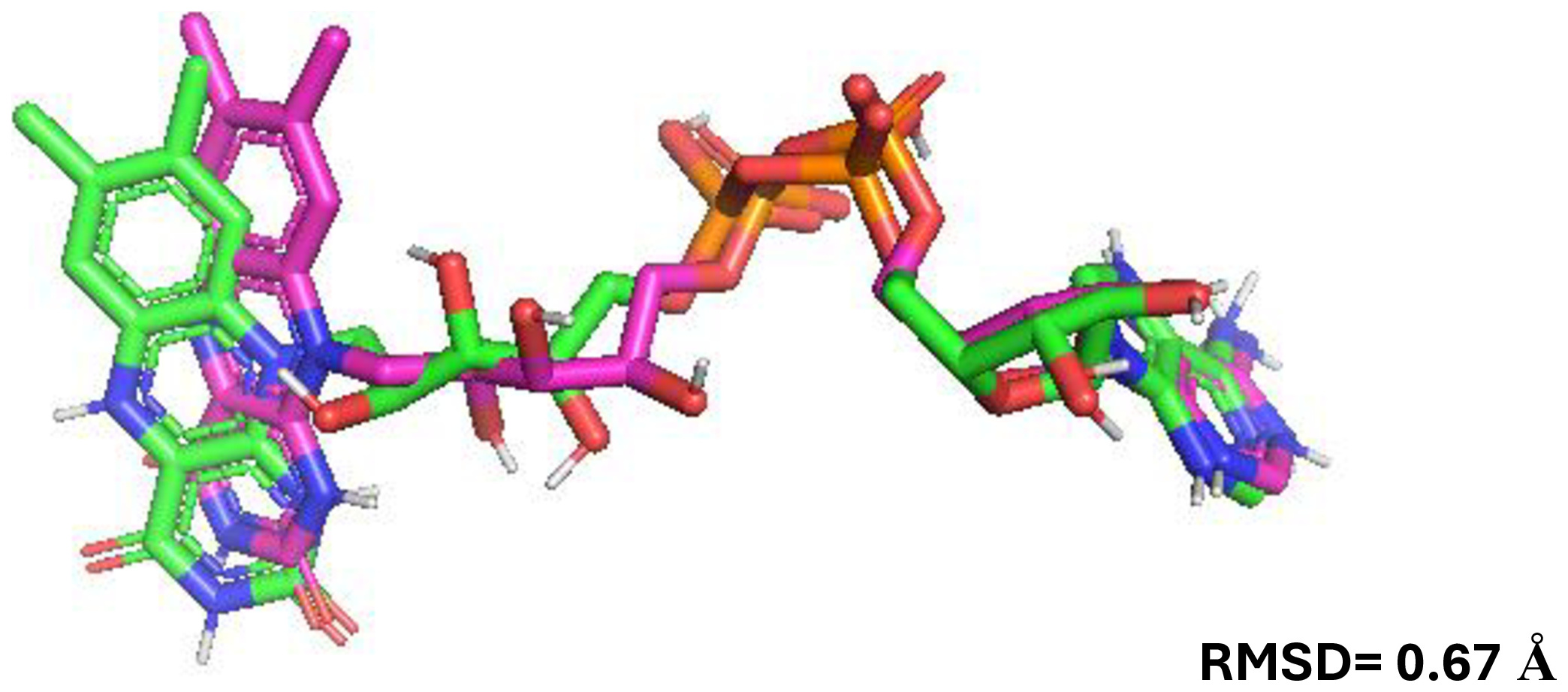
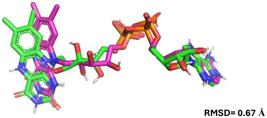
Molecular docking validation was performed to assess the method and parameters used in the in-silico study. The results show that the RMSD values are less than 2 Å and equal to 0.67 Å. Consequently, the process and parameters used met the acceptable criterion (Figure 7).
3.6.2. Molecular docking simulations of the selected compounds
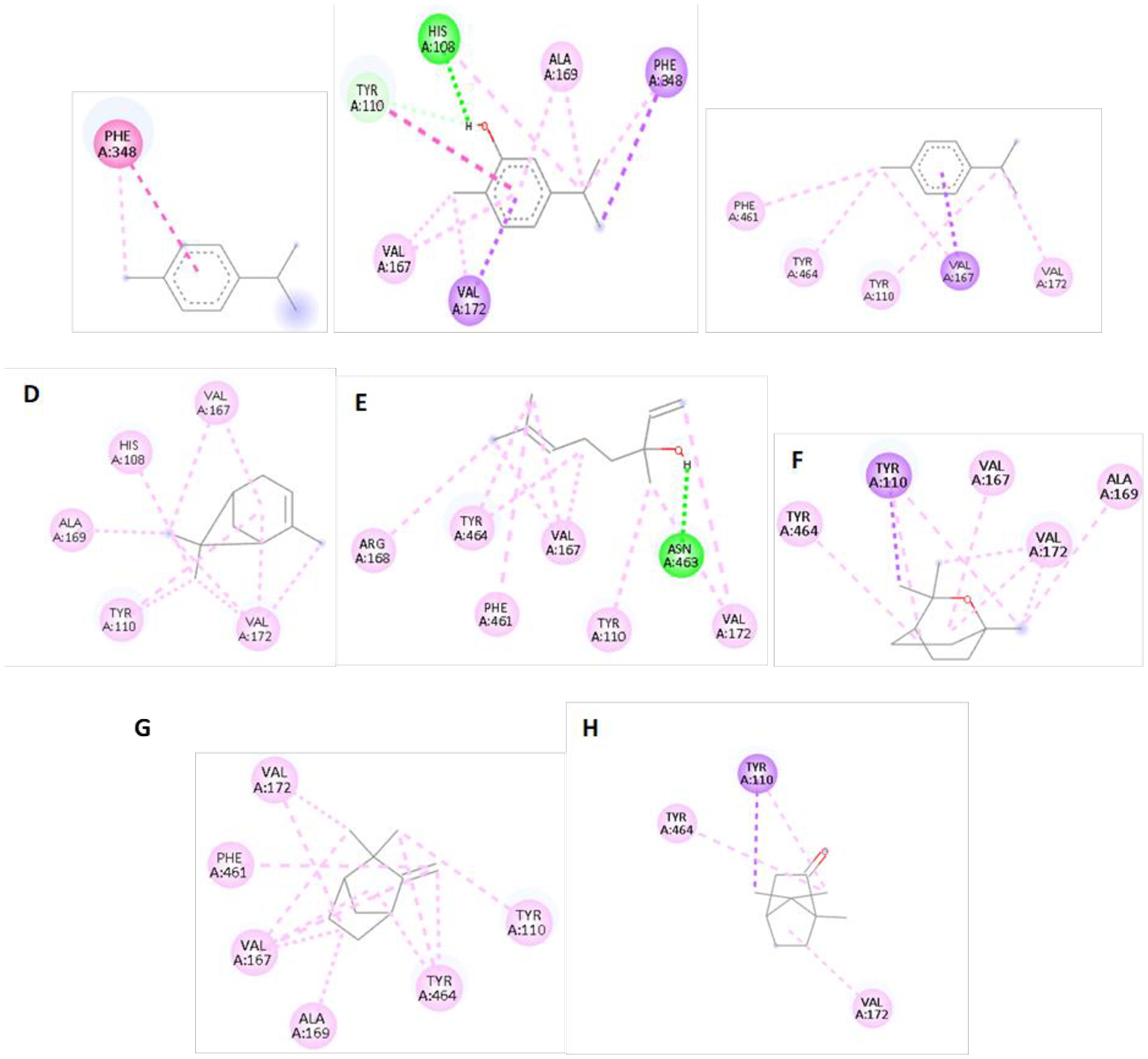
Currently, research relies on molecular modeling to predict interactions between EO compounds and molecular targets involved in various biological processes (Mali et al., 2022). A molecular docking experiment was performed using the selected protein as the receptor and eight plant metabolites as the ligands. Of the ligands tested, P-cymene, carvacrol, γ-Terpinene, and α-pinene demonstrated the highest binding affinity for the target protein (Table 6). The highest polar binding site with the protein under study was established with linalool when evaluated using Pymol software. As demonstrated in Table 6 and Figure 8, the binding sites included TYR-110, VAL-167, ARG-168, VAL-172, PHE-461, ASN-463, and TYR-464. The most effective metabolites.
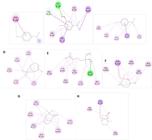
Interaction of polar binding site residues. (A) p-Cymene, (B) Carvacrol, (C) γ-Terpinene, (D) α-pinene, (E) Linalool, (F)1,8-cineole, (G) Camphene, (H)Camphor.
3.6.3. Fungicide likeness
The SwissADME web tool is a computational tool that calculates the main physicochemical, pharmacokinetic, pharmacological, and related parameters for molecules (Daina et al., 2017). The physicochemical properties of the potential compounds were analyzed in accordance with Lipinski's Rule of 5, a well-established fundamental rule of drug similarity. Interestingly, all of the selected natural compounds had molecular weights between 134.22 and 154.25 g/mol, less than 500g/mol. The milogP values of the potential compounds were found to be less than 5, ranging from 2.12 to 2.73. According to Lipinski's rule, most "drug-like" molecules have a maximum of 10 hydrogen bond acceptors and 5 hydrogen bond donors (Walters., 2012). In addition, the number of hydrogen bond donors was found to be less than five, and the number of hydrogen bond acceptors was found to be less than ten (Table 7). Physicochemical parameters defined by Lipinski's 'rule of five' for pharmaceuticals can be used as primary filters for screening agrochemical molecules (Tice, 2002). Subsequent work has refined this concept into 'pesticide similarity' indices, demonstrating that molecular weight, lipophilicity, and the number of hydrogen bond donors/acceptors are key predictors of bioavailability and biological activity in plants (Avram et al., 2014). From a physiological point of view, leaf penetration occurs via either lipophilic or polar pathways in the cuticle. Alternatively, it occurs via polar pathways. The latter include aqueous pores and stomatal openings (Schreiber., 2005). Molecules of moderate size and polarity are better able to exploit these pathways efficiently (Fernández and Brown., 2013). Natural metabolites that adhere to Lipinski's rules are promising candidates for foliar fungicides as they offer favorable membrane permeability. Further in vivo evaluation is essential to validate the ability of selected compounds to penetrate plant tissues and exert effective activity.
3.6.4. Compound toxicity
The development of new agents is a complex field that must consider the interplay between pharmacokinetics, toxicity, and potency. pkCSM is a tool for predicting the pharmacokinetic and toxic properties of small molecules using graph-based signatures (Pires et al., 2015). The results demonstrate that the LD50 ranged from 1.554 to 2.275 Mol/kg, indicating no significant effect on cutaneous sensitivity and acute oral toxicity in rats. In addition, the AMES toxicity and hepatotoxicity of these metabolites were investigated, with the results showing negative outcomes except for carvacrol, which demonstrated hepatic toxicity (Table 8). Regarding skin toxicity, the study predicted that all components except camphor would be non-toxic. However, pkCSM predictions are based on computational models; therefore, experimental validation through in vitro and in vivo toxicity analysis is essential to confirm the predicted results.
4. Conclusion
This study highlights the importance of using natural plant metabolites as fungicides to combat A. alternata in olive trees. The dominant components of the Eos examined were found to be carvacrol and 1,8-cineole. Combining Eos has been shown to enhance their antifungal properties and create a synergistic effect. The optimal composition was found to be a mixture of 40% Oregano, 46% Thyme and 14% Laurel, resulting in an MIC of 0.014548% (v/v). Molecular docking analysis shows that the studied compound exhibits a high binding affinity with the target protein, ranging from -6.5 to -5.1. Identifying phytochemical compounds with a high binding affinity opens up promising prospects for their practical application in agriculture. This study paves the way for future research into the effects of Eos and the compounds studied in vivo, as well as their phytotoxicity, with a view to their large-scale application.
Acknowledgements
The author Khaoula CHATTAT would like to thank the CNRST (National Center for Scientific and Technical Research) in Morocco for the ‘’Phd-Associate Scholarship—PASS’’.
Data Availability Statement
All relevant data are fully included within the main text and tables of the manuscript.
References
-
ABOUKHALID, K., AL FAIZ, C., DOUAIK, A., BAKHA, M., KURSA, K., AGACKA-MOŁDOCH, M., MACHON, N., TOMI, F. and LAMIRI, A., 2017. Influence of environmental factors on essential oil variability in origanum compactum benth. growing wild in Morocco. Chemistry & Biodiversity, vol. 14, no. 9, pp. e1700158. https://doi.org/10.1002/cbdv.201700158 PMid:28556574.
» https://doi.org/10.1002/cbdv.201700158 -
ALLAGUI, M.B., MOUMNI, M. and ROMANAZZI, G., 2023. Antifungal activity of thirty essential oils to control pathogenic fungi of postharvest decay. Antibiotics (Basel, Switzerland), vol. 13, no. 1, pp. 28. https://doi.org/10.3390/antibiotics13010028 PMid:38247587.
» https://doi.org/10.3390/antibiotics13010028 -
ALMEIDA, N.A., FREIRE, L., CARNIELLI-QUEIROZ, L., BRAGOTTO, A.P.A., SILVA, N.C.C. and ROCHA, L.O., 2024. Essential oils: an eco-friendly alternative for controlling toxigenic fungi in cereal grains. Comprehensive Reviews in Food Science and Food Safety, vol. 23, no. 1, pp. e13251. https://doi.org/10.1111/1541-4337.13251 PMid:38284600.
» https://doi.org/10.1111/1541-4337.13251 -
ASSAGGAF, H., JEDDI, M., MRABTI, H.N., EZ-ZOUBI, A., QASEM, A., ATTAR, A., GOH, B.H., TAN, S.L., BOUYAHYA, A., GOH, K.W. and EL HACHLAFI, N., 2024. Design of three-component essential oil extract mixture from Cymbopogon flexuosus, Carum carvi, and Acorus calamus with enhanced antioxidant activity. Scientific Reports, vol. 14, no. 1, pp. 9195. https://doi.org/10.1038/s41598-024-59708-x PMid:38649707.
» https://doi.org/10.1038/s41598-024-59708-x -
AVRAM, S., FUNAR-TIMOFEI, S., BOROTA, A., CHENNAMANENI, S.R., MANCHALA, A.K. and MURESAN, S., 2014. Quantitative estimation of pesticide-likeness for agrochemical discovery. Journal of Cheminformatics, vol. 6, no. 1, pp. 1-11. https://doi.org/10.1186/s13321-014-0042-6 PMid:25264458.
» https://doi.org/10.1186/s13321-014-0042-6 -
AZEREDO, G.A., STAMFORD, T.L.M., NUNES, P.C., GOMES NETO, N.J., DE OLIVEIRA, M.E.G. and DE SOUZA, E.L., 2011. Combined application of essential oils from Origanum vulgare L. and Rosmarinus officinalis L. to inhibit bacteria and autochthonous microflora associated with minimally processed vegetables. Food Research International, vol. 44, no. 5, pp. 1541-1548. https://doi.org/10.1016/j.foodres.2011.04.012
» https://doi.org/10.1016/j.foodres.2011.04.012 -
BASAK, S. and GUHA, P., 2018. A review on antifungal activity and mode of action of essential oils and their delivery as nano-sized oil droplets in food system. Journal of Food Science and Technology, vol. 55, no. 12, pp. 4701-4710. https://doi.org/10.1007/s13197-018-3394-5 PMid:30482966.
» https://doi.org/10.1007/s13197-018-3394-5 -
BASIM, E., BASIM, H., ABDULAI, M., BAKI, D. and ÖZTÜRK, N., 2017. Identification and characterization of Alternaria alternata causing leaf spot of olive tree (Olea europaea) in Turkey. Crop Protection (Guildford, Surrey), vol. 92, pp. 79-88. https://doi.org/10.1016/j.cropro.2016.10.013
» https://doi.org/10.1016/j.cropro.2016.10.013 -
BASSOLÉ, I.H.N. and JULIANI, H.R., 2012. Essential oils in combination and their antimicrobial properties. Molecules (Basel, Switzerland), vol. 17, no. 4, pp. 3989-4006. https://doi.org/10.3390/molecules17043989 PMid:22469594.
» https://doi.org/10.3390/molecules17043989 -
BENKHAIRA, N., ZOUINE, N., FADIL, M., IBNSOUDA KORAICHI, S., EL HACHLAFI, N., JEDDI, M., LACHKAR, M. and FIKRI-BENBRAHIM, K., 2023. Application of mixture design for the optimum antibacterial action of chemically-analyzed essential oils and investigation of the antiadhesion ability of their optimal mixtures on 3D printing material. Bioprinting (Amsterdam, Netherlands), vol. 34, pp. e00299. https://doi.org/10.1016/j.bprint.2023.e00299
» https://doi.org/10.1016/j.bprint.2023.e00299 -
BOUYAHYA, A., DAKKA, N., TALBAOUI, A., ET-TOUYS, A., EL-BOURY, H., ABRINI, J. and BAKRI, Y., 2017. Correlation between phenological changes, chemical composition and biological activities of the essential oil from Moroccan endemic Oregano (Origanum compactum Benth). Industrial Crops and Products, vol. 108, pp. 729-737. https://doi.org/10.1016/j.indcrop.2017.07.033
» https://doi.org/10.1016/j.indcrop.2017.07.033 -
BUDIASTUTI, B., HELMI, V.N., EFFENDI, M.H., PLUMERIASTUTI, H., KHAIRULLAH, A.R., UGBO, E.N., TYASNINGSIH, W., AWWANAH, M., PRATAMA, B.P., PRASETYO, A., MOSES, I.B. and AHMAD, R.Z., 2025. In Silico Analysis of Metabolite Compounds from the Essential Oil of Cinnamomum burmannii Bark with COX-1 and COX-2 as Target Molecules. Trends in Sciences, vol. 22, no. 9, pp. 10292. https://doi.org/10.48048/tis.2025.10292
» https://doi.org/10.48048/tis.2025.10292 -
CHRAIBI, M., FADIL, M., FARAH, A., LEBRAZI, S. and FIKRI-BENBRAHIM, K., 2021. Antimicrobial combined action of Mentha pulegium, Ormenis mixta and Mentha piperita essential oils against S. aureus, E. coli and C. tropicalis: application of mixture design methodology. Lebensmittel-Wissenschaft + Technologie, vol. 145, pp. 111352. https://doi.org/10.1016/j.lwt.2021.111352
» https://doi.org/10.1016/j.lwt.2021.111352 -
CHROHO, M., ROUPHAEL, Y., PETROPOULOS, S.A. and BOUISSANE, L., 2024. Carvacrol and thymol content affects the antioxidant and antibacterial activity of Origanum compactum and Thymus zygis essential oils. Antibiotics (Basel, Switzerland), vol. 13, no. 2, pp. 139. https://doi.org/10.3390/antibiotics13020139 PMid:38391524.
» https://doi.org/10.3390/antibiotics13020139 -
DAINA, A., MICHIELIN, O. and ZOETE, V., 2017. SwissADME: a free web tool to evaluate pharmacokinetics, drug-likeness and medicinal chemistry friendliness of small molecules. Scientific Reports, vol. 7, pp. 42717. https://doi.org/10.1038/srep42717 PMid:28256516.
» https://doi.org/10.1038/srep42717 -
DOEHLEMANN, G., ÖKMEN, B., ZHU, W. and SHARON, A., 2017. Plant pathogenic fungi. Microbiology Spectrum, vol. 5, no. 1, pp. 701-726. https://doi.org/10.1128/microbiolspec.FUNK-0023-2016 PMid:28155813.
» https://doi.org/10.1128/microbiolspec.FUNK-0023-2016 -
EL BAGHAZAOUI, R., BELMALHA, S., BOUTAGAYOUT, A., NASSIRI, L., EL ALAMI, S., SAVOIE, J.M. and BOUIAMRINE, E.H., 2024. Insecticidal Properties and Chemical Characterization of Laurus nobilis L. Essential Oils from Two Regions of Morocco against Callosobruchus maculatus (Coleoptera: bruchinae). Agriculture, vol. 14, no. 7, pp. 1-19. https://doi.org/10.3390/agriculture14071150
» https://doi.org/10.3390/agriculture14071150 -
EL-BAKY, N.A. and AMARA, A.A.A.F., 2021. Recent approaches towards control of fungal diseases in plants: an updated review. Journal of Fungi (Basel, Switzerland), vol. 7, no. 11, pp. 900. https://doi.org/10.3390/jof7110900 PMid:34829188.
» https://doi.org/10.3390/jof7110900 -
FERNÁNDEZ, V. and BROWN, P.H., 2013. From plant surface to plant metabolism: the uncertain fate of foliar-applied nutrients. Frontiers in Plant Science, vol. 4, pp. 1-5. https://doi.org/10.3389/fpls.2013.00289 PMid:23914198.
» https://doi.org/10.3389/fpls.2013.00289 -
GRATI AFFES, T., CHENENAOUI, S., ZEMNI, H., HAMMAMI, M., BACHKOUEL, S., AIDI WANNES, W., NASRAOUI, B., SAIDANI TOUNSI, M. and LASRAM, S., 2023. Biological control of Citrus brown spot pathogen, “Alternaria alternata” by different essential oils. International Journal of Environmental Health Research, vol. 33, no. 8, pp. 823-836. https://doi.org/10.1080/09603123.2022.2055748 PMid:35322739.
» https://doi.org/10.1080/09603123.2022.2055748 -
JELDI, L., SAMMAMA, A., AZENZEM, R., MNASRI, B. and ALFEDDY, M.N., 2023. Effect of domestication on essential oil composition and antibacterial activities of origanium compactum from two moroccan. International Journal of Agricultural and Natural Sciences, vol. 16, pp. 331-342. https://doi.org/10.5281/zenodo.10462633
» https://doi.org/10.5281/zenodo.10462633 -
JELDI, L., TAARABT, K.O., MAZRI, M.A., OUAHMANE, L. and ALFEDDY, M.N., 2022. Chemical composition, antifungal and antioxidant activities of wild and cultivated Origanum compactum essential oils from the municipality of Chaoun, Morocco. South African Journal of Botany, vol. 147, pp. 852-858. https://doi.org/10.1016/j.sajb.2022.03.034
» https://doi.org/10.1016/j.sajb.2022.03.034 -
JU, J., GUO, Y., CHENG, Y. and YAOC, W., 2022. Analysis of the synergistic antifungal mechanism of small molecular combinations of essential oils at the molecular level. Industrial Crops and Products, vol. 188, pp. 115612. https://doi.org/10.1016/j.indcrop.2022.115612
» https://doi.org/10.1016/j.indcrop.2022.115612 -
KHAN, M.A., AL MAMUN KHAN, M.A., MAHFUZ, A.M.U.B., SANJANA, J.M., AHSAN, A., GUPTA, D.R., HOQUE, M.N. and ISLAM, T., 2022. Highly potent natural fungicides identified in silico against the cereal killer fungus Magnaporthe oryzae. Scientific Reports, vol. 12, no. 1, pp. 20232. https://doi.org/10.1038/s41598-022-22217-w PMid:36418863.
» https://doi.org/10.1038/s41598-022-22217-w -
KOSAKOWSKA, O., ZENON, W., STYCZYNSKA, S., SYNOWIEC, A., GNIEWOSZ, M. and BĄCZEK, K., 2024. Activity of Common Thyme (Thymus vulgaris L.), Greek Oregano (Origanum vulgare L. ssp. hirtum), and Common Oregano (Origanum vulgare L. ssp. vulgare) essential oils against selected phytopathogens. Molecules vol. 29, no. 19, pp. 4617. https://doi.org/10.3390/molecules29194617
» https://doi.org/10.3390/molecules29194617 -
KSIBI, A., AYADI, M., SOUFIENE, B.O., JAMJOOM, M.M. and ULLAH, Z., 2022. Mobires-net: a hybrid deep learning model for detecting and classifying olive leaf diseases. Applied Sciences (Basel, Switzerland), vol. 12, no. 20, pp. 10278. https://doi.org/10.3390/app122010278
» https://doi.org/10.3390/app122010278 -
LI, H., DING, J., LIU, C., HUANG, P., YANG, Y., JIN, Z. and QIN, W., 2023. Carvacrol treatment reduces decay and maintains the postharvest quality of red grape fruits (Vitis vinifera L.) inoculated with Alternaria alternata. Foods, vol. 12, no. 23, pp. 4305. https://doi.org/10.3390/foods12234305 PMid:38231758.
» https://doi.org/10.3390/foods12234305 -
MALI, S.N., TAMBE, S., PRATAP, A.P. and CRUZ, J.N., 2022. Molecular modeling approaches to investigate essential oils (volatile compounds) interacting with molecular targets. In: M. SANTANA DE OLIVEIRA, ed. Essential oils: applications and trends in food science and technology Cham: Springer, pp. 417-442. https://doi.org/10.1007/978-3-030-99476-1_18
» https://doi.org/10.1007/978-3-030-99476-1_18 -
MOIN, A.T., ROBIN, T.B., PATIL, R.B., RANI, N.A., PROME, A.A., SAKIF, T.I., HOSSAIN, M., CHOWDHURY, D.U.S., RASHID, S.S., MOLLAH, A.K.M.M., ISLAM, S., UDDIN, M.H., KHALEQUZZAMAN, M., ISLAM, T. and ISLAM, N.N., 2024. Antifungal plant flavonoids identified in silico with potential to control rice blast disease caused by Magnaporthe oryzae. PLoS One, vol. 19, no. 4, pp. e0301519. https://doi.org/10.1371/journal.pone.0301519 PMid:38578751.
» https://doi.org/10.1371/journal.pone.0301519 - MRVOV, M., MEDO, J., LAKATOŠOV, J., BARBOR, Z., GOLIAN, M., MAŠKOV, Z. and TAN, D., 2024. Penicillium olsonii causing postharvest cherry tomato rot. Foods, vol. 13, pp. 3202.
-
MSSILLOU, I., AGOUR, A., EL GHOUIZI, A., HAMAMOUCH, N., LYOUSSI, B. and DERWICH, E., 2020. Chemical composition, antioxidant activity, and antifungal effects of essential oil from Laurus nobilis L. flowers growing in Morocco. Journal of Food Quality, vol. 2020, pp. 1-8. https://doi.org/10.1155/2020/8819311
» https://doi.org/10.1155/2020/8819311 -
NIKKHAH, M. and HASHEMI, M., 2020. Boosting antifungal effect of essential oils using combination approach as an efficient strategy to control postharvest spoilage and preserving the jujube fruit quality. Postharvest Biology and Technology, vol. 164, pp. 111159. https://doi.org/10.1016/j.postharvbio.2020.111159
» https://doi.org/10.1016/j.postharvbio.2020.111159 -
OUBIHI, A., BALLAOUI, F.Z., IMTARA, H., JABER, H., ETTOUIL, A., HAIDA, S., OUHSSINE, M., NOMAN, O.M., MOTHANA, R.A., TARAYRAH, M. and GUESSOUS, Z., 2023. Phytochemical compounds, acute Toxicity, anti-inflammatory and antioxidant activities of Thymus leptobotrys Murb assential oil. Molecules (Basel, Switzerland), vol. 28, no. 3, pp. 1355. https://doi.org/10.3390/molecules28031355 PMid:36771022.
» https://doi.org/10.3390/molecules28031355 -
OUKNIN, M., ALAHYANE, H., COSTA, J. and MAJIDI, L., 2024. Chemical composition, antioxidant and anti-Enzymatic activities, and In Vitro insecticidal potential of Origanum compactum (Benth.) essential oils. Plants, vol. 13, no. 17, pp. 2424. https://doi.org/10.3390/plants13172424
» https://doi.org/10.3390/plants13172424 -
PIRES, D.E.V., BLUNDELL, T.L. and ASCHER, D.B., 2015. pkCSM: predicting small-molecule pharmacokinetic and toxicity properties using graph-based signatures. Journal of Medicinal Chemistry, vol. 58, no. 9, pp. 4066-4072. https://doi.org/10.1021/acs.jmedchem.5b00104 PMid:25860834.
» https://doi.org/10.1021/acs.jmedchem.5b00104 -
RAZZOUK, S., MAZRI, M.A., JELDI, L., MNASRI, B., OUAHMANE, L. and ALFEDDY, M.N., 2022. Chemical composition and antimicrobial activity of essential oils from three mediterranean plants against eighteen pathogenic bacteria and fungi. Pharmaceutics, vol. 14, no. 8, pp. 1608. https://doi.org/10.3390/pharmaceutics14081608 PMid:36015234.
» https://doi.org/10.3390/pharmaceutics14081608 -
SCHREIBER, L., 2005. Polar paths of diffusion across plant cuticles: new evidence for an old hypothesis. Annals of Botany, vol. 95, no. 7, pp. 1069-1073. https://doi.org/10.1093/aob/mci122 PMid:15797897.
» https://doi.org/10.1093/aob/mci122 - SIMMONS, E., 1992. Alternaria taxonomy: current status, viewpoint, challenge. In: J. CHEŁKOWSKI and A. VISCONTI, eds. Alternaria biology, plant diseases and metabolites Amsterdam: Elsevier Science Publishers, pp. 1-35.
-
STEVIC, T., BERIC, T., SAVIKIN, K., SOKOVI, M., GODEVAC, D., IVICA, D. and SLAVISA, S., 2014. Antifungal activity of selected essential oils against fungi isolated from medicinal plant. Industrial Crops and Products, vol. 55, pp. 116-122. https://doi.org/10.1016/j.indcrop.2014.02.011
» https://doi.org/10.1016/j.indcrop.2014.02.011 -
TICE, C.M., 2002. Selecting the right compounds for screening: use of surface-area parameters. Pest Management Science, vol. 58, no. 3, pp. 219-233. https://doi.org/10.1002/ps.441 PMid:11975167.
» https://doi.org/10.1002/ps.441 -
TORRES NETO, L., MONTEIRO, M.L.G., MACHADO, M.A.M., GALVAN, D. and CONTE, C.A., 2022. An optimization of Oregano, Thyme, and Lemongrass essential oil blend to simultaneous inactivation of relevant foodborne pathogens by simplex–centroid mixture design. Antibiotics (Basel, Switzerland), vol. 11, no. 11, pp. 1572. https://doi.org/10.3390/antibiotics11111572 PMid:36358227.
» https://doi.org/10.3390/antibiotics11111572 -
TURELLA, S., HE, C., ZHAO, L., BANERJEE, S., PLOUHINEC, L., ASSIAH YAO, R., NØRGAARD KEJLSTRUP, M.C., GRISEL, S., SO, Y., ANNIC, B., FANUEL, M., HADDAD MOMENI, M., BISSARO, B., MEIER, S., MORTH, J.P., DONG, S., BERRIN, J.G. and ABOU HACHEM, M., 2025. Enzymatic oxidation of galacturonides from pectin breakdown contributes to stealth infection by Oomycota phytopathogens. Nature Communications, vol. 16, no. 1, pp. 1-15. https://doi.org/10.1038/s41467-025-58668-8 PMid:40216756.
» https://doi.org/10.1038/s41467-025-58668-8 -
ULTEE, A., SLUMP, R.A., STEGING, G. and SMID, E.J., 2000. Antimicrobial activity of carvacrol toward Bacillus cereus on rice. Journal of Food Protection, vol. 63, no. 5, pp. 620-624. https://doi.org/10.4315/0362-028X-63.5.620 PMid:10826719.
» https://doi.org/10.4315/0362-028X-63.5.620 -
WALTERS, W.P., 2012. Going further than Lipinski’s rule in drug design. Expert Opinion on Drug Discovery, vol. 7, no. 2, pp. 99-107. https://doi.org/10.1517/17460441.2012.648612 PMid:22468912.
» https://doi.org/10.1517/17460441.2012.648612 -
WANG, J., ZHOU, Y., WANG, P., ZHAO, L., ZHANG, H., QU, H. and XU, F., 2024. Inhibitory effect and mechanism of Carvacrol against black mold disease agent Alternaria alternata in goji berries. Journal of Fungi (Basel, Switzerland), vol. 10, no. 6, pp. 402. https://doi.org/10.3390/jof10060402 PMid:38921388.
» https://doi.org/10.3390/jof10060402
Edited by
-
Editor:
Takako Matsumura Tundisi