 Seedling rescue from natural regeneration and use of Osmocote for production of Jacaranda copaia (Aubl.) D. Don seedlings
Abstract
Seedling production of native tree species faces significant challenges, including difficulty in collecting seeds. Jacaranda copaia is a pioneer species with wide distribution in Amazonia, with an important ecological and economic role. This study evaluated the survival rate of J. copaia by the seedling rescue method and the use of different doses of the controlled-release fertilizer Osmocote (15-09-12) on seedling quality. Seedlings from different matrices were rescued from natural regeneration and evaluated for survival 30 days after rescue. To evaluate seedling growth and quality, four doses of Osmocote (0; 1.5; 3.0; 4.5 g plant−1) were tested. The overall survival rate was 84%. The dose of 3.0 g plant−1 of Osmocote was the most efficient, promoting significant increases in the growth of J. copaia seedlings. At 180 days, there was a 113.3% increase in height and 129.9% in stem collar diameter compared to the control. There was also a significant increase in shoot (2.28 ± 0.47 g), root (0.86 ± 0.17 g), and total dry mass (3.14 ± 0.54 g), with balanced relationships between shoot dry mass/root dry mass ratio (3.69 ± 0.64) and higher Dickson quality index (0.54 ± 0.12). The regression models adjusted for all variables showed high coefficients of determination (R2), ranging from 98% to 99%, indicating a strong association between the applied doses and the analyzed parameters. The results show that the use of controlled-release fertilizer is an effective technique to improve the performance of native seedlings, being especially recommended for ecological restoration and reforestation projects.
Keywords:
timber species; native species production; controlled-release fertilizer
Resumo
A produção de mudas de espécies florestais nativas enfrenta desafios significativos, incluindo a dificuldade na coleta de sementes. Jacaranda copaia é uma espécie pioneira com ampla distribuição na Amazônia, com importante papel ecológico e econômico. Este estudo avaliou a taxa de sobrevivência de J. copaia pelo método de resgate de plântulas o uso de diferentes doses do fertilizante de liberação controlada Osmocote® (15-09-12) na qualidade das mudas. Plântulas de diferentes matrizes foram resgatadas da regeneração natural e avaliadas em termos de sobrevivência 30 dias após o resgate. Para avaliar o crescimento e a qualidade das mudas, foram testadas quatro doses de Osmocote® (0; 1,5; 3,0; 4,5 g/planta). A taxa geral de sobrevivência foi de 84%. A dose de 3,0 g/planta de Osmocote® foi a mais eficiente, promovendo aumentos significativos no crescimento de mudas de J. copaia. Aos 180 dias, observou-se aumento de 113,3% na altura e 129,9% no diâmetro do coleto em relação ao controle. Houve ainda aumento significativo nas massas secas da parte aérea (2,28 ± 0,47 g), raiz (0,86 ± 0,17 g) e total (3,14 ± 0,54 g), com relações equilibradas na razão massa seca da parte aérea/massa seca da raiz (3,69 ± 0,64) e maior índice de qualidade de Dickson (0,54 ± 0,12). Os modelos de regressão ajustados para todas as variáveis apresentaram coeficientes de determinação (R2) elevados, variando entre 98% e 99%, indicando forte associação entre as doses aplicadas e os parâmetros analisados. Os resultados evidenciam que o uso de fertilizante de liberação controlada é uma técnica eficaz para melhorar o desempenho de mudas nativas, sendo especialmente recomendável para projetos de restauração ecológica e reflorestamento.
Palavras-chave:
espécies florestais; produção de espécies nativas; fertilizante de liberação controlada
1. Introduction
The species Jacaranda copaia (Aubl.) D. Don., commonly known as Parapará or Caroba, belongs to the Bignoniaceae family. It is a pioneer species with wide distribution in the Amazon rainforest and can reach between 25 and 35 m in height and up to 90 cm in DBH (diameter at breast height). J. copaia is used as a medicinal and ornamental plant, in urban landscaping and as a source of wood (Fernandes, 2021). Due the good workability, its timber is used in the manufacture of furniture, household utensils, packaging, paper and cellulose, among other products (Lohmann et al., 2020; Gomes et al., 2024).
To ensure success in forest restoration and with the aim of increasing diversity in ecological restoration, alternative techniques for producing seedlings of native species have been studied. One o these techniques consists of collecting and transferring seedlings and young individuals from the natural regeneration of remaining forest areas, forest fragments, or reforestation for nurseries, where they can be adapted and developed directly for planting in the field (Miranda-Neto et al., 2019).
This seedling rescue approach allows seedling production of timber species, mainly those species with wind dispersal or with difficulties in germination. Seedling rescue eliminates steps such as collecting, processing, and storing seeds and even possible treatments to overcome dormancy. Due to the lack of information on appropriate management techniques and methods for many timber species, seedling production remains limited to a few species, whether for timber purposes, forest enrichment, or recovery of degraded areas. This gap in technical knowledge must be filled with new research focused on the development of appropriate methodologies for seedling production and management.
Even though improvements are still needed to increase seedling survival, this methodology favors the adaptation of plants to the local environment, contributes to the conservation of the genetic material of mother trees, and complements seed collection, increasing the variety of species available in nurseries (Rondon-Neto, 2023). Although coming from natural regeneration, rescued seedlings are still in the early stages of growth and need additional nutrition to adequately develop to the condition of seedlings ready for planting. Therefore, the application of fertilizers in the nursery is crucial to ensure the growth of vigorous and high quality seedlings.
Thus, one alternative is the use of controlled-release fertilizers (CRF), which make nutrients available to plants at the right time or for a certain period, depending on the favorable temperature and humidity conditions. These fertilizers are coated with biodegradable polymers and contain a variety of macro and micronutrients, with nitrogen, phosphorus, and potassium standing out in their composition (Jardim et al., 2023). Greater growth was observed in cocoa seedlings (Theobroma cacao), in which the CRF significantly improved height, diameter, and absorption of nutrients such as nitrogen and phosphorus, promoting healthy growth and greater nutritional efficiency (Jardim; Silva, 2023). In this way, to understand the ideal nutritional needs for each native tree species, as well as the best fertilizer dosages, is essential for reducing input costs, optimize plant growth and, simultaneously, achieve desirable characteristics, such as high stress resistance, greater robustness and nutritional content.
This study aims to contribute to the efficient seedling production of native species by providing scientific information that can improve management and fertilization techniques. It is expected to strengthen the intersection between science, sustainability, and economic development, promoting new approaches to forestry and ecological restoration. These advances are essential to improve plant survival in the field, reduce the time spent in nurseries and costs involved in production (Freitas et al., 2022). Hence, the objective of the present study was to evaluate the rescue survival and initial growth of J. copaia seedlings as a function of the use of the CRF Osmocote.
2. Material and Methods
2.1. Study site
The rescue of J. copaia seedlings was carried in April 2024 (rainy season) in the Municipal Natural Park of Castanhal, in the municipality of Castanhal, Pará state, Brazil, a forest fragment located at the geographic coordinates: 1°18’13.4”S 47°55’12.6”W. The climate of the region, according to the Köppen classification, is Af, that is, tropical, with an annual precipitation index of 2800 mm and an average temperature of 26.5 °C (Moraes et al., 2022).
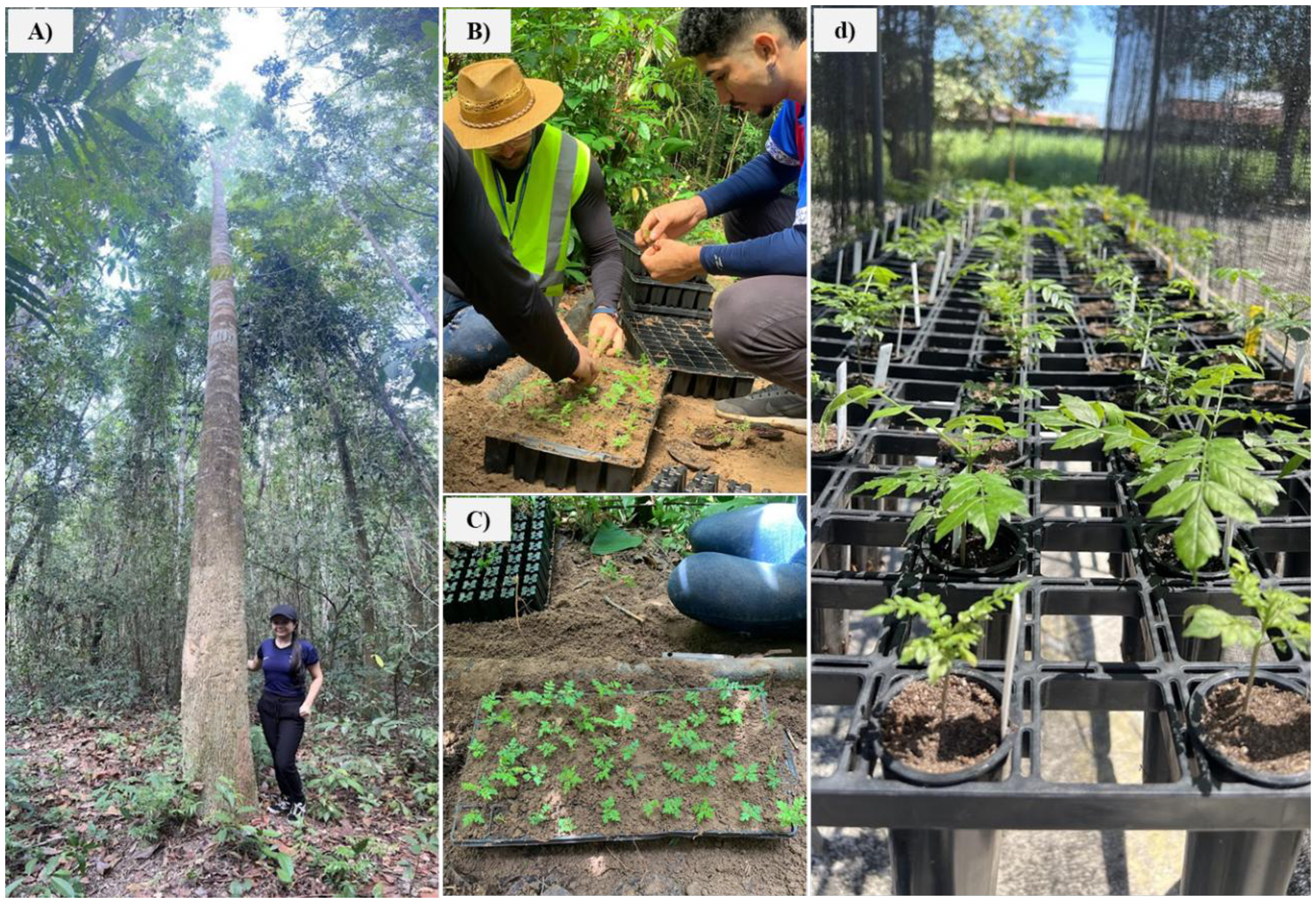
After identifying the matrices (Figure 1A), 400 regenerating individuals ≤ 2 cm in height were selected and carefully removed from the soil with a gardening shovel to maintain the integrity of their root systems (Figures 1B and 1C). After rescue, the seedlings were transported to the forest nursery of the State University of Pará, Castanhal Campus, where they remained in trays for 30 days in the acclimatization process. The 400 seedlings were separated into four replicates of 100 plants each, in the same forest soil from which they were removed. At the end of the acclimatization period (30 days), the percentage of seedling survival was calculated.
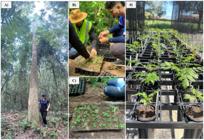
Methodology for rescuing Jacaranda copaia seedlings from the identification phase of the matrices (A), removal of individuals from natural regeneration (B and C), to the nursery phase for seedling production (D).
At 30 days after rescue and acclimatization, 80 seedlings were selected for use in the fertilization experiment. They were then transplanted into 100 cm3 tubes filled with coconut fibers and enriched with the planned doses of Osmocote NPK (15-09-12) with the addition of 1.3% Mg, 6% S, 0.05% Cu, 0.46% Fe, 0.02% Mo, with a nutrient release time of approximately five months, according to the manufacturer's specifications. The seedlings were placed in a forest nursery with 80% shade where they remained for 180 days with average temperatures of 31.3 °C. The substrate used for seedling production was composed of forest soil + commercial substrate “Carolina Soil”, composed of peat, vermiculite, PFTI** and limestone (1:1) (Figure 1).
2.2. Experimental design
The experimental design adopted was completely randomized, with four doses of Osmocote (15-09-12), including the control treatment, without influence of Osmocote and four replicates of five plants each, totaling 20 seedlings per treatment. The doses tested were: 0; 1.5; 3.0; 4.5 g plant−1. The seedlings remained in the forest nursery for 180 days, with a shading level of 80%. During this period, the seedlings were irrigated three times a day (8:00 am, 1:00 pm and 6:00 pm).
2.3. Data collection
The variables shoot height and stem collar diameter were evaluated every 30 days. At 180 days, the following variables were evaluated: a) shoot height, b) stem collar diameter, c) relative growth rate, d) shoot dry mass, e) root dry mass, f) total dry mass, g) shoot dry mass/root dry mass (SDM/RDM) ratio, and h) Dickson quality index (DQI). A digital caliper (precision = 0.01 mm) was used to measure stem collar diameter, and a ruler graduated in centimeters was used to measure shoot height.
To evaluate dry mass, seedlings were divided into shoots and roots by cutting at the height of the stem collar diameter. Both parts were placed separately in Kraft paper bags, identified and dried in an oven at 70 °C for 72 h until reaching a constant mass. Immediately after removal from the oven, the samples were weighed on an analytical balance (precision = 0.001 g) to obtain the dry mass of the shoots and roots.
The Dickson quality index (DQI) (Dickson et al., 1960) combines several morphological characteristics into a single value that is used as a quality index: the higher the index value, the better the seedling quality. The DQI was determined by the following Equation 1:
2.4. Data analysis
To verify the assumptions of analysis of variance (ANOVA), the data were analyzed for: a) normality by the Shapiro-Wilk test (P > 0.05) and visualization with the QQ plot graph (Zuur et al., 2009), b) homoscedasticity by the Bartlett test (P > 0.05), and c) independence among experimental units. Once these assumptions were met, the data were submitted to ANOVA. Growth in height and stem collar diameter were submitted to repeated measures ANOVA over time. Regression analysis was used, and the equations were fitted to the obtained data as a function of the Osmocote doses (0; 1.5; 3.0; 4.5 g plant−1) at 180 days using the AgroR package (Shimizu et al., 2025). The regression model for each variable was selected considering the significance of the variable coefficients and the highest coefficient of determination (R2). Graphs were generated using the “ggplot2” package (Wickham, 2016). All statistical analyses were performed using in the R version 4.5.2 program (R Development Core Team, 2025), at a significance level of P > 0.05.
3. Results
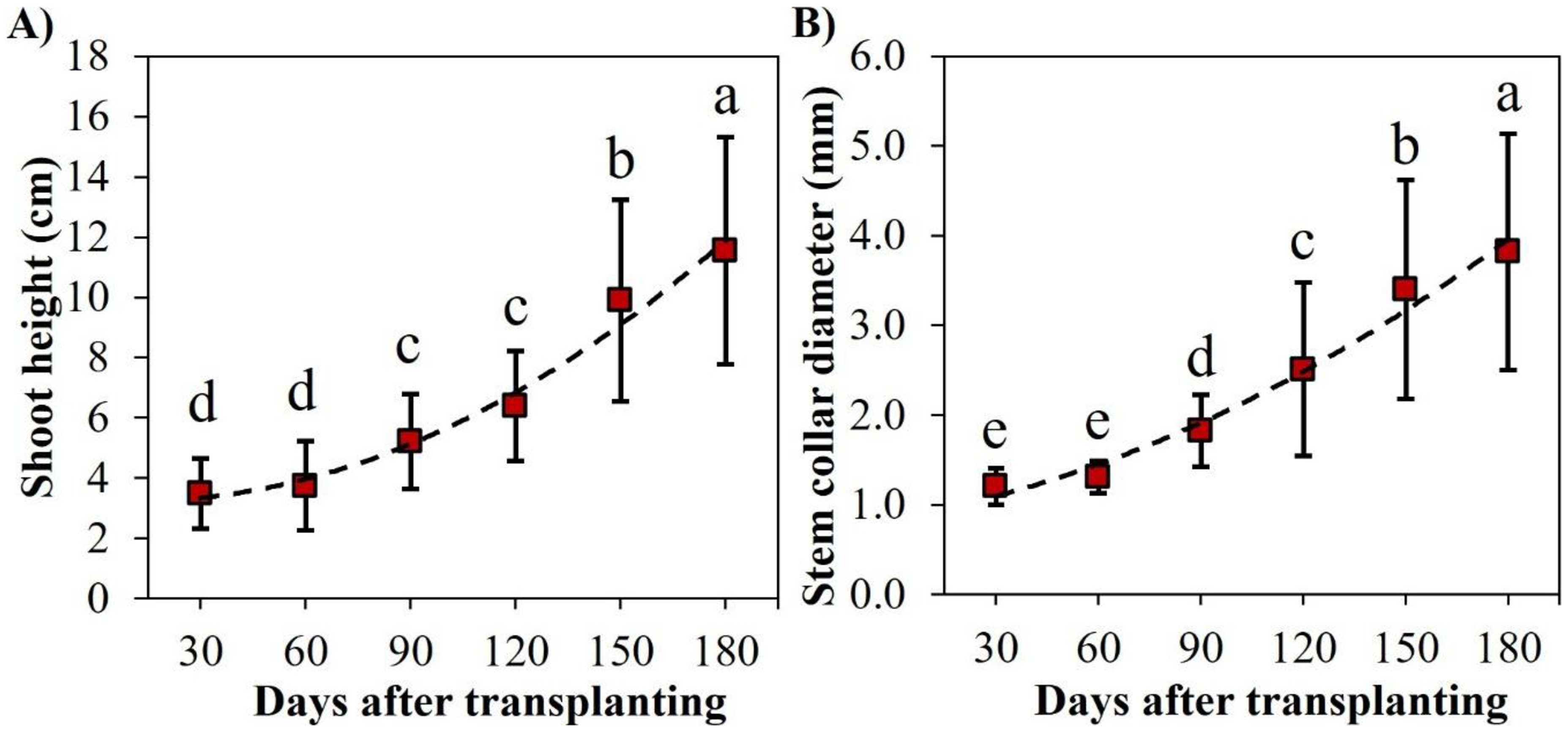
The survival percentage of J. copaia seedlings in the first 30 days after rescue was 84%. The cumulative growth curves indicated that the application of Osmocote resulted in higher average growth in height and stem collar diameter at 180 days after transplanting, differing significantly from the other days (F1;436 = 588.2; P < 0.05). At 180 days, the plants fertilized with Osmocote showed a mean shoot height of 12.6 ± 2.8 cm (Figure 2A) and a mean stem collar diameter of 3.8 ± 0.8 mm (Figure 2B).
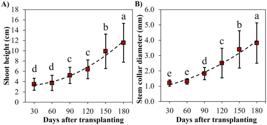
Cumulative growth curves of shoot height (A) and stem collar diameter (B) of Jacaranda copaia seedlings obtained as a function of Osmocote doses (0.0; 1.5; 3.0; and 4.5 g plant-1) over 180 days after transplanting. Means with different letters differ statistically from each other by Student's t-test (P < 0.05).
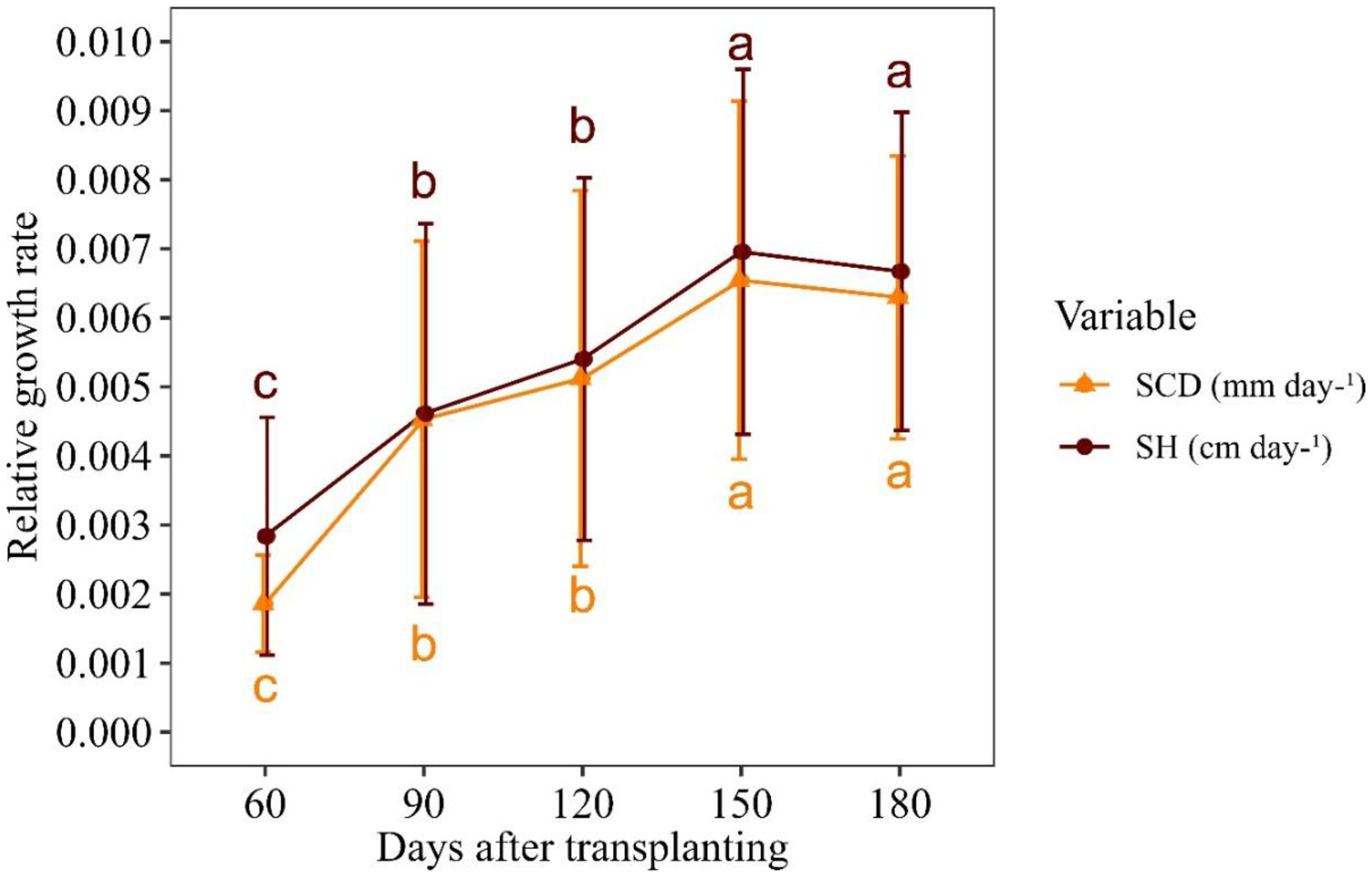
Regarding the relative growth rate (RGR), the seedlings growth peaks occurred between 60 and 150 days, where the height and diameter reached maximum values of 0.0070 cm and 0.0065 mm day−1, respectively. Two relative growth peaks were observed, at 90 and 150 days, which differed significantly from the previous days (F1;363 = 118.3; P < 0.05) (Figure 3).
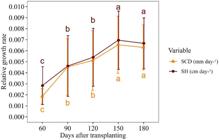
Relative growth rate (RGR) in shoot height (SH) and stem collar diameter (SCD) of Jacaranda copaia seedlings over 180 days obtained as a function of Osmocote doses (0.0; 1.5; 3.0; and 4.5 g plant-1) after transplanting. Means with different letters differ statistically from each other by Student's t-test (P < 0.05).
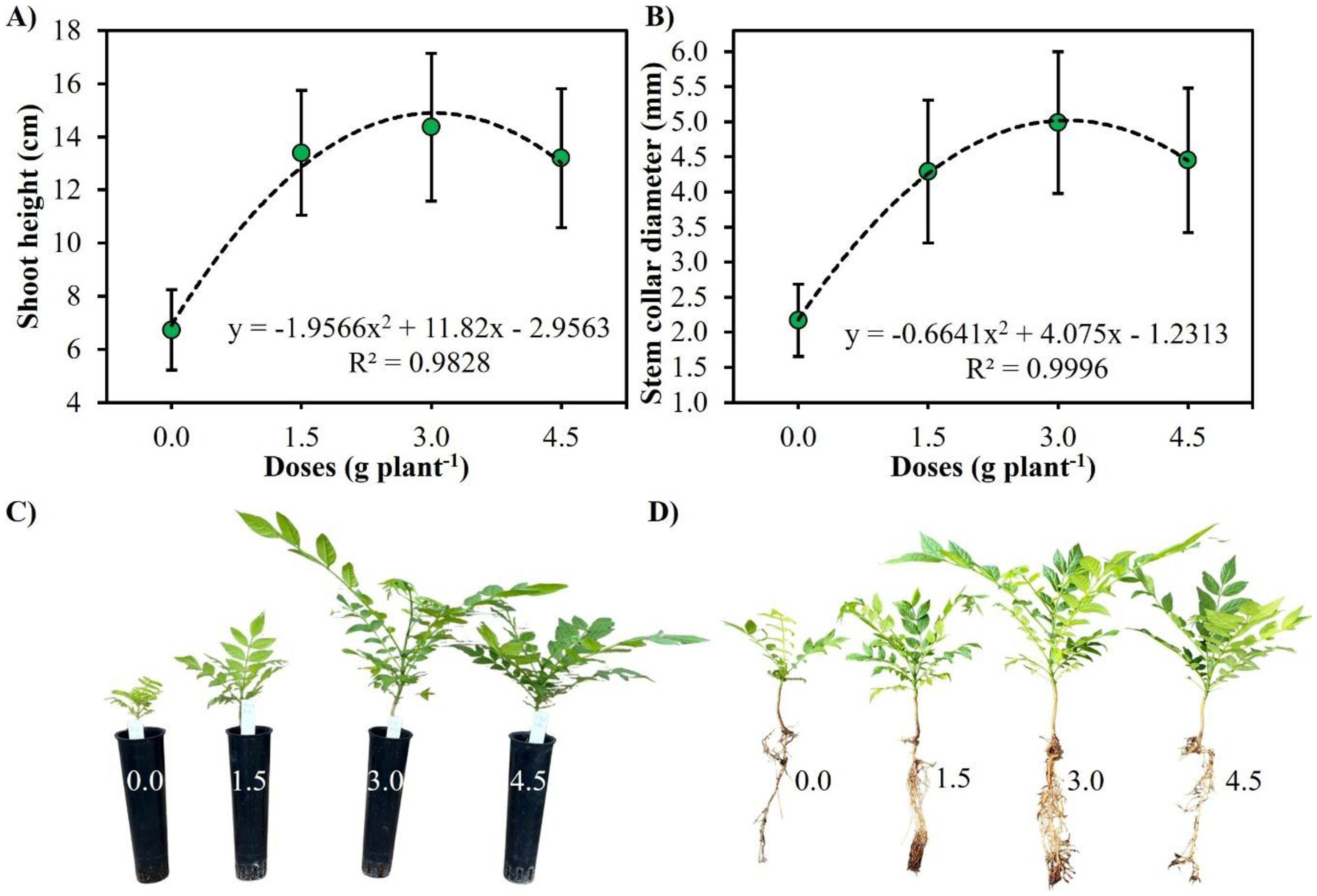
The regression analysis of shoot height and stem collar diameter of J. copaia seedlings, as a function of Osmocote doses showed significant growth, which reached the highest average at the dose of 3.0 g plant−1, being 113.3% and 129.9%, respectively, showing a significant difference (P = 0.001) (Figures 4A-C and Figures 4B-D). The regression model showed that 98% of the increase in height and 99% of the increase in diameter of J. copaia seedlings is related to the dose (R2 = 0.98, R2 = 0.99, respectively), being this result attributed to the low variability observed in the data.
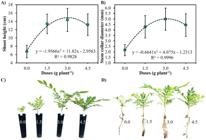
Regression for shoot height (A-C), stem collar diameter (B-D), of Jacaranda copaia seedlings obtained as a function of Osmocote doses (0.0; 1.5; 3.0; and 4.5 g plant-1) at 180 days after transplanting.
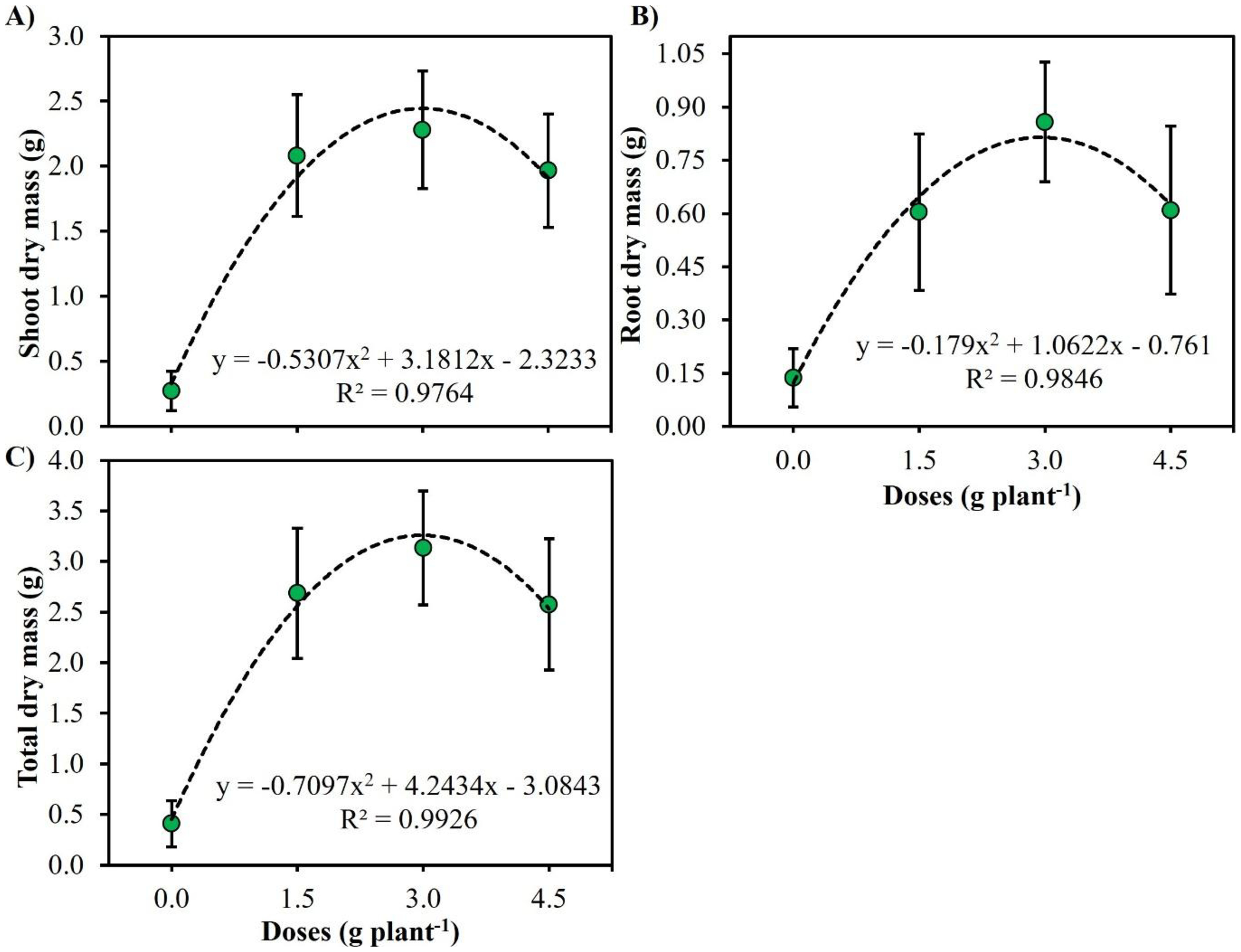
In relation to the variables SDM, RDM, and TDM, a significant increase was observed toward higher Osmocote doses on the biomass of J. copaia seedlings. All variables analyzed adjusted to the polynomial regression model. As observed, at the dose of 3.0 g plant−1, SDM, RDM, and TDM presented mean values of 2.28 ± 0.47, 0.86 ± 0.17, and 3.14 ± 0.54 g plant−1 with R2 = 0.98; 0.98; and 0.99, respectively (Figures 5A, 5B, and 5C).
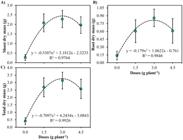
Mean values of shoot dry mass (A), root dry mass (B), and total dry mass (C), obtained as a function of the Osmocote doses (0.0; 1.5; 3.0; and 4.5 g plant-1) in Jacaranda copaia seedlings at 180 days after transplanting.
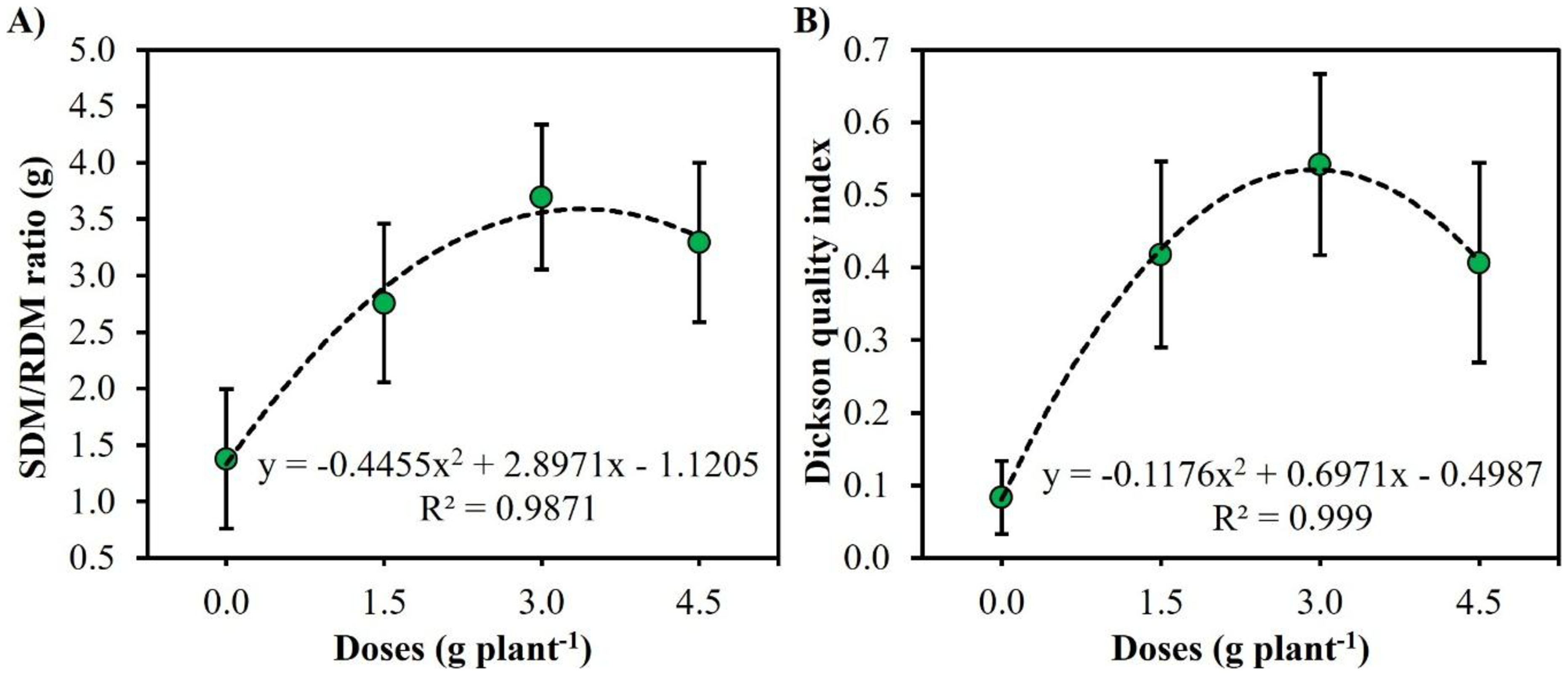
For the SDM/RDM ratio and the DQI, a higher DQI value corresponds to a higher seedling quality, as it presents a better distribution of dry mass in the plant. The SDM/RDM ratio presented a quadratic behavior with values of 3.69 ± 0.64 g at the dose of 3.0 mg plant−1 of Osmocote (Figure 6A). Regarding DQI, the 3 g plant−1 dose provided the best result with mean of 0.54 ± 0.12 (Figure 6B). The regression models explained 99% of the relationship between the variables and the Osmocote dose for SDM/RDM ratio and DQI.
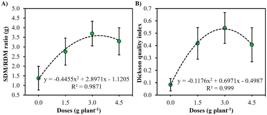
(A) Regression of the relationship between shoot dry mass and root dry mass and (B) Dickson quality index, obtained as a function of the Osmocote doses (0.0; 1.5; 3.0; and 4.5 g plant-1) in Jacaranda copaia seedlings 180 days after transplanting.
4. Discussion
The seedling rescue technique proved highly effective for J. copaia, resulting in a high survival rate. However, post-rescue care requires particular attention, as the seedlings are notably sensitive to high temperatures, intense solar radiation, and low humidity conditions.
Hence, during the post-rescue acclimatization process, it is suggested that seedlings be kept in a nursery with at least 50% of shading and irrigated four times a day. Such care can increase the survival rate to over 90% after rescue. Besides this, practices such as strict irrigation control, balanced fertilization, seedling hardening, and use of appropriate substrates favor acclimatization, reduce post-transplant stress, and accelerate initial establishment in the field. This results in higher survival rates, uniform growth, and significant economic benefits, such as reduced costs with replanting and silvicultural treatments (Milhomem et al., 2025). Such measures are essential to increase survival after rescue and ensure good performance of J. copaia seedlings.
The survival percentage 84% after seedling rescue was higher than the values reported in the literature for similar methods. Santos et al. (2021) observed an average survival rate of 26.1% in Xylopia sericea A.St.-Hil. seedlings rescued from natural regeneration, with significant variations depending on the shading and substrate used. In the study by Guardia et al. (2021), the survival rate of Syagrus romanzoffiana (Cham.) Glassman seedlings varied from 80 to 100% depending on the treatment used.
In the present study, the use of the controlled-release fertilizer (CRF) Osmocote positively influenced all morphological variables evaluated in J. copaia seedlings, with the dose of 3.0 g plant−1 being the most efficient. At 180 days, J. copaia seedlings presented a mean shoot height and stem collar diameter 113.3% and 129.9%, respectively, higher than the control treatment. Similar results were observed by Vasconcelos Flores et al. (2025) with Pinus taeda L., whose seedlings treated with CRF showed a significant increase in height, stem diameter, dry mass, and Dickson Quality Index (DQI), evidencing greater vigor and rusticity. It is noted that the present study corroborates the results of Silva et al. (2025), in which the authors, when evaluating Cordia trichotoma (Vell.) Arráb. ex Steud. seedlings, found that the CRFs Basacote (NPK 15-8-12) and Phusion (09-40-00) provided greater shoot height, root length, total dry mass, and higher DQI. This combination allowed better shoot and root development, indicating that the prolonged supply of nutrients favors the seedlings initial growth.
Similar results were reported by Oliveira et al. (2021), when applying doses of 4.1 to 8.2 g dm−3 of Osmocote to Parkia gigantocarpa Ducke seedlings, with significant increases in height and stem diameter. This reinforces the effectiveness of CRF in promoting plant growth. The morphological variables shoot height/stem collar diameter are important to determine rusticity and quality of seedlings in the field (Marinho et al., 2022). Moreover, other parameters were evaluated to ensure good quality of the seedlings produced.
The regression showed a strong association (99%) between this dose and the morphological variables analyzed. For Chagas-Junior et al. (2024) the species Trichoderma asperellum had a maximum technical efficiency between 10 and 12 g L−1 of substrate, showing an effect on the development seedlings Enterolobium contortisiliquum (Vell.) Morong. Milhomem et al. (2025) found that the application of bioregulators such as Stimulate provided a significant increase in all growth variables analyzed in Mezilaurus itauba Taub. Ex Mez seedlings at 180 days. The authors highlighted a significant difference in the DQI between the biostimulants tested, with Stimulate presenting an average value of 1.87, with the application of a dose of 0.40 mL L−1, that is, robust seedlings, adequate biomass distribution, and balanced development. Furthermore, the DQI above 0.5 reinforces the viability of using this dosage for the production of vigorous and well formed seedlings, essential characteristics for the survival and good performance of plants after planting.
Jardim and Silva (2023) show that CRF also favors the morphological and nutritional balance in cocoa seedlings Theobroma cacao L., reducing root competition and promoting sustained growth even in environments with lower soil fertility. In this context, the choice of substrate is a key factor in maximizing the vigor and uniformity of growth and quality of seedlings of tree species. According Marcelo-Bazán et al. (2025), the physical-chemical composition of the substrate directly impacts the physiological efficiency of seedlings, requiring a balance between water retention, aeration, and nutrient availability. The use of efficient substrates not only improves seedling performance but also contributes to conservation and sustainable use strategies, reducing dependence on additional inputs. Roubuste et al. (2025) reported significant improvements in the morpho-physiology of Lonchocarpus muehlbergianus Hassl. seedlings using CRF and containers with adequate volume, highlighting the increase in DQI, diameter, and dry mass of the seedlings.
The relative growth rate (RGR) showed two distinct growth peaks, at 60 and 150 days. These contrasting differences can be due to the interactions of multiple abiotic, biotic, and human factors. The first peak may be associated with favorable abiotic conditions, such as seasonal water and light availability, coinciding with initial vegetative growth. The second peak could reflect a later biotic phase of increased biomass accumulation after root system establishment, potentially enhanced by targeted human management practices like fertilization. According to Martins et al. (2022) and Cunha et al. (2024), the use of CRF allows the continuous release of nutrients, which can explain the growth fluctuations in different phenological phases of plants.
Recent studies have shown that, for different species, the ideal CRF dose varies, depending on the substrate characteristics and the nutritional requirements of each plant. In Inga laurina (Sw.) Willd., for example, Cabreira et al. (2021) observed that excessive doses do not result in proportional increases in growth and can even cause negative effects. Thus, the dose of 3.0 g plant−1 identified in this study appears to represent an optimum point of efficiency for J. copaia. Similar results were found by Holler et al. (2025), when evaluating tree species growth in permanent preservation areas with CRF, highlighting the importance of this technology for restoring environments.
Regarding seedling quality, the DQI showed values above 0.5, indicating balance between shoot and root parts, robustness, and good biomass distribution. These are essential characteristics for success in the field (Smiderle et al., 2021).
Besides the benefits provided by CRF, proper substrate selection is essential to ensure seedling quality. The use of organic compost or vermicompost in combination with vermiculite results in significant improvements in the development and quality of Caesalpinia platyloba S. Watson seedlings, evidenced by higher DQI values and better lignification (Velázquez-Roblero et al., 2025). These findings indicate that the adoption of integrated practices, which encompass both nutritional aspects and the physical properties of the substrate, is essential for the production of vigorous tree seedlings suitable for ecological restoration programs.
This study offers a novel and practical contribution by establishing a precise safe-operating window for controlled-release fertilization in Jacaranda copaia seedling production. While the main experiment identified 3.0 g/plant as the optimal dose for growth and quality, it is important to emphasize that an associated pilot trial tested higher doses of 6, 9, and 12 g/plant, revealing that doses of 6 g/plant or higher caused 100% seedling mortality. This critical finding defines not only the optimum but also the toxic threshold, providing nurseries with a clear safety limit to avoid catastrophic losses. Together with the validation of seedling rescue from natural regeneration (84% survival), the research delivers a robust, low-risk protocol for producing high-quality planting material, especially relevant for large-scale restoration programs where both efficiency and survival rates are paramount.
The conclusions are inherently limited to the specific fertilizer formulation (Osmocote® 15-09-12) and to a fast-growing pioneer species; results may not translate to other formulations or more sensitive late-successional trees. Moreover, all data were collected under nursery conditions-field validation is still required to confirm that the nursery-optimized seedlings perform better after outplanting. Nevertheless, the immediate practical implication is clear: nursery practitioners can confidently adopt the 3.0 g/plant dose while strictly avoiding doses near or above 6 g/plant, thereby maximizing growth without risking toxicity. This work transforms a standard fertilization trial into a safety-aware production guideline, directly supporting more reliable and efficient seedling supply chains for reforestation and ecological restoration.
5. Conclusion
The controlled-release fertilizer Osmocote provided good seedling survival rate (84%), in addition to the positive influence on all morphological indices studied over 180 days after transplanting. The dose of 3 g plant−1 provided better development and higher quality for J. copaia seedlings.
-
Data Availability Statement
The research data generated and analyzed in this study are not publicly available. However, they may be made available by the corresponding author upon request, provided that the use is strictly for academic purposes and in accordance with ethical principles. Data sharing is subject to compliance with institutional guidelines for the management and dissemination of research information.
References
-
CABREIRA, G.V., LELES, P.S.S., ALONSO, J.M., RESENDE, A.S., CABREIRA, W.V. and SOUSA, T.J.S., 2021. Controlled-release fertilizer and container volume to produce Inga laurina seedlings. Floresta e Ambiente, vol. 28, no. 1, e20190057. https://doi.org/10.1590/2179-8087-floram-2019-0057
» https://doi.org/10.1590/2179-8087-floram-2019-0057 -
CHAGAS-JUNIOR, A.F., DIAS, P.C., MARTINS, A.L.L., OLIVEIRA, R.S. and CHAGAS, L.F.B., 2024. Trichoderma asperellum (Samuels, Lieckf & Nirenberg) as growth promoter in Enterolobium contortisiliquum (Vell) Morong. Ciência Florestal, vol. 34, no. 2, e64187. https://doi.org/10.5902/1980509864187
» https://doi.org/10.5902/1980509864187 -
CUNHA, F.L., NIERI, E.M., ALMEIDA, R.S., DINIZ, P.C., MELO, L.A. and VENTURIN, N., 2024. Initial growing and management in Eucalyptus clones plantations using controlled release fertilizers. Floresta, vol. 54, no. 1, pp. 1-9. https://doi.org/10.5380/rf.v54i1.87153
» https://doi.org/10.5380/rf.v54i1.87153 -
DICKSON, A., LEAF, A.L. and HOSNER, J.F., 1960. Quality appraisal of white spruce and white pine seedling stock in nurseries. Forestry Chronicle, vol. 36, no. 1, pp. 10-13. https://doi.org/10.5558/tfc36010-1
» https://doi.org/10.5558/tfc36010-1 -
FERNANDES, J., 2021. Morfologia de Jacaranda copaia (Aubl.) D. Don (Bignoniaceae): uma espécie medicinal em Alta Floresta, Mato Grosso. Enciclopédia Biosfera, vol. 18, no. 37, pp. 375-387. https://doi.org/10.18677/EnciBio_2021C32
» https://doi.org/10.18677/EnciBio_2021C32 -
FREITAS, T.A.S., OLIVEIRA, M.F., SOUZA, L.S., DIAS, C.N. and QUINTELA, M.P., 2022. Qualidades de mudas de Myracrodruon urundeuva Fr. All. conduzidas sob diferentes volumes de recipientes. Ciência Florestal, vol. 32, no. 1, pp. 19-42. https://doi.org/10.5902/1980509837445
» https://doi.org/10.5902/1980509837445 -
GOMES, D.R.S., RABBANI, E.R.K. and OLIVEIRA, R.A., 2024. Propriedades mecânicas das madeiras utilizadas na construção: uma revisão sistemática de literatura. Revista Brasileira de Geografia Física, vol. 17, no. 3, pp. 1596-1619. https://doi.org/10.26848/rbgf.v17.3.p1596-1619
» https://doi.org/10.26848/rbgf.v17.3.p1596-1619 -
GUARDIA, M.C., KANASHIRO, S., TAMAKI, V., NIEVOLA, C.C., SUZUKI, R.M., COSTA, J.P., BAPTISTA, W., SHIDOMI, Y., CACHENCO, M.V. and SANTOS JUNIOR, N.A.D., 2021. Crescimento de Syagrus romanzoffiana (Cham.) Glassman após resgate e realocação em unidade de conservação urbana. Ciência Florestal, vol. 31, no. 1, pp. 290-309. https://doi.org/10.5902/1980509841654
» https://doi.org/10.5902/1980509841654 -
HOLLER, K.R., ROSSA, U.B., FARIAS, D.R. and SOBREIRA, F.M., 2025. Development of forest species in the Atlantic Forest using controlled-release fertilizer in a permanent preservation area. Floresta, vol. 55, no. 1, e93407. https://doi.org/10.5380/rf.v55i1.93407
» https://doi.org/10.5380/rf.v55i1.93407 -
JARDIM, I.N. and SILVA, H.L., 2023. Efeitos benéficos do fertilizante de liberação controlada no crescimento e nutrição de mudas de cacau. Contribuciones a Las Ciencias Sociales, vol. 16, no. 12, pp. 30988-31007. https://doi.org/10.55905/revconv.16n.12-116
» https://doi.org/10.55905/revconv.16n.12-116 -
JARDIM, I.N., MATOS, M.N., ROSÁRIO, M.P. and HAMADA, M.O.S., 2023. Osmocote® proporciona melhores mudas de Calophyllum brasilienese Cambess. Scientia Plena, vol. 19, no. 9, pp. 1-14. https://doi.org/10.14808/sci.plena.2023.090203
» https://doi.org/10.14808/sci.plena.2023.090203 -
LOHMANN, L.G., KAEHLER, M., FONSECA, L.H.M., FARIAS-SINGER, R., FIRETTI, F., SILVA-CASTRO, M.M., GOMES, B.M., FRAZÃO, A., FRANCISCO, J.N.C., THODE, V.A., ZUNTINI, A.R., MEDEIROS, M.C.M.P., KATAOKA, E.Y. and BEYER, M., 2020 [viewed 21 June 2025]. Bignoniaceae In: JARDIM BOTÂNICO DO RIO DE JANEIRO, ed. Flora e Funga do Brasil 2020. Rio de Janeiro: JBRJ. Available from: http://floradobrasil.jbrj.gov.br/reflora/floradobrasil/FB112305
» http://floradobrasil.jbrj.gov.br/reflora/floradobrasil/FB112305 -
MARCELO-BAZÁN, F.E., MANTILLA-CHÁVEZ, W., PAREDES-PAJARES, K.P., CHÁVEZ-CERCADO, D.M., BASELLY-VILLANUEVA, J.R. and ÁLVAREZ-ÁLVAREZ, P., 2025. Identification of the optimal substrate for sexual propagation of Cinchona officinalis L.: implications for conservation and sustainable use. Forest Science, vol. 71, no. 3, pp. 397. https://doi.org/10.1007/s44391-025-00018-8
» https://doi.org/10.1007/s44391-025-00018-8 -
MARINHO, D.S., FERREIRA, E., ROOS, E., COELHO, J.P.S., LUNA, E.J.T.P. and MOREIRA, A.G., 2022. Qualidade e desenvolvimento inicial de mudas de itaúba, em tubetes de diferentes volumes. Acta Biologica Brasiliensia, vol. 5, no. 2, pp. 32-48. https://doi.org/10.18554/acbiobras.v5i2.7223
» https://doi.org/10.18554/acbiobras.v5i2.7223 -
MARTINS, S.V., BRAZ, J.P., VILLA, P.M., ALVES, W.V.L., VALENTE, M.L., KRUSCHEWSKY, G.C., DIAS, A.A. and NABETA, F.H., 2022. Avaliação de nucleários como técnica de restauração florestal em Mariana, MG, Brasil. Pesquisa Florestal Brasileira, vol. 42, pp. 1-14. https://doi.org/10.4336/2022.pfb.42e202002154
» https://doi.org/10.4336/2022.pfb.42e202002154 -
MILHOMEM, C.A., DIONISIO, L.F.S., SOUZA, A.G. and SMIDERLE, O.J., 2025. Bioregulators Stimulate® and Acadian® as growth stimulants for Mezilaurus itauba TAUB. EX MEZ seedlings. Semina: Ciências Agrárias, vol. 46, no. 3, pp. 861-874. https://doi.org/10.5433/1679-0359.2025v46n3p861
» https://doi.org/10.5433/1679-0359.2025v46n3p861 -
MIRANDA-NETO, A.M., MARTINS, S.V. and SILVA, K.A., 2019. Plantlet rescue in a soil seed bank to produce forest species seedlings. Ecological Engineering, vol. 132, pp. 94-101. https://doi.org/10.1016/j.ecoleng.2019.04.002
» https://doi.org/10.1016/j.ecoleng.2019.04.002 -
MORAES, B.C., SODRÉ, G.R.C., CARDOSO, A.C.D. and DA SILVA JÚNIOR, A.R., 2022. Crescimento urbano e suas implicações para o tempo e clima da região metropolitana de Belém do Pará. Revista Brasileira de Geografia Física, vol. 15, no. 4, pp. 2042-2057. https://doi.org/10.26848/rbgf.v15.4.p2042-2057
» https://doi.org/10.26848/rbgf.v15.4.p2042-2057 -
OLIVEIRA, V.P., MENDES, R.S., MARTINS, W.B.R., SANTOS, E.A., ARAÚJO, D.G. and GAMA, M.A.P., 2021. Desenvolvimento e qualidade de mudas de Parkia gigantocarpa Ducke (Fabaceae) em função de fertilizante de liberação controlada. Scientia Plena, vol. 17, no. 9, pp. 1-10. https://doi.org/10.14808/sci.plena.2021.090201
» https://doi.org/10.14808/sci.plena.2021.090201 -
R DEVELOPMENT CORE TEAM, 2025 [viewed 21 June 2025]. R: a language and environment for statistical computing [software]. Vienna: R Foundation for Statistical Computing. Available from: https://www.r-project.org/
» https://www.r-project.org/ -
RONDON-NETO, R.M., 2023. Formação de mudas de tauari (Couratari stellata A.C. Sm.) com plântulas da regeneração natural. Journal of Biotechnology and Biodiversity, vol. 11, no. 3, pp. 117-123. https://doi.org/10.20873/jbb.uft.cemaf.v11n3.16307
» https://doi.org/10.20873/jbb.uft.cemaf.v11n3.16307 -
ROUBUSTE, R.R., SALDANHA, C.W., MISSIO, E.L., ARAUJO, M.M., GASPARIN, E. and MALDANER, J., 2025. Controlled release fertilizer and container volume improve the seedling morphophysiology of Lonchocarpus muehlbergianus HASSL. Floresta, vol. 55, no. 1, e95139. https://doi.org/10.5380/rf.v55i1.95139
» https://doi.org/10.5380/rf.v55i1.95139 -
SANTOS, G.C., SILVA, L.C.A., OLIVEIRA, P.A., VIEIRA, E.R.D., PEREIRA, I.M., OLIVEIRA, M.L.R., TITON, M. and FARNEZI, M.M.M., 2021. Estratégias para resgate de plantas de Xylopia sericea A.St.-Hil. provenientes da regeneração natural. Agrária, vol. 14, no. 4, pp. 1-6. https://doi.org/10.5039/agraria.v14i4a7028
» https://doi.org/10.5039/agraria.v14i4a7028 -
SHIMIZU, G.D., MARUBAYASHI, R.Y.P. and GONÇALVES, L.S.A., 2025. AgroR: an R package and a Shiny interface for agricultural experiment analysis. Acta Scientiarum. Agronomy, vol. 47, no. 1, pp. 1-8. https://doi.org/10.4025/actasciagron.v47i1.73889
» https://doi.org/10.4025/actasciagron.v47i1.73889 -
SILVA, T.R., MILHOMEM, C.A., SILVA, D.C.V., DIAS, F.F., SILVA, C.M., CABRAL, V.B., BARDALES-LOZANO, R.M., SCHWARTZ, G. and DIONISIO, L.F.S., 2025. Seedling quality of Cordia trichotoma under different container volumes and fertilizers. Brazilian Journal of Biology = Revista Brasileira de Biologia, vol. 85, e288394. https://doi.org/10.1590/1519-6984.288394 PMid:40105667.
» https://doi.org/10.1590/1519-6984.288394 -
SMIDERLE, O.J., SOUZA, A.G., MENEGATTI, R.D., DIAS, T.J. and MONTENEGRO, R.A., 2021. Shading and slow release fertiliser affect early growth in seedlings of Pau-marfim. Floresta e Ambiente, vol. 28, no. 1, e20200023. https://doi.org/10.1590/2179-8087-floram-2020-0023
» https://doi.org/10.1590/2179-8087-floram-2020-0023 -
VASCONCELOS FLORES, A., BORCIONI, E. and TACHEVISKI, I.M., 2025. Qualidade de mudas de Pinus taeda L. em resposta à adubação com fertilizantes de liberação controlada. Advances in Forestry Science, vol. 12, no. 1, pp. 2304-2310. https://doi.org/10.34062/2a3tze40
» https://doi.org/10.34062/2a3tze40 -
VELÁZQUEZ-ROBLERO, R.E., MARTÍNEZ-ÁLVAREZ, I.G., PRIETO-RUIZ, J.Á. and FÉLIX-HERRÁN, J.A., 2025. Crecimiento de plantas de Caesalpinia platyloba S. Watson en vivero bajo diferentes sustratos orgánicos. Ecosistemas y Recursos Agropecuarios, vol. 12, no. 1, pp. 1-13. https://doi.org/10.19136/era.a12n1.3519
» https://doi.org/10.19136/era.a12n1.3519 - WICKHAM, H., 2016. Elegant graphics for data analysis. New York: Springer.
-
ZUUR, A.F., IENO, E.N., WALKER, N.J., SAVELIEV, A.A. and SMITH, G.M., 2009. Mixed effects models and extensions in ecology with R New York: Springer. https://doi.org/10.1007/978-0-387-87458-6
» https://doi.org/10.1007/978-0-387-87458-6
Edited by
-
Editor:
Jairo Lizandro Schmitt
The research data generated and analyzed in this study are not publicly available. However, they may be made available by the corresponding author upon request, provided that the use is strictly for academic purposes and in accordance with ethical principles. Data sharing is subject to compliance with institutional guidelines for the management and dissemination of research information.