 Efficiency of stabilized nitrogen mineral fertilizers for spring wheat
Abstract
It is commonly known that, the use of nitrogen fertilizers is associated with adverse impact on the environment due to greenhouse gases (N2O, NOx) and ammonia emission and groundwater pollution with nitrates. Stabilization of nitrogen-containing fertilizers with nitrification and urease inhibitors reduces inefficient losses of nitrogen from mineral fertilizers and increases their direct consumption in the agricultural crop yields development. The paper presents the results of field trials on the effectiveness of N, NPK and NPS fertilizers (urea, ammophoska and sulfoammophos) stabilized by 3,4-dimethylpyrazole phosphate nitrification inhibitor and N-(n-butyl) thiophosphoric triamide urease inhibitor applied in spring wheat crops. Microplot field trials were carried out in 2022-23 on cultivated sod-podzolic soil of light loamy grain-size distribution within the Field Trial Station of the Russian State Agrarian University - K.A. Timiryazev Moscow Agricultural Academy. Studies proved the use of inhibitors combined with ammophoska and carbamide to obtain a 12-14% yield gain and an increase in protein picking by 10-15%. The use of nitrification and urease inhibitors reduced the adverse affect on the environment due to a higher content of mineral nitrogen in the soil during the growing season and improved consumption of fertilizer nitrogen by plants. The efficiency of NPS, NPK and carbamide nitrogen use under the influence of the nitrification inhibitor increased by 2, 10 and 18%, respectively. The use of a urease inhibitor combined with carbamide enhanced nitrogen use efficiency by 12%. The payback of fertilizers by grain yield under the influence of inhibitors increased by 2-7 kg kg-1. Laboratory tests output on the transformation intensity of mineral fertilizer nitrogen confirmed the results of field trials and showed that combined use of a nitrification inhibitor and carbamide proved to be the most effective in regard that the content of ammonium nitrogen in the soil 1, 2 and 4 is 51-125% higher compared to conventional urea. At the same time, a decrease in the accumulation of nitrate nitrogen in the soil by 53-64% is observed. Thus, the use of stabilized nitrogen-containing fertilizers contributes to a significant increase in crop yields, particularly spring soft wheat, as well as increased nitrogen fertilizer consumption and a reduction in the negative impact on the environment.
Keywords:
carbamide; nitrification inhibitor; urease inhibitor; spring wheat; yield; nitrogen fertilizers; utilization coefficient
Resumo
É sabido que o uso de fertilizantes nitrogenados está associado a impactos negativos no meio ambiente, em razão da emissão de gases de efeito estufa (N2O, NOx) e amônia, além da poluição das águas subterrâneas por nitratos. A estabilização de fertilizantes nitrogenados com inibidores de nitrificação e urease reduz as perdas ineficientes de nitrogênio dos fertilizantes minerais e aumenta seu consumo direto no desenvolvimento da produtividade agrícola. Este artigo apresenta os resultados de ensaios de campo sobre a eficácia de fertilizantes N, NPK e NPS (ureia, ammofosca e sulfoamofos), estabilizados com o inibidor de nitrificação 3,4-dimetilpirazol fosfato e o inibidor de urease N-(n-butil) tiofosfórico triamida, aplicados em culturas de trigo de primavera. Ensaios de campo em microparcelas foram conduzidos em 2022-23 em solo podzólico cultivado, com distribuição granulométrica franco-argilosa, na Estação Experimental de Campo da Universidade Estatal Agrária Russa - Academia Agrícola de Moscou K.A. Timiryazev. Os estudos comprovaram que o uso de inibidores combinados com amofóssea e ureia proporcionou ganho de produtividade de 12-14% e aumento na extração de proteína de 10-15%. O uso de inibidores de nitrificação e urease reduziu o impacto ambiental negative, devido ao maior teor de nitrogênio mineral no solo durante o ciclo de crescimento, e melhorou a absorção de nitrogênio fertilizante pelas plantas. A eficiência do uso de nitrogênio NPS, NPK e ureia sob a influência do inibidor de nitrificação aumentou em 2%, 10% e 18%, respectivamente. O uso de um inibidor de urease combinado com ureia aumentou a eficiência do uso de nitrogênio em 12%. O retorno do investimento em fertilizantes, em termos de produtividade de grãos, sob a influência dos inibidores, aumentou em 2-7 kg kg-1. Testes laboratoriais sobre a intensidade de transformação do nitrogênio do fertilizante mineral confirmaram os resultados de campo e mostraram que o uso combinado de um inibidor de nitrificação e ureia se mostrou o mais eficaz, elevando o teor de nitrogênio amoniacal nos solos 1, 2 e 4 em 51-125%, em comparação com a ureia convencional. Ao mesmo tempo, observou-se redução de 53-64% na acumulação de nitrato no solo. Assim, o uso de fertilizantes nitrogenados estabilizados contribui para aumento significativo da produtividade agrícola, particularmente do trigo de primavera, além de melhorar a eficiência de utilização do nitrogênio e reduzir o impacto ambiental negativo.
Palavras-chave:
ureia; inibidor de nitrificação; inibidor de urease; trigo de primavera; produtividade; fertilizantes nitrogenados; coeficiente de utilização
1. Introduction
International Fertilizer Association (IFA) reports a steady growth in the use of mineral fertilizers. In 2023, demand exceeded 200 million tons in terms of primary nutrients. At the same time, nitrogen fertilizers constitute more than half of the gross volume of consumed mineral fertilizers, which account for ~56% (Chaopu et al., 2022; Dobermann, 2005; Lapushkin et al., 2022).
Notwithstanding the high percentage of nitrogen fertilizer consumption, the problem of farming nitrogen balance is still relevant. The reason for insufficiently high efficiency of such fertilizers is significant nitrogen losses, largely due to the activity of soil microflora, releasing the gaseous ammonia (NH3), when the enzyme urease reacts with urea; oxidation of ammonium nitrogen to nitrate nitrogen (NH4+ → NO3-) and an increase in its mobility due to nitrification; reduction of nitrate to gaseous nitrogen compounds (NO3- → NOx↑, N2O↑, N2↑) during nitrogen decline. The aggregate inefficient losses may, this way, amount to more than half of the nitrogen applied, in turn, the efficiency of mineral fertilizers nitrogen use is, as a rule, less than 50% (Baranov, 2005; Lapushkin et al., 2023). In this regard, the problem of increasing the efficiency of mineral fertilizers, and first of all, nitrogen fertilizers, remains relevant at present (Dobermann, 2005; Grant, 2005; Malyavin et al., 2022).
This task may be resolved in various ways aimed at reducing possible inefficient losses of nutrients and adverse impacts on the environment (Joly, 1993; Shaviv, 1993).
Efficiency of mineral fertilizers may be improved only in a complex of agricultural technologies used in rotation considering specific soil and climatic conditions. First of all, it entails the determination of optimal timing and methods of applying fertilizers, as well as the combined use of fertilizers and chemical crop protection products, which allows for an additional 12-32% increase in yield (Belobusov et al., 2021; Vlasenko et al., 2004; Zaxarenko et al., 1989; Lapushkin et al., 2022; Ivanov and Derzhavin, 2008; Nemchenko and Ry’bina, 2007; Rukhovich, 2019; Sharkov and Iodko, 2009).
It is also possible to reduce mineral fertilizers nitrogen losses by developing, producing and introducing new forms of slow and controlled release fertilizers, which have a number of advantages over conventional fertilizers (Burzaco et al., 2013; Lewu et al., 2021; Maximov et al., 2022).
There are various methods for producing high-effective slow-release nitrogen fertilizers. One of the most popular methods is the use of urease inhibitors (NBPT, PPD/PPDA, hydroquinone, etc.) and nitrification inhibitors (dicyandiamide, nitrapyrin, DMPP, etc.), which allows significant improvement in the efficiency of fertilizers by reducing gaseous nitrogen losses and nitrate leaching (Akiyama et al., 2010; Yang et al., 2016; Li et al., 2017; Fan et al., 2018; Cross and Gruère, 2022; IFA, 2022). According to a number of authors, the use of fertilizers modified with nitrification inhibitors reduces nitrogen oxide emissions by 11-96% (Basten et al., 2005; Snyder et al., 2001; Wang et al., 2016a, b).
Surveys (Abalos et al., 2014; Frye, 2005; Linquist et al., 2013; Pan et al., 2016; Pasda et al., 2001) report plants’ nitrogen uptake by 11-44% when using of nitrification inhibitors (DMPP, nitrapyrin), along with a proven increase in the yield of vegetable crops from 6 to 48%, and corn grains 33-62% relative to the usual form of nitrogen fertilizer. The use of carbamide stabilized by a urease inhibitor facilitates reduction of gaseous losses of ammonia from 19-22% of total applied nitrogen to 5-6%, and provides 6-13% increase in nitrogen consumption by agricultural crops (Abalos et al., 2014; Basten et al., 2005; Linquist et al., 2013; Pan et al., 2016).
2. Materials and Methods
The effectiveness of nitrogen-containing fertilizers modified with urease and nitrification inhibitors was tested in the conditions of microplot field trials within the Field Trial Station of the Russian State Agrarian University - K.A. Timiryazev Moscow Agricultural Academy.
Spring wheat plants were grown in plots with a 1 m2 area. The experiment was replicated four times. Seeding was carried out using a selection seeder with spring soft wheat seeds of the Darya variety at a rate of 400 seeds per 1 m2. Harvesting was carried out manually when the plants reached full maturity. The research was conducted using generally accepted methods (Kobzarenko et al., 2015).
The experimental field is characterized with cultivated soddy non-deeply podzolic depthwise glutinous deeply agrogenic soil on moraine boulder loams with sand lenses. The agrochemical characteristics of the soil are presented in Table 1. The soil organic carbon content was determined photometrically by measurement of the concentration of Cr3+ ions after oxidation of the soil sample in a mixture of sulfuric acid and potassium dichromate (Russia, 2021). The degree of soil acidity was measured using a pH meter in an extract of 1 M KCl at a 1:2.5 soil-to-solution ratio (Russia, 1985a). The labile phosphorus content was determined in an extract of 0.2 M HCl by a photometric method using ammonium molybdate (Russia, 2011). The mobile potassium concentration was determined using the flame photometric method in a 0.2 M HCl extract (Russia, 2011). The nitrogen adequacy was determined based on the content of alkaline-hydrolyzable nitrogen in the soil using the Cornfield method (Russia, 1985c).
Chemical analysis of plant samples was carried out according to conventional procedures, following wet ashing in sulfuric acid (H2SO4) in the presence of a selenium (Se) catalyst. Total nitrogen and crude protein content was determined by the Kjeldahl method (Russia, 2019); phosphorus was identified by means of colorimety (Russia, 1997); for potassium flame photometry was applied (Russia, 2013); the main quality indicators were analysed using the near-infrared spectrography method (Russia, 2017).
The nutrients uptake was calculated based on the results of chemical analysis, with consideration of the mass of the main and secondary parts of the crop (Equation 1):
The efficiency of consuming the nitrogen fertilizers by agricultural crops was assessed based on the uptake-to-intake ratio of nitrogen fertilizer by the crop (Equation 2):
The economic factor was calculated using the Formula 3:
The percentage of nitrogen uptake by grain from the total nitrogen consumption was calculated using the Formula 4:
The payback of 1 kg nitrogen fertilizers by the increase in yield was calculated using the Formula 5:
The study of the ammonification and nitrification rate was carried out in a series of pilot laboratory experiments. Specifically, 20 g of soil with an added sample of fertilizer (5 mg of nitrogen) was moistened and composted in a thermostat at 25 °C. In 14, 21 and 28 days, the content of ammonium and nitrate nitrogen in the soil samples was determined by conventional methods (Russia, 1985b, 1986).
The study of the rate of nitrogen content reduction was conducted under laboratory conditions in a phytotron setup. Specifically, 200 g of soil with added fertilizer (5 mg nitrogen) was placed in 250 cm3 vessels, moistened, and composted aerobically in a thermostat at 25 °C. Three replicates were used in the experiment. In 14 days of the nitrogen nitrification, 3 cm3 of 2% glucose solution were added to the vessels to ensure optimal denitrification conditions. The vessels were sealed with rubber stoppers simultaneously adding 5 cm3 of acetylene (C2H2) to prevent N2O reduction. The concentration of N2O was determined by gas chromatography on day 2, 5, 7, 14 and 21.
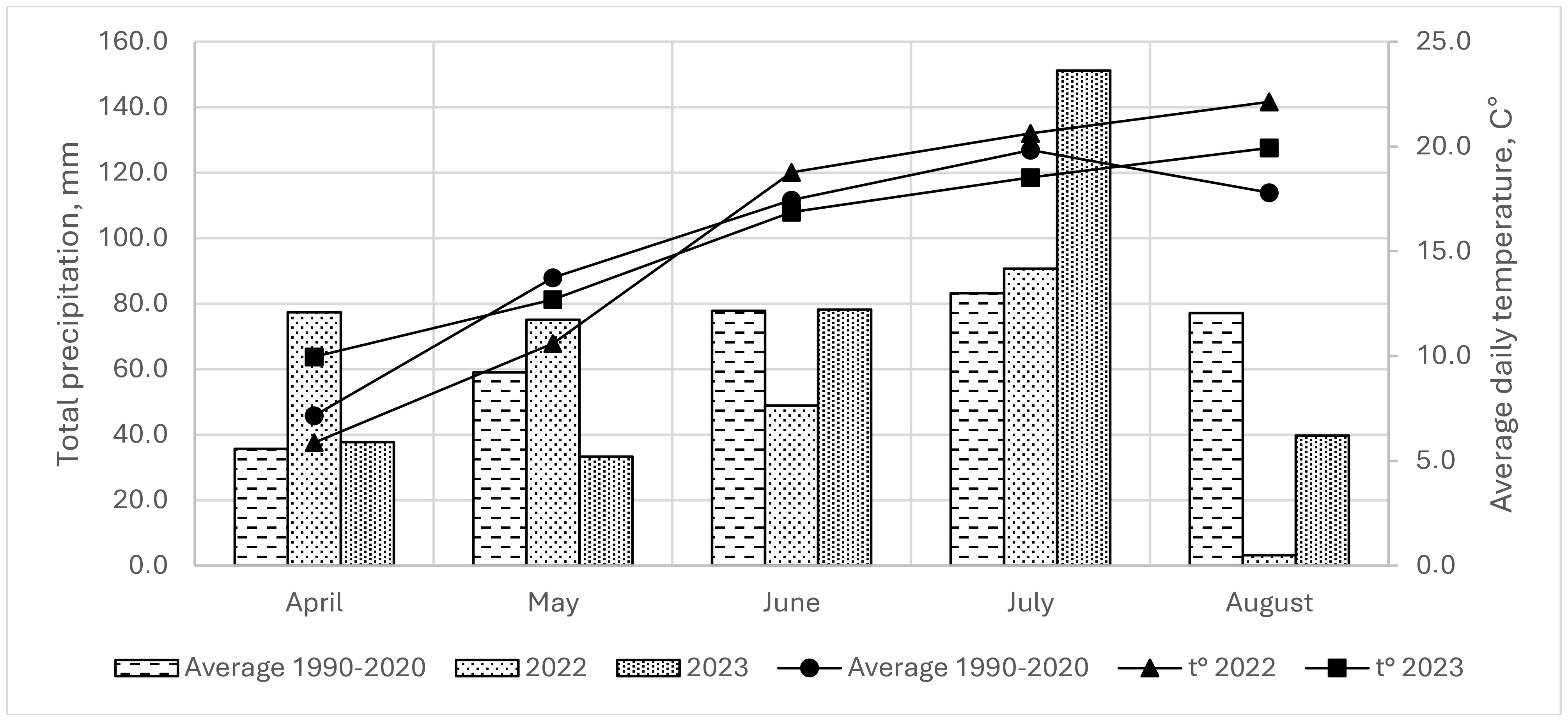
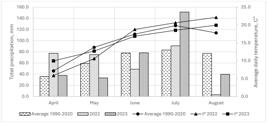
The studies were conducted during 2022-23. Weather conditions during the experiments were slightly different from the multidecadal annual mean (Figure 1). The strongest differences were observed in 2022. Thus, in May 2022, the average monthly temperature was 3.2 °C lower than the multidecadal annual mean, which means 23% lower. Also in June 2022, during intensive plant growth, a significant moisture deficit was observed, the deviation from the multidecadal annual mean comprised 37%. All the above, apparently, had a significant impact on crop development.
The experimental design included 8 variants. 1. PK-ground (control); 2. NPK (ammophoska 15:15:15); 3. NPK (ammophoska 15:15:15, modified with a nitrification inhibitor); 4. K+NPS (sulfoammophos 20:20:0); 5. K+NPS (sulfoammophos 20:20:0, modified with a nitrification inhibitor); 6. PK+urea; 7. PK+urea modified with a urease inhibitor; 8. PK+urea modified with a nitrification inhibitor. All experimental variants, except for the control, were aligned in terms of the amount of nutrients applied. The nitrogen dose in 2022/23 comprised 60 and 90 kg/ha, respectively.
Variant No. 7 applied the urease inhibitor N-(n-butyl) thiophosphoric triamide (NBPT); in variant No. 8, the nitrification inhibitor 3,4-dimethylpyrazole phosphate (DMPP) was used. The volume of inhibitors was determined by the recommendations (European Union, 2003) and was 3 and 16 mg/g of applied amino nitrogen, respectively. Fertilizers were treated with inhibitors immediately before put into the soil.
The variety of soft spring wheat (Triticum aestivum L.) “Lyubava” was chosen as the experimental crop. The variety was registered in 2012, with region 3 of approval, its originator being FSBSI “FRC Nemchinovka”.
The crop was harvested during middle dough stage and brought to standard humidity and 100% purity.
Statistical processing of the experimental results was carried out using the one-way analysis of variance method using MS Excel.
3. Results and Discussion
3.1. Dynamics of nitrogen consumption by plants
Plant samples were selected at the core stages of plant development in order to duly consider the rates of biomass accumulation and the rate of nutrient absorption (Table 2). When considering the dynamics of dry mass accumulation of vegetative plants, it is necessary to note that the effect of the studied fertilizers is at times ambiguous. Thus, during the tillering period, this indicator in plants grown with the use of conventional ammonium-containing fertilizers (NPK and NPS) was 7-19% higher, compared with similar nitrification inhibitor-modified fertilizers. However, the combined use of carbamide and inhibitors contributed to a more intensive formation of dry mass of plants, apparently due to a decrease in gaseous losses of ammonia.
Effect of coated fertilizers on vegetative growth characteristics and nutrients uptake by spring wheat (аverage for 2022-2023).
Starting from the shoot stage, NPK fertilizer and carbamide modified with inhibitors had a more pronounced positive effect on plant biomass generation. The plant mass in these variants exceeded that of comparison variants (without inhibitors) by 20% average. The use of a nitrification inhibitor together with sulfoammophos asserted no significant effect on the accumulation of dry mass by plants.
The content and consumption of nitrogen by plants is consistent with the results of plant biomass counting. The closest relationship was observed between the dry mass of plants and nitrogen consumption (r = 0.83 in the tillering phase and r = 0.93 in the shoot phase). In the tillering phase, the supply of nitrogen to plants with inhibitors was lower compared to the variants without inhibitors, which can be explained by the greater availability of nitrogen from conventional fertilizers.
More pronounced positive dynamics in nitrogen consumption with the use of inhibitors was observed at later stages of plant development. The use of nitrogen-containing fertilizers modified with NBPT and DMPP contributed to an increase in the supply of nitrogen to plants and, as a consequence, to an increase in its consumption at stages VI-VII of organogenesis. Thus, the use of NPK fertilizer together with a nitrification inhibitor increased nitrogen consumption by plants at the shoot stage by 35% and in variants with carbamide by 7 and 21%, respectively, when using a urease and nitrification inhibitors. This resulted in increased accumulation of wet, dry, and wet biomass by spring wheat plants, which subsequently contributed to an increase in grain yield.
A close correlation was observed at the shoot stage between nitrogen content and yield (r=0.72), as well as between nitrogen consumption and yield (r=0.89). The photometric diagnostics method was characterized by a less pronounced relationship with the yield (r=0.63).
3.2. Dynamics of nitrogen compounds transformation in soil
For the purposes of evaluation the nitrogen supply of plants and the characteristics of the transformation of the studied fertilizers in 2023, soil samples were taken from the 0-20, 20-40 and 40-60 cm soil layers at the paniculation stage, in order to determine the content of mineral forms of nitrogen (Table 3).
The results of soil diagnostics show that the closest correlation was observed between the yield and the content of mineral nitrogen in the 0-20 cm layer (r = 0.75-0.88). At the same time, it is quite obvious, that the use of nitrification inhibitors and urease reduced the loss of fertilizer nitrogen, as evidenced by the higher content of mineral nitrogen in the soil of the corresponding experimental variants. Notable, that the use of a nitrification inhibitor together with NPS fertilizer had the least effect on the content of mineral nitrogen in the soil, and, on the contrary, the highest content of mineral, mainly ammonium, nitrogen was noted in the variants with modified carbamide.
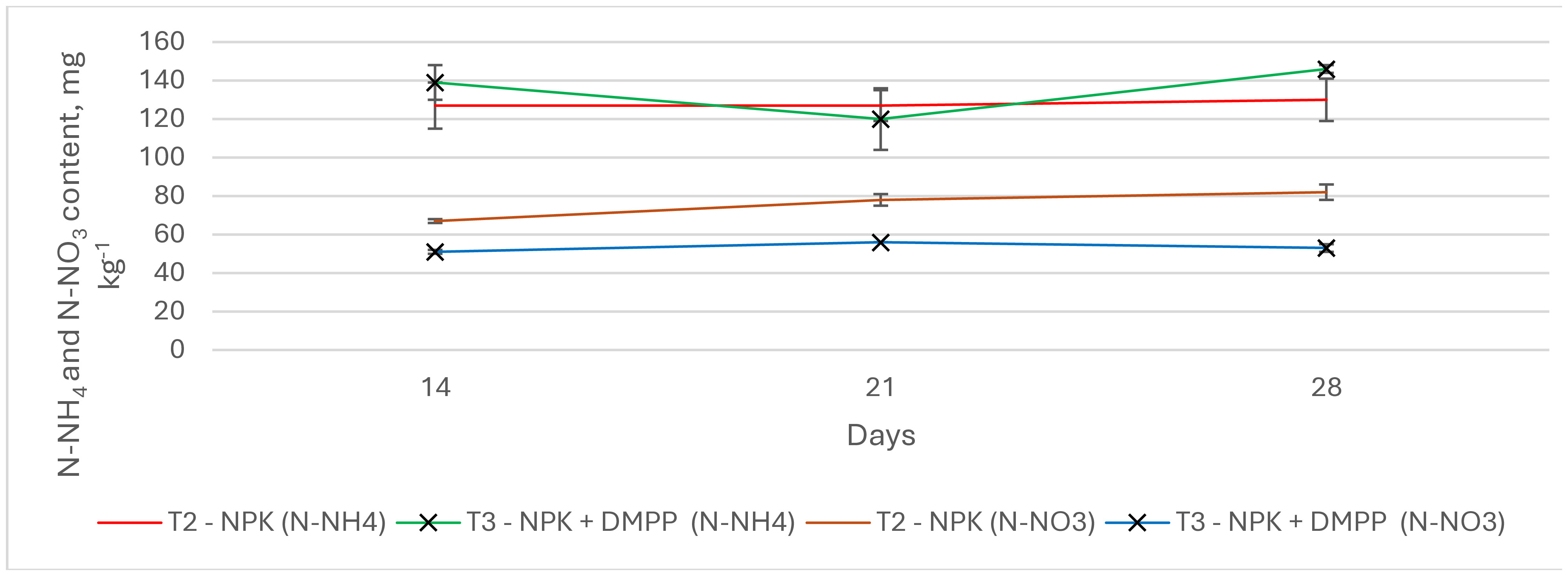
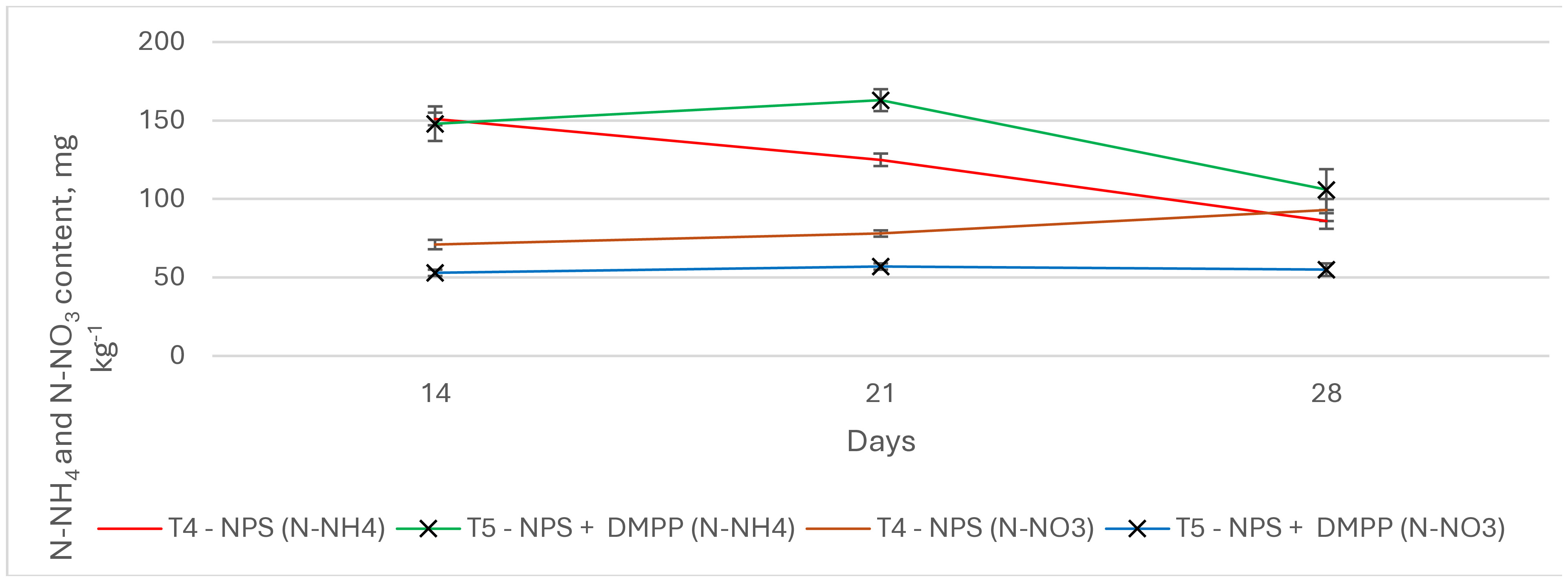
The dynamics of in-soil fertilizers nitrogen transformation was studied in more detail in a laboratory experiment (Figures 2 to 5). As the studies showed, the use of a nitrification inhibitor contributed to a significant slowdown in the oxidation of ammonium and amino nitrogen in the soil. During the entire observation period, from 14 to 28 days, the content of nitrate nitrogen in the variants with the conventional fertilizers containing ammonium nitrogen (NPK and NPS) was significantly higher. Thus, it was found that the use of modified fertilizers resulted in a more active reduction in nitrogen losses, which ensured more active nitrogen utilization by spring wheat plants.
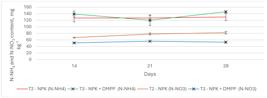
Ammonium and nitrate content in soil at different days after applying of NPK-fertilizer (Error bars represent±standard error of the mean (n=3)).
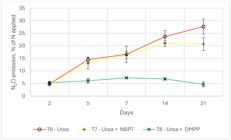
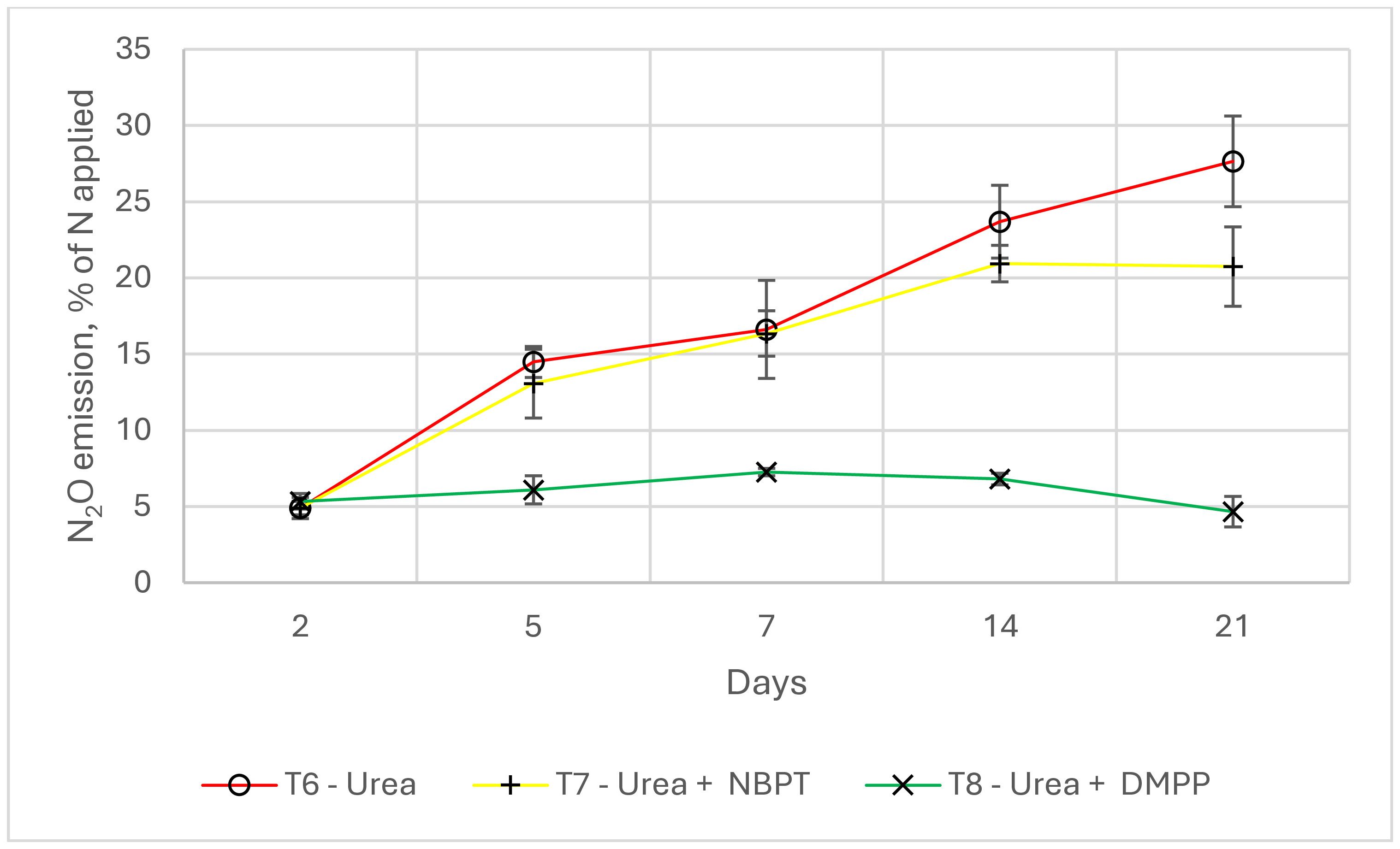
N2O emissions аt different days after applying of urea (Error bars represent±standard error of the mean (n=3)).
Once NPK fertilizer was applied together with a nitrification inhibitor, the nitrate content in the soil decreased by 31%, 39% and 55% on the 14th, 21st and 28th days, respectively (Figure 2).
The same dynamics were observed when NPS fertilizer with an inhibitor was applied to the soil; the reduction comprised 34%, 37%, and 69%, respectively (Figure 3). At the same time, in the variants with a nitrification inhibitor, the ammonium nitrogen content in the soil was 9-30% higher.
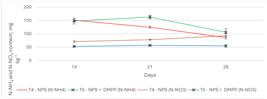
Ammonium and nitrate content in soil at different days after applying of NPS-fertilizer (Error bars represent±standard error of the mean (n=3)).
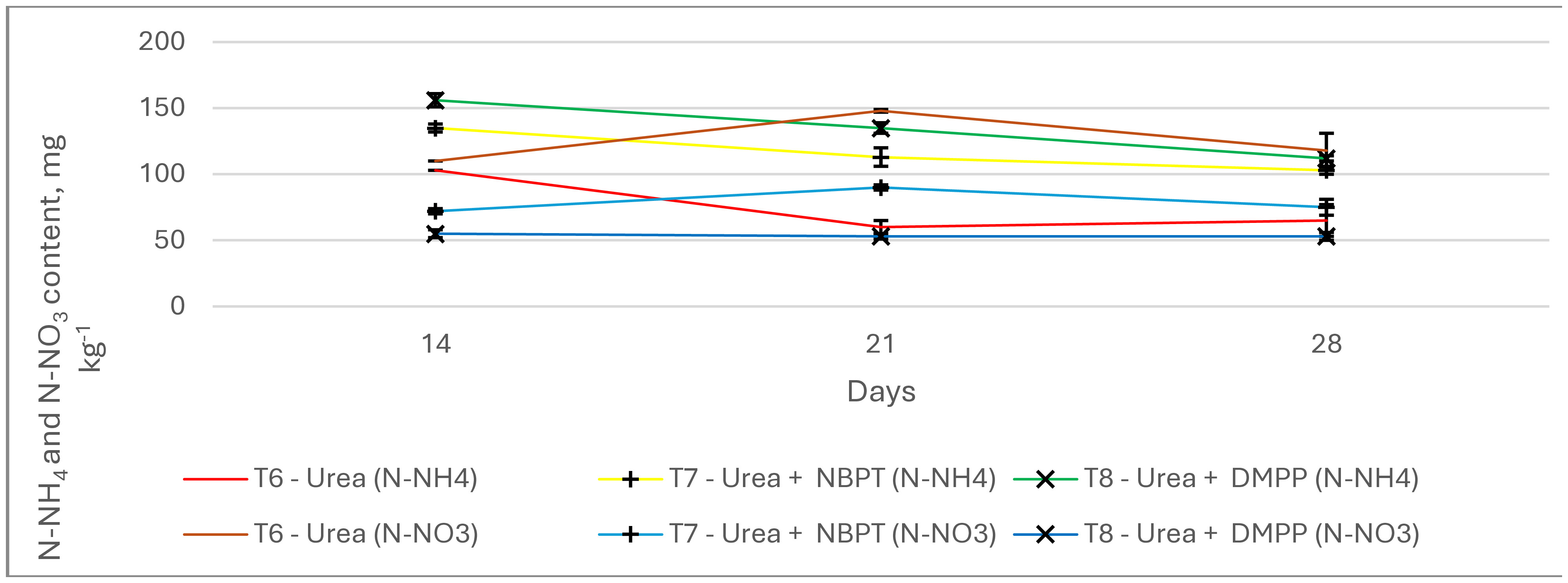
The inhibitors had the strongest effect on the transformation of urea nitrogen (Figure 4). The use of a urease inhibitor (NBPT) gave 53-64% reduction of the nitrate nitrogen accumulation in the soil by, and the use of a nitrification inhibitor (DMPP) reduction value comprised 100-179%. At the same time, the urease inhibitor contributed to an increase in the content of ammonium nitrogen in the soil by 31-88%, and the nitrification inhibitor increased it by 51-125%.
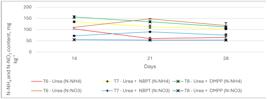
Ammonium and nitrate content in soil at different days after applying of urea (Error bars represent±standard error of the mean (n=3)).
The data obtained indicate a significant effect of these preparations on the processes of ammonification and nitrification in the soil over a long period of time, which helps to preserve nitrogen available to plants until the period of its maximum absorption.
The study of the N2O emission intensity showed that the use of NBPT and DMPP contributed to the reduction of gaseous losses of urea nitrogen. However, it should be noted that a significant reduction in N2O emission with the use of a urease inhibitor was observed only two weeks after the start of the experiment, when nitrogen losses reached more than 20% of the applied volume. Whereas the use of a nitrification inhibitor almost completely blocked the release of N2O and nitrogen losses during the experiment were only 5-7% relative to the applied volume of nitrogen (Figure 5).
Thus, it is safe to say that the use of nitrification and urease inhibitors not only contributes to the preservation of ammonium nitrogen in the soil for a longer period of time, increasing the consumption of nitrogen by plants, but also significantly reduces the amount of gaseous nitrogen losses due to the nitrogen decline process.
3.3. Grain yield and quality of spring wheat with fertilizers containing urease and nitrification inhibitors
Spring wheat grain yield varied significantly from year to year during the study, driven by higher soil fertility in the experimental plot and more favorable weather conditions in 2023 (Table 4). Biometric parameters showed that grain yield was largely dependent on the number of grains per spike (r = 0.91) and to a lesser extent on the 1,000-kernel weight (r = 0.52-0.86).
Effect of Stabilized Fertilizers on Vegetative Growth and Grain Yield Characteristics of Spring Wheat in the 2022/2023 Seasons.
The nitrification and urease inhibitors used with different forms of nitrogen-containing fertilizers demonstrated different efficiency. For instance, combined use with carbamide contributed to an increase in plant biomass by 11%; with NPK fertilizer the value reached 7%, and 1% with NPS fertilizer. At the same time, the ratio of the primary and by-products changed in favor of the formation of the cash crop. The number of grains in the wheat head increased under the influence of the use of inhibitors with carbamide by 14-17%; together with NPK fertilizer by 5% and with NPS fertilizer by 3%.
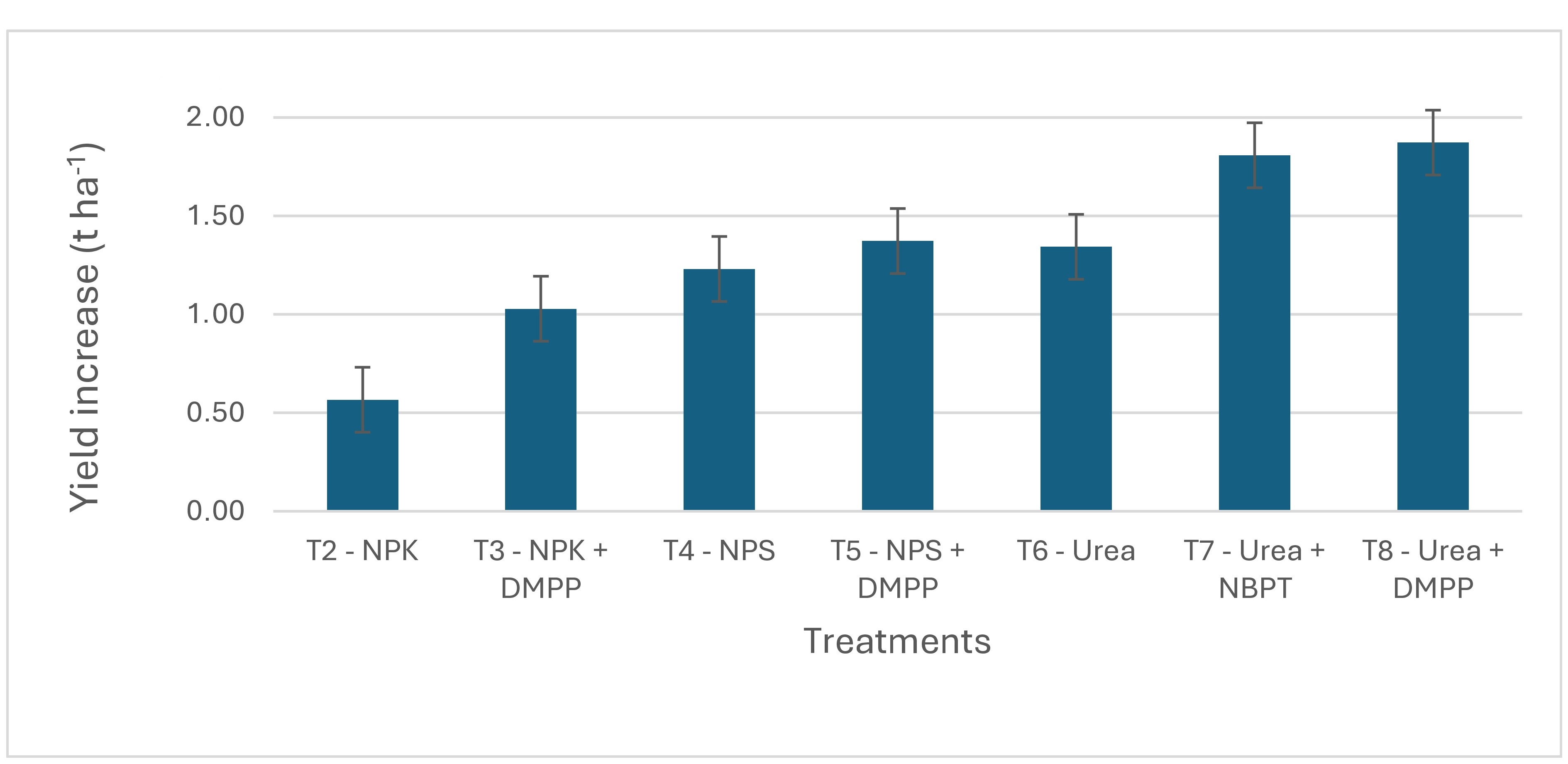
Research results revealed that, on average, over two years, the use of a nitrification inhibitor in combination with NPS fertilizer (20:20:0) resulted in a 4% increase in grain yield. NPK fertilizer (15:15:15) treated with a nitrification inhibitor increased yield by 14%. The use of urease and nitrification inhibitors, along with urea, increased grain yield by 12% and 13%, respectively (Figure 6).
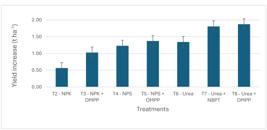
Grain yield increase from N-treatments over 0 N-treatment (Error bars represent LSD (P=0.05)).
The use of nitrogen-containing fertilizers contributed to an increase in grain protein content by 1.29-2.12% relative to the ground (Table 5). The use of nitrification and urease inhibitors, due to an increase in yield and respective “biological dilution”, as a rule, reduced the content of nitrogenous substances in grain, mainly due to an increase in the fiber content by 0.21-0.34%. The use of inhibitors contributed to an increase in the fat content by 0.13-0.29% and ash by 0.07-0.19%.
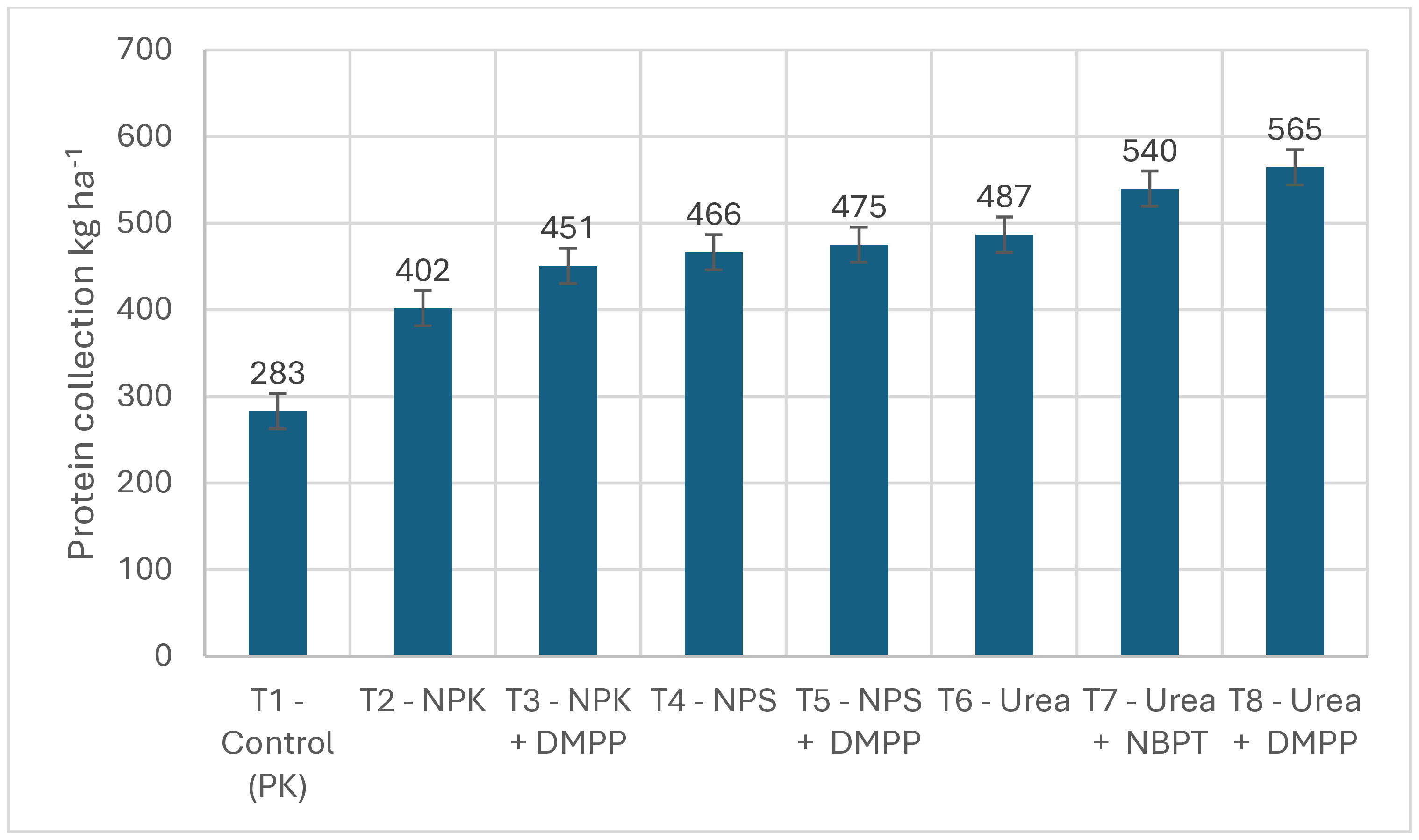
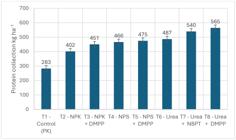
Regardless that the protein content is not interrelated with the form of fertilizers used the gross protein yield from the grain harvest increased by 10-15% with the application of modified NPK fertilizer and carbamide due to the yield gain (Figure 7).
3.4. Efficiency of mineral fertilizers modified with urease and nitrification inhibitors
Calculation of the agronomic and agrochemical efficiency fertilizers’ indicators showed that the use of inhibitors contributed to the increased consumption of all nutrients by plants. On average, nitrogen uptake increased by 8%, phosphorus by 11% and potassium by 12% (Table 6).
The share of grain in the total above-ground mass of plants reached maximum using urea 46.4-47.1%. Alongside, the coefficient of economic efficiency was higher when using fertilizers modified with inhibitors (Table 7).
Application of urease and nitrification inhibitors contributed to a decrease in the specific nitrogen uptake by 0.18-1.49 kg t-1. At the same time, the average nutrients uptake (N-26.2; P-4.8; K-15.1 kg t-1) was somewhat different from the literature data provided for spring wheat grown in the non-chernozem zone (N-31.5; P -4.6; K-17.5 kg t-1), which can be explained by a high content of labile phosphorus in the soil (Belobusov et al., 2021; Lapushkin and Nesterenko, 2019; Lapushkin et al., 2022).
The percentage of nitrogen uptake with the cash crop constitutes 74%, 79% and 80% of the total uptake, respectively, when using NPK, NPS and carbamide. There is also a direct connection between this indicator and the economic factor, and it can be said that there is a favorable effect of inhibitors on the efficiency of nitrogen fertilizers. The combined use of fertilizers and inhibitors elicits the increase of the nitrogen uptake percentage by 1-3% with grain.
Nutritive efficiency is an important fertilizer performance indicator. It is a fair assumption to say that the use of a nitrification inhibitor contributed to an increase in the efficiency of nitrogen use by plants by 10%, 2% and 18%, when applying NPK, NPS and urea, respectively. Carbamide combined with a urease inhibitor increased the nitrogen utilization rate by 12%.
The payback of fertilizers by grain through exposure to inhibitors increased by 2-7 kg kg-1, which also indicates a significant increase in the efficiency of the fertilizers used.
4. Conclusion
In this way, the studies conducted showed that the use of nitrification inhibitors and urease contribute to an increase in the supply mineral nitrogen to the soil, the preservation of ammonium nitrogen and the reduction of gaseous losses due to nitrogen decline. All this supports an increase in the nitrogen content in the above-ground organs of plants during the growing season.
Modified NPK fertilizer and carbamide proved to be most effective. The use of inhibitors together with these fertilizers promotes 12-14% additional increase in yield.
The use of urease and nitrification inhibitors facilitated a decrease in the specific nitrogen uptake by 0.18-1.49 kg t-1, and the aggregate nitrogen uptake percentage increased by 1-3% with grain.
The efficiency of mineral fertilizers nitrogen use under the influence of a nitrification inhibitor increased by 2%, 10% and 18%, respectively, when applying NPS, NPK and carbamide. The use of a urease inhibitor together with carbamide increased nitrogen use efficiency by 12%.
The payback of fertilizers by grain yield under the influence of inhibitors increased by 2-7 kg kg-1.
Acknowledgements
This work was funded by the special project of University development “Strategic academic leadership program ‘Priority 2030’”.
Data Availability Statement
Data available.
References
-
ABALOS, D., JEFFERY, S., SANZ-COBENA, A., GUARDIA, G. and VALLEJO, A., 2014. Meta-analysis of the effect of urease and nitrification inhibitors on crop productivity and nitrogen use efficiency. Agriculture, Ecosystems & Environment, vol. 189, pp. 136-144. https://doi.org/10.1016/j.agee.2014.03.036
» https://doi.org/10.1016/j.agee.2014.03.036 -
AKIYAMA, H., YAN, X.Y. and YAGI, K., 2010. Evaluation of effectiveness of enhanced-efficiency fertilizers as mitigation options for N2O and NO emissions from agricultural soils: meta-analysis. Global Change Biology, vol. 16, no. 6, pp. 1837-1846. https://doi.org/10.1111/j.1365-2486.2009.02031.x
» https://doi.org/10.1111/j.1365-2486.2009.02031.x - BARANOV, V.Y., 2005. Isotopes: properties, preparation, application. Moscow: FIZMATLIT.
- BASTEN, M., BRYNILDSEN, P. and BELZEN, R., 2005. Stabilized urea for enhanced nitrogen use efficiency. In: IFA International Workshop on Enhanced-Efficiency Fertilizers, 2005, Frankfurt. Paris: International Fertilizer Industry Association.
-
BELOBUSOV, A.S., LAPUSHKIN, V.M. and VERNICHENKO, I.V., 2021. Influence of foliar top-dressing of spring wheat by zinc sulphate on ab- sorption of different forms of nitrogen at different supply of soil by available phosphorous. Agrochemical Herald, vol. 6, pp. 29-33. https://doi.org/10.24412/1029-2551-2021-6-006
» https://doi.org/10.24412/1029-2551-2021-6-006 -
BURZACO, J.P., VYN, T.J. and SMITH, D.R., 2013. Nitrous oxide emissions in midwest us maize production vary widely with band-injected n fertilizer rates, timing and nitrapyrin presence. Environmental Research Letters, vol. 3, no. 3, pp. 035031. https://doi.org/10.1088/1748-9326/8/3/035031
» https://doi.org/10.1088/1748-9326/8/3/035031 -
CHAOPU, T., XIAOYUAN, Y., LONGLONG, X. and JINGWEN, H., 2022. Improving nitrogen safety in china: nitrogen flows, pollution and control. Frontiers of Agricultural Science and Engineering, vol. 9, no. 3, pp. 465-474. https://doi.org/10.15302/J-FASE-2022454
» https://doi.org/10.15302/J-FASE-2022454 - CROSS, L. and GRUÈRE, A., 2022. World outlook for fertilizer demand, nitrogen, phosphates and potash from 2022 to 2023. In: Proceedings of the Public Summary Short-Term Fertilizer Outlook 2021-2022, 2023, Washington, D.C., USA. Paris: International Fertilizer Association, pp. 1-13.
- DOBERMANN, A., 2005. Nitrogen use efficiency: state of the art. In: IFA International Workshop on Enhanced-Efficiency Fertilizers, 2005, Frankfurt. Paris: International Fertilizer Industry Association.
- EUROPEAN UNION, 2003. Regulation (EC) No. 2003/2003 of the European Parliament and of the Council relating to fertilizers. Official Journal, 21 nov.
-
FAN, C., LI, B. and XIONG, Z., 2018. Nitrification inhibitors mitigated reactive gaseous nitrogen intensity in intensive vegetable soils from China. Science of the Total Environment, vol. 612, pp. 480-489. https://doi.org/10.1016/j.scitotenv.2017.08.159
» https://doi.org/10.1016/j.scitotenv.2017.08.159 - FRYE, W.W., 2005. Nitrification inhibition for nitrogen efficiency and environment protection. In: IFA International Workshop on Enhanced-Efficiency Fertilizers, 2005, Frankfurt. Paris: International Fertilizer Industry Association.
- GRANT, C., 2005. Policy aspects related to the use of enhanced-efficiency fertilizers: viewpoint of the scientific community. In: IFA International Workshop on Enhanced-Efficiency Fertilizers, 2005, Frankfurt. Paris: International Fertilizer Industry Association.
- INTERNATIONAL FERTILIZER ASSOCIATION – IFA. Market Intelligence Service, 2022, World outlook for fertilizer demand, nitrogen, phosphates and potash from 2021 to 2022 Paris, pp. 1-6.
- IVANOV, A.L. and DERZHAVIN, L.M., 2008. Methodological guidelines for designing the use of fertilizers in adaptive landscape farming technologies. Moscow: Tipografiya Rossel`xozakademii.
- JOLY, C., 1993. Mineral fertilizers: plant nutrient content, formulation and efficiency. In: R. DUDAL and R.N. ROY, eds. Integrated plant nutrition systems. Rome: Food and Agricultural Organization of the United Nations. FAO Fertilizer and Plant Nutrition Bulletin, no. 12.
- KOBZARENKO, V.I., VOLOBUEVA, V.F., SEREGINA, I.I. and ROMODINA, L.V., 2015. Agrochemical research methods. Moscow: Publishing House of RGAU-MSHA, 308 p.
- LAPUSHKIN, V.M. and NESTERENKO, V.A., 2019. The formation of yield and grain quality of spring wheat depending on doses of nitrogen fertilizers and supply of soil phosphorus. Plodorodie, vol. 3(108), pp. 19-21.
- LAPUSHKIN, V.M., MURAV’EVA, O.A., LAPUSHKINA, A.A. and VOLKOVA, M.A., 2022. Influence of the supply of soil with mobile phosphorus on the efficiency of nitrogen fertilizers in growing spring wheat. Plodorodie, vol. 3(126), pp. 6-12.
- LAPUSHKIN, V.M., VOLKOVA, M.A. and LAPUSHKINA, A.A., 2023. Use of nitrogen encapsulated urea by spring wheat. Plodorodie, vol. 6(135), pp. 15-19.
- LEWU, F.B., VOLOVA, T., SABU, T. and RAKHIMOL, K.R., 2021. Controlled release fertilizers for sustainable agriculture. London: Academic Press.
-
LI, Q., CUI, X., LIU, X., ROELCKE, M., PASDA, G., ZERULLA, W., WISSEMEIER, A.H., CHEN, X., GOULDING, K. and ZHANG, F., 2017. A new urease-inhibiting formulation decreases ammonia volatilization and improves maize nitrogen utilization in North China Plain. Scientific Reports, vol. 7, no. 1, pp. 43853. https://doi.org/10.1038/srep43853 PMid:28272451.
» https://doi.org/10.1038/srep43853 -
LINQUIST, B.A., LIU, L.J., VAN KESSEL, C. and VAN GROENIGEN, K., 2013. Enhanced efficiency nitrogen fertilizers for rice systems: meta-analysis of yield and nitrogen uptake. Field Crops Research, vol. 154, pp. 246-254. https://doi.org/10.1016/j.fcr.2013.08.014
» https://doi.org/10.1016/j.fcr.2013.08.014 - MALYAVIN, A.S., MINOS`YANCZ, S.V., AKSENCHIK, K.V. and LAPUSHKIN, V.M., 2022. Production of mineral fertilizers. encyclopedia of technologies 2.0: chemical complex. Moscow: NII CEPP.
- MAXIMOV, P.N., RUDMIN, M.A. and DAULETOVA, A.B., 2022. Glauconite-urea nanocomposites as polyfunctional and environment-friendly fertilizers. In: Proceedings of X International Siberian Early Career Geoscientists Conference, 2022, Siberia. Novosibirsk: Novosibirsk State University, pp. 175-176.
- NEMCHENKO, V.V. and RY’BINA, L.D., 2007. Efficiency of regular application of herbicides and nitrogen fertilizers in growing spring wheat. Agroximiya, vol. 3, pp. 41-46.
-
PAN, B., LAM, S.K., MOSIER, A., LUO, Y. and CHEN, D., 2016. Ammonia volatilization fromsynthetic fertilizers and its mitigation strategies: a global synthesis. Agriculture, Ecosystems & Environment, vol. 232, pp. 283-289. https://doi.org/10.1016/j.agee.2016.08.019
» https://doi.org/10.1016/j.agee.2016.08.019 -
PASDA, G., HÄHNDEL, R. and ZERULLA, W., 2001. Effect of fertilizers with the new nitrification inhibitor DMPP (3,4-dimethylpyrazole phosphate) on yield and quality of agricultural and horticultural crops. Biology and Fertility of Soils, vol. 34, no. 2, pp. 85-97. https://doi.org/10.1007/s003740100381
» https://doi.org/10.1007/s003740100381 - RUKHOVICH, O.V., 2019. The geographical network of opiates with fertilizers is the basis for the effective management of the natural resource potential of agroecosystems. In: V.G. SY’CHEV, ed. Soil fertility in Russia: status and opportunities. Moscow: Vserossijskij nauchno-issledovatel`skij institut agroximii imeni D.N. Pryanishnikova.
- RUSSIA, 1985a. GOST 26483-85: soils: preparations of salt extract and determination of its pH by CINAO method. Moscow.
- RUSSIA, 1985b. GOST 26489-85: soils: determination of exchangeable ammonium by CINAO method. Moscow.
- RUSSIA, 1985c. Methodological instructions by definition of alkali hydrolyzable nitrogen in soil by Kornfield method modified by CINAO. Moscow.
- RUSSIA, 1986. GOST 26951-86: soils: determination of nitrate byionometric method. Moscow.
- RUSSIA, 1997. GOST 26657-97: fodders, mixed fodders, mixed fodder raw materials: methods for determination of phosphorus content. Moscow.
- RUSSIA, 2011. GOST R 54650-2011: Soils. Determination of mobile phosphorus and potassium compounds by Kirsanov method modified by CINAO. Moscow.
- RUSSIA, 2013. GOST 32250-2013: feeds, mixed feeds: method for determination of potassium and sodium using flame-emission spectrometry. Moscow.
- RUSSIA, 2017. GOST ISO 12099-2017: Feed, grain and food processing: guidelines for the application of near infrared spectrometry. Moscow.
- RUSSIA, 2019. GOST 13496.4-2019: fodder, мixed fodder and raw mixed fodder: methods of nitrogen and crude protein determination. Moscow.
- RUSSIA, 2021. GOST 26213-2021: soils: methods for determining organic matter. Moscow.
- SHARKOV, I.N. and IODKO, L.N., 2009. Efficiency of mineral fertilizers with application of plant protection means. Agrochemical Herald, vol. 6, pp. 12-13.
-
SHAVIV, A., 1993. Controlled supply of fertilizers for increasing use efficiency and reducing environmental damage. In: M.A.C. FRAGOSO and M.L. VAN BEUSICHEM, eds. Optimization of plant nutrition. Dordrecht: Springer, pp. 651-656. https://doi.org/10.1007/978-94-017-2496-8_101
» https://doi.org/10.1007/978-94-017-2496-8_101 - SNYDER, C.S., BRUULSEMA, T.W. and JENSEN, T.L., 2001. Greenhouse gas emissions from cropping systems and the influence of fertilizer management: better crops Peachtree Corners: International Plant Nutrition Institute.
- VLASENKO, N.G., TEPLYAKOV, B.I. and TEPLYAKOVA, O.I., 2004. Effectiveness of agrochemicals in cultivation of spring wheat. Zashhita i Karantin Rastenij, vol. 9, pp. 47-48.
-
WANG, W., PARK, G., REEVES, S., ZAHMEL, M., HEENAN, M. and SALTER, B., 2016a. Nitrous oxide emission and fertilizer nitrogen efficiency in a tropical sugarcane cropping systemapplied with different formulations of urea. Soil Research, vol. 54, no. 5, pp. 572-584. https://doi.org/10.1071/SR15314
» https://doi.org/10.1071/SR15314 -
WANG, W.J., REEVES, S.H., SALTER, B., MOODY, P.W. and DALAL, R.C., 2016b. Effects of urea formulations, application rates and crop residue retention on N2O emissions from sugarcane fields in Australia. Agriculture, Ecosystems & Environment, vol. 216, pp. 137-146. https://doi.org/10.1016/j.agee.2015.09.035
» https://doi.org/10.1016/j.agee.2015.09.035 -
YANG, M., FANG, Y., SUN, D. and SHI, Y., 2016. Efficiency of two nitrification inhibitors (dicyandiamide and 3, 4-dimethylpyrazole phosphate) on soil nitrogen transformations and plant productivity: a meta-analysis. Scientific Reports, vol. 6, no. 1, pp. 22075. https://doi.org/10.1038/srep22075 PMid:26902689.
» https://doi.org/10.1038/srep22075 - ZAXARENKO, V.A., GRUZDEV, G.S. and VOEVODIN, A.V., 1989. Economic thresholds of harmfulness of weeds in crops of main agricultural crops (recommendations). Moscow: VO “Agropromizdat”.
Edited by
-
Editor:
Takako Matsumura Tundisi