 Efficiency of stabilized nitrogen mineral fertilizers for spring wheat
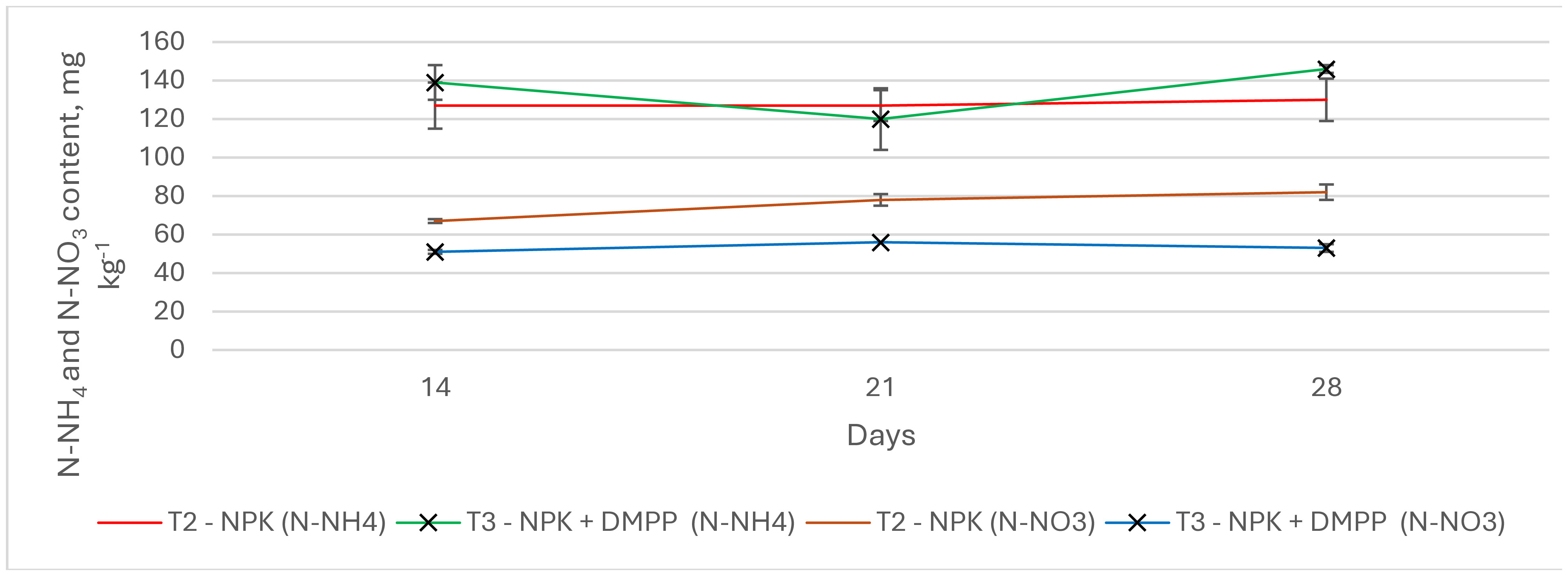
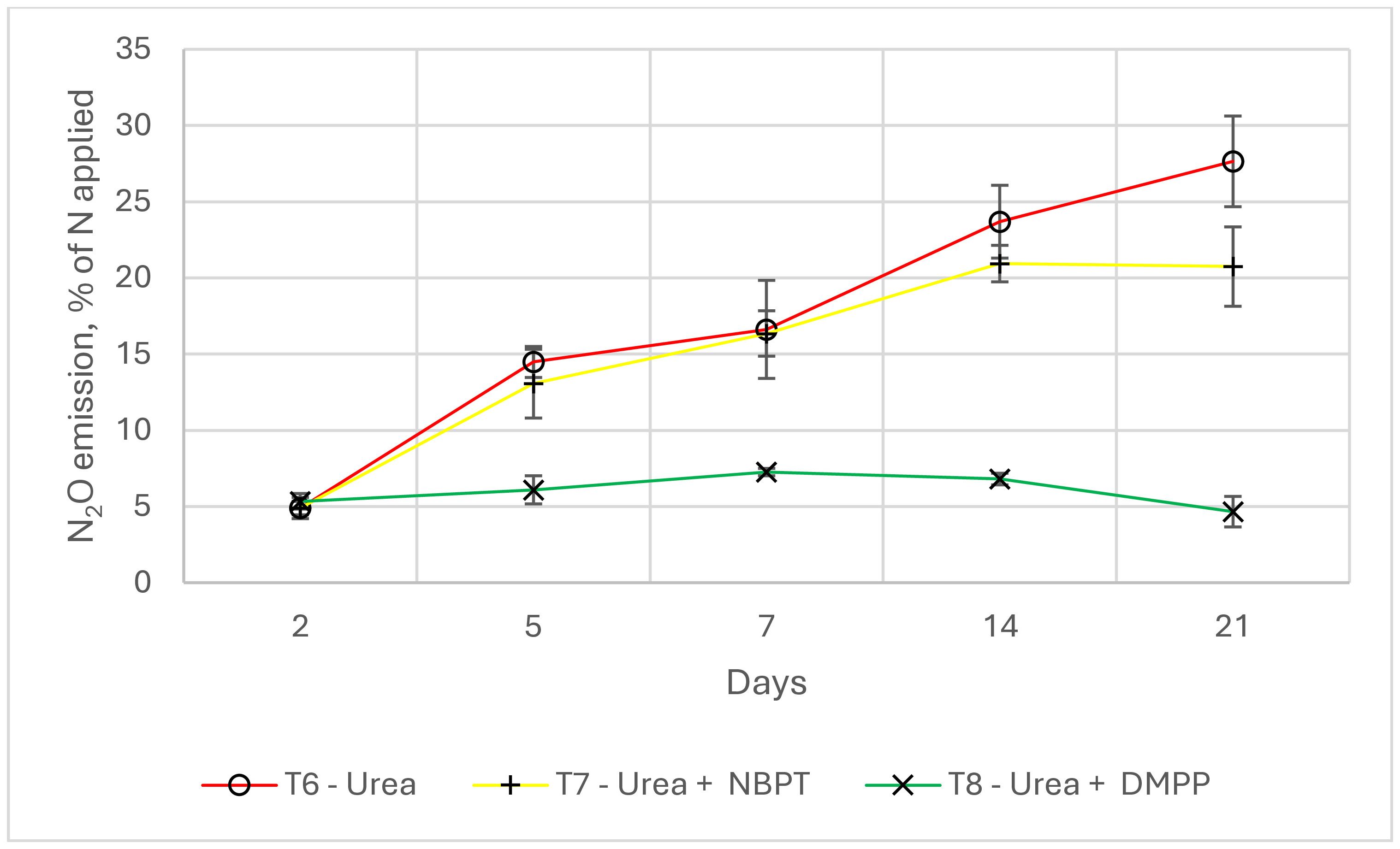
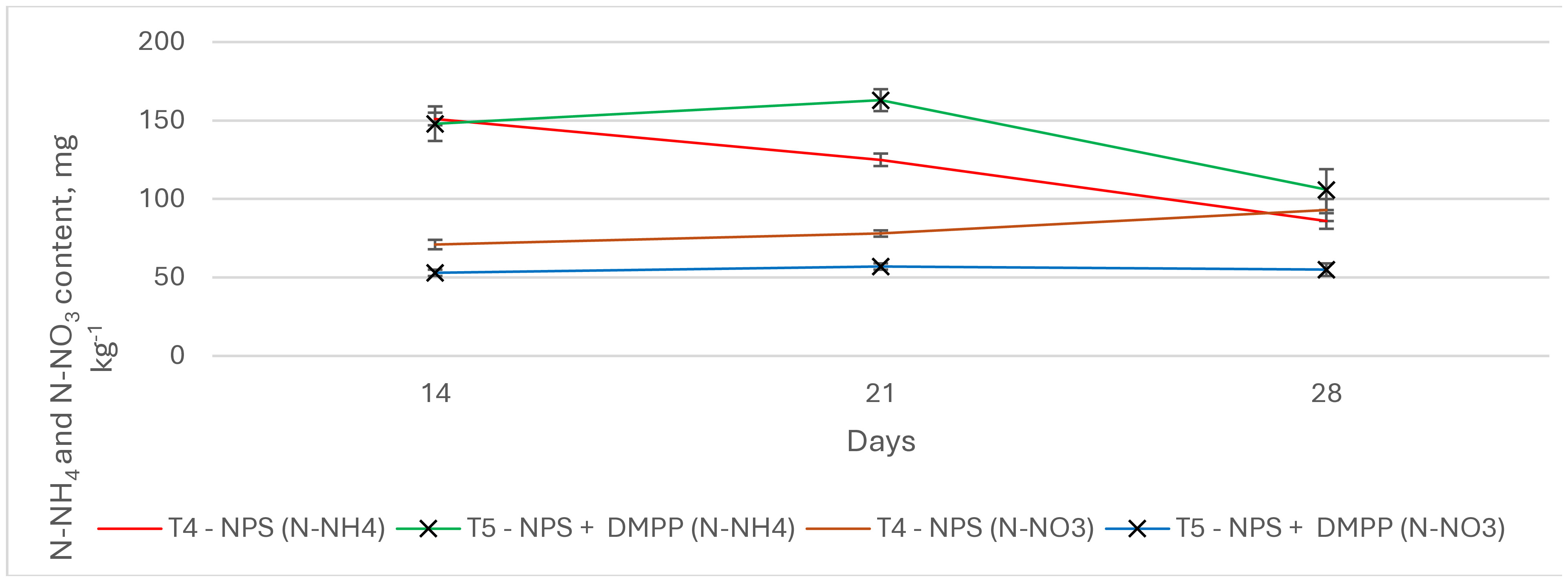
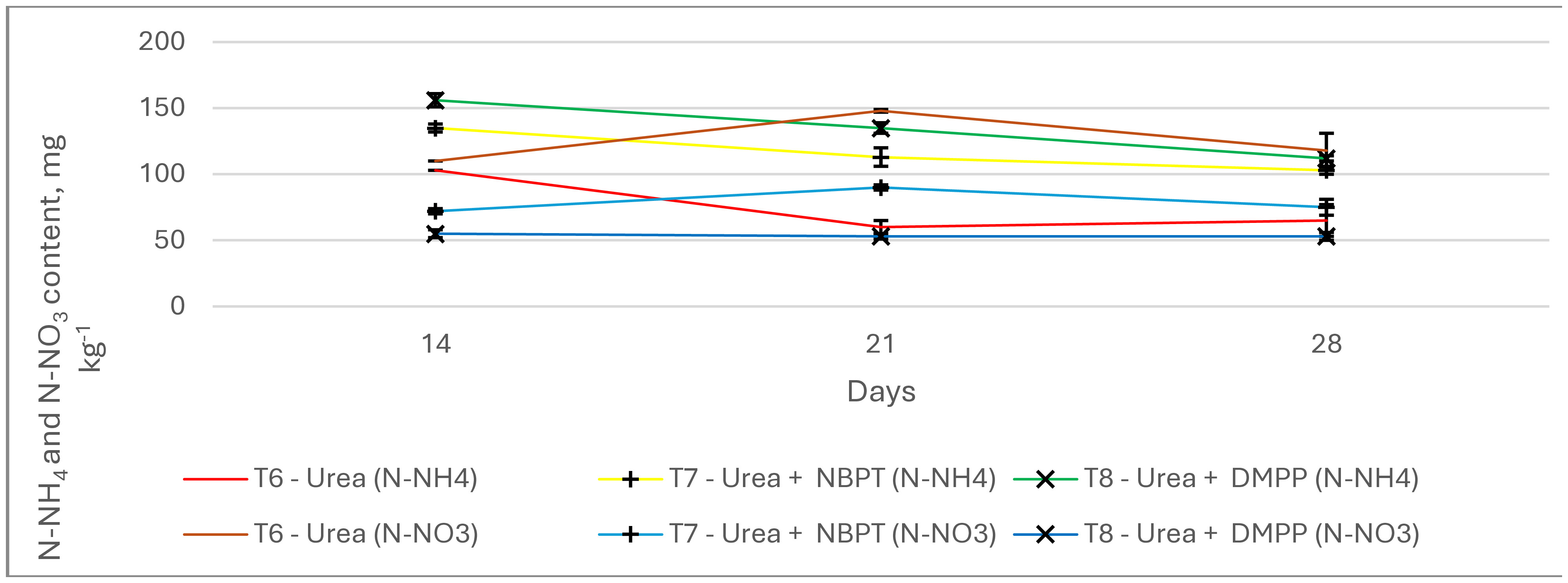
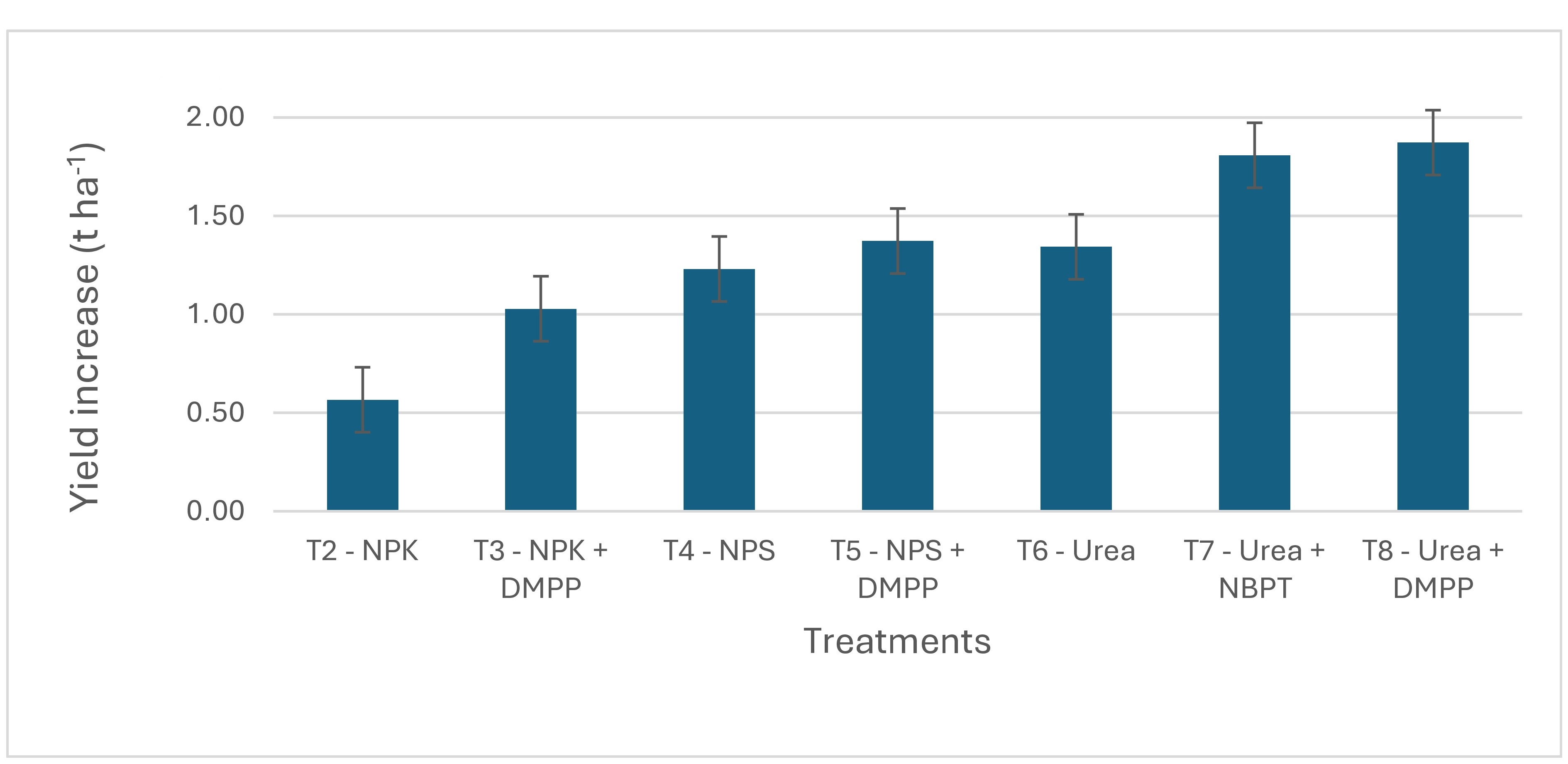
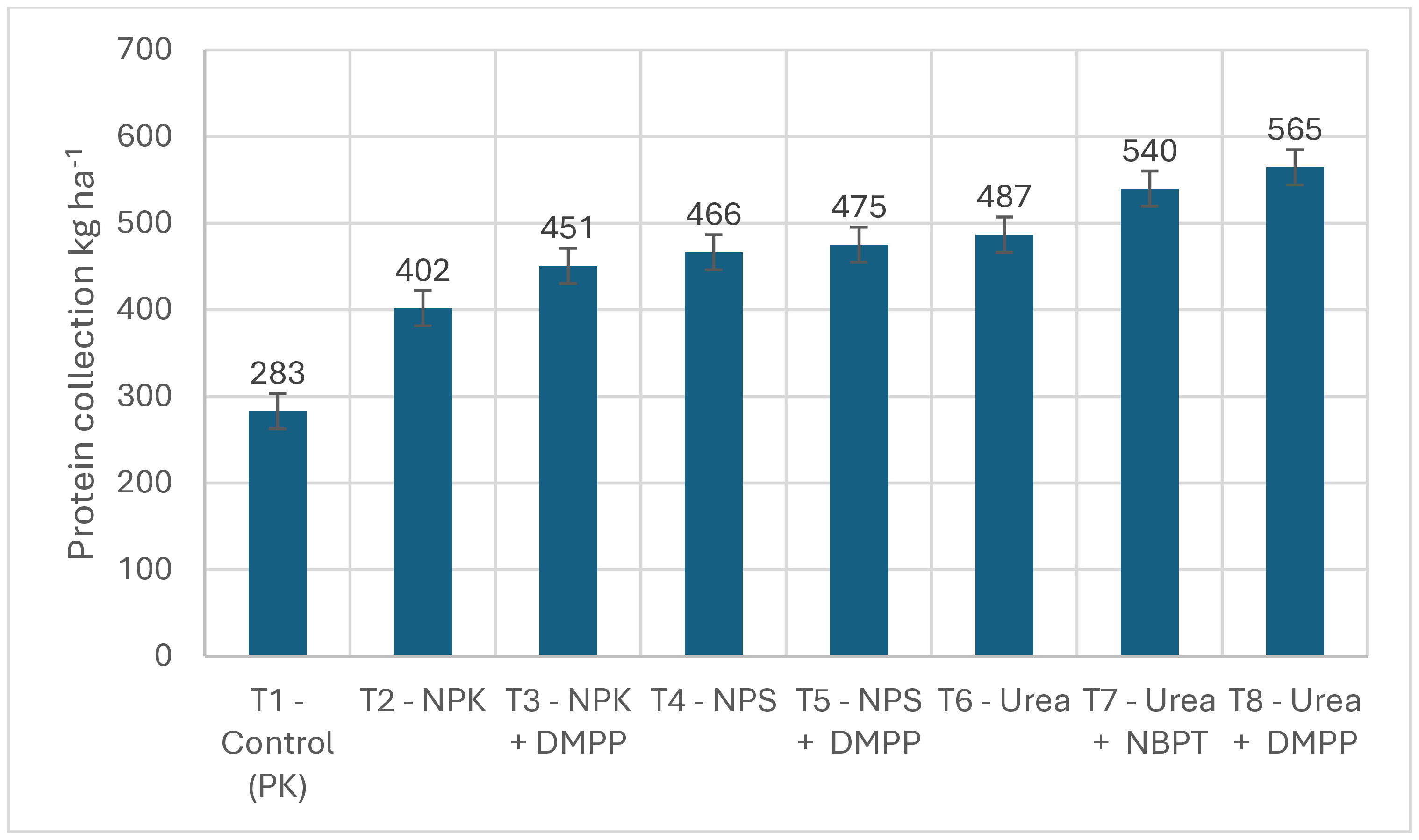
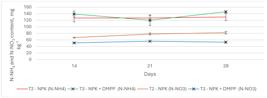
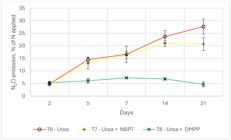
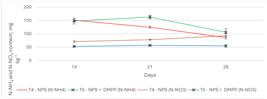
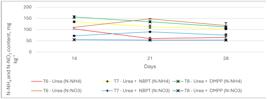
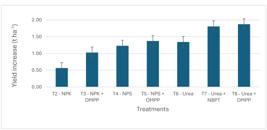
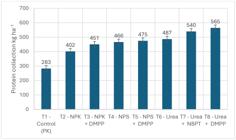
It is commonly known that, the use of nitrogen fertilizers is associated with adverse impact on the environment due to greenhouse gases (N2O, NOx) and ammonia emission and groundwater pollution with nitrates. Stabilization of nitrogen-containing fertilizers with nitrification and urease inhibitors reduces inefficient losses of nitrogen from mineral fertilizers and increases their direct consumption in the agricultural crop yields development. The paper presents the results of field trials on the effectiveness of N, NPK and NPS fertilizers (urea, ammophoska and sulfoammophos) stabilized by 3,4-dimethylpyrazole phosphate nitrification inhibitor and N-(n-butyl) thiophosphoric triamide urease inhibitor applied in spring wheat crops. Microplot field trials were carried out in 2022-23 on cultivated sod-podzolic soil of light loamy grain-size distribution within the Field Trial Station of the Russian State Agrarian University - K.A. Timiryazev Moscow Agricultural Academy. Studies proved the use of inhibitors combined with ammophoska and carbamide to obtain a 12-14% yield gain and an increase in protein picking by 10-15%. The use of nitrification and urease inhibitors reduced the adverse affect on the environment due to a higher content of mineral nitrogen in the soil during the growing season and improved consumption of fertilizer nitrogen by plants. The efficiency of NPS, NPK and carbamide nitrogen use under the influence of the nitrification inhibitor increased by 2, 10 and 18%, respectively. The use of a urease inhibitor combined with carbamide enhanced nitrogen use efficiency by 12%. The payback of fertilizers by grain yield under the influence of inhibitors increased by 2-7 kg kg-1. Laboratory tests output on the transformation intensity of mineral fertilizer nitrogen confirmed the results of field trials and showed that combined use of a nitrification inhibitor and carbamide proved to be the most effective in regard that the content of ammonium nitrogen in the soil 1, 2 and 4 is 51-125% higher compared to conventional urea. At the same time, a decrease in the accumulation of nitrate nitrogen in the soil by 53-64% is observed. Thus, the use of stabilized nitrogen-containing fertilizers contributes to a significant increase in crop yields, particularly spring soft wheat, as well as increased nitrogen fertilizer consumption and a reduction in the negative impact on the environment.
Keywords:
carbamide; nitrification inhibitor; urease inhibitor; spring wheat; yield; nitrogen fertilizers; utilization coefficient
 Thumbnail
 Thumbnail
 Thumbnail
 Thumbnail
 Thumbnail
 Thumbnail
 Thumbnail