 Functional cookies with Blueberry juice (Vaccinium corymbosum) and Cocoa powder (Theobroma cacao): proximate and physicochemical characterization
Abstract
Blueberries are known for their antioxidant properties with high content of vitamins C and K, in addition to the presence of flavonoids and anthocyanins. Likewise, cocoa has fiber, vitamins A and B, and high antioxidant potential due to its epicatechins and catechins. Being widely consumed worldwide, the research objective is to develop functional biscuits incorporating blueberries, thus characterizing their phenolic compounds and antioxidant capacity. Nine treatments were prepared using a factorial 32 design: blueberry concentration (25%, 30%, and 35%) and cocoa concentration (5%, 10% and 15%). Proximal and physicochemical characterization of the raw materials was determined. The biscuits were mainly analyzed proximally, with total phenol content (TPC) determined by the Folin-Ciocalteau method and antioxidant capacity assessed by the ABTS method. The results showed that the raw materials had a synergistic effect to increase the protein content up to 7.69 g/100 g which was in treatment 5 (30% blueberry, 10% cocoa), treatment 3 (25% blueberry, 15% cocoa) which had the highest TPC with 40 mg EAG/g bs, and in antioxidant capacity in treatment 7 (35% blueberry, 5% cocoa) with 12.68 µM ET/g bs. Thus, it was shown that the incorporation of blueberries in cookies improved their functional properties that can cause health benefits.
Keywords:
Blueberries; Cocoa; Physicochemical properties; Total phenols; Antioxidant capacity; Biocompounds
HIGHLIGHTS
A detailed proximal and physicochemical characterization of biscuits formulated with varying levels of blueberry and cocoa
The identification of specific formulations that maximize protein content (7.69 g/100 g), total phenolic content (40 mg GAE/g), and antioxidant capacity (12.68 µM ET/g)
Evidence of a synergistic effect between blueberry and cocoa, demonstrating how their combination can be leveraged to create a healthier bakery product
The presentation of a viable and data-backed strategy for enhancing the functional properties of a widely consumed food product like biscuits, with potential positive implications for public health
1 Introduction
Currently, there have been significant changes in global dietary patterns, characterized by a sedentary lifestyle and diets that include high levels of fiber-deficient fats, sugars, and sodium. These changes are linked to the onset of chronic non-communicable diseases (NCDs) such as type II diabetes, obesity, heart disease, cancer, and respiratory diseases. This phenomenon represents a considerable impact on the morbidity of the population and their quality of life (Peña-Oyarzun et al., 2018; World Cancer Research Fund International, 2014). Various investigations have established an evident connection between diet and degenerative diseases that are related to aging and oxidative stress. For this reason, there is a need to develop healthy foods with functional properties to help prevent this type of disease (Peña-Oyarzun et al., 2018; Leal et al., 2016; Mozaffarian et al., 2018).
The market for functional foods is growing as consumers seek nutritious, natural, organic, and healthy products, as well as innovative ingredients. Peru has become the world's leading producer of blueberries in 2024, exceeding initial estimates by 4.1%. In addition, around 53% of the total volume is exported to countries such as the United States of America (USA), followed by the European market (25%), China (14%), and the United Kingdom (UK) (5%) (Helkar et al., 2016; Guiné et al., 2020; United States Department of Agriculture, 2023; International Blueberry Organization, 2024). Blueberry (Vaccinium corymbosum L.) is native to North America, and it develops in forests and mountainous areas of the USA and Canada (Idexcam, 2017). It has been domesticated in Peru, positioning itself as a fruit with a higher export index (United States Department of Agriculture, 2023). Furthermore, it is a fruit recognized for being low in fat and sodium, free of cholesterol and rich in fiber, while having refreshing, tonic, astringent, and diuretic properties, in addition to containing significant amounts of vitamins C and K; however, it is also important to highlight that its characteristic color is due to a group of flavonoids called anthocyanins (Idexcam, 2017). In addition to cranberry juice, cranberry leaves (Vaccinium spp.), i.e, a residual biomass from pruning, are a rich source of polyphenols, fiber, and minerals, and have also been used to make healthy cookies (Santuccione et al., 2025). On the other hand, cacao (Theobroma cacao L.) is native to the western Amazon (Cornejo et al., 2018) and is known worldwide as the "delicacy of the gods". Peru is currently the second largest producer of organic cocoa in the world (Ministerio de Desarrollo Agrario y Rie, 2023). It is found in a wide variety of food products, ranging from chocolate to various drinks, creams, and desserts. It is a food rich in calories that provides valuable nutrients, such as fiber, and cocoa provides vitamins A and B, along with minerals such as calcium, phosphorus, iron, magnesium, copper, and potassium (FAO, 2021).
In Peru, cookies are recognized as one of the basic foods in the traditional diet; 60% of the annual production of cookies is of the sweet type (Instituto Nacional de Estadística e Informática, 2013). Cookies are a popular snack in the diet due to their durability and attractive flavor, which makes them ideal candidates for nutritional fortification; however, there is concern about their insufficient dietary quality due to the lack of research using indigenous foods that could improve the nutritional value of these products (Matos, 2022). Research conducted worldwide has developed some functional biscuit alternatives, incorporating ingredients such as grape marc to increase bioactive compounds such as phenols and flavonoids in the biscuit (Theagarajan et al., 2019). Other research has incorporated the pomace of the white grape into wheat biscuits (Mildner-Szkudlarz et al., 2013), antioxidant-rich black pepper, and cardamom extracts (Dutta et al., 2017), as well as coconut copra (Ghosh et al., 2017). Nevertheless, there is a lack of products that have blueberry as an ingredient to improve the functional value and prolong their useful life due to their bioactive compounds with beneficial properties for health. Despite Peru's potential for producing globally recognized fruits with high nutritional value, there is a shortage of their use in processed products like cookies. This research aimed to make cookies with blueberries (V. corymbosum) and cocoa (T. cacao), characterizing their phenolic compounds and antioxidant capacity, to offer the consumer an alternative with antioxidants, based on non-traditional ingredients.
2 Materials and methods
2.1 Raw materials and supplies
The Ventura blueberry variety, purchased in Huaral, Lima, Peru, was used. Cocoa of the goose variety, purchased from the Santa Rosa district of La Mar, Ayacucho, Peru, was also used. The rest of the ingredients were purchased from trademarks of Lima, Peru. For the control treatment, a commercial biscuit was purchased with raw materials similar to those in the research one, containing blueberries and quinoa.
2.2 Manufacturing process
Table 1 shows the formulation of the cookies, based on the factorial design 32, in 3 levels of concentrations of blueberry and cocoa, respectively. Previously, to prepare the blueberry juice, 500 g of blueberries were washed and disinfected with a 70% ethanol solution, then blended (Oster, BLST4126R, USA) without adding water for 2 min at maximum speed. The juice was concentrated using a rotary vacuum evaporator (Tecnal, TE-213, Brazil) for 50 minutes at 40 °C (pressure set at 50 mbar). Moreover, to obtain the cocoa powder, the beans were roasted using a coffee roaster at 150 °C (SWF, China) for 15 min. The beans were then peeled manually, ground using a mill (Bosch, TSM6A013B, Germany) until powder was obtained, and finally sieved to 500 µm.
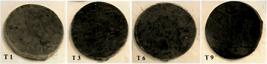
For the preparation of the cookies, it began with the creaming of butter, egg, and panela sugar in a semi-industrial mixer (Jossisa, BP 10c, Peru) for 10 minutes at medium speed. The wheat and rice flour, bicarbonate, cocoa powder, salt, and blueberry extract were mixed for 10 minutes. Next, the reels were flattened to a thickness of 3 mm and then cut using a round mold with a diameter of 4.5 mm. They were baked at 180 °C for 10 min in an industrial oven (Jossisa, Rotativo, Peru). They were cooled to room temperature for 2 hours. They were then stored in airtight polypropylene bags at room temperature until further analysis. Figure 1 shows the cookies from treatments 1, 3, 6, and 9.
2.3 Analysis methods
2.3.1 Proximal and physicochemical analysis of raw materials and cookies
The standard methods of the Association of Official Analytical Chemists (2005) were applied to determine moisture, protein, fat, ash, and crude fiber following the methods: AOAC 925.09, AOAC - 960.52 (Nx6.25), AOAC - 2003.05, AOAC - 923.03, and AOAC 978.10. The amount of digestible carbohydrates was calculated by difference from the aforementioned analyses. All analyses were performed three times, and the results were expressed as the mean and standard deviation.
The physicochemical analyses carried out on the cookies were based on previous research on functional cookies proposed by Arun et al. (2015). The determination of pH (Association of Official Analytical Chemists, 2005.12), soluble solids (AOAC 932.14), and titratable acidity by the potentiometric method (AOAC 924.15) was performed.
2.3.2 Colorimetric determination
It was determined directly on the colorimeter (3NH, NR200). The CIELAB system was used, where the parameters L \* (0 "dark" - 100 "light"), chromatic coordinates a* (+a*: red, -a*: green), and b* (+b*: yellow, -b*: blue) were recorded.
2.3.3 Water absorption capacity (WAC) and oil absorption capacity (OAC)
These analyses are closely related to the cookie texture, so it is important to evaluate it. In this way, they were determined using the modified method of Aboubakar et al. (2008). Thus, 1 g sample of composite flour was dispersed in 10 ml of distilled water or oil (density 0.98 cc/g) in centrifuge tubes and rested at room temperature. The solution was stirred intermittently for 30 min and centrifuged (Greetmeed, GT119-200) at 3500rpm for 30 min. Both were expressed as one gram of water or oil per gram of sample on a dry basis.
2.3.4 Baking performance and Spread Factor (SF)
These analyses are used to evaluate the quality of the cookie, recommended by various authors such as Gaines (1990), Perez et al. (2018), etc. Therefore, the baking performance was determined following a modified method (Bala et al., 2015), determining the percentage ratio between the unbaked weight and the baked product. In the same way, the propagation factor was determined by the AACC 10-50.05 method, where the width (W), thickness (T), and W/T ratio (cookie propagation factor) were measured (table 2). The calculations were made after the cookies were cooled for 30 minutes, and the cookies were placed from edge to edge, and the width was measured (American Association of Cereal Chemists, 1999).
2.3.5. Functional properties
2.3.5.1. Determination of antioxidant capacity by ABTS
The method was described by Re et al. (1999). Mixing of 7 mM ABTS and 2.45 mM potassium persulfate was performed in equal parts, followed by a standing period of 12 to 16 hours at room temperature and in the dark. Subsequently, 1 ml was taken from that mixture and diluted with 60 ml of 99% ethanol until the absorbance was stabilized at 0.7 ± 0.02 at a wavelength of 734 nm. Then, 2850 μl were measured, and 150 μl of the sample extract was added, proceeding to stir for 6 minutes at room temperature using a vortex. The absorbance was measured at 734 nm. The same procedure was carried out for the blank, where 150 μl of 99% ethanol was used instead of the extract. To conclude, the result was expressed in Trolox Equivalent Antioxidant Capacity (TEAC, μmol of Trolox equivalents per 100 g of sample), using a Trolox standard curve (50.12 – 400.18 μM).
2.3.5.2. Determination of total phenols by the Folin-Ciocalteu method
The method for determining total phenols was that of Folin-Ciocalteu (Singleton & Rossi Junior, 1965), which was based on the ability of phenols to react with oxidizing agents. One gram of the powdered sample was weighed, and 10 ml of 70% acidic methanol (0.1% acetic acid) was added in an Ultra-turrax homogenizer for 10 minutes, followed by centrifugation at 5000 rpm for 25 minutes. The supernatant was collected; after centrifugation, the residue was extracted twice more, and the supernatants from the three extractions were combined and concentrated until the solvent was evaporated entirely with a rotary evaporator under vacuum at 40°C. Phenolic extracts were performed in triplicate, and data were presented as mean ± standard deviation (SD).
2.4. Experimental design and statistical analysis
A factorial 32 design was applied, with two study factors and three levels that indicated the concentration of blueberries (25%, 30%, and 35%) and concentration of cocoa (5%, 10% and 15%), resulting in nine treatments with three repetitions in each, making a total of 18 treatments (Table 3). In addition, a control treatment was considered by using a commercial brand cookie with blueberries. An analysis of variance (ANOVA) of the results and a Tukey’s test with a significance level of 5% were performed with the Minitab 2019 software.
3. Results and discussion
3.1. Results
Table 4 shows the results of the proximal and physicochemical characterization of the raw materials of the cookies. It is observed that blueberries have a high humidity because they are fresh and high in carbohydrates, with 9.2 g/100 g. The cocoa exhibited characteristics of its pasty state, with lower humidity due to roasting and grinding, and its fat content of 53.78 g/100 g stood out.
Different letters in the same column mean a significant difference (p < 0.05) between treatments. Where: CT: control treatment or commercial sample; T1 to T9: composition treatments detailed in Table 2.
Table 5 shows the proximal composition of the cookies; a control treatment (CT) sample of a commercial brand with similar characteristics to blueberries and quinoa flour was considered. The moisture content of CT is statistically different from other treatments, with humidity lower than 50% or higher in some cases. The rest of the treatments are similar, highlighting T1, T3, and T7 with higher values that can be explained by a greater presence of blueberries in their formulation. Regarding the ash content, the TC is similar to T3, while T7, T8, and T9 are statistically higher values. The fat content is similar in all treatments, except for the statistical differences with T1, T8, and T9, with a variation of 2 g/100 g. While the protein content of CT differs from other treatments by 3 g/100 g, this variation can be attributed to the synergistic effect of its ingredients, particularly cocoa, as observed in Table 1, which contains 14.07 g/100 g of protein. The same behavior is observed with the crude fiber content, with significant differences between the CT and the rest of the treatments, with the CT having a high content. This can be explained by the presence of quinoa in its formulation. Finally, regarding the carbohydrate content, the CT is statistically different, with a higher content compared to the rest of the treatments, with a value of 79.44 g/100 g.
Another analysis carried out was of the colorimetry presented in Table 6. Consumers who take care of their health are more interested in products with natural components instead of artificial ones. Considering the above, it is important to evaluate the parameters, such as the brightness, which values between the treatments are similar to each other, ranging from 28.73 to 43.20. At the same time, the CT is visibly brighter with a higher value of 52.50 due to its composition, which does not contain cocoa and is less dark than the cookies developed in this research. It is worth mentioning that the natural pigments used in all the treatments, including the CT, have a lower brightness than the synthetic dyes. In the same way, the values of the a * coordinate are presented, where the positive values indicate a tendency to very low red coloration; in this case, the TC has statistical similarities with T1, T3, T5, T6, T7, T8, and T9. In the case of the b* coordinate, which indicates a tendency to yellow due to its positive value, there is a greater difference with the CT, which presents a higher value of 38.61. In contrast, the other treatments vary between 24.62 and 30.85, which is due to the formulation.
Table 7 shows the analysis of oil and water absorption capacity, which is important to evaluate the quality of the cookies. In addition, the raw materials were also analyzed to assess their influence on the cookies. The results showed that there are no differences between the CT and the other treatments concerning the evaluated parameters; the differences are not statistically significant.
Another important factor in cookies is to measure the baking performance; the values show that the treatments vary in the range of 10.30% and 14.68%, with a higher value of T9. It should be noted that this analysis was not made because the CT is a commercial sample ready for consumption, since the yield is carried out during the manufacturing process.
The propagation factor was applied to the ready cookies, and the CT results are partially similar to T1 and T2, but different from the rest of the treatments.
Table 8 shows the results of total phenols expressed in mg of gallic acid equivalent per gram of sample on a dry basis. It is observed that the values of the raw materials are statistically different; the highest value is that of cocoa in total phenols.
Regarding the antioxidant capacity by ABTS, the values are expressed in µM of trolox equivalent per gram of sample on a dry basis. In the same table, it is observed that the antioxidant capacity of blueberries is greater than that of cocoa.
Table 9 shows that the treatments have TPC ranging from 22.02 to 40.03 mg EAG/g, while T1 and T3 have the highest values in total phenols. Their formulation can explain the variability of the results because they all have a particular content of blueberries and cocoa, as shown in Table 1.
Regarding the treatments, CT has the lowest antioxidant capacity, however, most treatments have up to twice the antioxidant capacity of CT.
3.2. Discussion
The results of the proximal composition shown in Table 1 for blueberries are within the range reported by other investigations of 79.38 to 88.77 g/100g for moisture, 0.2 to 1.29 g/100g in ash, 0.3 to 1.47 g/100 g for fat, 0.7 to 1.40 g/100 g in protein, 2.4 g/100 g for dietary fiber, and of 8.68 to 17.81 g/100 g in carbohydrates, for varieties such as Vaccinium spp. (Dunford, 2022; United States Department of Agriculture, 2023; Yousefi et al., 2021), and Amazonian Melastomataceae blueberries (Assunção-Júnior et al., 2022). According to Hurtado-Romero et al. (2024), the physicochemical properties are similar to those of 4.25 for pH, 0.20 g citric acid/100g acidity, and 10.67 °Brix of soluble solids. Similar values were reported for blueberries from Colombia, 3.31 pH, 0.76% acidity, and 10.6°Brix (Archila et al., 2022).
Concerning the characteristics of cocoa, they are similar to other studies, as mentioned by Ariza-Ortega et al. (2021). In cacao of the Creole variety grown in Mexico, the humidity was 2.77 g/100 g, ash was 3.10 g/100g, fat was 53 g/100 g, protein was 13 g/100 g, and carbohydrates were 28 g/110g. Similarly, Adeigbe et al. (2021) for native varieties of Nigeria reported similar values in moisture (10.06 g/100g), ash (2.88 g/100g), fat (25.52 g/100g), protein (14.15 g/100 g), and raw fiber (4.29 g/100 g). Botella-Martínez et al. (2021) reported the characterization of dried and fermented grains of the Forastero variety grown in Spain, which were ground to different particle sizes of > 701 µm, 417 µm - 701 µm and < 417 µm, reporting humidity values of 6.90 – 7.05 g/100 g, ash 7.03 – 7.34 g/100 g, fat of 3 – 5.60 g/100 g, and protein of 15.59 – 17.13 g/100 g. Regarding its physicochemical characteristics, the values are similar to those reported by Botella-Martínez et al. (2021), where the pH was from 4.90 to 5.07, and the citric acid content was from 1.62 to 2.76 mg/g of sample.
The differences between the aforementioned results can be explained by the chemical composition of the grains that are subject to different environmental conditions, cultivation area, variety, origin; it can also be due to post-harvest processes, fermentation conditions, drying method, and roasting temperature (Bortolini et al., 2016).
Few investigations previously used blueberries in cookies; those found are mentioned below, depending on the results reported. Salihu et al. (2023) developed cookies with partial substitutions of 3, 6, and 9% with blueberries (commonly called in Peru only blueberries) and cranberries. The humidity results were similar to CT, reporting values of 5.26 to 6.60 g/100 g. While Pérez et al. (2018) worked with blueberry flour from Uruguay of the O'Neill variety and made a formulation with 37.14% substitution in cookies, they presented a 2.43 g/100 g of ash, similar to T7, T8, and T9, which contain a 35% substitution of blueberries. In the fat content, the same research reported a value of 18.39 g/100 g, almost double the values reported in the present study, with a range of 6.44 – 10.26 g/100 g. This is explained by the differences in the formulation, while Pérez et al. (2018) used 17% vegetable oil, in this research, a maximum of 12% margarine was used. Regarding the protein content, Pérez et al. (2018) reported a higher content of 10.02 g/100 g, while 7.32 – 7.69 g/100 g were reported. This can be explained because they added 10% of skimmed milk powder in their formulation, and this research does not contain milk as an ingredient, which increases the protein content. In the fiber content, the value reported by the research above is high due to the use of blueberry flour, which utilizes the whole fruit, including the peel, thereby increasing its fiber content to 14.64 g/100 g. Finally, the carbohydrates reported by Pérez et al. (2018) were 54.50 g/100 g, close to those reported, which were 69.21 -72.90 g/100g, highlighting that the amount of protein and fat was lower than the formulation used by the other researchers.
Colorimetry results have a marked difference from other investigations, such as Salihu et al. (2023) where they reported L* values of 62.28 to 67.77, a * of 5.49 to 7.82, b* of 22.46 to 22.74 for blueberry cookies, and L* values of 54.08 to 63.28, a * of 3.43 to 6.76, b* of 9.56 to 15.55 in cranberry cookies. Jeon & Lee (2021) made cookies with a substitution of a fruit similar to blueberries called maqui (Aristotelia chilensis (Mol.) Stuntz), determining values in its substitution of 10% of L* of 21.45, a * 5.32, and b* -1.74. The negative value of the b* coordinate indicates that it had shades with a tendency to blue. The difference in the results is due to the amount of substitution that each researcher formulates. In this case, the presence of cocoa was decisive due to its greenish coloration, which was not visually appealing and was often mistaken for moldy cookies.
Regarding the performance, Morales-Guzmán et al. (2017) mentioned that higher values of baking performance indicate a better baking quality, that is, the uniformity of baking and texture is better, important attributes for a cookie with high sensory acceptability. Spread factor values are higher in most treatments than in CT. The thickness of the cookies varied in a range of 0.35 to 0.58 cm, making them thinner compared to those detailed by Arun et al. (2015), where the cookies varied from 0.65 to 0.72 cm. Their propagation factor was less than 5.42 to 5.85, which is explained by the fact that their dough behaved more viscously, due to the presence of fiber. Comparing these results with the present investigation, it is observed that the blueberry cookies had little fiber and, therefore, higher values of the propagation factor were obtained. As supported by Kawai et al. (2013), lower water activity resulted in lower propagation, and Zucco et al. (2011) indicated that propagation is affected by the viscosity of the mass. Jeon & Lee (2021) determined a propagation factor more similar to this study of 8.64 – 11.13, which increases according to the substitution range from 0 to 10%.
It is important to mention that the antioxidant capacity by ABTS is a method that measures the ability to neutralize free radicals, specifically the ABTS+ radical cation. This method helps to distinguish antioxidants in mixtures of substances to measure their synergistic effects (Tena et al., 2020), it is also recommended to use it simultaneously with another method such as DPPH because in foods such as wine, pomegranate juice, blueberries, it helps a lot to more objectively determine the antioxidant capacity of anthocyanins (Enaru et al., 2021; Tena et al., 2020), thus it could be explained how statistically the results between treatments were observed, therefore comprising statistical similarities between treatments, while in total phenols, more differences are observed.
The TPC reported by other research gives values similar to those determined in this research for the blueberries. Assunção-Júnior et al. (2022) reported a range of 7.0 – 290 mgEAG/100g and the percentage of their antioxidant capacity by ABTS values of 2.3 – 28.7 µg/mL of extract, values that are within this study. In the same way, Dunford (2022) reported values of 22.7 and 27.7 µmol EAG/g, and the antioxidant capacity by ORAC was 60.1 and 64.4 µmol TE/g of fresh fruit. In the case of cocoa, Borja et al. (2022) determined the phenol content of four cocoa genotypes from Tolima, Colombia. They reported values of 44.51 – 106.77 mg EAG/g and measured the antioxidant capacity by the FRAP method with values of 31.18 – 56.17 (mmol TE/g). Ariza-Ortega et al. (2021) of Creole variety cocoa from Mexico indicated values of 1.30 – 1.80 mg EAG/kg and antioxidant capacity by ABTS values of 2.30 – 3.60 µmol EAC/kg, where EAC is equivalent to chlorogenic acid.
Pérez et al. (2018) evaluated the TPC in blueberry cookies. They developed two types of extraction to maximize the yield, which were differentiated by the extractable phenols using concentrated hydrochloric acid/methanol/water (1:80:10 v/v) and the hydrolyzable phenols using acidified methanol/concentrated sulfuric acid (10:1 v/v). In this way, the results of the cookies enriched with blueberry flour were 321.30 mg EAG/g, being 90.01 mg EAG/g of extractable phenols and 287.90 mg EAG/g of hydrolyzable phenols. The antioxidant capacity by ABTS reported in the study by Pérez et al. (2018) was 187.46 µM ET/g bs. The control cookie, which contained all ingredients except blueberry, had a value of less than 17.19 µM ET/g bs. Notably, the values determined in this study, although lower, exhibited a higher capacity than the CT. Compared to the reported results, there are important differences to mention, such as the formulation that was used, which was a substitution of blueberries for 37% of the total weight of the biscuit. In comparison, this research found a lower range of 6.70 to 8.86%.
Despite this, the results are auspicious with a high content of phenols, where catechin, epicatechin, and myricetin stand out in blueberries (Grace et al., 2019; Yousefi et al., 2021). Other studies found coumaric acid, gallic acid, caffeic acid, and vanillic acid, among others (Kim, 2018). Besides, anthocyanins are also present mainly in the form of malvidin-3-glucoside, delphinidin-3-glucoside, petunidin-3-glucoside (Reque et al., 2014; Hurtado-Romero et al., 2024) and in cocoa, epicatechin stands out in content, to a lesser extent catechin, epicatechin derivatives, quercetin, quercetin-3-O-glucoside, quercetin-3-O-rutinoside and protocatechuic acid (Botella-Martínez et al., 2021; Hernández-Hernández et al., 2019). In fact, these compounds are related to abundant antioxidant properties that make them an excellent alternative as functional ingredients in food products, motivating the cultivation of these crops in Peru.
4. Conclusions
The incorporation of concentrated blueberry juice together with cocoa and cereals improved the nutritional and functional profile for the cookies. This combination also elevated protein, total phenols, and antioxidant capacity—about twice that of the commercial control. These favorable findings show that these functional bread products have a potential good commercial market. In addition, this research contributes to the valorization of Peru’s most important crops, presenting creative and health-oriented food options with significant economic importance for the country.
Data Availability Statement
All data generated or analyzed in this study are included in this published article.
-
Cite as:
Dipaz-Manuelo, M., Mendoza-Quispe, S. N., & Pilco-Quesada, S. (2026). Functional cookies with Blueberry juice (Vaccinium corymbosum) and Cocoa powder (Theobroma cacao): proximate and physicochemical characterization. Brazilian Journal of Food Technology, 29, e2025126. https://doi.org/10.1590/1981-6723.1262025
-
Funding:
None.
References
-
Aboubakar, N., Njintang, Y. N., Scher, J., & Mbofung, C. M. F. (2008). Physicochemical, thermal properties and microstructure of six varieties of taro (Colocasia esculenta L. Schott) flours and starches. Journal of Food Engineering, 86(2), 294-305. https://doi.org/10.1016/j.jfoodeng.2007.10.006
» https://doi.org/10.1016/j.jfoodeng.2007.10.006 -
Adeigbe, O. O., Adewale, B. D., & Muyiwa, A. A. (2021). Variability and character association of bean biochemical traits of cocoa (Theobroma cacao) genotypes in four Nigerian field banks: Providing a platform for nutrition-based selection. Journal of Agriculture and Food Research, 3, 100115. https://doi.org/10.1016/j.jafr.2021.100115
» https://doi.org/10.1016/j.jafr.2021.100115 -
American Association of Cereal Chemists – AACC. (1999). Baking quality of cookie flour. St. Paul, MN: AACC International Method. https://doi.org/10.1094/AACCIntMethod-10-52.02
» https://doi.org/10.1094/AACCIntMethod-10-52.02 -
Archila, E. G., Rojas-Bautista, F., Garcia, N., & Vasquez, J. A. C. (2022). A promising blueberry from Colombia: Antioxidant activity, nutritional and phytochemical composition of Cavendishia nitida (Kunth) AC Sm. Heliyon, 8(5), e09448. https://doi.org/10.1016/j.heliyon.2022.e09448
» https://doi.org/10.1016/j.heliyon.2022.e09448 -
Ariza-Ortega, J. A., García, E. A., & Rodríguez-Meléndez, C. T. (2021). Proximal chemical evaluation, antioxidant content and fatty acids in fermented and dried cocoa beans, roasted cocoa beans and cocoa pulp bar (Theobroma cacao L. Criollo cultivar). Revista Chilena de Nutrición, 48(4), 500-506. https://doi.org/10.4067/S0717-75182021000400500
» https://doi.org/10.4067/S0717-75182021000400500 -
Arun, K. B., Persia, F., Aswathy, P. S., Chandran, J., Sajeev, M. S., Jayamurthy, P., & Nisha, P. (2015). Plantain peel - A potential source of antioxidant dietary fiber for developing functional cookies. Journal of Food Science and Technology, 52(10), 6355-6364. PMid:26396380. https://doi.org/10.1007/s13197-015-1727-1
» https://doi.org/10.1007/s13197-015-1727-1 - Association of Official Analytical Chemists – AOAC. (2005). Official Methods of Analysis (8th ed.). Gaitherseburg: AOAC International.
-
Assunção-Júnior, S. O., Rodrigues, L. S., Raposo, D. S., Rodrigues, J. G., de Lima, E. J., da Silva, F. M., Scudeller, V. V., Corrêa, A. L., Lima, E. S., Albuquerque, P. M., Koolen, H. H. F., & Bataglion, G. A. (2022). Amazonian Melastomataceae blueberries: determination of phenolic content, nutritional composition, and antioxidant and anti-glycation activities. Food Research International, 158, 111519. PMid:35840227. https://doi.org/10.1016/j.foodres.2022.111519
» https://doi.org/10.1016/j.foodres.2022.111519 -
Bala, A., Gul, K., & Riar, C. S. (2015). Functional and sensory properties of cookies prepared from wheat flour supplemented with cassava and water chestnut flours. Cogent Food & Agriculture, 1(1), 1019815. https://doi.org/10.1080/23311932.2015.1019815
» https://doi.org/10.1080/23311932.2015.1019815 -
Borja, J. G., Tellez, H. B. H., Atuesta, G. C. P., Aldana, A. P. S., & Arteaga, J. J. M. (2022). Antioxidant activity, total polyphenol content and methylxantine ratio in four materials of Theobroma cacao L. from Tolima, Colombia. Heliyon, 8(5), e09402. PMid:35600450. https://doi.org/10.1016/j.heliyon.2022.e09402
» https://doi.org/10.1016/j.heliyon.2022.e09402 -
Bortolini, C., Patrone, V., Puglisi, E., & Morelli, L. (2016). Detailed analyses of the bacterial populations in processed cocoa beans of different geographic origin, subject to varied fermentation conditions. International Journal of Food Microbiology, 236, 98-106. PMid:27458718. https://doi.org/10.1016/j.ijfoodmicro.2016.07.004
» https://doi.org/10.1016/j.ijfoodmicro.2016.07.004 -
Botella-Martínez, C., Lucas-Gonzalez, R., Ballester-Costa, C., Pérez-Álvarez, J. Á., Fernández-López, J., Delgado-Ospina, J., Chaves-López, C., & Viuda-Martos, M. (2021). Ghanaian cocoa (Theobroma cacao L.) bean shells coproducts: Effect of particle size on chemical composition, bioactive compound content and antioxidant activity. Agronomy (Basel), 11(2), 401. https://doi.org/10.3390/agronomy11020401
» https://doi.org/10.3390/agronomy11020401 - Cornejo, O. E., Yee, M. C., Dominguez, V., Andrews, M., Sockell, A., Strandberg, E., Livingstone III, D., Stack, C., Romero, A., Umaharan, P., Royaert, S., Tawari, N. R., Ng, P., Gutierrez, O., Phillips, W., Mockaitis, K., Bustamante, C. D., & Motamayor, J. C. (2018). Population genomic analyses of the chocolate tree, Theobroma cacao L., provide insights into its domestication process. Communications Biology, 1, 167. PMid:30345393. https://doi.org/10.1038/s42003-018-0168-6
- Dunford, N. T. (2022). Blueberries and health. Functional Food Science, 2(1), 1-15.
-
Dutta, S., Bhattacharjee, P., & Bhattacharyya, N. (2017). Assessment of shelf lives of black pepper and small cardamom cookies by metal oxide-based electronic nose using spoilage index. Food and Bioprocess Technology, 10(11), 2023-2033. https://doi.org/10.1007/s11947-017-1962-8
» https://doi.org/10.1007/s11947-017-1962-8 - Enaru, B., Drețcanu, G., Pop, T. D., Stǎnilǎ, A., & Diaconeasa, Z. (2021). Anthocyanins: Factors affecting their stability and degradation. Antioxidants, 10(12), 1967. PMid:34943070. https://doi.org/10.3390/antiox10121967
-
Food and Agriculture Organization – FAO (2021). ¿Es el cacao una súper fruta latinoamericana? Retrieved in 2025, October 30, from https://www.fao.org/americas/eventos/ver/en/c/1441772/
» https://www.fao.org/americas/eventos/ver/en/c/1441772/ - Gaines, C. S. (1990). Influence of chemical and physical modification of soft wheat protein on sugar-snap cookie dough consistency, cookie size and hardness. Cereal Chemistry, 67, 73-77.
-
Ghosh, P. K., Bhattacharjee, P., & Poddar-Sarkar, M. (2017). Reduction of lauric acid in coconut copra by supercritical carbon dioxide extraction: Process optimization and design of functional cookies using the lauric acid-lean copra meal. Journal of Food Process Engineering, 40(3), e12501. https://doi.org/10.1111/jfpe.12501
» https://doi.org/10.1111/jfpe.12501 -
Grace, M. H., Xiong, J., Esposito, D., Ehlenfeldt, M., & Lila, M. A. (2019). Simultaneous LC-MS quantification of anthocyanins and nonanthocyanin phenolics from blueberries with widely divergent profiles and biological activities. Food Chemistry, 277, 336-346. PMid:30502155. https://doi.org/10.1016/j.foodchem.2018.10.101
» https://doi.org/10.1016/j.foodchem.2018.10.101 -
Guiné, R., Florença, S., Barroca, M., & Anjos, O. (2020). The link between the consumer and the innovations in food product development. Foods, 9(9), 1317. PMid:32962007. https://doi.org/10.3390/foods9091317
» https://doi.org/10.3390/foods9091317 -
Helkar, P., Sahoo, A., & Patil, N. (2016). Review: Food industry by-products used as a functional food ingredients. International Journal of Waste Resources, 6(3), https://doi.org/10.4172/2252-5211.1000248
» https://doi.org/10.4172/2252-5211.1000248 -
Hernández-Hernández, C., Morales-Sillero, A., Fernández-Bolaños, J., Bermúdez-Oria, A., Morales, A., & Rodríguez-Gutiérrez, G. (2019). Cocoa bean husk: Industrial source of antioxidant phenolic extract. Journal of the Science of Food and Agriculture, 99(1), 325-333. PMid:29876932. https://doi.org/10.1002/jsfa.9191
» https://doi.org/10.1002/jsfa.9191 -
Hurtado-Romero, A., Garcia-Amezquita, L. E., Carrillo-Nieves, D., Montilla, A., Villamiel, M., Requena, T., & García-Cayuela, T. (2024). Characterization of berry by-products as fermentable substrates: Proximate and phenolic composition, antimicrobial activity, and probiotic growth dynamics. Lebensmittel-Wissenschaft + Technologie, 204, 116468. https://doi.org/10.1016/j.lwt.2024.116468
» https://doi.org/10.1016/j.lwt.2024.116468 -
Idexcam. (2017). Elaborado por el Instituto de Investigación y Desarrollo de Comercio Exterior – IDEXCAM – de la Cámara de Comercio de Lima Retrieved in 2025, October 30, from https://www.camaralima.org.pe/wp-content/uploads/2020/06/Opertunidades-y-retos-en-la-exportaci%C3%B3n-de-ar%C3%A1ndanos.pdf
» https://www.camaralima.org.pe/wp-content/uploads/2020/06/Opertunidades-y-retos-en-la-exportaci%C3%B3n-de-ar%C3%A1ndanos.pdf -
Instituto Nacional de Estadística e Informática (2013). Indicadores de precios de la economía Retrieved in 2025, October 30, from https://goo.gl/ObbvX1
» https://goo.gl/ObbvX1 -
International Blueberry Organization. (2024). Perú proyecta alcanzar las 323.928 toneladas de arándanos exportados en 2024/2025 Retrieved in 2025, October 30, from https://www.internationalblueberry.org/2024/12/18/peru-proyecta-alcanzar-las-323-928-toneladas-de-arandanos-exportados-en-2024-2025/
» https://www.internationalblueberry.org/2024/12/18/peru-proyecta-alcanzar-las-323-928-toneladas-de-arandanos-exportados-en-2024-2025/ -
Jeon, H. J., & Lee, J. H. (2021). Quality and antioxidant properties of wheat cookies supplemented with maqui berry powder. Han-Guk Sikpum Jeojang Yutong Hakoeji, 28(4), 480-488. https://doi.org/10.11002/kjfp.2021.28.4.480
» https://doi.org/10.11002/kjfp.2021.28.4.480 -
Kawai, K., Matsusaki, K., Hando, K., & Hagura, Y. (2013). Temperature dependent quality characteristics of pre-dehydrated cookies: Structure, browning, texture, in vitro starch digestibility, and the effect on blood glucose levels in mice. Food Chemistry, 141(1), 223-228. PMid:23768351. https://doi.org/10.1016/j.foodchem.2013.02.103
» https://doi.org/10.1016/j.foodchem.2013.02.103 -
Kim, J. (2018). Antioxidant activities of selected berries and their free, esterified, and insoluble-bound phenolic acid contents. Preventive Nutrition and Food Science, 23(1), 35-45. PMid:29662846. https://doi.org/10.3746/pnf.2018.23.1.35
» https://doi.org/10.3746/pnf.2018.23.1.35 - Leal, M., Guagliano, M., & Sánchez, A. (2016). Estudio panorámico de vigilancia tecnológica e inteligencia competitiva: alimentos funcionales. Buenos Aires: Ministerio de Ciencia, Tecnología e Innovación Productiva. 323 p.
- Matos, A. (2022). Efecto de la mezcla de trigo (Triticum Aestivum), quinua (Chenopodium Quinoa Wild) y moringa (Moringa Oleifera) en las características fisicoquímicas, funcionales y organolépticas en la producción de galletas fortificadas (Tesis de doctorado). Huánuco, Perú: Universidad Nacional Hermilio Valdizán.
-
Mildner-Szkudlarz, S., Bajerska, J., Zawirska-Wojtasiak, R., & Gorecka, D. (2013). White grape pomace as a source of dietary fiber and polyphenols and its effect on physical and nutraceutical characteristics of wheat biscuits. Journal of the Science of Food and Agriculture, 93(2), 389-395. PMid:22806270. https://doi.org/10.1002/jsfa.5774
» https://doi.org/10.1002/jsfa.5774 -
Ministerio de Desarrollo Agrario Y Riego (2023). Observatorio de Commodities Cacao: Dirección de estudios económicos, Dirección general de políticas agraria Retrieved in 2025, October 30, from https://cdn.www.gob.pe/uploads/document/file/5264502/%20Commodities%20Cacao%3A%20ene-mar%202023.pdf?v=1697059698
» https://cdn.www.gob.pe/uploads/document/file/5264502/%20Commodities%20Cacao%3A%20ene-mar%202023.pdf?v=1697059698 - Morales-Guzmán, V., Morales-Calva, E., Gallardo-Sandoval, A., & Ortega-Rangel, L. (2017). Evaluación de rendimiento y calidad de física galleta esponjada producida en Xicotepec de Juárez, Puebla. Revista de Ciencias Ambientales y Recursos Naturales, 3(7), 9-15.
-
Mozaffarian, D., Rosenberg, I., & Uauy, R. (2018). History of modern nutrition science: Implications for current research, dietary guidelines, and food policy. BMJ (Clinical Research Ed.), 361, k2392. PMid:29899124. https://doi.org/10.1136/bmj.k2392
» https://doi.org/10.1136/bmj.k2392 - Peña-Oyarzun, D., Bravo-Sagua, R., Diaz-Vega, A., Aleman, L., Chiong, M., Garcia, L., Bambs, C., Troncoso, R., Cifuentes, M., Morselli, E., Ferreccio, C., Quest, A., Criollo, A., & Lavandero, S. (2018). Autophagy and oxidative stress in noncommunicable diseases: A matter of the inflammatory state? Free Radical Biology & Medicine, 124, 61-78. PMid:29859344. https://doi.org/10.1016/j.freeradbiomed.2018.05.084
-
Pérez, C., Tagliani, C., Arcia, P., Cozzano, S., & Curutchet, A. (2018). Blueberry by-product used as an ingredient in the development of functional cookies. Food Science and Technology International = Ciencia y Tecnología de los Alimentos Internacional, 24(4), 301-308. PMid:29260598. https://doi.org/10.1177/1082013217748729
» https://doi.org/10.1177/1082013217748729 -
Re, R., Pellegrini, N., Proteggente, A., Pannala, A., Yang, M., & Rice-Evans, C. (1999). Antioxidant activity applying an improved ABTS radical cation decolorization assay. Free Radical Biology & Medicine, 26(9–10), 1231-1237. PMid:10381194. https://doi.org/10.1016/S0891-5849(98)00315-3
» https://doi.org/10.1016/S0891-5849(98)00315-3 -
Reque, P. M., Steffens, R. S., Silva, A. M. D., Jablonski, A., Flores, S. H., Rios, A. D. O., & Jong, E. V. D. (2014). Characterization of blueberry fruits (Vaccinium spp) and derived products. Food Science and Technology (Campinas), 34(4), 773-779. https://doi.org/10.1590/1678-457X.6470
» https://doi.org/10.1590/1678-457X.6470 -
Salihu, S., Gashi, N., & Hasani, E. (2023). Effect of plant extracts addition on the physico-chemical and sensory properties of biscuits. Applied Sciences (Basel, Switzerland), 13(17), 9674. https://doi.org/10.3390/app13179674
» https://doi.org/10.3390/app13179674 -
Santuccione, F. A., Soazo, M., Llopart, E., Rossi, M., Verdini, R. A., Pittia, P., & Pérez, L. M. (2025). Innovative and healthy cookies enriched with blueberry leaf powder. Molecules (Basel, Switzerland), 30(18), 3671. PMid:41011565. https://doi.org/10.3390/molecules30183671
» https://doi.org/10.3390/molecules30183671 -
Singleton, V. L., & Rossi Junior, J. A. (1965). Colorimetry of total phenolics with Phosphomolybdic - Phosphotungstic acid reagents. American Journal of Enology and Viticulture, 16(3), 144-158. https://doi.org/10.5344/ajev.1965.16.3.144
» https://doi.org/10.5344/ajev.1965.16.3.144 -
Tena, N., Martín, J., & Asuero, A. G. (2020). State of the art of anthocyanins: Antioxidant activity, sources, bioavailability, and therapeutic effect in human health. Antioxidants, 9(5), 451. PMid:32456252. https://doi.org/10.3390/antiox9050451
» https://doi.org/10.3390/antiox9050451 -
Theagarajan, R., Malur Narayanaswamy, L., Dutta, S., Moses, J. A., & Chinnaswamy, A. (2019). Valorisation of grape pomace (cv. Muscat) for development of functional cookies. International Journal of Food Science & Technology, 54(4), 1299-1305. https://doi.org/10.1111/ijfs.14119
» https://doi.org/10.1111/ijfs.14119 -
United States Department of Agriculture (2023). National Nutrient Database for Standard Reference Release, 28, Basic Reports Retrieved in 2025, October 30, from http://www.ars.usda.gov/nutrientdata
» http://www.ars.usda.gov/nutrientdata -
World Cancer Research Fund International. (2014). The link between food, nutrition, diet and non-communicable diseases Retrieved in 2025, October 30, from https://www.wcrf.org/wp-content/uploads/2024/12/WCRF-NCD-A4-WEB.pdf
» https://www.wcrf.org/wp-content/uploads/2024/12/WCRF-NCD-A4-WEB.pdf -
Yousefi, M., Shadnoush, M., Khorshidian, N., & Mortazavian, A. M. (2021). Insights to potential antihypertensive activity of berry fruits. Phytotherapy Research : PTR, 35(2), 846-863. PMid:32959938. https://doi.org/10.1002/ptr.6877
» https://doi.org/10.1002/ptr.6877 -
Zucco, F., Borsuk, Y., & Arntfield, S. (2011). Physical and nutritional evaluation of wheat cookies supplemented with pulse flours of different particle sizes. Lebensmittel-Wissenschaft + Technologie, 44(10), 2070-2076. https://doi.org/10.1016/j.lwt.2011.06.007
» https://doi.org/10.1016/j.lwt.2011.06.007
Edited by
-
Associate Editor:
Juliano Lemos Bicas.