 Metabolic and antioxidant parameters in the kidneys of rats treated with copaiba oil in cirrhosis induced by thioacetamide
Abstract
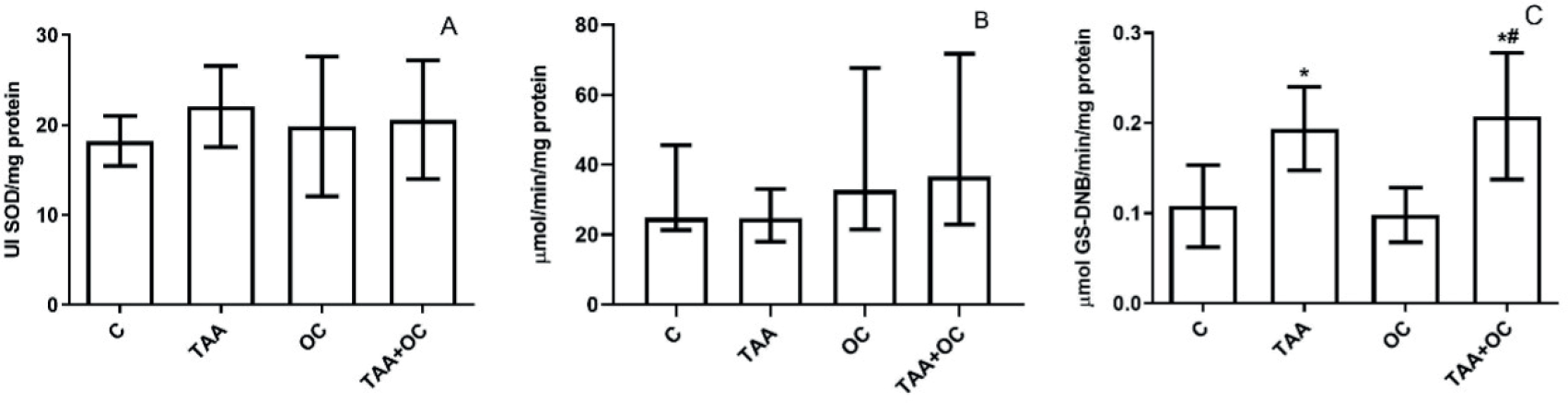
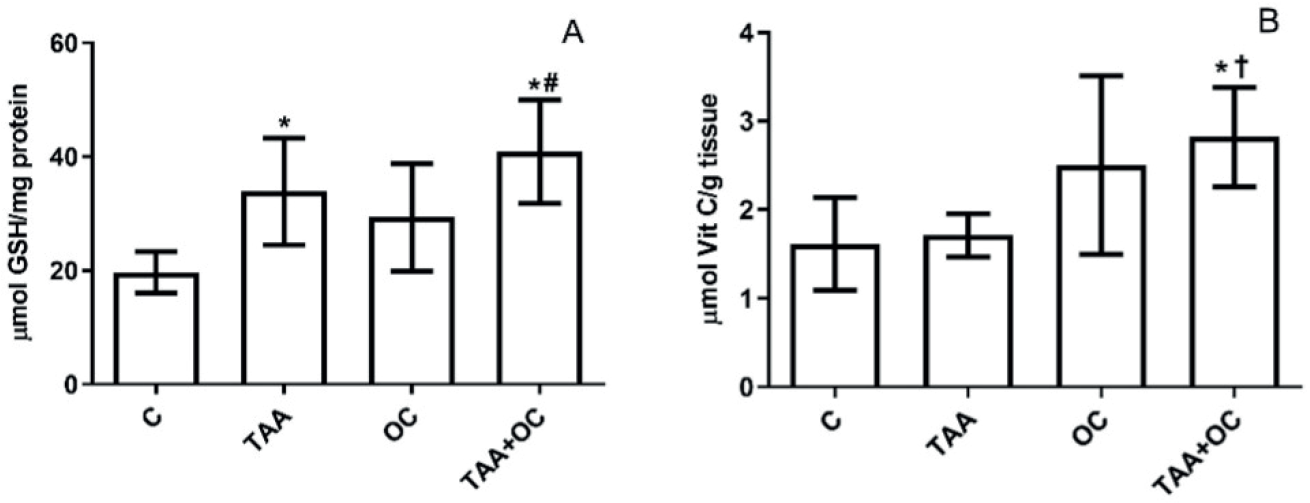
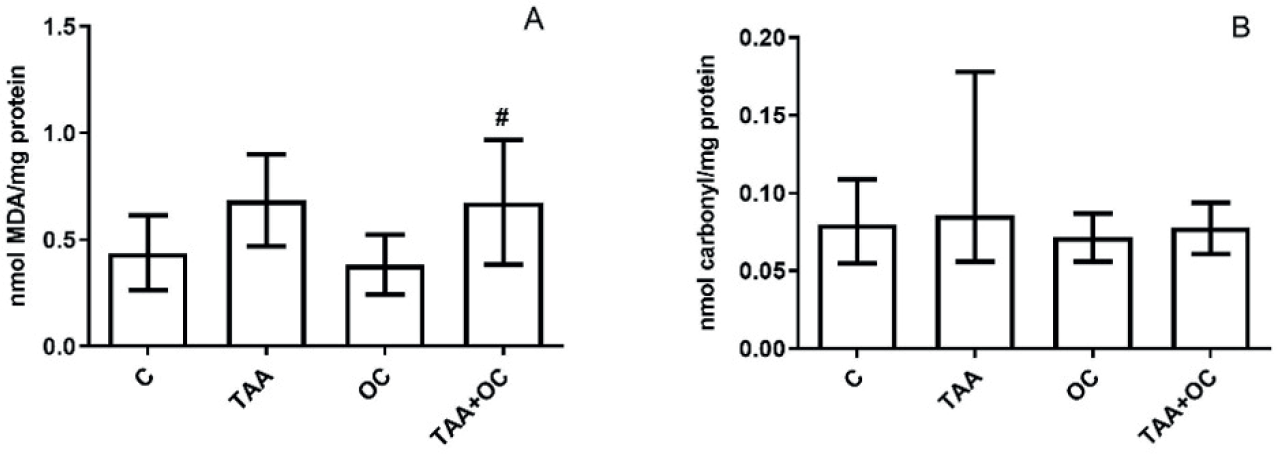
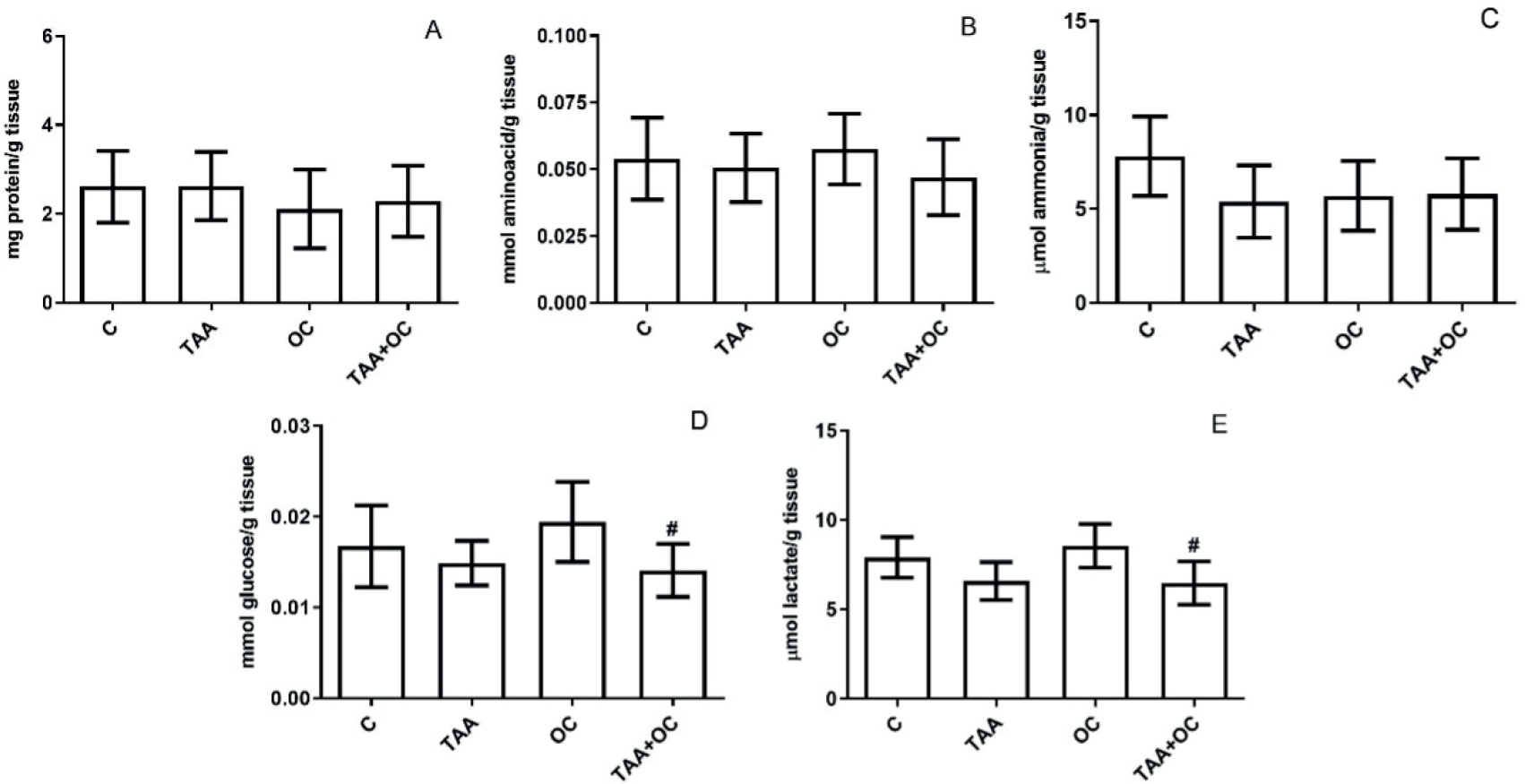
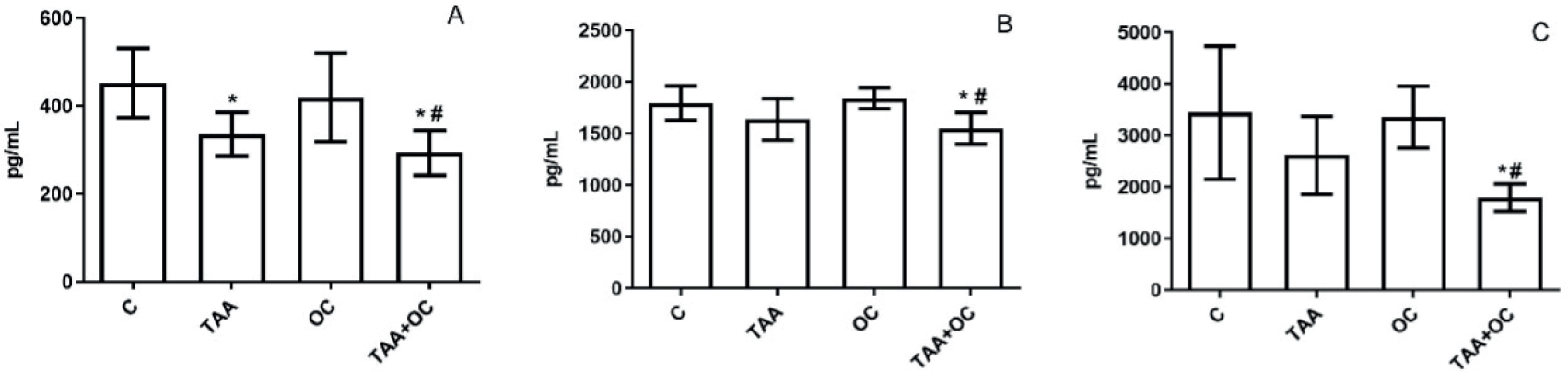
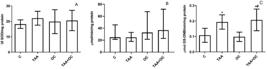
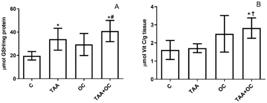
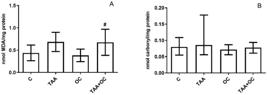
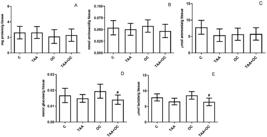
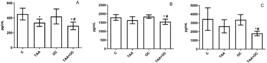
This study evaluated the effects of copaiba oil on the kidneys of rats with cirrhosis induced by thioacetamide. Male Wistar rats were divided into four groups (n = 8), namely Control (C), Thioacetamide (TAA), Copaiba Oil (OC), and Thioacetamide + Copaiba Oil (TAA+OC). The biochemical and immunological analyses were performed, and results for the antioxidant enzymatic analysis revealed an increase in GST activity for TAA and TAA+OC compared to C. For GSH, higher values were observed in the TAA and TAA+OC groups compared to the C, but the latter differed from OC, such as TBARS. For Vit C, the TAA+OC group differed from the C and TAA and for glucose and lactate, lower values were observed for the TAA+OC group compared to the OC group. Cytokine concentrations showed the same profile with the TAA+OC group showing lower values compared to the C and OC groups. The data obtained do not show a clear positive effect of copaiba oil on kidney tissue when compared to the potential damage caused by thioacetamide. However, the groups that received either thioacetamide or copaiba oil alone maintained their basal levels, indicating that, at the doses used, these compounds did not negatively alter renal morphology.
Keywords:
Hepatorenal syndrome; Nephrotoxicity; Oleoresin; Oxidative stress; Thioacetamide.
 Thumbnail
 Thumbnail
 Thumbnail
 Thumbnail
 Thumbnail