 Effects of sea buckthorn granules on the lungs of rats with chronic bronchitis: a study based on the P38 MAPK/P65 NF-ΚB signaling pathway
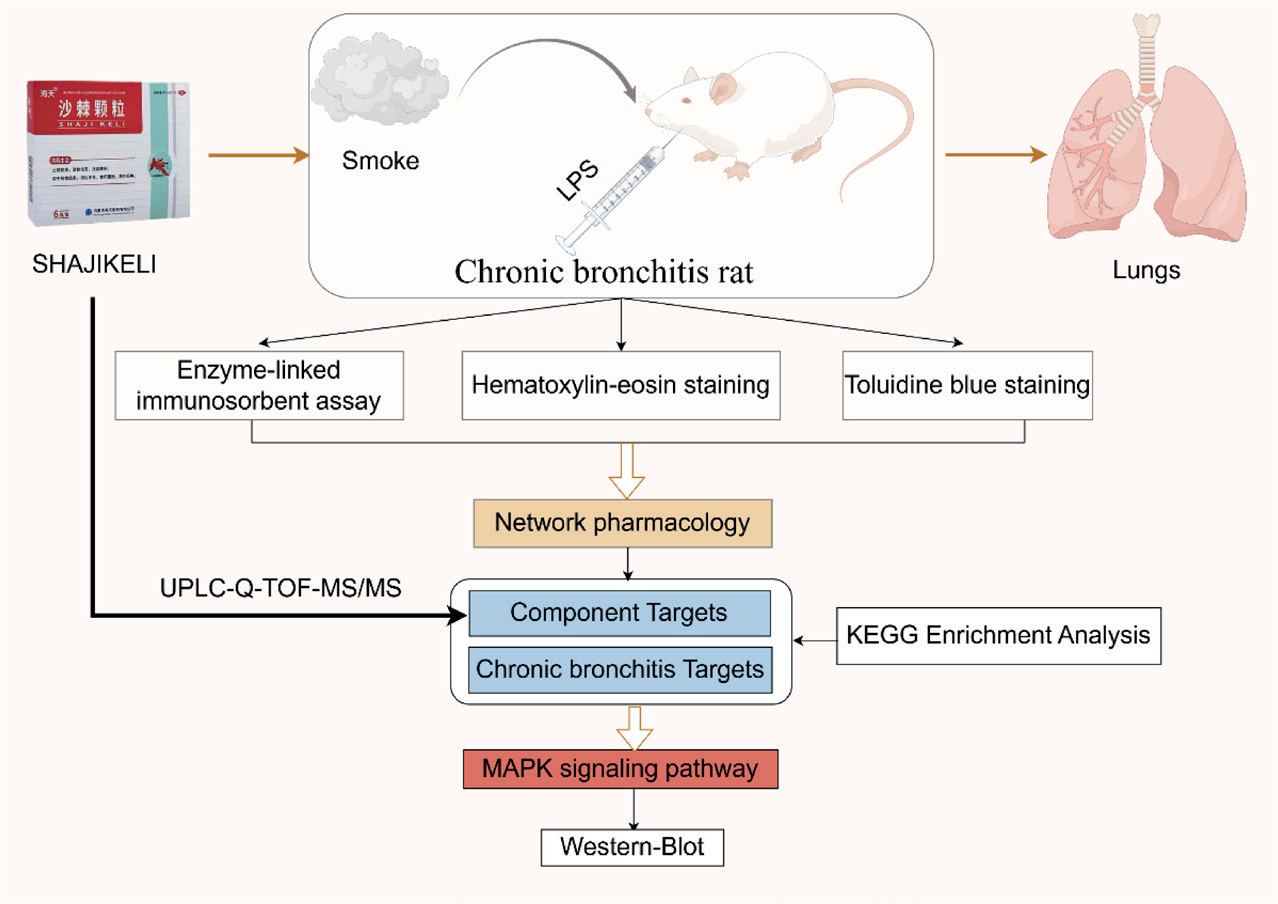
This study was conducted to explore the mechanism of Sea Buckthorn Granules (SBG) in treating chronic bronchitis (CB) in rats. The primary chemical components of SBG were identified using UPLC-Q-TOF-MS/MS. A rat model of CB was established through smoke inhalation combined with lipopolysaccharide (LPS) stimulation, followed by oral administration of SBG. The serum levels of TNF-α, IL-6, and IL-1β in rats were measured using ELISA. Pathological changes in lung tissues were observed through HE and toluidine blue staining. Furthermore, the main components and pathways involved in the therapeutic effects of SBG on CB were predicted using network pharmacology. In addition, p38 and NF-κBp65 protein expression as well as their phosphorylation levels in rat lung tissues were measured by western blot. Compared to the model group, treatment with SBG significantly alleviated cough symptoms, and Mitigating body weight loss in CB rats (P<0.05). SBG markedly decreased serum levels of TNF-α, IL-6, and IL-1β (P<0.05); as well as reduction in both NF-κBp65 expression levels and p38 phosphorylation within lung tissues (P<0.05). In summary, SBG can effectively ameliorate cough symptoms while reducing serum TNF-α, IL-6, and IL-1β levels, as well as inhibiting the MAPK/NF-κB signaling pathway.
Keywords:
Sea Buckthorn Granules; Chronic bronchitis; Network pharmacology; MAPK pathway.
INTRODUCTION
Chronic bronchitis (CB) is a persistent airway inflammatory condition characterized by cough, sputum production, and wheezing. Due to an overproduction and excessive secretion of mucus, it may trigger the blockage of small airway passages, epithelial remodeling, and alterations in airway surface tension (Mejza et al., 2017; Zhang et al., 2019). The pathogenesis and chronic prolongation of CB involves inflammatory response and related pathways, oxidative stress, mucus hypersecretion, dehydration of airway surfaces, and airway remodeling in a variety of ways. Prior epidemiological studies have demonstrated that among individuals over the age of 40 who maintain normal pulmonary ventilation, a notable proportion, specifically ranging from 2.2% to 17%, present symptoms indicative of CB (Wu et al., 2023). At present, western medicine treats acute exacerbation of CB mainly by controlling infection, relieving cough, resolving phlegm and calming asthma. However, due to recurrent episodes and long duration of illness in patients with CB, long-term treatment may induce the development of drug resistance and even many adverse reactions. Existing data has documented that flavonoids, terpenoids, and sulfur-containing compounds in medicinal plants may be potential drugs for the treatment of experimental CB. Qiu et al. (2024) found that eucalyptus brain, limonene, and pinene enteric capsule could exert a potential therapeutic effect by reducing the elevated TNF-α, IL-6, MIP-1α, and CCL5 in alveolar lavage fluid, as well as MUC5AC, MUC5B, and p-p65 in lung tissues in an lipopolysaccharide (LPS)-induced CB rat model.
Sea Buckthorn Granules (SBG) is prepared from sea buckthorn berries, which is one of the best-selling drugs of Inner Mongolia Haitian Pharmaceutical Co., Ltd. SBG can relieve cough and phlegm, eliminate food stagnation, promote blood circulation and dissipate blood stasis. It is used for cough and phlegm, dyspepsia, food stagnation and abdominal pain, bruises and swelling, blood stasis and menstrual closure. Sea buckthorn is the dried mature fruit of sea buckthorn (Hippophae rhamnoides L.) of the genus Hippophae of the family Hippophae, which has been applied as a traditional medicinal material of Tibetans and Mongolians (China, 1995). Since ancient times, sea buckthorn has been used in the treatment of respiratory system diseases. Modern research has proven its therapeutic effects on CB, pharyngitis, asthma and other respiratory diseases. The medicinal properties of this drug were first documented in “Yue Wang Yakan” (Rinchengga, 2011). Moreover, it was mentioned and regarded as a crucial drug for treating respiratory ailments in “Tibetan Pharmacology”, which holds a significant place among the four classic medical treatises of Tibetan medicine (Gaamatsooni, 2011). As recorded in the esteemed Tibetan medicine compendium “Jingzhu Ben Cao” (Phuntsok, 2012), “sea buckthorn is beneficial for the lungs, can alleviate coughs, promote blood circulation to dissipate blood stasis, enhance the blood flow within the heart, and clear phlegm and turbidity. In recent years, ethnomedicine has played an important role in the prevention, treatment and rehabilitation of Corona Virus Disease 2019 (COVID-19). Liug Chuan et al. (2020) carried out a study on the active ingredients of five-flavor sea buckthorn powder for the treatment of COVID-19 using network pharmacology and molecular docking. The results showed that quercetin, glycyrrhizin, kaempferol and glycyrrhizin isoflavanone had the strongest binding power to the COVID-19 target, and 15 signaling pathways were screened out through the “drug-component-target” study and the enrichment of the KEGG pathway. Therefore, five-flavor sea buckthorn powder may exert its anti-COVID-19 effect through the activation of multiple signaling pathways.
Although there are many studies on the pharmacological effects of sea buckthorn, we know little about the mechanism of action and its targets against CB so far. In 2007, the concept of network pharmacology was proposed by Hopkins (2008), a British scholar, as a discipline to explore the potential mechanism of drug action by constructing a complex network between drug-target-disease. It is consistent with the concept of integrative and holistic view of disease diagnosis and identification on of evidence for treatment in traditional Chinese medicine. In view of this, the present study was designed to elucidate the pharmacological basis of SBG on the basis of network pharmacology and pharmacodynamic validation. Moreover, it clarified the molecular mechanism of SBG in the treatment of CB. It may provide a reference for subsequent experimental research as well as further development and utilization.
METHODS
Preparation of SBG for test sample solution
An accurate amount of 3.0g SBG (Inner Mongolia Haitian Pharmaceutical Co., Ltd., Lot No.: 220804) was taken and placed in 150ml stoppered conical flask, and added with 30ml of 70% methanol for 40min of ultrasonic extraction (100W, and 40kHz) at 35°. After filtration by 0.22µm membrane, the filtrate was obtained as the test solution.
UPLC-Q-TOF-MS/MS to determine the composition of SBG
The ultra-high liquid chromatograph was ACQQUITYTM UPLCC (Waters Technology Co., Ltd., USA) and the mass spectrometer was Xevo TQQ (Agilent Technologies Ltd.). The tandem TripleTOF 6600-1 quadrupole mass spectrometer was used, and the ion source was electrosprayed in positive and negative scanning modes with a scanning range of m/z 100~2000. The source voltages under positive and negative ions were 5500 V and -4500 V, and the temperatures of the ion source were 600°C and 500°C, respectively. The cleavage voltages were ±80 V and the collision energies were ±10 eV. The atomization gas GS1 and auxiliary gas GS2 were nitrogen, both 50 psi, the air curtain was 35 psi, and the total data acquisition time was 20 min. The information-dependent set, dynamic back-chromatographic conditions were adopted on a Waters BEH C18 column (2.1 mm×100 mm, 1.7 μm) using phase A (0.1% formic acid aqueous solution) and phase B (0.1% formic acid/methanol/ acetonitrile) as the mobile phase. The liquid-phase elution gradients were as follows: 0 - 0.5 min, 10% B linear; 0.5-2 min, 50% B; 2-7 min, 80% B linear; 7-15 min, 100% B; 15-20 min, 10% B; 20 min, 10% B; column temperature 50°; volume flow rate 0.4 mL/ min; and injection volume 1 μL.
Animals
Sixty SPF-grade male 6-week-old Sprague-Dawley (SD) rats (200~220 g, Chengdu Dashuo Limited Liability Company, (Shaanxi, China), with Certificate of Conformity No. SCXK (Sichuan) 2020-030, were kept in the SPF-grade animal laboratory of the School of Pharmacy, Shaanxi University of Chinese Medicine. Rats were subjected to adaptive feeding for 1 week within the environment at the temperature of (25±1)°C, humidity of 60%±5%, alternating cycles of day and night light and darkness of 12 h/12 h, and 15~20 times of air exchange, with free access to diet and water. The animal experiment ethical approval number was ID: SUCMMDL20231228001.
Grouping of animals
These 60 rats were divided into six groups of the blank control group, the model group, the acetylcysteine group, as well as SBG low-dose, medium-dose, and high-dose groups, with 10 rats in each group.
Animal modeling
After anesthesia and fixation of rats on the rat plate, a small incision was made in front of the neck, followed by blunt separation of surrounding tissues layer by layer and separation of the trachea. Then, 200 μl/μg LPS was slowly injected into the trachea, and uniformly distributed in the two lungs by rotating the rat fixation plate vertically, after which the wound was closed by suture. Six hours after modeling, the rats were allowed to drink freely, but no feed was allowed to avoid asphyxiation when the airway of the modeled rats was blocked by the feed. From the 3rd day to the 33rd day of molding, the rats were placed in a smoking box and smoked half an hour each time (once a day), and the amount of smoke was 10 cigarettes each time. On days 5, 10, 15, and 20 of modeling, LPS was administered in the form of 200 μl of nasal drops (0.25 μg/μl) to maintain modeling (Upadhyay et al., 2023).
Experimental drug administration
The dose of acetylcysteine (0.063 g/kg), SBG low (2.3625 g/kg), SBG medium (4.725 g/kg), and SBG high (9.45 g/kg) were administered once a day for two weeks starting on day 16. After the completion of modeling on the 30th day, the anesthetized rats were subjected to intraperitoneal blood collection and then executed for the sampling of the trachea and lung tissues.
Serum inflammatory factor assay
The blood samples of rats in each group were routinely allowed to stand for 60 min, then centrifuged at 3,000 r/min for 10 min. Afterwards, the supernatant was collected for the detection of the serum levels of IL-6 (MM-0190R1), IL-1β (MM-0047R1), IL-6 (MM-0180R1) in strict accordance with the instructions of the ELISA kit (Jiangsu Enzyme Immunity Industry Co., Ltd.).
Histopathological examination of the skin tissue
The paraffinized sections were made from the left part of the lung tissue of rats in each group. The deparaffinized sections were placed on a staining rack, stained with hematoxylin and stained with 1% hydrochloric acid for internal color separation. After washing with water, these sections were counterblued in warm water or weakly alkaline aqueous solution, stained with eosin, dehydrated and sealed. Morphological changes in lung tissues were observed under light microscopy.
Toluidine blue staining
A portion of the left lung tissue was fixed with 4% paraformaldehyde solution; embedded in paraffin and sectioned; deparaffinized by xylene, dehydrated by gradient ethanol, and stained with toluidine blue. After that, the whole sections were photographed under a microscope with a fully automated live-cell fluorescence imaging system. Finally, this study analyzed the infiltration of mast cells in the stained sections of skin lesions tissues.
Network pharmacology analysis
Acquisition of component targets and CB disease targets for SBG
PubChem database (Kim et al., 2017) and Swiss Target Prediction database (Daina et al., 2019) were used to screen the active ingredient targets of SBG. Meanwhile, the GeneCards (Stelzer et al., 2016), Drugbank and OMIM (Knox et al., 2024) databases were searched with the keyword “chronic bronchitis” to obtain the target information of CB.
Network construction of the components of CB disease-SBG
Drug and disease targets were imported into Venny2.1 to obtain the intersection targets of both. The common drug-disease targets were obtained by uploading the intersected results in STRING11.5 database (Koutrouli et al., 2021) for the construction of PPI network and screening of core targets. The active ingredients, common targets, and disease data in SBG were imported into Cytoscape 3.9 (Shannon et al., 2003) to construct the drug-ingredient-target-disease interaction network diagram.
KEGG enrichment analysis
To further elucidate the targets and pathways of action of SBG components in the treatment of CB, the intersected genes were then analyzed for KEGG using R software (Knox et al., 2024).
Western blot
The lung tissue was minced, homogenized on ice, lysed by adding lysis solution for 30 min, centrifuged at 12,000 r.min-1 and 4°C for 5 min. The supernatant was harvested for protein quantification. After adjusting the amount of protein, an equal amount of lysate was taken, and SDS-PAGE electrophoresis was carried out by adding sampling buffer. After electrophoresis, it was transferred to PVDF membrane, and then closed at room temperature for 2 h using skimmed milk. Furthermore, it was supplemented with the primary antibodies [p-p38 (ER 2001-52), p38 (ET1602-26), p-p65 (ET1604-27), and p65 (ET1603-12)], and GAPDH (EM1101) for incubation at 4°C overnight. After washing with TBST, the next step was incubation with the corresponding secondary antibody (HRP-Goat anti Rabbit (SA00001-2)) for 1 h at room temperature. With another washing using TBST and chemiluminescence processing, the images were saved in the imaging scanning system. The expression level of GAPDH protein was used as the internal reference. The ratio of each sample to the gray value of the corresponding internal reference was used as the relative protein content.
Statistical analysis
GraphPad Prism 9.0 software was used for statistical analysis. Data were expressed as mean ± standard deviation (SD). Data were analyzed for normal distribution using the Shapiro-Wilk test. Comparisons between groups were made by one-way ANOVA, followed by Dunnett-t post hoc test. Differences were considered statistically significant at P<0.05.
RESULTS
UPLC-Q-TOF-MS/MS analysis results
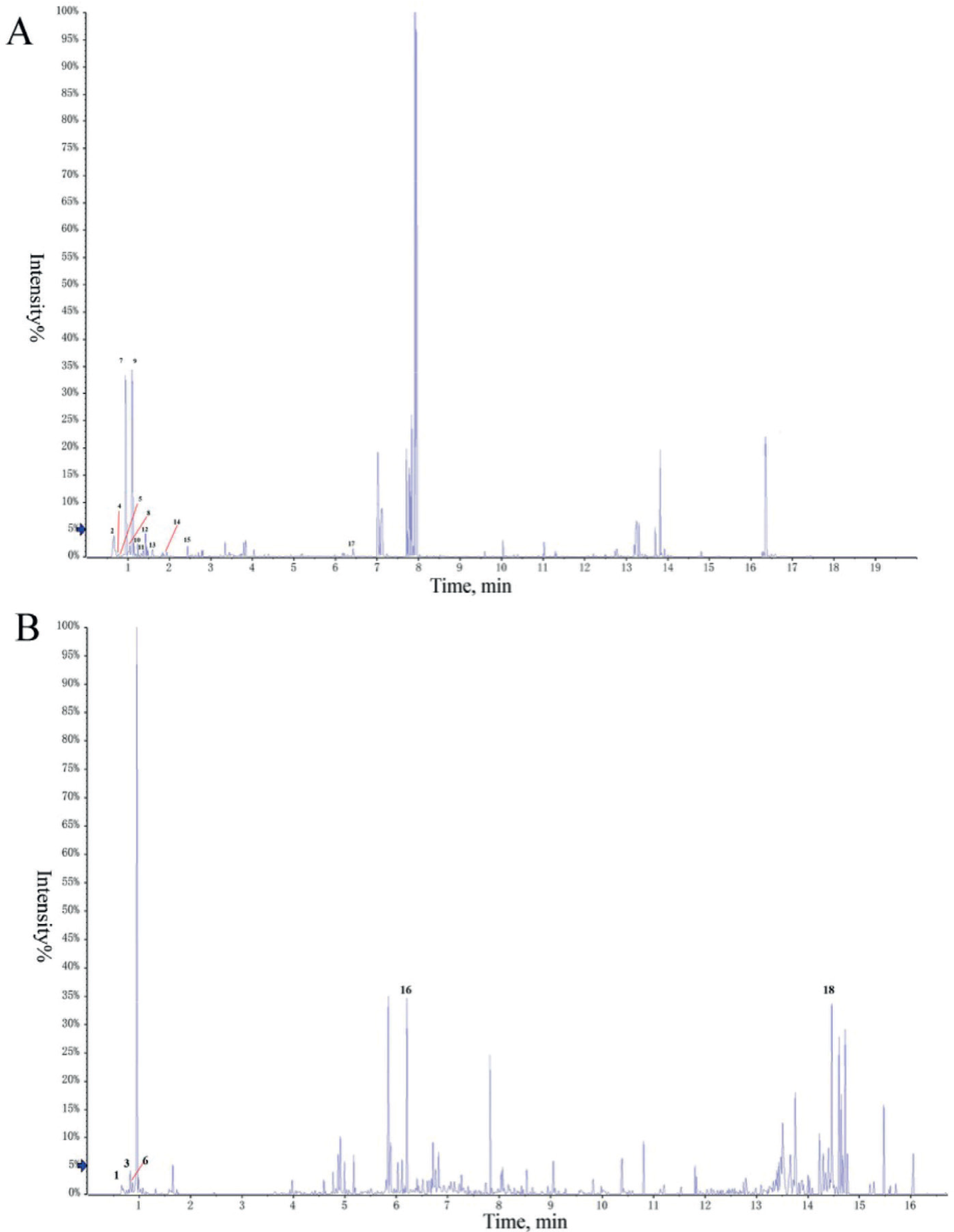
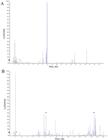
The test solution was injected and analyzed under specified conditions, resulting in the acquisition of total ion flow chromatograms (TIC) in both positive and negative ion modes as depicted in Figure 1. A total of 18 compounds were identified from the aqueous extract of SBG (Table I). The compositional identification was conducted based on data generated from MS/MS mass spectrometry, referencing the NIST 2017 database, and supplemented with relevant literature to create a matching library for the components of SBG.
Effects of SBG on the general state of rats
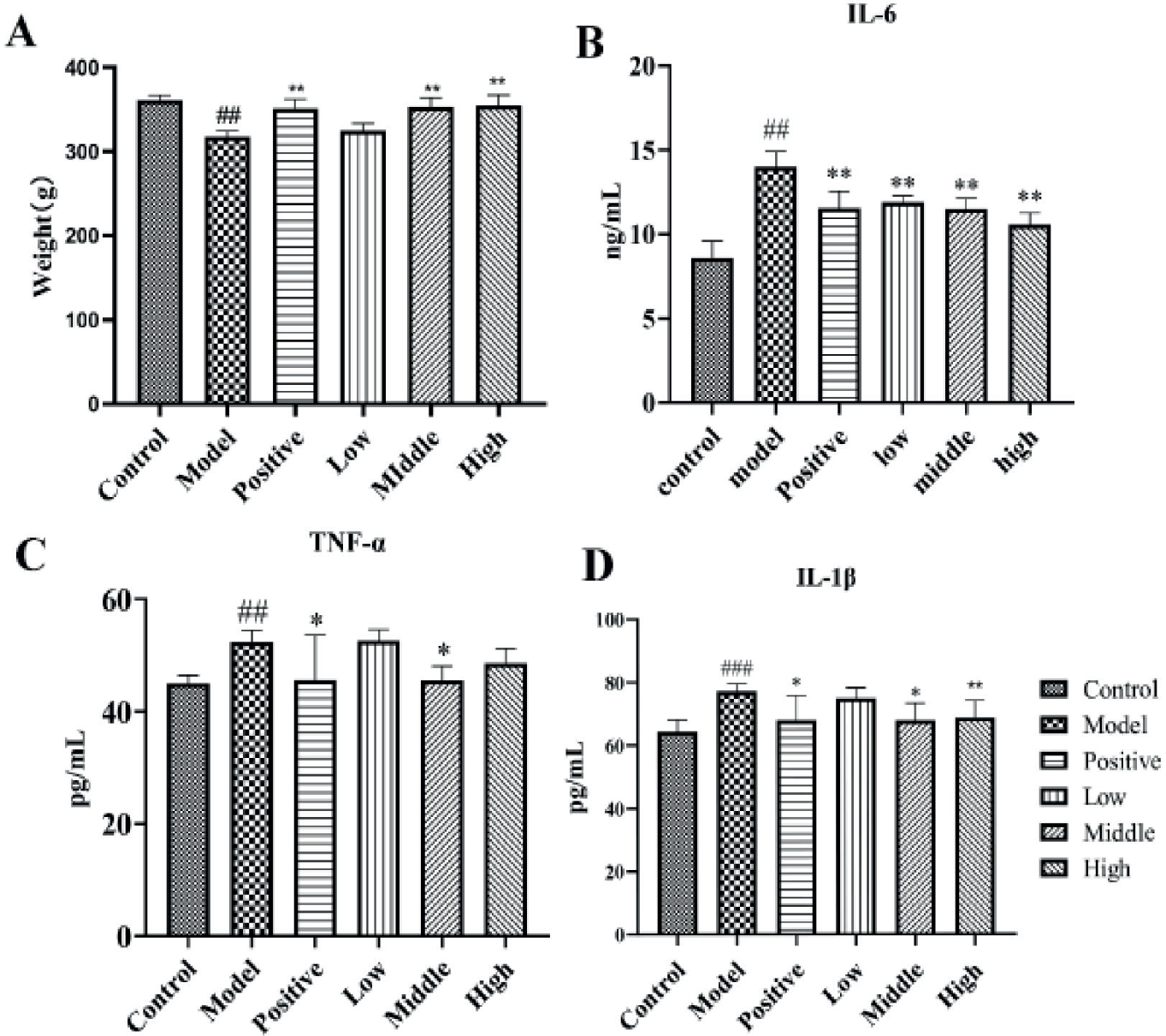
Rats in the control group exhibited good mental state, with smooth and glossy fur, increased activity, and no symptoms such as coughing or shortness of breath. In comparison, rats in the model group had dull and lustreless fur, reduced spontaneous activity, aggregative behavior, and symptoms such as coughing, rhinorrhea, and dyspnea. Additionally, the modeled rats showed a decreased appetite and significantly lower body mass compared to the control group (P<0.05). Following drug administration, rats in the mediumand high-dose SBG groups demonstrated varying degrees of improvement in their conditions. Specific improvements included increased activity levels and appetite as well as a reduction in symptoms such as coughing and shortness of breath. In addition, there was a significant increase in body mass of rats administrated with SBG compared to those in the model group (P<0.05), as depicted in Figure 2A.
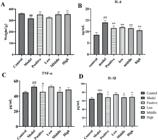
(A) Effect of SBG on the body weight of rats. (B) Effect of SBG on the serum level of IL-6 in rats. (C) Effects of SBG on the serum level of TNF-α in rats. (D) Effect of SBG on the serum level of IL-1β in rats. (n=6) Compared with the control group, #P < 0.05, ##P < 0.01; and compared with the model group, *P < 0.05, ** P < 0.01.
Effects of SBG on serum levels of TNF-α, IL-1β and IL-6 in rats
Compared to the control group, the serum levels of TNF-α, IL-1β, and IL-6 were significantly elevated (P<0.05) in the model group. In contrast, the three indicators had markedly reduced serum concentrations (P<0.05) in the middleand high-dose SBG groups when compared to the model group (Figure 2).
Effects of SBG on histopathological damage of rat lungs
According to the results of HE staining, no inflammatory cell infiltration was observed in the bronchial and alveolar tissues of rat lungs in the control group. Moreover, there was no hyperplasia or thickening of the airway epithelium in the lungs. The alveolar epithelium did not become congested, and there was no inflammatory cell exudation or alveolar fusion and dilatation. In contrast, the model group exhibited hyperplasia and thickening of the airway epithelium in rat lungs. Inflammatory cell aggregation and infiltration around the bronchioles were also observed, along with inflammatory cell exudation in the alveolar tissues. Furthermore, congestion of capillaries in interstitium as well as fusion and expansion of alveoli were noted in localized areas. The mediumand high-dose SBG groups demonstrated reduced lung inflammation to varying degrees, mitigated pathological morphological changes within lung tissues, as well as enhanced ventilation and gas exchange capacity (Figure 3).
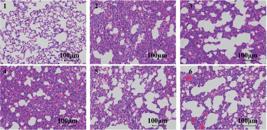
HE staining of rat lung tissues (Note 1: Control group, 2: Model group, 3: Positive drug group, 4: Low-dose SBG, 5: Medium-dose SBG, 6: High-dose SBG).
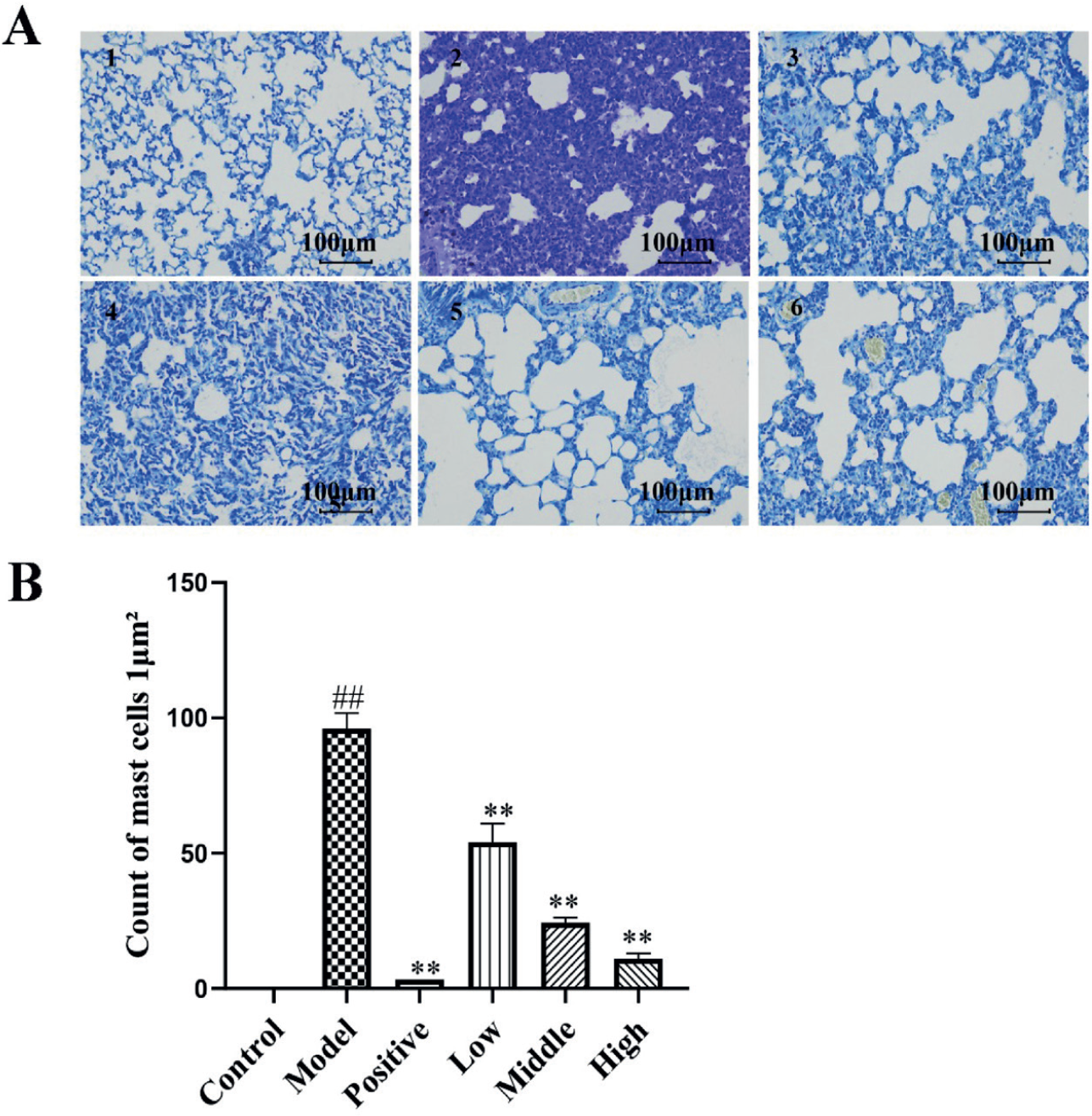
Meanwhile, as indicated by toluidine blue staining, the control group showed no obvious abnormality; and the model group had obvious mast cell infiltration in the lung tissue of rats. Compared with the model group, the number of mast cell infiltration was significantly reduced in rats with drug intervention (p<0.05, Figure 4), of which the improvement in the mediumand high-dose SBG groups was the most obvious.
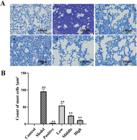
(A): Toluidine blue staining of rats lung tissues. (Note 1: Control group, 2: Model group, 3: Positive drug group, 4: Low-dose SBG, 5: Medium-dose SBG, 6: High-dose SBG) B: Mast cell counts after toluidine blue staining. (n=3) Compared with the control group, #P < 0.05, ##P < 0.01; and compared with the model group, *P < 0.05, **P < 0.01.
Network construction and KEGG enrichment analysis
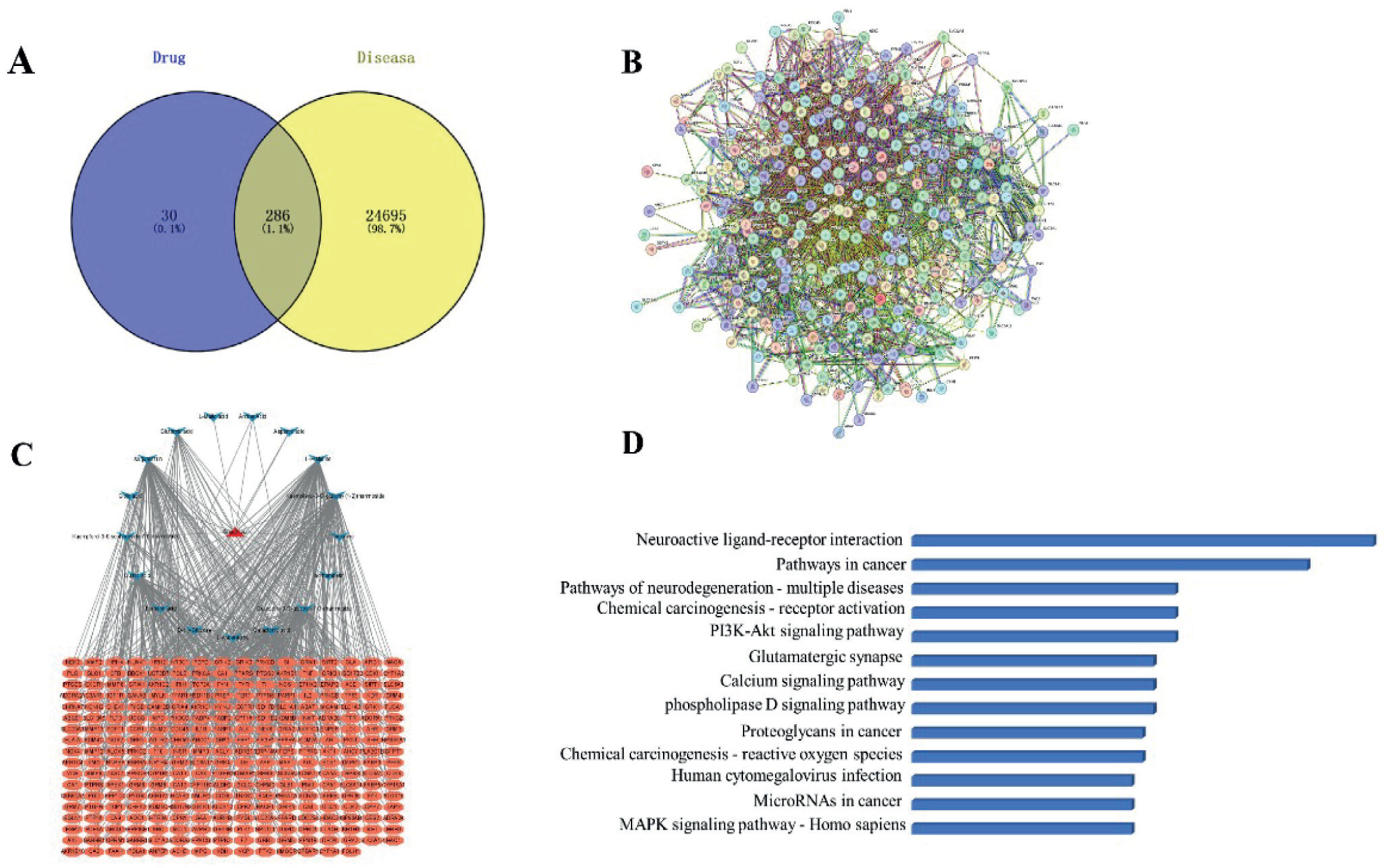
The intersection of SBG component targets and CB-related targets totaled 286 (Figure 5A), regarding as the key targets of SBG for CB treatment. The 286 intersected targets were introduced into STRING to construct a PPI network, which had 286 nodes, 2,857 edges and an average degree value of 20 (Figure 5B). Subsequently, the disease-active ingredient-core target of SBG for CB treatment was constructed by Cytoscape 3.7.1, as shown in Figure 5C. Furthermore, KEGG enrichment analysis identified a total of 295 signaling pathways from the intersected targets (Figure 5D).

(A) Intersection plot of SBG targets, CB targets. (B) PPI network diagram. (C) Disease-active ingredient-core target network diagram of SBG for CB. (D) Bar chart of KEGG enrichment analysis.
Molecular docking results
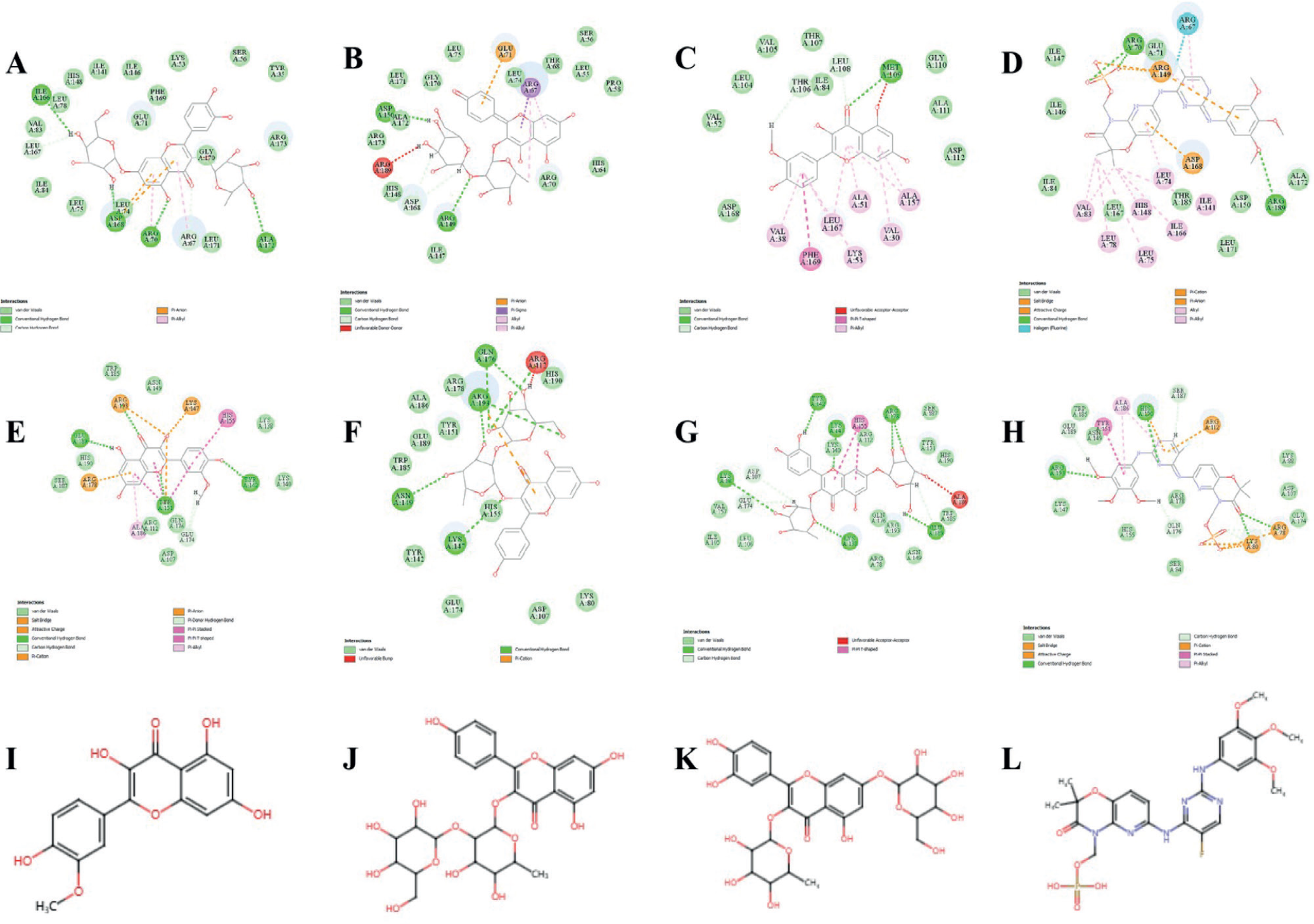
Molecular docking was conducted to verify the interaction between SBG and 2 core targets of the MAPK signaling pathway, as revealed in Figure 6. The docking results were compared based on the Docking score (Table II), with a focus on the active ingredient’s performance in comparison to a specific ligand. A higher score for the active ingredient, comparable to that of the specific ligand, indicated effective targeting. According to the results, Isorhamnetin exhibited superior docking activity with p65 and p38, comparable to the specific ligand Fostamatinib. Therefore, Isorhamnetin may serve as a key active ingredient in SBG for treating CB.
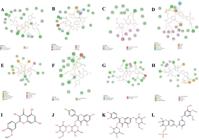
(A) Interaction plot of p65 with Isorhamnetin. (B) Interaction plot of p65 and Kaempferol-3-O-glucosyl (1-2) rhamnoside. (C) Interaction diagram of p65 and Quercetin 3-O-rhamnoside 7-O-glucoside. (D) Interaction plot of p65 and Fostamatinib. (E) Interaction diagram of p38 and Isorhamnetin. (F) Interaction diagram of p38 and Kaempferol-3-O-glucosyl (1-2) rhamnoside. (G) p38 and Quercetin 3-O-rhamnoside 7-O-glucoside interaction diagram. (H) p38 and Fostamatinib interaction diagram. (I) Isorhamnetin structural formula. (J) Kaempferol-3-O-glucosyl (1-2) rhamnoside structural formula. (K) Quercetin 3-O-rhamnoside 7-O-glucoside structural formula. (L) Fostamatinib structural formula.
Effects of SBG on p38 and NF-κBp65 protein expressions in bronchopulmonary tissues of rats with CB
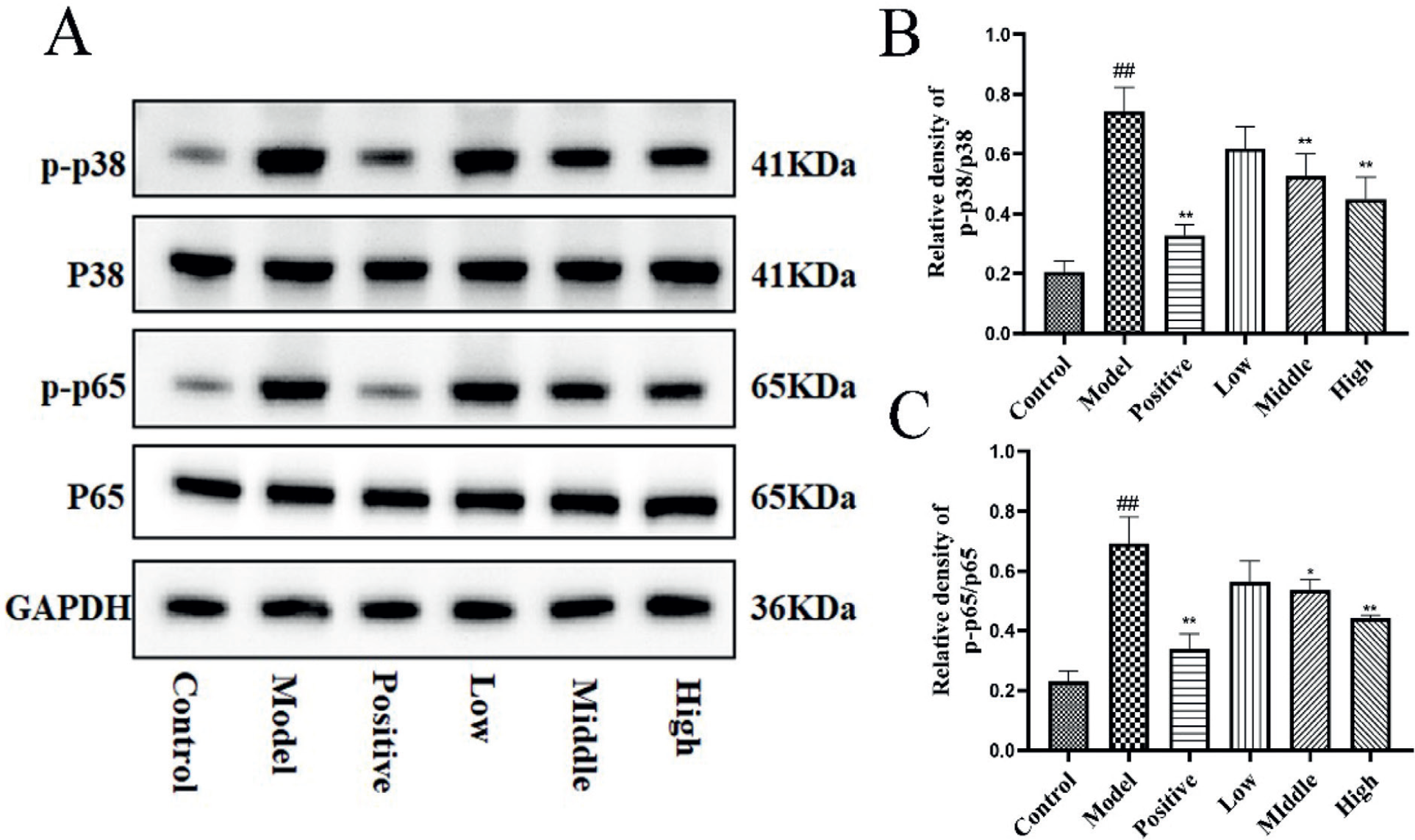
LPS injection combined with smoke-induced CB modeling in the experimental rats resulted in the activation of p-p65/p65 in lung tissues. Increased p-p65/p65 ratio by 2.99-fold was observed in the model group compared with the control group (p<0.05). However, drug interventions using positive drug, low-, medium-, and high-dose SBG reduced the protein expression of p-p65/p65 by 50.92%, 18.52%, 22.51% and 35.92%, respectively (all p<0.05). Meanwhile, the combined treatment increased p-p38/ p38 protein activation in lung tissues, and the model group increased the p-p38/p38 ratio by 3.63-fold (p<0.05) compared to the control group. Notably, positive drug, low-, medium-, and high-dose SBG treatments reduced the protein expression of p-p38/p38 by 55.96%, 16.82%, 29.21%, and 39.64%, respectively (all p<0.05), compared to the model group (Figure 7).
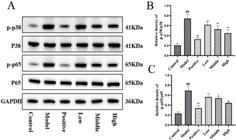
A: Detection of p38/p-p38 and p-p65/p65 by western blot. B-C: Gray scale values of p38 and NF-κBp65 proteins in rat bronchopulmonary tissues. (n=3). Compared to the control group, # P < 0.05, ## P < 0.01; and compared to the model group, * P < 0.05, ** P < 0.01.
Mechanism description
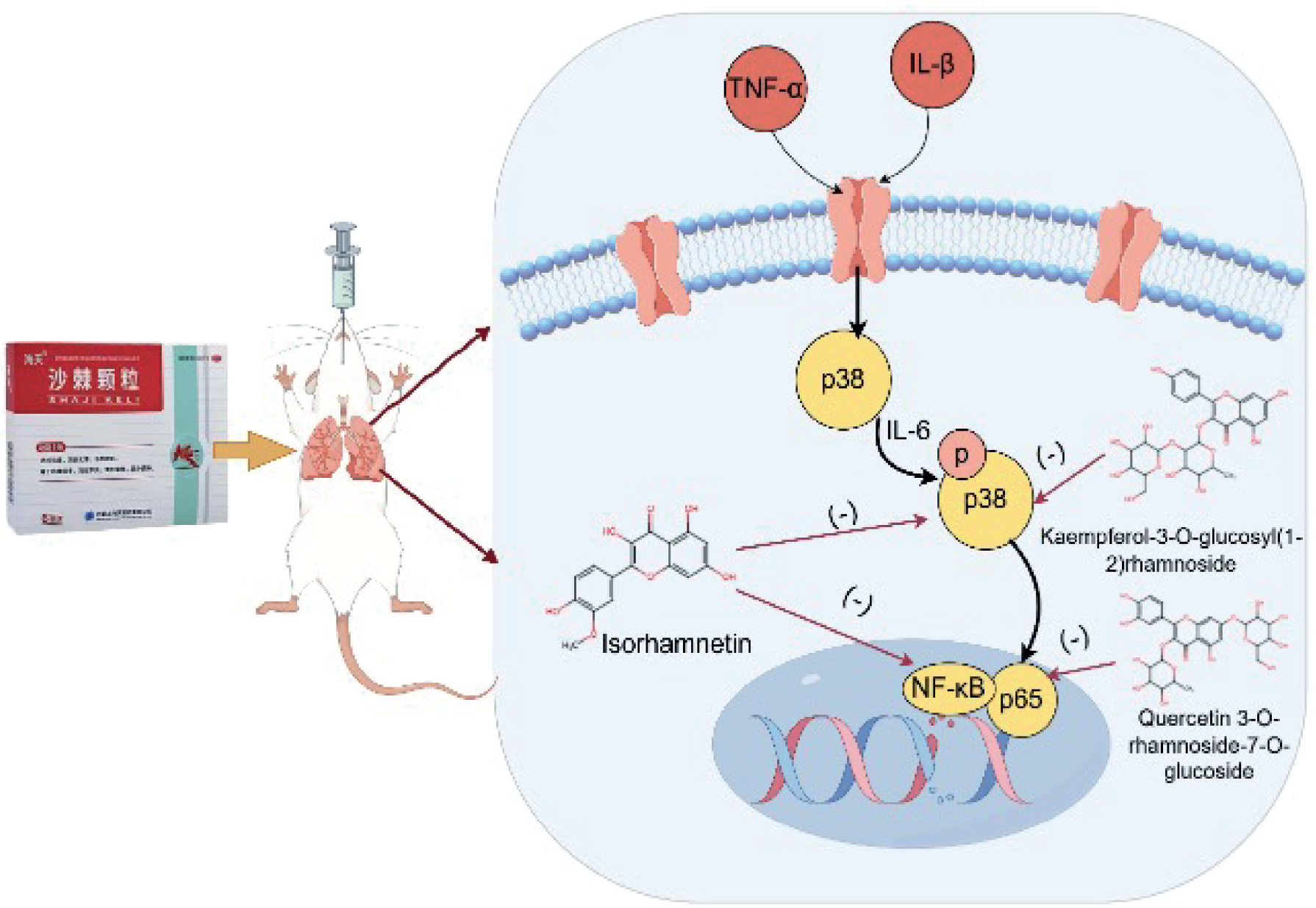
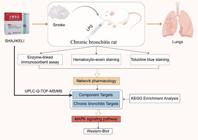
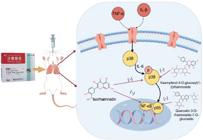
Combined with the results of all the aforementioned experiments, this study proposed a hypothesis that the mechanism of action of SBG in treating CB might involve several factors. Firstly, SBG appeared to improve the overall body condition and promoted body mass growth in rats. Additionally, these intervention regimens might enable the reduction of the secretion of inflammatory factors IL-6, TNF-α, and IL1-β, thereby inhibiting the activation of the MAPKp38/NF-κBp65 pathway and ultimately improving lung injury in CB rats (Figure 8) (Mechanism description are drawn by FigDraw).
DISCUSSION
The primary active components of SBG consist of flavonoids, i.e., two benzene rings connected by three central carbons. These compounds exhibit a range of pharmacological activities, including antibacterial, antiviral, antioxidant, anti-inflammatory, analgesic, immune-enhancing, antitussive, expectorant, antispasmodic, and anti-metamorphic effects. In this study, mediumand high-dose SBG effectively ameliorated inflammatory cell infiltration in the bronchial mucosa of CB rats. Additionally, these intervention regimens reduced goblet cells and fibrous hyperplasia in the tubular wall, while increasing the internal diameter of the tubular lumen and alleviating bronchopulmonary inflammation.
The physiopathological process of CB is mainly characterized by damage to the central airway epithelium, infiltration of inflammatory cells, and hypertrophy of smooth muscle cells. Among them, the inflammatory response is the central mechanism for CB development, with interactions between various inflammatory factors, secondary to hypersecretion of mucus, decreased epithelial immune function, dehydration of the airway surface, and airway remodeling (Baltazar-García et al., 2023). Therefore, the key for CB management lies in inhibiting the production of pro-inflammatory factors such as cytokines and inflammatory mediators. In this study, cigarette smoke combined with LPS was used to induce CB model. LPS is an important inflammatory factor, which can cause airway epithelial cell damage and airway inflammation. The presence of tar, nicotine, hydrocyanic acid and other chemicals in the smoke may trigger serious damage to the mucosal barrier of respiratory tract, resulting in increased secretion of respiratory mucus, swelling of bronchial mucosal epithelial cells, ciliated cells degeneration, detachment, and cilia impeded to obstruct sputum discharge and block the airway. LPS combined with smoking can accelerate the construction of the animal model of CB (Kim et al., 2017). After successful modeling, the animals had coughing, sneezing, sniffling, shortness of breath, rhonchi, nose scratching, piling up, lying down, squinting, mental anomalies, slow reaction, decreased appetite, decreased body mass or slow growth, and withered and lusterless hair.
IL-6 is an indicator of inflammation, and TNF-α promotes the expression of IL-6, thereby mediating the inflammatory response (Eickmeier et al., 2010). IL-1β promotes the expression of chemokines, cell adhesion molecules and other inflammatory mediators to cause inflammation. It can further result in rapid adhesion of leukocytes and their transfer across the endothelium to the site of inflammation to participate in the inflammatory response. In this study, mediumand high-dose SBG significantly reduced the serum levels of TNF-α, IL-1β and IL-6. After gavage of SBG, the above indexes of CB rats were significantly improved in a dose-dependent manner.
Network pharmacology can predict the correlation of different nodes through network construction and analysis of network databases. It breaks the traditional concept of “one drug, one target, one disease”, provides quantifiable data for the study of multi-component, multi-target and multi-pathway effects of traditional Chinese medicine and ethnomedicine; moreover, it may contribute to realizing the holistic and systematic exploration of the mechanism of multi-components of single drugs or compound drugs (Wang et al., 2023; Zhang et al., 2016; Zhou et al., 2024). This study provided quantitative data for elucidating the multi-component, multi-target and multi-pathway effects of single drug. The present study investigated the potential mechanism of SBG against CB by network pharmacology. Finally, 18 active ingredients, 286 key targets and 295 effective pathways were identified through UPLC-Q-TOF-MS/ MS. Isorhamnetin, Kaempferol-3-O-glucosyl (1-2) rhamnoside, Quercetin 3-O-rhamnoside 7-O-glucoside, the active ingredients in SBG, might act on IL-1β, TNF-α, p38, p53, and other targets through the MAPK signaling pathway, thus exerting a preventive effect on CB. A large number of studies have shown a strong relationship of MAPK pathway with CB, as its activation is closely related to the increase in the number and activity of neutrophils and macrophages. p38 MAPK is a key participant in the signaling of neutrophils, and it can exacerbate the aggregation of inflammatory cells, such as neutrophils, at the site of inflammation, thus aggravating the inflammatory response (Huang et al., 2004). In addition, NF-κB also functions significantly in inflammatory diseases and infections (Li et al., 2023). As a result, this study hypothesized that SBG could also inhibit the expression of downstream substrate NF-κBp65.
In order to further validate the accuracy of the network pharmacological analysis, molecular docking was used to validate the interaction between p65 and p38 proteins and the main components of SBG, respectively. Consequently, Isorhamnetin, Kaempferol-3-O-glucosyl (1-2) rhamnoside, Quercetin 3-O-rhamnoside 7-O-glucoside might be potential constituents of SBG for treating CB. According to prior studies, flavonoid components have better anti-inflammatory effects. Isorhamnetin is one of the most important active components in sea buckthorn fruits and Ginkgo biloba, which has cardiovascular protection, anti-tumor, anti-inflammatory, and antioxidant effects (Gong et al., 2020). Chi et al. (2016) discovered that isorhamnetin inhibited the in vivo activation of LPS by affecting the signaling pathways of MAPK and NF-κB phosphorylation of ERK, JNK, IκBa, and NF-κB (p65), and alleviated neutrophil infiltration and edema in an acute lung injury model. Choi et al. (2024) discovered that the primary components in the combined herbal extracts of red comfrey, fritillaria, and multiple rooted whelk-lignocellulosin-8-C-glucoside, quercetin 3-O-rhamnoside 7-O-glucoside, and lignocaine-7-O played a significant role in treating atopic rhinitis. This combination effectively inhibited the increase in epidermal thickness, the number of mast cells, and the release of immunoglobulin E in mice. Meanwhile, Kaempferin is widely found in various fruits, vegetables and beverages. Its pure products have been extracted from tea, cocoyam, witch hazel, propolis, grapefruit, and other green plants. Moreover, modern pharmacological studies have found that kaempferin possesses antioxidant, anti-inflammatory, anticancer, cardiovascular prevention and other pharmacological activities (Periferakis et al., 2023). Yu et al. (2024) discovered that kaempferol effectively reduced Wear particle-induced inflammatory bone loss in vivo by suppressing JNK and p38-MAPK signaling, as well as downstream NFATc1 expression. Additionally, it inhibited osteoclast differentiation and function in vitro. Therefore, this study speculates that the flavonoid components in SBG modulate CB by inhibiting the MAPK/NF-κB pathway and exert some efficacy in a synergistic and complex manner.
Besides,Westernblotwasusedtosemi-quantitatively analyze the expression of inflammatory mediators P38 and NF-κBp65 protein in bronchopulmonary tissues of CB rats. SBG significantly inhibited the activation of MAPK/NF-κB signaling pathway, reduced the inflammatory infiltration of bronchopulmonary tissues, and improved the inflammatory conditions of the airways and lungs in CB rats.
CONCLUSIONS AND PERSPECTIVES
This study discovers that SBG can effectively improve the body condition and body mass growth trend, reduce lung edema, mucus accumulation, cupular cell hyperplasia, mucin and pro-inflammatory factor content in CB rats. SBG can also reduce the expressions of P38 and NF-κBp65. SBG demonstrate a certain protective effect on CB-induced inflammation, possibly through the inhibition of MAPK/NF-κB pathway. This study unveils the potential molecular mechanism of SBG in treating CB, providing a scientific basis for its use and new experimental insights into CB treatment.
ACKNOWLEDGMENT
The authors gratefully acknowledge the financial supports by the Department of Science and Technology of Inner Mongolia Autonomous Region Program (2022YFSH0001), the National Key Research and Development Program of China (2021YFD1601004, 2023YFD1600402,2023YFD1600403), Shaanxi Provincial Key Research and Development Program Project (2024CY-JJQ-36), Xi’an Science and Technology Plan Project (20231H-JSJ0-0007), Shaanxi Provincial Traditional Chinese Medicine Science and Technology Innovation Team (TZKN-CXTD-03), Shaanxi Provincial Science and Technology Department (2024ZC-YYDP-110), Shaanxi Administration of Traditional Chinese Medicine (ZYJXG-Y23005), Shaanxi Province Xianyang City Science and Technology Bureau Project (L2024-QCY-ZYYJJQ-X28) , Key Research and Development Programme of Xianyang Municipality (L2023-ZDYF-SF-019), Traditional Chinese Medicine Research and Innovation Team of Shaanxi Provincial Administration of Traditional Chinese Medicine (TZKN-CXTD-03), Shaanxi University of Chinese Medicine School (2021GP29), Figdraw2.0, Shaanxi Provincial University Youth Innovation Team of Aromatic Chinese Medicine Industrialization Key Technology, and Shaanxi Provincial University Engineering Research Center of Chinese Medicine Aromatic Industry.
DATA AVAILABILITY
No data was used for the research described in the article.
REFERENCES
- Baltazar-García EA, Vargas-Guerrero B, Gasca-Lozano LE, Gurrola-Díaz CM. Molecular changes underlying pulmonary emphysema and chronic bronchitis in Chronic Obstructive Pulmonary Disease: An updated review. Histol Histopathol. 2023:18699.
- Chi G, Zhong W, Liu Y, Lu G, Lü H, Wang D, et al. Isorhamnetin protects mice from lipopolysaccharide-induced acute lung injury via the inhibition of inflammatory responses. Inflamm Res. 2016;65(1):33-41.
- China PCotMoHotPsRo. Pharmacopoeia of the People’s Republic of China (one part): Pharmacopoeia of the People’s Republic of China (one part); 1995.
- Choi GY, Kim KJ, Park HS, Hwang ES, Cho JM, Kim HB, et al. Phenolic changes in a combined herbal extract of Lithospermum erythrorhizon, Houttuynia cordata, and Spirodela polyrhiza and alleviation of DNCB-induced atopic dermatitis in BALB/c mice. Food Sci Biotechnol. 2024;33(1):129-44.
- Chuan L, Song SJ, Xuanhao L, Ce T, Yue L, Yi Z. Screening of the active ingredients of the Tibetan medicine Wuwei Shabao San for the treatment of novel coronavirus pneumonia (COVID-19) based on network pharmacology and molecular docking assay. World Sci Technol - Modernization Chin Med. 2020;22(03):632-41.
- Daina A, Michielin O, Zoete V. SwissTargetPrediction: updated data and new features for efficient prediction of protein targets of small molecules. Nucleic Acids Res. 2019;47(W1):W357-w64.
- Eickmeier O, Huebner M, Herrmann E, Zissler U, Rosewich M, Baer PC, et al. Sputum biomarker profiles in cystic fibrosis (CF) and chronic obstructive pulmonary disease (COPD) and association between pulmonary function. Cytokine. 2010;50(2):152-7.
- Gaamatsooni. Tibetan Pharmacology/Tibetan: Tibetan Pharmacology/Tibetan; 2011.
- Gong G, Guan Y-Y, Zhang Z-L, Rahman K, Wang S-J, Zhou S, et al. Isorhamnetin: A review of pharmacological effects. Biomed Pharmacother. 2020;128:110301.
- Hopkins AL, 2008. Network pharmacology: the next paradigm in drug discovery. Nat Chem Biol. 2008;4(11)682-690.
- Huang C, Jacobson K, Schaller MD. MAP kinases and cell migration. J Cell Sci. 2004;117(Pt 20):4619-28.
- Kim HJ, Choi MG, Park MK, Seo YR. Predictive and Prognostic Biomarkers of Respiratory Diseases due to Particulate Matter Exposure. J Cancer Prev. 2017;22(1):6-15.
- Knox C, Wilson M, Klinger CM, Franklin M, Oler E, Wilson A, et al. DrugBank 6.0: the DrugBank Knowledgebase for 2024. Nucleic Acids Res. 2024;52(D1):D1265-d75.
- Koutrouli M, Hatzis P, Pavlopoulos GA, editors. Exploring Networks in the STRING and Reactome Database. 2021.
- Li J, Duan J, Wang Y, Zhou P, Wang X, Xia N, et al. The JAK/STAT/NF-κB signaling pathway can be regulated by rosemary essential oil, thereby providing a potential treatment for DNCB-induced in mice. Biomed Pharmacother. 2023;168:115727.
- Mejza F, Gnatiuc L, Buist AS, Vollmer WM, Lamprecht B, Obaseki DO, et al. Prevalence and burden of chronic bronchitis symptoms: results from the BOLD study. Eur Respir J. 2017;50(5).
- Periferakis A, Periferakis AT, Troumpata L, Periferakis K, Scheau AE, Savulescu-Fiedler I, et al. Kaempferol: A Review of Current Evidence of Its Antiviral Potential. Int J Mol Sci. 2023;24(22).
- Phuntsok TT. Crystal Pearl Herb: Crystal Pearl Herb; 2012.
- Qiu XY, Yan LS, Kang JY, Yu Gu C, Chi-Yan Cheng B, Wang YW, et al. Eucalyptol, limonene and pinene enteric capsules attenuate airway inflammation and obstruction in lipopolysaccharide-induced chronic bronchitis rat model via TLR4 signaling inhibition. Int Immunopharmacol. 2024;129:111571.
- Rinchengga. A study of the Tibetan medical classic, the Moon King’s Medicine and Diagnosis, in Tibetan; The Tibetan Language; 2011.
- Shannon P, Markiel A, Ozier O, Baliga NS, Wang JT, Ramage D, et al. Cytoscape: a software environment for integrated models of biomolecular interaction networks. Genome Res. 2003;13(11):2498-504.
- Stelzer G, Rosen N, Plaschkes I, Zimmerman S, Twik M, Fishilevich S, et al. The GeneCards Suite: From Gene Data Mining to Disease Genome Sequence Analyses. Curr Protoc Bioinformatics. 2016;54:1.30.1-1..3.
- Wang X, Zhou P, Shi H, Wang W, Li T, Tang T, et al. Cinnamon essential oil based on NLRP3 inflammasome and renal uric acid transporters for hyperuricemia. Food Biosci. 2023;56:103285-5.
- Upadhyay P, Wu CW, Pham A, Zeki AA, Royer CM, Kodavanti UP, et al. Animal models and mechanisms of tobacco smoke-induced chronic obstructive pulmonary disease (COPD). J Toxicol Environ Health B Crit Rev. 2023;26(5):275-305.
- Wenhui Z, Haiying B, Liyao W. Analysis of constituents in the fruit, leaf and twig of Hippophae rhamnoides by UHPL-QTOF-MS. Chin Tradit Pat Med. 2020;42(11):2940-7.
- Wu F, Deng ZS, Tian HS, Li HQ, Zhou YM. Progress in pre-chronic obstructive pulmonary disease. Zhonghua Jie He He Hu Xi Za Zhi. 2023;46(10):1028-34.
-
XiaoLi Q, ShiJie W, XiangZheng Q, Jian F, XueFeng X. Identification of chemical constituents in Crataegus pinnatifida var. major by UPLC/ESI-TOF/ MS. Drugs Clinic. 2014;29(2):120-4. https://www.cabidigitallibrary.org/doi/full/10.5555/20143144325
» https://www.cabidigitallibrary.org/doi/full/10.5555/20143144325 - Yu X, Wu Q, Ren Z, Chen B, Wang D, Yuan T, et al. Kaempferol attenuates wear particle-induced inflammatory osteolysis via JNK and p38-MAPK signaling pathways. J Ethnopharmacol. 2024;318(Pt B):117019.
- Zhang Y-q, Mao X, Guo Q-y, Lin N, Li S. Network pharmacology-based approaches capture essence of Chinese herbal medicines. Chin Herb Med. 2016;8(2):107-16.
- Zhang C, Zhao B, Zhang C, Qiu M, Ma S, Jin X, et al. Mechanisms of bergenin treatment on chronic bronchitis analyzed by liquid chromatography-tandem mass spectrometry based on metabolomics. Biomed Pharmacother. 2019;109:2270-7.
- Zhou P, Zhang B, Wang X, Duan J, Li J, Wang J, et al. Spike lavender essential oil attenuates hyperuricemia and induced renal injury by modulating the TLR4/ NF-κB/NLRP3 signalling pathway. Arab J Chem. 2024;17(9):105897.
Edited by
-
Associate Editor:
Silvya Stuchi Maria-Engler