
 Caralluma dalzielii as a potential anti-venom agent against Naja nigricollis envenomation in Wistar rats
Abstract
The World Health Organization has listed Snakebite Envenomation as a significantly ignored tropical disease with a worldwide annual snakebite affecting millions of people, especially in Africa. This study evaluated the in vivo and in vitro neutralising effects of the aqueous extract from the aerial parts of Caralluma dalzielii against snake venom. In the in vivo study, 35 Wistar rats were divided into seven groups, receiving snake venom and treatments with plant extract or standard anti-venom. Mortality rates, haematological, and biochemical parameters were recorded. Whereas, in the in vitro study, different concentrations of plant extract were tested for enzyme inhibition against Naja nigricollis venom. The results showed that the plant extract prevented mortality in all treated groups, comparable to standard anti-venom, and exhibited immunostimulatory effects, increasing WBC levels. It also prevented biochemical disturbances caused by venom, with the highest dose (500 mg/kg) maintaining normal liver enzyme levels. The extract at 100 mg/ml achieved 64.29% enzyme inhibition of PLA2, while the standard anti-venom reached 82.63%, showing concentration-dependent inhibition. In conclusion, the aqueous extract of C. dalzielii exhibits significant anti-venom activity both in vivo and in vitro, demonstrating its potential as a therapeutic option for treating snake bites.
Keywords:
Caralluma dalzielii; Anti-Venom; Naja nigricollis; PLA2 enzyme; Snakebite.
 Thumbnail
 Thumbnail
 Thumbnail
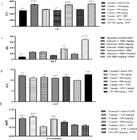
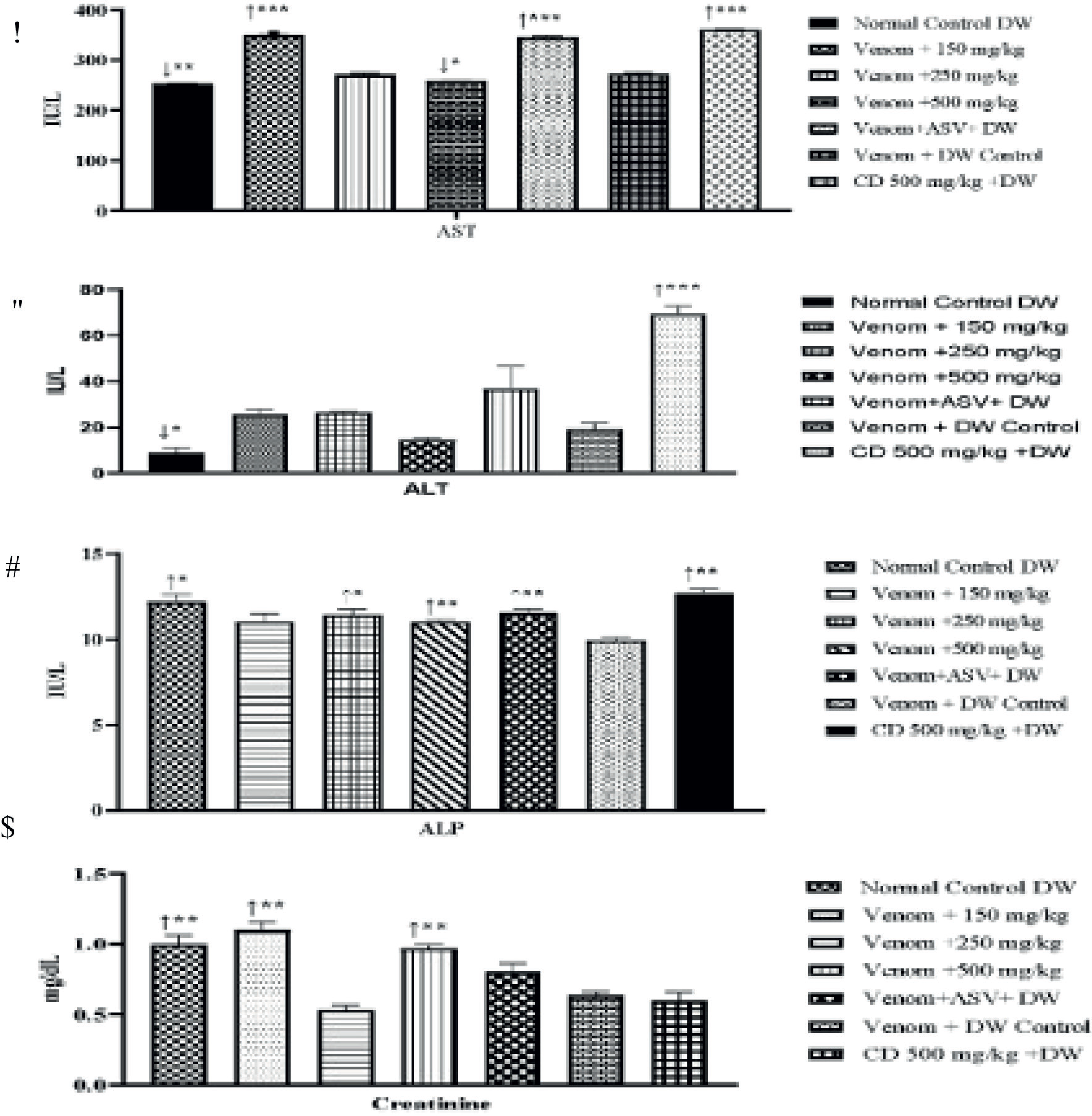 *p<0.05; **p<0.01; ***p<0.001, ↑= increase; ↓= decrease compared to the negative control group CD= Caralluma dalzielii; AST= Aspartate Aminotransferase, ALT= Alanine Aminotransferase, ALP= Alkaline phosphatase. (continue)