 Comparative safety profile of Metamizole, Viminol, and Tapentadol: a prospective observational study on adverse reactions
Abstract
The most potent analgesics cause serious Adverse Drug Reactions (ADRs), so medications such as metamizole, viminol, and tapentadol may be alternatives. However, the safety of these analgesics still needs to be better understood. This study aims to assess prospective ADRs associated with these analgesics in a pain clinic. We followed up with the patients who had used these medicines for 45 days, classified the ADRs according to severity (mild, moderate or severe), mechanism (type A or type B), and incidence (very common, common, uncommon, and rare), and determined the causality. Among 240 patients, three ADRs to metamizole, seven to viminol, and 11 to tapentadol alone were documented. Additionally, 22 suspected ADRs were attributed to potential drug interactions among these analgesics and other medications. The ADRs were categorized as mild to moderate, type A, and common or uncommon. Causality was categorized as certain or possible. The ADRs induced by viminol were associated with age, with each year of age leading to a 6% increase in risk of ADRs, according to a logistic regression model applied specifically to this drug. No other association was found between tapentadol or viminol and comorbidities. It was not possible to analyze the metamizole data due to its low incidence. Overall, metamizole was the safest, reinforcing its safety profile and its valuable indication in the treatment of pain.
Keywords:
Analgesics; Pharmacovigilance; Drug-Related Side Effects and Adverse Reactions; Drug Monitoring; Adverse Drug Reactions (ADRs); Safety Monitoring or Risk Management.
INTRODUCTION
Managing chronic pain presents a substantial challenge in clinical practice, primarily due to the significant adverse drug reactions (ADRs), such as liver and kidney failure, physical and psychological dependence, and withdrawal syndrome, often associated with prolonged analgesic use (David-Pereira, Dickenson, 2019). The effectiveness of analgesics largely depends on the pain’s origin and type, and the safety of these drugs is not always well established. Analgesics are frequently contraindicated for long-term use due to their associated risks: non-steroidal anti-inflammatory drugs (NSAIDs), the most common nonopioid analgesics, are linked to gastrointestinal tract injuries and hemorrhage (Bindu, Mazumder, 2020), while opioids are known for their addictive properties (Volkow, Blanco, 2021).
The indiscriminate use of opioids has contributed to the global opioid crisis, underscoring the need for a more rational approach to medication use (Dalal, Bruera, 2019). In addition to guidelines for the appropriate use of painkillers, it is crucial to explore alternatives that can replace or complement opioids to reduce their dosage. Metamizole is a widely used analgesic in several countries, particularly in Latin America and much of the European Union (Kötter et al., 2015) but faces controversy due to the risk of agranulocytosis and other serious ADRs, as well as its ban in Sweden, the United Kingdom, and the United States (Lupu, Bel, Andrei, 2022). Despite its extensive use, metamizole is not listed in the World Health Organization’s Model List of Essential Medicines, which also omits other analgesics like viminol and tapentadol. Viminol, approved by the Brazilian Health Regulatory Agency (ANVISA) since 1999 (ANVISA, 2024), is less studied, with limited evidence available from the 1970s and 1980s suggesting its efficacy and safety as an analgesic with minimal risk of addiction and ADRs (Shook, Kallman, Dewey, 1994). Tapentadol, approved by the FDA in 2008 for acute pain and in extended-release form in 2011 for chronic pain, is characterized as a norepinephrine reuptake inhibitor and a µ-opioid receptor agonist (Tzschentke et al., 2007). Its moderate µ-opioid receptor activity is thought to contribute to reduced nausea, vomiting, and constipation (Tzschentke, Christoph, Kögel, 2014).
Thus, monitoring ADRs related to these three analgesics highlights the ongoing importance of pharmacovigilance. This field supports safer use of analgesics by tracking medications already in use and helping identify ADRs that may not emerge during pre-marketing trials (Crestan et al., 2020). It also helps refine existing knowledge on adverse drug events and clarify their occurrence in real-world settings (Montané, Santesmases, 2020). In this study, we evaluated ADRs associated with metamizole, viminol, and tapentadol in patients treated at a pain clinic, aiming to address specific gaps in the literature and offer evidence that may guide safer clinical choices.
MATERIAL AND METHODS
The study employed an observational, analytical, longitudinal, and prospective design, conducted at the Pain Medicine Clinic of a reference hospital of Alfenas, Minas Gerais state, in the southeast region of Brazil (coordinates: 21.4255° S, 45.9477° W), from January 2022 to October 2023. The Pain Medicine Clinic is an outpatient unit specialized in pain management. It primarily serves patients referred from Internal Medicine, Palliative Care, Traumatology, Geriatrics, Arthroscopy, and Anesthesiology. Ethical approval was obtained from the Research Ethics Committee of the Federal University of Alfenas (UNIFAL-MG) (CAAE 51321921.1.0000.5142), and the study followed the Strengthening the Reporting of Observational Studies in Epidemiology (STROBE) guidelines.
Participants
A total of 240 participants were enrolled based on a sample size calculation using the binomial test for exact proportions, targeting a difference from the null hypothesis of 10% ADR incidence. Under the null hypothesis of 0.1, the calculated sample size of 240 participants provided 95.2% power with a significance level of 4%. Eligible participants were 18 years or older, experiencing chronic pain, and only those who signed the Free and Informed Consent Form (Termo de Consentimento Livre e Esclarecido - TCLE, in Portuguese) and completed initial contact were included in the study. All participants were undergoing mono or polydrug therapy with at least one of the study drugs - metamizole, viminol hydroxybenzoate, or tapentadol hydrochloride. Participants who could not be contacted by telephone were excluded from the study.
Experimental design
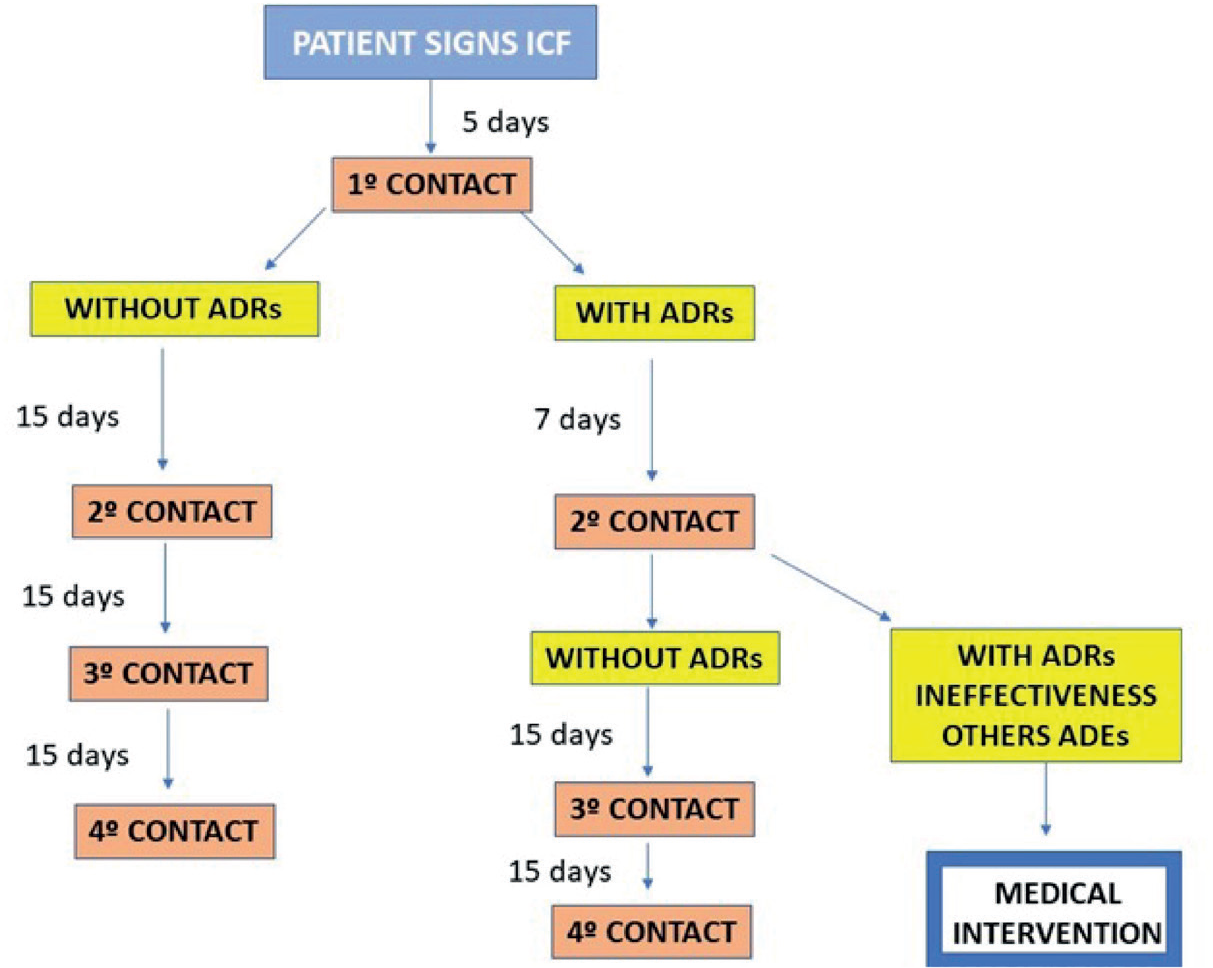
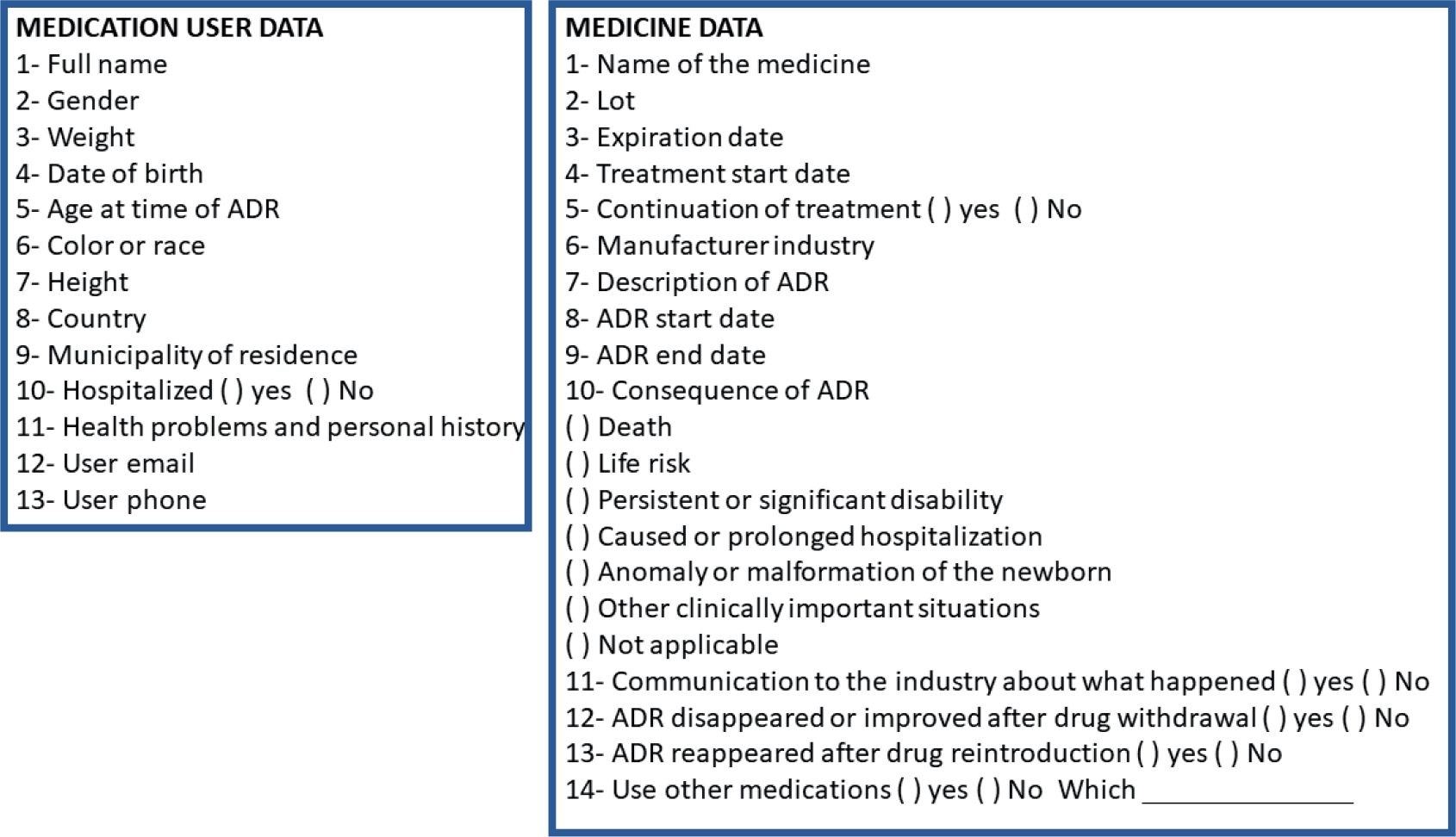
The study design is outlined in Figure 1. During routine consultations at the Pain Medicine Clinic, the responsible physician invited eligible participants. After signing the TCLE, participants/guardians were contacted by phone five days later by members of the Pharmacovigilance Center of UNIFAL-MG (CEFAL). Participant information, including personal health history (diabetes, cancer, cardiovascular disease and Alzheimer’s) and any ADEs, was collected using a standardized form from the VIGIMED® system (Figure 2), a computerized tool managed by ANVISA. This form contains essential information for the notification and analysis of ADRs.
Experimental design - contact with the patients via phone call according to the manifestation of ADRs.
Participants who reported ADRs during the first contact were followed up within seven days to assess their clinical condition. If ADRs persisted or other ADEs were mentioned, the case was referred to the prescriber. Participants who did not report ADRs were contacted every 15 days for 45 days to monitor the potential onset of latent ADRs. ADRs were documented either during the initial contact or at subsequent follow-up calls, depending on when symptoms appeared. No minimum duration of medication use was required for inclusion; however, the treatment period typically aligned with the 45-day follow-up window established in the study design.
Classification and causality of ADRs
All ADRs were classified using the Medical Dictionary for Regulatory Activities (MedDRA), a standardized terminology developed to support international pharmacovigilance. Two independent researchers performed the classification to ensure consistency. ADRs related to metamizole, viminol, or tapentadol were classified by severity - mild (does not require drug treatment), moderate (requires hospitalization), or severe (requiring intensive care unit admission) (Hartwig, Siegel, Schneider, 1992) - and by mechanism of action as type A(dose-dependent, exaggerated effect) or type B (dose-independent, unpredictable) (Rawlins, Thompson, 1977). At the end of the proposed period, the frequency of ADRs was categorized as very common (≥10%), common (≥1% but <10%), uncommon (≥ 0.1% but <1%), and rare (≥0.01% but <0.1%) (Meyboom, Egberts, 1999). The presence and incidence of ADRs and the possible association with drug interactions were verified in the respective monographs, on the website drugs.com (https://www.drugs.com), and in the electronic clinical resource tool UpToDate® (http://www.uptodate.com). To determine the causality of ADRs, a standardized scale from the World Health Organization-Uppsala Monitoring Centre (WHO-UMC, 2005) criteria was used (World Health Organization, 2005). Reactions were categorized as certain, probable, possible, unlikely, conditional, or unclassifiable. Causality was also determined based on the VIGIMED® questions required for the notification of ADEs and clinical judgment, considering the following criteria: temporality between the event and drug use; previous description of ADRs in scientific literature; the association between ADRs and the drug’s mechanism of action, exclusion of confounding variables, and subjective and objective impressions of the prescriber. CEFAL researchers were trained to standardize ADR causality assessments and were responsible for reporting and referring cases to the competent authorities.
Statistical analysis
Descriptive statistics were applied to summarize population characteristics such as sex, age, race, primary diagnoses associated with pain, comorbidities, and incidence of ADRs. Additionally, a descriptive survey of drug interactions and ADR classification was conducted.
To assess the association between ADR occurrence and categorical variables, the Chi-square test was used. A significance level of 5% (P<0.05) was adopted to reject the null hypothesis.
The relationship between ADR manifestation and sex was investigated using a Chi-square test of independence, while the association with age was analyzed using the T test. Logistic regression models were also performed to predict ADRs for each study drug, both in isolation and in drug interactions, with sex, age, and comorbidities as predictor variables.
Therefore, the present analyses were performed using the free software R (R version 4.2.2). For associations with the occurrence of adverse effects, the chi-square or Fisher’s exact tests were used, depending on the assumption of a maximum of 20% of expected values lower than five to verify the association between adverse effects and categorical variables, and the Mann-Whitney test to verify the difference in age and number of medications in patients who did or did not have adverse effects. A 5% significance level was adopted, indicating that when p<0.05 we should reject the null hypothesis (of independence or equality of distributions, respectively).
RESULTS
Population characteristic
Between January 2022 and October 2023, a total of 413 prescriptions were issued for 364 different individuals. Of these, 124 (34.07%) did not respond to follow-up calls, leaving 240 participants who agreed to take part in the study by signing the TCLE, and were contacted four times throughout the study.
Of the 240 participants, 84 (35%) were male and 156 (65%) female. The average age was 58.19 (standard deviation 13.62) years.Among the participants, 62 (25.83%) reported experiencing ADRs related to the administration of the study drugs (ADRs) at the time of contact with the patient, with 42 (67.74%) of these being female and 20 (32.26%) male. Most participants identified as white (61.20%), while 17.74% identified as mixed-race, 9.68% as black, and 11.29% did not report their race. There was no significant association between ADR manifestation and sex (χ2(1) = 0.14; P=0.711) or age (t(91) = 1.39; P=0.168). It is important to note that this t-test analysis was applied to the full sample (n = 240), regardless of the drug used. In contrast, a significant association between age and ADR was observed in the logistic regression model applied only to the viminol group, as detailed in the following section (Predictors Associated with ADRs).
The primary diagnoses associated with pain among participants reporting ADRs were cancer-related pain 22 (35.50%); back pain (lumbar, cervical, and thoracic) 17 (27.40%); osteoarthritis 8 (12.90%); legs and feet pain 4 (6.50%); fibromyalgia 3(4.80%); arthritis 2 (3.20%); shoulders, arms, and forearms pain 3 (4.80%); hip pain 2 (3.20%); tendinitis 2 (3.20%); and other conditions 6 (9.67%).
The most frequent comorbidities were hypertension 10 (16.10%), hypertension combined with diabetes 9 (14.50), thyroid disorders 5 (8.10%), depression and anxiety 4 (6.50%), heart disease 4 (6.50%), diabetes 3 (4.80%); respiratory disorders 3 (4.80%), and other conditions 9 (14.52%).
Classification and causality of ADRs
Pregabalin, tapentadol, and viminol were the drugs most frequently associated with ADRs and drug interactions. These three medications alone accounted for 47.83%, 15.94%, and 10.15% of ADR occurrences, respectively (Table I). Table II shows that 183, 147, and 105 drug interactions were detected for pregabalin, viminol, and tapentadol, respectively, when combined with other medications (drug interactions).
Focusing on the three analgesics under study, a total of 43 ADRs were detected among 22 participants, with 21 ADRs linked to a single drug and 22 resulting from drug interactions. A database analysis identified a total of 253 drug interactions involving these analgesics with other medications, however, only 22 (8.69%) of these interactions resulted in ADRs.
The incidence of ADRs for isolated tapentadol, viminol, and metamizole was 10.78% (11/102), 4.76% (7/147), and 1.60% (3/187), respectively (Table III). For tapentadol, the ADRs were classified as mild or moderate (constipation and vomiting), type A, common or uncommon, and certain. For viminol, the ADRs were classified as mild or moderate (dizziness), type A, common (asthenia) or uncommon, and certain. For metamizole, the ADRs were classified as mild, type A, uncommon and certain (Table III). It is important to highlight that no patient with an ADR to metamizole presented with non-specific symptoms related to agranulocytosis, such as sore throat, fever and chills, ulcerative lesions in the mouth, gum inflammation, change in heartbeat, and muscle weakness.
Adverse Drug Reactions (ADRs) associated with isolated tapentadol, viminol, and metamizole
Asthenia was the predominant complaint resulting from the interaction of viminol with other drugs. Among participants taking tapentadol, in addition to asthenia, somnolence was also a common ADR, as shown in Table IV. For tapentadol, ADRs were classified as mild or moderate (mental confusion and dizziness; drowsiness and difficulty with motor coordination), type A, common or uncommon, and possible. For viminol, ADRs were classified as mild, type A, common or uncommon (tremor), and possible. No ADRs related to drug interactions were reported for metamizole (Table IV).
Predictors Associated with ADRs
A logistic regression analysis was conducted to identify predictors associated with the occurrence of ADRs for tapentadol and viminol separately, as shown in Table V. Due to the low incidence of ADRs with metamizole, it was not possible to analyze the data for this drug. For the viminol group, the results indicated that ADRs were significantly associated with age, with each additional year increasing the risk of ADRs by 6.0% (OR = 1.06; P = 0.041). No other significant associations were found between ADRs for tapentadol or viminol and factors such as sex, hypertension, arrhythmia, and anxiety and/or depression.
Predictors associated with Adverse Drug Reactions (ADRs) of tapentadol and viminol (continues)
DISCUSSION
Given the widespread use of analgesics, a significant number of ADRs are expected among users. According to Jo et al. (2021), analgesics constitute the third class of medications with the highest rate of ADRs (4.0%), following antibacterials (20.3%) and antimycobacterials (5.4%). Similar results were observed by Sakuma et al. (2020), with 4.5% of their study population reporting ADRs related to analgesics, particularly among the elderly. The present study found that despite the frequent use of tapentadol and viminol, these drugs presented a relatively low incidence of ADRs. Among the three drugs studied, metamizole demonstrated the safest profile, corroborating findings from previous research and real-world evidence, as mentioned by Sznejder et al. (2022), which supported metamizole’s safety in the Brazilian population.
Previous studies have consistently shown that ADRs are most frequent in female patients (Sznejder et al., 2022; Al-Qurain et al., 2020; Cazacuet al., 2018). Franconi et al. (2012) reported that women have a 50 to 70% higher risk of experiencing ADRs, which may be attributed to differences in pharmacokinetics, pharmacodynamics, and hormonal factors. For instance, Lopes et al. (2021) demonstrated a significant disparity in opioid-related ADRs between the sexes, with 6.5% of female participants reporting ADRs compared to 3.4% of males. Tramadol, in particular, was associated with gastrointestinal, dermatological, and neurological ADRs in women. However, in contrast to these findings, the present study did not reveal any statistically significant influence of sex on ADR occurrence. This discrepancy may be related to methodological differences between the studies, since Lopes et al. (2021) performed a retrospective study incorporating pharmacogenomic genotyping, which may have influenced the detection of sex-related effects.
Comorbidities can play a crucial role in the development of ADRs (Zazzara et al., 2021). In this study, 13 participants who experienced ADRs had comorbidities, such as hypertension and/or diabetes. The presence of comorbidities is often linked to polypharmacy, which increases the risk of drug-drug interactions and subsequent ADRs (Ognibene et al., 2018). Polypharmacy, combined with non-specific symptoms, presents a diagnostic challenge in identifying the exact cause of ADRs, highlighting the importance of detailed data collection and analysis (Woo et al., 2020). It worth noting that while 253 drug interactions were detected across the three analgesics under investigation, only 22 (8.69%) were associated with ADRs. Tapentadol and viminol were most frequently implicated in drug interactions, yet these interactions did not result in significant clinical consequences, mirroring the findings of Riera et al. (2022), who also reported safe drug interactions involving analgesics without clinical implications.
Related to the drugs studied, metamizole emerged as the most prescribed, used, and tolerated analgesic. This is consistent with the results of Reist et al. (2018) who found thatmetamizole was themost frequently prescribed analgesic by anesthesiologists and pain specialists in German-speaking countries. The authors observed that 93.8% of 2,237 patients received metamizole, either alone (19.9%) or in combination with other analgesics (76.7%) for chronic pain management. Although they reported a 3.5% incidence of metamizole-associated agranulocytosis, it was not possible to definitively attribute the agranulocytosis to metamizole, as patients were also using other medications. Indeed, various drugs, including antipsychotic, antibiotic, antithyroid agents, and antiplatelet medications, have been implicated in agranulocytosis (Mijovic, MacCabe, 2020). Moreover, studies evaluating agranulocytosis related to metamizole often fail to clearly distinguish between neutropenia, agranulocytosis, and aplastic anemia (Klose et al., 2020). Lobo et al. (2013) found that 20% of ADRs reported in a hospital in northern Brazil were linked to metamizole, but did not specify the nature of these effects, attributing the high incidence to the frequency of metamizole use in the study population. The ADRs identified in this study - namely asthenia, hypotension, and gastric discomfort - were not reported in previous studies, though they were mild and consistent with the drug’s label. Despite its demonstrated safety, as noted by Sznejder et al. (2022), who supported metamizole’s safety in the Brazilian population, metamizole remains banned in many countries, possibly due to geopolitical factors rather than scientific evidence.
Viminol, in contrast, lacks recent studies on its efficacy and safety. Between 1985 and 2019, only 20 ADRs related to viminol were reported in the Americas, with symptoms including dizziness, abdominal pain, nausea and vomiting, malaise, asthenia, withdrawal syndrome, ataxia, coma, peripheral neuropathy, mental confusion, dyspnea, urticaria, and skin tissue disorders. The majority of ADRs are manifested in males, in young adults, aged between 18 and 44 years (DIVIDOL, 2020). Historical studies, such as those by
Foschi, Ventresca, Lodola (1985) observed sedation as an ADR related to viminol, while Martinetti et al. (1970) reported dizziness and sedation, and Frigerio et al. (1974) asthenia, dizziness, and skin rashes. In the current study, dizziness, drowsiness, asthenia, tremors, and skin rashes were the most frequently reported ADRs, observed in both male and female participants with a mean age of 65.2 years. Importantly, this is the first study to highlight that in participants over 55 years of age, each additional year increased the risk of ADRs by 6%, underscoring the need for cautious prescription in older adults.
Tapentadol was the analgesic most frequently associated with ADRs in this study. Previous meta-analyses have demonstrated that tapentadol is generally safe, with constipation being the most commonly reported ADR (Freynhagen et al., 2021). Abeyaratne et al. (2018) also identified gastrointestinal issues as common, but reported that psychiatric disorders constituted 50% of tapentadol-related. Coluzzi, Ruggeri (2014) found that tapentadol prolonged-release formulations reduced ADR-related discontinuations compared to oxycodone/naloxone. In a study by Mateos et al. (2021) involving 81 patients with chronic knee and lower back pain, 18.1% of patients experienced ADRs likely related to extended-release tapentadol and 8.4% discontinued treatment due to ADRs.
Monitoring and reporting ADRs during analgesic treatment are critical for improving pain management and patient outcomes (Planelles et al., 2019). Studies like the present reinforce pharmacovigilance efforts by providing essential data to support regulatory agencies’ decision-making. Many medications, including analgesics, have been withdrawn from the market due to safety concerns, often without a systematic investigation to establish a clear cause-effect relationship for ADRs (Onakpoya, Heneghan, Aronson, 2018). Pharmacovigilance also plays a key role in strategies such as including drugs in the World Health Organization’s list of essential medicines, where safety data help determine the optimal cost-benefit ratio. The findings of this study suggest that analgesics like metamizole could be strong candidates for inclusion in this list, especially in resource-limited settings where safe and effective pain management options are crucial.
The results of this study clearly demonstrate that metamizole, viminol, and tapentadol are safe analgesics, with a low incidence of adverse drug reactions (ADRs) and no severe side effects reported. This prospective assessment addresses significant gaps in the literature by providing current safety data on these three analgesics in a clinical setting. Among the three, metamizole emerged as the safest and most frequently prescribed, making it a valuable option for pain management, particularly in settings where the need for non-opioid, low-risk analgesics is critical. Viminol and tapentadol also exhibited favorable safety profiles, supporting their inclusion in therapeutic protocols for both acute and chronic pain. These findings highlight the potential of these drugs to serve as safer alternatives or adjuncts to analgesics with higher ADR rates and dependency risks, and underscore the importance of further studies to inform clinical practice and regulatory decisions.
Regarding possible biases in the study, the diagnosis of acute pain was excluded, since the pathophysiology, duration, and treatment are different from chronic pain. In addition, the high loss of follow-up was related to the fact that patients did not answer phone calls, contrary to what was proposed in the methodology, and therefore was considered an exclusion factor. Thus, we conclude that there is a limitation in the methodology, as its complete execution depends on patient adherence.
Additionally, these exclusion criteria may have introduced selection bias. By excluding patients with acute pain, our findings are limited to populations with chronic pain and cannot be generalized to broader clinical contexts. Furthermore, the high loss to follow-up (34.07%) - primarily due to unanswered phone contacts - may have disproportionately excluded certain profiles, such as older adults, individuals with cognitive impairments, or those less responsive to follow-up procedures, potentially affecting the sociodemographic balance and representativeness of the final sample.
ACKNOWLEDGMENT
The authors acknowledge the support from Coordination for the Improvement of Higher Education Personnel, Brazil (CAPES, Finance Code 001).
DATA AVAILABILITY STATEMENT
Data available on request due to privacy/ethical restrictions.
REFERENCES
- Abeyaratne C, Lalic S, Bell JS, Ilomäki J. Spontaneously reported adverse drug events related to tapentadol and oxycodone/naloxone in Australia. Ther Adv Drug Saf. 2018;9(4):197-205.
- Al-Qurain AA, Gebremichael LG, Khan MS, Williams DB, Mackenzie L, Phillips C, et al. Prevalence and factors associated with analgesic prescribing in poly-medicated elderly patients. Drugs Aging. 2020;37(4):291-300.
-
ANVISA (National Health Surveillance Agency). Register Dividol na ANVISA [Internet], Brasília, DF, 2024 [Cited April 10, 2024]. Available from: https://anvisa.smerp.com.br/?ac=prodDetail&anvisaId=1008400200024
» https://anvisa.smerp.com.br/?ac=prodDetail&anvisaId=1008400200024 - Bindu S, Mazumder S, Bandyopadhyay U. Non-steroidal anti-inflammatory drugs (NSAIDs) and organ damage: A current perspective. Biochem Pharmacol. 2020;180:114147.
- Cazacu I, Stroe R, Dondera R, Mogosan C, Haramburu F, Fourrier-Réglat A, Loghin F. Adverse drug reactions of analgesic medicines: analysis of the Romanian pharmacovigilance database. Fundam Clin Pharmacol. 2018;32(3):330-336.
- Coluzzi F, Ruggeri M. Valutazione clinica ed economica di nuovi analgesici per la gestione del dolore cronico. Recenti Prog Med. 2014;105(11):415-419.
- Crestan D, Trojniak MP, Francescon S, Fornasier G, Baldo P. Pharmacovigilance of anti-cancer medicines: opportunities and challenges. Expert Opin Drug Saf. 2020;19(7):849-860.
- Dalal S, Bruera E. Pain management for patients with advanced cancer in the opioid epidemic era. Am Soc Clin Oncol Educ Book. 2019;39:24-35.
- David-Pereira A, Dickenson AH. Issues in the future development of new analgesic drugs. Curr Opin Support Palliat Care. 2019;13(2):107-110.
- Dividol [MONOGRAPHY]. São Paulo: Zambon Laboratory. Ed. Phoenix Integrated Communication. February 2020.
-
DRUGS.COM. [Cited 2024 Aug 21]. Available from: https://www.drugs.com
» https://www.drugs.com - Foschi D, Ventresca GP, Lodola E. Analgesic activity of viminol R2 in postoperative pain: comparison with pentazocine and placebo. Curr Ther Res - Clin Exp. 1985;37:269-276.
- Franconi F, Campesi I, Occhioni S, Antonini P, Murphy MF. Sex and gender in adverse drug events, addiction, and placebo. Handb Exp Pharmacol. 2012;214:107-126.
- Freynhagen R, Elling C, Radic T, Sohns M, Liedgens H, James D, et al. Safety of tapentadol compared with other opioids in chronic pain treatment: network meta-analysis of randomized controlled and withdrawal trials. Curr Med Res Opin. 2021;37(1):89-100.
- Frigerio G. Il viminolo nel trattamento del dolore. Ricerca controllata doppio-cieca di tipo multicentrico. Minerva Med. 1974;65(12):687-703.
- Hartwig SC, Siegel J, Schneider PJ. Preventability and severity assessment in reporting adverse drug reactions. Am J Hosp Pharm. 1992;49:2229-2232.
- Jo HG, Jeong K, Ryu JY, Park S, Choi YS, Kwack WG, et al. Fatal Events Associated with adverse drug reactions in the Korean national pharmacovigilance database. J Pers Med. 2021;12(1):5.
- Klose S, Pflock R, König IR, Linder R, Schwaninger M. Metamizole and the risk of drug-induced agranulocytosis and neutropenia in statutory health insurance data. Naunyn Schmiedebergs Arch Pharmacol. 2020;393(4):681-690.
- Kötter T, da Costa BR, Fässler M, Blozik E, Linde K, Jüni P, et al. Metamizole-associated adverse events: a systematic review and meta-analysis. PLoS One. 2015;13;10(4):e0122918.
- Lobo MGAA, Pinheiro SMB, Castro JGD, Momenté VG, Pranchevicius MCS. Adverse drug reaction monitoring: support for pharmacovigilance at a tertiary care hospital in Northern Brazil. BMC Pharmacol Toxicol. 2013;14:5.
- Lopes GS, Bielinski S, Moyer AM, Jacobson DJ, Wang L, Jiang R, Larson NB, Miller VM, Zhu Y, Cavanaugh DC, St Sauver J. Sex differences in type and occurrence of adverse reactions to opioid analgesics: a retrospective cohort study. BMJ Open. 2021;11(6):e044157.
- LupuG, Bel L, Andrei S. Pain management and analgesics used in small mammals during post-operative period with an emphasis on metamizole (dipyrone) as an alternative medication. Molecules. 2022;27:7434.
- Martinetti L, Lodola E, Monafo V, Ferrari V. Clinical evaluation of an oral analgesic, Z.424, in patients with chronic pain.J Clin Pharmacol New Drug. 1970;10(6):390-399.
- Mateos RG, Bernal DS, Morera LMT, Ferri CM, Escobar AE. Long-term effectiveness and tolerability of pain treatment with tapentadol prolonged release. Pain physician. 2021;24(1):E75-E85.
- Meyboom RHB, Egberts ACG. Comparing therapeutic benefit and risk. Thérapie. 1999;54(1):29-34.
- Mijovic A, MacCabe JH. Clozapine-induced agranulocytosis. Ann Hematol. 2020;99(11):2477-2482.
- Montané E, Santesmases J. Adverse drug reactions. Med Clin (Barc). 2020;13;154(5):178-184.
- Ognibene S, Vazzana N, Giumelli C, Savoldi L, Braglia L, Chesi G. Hospitalisation and morbidity due to adverse drug reactions in elderly patients: a single-centre study. Intern Med J. 2018;48(10):1192-1197.
- Onakpoya IJ, Heneghan CJ, Aronson JK. Post-marketing withdrawal of analgesic medications because of adverse drug reactions: a systematic review. Expert Opin Drug Saf. 2018;17(1):63-72.
- Planelles B, Margarit C, Ajo R, Sastre Y, Muriel J, Inda MD, Esteban MD, Peiró AM. Health benefits of an adverse events reporting system for chronic pain patients using long-term opioids. Acta Anaesthesiol Scand. 2019;63(2):248-258.
- Rawlins MD, Thompson JW. Pathogenesis of adverse drug reactions. In:Davies DM, editor. Textbook of adverse drug reactions. Oxford: Oxford University Press;1977.
- Reist L, Erlenwein J, Meissner W, Stammschulte T, Stüber F, Stamer UM. Metamizole is the preferred nonopioid analgesic for the treatment of acute and chronic pain. A survey of clinical practice in German-speaking countries. Eur J Pain. 2018;22(6):1103-1112.
- Riera P, Sole N, Suárez JC, López PA, Fonts N, Rodríguez-Farre N, et al. Drug-drug interactions in an intensive care unit and comparison of updates in two databases. Farm Hosp. 2022;46(5):290-295.
- Sakuma M, Kanemoto Y, Furuse A, Bates DW, Morimoto T. Frequency and severity of adverse drug events by medication classes: the JADE study. J Patient Saf. 2020;16(1):30-35.
- Shook JE, Kallman MJ, Dewey WL. The discriminative stimulus properties of the R2 isomer of viminol. Pharmacol Biochem Behav. 1984;20(1):59-62.
- Sznejder H, Amand C, Stewart A, Salazar R, Scala WA. Real world evidence of the use of metamizole (dipyrone) by the Brazilian population. A retrospective cohort with over 380,000 patients. Einstein(Sao Paulo). 2022;20:eAO6353.
- Tzschentke TM, Christoph T, Kögel B, Schiene K, Hennies HH, Englberger W, et al. (-)-(1R,2R)-3-(3-dimethylamino-1-ethyl-2-methyl-propyl)-phenol hydrochloride (tapentadol HCl): a novel mu-opioid receptor agonist/norepinephrine reuptake inhibitor with broad-spectrum analgesic properties. J Pharmacol Exp Ther. 2007;323(1):265-76.
- Tzschentke TM, Christoph T, Kögel BY. The mu-opioid receptor agonist/noradrenaline reuptake inhibition (MOR-NRI) concept in analgesia: the case of tapentadol. CNS Drugs. 2014;28(4):319-29.
-
UpToDate® Connor RF (Ed). [Cited 2024 Jun 15]. Available from: http://www.uptodate.com
» http://www.uptodate.com - Volkow ND, Blanco C. The changing opioid crisis: development, challenges and opportunities. Mol Psychiatry. 2021;26(1):218-233.
- Woo SD, Yoon J, Doo GE, Park Y, Lee Y, Lee SH, et al.. Common causes and characteristics of adverse drug reactions in older adults: a retrospective study. BMC Pharmacol Toxicol. 2020;21(1):87.
- World Health Organization. The use of the WHO-UMC system for standardized case causality assessment. Uppsala Monit Cent. 2005;3:2-7.
- Zazzara MB, Palmer K, Vetrano DL, Carfì A, Onder G. Adverse drug reactions in older adults: a narrative review of the literature. Eur Geriatr Med. 2021;12(3):463-473.
Edited by
-
Associate Editor:
Tacio de Mendonça Lima