 Biological evaluation of thiazolopyrimidine derivatives as novel heterocyclic compounds against promastigote and amastigote-like forms of Leishmania infantum and Leishmania tropica
Abstract
Leishmaniasis is an underfunded neglected disease that affects 12 million people mainly living in developing countries. Herein, based on the data we obtained in our previous study, we designed and synthesized novel thiazolo[5,4-d]pyrimidine derivatives and evaluated their in vitro antileishmanial bio-activity. The compounds were synthesized, and their structures were elucidated. Then, their anti-leishmanial activities were tested using both promastigote and amastigote-like forms of L. tropica and L. infantum parasites. Additionally, we evaluated the in silico physicochemical properties and the structure-activity relationships of the compounds. Compound 4-chloro-N-[5-(4-hydroxypiperidin-1-yl)miazolo[5,4-d]pyrimidin-2-yl]benzamide (A1), with IC50 values of 43.58 μΜ and 41.45 μΜ against L. tropica and L. infantum promastigotes, respectively, and 70.02 μΜ and 77.13 μΜ against L. tropica and L. infantum axenic amastigote-like forms, was found to be the most active compound in both assays. Compound A1 also exhibited the lowest iLogP value among the compounds, suggesting high passive gastrointestinal absorption. Based on both in vitro assays and in silico properties, compound A1 demonstrates significant anti-parasitic activity and serves as a promising lead for the development of new antileishmanial agents.
Keywords:
Leishmaniasis; Promastigote; Axenic amastigote-like;
L. tropica
;
L. infantum
INTRODUCTION
Leishmaniasis is a significant public health issue in tropical/subtropical countries and is caused by protozoan parasites of the phylogenetic order Kinetoplastida (Steverding, 2017). The disease manifests in various forms depending on the species of the causative parasite, including cutaneous (CL), visceral (VL), and mucocutaneous infections (MCL) (WHO Fact Sheets, Leishmaniasis, 2023). In the Mediterranean, three primary Leishmania species are responsible for most cases: Leishmania infantum (L. infantum), which causes VL, and Leishmania tropica (L. tropica) and Leishmania major (L. major), which cause CL (Ok et al., 2002).
The parasite exhibits two forms during its life cycle: extracellular flagellated promastigotes within the vector and non-motile amastigotes in mammalian hosts after transmission (Bates, 2008). Both promastigote and amastigote forms can initiate infections, making them key targets for drug discovery and screening studies (Kima, 2007).
Culturing amastigotes in axenic conditions is a common and effective method for research in parasite biochemistry, molecular biology, and bioactivity screening. The culture conditions for axenic amastigotes were optimized by adjusting the temperature, pH, and culture medium (Chanmol et al., 2019). Intracellular amastigotes are comparable to axenic amastigotes in terms of ultrastructure, stage-specific antigens, infectivity, and biochemical properties (Gupta, Goyal, Rastogi, 2019).
The most used drugs to treat Leishmaniasis include pentavalent antimonials (Glucantime® and Pentostam®), Amphotericin B and its liposomal form, paromomycin, miltefosine, and azoles (Sundar, Chakravarty, 2015). However, administration routes, parasite resistance, and drug toxicity pose significant challenges in treatment. For instance, pentavalent antimonials can cause serious side effects due to their hepato/cardio toxicity. On the other hand, even if liposomal form of Amphotericin B reduces its toxicity, Amphotericin B should be administered in monitored conditions. Miltefosine is a potential teratogen (WHO, 2010).
Taken together, given the high toxicity and severe side effects of current commercial drugs, there is a pressing need for new drug candidates (Capela, Moreira, Lopes, 2019).
In our previousresearch on novel chemotherapeutics against leishmaniasis, we selected thiazolo[5,4-d] pyrimidine as a bioisostere of the pteridine ring, which is the core structure of natural substrates of reductase enzymes, particularly LmPTR1. We then substituted it with various benzamide derivatives to impart antileishmanial properties through inhibition of LmPTR1. All the compounds exhibited antileishmanial activity, with chlorine substituents on the benzamide moiety significantly enhancing this activity (as seen in compounds L16 and L19 in Figure 1) (Istanbullu et al., 2020). Literature surveys indicate that chlorine-substituted phenyl rings are commonly found in the structures of antileishmanial compounds (Chen et al., 2011; De Oliveira Filho et al., 2015; Istanbullu et al., 2023). Additionally, 4-substituted piperidine derivatives with amide or ester groups have also been reported as effective antileishmanial molecules (Figure 1) (Bigot et al., 2023; Panecka-Hofman et al., 2017; Pöhner et al., 2022).
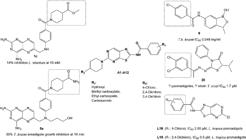
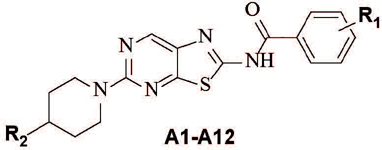
Structures of antileishmanial compounds reported in the literature (L16 and L19 (Istanbullu et al., 2020); 9 (Chen et al., n.d.); 20 (De Oliveira Filho et al., 2015); 1c (Panecka-Hofman et al., 2017); 5a (Pöhner et al., 2022) and the designed compounds (A1-A12).
In this study, 2-(chlorobenzamido)-5-(piperidino) thiazolo[5,4-d]pyrimidine was chosen as the starting compound, keeping thiazolo[5,4-d]pyrimidine as the scaffold, and derivatizing it with a chlorine-substituted phenyl ring and piperidine. In the derivatization of the compounds, the contribution of the number and position of chlorine atoms to the activity was determined. Additionally, piperidine was substituted with alcohol, ester, and amide groups to reveal the differences in activity between these functional groups. After synthesis, the compounds were evaluated for their efficacy against Leishmania promastigotes and amastigote-like forms. Lastly, potential binding sites for the compounds were identified through molecular modeling studies, and docking simulations were performed.
MATERIAL AND METHODS
Reagents and solvents were purchased from AlfaAesar, Sigma-Aldrich, and Merck and were commercial reagent grade materials. A capillary melting point apparatus (Barnstead Electrothermal IA 900) was used to determine melting points. The analytical thin-layer chromatography was carried out on silica gel plates of Merck (Kieselgel 60 F254) with detection by means of ultraviolet light (254 nm). Compound FTIR spectra were monitored by attenuated total reflection (PerkinElmer Spectrum 100 FT-IR, Shelton). The NMR spectra (400 MHz for the 1H-NMR and 100 MHz for the 13C-NMR) were recorded in the deuterated solvent on an AS400 Mercury Plus NMR Varian (Varian Inc., Palo Alto, CA). The chemical shifts were measured in parts per million (δ), and the coupling constants (J) were reported in Hertz (Hz). The HR-MS data agreed with the calculated values to within 0.003 m/z unit.
The parasite isolates were used in this study and stored in liquid nitrogen at -196°C at the Parasite Bank of the Faculty of Medicine of Manisa Celal Bayar University. L. tropica (MHOM/A7/1974/SAF-K27) and L. infantum (MHOM/TN/1980/IPT1) samples, which were used during the antiparasitic activity stages of the analysis, were thawed from liquid nitrogen and subjected to the necessary procedures. Isolates that entered the logarithmic phase (107 promastigotes/ml) in flasks were confirmed using the XTT cell proliferation kit (Biotium, USA).
Physicochemical properties, pharmacokinetic and drug-likeness properties of compounds were determined by using Swiss ADME online tool.
Chemistry
Synthesis of 2-chloro-5-nitro-4-thiocyanatopyrimidine
1.93 g 2,4-dichloro-5-nitrouracil (10 mmol) was dissolved in 5 ml glacial acetic acid and the solution was cooled to 0°C in an ice bath. Potassium thiocyanate (1.07 g, 11 mmol) was added gradually over 45 minutes and stirred at 0°C for 2 hours. The mixture was then poured into crushed ice, filtered, and washed with cold diethyl ether to give 2-chloro-5-nitro-4-thiocyanatopyrimidine. The crude product was used for the next step without further purification (Istanbullu et al., 2020).
Synthesis of 5-chlorothiazolo[5,4-d]pyrimidin-2-amine
Mixture of 2-chloro-5-nitro-4-thiocyanatopyrimidine (2.16g, 10 mmol) and iron powder (1.70 g, 30 mmol) in glacial acetic acid (20 ml) refluxed for 2 hours. The reaction mixture was allowed to cool to room temperature and the precipitate was removed by filtration. The filtrate was evaporated under reduced pressure, the residue was dissolved in water and then extracted with ethyl acetate (3 x 60 ml). Organic layers were combined, washed with saturated NaHCO3, and then saturated NH4Cl, dried over anhydrous Na2SO4 and evaporated under vacuum. The crude was crystallized from ethanol (Istanbullu et al., 2020).
Synthesis of amide intermediates (Ai1-Ai12)
5-Chlorothiazolo[5,4-d]pyrimidin-2-amine (0.37 g, 2 mmol) was dissolved in pyridine and treated with different benzoyl chlorides (4 mmol) in an ice bath. DMAP was added in catalytic amounts, and the reaction was stirred overnight at room temperature. The pH was adjusted to 2 with 2N HCl and then extracted with ethyl acetate (3 × 50 mL). The combined organic phases were washed with saturated NaHCO3, dried over anhydrous Na2SO4, and evaporated under reduced pressure. Ethanol or ethyl acetate was used to crystallize the obtained amide derivatives (Istanbullu et al., 2020).
Synthesis of the final compounds (A1-A12)
In the final step of the synthesis, 1 mmol of amide intermediate (Ai1-Ai12), 4-substituted piperidines (1 mmol), and TEA (1.1 mmol) were reacted in 5 mL DMF at 90°C. The reaction was monitored by TLC. After the reaction was completed, water was added and the mixture was extracted with ethyl acetate (3 × 15 mL). The organic layers were combined and concentrated under low pressure. The residue was stored in 2-propanol or chloroform for 1-2 days, and the precipitate was filtered. The crude products were purified by column chromatography with the appropriate solvent system (Atamanyuk et al., 2012; Brown et al., 2013; Heald et al., 2015; Semple et al., 2008).
Spectral data
4-Chloro-N-[5-(4-hydroxypiperidin-1-yl) thiazolo[5,4-d]pyrimidin-2-yl]benzamide (A1)
White solid. Yield 33%; mp: 263oC; 1H NMR (DMSO-d6, 400 MHz) δ 1.34-1.39 (m, 4H), 1.74-1.83 (m, 2H), 3.70-3.77 (m, 1H), 4.24-4.31 (m, 2H), 4.70 (bs, 1H), 7.62 (d, 2H, J = 8.0 Hz), 8.09 (d, 2H, J = 8.0 Hz), 8.75 (s, 1H), 12.86 (bs, 1H) ppm; IR υmax (cm-1) 2932, 1670, 1585, 1279; HRMS (ESI) calculated for C17H16ClN5O2S [M+H]+ calculated: 389.0713, found: 389.0721.
2,4-Dichloro-N-[5-(4-hydroxypiperidin-1-yl) thiazolo[5,4-d]pyrimidin-2-yl]benzamide (A2)
White solid. Yield 41%; mp: 239oC; 1H NMR (DMSO-d6, 400 MHz) δ 1.31-1.39 (m, 2H), 1.76-1.80 (m, 2H), 3.29-3.35 (m, 2H), 3.70-3.75 (m, 1H), 4.24-4.29 (m, 2H), 4.41 (bs, 1H), 7.56-7.59 (m, 1H), 7.71-7.73 (m, 1H), 7.79-7.80 (m, 1H), 8.75 (s, 1H), 12.93 (bs, 1H) ppm;
13C NMR (DMSO-d6, 100 MHz) δ 34.3, 37.7, 42.2, 66.5, 128.0, 129.9, 131.4, 132.1, 132.3, 133.2, 136.5, 149.2, 152.1, 158.5, 165.2, 165.6 ppm; IR υmax (cm-1) 3378, 2724, 1691, 1634, 1600, 1532, 1275; HRMS (ESI) calculated for C17H15Cl2N5O2S [M+H]+ calculated: 423.0324, found: 423.0338.
Methyl 1-[2-(4-chlorobenzamido)thiazolo[5,4-d] pyrimidin-5-yl]piperidine-4-carboxylate (A4)
White solid. Yield 51%; mp: 192oC; 1H NMR (DMSO-d6, 400 MHz) δ 1.47-1.57 (m, 2H), 1.87-1.94 (m, 2H), 2.61-2.69 (m, 2H), 3.14-3.18 (m, 2H), 3.60 (s, 3H), 4.50-4.58 (m, 1H), 7.61-7.64 (m, 2H), 8.01-8.11 (m, 2H), 8.76 (s, 1H), 12.86 (bs, 1H) ppm; IR υmax (cm-1) 2924, 1731, 1673, 1582, 1281; HRMS (ESI) calculated for C19H18ClN5O3S [M+H]+ calculated: 431.0819, found: 431.0846.
Methyl 1-[2-(2,4-dichlorobenzamido)thiazolo[5,4-d] pyrimidin-5-yl]piperidine-4-carboxylate (A5)
White solid. Yield 48%; mp: 208oC; IR υmax (cm-1) 3527, 2952, 1686, 1572, 1512, 1282; HRMS (ESI) calculated for C19H17Cl2N5O3S [M+H]+ calculated: 465.0429, found: 465.0444.
Methyl 1-[2-(3,4-dichlorobenzamido)thiazolo[5,4-d] pyrimidin-5-yl]piperidine-4-carboxylate (A6)
White solid. Yield 47%; mp: 171oC; IR υmax (cm-1) 2952, 1676, 1577, 1290; HRMS (ESI) calculated for C19H17Cl2N5O3S [M+H]+ calculated: 465.0429, found: 465.0426.
Ethyl 1-[2-(4-chlorobenzamido)thiazolo[5,4-d] pyrimidin-5-yl]piperidine-4-carboxylate (A7)
White solid. Yield 39%; mp: 206oC; 1H NMR (DMSO-d6, 400 MHz) δ 1.15-1.19 (m, 3H), 1.47-1.55 (m, 2H), 1.87-1.93 (m, 2H), 2.59-2.65 (m, 1H), 3.05-3.14 (m, 2H), 4.03-4.09 (m, 2H), 4.51-4.55 (m, 2H), 7.61 (d, 2H, J = 8.0 Hz) 8.08 (d, 2H, J = 8.0 Hz), 8.75 (s, 1H), 12.87 (bs, 1H) ppm; 13C NMR (DMSO-d6, 100 MHz) δ 14.5, 27.8, 40.8, 43.8, 60.4, 129.2, 130.7, 130.9, 132.7, 138.3, 149.0, 149.1, 153.34, 158.7, 165.4, 174.5 ppm; IR υmax (cm-1) 3311, 1707, 1672, 1586, 1273; HRMS (ESI) calculated for C20H20ClN5O3S [M+H]+ calculated: 445.0975, found: 445.1004.
Ethyl 1-[2-(2,4-dichlorobenzamido)thiazolo[5,4-d] pyrimidin-5-yl]piperidine-4-carboxylate (A8)
White solid. Yield 59%; mp: 288oC; IR υmax (cm-1) 3528, 2954, 1686, 1572, 1512, 1282; HRMS (ESI) calculated for C20H19Cl2N5O3S [M+H]+ calculated: 479.0586, found: 479.0616.
Ethyl 1-[2-(3,4-dichlorobenzamido)thiazolo[5,4-d] pyrimidin-5-yl]piperidine-4-carboxylate (A9)
White solid. Yield 42%; mp: 172oC; 1H NMR (DMSO-d6, 400 MHz) δ 1.16-1.21 (m, 3H), 1.51-1.55 (m, 2H), 1.89-1.95 (m, 2H), 2.59-2.69 (m, 1H), 3.153.17 (m, 2H), 4.04-4.10 (m, 2H), 4.51-4.56 (m, 2H), 7.85 (d, 1H, J=8.0 Hz), 8.03 (d, 1H, J=8.0 Hz), 8.33-8.36 (m, 1H), 8.77 (s, 1H), 12.98 (bs, 1H) ppm; IR υmax (cm-1) 2930, 1673, 1581, 1293; HRMS (ESI) calculated for C20H19Cl2N5O3S [M+H]+ calculated: 479.0586, found: 479.0589.
1-[2-(4-Chlorobenzamido)thiazolo[5,4-d]pyrimidin--5-yl]piperidine-4-carboxamide (A10)
White solid. Yield 39%; mp: 345oC; 1H NMR (DMSO-d6, 400 MHz) δ 1.44-1.54 (m, 2H), 1.76-1.80 (m, 2H), 2.35-2.51 (m, 1H), 2.92-2.98 (m, 2H), 4.66 (d, 2H, J=12.0 Hz), 6.75 (bs, 1H), 7.27 (bs, 1H), 7.62 (d, 2H, J=8.0 Hz) 8.10 (d, 2H, J=8.0 Hz), 8.76 (s, 1H), 12.87 (bs, 1H) ppm; 13C NMR (DMSO-d6, 100 MHz) δ 31.2, 36.3, 37.7, 129.2, 129.4, 130.5, 130.7, 130.9, 138.8, 140.4, 150.1, 153.5, 159.5, 159.8, 162.7, 165.9, 166.3 ppm; IR υmax (cm-1) 3150, 1651, 1591, 1284; HRMS (ESI) calculated for C18H17ClN6O2S [M+H]+ calculated: 416.0822, found: 416.0843.
1-[2-(2,4-Dichlorobenzamido)thiazolo[5,4-d] pyrimidin-5-yl]piperidine-4-carboxamide (A11)
White solid. Yield 44%; mp: 173oC; 1H NMR (DMSO-d6, 400 MHz) δ 1.43-1.55 (m, 2H), 1.74-1.78 (m, 2H), 2.33-2.41 (m, 1H), 2.96 (t, 2H, J=12.0 Hz), 4.65 (d, 2H, J =12.0 Hz), 6.77 (bs, 1H), 7.28 (bs, 1H), 7.58 (td, 1H, J1 =1.6 Hz, J2=8.0 Hz) 7.73 (dd, 1H, J1 =1.6 Hz, J2 = 8.0 Hz) 7.79 (t, 1H, J =1.6 Hz); 8.76 (s, 1H), 12.93 (bs, 1H) ppm; IR υmax (cm-1) 3366, 1668, 1648, 1584, 1283; HRMS (ESI) calculated for C18H16Cl2N6O2S [M+H]+ calculated: 450.0433, found: 450.0464.
1-[2-(3,4-Dichlorobenzamido)thiazolo[5,4-d] pyrimidin-5-yl]piperidine-4-carboxamide (A12)
White solid. Yield 54%; mp: 311oC; 1H NMR (DMSO-d6, 400 MHz) δ 1.44-154 (m, 2H), 1.74-1.80 (m, 2H), 2.34-2.41 (m, 1H), 2.91-2.99 (m, 2H), 4.65 (d, 2H, J=12.0 Hz), 6.75 (bs, 1H), 7.27 (bs, 1H), 7.82 (d, 1H, J=8.0 Hz), 8.02 (dd, 1H, J1 =2.0 Hz, J2 =8.0 Hz), 8.34 (d, 1H, J=2.0 Hz), 8.75 (s, 1H), 12.93 (bs, 1H) ppm; IR υmax (cm-1) 3448, 1651, 1585, 1295; HRMS (ESI) calculated for C18H16Cl2N6O2S [M+H]+ calculated: 450.0433, found: 450.0457.
Biological Activity
In vitro anti-promastigote activity
Various dilutions of the substances were added to a sterile, flat-bottomed 96-well plate in a horizontal position. Twelve rows were separated into three by three as blind wells, positive controls with no drug, positive controls with drug, and synthesized substances.
The IC50 concentration values of the substances were determined by the Prism 8.0 program (GraphPad Software, La Jolla, CA) using the following equation:
IC50 = log(inhibitor) x normalized response - Variable slope
For Glucantime® and the synthesized substances, serial dilutions (500, 250, 125, 62.5, 31.25, 15.62, 7.81, and 3.9 μg/mL) were prepared. To each well of a 96-well flat-bottomed cell culture plate, 100 μL of Leishmania medium (RPMI 1640; 10% FCS) was added, followed by 100 μL of logarithmic phase L. tropica and L. infantum promastigotes (106/ml). The plate was incubated for 48 hours at 25°C. XTT methods were used to evaluate the effect of the synthesized compounds on the viability of Leishmania spp. promastigotes after 48 hours (Limoncu et al., 2013; Polat et al., 2012; Williams, 2003).
The cell proliferation kit was used for XTT analysis. Briefly, 100 μL of the fluid from each well was transferred to a new 96-well plate. 50 μL activation reagent and 10 ml XTT solution were mixed, and 100 μL of the mixture was added to each well of the new plate. Absorbance was measured at 450-500 nm after incubation at 25°C for 4 hours. The following formula was used to calculate viability percentages (Williams, 2003).
In vitro axenic amastigote-like activity
The cryopreserved isolates were removed from liquid nitrogen and quickly thawed in a 37°C water bath and inoculated into NNN (Novy-MacNeal-Nicolle) medium. After sowing, NNN media was placed into an incubator at 26°C. The media was controlled on 3rd, 5th, 7th and 9th days and the grown promastigotes were transferred to flasks containing RPMI-1640 medium. It was confirmed that the isolates that entered the logarithmic phase in the flasks for 9-14 days were counted using a Thoma chamber, and 107 promastigotes/ml were counted (Ozbilgin et al., 2018).
To generate axenic amastigotes, 5 ml medium (RPMI-1640 containing pH 5.5, 20% FCS) was prepared, promastigotes (106 cells/ml) were added to the medium and incubated at 37°C. Viability and morphological changes were observed daily. After the incubation process, parasites were prepared at a rate of 105 amastigotes/ml (Bahrami et al., 2011). Each of the compounds was tested at 250, 125, 62.5, 31.25, 15.62, 7.81 and 3.9 μg/ml concentrations. After 48 hours, the medium was inoculated with NNN medium and incubated at 26 °C. The growth status of the medium was assessed on 3rd, 5th, 7th, and 9th days. In vitro axenic amastigote-like activity was performed by using XTT cell viability kit (Ozbilgin et al., 2018).
Determination of physicochemical properties
We obtained the values of physicochemical properties (number of heavy atoms, number of H-bond donors and acceptors, number of rotatable bonds, and topological polar surface area); lipophilicity (iLogP); drug-likeness (Lipinski filter, Ghose filter, Veber filter, Egan filter, Muegge filter) pharmacokinetic properties (gastrointestinal absorption, P-glycoprotein substrate and skin permeation); and structural properties (PAINS) prediction by using the web-based platform SwissADME (Daina, Michielin, Zoete, 2017).
Molecular Modelling Studies
The molecular models of the compounds were initially generated using MarvinSketch (Chemaxon, 2024). Following this, the geometries of the molecules were optimized with MOPAC (Stewart et al. 2022) utilizing the PM7 method (Stewart, 2013) to get minimized conformations. The optimized structures were subsequently compared against the ligand database of the Protein Data Bank (PDB) using LS-align (Hu et al., 2018), allowing for the identification of structurally similar compounds. These similar compounds were further analysed to form hypotheses regarding potential macromolecular targets. Finally, molecular docking studies were performed on Leishmania targets to explore potential binding sites and molecular interactions. This step was executed using AutoDock Vina (Eberhardt et al., 2021).
RESULTS AND DISCUSSION
Chemistry
The synthesis of the designed compounds was carried out as illustrated in Figure 2. First, 2-chloro-5-nitro-4-thiocyanatopyrimidine was obtained by reacting commercially available 2,4-dichloro-5-nitrouracil with potassium thiocyanate. This intermediate was then refluxed with iron powder in acetic acid to reduce the nitro group and form the thiazolopyrimidine ring. The resulting 2-amino-5-chlorothiazolo[5,4-d]pyrimidine was reacted with various benzoyl chlorides in pyridine to create the amide function (Istanbullu et al., 2020). Finally, various amine derivatives were obtained through nucleophilic aromatic substitution at the 5-position of the heteroaromatic ring.

Reagents and conditions:(a) KSCN, S: AcA, ice bath, 2h, %90 (b) Fe, S: AcA, reflux, 2h, %45 (c) substituted benzoyl chlorides, DMAP, S: pyridine, ice bath, rt, overnight, 35% (d) sec. amines, TEA, S: DMF, 90°C 6h, 25 - 45%.
The structures of the final compounds were confirmed by spectral analysis, which matched the proposed structures. According to the FT-IR data amide carbonyl (C=O) bands were observed between 1691-1651 cm-1. In the 1H NMR spectra, the hydrogen atom of the heterocyclic ring appeared as a singlet between δ 8.77 - 8.74 ppm, and the proton signals of the substituted phenyl and piperidine rings were identified at the expected chemical shifts with the expected splits. The 13C-NMR spectra of the compounds were consistent with the expected structures, although some compounds could not be analysed by 1H-NMR and 13C-NMR due to poor solubility. High-resolution mass spectrometry (HRMS) confirmed the purity and the structure of the compounds, with data aligning with the molecular formula.
Biological Activity
In vitro anti-promastigote activity
The synthesized compounds were tested for anti-promastigote activity using a microplate dilution method with Glucantime® as a control drug (Table I). Seven out of eleven compounds showed in vitro anti-promastigote activity on both species with IC50 values less than 600 μΜ. Compound A1 was found to be the most active one (IC50 = 43.58 μΜ and 41.45 μΜ against L. Tropica and L. İnfantum promastigotes, respectively) and showed efficacy only at concentrations less than two times higher than Glucantime. Considering all the compounds, in vitro anti-promastigote activity decreased in the order of A1 > A4 > A8 > A7 > A2 > A12 > A5 (Table I).

In vitro anti-promastigote activity of synthesized compounds against L. tropica and L. infantum with XTT (IC50 μM±sd)
Regarding the structure-activity relationship, functional groups attached to the aromatic ring play a crucial role in determining biological activity. The activity generally decreased when the hydroxyl group (-OH) was replaced with ester or amide functions. The -OH group provides higher activity with a single chlorine substitution. Introducing a second chlorine at position 2 decreases the activity. This may suggest that having two chloro groups is less favorable when combined with an -OH group. The -COOMe substituted derivative (A4) shows moderate activity with a single chlorine but decreases significantly with additional chlorine substitutions. Ethyl ester substitution (-COOEt) exhibits lower activity compared to -COOMe, and additional chlorine substitutions do not significantly change the activity. The carbamoyl group (-CONH2) generally leads to low activity, except for a slight improvement with 3,4-diCl substitution (A12). Substitution patterns significantly impact activity. While single 4-chloro substitution generally maintains moderate activity, additional chlorine at position 2 tends to decrease activity. Dual substitution at the 3 and 4 positions often results in lower activity due to potential steric hindrance and electronic effects.
In vitro axenic amastigote-like activity
The compounds were also tested on amastigote-like culture which is a useful method for drug screening and studying stage-specific metabolic processes (Debrabant et al., 2004). This in vitro system reflects the phagolysosomal conditions encountered by intracellular amastigotes in macrophages. Scanning electron microscopy provides information about in vitro differentiated amastigotes resemble in vivo or tissue-derived amastigotes and can infect host cells (Debrabant et al., 2004; Nasereddin et al., 2010).
It was determined that axenic amastigote-like activity results are consistent with anti-promastigote activity in means of substitution and functional group changes. The results indicated that six out of eleven compounds demonstrated less than 100 μg/ml in vitro anti-axenic amastigote-like activity IC50 value on both species. According to the results, similar to anti-promastigote activity, A1 emerged as the most active one in the series with the IC50 value of 70.02 μΜ and 77.13 μΜ against L. tropica and L. infantum axenic amastigotes, respectively. The activity order after A1 is as follows: A4 > A8 > A7 > A2 > A12 > A5.
Changing -OH with -COOMe, -COOEt or -CONH2 decreases the activity in mono-substituted derivatives (A4, A7 and A10). -CONH2 group generally decreases activity with only A12 (3,4-diCl) showing moderate activity. Mono-substitution with -OH or -COOMe groups at the 4-position tends to yield higher activity, while di-substitution, especially at the 3,4-positions, usually results in decreased activity. The ester and amide functional groups show variable effects, highlighting the importance of considering both electronic and steric factors.
Proliferation status of L. tropica and L. infantum parasites in NNN medium was evaluated at various dilutions μg/ml) of the active compounds. In the Table II “+” indicates proliferation (growth), while “-” indicates no proliferation (inhibition of growth). None of the compounds showed proliferation at 125 μg/ml and 250 μg/ml, indicating that these concentrations are generally effective at inhibiting parasite growth for both species. As none of the compounds exhibited activity lower than 16.16 μg/ml (33.73 μM - 41.45 (Table I, Table III), proliferation was observed at lower concentrations. Among the tested compounds, A1 was found as most antiproliferative one on parasites and any proliferation of parasite was observed at 31.25 μg/ml (80.16 μM) concentration of A1. In addition, A4 and A8 were also determined as antiproliferative agents at 62.50 μg/ml (144.98 μM and 130.46 μM, respectively) concentration, as well.
Proliferation status of L. tropica and L. infantum parasites in NNN medium according to dilution μg/ml) of active compounds
In vitro anti - axenic amastigote-like activity of synthesized compounds against L. tropica and L. infantum with XTT (IC50 μM±sd)
The analysis indicates that the chlorinated substitutions, particularly at 2,4-positions, generally enhance the activity of the compounds, while the functional groups (-OH, -COOMe, -COOEt, -CONH2) have variable effects. Higher concentrations are necessary for significant inhibition, and the SAR patterns are consistent across both L. tropica and L. infantum.
Physicochemical properties of synthesized compounds
The analysis of the physicochemical properties of the compounds provides insights into their potential as drug candidates based on various druglikeness rules and filters commonly used in medicinal chemistry. These descriptors contribute to improve the process of drug development and to increase the efficacy of the synthesized compounds. In this study, theoretical physicochemical properties were obtained using the online SwissADME tool (Table IV).
According to the results, the partition coefficient (logP) between n-octanol and water for the compounds was found in the range of 2.28 to 3.82 depending on the substituents and functional groups. iLOGP (implicit Log P) was calculated using a physics-based method relying on Gibbs free energy of solvation calculated by GB/SA in water and n-octanol (Daina, Michielin, Zoete, 2014). The BOILED-Egg model defines favourable and unfavourable zones in the physico-chemical space of LogP vs. PSA for passive diffusion through physiological barriers (Daina, Zoete, 2016). The linear method for skin permeation, which relies on a simple QSPR model, links the decimal logarithm of the skin permeability coefficient (LogKp in cm/s) with MW and LogP (Potts, Guy, 1992). The LogKp values for the compounds were found between -6.98 cm/s and -5.97 cm/s.
All compounds adhere to Lipinski’s Rule of Five (Ro5), suggesting good absorption and permeation potential. All compounds except A8 and A9 pass the Ghose filter (GF). These two compounds have one violation each, which may slightly reduce their druglikeness but not significantly. Except for A10, A11, and A12, all the compounds pass Veber’s rule. These compounds have higher TPSA values (>140 Å2), indicating potentially lower oral bioavailability. Additionally, A10, A11, and A12 show potential issues with absorption due to higher TPSA values. None of the compounds trigger PAINS alerts.
Comparing high gastrointestinal absorption, the lipophilicity ofthe compounds (iLogP) may explain their activity to some extent. Considering all the theoretical results, A1, A2, A4, A5, A6, A7 have favourable druglikeness profiles with high GI absorption and adherence to most druglikeness rules. A8 and A9 have minor violations but still show high GI absorption and good overall druglikeness. A10, A11, and A12 have issues with high TPSA, lower GI absorption, and do not pass some druglikeness filters, making them less favorable as drug candidates. These insights will guide the optimization and further development of these compounds, prioritizing those with better druglikeness profiles for antileishmanial activity.
Molecular Modelling
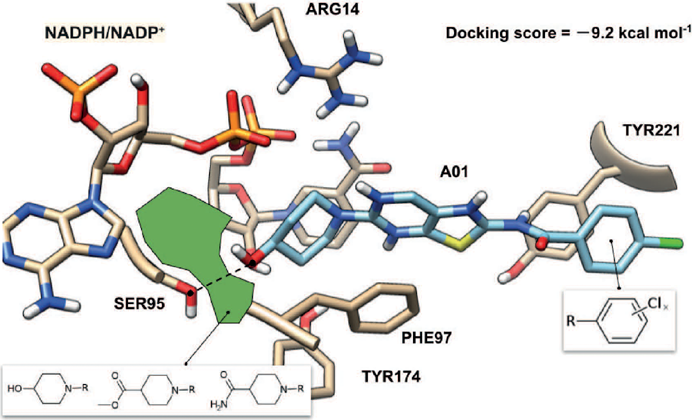
The potential binding sites for the compounds were identified as human myristoyl transferase (Dian et al., 2020) and Trypanosoma brucei PTR1(Pöhner et al., 2022). Homologous targets for Leishmania were found in UniProt, specifically N-myristoyltransferase (Leishmania infantum JPCM5, XP 001467690.1) and pteridine reductase 1 (Leishmania infantum JPCM5, XP_001465708.1). AlphaFold-generated structures of these homologs were downloaded and used in molecular docking studies. The docking results demonstrated a highly effective interaction between compound A1 and PTR1, with a binding affinity score of -9.3 kcal/mol, suggesting a strong ligand-target interaction. Key interactions within the PTR1 binding site are illustrated in Figure 3.

CONCLUSION
A series of thiazolopyrimidine derivatives were designed and synthesized as novel antileishmanial compounds. These compounds were evaluated in vitro for their anti-promastigote and anti-axenic amastigote-like activities against Leishmania infantum and Leishmania tropica. Additionally, the physicochemical properties of the synthesized compounds were calculated to understand their pharmacokinetic profiles. Compound A1 emerged as the most active compound in both in vitro tests, demonstrating significant anti-parasite activity. It also exhibited the lowest iLogP value among the compounds, coupled with high passive gastrointestinal absorption. This indicates a favorable pharmacokinetic profile. Overall, the results suggest that compound A1 has strong potential as a lead compound for developing new antileishmanial agents with improved efficacy. Its substantial in vitro activity and promising pharmacokinetic properties make it an excellent starting point for further optimization and development.
ACKNOWLEDGEMENTS
We would like to thank the Parasite Bank of the Faculty of Medicine, Manisa Celal Bayar University, for their contribution in providing the parasites used in this study.
-
FUNDING
This study was supported by grants from Scientific and Technological Research Council of Turkey (TUBITAK), (Grant No. SBAG-117-S-041) and Izmir Katip Celebi University Scientific Research Coordinatorship, (Grant no. 2018-ODL-ECZF-0018).
DATA AVAILABILITY STATEMENT
Data available on request due to privacy/ethical restrictions.
REFERENCES
- Atamanyuk D, Denis A, Gerusz V, Ledoussal B, Bonvin V, Desroy N, et al. Purine Derivatives and Their Use as Pharmaceuticals for Prevention or Treatment of Bacterial Infections. Patent WO 2012/172043. Laboratoire Biodim; 2012.
- Bahrami S, Hatam GR, Razavi M, Nazifi S. In vitro cultivation of axenic amastigotes and the comparison of antioxidant enzymes at different stages of Leishmania tropica. Trop Biomed. 2011;28(2):411-417.
- Bates PA. Leishmania sand fly interaction: Progress and challenges. Curr Opin Microbiol. 2008;11(4):340-344.
- Bigot S, Leprohon P, Vasquez A, Bhadoria R, Skouta R, Ouellette M. Thiophene derivatives activity against the protozoan parasite Leishmania infantum. Int J Parasitol - Drug. 2023;21:13-20.
- Brown R, Fuchter MJ, Chapman-Rothe N, Srimongkolpithak N, Caron J, Synder J, et al. Quinazoline Compounds and Their Use in Therapy. Patent No. WO 2013/140148. Imperial innovations limited and Emory University, 2013.
- Capela R, Moreira R, Lopes F. An Overview of Drug Resistance in Protozoal Diseases. Int J Mol Sci. 2019;20(22):5748.
- Chanmol W, Jariyapan N, Somboon P, Bates MD, Bates, PA. Axenic amastigote cultivation and in vitro development of Leishmania orientalis. Parasitol Res. 2019;118(6):1885-1897.
- Chemaxon. ChemAxon MarvinSketch. Chemaxon; 2024.
- Chen D, Orr M, Sligar J, Jacobs R, Plattner JJ. Boron-containing small molecules as antiprotozoal agents. Patent No WO 2011/019618. Anacor Pharmaceuticals INC, 2011.
- Daina A, Michielin O, Zoete V. iLOGP: A Simple, Robust, and Efficient Description of n -Octanol/Water Partition Coefficient for Drug Design Using the GB/SA Approach. J Chem Inf Model. 2014;54(12):3284-3301.
- Daina A, Michielin O, Zoete V. SwissADME: A free web tool to evaluate pharmacokinetics, drug-likeness and medicinal chemistry friendliness of small molecules. Sci Rep. 2017;7(1):42717.
- Daina A, Zoete V. A BOILED-Egg To Predict Gastrointestinal Absorption and Brain Penetration of Small Molecules. ChemMedChem. 2016;11(11):1117-1121.
- De Oliveira Filho GB, De Oliveira Cardoso MV, Espíndola JWP, Ferreira LFGR, De Simone CA, Ferreira RS, et al. Structural design, synthesis and pharmacological evaluation of 4-thiazolidinones against Trypanosoma cruzi. Bioorg Med Chem. 2015;23(23):7478-7486.
- Debrabant A, Joshi MB, Pimenta PFP, Dwyer DM. Generation of Leishmania donovani axenic amastigotes: Their growth and biological characteristics. Int J Parasitol. 2004;34(2):205-217.
- Dian C, Pérez-Dorado I, Rivière F, Asensio T, Legrand P, Ritzefeld M, et al. High-resolution snapshots of human N-myristoyltransferase in action illuminate a mechanism promoting N-terminal Lys and Gly myristoylation. Nat Commun. 2020;11(1):1132.
- Eberhardt J, Santos-Martins D, Tillack AF, Forli S. AutoDock Vina 1.2. 0: New docking methods, expanded force field, and python bindings. J Chem Inf Model. 2021;61(8):3891-3898.
- Gupta N, Goyal N, Rastogi AK. In vitro cultivation and characterization of axenic amastigotes of Leishmania. Trends Parasitol. 2001;17(3):150-153.
- Heald R, Bowman KK, Bryan MC, Burdick D, Chan B, Chan E, et al. Noncovalent Mutant Selective Epidermal Growth Factor Receptor Inhibitors: A Lead Optimization Case Study. J Med Chem. 2015;58(22):8877-8895.
- Hu J, Liu Z, Yu DJ, Zhang Y. LS-align: an atomlevel, flexible ligand structural alignment algorithm for high-throughput virtual screening. Bioinform. 2018;34(13):2209-2218.
- Istanbullu H, Bayraktar G, Akbaba H, Cavus I, Coban G, Debelec-Butuner B, et al. Design, synthesis, and in vitro biological evaluation of novel thiazolopyrimidine derivatives as antileishmanial compounds. Arch. Pharm. 2020;353(8):1900325.
- Istanbullu H, Bayraktar G, Karakaya G, Akbaba H, Perk NE, Cavus I, et al. Design, synthesis, in vitro - In vivo biological evaluation of novel thiazolopyrimidine compounds as antileishmanial agent with PTR1 inhibition. Eur J Med Chem. 2023;247:115049.
- Kima PE. The amastigote forms of Leishmania are experts at exploiting host cell processes to establish infection and persist. Int J Parasitol. 2007;37(10):1087-1096.
- Leishmaniases, Geneva, 22-26 March 2010.
- Limoncu ME, Erac B, Ozbilgin A, Balcioglu IC, Hosgor-Limoncu M. Investigation of in vitro Antileishmanial Activity of Moxifloxacin, Linezolid and Caspofungin on Leishmania tropica Promastigotes. Turkiye Parazitol Derg. 2013;37(1):1-3.
- Nasereddin A, Schweynoch C, Schonian G, Jaffe CL. Characterization of Leishmania (Leishmania) tropica axenic amastigotes. Acta Tropica. 2010;113(1):72-79.
- Ok UZ, Balcioglu IC, Taylan Ozkan, A, Ozensoy S, Ozbel, Y. Leishmaniasis in Turkey. Acta Tropica. 2002;84(1):43-48.
- Ozbilgin A, Cavus I, Yildirim A, Kaya T, Ertabaklar H. Evaluation of In vitro and In vivo Drug Efficacy Over Leishmania tropica: A Pilot Study. Turkiye Parazitol Derg. 2018;42(1):11-19.
- Panecka-Hofman J, Pöhner I, Spyrakis F, Zeppelin T, Di Pisa F, Dello Iacono L, et al. Comparative mapping of on-targets and off-targets for the discovery of anti-trypanosomatid folate pathway inhibitors. Biochim. Biophys. Acta - Gen. Subj. 2017;1861(12):3215-3230.
- Pöhner I, Quotadamo A, Panecka-Hofman J, Luciani R, Santucci M, Linciano P, et al. Multitarget, Selective Compound Design Yields Potent Inhibitors of a Kinetoplastid Pteridine Reductase 1. J Med Chem. 2022;65(13):9011-9033.
- Polat E, Cakan H, Aslan M, Sirekbasan S, Kutlubay Z, Ipek T, et al. Detection of anti-leishmanial effect of the Lucilia sericata larval secretions in vitro and in vivo on Leishmania tropica: First work. Exp Parasitol. 2012;132(2):129-134.
- Potts RO, Guy RH. Predicting skin permeability. Pharm Res. 1992;9(5):663-669.
- Semple G, Fioravanti B, Pereira G, Calderon I, Uy J, Choi K, et al. Discovery of the First Potent and Orally Efficacious Agonist of the Orphan G-Protein Coupled Receptor 119. J Med Chem. 2008;51(17):5172-5175.
- Steverding D. The history of leishmaniasis. Parasit. Vectors. 2017:10(1),82.
- Stewart JJ, Klamt A, Thiel W, Danovich, D, Rocha GB, Gieseking RL, et al. 2022, MOPAC (22.0. 0).
- Stewart JJ. Optimization ofparameters for semiempirical methods VI: more modifications to the NDDO approximations and re-optimization of parameters. J Mol Model. 2013;19:1-32.
- Sundar S, Chakravarty J. An update on pharmacotherapy for leishmaniasis. Expert Opin Pharmacother. 2015;16(2):237-252.
- Williams C. Hydrosoluble formazan XTT: Its application to natural products drug discovery for Leishmania. J Microbiol Methods. 2003;55(3):813-816.
-
World Health Organization. WHO Fact Sheets, Leishmaniasis. 2023. https://www.who.int/news-room/fact-sheets/detail/leishmaniasis (cited 2024 August 05)
» https://www.who.int/news-room/fact-sheets/detail/leishmaniasis - World Health Organization. WHO Technical Report Series no 949. Control of the leishmaniasis: report of a meeting of the WHO Expert Committee on the Control of Leishmaniases, Geneva, 22-26 March 2010.
Edited by
-
Associate Editor:
Carlota Rangel Yagui