 GOVERNMENT-EMBEDDED DISINFORMATION: Brazil’s “parallel cabinet” and covid-19
ABSTRACT
Social media algorithms, designed to maximize user engagement, have inadvertently eased the spread of disinformation. Brazil’s Ministry of Health’s “parallel cabinet”, a group made up of Bolsonaro’s family (the former president Jair Bolsonaro and his sons: a senator, a congressman, and a councilman), governmental officials, politicians, physicians, and digital influencers, framed covid-19 within a disinformation lens. An analysis of 1.143 posts on X/Twitter identified four framings (“Federal Response”, “Early Treatment”, “Anti-lockdown”, and “Slandering”) associated with pivotal domestic events (the virus outbreak, social distancing disputes, the Manaus crisis, and the covid-19 Congressional Inquiry). The Brazilian case offers a valuable lesson: twenty-first-century crises can be exacerbated under far-right governments that promote disinformation on social media; it highlights how political disinformation competes with and weakens journalism’s role as a legitimizing institution in public debate, especially when actors bypass traditional media and frame crises through social media platforms.
Keywords
Covid-19; Disinformation; Social Media; X/Twitter; Framing
RESUMO
Os algoritmos das redes sociais, projetados para maximizar o engajamento dos usuários, facilitaram inadvertidamente a disseminação da desinformação. O “gabinete paralelo” do Ministério da Saúde do Brasil, um grupo formado pela família Bolsonaro (o ex-presidente Jair Bolsonaro e seus filhos: um senador, um deputado e um vereador), funcionários governamentais, políticos, médicos e influenciadores digitais, enquadrou a covid-19 por meio de uma lente de desinformação. Uma análise de 1.143 publicações no X (antigo Twitter) identificou quatro enquadramentos (“Resposta Federal”, “Tratamento Precoce”, “Anti-lockdown” e “Difamação”) associados a eventos domésticos importantes (o surto do vírus, disputas sobre o distanciamento social, a crise de Manaus e a Comissão Parlamentar de Inquérito) da covid-19. O caso brasileiro oferece uma lição valiosa: crises do século 21 podem ser exacerbadas sob governos de extrema-direita que promovem a desinformação nas redes sociais; destaca como a desinformação política compete com e enfraquece o papel do jornalismo como instituição legitimadora no debate público, especialmente quando atores ignoram a mídia tradicional e enquadram crises por meio das plataformas de redes sociais.
Palavras-chave
Covid-19; Desinformação; Mídias sociais; X/Twitter; Enquadramentos
RESUMEN
Los algoritmos de las redes sociales, diseñados para maximizar la participación de los usuarios, han facilitado inadvertidamente la difusión de desinformación. El “gabinete paralelo” del Ministerio de Salud de Brasil, un grupo conformado por la familia de Bolsonaro (el expresidente Jair Bolsonaro y sus hijos: un senador, un diputado y un concejal), funcionarios gubernamentales, políticos, médicos e influenciadores digitales, enmarcó la covid-19 a través de una lente de desinformación. Un análisis de 1.143 publicaciones en X (anteriormente Twitter) identificó cuatro encuadres (“Respuesta Federal”, “Tratamiento Temprano”, “Anti-confinamiento”, y “Calumnias”) asociados con eventos domésticos clave (el brote del virus, disputas sobre el distanciamiento social, la crisis de Manaos, y la Comisión Parlamentaria de Investigación) de la covid-19. El caso brasileño ofrece una lección valiosa: las crisis del siglo veintiuno pueden exacerbarse bajo gobiernos de extrema derecha que promueven la desinformación en las redes sociales; destaca cómo la desinformación política compite y debilita el papel del periodismo como institución legitimadora en el debate público, especialmente cuando actores evaden los medios tradicionales y enmarcan las crisis a través de plataformas de redes sociales.
Palabras-clave
Covid-19; Desinformación; Redes sociales; X/Twitter; Encuadres
1 Introduction
Far-right actors embedded in official and unofficial communication channels have widely spread disinformation, as seen in convid-19, threatening fact-based debate and the role of journalism worldwide. These actors not only disseminated misleading content but have also actively rivaled journalism, often portraying it as untrustworthy and discrediting traditional sources of information. Digital transformation has enabled algorithm-savvy actors to leverage social media platforms, tailoring disinformation campaigns, exploiting recommendation pipelines, and bypassing journalistic gatekeeping. Disinformation, defined as the deliberate spread of misleading content (French et al., 2024; Wardle & Derakhshan, 2017), erodes public trust in institutions and weakens the persuasive authority of compelling scientific evidence.
Rapid shifts during crises and emergencies disorient people and foster fears and uncertainties, making it difficult to accurately distinguish reliable information from misleading content (Pool et al., 2021), which leads some individuals to disregard risk mitigation measures (Nowak et al., 2021). In the covid-19 context, the weakening of journalism as a legitimizing institution enables disinformation to thrive (Baptista, 2019), shaping distorted narratives about public health and fostering widespread confusion over health risks and responses. Lacking robust journalism to guide public understanding, society might drift deeper into disorder, as per di Giulio et al. (2023) analysis of Bolsonaro’s “governance by chaos”, where competing framings multiply unchecked, and disinformation becomes the dominant discourse. Bolsonaro’s attacks on the press throughout the pandemic deepened hostility and mistrust toward journalism, weakening its authority and creating fertile ground for disinformation to flourish.
Amid covid-19, multiple actors aimed at framing the pandemic differently, each according to their interests, beliefs, values, and worldviews (Mutua & Oloo Ong’ong’a, 2020; Rooke, 2021). Framing highlights certain aspects of reality while ignoring others (Entman, 1993; Figouroux & Van Gorp, 2020), shaping public opinion and legitimizing policy choices. Owing to reaching large audiences and agenda-setting, journalism used to be the preeminent wellspring of issues framing (Qiu et al., 2021; Hansen, 2018). In recent years, however, disinformation spread through platforms has matched the influence of legacy media, in which digital communication platforms may unintentionally amplify false information by promoting engaging content regardless of accuracy (Wardle & Derakhshan, 2017).
A growing body of research has analyzed traditional media, social media, far-right groups, social movements, and bot usage (see supplementary material). Rightly, many of these authors argue that focusing only on traditional media may oversimplify the complexities of disinformation, the actors involved, and their digital activism dynamics (Ahmed et al., 2019; Figouroux & Van Gorp, 2020; Rhodes, 2022). While they shed light on algorithmic disinformation, echo chambers’ effects, and far-right narratives, more empirical evidence is needed on how official groups produce and spread disinformation. In this respect, the disinformation literature explores the creation and spread of misleading content, echo chambers, sensationalist headlines, algorithmic bubbles, and individual behaviors driven by fear and prejudice, and people unknowingly spread false information under the belief they are acting altruistically (Rhodes, 2022; Apuke & Omar, 2021). Terms like “fake news”, “junk news”, and “post-truth” often serve as discursive strategies to challenge the credibility of the media (Krasni, 2020; Wardle & Derakhshan, 2017).
In Brazil, during covid-19, the Ministry of Health’s “parallel cabinet” illustrates a case of how government-embedded officers handled disinformation via platform-mediated communications, with severe implications for public trust, public health, social polarization, and the integrity of democratic and scientific institutions. Many authors (see Dyer, 2021; Fernandes et al., 2021; Ferigato et al., 2020; Hallal, 2021; di Giulio et al., 2023; Campos et al., 2023) observed that a group made up of Bolsonaro’s family (the former president Bolsonaro and his sons: a senator, a congressman, and a councilman), officials within governmental bodies, including chiefs of ministries, secretaries, and special advisors, politicians, physicians, and digital influencers leveraged social media for disinformation campaigns. The parallel cabinet shared a broad gamut of disinformation (Bueno, 2023; di Giulio et al., 2023; Campos et al., 2023; Forti et al., 2022), notably unproven claims about vaccines and preventive care, and criticized social distancing strategies (Ávila & Barreto, 2023; Dyer, 2021).
This study examines how the parallel cabinet framed covid-19, enhancing framing theory by (a) investigating government-produced disinformation within extra-official circles and (b) assessing its impact on public discourse, societal issues, and policies that contradict global scientific consensus. We departed from the following research question: “How did the ‘parallel cabinet’ frame covid-19 through disinformation on social media platforms?” The Brazilian case is a unique combination in which the far-right within the government, along with groups and actors that support disinformation, spread false narratives to undermine democratic institutions, erode trust in science, and promote skepticism toward organizations like the World Health Organization (WHO). This dynamic heightened social polarization and allowed the far-right agenda to gain traction despite contradicting scientific evidence. Ongoing crises become riskier under far-right governments, especially when disinformation networks get involved.
1.1 Framing and social media platforms
Seminal literature on framing theory stresses sociocultural milieus (interests, values, beliefs, and worldviews) on how social actors frame problems (Gamson & Modigliani, 1989). Framing is selecting “some aspects of a perceived reality and make them more salient” (Entman, 1993, p. 54). When framing highlights some aspects of reality while de-emphasizing others, it affects public opinion and policy choices, reinforcing or challenging pre-existing understandings (Pan & Kosicki, 1993). By simplifying complex themes, framings empower individuals to make informed decisions (Tarditi, 2020). Within journalism organizations, framing shapes news stories and how they are constructed and presented (Entman, 1993; Figouroux & Van Gorp, 2020; Pan & Kosicki, 1993), which selects specific details and perspectives to guide audience interpretation, response, and the structure and tone of narratives.
In today’s media landscape, the power in framing an issue has notably shifted from professional media organizations (López, 2021) to a more user-generated model (Mendelsohn et al., 2021). This shift has not made data more accessible but has concentrated control in a few tech giants (e.g., Alphabet, Meta, X/Twitter, Amazon, Weibo, ByteDance), who currently wield unprecedented global influence. Thus, sharing the news on media platforms is a personal form of framing news reality, in which users highlight specific aspects of stories to a particular view, especially with sensitive topics such as social movements (Kilgo et al., 2021). User-generated content may challenge the authority of the media when bringing alternative narratives to the forefront (Rooke, 2021; Tarditi, 2020). Digital platforms, while indispensable tools for providing spaces for social problem framing and mobilization (Ciurel, 2023), often serve as breeding grounds for unsubstantiated claims that directly conflict with established scientific knowledge.
More concerning, the platform’s pipeline of sharing and amplification might determine which frames gain prominence, highlighting the role of gatekeeping in the networked public sphere, while disinformation thrives when engagement is prioritized over accuracy (Hassan et al., 2019). Social media algorithms amplify misleading content, blurring the line between credible information and disinformation (Wardle & Derakhshan, 2017) and hindering the public’s ability to identify reliable sources. Algorithmic biases and echo chambers intrinsically foster disinformation spread by trapping users in information cocoons that only reflect their viewpoints (Rhodes, 2022).
In this regard, far-right wings have effectively leveraged social media and alternative news platforms to spread their ideology and garner support (Campos et al., 2025); they have adopted sophisticated communication strategies to broaden their appeal, often moderating their messaging to obscure overtly extremist ideologies and adopting a more palatable public image (Youngblood, 2020; Wardle & Derakhshan, 2017). This often comprises coded language and euphemisms to veil their true intentions, making their platforms more accessible to mainstream audiences (Rhodes, 2022; Wardle & Derakhshan, 2017). These actors tailor their content to various sociopolitical landscapes, adapting their messages to resonate with local issues and concerns, which helps in gaining traction across different demographic segments (Gagnon, 2020). Such tailored messaging not only amplifies their reach but also facilitates the normalization of far-right ideologies within mainstream discourse, subtly influencing public opinion and policy. On platforms, far-right parties critique the political establishment on issues like immigration, islamophobia, Euroscepticism, anti-vaccine movements, and transnational alliances (Boberg et al., 2020; Darius & Stephany, 2020; Pucelj, 2022; Vasilopoulou, 2018). These dynamics reflect the offline reality, where the absence of established right-wing parties creates a void filled by extremist online factions (Klein & Muis, 2019).
1.2 Bolsonaro and the parallel cabinet stance on disinformation
Disinformation as a political weapon was noticeable as the parallel cabinet persistently underplayed the risks of covid-19 (di Giulio et al., 2023; Mendes et al., 2024; Recuero et al., 2022; Ricard & Medeiros, 2020), promoted unscientific claims about vaccines, downplayed social distancing and infection risks, endorsed unproven treatments, and slandered opponents (Campos et al., 2023; Dyer, 2021; Nicoletti & Flores, 2022). They leveraged disinformation through the Ministry of Health, official channels, and platforms like WhatsApp, Telegram, Instagram, YouTube, and X/Twitter, eroding public trust in science and government (di Giulio et al, 2023). Downplaying the pandemic’s risks resulted in a slow and uncoordinated response (Cabral et al., 2021), causing critical delays in implementing effective measures to control the virus spread (Fonseca et al., 2021). Endorsing unproven treatments led people to delay or avoid proper covid-19 treatment, exacerbating health outcomes and undermining public trust in medical advice (Soares et al., 2021). The case underscores the detrimental impact of parallel cabinet disinformation on pandemic response, highlighting the need for accurate information and coordinated public health efforts. The following political time spans clarify the landscape of covid-19 framing in Brazil:
Virus outbreak (Mar 2020 – May 2020): the virus spread rapidly through Brazil, starting in São Paulo in February 2020, leading to overwhelmed hospitals and shortages. Conflicting Federal Government messages (di Giulio et al., 2023) and a lack of national coordination (Senado Federal, 2021; Razafindrakoto et al., 2024) led to varied adherence to guidelines (Ortega & Orsini, 2020) and independent actions by state governors, while economic hardships (Lins et al., 2023) fueled debates on lockdowns versus herd immunity. Hydroxychloroquine (HCQ), initially promoted as a legitimate treatment, was later discredited but remained popular among antivaccine groups (Chaney & Lee, 2022). The parallel cabinet continued to push HCQ (Floss et al., 2023) as an alternative to social distancing, while promoting disinformation about the risks of covid-19 (Ricard & Medeiros, 2020). Luiz Mandetta’s Health Ministry promoted social distancing and increased hospital capacity (Croda et al., 2020), directly opposing the official stance. These actions led to Mandetta’s dismissal in April 2020. The second Health Minister, Nelson Teich, resigned after a month. Pazuello, a military officer without experience in the health area, assumed the position. His mandate was criticized for its fragmented strategy, vaccine delays, and overwhelmed healthcare (Senado Federal, 2021; King & Fonseca, 2021).
Social Distancing Disputes (May 2020 – Jan 2021): disputes over social distancing and lockdowns highlighted the differences between Brazil’s federal government and state governors (Floss et al., 2023; Fonseca et al., 2021). The Federal Government, led by Health Minister Pazuello, opposed restrictive measures, citing economic harm (Fonseca et al., 2021). In contrast, state governors implemented lockdowns and stricter protocols to avoid healthcare overload, following WHO guidelines. Public polarization increased, with Bolsonaro supporters clashing with those favoring state measures. For example, São Paulo State Governor João Doria clashed with Bolsonaro, secured independent vaccine deals, and imposed local restrictions (Sousa & Rodrigues, 2021). Other right-wing governors like Zema (Minas Gerais), Castro (Rio de Janeiro), Ratinho Jr. (Paraná), Cameli (Acre), and Ibaneis Rocha (Federal District) supported some federal policies but still enforced social distancing and mask mandates, revealing a fragmented response (di Giulio et al., 2023).
Manaus Crisis (Dec 2020 – Apr 2021): the episode in the city of Manaus (Amazonas State) was considered a public health disaster exacerbated by the spread of the P.1 variant, ineffective social distancing, and promotion of HCQ protocols endorsed by Brazil’s Federal Government (Taylor, 2021). As the strain quickly overwhelmed Manaus’ healthcare system, which had only 100 ICU beds for 2.02 million people, the government failed to improve the supply of essential medical equipment like respirators and oxygen (di Giulio et al., 2023; Campos et al., 2023) and promoted HCQ through the “TrateCov” app (Fuchs, 2021). The crisis led to a collapse of hospital and funeral systems, with Manaus accounting for two-thirds of Brazil’s covid-19 deaths during this period (Ferrante & Fearnside, 2023). Despite early warnings, the government’s slow response and continued promotion of herd immunity worsened the situation (Ávila & Barreto, 2023). At the same time, mass vaccination began in São Paulo State with CoronaVac in early 2021, but delays in federal vaccine procurement and coordination, along with Bolsonaro’s public skepticism, fueled controversy and hindered the state’s response (di Giulio et al., 2023; Campos et al., 2023).
Covid-19 Congressional Inquiry (CCI) (May 2021 – Oct 2021): this inquiry was held from May to October 2021 and investigated Bolsonaro’s administration’s handling of the pandemic, focusing on vaccine procurement delays, misinformation on treatments, and public health mismanagement (Floss et al., 2023). The CCI found that the Federal Government actively obstructed mass vaccination, hindering the country’s response (Senado Federal, 2021). A key finding was the existence of a parallel cabinet, including Bolsonaro’s allies, that spread disinformation about covid-19 treatments via social media, official channels, and hyper-partisan outlets. This group promoted unproven HCQ treatments, attacked critics, and delayed vaccine acquisition, worsening the crisis. The inquiry explicitly cited the “parallel cabinet”, and sometimes “hate cabinet”, accusing Bolsonaro and his allies of crimes against life, charlatanism, and violating sanitary measures, actions that endangered public health and amplified the pandemic’s impact (Senado Federal, 2021).
2 Methods
We ran a Correspondence Factorial Analysis (CFA) to uncover latent framings adopted by the parallel cabinet, followed by Content Analysis (CA) to categorize each online message. We chose X due to the high engagement of the Bolsonaro family and their closest allies.
The criteria for selecting members of the parallel cabinet were derived from the timeline of the Comparative covid Response Project (CompCoRe). CompCoRe studied about 20 national responses to covid-19, including Brazil, tracking events daily. The Brazilian wing registered nearly 4.000 news stories in elite domestic media outlets (e.g., Estado de S. Paulo, Folha de S.Paulo, Correio Braziliense, UOL, Globo, G1, R7, BBC Brasil, CNN Brasil, DW Brasil, El País Brasil). Exploratory analyses of the timeline revealed that the time span from August 2021 to October 2021 (n = 348 news articles) embraced most of the mentions of the parallel cabinet. We listed each actor cited at least three times as a member of this group. Some members were not found due to either the absence of a profile or its removal under X policies or Brazilian court rulings. Details can be accessed in the supplementary material.
While the participation of certain members was well-documented in the literature, notably Bolsonaro’s family, Nise Yamaguchi, M.D., and two former Ministers of Health, Marcelo Queiroga and Eduardo Pazuello, the involvement of others remained unclear. However, we arbitrarily considered as members of this group only those mentioned at least three times. The CCI uncovered compelling evidence of their involvement, while prior studies outlined the group’s modus operandi (Bueno, 2023; di Giulio et al., 2023; Dyer, 2021; Oliveira, 2021; Senado Federal, 2021).
We retrieved the X/Twitter online messages with a code built on the “Tweepy for Python” library (see supplementary material). We queried the following Portuguese keyword versions: covid, covid-19, corona, coronavirus, pandemic (pandemia), early (precoce), early treatment (tratamento precoce), hydroxychloroquine, chloroquine, ivermectin, HCQ, HCO, HC, NTZ, nitazoxanide, isolating (isolamento), social isolation (isolamento social), social distancing (distanciamento social), mask (mascara), herd (rebanho), herd immunity (imunidade de rebanho), vaccines (vacinas), vaccination (vacinação). After multiple queries retrieving each listed member profile, we ended up with a 1.143-tweet corpus.
We performed a Correspondence Factor Analysis (CFA) with Iramuteq 0.7 alpha 2, which organizes textual data into two-dimensional axes based on their similarities (how closely related sets of textual data are). The technique explores latent structures within a corpus, grouping similar elements at higher levels and revealing patterns and relationships; it divides the corpus into text segments (for instance, the X/Twitter dataset required 15-character segments to yield consistent framing patterns), calculates word frequency within each unit, and constructs a distance matrix among them using a similarity index. With this matrix, Iramuteq performs the CFA algorithm, which consists of grouping text segments into greater classes. Finally, it presented the grouped classes in classification outputs, displayed in a coordinate graph, showing the relationships between classes and text segments in graphs that describe the characteristics of the classes.
Content analysis (CA) is a textual technique that categorizes the manifest and latent content of textual data, identifying patterns, themes, and relationships (Badzinski et al., 2021; Bardin, 1977). Taguette 1.3.1 facilitated dataset analysis through a qualitative approach. The software classified, sorted, and arranged information, enabling the examination of relationships within the corpus. The stages in content analysis using Taguette included: (1) importing text documents into Taguette; (2) coding the online messages with the previous framing; (3) exploring queries and plotting the labels in a timeline–in this step, since we were not dealing with samples, we did not perform statistical tests.
3 Results
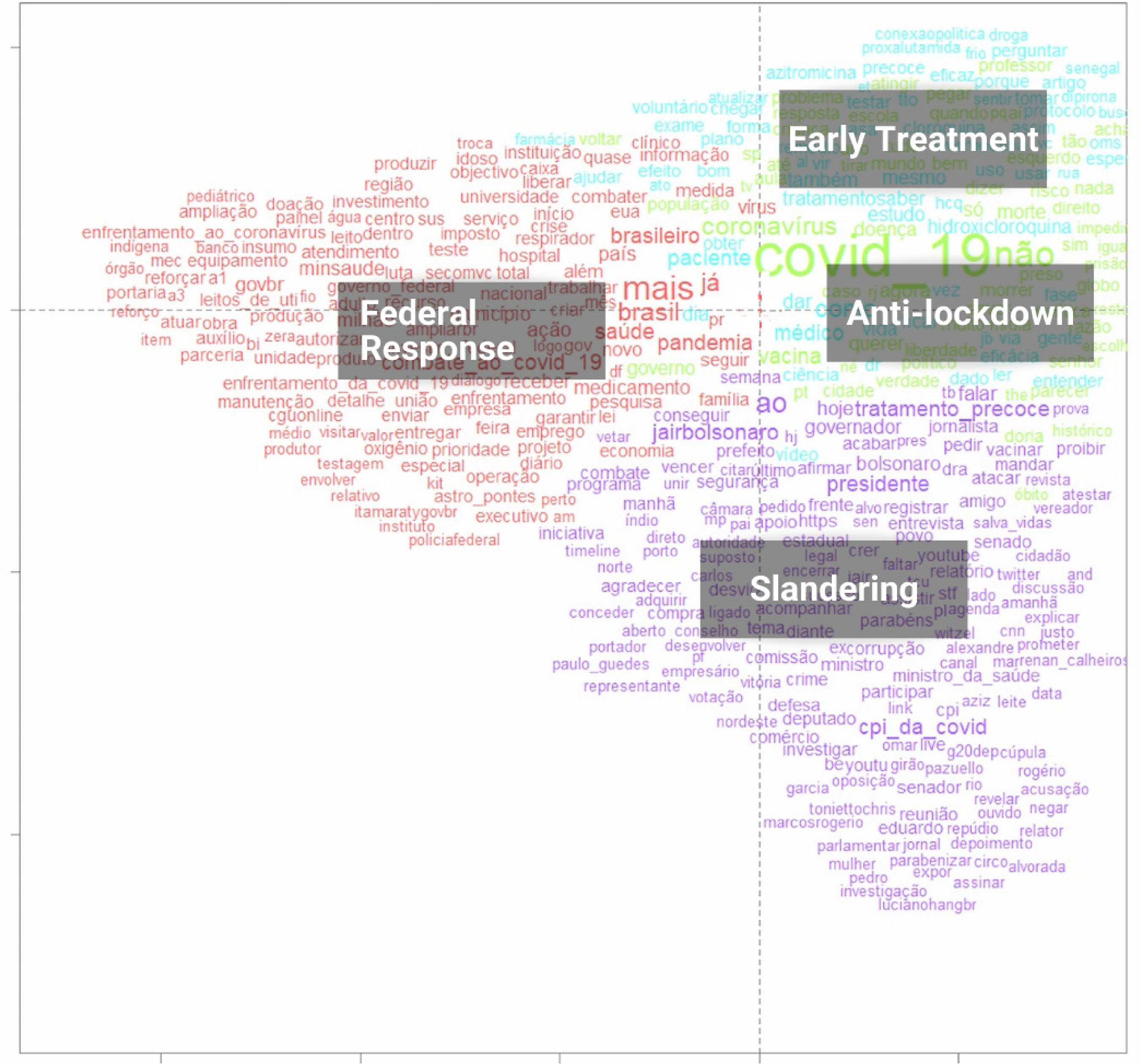
The CFA analysis revealed four framings upon examining 1.143 X online messages: Federal Response, Early Treatment, Antilockdown, and Slandering. The graph shows the most representative words from each cluster on two axes, based on their co-occurrence patterns and variation across the text corpus. The horizontal axis represents variance in terms of associations with different framings (e.g., pro-government vs. anti-government), while the vertical axis captures the second most significant dimension (figure 1).
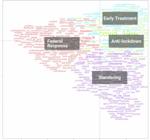
Federal Response framing dominated the left region and slightly overlapped with Early Treatment. A central position typically indicates that the terms associated with the Federal Response cluster are more neutral, suggesting it is a core theme, with elements that intersect with multiple other clusters. Federal Response covers governmental actions, policy measures, and resource management during the pandemic. “Governo” (government), “federal”, and “enfrentamento” (confrontation) were the most prevalent words, suggesting the prevalence of the Federal Response framing in the early stages of the pandemic, including policy measures, healthcare provisions, and resource allocation (table 1).
Slandering is near the center-bottom of both axes, with a significant presence on the vertical axis. The proximity of the Anti-lockdown framing to Early Treatment indicates a close thematic relationship between these two clusters. It highlights critical or defamatory discourse, potentially involving accusations and political conflicts. “Acusação” (accusation), “criminoso” (criminal), and “senador” (senator) suggest a focus on political conflicts, accusations, and possibly misinformation or slander during the pandemic. Early Treatment is positioned in the upper-right area, often overlapping with Anti-lockdown, suggesting that both were the main frames deployed by the parallel cabinet to broadcast scientific mistrust of social distancing efficacy.
A position towards the top right of the graph suggests that Early Treatment is associated with specific themes that are distinct from those associated with the central cluster. This distinct placement indicates a separate set of narratives or discussions that differ in both primary and secondary dimensions of variance. This theme focuses on medical treatments and interventions, including controversial methods like hydroxychloroquine. “Tratamento precoce” (early treatment) and “hidroxicloroquina” (hydroxychloroquine) indicate focus on early intervention methods and controversial protocols that were discussed during the pandemic. Anti-lockdown is aligned with Early Treatment, reflecting shared allegations or overlapping concerns. The proximity of Anti-lockdown to Early Treatment suggests a close thematic relationship between these two clusters. It includes discussions opposing lockdown measures and advocating for personal freedoms. “Liberdade” (freedom) and “contra” (against) words suggest discussions opposing lockdown measures, advocating for personal freedom, and possibly criticizing government restrictions.
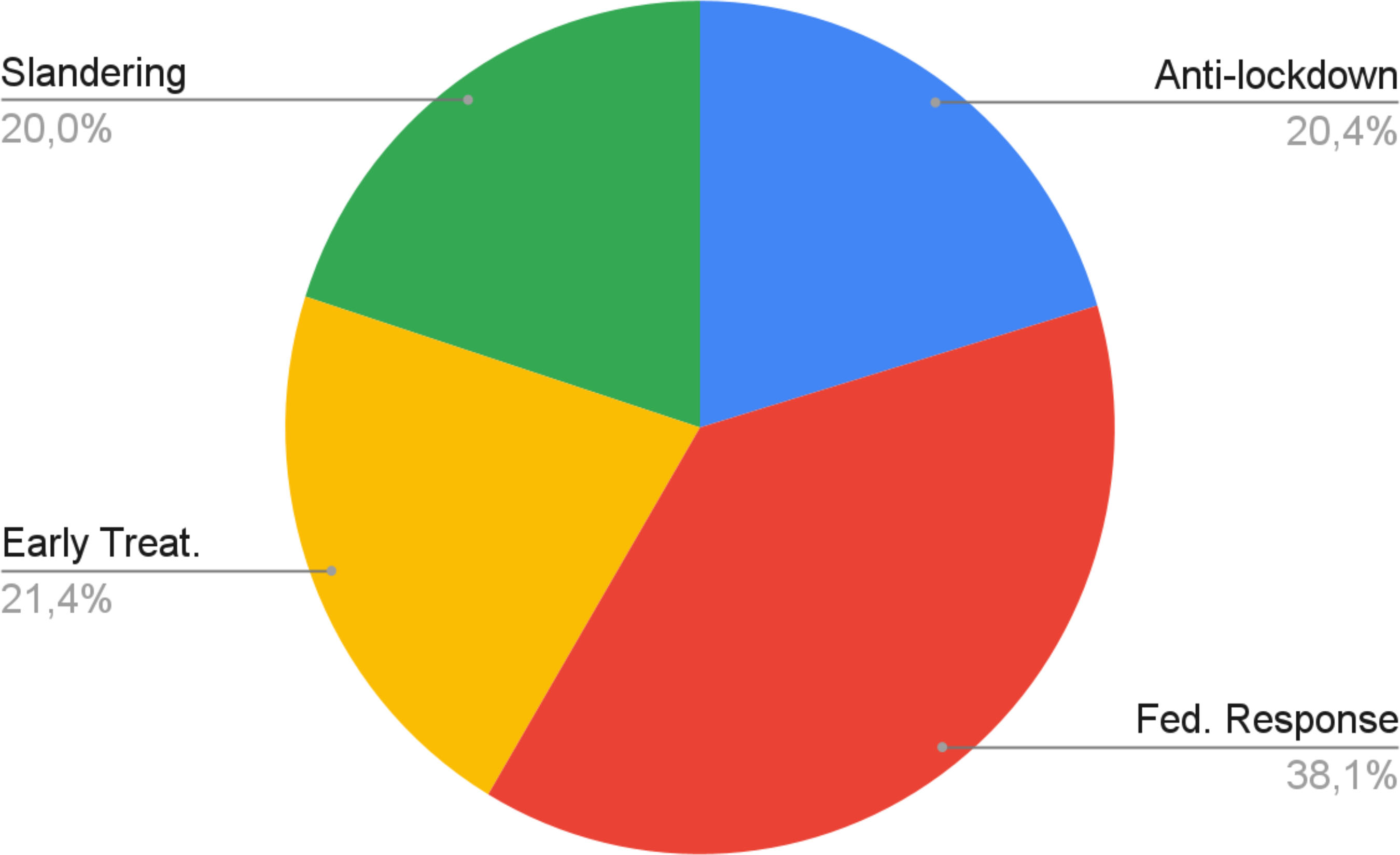
Figure 2 shows the relative frequency after qualitative classification of 1.143 online messages. Federal Response represented 38% of the total, and the other framings (Early Treatment, Antilockdown, and Slandering) accounted for 62%.
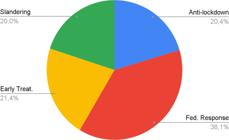
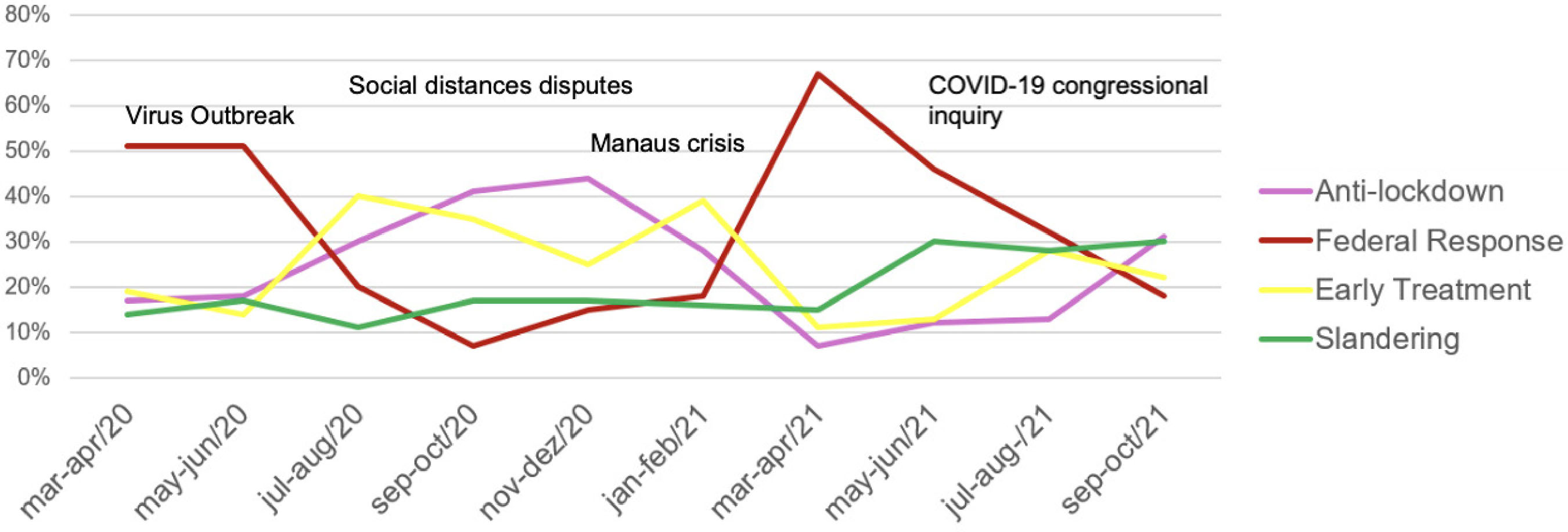
Figure 3 shows that the time spans of Mar-Apr/20, MayJun/20, and Sep-Oct/21 concentrated nearly 44% (498) of the corpus. The federal response, which peaked in March-April 2021, was positively associated with the vaccination beginning, where the provaccine discourses were salient. Slandering, Anti-lockdown, and Early Treatment increased in the latter periods when the CCI rolled out its endeavors. Early Treatment was also prominent between January and February 2021 when the Manaus crisis had burst.

Federal Response gained prominence at the onset of covid-19 and at the beginning of vaccination. In the first two months, there was an anticipated reaction from the Federal Government to expand the healthcare system to accommodate the increasing demand, as well as the announcement of case tracking with the WHO, and closing borders. As it became clear throughout the pandemic, this onset was paradoxical to Bolsonaro’s entire response. During the mass vaccination campaign beginning, which took place only from May 2021 to August 2021, there were also public messages from the parallel cabinet about vaccine investments, but also regarding the uncertainties surrounding those vaccines. Conversely, Early treatment, Anti-lockdown, and Slandering were inversely associated with Federal Response, decreasing during the Manaus crisis and the vaccination beginning. The investigation of the parallel cabinet might explain this behavior, in which the members counterattacked the inquiry findings and crimes charged. Apart from the early months, Anti-lockdown prevailed until critical domestic events unfolded.
During the Manaus crisis, Early Treatment was the most frequent framing (39.9%), followed by Anti-lockdown (27.5%), Slandering (17.5%), and Federal Response (15.7%). Before vaccination, anti-social distancing and ineffective medicines were commonly promoted, while government actions came lastly, the parallel cabinet then suggesting the priorities of the Bolsonaro government. This corresponds with Di Giulio’s et al. (2023) findings that showed how the Federal Government measures were in nonconformity with the scientific consensus about how to deal with the Manaus’ crisis.
After a few months came the Beginning of Mass Vaccination span which concentrated the peak of the framings in the series, reaching two-thirds of relative frequency in the event, while the other framings were insignificant. One could explain this pattern by attributing the lowering in disinformation to the substantial increase in the publicity of government actions (Federal Response). During the CCI, Federal Response showed a consistent decline in its relative frequency, becoming the least frequent framing at the end of the inquiry. Disinformation framings, on the other hand, showed steady growth from the beginning of the inquiry, with a focus on Slandering, which ended in second place (29.7%), very close to Anti-lockdown (30.9%). Slandering, featured in much of the series in last place, displays a relevant position during the CCI span. Probably aiming to discredit the results of the inquiry, it increased the attacks on actors opposed to Bolsonaro’s government.
These results shed light on how Brazilian government and embedded far-right groups used social media platforms to frame contemporary issues through disinformation. Brazil’s Ministry of Health parallel cabinet case showed how cohesive groups skillfully spread framings to shape public perception and achieve political goals. Federal Response, Early Treatment, Anti-lockdown, and Slandering framings, each within its scope, sought to legitimize contentious policies and promote covid-19 disinformation that opposed scientific consensus, undermining public health measures. Understanding the reasons behind these entities misuse of information or active disinformation throughout alternative media channels, and the following disputes over legitimized framing might be fundamental for building more effective social mechanisms to address future crises.
In a reaction to the media boycott, the parallel cabinet turned to social media platforms to disseminate their preferred framings, which in turn became a channel capable of acting in legitimizing antiscientific government policies. Along this path, the group aligned with a far-right agenda, managing disinformation, such as distorted scientific evidence, to reinforce their political stance and undermine public health measures. While much research has focused on the framing by far-right groups, this study focused on the Brazilian case particularly highlights something new in the literature: individuals embedded in both official and unofficial communication channels have worked closely to widely spread disinformation.
Much research pointed out that far-right Facebook groups linked to President Jair Bolsonaro spread conspiracy theories and anti-lockdown messages while fact-checking efforts by left-leaning groups struggled to counteract this (Recuero et al., 2022). Bolsonaro also framed the virus as part of a “communist conspiracy”, using political tensions to undermine health measures (Kalil et al., 2021). WhatsApp was pivotal in portraying the pandemic as a political issue, deflecting criticism of the government’s response, as per Soares et al. (2021).
Disinformation significantly influenced Brazil’s chaotic response by distorting facts and creating a false sense of legitimacy for policies against the global scientific consensus and public health measures (Di Giulio et al., 2023). These misleading narratives undermined public trust and worsened the crisis by promoting unproven treatments. The parallel cabinet’s framing challenged global scientific consensus, highlighting the need to study how disinformation resonated among experts, politicians, and Bolsonaro’s supporters. Despite evidence of extensive disinformation campaigns by the Bolsonaro government and far-right actors (Dyer, 2021; Ferigato et al., 2020; Hallal, 2021), understanding the spread of these framings over time remains limited. The parallel cabinet’s influence extended into technical environments, revealing gaps and failures in official and science-based risk communication.
4 Conclusion
Brazil’s Ministry of Health “parallel cabinet” harnessed social media to systematically disseminate disinformation about covid-19, profoundly undermining public trust and discrediting scientific guidance. This stance cultivated doubt and confusion as it legitimized policies and actions opposing evidence-based practices. Alongside Bolsonaro’s administration, these disinformation campaigns weakened adherence to public health measures such as social distancing and fueled skepticism regarding the pandemic’s severity. The group’s efforts included promoting ineffective treatments such as hydroxychloroquine and ivermectin, delaying vaccine procurement, and aligning themselves with far-right agendas. These actions (and omissions) not only compromised the country’s pandemic response but also highlighted the potency of disinformation in shaping governmental policies, undermining scientific consensus, and bolstering political strategies. By examining Brazil’s case, we understood how actors embedded in official and unofficial communication channels jointly handled social media platforms to distort reality, legitimizing actions that hinder public health and general safety and deepen societal divisions during health crises.
Although journalism was not the central object of our analysis, the results reveal discursive elements intersecting with how narratives circulate in the broader communication ecosystem – including journalistic media that sometimes echo or counter the framings promoted by political actors on digital platforms. Acknowledging the limits of our study, we suggest that future research explores in greater depth the interactions between the content produced by these actors and mainstream media coverage, thus contributing empirical insights to journalism studies on the contestation of framings during health crises. Moreover, the article contributes to understanding how discursive framings are constructed amid public health crises and political contention. The evidence presented reveals coordinated disinformation strategies as well as underlying ideological and rhetorical elements. By identifying three framings profoundly based on disinformation (Early Treatment, Anti-lockdown, and Slandering), the research offers insights into the political communication mechanisms that shaped public discourse during the pandemic, informing future debates on journalism and disinformation.
Automated text analysis offers quick insights from large datasets but faces limitations, such as algorithmic bias and challenges with nuances, including sarcasm and cultural references. These issues can skew results, highlighting the need for human oversight and continuous algorithmic refinement. While we supplemented our analysis with qualitative methods, further improvements could include diversifying training data and refining algorithms. Lastly, relying solely on the X/Twitter platform showed some limitations, as it does not capture the full scope of the group’s activities. The group possibly employed platforms like Instagram and Facebook, and encrypted mobile apps such as Telegram and WhatsApp, which can affect content visibility and interpretation. Future research should therefore consider data from these and other platforms to gain a more comprehensive understanding of the dynamics of far-right groups.
-
How to cite this article:
Campos, F R., Pavanelli, J. M. M., & Di Giulio, G. M. GOVERNMENT-EMBEDDED DISINFORMATION: Brazil’s “parallel cabinet” and covid-19. Brazilian Journalism Research, 22(1), e1753. DOI: 10.25200/BJR.v22n1.2026.1753
-
RESEARCH FUNDING
this research was partially financed by Coordenação de Aperfeiçoamento de Pessoal de Nível Superior (CAPES). Finance Code: 88887.615671/2021-00. We thank the support of the Governance, Risk and Communication (CIRIS) and the School of Global Health from the University of São Paulo.
DATA AVAILABILITY
The data supporting the findings of this study are available within the article.
REFERENCES
-
Ahmed, S., Cho, J., & Jaidka, K. (2019). Framing Social Conflicts in News Coverage and Social Media: A Multicountry Comparative Study. International Communication Gazette, 81(4), 346–371. DOI: 10.1177/17480485187750
» https://doi.org/10.1177/17480485187750 -
Apuke, D., & Omar, B. (2021). Fake News and covid-19: Modeling the Predictors of Fake News Sharing Among Social Media Users. Telematics and Informatics, 56(1), 1–16. DOI: 10.1016/j.tele.2020.101475
» https://doi.org/10.1016/j.tele.2020.101475 -
Ávila, F., & Barreto, A. M. P. (2023). O contágio de fake news: uma abordagem biopolítica da desinformação durante a pandemia da covid-19. Liinc em Revista, 19(2), e6618. DOI: 10.18617/liinc.v19i2.6618
» https://doi.org/10.18617/liinc.v19i2.6618 - Badzinski, D. M., Woods, R. H., & Nelson, C. M. (2021). Content Analysis. In S. Engler & M. Stausberg (Eds.), The Routledge Handbook of Research Methods in the Study of Religion (pp. 180–193). Routledge.
-
Baptista, C. (2019). Digitalização, desinformação e notícias falsas: uma perspetiva histórica. In J. Figueira & S. Santos (Eds.), As fake news e a nova ordem (des)informativa na era da pós-verdade (pp. 47–62). Imprensa da Universidade de Coimbra. DOI: 10.14195/978989-26-1778-7_4
» https://doi.org/10.14195/978989-26-1778-7_4 - Bardin, L. (1977). L’analyse de contenu Presses Universitaires de France.
-
Boberg, S., Quandt, T., Schatto-Eckrodt, T., & Frischlich, L. (2020). Pandemic populism: Facebook pages of alternative news media and the corona crisis – A computational content analysis [Preprint]. arXiv Retrieved from https://arxiv.org/abs/2004.02566v2
» https://arxiv.org/abs/2004.02566v2 - Bueno, E. (2023). A State of Ignorance: Bolsonaro and Brazil’s Historic Hostility to Mass Education. In B. Bourbe (Ed.), Brazil after Bolsonaro: The Comeback of Lula da Silva (pp. 80–91). Routledge.
-
Cabral, S., Ito, N., & Pongelupe, L. (2021). The Disastrous Effects of Leaders in Denial: Evidence from the covid-19 Crisis in Brazil [Preprint]. SSRN. DOI: 10.2139/ssrn.3836147
» https://doi.org/10.2139/ssrn.3836147 -
Campos, F., di Giulio, G.. M., Pavanelli, J. M., & Monteiro, M. S. A. (2025). Hydroxychloroquine as a covid-19 Treatment: An Analysis of Brazil’s Far-Right Media. Communication & Society, 38(2), 267–283. DOI: 10.15581/003.38.2.019
» https://doi.org/10.15581/003.38.2.019 -
Campos, F. dos R., Mendes, I. M., Lima, F. L. de, & di Giulio, G. M. (2023). Enquadramentos nos estudos críticos da Saúde Global: uma análise da infodemia de covid-19 no Brasil. In G. M. di Giulio, H. Ribeiro & D. F. L. Ventura (Eds.), As múltiplas dimensões da crise de covid-19: perspectivas críticas da Saúde Global e Sustentabilidade (pp. 208–232). Faculdade de Saúde Pública – USP. DOI: 10.11606/9786588304211
» https://doi.org/10.11606/9786588304211 -
Ciurel, D. (2023). Native Advertising as Rhetorical Camouflage. Professional Communication and Translation Studies, 16, 13–19. DOI: 10.59168/AIFS1952
» https://doi.org/10.59168/AIFS1952 -
Chaney, D., & Lee, M. S. (2022). Covid-19 Vaccines and AntiConsumption: Understanding Anti-Vaxxers’ Hesitancy. Psychology & Marketing, 39(4), 741–754. DOI: 10.1002/mar.21617
» https://doi.org/10.1002/mar.21617 -
Croda, J., Oliveira, W. K. D., Frutuoso, R. L., & Lacerda, M. V. G. (2020). Covid-19 in Brazil: Advantages of a Socialized Unified Health System and Preparation to Contain Cases. Revista da Sociedade Brasileira de Medicina Tropical, 53, 1–6. DOI: 10.1590/0037-8682-0167-2020
» https://doi.org/10.1590/0037-8682-0167-2020 -
Darius, P., & Stephany, F. (2020). How to Hijack Twitter: Online Polarisation Strategies of Germany’s Political Far-Right [Preprint]. arXiv Retrieved from https://arxiv.org/pdf/2010.05546
» https://arxiv.org/pdf/2010.05546 -
di Giulio, G. M., Mendes, I. M., Reis-Campos, F., & Nunes, J. (2023). Risk Governance in the Response to Global Health Emergencies: Understanding the Governance of Chaos in Brazil’s Handling of the covid-19 Pandemic. Health Policy and Planning, 38(5), 593–608. DOI: 10.1093/heapol/czad016]
» https://doi.org/10.1093/heapol/czad016 -
Dyer, O. (2021). Covid-19: Bolsonaro Should Face Criminal Charges over Brazil’s Failed Response, Recommends Inquiry. The British Medical Journal, 375(2.581), 1–2. DOI: 10.1136/bmj.n2581
» https://doi.org/10.1136/bmj.n2581 -
Entman, R. (1993). Framing: Toward Clarification of a Fractured Paradigm. Journal of Communication, 43(4), 51–58. DOI: 10.1111/j.1460-2466.1993.tb01304.x
» https://doi.org/10.1111/j.1460-2466.1993.tb01304.x -
Ferigato, S., Fernandez, M., Amorim, M., Ambrogi, I., Fernandes, L., & Pacheco, R. (2020). The Brazilian Government’s Mistakes in Responding to the covid-19 Pandemic. The Lancet, 396, 1. DOI: 10.1016/S0140-6736(20)32164-4
» https://doi.org/10.1016/S0140-6736(20)32164-4 -
Fernandes, C. M., Oliveira, L. A. D., Campos, M. M. D., & Coimbra, M. R. (2021). PRESS X GOVERNMENT: The populist Rhetoric of the covid-19 Pandemic on the Social Network Twitter. Brazilian Journalism Research, 17(3), 562–595. DOI: 10.25200/BJR.v17n3.2021.1416
» https://doi.org/10.25200/BJR.v17n3.2021.1416 -
Ferrante, L., & Fearnside, P. M. (2023). Brazil’s Amazon Oxygen Crisis: How Lives and Health Were Sacrificed During the Peak of covid-19 to Promote an Agenda with Long-Term Consequences for the Environment, Indigenous Peoples, and Health. Journal of Racial and Ethnic Health Disparities, 11(3), 1.501–1.508. DOI: 10.1007/s40615023-01626-1
» https://doi.org/10.1007/s40615023-01626-1 -
Figouroux, M., & Van Gorp, B. (2020). The Framing of Radicalisation in the Belgian Societal Debate: A Contagious Threat or Youthful Naivety? Critical Studies on Terrorism, 13(2), 237–257. DOI: 10.1080/17539153.2020.1714415.
» https://doi.org/10.1080/17539153.2020.1714415 -
Floss, M., Tolotti, G., Rossetto, A. D. S., Camargo, T. S. D., & Saldiva, P. H. N. (2023). Timeline of covid-19 Early Treatment in Brazil: Disinformation and Communications from the Ministry of Health. Interface – Comunicação, Saúde, Educação, 27, 1–26. DOI: 10.1590/interface.210693
» https://doi.org/10.1590/interface.210693 -
Fonseca, E. M. D., Nattrass, N., Lazaro, L. L. B., & Bastos, F. I. (2021). Political Discourse, Denialism and Leadership Failure in Brazil’s Response to covid-19. Global Public Health, 16(8-9), 1.251–1.266. DOI: 10.1080/17441692.2021.1945123
» https://doi.org/10.1080/17441692.2021.1945123 -
Forti, R., Travassos, M., Bejarano, D., Miranda, F., Souza, D., Sabino, J., & Szabo, K. (2022). Posts Supporting Anti-Environmental Policy in Brazil are Shared More on Social Media. Environmental Management, 71(6), 1.188–1.198. DOI: 10.1007/s00267-022-01757-x
» https://doi.org/10.1007/s00267-022-01757-x -
French, A., Storey, V. C., & Wallace, L. (2024). A Typology of Disinformation Intentionality and Impact. Information Systems Journal, 34(4), 1.324–1.354. DOI: 10.1111/isj.12495
» https://doi.org/10.1111/isj.12495 -
Fuchs, V. B. (2021). The Case of Brazil: Coloniality and Pandemic Misgovernance as Necropolitical Tools in the Amazon. The International Journal of Social Quality, 11(1-2), 111–142. DOI: 10.3167/IJSQ.2021.11010208
» https://doi.org/10.3167/IJSQ.2021.11010208 -
Gagnon, A. (2020). Far-right Framing Processes on Social Media: The Case of the Canadian and Quebec Chapters of Soldiers of Odin. Canadian Review of Sociology, 57(3), 356–378. DOI: 10.1111/cars.12291
» https://doi.org/10.1111/cars.12291 -
Gamson, W. A., & Modigliani, A. (1989). Media Discourse and Public Opinion: A Constructionist Approach. American Journal of Sociology, 95(1), 1–37. Retrieved from www.jstor.org/stable/2780405
» www.jstor.org/stable/2780405 -
Hallal, P. (2021). SOS Brazil: Science Under Attack. The Lancet, 397, 373–374. DOI: 10.1016/S0140-6736(21)00141-0
» https://doi.org/10.1016/S0140-6736(21)00141-0 - Hansen, A. (2018). Claims-making and Framing in British Newspaper Coverage of the ‘Brent Spar’ Controversy. In A. Hansen (Ed.), Environmental Risk and the Media (pp. 55–72). Routledge.
-
Hassan, N., Li, C., Yang, J., & Yu, C. (2019). Politics of Fear in Brazil: Far-Right Conspiracy Theories on covid-19. Journal of Data and Information Quality (JDIQ), 11, 1–3. DOI: 10.1145/3321484
» https://doi.org/10.1145/3321484 -
Kalil, I., Silveira, S. C., Pinheiro, W., Kalil, Á., Pereira, J. V., Azarias, W., & Amparo, A. B. (2021). Politics of Fear in Brazil: Far-Right Conspiracy Theories on covid-19. Global Discourse, 0(0), 1–17. DOI: 10.1332/204378921X16193452552605
» https://doi.org/10.1332/204378921X16193452552605 -
Klein, O., & Muis, J. (2019). Online Discontent: Comparing Western European Far-Right Groups on Facebook. European Societies, 21(4), 540–562. DOI: 10.1080/14616696.2018.1494293
» https://doi.org/10.1080/14616696.2018.1494293 - Kilgo, D. K., Harlow, S., García-Perdomo, V., & Salaverría, R. (2021). From #Ferguson to #Ayotzinapa: Analyzing Differences in Domestic and Foreign Protest News Shared on Social Media. In F. Shen (Ed.), Social Media News and its Impact (pp. 122–146). Routledge.
-
King, A. P., & Fonseca, E. M. (2021). Covid-19 in Brazil: Presidential Denialism and the Subnational Government’s. In S. L. Greer, E. J. King, E. M. da Fonseca & A. Peralta-Santos (Eds.), Coronavirus Politics: The Comparative Politics and Policy of covid‐19 (pp. 494–510). University of Michigan Press. DOI: 10.3998/mpub.11927713
» https://doi.org/10.3998/mpub.11927713 -
Krasni, J. (2020). How to Hijack a Discourse? Reflections on the Concepts of Post-Truth and Fake News. Humanities and Social Sciences Communications, 7(32), 1–10. DOI: 10.1057/s41599-0200527-z
» https://doi.org/10.1057/s41599-0200527-z -
Lins, P. C., de Araújo, M. M. S., Ferreira, A. K. A., de Melo, M. C. F., de Macêdo, T. S., de Melo Freitas, J. L., & Júnior, A. D. F. C. (2023). Impact of Socioeconomic Vulnerability on covid-19 Outcomes and Social Distancing in Brazil. Arquivos de Ciências da Saúde da UNIPAR, 27(5), 3.103–3.115. DOI: 10.25110/arqsaude.v27i5.2023-062
» https://doi.org/10.25110/arqsaude.v27i5.2023-062 -
López, R. P. (2021). Framing Studies Evolution in the Social Media Era: Digital Advancement and Reorientation of the Research Agenda. Social Sciences, 11(1), 1–19. DOI: 10.3390/socsci11010009
» https://doi.org/10.3390/socsci11010009 - Mendelsohn, J., Budak, C., & Jurgens, D. (2021). Modeling Framing in Immigration Discourse on Social Media. Proceedings of the 2021 Conference of the North American Chapter of the Association for Computational Linguistics. Association for Computational Linguistics.
-
Mendes, L. V. P., Castro, C. G. S., Correa, M., & Löwy, I. (2024). Hydroxychloroquine as “Miraculous” Anti-covid-19 Drugs: Narratives from France and Brazil. Estudos de Sociologia, 29(2), 283–307. DOI: 10.52780/res.v29i2.18976
» https://doi.org/10.52780/res.v29i2.18976 -
Mutua, S. N., & Oloo Ong’ong’a, D. (2020). Online News Media Framing of covid-19 Pandemic Probing the Initial Phases of the Disease Outbreak in International Media. European Journal of Interactive Multimedia Education, 1(2), e02006. DOI: 10.30935/ejimed/8402
» https://doi.org/10.30935/ejimed/8402 -
Nicoletti, J., & Flores, A. M. M. (2022). Violência contra jornalistas no canal de Jair Bolsonaro no Youtube: análise dos 100 primeiros dias de pandemia de covid-19 no Brasil. Brazilian Journalism Research, 18(1), 4–35. DOI: 10.25200/BJR.v18n1.2022.1438
» https://doi.org/10.25200/BJR.v18n1.2022.1438 -
Nowak, B. M., Miedziarek, C., Pełczyński, S., & Rzymski, P. (2021). Misinformation, Fears and Adherence to Preventive Measures during the Early Phase of the covid-19 Pandemic: A Cross-Sectional Study in Poland. International Journal of Environmental Research and Public Health, 18(22), 1–11. DOI: 10.3390/ijerph182212266
» https://doi.org/10.3390/ijerph182212266 - Oliveira, H. (2021). ‘Gabinete das Sombras’ e a ascensão do discurso negacionista no Brasil. Cadernos de Linguística, 2(4), e427. DOI: 0000-0003-4271-6237
-
Ortega, F., & Orsini, M. (2020). Governing covid-19 without Government in Brazil: Ignorance, Neoliberal Authoritarianism, and the Collapse of Public Health Leadership. Global Public Health, 15(9), 1.257–1.277. DOI: 10.1080/17441692.2020.1795223
» https://doi.org/10.1080/17441692.2020.1795223 -
Pan, Z., & Kosicki, G. M. (1993). Framing Analysis: An Approach to News Discourse. Political Communication, 10(1), 55–75. DOI: 10.1080/10584609.1993.9962963
» https://doi.org/10.1080/10584609.1993.9962963 -
Pool, J., Fatehi, F., & Akhlaghpour, S. (2021). Infodemic, Misinformation and Disinformation in Pandemics: Scientific Landscape and the Road Ahead for Public Health Informatics Research. Stud Health Technol Inform, 281, 764–768. DOI: 10.3233/SHTI210278
» https://doi.org/10.3233/SHTI210278 -
Pucelj, M. (2022). Manifestations of Islamophobia During covid-19. Challenges of the Future/Izzivi Prihodnosti, 7(3), 139–163. DOI:10.37886/ip.2022.007
» https://doi.org/10.37886/ip.2022.007 -
Qiu, H., Weng, S., & Wu, S. (2021). The Mediation of News Framing between Public Trust and Nuclear Risk Reactions in Post-Fukushima China: A Case Study. Journal of Risk Research, 24(2), 167–182. DOI: 10.1080/13669877.2020.1749116
» https://doi.org/10.1080/13669877.2020.1749116 -
Razafindrakoto, M., Roubaud, F., Castilho, M. R., Pero, V., & Saboia, J. (2024). Investigating the ‘Bolsonaro effect’ on the Spread of the covid-19 Pandemic: An Empirical Analysis of Observational Data in Brazil. PLOS ONE, 19(4), e0288894. DOI: 10.1371/journal.pone.0288894
» https://doi.org/10.1371/journal.pone.0288894 -
Recuero, R., Soares, F. B., Vinhas, O., Volcan, T., Hüttner, L. R. G., & Silva, V. (2022). Bolsonaro and the Far Right: How Disinformation about covid-19 Circulates on Facebook in Brazil. International Journal of Communication, 16(24), 148–171. Retrieved from https://ijoc.org/ index.php/ijoc/article/view/17724
» https://ijoc.org/ index.php/ijoc/article/view/17724 -
Rhodes, C. (2022). Filter Bubbles, Echo Chambers, and Fake News: How Social Media Conditions Individuals to Be Less Critical of Political Misinformation. Political Communication, 39(1), 1–22. DOI: 10.1080/10584609.2021.1910887
» https://doi.org/10.1080/10584609.2021.1910887 -
Ricard, J., & Medeiros, J. (2020). Using Misinformation as a Political Weapon: covid-19 and Bolsonaro in Brazil. Harvard Kennedy School Misinformation Review, 1(2), 1–8. DOI: 10.37016/mr-2020-013
» https://doi.org/10.37016/mr-2020-013 -
Rooke, M. Alternative Media Framing of covid-19 Risks. Current Sociology, 69(4), 584–602. DOI: 10.1177/00113921211006115
» https://doi.org/10.1177/00113921211006115 -
Senado Federal. (2021, October 18–26). Relatórios da CPIPANDEMIA Atividade Legislativa. Retrieved from https://legis.senado.leg.br/ atividade/comissoes/comissao/2441/mna/relatorios
» https://legis.senado.leg.br/ atividade/comissoes/comissao/2441/mna/relatorios -
Soares, F. B., Recuero, R., Volcan, T., Fagundes, G., & Sodré, G. (2021). Research Note: Bolsonaro’s Firehose: How covid-19 Disinformation on WhatsApp Was Used to Fight a Government Political Crisis in Brazil. The Harvard Kennedy School Misinformation Review, 2(1), 1–13. DOI: 10.37016/mr-2020-54
» https://doi.org/10.37016/mr-2020-54 -
Sousa, A. T. L. M., & Rodrigues, G. M. (2021). Conflitos entre governos subnacionais e o governo federal durante a pandemia de covid-19: o Estado de São Paulo e o caso da vacina CoronaVac. Monções: Revista de Relações Internacionais da UFGD, 10(19), 36–69. DOI: 10.30612/rmufgd.v10i19.13335
» https://doi.org/10.30612/rmufgd.v10i19.13335 -
Tarditi, V. (2020). Policy Framing and Party Competition: The Italian Political Debate on Local Public Services since the Economic Crisis. Partecipazione e Conflitto, 13(1), 633–664. DOI: 10.1285/i20356609v13i1p633
» https://doi.org/10.1285/i20356609v13i1p633 -
Taylor, L. (2021). Covid-19: Is Manaus the Final Nail in the Coffin for Natural Herd Immunity? The British Medical Journal, 372(394), 1–2. DOI: 10.1136/bmj.n394
» https://doi.org/10.1136/bmj.n394 -
Youngblood, M. (2020). Extremist Ideology as a Complex Contagion: The Spread of Far-Right Radicalization in the United States between 2005 and 2017. Humanities and Social Sciences Communications, 7(49), 1–10. DOI: 10.1057/s41599-020-00546-3
» https://doi.org/10.1057/s41599-020-00546-3 -
Vasilopoulou, S. (2018). Euroscepticism and the Electoral Success of the Far Right: The Role of the EU Issue. European Union Politics, 19(1), 52–73. DOI: 10.1057/s41304-018-0162-y
» https://doi.org/10.1057/s41304-018-0162-y - Wardle, C., & Derakhshan, H. (2017). Information Disorder: Toward an Interdisciplinary Framework for Research and Policymaking
-
Desk review editor:
Fred Tavares