 Effect of antimicrobial oral rinse use on prognostic scores in critically ill patients
Abstract
This study compared oral hygiene and prognostic scores in intensive care unit patients who were either exposed or not exposed to an antimicrobial oral rinse. Both the Simplified Acute Physiology Score (SAPS 3), and Sequential Organ Failure Assessment (SOFA) score - recorded on the day of admission (D1) and on the day of the oral examination (Dv) - were retrieved from electronic medical records. Oral data obtained through intraoral examination were used to calculate the Critical Patient Oral Hygiene Index (CPOHI). Eighty-four patients were included in the group exposed to the oral rinse containing chlorhexidine, cetylpyridinium chloride, and propolis extract (CCPG), whereas 42 patients were assigned to the reference group (RefG). Gingival inflammation (47.6% vs. 16.7%; p < 0.001) and spontaneous bleeding (9.5% vs. 0%; p = 0.004) were more frequent in the RefG than in the CCPG, respectively. Oral hygiene was satisfactory in 53.2% of patients, with no difference between groups. Median SAPS3 and SOFA Dv were worse in the RefG. Patients in CCPG with poor oral hygiene (6.0 (0-14)) showed worse SOFA Dv scores than those with good oral hygiene (1.0 (0-13), p=0.001). Intubation was the only variable negatively associated with all prognostic scores in the multivariate analysis. Critically ill patients exposed to the antimicrobial oral rinse showed better prognostic scores and a lower frequency of gingival inflammation and spontaneous bleeding, supporting the indication of the antimicrobial rinse in oral hygiene protocols for critically ill patients.
Descriptors:
Intensive Care Units; Chlorhexidine; Oral Hygiene Index; Simplified Acute Physiology Score; Organ Dysfunction Scores
Introduction
After admission to an intensive care unit (ICU), patients’ oral health often deteriorates,1 largely because of challenges in performing adequate oral care. The presence of an orotracheal tube, prolonged mouth opening, and medication-induced hyposalivation contribute to increased dental biofilm accumulation and tongue coating, leading to alterations in the oral microbiota and proliferation of respiratory pathogens.2-4 Thus, biofilm control is essential for the prevention of dental caries and calculus, periodontal complications, as well as oral soft tissue changes such as coated tongue and candidiasis.5 Most published studies on the oral hygiene of ICU patients report an association between chlorhexidine use and lower incidence of ventilator-associated pneumonia, one of the most common respiratory complications in ICU patients.6-8 To the best of our knowledge, no published studies have examined whether oral hygiene is associated with prognostic scoring systems used for ICU patients. These scores have been used to estimate disease severity, predict mortality, and assist in therapeutic and ethical decisions.9,10 Among the most frequently used ICU scoring systems are the Sequential Organ Failure Assessment (SOFA) score and the Simplified Acute Physiology Score (SAPS 3).11,12
A potential relationship may exist between oral hygiene and the deterioration of systemic conditions in ICU patients, highlighting the importance of strict oral hygiene in this population.13-15 The use of a 0.12% chlorhexidine-based antimicrobial rinse is expected to reduce dental biofilm accumulation and improve oral hygiene in these patients.16,17 The Critical Patient Oral Hygiene Index (CPOHI) may be used to assess oral health status and quality of oral hygiene during routine evaluations of critically ill patients.18,19
In this study, we hypothesized that enhancing oral hygiene with an antimicrobial rinse could improve prognostic scores. Therefore, the aims of the study were to evaluate and compare oral hygiene indices and prognostic scores between ICU patients exposed and not exposed to an antimicrobial oral rinse containing 0.12% chlorhexidine, cetylpyridinium chloride, and propolis extract (CCP) as part of the oral hygiene protocol.
Methods
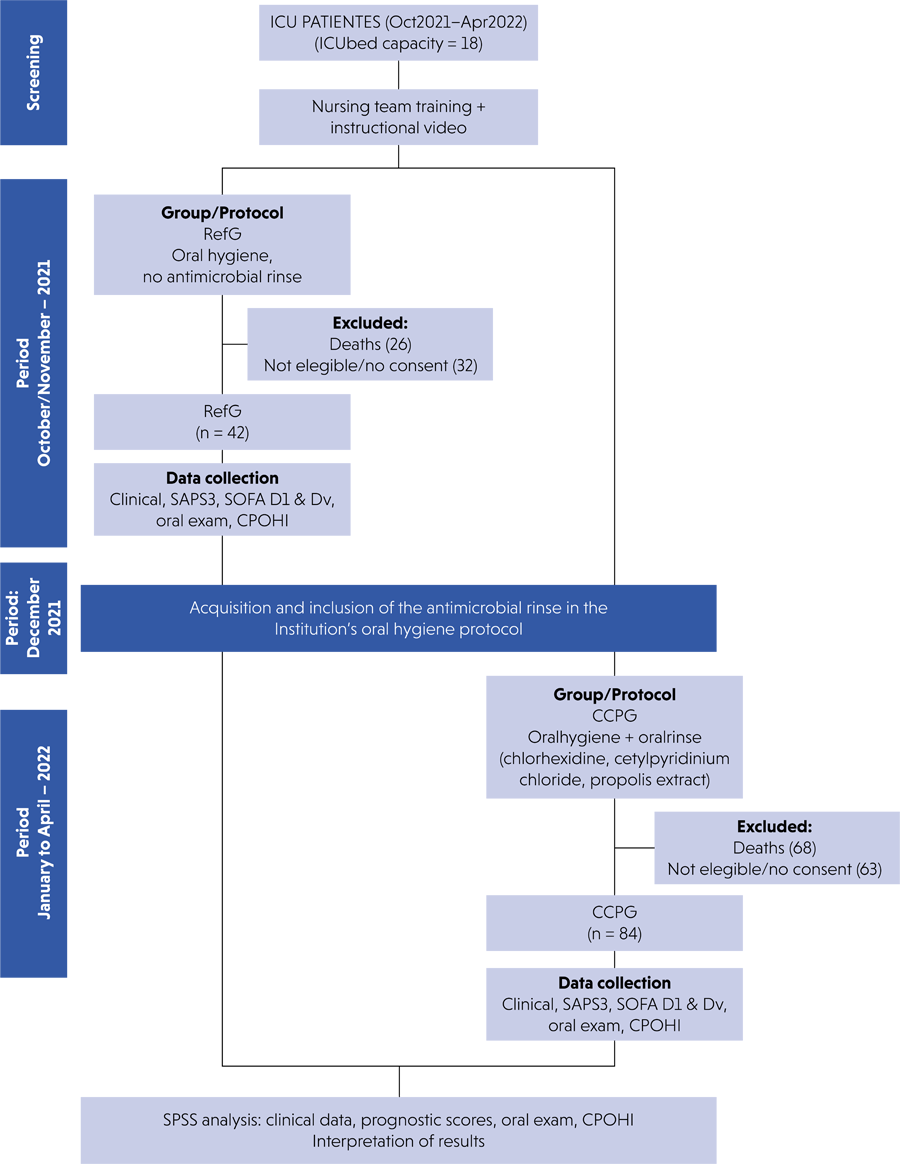
This was a case-control study of patients admitted to the general ICU of a university hospital in the city of Rio de Janeiro, Brazil, during the study period. Patients aged ≥ 18 years who had been hospitalized in the ICU for at least 5 days were included. Patients who could not be examined because of discomfort or physical or technical limitations were excluded. Data were collected from two groups of patients: a reference group (RefG) and a group exposed to a CCP rinse (CCPG) as part of the oral hygiene protocol. The RefG was evaluated during a period when the hospital’s oral hygiene protocol did not include the use of a CCP oral rinse in the routine oral care of ICU patients (October-November 2021). Patients in the CCPG were evaluated after a 30-day period following the acquisition and incorporation of the antimicrobial rinse into the hospital’s oral hygiene protocol (January–April 2022). The product used was Noplak Max® (Laboratório Daudt Oliveira Ltda, Rio de Janeiro, Brazil), an alcohol-free antimicrobial oral solution containing CCP.
The study was conducted from October 2021 to April 2022, and 315 patients were hospitalized in the ICU during the data collection period. Ninety-four patients died and 95 did not meet the inclusion criteria or did not provide informed consent. Thus, a convenience sample of 126 patients was evaluated. The study flowchart is shown in Figure 1. The study was approved by the Research Ethics Committee of HUCFF/UFRJ (process number 47848621.3.00005257). The study was conducted in full compliance with ethical principles, including the Declaration of Helsinki (version 2002) and additional requirements set forth by the World Medical Association. All included patients or their guardians signed an informed consent form.
Demographic and clinical data (comorbidities, complications during hospitalization, medications, level of consciousness, intubation, type of nutrition, and length of ICU stay), as well as data required to calculate the SAPS 3 and SOFA prognostic scores, were collected from medical records and recorded in the study protocol form.
The SOFA score was calculated at two time points: within the first 24 hours of hospitalization (D1) and on the day of the intraoral examination (Dv). The SOFA score ranges from 0 to 24, with each organ system scoring from 0 to 4, according to the degree of organ dysfunction or failure. Higher scores indicate a worse prognosis. Variables such as oxygenation index, platelet count, use of vasoactive drugs, bilirubin level, Glasgow coma scale, and creatinine level were measured. The SOFA score may be calculated daily as needed.11
SAPS 3 is calculated using the following variables: 1) demographic variables (patient age); 2) comorbidities and reasons for ICU admission, which represent disease severity and the patient’s health status prior to hospital admission (i.e., pre-morbid condition); and 3) physiological variables, including the Glasgow coma scale, systolic blood pressure, heart rate, axillary temperature, oxygenation, arterial pH, total bilirubin, creatinine, leukocytes, and platelets). SAPS 3 scores range from 16 to 217 points, with higher scores indicating a worse prognosis. SAPS 3uses clinical and laboratory parameters measured within the first 24 hours of hospitalization to estimate ICU mortality.10,12
All patients underwent a bedside intraoral physical examination performed simultaneously by two dentists. Data obtained during the oral examination were recorded in the study protocol form. Wooden spatulas, sterile gauze, and a light-emitting diode (LED) flashlight (Vextron, São Paulo, Brazil) were used to perform the examinations. The collected data encompassed findings from the physical examination of oral soft tissues and teeth, salivary characteristics, and oral hygiene quality.
Oral alterations that may be influenced by poor oral hygiene include dental biofilm and calculus accumulation, coated tongue, candidiasis, gingival inflammation, and gingival bleeding.20,21 Some diagnoses were standardized, as follows. Coated tongue was defined as the presence of yellowish-white material on the dorsum of the tongue that could be removed with saline-soaked gauze.22 Dental biofilm was defined as the presence of a sticky, soft film covering the tooth surface.23 Gingival inflammation was recorded when the gingival mucosa was erythematous and edematous, with spontaneous bleeding or bleeding on probing.24 Salivary alteration was diagnosed when viscous, stringy, or sticky saliva, or mucosal dryness, was observed.25
The CPOHI classifies oral hygiene as satisfactory, deficient, or precarious. This index verifies the presence of biofilm, gingivitis, coated tongue, halitosis, secretion, blood, and food debris. Each item is assigned a value of 1 and their sum will determine the quality of oral hygiene: scores 0 to 1 indicate satisfactory hygiene; 2 to 3 denote deficient hygiene, and 4 to 7 correspond to precarious hygiene. For the purpose of analysis, oral hygiene was categorized into satisfactory (0 to 1) and unsatisfactory (2 to 7). The proposed index also accounts for the presence or absence of retentive factors, including orotracheal tube, Guedel cannula, orthodontic appliance, extensive caries, dental calculus, and dental prosthesis, which do not affect the score but reflect a greater difficulty in performing and maintaining proper oral hygiene.18 Professionals were properly trained and calibrated in the use of the CPOHI, achieving excellent inter-rater reliability (kappa: 0.824).26
To ensure standardization and proper execution of the oral hygiene protocols in ICU inpatients, the nursing team underwent training sessions conducted by the researchers, supplemented with an instructional video to support consistent application of the procedure (https://youtu.be/IVRvtJwidTM). The nursing staff performed oral hygiene every 12 hours, which included cleansing the oral structures (teeth, tongue, palate, vestibular fornix, floor of the mouth, and buccal mucosa) with gauze moistened with either distilled water (RefG) or the CCP antimicrobial solution (CCPG), with subsequent suctioning of fluids and lip moisturization.
The SPSS program (Statistical Package for the Social Sciences) version 13.0 (IBM Company Headquarters, New York, USA) was used for data storage and analysis. The distribution and frequency of the collected data are presented descriptively. Measurable variables were analyzed using the Mann-Whitney test, while categorical variables were compared between groups using the chi-square test. A general linear model (GLM) was used to evaluate the influence of independent variables on prognostic scores. To minimize the risk of type I error, significant levels were set at 1%.
Results
The median age of patients was 66 years, ranging from 24 to 97 years. In the RefG, the median age was 66.5 (24–86) years, compared with 66.0 (24–97) in the CCPG. More than half of the patients were male (n = 74, 58.7%), comprising 69.0% (n = 29) in the RefG and 54.0% (n = 45) in the CCPG. Eighty-two patients (65.1%) were White, comprising 29 (69%) in the RefG and 53 (63.1%) in the CCPG. The remainder of the patients were Black. No statistically significant differences were found between the two groups in terms of age, ethnicity, and sex.
The most prevalent comorbidities were heart diseases (80.2%), followed by malignant neoplasms (32.5%) and diabetes mellitus (31.7%), with no significant differences in their frequencies between the groups. The most common complications were anemia (84.9%), cardiac complications (34.9%), and respiratory complications (28.6%), with no significant differences observed between the groups. The most frequently used medications during hospitalization were anti-ulcer drugs (94.4%), analgesics (81.0%), and insulin (81.0%). The clinical data for both groups are detailed in Table 1.
Most patients were received oral nutrition, with 60.7% of them in the CCPG. Table 2 shows the level of consciousness, breathing, and nutrition for patients in both groups.
No significant differences were observed between the groups regarding the percentage of patients who were intubated (28.6% in the RefG and 15.5% in the CCPG, p = 0.099) or tracheostomized (16.7% in the RefG and 6.0% in the CCPG, p = 0.103) at admission. The median length of stay in the ICU did not differ significantly between the groups: 6 days (range of 5 to 43 days) in the RefG and 7 days (range of 5 to 35 days, p = 0.992) in the CCPG.
The most prevalent oral mucosal findings were coated tongue (59.5%) and gingival inflammation (27.0%). Moreover, gingival inflammation (47.6% vs. 16.7%; p < 0.001) and spontaneous bleeding (9.5% vs. 0%; p = 0.004) were significantly more frequent in the RefG than in the CCPG. Viscous saliva (65.8%) and mucosal dryness (63.4%) were the predominant salivary alterations, with no statistically significant difference between the groups. Oral findings are shown in Table 3.
Other frequent intraoral findings included biofilm accumulation and dental calculus (41.3%), residual root (21.4%), and caries (19.0%), with no differences in frequency between the groups. Most patients were partially edentulous (67.5%).
Table 3 also shows the frequency of patients classified according to the CPOHI, stratified by study group. Oral hygiene was performed by the nursing team in 92.1% of the patients during hospitalization, and oral hygiene quality was satisfactory in 54.8% and unsatisfactory in 45.2% of the patients, with no statistical differences between the groups. Median CPOHI values were 1.5 (minimum: 0; maximum: 5; interquartile range (IQR): 3) for the RefG and 1.0 (minimum: 0; maximum: 5; IQR: 2, p = 0.075) for the CCPG.
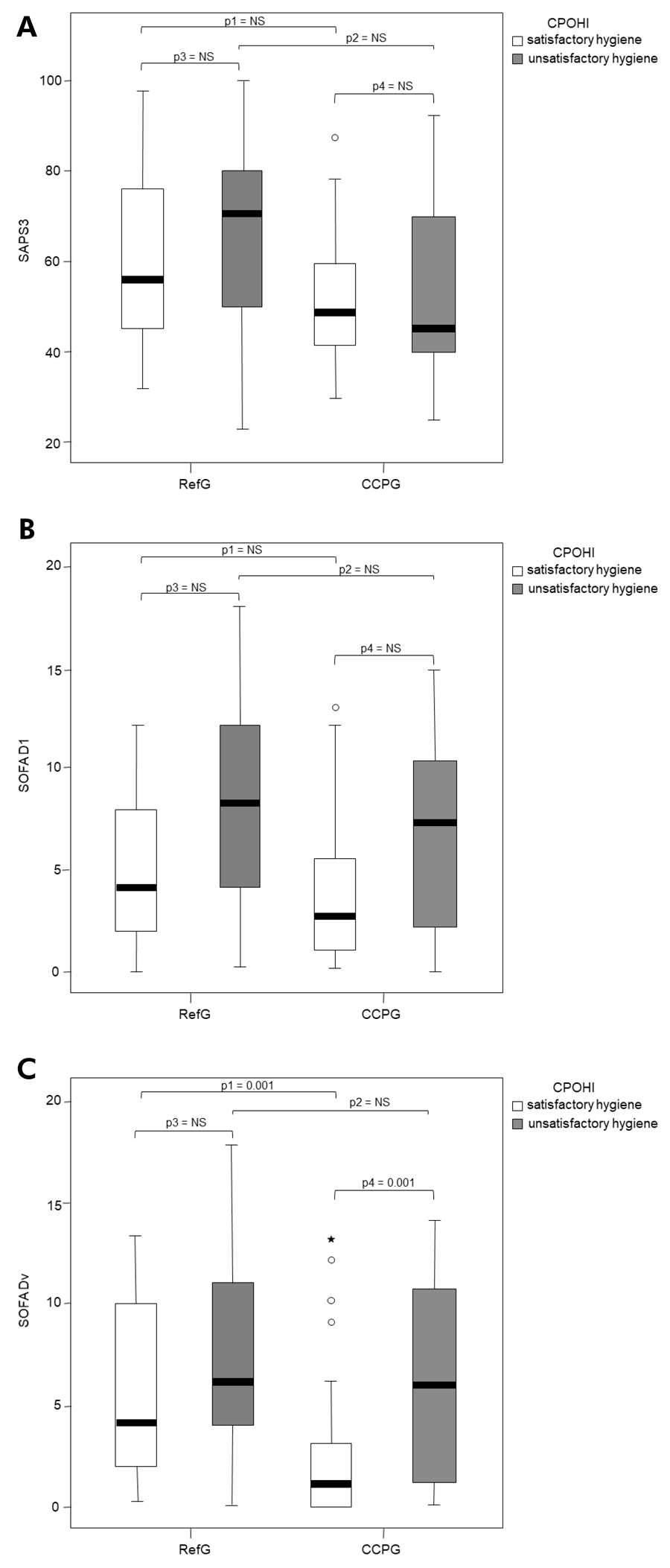
Evaluation of the total sample revealed that the RefG was associated with worse prognostic scores, as indicated by higher median scores SAPS 3 (median RefG 66.5 x CCPG 49.0; p = 0.006) and SOFA Dv (median Ref 5.5 x CCPG 2.0; p = 0.002). When satisfactory levels of hygiene were observed, worse prognostic scoreswere observed for SOFA Dv in the RefG compared with the CCPG (median RefG 4.0 x CCPG 1.0, p=0.001). (Table 4)
Figure 2 shows boxplot graphs with between-group and within-group comparisons, based on oral hygiene status. When patients in the CCPG were evaluated separately and stratified by oral hygiene status, worse prognostic SOFA Dv scores were observed among those with unsatisfactory oral hygiene (satisfactory 1.0 x unsatisfactory 6.0; p = 0.001). When the same analysis was applied to the RefG, no significant differences in prognostic scores were observed among patients with different levels of oral hygiene.
Prognostic scores of patients in the reference group (RefG) and the chlorhexidine, cetylpyridinium chloride, and propolis extract group (CCPG) according to oral hygiene levels assessed by the CPOHI: (a) SAPS3 values, (b) SOFA D1 values, and (c) SOFA Dv values.
CPOHI: critical patient oral hygiene index; SAPS3: simplified acute physiology score; SOFA D1: sequential organ failure assessment – on the day of admission; SOFA Dv: sequential organ failure assessment – on the day of examination. RefG: reference group; ChlG: chlorhexidine-based oral rinse group; p: p-value; NS: not significant.
In the constructed GLM, exposure to the antimicrobial rinse was associated with a protective effect on SOFA Dv scores, whereas poor oral hygiene exerted a negative influence (data not shown). The influence of age, intubation, length of ICU stay, underlying diseases, oral hygiene status, and exposure to the antimicrobial rinse on each prognostic score was evaluated using the constructed GLM. When all variables were included in the model, intubation was the only factor that significantly and negatively influenced all prognostic scores. Oral nutrition exerted a protective effect across all evaluated scoring systems (Tables 5 through 7).
Discussion
The present study comparatively evaluated critically ill patients who received oral hygiene care either with or without a rinse containing 0.12% CCP. The combined use of these antimicrobial agents in oral hygiene formulations has been employed to enhance antiseptic efficacy and reduce dental plaque formation, often with the aim of achieving synergistic effects among the components. 27,28 No differences were observed between the groups in the percentage of patients with different levels of oral hygiene, as assessed by the CPOHI. Better SOFA Dv prognostic scores were observed in the group exposed to the antimicrobial oral rinse. These findings suggest that, despite the absence of differences in the percentage of patients with different oral hygiene levels between groups, the use of the antimicrobial oral rinse was associated with better prognostic scores.
The present study corroborates the findings of previous studies that have identified oral hygiene as an important indicator of health and well-being in hospitalized patients.3,37,38 Among those patients exposed to the antimicrobial rinse, unsatisfactory oral hygiene was associated with worse SOFA Dv scores. These findings highlight the importance of appropriate oral hygiene in critically ill patients, as poor hygiene may be associated with worse prognostic scores.
In the constructed GLM, exposure to the antimicrobial rinse was associated with a protective effect on SOFA Dv scores, whereas poor oral hygiene showed a negative effect. Nevertheless, in the fully adjusted model including all relevant variables, intubation was the only factor that negatively influenced all analyzed scores, while oral nutrition showed a positive effect across all scoring systems. Therefore, intubation appears to be the main parameter associated with worse prognostic scores. The protective effect of oral nutrition may be attributed to the absence of intubation and, consequently, better prognostic performance.
Of note, the SOFA scoring system is more representative, as it provides measurements at two distinct time points: D1 and Dv. Therefore, any expected influence of the antimicrobial oral rinse and oral hygiene status on prognostic scores would be more appropriately reflected by SOFA Dv, considering that SAPS 3 is assessed only at D1, when patients have not yet been exposed to the antimicrobial solution.
Although SAPS 3 is calculated using baseline data, such as patient characteristics, indication for ICU admission, and physiologic derangement at ICU admission, it reflects the patient’s prognosis in the ICU and is considered a predictor of hospital mortality at the time of ICU admission.29 The significant difference in SAPS 3 scores between groups may be regarded as a limitation of the study; however, this difference was not observed when the groups were stratified by oral hygiene levels.29,30 Factors such as underlying diseases, length of ICU stay, intubation, level of consciousness, and laboratory test results may also influence these prognostic scores.9,10In fact, higher frequencies of respiratory and renal complications were recorded among individuals in the RefG. In the fully adjusted model, malignant neoplasms and renal diseases were associated with lower SAPS 3 scores, which may explain the higher SAPS 3 scores in the RefG.
Among hygiene-related intraoral alterations, gingival inflammation and spontaneous bleeding were significantly more prevalent in the RefG. In the present study, comprehensive periodontal examinations were not performed; however, the observed gingival inflammation is one of the clinical signs of gingivitis, a mild periodontal disease. Periodontal disease has been linked to worse systemic conditions,31 and may be aggravated in intensive care patients.32 These findings highlight the importance of incorporating chlorhexidine into oral hygiene protocols for critically ill patients, as supported by the literature.13,14
The absence of significant differences between groups regarding oral findings such as calculus, caries, fracture, residual root, and tooth mobility, may be explained by the inclusion of patients hospitalized for at least 5 days, given that such changes develop over longer periods and depend on patients’ oral health status at baseline.
The use and effectiveness of chlorhexidine in preventing oropharyngeal colonization and reducing respiratory complications in ICU patients have been widely investigated.8 Several studies have demonstrated an association between chlorhexidine use and a reduction in ventilator-associated pneumonia,2,8 as well as a potential relationship between oral hygiene and the deterioration of systemic conditions in ICU patients.13,14 In the present study, all included patients stayed at least five days in the ICU, indicating that patients in the CCPG were exposed to antimicrobial oral rinse (CCP) for at least five days. The use of CCP was expected to result in improved oral outcomes and, consequently, better SOFA Dv scores in the CCPG, as actually observed.
Recently, a meta-analysis has suggested a trend toward increased mortality among non-cardiac surgical patients treated with chlorhexidine-based oral rinse.33 It has been suggested that aspiration of chlorhexidine by some patients may have led to acute respiratory distress syndrome or an allergic reaction, including anaphylaxis. Accordingly, recent studies have questioned the use of chlorhexidine in oral hygiene protocols for mechanically ventilated patients.34,35 Therefore, the identification of patients who may or may not benefit from chlorhexidine use in oral hygiene protocols should be guided by scientific evidence, with the aim of reducing the risk of acquired chlorhexidine resistance or cross-resistance to antibiotics.36
While the study population was heterogeneous, this drawback was outweighed by the comparability of demographic variables and the frequency of underlying diseases. Consistent with the inherent limitations of case-control studies, a definitive cause-and-effect relationship cannot be established, with conclusions confined to associations between variables. Multiple systemic factors may influence the general health of hospitalized patients. In addition, patients who are alert and oriented, breathing spontaneously and receiving oral feeding, have better cognitive functions and possibly perform oral hygiene more effectively.
Bedside examination also posed some challenges in the present study, notably in intubated patients, given the presence of an orotracheal tube and limited mouth opening. Although oral hygiene was performed by multiple nursing professionals and adherence to oral hygiene procedures and rinse application was not directly monitored, all professionals attended the same oral hygiene training course and watched the same instructional video developed by the dental research team. Moreover, no significant differences were observed between groups regarding oral hygiene levels, as classified by the CPOHI, suggesting similar performance of the oral hygiene protocol by the nursing staff.
Recent discussions and questions about the use of antimicrobial rinses contribute to scientific advancements and underscore the need for further randomized clinical trials, with the participation of dentists in the study groups and multidisciplinary teams, for the establishment of safe and scientifically grounded guidelines focused on patient well-being.
Conclusion
In this inpatient population of an ICU, those exposed to antimicrobial oral rinse exhibited better SOFA DV scores than the patients in the reference group. Among the patients exposed to the oral rinse, those with better oral hygiene status showed better SOFA Dv prognostic scores. In the multivariate analysis, intubation was the only factor with a negative effect on all prognostic scores. These findings underscore the importance of oral hygiene protocols that include antimicrobial rinse for critically ill patients, highlighting the role of dentists as integral members of the ICU multidisciplinary care team.
Acknowledgments
We would like to thank the patients who participated in the study and their families. We would also like to thank Ronir Raggio Luiz for statistical support.
References
-
1 Emidio TS, Toledo FL, Mariotto LA, Pereira ES, Trazzi BF. The dental surgeon in a hospital scope enabling the improvement of the patient's quality of life. Braz J Dev. 2021;7(3):30711-22. {Portuguese]. https://doi.org/10.34117/bjdv7n3-681
» https://doi.org/10.34117/bjdv7n3-681 -
2 Osman S, Al Talhi YM, AlDabbagh M, Baksh M, Osman M, Azzam M. The incidence of ventilator-associated pneumonia (VAP) in a tertiary-care center: comparison between pre- and post-VAP prevention bundle. J Infect Public Health. 2020 Apr;13(4):552-7. https://doi.org/10.1016/j.jiph.2019.09.015
» https://doi.org/10.1016/j.jiph.2019.09.015 - 3 Ferreira JA, Londe LP, Miranda AF. The relevance of the dentist in the ICU: education, prevention and minimal intervention [Portuguese]. Rev Cien Odontol. 2017;1(1):18-23.
-
4 Sabino BC, Falcão AL, Coelho MS, TerziCoelho CB, D'Ottaviano L, Padovani R, et al. The impact of dental care intervention on ventilator-associate events: A Quasi-experimental study. Am J Infect Control. 2022 Sep;50(9):1055-9. https://doi.org/10.1016/j.ajic.2021.11.026
» https://doi.org/10.1016/j.ajic.2021.11.026 -
5 Al-Bayaty FH, Baharudin N, Hassan MI. Impact of dental plaque control on the survival of ventilated patients severely affected by COVID-19 infection: an overview. Dent Med Probl. 2021;58(3):385-95. https://doi.org/10.17219/dmp/132979
» https://doi.org/10.17219/dmp/132979 -
6 Veitz-Keenan A, Ferraiolo DM. Oral care with chlorhexidine seems effective for reducing the incidence of ventilator-associated pneumonia. Evid Based Dent. 2017 Dec;18(4):113-4. https://doi.org/10.1038/sj.ebd.6401272
» https://doi.org/10.1038/sj.ebd.6401272 -
7 Zhao T, Wu X, Zhang Q, Li C, Worthington HV, Hua F. Oral hygiene care for critically ill patients to prevent ventilator-associated pneumonia. Cochrane Database Syst Rev. 2020 Dec;12(12):CD008367. https://doi.org/10.1002/14651858.CD008367.pub4
» https://doi.org/10.1002/14651858.CD008367.pub4 -
8 Pinto AC, Silva BM, Santiago-Junior JF, Sales-Peres SH. Efficiency of different protocols for oral hygiene combined with the use of chlorhexidine in the prevention of ventilator-associated pneumonia. J Bras Pneumol. 2021 Jan;47(1):e20190286. https://doi.org/10.36416/1806-3756/e20190286
» https://doi.org/10.36416/1806-3756/e20190286 -
9 Melo FL, Gragnani A, de Oliveira AF, Ferreira LM. Predicting mortality for critically ill burns patients, using the Abbreviated Burn Severity Index and Simplified Acute Physiology Score 3. Injury. 2022 Feb;53(2):453-6. https://doi.org/10.1016/j.injury.2021.11.027
» https://doi.org/10.1016/j.injury.2021.11.027 -
10 Ma QB, Fu YW, Feng L, Zhai QR, Liang Y, Wu M, et al. Performance of simplified acute physiology score 3 in predicting hospital mortality in emergency intensive care unit. Chin Med J (Engl). 2017 Jul;130(13):1544-51. https://doi.org/10.4103/0366-6999.208250
» https://doi.org/10.4103/0366-6999.208250 -
11 Lambden S, Laterre PF, Levy MM, Francois B. The SOFA score-development, utility and challenges of accurate assessment in clinical trials. Crit Care. 2019 Nov;23(1):374. https://doi.org/10.1186/s13054-019-2663-7
» https://doi.org/10.1186/s13054-019-2663-7 -
12 Mungan I, Bektas S, Altinkaya Çavus M, Sari S, Turan S. The predictive power of SAPS-3 and SOFA scores and their relations with patient outcomes in the Surgical Intensive Care Unit. Turk J Surg. 2019 Jun;35(2):124-30. https://doi.org/10.5578/turkjsurg.4223
» https://doi.org/10.5578/turkjsurg.4223 -
13 Blum DF, Silva JA, Baeder FM, Della Bona Á. The practice of dentistry in intensive care units in Brazil. Rev Bras Ter Intensiva. 2018;30(3):327-32. https://doi.org/10.5935/0103-507X.20180044
» https://doi.org/10.5935/0103-507X.20180044 -
14 Jun MK, Ku JK, Kim IH, Park SY, Hong J, Kim JY, et al. Hospital dentistry for intensive care unit patients: a comprehensive review. J Clin Med. 2021 Aug;10(16):3681. https://doi.org/10.3390/jcm10163681
» https://doi.org/10.3390/jcm10163681 -
15 Bellissimo-Rodrigues WT, Menegueti MG, Gaspar GG, Souza HC, Auxiliadora-Martins M, Basile-Filho A, et al. Is it necessary to have a dentist within an intensive care unit team? Report of a randomised clinical trial. Int Dent J. 2018 Dec;68(6):420-7. https://doi.org/10.1111/idj.12397
» https://doi.org/10.1111/idj.12397 -
16 Thomas A, Thakur S, Mhambrey S. Comparison of the antimicrobial efficacy of chlorhexidine, sodium fluoride, fluoride with essential oils, alum, green tea, and garlic with lime mouth rinses on cariogenic microbes. J Int Soc Prev Community Dent. 2015;5(4):302-8. https://doi.org/10.4103/2231-0762.161759
» https://doi.org/10.4103/2231-0762.161759 -
17 Hegde RJ, Kamath S. Comparison of the Streptococcus mutans and Lactobacillus colony count changes in saliva following chlorhexidine (0.12%) mouth rinse, combination mouth rinse, and green tea extract (0.5%) mouth rinse in children. J Indian Soc Pedod Prev Dent. 2017;35(2):150-5. https://doi.org/10.4103/JISPPD.JISPPD_13_17
» https://doi.org/10.4103/JISPPD.JISPPD_13_17 - 18 Saldanha KF, Costa DC, Pinto SF, Jardim EC. Evaluation of the indicator oral hygiene critical patient [Portuguese]. Arch Health Investig. 2015;4(6):47-53.
-
19 Bao L, Zhang C, Dong J, Zhao L, Li Y, Sun J. Oral microbiome and SARS-CoV-2: beware of lung co-infection. Front Microbiol. 2020 Jul;11:1840. https://doi.org/10.3389/fmicb.2020.01840
» https://doi.org/10.3389/fmicb.2020.01840 -
20 Martins HD, Sales RC, Medeiros DS, de Aquino Martins AR, Lopes ML, Lima KC, et al. Risk factors for oral alterations in intensive care unit patients: a pilot cohort study. J Oral Pathol Med. 2022 Mar;51(3):301-8. https://doi.org/10.1111/jop.13265
» https://doi.org/10.1111/jop.13265 -
21 Oliveira HA, Almeida MV, Gominho LF, Teodoro MK, Santos LF, Melo AC, et al. Oral condition of patients admitted in intensive care units. Res Soc Dev. 2021;10(4):e58910414444. https://doi.org/10.33448/rsd-v10i4.14444
» https://doi.org/10.33448/rsd-v10i4.14444 -
22 Seerangaiyan K, Jüch F, Winkel EG. Tongue coating: its characteristics and role in intra-oral halitosis and general health-a review. J Breath Res. 2018 Mar;12(3):034001. https://doi.org/10.1088/1752-7163/aaa3a1
» https://doi.org/10.1088/1752-7163/aaa3a1 -
23 Velsko IM, Yates JAF, Aron F, Hagan RW, Frantz LA, Loe L, et al. Microbial differences between dental plaque and historic dental calculus are related to oral biofilm maturation stage. Microbiome. 2019 Jul;7(1):102. https://doi.org/10.1186/s40168-019-0717-3
» https://doi.org/10.1186/s40168-019-0717-3 -
24 Caton JG, Armitage G, Berglundh T, Chapple IL, Jepsen S, Kornman KS, et al. A new classification scheme for periodontal and peri-implant diseases and conditions - Introduction and key changes from the 1999 classification. J Clin Periodontol. 2018 Jun;45(S20 Suppl 20):S1-8. https://doi.org/10.1111/jcpe.12935
» https://doi.org/10.1111/jcpe.12935 -
25 Silva MF, Franco AG, Pereira JH, Ribeiro IV, Franco AB, Fontes AC. Hyposalivation and its relationship with antihypertensive medications. Res Soc Dev. 2022;11(12):e28111234275. [Portuguese]. https://doi.org/10.33448/rsd-v11i12.34275
» https://doi.org/10.33448/rsd-v11i12.34275 -
26 Landis JR, Koch GG. The measurement of observer agreement for categorical data. Biometrics. 1977 Mar;33(1):159-74. https://doi.org/10.2307/2529310
» https://doi.org/10.2307/2529310 -
27 Ballouk MA, Altinawi M, Al-Kafri A, Zeitounlouian TS, Fudalej PS. Propolis mouthwashes efficacy in managing gingivitis and periodontitis: a systematic review of the latest findings. BDJ Open. 2025 Jan;11(1):5. https://doi.org/10.1038/s41405-025-00294-z
» https://doi.org/10.1038/s41405-025-00294-z -
28 Brookes Z, McGrath C, McCullough M. Antimicrobial mouthwashes: an overview of mechanisms-what do we still need to know? Int Dent J. 2023;73 Suppl 2(Suppl 2):S64-S68. https://doi.org/10.1016/j.identj.2023.08.009
» https://doi.org/10.1016/j.identj.2023.08.009 -
29 Silva Junior JM, Malbouisson LM, Nuevo HL, Barbosa LG, Marubayashi LY, Teixeira IC, et al. Applicability of the simplified acute physiology score (SAPS 3) in Brazilian hospitals. Rev Bras Anestesiol. 2010;60(1):20-31. https://doi.org/10.1590/S0034-70942010000100003
» https://doi.org/10.1590/S0034-70942010000100003 -
30 Yokoyama K, Kaneko T, Ito A, Ieki Y, Kawamoto E, Suzuki K, et al. Sequential organ failure assessment score as a predictor of the outcomes of patients hospitalized for classical or exertional heatstroke. Sci Rep. 2022 Sep;12(1):16373. https://doi.org/10.1038/s41598-022-20878-1
» https://doi.org/10.1038/s41598-022-20878-1 -
31 Sanz M, Marco Del Castillo A, Jepsen S, Gonzalez-Juanatey JR, D'Aiuto F, Bouchard P, et al. Periodontitis and cardiovascular diseases: consensus report. J Clin Periodontol. 2020 Mar;47(3):268-88. https://doi.org/10.1111/jcpe.13189
» https://doi.org/10.1111/jcpe.13189 -
32 Albuquerque BN, Araújo MM, Silva TA, Cota LO, Cortelli SC, Costa FO. Periodontal condition and immunological aspects of individuals hospitalized in the intensive care unit. Braz Dent J. 2018;29(3):301-8. https://doi.org/10.1590/0103-6440201802034
» https://doi.org/10.1590/0103-6440201802034 -
33 Klompas M. Oropharyngeal decontamination with antiseptics to prevent ventilator-associated pneumonia: rethinking the benefits of chlorhexidine. Semin Respir Crit Care Med. 2017 Jun;38(3):381-90. https://doi.org/10.1055/s-0037-1602584
» https://doi.org/10.1055/s-0037-1602584 -
34 Vieira PC, Oliveira RB, Mendonça TMS. Should oral chlorhexidine remain in ventilator-associated pneumonia prevention bundles? Med Intensiva (Engl Ed). 2022 May;46(5):259-68. https://doi.org/10.1016/j.medine.2020.09.010
» https://doi.org/10.1016/j.medine.2020.09.010 -
35 Klompas M, Branson R, Cawcutt K, Crist M, Eichenwald EC, Greene LR, et al. Strategies to prevent ventilator-associated pneumonia, ventilator-associated events, and nonventilator hospital-acquired pneumonia in acute-care hospitals: 2022 Update. Infect Control Hosp Epidemiol. 2022 Jun;43(6):687-713. https://doi.org/10.1017/ice.2022.88
» https://doi.org/10.1017/ice.2022.88 -
36 Deschepper M, Waegeman W, Eeckloo K, Vogelaers D, Blot S. Effects of chlorhexidine gluconate oral care on hospital mortality: a hospital-wide, observational cohort study. Intensive Care Med. 2018 Jul;44(7):1017-26. https://doi.org/10.1007/s00134-018-5171-3
» https://doi.org/10.1007/s00134-018-5171-3 -
37 Toniazzo MP, Amorim PS, Rost JF, Feldman JV, Beretta MV, Rodrigues TC, et al. Oral condition as a predictor of risk for malnutrition during hospitalization: a cross-sectional study. Nutr Clin Pract. 2022 Dec;37(6):1438-47. https://doi.org/10.1002/ncp.10851
» https://doi.org/10.1002/ncp.10851 -
38 Quintanilha RM, Pereira MR, Oliveira SP, Ragon CD, Agostini M, Silva A Junior, et al. Oral health status of patients in intensive care unit: a cross-sectional study. Rio Janeiro Dent J. 2019;4(3):25-31. https://doi.org/10.29327/24816.4.3-5
» https://doi.org/10.29327/24816.4.3-5
-
Data availability:
The authors declare that all data generated or analyzed during this study are included in this published article.
-
Financial Support:
This study was approved by the Research Ethics Committee of the Clementino Fraga Filho University Hospital (HUCFF), Federal University of Rio de Janeiro (UFRJ), under process number 47848621.3.00005257.
Edited by
-
Editor-in-Chief:
Lucianne Maia
-
Associate Editor:
Luciano Pereira
The authors declare that all data generated or analyzed during this study are included in this published article.