
 Soil carbon dynamics and compartments in integrated systems in the Amazon-Cerrado ecotone
ABSTRACT
In the transition region between the Cerrado-Amazon biomes in Brazil, the conversion of native forests into pastures results in soil degradation. From this perspective, the implementation of integrated systems emerges as a method to recover the quality of these soils. This study evaluated soil carbon compartments through the measurement of the physical and chemical fractions of organic matter and microbial biomass under continuous pasture, intercropping of maize with Megathyrsus maximus, in two integrated crop-livestock-forest systems with maize, Urochloa brizantha, and eucalyptus, and with maize, M. maximus, and Attalea speciosa (babassu coconut palm tree). The conversion of pasture to integrated systems with soil tillage led to negative changes in the chemical and physical compartments of soil organic matter during the initial years of the system. The newly planted eucalyptus did not contribute to conserve soil carbon. The adoption of integrated systems with the presence of babassu increased carbon stocks up to 0.5 m deep by 7.1% compared to the conventional pasture area, minimizing the impacts of soil tillage performed for the cultivation of intercropping on the physical and chemical compartments of organic matter.
Key words
Attalea speciosa
; intercropping; soil carbon stocks; microbial biomass
INTRODUCTION
In the Amazon-Cerrado ecotone of Brazil, the practice of converting native forests into pastures for the implementation of traditional beef cattle farming is prevalent. Data from the MapBiomas project estimate that over the last three decades, 80% of deforested areas in the Amazon were converted to pasture (Souza Júnior et al. 2020). Such changes in land use promote an increase in greenhouse gas (GHG) emissions into the atmosphere, contributing to global climate change (Peng et al. 2020). After the energy and agriculture sectors, land use changes contribute to the greatest GHG emissions in the Brazilian territory (Brasil 2021).
Aggravating factors in land use change are not only the deforestation of native vegetation and the decline in the conservation of biodiversity in Brazilian biomes, but also the effects of agricultural intensification (Felipe-Lucia et al. 2020), which result in the degradation of pastures due to the lack of maintenance and adequate soil management. These factors are major limitations to increasing the productivity of Brazilian livestock farming (Feltran-Barbieri and Féres 2021). This scenario differs from well-managed pastures in the Amazon region, where the study of the particle size fractions of soil organic matter allows us to observe an accumulation of carbon in soil similar to that in native areas (Signor et al. 2018). This is because soil organic carbon (SOC) accumulation plays a crucial role in soil regeneration after radical ecosystem disturbances (Cheng et al. 2023). SOC regulates soil physical, chemical, and biological properties, which include the soil’s water holding capacity (Guimarães et al. 2021), the mineralization of nutrients for plant uptake, and the maintenance of an active soil biota (Prietzel et al. 2022).
Degraded pastures exceeded emissions compared to well-managed pastures (LAPIG 2021), raising concerns about an increase in GHG emissions from tropical agriculture (Koh et al. 2021). In this context, integrated systems, such as integrated crop-livestock-forest (ICLF) systems, are consolidated as a potentially sustainable alternative combined with the recovery of degraded soils (Valani et al. 2021). The role of ICLF in C accumulation is well documented in the literature, which can occur through three mechanisms: growth stimulation of the forage root system through grazing with an adequate stocking rate (Bieluczyk et al. 2017); using livestock as a catalyst in the nutrient cycling process (Assmann et al. 2017); and improving soil attributes through permanent vegetation cover and litter decomposition (Hok et al. 2018).
According to the characteristics of each ecosystem, ICLF systems can be strengthened by incorporating native forests, preserving indigenous trees of certain regions, and applying one of the precepts of ecological intensification: nature mimicry (Malézieux 2012). In the case of the Amazon-Cerrado ecotone, there is natural integration between babassu palms (Attalea speciosa Mart.) and pastures (Santos-Filho 2013, Araújo et al. 2020). Despite the great importance of the babassu palm, little is known about the tree’s influence on tropical soils, that is, its use in integrated systems or intercropped with forage crops. Gehring et al. (2020) carried out a case study on the interactions between babassu palm and soil and inferred that babassu palms promote SOC sequestration because of the higher C:N ratio and higher concentrations of labile carbon in litter.
Based on this, to improve forest ecosystem management strategies, such as in the context of climate change mitigation and ecosystem recovery, it is necessary to analyze carbon stocks and to study the labile fractions of organic matter in different stable reservoirs and the factors that affect them (Angst et al. 2022, Woś et al. 2023). The hypothesis of our study was that integrated systems with tree components, mainly with native species (babassu palm), increase the soil carbon stock and the components of organic matter in relation of old pasture with low inputs of fertilizers. Therefore, the objective of this study was to compare conventional pasture with different integrated production systems that have the potential to recover degraded pasturelands in the Amazon-Cerrado ecotone.
MATERIAL AND METHODS
Study characterization
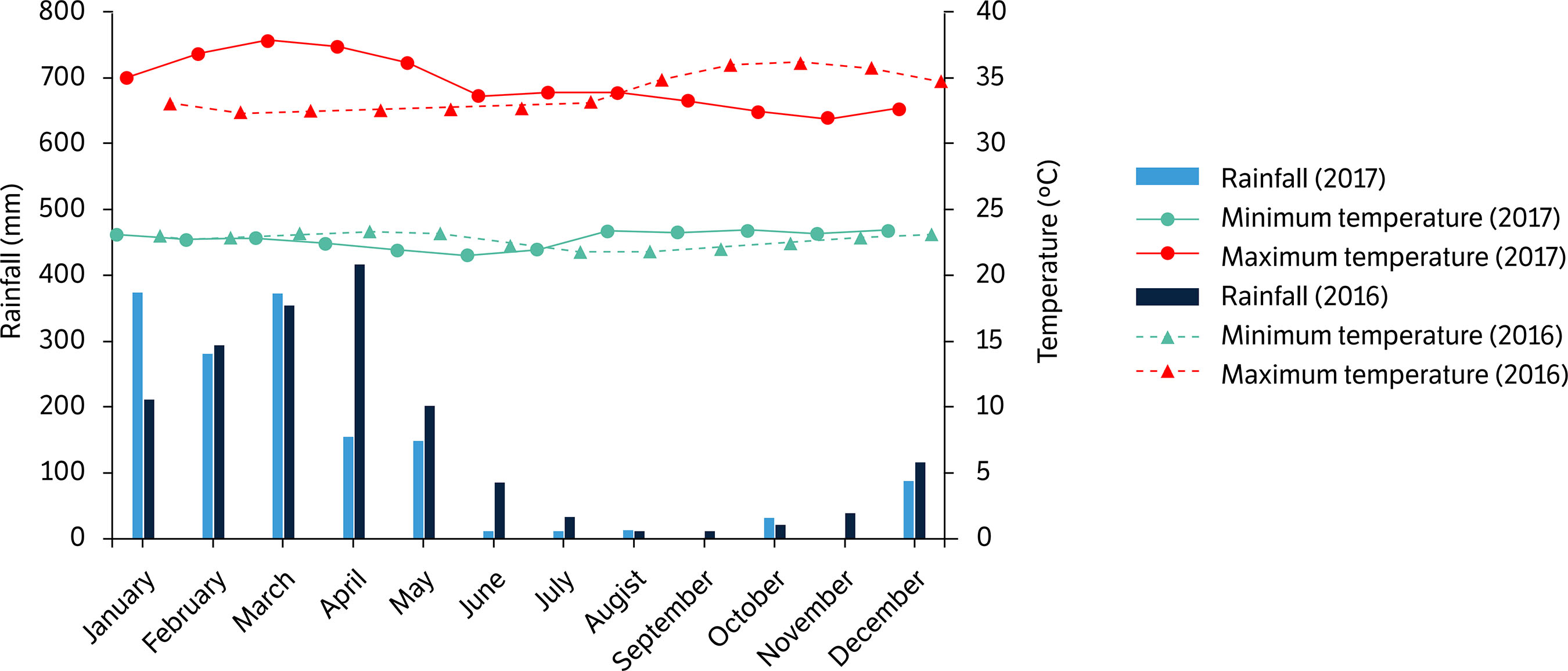
The study was carried out in the municipality of Pindaré-Mirim (03°46’S and 45°29’W), in the state of Maranhão (transition zone between the Cerrado and Amazon biomes), Brazil. The region’s climate is hot and humid Aw (Koeppen 1948), with an average annual temperature of 26°C (Araújo 2013). Rainfall during the year in which the assessment was carried out (2017) was 1,468 mm, and the average temperature was 27°C (Fig. 1).

The evaluations were carried out in four land use systems:
-
Continuous pasture: 3-ha area cultivated in a conventional system (without intercropping) with Urochloa brizantha cv. Marandu, with more than 14 years of implementation (without fertilization), used for cattle grazing (extensive grazing), maintaining a stocking rate of 0.5 animal units (AU: 450 kg per animal) ha-1.year-1 and characterized by the large presence of invasive plants, especially the species Senna obtusifolia, Cyperus rotundus, Cenchrus echinatus, and Paspalum virgatum (15–25% of soil cover with weed species);
-
Intercropping: area of 3 ha, planted with hybrid maize (Dow Herculex® 83,000 plants per hectare) at a spacing of 0.50 m × 0.25 m and intercropped with Megathirsus maximus cv. Massai, which was implemented simultaneously in January 2017 with land use similar to the pasture described previously;
-
ICLF-I: area of 3.5 ha cultivated with hybrid maize (KWS 9304® and AG1051® 66,000 plants per hectare) spaced at 0.60 m × 0.30 m and intercropped with U. brizantha cv. Marandu, and the tree component was a clone of hybrid eucalyptus (Eucalyptus urophylla × Eucalyptus teretimaizeis) in an alley-type arrangement (rows) in double rows at a spacing of 3 m × 2 m and 28 m between alleys, implemented in February 2016;
-
ICLF-II: area of 3 ha covered by native babassu palm vegetation (Attalea speciosa), in a savanna-type layout (random), with an average of 35 palm trees ha-1, integrated with hybrid maize (Dow Herculex® 66,000 plants per hectare) spaced at 0.60 m × 0.30 m, implemented in January 2017 and intercropped with Megathyrsus maximus cv. Massai. In the areas with maize intercropped with forage crops, there was no entry of animals in the 2017/2018 crop year.
The systems were close to each other, with the following distances between systems:
-
Continuous pasture - intercropping: 200 m;
-
Continuous pasture - ICLF-I: 500 m;
-
Intercropping - ICLF-I: 404 m;
-
Continuous pasture - ICLF-II: 981 m;
-
Intercropping - ICLF-II: 908 m;
-
ICLF-I - ICLF-I: 836 m (Fig. 2).

The soil in the experimental area is classified as haplic plinthosol according to the Brazilian Soil Classification System (H. G. Santos et al. 2018), corresponding to plinthosols according to the World Reference Base for Soil Resources (IUSS Working Group WRB, 2015). The soil has a predominantly sandy loam texture, with 170 g.kg-1 of clay, 280 g.kg-1 of silt and 550 g.kg-1 of sand. The chemical characteristics of the soil (0.00–0.20 m) were determined according to the methodology described by Teixeira et al. (2017) (Table 1).
Chemical characterization of soil (0.20 cm) in land use systems in the Amazon-Cerrado ecotone. Pindaré-Mirim, Maranhão, Brazil, 2017.
Soil preparation of cultivated areas, except pasture, proceeded with a single plowing (disc plow) and harrowing (leveling harrow) to incorporate dolomitic limestone (1 Mg.ha-1). Maize was fertilized in a standardized fashion (in all areas): base fertilization with 400 kg.ha-1 of 05-30-15 NPK; first top dressing with 200 kg.ha-1 of 36-00-30 at 10 days after maize emergence; second top dressing using 200 kg.ha-1 of 36-00-30 (NPK), 10 days after the first top dressing. The grasses (U. brizantha cv. Marandu and M. maximus cv. Massai) were sown at the rate of 10 kg.ha-1 of viable seeds, previously mixed with base fertilizer. For the eucalyptus tree component, 0.75 kg of reactive natural phosphate was applied at a depth of 0.30 m in the planting hole and 0.15 kg of 36-00-30 (NPK) in the planting hole.
Soil sampling
In June 2017, soil samples were collected in all areas under study. In these areas, four trenches measuring 0.25 m2 and 0.5 m deep were randomly opened. Undisturbed samples were collected from the soil profile of the trenches in the layers: 0.00–0.10, 0.10–0.20, 0.20–0.30, and 0.30–0.50 m to determine bulk density (Teixeira et al. 2017). In the soil profile of each trench, in all cardinal directions, 12 deformed soil samples were collected. The single samples were combined into a composite sample for each depth collected. The deformed samples were used to determine the physical and chemical fractions of soil carbon. To determine the biological attributes of the soil, deformed samples collected in the 0.00–0.10 m layer were used. The systems were sampled considering the complexity of each one: for continuous pasture, collected aleatory samples between the plant hills; for intercropping, collected aleatory samples but always keeping the ratio of two samples in the row of maize and one sample in maize between rows (for simple soil sample); for ICLF-I, collected soil along transect considering the distance of the two alleys of eucalyptus, beginning in the projection of the eucalyptus canopy, in the boundary of the projection of the canopy and the row of maize, and continuous between the alleys of eucalyptus considering the samples in the intercropping of maize and forage with two samples in the row of maize and one sample in between the maize row (for simple soil sample); for ICLF-II, collected soil considering the relation of one sample in projection of the babassu palm canopy with two samples in the row of maize and one sample in between the maize row (for simple soil sample), not considering the transect like with ICLF-I due the random presence of babassu palms.
Physical and chemical fractionation of soil organic matter and C stocks
Total organic carbon (TOC) was determined (Yeomans and Bremner 1988). The physical fractionation of carbon was carried out using the granulometric method (Cambardella and Elliott 1992), obtaining the following fractions: particulate organic carbon (POC) and mineral associated organic carbon (MAOC). The chemical fractionation of organic matter was carried out according to Swift (1996), with adaptation according to Benites et al. (2003), thereby obtaining organic carbon from fulvic acids (FA), humic acids (HA), and humin (HUM).
Soil carbon stock (SCS) was calculated (Bayer et al. 2000) and corrected by the equivalent soil mass (Ellert and Bettany 1995). C stocks were calculated for each of the layers evaluated, and then the stocks of all layers were added to determine the accumulated stock (0.0–0.5 m).
Microbial biomass and basal soil respiration
The determination of soil biomass carbon (C-SBM) was carried out using the irradiation extraction method (Ferreira et al. 1999, Islam and Weil 1998). Basal soil respiration (BSR) was obtained by incubating the samples for seven days and subsequently titrating (Alef and Nannipieri 1995). The microbial quotient (qMIC), obtained by the C-SBM/TOC ratio (Anderson and Domsch 1989), and the metabolic quotient (qCO2) were also calculated from the BSR/C-SMB ratio (Anderson and Domsch 1990).
Statistical analysis
The data were tested for normality and homogeneity of variances using the Shapiro-Wilk’s and Bartlett’s methods (α = 0.05), respectively.
Comparisons between the sample properties were made using the mean confidence interval (p < 0.05), according to Payton et al. (2000). When the upper and lower limits of the confidence interval do not overlap, it is considered that there is a significant difference.
Data at each evaluated depth were compared individually, and similarity was identified by overlapping the confidence interval.
As a complementary analysis, multivariate methods were applied through non-hierarchical cluster analysis using the Tocher method and principal component analysis (PCA), both performed based on the Euclidean distance for microbial biomass and the chemical and physical fractionation of organic matter. For all statistical analyses, the statistical package R version 3.2.5 (R Core Team, 2017) was used.
RESULTS
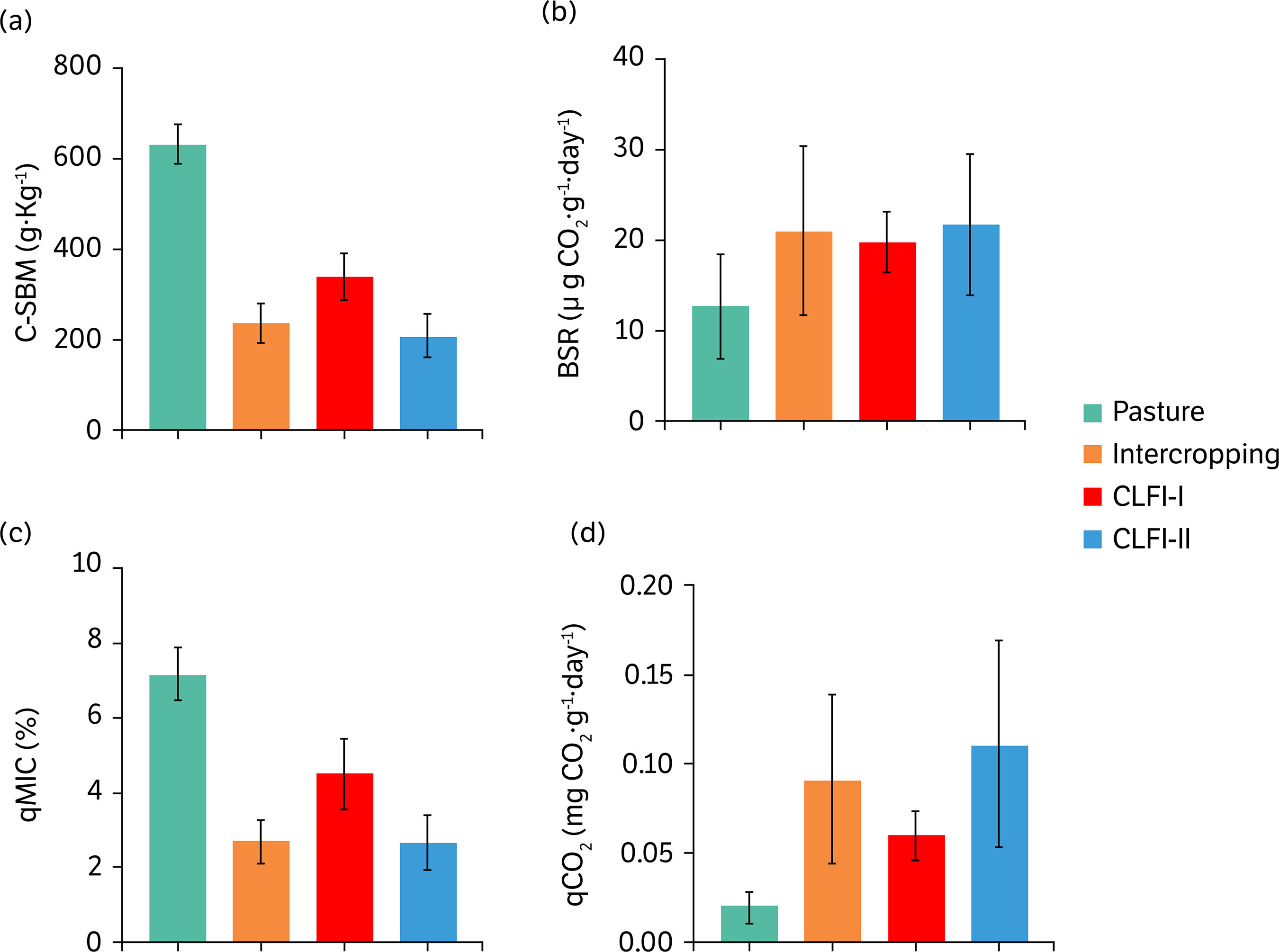
The conventional pasture area revealed the highest concentrations of microbial biomass carbon (C-SBM: 633 g.kg-1), differing from the intercropping (234 g.kg-1), ICLF-I (337 g.kg-1) and ICLF-II (209 g.kg-1) (Fig. 3a). There was an overlap in BSR data, suggesting that there is no difference in BSR for the land uses (Fig. 3b). As pasture showed higher concentrations of C-SBM, lower coefficient metabolic (qCO2) values were observed in this study area (0.020 mg CO2.g-1 day-1) (Fig. 3c). Higher microbial coefficient (qMic = 7.2%) was found in the pasture area compared to other land uses (Fig. 3d), converging with the results of C-SBM and qCO2.
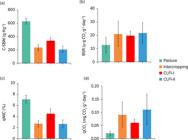
Mean ± confidence interval (α = 0.05) of (A) microbial biomass carbon, (B) basal soil respiration, (C) metabolic coefficient, and (D) microbial coefficient in land use systems in the Cerrado-Amazon ecotone.
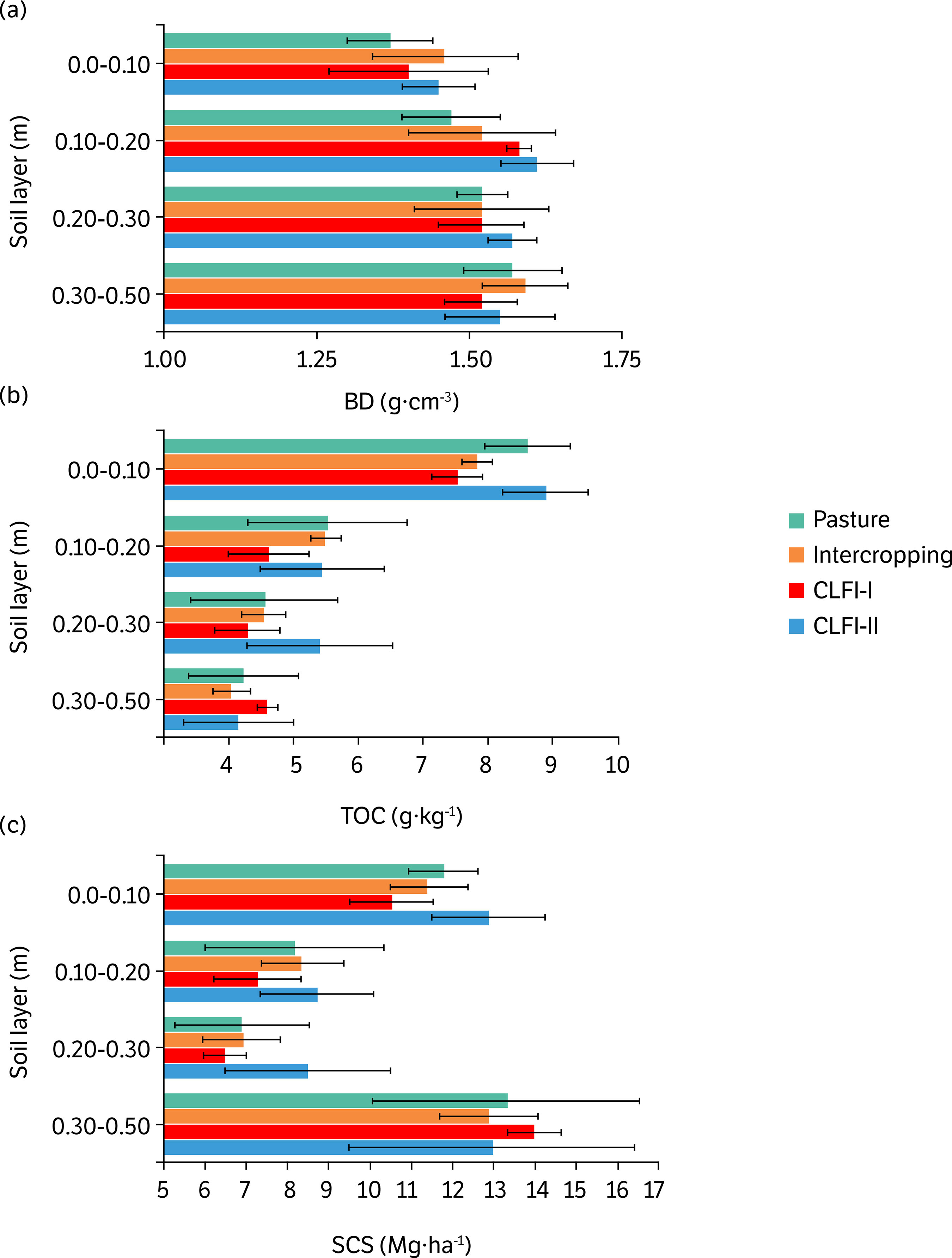
In the soil layers 0.00–0.10, 0.20–0.30. and 0.30–0.50 m there was no difference in bulk density between land use systems. In the 0.10–0.20 m layer, there was only a difference between bulk density under pasture and ICLF-I. In this case, pasture had a lower bulk density (Fig. 4a). TOC decreased with increasing soil depth. The intercropping and ICLF-I had lower TOC for the 0.00–0.10 layers, and these values were similar to those in the pasture area. In the layers 0.10–0.20 and 0.30–0.50 m, only the intercropping and ICLF-I treatments were different, and at 0.10–0.20 m, intercropping showed a higher TOC, but in the 0.30–0.50 layer, the opposite result was observed (Fig. 4b). The SCS did not respond to the land use systems under study (Fig. 4c).
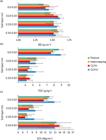
Mean ± confidence interval (α = 0.05) of (A) soil bulk density, (B) total organic carbon, and (C) carbon stock of soil layers of land use systems in the Amazon-Cerrado ecotone.
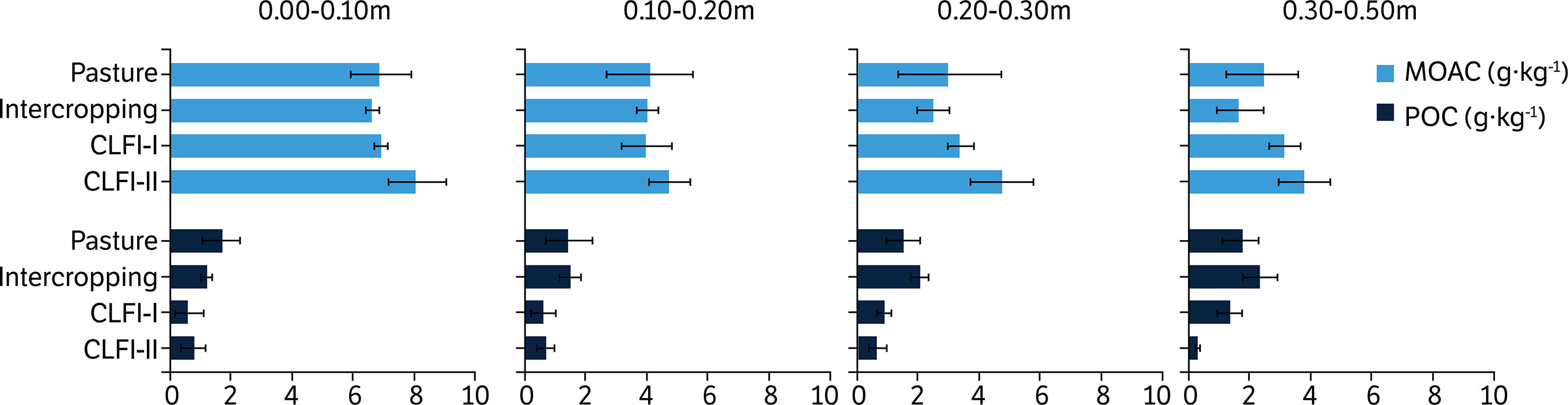
The result of the physical fractionation of soil carbon in land use systems is presented in Fig. 5. There is similarity in the concentration of POC in the 0.00–0.10 m layer between the systems. In contrast, in deeper layers, a decline in POC concentration of ICLF-I and II is observed in comparison to intercropping. This decrease in POC for ICLF-I corresponded to 57 (0.10–0.20 m), 56 (0.20–0.30 m), and 44% (0.30–0.50 m). In ICLF-II, the reduction corresponded to 53 (0.10–0.20 m), 69 (0.20–0.30 m), and 87% (0.30–0.50 m).

Mean ± confidence interval (α = 0.05) of mineral associated organic carbon (MAOC) and particulate organic carbon (POC) of soil layers from land use systems in the Amazon-Cerrado ecotone.
MAOC concentration differed between systems. In the upper layer, ICLF-II (8.09 ± 0.93 g.kg-1) contributed with a higher concentration of MAOC compared to intercropping (6.63 ± 0.20 g.kg-1) and ICLF-I (6.90 ± 0.18 g.kg-1), but did not differ from pasture (6.88 ± 0.98 g.kg-1). At greater depth (0.30–0.50 m), higher MAOC concentration was observed in ICLF-I (3.25 ± 0.52 g.kg-1) and II (3.84 ± 0.85 g.kg-1) compared to intercropping (1.66 ± 0.75 g.kg-1).
Figure 6 presents the results of the chemical fractionation of soil carbon according to land use systems. The HUM fraction responded similarly to the systems. The FA and HA fractions converged with the same response in the 0.00–0.10 m layer. In this layer, ICLF-I (2.84 ± 0.29 g.kg-1) showed a lower FA concentration compared to pasture (3.67 ± 0.34 g.kg-1), intercropping (3.87 ± 0.29 g.kg-1), and ICLF-II (3.47 ± 0.27 g.kg-1). Likewise, ICLF-I (0.81 ± 0.06 g.kg-1) also presented a lower concentration of HA in relation to pasture (1.03 ± 0.13 g.kg-1), intercropping (1.13 ± 0.18 g.kg-1), and ICLF-II (1.01 ± 0.12 g.kg-1). In the 0.10–0.20 m layer, only intercropping (0.59 ± 0.06 g.kg-1) was superior to the ICLF-II (0.39 ± 0.08 g.kg-1) in terms of FA.
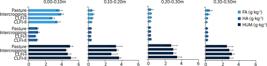
Mean ± confidence interval (α = 0.05) of humic acid (HA), humin (HUM) and fulvic acid (FA) of soil layers from land use systems in the Amazon-Cerrado ecotone.
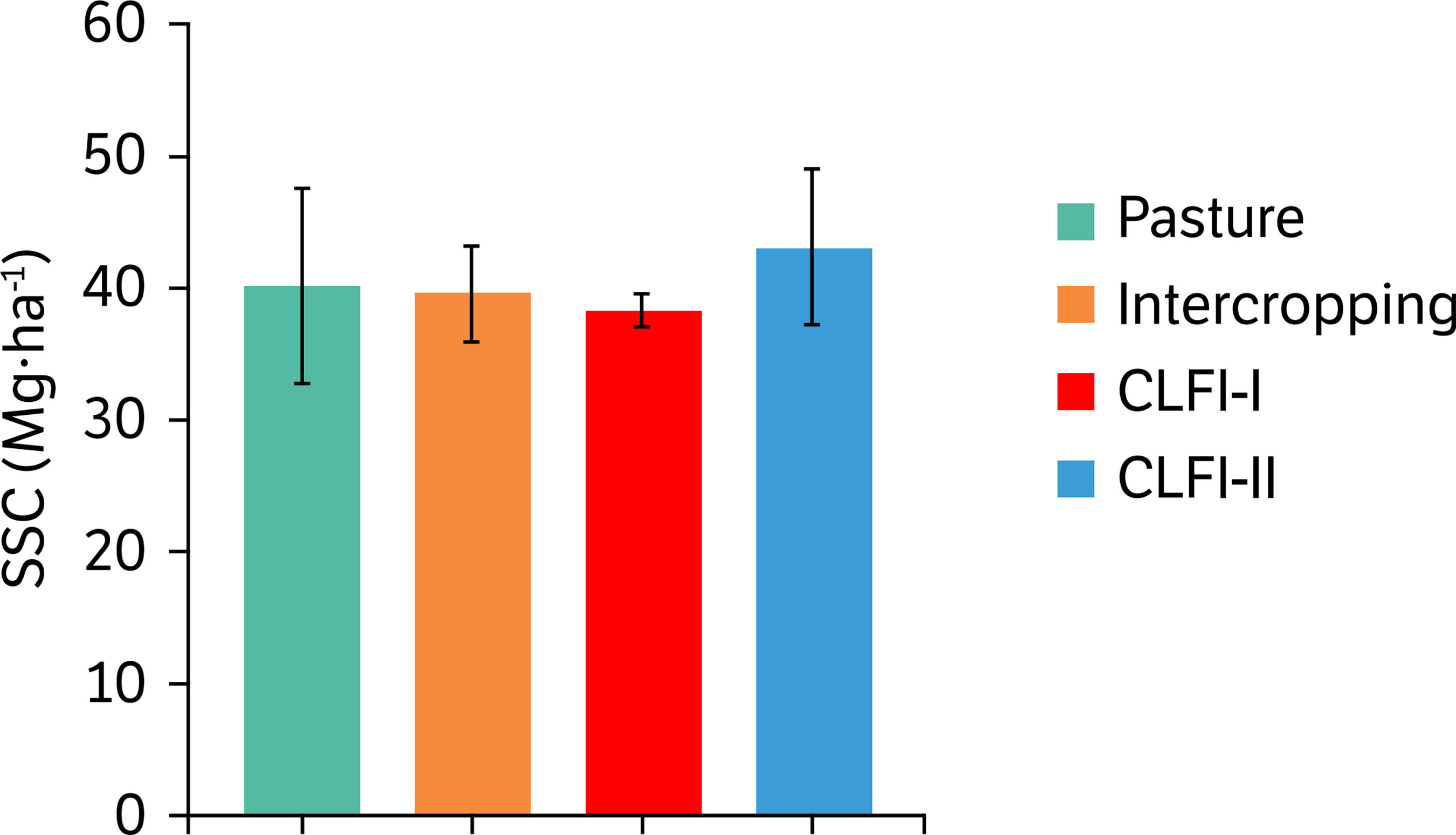
Total carbon stocks (0.0–0.50 m) were similar between land use systems (Fig. 7). Conventional pasture, maize + ‘Massai’ intercropping, ICLF-I (maize - ‘Marandu’ -eucalyptus), and ICLF-II (maize - ‘Massai’ - babassu palm) contributed to the storage of 40 ± 8, 40 ± 4, 38 ± 1, and 43 ± 6 Mg of C ha-1, respectively.
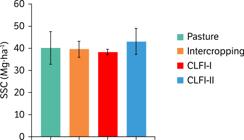
Mean ± confidence interval (α = 0.05) of carbon stock accumulated in the 0.0–0.5 m layer depending on land use systems in the Amazon-Cerrado ecotone.
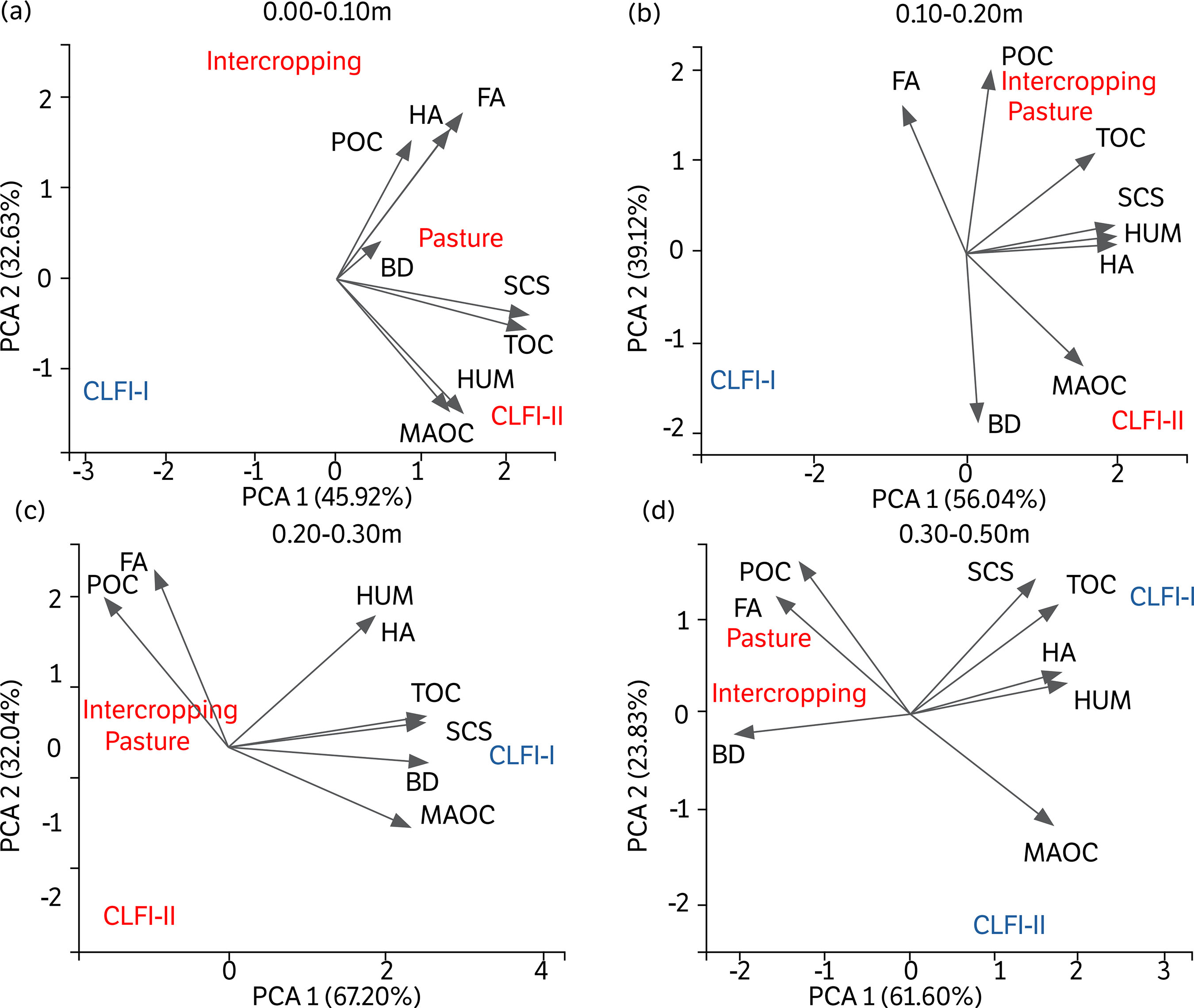
The PCA carried out for the soil layers under study suggests that the sum of components 1 and 2 explained 78.55, 95.16, 99.24, and 85.43% of the total variance of the attributes studied for the respective layers: 0.00–0.10, 0.10–0.20, 0.20–0.30, and 0.30 –0.50 m (Fig. 8). In the 0.00–0.10 m layer, there was a high positive correlation between soil attributes, forming three sets of variables: the first composed of POC, HA, FA, and bulk density; the second by SCS and TOC; and the third by HUM and MAOC. Positive correlation between FA and POC, SCS and TOC, and HUM and HA was inferred in layers 0.20–0.30 and 0.30–0.50 m.
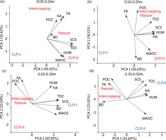
Biplot graphs of the principal components and grouping of soil attributes of different depths in land use systems in the Amazon-Cerrado ecotone.
When analyzing the grouping of systems, it is possible to separate two distinct groups for different layers. In the two most superficial layers, the ICLF-I system differed from the group formed by pasture, intercropping and ICLF-II, while in the 0.20–0.30 m layer the ICLF-II system differed from the others. In the last layer analyzed, there was the formation of group 1, pasture and intercropping, and group 2, ICLF-I and ICLF-II. It can also be seen that in the 0.00–0.10 m layer, the ICLF-II favored the MAOC and HUM fractions, while in the 0.10–0.20, 0.20–0.30, and 0.30-0.50 m layers, the close relationship between the systems intercropping and pasture stands out, with an increase in the POC and FA fractions.
DISCUSSION
The results of this study show how land use systems drive changes in soil carbon compartments. In a simplified context, cultivated area with pasture increases C-SBM and qMic, while decreasing qCO2. Based on available literature (Freitas et al. 2020, Sarto et al. 2020), grazing favors the accumulation of microbial biomass in stabilized organic C compared to other land uses. This result is an indication of soil health in which pasture with ‘Marandu’ increases microbial metabolic efficiency (Ashraf et al. 2022) by improving the use efficiency of the substrate by microbial biomass, promoting lower loss of CO2 through microbial respiration (Santos et al. 2021) and greater incorporation of soil C into the biomass of microorganisms. In the intercropping, ICLF-I and ICLF-II, the soil was disturbed with the implementation of maize. These possible indications of microbial stress observed in integrated systems can be attributed to mechanical interventions that affected the growth of microbial biomass (Bastos et al. 2023).
Tillage (plowing and harrowing) causes losses of organic matter, which may have impacted other ecosystem services and increased the vulnerability of the systems (Siqueira‐Neto et al. 2022). This revealed that the increase in soil C is easily influenced by soil management, even in conservation systems (Barbosa et al. 2022). However, in the long term (after six years), the establishment of ICLF-II in a plinthosol increased TOC levels in relation to conventional pasture and intercropping. These results can be attributed to the initial establishment of the system, which is composed of native babassu palm vegetation integrated with maize intercropped with ‘Massai’ grass.
The progressive increase in the accumulation of babassu palm litter enabled the incorporation of large amounts of organic matter and increased TOC levels. Additionally, the roots of agricultural and forage crops may add a large amount of plant residue to soil, significantly increasing soil C levels, which can even reach levels similar to those in native vegetation areas (Signor et al. 2018). Bieluczyk et al. (2023) revealed that soil C sequestered by 8- to 15-year forest restorations represented at most 78% of the amount stored in primary forest. These results highlight the critical importance of preserving native forests because they achieve ecosystem stability and C storage potential for thousands or even millions of years (FAO and UNEP 2020).
Compared to the other systems, the increase in TOC in the 0.00–0.10 m layer under ICLF-II is related to a greater amount of MAOC. In general, the MAOC fraction is insoluble and resists biodegradation, which is promoted by the formation of stable clay-humic complexes. These organomineral complexes are formed due to the mineralogical composition of the evaluated soil, dominated by Fe and Al oxides and hydroxides (Soares et al. 2020). This increase in the MAOC fraction in ICLF-II may also be associated with adequate conditions for the decomposition of particulate materials with an increase in the MAOC fraction (Silva et al. 2022), not only on the surface, but also at depth. This effect is possibly attributed to the root system of the native tree species, which encourages the process of aggregation of soil particles through the cementing action of the roots that incorporates C into the MAOC fraction at depth (Freitas et al. 2020).
In fact, the PCA of the 0.30–0.50 m layer supports this observation, in which there was a positive correlation between land use systems that contain the tree component (eucalyptus and babassu palm) with the MAOC fraction. Furthermore, it must also be considered that the effects obtained may be supported by decomposition. The newly incorporated litter was, however, more associated with minerals or with microaggregates, which improved the protection of this new litter assembly and resulted in a relative change from the active C to a slower decomposing C (Ma et al. 2019), finding a positive correction with the chemical fractions HA and HUM.
The physical fractionation of C revealed that the POC fraction had a higher proportion in the intercropping compared to the integrated systems (ICLF-I and II). Bahadori et al. (2021) indicated that grasses have more labile C fractions when compared to tree components that have more recalcitrant C fractions. In this way, the role of maize residue and the root system of the tropical forage grass used in the intercropping system seems to provide plant material more quickly (Rego et al. 2023), thereby speeding up the decomposition by microorganisms, with a consequent increase in POC (Sato et al. 2019).
There was a close correlation between MAOC and HUM, mainly in topsoil, which also had high correlations with the C stock. This can be explained by the low mobility of MAOC in soil and the structural complexity of its molecules. Just as we found for the integrated systems, Almeida et al. (2021) showed that increases were observed in C associated with the humid fraction in responses to soil management in integrated crop-livestock systems, after 11 years of implementation. This result indicated that, under the edaphoclimatic conditions of the study region, the accumulation of TOC depends on the increase in MAOC and HUM contents. This condition, combined with the use of residues with different organic and structural properties, allows for a balance of labile and recalcitrant organic matter compartments, thus ensuring an increase in complexity and maintenance of carbon in the soil (Iwata et al. 2021). Furthermore, the absence of observed differences between land use systems in terms of the HUM fraction indicates that the systems studied can be considered effective in the process of sequestering C in the soil (Mi et al. 2019), representing main models of C preservation in anthropized soils (Marinho Junior et al. 2021).
The presence of palm trees in the ICLF-II area represents an important tool to mitigate CO2 emissions (Bieluczyk et al. 2020, Bieluczyk et al. 2023), as wood biomass has a high potential for C accumulation, mainly in its recalcitrant forms (Conceição et al. 2017). Moreover, even under the condition of disturbance applied in the study, babassu palm was not subject to high rates of decomposition. Frazão et al. (2013), studying soil C stocks as a function of oil palm cultivation (Elaeis guineensis Jacq.) in the Amazon region, found that the soil close to palm trees had a high C content, due to the contribution of plant roots, with the high levels being maintained in the soil in the long term. This contribution of palm trees to the maintenance of stable C fractions in the soil may explain the little effect of disturbance on the promotion of TOC decomposition in the ICLF-II area. Thus, the presence of babassu palm in the area provides a positive effect in the accumulation of C in the soil.
Furthermore, the differential results obtained between the integration areas that have a forest component can be attributed to the time it took to implement eucalyptus (three years) in relation to babassu palm (native vegetation). Trees complement the litter input in the upper layer and therefore increase root renewal (Almeida et al. 2021), resulting in an increase in C due to implementation time. This factor helps us elucidate how implementation time can be crucial in terms of the benefits obtained by using the system, including limiting a possible increase in HA and FA fractions. In addition, it is speculated that this negative result in the first years after the change in land use may be a reflection of the initial plowing and harrowing process during mechanized soil preparation.
Reforestation with eucalyptus species can provide or supplement efficiently increase C stocks in soil (Almeida et al. 2021). However, our findings indicated that the decomposition/humification of eucalyptus biomass (i.e., due to the presence of aromatic compounds and lignin) impairs these climatic conditions in the short term (Gmach et al. 2018). ICLF-I is also composed of M. maximus, different from the other land use systems, which may exhibit different straw decomposition.
The decomposition rate of straw is determined by the C:N ratio of plants residues (Prescott and Vesterdal 2021), which, associated with the greater or lesser lignin content and lignin/N ratio, becomes important from the point of view of controlling the persistence of plant residue as soil cover, especially when the region has high temperatures, accelerating decomposition (Das et al. 2023). Visually, eucalyptus has a low net primary production in this region, with low leaf density. Consequently, during the period of semideciduous canopy renewal, relatively small amounts of organic material are deposited on the soil surface.
Soil C dynamics can be altered over time due to the greater sustainability conferred by the system, resulting from greater interactions of plant and animal components with the soil and influencing soil carbon stocks (Zhang et al. 2022). The results found in this study, after six years of implementation of the agroforestry system (ICLF-II), confirm the potential accumulation of C in soil, although in this case, it was not sufficient to promote an increase in stocks comparable to other systems. In agreement with the results found by Almeida et al. (2021) evaluating different compositions of agroforestry systems, soil C stocks in the mineral soil surface are more responsive to changes in the type of land cover. Therefore, continuous monitoring is necessary to verify medium- and long-term C accumulation in deep layers. Even so, the results obtained indicate that the SCS of the evaluated land use systems is higher when compared to the plinthosol under secondary forest in the eastern Amazon biome (Signor et al. 2018).
The use of conservation techniques is important for maintaining carbon stocks in the soil. In an evaluation carried out in the Cerrado of Maranhão, the conversion of native vegetation to soybean cultivation reduced carbon stock by 35% (after 8 and 15 years of cultivation), labile carbon was reduced by 20 and 40%, while microbial C decreased by 20 and 60% (Siqueira‐Neto et al. 2022). On the other hand, in the same region as reported by Siqueira-Neto et al. (2022), the use of integrated systems promotes an increase in carbon levels and stocks. However, the carbon stock in the soil in systems that have an animal component depends on the time of entry of these animals. For example, maize-forage intercropping and a two-, four- and eight-year-old off-season cattle system increased the carbon stock up to 0.5 m depth by 14.5, 23.4, and 10.0%, respectively, in relation to the no-till system with soybeans and millet in the Cerrado of Maranhão (Barbosa et al. 2022). For the present study, however, the recent entry of animals made it difficult to verify the possible potential for accumulation of carbon stocks in the soil.
The SCS in continuous pasture is characterized as an unexpected result. This is because integrated systems were expected to stand out in terms of SCS. This result may converge with Oliveira et al. (2022), who observed that degraded pastures may present greater accumulation of C stocks, since the soil remains intact. Despite this, the conversion of degraded pasture areas to integrated systems with the presence of a native woody component present in the area minimizes the impacts when the soil is disturbed for the establishment of agricultural and forage crops. Long-term evaluation of the adoption of integrated systems with the minimization of soil disturbance is necessary to verify the systems’ capacity to store C in the soil. Therefore, the adoption of a tree component with no-till practice is essential to make it easier the positive effects of adopting crop-livestock-forest integration. Furthermore, Pinheiro et al. (2021) report that pastures showed higher SCS mainly in the shallower soil layers, which calls for additional studies to better understand the dynamics of such systems, such as the C contributions by C3 versus C4 plants and the role of diversification on C sequestrations dynamics.
The use of manure is an important strategy to increase the levels of SCS. A meta-analysis indicated that the use of manure in well management pastures can increase SCS between 7.4 to 8.9 Mg C.ha-1, in relation to degraded pastures (Li et al., 2021).
Because livestock were not present in the experimental plots during the evaluation period, the contribution of manure to the SCS in the present study was negligible. However, future studies should evaluate the contributions of manure and land use patterns on SCS, microbial activity, and nutrient cycles.
CONCLUSION
Conventional pasture consisting of Urochloa brizantha cv. Marandu contributes to greater conservation and improved management of soil organic carbon, with increased immobilization of soil carbon in microbial biomass. Soil disturbance for the implementation maize-forage grass intercropping results in negative changes in the chemical and physical carbon compartments of the soil. The presence of a native tree component, babassu palm, minimizes the impacts of soil disturbance for the cultivation of maize-grass on the physical and chemical compartments of soil carbon in the Amazon-Cerrado ecotone.
ACKNOWLEDGMENTS
To Fazenda Muniz.
-
How to cite:
Marques, I. S., Muniz, L. C., Deon, D. S., Costa, J. B., Reis, V. R. R., Araújo, M. D. M., Rego, C. A. R. M., Sousa, D. C., Andrade, H. A. F., Tavares, R. K. O. and Souza, H. A. (2026). Soil carbon dynamics and compartments in integrated systems in the Amazon-Cerrado ecotone. Bragantia, 85, e20250211. https://doi.org/10.1590/1678-4499.20250211
-
FUNDING
BASAGrant No.: 24200.15/0036-5Brazilian Agricultural Research CorporationGrant No.: 13.17.00.002.00.00Rede Integração Lavoura-Pecuária-FlorestaGrant No.: 24200.24/0001-8National Council for Scientific and Technological DevelopmentGrant No.: 311039/2017-0
-
DECLARATION OF USE OF ARTIFICIAL INTELLIGENCE TOOLS
The authors declare that no artificial intelligence tools were used in the development, writing, or editing of this manuscript.
DATA AVAILABILITY STATEMENT
Data will be available from the corresponding author on reasonable request.
REFERENCES
- Alef, K. and Nannipieri, P. (1995). Methods in applied soil microbiology and biochemistry. London: Academic Press.
-
Almeida, L. L. S., Frazão, L. A., Lessa, T. A. M., Fernandes, L. A., Veloso, A. L. C., Lana, A. M. Q. and Ferreira, E. A. (2021). Soil carbon and nitrogen stocks and the quality of soil organic matter under silvopastoral systems in the Brazilian Cerrado. Soil Tillage Research, 205, 104785. https://doi.org/10.1016/j.still.2020.104785
» https://doi.org/10.1016/j.still.2020.104785 -
Anderson, T. H. and Domsch, K. H. (1989). Ratios of microbial biomass carbon to total organic carbon in arable soils. Soil Biology and Biochemistry, 21, 471-479. https://doi.org/10.1016/0038-0717(89)90117-X
» https://doi.org/10.1016/0038-0717(89)90117-X -
Anderson, T. H. and Domsch, K. H. (1990). Application of eco-physiological quotients (qCO2 and qD) on microbial biomasses from soils of different cropping histories. Soil Biology and Biochemistry, 22, 251-255. https://doi.org/10.1016/0038-0717(90)90094-G
» https://doi.org/10.1016/0038-0717(90)90094-G -
Angst, G., Lichner, L., Csecserits, A., Emsens, W. J., Van Diggelen, R., Veselá, H. and Frouz, J. (2022). Controls on labile and stabilized soil organic matter during long-term ecosystem development. Geoderma, 426, 116090. https://doi.org/10.1016/j.geoderma.2022.116090
» https://doi.org/10.1016/j.geoderma.2022.116090 - Araújo, E. P. (2013). Atlas do Maranhão. São Luís: SEPLAN / UEMA.
-
Araújo, R. A. D., Rodrigues, R. C., Costa, C. S., Santos, F. N. S., Lima, A. J. T. and Rodrigues, M. M. (2020). Dynamics and stability of Marandu grass tillers in monocrop systems and babassu palm silvopastoral systems. Acta Scientiarum Agronomy, 42, e42445. https://doi.org/10.4025/actasciagron.v42i1.42445
» https://doi.org/10.4025/actasciagron.v42i1.42445 -
Ashraf, M. N., Waqas, M. A. and Rahman, S. (2022). Microbial metabolic quotient is a dynamic indicator of soil health: Trends, implications and perspectives. Eurasian Soil Science, 55, 1794-1803. https://doi.org/10.1134/S1064229322700119
» https://doi.org/10.1134/S1064229322700119 -
Assmann, J. M., Martins, A. P., Anghinoni, I., Denardin, L. G. O., Nichel, G. N., Costa, S. E. V. C. and Franzluebbers, A. J. (2017). Phosphorus and potassium cycling in a long-term no-till integrated soybean-beef cattle production system under different grazing intensities insubtropics. Nutrient Cycling in Agroecosystems, 108, 21-33. https://doi.org/10.1007/s10705-016-9818-6
» https://doi.org/10.1007/s10705-016-9818-6 -
Bahadori, M., Chen, C., Lewis, S., Boyd, S., Rashti, M. R., Esfandbod, M. and Kuzyakov, Y. (2021). Soil organic matter formation is controlled by the chemistry and bioavailability of organic carbon inputs across different land uses. Science of the Total Environment, 770, 145307. https://doi.org/10.1016/j.scitotenv.2021.145307
» https://doi.org/10.1016/j.scitotenv.2021.145307 -
Barbosa, L. R., Souza, H. A., Teixeira Neto, M. L and Leite, L. F. C. (2022). Organic matter compartments in an Ultisol under integrated agricultural and livestock production systems in the Cerrado. Ciência Rural, 52, e20200845. https://doi.org/10.1590/0103-8478cr20200845
» https://doi.org/10.1590/0103-8478cr20200845 -
Bastos, T. R. S., Barreto-Garcia, P. A. B., Mendes, I. C., Monroe, P. H. M. and Carvalho, F. F. (2023). Response of soil microbial biomass and enzyme activity in coffee-based agroforestry systems in a high-altitude tropical climate region of Brazil. Catena, 230, 107270. https://doi.org/10.1016/j.catena.2023.107270
» https://doi.org/10.1016/j.catena.2023.107270 -
Bayer, C., Mielniczuk, J., Amado, T. J., Martin-Neto, L. and Fernandes, S. V. (2000). Organic matter storage in a sandy clay loam Acrisol affected by tillage and cropping systems in southern Brazil. Soil Tillage Research, 54, 101-109. https://doi.org/10.1016/S0167-1987(00)00090-8
» https://doi.org/10.1016/S0167-1987(00)00090-8 - Benites, V., Mádari, B. and Machado, P. (2003). Extração e fracionamento quantitativo de substâncias húmicas do solo: um procedimento simplificado e de baixo custo. Rio de Janeiro, Embrapa. Comunicado Técnico, 16.
-
Bieluczyk, W., Asselta, F. O., Navroski, D., Gontijo, J. B., Venturini, A. M., Mendes, L. W. and Tsai, S. M. (2023). Linking above and belowground carbon sequestration, soil organic matter properties, and soil health in Brazilian Atlantic Forest restoration. Journal of Environmental Management, 344, 118573. https://doi.org/10.1016/j.jenvman.2023.118573
» https://doi.org/10.1016/j.jenvman.2023.118573 -
Bieluczyk, W., Pereira, M. G., Guareschi, R. F., Bonetti, J. A., Silva, G. N. and Silva Neto, E. C. (2017). Soil carbon and nitrogen stocks, light organic matter, and remaining phosphorus under a crop-livestock integration system. Semina Ciência Agrárias, 38, 1825-1840. https://doi.org/10.5433/1679-0359.2017v38n4p1825
» https://doi.org/10.5433/1679-0359.2017v38n4p1825 -
Bieluczyk, W., Piccolo, M. C., Pereira, M. G., Moraes, M. T., Soltangheisi, A., Bernardi, A. C. C. and Cherubin, M. R. (2020). Integrated farming systems influence soil organic matter dynamics in southeastern Brazil. Geoderma, 371, 114368. https://doi.org/10.1016/j.geoderma.2020.114368
» https://doi.org/10.1016/j.geoderma.2020.114368 - Brasil (2021). Quarta Comunicação Nacional do Brasil à Convenção Quadro das Nações Unidas sobre Mudança do Clima. Brasília: Secretaria de Pesquisa e Formação Científica, Ministério da Ciência, Tecnologia e Inovações.
-
Cambardella, C. A. and Elliott, E. T. (1992). Particulate soil organic‐matter changes across a grassland cultivation sequence. Soil Science Society of America Journal, 56, 777-783. https://doi.org/10.2136/sssaj1992.03615995005600030017x
» https://doi.org/10.2136/sssaj1992.03615995005600030017x -
Cheng, H., Zhou, X., Dong, R., Wang, X., Liu, G. and Li, Q. (2023). Natural vegetation regeneration facilitated soil organic carbon sequestration and microbial community stability in the degraded karst ecosystem. Catena, 222, 106856. https://doi.org/10.1016/j.catena.2022.106856
» https://doi.org/10.1016/j.catena.2022.106856 -
Conceição, M. C., Matos, E. S., Bidone, E. D., Rodrigues, R. A. and Cordeiro, R. C. (2017). Changes in soil carbon stocks under integrated crop-livestock-forest system in the Brazilian Amazon region. Journal of Agricultural Science, 8, 904-913. https://doi.org/10.4236/as.2017.89066
» https://doi.org/10.4236/as.2017.89066 -
Das, S., Deb, S., Sahoo, S. S and Sahoo, U. K. (2023). Soil microbial biomass carbon stock and its relation with climatic and other environmental factors in forest ecosystems: A review. Acta Ecologica Sinica, 43, 933-945. https://doi.org/10.1016/j.chnaes.2022.12.007
» https://doi.org/10.1016/j.chnaes.2022.12.007 -
Ellert, B. H. and Bettany, J. R. (1995). Calculation of organic matter and nutrients stored in soils under contrasting management regimes. Canadian Journal of Soil Science, 75, 529-538. https://doi.org/10.4141/cjss95-075
» https://doi.org/10.4141/cjss95-075 -
[FAO] Food and Agriculture Organization and [UNEP] United Nations Environment Programme (2020). The state of the world’s forests 2020. Forests, biodiversity and people. Rome: FAO and UNEP. https://doi.org/10.4060/ca8642en
» https://doi.org/10.4060/ca8642en -
Felipe-Lucia, M. R., Soliveres, S., Penone, C., Fischer, M., Ammer, C., Boch, S. and Allan, E. (2020). Land-use intensity alters networks between biodiversity, ecosystem functions, and services. Proceedings of the National Academy of Sciences of the United States of America, 117, 28140-28149. https://doi.org/10.1073/pnas.2016210117
» https://doi.org/10.1073/pnas.2016210117 -
Feltran-Barbieri, R., and Féres, J. G. (2021). Degraded pastures in Brazil: improving livestock production and forest restoration. Royal Society Open Science, 8, 201854. https://doi.org/10.1098/rsos.201854
» https://doi.org/10.1098/rsos.201854 -
Ferreira, A. S., Camargo, F. A. O. and Vidor, C. (1999). Utilização de microondas na avaliação da biomassa microbiana do solo. Revista Brasileira Ciência do Solo, 23, 991-996. https://doi.org/10.1590/S0100-06831999000400026
» https://doi.org/10.1590/S0100-06831999000400026 -
Frazão, L. A., Paustian, K., Cerri, C. E. P. and Cerri, C. C. (2013). Soil carbon stocks andchanges after oil palm introduction in the Brazilian Amazon. Global Change Biology Bioenergy, 5, 384-390. https://doi.org/10.1111/j.1757-1707.2012.01196.x
» https://doi.org/10.1111/j.1757-1707.2012.01196.x -
Freitas, I. C., Ribeiro, J. M., Araújo, N. C. A., Santos, M. V., Sampaio, R. A., Fernandes, L. A. and Frazão, L. A. (2020). Agrosilvopastoral systems and well-managed pastures increase soil carbon stocks in the Brazilian Cerrado. Rangeland Ecology and Management, 73, 776-785. https://doi.org/10.1016/j.rama.2020.08.001
» https://doi.org/10.1016/j.rama.2020.08.001 -
Gehring, C., Zelarayán, M. C., Luz, R. L., Almeida, R. B., Boddey, R. M. and Leite, M. F. A. (2020). Babassu palm (Attalea speciosa Mart.) super-dominance shapes its surroundings via multiple biotic, soil chemical, and physical interactions and accumulates soil carbon: a case study in eastern Amazonia. Plant and Soil, 454, 447-460. https://doi.org/10.1007/s11104-020-04580-7
» https://doi.org/10.1007/s11104-020-04580-7 -
Gmach, M. R., Dias, B. O., Silva, C. A., Nóbrega, J. C., Lustosa-Filho, J. F. and Siqueira-Neto, M. (2018). Soil organic matter dynamics and land-use change on Oxisols in the Cerrado, Brazil. Geoderma Regional, 14, e00178. https://doi.org/10.1016/j.geodrs.2018.e00178
» https://doi.org/10.1016/j.geodrs.2018.e00178 -
Guimarães, D. V., Silva, M. L. N., Beniaich, A., Pio, R., Gonzaga, M. I. S., Avanzi, J. C. and Curi, N. (2021). Dynamics and losses of soil organic matter and nutrients by water erosion in cover crop management systems in olive groves, in tropical regions. Soil Tillage Research, 209, 104863. https://doi.org/10.1016/j.still.2020.104863
» https://doi.org/10.1016/j.still.2020.104863 -
Hok, L., Sá, J. C. M., Reyes, M., Boulakia, S., Tivet, F., Leng, V. and Bressan, P. T. (2018). Enzymes and C pools as indicators of C build up in short-term conservation agriculture in a savanna ecosystem in Cambodia. Soil Tillage Research, 177, 125-133. https://doi.org/10.1016/j.still.2017.11.015
» https://doi.org/10.1016/j.still.2017.11.015 -
Islam, K. R. and Weil, R. R. (1998). A rapid microwave digestion method for colorimetric measurement of soil organic carbon. Communications in Soil Science and Plant Analysis, 29, 2269-2284. https://doi.org/10.1080/00103629809370110
» https://doi.org/10.1080/00103629809370110 - IUSS Working Group WRB (2015). World reference base for soil resources 2014: International soil classification system for naming soils and creating legends for soil maps. Rome: Food and Agriculture Organization of the United Nations. (World Soil Resources Reports, 106).
-
Iwata, B. D. F., Brandão, M. L. S. M., Braz, R. D. S., Leite, L. F. C. and Costa, M. C. G. (2021). Total and particulate contents and vertical stratification of organic carbon in agroforestry system in Caatinga. Revista Caatinga, 34, 443-451. https://doi.org/10.1590/1983-21252021v34n220rc
» https://doi.org/10.1590/1983-21252021v34n220rc -
Koeppen, W. (1948). Climatología: con un estudio de los climas de la tierra by Lucas Pestana - Issuu. Available at: https://issuu.com/lucaspestana/docs/koeppen_climatologia Accessed on: Apr. 6, 2026.
» https://issuu.com/lucaspestana/docs/koeppen_climatologia -
Koh, L. P., Zeng, Y., Sarira, T. V. and Siman, K. (2021). Carbon prospecting in tropical forests for climate change mitigation. Nature Communications, 12, 1271. https://doi.org/10.1038/s41467-021-21560-2
» https://doi.org/10.1038/s41467-021-21560-2 -
[LAPIG] Laboratório de Processamento de Imagens e Geoprocessamento (2021). Atlas digital das pastagens brasileiras. Universidade Federal de Goiás. Available at: https://atlasdaspastagens.ufg.br/map Accessed on: Apr. 6, 2026.
» https://atlasdaspastagens.ufg.br/map -
Li, B., Song, H., Cao, W., Wang, Y., Chen, J. and Guo, J. (2021). Responses of soil organic carbon stock to animal manureapplication: A new global synthesis integrating the impactsof agricultural managements and environmental conditions. Global Change Biology, 27, 5356-5367. https://doi.org/10.1111/gcb.15731
» https://doi.org/10.1111/gcb.15731 -
Ma, Y., McCormick, M. K., Szlavecz, K. and Filley, T. R. (2019). Controls on soil organic carbon stability and temperature sensitivity with increased aboveground litter input in deciduous forests of different forest ages. Soil Biology and Biochemistry, 134, 90-99. https://doi.org/10.1016/j.soilbio.2019.03.020
» https://doi.org/10.1016/j.soilbio.2019.03.020 -
Malézieux, E. (2012). Designing cropping systems from nature. Agronomy for Sustainable Development, 32, 15-29. https://doi.org/10.1007/s13593-011-0027-z
» https://doi.org/10.1007/s13593-011-0027-z -
Marinho Junior, J. L., Piscoya, V. C., Fernandes, M. M., Gonçalves, S. B., Holanda, F. S. R., Cunha Filho, M. and Araújo Filho, R. N. (2021). Carbon dynamics in humic fractions of soil organic matter under different vegetation cover in southern Tocantins. Floresta e Ambiente, 28, e20200024. https://doi.org/10.1590/2179-8087-FLORAM-2020-0024
» https://doi.org/10.1590/2179-8087-FLORAM-2020-0024 -
Mi, W., Sun, Y., Gao, Q., Liu, M. and Wu, L. (2019). Changes in humus carbon fractions in paddy soil given different organic amendments and mineral fertilizers. Soil Tillage Research, 195, 104421. https://doi.org/10.1016/j.still.2019.104421
» https://doi.org/10.1016/j.still.2019.104421 -
[NUGEO] Núcleo Geoambiental (2017). Regiões hidrográficas do Maranhão. UEMA/NUGEO. Available at: http://www.nugeo.uema.br/?page_id=233 Accessed on: Apr. 6, 2026.
» http://www.nugeo.uema.br/?page_id=233 -
Oliveira, D. C., Maia, S. M. F., Freitas, R. D. C. A. and Cerri, C. E. P. (2022). Changes in soil carbon and soil carbon sequestration potential under different types of pasture management in Brazil. Regional Environmental Change, 22, 87. https://doi.org/10.1007/s10113-022-01945-9
» https://doi.org/10.1007/s10113-022-01945-9 -
Payton, M. E., Miller, A. E. and Raun, W. R. (2000). Testing statistical hypothesis using standard error bars and confidence intervals. Communications in Soil Science and Plant Analysis, 31, 547-551. https://doi.org/10.1080/00103620009370458
» https://doi.org/10.1080/00103620009370458 -
Peng, W., Sonne, C., Lam, S. S., Ok, Y. S. and Alstrup, A. K. (2020). The ongoing cut-down of the Amazon rainforest threatens the climate and requires global tree planting projects: A short review. Environmental Research, 181, 108887. https://doi.org/10.1016/j.envres.2019.108887
» https://doi.org/10.1016/j.envres.2019.108887 -
Pinheiro, F. M., Nair, P. R., Nair, V. D., Tonucci, R. G. and Venturin, R. P. (2021). Soil carbon stock and stability under Eucalyptus-based silvopasture and other land-use systems in the Cerrado biodiversity hotspot. Journal of Environmental Management, 299, 113676. https://doi.org/10.1016/j.jenvman.2021.113676
» https://doi.org/10.1016/j.jenvman.2021.113676 -
Prescott, C. E. and Vesterdal, L. (2021). Decomposition and transformations along the continuum from litter to soil organic matter in forest soils. Forest Ecology and Management, 498, 119522. https://doi.org/10.1016/j.foreco.2021.119522
» https://doi.org/10.1016/j.foreco.2021.119522 -
Prietzel, J., Krüger, J., Kaiser, K., Amelung, W., Bauke, S. L., Dippold, M. A. and Lang, F. (2022). Soil phosphorus status and P nutrition strategies of European beech forests on carbonate compared to silicate parent material. Biogeochemistry, 158, 39-72. https://doi.org/10.1007/s10533-021-00884-7
» https://doi.org/10.1007/s10533-021-00884-7 -
R Core Team (2017). R: A language and environment for statistical computing. Vienna: R Foundation for Statistical Computing. Available at: https://www.R-project.org/ Accessed on: Aug. 18, 2020.
» https://www.R-project.org/ -
Rego, C., Oliveira, P. S. R. O., Muniz, L. C., Rosset, J. S., Mattei, E., Costa, B. P. and Silva, I. A. G. (2023). Pasture recovery and their impacts on the levels, stocks, and origin of carbon and nitrogen in plinthosol areas in the eastern Amazon. Environmental Earth Sciences, 82, 419. https://doi.org/10.1007/s12665-023-11119-3
» https://doi.org/10.1007/s12665-023-11119-3 -
Santos, C. C., Ferraz Junior, A. S. L., Sá, S. O., Gutiérrez, J. A. M., Braun, H., Sarrazin, M. and Desjardins, T. (2018). Soil carbon stock and Plinthosol fertility in smallholder land-use systems in the eastern Amazon Brazil. Journal of Environmental Management, 9, 655-664. https://doi.org/10.1080/17583004.2018.1530026
» https://doi.org/10.1080/17583004.2018.1530026 - Santos, H. G., Jacomine, P. K. T., Anjos, L. H. C., Oliveira, V. A., Lumbreras, J. F., Coelho, M. R., Almeida, J. A., Araújo Filho, J. C., Oliveira, J. B. and Cunha, T. J. F. (2018). Sistema brasileiro de classificação de solos. 5. ed. Brasília, DF: Embrapa.
-
Santos, S. F. D. C. B., Souza, H. A., Araújo Neto, R. B., Sagrilo, E., Ferreira, A. C. M., Carvalho, S. P. and Leite, L. F. C. (2021). Soil microbiological attributes and soybean grain yield in succession to corn intercropped with forage in the Maranhão Eastern Cerrado. International Journal of Plant Production, 15, 669-677. https://doi.org/10.1007/s42106-021-00167-z
» https://doi.org/10.1007/s42106-021-00167-z -
Santos-Filho, F. S., Almeida Júnior, E. B. A. and Soares, C. J. R. S. (2013). Cocais: zona ecotonal natural ou artificial? Revista Equador, 2, 2-13. https://revistas.ufpi.br/index.php/equador/article/view/1043/1020
» https://revistas.ufpi.br/index.php/equador/article/view/1043/1020 -
Sarto, M. V., Borges, W. L., Sarto, J. R., Rice, C. W. and Rosolem, C. A. (2020). Deep soil carbon stock, origin, and root interaction in a tropical integrated crop–livestock system. Agroforestry Systems, 94, 1865-1877. https://doi.org/10.1007/s10457-020-00505-6
» https://doi.org/10.1007/s10457-020-00505-6 -
Sato, J. H., Figueiredo, C. C., Marchão, R. L., Oliveira, A. D., Vilela, L., Delvico, F. M. and Carvalho, A. M. (2019). Understanding the relations between soil organic matter fractions and N2O emissions in a long‐term integrated crop–livestock system. European Journal of Soil Science, 70, 1183-1196. https://doi.org/10.1111/ejss.12819
» https://doi.org/10.1111/ejss.12819 -
Signor, D., Deon, M. D. I., Camargo, P. B. D. and Cerri, C. E. P. (2018). Quantity and quality of soil organic matter as a sustainability index under different land uses in Eastern Amazon. Scientia Agricola, 75, 225-232. https://doi.org/10.1590/1678-992X-2016-0089
» https://doi.org/10.1590/1678-992X-2016-0089 -
Silva, J. P. D., Lustosa Filho, J. F., Teixeira, R. D. S., Xavier, A. M. T., Silva, I. R. D. and Soares, E. M. B. (2022). Combined legume and non-legume residues management improve soil organic matter on an Oxisol in Brazil. Revista Brasileira de Ciência do Solo, 46, e0220077. https://doi.org/10.36783/18069657rbcs20220077
» https://doi.org/10.36783/18069657rbcs20220077 -
Siqueira-Neto, M., Popinm, G. V., Ferrão, G. E., Santos, A. K., Cerri, C. E. and Ferreira, T. O. (2022). Soybean expansion impacts on soil organic matter in the eastern region of the Maranhão State (Northeastern Brazil). Soil Use and Management, 38, 1203-1216. https://doi.org/10.1111/sum.12785
» https://doi.org/10.1111/sum.12785 -
Soares, M. B., Freddi, O. D. S., Matos, E. D. S., Tavanti, R. F., Wruck, F. J., Lima, J. P. and Franchini, J. C. (2020). Integrated production systems: An alternative to soil chemical quality restoration in the Cerrado-Amazon ecotone. Catena, 185, 104279. https://doi.org/10.1016/j.catena.2019.104279
» https://doi.org/10.1016/j.catena.2019.104279 -
Souza Júnior, C. M. Z, Shimbo, J., Rosa, M. R., Parente, L. L. A., Alencar, A., Rudorff, B. F. and Azevedo, T. (2020). Reconstructing three decades of land use and land cover changes in brazilian biomes with landsat archive and earth engine. Remote Sensing, 12, 2735. https://doi.org/10.3390/rs12172735
» https://doi.org/10.3390/rs12172735 - Swift, R. S. (1996). Organic matter characterization. In D. L. Sparks (Ed.), Methods of soil analysis (p. 1011-1069). Madison: SSSA.
-
Teixeira, P. C., Donagemma, G. K., Fontana, A. and Teixeira, W. G. (2017). Manual de métodos de análise de solo. 3. ed. Brasília, DF: Embrapa. Available at: https://www.embrapa.br/busca-de-publicacoes/-/publicacao/1085209/manual-de-metodos-de-analise-de-solo Accessed on: Apr 6, 2026.
» https://www.embrapa.br/busca-de-publicacoes/-/publicacao/1085209/manual-de-metodos-de-analise-de-solo -
Valani, G. P., Martíni, A. F., Silva, L. F. S., Bovi, R. C. and Cooper, M. (2021). Soil quality assessments in integrated crop–livestock–forest systems: A review. Soil Use Management, 37, 22-36. https://doi.org/10.1111/sum.12667
» https://doi.org/10.1111/sum.12667 -
Woś, B., Józefowska, A., Chodak, M. and Pietrzykowski, M. (2023). Recovering of soil organic matter and associated C and N pools on regenerated forest ecosystems at different tree species influence on post-fire and reclaimed mine sites. Geoderma Regional, 33, e00632. https://doi.org/10.1016/j.geodrs.2023.e00632
» https://doi.org/10.1016/j.geodrs.2023.e00632 -
Yeomans, J. C. and Bremner, J. M. (1988). A rapid and precise method for routine determination of organic carbon in soil. Communications in Soil Science and Plant Analysis, 19, 1467-1476. https://doi.org/10.1080/00103628809368027
» https://doi.org/10.1080/00103628809368027 -
Zhang, D., Cai, X., Diao, L., Wang, Y., Wang, J., An, S. Y. and Ang, W. (2022). Changes in soil organic carbon and nitrogen pool sizes, dynamics, and biochemical stability during 160 years natural vegetation restoration on the Loess Plateau. Catena, 211, 106014. https://doi.org/10.1016/j.catena.2021.106014
» https://doi.org/10.1016/j.catena.2021.106014
Edited by
-
Section Editor:
Hector Valenzuela https://orcid.org/0000-0001-8415-5453

 Source: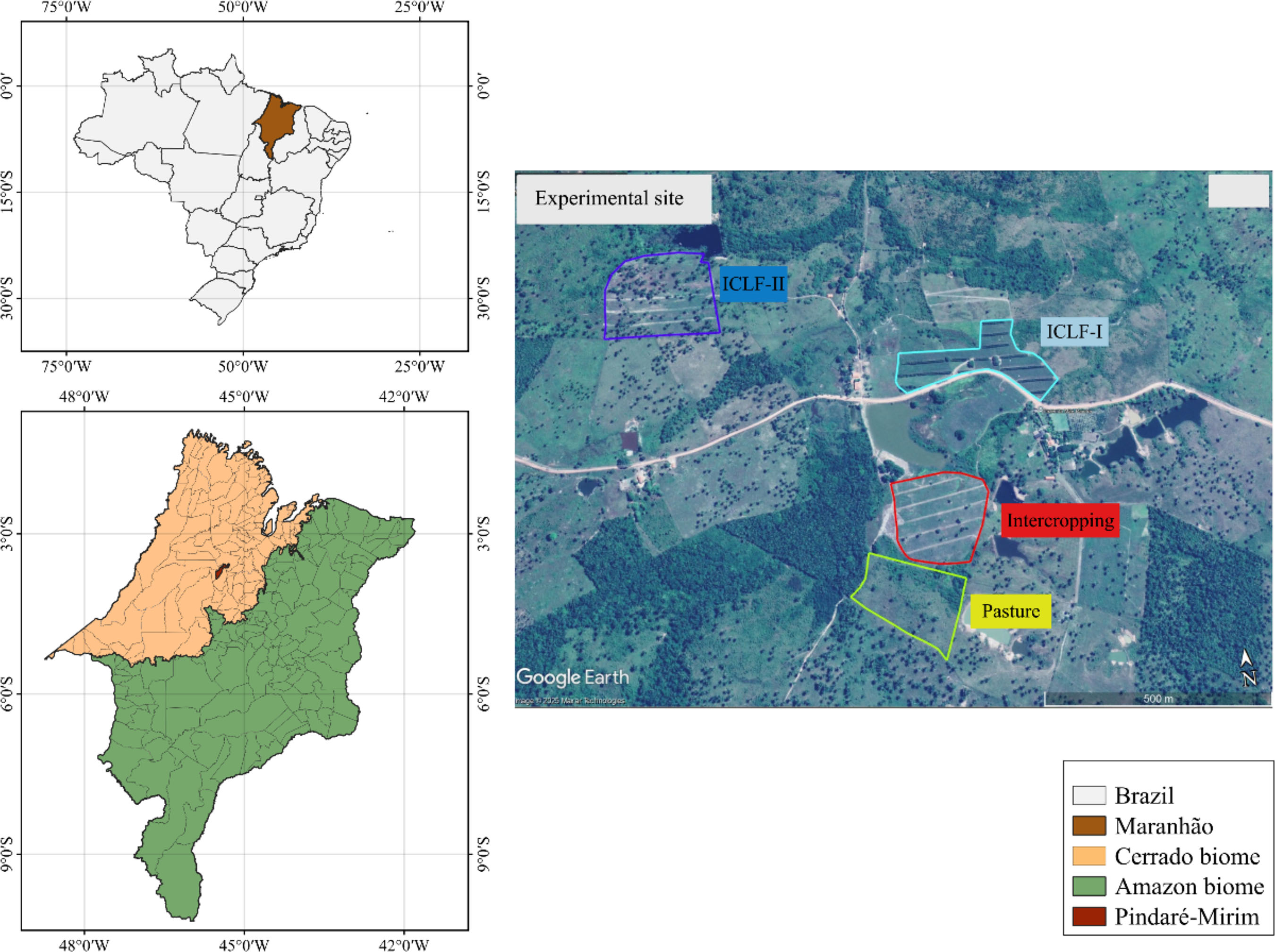

 FA: fulvic acid; HA: humic acid; POC: particulate organic carbon; BD: bulking density; SCS: soil carbon stock; TOC: total organic carbon; HUM: humin; MAOC: mineral associated organic carbon.