 Potential of glufosinate to reduce carpogenic germination of sclerotia and white mold symptoms on soybeans resistant to this herbicide
ABSTRACT
White mold, caused by Sclerotinia sclerotiorum, is a major challenge in soybean production due to its persistent survival structures and limited chemical control options. This study evaluated the effect of glufosinate-ammonium on the carpogenic germination of S. sclerotiorum sclerotia in vitro and on white mold development in herbicide-tolerant soybean plants grown in a greenhouse. The application of commercial doses of glufosinate significantly reduced carpogenic germination, with 97% of treated sclerotia failing to produce stipes. In glufosinate-tolerant soybean cultivars (Enlist and Conkesta), herbicide application reduced lesion size on stems when applied at the R1 stage (39% control) and decreased white mold severity on leaves when applied at the V4 stage (83% control). These results suggested that glufosinate-ammonium has the potential to suppress both primary inoculum and disease development, offering a novel approach to integrated white mold management. Field validation is recommended to optimize application timing and assess its effectiveness under commercial production conditions.
Key words
Glycine max
; Conkesta E3; glufosinate-ammonium; management; production system
INTRODUCTION
Soybean is one of the most planted crops in the world, with Brazil currently being the world’s largest producer of the grain (USDA 2024). Maintaining crop yield is associated with several factors, including controlling pests, diseases, and weeds. The lack of weed control in soybean crops is estimated to be responsible for 52% of yield losses (Soltani et al. 2017), with losses due to diseases estimated at 12.6% in the 2014 harvest (Allen et al. 2017).
Several methods can be carried out for weed control; among them, the application of herbicides is one of the most used (Duke and Dayan 2018). Among the pesticides sold worldwide, herbicides represent around 60% of this market, with glyphosate being the most sold herbicide (Casida and Bryant 2017). With the emerging cases of resistant weeds in recent years, glufosinate has appeared as a control alternative (Takano et al. 2020a). In addition, other herbicides such as diquat, flumioxazin, and saflufenacil have been used in the desiccation of soybean crops to replace paraquat, which was banned from Brazilian market (Albrecht et al. 2022).
Besides their role in controlling weeds and facilitating crop desiccation, certain herbicides have been shown to influence the activity and growth of microorganisms. For example, in-vitro control of Rhizoctonia solani and Sclerotinia homoeocarpa provided by glufosinate (Liu et al. 1998), reduction of R. solani and S. homoeocarpa infection in glufosinate-tolerant creeping bentgrass (Wang et al. 2003), antibacterial action of glufosinate to control Pseudomonas syringae (pv.) glycinea in soybean (Pline et al. 2001), and malformed Sclerotinia sclerotiorum sclerotia treated with atrazine in vitro (Huang and Blackshaw 1995).
One of the main challenges in managing white mold lies in the limited effectiveness and consistency of available control tools. Although fungicide application remains the most widely adopted strategy, long-term disease management may benefit from integrating biological control to reduce initial inoculum, as well as adopting more diversified and complex cropping systems to suppress pathogen survival and spread (Roese et al. 2018, Rodrigues et al. 2024). This disease can cause substantial yield losses in soybean; when disease severity exceeds 65%, each 10% increase in severity results in an estimated yield reduction of approximately 650 kg·ha-1 (Willbur et al. 2019). Integrated control measures such as the use of disease-tolerant cultivars, crop rotation, chemical and biological control are recommended practices for controlling white mold (Peltier et al. 2012). These practices aim to reduce inoculum in the area and protect the plant.
Sclerotia is an important source of primary inoculum for the incidence of white mold in the field, and its control has been widely researched (Moellers et al. 2017). In soybean cultivation, herbicides are used to control weeds and desiccate the crop at the end of the cycle (Claus et al. 2023). Recently, glufosinate has been incorporated into soybean management systems due to the adoption of cultivars resistant to this herbicide. However, the direct and indirect effects of glufosinate on white mold development in these cultivars remain unknown. This study hypothesized that glufosinate-ammonium could interfere with the carpogenic germination of S. sclerotiorum sclerotia and the development of white mold in glufosinate-tolerant soybean crops.
Based on this hypothesis, the objectives of this study were to evaluate the effect of herbicides on the carpogenic germination of S. sclerotiorum sclerotia exposed to commercial doses of herbicides in vitro; and quantify lesion development caused by S. sclerotiorum on soybean stems and leaves of Conkesta and Enlist E3 cultivars treated with glufosinate.
MATERIALS AND METHODS
Carpogenic germination of Sclerotinia sclerotiorum sclerotia subjected to herbicides application in vitro
Sclerotia production
The sclerotia used in the assay were produced in vitro following a methodology adapted from Garcia and Juliatti (2012). Oat seeds (400 g) and perlite (200 g) were placed in glass Erlenmeyer flasks, and 100 mL of distilled water was added to each flask. The flasks were closed with Kraft paper and autoclaved twice for 60 minutes at 120°C, with an interval of 24 hours between the autoclaving. An isolate of S. sclerotiorum, collected during the 2020/2021 season from a symptomatic soybean plant and stored in silica gel, was cultured on potato dextrose agar (PDA Kasvi) for five days. Afterwards, the culture medium with mycelium was cut from a plate into 0.5 cm2, and one plate (8.5 cm2) was transferred to each glass flask containing autoclaved oats and perlite, 24 h after the final autoclaving.
The inoculated flasks were kept at room temperature and manually shaken every two days to homogenize mycelial growth. After 30 days of incubation and the formation of resistance structures, the inoculum was dried at room temperature for seven days. Once dried, the structures were collected, separated, and stored at room temperature until use. The size of the sclerotia for the assay was standardized, which varied between 3 and 6 mm in diameter.
Treatment and incubation of sclerotia
Two tests were set up. In the first test, Gerbox-type acrylic boxes (110 × 110 × 35 mm) were used, which were filled with autoclaved sand up to half their volume. The sclerotia were arranged equidistant in the boxes, with 40 sclerotia per box and four replications per treatment, totaling 160 sclerotia. Under these conditions, discs differentiation in the apothecial stipes was impaired due to the limited light exposure. For the second test, Pyrex glass Petri (90 × 15 mm) dishes filled with autoclaved sand up to half of their volume were used. A total of 15 sclerotia were arranged equidistant on the plates, with eight repetitions per treatment, totaling 120 sclerotia.
To evaluate the effect of chemical treatments on sclerotia, the selected products were diluted in water, to simulate spray solutions. The herbicides were tested at the recommended commercial dose for the soybean, and the fungicide was used at the recommended dose for white mold control. The treatments included: glufosinate (Finale, Basf—2 L·ha-1 formulated product), flumioxazin (120 mL·ha-1 formulated product), saflufenacil (Heat, Basf—0.14 kg·ha-1 formulated product), paraquat (Gramoxone, Syngenta—2 L·ha-1 formulated product), diquat (Reglone, Syngenta—2 L·ha-1 formulated product), glifosate (Roundup, Monsanto—1.3 L·ha-1 formulated product), and fluazinam (Zignal, FMC—1 L·ha-1 formulated product). The solution was sprayed onto the sclerotia using a spray bottle, simulating field application. After the mixture had dried (30 min after application), the sand was saturated with sterilized distilled water, which was added again every three days. The plates and Gerbox boxes were placed in a Conviron type incubator at 18°C with a 12-hour photoperiod and light intensity of 150 µmol·m-2·s-1, suitable conditions for inducing carpogenic germination and apothecia formation.
For this experiment, we used the sample proportion of geminated apothecia in each Petri dish (experimental unit) as the response variable, according to a completely randomized design with four and eight replications for Gerbox and Petri dishes.
Development of white mold on soybean cultivars with Enlist and Conkesta technologies
The experiment was conducted in a temperature-controlled greenhouse (20–25°C) under natural light, Van der Hoeven model. Black pots of 10 L each were used, in which soil was added. The soil used was collected from the B horizon of a red latosol. Two soybean cultivars were used: B5560CE (Conkesta E3 soybean from Brevant) and C2531E (Enlist E3 soybean from Cordius). The plants were grown in a total of two plants per pot. The plants were maintained throughout the assay in the greenhouse with sprinkler irrigation.
The treatments consisted of applications of the herbicide glufosinate-ammonium (ammonium salt, Finale, Basf), carried out in the vegetative stages V3/V4 (label recommendation) and reproductive stage R1 in both cultivars, with applications being carried out on the entire plant or just in the lower third in each of the phases, following the recommended field rate for the products. As a control treatment, the fungicide fluazinam (Zignal, FMC) was applied at the R1 phenological stage (Table 1). Applications were carried out using a pressurized sprayer with CO2, with a spray volume of 200 L·ha-1, fan-type nozzle (11002-BD, Magnojet), and pressure of 2.3 kgf·cm-2. Plants were inoculated at the R1 growth stage. In treatments 2, 4, and 5, inoculation occurred 24 hours after application, while in treatments 1 and 3 it occurred approximately seven days later. Each experiment was conducted at least twice.
Treatments carried out on soybean plants of cultivars B5560CE (Conkesta E3) and C2531E (Enlist E3) in a greenhouse at different stages of plant development and application to the entire plant or the lower third of the plants.
Plant inoculation
Fungal colonies were obtained by plating mycelium discs from silica gel storage on PDA culture medium. The plates containing the discs were incubated in a biochemical oxygen demand-type growth chamber at 22°C and a 12-hour photoperiod for three days.
For the inoculation, the petiole of the third trifoliate leaf was cut approximately 2 cm from the main stem at the R1 phenological stage of the plants. A PDA plug containing mycelium of the fungus, around 6 mm in diameter, was deposited under the cut petiole using a micropipette tip. After inoculation, the plants were placed in a moist chamber composed of moistened plastic bags, maintaining approximately 90% relative humidity, for 24 hours. Subsequently, they were kept in a greenhouse for the remainder of the experimental period.
Assessments were carried out at three and seven days after inoculation (DAI), using the length of the lesion measured on the stem and petiole of the plant. For the analysis, lesion length data at seven DAI were used.
The response variable for this study was the size of the lesion, which was measured in terms of length. We analyzed the data using a factorial structure with six treatments and two cultivars under a completely randomized design with four replications. Each experimental unit consisted of a pot with two plants, resulting in eight sample units for each experimental combination. The average of the two plants was used in the analysis, and the experiment was carried out three times.
Leaf inoculation
The leaves taken from the third trifoliate leaf of the different treatments were separated. Each of the leaves was then placed in Gerbox-type boxes and subsequently inoculated with the deposition of a 6-mm PDA plug containing 3 days old S. sclerotiorum mycelium at the center of the leaves. The leaves were sprayed with sterilized distilled water and incubated at room temperature in the greenhouse.
The response variable was the degree of injury assessed seven days after inoculation using a diagrammatic scaled proposed by Garcia and Juliatti (2012). Data was analyzed using a factorial structure with six treatments and two cultivars under a completely randomized design with four replications. Each experimental unit consisted of a leaf, resulting in four sample units for each experimental combination. The experiment was carried out twice.
Foliar quantification of hydrogen peroxide
The leaflets from the V3 leaf from the apical bud were collected at 72 and 12 hours after pathogen inoculation (hai) in the first and second experiments, respectively. The leaves were collected using pruning shears, washed in running water, placed on aluminum foil sheets, and frozen using liquid nitrogen. Immediately after freezing, they were stored at -20°C until analysis.
For the analysis, leaves were weighed (100 mg), macerated in a pestle with liquid nitrogen, and homogenized with TCA (1 mL at 0.1%). The homogenate was then centrifuged at 12,000 rpm for 15 min. The supernatant (75 µL) was added to 10 mM potassium phosphate buffer (75 µL, pH 7) in microplates.
The response variable was the concentration of hydrogen peroxide in the tissue. We analyzed the data using a factorial structure with six treatments and two cultivars under a completely randomized design with four replications. Each experimental unit consisted of a leaf, resulting in four sample units for each experimental combination, and has been carried out twice.
Statistical analyses
We analyzed the variance to test for interaction or main effects, as indicated by the analysis of variance chart. If significant effects were found, we used Tukey’s test to perform multiple comparisons of means. We considered a significance level of 0.05 for all inferences.
After fitting the model, we checked the validity of assumptions, including normality and homoscedasticity, using graphical methods based on residuals. If we found any deviations from the assumptions, we sought a Box-Cox transformation for the response variable, such as logarithm, square root, and cube root. Then, we conducted all inferences on the transformed scale, but presented the results in the natural scale for ease of interpretation. Data analysis was performed using the R software for statistical computing and graphics (R Core Team 2021).
RESULTS
Carpogenic germination of Sclerotinia sclerotiorum sclerotia subjected to herbicide application: in vitro
Carpogenic germination in S. sclerotiorum sclerotia varied between trials and treatments. In the general average of treatments, the first trial showed 41% more apothecia per sclerotia than the second trial, with 2.24 and 1.31 apothecia per sclerotia, respectively.
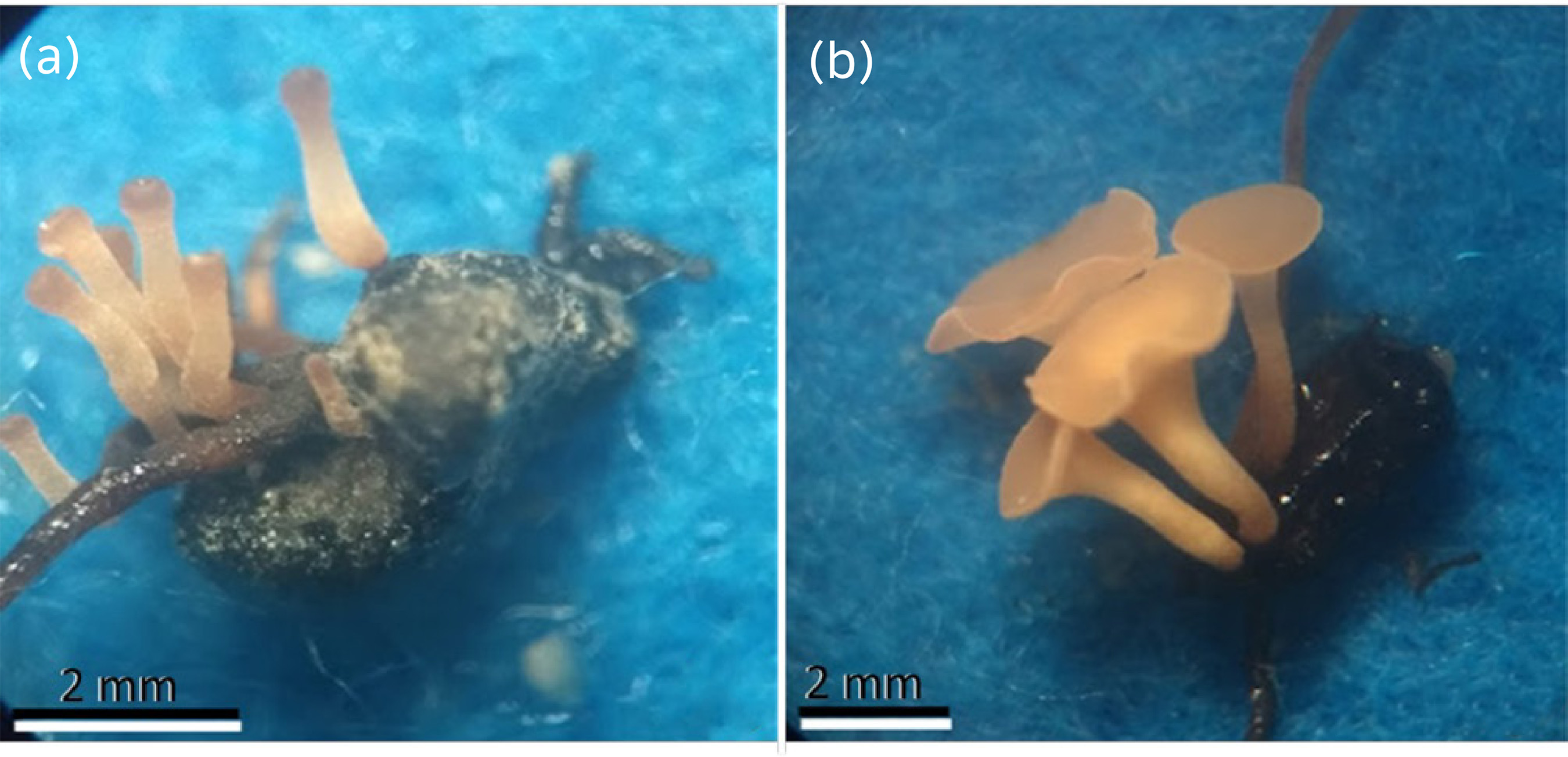
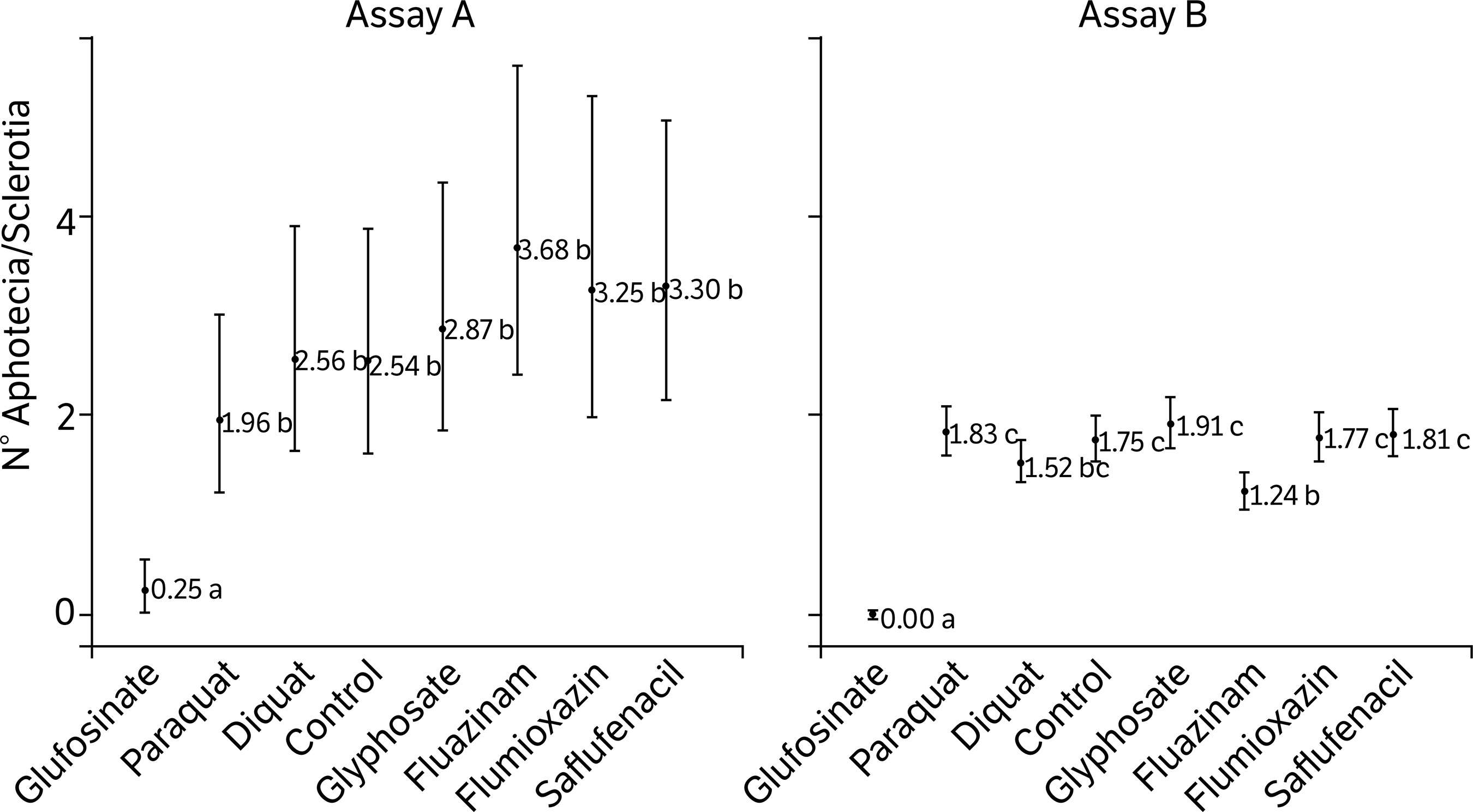
The herbicide glufosinate was the treatment that provided the lowest occurrence of carpogenic germination among all the herbicides evaluated, statistically differing from the other treatments in both trials. The application of the herbicide caused malformation represented by the absence of disc emission and darkening of the stems (Fig. 1), causing death of the structure. In the first trial, only five sclerotia showed carpogenic germination among the 160 sclerotia evaluated, and in the second trial, no sclerotia showed carpogenic germination.
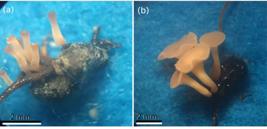
Sclerotia of Sclerotinia sclerotiorum after 65 days of incubation. (a) Absence of disc in malformed apothecia after applying the herbicide glufosinate-ammonium in the laboratory. (b) Apothecia formation in the control treatment.
Regarding the other herbicides tested, none differed from the control treatment, with paraquat and diquat being the herbicides with the lowest average number of stipes considering the two trials, with 1.83 and 1.96 stipes per sclerotium, respectively. The fungicide fluazinam demonstrated a high level of efficacy in the second trial, with 1.24 apothecia per sclerotium, not differing from the herbicide diquat (p < 0.05) (Fig. 2).
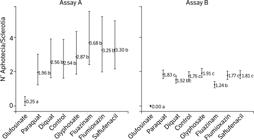
Number of apothecia per sclerotia subjected to different treatments with herbicides and fungicide in vitro 65 days after application of the products and incubation of the sclerotia. Means followed by different letters are significantly different according to the Tukey’s test at a 5% significance level. The error bars represent 95% confidence intervals, and the points indicate the estimated means. The p-values, derived from the F-test of the analysis of variance, were < 0.001 for both assay A and assay B.
Development of white mold on soybean cultivars with Enlist and Conkesta technology
The development of the disease varied depending on the cultivars and treatments evaluated. Cultivar B5560CE showed the smallest average lesion size (52.3, 28.2, and 57 mm) at seven days after inoculation in all trials evaluated, differing significantly from cultivar C2531E in trials 1 and 3. Regarding the severity of white mold on inoculated soybean leaves, there was no significant difference between the cultivars evaluated, and there was no interaction between cultivars and treatments in any of the trials (Table 2).
Lesion size on the stem of soybean plants at seven days after inoculation with Sclerotinia sclerotiorum mycelium discs using the pipette tip method (assays 1–3) and severity on soybean leaves (assays 2 and 3) in cultivars B5560CE (Conkesta E3) and C2531E (Enlist E3)*.
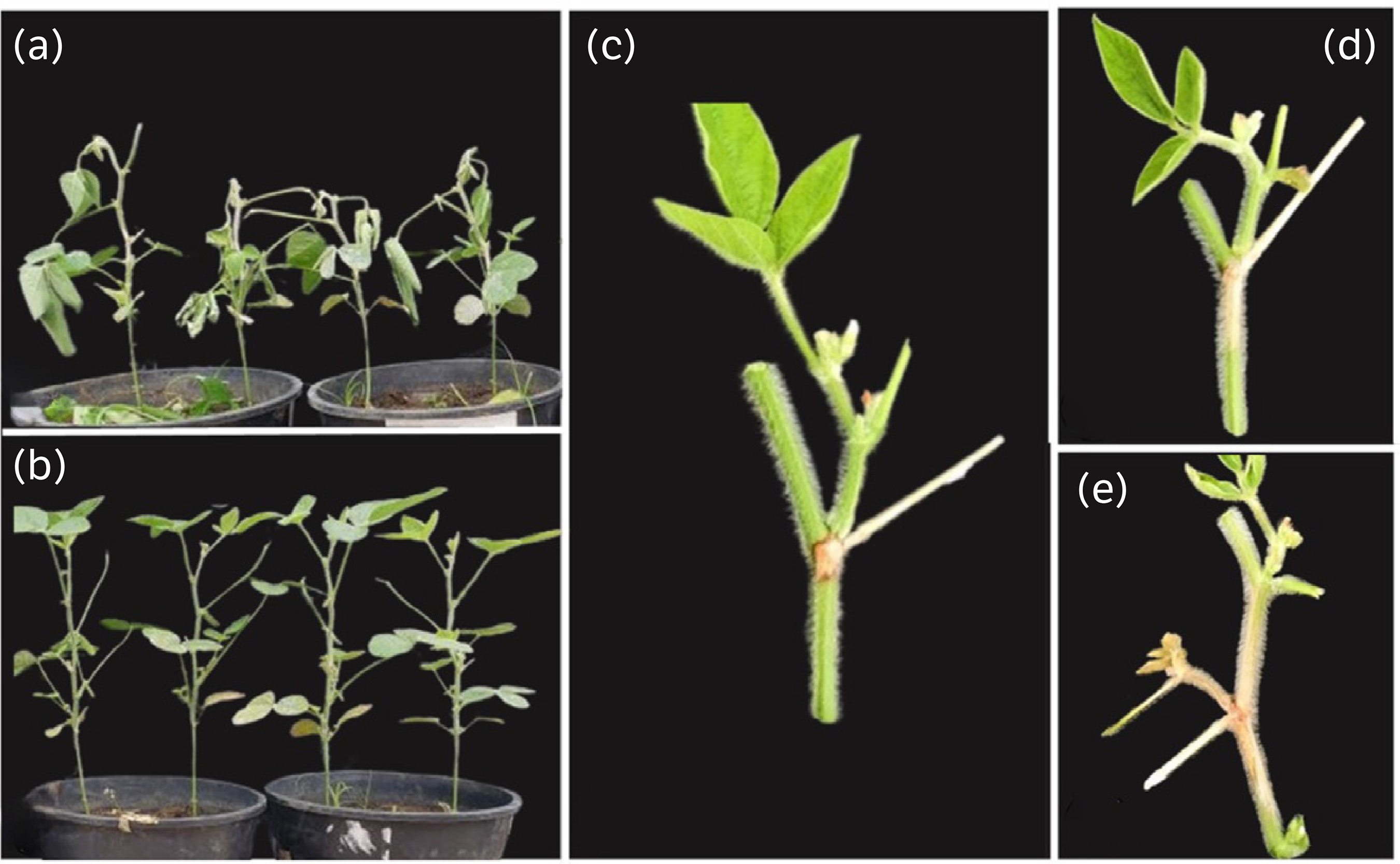
The treatment with glufosinate applied in the R1 phase on the entire plant (Glufosinate R1) one day before inoculation showed the lowest average lesion (43.9, 21.1, and 54.9 mm) on soybean stems, differing significantly from the control in all assays evaluated (Table 3). The lesion size of the glufosinate R1 treatment differed from the control in all assays (Table 3) and was significantly lower compared to the fluazinam fungicide and control treatment in assay 1 (Fig. 3).
Lesion size on the stem at seven days after inoculation (DAI) and severity on leaves of soybean cultivars with Conkesta E3 and Enlist E3 technologies, tolerant to glufosinate ammonium, treated and inoculated with Sclerotinia sclerotiorum*.
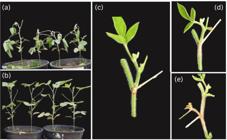
White mold caused by Sclerotinia sclerotiorum seven days after inoculation on stems in cultivar B5560CE in trial 1. (a) Development of white mold on inoculated, untreated soybean plants, (b, c) with application of glufosinate-ammonium (Ammonium salt, Finale, Basf) at the R1 phenological stage, (d) plants treated with fluazinam (Zignal, FMC) at the R1 stage, and (e) symptoms on the stems of untreated soybean plants.
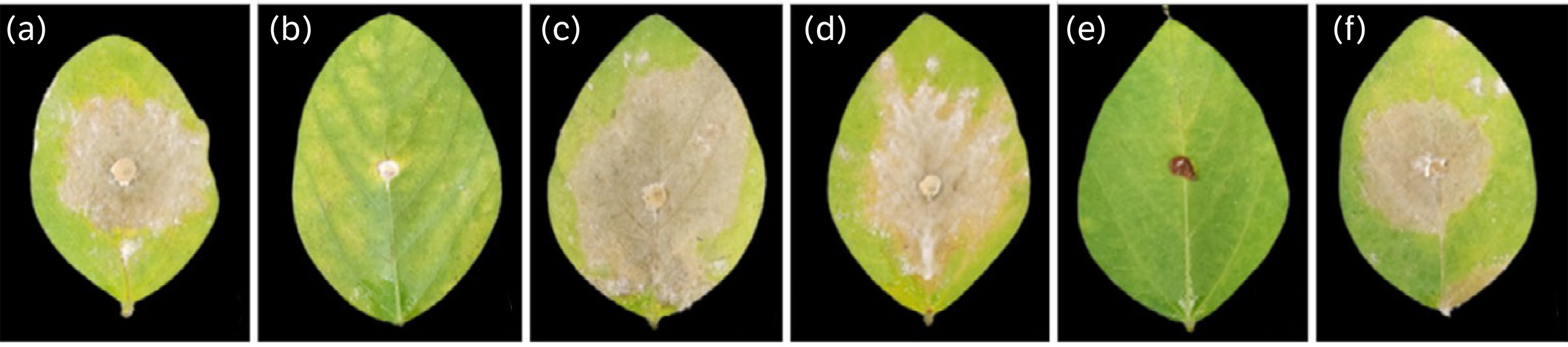
Differences found in the severity of white mold between treatments in soybean leaves are shown in Fig. 4. Treatment with glufosinate applied to the lower third of the plant at phenological stage V4 (Glufosinate V4*) resulted in lower severity. The inoculated leaves did not receive application of the product and showed a reduction in the severity of the disease, with averages of 0 and 3% in the first and second tests, respectively, suggesting systemic activity in the plant. Also, the treatment with glufosinate did not differ from the fungicide fluazinam applied in R1 (Fluazinam), which presented a severity of 6.5 and 10.6%. The other treatments did not differ from the control (Table 3).
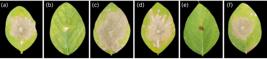
White mold caused by Sclerotinia sclerotiorum at seven days after inoculation on leaves in soybean cultivar B5560CE. Development of white mold on soybean leaves treated with glufosinate-ammonium (Ammonium salt, Finale, Basf) at phenological stages (a) V4 whole plant and (b) V4 lower third of the plant, (c) R1 whole plant and (d) R1 lower third of the plant, (e) with application of fluazinam (Zignal, FMC), (f) and control plants without application.
Concentration of H2O2 in soybean cultivars
There was a significant difference between cultivars regarding the concentration of H2O2. The average H2O2 concentration was 45 and 30 µg·g-1 (Trial 1) and 46 and 28 µg·g-1 (Trial 2) for plants of cultivars B5560CE and C2531E, respectively. Plants from cultivar C2531E showing the largest stem lesion displayed the lowest foliar H2O2 concentration.
There was no significant difference between the treatments for both cultivars at 72 hai (trial 1) and the cultivar B5560CE evaluated 12 hai (trial 2). For cultivar C2531E, glufosinate treatments applied on plants at the V4 growth stage differed from the glufosinate treatment applied at R1 growth stage with a lowest H2O2 concentration (Table 4).
Concentration of hydrogen peroxide (H2O2) in soybean leaves of cultivars B5560CE (Conkesta E3) and C2531E (Enlist E3) subjected to treatments and inoculated on the stem with Sclerotinia sclerotiorum*.
DISCUSSION
The herbicide glufosinate inhibited the carpogenic germination of S. sclerotiorum sclerotia and reduced the white mold lesion size on the stem and leaves of herbicide-tolerant soybean plants. The application of a commercial dose of glufosinate on sclerotia reduced the carpogenic germination of sclerotia in vitro. In plants with Enlist and Conkesta technology, glufosinate reduced lesion size on stems when applied to the whole plant at the R1 stage and decreased disease severity on leaves when applied in the lower third of the plant at the V4 stage. Therefore, managing white mold using herbicide-resistant soybeans with the application of herbicides could be tested in the field to propose new strategies to control the disease or even to reduce primary inoculum between or within seasons.
The effect of herbicides on S. sclerotiorum carpogenic germination have been reported (Casale and Hart 1986, Huang and Blackshaw 1995), but studies involving glufosinate are scarce. In this study, glufosinate inhibited apothecia formation in sclerotia, similarly to diuron, metribuzin, and atrazine, which cause stipe malformation or abnormal apothecium development (Casale and Hart 1986, Huang and Blackshaw 1995).
Although several products have been studied regarding their ability to inhibit carpogenic germination, few are effective for this purpose, with most of them having no effect in commercial doses (Huang and Blackshaw 1995, Vrisman et al. 2014), a result similar to that obtained in the present study, in which no reduction in carpogenic germination was identified for diquat, flumioxazin, glyphosate, paraquat, saflufenacil, and the fungicide fluazinam.
Reports in the literature on the effect of glufosinate on pathogens are mostly limited to in-vitro studies, such as its impact on the mycelial growth of R. solani (Black et al. 1996) and S. homoeocarpa (Liu et al. 1998), while the mode of action of the herbicide on these microorganisms remains not fully elucidated. Glufosinate acts on weeds by inhibiting glutamine synthetase, a pathway also found in fungi responsible for the primary assimilation of ammonia in some ascomycetes (Martin et al. 1988). In the yeast Saccharomyces cerevisiae, low concentrations of the herbicide glufosinate inhibit the development of the yeast, and the TORC1 nutrient detection pathway of the fungus is affected, associated with an increase in the production of amino acids and deformations in the cell (Vallejo et al. 2017).
The glutamine synthetase route is the main way of assimilating ammonia in low quantities in S. sclerotiorum, which was proven by the use of a glutamine synthetase inhibitor (L-methionine DL-sulfoximine) in labeled cells. Consequently, a reduction in transferase activity and the incorporation of marked components into the cell demonstrate that the glutamine synthetase pathway is important in the process of assimilation of ammonium components for the pathogen (Rachim and Nicholas 1985).
Considering that DL-Phosphinothricin isomers, components of the herbicide glufosinate, are responsible for the inhibitory action of glutamine synthetase in plants (Leason et al. 1982), and that this same pathway occurs in S. sclerotiorum, we can infer that the reduction in the formation of apothecia observed in sclerotia treated with glufosinate may be associated with the direct action of inhibiting the fungus metabolic pathway. This hypothesis was confirmed in studies with the fungus Paraphysoderma sedebokerense, in which glufosinate was shown to inhibit infection by targeting glutamine synthetase activity (Alors et al. 2022).
The reduction in apothecia emission observed in the laboratory raises questions about the effects of glufosinate applied to sclerotia in the field. Future experiments should be conducted to investigate the interactions of this herbicide with soil and environmental factors to elucidate its contribution to managing this pathogen under field conditions.
To better understand these dynamics, it is important to consider that the incidence of S. sclerotiorum is influenced by several factors, and cultivar selection can be a determining factor. Variations in the incidence of S. sclerotiorum ranging from 45 to 95% have been reported among different soybean cultivars grown under field conditions in Illinois, United States of America (Hoffman et al. 1998). In a greenhouse study, similar results were observed, with disease severity reaching approximately 20% in a moderately resistant cultivar and 95% in a susceptible one. (Garcia and Juliatti 2012). The data obtained in this study on soybean stems demonstrated that cultivar C2531E has a larger average lesion size than cultivar B5560CE, suggesting greater disease susceptibility. Given the Enlist technology are relatively recent, comparative studies evaluating their potential influence on disease susceptibility remain scarce in the literature. Further research is warranted to elucidate possible differences in host-pathogen interactions associated with these cultivars. Despite the difference between cultivars observed in our study, no interaction between cultivars and treatments was observed. Considering that studies in a greenhouse may show a low correlation with field results (Moellers et al. 2017), which may limit their applicability for future recommendations, it is essential to conduct additional field trials to validate and support the findings of this test.
The action of glufosinate on diseases in plants tolerant to the herbicide is reported in the literature for different crops and pathogens (Pline et al. 2001, Wang et al. 2003, Ahn 2008), including the effect on Asian soybean rust (Claus et al. 2023). In this study, applications of glufosinate carried out one day before inoculation (R1) resulted in control of lesions on stems. Similar results were observed in glufosinate-tolerant bentgrass, with reduced incidence of R. solani and S. homeocarpa in plants that received herbicide applications before or shortly after pathogen inoculation (Wang et al. 2003). Other studies evaluated the survival of P. syringae pv. glycinea in soybean tolerant to glufosinate, with Liberty link technology grown in a growth chamber, and found a reduction in the survival of colonies in leaves (Pline et al. 2001). Reduction in the severity of powdery mildew was also reported in soybean cultivars with Enlist technology, tolerant to glufosinate (Claus et al. 2024), demonstrating its potential to control both necrotrophic and biotrophic fungi.
Light plays a fundamental role in the action of glufosinate in plants. The action of the herbicide occurs through the accumulation of reactive oxygen species, and this accumulation occurs only in the presence of light, being classified as a photo-dependent process (Takano 2019). The inhibition of glutamine synthetase by glufosinate results in an accumulation of reactive oxygen species, followed by lipid peroxidation and rapid cell death, processes that are significantly more pronounced under light conditions (Takano et al. 2020a). In the absence of light, no visible symptoms or reactive oxygen species formation are observed, indicating the light-dependence of glufosinate’s herbicidal action (Takano et al. 2020a).
While S. sclerotiorum does not form appressoria, previous studies have shown that glufosinate inhibits pre-penetration structures in Magnaporthe grisea and Cochliobolus miyabeanus on hydrophobic surfaces and on transgenic rice leaves (Ahn 2008), suggesting that this herbicide may similarly impair early hyphal development or other pathogenicity factors critical for infection by necrotrophic fungi.
Applications carried out at the V4 phenological stage in the lower third of the plant, approximately seven days before inoculation, reduced the severity of white mold on leaves. In this treatment, the inoculated leaf did not receive direct application of the product. Glufosinate has a small translocation in plant (Takano et al. 2020b), and this occurs both via the xylem and via the phloem, with predominance via the xylem (Shelp et al. 1992, Takano et al. 2020b). Furthermore, glufosinate transport depends on product concentration; at low concentrations, transport occurs actively, and at high concentrations, transport occurs passively in cells (Takano et al. 2020b). A study with glufosinate-tolerant canola cultivars showed similar herbicide levels in treated and untreated leaves, indicating its translocation within the plant (Ruhland et al. 2004). Thus, even without direct application to the leaf, the action of translocating the product to the youngest leaves must be investigated.
After the application of glufosinate on resistant plants, the formation of some compounds occurs, with the inactivation of L-glufosinate by acetylation and the formation of N-acetyl-L-glufosinate (NAG), one of the compounds with the highest expression within the plant. Other compounds, such as metabolites of methylphosphinyl fatty acids (MPFs), are in smaller quantities (Ruhland et al. 2004). The effects of this compound are not well elucidated for plants and other organisms. For example, aminomethylphosphonic acid (AMPA), the main compound produced through the metabolization of glyphosate, has a toxic effect similar to glyphosate itself for plants, with the interruption of chlorophyll biosynthesis, acting to reduce photosynthetic rates (Gomes et al. 2016) and for non-target aquatic organisms such as fish, thereby NAG may have unknown effects.
As well as compounds produced by herbicides, which can affect organisms, indirect effects of inducing defense in the plant are reported (Alvarez et al. 1998, Ahn 2008). Glufosinate-tolerant rice plants exhibited hydrogen peroxide accumulation in both treated and untreated leaves, indicating systemic plant response. This suggests that the action of glufosinate occurs through signaling pathways dependent on hydrogen peroxide and salicylic acid (Ahn 2008). In addition to signaling, the accumulation of hydrogen peroxide can induce programmed cell death, generating microhypersensitivity reactions and restricted lesions in Arabidopsis plants (Alvarez et al. 1998).
In addition to reactive oxygen species, reactive nitrogen species are another class of compounds responsible for orchestrating events associated with plant defense (Hancock et al. 2002). As the action of glufosinate causes changes in N metabolism, with accumulation of ammonium nitrate in the plant, there may be production of reactive nitrogen species and activation of defense mechanisms.
For example, the reduction in white mold stem damage and severity on leaves observed in this study was not directly related to the hydrogen peroxide accumulation in soybean leaves, suggesting an alternative mechanism for the observed results. The action of glufosinate is linked to mechanisms, such as direct action, pre-penetration and indirect action, resistance induction (Ahn 2008), reduction in hyphae length, reduction in mycelial growth, and the presence of short lateral branches, observed in mycorrhizal fungi Funneliformis mosseae subjected to glufosinate (Novais et al. 2019). Several mechanisms may be involved in the results obtained, requiring further studies for a comprehensive understanding. While greenhouse results are promising, field validation is essential to determine the practical applicability of glufosinate in integrated white mold management.
CONCLUSION
The results obtained in this study brought good perspectives for the management of white mold in soybean crops. The herbicide glufosinate-ammonium showed potential in inhibiting carpogenic germination of S. sclerotiorum sclerotia treated with commercial doses of the product in vitro, a promising result considering the difficulty in controlling this resistance structure.
The use of glufosinate in soybean plants with tolerance to the herbicide (Conkesta and Enlist) reduced the development of white mold lesions on stems and leaves, with the action depending on the phenological stage of application. Applications in the phase in which field weed control is commonly carried out (V4) reduced the severity of white mold on leaves.
ACKNOWLEDGMENTS
Not applicable.
-
How to cite:
Zielinski, E. C., Biernaski, F., Gomes, M. P., Zeviani, W. M., Rodrigues, F. A. and May De Mio, L. L. (2025). Potential of glufosinate to reduce carpogenic germination of sclerotia and white mold symptoms on soybeans resistant to this herbicide. Bragantia, 85, e20250069. https://doi.org/10.1590/1678-4499.20250069
-
FUNDING
Coordenação de Aperfeiçoamento de Pessoal de Nível SuperiorFinancial Code 001Conselho Nacional de Desenvolvimento Científico e TecnológicoGrant no.: 306886/2021-9
-
DECLARATION OF USE OF ARTIFICIAL INTELLIGENCE TOOLS
We declare that no artificial intelligence tools were used for data analysis, interpretation, discussion, or writing of this manuscript.
DATA AVAILABILITY STATEMENT
The datasets generated during the current study are available from the corresponding author on reasonable request.
REFERENCES
-
Ahn, I. P. (2008). Glufosinate ammonium-induced pathogen inhibition and defense responses culminate in disease protection in bar-transgenic rice. Plant Physiology, 146, 213-227. https://doi.org/10.1104/pp.107.105890
» https://doi.org/10.1104/pp.107.105890 -
Albrecht, A. J. P., Albrecht, L. P. and Silva, A. F. M. (2022). Agronomic implications of paraquat ban in Brazil. Advances in Weed Science, 40, e020220040. https://doi.org/10.51694/AdvWeedSci/2022;40:seventy-five009
» https://doi.org/10.51694/AdvWeedSci/2022;40:seventy-five009 -
Allen, T. W., Bradley, C. A., Sisson, A. J., Byamukama, E., Chilvers, M. I., Coker, C. M., Collins, A. A., Damicone, J. P., Dorrance, A. E., Dufault, N. S., Esker, P. D., Faske, T. R., Giesler, L. J., Grybauskas, A. P., Hershman, D. E., Hollier, C. A., Isakeit, T., Jardine, D. J., Kelly, H. M., Kemerait R. C., Kleczewski, N. M., Koenning, S. R., Kurle, J. E., Malvick, D. K., Markell, S. G., Mehl, H. L., Mueller, D. S., Mueller, J. D., Mulrooney, R. P., Nelson, B. D., Newman, M. A., Osborne, L., Overstreet, C., Padgett, G. B., Phipps, P. M., Price, P. P., Sikora, E. J., Smith, D. L., Spurlock, T. N., Tande, C. A., Tenuta, A. U., Wise, T. K. A. and Wrather A. (2017). Soybean yield loss estimates due to diseases in the United States and Ontario, Canada, from 2010 to 2014. Plant Health Progress, 18, 19-27. https://doi.org/10.1094/PHP-RS-16-0066
» https://doi.org/10.1094/PHP-RS-16-0066 -
Alors, D., Amses, K. R., James, T. Y., Boussiba, S. and Zarka, A. (2022). Paraphysoderma sedebokerense GlnS III is essential for the infection of its host Haematococcus lacustris Journal of Fungi, 8, 561. https://doi.org/10.3390/jof8060561
» https://doi.org/10.3390/jof8060561 -
Alvarez, M. E., Pennell, R. I., Meijer, P. J., Ishikawa, A., Dixon, R. A. and Lamb C. (1998). Reactive oxygen intermediates mediate a systemic signal network in the establishment of plant immunity. Cell, 92, 773-784. https://doi.org/10.1016/s0092-8674(00)81405-1
» https://doi.org/10.1016/s0092-8674(00)81405-1 -
Black, B. D., Russin, J. S., Griffin, J. L. and Snow J. P. (1996). Herbicide effects on Rhizoctonia solani in vitro and Rhizoctonia foliar blight of soybean (Glycine max). Weed Science, 44, 711-716. https://doi.org/10.1017/S0043174500094583
» https://doi.org/10.1017/S0043174500094583 -
Casale, W. L. and Hart, L. P. (1986). Influence of four herbicides on carpogenic germination and apothecium development. Phytopathology, 76, 980-984. https://doi.org/10.1094/Phyto-76-980
» https://doi.org/10.1094/Phyto-76-980 -
Casida, J. E. and Bryant, R. J. (2017). The ABCs of pesticide toxicology: amounts, biology, and chemistry. Toxicology Research, 6, 755-763. https://doi.org/10.1039/c7tx00198c
» https://doi.org/10.1039/c7tx00198c -
Claus, A., Arruda Sales, L., Arrobas, A. M. and De Mio, L. L. M. (2024). Potential use of herbicides for powdery mildew control in transgenic soybean. Tropical Plant Pathology, 49, 796-806. https://doi.org/10.1007/s40858-024-00672-2
» https://doi.org/10.1007/s40858-024-00672-2 -
Claus, A., Roncatto, E., Barroso, A. A. M. and May De Mio, L. L. (2023). Herbicides reduce the severity and sporulation of Phakopsora pachyrhizi in soybean with triple herbicide resistance. Pest Management Science, 79, 3749-3756. https://doi.org/10.1002/ps.7557
» https://doi.org/10.1002/ps.7557 - Duke, S. O. and Dayan, F. E. (2018). Herbicides. New York: John Wiley.
-
Garcia, R. A. and Juliatti, F. C. (2012). Avaliação da resistência da soja a Sclerotinia sclerotiorum em diferentes estádios fenológicos e períodos de exposição ao inóculo. Tropical Plant Pathology, 37, 196-203. https://doi.org/10.1590/S1982-56762012000300006
» https://doi.org/10.1590/S1982-56762012000300006 -
Gomes, M. P., Le Manac’h, S. G., Maccario, S., Labrecque, M., Lucotte, M. and Juneau, P. (2016). Differential effects of glyphosate and aminomethylphosphonic acid (AMPA) on photosynthesis and chlorophyll metabolism in willow plants. Pesticide Biochemistry and Physiology, 130, 65-70. https://doi.org/10.1016/j.pestbp.2015.11.010
» https://doi.org/10.1016/j.pestbp.2015.11.010 -
Hancock, J. T., Desikan, R., Clarke, A., Hurst, R. D. and Neill, S. J. (2002). Cell signalling following plant/pathogen interactions involves the generation of reactive oxygen and reactive nitrogen species. Plant Physiology and Biochemistry, 40, 611-617. https://doi.org/10.1016/S0981-9428(02)01403-1
» https://doi.org/10.1016/S0981-9428(02)01403-1 -
Hoffman, D. D., Hartman, G. L., Mueller, D. S., Leitz, R. A., Nickell, C. D. and Pedersen, W. L. (1998). Yield and seed quality of soybean cultivars infected with Sclerotinia sclerotiorum Plant Disease, 82, 826-829. https://doi.org/10.1094/pdis.1998.82.7.826
» https://doi.org/10.1094/pdis.1998.82.7.826 - Huang, H. C. and Blackshaw, R. E. (1995). Influence of herbicides on the carpogenic germination. Botanical Bulletin of Academia Sinica, 36, 59-64.
-
Leason, M., Cunliffe, D., Parkin, D., Lea, P. J. and Miflin, B. J. (1982). Inhibition of pea leaf glutamine synthetase by methionine sulphoximine, phosphinothricin and other glutamate analogues. Phytochemistry, 21, 855-857. https://doi.org/10.1016/0031-9422(82)80079-4
» https://doi.org/10.1016/0031-9422(82)80079-4 -
Liu, C. A., Zhong, H., Vargas, J., Penner, D. and Sticklen, M. (1998). Prevention of fungal diseases in transgenic, bialaphos-and glufosinate-resistant creeping bentgrass (Agrostis palustris). Weed Science, 46, 139-146. https://doi.org/10.1017/S0043174500090305
» https://doi.org/10.1017/S0043174500090305 -
Martin, F., Stewart, G. R., Genetet, I. and Mourot, B. (1988). The involvement of glutamate dehydrogenase and glutamine synthetase in ammonia assimilation by the rapidly growing ectomycorrhizal ascomycete, Cenococcum geophilum Fr. New Phytologist, 110, 541-550. https://doi.org/10.1111/j.1469-8137.1988.tb00294.x
» https://doi.org/10.1111/j.1469-8137.1988.tb00294.x -
Moellers, T. C., Singh, A., Zhang, J., Brungardt, J., Kabbage, M., Mueller, D. S., Grau, C. R., Ranjan, A., Smith, D. L., Chowda-Reddy, R. V. and Singh, A. K. (2017). Main and epistatic loci studies in soybean for Sclerotinia sclerotiorum resistance reveal multiple modes of resistance in multi-environments. Scientific Reports, 7, 3554. https://doi.org/10.1038/s41598-017-03695-9
» https://doi.org/10.1038/s41598-017-03695-9 -
Novais, C. B., Avio, L., Giovannetti, M., Faria, S. M., Siqueira, J. O. and Sbrana, C. (2019). Interconnectedness, length and viability of arbuscular mycorrhizal mycelium as affected by selected herbicides and fungicides. Applied Soil Ecology, 143, 144-152. https://doi.org/10.1016/j.apsoil.2019.06.013
» https://doi.org/10.1016/j.apsoil.2019.06.013 -
Peltier, A. J., Bradley, C. A., Chilvers, M. I., Malvick, D. K., Mueller, D. S., Wise, K. A. and Esker, P. D. (2012). Biology, yield loss and control of Sclerotinia stem rot of soybean. Journal of Integrated Pest Management, 3, B1-B7. https://doi.org/10.1603/IPM11033
» https://doi.org/10.1603/IPM11033 -
Pline, W. A., Lacy, G. H., Stromberg, V. and Hatzios, K. K. (2001). Antibacterial activity of the herbicide glufosinate on Pseudomonas syringae pathovar glycinea. Pesticide Biochemistry and Physioliogy, 71, 48-55. https://doi.org/10.1006/pest.2001.2556
» https://doi.org/10.1006/pest.2001.2556 - R Core Team (2021). R: a language and environment for statistical computing. R Foundation for Statistical Computing.
-
Rachim, M. A. and Nicholas, D. J. D. (1985). Glutamine synthetase and glutamate synthase from Sclerotinia sclerotiorum Phytochemistry, 24, 2541-2548. https://doi.org/10.1016/S0031-9422(00)80664-0
» https://doi.org/10.1016/S0031-9422(00)80664-0 -
Rodrigues, A. O., Graf Junior, A. L., Carraro, T. A., Orozco Colonia, B. S., May De Mio, L. L. and Soccol, C. R. (2024). Bioprospecting of Trichoderma strains for controlling pathogens from soybean, maize, and beans, and their microbiome characterization. European Journal of Plant Pathology, 171, 561-579. https://doi.org/10.1007/s10658-024-02968-0
» https://doi.org/10.1007/s10658-024-02968-0 -
Roese, A. D., Vidal, G. S., Zeviani, W. M., De Moraes, A. and May De Mio, L. L. (2018). Agricultural diversification reduces the survival period of Sclerotinia sclerotiorum sclerotia. European Journal of Plant Pathology, 151, 713-722. https://doi.org/10.1007/s10658-017-1405-4
» https://doi.org/10.1007/s10658-017-1405-4 -
Ruhland, M., Engelhardt, G. and Pawlizki, K. (2004). Distribution and metabolism of D L‐L‐ and D‐glufosinate in transgenic. Pest Management Science, 60, 691-696. https://doi.org/10.1002/ps.857
» https://doi.org/10.1002/ps.857 -
Shelp, B. J., Swanton, C. J. and Hall, J. C. (1992). Glufosinate (Phosphinothricin) mobility in young soybean shoots. Journal of Plant Physiology, 139, 626-628. https://doi.org/10.1016/S0176-1617(11)80382-2
» https://doi.org/10.1016/S0176-1617(11)80382-2 -
Soltani, N., Dille, J. A., Burke, I. C., Everman, W. J., VanGessel, M. J., Davis, V. M. and Sikkema, P. H. (2017). Perspectives on potential soybean yield losses from weeds in North America. Weed Technology, 31, 148-154. https://doi.org/10.1017/wet.2016.2
» https://doi.org/10.1017/wet.2016.2 -
Takano, H. K., Beffa, R., Preston, C., Westra, P. and Dayan, F. E. (2019). Reactive oxygen species trigger the fast action of glufosinate. Planta, 249, 1837-1849. https://doi.org/10.1007/s00425-019-03124-3
» https://doi.org/10.1007/s00425-019-03124-3 -
Takano, H. K., Beffa, R., Preston, C., Westra, P. and Dayan, F. E. (2020a). A novel insight into the mode of action of glufosinate: how reactive oxygen species are formed. Photosynthesis Research, 144, 361-372. https://doi.org/10.1007/s11120-020-00749-4
» https://doi.org/10.1007/s11120-020-00749-4 -
Takano, H. K., Beffa, R., Preston, C., Westra, P. and Dayan, F. E. (2020b). Physiological factors affecting uptake and translocation of glufosinate. Journal of Agricultural and Food Chemistry, 68, 3026-3032. https://doi.org/10.1021/acs.jafc.9b07046
» https://doi.org/10.1021/acs.jafc.9b07046 -
[USDA] United States Department of Agriculture (2024). World agricultural production. USDA. Available at: https://esmis.nal.usda.gov/sites/default/release-files/5q47rn72z/8c97nh319/bk12b540m/production.pdf Accessed on: Dec. 20, 2024.
» https://esmis.nal.usda.gov/sites/default/release-files/5q47rn72z/8c97nh319/bk12b540m/production.pdf -
Vallejo, B., Picazo, C., Orozco, H., Matallana, E. and Aranda, A. (2017). Herbicide glufosinate inhibits yeast growth and extends longevity during wine fermentation. Scientific Reports, 7, 12414. https://doi.org/10.1038/s41598-017-12794-6
» https://doi.org/10.1038/s41598-017-12794-6 - Vrisman, C. M., Hüller, G. C., Sartori, F. F., Henneberg, L., Wutzki, C. R., Juliatti, F. C. and Jaccoud Filho, D. S. (2014). Influência de herbicidas e fungicidas na germinação carpogênica de escleródios de Sclerotinia sclerotiorum (Lib.) de Bary. Bioscience Journal, 30, 477-483.
-
Wang, Y., Browning, M., Ruemmele, B. A., Chandlee, J. M., Kausch, A. P. and Jackson, N. (2003). Glufosinate reduces fungal diseases in transgenic glufosinate-resistant bentgrasses (Agrostis spp.). Weed Science, 51, 130-137. https://doi.org/10.1614/0043-1745(2003)051[0130:GRFDIT]2.0.CO;2
» https://doi.org/10.1614/0043-1745(2003)051[0130:GRFDIT]2.0.CO;2 -
Willbur, J. F., Mitchell, P. D., Fall, M. L., Byrne, A. M., Chapman, S. A., Floyd, C. M., Bradley, C. A., Ames, K. A., Chilvers, M. I., Kleczewski, N. M., Malvick, D. K., Mueller, B. D., Mueller, D. S., Kabbage, M., Conley, S. P. and Smith, D. L. (2019). Meta-analytic and economic approaches for evaluation of pesticide impact on Sclerotinia stem rot control and soybean yield in the North Central United States. Phytopathology, 109, 1157-1170. https://doi.org/10.1094/PHYTO-04-18-0124-R
» https://doi.org/10.1094/PHYTO-04-18-0124-R
Edited by
-
Section Editor:
Gabriel Constantino Blain https://orcid.org/0000-0001-8832-7734