 Leisure-time physical activity as a discriminator of the absence of musculoskeletal pain in military police officers
ABSTRACT
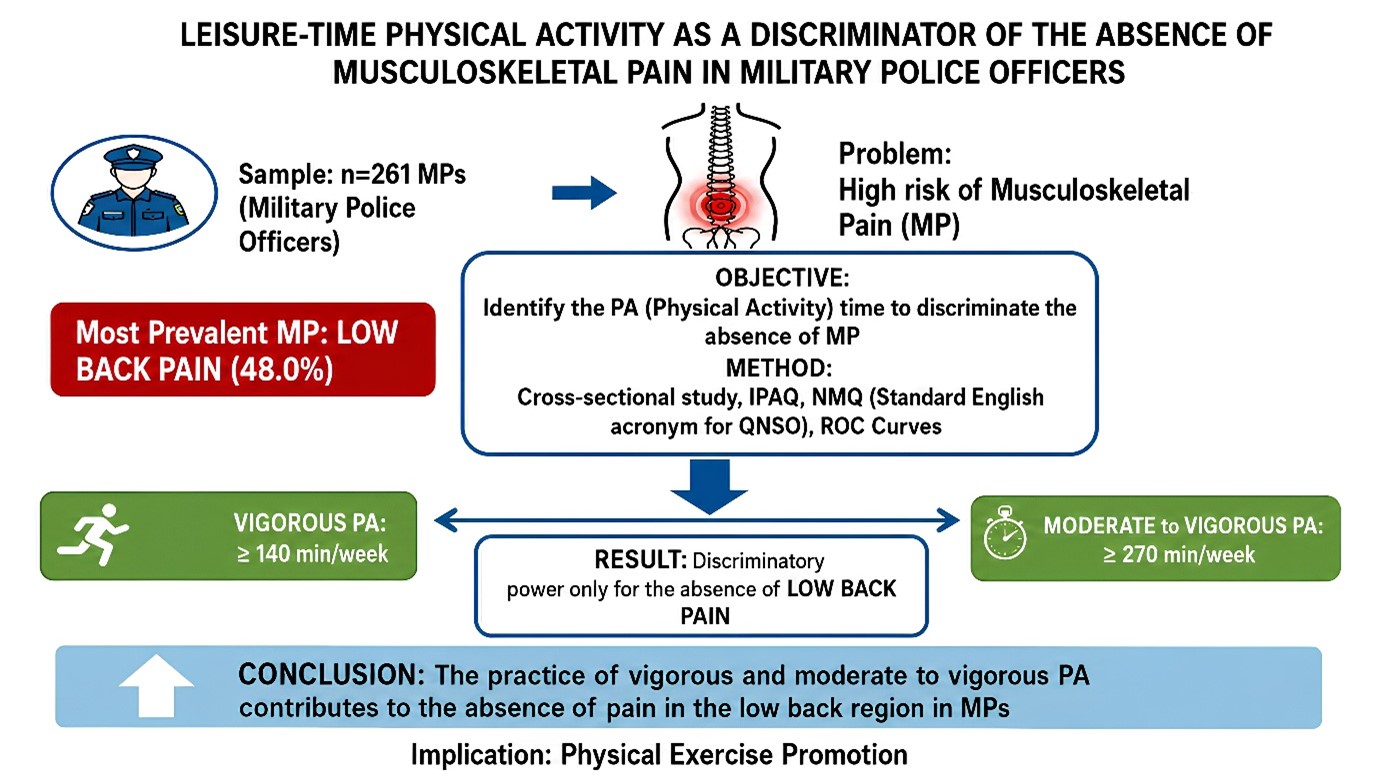
BACKGROUND AND OBJECTIVES Regular physical activity is essential for promoting health and well-being, particularly in demanding professions such as military policing, where officers are at increased risk of musculoskeletal pain (MP). Despite its importance, the amount of physical activity required to prevent this condition remains insufficiently explored in the literature. This study aimed to identify the amount of physical activity capable of discriminating the absence of musculoskeletal pain among military police officers.
METHODS This cross-sectional study included 261 military police officers and used data from the Police Force Health Study (ESTOP), conducted in Jequié, Bahia, Brazil. Physical activity was assessed using the International Physical Activity Questionnaire (IPAQ), long version, considering different leisure-time activity intensities. Musculoskeletal pain was measured using the Nordic Musculoskeletal Questionnaire (NMQ). Discriminatory analysis was performed using Receiver Operating Characteristic (ROC) curves, with calculation of the area under the curve (AUC), sensitivity, and specificity. Cutoff points were determined using the Youden index, and all analyses were conducted using Stata version 16.
RESULTS Among the 261 military police officers (43.8 ± 7.4 years; 79.0% men), the lower back was the anatomical region with the highest prevalence of pain (48.0%). Discriminatory power was identified for the absence of low back pain, with cutoff points of 140 minutes per week of vigorous physical activity (AUC = 0.58; sensitivity = 58%; specificity = 57%) and 270 minutes per week of moderate-to-vigorous physical activity (MVPA) (AUC = 0.58; sensitivity = 48%; specificity = 66%).
CONCLUSION Vigorous physical activity (140 min/week) and MVPA physical activity (270 min/week) demonstrated discriminatory capacity for the absence of low back pain among military police officers, highlighting the importance of promoting physical activity within this population.
Keywords:
Low back pain; Military personnel; Motor activity; Occupational health; Police
HIGHLIGHTS
Prevalence of musculoskeletal pain: the study identified a high prevalence of low back pain among military police officers, with 48% of participants reporting this condition, highlighting the relevance of this issue to the occupational health of this professional group
Comprehensive methodology: The study employed a cross-sectional design involving 261 military police officers and used validated instruments (IPAQ and NMQ) to assess physical activity and musculoskeletal pain, thereby enhancing the robustness of the findings
Physical activity cut-off points: The study established specific physical activity thresholds that may serve as reference values for the absence of low back pain: 140 minutes per week of vigorous physical activity (VPA) and 270 minutes per week of moderate-to-vigorous physical activity (MVPA)
Implications for health policies: The findings suggest the need to implement institutional policies that promote physical activity among military police officers, aiming not only to improve physical health but also to prevent pain and musculoskeletal injuries, thereby enhancing quality of life and professional performance
RESUMO
JUSTIFICATIVA E OBJETIVOS A atividade física regular é essencial para a promoção da saúde e bem-estar, particularmente em profissões exigentes como a de policiais militares (PMs), que enfrentam elevado risco de dor musculoesquelética (DM). Apesar da sua relevância, o tempo de atividade física necessário para prevenir essa condição permanece pouco explorado na literatura. Este estudo objetivou identificar o tempo de atividade física capaz de discriminar a ausência de DM em PMs.
MÉTODOS Estudo transversal com 261 PMs utilizando dados do Estudo de Saúde da Força Policial (ESTOP), realizado em Jequié, Bahia. Avaliou-se a atividade através do Questionário Internacional de Atividade Física (IPAQ – versão longa), considerando diferentes intensidades no lazer. A DM foi mensurada pelo Questionário Nórdico de Sintomas Osteomusculares. Utilizaram-se curvas Receiver Operating Characteristic (ROC) para análise discriminatória, com cálculo de AUC, sensibilidade e especificidade. Os pontos de corte foram determinados pelo índice de Youden, e a análise realizada no software Stata 16.
RESULTADOS Dos 261 PMs (43,8 ± 7,4 anos; 79,0% homens), a região lombar apresentou maior prevalência de dor (48,0%). Identificou-se poder discriminante para região lombar: 140 minutos/semana de atividade vigorosa (AUC = 0,58; SE = 58%; ES = 57%) e 270 minutos/semana de atividade moderada a vigorosa (AUC = 0,58; SE = 48%; ES = 66%).
CONCLUSÃO Atividades físicas vigorosas (140 min/semana) e moderadas a vigorosas (270 min/semana) demonstraram capacidade discriminante para ausência de dor lombar em PMs, ressaltando a importância da promoção de atividade física nessa população.
Descritores:
Dor lombar; Militares; Atividade motora; Saúde ocupacional; Polícia
INTRODUCTION
Musculoskeletal pain (MSP) is widely recognized as one of the leading occupational health problems, particularly among professionals whose duties involve considerable mental, emotional, and physical demands, such as military police officers. These individuals are frequently exposed to situations requiring intense physical exertion while also facing high levels of emotional stress1. Identifying positive health-related behaviors, such as engagement in physical activity, may contribute to improving this scenario by supporting the optimal performance of public safety professionals in their occupational duties1. In this context, the management of MSP may be therapeutic (or curative, for example, the use of anti-inflammatory drugs) or prophylactic (or preventive, for example, adopting a physically active lifestyle).
Military police officers exhibit a high prevalence of musculoskeletal pain, affecting multiple body regions, with reported rates ranging from 7% to 52%, primarily involving the spine, neck, and shoulders2-5. Pain not only compromises the physical health of these professionals but also negatively affects their work capacity and quality of life, potentially creating a vicious cycle that impairs both occupational performance and personal well-being6,7. Chronic low back pain, in particular, is one of the most common complaints among police officers, accounting for a substantial number of work absences and impairing individuals' functional capacity in daily activities8. Adopting a physically active lifestyle may help mitigate this scenario; however, it is necessary to identify the most feasible amount of physical activity required to achieve such benefits.
International guidelines recommend that adults engage in at least 150 minutes of moderate physical activity and/or 75 minutes of vigorous physical activity per week9, which can be accumulated in shorter sessions, thereby facilitating adherence to exercise programs10. It is important that interventions be tailored to specific populations, taking into account factors such as age, occupational demands, health conditions, and personal preferences, in order to maximize benefits and ensure safety during physical activity.11 Therefore, incorporating physical activity into daily routines is essential not only for pain prevention but also for promoting overall health and preventing disability10-12.
Despite the well-established role of physical activity in musculoskeletal health, there remains a lack of studies identifying specific physical activity cutoff points for military police officers, a population particularly susceptible to musculoskeletal pain due to the physical demands and occupational stress associated with their profession13. Although previous studies have established minimum physical activity levels for other health outcomes in different populations using analytical approaches such as Receiver Operating Characteristic (ROC) curves14-16, further research is needed to investigate the amount of physical activity required to discriminate the absence of musculoskeletal pain among military police officers. Therefore, the aim of this study was to identify the amount of physical activity necessary to discriminate the absence of musculoskeletal pain in military police officers.
This was a cross-sectional study conducted with a representative sample of military police officers using data from the Police Force Health Study (ESTOP). ESTOP is a population-based study involving active-duty military police officers performing different functions across four policing units in the municipality of Jequié, located in the southwestern region of Bahia, Brazil. Participants of both genders were included. In 2024, the ESTOP target population comprised 601 police officers, of whom 475 were men (79%) and 126 were women (21%).
Sample size was calculated using OpenEpi software, version 3.0. Considering a population of 601 military police officers, an expected prevalence of 50% was adopted. A margin of error of 5% and a confidence level of 95% were applied, resulting in an initial sample size of 235 officers. An additional 10% was added to account for potential losses, yielding a final sample of 261 military police officers. Participant selection followed a simple random probabilistic sampling design stratified by gender17. The randomization procedure was performed using SPSS software, version 21.
Police officers aged between 18 and 60 years, representing different hierarchical ranks within the institution and who expressed interest in participating in the study, were eligible for inclusion. Officers on medical leave, maternity leave, unpaid leave, vacation, or those who had been transferred to other municipalities were excluded from the study.
Data collection was conducted by the Research Group on Human Movement, Performance, and Health at the State University of Southwest Bahia (UESB). The data collection team consisted of trained interviewers and assessors who worked under the supervision of qualified professionals. Face-to-face interviews and anthropometric measurements were carried out in appropriate, private, and quiet environments within the military units.
Instruments and variables
Information related to participants' physical activity was assessed using the long version of the International Physical Activity Questionnaire (IPAQ), specifically the leisure-time domain18. This questionnaire has been validated for the Brazilian population and includes questions regarding the frequency, duration, and intensity of physical activities. Physical activity variables were expressed in minutes per week, calculated by multiplying weekly frequency (days) by the duration of the activities performed (minutes).
Musculoskeletal pain symptoms were assessed using the Nordic Musculoskeletal Questionnaire (NMQ), translated and validated for use in Brazil19. The instrument consists of an illustrated body map divided into anatomical regions, in which respondents indicate whether they experienced musculoskeletal symptoms in any of nine body regions (neck, shoulders, elbows, upper back, lower back, wrists/hands, hips/thighs, knees, and ankles/feet). For the purposes of this study, only questions regarding pain symptoms experienced during the 12 months preceding the interview were considered.
Sociodemographic information included age, gender, marital status (single, married, cohabiting, separated/divorced, or widowed), and educational level (ranging from incomplete elementary education to a completed undergraduate degree). Participants' height and body weight were measured while wearing light clothing and no shoes. Height was assessed using a Sanny® portable stadiometer (ES2060), and body weight was measured using a Techline® digital scale (TEC-117). Body Mass Index (BMI) was classified according to the following criteria: <18.5 kg/m2 for underweight, 18.5 to 24.9 kg/m2 for normal weight, 25.0 to 29.9 kg/m2 for overweight, and ≥30.0 kg/m2 for obesity. Participants also answered the question, “How do you rate your health status?”, using a Likert scale with the following response options: very good, good, fair, poor, and very poor. 20 This study was approved by the Research Ethics Committee involving Human Subjects of the State University of Southwest Bahia (UESB) (CAAE: 73258223.8.0000.0055). All participants provided written Free Informed Consent Term.
Statistical analysis
Sociodemographic characteristics (gender, age, educational level, and marital status), body mass index (BMI), and self-rated health were expressed as absolute and relative frequencies, as well as means and standard deviations, when appropriate. Data analysis for the leisure-time physical activity domain was performed according to different activity intensities and combinations, including walking, moderate physical activity (MPA), vigorous physical activity (VPA), moderate-to-vigorous physical activity (MVPA), and the total volume of physical activity, calculated as the sum of all intensities (walking + MPA + VPA).
Receiver Operating Characteristic (ROC) curve analyses were performed to evaluate the ability of physical activity to discriminate musculoskeletal pain among military police officers and to identify the cutoff points with the best discriminatory performance. Areas under the curve (AUCs) greater than 50% (AUC > 0.50) were considered valid, provided that the lower limit of their respective confidence intervals exceeded 0.5021. In addition, sensitivity (Se) and specificity (Sp) values were reported. Cutoff points were determined using the Youden index22. Data were analyzed using Stata® statistical software, version 16.
RESULTS
The sample consisted of 261 military police officers, of whom 206 were men (79.0%). The mean age of the participants was 43.8 ± 7.4 years. Approximately 51.7% had completed higher education (undergraduate degree), whereas 2.3% had not completed high school education. More than half of the sample presented a body mass index (BMI) classified as overweight or obese (Table 1).
Information regarding leisure-time physical activity is presented in Table 2. When the mean duration of the different physical activity categories among military police officers was evaluated, walking and moderate physical activity showed mean values of 61.8 min/week and 82.0 min/week, respectively. Vigorous physical activity was the intensity with the highest mean duration, reaching 194.1 min/week).
Means and standard deviations of leisure-time physical activity variables among military police officers in Jequié, Bahia, Brazil.
Table 3 presents the detailed prevalence of musculoskeletal pain during the previous 12 months, stratified by body region according to the criteria established by the Nordic Musculoskeletal Questionnaire (NMQ). The lower back region was the most affected, with a prevalence of 48.0% among participants, followed by the shoulders and knees, which showed prevalences of 38.3% and 31.0%, respectively. The ankles and feet exhibited a slightly lower prevalence, with approximately 26.0% of participants reporting pain in these regions.
Prevalence of musculoskeletal pain during the previous 12 months among military police officers in Jequié, Bahia, Brazil.
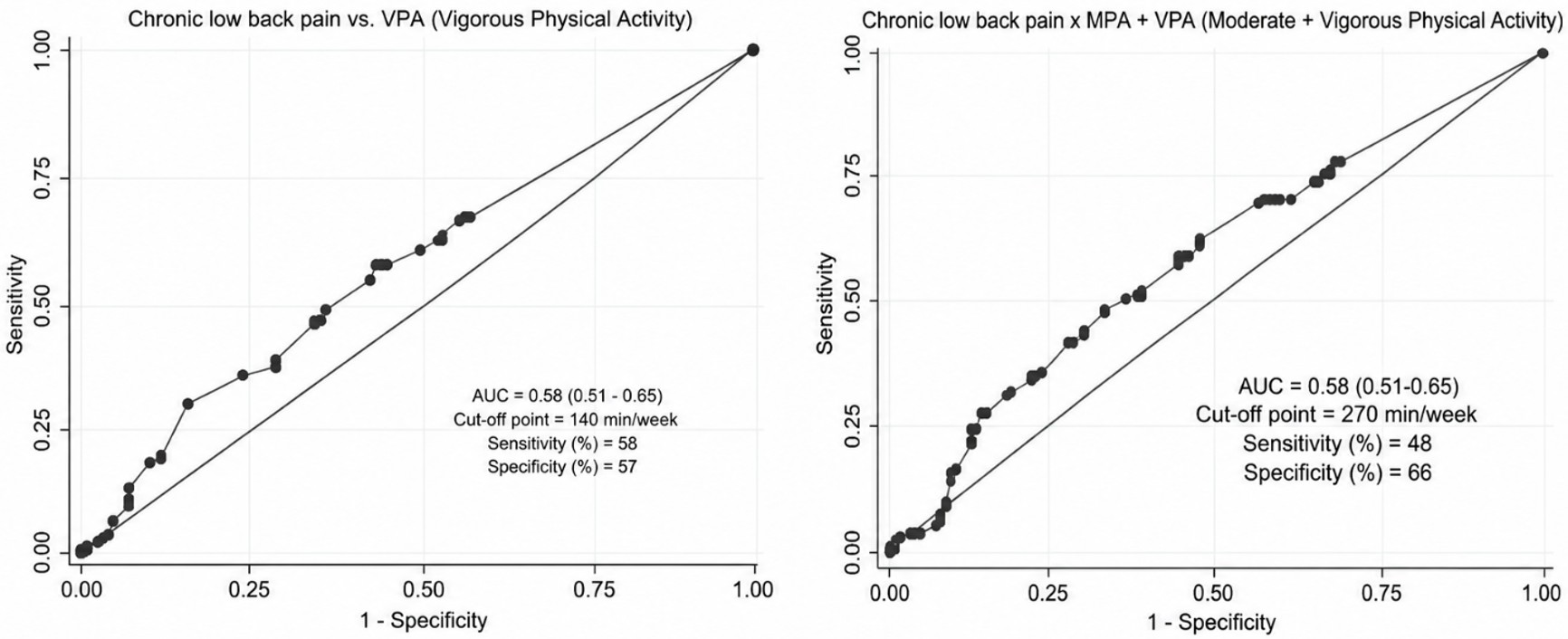
AUC values for physical activity measures that were greater than 0.50 and statistically significant in discriminating the absence of musculoskeletal pain were identified only for the lower back region. The physical activity variables with discriminatory capacity were vigorous physical activity (AUC = 0.58; 95% CI: 0.51-0.65) and MVPA (AUC = 0.58; 95% CI: 0.51-0.65). No statistically significant AUC values were observed for the other body regions (Table 4).
Areas under the ROC curve and 95% confidence intervals for physical activity volume as a discriminator of musculoskeletal pain during the previous 12 months among military police officers in Jequié, Bahia, Brazil.
The cutoff point for vigorous physical activity to discriminate the absence of low back pain was 140 minutes per week (sensitivity = 58%; specificity = 57%). Additionally, the combined volume of moderate and vigorous physical activity was 270 minutes per week (sensitivity = 48%; specificity = 66%) (Figure 1).
Cutoff points for leisure-time physical activity to discriminate musculoskeletal pain in the lower back region (lumbar region) among military police officers.
DISCUSSION
The findings of this study demonstrate that several body regions are affected by musculoskeletal pain symptoms among military police officers. The lower back and shoulders exhibited the highest prevalence rates. This elevated prevalence is consistent with the literature, which indicates that public safety professionals are exposed to both intrinsic and extrinsic factors that contribute to the development of musculoskeletal symptoms, including intense physical exertion, prolonged static postures, high levels of occupational stress, and demanding operational requirements23. The literature specifically addressing military police officers, law enforcement managers, and public safety personnel supports this scenario, reporting similar or even higher rates of musculoskeletal pain, particularly in regions such as the lumbar spine and neck24.
This study used ROC curve analyses to explore the discriminatory capacity of physical activity for the absence of musculoskeletal pain and to identify the cutoff points with the best test performance. The findings indicated that vigorous physical activity and the combined volume of moderate and vigorous physical activity yielded significant AUC values for discriminating the absence of musculoskeletal pain in the lower back during the previous 12 months. The identified cutoff point of 140 minutes per week of vigorous physical activity falls within international physical activity guidelines but exceeds the minimum recommended threshold of 75 minutes per week. Likewise, the 270 minutes per week of MVPA identified in this study surpasses the minimum recommendations established by the World Health Organization (WHO) 9. Based on these findings, we hypothesize that, due to their substantial exposure to occupational risk factors25, military police officers may require greater amounts of physical activity to offset the negative effects of work-related demands on health. In this context, maintaining adequate levels of physical activity may exert a protective effect on the musculoskeletal system, particularly regarding low back pain26.
The importance of physical activity in the prevention and management of musculoskeletal pain is well established12. Regular physical activity has been shown to provide significant benefits, including improvements in muscle strength, flexibility, and endurance, as well as enhanced overall functional capacity27. These factors are crucial for mitigating the impact of occupational and psychological stress, both of which are recognized contributors to pain. In highly demanding work environments, such as policing, physical activity may not only improve physical fitness but also reduce pain perception, thereby promoting overall well-being. Furthermore, physical activity plays an important role in the management of chronic pain and may help prevent or attenuate painful episodes that frequently contribute to the chronicity of musculoskeletal disorders28.
Overall, the findings highlight the need for institutional programs that encourage and facilitate military police officers' engagement in physical activity at frequencies and intensities compatible with the demands of their occupational duties. Such initiatives may promote health, prevent and manage musculoskeletal pain, and particularly reduce the burden of low back pain. Multidisciplinary strategies involving health education and occupational policies have demonstrated effectiveness in reducing the incidence and impact of musculoskeletal pain in comparable working populations29. Given the substantial impact of musculoskeletal pain on productivity, mental health, and quality of life among public safety professionals, the implementation of physical and ergonomic interventions tailored to the operational routines of these workers is strongly recommended30.
The AUC, sensitivity, and specificity values observed in this study were modest when compared with those typically reported for diagnostic or disease-screening tests. However, these findings should be interpreted with caution, as physical activity is a behavioral construct influenced by social, biological, psychosocial, cultural, and economic factors. Such multidimensional influences may render physical activity a complex variable for the type of analytical approach employed in this study14,31. Moreover, other studies using similar methodological designs but investigating different outcomes have reported comparable AUC, sensitivity, and specificity values14-16.
Although the present findings provide important information regarding the amount of physical activity associated with the absence of musculoskeletal pain among military police officers, several limitations should be considered when interpreting the results. First, the sample was restricted to a single geographic region, which may limit the generalizability of the findings to police populations operating in different settings, such as urban or rural areas, or in other regions of the country. Nevertheless, the sample was representative of the target population, supporting the internal validity of the findings and underscoring the relevance of this study for understanding the health conditions of this professional group. In addition, the cross-sectional design precludes establishing causal relationships between the variables analyzed and musculoskeletal pain.
Another limitation relates to the reliance on self-reported measures of pain and physical activity. This approach may introduce bias, as individual perceptions of pain and physical activity can vary substantially among participants. Factors such as pain tolerance, understanding of what constitutes physical activity, and willingness to report symptoms may have influenced the collected data. However, it should be noted that these instruments are widely used in epidemiological studies worldwide.
Despite these limitations, this study makes an important contribution to the scientific literature by providing a foundation for future research on the occupational health of military police officers. The findings may support the development of targeted interventions aimed at preventing and managing musculoskeletal pain, thereby promoting not only the health of police officers but also the effectiveness and safety of police operations. Furthermore, the results offer valuable evidence to inform health policies directed toward this occupational group.
CONCLUSION
ROC curve analysis identified physical activity cutoff points capable of discriminating the absence of musculoskeletal pain in the lower back region, namely 140 minutes per week of vigorous physical activity and 270 minutes per week of combined MVPA. These thresholds may serve as reference values for future studies and interventions involving military police officers, supporting the prevention of musculoskeletal pain and encouraging physical activity as a health promotion strategy within military police healthcare services.
-
Sponsoring sources:
Scientific Initiation Scholarship funded by the Research Support Foundation of the State of Bahia (FAPESB), 2024-2025.
-
Ethics statement:
none.
-
Data availability
The data that support the findings of this study are available from the corresponding author upon reasonable request.
-
The study was carried out at Universidade Estadual do Sudoeste da Bahia – UESB, Jequié, BA, Brasil.
REFERENCES
- 1 Azeredo PO, Ribas RCC, Sena WS, Oliveira DM, Fernandes EV, Gouvêa-e-Silva LF. Atuação do policial militar: reflexo na qualidade de vida e dor. Saúde. 2022;47(1):e66213.
-
2 Araújo LGMD, Sanches M, Turi BC, Monteiro HL. Aptidão física e lesões: 54 semanas de treinamento físico com policiais militares. Rev Bras Med Esporte. 2017;23(2):98-102. https://doi.org/10.1590/1517-869220172302158877
» https://doi.org/10.1590/1517-869220172302158877 -
3 Figueredo AM. A importância da atividade física no contexto Policial Militar vinculada à construção do centro poliesportivo no 6º BPM. Braz J Develop. 2023;9(10):29183-212. https://doi.org/10.34117/bjdv9n10-109
» https://doi.org/10.34117/bjdv9n10-109 - 4 Martins RC, Ramos MFH, Silva EP, Pereira ECDCS. Lesões musculoesqueléticas em Policiais Militares: uma revisão da literatura. Res Soc Dev. 2020;9(8):e789986134.
-
5 Peres CCDS. Saúde física de policiais militares: análise de prevenção de doenças musculoesqueléticas e melhora corporal de efetivo da PMPR. Braz J Health Rev. 2023;6(4):18047-66. https://doi.org/10.34119/bjhrv6n4-314
» https://doi.org/10.34119/bjhrv6n4-314 - 6 Alves De Lima S, Gabriel de Souza C. Avaliação musculoesquelética e perfil de dor em policiais militares que trabalham na ROCAM da PMRN. Vigilantis Semper Rev Cient Segur Pública. 2024;4(6):71-81.
-
7 Calasans DA, Borin G, Peixoto GT. Lesões musculoesqueléticas em policiais militares. Rev Bras Med Esporte. 2013;19(6):415-8. https://doi.org/10.1590/S1517-86922013000600007
» https://doi.org/10.1590/S1517-86922013000600007 -
8 Tavares A No, Faleiro TB, Moreira FD, Jambeiro JS, Schulz RDS. Lombalgia na atividade policial militar: análise da prevalência, repercussões laborativas e custo indireto. Rev Baiana de Saúde Pública. 2014;37(2):365. https://doi.org/10.22278/2318-2660.2013.v37.n2.a336
» https://doi.org/10.22278/2318-2660.2013.v37.n2.a336 - 9 World Health Organization. WHO guidelines on physical activity and sedentary behaviour. 1st ed. Geneva: WHO; 2020. 1 p.
-
10 Rodrigues IDP, Santos FFU Jr, Alaiti RK, Oliveira ASD. Restrição à atividade física na pandemia está associada com menor autoeficácia para dor na população com dor musculoesquelética: um estudo transversal. Fisioter Pesqui. 2022;29(4):363-70. https://doi.org/10.1590/1809-2950/22012229042022en
» https://doi.org/10.1590/1809-2950/22012229042022en -
11 Dias TG, Nunes APBO, Santos CO, Cruz MDSD, Guerra PH, Bernal RTI, Uvinha RR, Florindo AA. Nível de atividade física no lazer em adultos paulistanos: uma análise de tendência de 2006 a 2016. Rev Bras Epidemiol. 2020;23:e200099. https://doi.org/10.1590/1980-549720200099 PMid:33053092.
» https://doi.org/10.1590/1980-549720200099 -
12 Oliveira MASD, Fernandes RDSC, Daher SS. Impacto do exercício na dor crônica. Rev Bras Med Esporte. 2014;20(3):200-3. https://doi.org/10.1590/1517-86922014200301415
» https://doi.org/10.1590/1517-86922014200301415 - 13 Bernardo VM, Bento GG, Zilch MC. Atividade física de policiais: uma revisão sistemática. Rev Cuba Med Mil. 2016;45(2):206-14.
-
14 Pitanga FJG, Almeida LABD, Freitas MM, Pitanga CPS, Beck CC. Atividade física como discriminador da ausência de hipertensão arterial em homens adultos. Rev Bras Med Esporte. 2014;20(6):456-60. https://doi.org/10.1590/1517-86922014200601636
» https://doi.org/10.1590/1517-86922014200601636 -
15 Polli GR, Falqueto H, Czarnobai I, Christofaro DGD, Guerra PH. Atividade física e dor lombar em brasileiros: uma revisão sistemática. Ativ Fis Saude. 2019;23:1-13. https://doi.org/10.12820/rbafs.23e0047
» https://doi.org/10.12820/rbafs.23e0047 -
16 Queiroz CO, Pitanga F, Lotufo PA, Molina MDCB, Aquino EMLD, Almeida MCC. Amount of physical activity necessary for a normal level of high-sensitivity C-reactive protein in ELSA-Brasil: a cross-sectional study. Sao Paulo Med J. 2020;138(1):19-26. https://doi.org/10.1590/1516-3180.2019.0301.r2.20102019 PMid:32321101.
» https://doi.org/10.1590/1516-3180.2019.0301.r2.20102019 -
17 Espinosa MM, Rezende AC, Castelo LM, Moura MVD. Uma medida empírica para reduzir o vício no planejamento de amostragem aleatória simples e estratificada causado pela ausência de resposta. Sigmae. 2019;8(2):722-7. https://doi.org/10.29327/2520355.8.2-74
» https://doi.org/10.29327/2520355.8.2-74 - 18 Matsudo S, Araújo T, Matsudo V, Andrade D, Andrade E, Oliveira LC, Braggion G. Questionário internacional de atividade física (IPAQ): estudo de validade e reprodutibilidade no Brasil. Revista Brasileira de Atividade Física & Saúde. 2001;6(2):5-18.
-
19 Pinheiro FA, Tróccoli BT, Carvalho CVD. Validação do Questionário Nórdico de Sintomas Osteomusculares como medida de morbidade. Rev Saude Publica. 2002;36(3):307-12. https://doi.org/10.1590/S0034-89102002000300008 PMid:12131969.
» https://doi.org/10.1590/S0034-89102002000300008 - 20 Joshi A, Kale S, Chandel S, Pal D. Likert scale: explored and explained. BJAST. 2015;7(4):396-403.
-
21 Nahm FS. Receiver operating characteristic curve: overview and practical use for clinicians. Korean J Anesthesiol. 2022;75(1):25-36. https://doi.org/10.4097/kja.21209 PMid:35124947.
» https://doi.org/10.4097/kja.21209 -
22 Yang J, Liu A, Perkins N, Chen Z. Youden index estimation based on group-tested data. Stat Methods Med Res. 2025;34(1):45-54. https://doi.org/10.1177/09622802241295319 PMid:39659139.
» https://doi.org/10.1177/09622802241295319 -
23 Lopes AR, Trelha CS, Robazzi MLDCC, Reis RA, Pereira MJB, Santos CBD. Factors associated with musculoskeletal symptoms in professionals working in sitting position. Rev Saude Publica. 2021;55:2. https://doi.org/10.11606/s1518-8787.2021055002617 PMid:33825797.
» https://doi.org/10.11606/s1518-8787.2021055002617 -
24 Oliveira CCRB. Nível de atividade física em policiais militares: fatores preditores e protocolo de intervenção de enfermagem [tese]. Salvador: Universidade Federal da Bahia; 2023 [cited 2025 May 28]. https://repositorio.ufba.br/handle/ri/38548
» https://repositorio.ufba.br/handle/ri/38548 - 25 Oliveira CCRB, Silva CTO, Coelho ACC, Carneiro BR, Bastos MC, Canuto PJ, Moraes MA, Mussi FC, Pires CGDS. Clinical and sociodemographic factors associated with time spent sitting in military police. Rev Esc Enferm USP. 2024;57:e20220089. PMid:38194514.
-
26 Miranda MJCD, Monteiro ER. Exercício físico como ferramenta adjuvante para promoção da saúde. EPITAYA; 2021 [cited 2025 May 28]. https://portal.epitaya.com.br/index.php/ebooks/article/view/253
» https://portal.epitaya.com.br/index.php/ebooks/article/view/253 -
27 Moreira-Silva I, Teixeira PM, Santos R, Abreu S, Moreira C, Mota J. The effects of workplace physical activity programs on musculoskeletal pain: a systematic review and meta-analysis. Workplace Health Saf. 2016;64(5):210-22. https://doi.org/10.1177/2165079916629688 PMid:27147634.
» https://doi.org/10.1177/2165079916629688 -
28 Rodrigues EV, Gomes ARS, Tanhoffer AIP, Leite N. Effects of exercise on pain of musculoskeletal disorders: a systematic review. Acta Ortop Bras. 2014;22(6):334-8. https://doi.org/10.1590/1413-78522014220601004 PMid:25538482.
» https://doi.org/10.1590/1413-78522014220601004 -
29 Rocha MCV, Landim MTDOP, Lacerda IP, Bezerra LVMA, Rocha LMV, Cova MCC, Rodrigues APP, Lira CVCF, Souza NCVF, Goldfeld EP, Lima JH, Bimbatti MAS, Silva NAR Jr, Monteiro MM, Gomes LS, Silva LGC, Silva SCD, Lucena FF Jr, Bastos IRS, Sousa IR, Mascarenhas IT, Amaral LB. Abordagens multidisciplinares no tratamento da dor crônica: uma revisão de literatura. Braz J Implantol Health Sci. 2024;6(8):1873-90. https://doi.org/10.36557/2674-8169.2024v6n8p1873-1890
» https://doi.org/10.36557/2674-8169.2024v6n8p1873-1890 -
30 Santos PGDAES, Martinez-Silveira MS, Fernandes RDCP. Intervenções no trabalho para prevenção de distúrbios musculoesqueléticos: revisão sistemática de ensaios randomizados. Rev Bras Saude Ocup. 2024;49:e12. https://doi.org/10.1590/2317-6369/33622en2024v49e12
» https://doi.org/10.1590/2317-6369/33622en2024v49e12 -
31 Hallal PC, Lee IM, Sarmiento OL, Powell KE. The future of physical activity: from sick individuals to healthy populations. Int J Epidemiol. 2024;53(5):dyae129. https://doi.org/10.1093/ije/dyae129 PMid:39327916.
» https://doi.org/10.1093/ije/dyae129
Edited by
-
Associate editor in charge:
Marcelo Anderson Bracht https://orcid.org/0000-0002-0611-6106
-
Editor in charge:
Juliana Barcellos de Souza https://orcid.org/0000-0003-4657-052X
The data that support the findings of this study are available from the corresponding author upon reasonable request.