 Prevalence of neuropathic pain in women with chronic pelvic pain: systematic review
ABSTRACT
BACKGROUND AND OBJECTIVES Chronic pelvic pain (CPP) in women is a multifactorial condition frequently associated with neuropathic mechanisms, but the prevalence of neuropathic pain (NP) in this population remains uncertain. The aim of this study was to systematically quantify the prevalence of NP in women diagnosed with CPP, using validated screening tools.
CONTENTS This review followed the Preferred Reporting Items for Systematic Reviews and Meta-Analyses (PRISMA) guidelines and was registered in the Prospective International Registry of Systematic Reviews (PROSPERO), ID no. CRD42024593980. The search for articles was performed on the CINAHL (Cumulative Index to Nursing and Allied Health Literature), Embase, Pubmed, Scielo, SportDiscus, Web of Science, and Google Scholar platforms and covered studies published between 2010 and 2024. The eight studies included 989 women with CPP and reported NP prevalence ranging from 13.6% to 66.0%. The prevalence estimates varied depending on the instrument used: 31.0%-64.8% (S-LANSS), 35.0%-66.0% (DN4), and 13.6%-31.7% (painDETECT). Sample-size-weighted mean prevalences were 45.9% for S-LANSS, 44.3% for DN4 and 28.8% for painDETECT. NP in women with CPP was also associated with lower quality of life, greater psychological distress, cognitive alterations, endometriosis, provoked vestibulodynia, vulvodynia and greater genitourinary pain severity.
CONCLUSION NP is highly prevalent in women with CPP, underscoring the importance of routine screening for its neuropathic component in clinical practice. Further research is warranted, given the limited number of studies that comprehensively address this relation.
Keywords:
Chronic pain; Neuralgia; Neuropathic pain; Pelvic pain
HIGHLIGHTS
Neuropathic pain is highly prevalent in women with chronic pelvic pain, with mean prevalence of 45.9% for S-LANSS, 44.3% for DN4 and 28.8% for painDETECT
In women with chronic pelvic pain, neuropathic pain is associated with poorer quality of life, greater psychological distress and cognitive alterations
Routine identification of the neuropathic component in chronic pelvic pain can guide more effective therapeutic strategies
RESUMO
JUSTIFICATIVA E OBJETIVOS A dor pélvica crônica (DPC) em mulheres é uma condição multifatorial frequentemente associada a mecanismos neuropáticos, porém a prevalência de dor neuropática (DN) nessa população permanece incerta. O objetivo deste estudo foi quantificar sistematicamente a prevalência de DN em mulheres diagnosticadas com DPC, utilizando ferramentas de triagem validadas.
CONTENTS O estudo seguiu as diretrizes Preferred Reporting Items for Systematic Reviews and Meta-Analyses (PRISMA) e foi registrada no Prospective International Registry of Systematic Reviews (PROSPERO) ID nº CRD42024593980. A busca por artigos foi realizada nas plataformas CINAHL (Cumulative Index to Nursing and Allied Health Literature), Embase, Pubmed, Scielo, SportDiscus, Web of Science, e Google Acadêmico e abrangeu estudos publicados entre 2010 e 2024. Os oito estudos incluíram 989 mulheres com DPC e relataram prevalência significativa de DN, variando de 13,6% a 66,0%. As estimativas de prevalência variaram dependendo do instrumento utilizado: 31,0% a 64,8% (S-LANSS), 35,0% a 66,0% (DN4) e 13,6% a 31,7% (painDETECT). As prevalências médias ponderadas pelo tamanho da amostra foram de 45,9% para S-LANSS, 44,3% para DN4 e 28,8% para painDETECT. DN na DPC também foi associada a menor qualidade de vida, maior sofrimento psicológico, alterações cognitivas, endometriose, vestibulodínia provocada, vulvodínia e maior intensidade da dor geniturinária.
CONCLUSÃO A DN é altamente prevalente em mulheres com DPC, o que reforça a importância da triagem de rotina para seu componente neuropático na prática clínica. É necessário realizar mais pesquisas, dado o número limitado de estudos que abordam essa relação de forma abrangente.
Descritores:
Dor crônica; Dor neuropática; Dor pélvica; Neuralgia
INTRODUCTION
Chronic pelvic pain (CPP) is consistently defined as pain persisting for at least 3 to 6 months, associated with significant functional disability and often accompanied by multiple overlapping pelvic and non-pelvic comorbidities, including pelvic floor dysfunction affecting urinary, bowel, and sexual function1. It is often associated with negative cognitive, behavioral, sexual, and emotional consequences, as well as with symptoms suggestive of lower urinary tract, sexual, bowel, pelvic floor, myofascial, or gynecological dysfunction, and cyclical pelvic pain is considered a form of CPP if it has significant cognitive, behavioral, sexual, and emotional consequences2.
Furthermore, CPP is commonly associated with several factors, such as endometriosis, adenomyosis, interstitial cystitis, irritable bowel syndrome, neuropathic pain (NP), and physical and/or sexual abuse, among others2,3. The prevalence of CPP among women ranges from 5.7% to 26.6%2,3, and it remains a poorly understood and often neglected condition3,4.
NP is described as continuous or intermittent spontaneous burning pain, a painful cold sensation, electric shock, tingling, pins and needles, and itching5. As a possible consequence of somatosensory injury, there is also the possibility of non-painful abnormal sensations, such as dysesthesia and paresthesia, and on physical examination, allodynia, hypoesthesia, or hyperalgesia to mechanical or thermal stimuli5,6.
However, diagnosing NP in women with CPP is challenging because no gold standard is available for routine clinical use7. Quantitative Sensory Testing (QST) can assess peripheral nerves, but is impractical for routine practice3. It shows moderate correlation with painDETECT descriptors, validated for NP outside the pelvis7,8. Therefore, standardized questionnaires may serve as useful clinical tools to identify NP in women with CPP7.
Following a verbal investigation, one of the measures contributing to the diagnosis of NP is a multidimensional assessment using scales, whose objective is to characterize pain and differentiate NP from non-neuropathic pain4,5. Among them, the following stand out: Neuropathic Pain Diagnostic Questionnaire/Douleur Neuropathique 4 (DN4), which has ten items, in which a score of four or more suggests the presence of NP: seven related to symptoms and three to physical examination; the Leeds Assessment of Neuropathic Symptoms and Signs Scale (S-LANSS), with a total score of 24, and if the score is ≥12, neuropathic mechanisms are probably contributing to the patient's pain; and the painDETECT Questionnaire, with scores ranging from 0 to 35, indicating probable NP when it is greater than or equal to 194,9,10.
Despite the relevance of NP as an essential component of CPP, regardless of visceral, neuromuscular, or psychosocial etiology, a gap persists in the literature, the absence of systematic syntheses that comprehensively quantify its prevalence and associated factors in women with CPP, using validated questionnaires such as DN4, S-LANSS, and painDETECT. Isolated studies indicate variations in prevalence, but there is a lack of consolidated evidence on methodological heterogeneity, the impact on quality of life, and comorbidities such as endometriosis and vulvodynia, which limit targeted diagnostic and therapeutic strategies in clinical practice.
This systematic review aims to systematically quantify the prevalence of NP in women diagnosed with CPP using validated screening tools (DN4, S-LANSS, painDETECT). The goal is to raise healthcare professionals' awareness of NP's potential in CPP and to highlight key factors that warrant further diagnostic evaluation and targeted treatment.
CONTENTS
This is a systematic review reported following the Preferred Reporting Items for Systematic Reviews and Meta‑Analyses (PRISMA) guidelines11, and registered in the Prospective International Registry of Systematic Reviews (PROSPERO) ID number CRD42024593980, registered on September 23, 2024. The study followed the PICO strategy: Population (P): Women with CPP; Intervention (I): Not applicable; Comparison (C): S-LANSS, DN4, and painDETECT questionnaires; Outcomes (O): Prevalence of NP.
Eligibility criteria
The included studies met the following criteria: quantitative, cross-sectional, prospective, or retrospective and longitudinal studies; female participants with CPP; description of sufficient data to calculate the prevalence of NP based on one or more of the questionnaires evaluated (DN4, S-LANSS, and painDETECT). Case reports, opinion articles, letters to the editor, conference abstracts, book chapters, monographs, master's dissertations, doctoral theses, and systematic reviews were excluded.
Data extraction and synthesis
The selection of eligible articles was performed independently by two examiners. The articles were searched on the CINAHL (Cumulative Index to Nursing and Allied Health Literature), Embase, Pubmed, Scielo (Scientific Electronic Library Online), SportDiscus, Web of Science and Google Scholar platforms using the descriptors "chronic pelvic pain", "neuropathic pain", "DN4", "S-LANSS", "painDETECT", combined with the Boolean operators AND and OR. Articles published between 2010 and 2024 were considered. All included studies were available as full text in English.
The identified studies were screened for eligibility using the Rayyan software. Data were synthesized in Excel® and included publication year, study design, sample size, setting, study objectives, prevalence of NP (per assessment tool), and main conclusions.
In studies in which the prevalence of NP was not explicitly reported, it was estimated from the mean and standard deviation of the questionnaire scores, assuming that the distribution of scores followed a Gaussian (normal) distribution and using the validated cut-off of each instrument (DN4 ≥ 4, S‑LANSS ≥ 12, painDETECT ≥ 19) to classify participants as having NP. Under this assumption, the prevalence of NP in each study was obtained from the upper tail of the normal distribution, that is, from the probability of a score equal to or greater than the cut-off given the reported mean and standard deviation.
For each questionnaire separately (S‑LANSS, DN4 and painDETECT), a sample‑size-weighted mean prevalence was then calculated by adding the number of women classified with NP in all studies which used that instrument and dividing it by the total number of women assessed with that questionnaire.
OUTCOMES
The primary outcome is the prevalence of NP in women diagnosed with CPP. Secondary outcomes are the factors related to NP in women diagnosed with CPP.
Risk of bias and study quality
The risk of bias was assessed independently by two examiners using the Quality Assessment Tool, according to the type of assessment: type 1 (cross-sectional studies), type 2 (clinical trials), or type 3 (pre- and post-interventional studies). The tools contained between 12 and 14 questions. The classification was defined as level '0' for poor (up to 30%), high risk of bias, 'i' for fair (30% to 69%), moderate risk, or 'ii' for good (≥70%), low risk of bias12.
Study screening
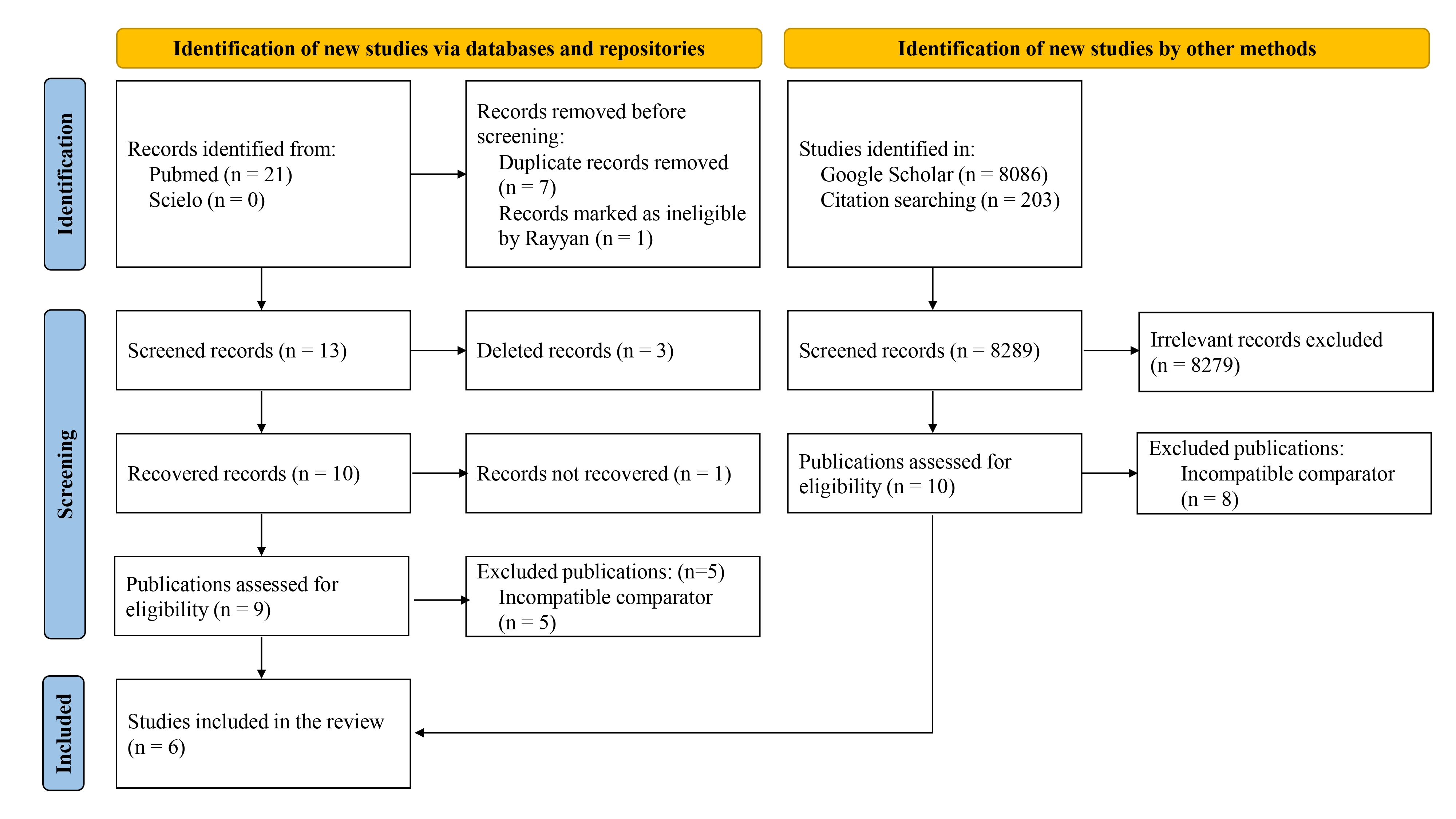
The search identified 21 records from databases and repositories. After removing duplicates (n=7) and ineligible records (n=1), 13 articles were screened; 10 were assessed for eligibility, and 1 was not recovered. Of the 9 remaining, 3 were excluded due to incompatibility with the comparator, and 6 were included.
An additional Google Scholar and citation search screened 8,289 records, yielding 2 additional eligible studies.
Eight studies were included in this review (Figure 1).
Characteristics of the studies
The characteristics of the eight studies7,8,13-18 that met the eligibility criteria are outlined in Table 1. The studies were published between 2012 and 2024 in the following countries: United Kingdom, United States of America, Portugal, Spain, France. Two studies had no geographic restriction because they were conducted via the internet.
Prevalence of neuropathic pain
Table 2 presents data from the analyzed studies, including sample size, mean patient age, prevalence of NP according to the S-LANSS, DN4, and painDETECT scales, and each study's conclusions. The eight studies included 989 patients with CPP. Of the studies, 3 applied the S-LANSS questionnaire, 4 applied the DN4, and 3 applied the painDETECT questionnaires. The mean prevalence of NP by the S-LANSS, DN4, and painDETECT questionnaires, calculated from the weighted mean, were 45.9%, 44.3%, and 28.8%, respectively, varying from 31.0% to 64.8% on the S-LANSS scale, 35.0% to 66.0% on the DN4 scale, and 13.6% to 31.7% on the painDETECT scale7,8,13-18.
Risk of bias and quality of articles
The studies were assessed for bias and research quality, and 50.0% were classified as good and 50.0% as fair (Table 3).
DISCUSSION
This systematic review described the prevalence of NP in patients with CPP, based on questionnaires commonly used to diagnose it4,9,10.
The mean prevalence of NP among women with CPP was similar in studies using the S-LANSS and DN4 questionnaires, likely due to both instruments including similar descriptors such as burning, tingling, electric shock, pins and needles, and altered pain thresholds7,13-16.
Studies that used the painDETECT questionnaire reported lower mean prevalence, which may be explained by the absence of a physician-performed physical examination during the method's applicability7,8.
NP in patients with CPP has a multifactorial etiology with related factors that may overlap7. Gynecological conditions, such as endometriosis or adenomyosis, affect approximately 40% of women with CPP and contribute to peripheral sensitization and the development of nociceptive memory due to direct nerve invasion and neuroangiogenesis6. Furthermore, surgical interventions in the pelvic region or previous trauma may result in nerve damage and, consequently, the development of this type of pain7,14,16.
NP is classified based on the underlying disease4. In the newly released International Classification of Diseases (ICD-11), it is first organized into peripheral and central neuropathic pain based on the location of the lesion or disease in the peripheral or central somatosensory nervous system5,7,16.
Additionally, NP is associated with central sensitization (CS), a process involving neural plasticity changes in the spinal cord and brain related to chronic pain development and maintenance19. This mechanism explains why patients with CPP present allodynia (pain caused by non-noxious stimuli) and hyperalgesia (increased pain caused by noxious stimuli)2,19. As a consequence of such process, patients with this nervous system dysfunction, associated with chronic pain and NP, often present affective disorders, and more than half of individuals with NP report depression and cognitive deficits20.
NP is an important component of CPP in women, regardless of the underlying etiology, and is often associated with lower quality of life, greater psychological distress, and cognitive changes7,14,15,17,18. Therefore, accurately identifying these neuropathic components becomes essential for adequate management7. Specific questionnaires can assist in this process, allowing the selection of targeted therapies with neuromodulators and reducing the performance of unnecessary procedures7.
Previous studies in women with CPP have reported a prevalence of NP of approximately 37.5%, although estimates vary widely according to instruments and populations6,12,19. This prevalence underscores the need for effective strategies for diagnosis and treatment, as the associated factors identified in this review include lower quality of life, psychological distress, changes in cognitive processes, endometriosis, provoked vestibulodynia, vulvodynia, and greater genitourinary pain severity7,8,14,15,17,21.
Mean age differed substantially across studies, ranging from early thirties to mid-forties, and age-stratified prevalence estimates were rarely reported, which precluded formal analysis of age as an effect modifier. However, in the cohort of women with symptomatic endometriosis, younger age emerged as an independent factor, suggesting that age-related susceptibility may be relevant in at least some CPP subgroups and warrants further investigation in future studies.
Methodological quality varied across the eight included studies, with half of them rated as fair and half as good according to the NHLBI quality assessment tool. Studies with fair quality were more likely to have small and convenience-based samples, online recruitment, and limited adjustment for potential confounders, which may introduce selection bias and limit external validity. In addition, the predominance of cross-sectional and exploratory designs precludes any inference of causality between NP and associated factors such as endometriosis, vulvodynia or psychological distress, and may inflate prevalence estimates in highly symptomatic clinical samples.
This systematic review has some limitations. One issue is generalizability, since the participants in the eight selected studies may not represent the entire population with CPP, as most included studies were conducted in high-income countries and tertiary referral centers, often with small and highly selected samples or online recruitment strategies, which restricts the generalizability of the findings to women with CPP in primary care or in low- and middle-income settings. Also, there is currently no universally accepted gold standard for diagnosing NP in CPP. Quantitative sensory testing and detailed neurological examination, although informative, are not routinely feasible in clinical practice and may not be consistently applied across studies. In addition, the lack of consensus in the scientific community on standardizing a single scale for assessing NP in patients with CPP undermines the uniformity of NP diagnostic criteria.
Furthermore, the difficulty in homogenizing the sample and the studies' designs makes it difficult to perform a meta-analysis. Another limitation is the evaluation of other possible associated factors between CPP and NP, such as all visceral, neuromusculoskeletal, and psychosocial causes. Several studies focused on specific CPP subgroups such as provoked vestibulodynia or endometriosis, which may overrepresent particular pain mechanisms and comorbidities. The possibility of small-study effects and preferential publication of studies reporting higher NP prevalence or more striking associations cannot be excluded, especially considering that several included articles originated from specialized tertiary centers or focused on specific CPP subgroups such as provoked vestibulodynia or symptomatic endometriosis. Finally, few studies directly compared the performance of DN4, S-LANSS and painDETECT in the pelvic context, and painDETECT in particular was validated mainly for somatic pain conditions, which may lead to underestimation of visceral or pelvic NP.
CONCLUSION
NP is common among women with CPP and is linked to adverse outcomes. Regarding the combined prevalence across questionnaires, the S-LANSS had the highest prevalence, followed by the DN4, and finally the painDETECT. The associated factors were lower quality of life, psychological distress, changes in the cognitive process, endometriosis, provoked vestibulodynia, vulvodynia, and greater genitourinary pain severity.
This systematic review reinforces the relevance of recognizing and adequately managing NP in women with CPP, encouraging a targeted therapeutic approach in order to alleviate the impacts of this debilitating condition. Further research is warranted, given the limited number of studies that comprehensively address this relation.
-
Sponsoring sources:
none.
-
Ethics statement:
none.
-
Data availability
The data that support the findings of this study are available from the corresponding author upon reasonable request.
-
The study was carried out at Universidade Federal do Maranhão – UFMA, São Luís, MA, Brasil.
REFERENCES
-
1 Lamvu G, Villegas-Echeverri JD, Allaire C, As-Sanie S, Carrillo J, Khalil S, Horne AW, Wang A, Munro MG. Developing the FIGO-IPPS “R U MOVVING SOMe” classification system for female chronic pelvic pain. Int J Gynaecol Obstet. 2025;171(2):550-65. https://doi.org/10.1002/ijgo.70522 PMid:40922503.
» https://doi.org/10.1002/ijgo.70522 -
2 American College of Obstetricians and Gynecologists. Chronic pelvic pain: ACOG practice bulletin, number 218. Obstet Gynecol. 2020;135(3):e98-109. https://doi.org/10.1097/AOG.0000000000003716 PMid:32080051.
» https://doi.org/10.1097/AOG.0000000000003716 -
3 Urits I, Callan J, Moore WC, Fuller MC, Renschler JS, Fisher P, Jung JW, Hasoon J, Eskander J, Kaye AD, Viswanath O. Cognitive behavioral therapy for the treatment of chronic pelvic pain. Best Pract Res Clin Anaesthesiol. 2020;34(3):409-26. https://doi.org/10.1016/j.bpa.2020.08.001 PMid:33004156.
» https://doi.org/10.1016/j.bpa.2020.08.001 -
4 Demirtaş Z, Arslantaş D, Ünsal A, Çalışkan F, İnan F. Examining the risk factors of chronic pelvic pain and its effect on the quality of life in refugee and non-refugee women. BMC Womens Health. 2024;24(1):503. https://doi.org/10.1186/s12905-024-03348-w PMid:39261782.
» https://doi.org/10.1186/s12905-024-03348-w -
5 Finnerup NB, Kuner R, Jensen TS. Neuropathic pain: from mechanisms to treatment. Physiol Rev. 2021;101(1):259-301. https://doi.org/10.1152/physrev.00045.2019 PMid:32584191.
» https://doi.org/10.1152/physrev.00045.2019 -
6 Raja SN, Carr DB, Cohen M, Finnerup NB, Flor H, Gibson S, Keefe FJ, Mogil JS, Ringkamp M, Sluka KA, Song XJ, Stevens B, Sullivan MD, Tutelman PR, Ushida T, Vader K. The revised International Association for the Study of Pain definition of pain: concepts, challenges, and compromises. Pain. 2020;161(9):1976-82. https://doi.org/10.1097/j.pain.0000000000001939 PMid:32694387.
» https://doi.org/10.1097/j.pain.0000000000001939 -
7 Whitaker LH, Reid J, Choa A, McFee S, Seretny M, Wilson J, Elton RA, Vincent K, Horne AW. An exploratory study into objective and reported characteristics of neuropathic pain in women with chronic pelvic pain. PLoS One. 2016;11(4):e0151950. https://doi.org/10.1371/journal.pone.0151950 PMid:27046128.
» https://doi.org/10.1371/journal.pone.0151950 -
8 Coxon L, Vollert J, Perro D, Lunde CE, Ferreira-Gomes J, Charrua A, Abreu-Mendes P, Krassowski M, Birch J, Meijlink J, Hummelshoj L, Hoffmann A, Aziz Q, Arendt-Nielsen L, Pogatzki-Zahn E, Evans E, Demetriou L, McMahon SB, Missmer SA, Becker CM, Zondervan KT, Horne AW, Cruz F, Sieberg CB, Treede RD, Nagel J, Vincent K. Comprehensive quantitative sensory testing shows altered sensory function in women with chronic pelvic pain: results from the Translational Research in Pelvic Pain (TRiPP) Study. Pain. 2023;164(11):2528-39. https://doi.org/10.1097/j.pain.0000000000002955 PMid:37289573.
» https://doi.org/10.1097/j.pain.0000000000002955 -
9 Florencio LL, Palacios-Ceña M, Fuensalida-Novo S, de-la-Llave-Rincón AI, Ambite-Quesada S, Ortega-Santiago R, Arias-Buría JL, Cigarán-Méndez M, Arendt-Nielsen L, Fernández-de-Las-Peñas C. Multidimensional evaluation of the pain profile as prognostic factor in individuals with hip or knee osteoarthritis receiving total joint replacement: protocol of a 2-year longitudinal prognostic cohort study. BMJ Open. 2023;13(1):e066745. https://doi.org/10.1136/bmjopen-2022-066745 PMid:36657768.
» https://doi.org/10.1136/bmjopen-2022-066745 -
10 Kim HJ, Ban MG, Yoon KB, Jeon W, Kim SH. Neuropathic-like pain symptoms and their association with muscle strength in patients with chronic musculoskeletal pain. J Clin Med. 2022;11(18):5471. https://doi.org/10.3390/jcm11185471 PMid:36143118.
» https://doi.org/10.3390/jcm11185471 -
11 Page MJ, McKenzie JE, Bossuyt PM, Boutron I, Hoffmann TC, Mulrow CD, Shamseer L, Tetzlaff JM, Akl EA, Brennan SE, Chou R, Glanville J, Grimshaw JM, Hróbjartsson A, Lalu MM, Li T, Loder EW, Mayo-Wilson E, McDonald S, McGuinness LA, Stewart LA, Thomas J, Tricco AC, Welch VA, Whiting P, Moher D. The PRISMA 2020 statement: an updated guideline for reporting systematic reviews. BMJ. 2021;372:n71. https://doi.org/10.1136/bmj.n71 PMid:33782057.
» https://doi.org/10.1136/bmj.n71 -
12 National Heart, Lung, and Blood Institute. Study quality assessment tools [Internet]. 2021 [cited 2024 Sep 11]. https://www.nhlbi.nih.gov/health-topics/study-quality-assessment-tools
» https://www.nhlbi.nih.gov/health-topics/study-quality-assessment-tools -
13 Itza F, Zarza D, Salinas J, Teba F, Ximenez C. Turn‐amplitude analysis as a diagnostic test for myofascial syndrome in patients with chronic pelvic pain. Pain Res Manag. 2015;20(2):96-100. https://doi.org/10.1155/2015/562349 PMid:25848846.
» https://doi.org/10.1155/2015/562349 -
14 George AK, Sadek MA, Saluja SS, Fariello JY, Whitmore KE, Moldwin RM. The impact of neuropathic pain in the chronic pelvic pain population. J Urol. 2012;188(5):1783-7. https://doi.org/10.1016/j.juro.2012.07.034 PMid:22998903.
» https://doi.org/10.1016/j.juro.2012.07.034 -
15 Tersiguel AC, Bodéré C, Schollhammer M, Postec E, Tandéo P, Quinio B, Brenaut E, Misery L. Screening for neuropathic pain, anxiety and other associated chronic pain conditions in vulvodynia: a pilot study. Acta Derm Venereol. 2015;95(6):749-51. https://doi.org/10.2340/00015555-2053 PMid:25634661.
» https://doi.org/10.2340/00015555-2053 -
16 Dargie E, Gilron I, Pukall CF. Self-reported neuropathic pain characteristics of women with provoked vulvar pain: a preliminary investigation. J Sex Med. 2017;14(4):577-91. https://doi.org/10.1016/j.jsxm.2017.02.008 PMid:28325536.
» https://doi.org/10.1016/j.jsxm.2017.02.008 -
17 Bouko-Levy E, Auditeau E, Margueritte F, Lacorre A, Gauthier T. Prevalence of neuropathic pain in patients with symptomatic endometriosis: assessment using the DN4 score. Eur J Obstet Gynecol Reprod Biol. 2024;300:196-201. https://doi.org/10.1016/j.ejogrb.2024.07.013 PMid:39025040.
» https://doi.org/10.1016/j.ejogrb.2024.07.013 -
18 Schrepf A, Gallop R, Naliboff B, Harte SE, Afari N, Lai HH, Pontari M, McKernan LC, Strachan E, Kreder KJ, As-Sanie SA, Rodriguez LV, Griffith JW, Williams DA. Clinical phenotyping for pain mechanisms in urologic chronic pelvic pain syndromes: a MAPP research network study. J Pain. 2022;23(9):1594-603. https://doi.org/10.1016/j.jpain.2022.03.240 PMid:35472518.
» https://doi.org/10.1016/j.jpain.2022.03.240 -
19 Zhang T, Zhang M, Cui S, Liang W, Jia Z, Guo F, Ou W, Wu Y, Zhang S. The core of maintaining neuropathic pain: crosstalk between glial cells and neurons (neural cell crosstalk at spinal cord). Brain Behav. 2023;13(2):e2868. https://doi.org/10.1002/brb3.2868 PMid:36602945.
» https://doi.org/10.1002/brb3.2868 -
20 Barcelon EE, Cho WH, Jun SB, Lee SJ. Brain microglial activation in chronic pain-associated affective disorder. Front Neurosci. 2019;13:213. https://doi.org/10.3389/fnins.2019.00213 PMid:30949019.
» https://doi.org/10.3389/fnins.2019.00213 -
21 Konrad L, Berger LMF, Maier V, Horné F, Neuheisel LM, Laucks EV, Riaz MA, Oehmke F, Meinhold-Heerlein I, Zeppernick F. Predictive model for the non-invasive diagnosis of endometriosis based on clinical parameters. J Clin Med. 2023;12(13):4231. https://doi.org/10.3390/jcm12134231 PMid:37445265.
» https://doi.org/10.3390/jcm12134231
Edited by
-
Associate editor in charge:
Telma Regina Mariotto Zakka https://orcid.org/0000-0002-3222-2244
-
Editor in charge:
Juliana Barcellos de Souza https://orcid.org/0000-0003-4657-052X
The data that support the findings of this study are available from the corresponding author upon reasonable request.