
 Effect of dry needling on myofascial trigger points of patients with somatosensory tinnitus. Case reports
ABSTRACT
BACKGROUND AND OBJECTIVES Somatosensory tinnitus is often associated with temporomandibular disorder (TMD), in which increased tension of the masticatory muscles or temporomandibular pain can modulate the perception of tinnitus. Proper treatment of TMD could, thus, relieve painful symptoms and tinnitus. In this sense, the present article aimed to report a case series of patients with TMD and somatosensory tinnitus who received treatment with the dry needling technique involving myofascial trigger points.
CASE REPORTS Four women aged between 24 and 53 years described the presence of tinnitus and muscle pain in the temporomandibular region. The clinical evaluation for the somatosensory tinnitus diagnosis was carried out according to the latest consensus, and TMD was classified based on the Diagnostic Criteria for Temporomandibular Disorders. All the patients received dry needling on the myofascial trigger points and complementary guidance. Patients were evaluated using the Tinnitus Handicap Inventory (THI) questionnaire and numerical rating scales (NRS) for pain and tinnitus intensity. The THI variable and its emotional domain decreased significantly and progressively during treatment in 75% of cases. NRSs for pain and tinnitus also progressively decreased in 75% of the reported cases.
CONCLUSION Dry needling combined with home care guidelines reduced tinnitus perception and myofascial pain in most patients, with improvements in THI and NRS scores. Differences in treatment response may reflect the multifactorial nature of tinnitus.
Keywords:
Case reports; Dry needling; Facial pain; Temporomandibular joint disorders; Tinnitus; Trigger points
HIGHLIGHTS
Tinnitus and temporomandibular dysfunction are conditions that have a major impact on patient´s quality of life and require multidisciplinary treatment
Tinnitus and temporomandibular dysfunction can occur and worsen simultaneously, making it necessary to better understand their interaction and identify shared risk factors
The search for therapeutic interventions, such as dry needling, and the study of their efficacy and application protocol is fundamental for their correct indication
RESUMO
JUSTIFICATIVA E OBJETIVOS O zumbido somatossensorial está frequentemente associado à disfunção temporomandibular (DTM), na qual o aumento da tensão dos músculos mastigatórios ou a dor temporomandibular podem modular a percepção do zumbido. O tratamento adequado da DTM poderia, portanto, aliviar os sintomas dolorosos e o zumbido. Nesse sentido, o presente artigo teve como objetivo relatar uma série de casos de pacientes com DTM e zumbido somatossensorial que receberam tratamento com a técnica de agulhamento a seco envolvendo pontos-gatilho miofasciais.
RELATO DOS CASOS Quatro mulheres com idades entre 24 e 53 anos descreveram a presença de zumbido e dor muscular na região temporomandibular. A avaliação clínica para o diagnóstico de zumbido somatossensorial foi realizada de acordo com o consenso mais recente, e a DTM foi classificada com base nos Critérios de Diagnóstico para Disfunções Temporomandibulares (DC/TMD). Todas as pacientes receberam agulhamento a seco nos pontos-gatilho miofasciais e orientações complementares. As pacientes foram avaliadas por meio do questionário Inventário do Handicap do Zumbido (Tinnitus Handicap Inventory - THI) e de escalas numéricas de avaliação (EN) para a intensidade da dor e do zumbido. A variável THI e seu domínio emocional diminuíram de forma significativa e progressiva durante o tratamento em 75% os casos. As ENs para dor e zumbido também diminuíram progressivamente em 75% dos casos relatados.
CONCLUSÃO O agulhamento a seco combinado com orientações de cuidados domiciliares reduziu a percepção do zumbido e a dor miofascial na maioria das pacientes, com melhoras nos escores do THI e da EN. Diferenças na resposta ao tratamento podem refletir a natureza multifatorial do zumbido.
Descritores:
Agulhamento a seco; Dor facial; Pontos-gatilho; Relatos de casos; Transtornos da articulação temporomandibular; Zumbido
INTRODUCTION
Tinnitus is the perception of sound despite the absence of an external acoustic stimulus. This condition has a multifactorial etiology and is usually subjective, i.e., perceived only by the patient, who typically describes it as whistling, hissing, sizzling, or ringing1. Often, patients with temporomandibular disorder (TMD) also report the presence of tinnitus, which defines the somatosensory tinnitus subtype2,3. Stimuli from the temporomandibular or cervical regions may influence this subtype1. In this condition, neuronal convergence promotes an interaction between the auditory and somatosensory systems within the dorsal cochlear nucleus. This interaction constitutes a neurophysiological pathway that may explain the association between the two conditions, since increased tension and pain in the masticatory muscles or pressure in the myofascial trigger points, which are characteristics of TMD, can evoke or modulate tinnitus1,2. In addition, the presence of trigger points in the jaw and neck muscles is considered one of the factors that characterize the somatosensory influence on this otological symptom1. The rationale for this study is based on the fact that tinnitus is a multifactorial symptom that often requires a multidisciplinary treatment approach. To date, there are no published case reports describing the use of dry needling as part of the treatment for patients with somatosensory tinnitus.
This study hypothesizes that the appropriate treatment of TMD can relieve such symptoms, specifically by deactivating trigger points that reproduce painful complaints and somatosensory tinnitus. The objective is to report four cases in which patients with somatosensory tinnitus received treatment with the dry needling technique applied to myofascial trigger points associated with myofascial pain concerning the masticatory muscles.
CASE REPORTS
Four patients sought the TMD and Orofacial Pain Outpatient Service (SAMDOF) of the Federal University of Paraná (UFPR), in Brazil, presenting complaints of tinnitus and muscle pain in the temporomandibular region. All underwent a clinical evaluation according to the research protocol approved by the Research Ethics Committee of the Health Sector of UFPR, number 74587923.3.0000.0102. All patients read, agreed to, and signed an informed consent form.
The patients were all cisgender women, aged between 24 and 53 years, with an onset of tinnitus between 1 and 3 years (Table 1). Each patient reported a clinical history and described muscle pain in the orofacial region, tinnitus, poor head and neck posture, and frequent parafunctional oral behaviors, such as touching, clenching, or grinding teeth. None of the patients had a history of hearing loss.
Patient demographics and the results of the Tinnitus Handicap Inventory (THI) and Numerical Rating Scale (NRS) scores for tinnitus and pain.
The diagnosis of myofascial pain with reference was established using the Diagnostic Criteria for Temporomandibular Disorders (DC/TMD)4. The criterion for identifying somatosensory tinnitus included the presence of tinnitus modulation (exacerbation, onset, attenuation, intensity, frequency, and location) during palpation of myofascial trigger points1,2. All patients received dry needling in the right or left masseter muscle (at the origin, the body, or the insertion) corresponding to the site with one or more trigger points that modulated and reproduced tinnitus and temporomandibular pain, when the muscle was palpated with 1kgf, according to the DC/TMD. The needled trigger point was on the same side as the patient’s ‘familiar’ tinnitus, which was also reproduced by muscle palpation along with the pain related to TMD. Patient counseling included parafunctional habit control, sleep hygiene, lifestyle guidance, masticatory muscle massage, thermotherapy, stretching exercises, and relaxation therapy.
All needling sessions began by measuring the degree of tinnitus discomfort and muscle pain through the Numerical Rating Scale (NRS) to track the evolution of the cases. In the first session, the patients completed the Tinnitus Handicap Inventory (THI) questionnaire, created to subjectively quantify the impact of tinnitus on quality of life2,5.
After data collection and positioning of the patient in the chair, aseptic procedures were performed on the clinician’s hands and the skin to be needled using gauze and 70% alcohol were performed on the hands of the professional and on the site of the skin to be needled. The clinician palpated and marked the trigger point region in the muscle that modulated tinnitus. Sterile needles (0.25 x 40mm, Dong Bang™) were positioned and inserted perpendicular to the skin and deeper until it gently touched the bone, retreated a few millimeters, and, with back-and-forth movements, created a fan-shaped pattern in different directions. The needle was inserted into the muscle for approximately one minute, and pressure was applied to the point for 20 seconds after its removal. The patient was instructed to make a warm compress in the region in the first days following the procedure.
Dry needling sessions were performed once a week for four consecutive weeks. Seven days after the last session, patients returned for a reevaluation visit in which the THI questionnaires and NRS were reapplied. After 60 and 90 days, patients were reassessed remotely by THI and NRSs for pain and tinnitus. Figure 1 shows a representative diagram of the treatment protocol applied.
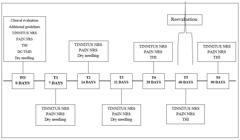
Timeline representing the treatment protocol applied. T0= time zero - 0 days; T1= time one - 7 days; T2= time two -14 days; T3= time three - 21 days; T4= time four - 28 days; T5= time five - 60 days; T6= time six - 90 days. DC/TMD = Diagnostic Criteria for Temporomandibular Disorders. THI = Tinnitus Handicap Inventory. NRS = Numerical Rating Scale.
Table 1 summarizes the results for the THI questionnaire scores and NRSs. All patients reported progressive improvement in pain and a decrease in tinnitus during the sessions. Two patients (Cases 2 and 4) reported the disappearance of tinnitus and the absence of pain, which remained until the final follow-up.
THI scores decreased significantly and progressively during treatment, except in Case 3, where the initial THI score remained unchanged after 90 days. Similarly, NRSs for pain and tinnitus showed a significant and progressive reduction in the other patients.
DISCUSSION
The present study aimed to evaluate the effectiveness of the dry needling technique on myofascial trigger points in patients presenting with both temporomandibular disorder (TMD) and somatosensory tinnitus. Our findings demonstrate that this therapeutic approach effectively reduced tinnitus perception and myofascial pain in most of the participants treated. Specifically, 75% of the cases showed a progressive and significant decline in both THI scores and NRS assessments for pain and tinnitus intensity. Although two patients achieved complete resolution of symptoms by the final follow-up, the lack of clinical improvement in Case 3 underscores the complex, multifactorial etiology inherent to tinnitus, suggesting that treatment outcomes may vary based on individual clinical profiles.
Tinnitus can be classified into several subtypes. Specifically, when its cause is primarily related to the musculoskeletal system rather than the ear or hearing loss, it is classified as somatic or somatosensory tinnitus6. In 1999, Levine7 defined somatic tinnitus for the first time as a subtype of subjective tinnitus, in which altered somatosensory afference from the cervical spine and/or the temporomandibular area can cause or alter the patient's perception of the symptom. Supporting this definition, neuroimaging studies and animal models suggest that neural activity related to tinnitus may involve complex and abnormal interactions between different sensory modalities, as well as neurocognitive and emotional neural networks8,9. The literature reports the existence of a connection between proprioceptive and nociceptive afferents of the neck region and the dorsal cochlear nucleus, where somatic stimuli can disinhibit the ipsilateral cochlear nucleus, producing excitatory neuronal activity within the auditory pathway that results in tinnitus10.
Given these neural pathways, tinnitus is a symptom frequently associated with TMD. The convergence and interaction between the auditory and somatosensory systems within the dorsal cochlear nucleus constitute a neurophysiological pathway that explains the higher prevalence of tinnitus in TMD patients compared to the general population; this occurs since increased tension in the masticatory muscles or pressure on myofascial trigger points can evoke or modulate the condition3. Thus, it is assumed that appropriate treatment of TMD can alleviate symptoms and, consequently, the perceived tinnitus3,10.
In 2018, Michiels et al.1 defined a consensus on the criteria for the diagnosis of somatosensory tinnitus and validated recurrent characteristics in patients with somatosensory influence on the perception of tinnitus: 1- the ability to modulate tinnitus through movements, maneuvers, or the application of pressure on myofascial trigger points; 2- characteristics of tinnitus, such as simultaneous onset or worsening with pain symptoms in the neck or jaw region, increases during specific postures, and the presence of variations in tone, intensity, and location; 3- symptoms that may accompany tinnitus, such as frequent pain in the head, neck, or shoulder girdle, TMD, trigger points sensitive to pressure, muscle tension, and bruxism. When one or more of these symptoms appear, the influence of the somatosensory system on the patient's tinnitus is considered1.
In this case series, all patients exhibited more than one of the characteristics mentioned, confirming the presence of somatosensory tinnitus. In addition to modulation via pressure on the myofascial trigger points, the patients reported the appearance of tinnitus when performing smooth movements of the face, speech, and mouth opening, as well as in situations of stress or temporomandibular pain.
A temporomandibular evaluation in patients with somatosensory tinnitus is essential, considering that treating TMD and other forms of muscle tension or pain can also decrease tinnitus11. All four cases were diagnosed with myofascial pain with reference through the DC/TMD(4) — a set of appropriate tools to diagnose TMD and for both clinical and research settings. It offers a standardized and operational method to physically examine masticatory structures (Axis I) and investigate psychosocial factors and comorbidities (Axis II)4.
Beyond TMD alone, the association of tinnitus with trigger points in the musculature of the head, neck, and shoulder girdle is well-documented. A study by Sanchez and Rocha10 showed that patients with normal hearing and chronic pain experienced improvement in tinnitus when subjected to the deactivation of these points. These myofascial trigger points are hyperirritable areas located in a taut band of skeletal muscle, characteristic of myofascial pain syndrome. They can be active or latent, and their development is often related to microtrauma from postural habits, oral parafunctions, or predisposing factors such as nutritional imbalances and sleep disturbances10,12.
Myofascial pain with reference is often diagnosed in patients with orofacial pain characterized by tenderness or pain in muscle structures and trigger points. All four cases had trigger points in some regions of the temporomandibular muscles. The literature suggests that temporary modulation of tinnitus through palpation of myofascial trigger points and its improvement or disappearance through deactivation of these points may confirm a possible interaction between the two conditions1,5. This relationship is evident in the cases described, as all patients experienced tinnitus modulation during palpation and improvement after treatment.
There are several evidence-based treatments for myofascial trigger points, ranging from pharmacological therapies to non-pharmacological approaches like behavioral therapy and dry needling13. These interventions have scientific support to varying degrees and have been shown to bring relief from tinnitus for different durations10,12. Among these options, dry needling is a therapeutic technique that acts as a mechanical stimulus, where a long, thin needle is inserted with precision into the trigger point region. This method often induces a local twitch response, interrupting motor endplate activity and creating an analgesic effect. This process is associated with increased blood flow and biochemical changes that decrease muscle stiffness while improving range of motion and muscle function12,13. Consequently, the technique chosen for the treatment of myofascial trigger points in this study was dry needling. While various interventions exist for myofascial pain, the efficacy of this specific procedure is linked to the increased flow of oxygen and nutrients to the muscle tissue. Although dry needling is considered superior to other short-term interventions, it requires correct indication. According to a systematic review by Vier et al.14, protocols vary, but one weekly session is the most frequent recommendation. Following this evidence, the protocol used in this case series lasted four weeks, with a frequency of one weekly session.
Campagna et al.5 evaluated the effectiveness of dry needling on somatosensory tinnitus discomfort in patients with myofascial trigger points. In the study, which included both placebo and therapeutic groups, a statistically significant reduction was observed in the therapeutic group in the THI variables and its emotional domain, as well as a reduction in tinnitus NRS, characterizing dry needling as an effective technique for reducing the discomfort associated with the symptom.(5) The cases presented here had similar results, with the majority (75%) showing a reduction in myofascial pain and tinnitus, as measured by the NRS and THI, demonstrating the technique's efficacy.
Van der Wal et al.11 sought to identify favorable prognostic indicators after multidisciplinary orofacial treatment in patients with somatosensory tinnitus appliable to improve clinical success rates through effective referral. The most consistent and predictive indicators identified were "younger female patients," "shorter duration of tinnitus," and a "higher initial score on the somatic subscale of the tinnitus questionnaire11. These indicators were present in the characteristics of the cases reported here, which may be related to the positive outcomes found in this study.
Pain in the chewing muscles can be associated with parafunctional habits, such as bruxism, as well as emotional and psychological factors, such as stress, depression, and anxiety, which in turn can also contribute to the development of these same habit2. All the patients reported such parafunctional behaviors in their daily lives, which may explain the fluctuation, maintenance, or increase in pain and tinnitus at certain times. Noteworthily, patients with sleep or wakefulness bruxism are more likely to develop somatosensory tinnitus2.
Patient from Case 1 reported that, even after a significant reduction in tinnitus and muscle pain following treatment, the symptoms persisted in a milder form during moments of stress. Patients 2 and 4 reported improved quality of life and satisfaction with the outcome at the end of treatment. Case 3 was the only one in which, upon reassessment after 90 days, the pain and tinnitus remained unchanged despite the treatment. This patient was a nurse and reported that her symptoms intensified on workdays during night shifts at the hospital. Consequently, her lifestyle could be contributing to the persistence of the symptoms, as poor sleep quality is a common factor in patients with persistent tinnitus2.
Thus, due to the complexity and heterogeneity of tinnitus, single-treatment strategies are likely to fail, and the conditions will not be resolved and treated in their entirety. Therefore, as part of the treatment of these patients, counseling regarding behavioral habits that can affect tinnitus positively or negatively, and the fact that managing stress and lifestyle can minimize its harmful effects, should be included.
Future studies should involve patients with TMD and somatosensory tinnitus with a larger sample size, including a control group, to ensure a more robust level of scientific evidence regarding the efficacy of dry needling for the treatment of somatosensory tinnitus in patients with myofascial pain related to the masticatory muscles.
CONCLUSION
Dry needling of myofascial trigger points combined with home care guidelines effectively reduced the perception of tinnitus and muscle pain for most patients. The multifactorial nature of tinnitus may explain the differences among patients' experiences after treatment. THI scores demonstrated a reduction in the impact of tinnitus on quality of life, while the NRS helped track improvements in pain and perceived tinnitus.
ACKNOWLEDGEMENTS
The authors would like to thank the Academic Publishing Advisory Center (Centro de Assessoria de Publicação Acadêmica, CAPA) of the Federal University of Paraná (UFPR) for assistance with English language translation and developmental editing.
-
Sponsoring sources:
none.
-
Ethics statement:
corpo da seção. This study was approved by the Research Ethics Committee of UFPR/SD, Protocol No. 74587923.3.0000.0102. All participants provided written informed consent prior to inclusion in the study, in accordance with the Declaration of Helsinki.
-
Data availability:
All data generated or analyzed during this study are included in this published article.
-
The study was carried out at Universidade Federal do Paraná – UFPR, Curitiba, PR, Brasil.
References
-
1 Michiels S, Ganz Sanchez T, Oron Y, Gilles A, Haider HF, Erlandsson S, Bechter K, Vielsmeier V, Biesinger E, Nam EC, Oiticica J, de Medeiros ÍRT, Bezerra Rocha C, Langguth B, Van de Heyning P, De Hertogh W, Hall DA. Diagnostic criteria for somatosensory tinnitus: a delphi process and face-to-face meeting to establish consensus. Trends Hear. 2018;22:2331216518796403. https://doi.org/10.1177/2331216518796403 PMid:30213235.
» https://doi.org/10.1177/2331216518796403 -
2 Spisila T, Fontana LC, Hamerschmidt R, Cássia Cassou Guimarães R, Hilgenberg-Sydney PB. Phenotyping of somatosensory tinnitus and its associations: An observational cross-sectional study. J Oral Rehabil. 2024;51(10):2008-18. https://doi.org/10.1111/joor.13783 PMid:39418578.
» https://doi.org/10.1111/joor.13783 -
3 Didier HA, Cappellari AM, Sessa F, Giannì AB, Didier AH, Pavesi MM, Caria MP, Curone M, Tullo V, Di Berardino F, Iacona E, Lilli G, Barozzi S, Aldè M, De Bortoli G, Zanetti D, Arnone F, Bussone G. Somatosensory tinnitus and temporomandibular disorders: a common association. J Oral Rehabil. 2023;50(11):1181-4. https://doi.org/10.1111/joor.13541 PMid:37335244.
» https://doi.org/10.1111/joor.13541 -
4 Schiffman E, Ohrbach R, Truelove E, Look J, Anderson G, Goulet JP, List T, Svensson P, Gonzalez Y, Lobbezoo F, Michelotti A, Brooks SL, Ceusters W, Drangsholt M, Ettlin D, Gaul C, Goldberg LJ, Haythornthwaite JA, Hollender L, Jensen R, John MT, De Laat A, de Leeuw R, Maixner W, van der Meulen M, Murray GM, Nixdorf DR, Palla S, Petersson A, Pionchon P, Smith B, Visscher CM, Zakrzewska J, Dworkin SF. Diagnostic Criteria for Temporomandibular Disorders (DC/TMD) for Clinical and Research Applications: recommendations of the International RDC/TMD Consortium Network* and Orofacial Pain Special Interest Groupdagger. J Oral Facial Pain Headache. 2014;28(1):6-27. https://doi.org/10.11607/jop.1151 PMid:24482784.
» https://doi.org/10.11607/jop.1151 -
5 Campagna CA, Anauate J, Vasconoelos LGE, Oiticica J. Effectiveness of dry needling in bothersome chronic tinnitus in patients with myofascial trigger points. Int Arch Otorhinolaryngol. 2021;26(2):e233-42. https://doi.org/10.1055/s-0041-1730429 PMid:35602278.
» https://doi.org/10.1055/s-0041-1730429 -
6 Lee S, Jin TJ, Jin IK. Methods, applications, and limitations of somatic maneuvers for the modulation of tinnitus. Audiology Res. 2022;12(6):644-52. https://doi.org/10.3390/audiolres12060062 PMid:36412657.
» https://doi.org/10.3390/audiolres12060062 -
7 Levine RA. Somatic (craniocervical) tinnitus and the dorsal cochlear nucleus hypothesis. Am J Otolaryngol. 1999;20(6):351-62. https://doi.org/10.1016/S0196-0709(99)90074-1 PMid:10609479.
» https://doi.org/10.1016/S0196-0709(99)90074-1 -
8 Haider HF, Hoare DJ, Costa RFP, Potgieter I, Kikidis D, Lapira A, Nikitas C, Caria H, Cunha NT, Paço JC. Pathophysiology, diagnosis and treatment of somatosensory tinnitus: a scoping review. Front Neurosci. 2017;11:207. https://doi.org/10.3389/fnins.2017.00207 PMid:28503129.
» https://doi.org/10.3389/fnins.2017.00207 -
9 Shore S, Zhou J, Koehler S. Neural mechanisms underlying somatic tinnitus. Prog Brain Res. 2007;166:107-23. https://doi.org/10.1016/S0079-6123(07)66010-5 PMid:17956776.
» https://doi.org/10.1016/S0079-6123(07)66010-5 -
10 Sanchez TG, Rocha CB. Diagnosis and management of somatosensory tinnitus: review article. Clinics (Sao Paulo). 2011;66(6):1089-94. https://doi.org/10.1590/S1807-59322011000600028 PMid:21808880.
» https://doi.org/10.1590/S1807-59322011000600028 -
11 van der Wal A, Van de Heyning P, Gilles A, Jacquemin L, Topsakal V, Van Rompaey V, Braem M, Visscher CM, Truijen S, Michiels S, De Hertogh W. Prognostic indicators for positive treatment outcome after multidisciplinary orofacial treatment in patients with somatosensory tinnitus. Front Neurosci. 2020;14:561038. https://doi.org/10.3389/fnins.2020.561038 PMid:33041758.
» https://doi.org/10.3389/fnins.2020.561038 - 12 Travell JG, Simons DG. Myofascial Pain and Dysfunction: The Trigger Point Manual. 2nd ed. Baltimore: Williams & Wilkins; 1999.
-
13 Alshammari SS, Amin S, Siddiqui AA, Malik YR, Alshammari AF, Amin J. An evidence-based treatment of myofascial pain and myofascial trigger points in the maxillofacial area: a narrative review. Cureus. 2023;15(12):e49987. https://doi.org/10.7759/cureus.49987 PMid:38179392.
» https://doi.org/10.7759/cureus.49987 -
14 Vier C, Almeida MB, Neves ML, Santos ARSD, Bracht MA. The effectiveness of dry needling for patients with orofacial pain associated with temporomandibular dysfunction: a systematic review and meta-analysis. Braz J Phys Ther. 2019;23(1):3-11. https://doi.org/10.1016/j.bjpt.2018.08.008 PMid:30146108.
» https://doi.org/10.1016/j.bjpt.2018.08.008
Edited by
-
Associate editor in charge:
Eduardo Grossman https://orcid.org/0009-0000-5095-3203
-
Editor in charge:
Juliana Barcellos de Souza https://orcid.org/0000-0003-4657-052X
All data generated or analyzed during this study are included in this published article.

